
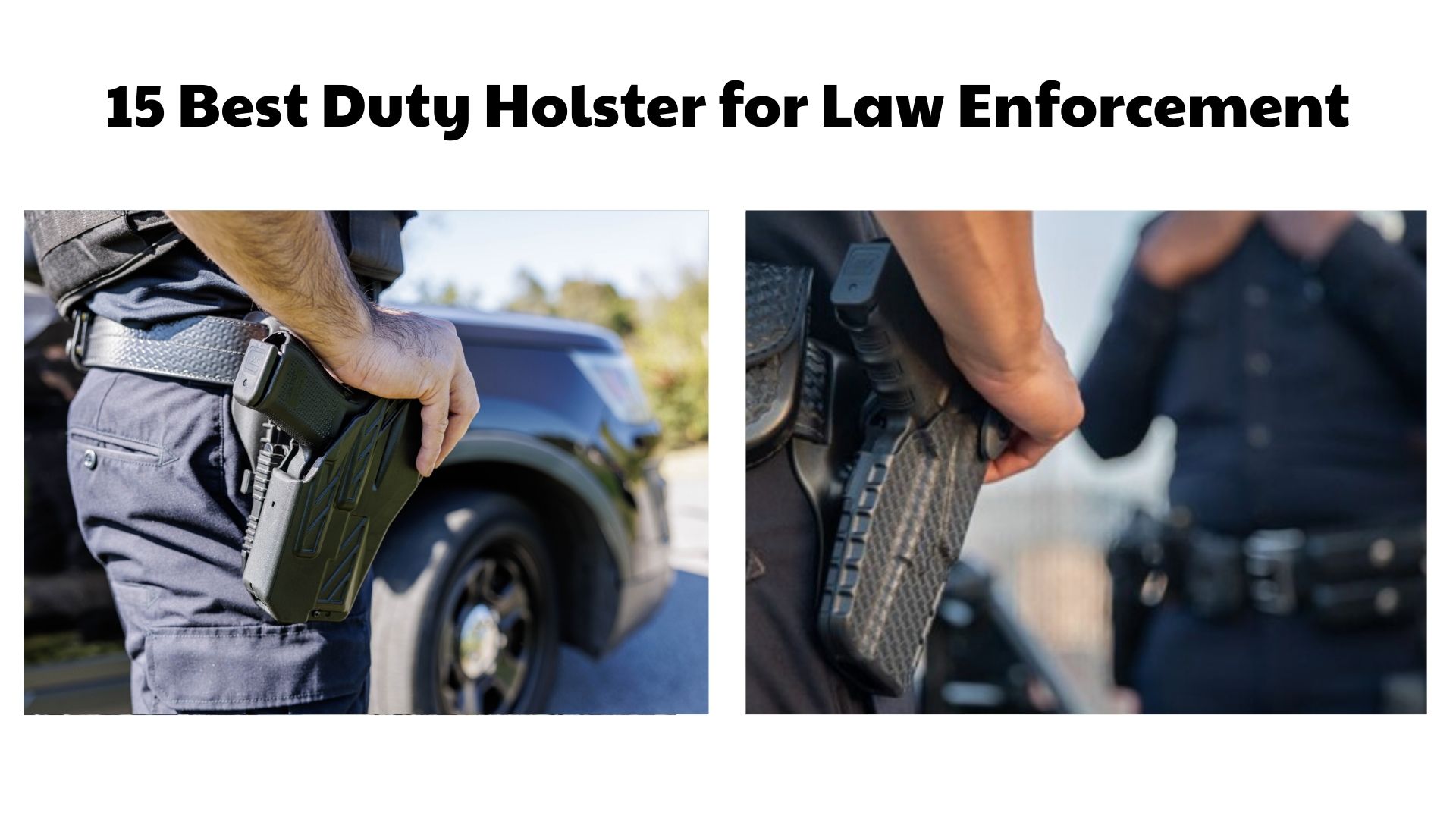
Selecting the Best Duty Holster for Law Enforcement is a critical decision for police officers, security professionals, and tactical units who rely on dependable equipment every day. A duty holster must do more than simply hold a firearm. It must provide a secure retention system, allow fast and intuitive access, and withstand demanding field conditions such as foot pursuits, physical confrontations, and extended patrol shifts. Law enforcement holsters are therefore engineered with specialized locking systems, reinforced materials, and ergonomic designs that balance security with speed. In modern policing environments, many holsters must also support accessories such as weapon-mounted lights and optics, making compatibility another important factor when selecting the right holster.
This guide reviews some of the Best Duty Holster for Law Enforcement used by professionals across the industry. Each model is designed with specific operational needs in mind, ranging from high-retention tactical holsters to streamlined patrol holsters that prioritize quick access. The goal of this review is to explain how these holsters function, why certain designs are favored by officers, and what features make them effective in real-world duty situations.
15 Best Duty Holster for Law Enforcement
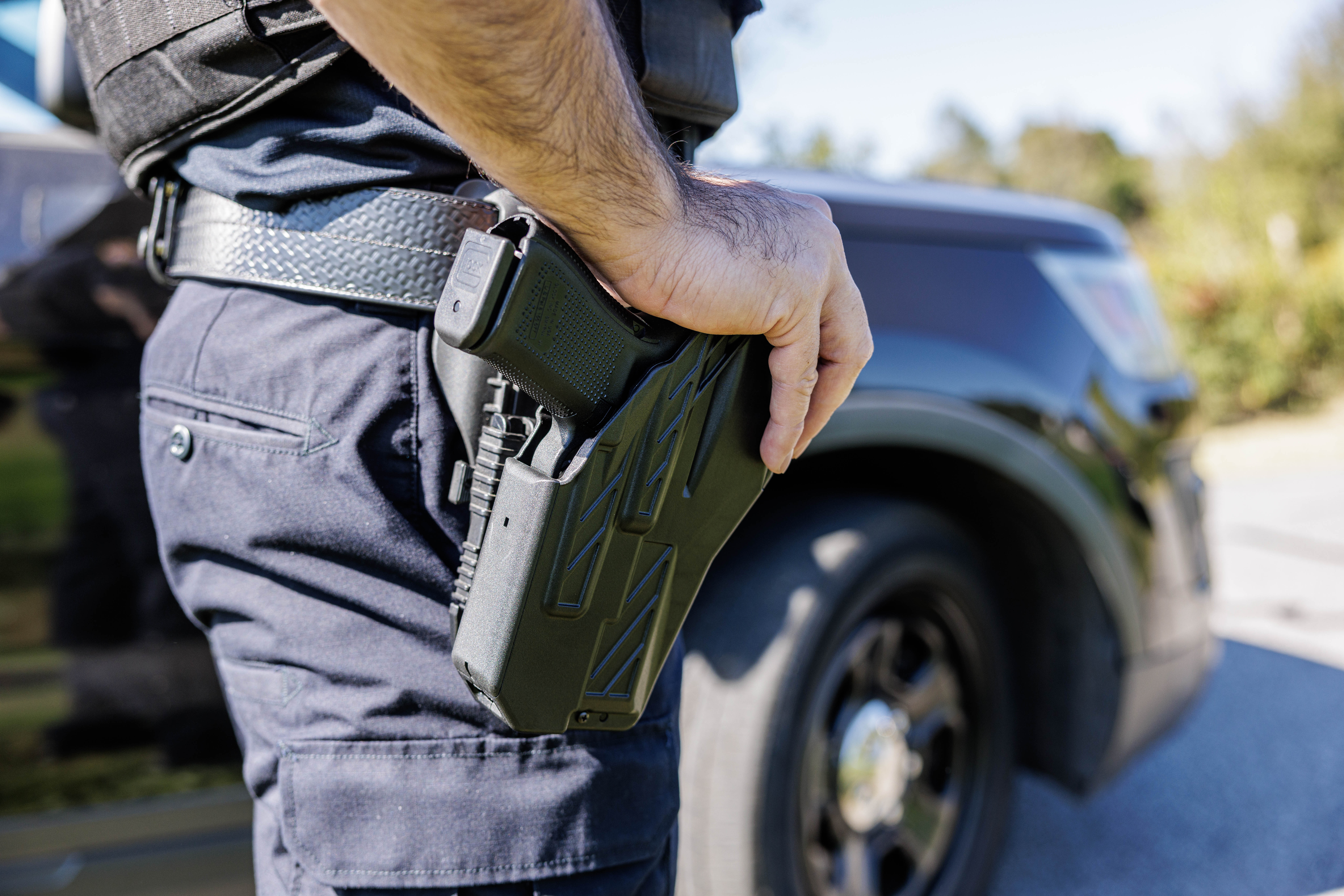
1. Safariland Model 6004 SLS Tactical Duty Holster
The Safariland Model 6004 SLS Tactical Duty Holster has long been recognized as one of the most reliable duty holsters used by law enforcement officers and tactical units around the world. Built specifically for demanding operational environments, this holster combines durable materials with a proven retention system that provides both security and accessibility. The defining feature of the design is the Self Locking System, commonly referred to as SLS, which uses a rotating hood mechanism to secure the firearm inside the holster. When the weapon is holstered, the hood automatically locks into place, preventing unauthorized access while still allowing the officer to release the firearm quickly with a trained thumb motion. This balance between retention and speed is essential for officers who must maintain control of their weapon during physical encounters while still being able to respond instantly in critical situations.
Durability is another reason the Model 6004 is frequently mentioned among the Best Duty Holster for Law Enforcement. The holster body is constructed from SafariLaminate, a proprietary layered material known for its exceptional strength and resistance to environmental stress. Officers regularly encounter challenging conditions including rain, dust, and extreme temperatures, and a duty holster must remain dependable regardless of these factors. The SafariLaminate construction resists cracking and deformation while maintaining a rigid shape that protects the firearm and ensures consistent retention. Additionally, the interior of the holster features a suede lining that helps protect the firearm’s finish while allowing a smooth draw motion.
Another practical advantage of the Model 6004 is its tactical drop-leg platform, which positions the holster slightly lower on the thigh rather than directly on the belt. This configuration improves accessibility when officers are wearing body armor, tactical vests, or heavy duty belts. By lowering the holster position, the firearm remains easy to reach without interference from other equipment. The leg shroud includes adjustable straps that secure the platform comfortably around the thigh, preventing excessive movement during running or rapid movement. For officers working in tactical teams or specialized response units, this positioning can significantly improve ergonomics and weapon access during high-stress scenarios.
Overall, the Safariland Model 6004 SLS Tactical Duty Holster remains a respected choice for professionals who require dependable retention and rugged construction. Its combination of a proven locking system, durable materials, and ergonomic tactical design makes it a consistent performer in demanding law enforcement environments. For officers searching for a reliable Duty Holster for Law Enforcement that prioritizes both weapon security and operational readiness, the Model 6004 continues to be one of the most trusted options available.
2. Blackhawk SERPA Level 2 Duty Holster
The Blackhawk SERPA Level 2 Duty Holster is widely recognized for introducing an innovative retention system that emphasizes both security and quick weapon access. Unlike traditional holsters that rely solely on mechanical hoods or straps, the SERPA design incorporates an active locking mechanism that secures the firearm within the holster body. This mechanism automatically engages when the weapon is inserted, creating a firm lock around the trigger guard. To draw the firearm, the user presses a release button positioned along the side of the holster with their trigger finger, which disengages the lock and allows the handgun to be drawn in a smooth, natural motion. This design has made the SERPA system particularly popular among officers who value intuitive draw mechanics and fast response times in high-pressure situations.
The structural design of the SERPA holster also contributes to its reputation as one of the Best Duty Holster for Law Enforcement. The holster is constructed from a high-strength polymer material that is both lightweight and extremely durable. This rigid polymer shell maintains its shape even under heavy use, ensuring that the firearm remains properly aligned for consistent reholstering. In addition to durability, the polymer construction provides resistance against moisture and corrosion, which is essential for officers working in outdoor environments. Rain, humidity, and dust are common elements of patrol work, and a reliable duty holster must continue to function without degradation in these conditions.
Comfort and adaptability are also key aspects of the SERPA holster design. Many configurations allow the holster to be mounted on different platforms, including belt loops, paddle mounts, and tactical leg rigs. This versatility allows officers to customize their equipment setup based on personal preference or department policy. For example, patrol officers may prefer a belt-mounted configuration for everyday duty, while tactical units might choose a thigh-mounted platform to accommodate body armor and additional gear. The ability to adjust the holster’s position ensures that the firearm remains accessible while minimizing interference with other duty equipment.
In practical use, the Blackhawk SERPA Level 2 Duty Holster offers a combination of modern engineering and field-tested performance. Its active retention system provides strong firearm security while maintaining a rapid and intuitive draw. For officers seeking a dependable Duty Holster for Law Enforcement that blends advanced retention technology with durable construction, the SERPA system continues to be a widely recognized and frequently chosen option within the law enforcement community.
3. Safariland Model 7365RDS ALS Duty Holster
The Safariland Model 7365RDS ALS Duty Holster represents a modern evolution in duty holster design, built specifically to accommodate contemporary law enforcement firearms equipped with optics and weapon-mounted lights. As many agencies transition toward red-dot optics on duty pistols, holster manufacturers have adapted their designs to ensure compatibility without sacrificing retention or accessibility. The 7365RDS holster addresses this requirement through its carefully engineered optic-ready design. The holster body includes a protective hood that shields the mounted optic from impact and environmental debris while still allowing a smooth draw. This integration ensures that officers can use advanced sighting systems without compromising holster performance.
At the core of this holster is Safariland’s Automatic Locking System, commonly known as ALS. Unlike traditional retention hoods, the ALS mechanism locks directly onto the firearm’s ejection port as soon as the weapon is inserted into the holster. This automatic engagement creates a secure hold that prevents unauthorized removal of the firearm while still allowing the officer to release the lock with a natural thumb motion during the draw. The efficiency of this system is one reason the 7365RDS is frequently considered among the Best Duty Holster for Law Enforcement, particularly for departments that prioritize high-level retention combined with quick accessibility.
Another advantage of the Model 7365RDS is its construction using Safariland’s SafariSeven material. This proprietary nylon blend is designed to withstand extreme temperatures and harsh environmental conditions without becoming brittle or losing structural integrity. Unlike some traditional plastics, SafariSeven maintains its shape and performance even when exposed to prolonged sunlight, moisture, or cold weather. The material also includes a non-abrasive interior surface that protects the firearm’s finish while maintaining smooth operation. For officers who carry their duty weapon throughout long shifts, this durability ensures that the holster remains dependable day after day.
In addition to durability and retention, the holster’s ergonomic design contributes to its effectiveness in real-world policing scenarios. The mid-ride belt position places the firearm at a natural draw height that balances accessibility and comfort. This positioning allows officers to draw their weapon quickly while maintaining stability during physical activity such as running or climbing. For agencies adopting modern duty pistols equipped with optics and lights, the Safariland Model 7365RDS ALS Duty Holster offers a practical and forward-looking solution that aligns with current law enforcement equipment standards.
4. Bianchi Model 5S Black Widow Duty Holster
The Bianchi Model 5S Black Widow Duty Holster represents a more traditional approach to duty holster design, emphasizing simplicity, durability, and reliable firearm retention. Bianchi has long been known for producing high-quality law enforcement gear, and the Black Widow model reflects the company’s commitment to practical equipment that performs consistently under daily patrol conditions. Unlike some modern tactical holsters that incorporate multiple locking mechanisms, the Black Widow focuses on a streamlined design that still provides dependable weapon security. The holster uses a molded construction that closely follows the contours of the firearm, creating natural retention while maintaining a smooth and predictable draw.
One of the reasons the Black Widow remains a respected option among the Best Duty Holster for Law Enforcement is its balance between accessibility and control. The holster includes a thumb break retention strap that secures the firearm while allowing the officer to release the weapon with a single thumb motion. This mechanism has been used for decades in law enforcement equipment and remains popular for its simplicity and reliability. Officers who prefer a straightforward retention system often appreciate this design because it avoids the complexity of more advanced locking systems while still maintaining adequate firearm security.
Durability is another defining feature of the Model 5S. The holster body is constructed from high-quality leather or synthetic laminate materials that provide excellent structural strength. Over time, the holster gradually conforms to the shape of the firearm, improving both retention and draw consistency. The exterior finish is designed to resist wear and maintain a professional appearance even after extended use. For officers working regular patrol assignments, this combination of durability and classic design offers a dependable everyday carry solution.
While newer holster technologies continue to emerge, the Bianchi Model 5S Black Widow demonstrates that traditional designs still have a place in modern law enforcement equipment. Its straightforward retention system, comfortable belt positioning, and durable construction make it a practical choice for officers who prefer a reliable and uncomplicated Duty Holster for Law Enforcement. By focusing on proven design principles, the Black Widow continues to serve as a dependable option for everyday duty carry.
5. Safariland Model 6390 ALS Mid-Ride Duty Holster
The Safariland Model 6390 ALS Mid-Ride Duty Holster is widely regarded as one of the most balanced and practical duty holsters used by modern law enforcement officers. Designed specifically for patrol duty, this holster emphasizes secure weapon retention while maintaining a natural and efficient draw motion. The holster uses Safariland’s well-known Automatic Locking System, which secures the firearm by locking onto the ejection port as soon as the weapon is inserted. This automatic engagement provides strong retention without requiring additional manual steps from the officer. When drawing the firearm, the user simply presses the release lever with the thumb as part of the natural drawing motion, allowing the weapon to be removed quickly and smoothly.
One of the primary reasons the Model 6390 is often included among the Best Duty Holster for Law Enforcement is its mid-ride belt configuration. Unlike drop-leg holsters that position the firearm lower on the thigh, the mid-ride design keeps the holster closer to the belt line while still providing enough clearance for body armor and other duty gear. This positioning strikes a balance between accessibility and stability. Officers can reach the firearm quickly while maintaining a comfortable carry position during long shifts of patrol work. The mid-ride configuration also reduces unnecessary movement of the holster during running or physical activity.
Durability and protection are also key features of the Model 6390. The holster is constructed from Safariland’s rugged SafariLaminate material, which provides exceptional resistance to impact and environmental wear. Inside the holster, a suede lining helps protect the firearm’s finish while maintaining smooth draw performance. This interior lining reduces friction and prevents unnecessary wear on the weapon during repeated holstering and drawing. For officers who train frequently or perform daily weapon checks, this attention to detail ensures that the holster maintains consistent performance over time.
Another benefit of the Model 6390 is its compatibility with common law enforcement accessories such as weapon-mounted lights and red-dot optics. As modern duty pistols increasingly incorporate these enhancements, holsters must be designed to accommodate them without sacrificing retention or safety. The Model 6390 addresses this requirement by offering multiple configurations tailored to different firearm setups. This adaptability makes it an excellent choice for agencies upgrading their equipment to meet current operational standards.
In practical field use, the Safariland Model 6390 ALS Mid-Ride Duty Holster provides a dependable combination of security, comfort, and efficiency. Its automatic locking system ensures that the firearm remains protected during physical encounters, while the ergonomic mid-ride position allows officers to maintain a natural and consistent draw. For professionals searching for a reliable Duty Holster for Law Enforcement that performs well in everyday patrol situations, the Model 6390 continues to stand out as one of the most trusted designs available.
6. Safariland Model 6280 SLS Mid‑Ride Duty Holster
The Safariland Model 6280 SLS Mid‑Ride Duty Holster is widely recognized as one of the most dependable holsters ever issued to uniformed officers. Built with practicality and long‑term durability in mind, this holster has been used by thousands of law enforcement agencies around the world. At the heart of the design is Safariland’s Self Locking System (SLS), a rotating hood that automatically locks into place when the firearm is holstered. This hood acts as a physical barrier that prevents unauthorized access to the weapon, which is particularly important during physical confrontations or when an officer is working in crowded environments. To draw the firearm, the officer simply rotates the hood forward using the thumb as part of a natural drawing motion. The design is intuitive and easy to learn, which is why many training academies still recommend SLS‑based holsters for new recruits entering patrol duty.
Durability is one of the defining characteristics of the Model 6280. The holster body is constructed using Safariland’s well‑known SafariLaminate material, a layered composite that offers exceptional resistance to impact, abrasion, and harsh environmental conditions. Police officers often work in unpredictable environments that expose equipment to rain, dust, temperature changes, and constant movement. A duty holster must maintain its shape and retention strength despite these factors, and the SafariLaminate construction allows the 6280 to perform reliably even after years of heavy use. The holster also features a suede‑lined interior that protects the firearm’s finish while ensuring a smooth draw and reholstering motion.
Another reason the Model 6280 is frequently considered among the Best Duty Holster for Law Enforcement is its mid‑ride belt configuration. Unlike drop‑leg tactical holsters, the mid‑ride design places the firearm slightly below the belt line but still close enough to the body to maintain stability during movement. This positioning allows officers to draw their weapon comfortably even when wearing body armor, tactical vests, or a fully equipped duty belt. The holster remains accessible without interfering with other gear such as radio pouches or baton holders. For patrol officers who spend long hours on foot or inside patrol vehicles, this balanced positioning improves both comfort and accessibility.
In daily law enforcement operations, reliability often outweighs complexity. The Safariland Model 6280 SLS Mid‑Ride Duty Holster exemplifies this philosophy by combining a straightforward retention system with rugged construction and ergonomic positioning. While newer holster technologies continue to appear, the 6280 remains a trusted option for agencies that prioritize proven performance. For officers seeking a dependable Duty Holster for Law Enforcement that has already been field‑tested across decades of real‑world service, the Model 6280 continues to stand as one of the most respected duty holsters available.
7. Blackhawk Omnivore Multi‑Fit Duty Holster
The Blackhawk Omnivore Multi‑Fit Duty Holster represents a modern approach to duty holster design by focusing on versatility and compatibility across multiple firearm models. Traditional duty holsters are typically molded for a specific handgun, which means agencies must purchase separate holsters for each weapon type issued to officers. The Omnivore system takes a different approach by using an innovative retention mechanism that attaches to a small rail adapter mounted on the firearm. Once the adapter is installed, the holster locks onto it rather than relying on the exact shape of the handgun. This unique concept allows a single holster to accommodate a wide range of duty pistols while maintaining secure retention.
One of the most appealing aspects of the Omnivore system is its ability to support modern law enforcement equipment setups. Many officers now carry pistols equipped with weapon‑mounted lights, optics, or extended rails. The Omnivore design accounts for these accessories by providing clearance within the holster body while still maintaining a solid locking mechanism. When the firearm is holstered, the retention system engages automatically with the rail attachment. To draw the weapon, the officer presses a release mechanism positioned along the side of the holster. This release disengages the lock and allows the firearm to be drawn in a smooth upward motion.
Because of this flexibility, the Omnivore is often discussed among the Best Duty Holster for Law Enforcement in agencies that use multiple firearm models. Departments that transition between different duty pistols can often keep the same holster platform, reducing equipment costs and simplifying training. The holster body itself is constructed from reinforced polymer, which provides durability without excessive weight. The rigid structure ensures that the holster maintains consistent retention and allows officers to reholster safely without collapsing or bending.
In practical use, the Blackhawk Omnivore Multi‑Fit Duty Holster offers a combination of adaptability and modern design that appeals to many law enforcement professionals. Its universal compatibility system reduces the need for model‑specific holsters while still delivering dependable weapon retention. For departments that require flexible equipment solutions or officers who carry pistols with mounted accessories, the Omnivore provides a practical and forward‑thinking Duty Holster for Law Enforcement capable of adapting to evolving firearm technologies.
8. Safariland Model 575 GLS Pro‑Fit Duty Holster
The Safariland Model 575 GLS Pro‑Fit Duty Holster was designed with versatility and convenience in mind, offering a universal fit system that accommodates many popular duty pistols. The key feature of this holster is the Grip Lock System, commonly referred to as GLS. Unlike retention systems that rely on external levers or rotating hoods, the GLS mechanism secures the firearm using a locking device positioned inside the holster. When the handgun is inserted, the mechanism automatically locks around the trigger guard. To release the firearm, the officer simply establishes a normal shooting grip and presses a small lever using the middle finger as part of the drawing motion. This intuitive action allows the firearm to be drawn quickly while maintaining a secure hold inside the holster when not in use.
One reason the Model 575 is frequently mentioned among the Best Duty Holster for Law Enforcement is its adaptability. The holster includes an adjustable internal block system that can be configured to fit multiple handgun sizes. This design allows a single holster to accommodate different firearm models while maintaining stable retention. For agencies that issue several types of duty pistols, this flexibility can simplify equipment logistics and reduce costs. Officers also benefit from the ability to use the same holster platform when transitioning between different firearms during training or duty assignments.
The holster is constructed using Safariland’s durable SafariSeven nylon blend, a material engineered to withstand extreme temperatures and environmental stress. Unlike some plastics that become brittle in cold weather or warp under heat, SafariSeven maintains its structural integrity in a wide range of conditions. The interior of the holster is also designed to be non‑abrasive, protecting the firearm’s finish while still allowing smooth and consistent draws. This balance of protection and functionality makes the holster suitable for officers who train regularly and rely on their equipment throughout long shifts.
In real‑world law enforcement applications, the Safariland Model 575 GLS Pro‑Fit Duty Holster provides a convenient combination of universal compatibility, secure retention, and durable construction. The Grip Lock System allows officers to draw their weapon naturally without complicated movements, while the adjustable design ensures compatibility with many duty pistols. For professionals looking for a versatile Duty Holster for Law Enforcement that adapts to different firearms while maintaining reliable security, the Model 575 remains a practical and efficient option.
9. Safariland Model 6400 ALS Tactical Duty Holster
The Safariland Model 6400 ALS Tactical Duty Holster is designed for specialized law enforcement units that require enhanced durability and weapon security during high‑risk operations. Tactical teams, SWAT officers, and specialized response units often carry additional gear such as body armor, ballistic shields, and communication equipment. Because of this, their holsters must provide reliable retention while still allowing rapid access to the firearm. The Model 6400 addresses these requirements by combining Safariland’s Automatic Locking System with a reinforced tactical platform that positions the holster slightly lower on the thigh for improved accessibility when wearing heavy gear.
The Automatic Locking System is the centerpiece of this holster design. When the firearm is inserted, a locking mechanism engages the ejection port and holds the weapon securely in place. This automatic retention ensures that the firearm cannot be removed without intentionally releasing the mechanism. To draw the weapon, the officer presses the ALS lever with the thumb as part of the drawing motion. Because this movement occurs naturally during a proper grip, it allows officers to access their weapon quickly without compromising security.
Durability plays a crucial role in tactical holster design, and the Model 6400 delivers in this area through its rugged construction. The holster body is made from SafariLaminate, which provides exceptional resistance to impact and environmental stress. Tactical operations may involve climbing, running, or physical confrontation, and equipment must remain reliable under these conditions. The interior of the holster also features a protective lining that helps preserve the firearm’s finish while maintaining smooth draw performance.
Another reason the Model 6400 is often considered among the Best Duty Holster for Law Enforcement is its compatibility with weapon‑mounted lights and modern duty pistol configurations. Tactical teams frequently use firearms equipped with illumination tools for low‑light operations, and the holster design accommodates these accessories without compromising retention. By combining strong security features with ergonomic accessibility, the Safariland Model 6400 provides a dependable solution for officers operating in high‑risk environments where equipment reliability is essential.
10. DeSantis Speed Scabbard Duty Holster
The DeSantis Speed Scabbard Duty Holster takes a more traditional approach to duty carry, emphasizing simplicity, comfort, and rapid accessibility. While many modern duty holsters focus heavily on complex retention systems, the Speed Scabbard prioritizes a streamlined design that still provides reliable weapon security. This holster is typically constructed from premium molded leather or reinforced synthetic materials that conform closely to the shape of the firearm. The molded construction naturally holds the handgun in place while allowing a smooth and predictable draw. Officers who prefer classic holster designs often appreciate this straightforward functionality because it avoids unnecessary mechanical complexity.
One of the defining characteristics of the Speed Scabbard is its open‑top configuration. Instead of relying on rotating hoods or multiple locking mechanisms, the holster uses tension and molded fit to secure the firearm. Some versions also include a thumb break retention strap that adds an additional layer of security without slowing the draw significantly. This design allows officers to retrieve their firearm quickly while still maintaining enough retention for routine patrol activities. For departments that prioritize quick access over high‑level retention systems, this type of holster can still serve as a practical solution.
Comfort and wearability are also important aspects of the Speed Scabbard design. The holster typically sits close to the body on the duty belt, minimizing bulk and preventing unnecessary movement during walking or running. Because it follows the contour of the firearm, it creates a low‑profile carry position that reduces interference with other duty gear. Officers who spend long shifts on patrol often appreciate this type of ergonomic simplicity, as it reduces fatigue and allows equipment to remain balanced across the duty belt.
Although newer retention technologies continue to dominate the duty holster market, the DeSantis Speed Scabbard demonstrates that traditional designs can still perform effectively in modern policing environments. Its molded construction, comfortable belt positioning, and straightforward functionality make it a dependable Duty Holster for Law Enforcement for officers who prefer a classic approach to duty carry. By focusing on practical design and reliable materials, the Speed Scabbard continues to serve as a useful option for professionals who value simplicity and accessibility in their duty gear.
11. Safariland Model 7365RDS ALS/SLS Duty Holster
The Safariland Model 7365RDS ALS/SLS Duty Holster is designed to meet the demands of modern law enforcement officers who carry firearms equipped with red dot optics and weapon-mounted lights. As police equipment continues to evolve, holster manufacturers must adapt their designs to support these advanced firearm configurations. The 7365RDS represents Safariland’s response to this shift, combining the reliability of the Automatic Locking System with the added security of the Self Locking System hood. This dual-retention design creates a Level III security system that significantly reduces the risk of unauthorized weapon removal while still allowing trained officers to access their firearm quickly and efficiently.
The holster’s retention system operates through two coordinated mechanisms. When the firearm is inserted, the Automatic Locking System automatically engages the weapon’s ejection port, securing the pistol inside the holster body. At the same time, the rotating SLS hood covers the rear portion of the firearm, creating an additional barrier against weapon grabs. To draw the firearm, the officer first rotates the hood forward using the thumb and then deactivates the ALS lever in a natural drawing motion. Although the system involves two steps, both actions occur smoothly and can be performed quickly with proper training.
Durability and environmental resistance are also central to the design of the Model 7365RDS. The holster is built using Safariland’s SafariSeven material, a proprietary nylon blend that withstands extreme temperature variations, moisture exposure, and long-term wear. This rugged construction ensures that the holster remains reliable even after years of daily patrol use. Additionally, the interior lining protects the firearm’s finish while maintaining a smooth draw stroke, which is essential for officers who train frequently and rely on consistent equipment performance.
Because of its advanced retention system and compatibility with optics-equipped pistols, the Safariland Model 7365RDS is widely considered one of the Best Duty Holster for Law Enforcement in agencies transitioning to modern duty weapons. It offers the security required for uniformed patrol while supporting the technological upgrades many departments are adopting. For officers who carry red dot–equipped pistols and require a reliable Duty Holster for Law Enforcement, the Model 7365RDS provides a well-balanced combination of protection, accessibility, and durability.
12. Safariland Model 6281 SLS Tactical Duty Holster
The Safariland Model 6281 SLS Tactical Duty Holster was developed specifically for officers who operate in tactical environments where durability and weapon retention are critical. Unlike standard patrol holsters that sit close to the duty belt, the Model 6281 features a tactical drop‑leg configuration that positions the firearm slightly lower on the thigh. This placement allows officers to access their weapon more easily while wearing bulky tactical gear such as body armor, chest rigs, or load‑bearing vests. In high‑risk operations, quick and reliable weapon access can be essential, and the drop‑leg design helps maintain accessibility without interfering with other equipment.
At the core of the Model 6281 is Safariland’s Self Locking System retention mechanism. This rotating hood automatically secures the firearm when it is placed inside the holster, preventing accidental removal and protecting the weapon from unauthorized access. To draw the firearm, the officer pushes the hood forward with the thumb while establishing a proper firing grip. The movement is simple and intuitive, allowing trained personnel to access their weapon quickly during high‑pressure situations. Because the SLS system relies on a mechanical hood rather than complicated internal locks, it remains reliable even in dusty or wet environments.
The holster body itself is constructed from SafariLaminate, a material known for its durability and resistance to impact. Tactical operations may involve running, climbing, or engaging in physical confrontations, and equipment must remain functional despite these stresses. The SafariLaminate construction maintains its shape even after years of heavy use, ensuring that the holster continues to provide consistent retention and reliable draws. The interior lining also protects the firearm from unnecessary wear, which helps preserve the weapon’s finish and mechanical reliability.
For specialized units and tactical response teams, the Safariland Model 6281 offers a practical balance between accessibility and security. Its drop‑leg platform ensures that the firearm remains reachable even when officers are wearing extensive gear, while the SLS retention system protects against accidental or unauthorized weapon removal. These qualities make the Model 6281 a respected Duty Holster for Law Enforcement and a strong candidate when discussing the Best Duty Holster for Law Enforcement used in tactical operations.
13. 1791 Gunleather Professional Duty Holster
The 1791 Gunleather Professional Duty Holster represents a traditional approach to duty carry, emphasizing craftsmanship, comfort, and dependable retention through high‑quality leather construction. While many modern duty holsters rely on synthetic polymers and mechanical retention systems, leather holsters remain popular among officers who appreciate their natural fit and long‑term comfort. The Professional Duty Holster from 1791 Gunleather is carefully molded to match the contours of specific handgun models, allowing the firearm to sit securely within the holster while still enabling a smooth and controlled draw.
One of the key advantages of leather holsters is their ability to gradually conform to the user’s firearm over time. As the holster breaks in, it forms a custom‑like fit that enhances retention while maintaining easy access to the weapon. The 1791 Gunleather Professional Duty Holster takes advantage of this characteristic by using premium full‑grain leather that is both durable and flexible. The material is reinforced in key areas to prevent excessive stretching while maintaining enough flexibility to remain comfortable during extended wear on a duty belt.
Another factor that contributes to the popularity of this holster is its ergonomic belt positioning. The holster sits close to the body, reducing unnecessary movement and allowing officers to maintain a balanced duty belt setup. Because leather naturally absorbs small amounts of movement, it can provide a slightly quieter draw compared to rigid polymer holsters. For officers who prioritize comfort during long shifts, the softer contact surface of leather can also reduce pressure points along the hip or waist area.
Although leather duty holsters are sometimes overlooked in favor of modern retention systems, the 1791 Gunleather Professional Duty Holster demonstrates that traditional craftsmanship still has a place in law enforcement equipment. With its durable construction, comfortable fit, and dependable molded retention, it remains a practical Duty Holster for Law Enforcement for officers who prefer a classic design. When discussing dependable and comfortable holsters, this model continues to appear in conversations about the Best Duty Holster for Law Enforcement available today.
14. Safariland Model 6390 ALS Mid‑Ride Duty Holster
The Safariland Model 6390 ALS Mid‑Ride Duty Holster is widely recognized as one of the most balanced holsters available for uniformed patrol officers. Designed around the Automatic Locking System, the Model 6390 secures the firearm automatically when it is inserted into the holster. The retention device locks onto the ejection port of the handgun, ensuring that the weapon remains firmly in place until the officer intentionally releases it. To draw the firearm, the officer simply presses the ALS lever with the thumb during the draw stroke, allowing the weapon to be removed in a natural motion without additional steps.
One of the reasons the Model 6390 is frequently listed among the Best Duty Holster for Law Enforcement is its combination of security and simplicity. The ALS system provides strong retention without requiring multiple mechanical movements, which helps officers maintain a fast and consistent draw. Because the release lever aligns with the natural thumb position during a proper grip, the holster allows officers to draw their firearm instinctively once they are trained on the system. This intuitive operation makes it particularly popular among patrol officers who need reliable equipment that works consistently under stress.
The holster’s mid‑ride configuration also contributes to its effectiveness. By positioning the firearm slightly below the duty belt, the holster allows easier access when officers are wearing body armor or tactical vests. At the same time, it keeps the firearm close enough to the body to prevent excessive movement while running or entering vehicles. This balance between accessibility and stability makes the Model 6390 suitable for long patrol shifts that involve frequent movement and varied working conditions.
In everyday law enforcement use, the Safariland Model 6390 ALS Mid‑Ride Duty Holster offers a dependable combination of security, comfort, and durability. Its automatic locking system protects the firearm while still allowing quick access when necessary. Because of its proven reliability and practical design, the Model 6390 continues to be considered a highly effective Duty Holster for Law Enforcement and remains a strong contender among the Best Duty Holster for Law Enforcement used by modern police officers.
15. Safariland Model 6280 ALS/TSPL Duty Holster
The Safariland Model 6280 ALS/TSPL Duty Holster combines two advanced retention technologies to create a holster designed specifically for high‑security duty carry. This model integrates the Automatic Locking System with Safariland’s Tactical Systems Protective Lining, providing both mechanical retention and enhanced firearm protection. When the weapon is placed into the holster, the ALS mechanism immediately locks onto the firearm’s ejection port, securing it firmly in place. This automatic engagement ensures that the weapon cannot be removed without activating the release lever.
The TSPL interior lining adds another layer of functionality by protecting the firearm from scratches, moisture, and environmental debris. Duty firearms are exposed to dust, rain, and constant handling, which can gradually affect their finish and performance. The protective lining inside the holster helps reduce these effects by creating a soft contact surface that shields the firearm while still allowing smooth draws and reholstering. This feature is especially beneficial for officers who train frequently or operate in harsh outdoor environments.
Another notable feature of the Model 6280 ALS/TSPL is its compatibility with modern duty accessories. Many law enforcement agencies now issue pistols equipped with tactical lights or modified rails, and the holster design provides sufficient clearance to accommodate these additions. This compatibility allows officers to maintain their preferred equipment setup without sacrificing holster security or functionality. The reinforced holster body also ensures long‑term durability, maintaining its shape and retention strength even after extended use.
For officers who require both firearm protection and dependable retention, the Safariland Model 6280 ALS/TSPL provides a well‑engineered solution. By combining automatic locking technology with a protective interior lining, the holster offers a balance of security and equipment care that few designs achieve. As a result, it continues to be recognized as a reliable Duty Holster for Law Enforcement and remains a strong candidate when evaluating the Best Duty Holster for Law Enforcement used by professionals in demanding environments.
Conclusion
Choosing the right duty holster is one of the most important equipment decisions a law enforcement officer can make. A holster is not simply a place to carry a firearm; it is a critical safety tool that protects the weapon, ensures secure retention, and allows officers to access their sidearm quickly when necessary. Throughout this guide, we explored the 15 Best Duty Holster for Law Enforcement, highlighting a range of designs that serve different operational needs. From advanced retention systems such as ALS and SLS to traditional leather scabbards built for comfort and reliability, each holster offers unique strengths suited to specific roles within modern policing.
One of the most consistent themes among the holsters discussed is the importance of retention and security. Law enforcement officers work in unpredictable environments where equipment can be exposed to physical confrontations, crowded spaces, and demanding movement. A high‑quality Duty Holster for Law Enforcement must protect the firearm from unauthorized access while still allowing the officer to draw it efficiently under stress. Modern holster systems accomplish this through mechanisms such as rotating hoods, automatic locking devices, and reinforced construction materials that maintain their integrity even after years of daily use.
Comfort and accessibility also play a significant role in choosing the right holster. Officers often wear their equipment for long shifts that may involve walking, driving, or responding quickly to emergencies. A well‑designed holster keeps the firearm stable on the duty belt while allowing smooth draws and easy reholstering. Mid‑ride designs, tactical drop‑leg platforms, and adjustable mounting systems all contribute to a more ergonomic setup that integrates well with other duty gear such as radios, body armor, and utility pouches.
Ultimately, the best holster is the one that matches the officer’s assignment, training, and departmental requirements. Patrol officers, tactical teams, and specialized units may each benefit from different holster designs depending on their operational environment. By understanding the strengths of each model and selecting equipment that balances security, durability, and accessibility, officers can ensure that their holster performs reliably when it matters most. With the right choice, the Best Duty Holster for Law Enforcement becomes an essential piece of gear that supports both officer safety and professional performance in the field.
FAQ: Duty Holster for Law Enforcement
1. What is a duty holster?
A duty holster is a specialized holster designed for law enforcement officers and security professionals to securely carry their service firearm during active duty. Unlike standard concealed carry holsters, duty holsters focus on retention, durability, and accessibility. They are typically mounted on a duty belt and often include retention systems that prevent unauthorized weapon removal while still allowing a trained officer to draw the firearm quickly when needed.
2. Why is retention important in a duty holster?
Retention ensures that the firearm remains securely inside the holster during physical movement or confrontation. Law enforcement officers may encounter situations where suspects attempt to grab their weapon, so retention systems help prevent unauthorized access while maintaining quick accessibility for the officer.
3. What are retention levels in duty holsters?
Retention levels describe how many mechanisms must be released before the firearm can be drawn. Level I holsters use simple friction retention, Level II adds an additional locking device, and Level III or higher includes multiple security mechanisms designed to protect the firearm from weapon grabs.
4. What materials are commonly used in duty holsters?
Duty holsters are commonly made from durable materials such as polymer, laminated synthetic composites, and high‑grade leather. These materials are chosen for their ability to withstand heavy use, environmental exposure, and the physical demands of law enforcement work.
5. What is the difference between a duty holster and a concealed carry holster?
A duty holster prioritizes security and durability for open carry on a duty belt, while concealed carry holsters are designed to remain hidden under clothing. Duty holsters usually include stronger retention systems and a more rugged design.
6. What is an ALS retention system?
ALS stands for Automatic Locking System, a mechanism that automatically locks the firearm into the holster once it is inserted. The officer releases the lock using a thumb lever during the draw.
7. What is an SLS retention system?
SLS stands for Self Locking System, which uses a rotating hood that covers the firearm and must be pushed forward before drawing the weapon.
8. What is a Level III duty holster?
A Level III holster includes three separate retention actions that must be disengaged before drawing the firearm, offering a high level of security against weapon grabs.
9. Are duty holsters universal?
Most duty holsters are designed for specific firearm models to ensure proper fit and retention, although some modern designs offer adjustable or multi‑fit compatibility.
10. What is a mid‑ride duty holster?
A mid‑ride holster sits slightly below the belt line, allowing easier access when wearing body armor while keeping the firearm stable during movement.
11. What is a drop‑leg duty holster?
A drop‑leg holster mounts on the thigh and is often used by tactical units because it allows access to the firearm while wearing bulky gear.
12. Can duty holsters support weapon‑mounted lights?
Yes, many modern duty holsters are designed with extra clearance to accommodate pistols equipped with tactical lights or laser accessories.
13. Are duty holsters comfortable for long shifts?
High‑quality duty holsters are designed with ergonomic positioning and balanced weight distribution to remain comfortable during extended periods of wear.
14. How should a duty holster be positioned on a belt?
Most officers position their holster on the strong side of the body along the duty belt, allowing for a natural and efficient draw.
15. Can civilians use duty holsters?
Yes, civilians can use duty holsters for training, range use, or open carry where legally permitted.
16. Do duty holsters require training?
Yes, officers must train regularly with their holster system to ensure they can draw and reholster safely under stress.
17. Are polymer holsters better than leather?
Polymer holsters are generally more durable and weather resistant, while leather holsters often provide greater comfort and a traditional feel.
18. How long do duty holsters last?
With proper care, a high‑quality duty holster can last many years even with daily professional use.
19. Do duty holsters protect the firearm finish?
Many duty holsters include interior linings or smooth surfaces designed to reduce wear on the firearm’s finish.
20. Can duty holsters be used with body armor?
Yes, many designs such as mid‑ride or drop‑leg holsters are specifically created to work alongside body armor.
21. Are duty holsters adjustable?
Some models offer adjustable retention screws or mounting positions to customize fit and draw angle.
22. What is weapon retention training?
Weapon retention training teaches officers how to protect their firearm during physical confrontations and prevent suspects from accessing it.
23. Do duty holsters affect draw speed?
Retention mechanisms can slightly affect draw speed, but proper training ensures officers can still access their weapon quickly.
24. Why are Level III holsters popular among police?
They provide strong security against weapon grabs while still allowing trained officers to draw efficiently.
25. What belt is used with a duty holster?
Duty holsters are typically attached to reinforced duty belts designed to support the weight of firearms and other equipment.
26. Are duty holsters weather resistant?
Most modern duty holsters are designed to withstand rain, heat, cold, and environmental exposure.
27. Do holsters require maintenance?
Yes, regular inspection and cleaning help ensure retention systems function correctly.
28. Can duty holsters fit different firearms?
Some universal holsters can fit multiple pistols, but model‑specific holsters provide the best retention.
29. What is the safest way to reholster a firearm?
Officers should slowly guide the firearm back into the holster while ensuring the trigger finger remains outside the trigger guard.
30. Do duty holsters support optics‑ready pistols?
Many modern holsters are designed to accommodate red dot sights and other optical systems.
31. Are duty holsters heavy?
Most holsters are designed to balance durability with manageable weight to remain comfortable during long shifts.
32. Why are synthetic materials common in duty holsters?
Synthetic materials provide excellent durability and resistance to moisture and temperature changes.
33. Can holsters prevent accidental discharge?
A properly designed holster covers the trigger guard, reducing the risk of accidental contact with the trigger.
34. What is the advantage of automatic locking systems?
They secure the firearm immediately when holstered without requiring additional manual steps.
35. Are duty holsters compatible with all duty belts?
Most holsters are designed to fit standard law enforcement duty belts, though mounting hardware may vary.
36. What makes a holster tactical?
Tactical holsters often feature drop‑leg platforms, enhanced retention systems, and compatibility with advanced firearm accessories.
37. Can duty holsters be customized?
Some holsters allow customization through mounting options, color variations, or accessory compatibility.
38. Do officers carry backup holsters?
Officers typically carry a single primary duty holster but may carry backup firearms in secondary holsters.
39. Are duty holsters required by police departments?
Most departments have strict policies specifying approved holster types for officer safety.
40. What is holster retention testing?
Retention testing evaluates how securely a holster holds a firearm under movement or attempted weapon grabs.
41. Do holsters affect firearm maintenance?
Holsters can expose firearms to dust and debris, so regular cleaning remains important.
42. What is the difference between passive and active retention?
Passive retention relies on friction, while active retention requires mechanical release actions.
43. Can holsters damage firearms?
Low‑quality holsters may cause wear, but well‑designed models minimize contact and protect the finish.
44. Why are duty holsters rigid?
Rigid construction ensures the holster maintains its shape and allows safe one‑handed reholstering.
45. Are duty holsters used in military applications?
Yes, many military units use similar holster systems designed for tactical environments.
46. Do officers train with their duty holster regularly?
Yes, consistent training ensures familiarity with retention mechanisms and drawing techniques.
47. How do officers choose the right holster?
Factors include firearm compatibility, retention level, comfort, department policies, and mission requirements.
48. What is holster ride height?
Ride height refers to how high or low the firearm sits relative to the belt.
49. Can holsters interfere with other gear?
Poor positioning may conflict with other equipment, so proper duty belt setup is important.
50. What is the main purpose of a duty holster?
The main purpose is to securely carry a service firearm while allowing rapid and reliable access when required.
51. What makes the best duty holster for law enforcement?
The best duty holster combines strong retention, durable construction, ergonomic design, and compatibility with the officer’s duty firearm and equipment.
Read more: 15 Best Holster for Women Concealed Carry (Comfortable & Discreet Options)