
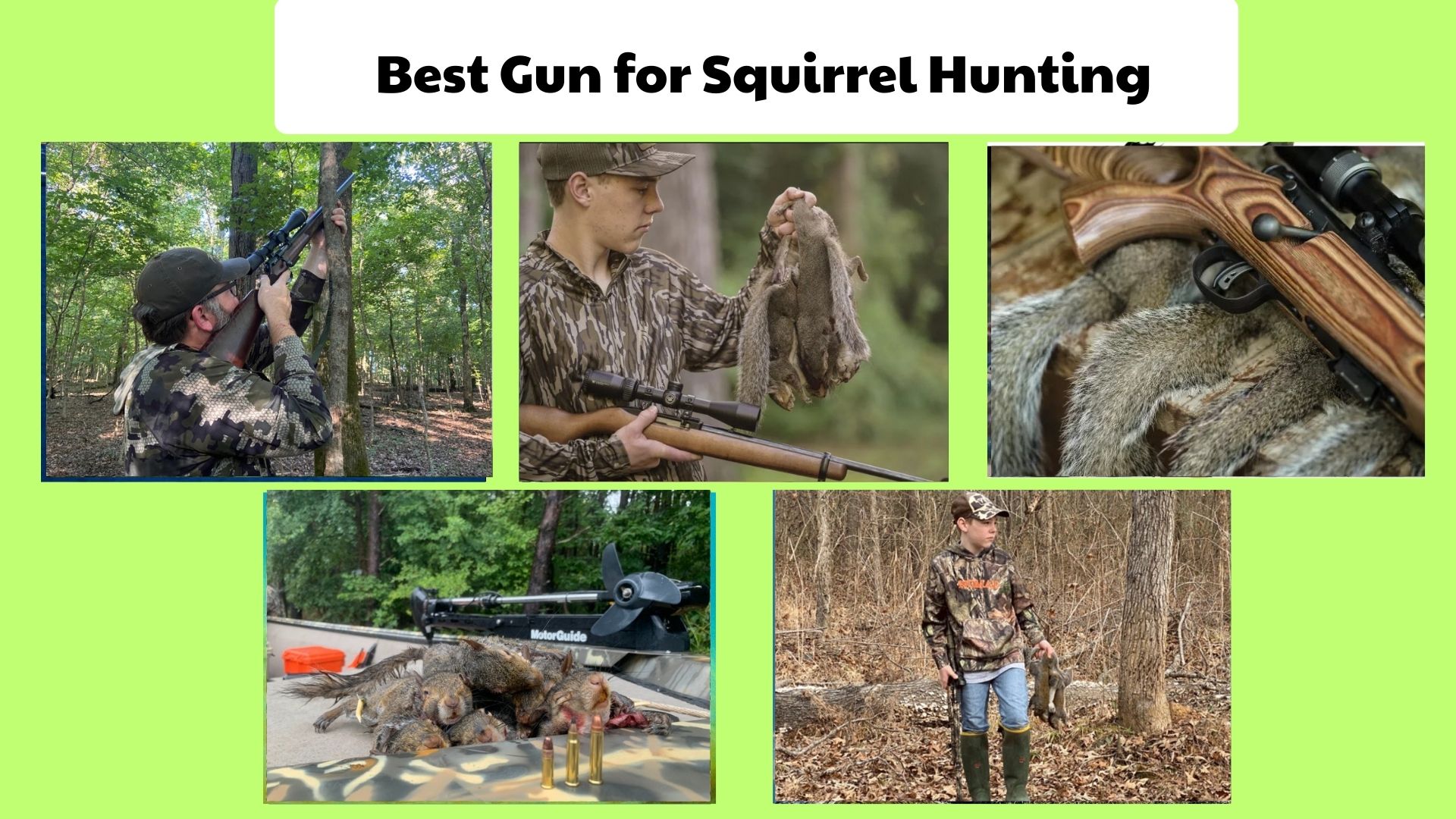
Squirrel hunting is one of the most popular small game pursuits in North America, attracting both novice hunters and experienced marksmen. Its appeal lies in the combination of accessible terrain, year-round availability in many regions, and the challenge of tracking small, fast-moving targets through dense woods. Whether pursued for sport, food, or skill-building, squirrel hunting requires precision, patience, and the right equipment to ensure a successful and ethical harvest.
Choosing the right firearm is critical. A well-selected gun improves accuracy, reduces the risk of wounding the animal, and ensures safety for the hunter and others in the area. Using the wrong firearm can result in excessive meat damage, missed shots, or unsafe handling. Understanding which gun suits your style, terrain, and local regulations is essential for both effective hunting and ethical practices.
This guide focuses on the most practical firearms for squirrel hunting: rifles, shotguns, and airguns. We’ll explore the advantages and limitations of each type, discuss recommended calibers and ammunition, and provide tips for selecting a gun that fits your personal comfort, hunting environment, and skill level. By the end of this article, you’ll have a clear roadmap for choosing the ideal firearm for your next squirrel hunting trip.
Why Firearm Choice Matters for Squirrel Hunting
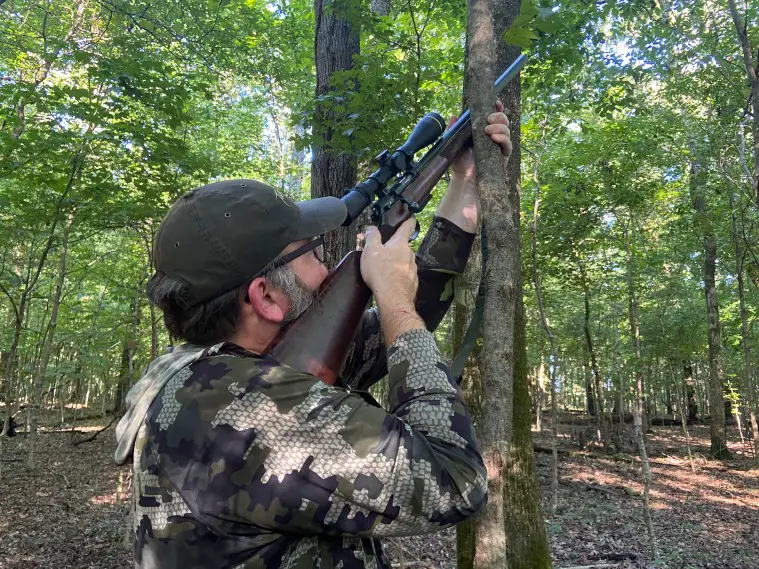
Squirrel hunting may seem straightforward, but the small size, agility, and quick reflexes of squirrels make it a surprisingly challenging pursuit. The animals move rapidly through trees and brush, often darting from limb to limb or disappearing behind dense foliage. This requires hunters to use a firearm that delivers precision shots while minimizing meat damage. A gun that is too powerful can destroy edible portions, while an underpowered option may fail to deliver a humane kill.
Matching gun power to hunting conditions is essential. Most squirrel hunting takes place in wooded areas or near the edges of fields, where shots are typically at short to moderate ranges—often under 100 yards. A firearm that is accurate within this range, easy to maneuver among branches, and quick to aim will significantly increase your chances of success. Rifles, shotguns, and airguns each offer unique advantages for different situations, from open canopy shots to dense underbrush.
Ethical hunting is a cornerstone of small game sports. Using an appropriate firearm ensures clean, humane kills, which reduces unnecessary suffering for the animal and prevents wasted meat. Hunters are responsible for selecting a gun and ammunition that match the target species, distance, and environment. In practice, this means choosing a firearm that provides enough power to reach the animal’s vital zone accurately while maintaining control to prevent accidental injury to the hunter, bystanders, or other wildlife.
In short, the right firearm enhances precision, reduces damage, and aligns with ethical hunting practices. Whether you prefer a rifle for long-range precision, a shotgun for close-range agility, or an airgun for quiet, low-recoil shots, your choice directly affects both success and responsibility in the field.
Best Types of Guns for Squirrel Hunting
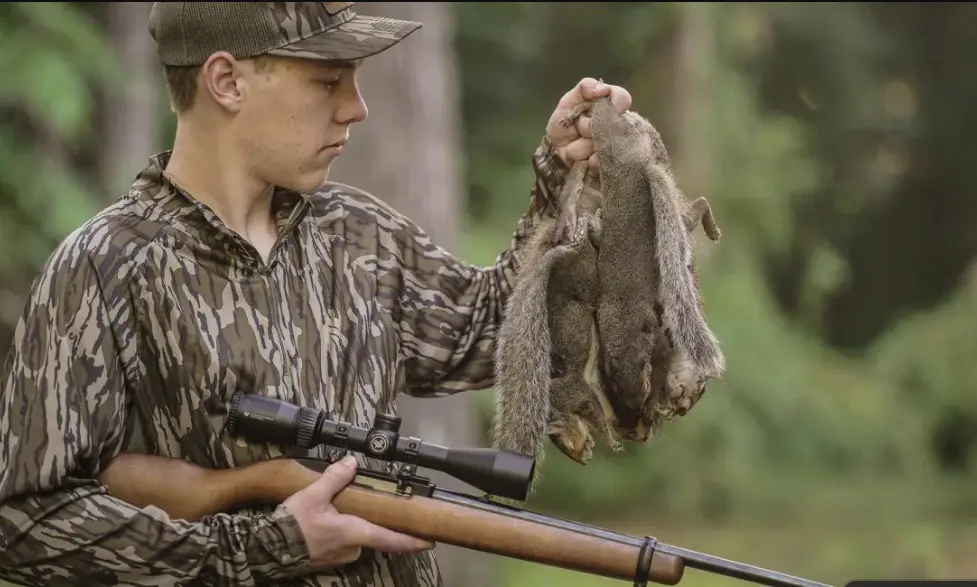
Squirrel hunting environments vary widely, from open hardwood forests to dense brush and backyard woodlots. Because of this, no single firearm is perfect for every situation. Rifles, shotguns, airguns, and even handguns all have roles in squirrel hunting, depending on range, terrain, noise considerations, and hunter preference. Understanding the strengths and limitations of each option helps hunters choose the most effective and ethical tool.
1. Rifles – The Most Popular Choice
Rifles are the most commonly used firearms for squirrel hunting, primarily because of their accuracy and versatility. They excel at making precise shots on small targets at moderate distances, typically between 25 and 100 yards. This precision allows hunters to take clean head shots, which minimizes meat damage and ensures humane harvests.
Several rifle action types are popular for squirrel hunting. Bolt‑action rifles are known for their simplicity, reliability, and excellent accuracy. They encourage deliberate shooting and are often favored by hunters who prioritize precision over speed. Lever‑action rifles offer quicker follow‑up shots and smooth handling, making them well suited for fast-moving squirrels in wooded areas. Semi‑automatic rifles allow rapid follow‑up shots with minimal effort, which can be useful when multiple squirrels are present, though they may sacrifice a small degree of accuracy compared to bolt‑action designs.
In terms of calibers, the .22 Long Rifle is by far the most popular option. It offers low recoil, affordable ammunition, and sufficient power for ethical squirrel hunting at typical distances. Other options such as .17 HMR and .22 Magnum provide flatter trajectories and extended range, though they require careful shot placement to avoid excessive meat damage. Overall, rifles stand out for their accuracy, control, and adaptability across a wide range of hunting conditions.
2. Shotguns – Good in Thick Brush & Close Range
Shotguns are an excellent choice for squirrel hunting in dense woods or thick brush where visibility is limited and shots are taken at close range. Instead of relying on pinpoint accuracy, shotguns use a spread of pellets that increases the likelihood of hitting a fast-moving squirrel, especially when it is jumping between branches.
Common shotgun options include 12 gauge, 20 gauge, and .410 bore. The 20 gauge and .410 are particularly popular for squirrel hunting because they offer lighter recoil and reduced pellet density, which helps limit meat damage. When paired with appropriate squirrel loads, such as light birdshot, shotguns can be very effective without being overly destructive.
Shotguns are also highly maneuverable in tight environments. Their shorter effective range reduces the risk of stray projectiles traveling long distances, making them a safer option in certain wooded or hilly areas. While they lack the precision of rifles, shotguns shine in close‑range, fast‑paced hunting scenarios.
3. Airguns – Quiet and Backyard‑Friendly
Airguns have grown increasingly popular for squirrel hunting, particularly in areas where noise is a concern or where firearm use is restricted. Modern air rifles are capable of delivering accurate, humane shots at short distances, typically under 50 yards, when used responsibly.
There are several types of airguns used for squirrel hunting. Spring‑powered and gas piston rifles are simple, self‑contained systems that do not require external air sources. PCP (pre‑charged pneumatic) airguns offer higher power and exceptional accuracy but require compressed air tanks or pumps. All airgun types share advantages such as low recoil, minimal noise, and reduced risk of over‑penetration.
Because airguns rely heavily on precise shot placement, they are best suited for experienced hunters who understand effective range limits. When used correctly, they provide a quiet, efficient, and ethical option for small game hunting.
4. Handguns – Specialized or Emergency Use
Handguns are a niche choice for squirrel hunting and are generally not recommended as a primary firearm. While some hunters use revolvers or pistols chambered in small calibers like .22 LR, handguns present challenges in accuracy and effective range compared to long guns.
The shorter barrel and limited sight radius of handguns make precise shots more difficult, especially on small targets like squirrels. Power limitations also require careful range management and shot placement to ensure humane kills. As a result, handguns are best reserved for specialized situations, training purposes, or emergency use rather than regular squirrel hunting.
For most hunters, rifles, shotguns, or airguns provide better control, safety, and effectiveness. Handguns remain a niche option that demands advanced skill and strict attention to ethical considerations.
Best Calibers & Loads for Squirrels
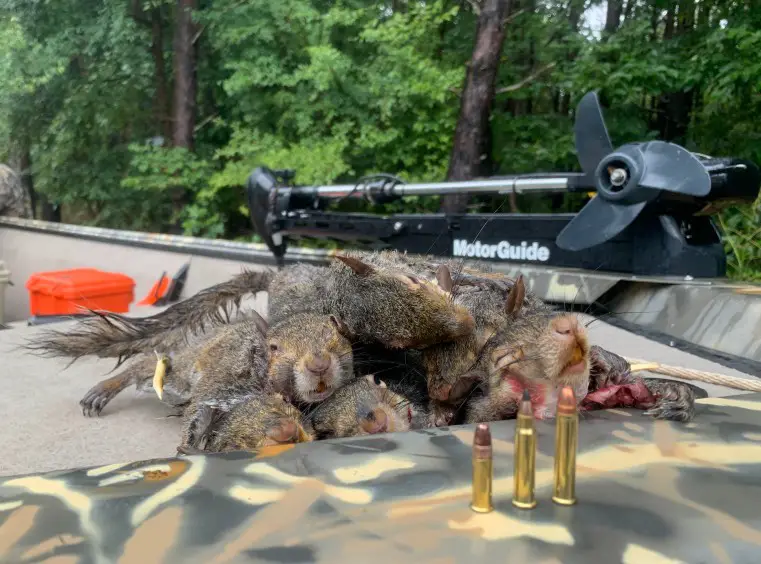
Choosing the correct caliber or load is just as important as selecting the right type of firearm for squirrel hunting. Because squirrels are small game, hunters need enough power for clean, humane kills without excessive penetration or meat damage. The ideal choice balances accuracy, effective range, and ethical performance.
1. Rifle Calibers
Rifles are often paired with small‑caliber cartridges that provide precision without unnecessary power. The most widely used rifle caliber for squirrel hunting is the .22 Long Rifle (.22 LR). It is affordable, widely available, and produces very low recoil and noise. At typical squirrel distances, .22 LR delivers sufficient energy for clean head shots while minimizing meat loss, making it the standard choice for most hunters.
The .17 HMR is a higher‑velocity option that offers a flatter trajectory and improved accuracy at longer ranges. This makes it useful in open woods or when shots extend beyond 75 yards. However, its higher speed can cause more tissue damage if shot placement is poor, so careful aiming is essential.
The .22 WMR (.22 Magnum) provides increased velocity and energy compared to .22 LR. It performs well at extended ranges and in windy conditions, but like the .17 HMR, it requires disciplined shot placement to avoid excessive damage. These higher‑powered rimfire calibers are best suited for experienced hunters who regularly take longer shots.
2. Shotgun Loads
Shotguns rely on pellet spread rather than pinpoint accuracy, making load selection critical. For squirrel hunting, birdshot is the preferred choice. Common shot sizes include #6, #7½, and #8. Smaller shot sizes such as #7½ and #8 produce denser patterns at close range and are ideal for treetop shots, while #6 shot offers slightly more penetration for squirrels on the ground or at the edge of effective range.
Shell length also plays a role in performance. Standard 2¾‑inch shells are more than adequate for squirrel hunting and help limit recoil and pellet density. Heavier loads can increase penetration but may result in unnecessary meat damage. Matching the load to the choke and expected distance ensures clean hits without excessive destruction.
3. Airgun Pellets & Performance
Airgun effectiveness depends heavily on pellet selection and power level. Most squirrel hunters use lead pellets because they offer better weight retention and penetration compared to lightweight alloy pellets. Common pellet designs include domed pellets for accuracy and pointed pellets for deeper penetration, though accuracy should always be the priority.
Pellet weight must match the airgun’s power output. Lighter pellets travel faster but lose energy quickly, while heavier pellets provide better penetration and stability. Ethical squirrel hunting with airguns typically requires staying within 30–50 yards, depending on rifle power and shooter skill.
Understanding realistic power limits is essential. An airgun that is accurate within its effective range can humanely harvest squirrels, but shots beyond that range risk wounding rather than killing. Proper pellet choice, combined with disciplined distance management, makes airguns a quiet and ethical option for small game hunting.
Action Types & Their Pros and Cons
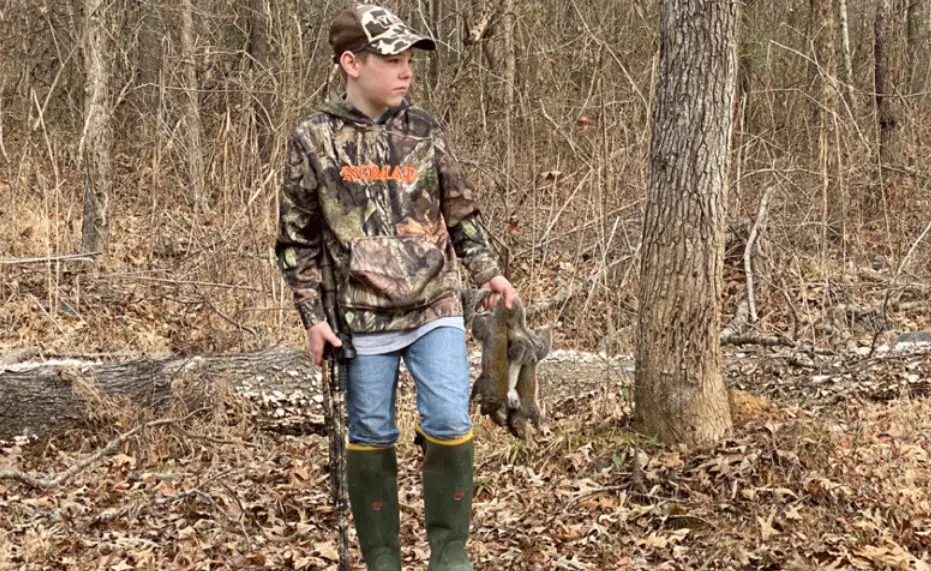
The action type of a firearm plays a major role in how it handles, cycles, and performs in the field. For squirrel hunting, where shots are often deliberate and accuracy matters more than volume of fire, each action style offers distinct advantages and trade‑offs. Understanding these differences helps hunters choose a platform that matches their skill level, hunting environment, and personal preference.
1. Bolt‑Action
Bolt‑action firearms are widely respected for their accuracy, simplicity, and mechanical reliability. With fewer moving parts during firing, bolt‑action rifles tend to be very consistent, making them excellent for precise head shots on small game like squirrels. They also handle a wide variety of rimfire ammunition reliably, including lower‑powered loads that some semi‑autos may struggle to cycle.
The primary drawback is slower follow‑up shots, as the shooter must manually cycle the bolt after each round. However, for squirrel hunting—where careful shot placement is prioritized over speed—this limitation is rarely an issue and often encourages more disciplined shooting.
2. Lever‑Action
Lever‑action rifles offer a balance between traditional design and faster cycling. They allow for quicker follow‑up shots compared to bolt‑action guns while maintaining good accuracy and reliability. Lever actions are especially popular among hunters who enjoy classic styling and smooth handling in wooded environments.
On the downside, lever‑action rifles can be slightly more complex mechanically and may not match the out‑of‑the‑box accuracy of quality bolt‑action rifles. Tube‑fed magazines also require more care when loading and unloading. Still, for hunters who value speed and handling, lever actions are a solid choice.
3. Semi‑Automatic
Semi‑automatic firearms provide the fastest follow‑up shots, automatically cycling the next round after each trigger pull. This can be useful when squirrels are moving quickly or when multiple opportunities arise in a short time. Reduced perceived recoil and ease of use make semi‑autos appealing to many hunters.
However, semi‑automatic actions can be more sensitive to ammunition quality, especially with small calibers like .22 LR. Low‑powered or inconsistent loads may cause cycling issues, leading to jams or failures to eject. Regular cleaning and proper ammo selection are essential to maintain reliability in the field.
4. Single‑Shot & Break‑Action
Single‑shot and break‑action firearms are the simplest action types available. They are lightweight, easy to maintain, and extremely reliable due to their minimal moving parts. These actions are often used as teaching guns, encouraging careful aim and responsible shot selection since only one round is available at a time.
The main limitation is the lack of rapid follow‑up shots, which can be a disadvantage if a second opportunity presents itself quickly. Despite this, many experienced hunters appreciate the simplicity and challenge these firearms offer, making them an excellent option for ethical, skill‑focused squirrel hunting.
Optimal Range & Precision Tips
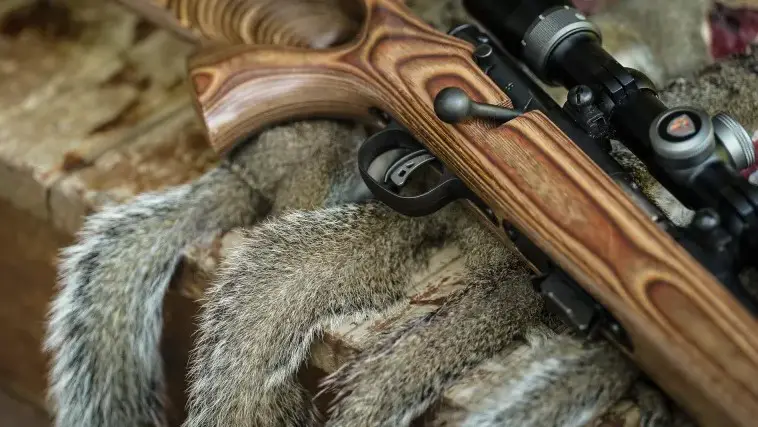
Squirrel hunting is a game of precision rather than power. These small, fast‑moving animals present limited vital areas, and shots are often taken in wooded environments where branches, elevation changes, and short sight lines affect accuracy. Understanding optimal range and using the right sighting system are critical for making clean, ethical shots while preserving meat.
1. Typical Effective Ranges by Gun Type
Each firearm type commonly used for squirrel hunting has a practical effective range. Staying within these ranges improves hit probability and reduces the risk of wounding.
Rifles
Rimfire rifles, especially those chambered in .22 LR, are most effective between 25 and 75 yards for squirrel hunting. Skilled shooters using quality optics may extend that range to around 100 yards, particularly with calibers like .17 HMR or .22 WMR. Beyond this distance, target size and environmental variables significantly reduce consistency.
Shotguns
Shotguns excel at close‑range work in thick cover. With birdshot loads, most ethical shots occur between 10 and 30 yards. Beyond that distance, pellet density decreases rapidly, increasing the risk of wounding rather than cleanly harvesting the animal. Shotguns are best when squirrels are moving or partially obscured by foliage.
Airguns
Modern air rifles are highly effective within 15 to 40 yards, depending on power output and pellet choice. Precision drops quickly beyond this range due to pellet drop and wind sensitivity. For ethical results, many experienced airgun hunters limit shots to under 30 yards.
Handguns
Handguns are typically limited to very short ranges, often under 25 yards. Their shorter sight radius and reduced stability make precision shots more challenging, which is why they are considered a specialized or secondary option rather than a primary squirrel hunting tool.
2. Why Distance Matters in Squirrel Hunting
Distance plays a direct role in ethical hunting and meat preservation. Squirrels have small vital zones, and marginal hits can lead to unnecessary suffering or lost game. Staying within an effective range ensures sufficient accuracy and energy for a quick, humane kill.
At longer distances, even accurate rifles increase the risk of over‑penetration or body hits that damage edible meat. Conversely, being too close with excessive power can cause unnecessary destruction. Matching distance to firearm type helps strike the right balance between lethality and precision.
Environmental factors also amplify the importance of distance. Wind drift affects lightweight bullets and pellets, branches can deflect projectiles, and uneven terrain alters shooting angles. Keeping shots within proven ranges minimizes these variables.
3. Precision Over Power: Shot Placement
For squirrels, precise shot placement matters more than caliber size. Head shots are widely considered the most ethical option, as they provide immediate results and preserve meat. Chest shots can be effective but often damage more tissue, especially when using higher‑velocity rounds.
Regardless of firearm, hunters should wait for a clear, stationary or slow‑moving target. Rushed shots increase the likelihood of misses or non‑lethal hits. Taking a moment to steady the firearm and confirm alignment pays dividends in the field.
4. Sight Options for Small Targets
Choosing the right sighting system improves accuracy, especially when aiming at small vital areas.
Iron Sights
Iron sights are durable, lightweight, and perfectly adequate for close‑range squirrel hunting. They excel in thick woods where shots are quick and distances are short. However, they require good eyesight and consistent practice to maintain precision.
Scopes
Low‑power scopes (2–7x or fixed 4x) are popular for rimfire rifles. They allow precise shot placement at moderate distances without excessive magnification. A scope helps identify clear head shots and improves confidence, especially in mixed light conditions under forest canopy.
Red Dot Sights
Red dot optics offer fast target acquisition and work well for both rifles and airguns at close to medium range. They are especially useful when squirrels are moving or when shooting from unconventional positions. While not as precise as magnified optics at longer ranges, red dots excel in speed and simplicity.
5. Practical Accuracy Tips
Use natural rests such as tree trunks or shooting sticks whenever possible. Practice from field positions, not just from benches. Regularly verify zero, especially when changing ammunition. Most importantly, know your personal effective range and stay within it.
Precision, patience, and realistic distance expectations are the foundation of ethical and successful squirrel hunting.
Safety & Hunting Ethics
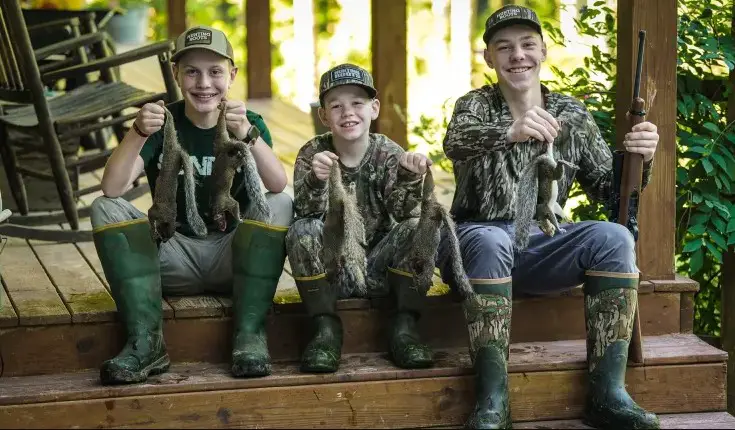
Squirrel hunting may seem low-risk compared to big-game hunting, but safety and ethical considerations are just as critical. Hunters must respect firearms, fellow people, and the environment while maintaining high standards of responsibility. A small mistake in wooded terrain can have serious consequences, making safety practices essential.
1. Safe Firearm Handling in Wooded Terrain
Dense forests and brush create unique challenges for firearm handling. Always treat every gun as if it is loaded, keep the muzzle pointed in a safe direction, and engage the safety when not actively shooting. Move carefully, and maintain a stable shooting stance to prevent slips or accidental discharges.
When climbing trees, crossing streams, or maneuvering over obstacles, unload or secure your firearm. Ensure the gun is easy to access yet protected from accidental damage. Be mindful of recoil and balance when using rifles or shotguns in awkward positions.
2. Identifying Target and Backdrop
One of the most critical safety practices is ensuring a clear line of sight and confirming the target before firing. Squirrels often hide in dense foliage, making it easy to mistake another animal or even a person for your quarry. Always positively identify the animal and check what lies beyond it. A safe backdrop prevents stray bullets or pellets from causing unintended harm.
Avoid shooting at squirrels in conditions where the target is partially obscured or beyond your effective range. Ethical hunting requires patience and the discipline to wait for a clear, unobstructed shot.
3. Respect for Seasons, Limits, and Regulations
Squirrel hunting is regulated at the state or provincial level to ensure sustainable populations. Hunters must familiarize themselves with open seasons, bag limits, and local rules regarding firearm types, caliber restrictions, and permissible hunting areas. Adhering to these regulations is not only legal but ethical, preserving wildlife for future generations.
Ethical hunters also respect private property, natural habitats, and fellow outdoorsmen. Avoid overharvesting, follow fair-chase principles, and always retrieve harvested game to minimize waste. Combining personal responsibility with legal compliance ensures squirrel hunting remains safe, sustainable, and enjoyable.
In summary, safety and ethics go hand in hand. Proper firearm handling, target identification, and adherence to rules protect both hunters and wildlife while promoting a responsible and rewarding hunting experience.
Gear & Accessories for Squirrel Hunting
While firearm selection is critical, the right gear and accessories can greatly improve comfort, effectiveness, and overall success in squirrel hunting. Because squirrels have sharp eyesight and react quickly to movement and sound, hunters benefit from equipment that enhances precision while minimizing noise and visual detection.
1. Scopes and Optic Choices for Close to Medium Range
Optics for squirrel hunting should prioritize clarity, quick target acquisition, and appropriate magnification. Most shots occur at close to moderate distances, so oversized or high‑magnification scopes are unnecessary and can slow down your shot.
Low‑power scopes in the 2–7x or fixed 4x range are among the most popular choices for rimfire rifles. They provide enough magnification to clearly identify a squirrel’s head or vital zone while maintaining a wide field of view. This balance is especially helpful in wooded environments where targets may appear suddenly.
Red dot sights are another excellent option, particularly for airguns and short‑range rifles. They allow fast aiming with both eyes open and perform well in low‑light conditions under forest canopies. For hunters who prefer traditional setups, iron sights remain effective at close range but require more practice and good eyesight.
2. Slings and Quiet Carry Gear
A quality sling is often overlooked but plays an important role in squirrel hunting. Since hunters may walk long distances through woods, a sling helps distribute weight and keeps hands free for balance. Padded slings improve comfort, while adjustable models allow quick transitions from carry to shooting position.
Quiet carry gear is equally important. Avoid metal buckles or loose accessories that may rattle. Soft sling materials, rubberized swivels, and secured attachments help reduce unwanted noise. Even small sounds can alert squirrels, causing them to freeze or retreat deeper into cover.
3. Hunting Clothing and Camouflage
Proper clothing enhances both stealth and comfort. Squirrels rely heavily on vision and detect sudden movement quickly, so camouflage patterns that blend into woodland environments are highly effective. Earth tones and leaf‑based camo designs work well across different seasons.
Lightweight, breathable fabrics are ideal for active hunts, while insulated layers may be necessary in colder months. Quiet materials are essential; stiff or noisy fabrics can give away your position. Gloves and face coverings help break up human outlines and reduce exposed skin that might catch a squirrel’s attention.
Footwear also matters. Lightweight boots or trail shoes with good traction allow quiet movement across leaves and uneven terrain. Combined with appropriate clothing, these accessories help hunters stay concealed, comfortable, and focused throughout the hunt.
In combination, optics, carry gear, and proper clothing create a well‑rounded setup that supports accurate shots, stealthy movement, and an enjoyable squirrel hunting experience.
Conclusion
Squirrel hunting is a classic small‑game pursuit that rewards patience, accuracy, and thoughtful equipment choices. Throughout this guide, we’ve explored the main firearm options available to hunters, including rifles for precision at moderate distances, shotguns for close‑range effectiveness in thick cover, airguns for quiet and controlled shots, and handguns as specialized or secondary tools. Each gun type serves a specific purpose, and no single option is ideal for every situation.
The most important takeaway is the need to match your firearm to your typical hunting terrain and personal comfort level. Dense hardwood forests, open woodlots, and edge habitats all favor different tools. Likewise, recoil tolerance, experience level, and shooting style should influence your decision just as much as caliber or action type. A firearm that feels natural and controllable will always outperform a more powerful option that is difficult to handle accurately.
Finally, success and responsibility go hand in hand. Regular practice builds proficiency and confidence, ensuring clean and ethical harvests. Equally important is respecting hunting seasons, bag limits, and local regulations designed to protect wildlife populations. By choosing the right firearm, practicing safe and ethical hunting, and staying within the law, squirrel hunters can enjoy a rewarding and sustainable tradition for years to come.
Frequently Asked Questions (FAQ) – Squirrel Hunting
1. What is the best firearm for squirrel hunting?
Rifles, especially bolt‑action .22 LR, are the most popular choice due to precision and reliability. Shotguns, airguns, and handguns are also used depending on terrain and range.
2. Can I use a shotgun for squirrel hunting?
Yes, shotguns are effective in dense brush or close-range situations when using small birdshot (#6, #7½, #8) to minimize meat damage.
3. What rifle caliber is ideal for squirrels?
.22 LR is standard for its low recoil, affordability, and sufficient power for humane kills. Other options include .17 HMR and .22 WMR for longer-range shots.
4. Are airguns effective for squirrel hunting?
Yes, modern airguns are quiet, low-recoil, and accurate within 30–50 yards, making them suitable for backyard or restricted areas.
5. Is a hand-held handgun recommended?
Handguns are niche tools, best for experienced hunters or emergency use. Limited range and accuracy make them less ideal than rifles or shotguns.
6. What action types are best for squirrel hunting?
Bolt-action rifles are accurate and reliable, lever-actions offer faster follow-up, semi-automatics allow rapid shots, and single-shot/break-action guns are simple and lightweight.
7. What is the effective range for a .22 LR rifle?
Typically 25–75 yards. Experienced hunters can extend effective shots up to 100 yards with careful shot placement.
8. How far can I shoot squirrels with a shotgun?
Birdshot is effective within 10–30 yards. Beyond that range, pellet spread decreases, reducing ethical kill chances.
9. What is the best shotgun gauge for squirrels?
20-gauge or .410 bore are preferred for low recoil and reduced meat damage. 12-gauge works but is heavier and more powerful than necessary.
10. What type of shot should I use in a shotgun?
Light birdshot (#6, #7½, or #8) is best for squirrels to ensure humane kills and minimal meat damage.
11. Can I use a semi-automatic rifle for squirrel hunting?
Yes, semi-automatic rifles allow faster follow-up shots but may be sensitive to low-powered rimfire ammo.
12. Is camouflage necessary for squirrel hunting?
Yes, squirrels have sharp eyesight. Camouflage clothing helps hunters blend into wooded environments and approach quietly.
13. Do I need a scope for squirrel hunting?
Low-power scopes (2–7x or fixed 4x) improve accuracy at moderate ranges. Iron sights or red dot optics are also effective at close range.
14. What is the best airgun pellet for squirrels?
Lead domed pellets are common due to good weight retention and penetration. Pellet weight should match the airgun’s power level.
15. How important is shot placement?
Critical. Head or chest shots ensure quick, humane kills and minimize meat damage.
16. Can I hunt squirrels year-round?
No. Hunting is regulated by state seasons and bag limits, which must be followed to maintain legal and ethical hunting practices.
17. What is the best lever-action rifle for squirrels?
Any .22 caliber lever-action with smooth cycling and reliable ammunition feeding works well, especially for fast-moving targets in wooded areas.
18. How do I reduce noise when carrying a firearm?
Use quiet slings, soft gear, and secure accessories to avoid rattling that may alert squirrels.
19. Are break-action guns suitable for beginners?
Yes, they are simple, lightweight, and encourage careful shot selection, making them ideal for teaching new hunters.
20. How do I ethically take a squirrel at longer distances?
Ensure your firearm has sufficient accuracy and power for a clean head or chest shot, staying within the effective range of your chosen caliber or load.
21. Should I practice shooting before hunting?
Absolutely. Dry practice, target drills, and patterning your firearm improve accuracy and confidence in the field.
22. Can I use steel shot in a shotgun for squirrels?
No, lead birdshot is preferred. Steel is too hard and may over-penetrate, damaging the meat and posing safety risks.
23. What are common mistakes beginners make?
Shooting beyond effective range, poor shot placement, not checking backgrounds, and using overly powerful firearms for small game.
24. How do I maintain my rifle for small game hunting?
Regular cleaning of bore, action, and optics; check zero; store in a dry environment; inspect for wear after each hunting trip.
25. Are scopes better than iron sights for beginners?
Scopes can aid in precision at moderate range, but iron sights are simpler, durable, and sufficient for most close-range shots.
26. Can I hunt squirrels with a .17 HMR?
Yes, it provides flatter trajectory and better accuracy at extended distances, but requires careful shot placement to avoid excessive damage.
27. Is recoil a concern in small game hunting?
Yes, lighter calibers reduce fatigue and help maintain accuracy for follow-up shots, especially during long hunts.
28. How do I choose between rifle and shotgun?
Use a rifle for precise, longer shots in open areas; a shotgun for close-range or dense brush hunting where pellet spread is advantageous.
29. Can I hunt squirrels in urban areas?
Check local regulations first. Airguns may be allowed in some areas where firearms are restricted due to noise and safety concerns.
30. What clothing should I wear?
Quiet, camouflaged layers suited to the season; breathable in summer, insulated in winter; avoid shiny or noisy fabrics.
31. Are gloves recommended?
Yes, gloves help break up outlines, provide grip, and reduce noise from handling gear in dry leaves or brush.
32. Should I use a sling on my rifle?
Yes, a sling improves carrying comfort and allows quick transitions from walking to shooting positions.
33. What is the ethical shooting distance with an airgun?
Generally 30–50 yards, depending on airgun power and pellet type, to ensure humane kills.
34. Can I use high-velocity rimfire ammo?
Yes, but ensure shot placement is precise. High velocity may increase meat damage if hits are off-center.
35. How important is environmental awareness?
Very important. Wind, terrain, branches, and light conditions all affect shot placement and safety.
36. Can squirrels detect humans easily?
Yes, squirrels have keen eyesight. Camouflage, slow movement, and minimizing noise are key to approaching within shooting range.
37. What is the advantage of a bolt-action over semi-auto?
Bolt-actions offer consistent accuracy and reliability, especially with low-powered rimfire ammunition that may not cycle semi-autos properly.
38. Should I bring a spotting scope or binoculars?
Binoculars can help locate squirrels and plan shots without spooking them, particularly in open woods.
39. Are multi-shot rifles necessary?
Not usually. Most hunters only need one or two shots per squirrel; more rounds are rarely required.
40. Can I hunt squirrels at night?
No. Hunting is typically restricted to daylight hours for safety and ethical reasons.
41. Is meat preservation important?
Yes, using proper caliber and shot placement ensures minimal damage and maintains quality for consumption.
42. Should I practice on moving targets?
Yes, practicing with moving clay targets or small game simulators improves timing and tracking for real squirrels.
43. Can I hunt squirrels in winter?
Yes, but wear insulated clothing and maintain firearm function in cold, damp conditions.
44. How do I avoid wounding squirrels?
Stay within effective range, use proper caliber and shot type, and aim for head or chest zones with patience and precision.
45. What is the best time of day to hunt squirrels?
Early morning and late afternoon are ideal, as squirrels are most active during these periods.
46. Can children hunt squirrels?
Yes, with proper supervision, appropriate firearms (light recoil), and safety training, children can participate ethically.
47. How do I store harvested squirrels?
Field dress promptly, keep cool, and refrigerate or freeze soon after hunting to preserve meat quality.
48. Are silencers allowed for squirrel hunting?
Depends on local laws. Airguns may be quieter and legal where suppressors are restricted; always check regulations.
49. How often should I clean my gun during hunting season?
Clean bore and action regularly, especially after exposure to moisture, dust, or high round counts to maintain accuracy and reliability.
50. What is the best way to carry a rifle in the woods?
Use a sling for hands-free mobility, keep the muzzle pointed down, and secure extra ammo safely to reduce noise and risk.
51. Are gloves and boots important for safety?
Yes, gloves protect hands from scratches, and boots provide stability and protection when moving through uneven forest terrain.