
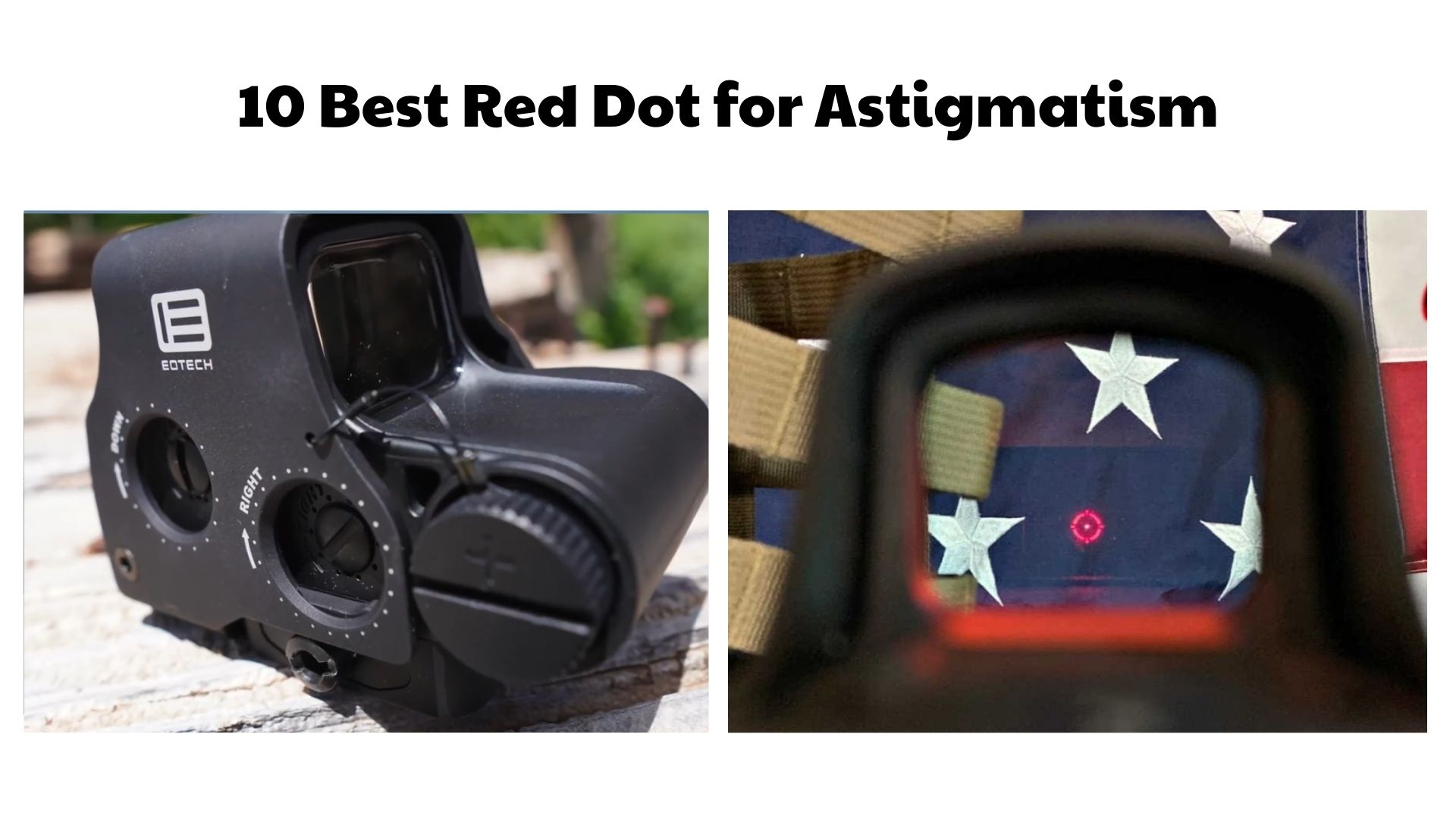
Finding the Best red dot for astigmatism can be challenging for shooters who experience distorted or star‑shaped reticles when using standard optics. Astigmatism affects how the eye focuses light, which often causes a traditional red dot to appear blurry, smeared, or multiplied. Fortunately, several modern optics are designed with features that help reduce these visual distortions, making them far more comfortable and precise for people with this common eye condition.
In this guide, we review some of the most reliable options currently available for shooters seeking a dependable red dot for astigmatism. These optics include holographic sights, prism optics, and high‑quality reflex sights with improved reticle clarity. Each option offers its own strengths, such as wider viewing windows, etched reticles, or multi‑reticle systems that remain easier to see even when eyesight introduces distortion. By understanding how these sights perform in real‑world conditions, shooters can choose a model that improves both comfort and target acquisition.
The following list introduces ten carefully selected optics that consistently perform well for shooters with astigmatism. Every optic has a reputation for reliability, optical clarity, and durable construction. Whether used for recreational shooting, competitive events, or defensive setups, these sights represent some of the most practical solutions for maintaining clear aiming points when traditional red dots may fall short.
10 Best Red Dot for Astigmatism
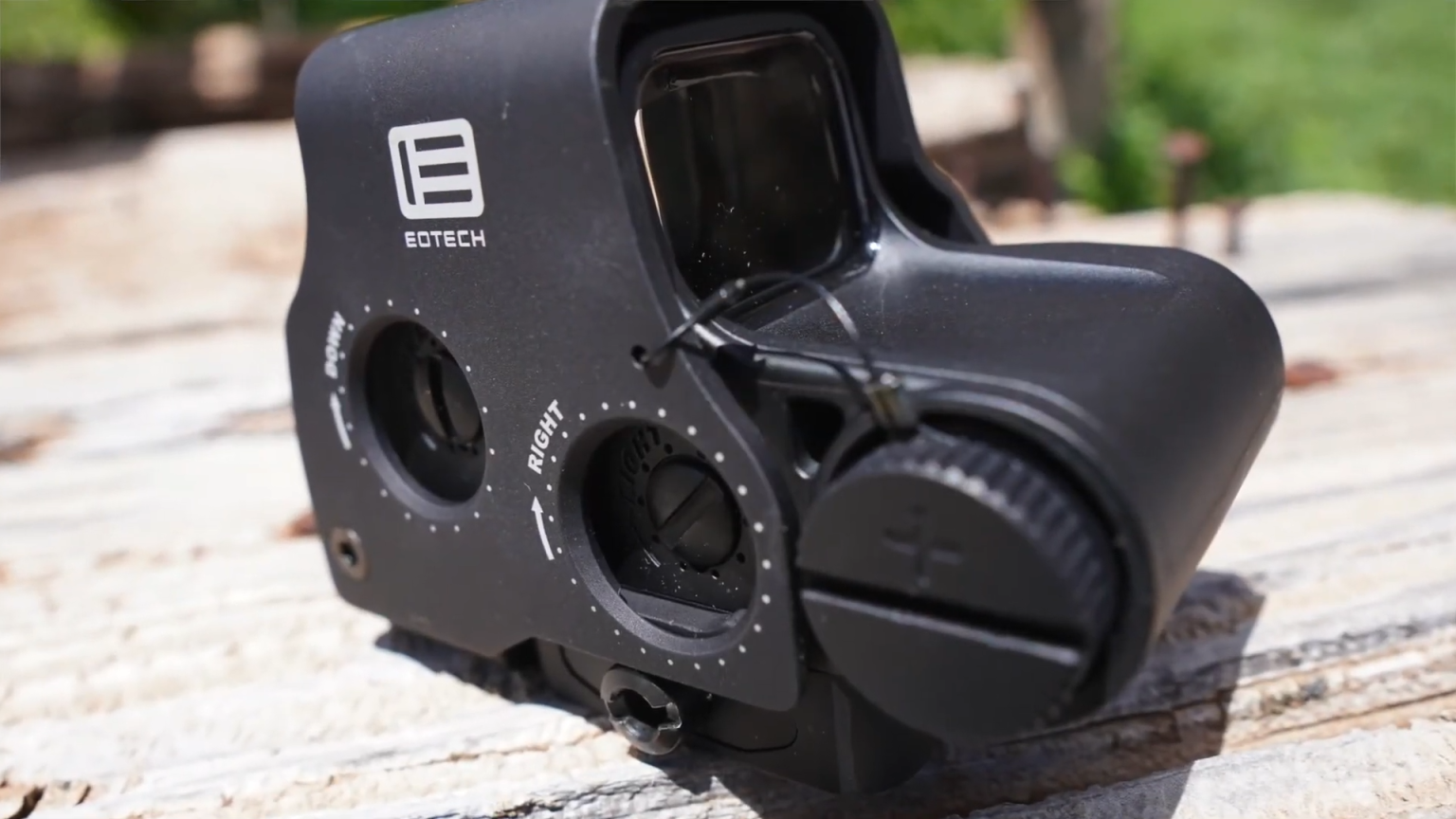
1. EOTech EXPS3 Holographic Tactical Sight
The EOTech EXPS3 is widely recognized as one of the most effective optics for shooters who struggle with astigmatism, largely because it uses holographic technology instead of the traditional LED emitter design found in standard red dot sights. This difference in technology significantly affects how the reticle appears to the human eye, especially for those who experience distortion when looking through typical reflex optics. Rather than projecting a single illuminated dot onto the lens, the EXPS3 uses a holographic projection system that creates a more complex reticle pattern consisting of a center aiming point surrounded by a circular reference ring. Many shooters with astigmatism find that this type of reticle appears noticeably sharper and easier to focus on compared with a simple red dot, which often looks smeared or star‑shaped.
One of the defining characteristics of the EXPS3 is its wide rectangular viewing window, which allows for extremely fast target acquisition and maintains excellent situational awareness during shooting. The generous window size reduces the feeling of tunnel vision that some optics create, making it easier to track moving targets or transition between multiple targets quickly. For individuals with astigmatism, this larger viewing area can also help the eye focus more naturally on the reticle without forcing excessive concentration on a tiny dot. Combined with the holographic reticle design, the result is an aiming system that remains clear and functional even when eyesight imperfections are present.
Durability is another reason this optic often appears in discussions about the Best red dot for astigmatism. The EXPS3 was originally developed for demanding professional environments, which means it is built to withstand harsh weather, recoil, and rough handling. The housing is constructed from strong aluminum and designed to resist impact while protecting the internal optical components. The sight is also waterproof and capable of functioning in a wide range of temperatures, ensuring reliability during extended outdoor use. This level of ruggedness makes the EXPS3 suitable not only for casual range shooting but also for more demanding tactical or defensive applications.
Another advantage is the reticle brightness control system. The optic offers multiple brightness settings that allow shooters to adjust the reticle intensity depending on lighting conditions. This is particularly useful for individuals with astigmatism because a reticle that is too bright can sometimes exaggerate distortion. Being able to lower the brightness slightly often results in a sharper reticle appearance, making the aiming point easier to see. With night‑vision compatibility and precise adjustment controls, the EXPS3 provides flexibility that many shooters appreciate.
2. Trijicon MRO Wide‑View Reflex Optic
The Trijicon MRO, short for Miniature Rifle Optic, is a compact reflex sight known for its exceptionally large field of view relative to its size. For shooters dealing with astigmatism, this characteristic can be surprisingly beneficial because a larger viewing window often allows the eye to naturally align with the reticle without straining to focus on a tiny illuminated point. The optic’s slightly larger objective lens compared to many micro red dots helps create a more comfortable viewing experience and can make the reticle appear more stable and easier to track during rapid shooting.
Unlike holographic sights, the MRO uses a traditional LED emitter system. However, Trijicon designed the optic with high‑quality glass and a refined optical system that minimizes distortion and improves overall clarity. While astigmatism can still affect how the reticle appears, many shooters report that the dot produced by the MRO appears cleaner than the dots produced by some lower‑quality reflex sights. The brightness settings allow users to fine‑tune the reticle intensity, which again helps reduce starburst effects that can occur when the reticle is too bright for the eye.
One of the reasons the Trijicon MRO remains popular is its incredible durability. Trijicon products are widely respected for their rugged construction, and the MRO follows that tradition with a robust aluminum housing designed to handle recoil, impact, and environmental stress. The optic is waterproof, fog‑resistant, and capable of operating in extreme temperatures. For shooters who need an optic that will continue functioning under demanding conditions, this reliability adds significant value.
Battery life is another strong advantage. The MRO can run for years on a single battery when used at moderate brightness settings. This long operational life reduces maintenance concerns and ensures that the optic remains ready whenever it is needed. Combined with its simple control layout and straightforward design, the Trijicon MRO offers a dependable option for shooters searching for a reliable red dot for astigmatism that balances clarity, durability, and efficiency.
3. Holosun HS510C Multi‑Reticle Reflex Sight
The Holosun HS510C has become a popular optic among shooters looking for a flexible and affordable option that still performs well with astigmatism. One of its most valuable features is the multi‑reticle system, which allows users to choose between several reticle patterns including a single dot, a circle‑dot combination, or a larger ring reticle. This flexibility can make a significant difference for shooters with astigmatism because different reticle shapes may appear clearer depending on how the individual eye interprets the projected light.
The optic’s large open‑window design contributes to quick target acquisition and improved peripheral awareness. Instead of looking through a narrow tube, the shooter sees a broad viewing window that allows for natural head movement and easy tracking of targets. For individuals whose vision struggles with small, concentrated dots, this design can reduce the need to focus intensely on a tiny aiming point. Instead, the eye naturally aligns with the reticle as part of the overall sight picture.
Durability is also a defining feature of the HS510C. The optic uses a reinforced aluminum housing combined with a titanium hood that protects the lens from impact. This protective design helps ensure that the optic can withstand rough use while maintaining optical performance. Additionally, the HS510C includes solar power backup alongside its battery system. This feature extends battery life and allows the optic to continue functioning even if the battery begins to run low during daylight conditions.
Another important aspect for shooters with astigmatism is the ability to adjust brightness easily. The HS510C offers multiple brightness levels that help control how intense the reticle appears. Lower brightness settings can significantly improve reticle clarity for users whose eyes struggle with glare or starburst effects. With its combination of versatility, durability, and user‑friendly features, the Holosun HS510C stands out as a strong candidate when searching for the Best red dot for astigmatism.
4. SIG Sauer Romeo5 Motion‑Activated Red Dot
The SIG Sauer Romeo5 is widely regarded as one of the best entry‑level optics for shooters who want reliable performance without an extremely high price tag. Although it is more affordable than many premium optics, the Romeo5 still offers features that make it surprisingly effective for individuals dealing with astigmatism. The optic uses a crisp LED emitter paired with high‑quality glass, which helps produce a cleaner aiming point compared with many budget reflex sights.
One of the most useful features of the Romeo5 is its motion‑activated illumination system. When the optic remains stationary for a period of time, the reticle automatically powers down to conserve battery life. As soon as the firearm moves, the reticle instantly reactivates. This system allows shooters to leave the optic mounted and ready without worrying about constantly replacing batteries. For practical shooting setups, this convenience is highly appreciated.
Despite its compact size, the Romeo5 provides a clear viewing window and an easily adjustable brightness control system. Being able to reduce brightness often helps shooters with astigmatism achieve a more defined aiming point. When the reticle intensity is balanced properly, the dot may appear less distorted and easier to center on a target. The optic also features multiple mounting options, allowing it to be configured for different firearm platforms.
Durability is another strong point. The Romeo5 is built with a rugged aluminum body and sealed construction that protects the internal electronics from water, dust, and shock. This level of protection ensures that the optic remains reliable even in challenging outdoor conditions. For shooters seeking an affordable yet dependable red dot for astigmatism, the SIG Sauer Romeo5 offers a practical balance between cost, performance, and durability.
5. Vortex UH‑1 Gen II Holographic Combat Optic
The Vortex UH‑1 Gen II is a holographic sight that has gained a reputation for providing excellent reticle clarity, especially for shooters who experience astigmatism when using traditional red dots. Like other holographic optics, it uses a different projection system that often results in a reticle appearance that feels more natural to the human eye. Instead of a simple illuminated point, the UH‑1 presents a detailed reticle pattern that many shooters find easier to interpret and align quickly.
One of the most distinctive features of this optic is its large viewing window, which offers an expansive sight picture. This wide field of view allows shooters to maintain strong situational awareness while keeping the reticle clearly visible. The open window design also reduces the visual strain sometimes caused by small tubular optics. For people with astigmatism, this can make aiming feel more comfortable during extended shooting sessions.
The UH‑1 Gen II is built with durability in mind. The housing is constructed from robust materials that protect the internal components from impact and environmental exposure. It is designed to perform reliably in demanding conditions, including extreme temperatures and wet environments. This level of ruggedness ensures that the optic remains dependable even during heavy use.
Brightness controls and reticle clarity adjustments further enhance usability. Shooters can easily modify the reticle intensity to match ambient lighting conditions. As with many optics used by individuals with astigmatism, lowering the brightness slightly can make the reticle appear sharper and more defined. With its combination of advanced holographic technology, rugged construction, and user‑friendly features, the Vortex UH‑1 Gen II represents a compelling option for those seeking the Best red dot for astigmatism.
6. Aimpoint PRO Patrol Rifle Optic
The Aimpoint PRO, commonly known as the Patrol Rifle Optic, is one of the most respected duty‑grade reflex sights available today. Although it uses a traditional LED red dot system, its reputation for clarity and durability makes it a strong candidate for shooters searching for a dependable red dot for astigmatism. Many users with mild to moderate astigmatism report that the dot produced by Aimpoint optics appears noticeably cleaner compared with less refined reflex sights. This improvement largely comes from the precision engineering of the emitter and the high‑quality optical glass used in the sight’s construction.
One of the defining strengths of the Aimpoint PRO is its consistency. The optic produces a stable 2 MOA aiming dot that remains easy to track during rapid shooting and quick target transitions. For individuals dealing with astigmatism, a smaller dot size can sometimes appear less distorted than a larger one, especially when the brightness is adjusted properly. Because the PRO includes several brightness levels, shooters can reduce the intensity slightly to improve how the dot appears through their eyes. This ability to fine‑tune the reticle is an important factor for anyone who struggles with starburst or halo effects caused by bright illumination.
Durability is another area where the Aimpoint PRO truly stands out. Designed with professional use in mind, the optic is built from rugged aluminum and sealed to resist water, dust, and extreme environmental conditions. The sight is capable of functioning in temperatures ranging from freezing cold to intense heat, making it reliable for outdoor use in nearly any climate. This level of reliability has made the PRO a trusted optic among law enforcement officers, professional shooters, and recreational enthusiasts alike.
Battery life is equally impressive. The optic can run continuously for years on a single battery when set at a moderate brightness level. This means the sight can remain powered on at all times, eliminating the need to activate it before use. For defensive setups, this constant readiness can be extremely valuable. Combined with its proven reliability, simple controls, and excellent optical clarity, the Aimpoint PRO continues to be one of the most dependable optics available for shooters seeking the Best red dot for astigmatism.
7. Primary Arms SLx 1x MicroPrism ACSS Optic
For shooters who experience severe reticle distortion with traditional reflex sights, prism optics often provide a much clearer alternative. The Primary Arms SLx 1x MicroPrism ACSS is a perfect example of this design philosophy. Instead of projecting a dot onto a lens, the optic uses an etched reticle that is physically engraved into the internal prism system. Because the reticle is etched rather than projected, it remains sharp and well defined even for individuals with strong astigmatism.
One of the most important benefits of prism optics is that they behave more like traditional rifle scopes. The reticle appears as a solid, defined shape rather than a glowing point of light. For many shooters, this eliminates the starburst or comet‑tail effect that often occurs when viewing a projected red dot through eyes with astigmatism. The SLx MicroPrism takes this advantage further by incorporating the ACSS reticle system, which includes additional reference marks designed to help with range estimation and quick target alignment.
Despite being a prism optic, the SLx MicroPrism remains extremely compact and lightweight. It is designed to function similarly to a red dot sight in terms of speed and simplicity while still offering the clarity benefits of an etched reticle. The optic also features adjustable illumination levels that allow the reticle to glow under low‑light conditions without becoming excessively bright. If the battery runs out, the etched reticle remains visible, ensuring the optic can still function normally.
Durability and construction quality are also notable strengths. The SLx MicroPrism features a solid aluminum housing designed to withstand recoil, environmental exposure, and regular field use. The compact design allows it to be mounted on a variety of firearm platforms without adding significant weight or bulk. For shooters whose astigmatism makes traditional dots difficult to use, this optic offers one of the clearest aiming systems available and is often considered a top contender for the Best red dot for astigmatism.
8. Vortex Spitfire 1x Prism Combat Sight
Another highly effective option for shooters with astigmatism is the Vortex Spitfire 1x Prism Combat Sight. Like the Primary Arms MicroPrism, this optic uses a prism‑based design with an etched reticle rather than a projected LED dot. This design allows the reticle to appear crisp and stable regardless of eye conditions that might distort traditional red dot sights. For many shooters who struggle with blurry or star‑shaped dots, the Spitfire provides a noticeably clearer aiming solution.
The etched reticle is designed with a simple and intuitive layout that makes it easy to use in fast‑paced shooting environments. The central aiming point remains highly visible, while additional reticle lines provide helpful reference marks for alignment. Because the reticle is physically engraved into the optic’s internal prism system, it does not rely entirely on electronic illumination. Even if the battery becomes depleted, the reticle remains visible through ambient light.
Optical clarity is a major advantage of the Spitfire design. The glass used in the optic provides a bright and well‑defined sight picture, which helps shooters maintain focus on their target rather than struggling to interpret a distorted aiming point. The illumination system allows users to choose between multiple brightness levels and even different color options, providing flexibility for various lighting conditions.
Vortex is also known for producing durable optics backed by strong warranties, and the Spitfire is no exception. The optic features a rugged construction that protects the internal prism assembly from impact and environmental damage. Its sealed design resists moisture and dust, ensuring consistent performance during outdoor use. For shooters looking for a reliable alternative to traditional reflex sights, the Vortex Spitfire 1x offers a practical and highly effective red dot for astigmatism.
9. Holosun HS507C X2 Circle‑Dot Pistol Optic
The Holosun HS507C X2 is a compact reflex sight designed primarily for handgun platforms, but its advanced features also make it an appealing option for shooters with astigmatism. One of its most useful characteristics is the multi‑reticle system, which allows users to switch between a simple dot, a circle‑dot combination, or a larger ring reticle. These different patterns can help reduce the visual distortion sometimes caused by astigmatism, as the eye may interpret one shape more clearly than another.
Another advantage of the HS507C X2 is its solar‑assisted power system. The optic uses both a battery and a solar panel to maintain illumination, which helps extend operational life significantly. The sight can automatically adjust brightness based on surrounding light conditions, ensuring the reticle remains visible without becoming excessively bright. This automatic adjustment is helpful for individuals with astigmatism, since overly bright reticles can exaggerate visual distortion.
The construction of the optic also deserves attention. Holosun designed the HS507C X2 with a durable aluminum housing that protects the lens and internal electronics from recoil and environmental stress. Despite its compact size, the optic is built to handle repeated use and maintain reliable performance over time. Its low profile allows it to mount easily on compatible handgun slides while maintaining a comfortable shooting position.
The reticle clarity combined with adjustable brightness levels makes the HS507C X2 a flexible optic for shooters who want a compact yet capable sight. When configured properly, the circle‑dot reticle can appear more stable than a single illuminated dot, improving aiming confidence for users with astigmatism. Because of these features, the Holosun HS507C X2 frequently appears in discussions about the Best red dot for astigmatism.
10. Burris FastFire 4 Advanced Reflex Sight
The Burris FastFire 4 represents the latest evolution in Burris reflex sight technology and is designed to provide improved reticle visibility and ease of use. While compact optics can sometimes exaggerate the effects of astigmatism, the FastFire 4 addresses this challenge by offering multiple reticle shapes that allow shooters to choose the one that appears most clearly to their eyes. These reticle options include a traditional dot as well as alternative patterns that may be easier to see when visual distortion is present.
The optic features a relatively large viewing window compared with many other micro reflex sights. This wider lens allows shooters to acquire targets quickly while maintaining good peripheral awareness. For individuals dealing with astigmatism, the larger viewing area can reduce the need to concentrate intensely on a tiny reticle point, which sometimes helps improve perceived clarity. The result is a sight picture that feels more natural and less visually demanding.
Another important aspect of the FastFire 4 is its improved brightness control system. Multiple illumination settings allow the user to adjust the reticle intensity depending on lighting conditions and personal visual comfort. Lower brightness settings often make the reticle appear sharper for shooters with astigmatism, while higher settings ensure visibility in bright outdoor environments. This flexibility helps maintain a usable aiming point across a wide range of scenarios.
The construction quality of the FastFire 4 also contributes to its overall appeal. Burris designed the optic with durable materials that resist shock and environmental exposure while maintaining lightweight portability. The compact design makes it suitable for a variety of firearm platforms, including handguns and lightweight rifles. With its combination of versatile reticle options, clear viewing window, and reliable construction, the Burris FastFire 4 serves as another excellent candidate when searching for the Best red dot for astigmatism.
Conclusion
Choosing the Best red dot for astigmatism can significantly improve the shooting experience for individuals whose vision causes traditional red dot reticles to appear blurry, stretched, or star‑shaped. Astigmatism affects how light focuses inside the eye, which means that the simple illuminated dot produced by many reflex sights may not always appear crisp. Fortunately, modern optics manufacturers have developed a wide range of solutions that help reduce these visual distortions and provide a clearer aiming point for shooters with this condition.
Throughout this guide, we explored ten optics that consistently perform well for shooters dealing with astigmatism. These sights represent several different design approaches, including holographic optics, prism sights with etched reticles, and refined reflex optics that offer improved clarity. Holographic sights such as those produced by EOTech or Vortex often appear sharper because the reticle is generated differently than a standard LED dot. Prism optics, on the other hand, use etched reticles that remain clearly defined even for individuals with stronger visual distortion. Meanwhile, high‑quality reflex sights from companies like Aimpoint, Holosun, and Trijicon provide adjustable brightness levels and optical systems that help minimize glare and reticle distortion.
Another key factor when selecting a red dot for astigmatism is reticle customization. Optics that provide multiple reticle patterns—such as circle‑dot combinations or larger reference rings—can make it easier for the eye to interpret the aiming point. Some shooters discover that certain reticle shapes appear far clearer than a single small dot. Additionally, brightness adjustment plays an important role. Reticles that are too bright often exaggerate starburst effects, while slightly reduced brightness can produce a more defined aiming point.
Durability and reliability should also remain important considerations. Many of the optics discussed here are built for demanding environments and are capable of handling recoil, temperature changes, and rough field conditions. A dependable optic ensures that shooters can focus on accuracy and consistency rather than worrying about equipment failure.
Ultimately, the ideal optic depends on personal preference, shooting style, and the severity of an individual’s astigmatism. Some shooters may find holographic sights provide the clearest reticle, while others prefer the crisp etched reticles of prism optics. The good news is that modern technology now offers many excellent choices. By testing different designs and adjusting brightness settings appropriately, shooters can find an optic that delivers a clear and comfortable sight picture while maintaining the speed and efficiency that red dot optics are known for.
Frequently Asked Questions About Red Dot for Astigmatism
1. What is astigmatism and how does it affect red dot sights?
Astigmatism is a common vision condition where the eye does not focus light evenly on the retina. Because of this irregular curvature of the cornea or lens, illuminated reticles such as red dots may appear blurry, stretched, or star‑shaped instead of forming a crisp circular dot.
2. Can people with astigmatism still use red dot sights?
Yes. Many shooters with astigmatism still use red dot sights successfully. The key is choosing optics that provide adjustable brightness, alternative reticle shapes, or different projection technologies such as holographic or prism optics.
3. Why does a red dot sometimes look like a starburst?
A starburst effect occurs when the eye cannot focus the projected LED light properly. Astigmatism causes light rays to bend unevenly, making the dot appear distorted, stretched, or multiplied.
4. Are holographic sights better for astigmatism?
Many shooters report that holographic sights appear clearer than traditional LED reflex sights because the reticle projection method differs. The reticle often appears more detailed and easier for the eye to interpret.
5. What type of optic works best for severe astigmatism?
Prism optics with etched reticles often work best for people with stronger astigmatism. Because the reticle is physically engraved in the glass rather than projected as light, it usually appears sharper.
6. Does adjusting brightness help with astigmatism?
Yes. Lowering the brightness often reduces the glare and halo effect around the reticle, making the aiming point appear sharper and easier to see.
7. Do larger reticles work better for astigmatism?
Some shooters find that circle‑dot or larger reticle designs appear clearer than a single tiny dot. Larger shapes can help the eye interpret the aiming point more easily.
8. Are green reticles better than red for astigmatism?
For some people, green reticles appear sharper because the human eye is more sensitive to green wavelengths. However, this varies from person to person.
9. Do red dots worsen astigmatism?
No. Using a red dot sight does not worsen astigmatism. The optic simply makes the visual distortion more noticeable because the reticle is a bright point of light.
10. Can glasses correct red dot distortion?
In many cases, wearing prescription glasses or contact lenses designed for astigmatism can reduce distortion and make the reticle appear more defined.
11. What is a prism optic?
A prism optic is a type of sight that uses a prism system instead of a simple LED projection. It includes an etched reticle that remains visible even if illumination fails.
12. Are prism optics slower than red dots?
Not necessarily. Modern 1x prism optics are designed for fast target acquisition and often perform similarly to traditional red dot sights.
13. What magnification is best for astigmatism?
Many shooters prefer 1x optics for speed and simplicity, though low‑power magnified optics can also improve reticle clarity for some individuals.
14. Do high‑quality optics reduce astigmatism distortion?
Higher quality optics often produce cleaner reticles with better glass clarity, which can help reduce perceived distortion.
15. Does the dot size matter?
Yes. Smaller dots such as 2 MOA sometimes appear cleaner for people with astigmatism compared with larger dots.
16. What does MOA mean in red dot optics?
MOA stands for Minute of Angle. It describes the size of the reticle relative to the target distance.
17. Are reflex sights the same as red dots?
Most red dots are reflex sights, but not all reflex sights use the same technology or reticle design.
18. Do all shooters with astigmatism see distorted dots?
Not always. The severity of astigmatism varies greatly, and some shooters experience minimal distortion.
19. Is a larger viewing window helpful?
Yes. A larger viewing window often makes it easier to locate the reticle quickly and maintain awareness of the target area.
20. Can magnifiers help with astigmatism?
In some cases, adding a magnifier behind a red dot sight can make the reticle appear more defined.
21. Should I test optics before buying?
Yes. Vision conditions vary, so testing an optic in person is often the best way to determine how clearly you see the reticle.
22. Do holographic sights consume more battery power?
Generally yes. Holographic optics often use more power than traditional red dots.
23. What brightness level is best?
The ideal brightness is the lowest level that remains clearly visible in the current lighting conditions.
24. Can lighting conditions affect reticle clarity?
Yes. Bright sunlight or indoor lighting can change how the reticle appears to the eye.
25. Do tinted lenses affect astigmatism?
Lens tint may change perceived brightness but typically does not correct astigmatism distortion.
26. Are open reflex sights good for astigmatism?
They can work well, especially if they include adjustable brightness and larger reticle shapes.
27. What is parallax in red dot optics?
Parallax refers to the apparent movement of the reticle relative to the target when the shooter moves their eye position.
28. Are red dots good for beginners with astigmatism?
Yes. Many beginners with astigmatism still benefit from the fast target acquisition that red dot sights provide.
29. How far can a red dot sight be used effectively?
Red dots are commonly used at distances from close range up to several hundred yards depending on the firearm and skill level.
30. Can reticle color affect clarity?
Yes. Some shooters find green reticles easier to see, while others prefer red.
31. What causes reticle glare?
Reticle glare usually occurs when brightness settings are too high or when the optic lens is dirty.
32. Should I clean the optic lens regularly?
Yes. Keeping the lens clean ensures maximum clarity and reduces visual artifacts.
33. Do coatings on the lens help?
Quality lens coatings improve light transmission and reduce reflections.
34. Are military optics good for astigmatism?
Many military‑grade optics offer excellent clarity and durability, making them popular among shooters with astigmatism.
35. Can adjusting eye position help?
Yes. Slight changes in head position sometimes reduce the perceived distortion of the reticle.
36. Does shooting distance affect how the dot appears?
Sometimes. Focusing on the target rather than the dot can help the reticle appear clearer.
37. Are holographic reticles larger?
Many holographic reticles include circle patterns that make target alignment easier.
38. Can laser sights replace red dots?
Laser sights serve a different purpose and do not replace the functionality of a red dot optic.
39. Are red dots useful for home defense?
Yes. Red dots allow fast target acquisition and can improve accuracy in close‑range situations.
40. What is eye relief in optics?
Eye relief is the distance between the shooter’s eye and the optic lens where the reticle is clearly visible.
41. Do prism optics require batteries?
Most prism optics include illuminated reticles but remain usable even without battery power.
42. Can astigmatism change over time?
Yes. Vision conditions can change gradually, which may affect how optics appear.
43. Should I consult an eye doctor?
If reticle distortion significantly affects your shooting experience, an eye exam may help determine the best corrective lenses.
44. Are expensive optics always better?
Not always, but higher‑quality optics often provide better glass clarity and more precise reticles.
45. Does mounting height matter?
Yes. Proper mounting height improves comfort and sight alignment.
46. Are quick‑detach mounts useful?
Quick‑detach mounts allow the optic to be removed or replaced quickly without losing zero.
47. Can training improve shooting with astigmatism?
Yes. Practice helps shooters adapt to how the reticle appears through their eyes.
48. What is a circle‑dot reticle?
A circle‑dot reticle includes a central dot surrounded by a larger ring to help guide target alignment.
49. Are enclosed red dots better?
Enclosed optics protect internal components from debris and weather exposure.
50. Can reticle distortion vary between optics?
Yes. Different optics use different projection technologies, which can affect how the reticle appears.
51. What is the best way to find the right optic?
The best approach is to test several optics with different reticle designs and brightness settings to determine which one appears clearest to your eyes.
Read more: What Gun Do You Use to Knock Down Trees ? Expert Guide & Methods