
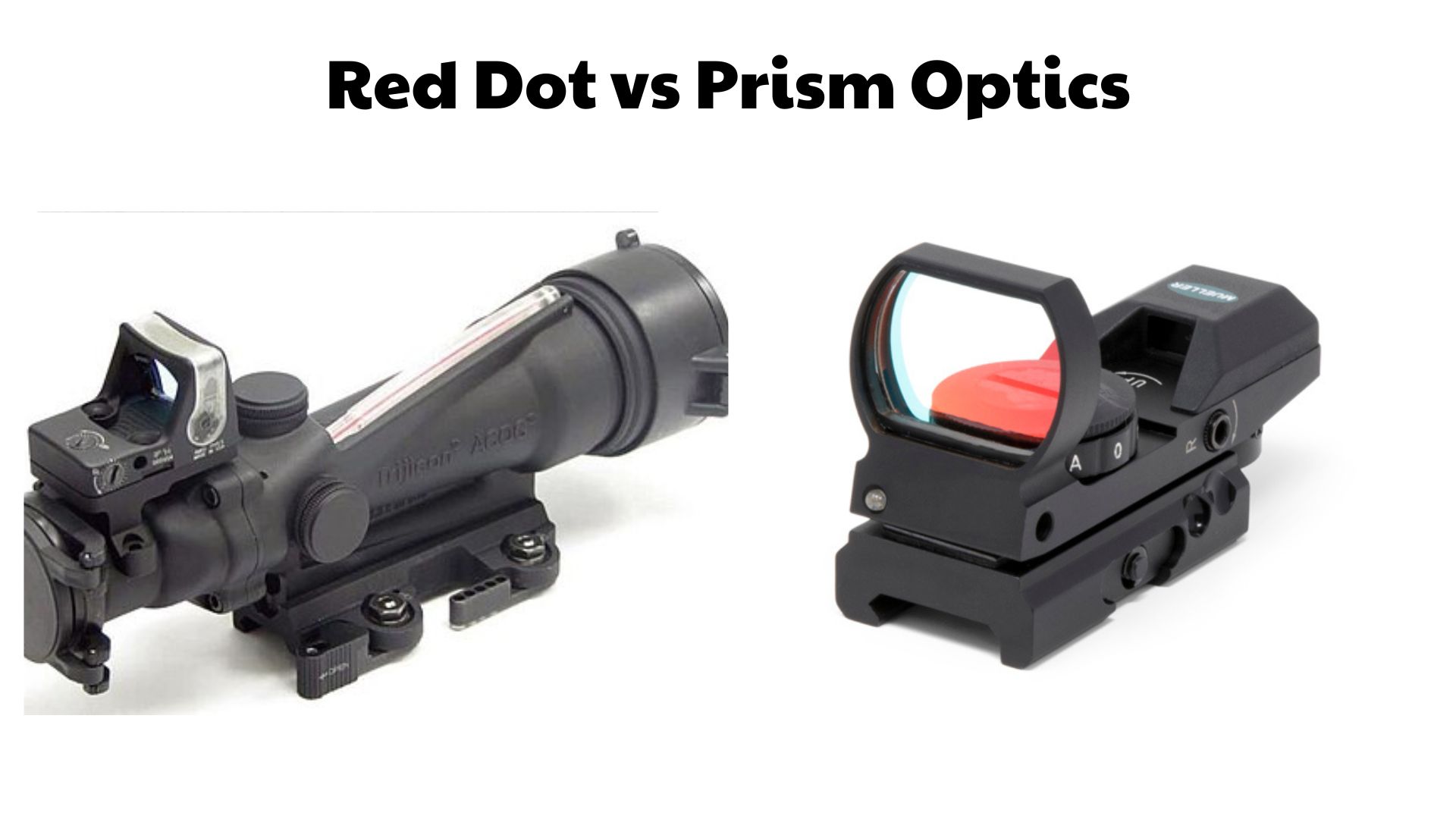
In the world of modern firearms, optical aiming devices have transformed how shooters engage targets with speed and precision. From casual range enthusiasts to tactical professionals, optics enhance accuracy, reduce target acquisition time, and provide a clear advantage over traditional iron sights. Among the most popular options today are red dot sights and prism optics, each offering distinct benefits tailored to different shooting styles and environments.
The growing popularity of these optics stems from their versatility. Red dot sights provide quick, intuitive aiming for close-quarters engagements, while prism optics offer etched reticles and fixed magnification for medium-range precision. Understanding the differences between these two systems is essential for anyone looking to select the right tool for their rifle. In this guide, we will explore the key features, pros and cons, and typical use cases of Red Dot vs Prism Optics, helping you make an informed choice.
What Is a Red Dot Sight?
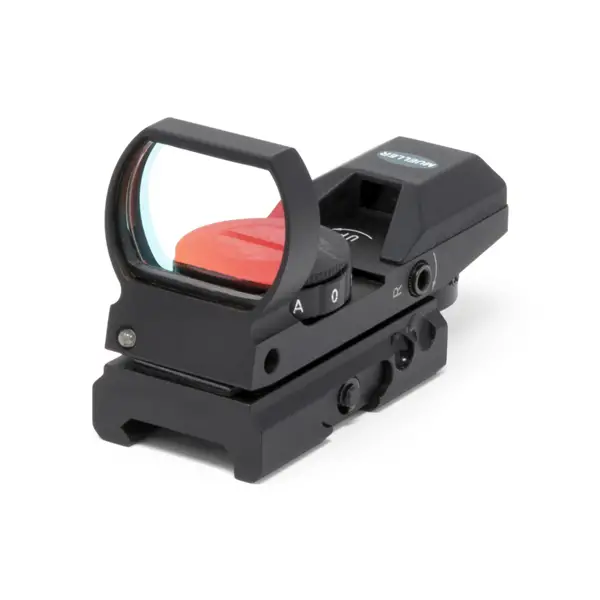
Red dot sights are among the most widely used optical devices for modern rifles, handguns, and tactical platforms. They are designed to provide fast, intuitive aiming by projecting a bright red dot onto a lens, which the shooter aligns with their target. Unlike traditional iron sights, which require the shooter to line up front and rear posts, a red dot allows for single-plane aiming, reducing acquisition time and improving speed and accuracy in dynamic scenarios.
3.1 Definition & Basic Function
A red dot sight is a type of non-magnifying reflector sight that uses an LED or similar light source to project a red dot onto a lens. This dot serves as the point of aim. The fundamental purpose is to enable the shooter to focus on the target without having to align multiple sighting elements. With unlimited eye relief, users can acquire targets quickly, making red dots ideal for close- to mid-range engagements.
The simplicity of a red dot sight is one of its greatest strengths. There are no complex scopes or magnification adjustments to manage, and the reticle remains clear even in low-light or high-stress situations. Most red dot sights are compact and lightweight, allowing them to be mounted on a variety of firearms, from pistols and carbines to full-size rifles.
3.2 How Red Dot Technology Works
Red dot sights operate using a combination of a light-emitting diode (LED) and a reflective lens. The LED emits a small, intense red light, which is reflected back toward the shooter’s eye using specially coated optics. This produces the characteristic red dot reticle that appears to float over the target. Because the dot is projected directly along the line of sight, the shooter does not need to align multiple sight planes, simplifying aiming and increasing speed.
Many red dot sights are parallax-free at a certain distance, meaning the dot stays on target even if the shooter’s eye position shifts slightly. This feature is especially helpful during rapid target transitions or in stressful scenarios. Additionally, most red dots include adjustable brightness settings, allowing the reticle to remain visible under bright daylight, indoor lighting, or low-light conditions.
3.3 Reticle Styles & Simplicity
While the term “red dot” suggests a single-point reticle, modern red dot sights offer variations in size and style. Common reticle options include 2 MOA (minute of angle), 4 MOA, or larger, depending on whether precision or speed is the priority. A smaller dot provides finer aiming for mid-range shots, whereas a larger dot allows for faster acquisition in close-quarters scenarios.
The straightforward nature of red dot sights is part of their appeal. Unlike scopes with crosshairs, multiple reticle options, or complex adjustments, a red dot focuses on a single aiming point. This simplicity reduces the cognitive load for shooters, making it easier to maintain focus on the target and react quickly. Some red dot sights also incorporate subtle circle or dual-dot reticles to further enhance speed and target tracking without complicating the aiming process.
3.4 Common Applications
Red dot sights are extremely versatile and widely used across multiple shooting disciplines. In everyday carry (EDC) scenarios, handguns equipped with red dots allow faster draw and target acquisition, improving defensive response times. In competition settings, red dots on rifles or carbines enable shooters to transition between targets smoothly and engage multiple targets with speed and accuracy.
Close-quarters engagements benefit significantly from red dot sights due to their unlimited eye relief and parallax-free design. In tactical or home defense scenarios, shooters can maintain situational awareness while quickly aligning the dot on their target. Furthermore, red dots are favored by beginners and experienced shooters alike because they simplify aiming mechanics and reduce reliance on precise eye alignment, making shooting more intuitive and efficient.
Overall, red dot sights combine simplicity, speed, and adaptability, making them a core choice for modern shooters who value quick target acquisition, low-weight optics, and ease of use across multiple firearms and scenarios. Their reliability and straightforward design have cemented their place as a fundamental tool in both recreational and professional shooting.
What Is a Prism Optic?
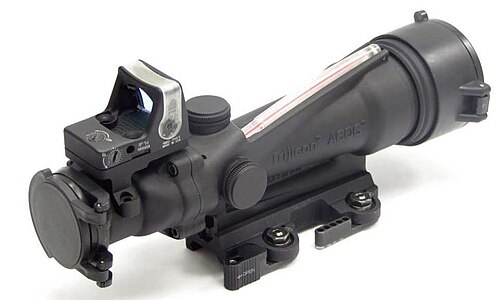
Prism optics have gained popularity as a versatile alternative to traditional red dot sights. Unlike standard reflex optics, prism sights incorporate an internal prism that bends light to display an etched reticle, providing a fixed point of aim with clarity and precision. They bridge the gap between non-magnifying red dots and variable-magnification scopes, offering shooters a unique combination of speed, accuracy, and simplicity in a compact package.
4.1 Definition & Optical Design
A prism optic is a non-magnifying or low-magnification sighting device that uses a fixed internal prism to project the reticle onto the viewing lens. The prism eliminates the need for multiple lenses found in traditional scopes, making the optic smaller and more rugged. Because the reticle is etched directly into the glass, the point of aim remains visible even without power, ensuring consistent accuracy regardless of battery life. Many prism optics provide 1x or slightly higher magnification, allowing shooters to engage targets at medium ranges while retaining rapid target acquisition similar to red dots.
The optical design of prism sights emphasizes simplicity and reliability. By incorporating the prism directly into the sight housing, manufacturers reduce parallax and maintain a clear, consistent reticle across the field of view. This makes prism optics particularly useful for shooters who want a combination of red dot speed and scope-like precision without the bulk or complexity of traditional magnified optics.
4.2 How Prism Technology Works
Prism optics function by using a small, internal glass prism to bend incoming light, directing it toward the shooter’s eye while displaying a reticle etched onto the prism. This design allows the reticle to remain visible even if the optic loses power, unlike some red dot sights that rely entirely on LEDs. The etched reticle provides a permanent aiming point, often paired with an illuminated option for low-light situations.
Many prism optics feature fixed magnification, most commonly 1x or 1–2x, which enhances mid-range precision without sacrificing speed. The shooter sees a consistent, sharp reticle at all times, and the fixed magnification ensures the sighting experience remains familiar across different engagements. The combination of etched reticle and prism technology allows for excellent performance at medium distances, making prism optics suitable for both tactical applications and recreational shooting.
4.3 Typical Features
Prism optics come with several practical features that enhance versatility. A key feature is integrated magnification, which gives shooters a slight zoom without the weight or complexity of a traditional scope. This allows for more precise target engagement at distances beyond the reach of standard red dot sights, typically up to 200–300 yards depending on the optic.
Another common feature is the BDC (bullet drop compensator) reticle. BDC reticles are etched with calibrated aiming points, enabling shooters to compensate for bullet drop at various distances without manual adjustments. Some prism optics also incorporate illumination, often powered by batteries or solar augmentation, allowing the reticle to remain visible in low-light environments. Rugged housings, often made of aluminum or other durable materials, ensure the optic can withstand recoil and environmental conditions, making them reliable for field use.
4.4 Use Scenarios
Prism optics excel in scenarios that require a combination of speed and mid-range accuracy. For example, tactical shooters who need to engage targets at 50–200 yards often prefer prism optics for their ability to provide precise aiming without the complexity of variable magnification scopes. They are also popular in competitive shooting, where quick transitions between targets and medium-range engagements are common.
Hunting applications also benefit from prism optics, particularly for small- to medium-game hunting where shots may extend beyond close range but do not require high magnification. The etched reticle ensures that shooters can maintain accuracy even in challenging lighting, while the compact design makes the optic suitable for lightweight rifles or carbines.
Additionally, prism optics are a strong choice for shooters who want the speed and simplicity of a red dot but need a little extra precision at distance. The combination of a fixed etched reticle, optional illumination, and integrated magnification makes prism optics a versatile tool for a variety of shooting contexts, from professional use to recreational activities.
In summary, prism optics provide a balance between fast target acquisition and precise medium-range aiming. Their etched reticles, fixed magnification, and robust design make them ideal for shooters who value reliability, accuracy, and versatility in a compact package. Whether for tactical operations, competition, or hunting, prism optics are a powerful option that complements modern firearms effectively.
How They Work: Red Dot vs Prism
Understanding how red dot sights and prism optics function is key to choosing the right tool for your rifle or firearm platform. While both types of optics aim to improve accuracy and speed, their underlying technology, reticle presentation, and field of view differ significantly. By examining these differences, shooters can make informed decisions based on intended use, environment, and personal preference.
5.1 Technology Differences — LED vs Etched Glass
Red dot sights primarily use an LED projected onto a coated lens to create a visible aiming dot. This LED light is reflected back to the shooter’s eye, producing a bright red dot that appears to hover on the target. The simplicity of this design allows for fast target acquisition and unlimited eye relief, making it ideal for close-quarters engagements and dynamic shooting scenarios. Red dot technology is generally powered by batteries, though some models include solar assist or automatic power-saving features.
Prism optics, in contrast, use an internal glass prism to project an etched reticle directly to the shooter’s eye. Unlike the LED in a red dot, the etched reticle remains visible even if the optic loses power, providing a permanent aiming reference. Many prism optics also include a slight fixed magnification, typically 1x or 1.5x, enhancing mid-range precision. Illumination for prism optics is often optional, supplementing the etched reticle in low-light conditions. The prism design allows for a more rugged optic with fewer moving parts, which can make it more resilient under recoil or harsh conditions.
5.2 Parallax & Eye Relief Considerations
Parallax describes the apparent shift of the reticle when the shooter moves their eye relative to the optic. Red dot sights are typically designed to be parallax-free at specific distances, often 50–100 yards, meaning the dot remains on target even if the shooter’s head or eye position changes slightly. Combined with unlimited eye relief, red dots allow for quick target acquisition from a variety of shooting positions, making them particularly effective for fast-moving scenarios.
Prism optics have a fixed eye relief due to their internal optical design, often around 2–3 inches. While this limits flexibility compared to red dots, the parallax effect is minimal within typical engagement ranges, especially at medium distances. This fixed eye relief encourages consistent cheek weld and shooting posture, which can benefit precision shooting and training scenarios where repeatability is important.
5.3 Reticle Presentation & Clarity
Reticle presentation is one of the most noticeable differences between red dot and prism optics. Red dots usually feature a simple, single-dot reticle, though some models include small circles or dual-dot variations. This simplicity allows the shooter to focus solely on the point of aim without distraction, ideal for rapid target transitions or close-range engagements.
Prism optics, however, use etched reticles that can take various forms, including crosshairs, BDC (bullet drop compensator) patterns, or circle-dot combinations. Etched reticles maintain sharpness regardless of battery power and often provide more precise aiming references at medium distances. Illumination enhances visibility in low-light conditions, but even without power, the etched reticle remains functional. This design makes prism optics well-suited for shooters who value precise engagement over extreme speed.
5.4 Field of View Comparison
Red dot sights generally provide a wide field of view because they do not magnify the target. Shooters can see their target and surroundings simultaneously, enhancing situational awareness during dynamic or close-quarters scenarios. This wide perspective, combined with the dot’s simplicity, enables fast target acquisition and rapid follow-up shots.
Prism optics, depending on magnification, may slightly narrow the field of view compared to a standard red dot. While a 1x prism is almost comparable to a red dot, higher fixed magnifications can reduce peripheral vision. This tradeoff is balanced by increased reticle detail and accuracy at mid-range distances. Shooters must consider whether situational awareness or precision targeting is more important for their intended use.
In summary, red dot and prism optics each offer distinct advantages based on technology, eye relief, reticle clarity, and field of view. Red dots excel in speed, simplicity, and unlimited eye relief, making them ideal for close-quarters and rapid engagements. Prism optics provide etched reticles, optional illumination, and medium-range precision, offering a blend of reliability and accuracy. Understanding these functional differences allows shooters to select the optic that best fits their specific needs, whether prioritizing rapid acquisition or precise mid-range accuracy.
Side-by-Side Feature Comparison: Red Dot vs Prism Optics
When deciding between a red dot sight and a prism optic, understanding their core features side by side is crucial. While both optics improve target acquisition and accuracy, they excel in different areas. The following comparison examines reticle design, magnification, battery life, visibility, durability, and weight, helping shooters make informed choices for their firearm platform.
6.1 Reticle & Sight Window
The reticle is the shooter’s point of reference, and the design differs significantly between red dots and prism optics:
- Red Dot Sights: Use a single LED dot or minimal variations such as dual-dot or small circle-dot reticles. The dot floats over the target, providing simplicity and speed for fast engagements. The sight window is typically larger, allowing a wide field of view for dynamic shooting.
- Prism Optics: Feature etched reticles with various designs, including crosshairs, BDC patterns, or circle-dot combinations. Reticles remain visible even without power. The sight window is slightly smaller due to the prism housing but still provides a clear aiming area for medium-range engagements.
6.2 Magnification & Target Engagement
Magnification plays a key role in accuracy and engagement distance:
- Red Dot Sights: Generally non-magnified (1x), perfect for close-quarters and rapid target transitions. Ideal for EDC, home defense, and competition where speed matters more than precision at distance.
- Prism Optics: Usually feature 1x to 1.5x fixed magnification, giving a slight zoom that improves mid-range accuracy. Excellent for targets up to 200–300 yards while maintaining fast acquisition compared to traditional scopes.
6.3 Battery & Power Management
Power requirements affect reliability, convenience, and operational readiness:
- Red Dot Sights: Depend on LED illumination, requiring batteries. Battery life varies by model, from hundreds to several thousand hours. Some models include solar assist, auto-shutoff, or shake-activation to extend operational time.
- Prism Optics: Etched reticles do not require power, making them fail-safe even if batteries die. Illumination is optional and typically uses long-life batteries. This makes prism optics more reliable for extended field use where battery failure could be critical.
6.4 Brightness & Visibility
Visibility affects performance across lighting conditions:
- Red Dot Sights: Bright LED dots are highly visible in daylight, but extreme sunlight may reduce clarity if brightness is insufficient. Most models have multiple brightness settings for low-light conditions.
- Prism Optics: Etched reticles remain visible without power, while illuminated reticles improve low-light performance. Daylight readability is excellent, and reticles maintain precision at medium distances.
6.5 Durability & Build Quality
Ruggedness is a critical factor for tactical and field use:
- Red Dot Sights: Compact and lightweight, often with aluminum or alloy housings. Fewer internal parts make them resilient, though heavy recoil can occasionally misalign cheaper models. Many have IP ratings for dust and water resistance.
- Prism Optics: Built with robust housings to protect the prism and etched reticle. Fewer moving parts than variable scopes improve longevity. Generally rated for recoil resistance and environmental exposure, though slightly bulkier than red dots.
6.6 Weight & Footprint
The size and weight of an optic affect mounting flexibility and carry comfort:
- Red Dot Sights: Very lightweight, often under 4 ounces, and with a minimal slide or rail profile. Ideal for pistols, carbines, and rifles without adding bulk.
- Prism Optics: Slightly heavier due to internal prism and housing, typically 6–8 ounces. Footprint is larger, which may influence slide clearance on pistols or rifle mounting options, but the added weight is minimal for most rifles.
Summary Table
| Feature | Red Dot Sight | Prism Optic |
|---|---|---|
| Reticle | Single dot or small circle-dot | Etched reticle, BDC, or crosshair options |
| Magnification | 1x (non-magnified) | 1x–1.5x fixed magnification |
| Battery | LED-powered, limited life, solar options | Etched reticle permanent, optional illumination |
| Brightness | Adjustable LED, visible in most conditions | Always visible etched reticle, illumination for low light |
| Durability | Lightweight, rugged, some models recoil-resistant | Robust housing, minimal moving parts, recoil-proof |
| Weight & Footprint | Very light, minimal profile | Slightly heavier, larger footprint |
Pros & Cons: Red Dot vs Prism Optics
When choosing between red dot sights and prism optics, understanding their strengths and limitations is crucial. Both types of optics offer advantages depending on the intended use, firearm platform, and shooting style. This section breaks down the pros and cons of each, helping shooters make an informed decision based on performance, versatility, and practicality.
7.1 Red Dot Optics — Pros
- Simplicity: Red dot sights are incredibly easy to use. With a single illuminated dot as the reticle, shooters can focus solely on the target without aligning multiple sight planes. This simplicity makes them ideal for beginners and advanced shooters alike.
- Wide Eye Box: Red dots allow for unlimited eye relief, meaning the shooter can acquire the target quickly from various head positions. This is particularly valuable in dynamic shooting scenarios, close-quarters combat, or rapid target transitions.
- Speed: The minimalistic reticle and parallax-free design enable fast target acquisition. Shooters can maintain situational awareness while aligning the dot on the target, making red dots perfect for home defense, tactical operations, and competitive shooting.
- Lightweight and Compact: Red dot sights are generally small and light, which preserves firearm balance and ergonomics. Their compact design makes them suitable for pistols, carbines, and rifles without adding bulk.
- Durability: Many modern red dot sights are rugged, with water and dust resistance, and can withstand recoil and environmental challenges. This makes them reliable for a variety of shooting conditions.
7.2 Red Dot Optics — Cons
- Limited Reticle Options: Most red dot sights feature a single dot or small variations. While this promotes speed, it lacks the flexibility of etched reticles found in prism optics that provide range estimation and bullet drop compensation.
- Performance at Range: Red dots are optimized for close- to mid-range engagements. Without magnification, precision at longer distances is reduced, making them less suitable for medium-range or long-range shooting.
- Battery Dependency: Since most red dots rely on LED illumination, battery life can limit extended field use. While some models include solar assist or long-lasting batteries, dead batteries can render the optic temporarily unusable.
7.3 Prism Optics — Pros
- Etched Reticles: Prism optics use etched reticles that remain visible even if battery power fails. This provides a fail-safe aiming point in critical scenarios and ensures consistent accuracy under all conditions.
- BDC and Range Compensation: Many prism optics include BDC (bullet drop compensator) reticles or specialized patterns that help shooters engage targets at multiple distances without adjusting the optic manually. This is especially useful for medium-range precision.
- Mid-Range Accuracy: With optional low-level magnification, prism optics provide greater precision than standard red dots at moderate distances, typically 50–300 yards. This makes them versatile for hunting, tactical, or competitive applications.
- Rugged Design: Prism optics generally have minimal moving parts and robust housings, increasing durability and reducing the risk of misalignment due to recoil or field conditions.
- Illumination Options: While etched reticles are visible without power, illumination enhances low-light visibility and improves target acquisition speed in dim conditions.
7.4 Prism Optics — Cons
- Fixed Magnification: Most prism optics have 1x to 1.5x fixed magnification. While this improves mid-range accuracy, it limits flexibility for extremely close-quarters or long-range shooting, requiring a different optic if more versatility is desired.
- Heavier and Slightly Bulkier: Prism optics are typically heavier than red dots due to the internal prism and housing. On compact rifles or pistols, this added weight and footprint can affect balance and slide clearance.
- Complexity for Beginners: Etched reticles with BDC markings may overwhelm new shooters who are unfamiliar with range compensation or aiming at multiple distances. While extremely useful, these features come with a slight learning curve.
- Cost: Prism optics often cost more than basic red dots due to their optical design, etched reticles, and optional illumination. Shooters must weigh performance benefits against budget considerations.
In summary, red dot sights excel in simplicity, speed, and close-range flexibility, making them ideal for EDC, competition, and home defense. Prism optics shine at medium-range precision with fail-safe etched reticles, BDC features, and slightly magnified aiming. Understanding these pros and cons allows shooters to align their optic choice with intended use, performance needs, and personal preferences, forming the foundation for the ultimate Red Dot vs Prism Optics decision.
Performance Factors in Real Use: Red Dot vs Prism Optics
Choosing between a red dot sight and a prism optic goes beyond understanding their construction and features. Actual performance in real‑world conditions reveals how these optics behave under stress, at various distances, and when paired with different shooters’ preferences. This section explores key performance factors such as speed of target acquisition, accuracy at distance, parallax and precision, environmental effects, and community experience. By combining technical fundamentals with aggregated insights from experienced users, you get a practical picture of how each optic performs in the field.
8.1 Speed of Target Acquisition
One of the most celebrated strengths of red dot sights is their rapid target acquisition. Without magnification and with minimal optical complexity, red dots allow the shooter to find the reticle and place it on target quickly. This makes them especially effective in dynamic scenarios such as close‑quarters engagements, competitive shooting, or defensive use. Because there is no need to align front and rear sight posts, and because most red dots are essentially parallax‑free at typical engagement distances, shooters can instinctively drive the red dot onto the target with both eyes open. This translates to fast first shots and rapid follow‑ups, particularly in high‑stress or time‑critical applications. :contentReference[oaicite:0]{index=0}
Prism optics, while still fast compared to traditional magnified scopes, can feel slightly slower than red dots at the extreme close range. The presence of additional glass elements and the need for a specific eye‑relief position means shooters must find the correct “eye box” before the reticle stabilizes in the field of view. On non‑magnified prism models, this difference is minor, but in some Reddit threads users noted that the red dot still edged out prisms for sheer speed, particularly at very close distances. :contentReference[oaicite:1]{index=1}
That said, prism optics with etched reticles still offer quick engagement if the shooter has established a consistent sight picture and position. Their performance can approach red dot speed, especially when engaging targets at moderate distances where the slight delay becomes less noticeable.
8.2 Accuracy at Distance
Red dot sights excel in close‑range accuracy because they allow shooters to rapidly place a dot on target without magnification or complex reticles. However, at extended distances — typically beyond 150–200 yards — their lack of magnification means precision detailing becomes challenging. The dot itself may cover significant portions of a small target, and estimating holdover without additional tools like a magnifier can reduce effective accuracy. :contentReference[oaicite:2]{index=2}
Prism optics provide a performance advantage at distance thanks to their etched reticles and fixed low magnification. Even a small fixed power (for example, 1.5× or 3×) gives shooters a clearer view of targets out to 300 yards or more, while the etched reticle often includes holdover markers, bullet drop compensators (BDC), or stadia lines that help estimate range and adjust aim accordingly. Because the reticle remains visible even without illumination, the shooter retains accuracy even if batteries fail. These mid‑range strengths make prism optics attractive for hunters and tactical shooters who anticipate engaging targets at both close and moderate distances. :contentReference[oaicite:3]{index=3}
8.3 Parallax & Precision
Parallax refers to how the alignment of the shooter’s eye can affect the perceived position of the reticle relative to the target. Red dot sights are commonly advertised as parallax‑free within certain distances, meaning the dot appears to stay on target even if the shooter’s head moves slightly off center. This forgiving nature enhances speed and simplifies aiming when speed and flexibility matter most. :contentReference[oaicite:4]{index=4}
Prism optics, on the other hand, can exhibit more parallax than red dots because of the additional optical elements. However, quality prism optics are typically engineered to minimize this effect within usable engagement ranges. For precision shooting, shooters often embrace the requirement for consistent eye position and cheek weld because it delivers a stable, repeatable sight picture. In practical terms, a shooter using a red dot may find it easier to acquire an aiming point instinctively, while a prism user might achieve tighter groupings at medium distances with a stable head position.
8.4 Environmental Conditions Impacts
Environmental conditions such as bright sunlight, low light, dust, and moisture can impact optic performance differently. Red dot sights, especially models with adjustable brightness, can remain visible in direct sunlight, though peak brightness must be high enough to prevent retinal washout. In low‑light conditions, strong LED reticles help maintain visibility, but battery life then becomes a consideration. :contentReference[oaicite:5]{index=5}
Prism optics bring unique advantages here. Because the reticle is etched on glass, it remains visible even if power is lost or illumination fails. This gives them a reliability edge in remote or extended field conditions where battery changes may be inconvenient. On the other hand, prism optics require the shooter to maintain proper eye relief for consistent performance, which may become more challenging in adverse weather or unsteady positions.
8.5 User Experience & Community Sentiment
Real‑world opinions on platforms like Reddit highlight nuanced experiences. Many shooters appreciate red dots for their speed and intuitive sight picture, especially for engagements under 100–150 yards. Users with astigmatism often report that a prism optic’s etched reticle is easier on the eyes than a glowing LED dot, which can blur or “starburst” under certain conditions — a common piece of community feedback. :contentReference[oaicite:6]{index=6}
Other users discuss the practical benefits of prism optics’ battery‑independent reticle and ability to serve reliably even after long hunts or extended field use without maintenance. Some shooters pair prism optics with flip‑to‑side magnifiers or secondary red dots, combining speed with mid‑range precision — a technique suggested by experienced users who enjoy both systems. :contentReference[oaicite:7]{index=7}
Overall, community discussions show that both red dots and prism optics have dedicated user bases. Red dots are favored for close engagements, easy eye positioning, and speed, while prism optics earn praise for mid‑range performance, etched reticles, and reduced battery dependency. The consensus reinforces that performance differences often come down to personal needs, use cases, and familiarity with the optic rather than absolute superiority of one technology over the other.
Typical Use Cases: Red Dot vs Prism Optics
Understanding where red dot and prism optics excel helps shooters align their choice with their needs. Both optics have unique strengths depending on engagement distance, environment, and intended use. The following sections explore common scenarios, from everyday carry to precision hunting, highlighting why each optic may be preferred.
9.1 Everyday Carry & Close Quarters
Red dot sights are ideal for everyday carry (EDC) firearms and close-quarters scenarios. Their simplicity, unlimited eye relief, and wide field of view allow for rapid target acquisition when speed matters most. Whether on a pistol, carbine, or compact rifle, a red dot ensures the shooter can engage targets instinctively, without aligning iron sights. Community feedback from tactical forums consistently praises red dots for home defense and urban carry, where engagements typically occur within 50 yards. Their lightweight design preserves balance, making firearms easier to maneuver in tight spaces. ([reddit.com/r/EDC](https://www.reddit.com/r/EDC/))
Prism optics can be used for close quarters, but their fixed eye relief and slightly bulkier design may limit speed in extremely tight environments. However, a 1x prism optic still offers quick engagement while providing a more precise aiming point, which some shooters prefer for controlled defensive drills or tactical training.
9.2 Mid-Range Engagements
For mid-range shooting, typically 100–300 yards, prism optics often outperform standard red dots. The slight fixed magnification and etched reticle allow shooters to make precise shots with better target definition and holdover options. BDC or crosshair reticles enhance the ability to compensate for bullet drop and range, which is particularly valuable in tactical operations, varmint hunting, or extended-range training sessions. ([zerotechoptics.com](https://zerotechoptics.com/2024/10/whats-best-1x-prism-or-a-red-dot/))
Red dots remain usable at these distances but require additional equipment like magnifiers to maintain accuracy. Without magnification, the dot may obscure small targets, making precision shots more challenging. Shooters who prioritize speed over exact mid-range placement often continue using red dots, but those who value pinpoint accuracy may switch to prism optics for these engagements.
9.3 Competition or Dynamic Shooting
In dynamic or competitive shooting, such as 3-gun competitions or tactical drills, the optic’s speed and reliability are critical. Red dot sights excel in these fast-paced environments because they allow shooters to move quickly between targets without worrying about parallax or complex aiming points. Their intuitive aiming and wide eye box facilitate rapid transitions between close and mid-range targets, giving competitors a decisive advantage.
Prism optics also see use in competition, particularly for stages that require mid-range precision. Shooters who need a balance of speed and accuracy may prefer a 1x prism with illuminated BDC reticles, allowing for quick transitions while still providing detailed aiming for medium distances. The combination of etched reticle and slight magnification can be advantageous on longer stages where precision counts more than absolute speed.
9.4 Hunting & Precision Shooting
For hunting applications, prism optics are often the preferred choice, especially for small- to medium-game hunting at moderate ranges. The etched reticle provides a permanent aiming point, ensuring consistent accuracy even if illumination fails. Low-light conditions, such as dawn or dusk, can be mitigated with optional illumination, improving target acquisition without sacrificing reliability. Fixed magnification and reticle patterns with holdover points allow hunters to make precise shots while maintaining awareness of the target environment. ([sdi.edu](https://sdi.edu/2023/11/22/red-dots-vs-prism-optics/))
Red dot sights can be used for hunting, particularly in close-range brush or fast-moving scenarios, but their lack of magnification and detailed aiming references limits effectiveness for precise long-range shots. Hunters who rely on rapid target engagement in dense cover may still choose red dots, especially on lightweight rifles or carbines.
9.5 Budget-Conscious Shooters
Cost is often a deciding factor for recreational shooters and beginners. Red dot optics generally offer a more affordable entry point while providing sufficient performance for most close-range and dynamic shooting scenarios. Many budget red dots deliver long battery life, durability, and simple operation, making them excellent value for shooters who prioritize speed and convenience over additional mid-range features.
Prism optics tend to cost more due to their etched reticles, fixed magnification, and often higher-quality housings. However, the investment can be justified for shooters seeking mid-range accuracy, fail-safe reticle visibility, and versatility across multiple shooting contexts. For those balancing performance with budget, selecting a prism optic for a primary rifle and a red dot for a secondary platform is a common strategy, ensuring optimal functionality while managing costs.
In summary, both red dot and prism optics have distinct niches. Red dots shine in everyday carry, close-quarters, and dynamic shooting, while prism optics excel at mid-range precision, hunting, and controlled engagements. Understanding these typical use cases helps shooters match the optic to their firearm, environment, and performance goals, ensuring the best possible experience.
How to Choose Between Red Dot and Prism Optics
Choosing the right optic is about matching your needs to the strengths of each technology. Both red dot sights and prism optics have proven benefits, but the best choice depends on target distances, environment, budget, firearm platform, and reticle preferences. Understanding these factors can help shooters select the best choice for red dot vs prism optics for their specific application.
1. Target Distances
- Close Quarters (0–100 yards): Red dot sights excel at rapid target acquisition with unlimited eye relief and a simple reticle. Ideal for home defense, personal carry, or competitive close-range shooting.
- Medium Range (100–300 yards): Prism optics provide an advantage due to slight fixed magnification and etched reticles with bullet drop compensators (BDC). They allow for more precise aiming at moderate distances without additional equipment.
- Long Range (300+ yards): Neither standard red dots nor low-magnification prisms are optimal. Shooters may consider magnified scopes or combining a red dot with a flip-to-side magnifier for versatility.
2. Environment & Conditions
- Urban or Close-Quarters: Red dots are ideal due to their speed, wide field of view, and ability to engage multiple targets quickly.
- Hunting or Outdoor Use: Prism optics are better for environments where mid-range precision and reliability matter. Etched reticles remain visible even if illumination fails, ensuring consistent performance in low-light or adverse conditions.
- Extreme Weather: Both optics are generally rugged, but prism optics’ minimal moving parts and robust housing can offer an edge in harsh environments.
3. Firearm Platform
- Pistols & Carbines: Red dot sights are lightweight, compact, and easy to mount on slides or rails, making them the preferred choice for handguns or lightweight rifles.
- Rifles & Tactical Platforms: Prism optics suit rifles that benefit from mid-range precision and etched reticles. Slightly heavier weight is manageable on longer rifles and can enhance stability.
- Combination Setups: Some shooters use a red dot for close-range engagements paired with a flip-to-side magnifier or secondary prism optic for longer shots, achieving the best of both worlds.
4. Reticle Preferences
- Simple Dot: Red dots are perfect for shooters who prioritize speed and a clean, intuitive sight picture without holdover calculations.
- Etched or BDC Reticles: Prism optics offer etched crosshairs or BDC markings for medium-range engagements and range compensation. Ideal for those who value precision and fail-safe reticles.
- Illumination Needs: Red dots rely entirely on LED brightness, while prism optics’ etched reticles remain visible without power. Illumination in prisms enhances low-light performance but is optional.
5. Budget Considerations
- Entry-Level: Red dots often provide excellent performance at a lower cost, especially for shooters who do not require mid-range precision.
- Mid to High-End: Prism optics are generally more expensive due to etched reticles and slightly heavier construction, but the long-term value lies in versatility, reliability, and mid-range capability.
- Hybrid Approaches: A common strategy is using a red dot on a secondary firearm or for close-range scenarios, while investing in a prism optic for the primary rifle where mid-range engagement is frequent.
6. Decision Guide: Bullet Points for Typical Scenarios
- EDC / Home Defense: Red dot — speed, unlimited eye relief, lightweight.
- Competition / 3-Gun: Red dot for close stages, prism or magnifier combo for medium targets.
- Hunting / Mid-Range Precision: Prism optic — etched reticle, BDC, slight magnification.
- Budget-Limited Shooters: Red dot for affordability, with optional future upgrade to prism if needed.
- Multi-Role Platforms: Consider combination setups — red dot + magnifier or prism with illumination for versatility.
In summary, the best choice for red dot vs prism optics depends on the specific needs of the shooter. Red dots excel in speed, simplicity, and close-range versatility, while prism optics provide etched reticles, mid-range precision, and reliable performance even without batteries. Assessing your target distances, shooting environment, firearm platform, reticle preferences, and budget will ensure you select the optic that maximizes both performance and practicality.
Common Myths & Misconceptions About Red Dot vs Prism Optics
When choosing between red dot sights and prism optics, shooters often encounter a variety of misconceptions. Misunderstandings about range, weight, battery life, and reticle clarity can lead to suboptimal decisions. In this section, we address the most common myths and clarify how these optics perform in real-world applications, helping you make an informed choice.
Myth 1: Red Dots Can’t Be Used Past Close Range
Many assume that red dot sights are strictly for close-quarters shooting. While it’s true that red dots excel at fast target acquisition under 100–150 yards, this doesn’t mean they are unusable at longer ranges. Skilled shooters can engage targets effectively at mid-range using a red dot, especially when paired with proper technique or a magnifier. The key limitation is magnification: without zoom, small or distant targets may appear covered by the dot, making precise placement more challenging. In contrast, prism optics add slight magnification (often 1x–1.5x) and etched reticles to improve precision at moderate distances, which complements the red dot’s speed at close quarters.
Myth 2: Prism Optics Are Always Heavier and Bulky
Prism optics are sometimes perceived as cumbersome compared to red dots. While they are slightly heavier due to the internal prism, etched reticle, and housing, the difference is usually modest — often 2–4 ounces on rifles. High-quality prism optics are designed to remain compact, minimizing slide clearance issues on carbines or pistols. Modern designs also maintain a low profile while providing durable construction. For many shooters, the minor increase in weight is offset by the advantages in mid-range precision, fail-safe reticles, and optional illumination, making prism optics practical for both tactical and recreational use.
Myth 3: Battery Lifespan Defines Performance
Battery life is often cited as a critical factor for optic reliability. Red dot sights rely on LED illumination, and shorter battery life can limit extended field operations. However, the actual performance of the optic is not solely determined by battery longevity. Many red dots include solar assist, shake-activation, or auto-shutdown features that maximize operational time. Meanwhile, prism optics use etched reticles that remain visible even without batteries, making them inherently fail-safe. Illuminated prism models enhance low-light performance, but the optic’s baseline functionality does not depend on power. Shooters should consider battery life in context: it’s a factor for convenience and extended use, not absolute capability.
Myth 4: Reticle Clarity Is Always Superior in One Type
Another misconception is that either red dots or prism optics are universally clearer. In reality, clarity depends on quality, optical design, and personal eyesight. Red dot sights offer a clean, floating dot that can be seen easily with both eyes open, ideal for rapid target acquisition. Prism optics provide etched reticles, which can remain visible without power and often include BDC or crosshair patterns. While the prism reticle may appear smaller or more complex at very close range, it offers precision and consistency at mid-range engagements. Neither system is inherently “clearer”; instead, each serves its purpose based on distance and application.
Myth 5: Magnification in Prism Optics Always Adds Complexity
Some shooters worry that even slight magnification in prism optics makes aiming slower or more complicated. Fixed low magnification (1x–1.5x) is subtle and typically enhances target definition without slowing acquisition. For close-range engagements, the magnification is almost imperceptible, allowing speed similar to a red dot. At medium range, the slight zoom improves precision, especially when combined with etched BDC reticles. Proper training ensures shooters can use prism optics effectively in both close and mid-range scenarios, debunking the idea that magnification hinders performance.
Myth 6: Each Optic Serves Only One Purpose
Finally, many assume that red dots are only for speed and prism optics are only for precision. In practice, both can be versatile. Red dots perform well in mid-range when paired with magnifiers or proper technique. Prism optics, even with fixed low magnification, remain fast enough for close engagements, especially with modern wide-eyed designs. Understanding the intended purpose of each optic allows shooters to leverage their strengths across multiple scenarios rather than restricting them to a single role.
In summary, misconceptions around red dot vs prism optics often overemphasize limitations. Red dots are not confined to close quarters, prism optics are not overly heavy, battery life does not define performance, and reticle clarity depends on application. Evaluating each optic’s strengths relative to your shooting distances, environment, and platform ensures a balanced perspective. Recognizing these myths helps shooters make informed decisions and select the optic that aligns with their priorities.
Conclusion: Red Dot vs Prism Optics
Choosing between red dot sights and prism optics ultimately comes down to understanding your specific shooting needs, distances, and intended use. Red dots excel in speed, simplicity, and close-quarters engagement, offering unlimited eye relief, fast target acquisition, and lightweight design. They are ideal for everyday carry, home defense, and dynamic shooting scenarios.
Prism optics, on the other hand, shine at medium-range precision. Their etched reticles, optional illumination, and slight fixed magnification make them suitable for hunting, tactical applications, and situations requiring accurate holdover. Prism optics also provide reliability even if batteries fail, giving shooters confidence in extended field use.
To determine the best choice for red dot vs prism optics, consider target distance, environment, firearm platform, reticle preference, and budget. A practical framework is: use red dots for speed and close-range versatility, prism optics for precision at moderate distances, or combine both on multi-role firearms. By matching optic capabilities to your priorities, you can ensure optimal performance and satisfaction with your shooting experience.
Frequently Asked Questions (FAQ) – Red Dot vs Prism Optics
1. What is a red dot sight?
A red dot sight is an optical device that projects a single illuminated dot on a lens, allowing for quick target acquisition without magnification. It’s ideal for close-range shooting and dynamic scenarios.
2. What is a prism optic?
A prism optic uses an internal prism to focus light onto an etched reticle, often with slight fixed magnification. It offers reliable precision at medium distances and retains visibility even without power.
3. How does a red dot sight work?
Red dots project an LED onto a lens, creating a dot that appears on the target. The shooter aligns the dot with the target without needing to align front and rear sights.
4. How does a prism optic work?
Prism optics use an etched reticle on a prism lens to display the aiming point. Light passes through the prism, giving a clear sight picture with optional illumination for low-light conditions.
5. Can I use a red dot sight at medium range?
Yes, red dots can be used at medium range, but without magnification, precision may be limited. Some shooters pair red dots with flip-to-side magnifiers to improve mid-range accuracy.
6. Do prism optics work without batteries?
Yes, the etched reticle in prism optics remains visible without power. Battery-powered illumination is optional and enhances low-light visibility.
7. Which optic is faster for close-range targets?
Red dot sights are faster for close-range engagements due to their wide field of view, unlimited eye relief, and simple dot reticle.
8. Can prism optics be used for close-range shooting?
Yes, modern 1x or 1.5x prism optics are fast enough for close-range shooting, though eye relief and slight magnification may require a consistent cheek weld.
9. What is the typical battery life of a red dot sight?
Battery life varies by model but can range from hundreds to thousands of hours depending on brightness, usage, and additional features like auto-shutdown or solar assist.
10. Are prism optics heavier than red dots?
Prism optics are slightly heavier due to internal prisms and housing, but the weight difference is modest and generally does not impact handling on rifles or carbines.
11. Can I use a red dot on a pistol?
Yes, red dots are popular on pistols for fast target acquisition, especially in competitive or defensive scenarios. Slide-mounted mini red dots are common for EDC.
12. Are prism optics suitable for rifles?
Yes, prism optics excel on rifles, particularly for medium-range engagements. Their etched reticles and optional illumination provide reliable performance in various conditions.
13. What reticle types are common on red dots?
Most red dots use a single dot reticle, though some models offer small circle-dot or chevron variations for different aiming preferences.
14. What reticles do prism optics use?
Prism optics use etched reticles, often with BDC, crosshairs, or mildot patterns. Illumination enhances visibility without relying solely on batteries.
15. Can I adjust brightness on a red dot sight?
Yes, most red dots have multiple brightness settings, allowing adjustment for indoor, outdoor, and low-light conditions.
16. Can prism optics have adjustable brightness?
Yes, illuminated prism optics often include multiple brightness levels, but the etched reticle remains visible even if power fails.
17. How does parallax affect red dots?
Most modern red dots are parallax-free at common engagement distances, meaning the dot stays on target even if your eye position shifts.
18. How does parallax affect prism optics?
Prism optics can exhibit slight parallax, but quality designs minimize this within typical engagement ranges. Consistent eye position ensures precision.
19. Are red dots suitable for hunting?
Red dots can be used for hunting, especially in close-range brush or fast-moving targets, but they lack magnification for long-distance shots.
20. Are prism optics suitable for hunting?
Yes, prism optics are ideal for medium-range hunting. Etched reticles and optional illumination provide precise aiming in low-light conditions.
21. What is eye relief?
Eye relief is the distance between your eye and the optic lens while maintaining a clear sight picture. Red dots have unlimited eye relief, while prism optics have a fixed range.
22. Can I use a red dot with glasses?
Yes, red dots are highly compatible with glasses due to wide eye relief and both-eyes-open shooting advantages.
23. Can prism optics be used with glasses?
Yes, but fixed eye relief means proper positioning is necessary for a clear sight picture.
24. Do red dots require zeroing?
Yes, red dots must be zeroed to align the dot with the point of impact, just like any other optic.
25. Do prism optics require zeroing?
Yes, prism optics also need zeroing to ensure the etched reticle aligns with the firearm’s point of impact.
26. Can I mount a prism optic on a pistol?
It’s uncommon but possible. Prism optics are bulkier and heavier, so they are more practical on carbines or rifles.
27. How do I choose between a red dot and a prism optic?
Consider target distance, environment, firearm platform, reticle preference, and budget. Red dots excel at close range; prism optics excel at medium range and precision.
28. Can I use a red dot in low light?
Yes, as long as the LED reticle is bright enough. Some models also include night-vision compatible settings.
29. Can I use a prism optic in low light?
Yes, illuminated prism optics enhance low-light performance, but etched reticles remain visible even without illumination.
30. Are red dots durable?
Modern red dots are rugged, shock-resistant, and waterproof, suitable for both casual and tactical use.
31. Are prism optics durable?
Yes, prism optics are built with robust housings and minimal moving parts, making them reliable under harsh conditions.
32. Can I use a magnifier with a red dot?
Yes, pairing a red dot with a flip-to-side magnifier allows medium-range precision while retaining close-range speed.
33. Do prism optics need magnifiers?
No, prism optics typically provide slight fixed magnification, eliminating the need for additional magnifiers for medium-range engagements.
34. What is the advantage of etched reticles?
Etched reticles remain visible without power, providing fail-safe aiming and consistent accuracy even if the battery dies.
35. What is the advantage of LED red dots?
LED red dots offer bright, easily visible aiming points and fast target acquisition, especially for close-range engagements.
36. Can I adjust the reticle color on a red dot?
Some red dots allow switching reticle colors, commonly red or green, for improved visibility in different lighting conditions.
37. Can I adjust the reticle color on a prism optic?
Illuminated prism optics may allow color changes, but the etched reticle remains visible regardless of illumination.
38. Do red dots fog up?
High-quality red dots are sealed and often nitrogen- or argon-filled to prevent fogging in humid or cold environments.
39. Do prism optics fog up?
Prism optics are also sealed and filled to resist fogging, making them reliable in adverse weather conditions.
40. Are red dots good for beginners?
Yes, red dots are intuitive, fast, and forgiving, making them excellent for new shooters learning target acquisition and fundamentals.
41. Are prism optics good for beginners?
Yes, prism optics are slightly more technical but provide a reliable aiming point and can help shooters learn mid-range precision.
42. Can I use a red dot on multiple firearms?
Yes, red dots are easy to mount, lightweight, and versatile across pistols, carbines, and rifles.
43. Can I use a prism optic on multiple firearms?
Yes, but prism optics are heavier and may require different mounts for pistols and rifles, making them less versatile than red dots.
44. Are red dots waterproof?
Yes, most quality red dots are waterproof and can withstand rain, splashes, or immersion.
45. Are prism optics waterproof?
Yes, prism optics are designed to handle wet or humid conditions, often rated for full waterproof performance.
46. Can I use a red dot at night?
Yes, as long as the red dot has adjustable low-light or night-vision compatible settings.
47. Can I use a prism optic at night?
Illuminated prism optics are suitable for night use, and the etched reticle remains faintly visible without power if needed.
48. Do red dots require maintenance?
Minimal maintenance is required — clean the lens and check battery life regularly.
49. Do prism optics require maintenance?
Minimal maintenance is also required — keep the lens clean, check illumination settings, and inspect mounts.
50. Which is the best choice: red dot or prism optic?
The best choice depends on your shooting scenario. Use red dots for speed, close range, and lightweight setups. Use prism optics for mid-range precision, etched reticles, and fail-safe reliability.
51. Can I combine a red dot and prism optic?
Yes, many shooters pair a red dot with a magnifier or use a prism optic on their primary rifle and a red dot on a secondary firearm for versatility.