
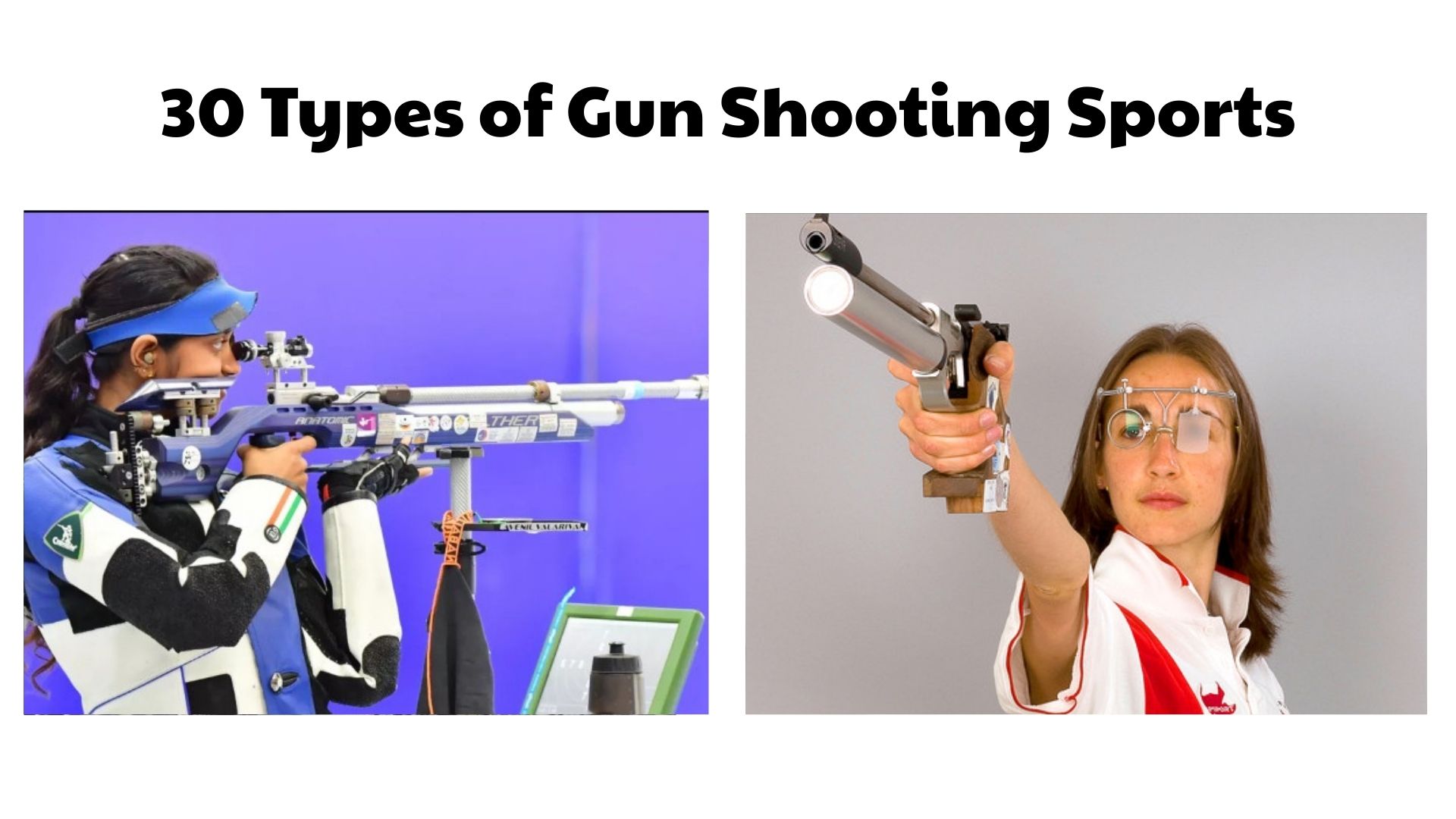
Shooting sports encompass a wide range of competitive and recreational disciplines that test accuracy, speed, and precision using firearms. From traditional target shooting to dynamic action competitions, enthusiasts can engage in events that challenge their skills under different conditions and distances. This guide explores 30 types of gun shooting sports, providing insight into their history, techniques, equipment, and appeal. Whether you are a beginner looking to understand the options or an experienced shooter curious about new disciplines, these sports demonstrate the diversity and excitement of marksmanship in a safe and regulated environment.
30 Types of Gun Shooting Sports
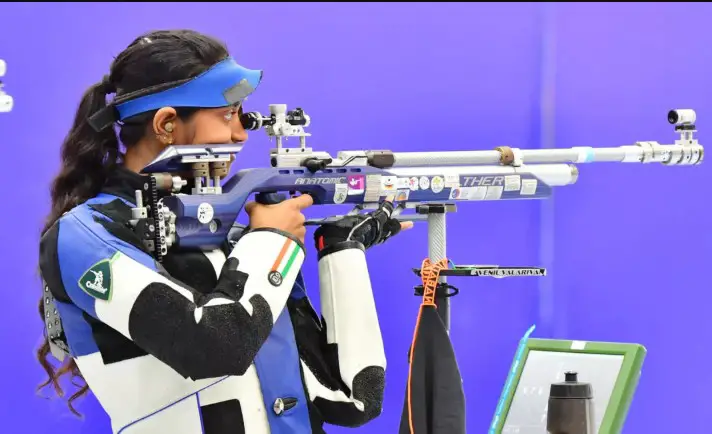
1. Bullseye Pistol Shooting
Bullseye pistol shooting, often referred to as precision pistol shooting, is one of the oldest competitive shooting disciplines. The sport emphasizes extreme accuracy at fixed distances, typically ranging from 25 to 50 meters. Competitors fire a set number of shots at circular targets marked with scoring rings, aiming to achieve the highest possible total score. The equipment used usually includes .22 caliber pistols, though larger calibers can also be permitted depending on the level of competition. Stability, trigger control, and mental focus are critical, as even minor deviations can significantly affect scores.
The rules are strict, requiring shooters to maintain a consistent stance and sight alignment for every shot. Scoring is precise, often utilizing electronic target systems in modern competitions to measure exact shot placement. Matches may be divided into stages, with slow-fire, timed, and rapid-fire segments, testing both patience and speed. This combination of precision and strategy has made Bullseye shooting a foundational discipline in Olympic shooting events and a popular choice for civilian marksmanship programs.
Training for Bullseye shooting involves extensive dry firing, breath control, and visualization techniques to refine aim. Shooters also develop consistency in their grip and trigger press, which are crucial for repetitive accuracy. Despite being one of the slower-paced shooting sports, Bullseye requires exceptional mental endurance and physical control, making it a challenging and rewarding discipline.
The sport appeals to those who enjoy methodical, detail-oriented challenges. Unlike action or dynamic shooting sports, Bullseye allows competitors to focus entirely on technique and precision rather than speed or movement. It also fosters a deep understanding of the firearm, ammunition, and ballistic principles. As a classic discipline, Bullseye shooting continues to serve as an entry point for newcomers and a benchmark for elite shooters worldwide.
2. Action Pistol / Practical Shooting (IPSC / USPSA)
Action pistol, also known as practical shooting, is a fast-paced shooting sport that challenges competitors to engage multiple targets while navigating courses of varying difficulty. The International Practical Shooting Confederation (IPSC) and United States Practical Shooting Association (USPSA) provide the framework for this discipline. Participants must balance speed, accuracy, and movement to achieve the best overall performance.
Competitions often involve dynamic courses with obstacles, moving targets, and different shooting positions. Competitors carry multiple magazines and must manage reloading efficiently while maintaining accuracy. Scoring combines hit factor calculations, rewarding both quick target engagement and precision. Firearms commonly used include semi-automatic pistols in various calibers, with modifications such as optical sights, compensators, and extended magazines allowed within class restrictions.
Training for action pistol shooting includes movement drills, target transitions, magazine changes, and tactical positioning. Shooters must also develop situational awareness to navigate the course safely while maximizing efficiency. The sport emphasizes adaptability, requiring participants to plan their movements and anticipate challenges, making it mentally and physically demanding.
Practical shooting attracts those who enjoy combining marksmanship with athleticism and strategy. It offers a thrilling experience that differs from stationary target shooting, as competitors must constantly move and adjust to new scenarios. This blend of speed, precision, and problem-solving defines action pistol as a cornerstone of modern shooting sports.
3. Precision Rifle Series (PRS)
The Precision Rifle Series (PRS) is a long-range shooting sport designed to test accuracy, speed, and consistency at distances ranging from 300 to 1,200 yards. Competitors use bolt-action or semi-automatic rifles equipped with high-powered optics and custom stocks to achieve pinpoint accuracy. Courses of fire simulate real-world tactical scenarios, including shooting from unconventional positions, under time constraints, and at varying angles.
PRS events often require shooters to account for environmental factors such as wind, elevation, and lighting conditions. Scoring is based on hit location, time to engage, and overall consistency across multiple stages. Rifles are typically chambered in calibers optimized for long-range precision, such as .308 Winchester, 6.5 Creedmoor, and .300 Winchester Magnum. High-quality optics, bipods, and shooting mats are common accessories that help improve stability and accuracy.
Training for PRS emphasizes ballistic knowledge, ranging, and positional shooting. Shooters learn to calculate holdovers and adjust for windage using dope charts or ballistic calculators. Mental focus and patience are essential, as each stage challenges the shooter to combine technical skill with strategic thinking. PRS has grown rapidly in popularity due to its balance of tactical realism and competitive excitement.
The sport is ideal for shooters interested in testing their skills at extreme distances while facing practical and tactical scenarios. PRS competitions provide a blend of precision, endurance, and problem-solving, offering a unique experience that is both demanding and rewarding for participants of all levels.
4. Trap Shooting
Trap shooting is a clay target shooting sport where participants aim to hit clay discs launched from a single “trap” machine away from the shooter. The sport emphasizes reaction time, accuracy, and consistency. Competitors typically use shotguns, adjusting their stance and swing to match the speed and trajectory of the clay targets.
A standard trap range consists of multiple shooting stations arranged in a semicircle, with shooters taking turns to fire at targets launched at various angles. Scoring is based on the number of targets successfully hit, and competitions may include rounds with increasing difficulty. Shotguns used in trap shooting are generally 12-gauge, with features like adjustable chokes and specialized sights to optimize performance.
Training for trap shooting includes drills to improve hand-eye coordination, timing, and follow-through. Shooters often practice lead and swing techniques to ensure they can track targets accurately from different angles. Consistent practice builds muscle memory, allowing for more precise and reliable shooting during competitions.
Trap shooting appeals to enthusiasts who enjoy outdoor shooting and want to develop skills in timing, precision, and focus. As a traditional sport with roots in hunting, it provides a controlled environment for testing shooting abilities while maintaining safety and fairness in competition.
5. Skeet Shooting
Skeet shooting is another popular clay target sport, but unlike trap, targets are launched from two fixed points, known as the “high house” and “low house,” crossing in front of the shooter. This sport challenges participants to hit moving targets from various angles and distances, testing reflexes and adaptability.
Competitors rotate through eight shooting stations arranged in a semicircle between the two launch houses. Each station presents a different target trajectory, requiring shooters to adjust their lead, swing speed, and timing for each shot. Scoring is based on successful hits, with high-level competitions employing precise rules and scoring systems.
Shotguns used in skeet are typically 12-gauge or 20-gauge, often featuring over-and-under barrels and adjustable chokes to control shot patterns. Proper stance, balance, and consistent swing technique are crucial for accuracy. Training focuses on target acquisition, swing consistency, and reflex development, helping shooters react quickly to the crossing targets.
Skeet shooting is a dynamic and engaging sport that combines athleticism, precision, and mental focus. It is widely practiced by recreational shooters and professional competitors alike, making it an integral part of the shooting sports landscape. For beginners and veterans, skeet provides a challenging yet enjoyable way to refine shooting skills while engaging in friendly competition.
6. Sporting Clays
Sporting clays is often described as “golf with a shotgun” because shooters move through a course with multiple stations, each presenting clay targets launched at different angles, speeds, and distances. Unlike trap or skeet, sporting clays simulate real hunting scenarios, including low, high, fast, and crossing targets. Competitors must adapt their shooting techniques to varying conditions, making this sport both challenging and dynamic.
Shotguns used in sporting clays are typically 12-gauge over-and-under or semi-automatic models, equipped with adjustable chokes and specialized sights. Training emphasizes footwork, target acquisition, and lead estimation. Shooters must anticipate the flight of targets while maintaining a steady swing and proper follow-through to achieve consistent accuracy.
Sporting clays appeals to participants who enjoy outdoor environments and realistic shooting challenges. Courses often wind through wooded areas, open fields, or varied terrain, providing a unique experience for each competition. This diversity of targets and conditions makes sporting clays an engaging and highly skill-based shooting sport.
7. 5‑Stand Shooting
5‑Stand shooting is a compact form of sporting clays where shooters rotate through five stations, each presenting a combination of targets launched from multiple traps. The targets vary in trajectory, speed, and angle, requiring quick reflexes and precise timing. Each station typically offers a sequence of singles and doubles, challenging shooters to hit multiple targets in rapid succession.
Shotguns for 5‑Stand are usually 12-gauge over-and-under or semi-automatic guns, optimized for fast target acquisition and smooth swing mechanics. Shooters must practice lead estimation, follow-through, and consistent mount to excel in competitions. Mental focus and quick decision-making are crucial due to the rapid changes in target presentation.
5‑Stand is ideal for shooters who want a fast-paced and technical shooting experience in a smaller venue than full sporting clays courses. It is widely used for both recreational purposes and competitive events, offering a diverse challenge that tests accuracy, speed, and adaptability.
8. Air Rifle Standing (10m)
Air rifle standing at 10 meters is an Olympic-style precision shooting sport using 4.5mm (.177 caliber) air rifles. Competitors shoot from a standing position at targets placed 10 meters away, aiming for the highest score possible based on ring placements. The sport emphasizes stability, control, and mental concentration, as even small movements can affect accuracy.
Rifles used in this discipline are highly specialized, featuring adjustable stocks, triggers, and precision sights. Athletes often wear shooting jackets, gloves, and shoes to enhance stability and minimize body sway. Training focuses on breath control, trigger technique, and posture, enabling shooters to maintain consistent accuracy throughout the competition.
Air rifle standing is accessible to beginners while providing elite-level competitors with a platform to showcase technical mastery. The sport is highly regulated, emphasizing safety, discipline, and precision. Its popularity in the Olympics and world championships has made it a benchmark for competitive marksmanship around the globe.
9. Air Pistol (10m)
Air pistol shooting at 10 meters is another precision discipline recognized by the International Shooting Sport Federation (ISSF). Competitors use 4.5mm (.177 caliber) air pistols to shoot targets from a standing position, focusing on precision and control. Each shot is carefully aimed, with scoring determined by the proximity to the target center.
Specialized air pistols offer adjustable grips, triggers, and sights to accommodate different hand sizes and shooting techniques. Training emphasizes stability, mental focus, and consistent aiming. Even minor movements of the wrist or arm can significantly affect the shot placement, making technique refinement critical.
Air pistol competitions are popular in schools, clubs, and international events, offering an approachable yet technically demanding shooting experience. The sport encourages discipline, patience, and focus, making it ideal for developing foundational marksmanship skills that translate to other firearms disciplines.
10. Smallbore Rifle (50m)
Smallbore rifle shooting at 50 meters is a precision sport using .22 caliber rifles to hit targets at short to medium ranges. Competitors may shoot from standing, kneeling, or prone positions, testing their ability to maintain accuracy across multiple stances. This discipline emphasizes technical skill, consistent form, and careful control of breathing and trigger pressure.
Rifles used in smallbore competitions are designed for stability and precision, often featuring adjustable stocks, fine triggers, and high-quality sights or scopes. Competitors must carefully manage recoil, maintain consistent positioning, and account for environmental factors such as wind and lighting. Practice routines include dry firing, position drills, and live firing at various distances.
Smallbore shooting is widely accessible, serving as both a competitive discipline and a training platform for longer-range rifle sports. Its combination of precision, control, and adaptability makes it a favorite among shooters seeking to refine their fundamental skills while enjoying structured competition.
11. Smallbore Pistol (25m / 50m)
Smallbore pistol shooting at 25 meters and 50 meters is a traditional precision discipline that focuses on accuracy, consistency, and refined shooting technique. Competitors typically use .22 caliber rimfire pistols, which provide manageable recoil while still demanding careful control and focus. The sport is widely practiced in competitive shooting clubs and international events because it bridges the gap between beginner-friendly firearm sports and highly technical precision competitions. Shooters aim at circular targets with multiple scoring rings, where even a slight deviation from the center can dramatically affect the final score.
Training for smallbore pistol competition emphasizes posture, grip consistency, trigger control, and steady breathing patterns. Because the distances of 25 and 50 meters require careful sight alignment and follow-through, shooters must develop strong muscle memory and concentration. Many athletes spend long periods practicing dry-fire drills to refine trigger discipline without recoil. Over time, competitors learn to minimize body movement, stabilize their stance, and maintain a consistent shooting rhythm throughout the event. This methodical training approach makes smallbore pistol shooting an excellent discipline for developing fundamental marksmanship skills.
Another defining feature of smallbore pistol competitions is their emphasis on mental endurance. Matches often involve long sequences of carefully timed shots, requiring shooters to maintain focus over extended periods. Environmental factors such as lighting, wind, or temperature can subtly influence performance, especially at the 50-meter distance. Experienced competitors learn to adjust their aim and technique accordingly while maintaining composure. As a result, smallbore pistol shooting is widely respected as a discipline that combines patience, technical skill, and mental resilience in equal measure.
Because of its accessible equipment requirements and structured rules, smallbore pistol shooting remains one of the most popular gun shooting sports worldwide. Many national federations and shooting clubs use it as an entry point for athletes who wish to progress into Olympic-style pistol disciplines. The sport encourages precision, safety, and consistent practice, making it both a rewarding competitive activity and a reliable training platform for advanced shooters.
12. Rapid Fire Pistol
Rapid fire pistol shooting is one of the most dynamic and challenging pistol disciplines in competitive shooting sports. Unlike precision-focused events where shooters take their time to aim carefully, rapid fire competitions require participants to hit multiple targets within extremely short time limits. The targets typically appear in a row, and shooters must engage them in quick succession using a .22 caliber pistol. Timing sequences can vary, but competitors may have only a few seconds to aim and fire at several targets before they disappear.
The equipment used in rapid fire pistol shooting is specifically designed for speed and reliability. Pistols feature lightweight frames, ergonomic grips, and finely tuned triggers to allow quick yet controlled firing. Shooters practice developing fluid motion, ensuring that each shot flows naturally into the next. Proper stance and balance are essential, as competitors must quickly transition their aim from one target to another while maintaining accuracy.
Training for rapid fire pistol involves extensive drills that focus on reaction time, muscle memory, and visual tracking. Athletes practice target transitions repeatedly until the movement becomes instinctive. Unlike slower precision events, hesitation in rapid fire competitions can lead to missed opportunities, making confidence and decisiveness critical elements of success. Shooters must also develop the ability to remain calm under pressure, as the pace of the event leaves little room for correction once the shooting sequence begins.
Rapid fire pistol is particularly exciting for spectators because of its speed and intensity. Competitors demonstrate a remarkable combination of reflexes, coordination, and marksmanship. The discipline has been featured in international competitions and the Olympic Games, where it continues to showcase the technical skill and athletic discipline required for high-level shooting sports.
13. Free Pistol (50m Pistol)
Free pistol shooting at 50 meters is widely regarded as one of the most technically demanding pistol disciplines in competitive shooting. The term “free pistol” refers to the minimal equipment restrictions placed on the firearm design, allowing highly specialized pistols optimized purely for precision. Competitors fire single shots at a target positioned 50 meters away, making accuracy the central focus of the event.
The pistols used in this discipline often feature long barrels, finely adjustable triggers, and custom grips tailored to the shooter’s hand. Because each shot must be manually loaded, the pace of the event encourages careful preparation and concentration. Shooters typically take time to steady their breathing, align their sights precisely, and apply gradual pressure on the trigger to ensure a clean and controlled shot.
Training for free pistol shooting is deeply rooted in discipline and mental focus. Competitors must develop exceptional control over their body movements to avoid disturbing the pistol’s alignment. Even the smallest muscle tension can influence accuracy at the 50-meter distance. As a result, athletes often incorporate relaxation techniques and breathing exercises into their training routines to maintain a calm and stable shooting posture.
Although the event may appear slow compared to dynamic shooting sports, free pistol competitions demand extraordinary precision and patience. Many experienced shooters consider it the purest test of pistol marksmanship, where success depends entirely on the shooter’s ability to maintain control and consistency throughout the match.
14. Running Target Shooting
Running target shooting is a unique and highly engaging discipline in which competitors aim at moving targets that simulate running animals. The targets travel across a narrow opening, forcing shooters to track the motion and fire at precisely the right moment. This sport blends traditional marksmanship with motion tracking skills, creating a distinctive challenge that differs from stationary target shooting events.
Competitors typically use small-caliber rifles or air rifles designed for accuracy and smooth handling. The targets move at varying speeds, requiring shooters to adjust their lead and timing accordingly. Because the target remains visible only briefly as it passes across the shooting window, competitors must react quickly and maintain steady aim while following the movement.
Training for running target shooting focuses heavily on coordination and visual tracking. Shooters practice maintaining a smooth swing while following the target’s path, similar to techniques used in clay shooting sports. Timing becomes critical, as firing too early or too late can result in a missed shot. Experienced competitors develop an instinctive sense of rhythm that allows them to anticipate the target’s movement and release the shot at the ideal moment.
Running target shooting combines precision and movement in a way that few other shooting sports do. The discipline requires excellent hand-eye coordination and consistent practice. Because of its unique format, it remains a fascinating event for both participants and spectators who appreciate the challenge of hitting a moving target with precision.
15. Biathlon (Ski + Rifle)
Biathlon is a winter sport that combines cross-country skiing with precision rifle shooting, creating one of the most physically demanding shooting sports in the world. Athletes ski long distances across snowy terrain before stopping at shooting stations to fire at small targets using lightweight .22 caliber rifles. The sport requires a unique balance of endurance, speed, and precise marksmanship under physical stress.
During a biathlon race, competitors alternate between skiing segments and shooting stages. The shooting portion may require athletes to fire from prone or standing positions, depending on the event format. Missing a target results in a time penalty or additional skiing distance, which can significantly affect the final ranking. As a result, accuracy becomes just as important as skiing speed.
Training for biathlon is complex because athletes must develop both cardiovascular endurance and refined shooting technique. Skiing at high speed raises the heart rate dramatically, making it difficult to maintain a steady aim when arriving at the shooting range. Biathletes therefore practice controlling their breathing and calming their bodies quickly before firing each shot. This ability to transition from intense physical activity to precise marksmanship is one of the defining skills of the sport.
Biathlon competitions are widely popular in winter sports regions, particularly in Europe and North America. The sport is a staple of the Winter Olympic Games and draws large audiences because of its dramatic combination of speed, strategy, and accuracy. Biathlon demonstrates how shooting sports can integrate athletic endurance with technical marksmanship, creating a thrilling and uniquely challenging competition.
16. Long Range Precision Shooting
Long range precision shooting is a discipline that challenges competitors to engage targets placed at extreme distances, often ranging from 600 yards to well beyond 1,000 yards. The sport focuses heavily on accuracy, ballistic knowledge, and environmental awareness. Shooters must account for factors such as wind direction, bullet drop, temperature, and air pressure. Because of these variables, long range precision shooting requires not only excellent marksmanship but also a deep understanding of external ballistics. Participants typically use precision rifles equipped with high-magnification optics and adjustable stocks designed for maximum stability and consistency.
Training in this discipline revolves around developing repeatable shooting fundamentals. Competitors spend countless hours practicing prone shooting positions, refining trigger control, and learning to read wind conditions across large distances. Spotters often assist shooters by observing bullet impacts through high-powered optics and communicating adjustments. This teamwork element adds an additional layer of strategy, especially in organized competitions where shooters must quickly adapt to changing environmental conditions.
Long range precision shooting also emphasizes the importance of carefully tuned equipment. Rifles used in these competitions are typically chambered in calibers designed for consistent ballistic performance over extended ranges. Shooters meticulously adjust optics, bipods, and support bags to achieve maximum stability. Even small changes in setup can significantly influence accuracy at long distances, making equipment preparation a crucial part of the sport.
The appeal of long range precision shooting lies in its combination of technical knowledge and patient marksmanship. Competitors enjoy the challenge of hitting distant targets that appear extremely small through the scope. Each successful shot represents the culmination of careful calculations, disciplined technique, and a deep understanding of ballistic behavior.
17. Cross-Match / Across-the-Course
Cross-match shooting, often called across-the-course competition, is a traditional rifle discipline that tests a shooter’s ability to perform accurately from multiple positions at varying distances. Competitors typically engage targets at ranges such as 200, 300, and 600 yards. The course of fire requires shooters to demonstrate skill in standing, sitting, kneeling, and prone positions, each presenting different challenges in stability and control.
Rifles used in across-the-course events are generally semi-automatic or bolt-action rifles designed for precision and reliability. Competitors often use adjustable slings to stabilize the rifle when shooting from unsupported positions. The use of slings, combined with proper body positioning, allows shooters to reduce movement and maintain a consistent sight picture throughout the firing sequence.
Training for cross-match shooting focuses heavily on position building. Shooters must learn how to quickly establish a stable stance or prone posture while maintaining proper alignment with the target. Because competitions include timed stages, efficiency becomes just as important as accuracy. Competitors practice transitioning smoothly between positions while preserving consistent shooting fundamentals.
Across-the-course competitions are popular within national rifle organizations and military marksmanship programs. The discipline reflects traditional marksmanship training methods that emphasize versatility and adaptability. By requiring shooters to perform well from multiple positions and distances, cross-match shooting offers a comprehensive test of rifle skill.
18. High Power Rifle (CMP / NRA)
High power rifle shooting is one of the most respected disciplines in competitive marksmanship, widely organized by groups such as the Civilian Marksmanship Program (CMP) and the National Rifle Association (NRA). Competitors use centerfire rifles to engage targets at distances typically ranging from 200 to 600 yards. The sport combines precision shooting with traditional rifle handling skills, making it both technically demanding and historically significant.
In high power rifle matches, shooters fire from several positions including standing, sitting, and prone. Each stage requires careful attention to body alignment, breathing control, and trigger discipline. Competitors also rely on spotting scopes to monitor shot placement and adjust their aim accordingly. Because targets become smaller relative to the distance, consistent fundamentals are essential for achieving high scores.
Equipment used in high power competitions often includes rifles equipped with precision sights or optics depending on the match rules. Slings, shooting jackets, and specialized gloves are commonly used to improve stability and reduce fatigue during extended shooting sessions. These accessories allow competitors to maintain consistent posture throughout the match.
High power rifle shooting has deep roots in military and civilian marksmanship traditions. Many shooters appreciate the discipline because it emphasizes classic rifle skills while still incorporating modern equipment and techniques. The sport continues to attract enthusiasts who value accuracy, discipline, and the heritage of precision rifle shooting.
19. Fullbore Target Rifle
Fullbore target rifle shooting is a long-distance discipline popular in countries such as the United Kingdom, Australia, and Canada. Competitors fire centerfire rifles at targets placed at distances typically ranging from 300 to 1,000 yards. The sport requires exceptional precision because even small environmental changes can significantly influence bullet trajectory over such long distances.
Rifles used in fullbore competition are carefully designed for long-range accuracy. Shooters often rely on adjustable sights and precision-manufactured barrels to achieve consistent performance. Unlike some other shooting sports, optical scopes are sometimes restricted depending on the competition rules, meaning shooters must rely heavily on iron sights and precise sight alignment.
Wind reading plays a major role in fullbore shooting success. Competitors observe wind flags positioned along the range to determine direction and speed before firing each shot. These observations help shooters make precise adjustments to their sights. Mastering this skill requires patience and experience, as wind conditions can change rapidly across the distance between shooter and target.
Fullbore target rifle competitions often emphasize tradition and sportsmanship. Many matches follow structured formats that have remained largely unchanged for decades. This sense of heritage, combined with the technical challenge of long-distance accuracy, makes fullbore shooting a respected discipline within the international shooting community.
20. Benchrest Shooting
Benchrest shooting is widely regarded as one of the most precise forms of competitive shooting. In this discipline, rifles are fired from a stable bench using specialized rests and sandbags designed to minimize movement. The goal is to place a series of shots as close together as possible on a target, often forming extremely tight groups that demonstrate the shooter’s consistency and the rifle’s mechanical accuracy.
The rifles used in benchrest competitions are among the most finely tuned firearms in the shooting world. Competitors carefully customize barrels, triggers, and stocks to achieve the highest possible level of precision. Ammunition is often hand-loaded to exact specifications, ensuring consistent velocity and ballistic performance. Even minor variations in equipment can influence results, so shooters pay meticulous attention to every detail.
Although benchrest shooting minimizes physical movement by using a stable rest, the discipline still requires exceptional concentration and technique. Shooters must maintain consistent trigger pressure, manage recoil effectively, and observe environmental conditions such as wind and mirage. Small adjustments to aim can make the difference between an average group and a record-setting one.
Benchrest competitions attract shooters who appreciate technical precision and careful experimentation with equipment. The sport highlights the pursuit of perfect accuracy, where the smallest measurable improvement can represent significant progress. For many enthusiasts, benchrest shooting represents the ultimate test of rifle performance and shooting consistency.
21. Black Powder Cartridge Rifle (BPCR)
Black Powder Cartridge Rifle shooting, commonly abbreviated as BPCR, is a historical shooting discipline that recreates the experience of late-19th-century rifle competitions. Participants use single-shot rifles chambered for traditional black powder cartridges, similar to those used during the American frontier era. Targets are typically placed at distances ranging from 200 to 1,000 meters, requiring a careful balance of precision, patience, and historical shooting techniques. Because black powder produces slower bullet velocities and more smoke than modern smokeless powder, shooters must adapt their timing and sight adjustments to account for these unique characteristics.
Rifles used in BPCR competitions are usually reproductions or restored versions of classic single-shot rifles with long barrels and iron sights. These rifles emphasize craftsmanship and historical authenticity. Shooters often rely on tang-mounted sights that allow precise elevation adjustments for long-range shooting. Ammunition is usually handloaded with black powder, lead bullets, and traditional brass cases, reflecting the historical nature of the sport. The process of preparing ammunition is often considered part of the overall discipline and tradition.
Competitions generally involve shooting at steel silhouette targets shaped like animals such as chickens, pigs, turkeys, and rams. These targets must be knocked over to count as hits, adding an extra layer of challenge beyond simple accuracy. Shooters must manage recoil, smoke, and slower reloading times while maintaining consistent aim. The slower pace of the sport encourages careful shot preparation and disciplined shooting habits.
BPCR shooting attracts enthusiasts who appreciate the heritage of firearms and the craftsmanship of historic rifles. The discipline blends marksmanship with historical reenactment, allowing participants to experience a form of shooting similar to that practiced more than a century ago. Its emphasis on tradition and patience makes it one of the most distinctive competitive shooting sports today.
22. Cowboy Action Shooting
Cowboy Action Shooting is a unique shooting sport that combines marksmanship with historical role-playing inspired by the American Old West. Competitors dress in period clothing and use firearms typical of the late 1800s, including revolvers, lever-action rifles, and shotguns. The sport focuses not only on accuracy but also on speed and stage performance, as participants move through themed shooting scenarios that resemble scenes from classic Western films.
Each stage of a Cowboy Action Shooting match involves engaging multiple targets with different firearms in a specific sequence. Shooters must transition between revolvers, rifles, and shotguns while maintaining safe handling and precise aim. Targets are usually steel plates placed at relatively short distances, allowing competitors to shoot quickly while still emphasizing control and accuracy.
Competitors adopt unique cowboy or frontier-themed aliases, adding an element of fun and personality to the sport. Many matches incorporate storytelling elements in which shooters follow a scripted scenario. This theatrical aspect sets Cowboy Action Shooting apart from other competitive disciplines, creating a friendly and social environment that appeals to shooters of all experience levels.
Despite its entertaining theme, Cowboy Action Shooting requires solid shooting fundamentals. Competitors must develop fast target acquisition, smooth firearm transitions, and reliable reloading techniques. The sport celebrates historical firearms while providing a dynamic and engaging shooting experience that blends competition with entertainment.
23. 3-Gun Competition
3-Gun Competition is one of the most dynamic and fast-paced shooting sports in the world. Competitors engage targets using three different types of firearms: a rifle, a shotgun, and a handgun. Each stage presents a unique course of fire that may include steel plates, paper targets, and reactive targets placed at varying distances. Shooters must move through the stage efficiently while transitioning between firearms and maintaining accuracy.
This discipline requires a combination of speed, precision, and tactical planning. Competitors must decide how to approach each stage, including where to reload, which firearm to use first, and how to move between shooting positions. The ability to manage equipment effectively while maintaining situational awareness is essential for achieving competitive results.
3-Gun shooters typically use modern sporting firearms equipped with optical sights, extended magazines, and ergonomic accessories designed for rapid target engagement. Training focuses on movement drills, quick transitions between firearms, and consistent shot placement under time pressure. Competitors must remain calm and focused while navigating complex courses of fire.
The popularity of 3-Gun competitions has grown significantly in recent years due to their exciting and challenging format. The sport combines multiple shooting disciplines into a single event, making it appealing to participants who enjoy variety and dynamic competition. Its emphasis on versatility and adaptability makes it one of the most demanding shooting sports available.
24. Field Target Air Rifle
Field Target Air Rifle shooting is a precision airgun sport that takes place outdoors across natural terrain. Competitors use high-accuracy air rifles to engage small metal targets placed at varying distances, typically between 10 and 55 yards. Each target features a small circular opening known as a kill zone. When the pellet passes through this opening, it strikes a paddle that causes the target to fall, indicating a successful hit.
The sport emphasizes careful range estimation, precise shooting positions, and controlled breathing. Targets are often placed in challenging locations such as wooded areas, slopes, or partially concealed environments. Shooters must estimate distance accurately because the trajectory of a pellet can vary significantly over relatively short distances.
Air rifles used in field target competitions are highly specialized and often equipped with adjustable stocks, precision triggers, and high-magnification scopes. Competitors spend significant time calibrating their equipment to ensure consistent pellet velocity and accurate ballistic performance. Because the targets are small and distances vary, even minor errors in estimation or technique can result in missed shots.
Field Target Air Rifle shooting combines the precision of target shooting with the environmental challenges of outdoor sports. Its quiet operation and moderate equipment requirements make it accessible to a wide range of participants. The sport rewards patience, concentration, and technical skill, creating a challenging yet enjoyable experience for precision shooting enthusiasts.
25. Metallic Silhouette Shooting
Metallic silhouette shooting is a discipline in which competitors aim to knock down steel targets shaped like animals. These silhouettes typically represent chickens, pigs, turkeys, and rams placed at progressively increasing distances. Shooters must hit the target with enough force to topple it from its stand, meaning accuracy and bullet energy both play important roles in scoring.
Competitors usually fire from a standing position without the use of artificial support such as benches or bipods. This requirement makes the sport physically demanding, as shooters must maintain stability while holding the rifle for extended periods. Each shot must be carefully timed and controlled to ensure proper alignment with the target.
Rifles used in silhouette shooting vary depending on the category, but they are generally designed for precision and manageable recoil. Shooters must develop strong fundamentals in balance, breathing control, and trigger technique to achieve consistent results. The ability to remain steady while aiming at relatively small targets from unsupported positions is one of the key challenges of the sport.
Metallic silhouette shooting offers a satisfying visual element because successful shots cause the steel targets to fall dramatically. This clear feedback adds excitement to competitions and allows spectators to easily follow the action. The sport continues to attract participants who appreciate the blend of precision shooting, physical control, and engaging target design.
26. Benchrest Pistol
Benchrest pistol shooting is a precision-focused discipline that emphasizes extreme accuracy at relatively controlled distances. Unlike many other shooting sports that involve movement or rapid fire, benchrest pistol competitions are conducted from a stable shooting bench where the firearm is supported by specialized rests or sandbags. The primary goal is simple but demanding: place shots as close together as possible on a target, forming the smallest group that a shooter can consistently produce. While the sport may appear calm and methodical, it requires a deep understanding of equipment tuning, ammunition consistency, and shooting technique.
The pistols used in benchrest competitions are often highly customized firearms designed specifically for precision shooting. These pistols may feature heavy barrels, refined trigger systems, and ergonomic grips that help minimize shooter-induced movement. Many competitors spend considerable time testing different ammunition loads to determine which combination performs best in their firearm. Even small differences in bullet weight, powder charge, or barrel harmonics can affect accuracy. As a result, benchrest shooters often become meticulous experimenters, carefully documenting performance data to refine their setup.
Competitions typically involve shooting a series of targets at known distances, commonly ranging from 25 to 100 yards depending on the event format. Scoring is often determined by the size of shot groups or the precise location of bullet holes within scoring rings. Because the firearm is supported on a bench, shooters focus on refining trigger control, breathing, and sight alignment to achieve maximum precision. The smallest mistakes in technique can cause measurable deviations in shot placement.
Benchrest pistol shooting attracts competitors who enjoy the scientific and analytical side of marksmanship. The discipline rewards patience, careful observation, and continuous refinement of equipment and technique. For many shooters, the challenge lies not only in shooting accurately but also in understanding the subtle variables that influence ballistic performance.
27. Mounted Shooting (Cowboy Mounted Shooting)
Mounted shooting, often known as Cowboy Mounted Shooting, is a fast-paced sport that combines horseback riding with shooting skills. Competitors ride horses through a timed course while firing blank cartridges from single-action revolvers at balloon targets. The balloons are placed along the course, and riders must accurately shoot them while guiding their horse through tight turns and obstacles. Speed and accuracy both play major roles in determining the final score.
The firearms used in mounted shooting are typically traditional-style single-action revolvers that fire specially designed blank cartridges. These blanks contain enough powder to burst balloons at close range but do not fire projectiles. Because competitors are moving at high speeds while riding horses, safety and control are essential. Riders must coordinate their shooting with the movement of the horse while maintaining balance and precision.
Courses are designed with a pattern of balloon targets that competitors must follow in a specific order. Riders must remember the course layout, navigate their horse smoothly, and fire accurately while in motion. This requires strong riding skills as well as solid firearm handling techniques. Horses are trained to remain calm around gunfire and sudden movements, which adds another layer of preparation for competitors.
Mounted shooting is both a competitive sport and a celebration of Western heritage. Many participants wear cowboy-style clothing and use historically inspired equipment, adding to the sport’s visual appeal. The combination of horsemanship, marksmanship, and speed creates an exciting environment that is popular among spectators and participants alike.
28. Elcho Shield Match (Long-Range Military Rifle)
The Elcho Shield Match is one of the most prestigious long-range rifle competitions in traditional military-style shooting. Originating in the United Kingdom, this match is part of major international shooting events and involves teams of skilled marksmen firing military-pattern rifles at extremely long distances. The competition typically includes targets placed at ranges of up to 1,000 yards, demanding exceptional accuracy and disciplined teamwork.
Participants in the Elcho Shield Match use rifles that resemble historical or service-style firearms, often chambered for full-power rifle cartridges capable of maintaining accuracy over long distances. Shooters must carefully account for wind direction, atmospheric conditions, and bullet trajectory. At such distances, even a slight change in wind speed can move the bullet significantly off course, making wind reading one of the most critical skills in the competition.
Teams work together to analyze environmental conditions and adjust their sights accordingly. Spotters may observe bullet impacts and provide feedback that helps shooters refine their aim. The teamwork aspect adds a strategic dimension to the competition, as each member contributes to the overall performance of the team.
The Elcho Shield Match represents the highest level of traditional long-range rifle shooting. It honors the heritage of military marksmanship while showcasing the technical skills required to hit distant targets with precision. For many participants, competing in this event is considered a major achievement in the world of shooting sports.
29. Muzzleloader Competitions
Muzzleloader competitions focus on firearms that are loaded from the front of the barrel rather than from the rear with modern cartridges. These firearms represent some of the earliest forms of rifles and pistols used in history. Competitors use black powder, loose projectiles, and traditional loading techniques to fire their shots, recreating the experience of historical marksmanship.
The loading process for muzzleloaders is more complex than that of modern firearms. Shooters must carefully measure powder charges, insert projectiles, and use ramrods to seat the bullet firmly against the powder. Because each shot requires a complete loading process, competitions tend to proceed at a slower pace. However, this slower rhythm encourages careful preparation and thoughtful shooting technique.
Targets used in muzzleloader competitions vary widely depending on the event format. Some competitions focus on traditional bullseye targets, while others include silhouette targets or historically inspired scenarios. Accuracy remains the central objective, and shooters must master the unique ballistic characteristics of black powder firearms.
Muzzleloader shooting attracts enthusiasts who appreciate historical firearms and traditional craftsmanship. The discipline combines marksmanship with historical appreciation, allowing participants to experience the techniques used by shooters centuries ago. For many competitors, the connection to history is just as important as the competitive aspect of the sport.
30. Archery / Rifle Combo Events (Multi-Discipline Shoots)
Archery and rifle combo events, sometimes called multi-discipline shoots, combine different forms of marksmanship into a single competition. Participants must demonstrate proficiency with both bows and firearms, typically moving between archery targets and rifle targets during the same event. This hybrid format challenges competitors to adapt their techniques and mindset as they transition between two very different types of equipment.
Archery requires precise control of body posture, bow tension, and release technique, while rifle shooting emphasizes trigger control, sight alignment, and recoil management. Competitors must quickly adjust their approach as they move from one discipline to another. This ability to switch mental focus and technical skills is what makes multi-discipline shooting particularly demanding.
Events may involve shooting at stationary targets, reactive targets, or varying distances depending on the competition format. Some courses incorporate outdoor environments that simulate hunting scenarios, requiring participants to navigate terrain while maintaining safe and accurate shooting practices.
Multi-discipline shooting events appeal to participants who enjoy versatility and a broader range of marksmanship challenges. By combining archery and rifle shooting, these competitions highlight the diverse skills involved in precision targeting. The format encourages adaptability and provides a unique experience that stands apart from traditional single-discipline shooting sports.
Conclusion
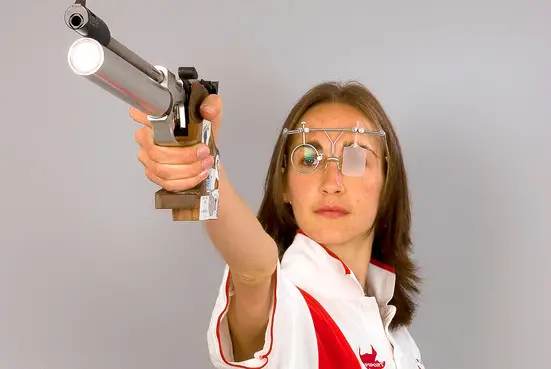
Competitive shooting is an incredibly diverse world that combines precision, discipline, technical skill, and mental focus. From traditional target sports like Benchrest Shooting and High Power Rifle to dynamic competitions such as 3-Gun and historically inspired events like Black Powder Cartridge Rifle and Cowboy Action Shooting, each discipline offers its own unique challenges and rewards.
Some events emphasize extreme accuracy at long distances, such as Long Range Precision Shooting and Fullbore Target Rifle, while others test speed, movement, and versatility. Hybrid competitions like Biathlon or multi-discipline matches combine endurance, strategy, and marksmanship, pushing athletes to perform under intense physical and mental pressure.
Whether competitors are shooting from a bench, standing on a range, skiing through snow-covered terrain, or even riding horseback, these sports celebrate precision, control, and the constant pursuit of improvement. Each discipline allows shooters to develop specialized skills while also connecting with a long tradition of marksmanship and sporting excellence.
For newcomers and experienced competitors alike, exploring different shooting disciplines can be both educational and rewarding. By understanding the equipment, rules, and techniques of each sport, shooters can discover which style best matches their interests, abilities, and competitive goals.
Ultimately, competitive shooting is not just about hitting a target—it is about dedication, concentration, and the continuous refinement of skill. No matter the discipline, the spirit of the sport remains the same: precision, respect for safety, and the pursuit of mastery.
Frequently Asked Questions (FAQ) About Shooting Sports
1. What are shooting sports?
Shooting sports are competitive activities that involve using firearms or airguns to hit targets with accuracy and precision. These sports can range from Olympic target shooting to dynamic competitions like 3-Gun and Cowboy Action Shooting.
2. What equipment is needed to start shooting sports?
Beginners usually need a suitable firearm or airgun, ammunition, protective gear such as eye and ear protection, and access to a shooting range. The exact equipment depends on the discipline being practiced.
3. Are shooting sports safe?
Yes. When proper safety rules are followed, shooting sports are considered very safe. Ranges enforce strict safety protocols, including proper firearm handling, supervision, and protective equipment.
4. What is the difference between rifle, pistol, and shotgun competitions?
Rifle competitions focus on long-barrel firearms designed for precision at distance, pistol competitions involve handguns, and shotgun competitions typically involve hitting moving targets such as clay pigeons.
5. What is benchrest shooting?
Benchrest shooting is a precision discipline where shooters fire from a bench using a rifle supported by rests or bags to achieve extremely accurate groupings on a target.
6. What is 3-Gun competition?
3-Gun competition is a dynamic shooting sport where participants use three types of firearms—rifle, pistol, and shotgun—to complete courses that involve movement, speed, and accuracy.
7. What is long-range precision shooting?
This discipline involves shooting targets at very long distances, often 600 to 1,000 yards or more, requiring careful calculations for wind, bullet drop, and environmental conditions.
8. What is Cowboy Action Shooting?
Cowboy Action Shooting is a sport where participants use firearms typical of the Old West era and often dress in period clothing while completing themed shooting stages.
9. What is black powder shooting?
Black powder shooting involves historical firearms that use traditional black powder instead of modern smokeless powder, commonly seen in muzzleloader competitions.
10. What is biathlon shooting?
Biathlon combines cross-country skiing with rifle shooting. Athletes must ski a course and periodically stop to shoot targets, testing both endurance and precision.
11. What is metallic silhouette shooting?
In metallic silhouette shooting, competitors aim at metal animal-shaped targets placed at varying distances, knocking them down with precise shots.
12. What is high power rifle competition?
High power rifle competitions involve shooting military-style rifles at targets from different positions, such as standing, sitting, and prone.
13. What is fullbore target rifle shooting?
Fullbore shooting typically involves large-caliber rifles fired at long distances, often from prone positions with sling support.
14. What is field target air rifle shooting?
This is an outdoor air rifle competition where shooters aim at small targets placed at varying distances and angles, often in wooded terrain.
15. What is rapid fire pistol shooting?
Rapid fire pistol competitions require shooters to hit multiple targets within a very short time limit, testing both speed and accuracy.
16. What is free pistol shooting?
Free pistol is a traditional precision shooting discipline where competitors fire at targets 50 meters away using highly specialized pistols.
17. What is a running target event?
Running target shooting involves hitting a moving target that travels across the shooter’s field of view, requiring precise timing and tracking.
18. What is mounted shooting?
Mounted shooting is a sport where participants ride horses while shooting targets with specially designed firearms or blank ammunition.
19. Can beginners participate in shooting competitions?
Yes. Many shooting clubs offer beginner-friendly competitions and training sessions to help new shooters learn the basics safely.
20. What age can someone start shooting sports?
Many youth programs allow participants to start in their early teens, often using air rifles under supervision. Age requirements vary by location and competition rules.
21. Do shooting sports require physical fitness?
While not all disciplines require high physical exertion, stability, endurance, and concentration are important for consistent performance.
22. What protective gear is required?
Shooters typically wear eye protection and hearing protection to guard against debris and loud gunfire.
23. What skills are important for competitive shooting?
Important skills include concentration, breath control, trigger discipline, body stability, and consistent technique.
24. What role does wind play in shooting?
Wind can significantly affect bullet trajectory, especially at long distances, so experienced shooters learn to read wind conditions carefully.
25. What is a shooting range?
A shooting range is a controlled environment designed specifically for firearm practice and competitions, with safety barriers and target systems.
26. Are shooting sports included in the Olympics?
Yes. Several disciplines such as air rifle, air pistol, and rapid fire pistol are Olympic events.
27. What type of targets are used in shooting sports?
Targets vary by discipline and can include paper targets, steel plates, clay discs, and silhouette shapes.
28. What is precision shooting?
Precision shooting focuses on achieving the smallest possible grouping of shots on a target.
29. What is tactical shooting?
Tactical shooting involves dynamic courses that simulate real-world scenarios and require movement, target transitions, and rapid decision-making.
30. How do shooters improve accuracy?
Accuracy improves through regular practice, proper technique, equipment tuning, and learning environmental factors like wind and distance.
31. What is trigger control?
Trigger control refers to the ability to press the trigger smoothly without disturbing the alignment of the firearm.
32. Why is breathing important in shooting?
Controlled breathing helps stabilize the body and reduces movement when taking a shot.
33. What is sight alignment?
Sight alignment means properly positioning the front and rear sights so that the firearm points accurately at the target.
34. What is sight picture?
Sight picture refers to the alignment of the sights combined with the correct placement on the target.
35. What is recoil management?
Recoil management involves controlling the firearm during and after firing so that follow-up shots remain accurate.
36. What are shooting positions?
Common shooting positions include standing, kneeling, sitting, and prone.
37. What is prone shooting?
Prone shooting involves lying on the ground while firing a rifle for maximum stability.
38. What is kneeling shooting?
Kneeling shooting requires one knee on the ground while the other leg supports the body.
39. What is standing shooting?
Standing shooting is the most challenging position because it offers the least stability.
40. How are shooting competitions scored?
Scores are typically based on how close shots land to the center of the target or how many targets are hit.
41. What is a bullseye target?
A bullseye target has concentric scoring rings with the highest score at the center.
42. What is match shooting?
Match shooting refers to organized competitions where shooters follow official rules and scoring systems.
43. What organizations oversee shooting sports?
Various national and international organizations regulate shooting competitions and maintain standardized rules.
44. What is dry fire practice?
Dry fire practice involves practicing shooting techniques without live ammunition to improve trigger control and form.
45. How expensive are shooting sports?
Costs vary widely depending on the discipline, equipment, and frequency of participation.
46. What are air rifles?
Air rifles are guns powered by compressed air or gas rather than gunpowder.
47. What are muzzleloaders?
Muzzleloaders are firearms that are loaded from the front of the barrel rather than the breech.
48. What is shooting etiquette?
Shooting etiquette includes following range commands, respecting safety rules, and being mindful of other shooters.
49. What is target transition?
Target transition is the skill of quickly moving from one target to another while maintaining accuracy.
50. Can shooting sports be recreational?
Yes. Many people enjoy shooting as a hobby without competing professionally.
51. Why do people enjoy shooting sports?
Participants enjoy the combination of skill, focus, technical knowledge, and the satisfaction of improving accuracy over time.
Read more: 20 Types of Guns Automatic: Comprehensive Guide to Military and Tactical Firearms