
Firearms have evolved over several centuries, developing into a wide variety of mechanical designs and structural configurations. Modern discussions about types of guns typically group them according to how they function, how they load ammunition, and how they are historically used. Some designs emphasize portability and compact construction, while others prioritize long-range accuracy or historical simplicity. Understanding these categories can help readers navigate firearm terminology that appears in history books, museums, documentaries, and technical references.
50 Types of Guns and Their Design Families
1. Revolver
The revolver is one of the most recognizable handgun designs in firearm history. Instead of using a detachable magazine, the revolver relies on a rotating cylinder that contains several chambers. Each chamber holds a single cartridge, and the cylinder rotates when the trigger is pulled or the hammer is cocked. This mechanism gives the revolver a distinctive profile and a mechanical simplicity that has remained largely unchanged since the nineteenth century.
2. Single-Action Revolver
The Single-Action Revolver is one of the most historically recognizable handgun designs and represents an important chapter in the evolution of modern firearms. The name “single-action” refers to the mechanical process required to fire the weapon. In this system, the shooter must manually cock the hammer before pulling the trigger. Cocking the hammer rotates the cylinder and aligns a loaded chamber with the barrel, preparing the firearm to fire. Once the hammer is cocked, the trigger performs a single action—releasing the hammer. This straightforward mechanical principle is the reason the design carries the name single-action. While the mechanism may seem simple by modern standards, it was a significant advancement during the nineteenth century and quickly became one of the most widely used handgun systems in both civilian and military contexts.
Single-action revolvers became particularly well known during the late 1800s, especially in North America, where they were used for a wide variety of practical purposes including frontier travel, ranch work, and personal protection. Early designs relied on durable steel frames and relatively simple internal parts, which made them dependable even in challenging environments such as dust, mud, or extreme temperatures. One notable characteristic of these revolvers is the exposed hammer spur, which allows the user to easily cock the hammer with the thumb before firing. This manual action gives the shooter deliberate control over each shot and creates a distinctive rhythm of operation—cock, aim, and fire—often associated with classic Western imagery and historical reenactments.
Another interesting aspect of the single-action revolver is its cylinder operation. Traditional models often require the user to load cartridges one chamber at a time through a side loading gate while rotating the cylinder manually. After firing, empty cases are typically removed using an ejector rod located beneath the barrel. Although this process is slower compared with modern magazine-fed pistols, it reflects the engineering priorities of the period in which the revolver was designed: reliability, simplicity, and mechanical durability. Many enthusiasts appreciate the design for precisely these reasons. The minimal number of moving parts reduces mechanical complexity, which historically contributed to the reputation of revolvers as robust and dependable firearms.
Today, single-action revolvers are often associated with historical collections, sport shooting traditions, and recreational interest in classic firearm designs. Their enduring popularity comes not only from nostalgia but also from the craftsmanship and mechanical elegance involved in their construction. Many modern manufacturers still produce versions inspired by nineteenth-century models, though they often incorporate improved materials, modern metallurgy, and updated safety features. These revolvers are commonly used in historical demonstrations, cowboy-action shooting competitions, and firearm museums where they serve as tangible examples of mechanical design from a different era. In this sense, the single-action revolver is more than simply a firearm; it is also a piece of engineering history that illustrates how early designers balanced simplicity, reliability, and function.
3. Double-Action Revolver
The Double-Action Revolver represents an important step forward in revolver technology and mechanical efficiency. Unlike the single-action system, where the hammer must be manually cocked before each shot, the double-action mechanism allows the trigger to perform two tasks with one pull. When the trigger is pressed, it first cocks the hammer and rotates the cylinder to align the next chamber with the barrel. At the end of the trigger pull, the hammer is released, striking the firing pin and discharging the cartridge. This combined motion explains the term “double action,” referring to the two mechanical actions completed by a single trigger movement. The innovation made revolvers faster to operate while maintaining the durable cylinder-based design that revolvers are known for.
Historically, the double-action revolver emerged during the late nineteenth century when firearm designers began experimenting with ways to increase firing speed without sacrificing reliability. The result was a system that allowed shooters to fire multiple rounds more quickly, especially in situations where rapid follow-up shots might be required. However, many double-action revolvers retained the ability to be fired in single-action mode as well. This means the shooter can manually cock the hammer for a lighter, more precise trigger pull when accuracy is prioritized. This dual capability is one of the defining features of traditional double-action revolvers and remains an important reason why the design continues to appear in modern firearm catalogs.
From a mechanical perspective, double-action revolvers are slightly more complex than their single-action counterparts. The trigger must interact with multiple internal components that coordinate cylinder rotation, hammer movement, and firing sequence in a precise order. Despite this additional complexity, revolvers have maintained a reputation for reliability because their operation does not depend on a detachable magazine or the energy of a fired cartridge to cycle the next round. Instead, the mechanical motion of the trigger directly controls the firing process. For many users and collectors, this mechanical independence represents a distinctive advantage of revolver design and contributes to their lasting popularity in various shooting disciplines.
In the modern era, double-action revolvers are often appreciated for their balanced combination of traditional craftsmanship and practical engineering. Manufacturers continue to produce models in a wide range of sizes and calibers, from compact personal-defense designs to larger revolvers intended for target shooting or outdoor activities. Enthusiasts frequently note the smooth mechanical feel of a well-made double-action trigger, which reflects careful machining and internal tuning. Even as polymer-framed pistols and advanced firearm platforms have become more common, the double-action revolver remains a respected design within the broader world of firearms. Its continued presence illustrates how a mechanical innovation from more than a century ago can still maintain relevance in modern firearm engineering.
4. Double-Action-Only Revolver
The Double-Action-Only Revolver, often abbreviated as DAO revolver, represents a specialized variation of the traditional double-action design. As the name suggests, this type of revolver operates exclusively in double-action mode, meaning the hammer cannot be manually cocked before firing. Every shot is initiated by a full trigger pull that simultaneously rotates the cylinder, cocks the internal hammer mechanism, and releases it to strike the firing pin. The result is a consistent trigger motion for each shot. Because the hammer is not designed to be manually cocked, many DAO revolvers feature an internal or shrouded hammer that reduces the risk of snagging on clothing or equipment.
The development of double-action-only revolvers reflects a broader trend in firearm design toward simplified operation. By eliminating the single-action option, designers created a firearm with a uniform trigger pull for every shot. This consistency can make the operation of the revolver easier to understand because the shooter performs the same motion each time the trigger is pressed. In addition, the enclosed hammer design often gives DAO revolvers a smoother exterior profile. This streamlined shape is sometimes favored in compact revolver designs where minimizing protruding components can improve handling and reduce mechanical exposure to dust or debris.
Mechanically, the internal system of a double-action-only revolver shares many components with traditional double-action revolvers, including the rotating cylinder and trigger-driven hammer mechanism. However, the absence of a manual cocking option changes the way the trigger interacts with the internal parts. The trigger must complete the full sequence of actions—cocking and releasing the hammer—with every pull. As a result, DAO revolvers generally have a longer and heavier trigger pull compared with single-action firing. While this characteristic may require slightly more effort from the shooter, it also produces a consistent mechanical pattern that some users appreciate for its predictability.
In modern firearm discussions, double-action-only revolvers are often associated with compact designs intended for simplicity and ease of operation. Many manufacturers have produced DAO models that emphasize durability and minimal maintenance. The internal hammer construction reduces exposed moving parts and can protect the mechanism from environmental elements. As with many firearm designs, the DAO revolver represents a particular engineering approach rather than a universal solution. Some shooters prefer the precision of single-action firing, while others appreciate the straightforward mechanical process offered by double-action-only operation. Regardless of these preferences, the DAO revolver stands as an example of how small mechanical changes can significantly alter the handling characteristics of a firearm while still preserving the core revolver concept.
5. Derringer
The Derringer is one of the most distinctive and compact handgun designs in firearm history. Unlike larger revolvers or semi-automatic pistols, a derringer is typically a very small firearm designed with simplicity and portability in mind. The name originates from nineteenth-century gunsmith Henry Deringer, whose small single-shot pistols became widely recognized for their compact size and easily concealable design. Over time, the spelling “derringer” became a generic term used to describe similar pocket-sized firearms produced by many manufacturers. Although the specific designs have evolved over the decades, the defining characteristic of a derringer remains its extremely compact frame and minimal mechanical complexity.
Traditional derringers are usually break-action firearms with one or two barrels. The break-action mechanism allows the firearm to open on a hinge, exposing the chamber or chambers so that cartridges can be inserted directly. Once loaded, the barrel assembly closes and locks into place, allowing the firearm to be fired using a simple hammer and trigger system. Because derringers are so small, they typically hold only one or two rounds before needing to be reloaded. This limitation reflects the design priorities behind the firearm: maximum portability and mechanical simplicity rather than sustained firing capacity.
Throughout history, derringers gained attention for their practicality as extremely small handguns that could be easily carried in a pocket, purse, or small holster. During the nineteenth century, these pistols were often associated with travelers, gamblers, and individuals seeking a discreet personal firearm. Their small size allowed them to be concealed more easily than full-size revolvers of the period. Over time, the derringer became somewhat of a cultural icon in literature and film, frequently appearing in historical settings where characters carried small hidden pistols as a last-resort defensive tool. The design’s compact proportions and straightforward mechanism helped cement its reputation as one of the most recognizable pocket firearms in history.
In modern contexts, derringers continue to appear as novelty firearms, collector pieces, or compact specialty handguns. Some modern versions incorporate updated materials, improved safety mechanisms, and a variety of calibers while still maintaining the classic two-barrel or single-shot configuration. Enthusiasts often appreciate derringers for their historical significance and mechanical simplicity rather than for high-capacity performance. From a design perspective, the derringer represents an interesting contrast to many modern firearms that prioritize larger magazines and complex operating systems. Instead, the derringer emphasizes minimalism—a small frame, a simple firing mechanism, and the ability to function with very few moving parts. Even today, this tiny firearm remains a fascinating example of how firearm engineers once solved the challenge of creating a gun that was as compact and portable as possible while still remaining functional.
6. Semi-Automatic Pistol
The semi-automatic pistol is one of the most widely recognized and widely used firearm designs in the modern world. Among the many types of guns, this category stands out because of its balance between efficiency, reliability, and compact design. A semi-automatic pistol operates using a self-loading mechanism that automatically chambers the next round after each shot is fired. Unlike revolvers, which rely on a rotating cylinder, semi-automatic pistols use detachable magazines that feed ammunition into the chamber. This design allows the shooter to fire multiple rounds quickly without manually reloading after every shot.
In practical terms, semi-automatic pistols are commonly used by military forces, law enforcement agencies, and civilian shooters around the globe. Their popularity largely comes from their capacity and ease of operation. Most models hold anywhere from 7 to 17 rounds in a magazine, although extended magazines can increase that number. When a shot is fired, the recoil energy cycles the slide backward, ejects the spent casing, and loads a new round from the magazine into the chamber. The shooter simply pulls the trigger again to fire the next shot. This automatic cycling system makes semi-automatic pistols faster to operate compared to traditional revolvers.
Design features vary widely among different models, but most semi-automatic pistols share a few common components: a frame, slide, barrel, recoil spring, and magazine. The slide houses the firing pin and moves during the recoil cycle. The frame provides the structural foundation and grip area, while the magazine stores ammunition. Many modern pistols also include safety mechanisms such as trigger safeties, grip safeties, or manual thumb safeties to prevent accidental discharge. Because of these features, semi-automatic pistols have evolved into reliable tools for both defensive and professional purposes.
Another reason semi-automatic pistols are so widely discussed in conversations about guns for war is their role as a standard sidearm. Military personnel often carry them as backup weapons when rifles or primary firearms are not practical. The compact nature of the pistol allows it to be carried easily in holsters while remaining accessible in emergencies. Despite being smaller than rifles or shotguns, semi-automatic pistols can still deliver effective stopping power when used correctly. Their versatility has made them an enduring part of firearm design for over a century.
From a historical perspective, the development of semi-automatic pistols marked a significant shift in firearm engineering. Early designs in the late 19th and early 20th centuries experimented with different recoil systems and locking mechanisms. Over time, improvements in metallurgy and mechanical design allowed manufacturers to create pistols that were both durable and accurate. Today, they represent one of the most influential categories among all types of guns, combining portability with mechanical efficiency in a way that few other firearms can match.
7. Striker-Fired Pistol
Among modern handgun designs, the striker-fired pistol has become one of the most influential innovations in recent decades. While it technically belongs to the broader category of semi-automatic pistols, its internal firing system distinguishes it from traditional hammer-fired designs. In striker-fired pistols, the firing mechanism uses a spring-loaded striker rather than an external hammer to ignite the cartridge primer. This design simplifies the internal components and creates a consistent trigger pull from one shot to the next.
Striker-fired pistols gained significant popularity in the late twentieth century as firearm manufacturers sought to create simpler and more reliable sidearms. The absence of an exposed hammer gives the pistol a smoother external profile, which can reduce the chance of snagging when drawn from a holster. Internally, the striker system stores energy in a spring that compresses when the slide cycles. When the trigger is pulled, the striker releases forward and strikes the cartridge primer, causing the round to fire. This streamlined process allows the firearm to operate efficiently while maintaining mechanical simplicity.
One of the key advantages of striker-fired pistols is trigger consistency. Many traditional pistols operate with a double-action first pull followed by lighter single-action pulls, which means the trigger weight changes between shots. In contrast, striker-fired pistols generally maintain the same trigger weight and travel for each shot. For many shooters, this consistency improves control and accuracy during rapid firing. As a result, striker-fired pistols have become extremely common in law enforcement service weapons and modern military sidearms.
Safety is another area where striker-fired designs have evolved significantly. Most models include multiple passive safety systems that automatically engage when the pistol is not being fired. These often include trigger blade safeties, firing pin blocks, and drop safeties. Together, these mechanisms help prevent accidental discharge while still allowing the pistol to be ready for use when needed. This combination of readiness and safety contributes to the design’s widespread adoption.
Today, striker-fired pistols represent an important chapter in the evolution of types of guns. They demonstrate how modern engineering can simplify mechanical systems without sacrificing reliability. In the context of guns for war, striker-fired pistols are valued for their rugged construction and straightforward operation. Whether used by professionals or civilian shooters, the design continues to shape the future of handgun technology.
8. Hammer-Fired Pistol
The hammer-fired pistol represents one of the classic handgun mechanisms and has played a significant role in the history of firearms. In this design, a visible or internal hammer strikes the firing pin, which then ignites the cartridge primer and fires the round. While modern striker-fired pistols have gained popularity, hammer-fired pistols remain an essential category among the many types of guns because of their long-standing reputation for reliability and control.
The defining feature of a hammer-fired pistol is the hammer itself. When the shooter pulls the trigger, the hammer either cocks and releases or releases from a pre-cocked position depending on the action type. Some pistols operate in single-action mode, where the hammer must be cocked manually or by the slide before firing. Others operate in double-action mode, allowing the trigger pull to both cock and release the hammer in a single motion. Many modern hammer-fired pistols combine these two systems into a double-action/single-action configuration.
One advantage of the hammer-fired design is the ability to visually and physically check the firearm’s status. Because the hammer is often exposed, shooters can easily see whether the pistol is cocked. Some users appreciate this level of tactile feedback because it provides an additional sense of control. Furthermore, many hammer-fired pistols include manual safety levers or decocking mechanisms that allow the hammer to be safely lowered after the firearm has been loaded.
Historically, hammer-fired pistols were among the earliest successful semi-automatic handgun designs. Throughout the twentieth century, they became standard sidearms for military forces around the world. These pistols served soldiers in numerous conflicts and earned a reputation for durability under demanding conditions. Even today, certain military and law enforcement units continue to rely on hammer-fired pistols due to their proven track record and mechanical familiarity.
Within the broader discussion of guns for war, hammer-fired pistols remain relevant because they combine traditional mechanical design with modern materials and manufacturing techniques. Their legacy demonstrates how firearm technology evolves while still preserving elements of earlier engineering principles. For enthusiasts exploring the various types of guns, the hammer-fired pistol provides an excellent example of how classic design can continue to serve modern needs.
9. Pocket Pistol
The pocket pistol is a compact handgun designed specifically for maximum portability and concealment. Among the numerous types of guns available today, pocket pistols stand out because they are engineered to be extremely small and lightweight. As the name suggests, these firearms are often small enough to fit inside a coat pocket, purse, or compact holster. Their primary purpose is personal defense in situations where carrying a larger firearm would be impractical.
Pocket pistols typically feature short barrels, reduced grip sizes, and simplified controls. Because of their compact dimensions, they usually chamber smaller calibers compared to full-size handguns. While these calibers may generate less recoil, they still provide enough power for close-range defensive use. The lightweight design makes the pistol easy to carry throughout the day, which is one reason pocket pistols have remained popular for more than a century.
Despite their small size, pocket pistols incorporate many of the same mechanical systems found in larger firearms. Most modern versions are semi-automatic and use detachable magazines. Others may use simple striker-fired or hammer-fired mechanisms depending on the manufacturer’s design philosophy. The focus of the pocket pistol is not high capacity or long-range accuracy, but rather convenience and accessibility when needed.
Historically, pocket pistols gained popularity during the late nineteenth and early twentieth centuries as urban populations increased and personal protection became a common concern. Manufacturers responded by producing smaller firearms that ordinary citizens could carry discreetly. Over time, improvements in materials and engineering allowed pocket pistols to become even lighter and more reliable than their early counterparts.
In discussions about the many types of guns used around the world, pocket pistols occupy a unique niche. They emphasize portability above all else while still maintaining the fundamental characteristics of a functional firearm. Although they are rarely associated with guns for war, their design philosophy reflects an important aspect of firearm evolution: adapting size, weight, and function to suit specific roles.
10. Machine Pistol
The machine pistol is a specialized firearm that bridges the gap between traditional handguns and fully automatic weapons. Among the many types of guns developed throughout modern military history, the machine pistol represents a compact firearm capable of firing multiple rounds rapidly with a single trigger pull. In essence, it combines the small size of a handgun with the automatic firing capability commonly associated with submachine guns.
Machine pistols operate using automatic or selective-fire mechanisms. In fully automatic mode, the firearm continues firing as long as the trigger remains pressed and ammunition is available. Some models also include a semi-automatic mode that allows the shooter to fire one round per trigger pull. This dual capability provides flexibility in situations where controlled bursts or rapid fire may be necessary.
Because of their small size and high rate of fire, machine pistols can be difficult to control without proper training. The rapid recoil generated during automatic firing tends to push the muzzle upward, which can affect accuracy. To address this challenge, some designs incorporate extended magazines, foregrips, or shoulder stocks to improve stability. These features help transform the pistol into a more controllable platform during sustained fire.
Machine pistols have primarily been developed for specialized military and tactical roles. Their compact size allows them to be carried easily by personnel who may not be able to carry larger weapons. For example, vehicle crews, security personnel, or special operations teams might use such firearms in confined environments. In these contexts, the machine pistol offers a combination of portability and firepower that larger firearms cannot easily match.
Within the broader discussion of guns for war, the machine pistol highlights the constant effort to balance size, firepower, and practicality. While not as common as rifles or submachine guns, it remains an interesting example of how firearm designers experiment with different concepts to meet specific operational needs. For readers exploring the wide landscape of types of guns, the machine pistol provides insight into the creative engineering that shapes modern weapon systems.
11. Target Pistol
The target pistol is a specialized handgun designed with one primary goal in mind: precision. Among the many types of guns developed over the centuries, target pistols stand apart because they focus almost entirely on accuracy rather than raw power or portability. These firearms are engineered for controlled shooting environments such as competitive shooting ranges, training facilities, and Olympic-style events. Their design prioritizes balance, stability, and fine trigger control, allowing shooters to place shots with remarkable consistency.
Unlike compact defensive pistols, target pistols often feature longer barrels and carefully weighted frames. These characteristics help stabilize the firearm and reduce the effect of recoil, making it easier for the shooter to maintain alignment with the target. A longer sight radius — the distance between the front and rear sights — also improves aiming precision. Because target shooting requires careful control rather than rapid firing, many target pistols emphasize smooth triggers that break cleanly with minimal force. This allows shooters to release a shot without disturbing the pistol’s alignment.
Another defining feature of many target pistols is their ergonomic grip design. Manufacturers frequently shape the grips to fit the human hand more naturally, sometimes including adjustable palm rests or finger grooves. The idea is to create a comfortable and repeatable grip position so the shooter can maintain consistent control during long practice sessions. Some models even allow minor adjustments to accommodate different hand sizes or shooting styles. This level of customization reflects the discipline of target shooting, where small details can significantly affect performance.
Target pistols are also known for their exceptional manufacturing quality. Because accuracy is the main focus, the internal components must be precisely machined and carefully assembled. Barrels are often crafted with tight tolerances to ensure consistent bullet stabilization as it travels down the bore. The result is a firearm capable of producing extremely tight shot groupings at controlled distances. For competitive shooters, this level of precision can mean the difference between an average performance and a championship result.
While target pistols are rarely categorized among guns for war, they still represent an important branch in the evolution of firearm technology. By focusing on precision and mechanical refinement, these firearms demonstrate how specialized tools can be developed for very specific purposes. For enthusiasts studying the broader world of types of guns, the target pistol highlights the craftsmanship and engineering that can emerge when designers focus on accuracy above all else.
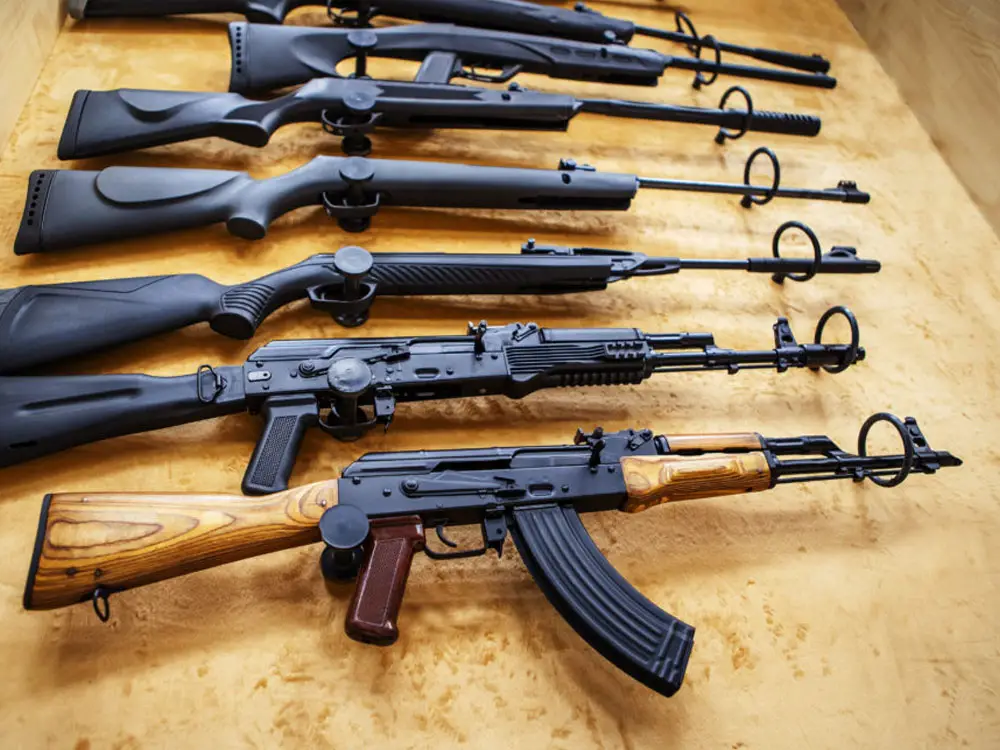
12. Bolt-Action Rifle
The bolt-action rifle is one of the most respected and enduring firearm designs in history. Among the many types of guns used in hunting, sport shooting, and military applications, the bolt-action rifle has maintained a reputation for reliability and precision. Its operation is straightforward yet effective. After each shot, the shooter manually lifts and pulls back a bolt handle to eject the spent cartridge case, then pushes the bolt forward to chamber a new round. This manual cycling system gives the rifle its distinctive name.
One reason bolt-action rifles remain so popular is their mechanical simplicity. Compared to semi-automatic firearms, they contain fewer moving parts and operate without relying on complex gas or recoil systems. This simplicity often translates into greater reliability in challenging environments such as cold weather, dust, or mud. For this reason, bolt-action rifles have historically been favored by hunters and military marksmen who require dependable performance under unpredictable conditions.
Accuracy is another hallmark of the bolt-action rifle. Because the bolt locks the cartridge securely in place during firing, the rifle tends to maintain consistent chamber alignment and pressure. This stable firing platform allows bullets to leave the barrel in a predictable manner, which contributes to precise shot placement. Many competitive long-range shooters prefer bolt-action rifles for exactly this reason. The design offers a level of consistency that can be difficult to achieve with more complex mechanisms.
Historically, bolt-action rifles played a central role in twentieth-century military conflicts. During the early and mid-1900s, many armies equipped their soldiers with bolt-action service rifles because they were durable and relatively easy to manufacture in large quantities. These rifles were capable of accurate fire over long distances, which made them effective battlefield tools. Although modern militaries often rely on semi-automatic rifles today, bolt-action platforms are still widely used by sniper units due to their precision and reliability.
In the broader discussion of guns for war and sporting firearms, the bolt-action rifle occupies an important place. It demonstrates how a straightforward mechanical system can remain effective for generations. For readers exploring the many types of guns available around the world, the bolt-action rifle provides a clear example of a design that balances durability, accuracy, and practical functionality.
13. Lever-Action Rifle
The lever-action rifle is one of the most iconic firearms ever developed, known for its distinctive operating mechanism and historical significance. Within the long list of types of guns that have shaped firearm history, this rifle stands out because of the unique lever located beneath the receiver. When the shooter moves the lever downward and then back up again, the rifle ejects the spent cartridge and chambers a fresh round from its magazine. This simple but effective system allows for relatively rapid follow-up shots while maintaining mechanical reliability.
Lever-action rifles gained widespread popularity during the nineteenth century, particularly in North America. Their ability to fire multiple rounds without the need to manually load each cartridge made them highly practical for hunters and settlers. The design typically includes a tubular magazine positioned under the barrel, which stores several cartridges in a line. Each time the lever cycles, a new round moves into the chamber, ready for the next shot. This repeating capability represented a significant advancement over earlier single-shot firearms.
Another advantage of lever-action rifles is their compact and balanced design. The lever mechanism allows the shooter to cycle the action without removing the rifle from the shoulder. This feature can be particularly useful during hunting situations where quick follow-up shots may be necessary. In addition, the rifle’s relatively slim profile and moderate weight make it comfortable to carry over long distances in the field.
From a historical perspective, lever-action rifles played an important role in shaping firearm development. They were widely used during the late nineteenth century for hunting, ranch work, and frontier defense. Although they were less commonly used as primary guns for war compared to bolt-action rifles, they still demonstrated how repeating firearms could significantly improve firing efficiency. Their influence helped inspire later designs that further refined repeating mechanisms.
Today, the lever-action rifle continues to be appreciated by firearm enthusiasts, collectors, and hunters. Its combination of historical character and practical performance ensures that it remains relevant even in an era dominated by modern semi-automatic rifles. For those exploring the wide range of types of guns, the lever-action rifle offers a fascinating glimpse into the evolution of repeating firearm technology.
14. Pump-Action Rifle
The pump-action rifle is a repeating firearm that operates using a sliding fore-end mechanism. While pump-action shotguns are more widely recognized, the pump-action system has also been applied to rifles with notable success. Among the many types of guns designed for rapid cycling and ease of use, the pump-action rifle provides a balance between manual control and relatively fast follow-up shots. The shooter operates the rifle by pulling the fore-end backward and then pushing it forward again, which ejects the spent cartridge and loads a new round.
This system offers a practical advantage in situations where reliability and speed are both important. Because the action is manually powered by the shooter rather than relying on gas or recoil energy, pump-action rifles can function with a wide variety of ammunition types. This flexibility allows them to perform consistently even when ammunition loads vary slightly. In environments where mechanical simplicity and reliability are critical, this characteristic can be particularly valuable.
Another benefit of pump-action rifles is the ability to maintain continuous sight alignment while cycling the action. Since the pumping motion occurs along the rifle’s forward grip area, the shooter can keep the rifle shouldered and maintain visual contact with the target. This design allows for relatively quick follow-up shots compared to single-shot rifles. Although the firing speed is not as fast as a semi-automatic system, the pump-action still provides a smooth and controlled shooting rhythm.
Historically, pump-action rifles appeared during a period of experimentation when firearm designers were exploring different repeating mechanisms. While they never became as dominant as bolt-action or semi-automatic rifles, they demonstrated that the pump system could be adapted successfully to multiple firearm platforms. Their influence is more commonly seen today in pump-action shotguns, which share a similar mechanical concept.
Within the broader conversation about types of guns and guns for war, pump-action rifles represent an interesting transitional design. They illustrate how firearm engineers experimented with various mechanical approaches before the widespread adoption of modern automatic and semi-automatic systems. Even though they are less common today, pump-action rifles remain a fascinating chapter in the ongoing story of firearm innovation.
15. Semi-Automatic Rifle
The semi-automatic rifle is one of the most influential firearm designs of the modern era. Among all types of guns used by military forces, hunters, and sport shooters, the semi-automatic rifle has become especially prominent due to its efficiency and adaptability. Unlike manual-action rifles, a semi-automatic rifle automatically chambers a new round after each shot. The shooter only needs to pull the trigger again to fire the next round, making the firing process significantly faster than traditional bolt-action or lever-action systems.
This automatic cycling occurs through the use of gas pressure or recoil energy generated during firing. When a cartridge is discharged, part of the expanding gas is redirected through the rifle’s internal system to move the bolt mechanism. This motion ejects the spent cartridge case and loads a fresh round from the magazine into the chamber. Because the rifle performs these steps automatically, the shooter can maintain focus on aiming and trigger control without manually operating the action after each shot.
Semi-automatic rifles are known for their versatility. They can be configured for a wide variety of roles, including target shooting, hunting, and military service. Many modern rifles feature detachable magazines, adjustable stocks, and accessory rails that allow users to customize the firearm for different purposes. This modular approach reflects the adaptability that has made semi-automatic rifles so widely used around the world.
In the context of guns for war, semi-automatic rifles marked a major turning point in battlefield technology. They allowed soldiers to fire multiple accurate shots in rapid succession without sacrificing stability or control. Over time, military engineers further refined these designs, eventually leading to selective-fire rifles capable of both semi-automatic and automatic firing modes. These advancements significantly increased the effectiveness of infantry weapons.
Today, the semi-automatic rifle remains one of the most recognizable firearm categories. Its combination of speed, precision, and adaptability ensures its continued relevance across many fields. For readers exploring the many types of guns available today, the semi-automatic rifle represents a clear example of how engineering innovation can reshape the role of firearms in both civilian and military contexts.
16. Assault Rifle
The assault rifle represents one of the most recognizable modern firearm designs and is frequently discussed when people explore different types of guns used by military forces around the world. The defining feature of an assault rifle is its ability to fire intermediate cartridges while offering selective-fire capability, meaning the shooter can switch between semi-automatic firing and automatic or burst modes depending on the design. This combination provides a balance between controllable recoil, practical firing range, and a high rate of fire, which is why assault rifles have become standard infantry weapons in many armed forces.
Unlike earlier full-power military rifles, assault rifles were designed around the concept that most battlefield engagements occur at moderate distances rather than extreme ranges. Engineers therefore created a firearm that would allow soldiers to carry more ammunition while still maintaining effective accuracy. The use of intermediate cartridges reduces recoil compared with larger rifle calibers, which makes the weapon easier to control during rapid fire. This balance of power and control fundamentally changed how infantry combat operated in the twentieth century.
Mechanically, most assault rifles operate using a gas-powered system. When the firearm is discharged, a portion of the expanding gas is redirected through a small port in the barrel. This gas pushes a piston or bolt carrier assembly backward, which ejects the spent casing and chambers a new round from the magazine. Because this process happens automatically with each shot, the shooter can maintain a consistent rhythm of fire without manually operating the action. The result is a firearm capable of delivering sustained fire while still allowing controlled single shots when accuracy is required.
Another defining element of the assault rifle is its modular design. Modern versions often include adjustable stocks, detachable magazines, and accessory rails that allow the attachment of optics, lights, and other equipment. This adaptability enables soldiers to tailor their rifles for different mission profiles, from close-quarters combat to medium-range engagements. In addition, the relatively compact size of many assault rifles makes them easier to maneuver in urban environments compared to older, longer rifles.
In the broader discussion of guns for war and modern firearm evolution, the assault rifle marks a significant technological shift. It reflects a move toward versatile weapons capable of fulfilling multiple combat roles rather than relying on specialized firearms for each task. As a result, assault rifles have become central to modern military doctrine and remain one of the most influential entries in the long list of types of guns developed over time.
17. Battle Rifle
The battle rifle is a powerful military firearm designed to fire full-power rifle cartridges, making it one of the most formidable types of guns used in military service during the twentieth century. Unlike assault rifles, which use intermediate cartridges, battle rifles are chambered for larger and more powerful ammunition. These cartridges deliver greater energy and longer effective range, which historically made battle rifles suitable for engagements over extended distances.
Battle rifles were widely adopted during the period following World War II when militaries sought firearms capable of delivering accurate fire across open terrain. Many of these rifles incorporated semi-automatic or selective-fire capabilities, allowing soldiers to fire multiple shots without manually cycling the action. However, due to the strong recoil produced by full-power cartridges, fully automatic fire from battle rifles could be difficult to control, especially during sustained bursts.
The design of battle rifles often emphasizes durability and stability. These firearms are typically larger and heavier than assault rifles, which helps manage recoil and improves long-range accuracy. The longer barrels found on many battle rifles also contribute to higher muzzle velocities, enabling projectiles to maintain energy and accuracy over greater distances. Because of these characteristics, battle rifles were once considered ideal standard-issue guns for war in large military formations.
Over time, military doctrine shifted toward lighter weapons and higher ammunition capacity, which led to the widespread adoption of assault rifles using smaller cartridges. Despite this transition, battle rifles never disappeared entirely. Their power and accuracy still make them valuable in certain roles, particularly where longer engagement distances are expected or where additional stopping power is desired.
Within the broad range of types of guns developed for combat and sporting use, the battle rifle represents an important evolutionary step between traditional bolt-action service rifles and the lighter assault rifles that dominate modern military arsenals. Its legacy demonstrates how firearm design has continuously adapted to changing tactical needs and technological possibilities.
18. Sniper Rifle
The sniper rifle is a precision firearm specifically engineered for long-range accuracy. Among all types of guns used in military and tactical roles, sniper rifles are perhaps the most closely associated with precision shooting and careful marksmanship. These rifles are designed to allow a trained shooter to engage targets at distances far beyond those typically encountered by standard infantry weapons.
A defining characteristic of the sniper rifle is its exceptional accuracy. Manufacturers achieve this through carefully machined barrels, precise chamber dimensions, and highly consistent triggers. Many sniper rifles are built on bolt-action platforms because the design offers strong locking mechanisms and minimal internal movement during firing. This stability helps ensure that each shot leaves the barrel under nearly identical conditions, which is essential for consistent long-distance performance.
Sniper rifles are commonly equipped with high-quality optical scopes that allow shooters to observe targets at great distances. These scopes often include adjustable magnification and specialized reticles designed for range estimation and ballistic compensation. In addition, sniper rifles frequently incorporate bipods or other stabilizing supports that help maintain steady aim during firing. These features combine to create a system optimized for deliberate, carefully calculated shots.
In military contexts, sniper rifles serve a variety of strategic roles. Snipers may provide reconnaissance, eliminate high-value targets, or support infantry units by engaging threats beyond the range of standard rifles. Because of their precision and reach, sniper rifles have become essential tools within modern military doctrine. However, they also appear in civilian shooting sports and long-range competitions, where enthusiasts value the same qualities of accuracy and control.
As one explores the wide spectrum of types of guns available in the modern world, the sniper rifle stands out as a symbol of precision engineering. It highlights the idea that firearms can be refined not only for power or speed but also for the careful science of long-distance marksmanship.
19. Designated Marksman Rifle
The designated marksman rifle, often abbreviated as DMR, occupies an interesting position among modern types of guns used in military units. It bridges the gap between the standard infantry rifle and the specialized sniper rifle. While not as heavy or extreme in range as a traditional sniper weapon, the designated marksman rifle is designed to extend the effective reach of a standard infantry squad.
A designated marksman rifle typically features improved accuracy compared to standard service rifles. This improvement often comes from longer barrels, upgraded triggers, and the use of precision optics. Many DMRs are built on semi-automatic platforms, which allows the designated marksman to fire accurate follow-up shots quickly while still maintaining precision. This capability is particularly useful in dynamic battlefield environments where targets may appear briefly and then disappear.
The role of the designated marksman is to engage targets at distances beyond the effective range of ordinary infantry rifles but closer than those usually handled by snipers. This position provides valuable support for the squad by neutralizing threats such as enemy marksmen or lightly protected equipment. Because the rifle must remain mobile with the rest of the unit, DMRs are typically lighter and more compact than traditional sniper rifles.
From a design perspective, many designated marksman rifles are modified versions of existing military rifles. By adding precision barrels, optics, and improved components, engineers can create a firearm that offers enhanced accuracy without drastically changing the underlying platform. This approach simplifies training and logistics while still providing a meaningful increase in effective range.
In discussions about guns for war and the evolution of infantry weapons, the designated marksman rifle demonstrates how military forces adapt existing firearm technology to meet changing tactical demands. It shows that within the broad category of types of guns, small refinements can create entirely new roles for familiar weapon systems.
20. Carbine
The carbine is a compact rifle designed for mobility and ease of handling. Among the many types of guns used in military, law-enforcement, and civilian contexts, carbines stand out because they offer the functionality of a rifle in a shorter and lighter package. Typically, a carbine features a shorter barrel and reduced overall length compared to a standard rifle, making it easier to maneuver in confined spaces.
Historically, carbines were developed for cavalry troops who needed firearms that could be carried conveniently while riding. A full-length rifle would have been cumbersome for mounted soldiers, so a shorter version was created that still provided respectable accuracy and range. Over time, this concept proved useful beyond cavalry units, and carbines began appearing in many different military roles.
Modern carbines often use the same ammunition as their full-length rifle counterparts. The primary difference lies in the shorter barrel, which slightly reduces muzzle velocity but significantly improves handling. This balance makes carbines particularly effective in environments where quick movement and rapid target engagement are essential, such as urban operations or close-quarters combat.
Because of their manageable size, carbines are also widely used in civilian settings for sport shooting and personal defense. Many modern sporting rifles are essentially carbine versions of larger rifle platforms, offering shooters a firearm that is easier to transport and control. Adjustable stocks, accessory rails, and optical sights are common features that further enhance the versatility of these firearms.
Within the broader world of types of guns, the carbine demonstrates how firearm designs can be adapted to meet specific mobility requirements. It shows that sometimes a smaller, lighter firearm can provide a practical advantage without sacrificing the essential capabilities that make rifles effective tools in both civilian and military contexts.
21. Anti-Material Rifle
The anti-material rifle represents one of the largest and most powerful shoulder-fired firearm categories ever developed. Within the broader classification of types of guns, this design is distinct because it is not primarily intended for engaging individuals but rather for targeting equipment, vehicles, or other hardened objects at extended distances. The concept behind the anti-material rifle emerged during the twentieth century as military planners recognized the need for portable firearms capable of disabling lightly armored targets without requiring heavy artillery or mounted weapons systems.
Anti-material rifles are typically chambered for extremely powerful cartridges, many of which were originally developed for heavy machine guns. These cartridges produce tremendous muzzle energy and are capable of penetrating thick materials such as steel plates, vehicle components, or reinforced structures. Because of this immense power, anti-material rifles tend to be large and heavy firearms, often weighing significantly more than standard rifles. Their size helps absorb recoil and maintain stability during firing, which is essential when dealing with such powerful ammunition.
Most anti-material rifles use bolt-action mechanisms because of their strength and reliability under high pressure. Bolt-action systems provide a strong locking structure that can safely handle the intense forces generated by large cartridges. Additionally, the slower firing rate associated with bolt-action rifles encourages deliberate and controlled shooting rather than rapid fire. Precision and power are the priorities of this firearm category, not speed.
Another notable feature of anti-material rifles is the presence of specialized recoil-management systems. Muzzle brakes, which redirect gases to counteract recoil, are almost always present on these firearms. Some designs also incorporate shock-absorbing stocks or recoil buffers that help reduce the impact felt by the shooter. These features are necessary because the cartridges used in these rifles produce significant recoil energy.
Although anti-material rifles are strongly associated with military operations, they also appear in certain civilian long-range shooting disciplines. Enthusiasts interested in extreme-distance marksmanship sometimes use these rifles in specialized competitions where accuracy at very long ranges is the primary challenge. In such settings, the firearm’s power and ballistic performance allow shooters to engage targets far beyond the distances typically attempted with smaller rifles.
22. Pump-Action Shotgun
The pump-action shotgun is one of the most recognizable shotgun designs and has remained popular for more than a century. Among the various types of guns used for sporting, hunting, and defensive purposes, pump-action shotguns stand out because of their simple yet effective manual operating system. The firearm cycles ammunition by sliding the fore-end, or pump, backward and forward along the magazine tube beneath the barrel.
When the shooter pulls the pump rearward, the shotgun ejects the spent shell from the chamber and resets the internal mechanism. Pushing the pump forward then loads a fresh shell from the magazine tube into the chamber, preparing the shotgun for the next shot. This straightforward mechanical process gives the pump-action shotgun a reputation for reliability. Because the shooter manually cycles the action, the firearm can function with a wide variety of shotgun loads that might not operate properly in automatic systems.
Pump-action shotguns are commonly used in hunting environments due to their versatility. Hunters can load different types of shells depending on the game being pursued, whether it is small birds, waterfowl, or larger animals. The ability to quickly chamber another round also allows for follow-up shots when necessary. This practical balance between speed and control has helped the pump-action shotgun remain a favorite choice among many outdoor enthusiasts.
In addition to hunting, pump-action shotguns appear frequently in sport shooting activities such as clay target competitions. Their mechanical simplicity makes them durable and relatively easy to maintain. Many shooters appreciate the tactile feedback provided by the pump mechanism, which gives them a clear sense of when the firearm has cycled and is ready to fire again.
Across the long history of shotgun development, the pump-action design has proven remarkably adaptable. Variations exist with different barrel lengths, stock configurations, and magazine capacities, allowing the firearm to serve in a wide range of roles. As a result, the pump-action shotgun remains one of the most enduring and widely recognized entries in the list of modern firearm categories.
23. Semi-Automatic Shotgun
The semi-automatic shotgun represents a significant technological step in shotgun evolution. Unlike manually operated shotguns, this design uses the energy generated during firing to automatically cycle the action. In discussions about types of guns, semi-automatic shotguns are often highlighted for their ability to deliver rapid follow-up shots without requiring the shooter to manually manipulate the firearm between rounds.
When a semi-automatic shotgun is fired, part of the energy produced by the expanding gases is redirected to operate the firearm’s internal mechanism. This process ejects the spent shell and chambers a new one from the magazine. Because the shooter does not need to manually cycle the action, the next shot can be fired almost immediately by simply pulling the trigger again. This feature allows for a smoother shooting rhythm compared with manually operated shotguns.
Several mechanical systems are used to power semi-automatic shotguns. Gas-operated systems channel propellant gases into a piston that moves the action, while inertia-driven designs rely on recoil energy to cycle the mechanism. Both systems have their advantages. Gas-operated shotguns often produce softer recoil, while inertia systems are known for their mechanical simplicity and lighter weight.
Semi-automatic shotguns are widely used in hunting environments, especially for birds and waterfowl. The ability to fire multiple shots quickly can be valuable when pursuing fast-moving targets. Many competitive shooters also prefer semi-automatic shotguns for clay target sports because the automatic cycling allows them to focus entirely on tracking and hitting the target.
Over time, improvements in engineering have made semi-automatic shotguns increasingly reliable and adaptable. Adjustable stocks, interchangeable choke tubes, and modern materials have further expanded their capabilities. Today, semi-automatic shotguns occupy an important place among modern firearms, demonstrating how technological innovation continues to refine even long-established gun designs.
24. Break-Action Shotgun
The break-action shotgun is one of the simplest and oldest shotgun designs still in widespread use today. As its name suggests, the firearm operates by “breaking” open at a hinge located between the barrel and the stock. This motion exposes the chamber, allowing the shooter to insert or remove shotgun shells manually. Among the many types of guns that exist, break-action shotguns are valued for their mechanical simplicity and reliability.
Unlike repeating shotguns that hold multiple shells in a magazine, many break-action models are designed to hold only one or two rounds at a time. This limitation encourages deliberate shooting and careful shot placement. When the firearm is opened, spent shells are either lifted partially from the chamber by an extractor or fully ejected by an ejector system. The shooter can then load fresh shells before closing the firearm again.
Because break-action shotguns have fewer moving parts than other shotgun types, they tend to be extremely durable and easy to maintain. The straightforward mechanism reduces the likelihood of mechanical failure, making these shotguns reliable even in challenging outdoor conditions. Many hunters appreciate this simplicity, especially when traveling in remote environments where equipment must function consistently.
Break-action shotguns are also popular among beginner shooters. The open action clearly shows whether the firearm is loaded, which promotes safe handling practices. In addition, the design allows instructors to easily demonstrate loading and unloading procedures when teaching new shooters the fundamentals of firearm safety.
Despite their simplicity, break-action shotguns can be highly refined firearms. Many feature finely crafted wood stocks, engraved metal receivers, and carefully balanced barrels. These qualities make them not only functional tools but also admired examples of traditional firearm craftsmanship.
25. Over-Under Shotgun
The over-under shotgun is a specific type of break-action shotgun distinguished by its vertically stacked barrels. Instead of placing the barrels side by side, as in traditional double-barrel designs, the over-under configuration arranges one barrel above the other. This layout creates a slimmer profile and allows the shooter to align the barrels more naturally with the target. Among modern types of guns used in sporting contexts, the over-under shotgun is especially respected for its balance and accuracy.
One advantage of the over-under design is the ability to use two different choke settings within the same firearm. Chokes control how widely the shot spreads after leaving the barrel. By equipping each barrel with a different choke, shooters can select the appropriate shot pattern depending on the distance of the target. This flexibility is particularly useful in clay shooting sports where targets may appear at varying ranges.
Over-under shotguns are commonly associated with competitive shooting disciplines such as trap, skeet, and sporting clays. The stacked barrel arrangement allows the shooter to maintain a consistent sight picture while firing both shots. Because the barrels are aligned vertically rather than horizontally, recoil is directed more evenly into the shooter’s shoulder, which can improve comfort and control during repeated firing.
In addition to their performance advantages, over-under shotguns are often admired for their craftsmanship. Many high-end models feature beautifully finished wooden stocks and detailed engraving on the receiver. These aesthetic qualities have made the over-under shotgun a symbol of traditional sporting culture in many parts of the world.
Within the broader family of shotgun designs, the over-under configuration demonstrates how subtle changes in barrel arrangement can significantly influence handling and shooting performance. Its popularity among hunters and competitive shooters alike ensures that the over-under shotgun remains an enduring and respected category within the wide spectrum of firearms.
26. Side-by-Side Shotgun
The side-by-side shotgun is one of the most traditional and visually recognizable firearms ever produced, and within the broader landscape of types of guns, it represents a design that connects modern shooting sports with centuries of firearm development. Instead of stacking the barrels vertically as seen in over-under shotguns, the side-by-side configuration places two barrels horizontally next to each other, creating a distinctive wide profile that has become symbolic of classic hunting culture and sporting traditions around the world. This configuration dates back to the early era of double-barreled firearms when gunsmiths sought ways to allow shooters to fire two shots without reloading between them, and the horizontal barrel layout was one of the earliest practical solutions to that challenge.
Mechanically, most side-by-side shotguns operate using a break-action system, meaning the firearm hinges open at the breech to allow manual loading of shells into each barrel. When the action is opened, spent shells are either extracted slightly from the chambers or automatically ejected depending on the design of the gun. Once new shells are inserted, the shooter closes the action and the firearm is ready for use again. Although the side-by-side shotgun only holds two rounds, its simplicity and reliability have allowed it to remain popular for generations of hunters and sport shooters.
One of the practical advantages of a side-by-side shotgun is the ability to equip each barrel with a different choke. Because the two barrels are independent, one barrel can produce a wider shot pattern while the other delivers a tighter spread. This arrangement allows the shooter to select the most appropriate shot pattern depending on the distance of the target. For example, a hunter might fire the first barrel with a wider spread for a close-range bird and then use the second barrel with a tighter pattern for a longer follow-up shot.
Side-by-side shotguns are also admired for their elegant craftsmanship. Many high-quality examples feature finely shaped wooden stocks, engraved metal receivers, and carefully balanced barrels. In traditional European hunting culture, these firearms were often considered both functional tools and works of art. Even today, collectors and enthusiasts value side-by-side shotguns not only for their shooting performance but also for their historical and aesthetic significance.
Although modern repeating shotguns offer greater ammunition capacity, the side-by-side shotgun continues to hold a respected place among classic sporting firearms. Its balanced handling, mechanical simplicity, and deep historical roots ensure that it remains a fascinating and enduring example among the many types of guns developed throughout firearm history.
27. Bolt-Action Shotgun
The bolt-action shotgun is a relatively uncommon but historically interesting firearm that combines the mechanical operation of a bolt-action rifle with the smoothbore barrel typically associated with shotguns. Among the various types of guns developed during the twentieth century, bolt-action shotguns emerged as a cost-effective and reliable option for hunters who wanted a straightforward firearm capable of firing shotgun shells while benefiting from the strength and familiarity of the bolt-action system.
In a bolt-action shotgun, the shooter manually operates a bolt handle located on the side of the receiver. After firing a shell, the bolt is lifted and pulled backward, which extracts and ejects the spent shell from the chamber. The shooter then pushes the bolt forward, allowing a fresh shell to be fed into the chamber from the magazine. Once the bolt is locked into position, the shotgun is ready for the next shot. This process is very similar to the operation of bolt-action rifles used in hunting and target shooting.
One reason bolt-action shotguns gained popularity in certain regions was their simplicity and affordability. The bolt-action mechanism is mechanically strong and relatively easy to manufacture, which made these firearms accessible to many hunters during the early and mid-twentieth century. In rural areas where hunters often relied on a single versatile firearm, the bolt-action shotgun provided a dependable tool for pursuing small game and birds.
Another interesting characteristic of bolt-action shotguns is that many models were designed with detachable or internal box magazines rather than the tubular magazines commonly found on pump-action shotguns. This design allowed the firearm to feed shells in a way similar to bolt-action rifles, which simplified the internal mechanics and sometimes made loading more convenient.
Although bolt-action shotguns are less common today than pump-action or semi-automatic designs, they remain an intriguing part of firearm history. Their hybrid design demonstrates how gunmakers experimented with different mechanical systems in an effort to combine reliability, affordability, and practical performance. For collectors and firearm historians, bolt-action shotguns represent a unique chapter in the evolution of shotgun technology.
28. Lever-Action Shotgun
The lever-action shotgun is a firearm that adapts the famous lever-operated mechanism commonly associated with classic rifles to the world of shotguns. Within the wide variety of types of guns, the lever-action system is particularly well known for its association with nineteenth-century frontier firearms, and its use in shotguns reflects an interesting period when gun designers experimented with adapting successful rifle mechanisms to other firearm categories.
In a lever-action shotgun, the shooter cycles the firearm by moving a lever located beneath the receiver downward and then back upward. This motion unlocks the action, ejects the spent shell, and loads a new shell from the magazine tube into the chamber. The movement is smooth and relatively fast once the shooter becomes familiar with the mechanism, allowing for quicker follow-up shots compared with single-shot firearms.
Historically, lever-action shotguns gained attention in the late nineteenth century when manufacturers introduced models designed for hunting and sporting use. These firearms typically featured tubular magazines located beneath the barrel, allowing them to hold multiple shells. This design provided hunters with greater ammunition capacity compared with break-action shotguns while maintaining a relatively compact and balanced firearm.
One of the most appealing aspects of the lever-action shotgun is its distinctive operating style. The lever mechanism gives the firearm a rhythmic, mechanical motion that many shooters find satisfying to use. Although lever-action shotguns are not as common today as pump-action models, they still attract interest from enthusiasts who appreciate their historical character and unique handling qualities.
From a design perspective, the lever-action shotgun illustrates how firearm engineering often evolves through adaptation. By applying a proven rifle mechanism to a shotgun platform, gunmakers created a firearm that combined tradition with innovation, demonstrating once again how diverse and creative the world of firearms design can be.
29. Tactical Shotgun
The tactical shotgun represents a modern interpretation of the traditional shotgun platform, designed with features that emphasize versatility, durability, and adaptability. Within the broad category of types of guns, tactical shotguns are recognized for their practical configurations and modular components that allow the firearm to be customized for a variety of roles.
Unlike classic sporting shotguns that often prioritize elegance and simplicity, tactical shotguns are designed with functionality in mind. Many models include synthetic stocks, accessory rails, adjustable sights, and extended magazine tubes. These features allow shooters to add equipment such as optics, lights, or other accessories depending on their specific needs. The goal is to create a firearm that can be adapted to different environments and situations.
Tactical shotguns may use various operating systems, including pump-action or semi-automatic mechanisms. Pump-action tactical shotguns are known for their rugged reliability and ability to cycle a wide range of ammunition types. Semi-automatic versions offer faster follow-up shots and smoother recoil management, which can be advantageous in certain applications.
Another defining feature of many tactical shotguns is their compact design. Shorter barrels and adjustable stocks make the firearm easier to maneuver in confined spaces while still maintaining the powerful performance associated with shotgun ammunition. These characteristics have contributed to the tactical shotgun’s popularity among law enforcement agencies and civilian firearm enthusiasts alike.
The tactical shotgun reflects how modern firearm design continues to evolve in response to changing technology and user preferences. By combining traditional shotgun performance with contemporary materials and modular features, tactical shotguns represent a modern chapter in the ongoing development of firearms.
30. Automatic Shotgun
The automatic shotgun is one of the rarest and most mechanically complex firearms within the broader family of types of guns. Unlike semi-automatic shotguns, which fire one shot for each pull of the trigger, an automatic shotgun is capable of continuous fire as long as the trigger is held and ammunition remains in the firearm. This capability places automatic shotguns in a unique category that blends the characteristics of traditional shotguns with the rapid firing potential typically associated with automatic firearms.
Automatic shotguns operate by using the energy generated from firing to cycle the action and repeatedly chamber new rounds without additional input from the shooter. This process requires a carefully engineered system capable of managing the powerful forces produced by shotgun cartridges while maintaining consistent reliability. Because shotgun shells generate substantial recoil and pressure, designing an automatic shotgun that functions smoothly presents significant engineering challenges.
Historically, automatic shotguns have been relatively rare due to these technical challenges and the specialized nature of their intended roles. Most shotguns used by hunters or sport shooters rely on pump-action or semi-automatic mechanisms because those systems provide a balance between performance, reliability, and simplicity. Fully automatic operation, by contrast, requires complex internal components and precise timing to function safely.
Despite their rarity, automatic shotguns demonstrate how firearm designers continually experiment with new concepts and mechanical solutions. They highlight the diversity of firearm technology and illustrate how different designs attempt to maximize firepower, efficiency, or specialized performance characteristics depending on the intended use of the firearm.
Within the broader exploration of firearm development, the automatic shotgun stands as a fascinating example of how even familiar weapon platforms can evolve into entirely new forms when engineers push the limits of mechanical innovation.
31. Submachine Gun
The submachine gun is a compact automatic firearm designed to fire pistol-caliber ammunition at a relatively high rate of fire, and within the broad landscape of types of guns, it represents a category developed to bridge the gap between handguns and full-sized rifles. Submachine guns emerged in the early twentieth century as military planners began searching for weapons that could deliver rapid fire in confined spaces such as trenches, vehicles, and urban environments. Unlike traditional rifles, which typically fire more powerful cartridges intended for longer distances, submachine guns focus on controllability, portability, and rapid engagement at close range.
Mechanically, most submachine guns operate using a blowback or delayed blowback system. When the firearm is fired, the force generated by the cartridge pushes the bolt backward, ejecting the spent casing and compressing a spring that then drives the bolt forward again to chamber the next round. This relatively simple operating system allows submachine guns to maintain a high rate of fire while keeping the internal components mechanically straightforward. Many designs feed from detachable box magazines, which can vary significantly in capacity depending on the model.
One of the defining characteristics of the submachine gun is its compact size and manageable recoil. Because pistol cartridges generate less recoil than rifle ammunition, the firearm can be fired rapidly while still allowing the shooter to maintain reasonable control over the weapon. This characteristic made submachine guns particularly valuable in situations where maneuverability was essential. In close quarters, the ability to move quickly and fire multiple rounds in rapid succession provided a tactical advantage.
Throughout the twentieth century, submachine guns became widely recognized for their role in both military and law enforcement contexts. Their compact frames allowed them to be carried easily by soldiers, vehicle crews, and security personnel who required a firearm more capable than a handgun but lighter than a full rifle. The submachine gun thus occupies a distinctive niche within the evolution of firearms technology, demonstrating how engineers adapted firearm design to meet the specific needs of close-range combat and tactical mobility.
32. Personal Defense Weapon
The personal defense weapon, commonly abbreviated as PDW, is a specialized firearm category developed to provide compact defensive firepower while maintaining greater effectiveness than traditional pistols. Among modern types of guns, the PDW represents a relatively recent concept that emerged during the late twentieth century when military forces sought a lightweight weapon for personnel who were not primarily frontline infantry. These individuals—such as vehicle crews, support staff, and technical specialists—required a firearm that was easy to carry but still capable of offering meaningful defensive capability.
Personal defense weapons are typically designed to be compact, lightweight, and highly maneuverable. Many PDW designs feature shortened barrels, collapsible stocks, and compact receivers that allow the firearm to be carried comfortably in vehicles or tight environments. Despite their small size, these weapons often use specialized high-velocity cartridges designed to offer greater penetration and range than traditional handgun ammunition.
From a mechanical perspective, PDWs often employ semi-automatic or selective-fire operating systems, allowing the shooter to fire either single shots or controlled bursts depending on the situation. Their magazine capacity is typically greater than that of a standard pistol, providing the user with more ammunition before needing to reload. The combination of compact size, manageable recoil, and increased firepower makes PDWs particularly suitable for defensive scenarios where portability and responsiveness are critical.
The development of the personal defense weapon illustrates how firearm technology continues to evolve in response to changing operational requirements. Rather than replacing existing firearms such as rifles or pistols, the PDW was designed to fill a specific niche. Its role is to offer a balanced combination of portability, effectiveness, and ease of use, making it an important modern addition to the wide array of firearms that have been developed over the past century.
33. Light Machine Gun
The light machine gun, often abbreviated as LMG, is a firearm designed to provide sustained automatic fire while remaining portable enough for a single operator to carry and deploy. Within the broad classification of types of guns, light machine guns represent an important step in the evolution of infantry weapons because they combine the high rate of fire associated with machine guns with a level of mobility that allows soldiers to move with the weapon during combat operations.
Unlike heavier machine guns that typically require large mounts or multiple crew members to operate, light machine guns are engineered to be relatively lightweight and manageable. They often feature bipods attached to the front of the firearm, which provide stability during firing. When deployed on the ground or another stable surface, the bipod helps control recoil and improves accuracy during extended bursts of automatic fire.
Most light machine guns are chambered for rifle cartridges rather than pistol ammunition. This allows them to achieve greater range and penetration compared with submachine guns. Ammunition is commonly fed through detachable box magazines or belt-fed systems depending on the specific design. The ability to deliver continuous fire makes the light machine gun valuable for suppressive fire, which is intended to limit the movement of opposing forces while other units maneuver.
Another defining feature of many light machine guns is the presence of quick-change barrels. Continuous automatic fire generates significant heat, and the ability to replace a hot barrel with a cool one allows the weapon to maintain performance over longer periods of sustained firing. This design feature reflects the practical challenges engineers must address when creating firearms intended for prolonged automatic operation.
Overall, the light machine gun represents a balance between firepower and mobility. It demonstrates how firearm designers have sought to provide infantry units with a weapon capable of delivering sustained fire while still remaining portable enough for dynamic battlefield movement.
34. Medium Machine Gun
The medium machine gun occupies a middle position between lighter portable automatic weapons and the larger heavy machine guns used for defensive positions or vehicle mounting. In the wider classification of types of guns, the medium machine gun is valued for its ability to deliver sustained automatic fire with improved stability and durability compared with lighter machine guns, while still remaining more portable than the heaviest weapon systems.
Medium machine guns typically fire full-power rifle cartridges and are designed for extended firing sessions. Because of the increased heat and mechanical stress generated by continuous automatic fire, these firearms are often mounted on tripods or other stabilized platforms. The tripod provides improved accuracy and recoil control, allowing the weapon to maintain a consistent firing pattern over longer distances.
A key feature of medium machine guns is their belt-fed ammunition system. Instead of relying on detachable magazines, ammunition is fed through belts that can contain dozens or even hundreds of cartridges. This arrangement allows the firearm to sustain automatic fire for longer periods before reloading becomes necessary. The belt-feed mechanism also supports the role of the medium machine gun as a support weapon capable of providing continuous suppressive fire.
Due to their weight and operational requirements, medium machine guns are usually operated by a small team rather than a single individual. One person may control the firing of the weapon, while another manages ammunition belts and assists with barrel changes. This cooperative operation allows the firearm to function effectively during extended engagements.
Within the broader story of firearm development, the medium machine gun highlights how engineers balanced the competing demands of firepower, durability, and portability. It represents an important category of automatic weaponry that has played a significant role in modern military tactics and weapon design.
35. Heavy Machine Gun
The heavy machine gun is one of the most powerful automatic firearms commonly categorized among modern types of guns. Designed to fire large-caliber ammunition capable of traveling long distances with substantial energy, heavy machine guns are typically used for defensive positions, vehicle mounting, or other roles where sustained long-range firepower is required.
Unlike smaller automatic weapons that can be carried by a single operator, heavy machine guns are usually mounted on tripods, armored vehicles, or other stable platforms. Their large size and significant weight make them impractical for handheld use, but these same characteristics allow them to handle powerful cartridges that would be difficult to control in lighter firearms. The sturdy mounting systems also help manage recoil and maintain accuracy during extended firing sequences.
Heavy machine guns generally operate using belt-fed ammunition systems similar to those found in medium machine guns, but the cartridges used are significantly larger. These rounds can travel longer distances and maintain higher energy levels, allowing the weapon to engage targets that would be beyond the effective range of lighter firearms. The design of these guns also emphasizes durability, with strong receivers and heavy barrels capable of withstanding prolonged firing sessions.
Another defining characteristic of heavy machine guns is their versatility in defensive or support roles. When mounted on vehicles or fixed positions, they can provide protective fire over wide areas. Their ability to deliver sustained automatic fire makes them an effective deterrent against approaching threats while supporting other units operating in the same environment.
From an engineering perspective, the heavy machine gun illustrates the upper end of automatic firearm design. It demonstrates how increasing caliber size, ammunition capacity, and mechanical strength allows a weapon to achieve exceptional firepower. As a result, heavy machine guns remain a significant component in the broader spectrum of firearm technology and military equipment.
36. General-Purpose Machine Gun
The General-Purpose Machine Gun (GPMG) occupies an important position among modern types of guns used by military forces around the world. Designed to serve multiple battlefield roles, the GPMG can function both as a light machine gun when fired from a bipod and as a sustained-fire support weapon when mounted on a tripod. This versatility is exactly why military planners consider it one of the most adaptable guns for war. Instead of designing several specialized weapons for different tasks, armed forces can rely on a single platform capable of covering suppressive fire, defensive positions, and vehicle-mounted operations. Famous examples include the FN MAG and the M240, both of which are known for durability, accuracy, and reliable operation even under difficult combat conditions.
Mechanically speaking, a general-purpose machine gun typically operates using a gas-operated system and fires from an open bolt to help manage heat buildup during prolonged firing. These guns are usually chambered in full-power rifle cartridges such as the 7.62×51mm NATO round, which provides strong ballistic performance at long distances. Ammunition is commonly fed through a belt system rather than a detachable magazine, allowing soldiers to maintain a steady stream of suppressive fire when needed. When mounted on a tripod, the GPMG becomes remarkably stable and capable of accurate fire at extended ranges, sometimes exceeding 800 to 1,000 meters depending on conditions. Because of this capability, the weapon serves not only as a suppression tool but also as a defensive anchor point during combat engagements.
From a historical perspective, the concept of the general-purpose machine gun developed during the twentieth century as militaries recognized the advantages of combining the roles of several machine gun classes into a single design. Earlier battlefield doctrine separated light, medium, and heavy machine guns into distinct categories, but engineers eventually realized that a well-designed weapon could bridge these roles. The result was the GPMG, which quickly became a cornerstone of infantry support tactics. Soldiers often carry the weapon as part of a small crew, with one operator firing while others carry ammunition belts and assist with barrel changes during sustained fire. Despite its weight compared with standard rifles, the GPMG remains valued for its ability to control large areas of the battlefield through suppressive fire.
In modern warfare, the general-purpose machine gun continues to play a critical role. Whether mounted on armored vehicles, helicopters, defensive positions, or used by infantry units, it provides a dependable source of sustained automatic fire. Many military forces consider it one of the most essential types of guns in their arsenal because of its flexibility and combat effectiveness. Even as technology advances with new optics, lighter materials, and improved cooling systems, the basic concept behind the GPMG remains unchanged: a reliable weapon capable of delivering powerful and sustained fire support whenever soldiers need it most.
37. Squad Automatic Weapon
The Squad Automatic Weapon (SAW) is a specialized firearm designed to provide automatic fire support within a small infantry unit. Among the many types of guns used by military forces, the SAW plays a very specific and important role. Instead of functioning as a heavy support weapon like a traditional machine gun, the squad automatic weapon is meant to be portable enough for a single soldier to carry while still delivering sustained automatic fire. This balance between mobility and firepower allows infantry squads to maintain suppressive fire while maneuvering across a battlefield. The most widely known example is the M249 SAW, which has been used by numerous military forces since the late twentieth century.
Technically, the squad automatic weapon usually fires intermediate rifle cartridges such as the 5.56×45mm NATO round. These cartridges generate less recoil than full-power rifle ammunition, which helps maintain control during automatic fire. Many SAWs are belt-fed, although some models also accept standard rifle magazines for emergency use. The weapon typically includes a bipod for stability and a quick-change barrel system that prevents overheating during long bursts of fire. These features allow soldiers to maintain a steady rate of suppressive fire while still remaining mobile enough to keep up with their squad. In combat scenarios, this capability can be essential for covering advancing troops or pinning down opposing forces.
From a tactical perspective, the squad automatic weapon acts as the backbone of an infantry squad’s firepower. While other soldiers carry standard rifles and focus on precision shooting, the SAW operator provides continuous bursts of fire that limit enemy movement and create opportunities for maneuver. This suppressive fire forces opponents to remain behind cover, giving friendly forces valuable time to reposition or advance. The concept might sound simple, but its impact on battlefield tactics is significant. Many modern infantry doctrines revolve around the ability of the squad automatic weapon to maintain pressure on opposing forces while the rest of the squad executes coordinated movement.
Although lighter than traditional machine guns, the SAW still requires skill and discipline to operate effectively. Soldiers must manage ammunition carefully, control firing bursts to avoid overheating, and maintain awareness of their surroundings while providing cover fire. Even with these challenges, the squad automatic weapon remains one of the most valuable guns for war within small-unit combat operations. Its ability to deliver sustained firepower without sacrificing mobility makes it a vital component of modern infantry forces across the globe.
38. Gatling Gun
The Gatling gun is one of the most historically significant innovations among all types of guns ever created. Developed in the nineteenth century by inventor Richard Jordan Gatling, this weapon introduced the concept of rapid-fire capability long before modern automatic firearms existed. Unlike contemporary machine guns that rely on gas or recoil systems, the original Gatling gun used a manually operated crank mechanism to rotate multiple barrels. As the operator turned the crank, each barrel loaded, fired, and ejected cartridges in sequence. This rotating design allowed the weapon to fire far more rapidly than standard rifles of the time, making it revolutionary on the battlefield.
The multi-barrel design of the Gatling gun served an important purpose beyond simply increasing firing speed. By spreading the firing cycle across several barrels, the weapon reduced overheating and improved reliability compared with single-barrel rapid-fire systems. During the late nineteenth century, this advantage made the Gatling gun one of the most effective defensive weapons available. Although it required several operators to manage ammunition and positioning, its ability to unleash continuous fire dramatically changed how armies approached battlefield tactics. The weapon saw use in several conflicts, including the American Civil War and later colonial campaigns, where it demonstrated the devastating potential of rapid-fire firearms.
As automatic machine guns emerged in the early twentieth century, the original hand-cranked Gatling gun gradually faded from military service. However, the fundamental concept of rotating barrels did not disappear. Engineers later revisited the design when developing high-speed aircraft and vehicle weapons. By replacing the manual crank with electric motors, modern versions of the Gatling concept achieved extraordinary firing rates far beyond what early automatic machine guns could handle. This evolution demonstrates how a nineteenth-century invention continued to influence modern firearm technology more than a century later.
Today, the Gatling gun holds an important place in firearms history. While the original design is mostly seen in museums, historical demonstrations, and private collections, its mechanical principles live on in advanced military systems. Among all types of guns developed over the past two centuries, few have had such a lasting influence on weapon engineering. The Gatling gun represents a turning point in the evolution of rapid-fire technology, bridging the gap between early repeating firearms and the sophisticated automatic weapons used in modern warfare.
39. Minigun
The Minigun is a modern descendant of the Gatling gun concept and is widely recognized as one of the fastest-firing firearms ever developed. Despite its name, the weapon is far from small. Instead, the term “mini” refers to the fact that it fires a smaller caliber than earlier Gatling-style aircraft cannons. Developed during the twentieth century, the Minigun uses an electrically powered rotating barrel system capable of firing thousands of rounds per minute. This incredible firing rate allows the weapon to deliver overwhelming suppressive fire in a very short period of time. Among types of guns used in military aviation and vehicle-mounted systems, the Minigun stands out for its sheer volume of fire.
The Minigun typically fires the 7.62×51mm NATO cartridge and operates using a cluster of rotating barrels powered by an electric motor. As the barrels spin, each one cycles through the loading, firing, and ejection process in sequence. This design spreads heat and mechanical stress across multiple barrels, enabling extremely high firing speeds without quickly overheating. The weapon is most commonly mounted on helicopters, armored vehicles, naval craft, or defensive systems where a steady power supply is available. Because of its weight and power requirements, the Minigun is rarely used as a handheld weapon.
From a tactical standpoint, the Minigun provides unmatched suppressive capability. When deployed from helicopters or vehicles, it can blanket large areas with rapid fire, forcing opposing forces to take cover. This ability makes it highly effective in defensive situations, convoy protection, and aerial support missions. While accuracy in the traditional sense is less important than with precision rifles, the sheer density of fire produced by the Minigun makes it an extremely powerful battlefield tool. In many cases, its presence alone can alter the dynamics of a combat situation.
Even outside the battlefield, the Minigun has become one of the most recognizable guns for war due to its frequent appearance in documentaries, military demonstrations, and action films. Despite its dramatic reputation, the weapon remains a carefully controlled military system designed for specific operational roles. Its engineering represents the modern continuation of the rotating-barrel concept first introduced by the Gatling gun more than a century ago.
40. Automatic Rifle
The automatic rifle represents a unique category among the many types of guns used by military forces. Designed to bridge the gap between a standard infantry rifle and a light machine gun, the automatic rifle offers the ability to fire both semi-automatic and fully automatic bursts. This dual capability allows soldiers to switch between controlled precision shooting and rapid suppressive fire depending on battlefield conditions. Historically, automatic rifles were created to give individual soldiers greater firepower without requiring the heavier equipment associated with machine guns.
One of the earliest and most famous examples of an automatic rifle is the Browning Automatic Rifle, often known as the BAR. Introduced in the early twentieth century, the BAR was designed to provide infantry units with mobile automatic fire support while advancing across the battlefield. Unlike belt-fed machine guns that required crews to operate effectively, the automatic rifle could be carried and fired by a single soldier. This increased mobility made it particularly useful during fast-moving engagements where heavier machine guns might struggle to keep up with advancing troops.
Modern automatic rifles continue to follow a similar philosophy, though improvements in materials, ergonomics, and ammunition have made them lighter and more efficient. Many contemporary models use intermediate cartridges that balance recoil control with effective range. The weapons often include bipods for stability, detachable box magazines, and adjustable firing modes. While they may not deliver the same sustained firepower as a belt-fed machine gun, automatic rifles provide an excellent compromise between mobility and fire support within infantry units.
In the broader landscape of firearms, the automatic rifle highlights how weapon design often evolves to meet specific tactical needs. Military planners constantly seek ways to equip soldiers with weapons that maximize effectiveness without sacrificing mobility. By combining the characteristics of rifles and machine guns, the automatic rifle achieves this balance. As a result, it remains an important part of many modern arsenals and continues to influence the development of new types of guns designed for infantry combat.
41. Musket
The musket is one of the earliest and most historically significant firearms ever developed, and it holds a foundational place among the many types of guns that shaped the evolution of modern weaponry. Muskets dominated battlefields for several centuries, particularly between the sixteenth and early nineteenth centuries, when armies across Europe, Asia, and the Americas relied heavily on these long, smoothbore firearms. A typical musket was a muzzle-loading weapon, meaning the shooter loaded gunpowder and a lead ball through the front end of the barrel before firing. Compared with modern guns for war, the musket appears slow and mechanically simple, yet during its time it represented a revolutionary advancement over earlier hand cannons and primitive firearms.
The operation of a musket required several deliberate steps. A soldier would first pour a measured amount of black powder down the barrel, followed by a round lead ball wrapped in cloth or paper known as a patch. This material helped seal the projectile within the barrel and improved the weapon’s efficiency. After placing the ammunition into the muzzle, the shooter used a ramrod to push the powder and ball firmly into position near the breech. The final step involved priming the firing mechanism, often a matchlock or flintlock system depending on the period. When the trigger was pulled, the powder ignited and propelled the lead ball forward through the barrel. Although this process could take twenty seconds or more, trained soldiers practiced until they could reload remarkably quickly under battlefield pressure.
Despite their relatively low accuracy compared with later rifles, muskets were extremely influential in military history. Their smoothbore barrels did not spin the projectile, which meant shots could deviate significantly at longer distances. For that reason, armies developed tactics centered on massed formations. Lines of soldiers fired volleys simultaneously, creating a wall of lead projectiles that increased the chances of hitting opposing troops. These coordinated volleys were often followed by rapid reloading drills and repeated firing sequences. In this context, the musket was less about individual precision and more about collective firepower. Entire battles were shaped by how effectively armies coordinated these volleys.
Over time, improvements in firearm design gradually replaced the musket with more accurate rifled weapons. However, its historical importance cannot be overstated. The musket laid the groundwork for the development of modern rifles, influencing everything from ammunition design to battlefield tactics. Even today, historians and firearms enthusiasts study these early guns to better understand the technological journey that led to contemporary firearms. While the musket may appear primitive next to modern types of guns, it represents a crucial step in the evolution of firearms technology.
42. Flintlock Rifle
The flintlock rifle represents a significant advancement in early firearm technology and played an important role in the development of more accurate guns for war and hunting. Unlike earlier smoothbore muskets, the flintlock rifle featured a barrel with spiral grooves carved into the interior surface. These grooves, known as rifling, caused the projectile to spin as it traveled down the barrel. This spinning motion stabilized the bullet in flight and greatly improved accuracy compared with smoothbore firearms. Because of this innovation, the flintlock rifle became highly valued by hunters, frontiersmen, and specialized military units who needed precise shooting capability.
The firing mechanism of the flintlock rifle relied on a simple yet ingenious design. A small piece of flint was clamped into a hammer-like component called the cock. When the shooter pulled the trigger, the cock snapped forward, striking a steel plate known as the frizzen. This action produced a shower of sparks that ignited a small amount of priming powder located in a pan. The flame then traveled through a tiny hole in the barrel, igniting the main powder charge inside. Although this system may seem complex by modern standards, it represented a major improvement over earlier matchlock designs that required a constantly burning fuse.
The rifled barrel gave the flintlock rifle an advantage in terms of range and accuracy, but it also introduced certain limitations. Because the bullet needed to fit tightly within the rifling grooves, loading the weapon required extra effort compared with a smoothbore musket. Soldiers or hunters often had to use significant force with a ramrod to push the projectile down the barrel. As a result, rifles were typically slower to reload than muskets. Nevertheless, the improved accuracy made them extremely effective in situations where careful aiming mattered more than rapid firing.
Historically, flintlock rifles gained particular prominence in North America during the eighteenth century. Frontier hunters relied on them for survival, and specialized military units used them for long-distance marksmanship. These firearms demonstrated how precision engineering could enhance the performance of guns long before modern manufacturing techniques existed. The flintlock rifle therefore stands as a key milestone in the evolution of firearm technology, bridging the gap between early smoothbore weapons and the sophisticated rifles used today.
43. Percussion Rifle
The percussion rifle marked another important step forward in the development of firearms technology, improving both reliability and safety compared with earlier flintlock systems. Introduced during the early nineteenth century, percussion rifles replaced the spark-based ignition mechanism with a small metal cap filled with a shock-sensitive chemical compound. When struck by the hammer, the percussion cap detonated and produced a flash that ignited the gunpowder inside the barrel. This seemingly small innovation dramatically increased the reliability of firearms, particularly in wet or windy conditions where flintlock mechanisms could struggle to produce consistent sparks.
Like earlier rifles, percussion rifles typically featured rifled barrels designed to spin the projectile for greater accuracy. Shooters still loaded powder and bullets through the muzzle, but the ignition system made firing more dependable and faster to prepare. Instead of carefully priming a powder pan, the shooter simply placed a percussion cap onto a small metal nipple at the rear of the barrel. This streamlined process reduced preparation time and allowed soldiers or hunters to focus more on aiming and reloading rather than maintaining the ignition system.
Percussion rifles quickly became popular among both military forces and civilian shooters. Armies appreciated their reliability, particularly during campaigns where weather conditions could interfere with earlier firearms. Hunters valued the system for the same reason, as it allowed them to operate in rain or humidity without worrying about misfires. In many ways, the percussion system represented the first truly dependable ignition technology in firearms, paving the way for later cartridge-based designs that integrated powder, projectile, and primer into a single unit.
Although percussion rifles were eventually replaced by breech-loading and cartridge firearms, their influence on gun development was profound. They demonstrated how improvements in ignition technology could significantly enhance performance and reliability. As a result, the percussion rifle occupies an important position among historical types of guns that contributed to the modern firearm designs used today.
44. Muzzleloader
The term muzzleloader refers to any firearm that is loaded through the muzzle, or front end, of the barrel rather than through the breech. This category includes many historical weapons such as muskets, early rifles, and certain hunting firearms still used today. Among the many types of guns developed throughout history, muzzleloaders represent the earliest practical form of portable firearms technology. For centuries, soldiers and hunters relied on this loading method before the invention of breech-loading systems and metallic cartridges.
Operating a muzzleloader requires a deliberate sequence of steps. First, the shooter pours a measured quantity of black powder down the barrel. Next, the projectile—often a lead ball or specially shaped bullet—is inserted into the muzzle. A ramrod is then used to push the projectile firmly down the barrel until it rests against the powder charge. Finally, the shooter prepares the ignition system, which may involve priming powder, a percussion cap, or another mechanism depending on the firearm’s design. Once these steps are completed, the weapon is ready to fire.
Although muzzleloaders are slower to reload than modern firearms, they played an essential role in the development of early guns for war and hunting. Military tactics during the musket era revolved around coordinated volleys because individual soldiers could not reload quickly enough to maintain continuous fire on their own. Hunters also learned to rely on patience and precision, knowing that each shot required significant preparation. These characteristics shaped both military strategy and hunting traditions for generations.
Today, muzzleloaders continue to be used primarily in historical reenactments, sport shooting, and specialized hunting seasons. Many enthusiasts appreciate the craftsmanship and traditional shooting experience these firearms provide. While they may lack the speed and convenience of modern rifles, muzzleloaders offer a fascinating glimpse into the origins of firearms technology. Their continued use serves as a reminder of how far weapon engineering has progressed over the centuries.
45. Breechloading Rifle
The breechloading rifle represents one of the most transformative innovations in the history of firearms, fundamentally changing how guns are loaded and fired. Unlike earlier muzzleloading weapons, breechloading rifles are loaded from the rear of the barrel, known as the breech. This design allows shooters to insert ammunition directly into the chamber without needing to push powder and bullets down the barrel from the front. The result is a much faster and more efficient loading process. Among the many types of guns developed during the nineteenth century, breechloading rifles played a central role in modernizing military weaponry.
One of the key advantages of breechloading rifles is their dramatically improved rate of fire. Because the shooter no longer needs to use a ramrod or measure powder charges manually, reloading becomes far quicker and simpler. Many breechloading rifles also introduced the use of self-contained cartridges that combined the bullet, powder, and primer into a single unit. This innovation streamlined the firing process even further and reduced the risk of loading errors. Soldiers could carry preassembled cartridges and reload their rifles in seconds rather than minutes, giving them a significant advantage on the battlefield.
Another important benefit of the breechloading design is improved safety and reliability. Since the ammunition is inserted directly into the chamber, the system creates a tighter seal that prevents gas from escaping when the weapon is fired. This increased efficiency allows more energy to propel the bullet forward, improving velocity and accuracy. Additionally, breechloading rifles can often be operated from a prone or covered position, something that was difficult with muzzleloaders that required the shooter to stand while loading.
The introduction of breechloading rifles marked the beginning of the modern era of firearms. Many later innovations—including bolt-action rifles, lever-action systems, and semi-automatic firearms—build upon the basic principle of breech loading. Because of this influence, breechloading rifles are widely regarded as one of the most important developments in the evolution of guns for war. They paved the way for the advanced firearm technologies that define modern types of guns used by military forces, hunters, and sport shooters around the world.
46. Blunderbuss
The blunderbuss is one of the most visually distinctive firearms in the long history of types of guns, immediately recognizable by its wide, flared muzzle that resembles the bell of a trumpet. Developed during the seventeenth century, the blunderbuss was designed primarily as a short-range defensive weapon rather than a precision firearm. Its unusual muzzle shape served practical purposes, helping the user load ammunition more easily—especially when riding on horseback or in moving vehicles such as stagecoaches—and allowing the weapon to fire a spread of projectiles that increased the likelihood of hitting a target at close distance. Although it may appear unusual compared with modern guns, the blunderbuss played a notable role in civilian defense and military service for several centuries.
Unlike rifles that fire a single bullet, the blunderbuss was often loaded with multiple small projectiles such as lead balls, buckshot, or even improvised materials like nails or scrap metal when ammunition was scarce. When fired, these projectiles spread outward in a pattern somewhat similar to a shotgun blast. This made the weapon particularly effective in close quarters where precision aiming was less important than delivering a powerful burst of projectiles toward an approaching threat. Because of this characteristic, the blunderbuss became popular among stagecoach guards, naval boarding parties, and private citizens who needed a reliable defensive firearm.
The ignition system of the blunderbuss usually relied on a flintlock mechanism, which was common during the era when these firearms were most widely used. As with other flintlock guns, the shooter placed gunpowder and projectiles into the muzzle, rammed them down the barrel, and primed a small pan of powder near the firing mechanism. When the trigger was pulled, a piece of flint struck a steel plate and produced sparks that ignited the powder. While this process required several steps, trained users could reload quickly enough to make the blunderbuss an effective defensive tool during its time.
Although the blunderbuss eventually disappeared as more advanced firearms emerged, its influence can still be seen in modern shotgun design. The concept of firing multiple projectiles in a wide spread remains central to many defensive firearms today. As one of the earliest specialized defensive guns, the blunderbuss occupies an interesting place in firearm history. It illustrates how early gunmakers experimented with different shapes and functions to solve practical problems long before the development of modern weapons technology.
47. Elephant Gun
The elephant gun refers to a class of extremely powerful rifles historically designed for hunting large and dangerous game animals, particularly elephants, rhinoceroses, and other massive wildlife found in Africa and parts of Asia. These guns are known for their enormous stopping power, which comes from the use of very large-caliber ammunition capable of delivering tremendous energy on impact. Among the many types of guns developed for hunting purposes, elephant guns stand out because they were specifically engineered to handle the immense size and strength of the animals they were intended to stop.
Early elephant guns were often large muzzleloading rifles with heavy barrels and substantial wooden stocks to absorb recoil. Because black powder ammunition produced relatively low velocities, hunters needed extremely large projectiles to achieve sufficient penetrating power. As firearm technology improved, elephant guns evolved into breechloading rifles chambered for powerful cartridges such as .450, .470, or even larger calibers. These cartridges produced tremendous force, allowing hunters to penetrate thick hide and bone while delivering a decisive shot that could stop a charging animal.
The design of elephant guns emphasizes durability and reliability above all else. Hunters pursuing dangerous game needed weapons that could function flawlessly under harsh environmental conditions such as intense heat, dust, and humidity. Many elephant rifles were therefore built with extremely strong steel actions and reinforced stocks capable of handling repeated heavy recoil. Some models also featured double barrels, allowing the shooter to fire a second shot instantly if the first one failed to stop the animal. This quick follow-up capability could mean the difference between safety and serious danger when facing a large, aggressive animal at close range.
Today, elephant guns are considered specialized firearms used mainly by professional hunters and collectors. Modern conservation practices and regulated hunting programs have changed the role these weapons play in wildlife management. Nevertheless, elephant guns remain an important chapter in the evolution of hunting firearms. They demonstrate how engineers designed extremely powerful rifles to meet the demands of challenging environments and formidable animals, illustrating the remarkable diversity found among historical types of guns.
48. Express Rifle
The express rifle is a type of firearm developed during the nineteenth century specifically for hunting large game at relatively long distances. The name “express” was inspired by the high-speed express trains of the era, reflecting the rifle’s ability to fire bullets at faster velocities compared with earlier black powder firearms. Express rifles became particularly popular among hunters in Africa and India, where the need for powerful and accurate guns was essential for pursuing large animals across open landscapes. Among the many types of guns used for big-game hunting, the express rifle earned a reputation for combining speed, power, and reliability.
One defining characteristic of express rifles is their use of large-caliber cartridges that produce high velocity and strong stopping power. Early versions often used black powder cartridges, but later models transitioned to smokeless powder ammunition that significantly increased bullet speed and energy. This improvement allowed hunters to achieve flatter trajectories and more accurate shots at longer ranges. Many express rifles also featured carefully regulated double barrels, enabling two quick shots in rapid succession while maintaining consistent accuracy.
The construction of express rifles reflects the craftsmanship typical of high-quality hunting firearms from the nineteenth and early twentieth centuries. These guns were often built with beautifully finished wooden stocks, finely machined steel components, and carefully balanced barrels that made them comfortable to handle despite their power. Hunters valued these rifles not only for their effectiveness but also for their reliability in harsh conditions. A well-made express rifle could function flawlessly during long expeditions through remote regions where mechanical failure was not an option.
Although modern hunting rifles have largely replaced traditional express rifles in many situations, the design remains respected among firearm enthusiasts and collectors. The concept of combining high velocity with powerful cartridges continues to influence contemporary hunting rifle development. Express rifles therefore represent an important stage in the evolution of sporting firearms, demonstrating how improvements in ammunition and engineering helped expand the capabilities of guns used for hunting large and dangerous game.
49. Wall Gun
The wall gun is an unusual and historically significant firearm designed primarily for defensive purposes in fortified locations such as castles, city walls, and military outposts. These guns were much larger than typical shoulder-fired weapons and were often mounted on fixed supports or swivel mounts to help manage their weight and recoil. Among the many types of guns used in historical warfare, the wall gun occupied a unique position between handheld firearms and small artillery pieces.
Wall guns were typically long, heavy rifles capable of firing large-caliber projectiles with significant force. Because of their size, they were rarely carried by individual soldiers during regular combat. Instead, they were mounted along defensive structures where their extended range and power could be used to repel approaching enemies. The stability provided by walls or mounted supports allowed operators to fire these weapons more accurately than would have been possible if they were handheld.
In many cases, wall guns were used to defend strategic locations such as gates, bridges, or narrow passages where enemy troops were likely to approach. The large projectiles fired by these weapons could inflict substantial damage or disrupt enemy formations before they reached the defensive perimeter. Some wall guns were even capable of firing specialized ammunition designed to scatter multiple projectiles over a wide area, increasing their effectiveness against groups of attackers.
As firearms technology advanced and more portable yet powerful weapons were developed, wall guns gradually disappeared from military service. However, they remain an intriguing example of how engineers experimented with different firearm sizes and configurations to meet specific defensive needs. The wall gun illustrates how the boundaries between handheld guns and artillery were sometimes blurred in earlier periods of military history.
50. Air Rifle
The air rifle represents a unique category within the broader world of firearms and projectile weapons. Unlike traditional guns that rely on explosive gunpowder to propel a bullet, air rifles use compressed air or gas to launch a projectile down the barrel. This alternative propulsion system makes them quieter, cleaner, and often easier to maintain than conventional firearms. Among the many types of guns used for training, sport shooting, and small game hunting, air rifles have become particularly popular because of their accessibility and versatility.
The basic principle behind an air rifle involves storing compressed air within a chamber or reservoir. When the shooter pulls the trigger, this pressurized air is released behind the projectile, forcing it forward through the barrel. Different air rifle designs achieve this compression in various ways. Some use spring-piston mechanisms that compress air when the rifle is cocked, while others rely on pre-charged pneumatic systems that store high-pressure air in a removable tank. Regardless of the mechanism, the goal remains the same: to generate enough force to propel a pellet accurately toward a target.
Air rifles are widely used in recreational shooting sports, particularly target practice and competitive marksmanship. Because they produce minimal recoil and noise compared with traditional firearms, they provide an excellent platform for beginners who want to learn fundamental shooting skills. Many Olympic shooting competitions even include air rifle events that emphasize precision and control rather than raw power. This focus on accuracy makes air rifles valuable training tools for both new shooters and experienced marksmen.
In addition to target shooting, air rifles are also used for small game hunting and pest control in some regions. Modern high-powered models are capable of delivering impressive accuracy and sufficient energy for humane harvesting of small animals. While they may not match the power of traditional firearms, air rifles demonstrate how alternative propulsion systems can still produce effective and practical projectile weapons. Their continued popularity highlights the wide diversity of technologies found within the many types of guns used around the world today.
Conclusion
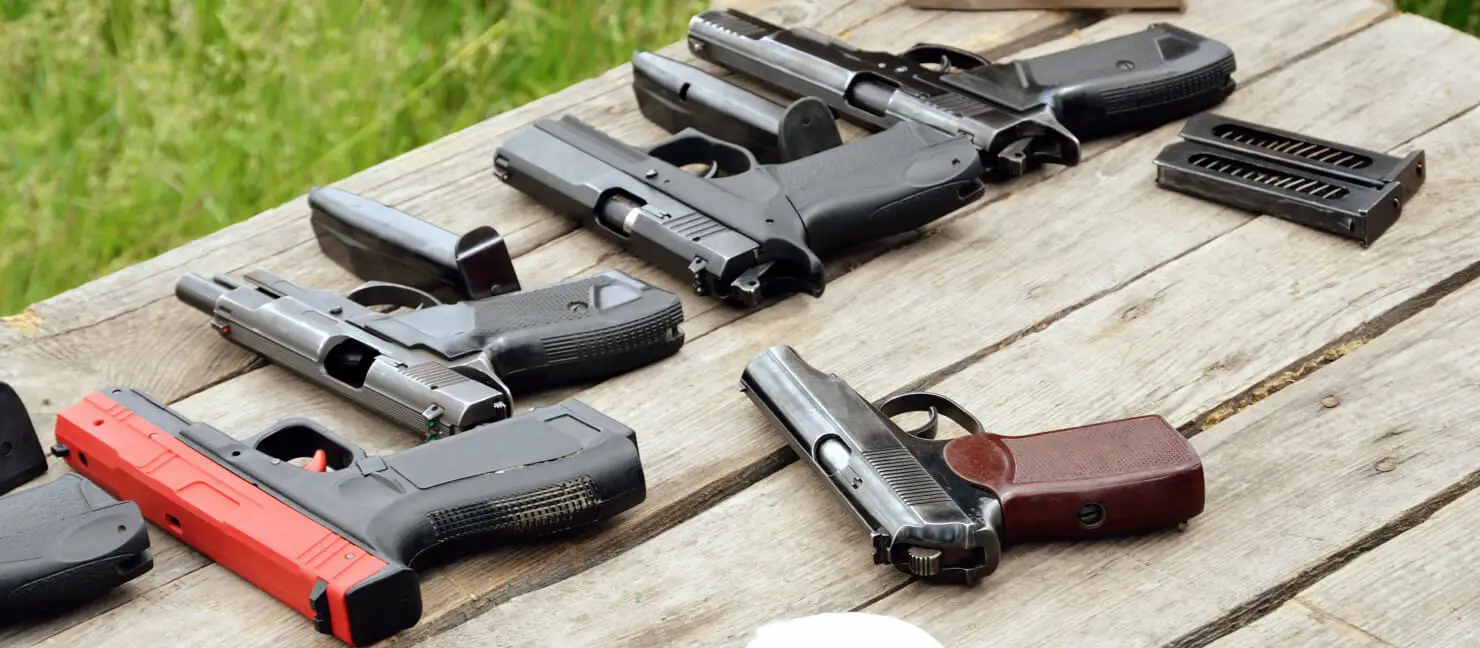
The world of firearms is far more diverse than many people realize. From simple historical designs like the musket and flintlock rifle to advanced modern platforms such as sniper rifles, carbines, and tactical shotguns, the many types of guns developed throughout history reflect centuries of technological progress and practical adaptation. Each category of gun was created to serve a particular purpose, whether that purpose involved hunting, sport shooting, personal defense, military operations, or historical experimentation with new mechanical ideas. When viewed together, these different firearms demonstrate how engineers and gunsmiths continuously refined their designs to improve accuracy, reliability, power, and ease of use.
One interesting aspect of firearm evolution is how different environments and needs shaped specific gun types. Rifles, for example, were designed to provide greater accuracy at longer distances, making them suitable for hunting and precision shooting. Shotguns, by contrast, were developed to fire multiple projectiles in a spread pattern, which proved effective for bird hunting and close‑range defensive use. Handguns evolved as compact and portable firearms that could be carried easily while still delivering dependable performance when needed. Even more specialized designs, such as anti‑material rifles or general‑purpose machine guns, were engineered to address very specific military requirements.
Historical firearms also play an important role in understanding how modern guns came to exist. Early weapons like blunderbusses, percussion rifles, and muzzleloaders might appear primitive today, yet they represent crucial steps in the long journey of firearm innovation. Each generation of design introduced improvements—better ignition systems, stronger materials, more efficient ammunition, and enhanced ergonomics. Over time, these developments combined to produce the sophisticated firearms that are widely used in the present day.
At the same time, modern shooters and enthusiasts often study these various types of guns not only for their technical features but also for the cultural and historical stories they represent. Firearms have influenced exploration, hunting traditions, military history, and competitive shooting sports across many regions of the world. Understanding how different guns function and why they were created helps build a broader appreciation for mechanical design and historical progress.
In the end, the wide variety of guns—from compact pistols to large machine guns—illustrates how human innovation responds to practical challenges. Some designs prioritize accuracy, others emphasize portability or firepower, and many attempt to balance several characteristics at once. By exploring these 50 different firearm categories, readers gain a clearer perspective on how the technology evolved and how each design contributed to the larger story of firearms development. Whether approached from a historical, mechanical, or educational perspective, the study of firearms remains a fascinating topic that continues to evolve alongside advances in engineering and materials science.
FAQ’s
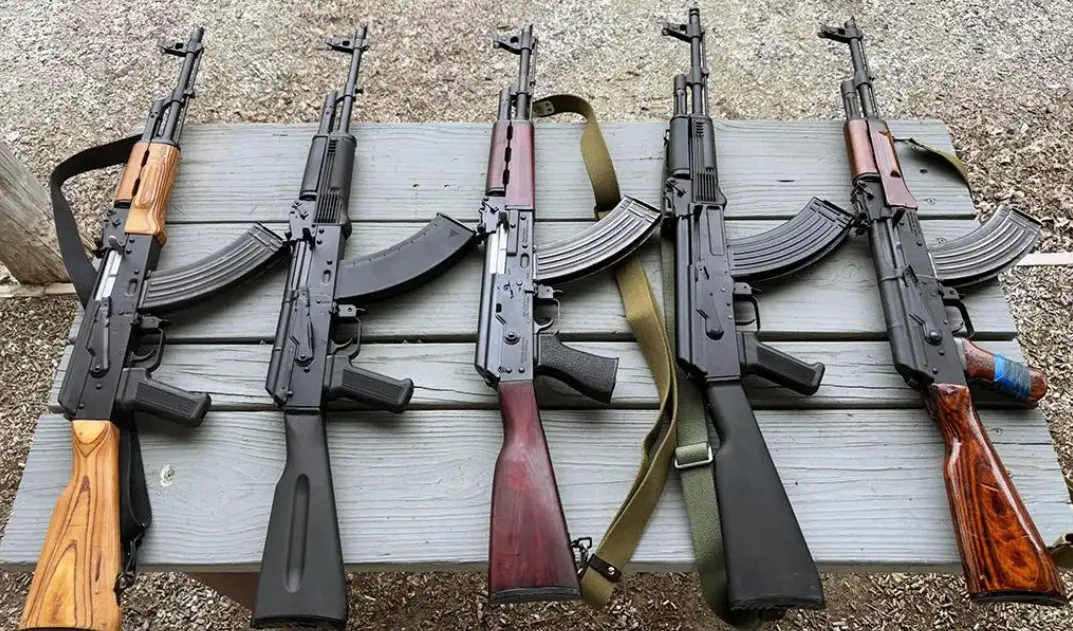
1. What are the different types of guns?
Guns can be categorized into pistols, revolvers, rifles, shotguns, submachine guns, machine guns, and specialized firearms. Each type has unique features and intended uses, ranging from self-defense to hunting and military operations.
2. What is a revolver?
A revolver is a type of handgun with a rotating cylinder that holds multiple rounds, allowing multiple shots before reloading. They come in single-action, double-action, and double-action-only designs.
3. What is the difference between single-action and double-action revolvers?
Single-action revolvers require the user to manually cock the hammer before each shot, whereas double-action revolvers can cock and fire with a single trigger pull, providing faster shooting.
4. What is a derringer?
A derringer is a small, compact handgun designed for close-range self-defense. It usually has one or two barrels and a low ammunition capacity but is highly concealable.
5. What is a semi-automatic pistol?
Semi-automatic pistols use the energy from firing a round to cycle the action and load the next round automatically. They are popular for self-defense and sport shooting due to faster follow-up shots.
6. What is a striker-fired pistol?
Striker-fired pistols eliminate the external hammer, using an internal striker mechanism to ignite the cartridge. They are simple, reliable, and often used for concealed carry.
7. What is a hammer-fired pistol?
Hammer-fired pistols have an external or internal hammer that strikes the firing pin. They can offer double-action or single-action functionality, depending on the model.
8. What is a pocket pistol?
Pocket pistols are small, lightweight handguns designed for discreet carry. They typically hold fewer rounds and have reduced dimensions for portability.
9. What is a machine pistol?
A machine pistol is a handgun capable of fully automatic or burst firing. These firearms combine the compact size of a pistol with the firepower of a submachine gun, suitable for specialized military use.
10. What is a target pistol?
Target pistols are designed for precision shooting and competitive events. They have enhanced accuracy, adjustable sights, and ergonomic grips for stability during extended use.
11. What is a bolt-action rifle?
Bolt-action rifles require the user to manually operate the bolt to eject a spent cartridge and chamber a new round. They are renowned for accuracy and are often used in hunting and sniping.
12. What is a lever-action rifle?
Lever-action rifles use a lever mechanism to cycle rounds and are known for fast follow-up shots and reliability. They are popular for hunting medium to large game.
13. What is a pump-action rifle?
Pump-action rifles use a sliding fore-end to eject spent cartridges and chamber a new round. This system is fast, reliable, and commonly used in both hunting and tactical applications.
14. What is a semi-automatic rifle?
Semi-automatic rifles fire one round per trigger pull and automatically chamber the next round. They are widely used for hunting, sport shooting, and defense.
15. What is an assault rifle?
Assault rifles are selective-fire rifles capable of both semi-automatic and fully automatic firing. They are designed for military use with detachable magazines and high-capacity rounds.
16. What is a battle rifle?
Battle rifles are high-caliber military rifles designed for long-range accuracy. They typically fire full-powered cartridges and are primarily used in standard infantry roles.
17. What is a sniper rifle?
Sniper rifles are precision firearms designed for long-range engagements. They emphasize accuracy, stability, and the ability to deliver lethal shots at extended distances.
18. What is a designated marksman rifle?
Designated marksman rifles (DMRs) bridge the gap between standard infantry rifles and sniper rifles, providing accurate long-range fire while maintaining faster handling for squad operations.
19. What is a carbine?
Carbines are shorter, lighter rifles that are easier to maneuver than full-length rifles. They sacrifice some range for portability and are used in close-quarters combat or for personal defense.
20. What is an anti-material rifle?
Anti-material rifles are extremely powerful rifles designed to disable equipment, vehicles, or fortifications. They fire large-caliber rounds capable of penetrating armor at long distances.
21. What is a pump-action shotgun?
Pump-action shotguns are operated by sliding the fore-end back and forth to cycle rounds. They are versatile firearms used for hunting, home defense, and law enforcement.
22. What is a semi-automatic shotgun?
Semi-automatic shotguns use gas or recoil operation to cycle rounds automatically. They allow for faster follow-up shots and are commonly used in tactical and sport applications.
23. What is a break-action shotgun?
Break-action shotguns hinge open to load and unload one or two shells. They are simple, reliable, and often used in hunting and sporting competitions.
24. What is an over-under shotgun?
Over-under shotguns feature two barrels stacked vertically. This design allows for two quick shots with minimal recoil and is popular in clay shooting and bird hunting.
25. What is a side-by-side shotgun?
Side-by-side shotguns have two barrels positioned horizontally. They are traditional hunting guns offering reliability and a wide field of fire for bird and small game hunting.
26. What is a bolt-action shotgun?
Bolt-action shotguns combine the precision and reliability of bolt-action rifles with shotgun functionality. They are relatively rare but valued for durability and accuracy in specialized situations.
27. What is a lever-action shotgun?
Lever-action shotguns operate with a lever similar to lever-action rifles. They allow for faster cycling than single-shot designs while maintaining reliability for hunting or sport shooting.
28. What is a tactical shotgun?
Tactical shotguns are designed for self-defense and law enforcement. They feature extended magazines, adjustable stocks, and rails for attachments such as lights and optics.
29. What is an automatic shotgun?
Automatic shotguns can fire continuously while holding the trigger. They are generally military or law enforcement tools due to high firepower and recoil, not commonly used in civilian contexts.
30. What is a submachine gun?
Submachine guns are compact automatic firearms that fire pistol-caliber rounds. They offer high rate-of-fire and mobility for close-quarters combat situations.
31. What is a personal defense weapon (PDW)?
PDWs are small, lightweight automatic firearms designed to offer more firepower than a pistol but more compact size than a rifle. They are used primarily by security forces and vehicle crews.
32. What is a light machine gun (LMG)?
LMGs are designed to provide sustained automatic fire to support infantry squads. They typically use medium-caliber cartridges and are belt-fed or magazine-fed.
33. What is a medium machine gun (MMG)?
Medium machine guns fire full-powered rifle cartridges at sustained rates. They are often mounted or tripod-supported for long-range suppression and defensive purposes.
34. What is a heavy machine gun (HMG)?
Heavy machine guns fire large-caliber rounds, such as .50 BMG, and are designed to engage vehicles, fortifications, or aircraft. They are crew-served weapons requiring careful handling.
35. What is a general-purpose machine gun (GPMG)?
GPMGs can be used in multiple roles: infantry support, mounted on vehicles, or for defensive emplacements. They balance portability with sustained firepower to serve versatile operational needs.
36. What is a squad automatic weapon (SAW)?
SAWs provide automatic fire support for small units or squads. They are lighter than heavy machine guns but still deliver effective suppressive fire during combat operations.
37. What is a Gatling gun?
A Gatling gun is a multi-barrel rotary firearm that can fire at an extremely high rate of fire. Historically, it was hand-cranked and used during the 19th century in military engagements.
38. What is a minigun?
The minigun is a modern rotary machine gun that fires thousands of rounds per minute. It uses electric motors to rotate multiple barrels, making it a formidable weapon for military vehicles and aircraft.
39. What is an automatic rifle?
Automatic rifles can fire continuously while the trigger is held down. They combine rifle accuracy with automatic firepower, primarily for military use in sustained engagements.
40. What is a musket?
Muskets are early long guns that used smoothbore barrels and black powder ammunition. They were widely used in the 16th to 19th centuries before rifling technology improved accuracy.
41. What is a flintlock rifle?
Flintlock rifles use a flint striking mechanism to ignite gunpowder. They represent a significant technological advance over matchlocks and were common in military and hunting contexts.
42. What is a percussion rifle?
Percussion rifles replaced flintlocks with percussion caps, offering more reliable ignition. They became popular in the early 19th century and laid the foundation for modern cartridge firearms.
43. What is a muzzleloader?
Muzzleloaders are guns loaded from the front of the barrel with powder and projectile. They require careful handling and are now mainly used in historical reenactments and specialty hunting.
44. What is a breechloading rifle?
Breechloading rifles are loaded from the rear of the barrel, allowing faster and safer reloading. They became standard in the late 19th century and remain the basis for most modern rifles.
45. What is a blunderbuss?
The blunderbuss is an early short-range defensive firearm with a flared muzzle designed to scatter projectiles. It was used in the 17th and 18th centuries for self-defense and on stagecoaches.
46. What is an elephant gun?
Elephant guns are extremely powerful rifles designed for hunting large dangerous game. They use massive caliber rounds to ensure sufficient stopping power for animals like elephants and rhinoceroses.
47. What is an express rifle?
Express rifles are hunting rifles designed for high-velocity rounds. They combine flat trajectories, powerful cartridges, and sometimes double barrels to provide accuracy and quick follow-up shots for big game hunting.
48. What is a wall gun?
Wall guns are large historical firearms mounted on defensive structures like castles or city walls. They are heavier than standard rifles and were used to repel attackers from fortified positions.
49. What is an air rifle?
Air rifles use compressed air or gas to propel a projectile, rather than gunpowder. They are widely used for target shooting, pest control, and small-game hunting due to their low noise and recoil.
50. Why is understanding types of guns important?
Understanding the various types of guns helps users select the right firearm for specific purposes such as hunting, defense, sport shooting, or collection. Knowledge of their function, history, and characteristics promotes safe and responsible usage.
Read more: 30 Types of Expensive Guns | Ultimate Guide to Luxury Firearms