
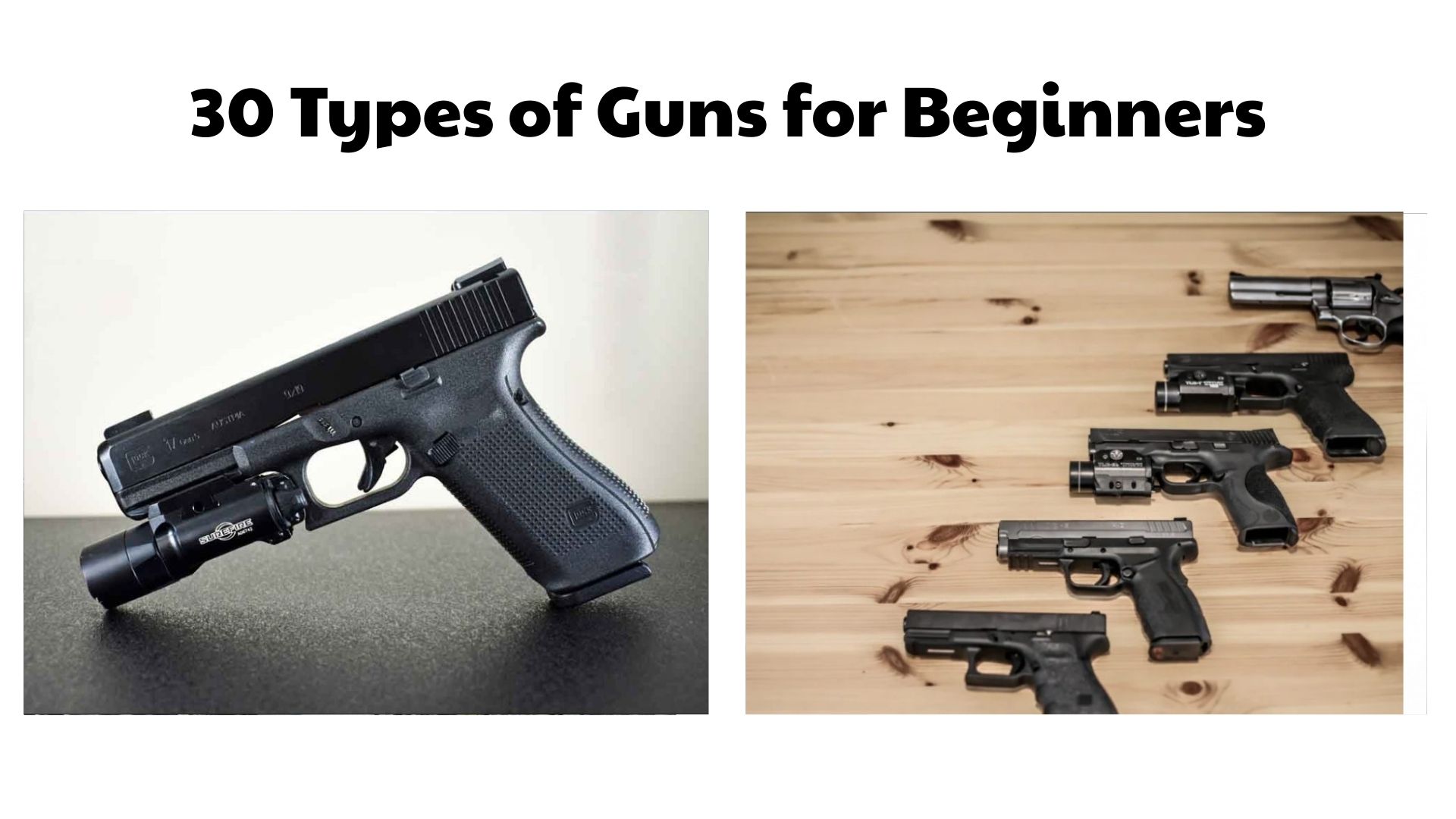
When people begin learning about firearms, they quickly realize there are many different styles, mechanisms, and purposes for guns. For beginners, the key is understanding the most common and approachable firearm designs before exploring more specialized models. The best types of guns for beginners are usually simple to operate, reliable, and easy to maintain. These firearms allow new shooters to focus on learning safety, proper handling, and basic shooting skills rather than dealing with overly complex mechanisms.
This guide reviews several popular guns for beginners that are widely recognized for their manageable recoil, straightforward operation, and accessible learning curve. Each section explains how the firearm works, why it may be suitable for a new shooter, and what makes it unique among the many types of guns for beginners available today. By understanding these designs, beginners can build a solid foundation before moving on to more advanced firearms.
30 Types of Guns for Beginners
1. Single-Action Revolver
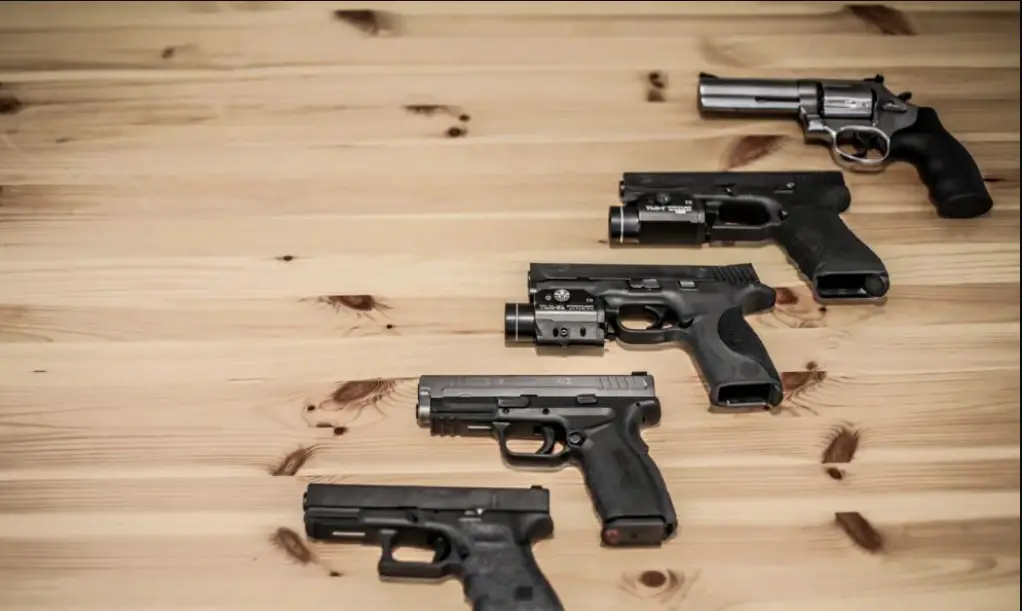
The single-action revolver is one of the most historically recognizable firearms and remains one of the easiest designs for beginners to understand. Originally popularized in the 19th century, especially during the American frontier era, the single-action revolver operates using a very simple mechanical system. The term “single-action” refers to the fact that the trigger performs only one function: releasing the hammer. Before each shot, the shooter must manually cock the hammer. When the hammer is pulled back, the cylinder rotates to align the next chamber with the barrel, and the firearm becomes ready to fire.
For beginners, the single-action revolver offers an excellent opportunity to learn the fundamental mechanics of firearms. Because the hammer must be manually cocked before each shot, the shooter naturally develops a slower and more deliberate shooting rhythm. This encourages careful aiming and reinforces proper trigger discipline, two skills that are essential for safe firearm use. The visible movement of the hammer and cylinder also makes it easier for new shooters to understand exactly how the firearm functions internally.
Another advantage of the single-action revolver is its mechanical simplicity. Compared with many modern firearms, this design contains relatively few moving parts. That simplicity often translates into high reliability and easier maintenance. For beginners who may feel overwhelmed by more complex firearm systems, the straightforward design of a single-action revolver can make the learning process far less intimidating.
However, single-action revolvers are generally slower to fire than modern firearms because the hammer must be cocked before every shot. This characteristic is not necessarily a disadvantage for beginners, though. In fact, the slower pace can actually promote better shooting habits by encouraging shooters to pause, re-aim, and focus on accuracy between shots. Many instructors appreciate this aspect when teaching new firearm owners.
2. Double-Action Revolver
The double-action revolver is widely regarded as one of the most beginner-friendly firearms ever designed. Unlike single-action revolvers, the double-action mechanism allows the trigger to perform two tasks at once. When the shooter pulls the trigger, the mechanism both cocks the hammer and releases it in a single motion. At the same time, the cylinder rotates to bring the next cartridge into position. This means the shooter does not need to manually cock the hammer before firing.
This design gives the double-action revolver greater convenience and flexibility. Shooters can fire quickly simply by pulling the trigger repeatedly, or they can still manually cock the hammer for a lighter and more precise trigger pull if they want improved accuracy. This dual capability makes the firearm versatile for both learning and practical use.
For beginners, one of the biggest advantages of the double-action revolver is its reliability and ease of operation. The loading process is straightforward: the cylinder swings out to allow cartridges to be inserted directly into the chambers. There are no detachable magazines to manage and no complex safeties to remember. Because of this simplicity, many firearm instructors consider the double-action revolver one of the safest platforms for introducing new shooters to handgun fundamentals.
Another reason double-action revolvers are often recommended as guns for beginners is their durability. These firearms tend to function reliably even after extended use, and they are less sensitive to ammunition variations compared with some semi-automatic pistols. If a cartridge fails to fire, the shooter can simply pull the trigger again to rotate to the next round, avoiding the need for more complicated troubleshooting procedures.
3. Double-Action-Only Revolver
The double-action-only revolver, often abbreviated as DAO revolver, represents a simplified variation of the traditional double-action design. As the name suggests, these revolvers operate exclusively in double-action mode. The hammer cannot be manually cocked; instead, every shot is fired by pulling the trigger through a full double-action cycle. This means the trigger both cocks and releases the hammer for each round.
This design is particularly appealing for beginners because it removes one operational step and reduces the number of decisions the shooter must make while handling the firearm. With a double-action-only revolver, the process is always the same: aim, pull the trigger, and the firearm handles the rest of the firing sequence automatically. The consistent trigger pull also helps new shooters develop muscle memory more quickly.
Another notable feature of DAO revolvers is the longer and heavier trigger pull compared with other handgun types. While this may initially feel challenging for beginners, it actually provides an added margin of safety. The longer trigger pull requires deliberate pressure, which helps reduce the likelihood of accidental discharge. For this reason, many defensive revolvers designed for concealed carry use the double-action-only system.
In terms of maintenance and reliability, DAO revolvers share the same advantages as other revolver designs. The cylinder-based ammunition system is straightforward, and mechanical malfunctions are relatively rare. Beginners who prioritize simplicity and consistent operation often find the double-action-only revolver to be a practical and confidence-building starting point.
4. Small-Frame Revolver
The small-frame revolver is a compact handgun built on a reduced-size revolver frame, making it lighter and easier to handle than many full-sized models. These firearms are commonly associated with concealed carry because of their portability, but they can also serve as practical learning tools for beginners who prefer a smaller and more manageable handgun.
One of the defining characteristics of a small-frame revolver is its compact size. The shorter barrel and lighter frame make the firearm easier to carry and store, which is why it has remained popular among civilians and personal defense users. For beginners with smaller hands, the reduced grip size can also make the firearm more comfortable to hold and control.
Despite their small size, these revolvers retain the same fundamental mechanical advantages that make revolvers beginner-friendly in general. They are simple to load, easy to operate, and highly reliable. Most small-frame revolvers function using either double-action or double-action-only mechanisms, meaning the shooter can fire simply by pulling the trigger without worrying about complex controls.
However, beginners should be aware that smaller revolvers can produce stronger perceived recoil due to their lighter weight and shorter barrels. This does not make them unsuitable for beginners, but it may require some practice to develop comfort and control. With proper training and practice, many shooters find small-frame revolvers to be practical, dependable, and easy-to-learn firearms.
5. Semi-Automatic Pistol
The semi-automatic pistol is one of the most widely used handgun types in the modern world and represents a major category among the most common types of guns for beginners. Unlike revolvers, which store ammunition in a rotating cylinder, semi-automatic pistols use detachable magazines that hold multiple cartridges inside the grip. When the firearm is fired, the energy generated by the shot cycles the slide backward and forward, ejecting the spent casing and loading a fresh round into the chamber.
This self-loading mechanism allows the semi-automatic pistol to fire multiple shots quickly without requiring manual reloading after each round. For beginners, this can make the shooting experience smoother and more efficient. Modern semi-automatic pistols are designed with ergonomic grips, manageable recoil systems, and intuitive controls, making them accessible even for new shooters.
Another advantage of semi-automatic pistols is their ammunition capacity. Many models hold significantly more rounds than traditional revolvers, which can be useful for training sessions or range practice where frequent reloading might otherwise interrupt the learning process. The detachable magazine system also allows shooters to carry spare magazines and reload quickly when needed.
However, semi-automatic pistols do require beginners to learn a few additional operational steps compared with revolvers. These include inserting magazines, racking the slide, and understanding external safety mechanisms where present. While these steps are not particularly difficult, they do introduce a slightly steeper learning curve. With basic instruction and practice, though, most beginners become comfortable with semi-automatic pistols very quickly.
6. Striker-Fired Pistol
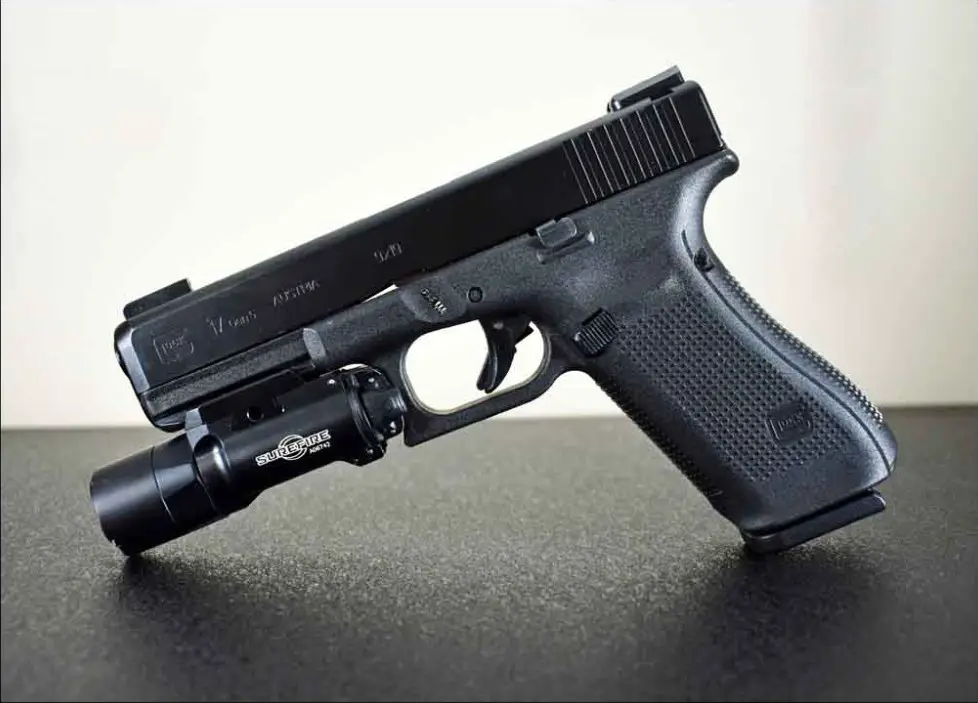
The striker-fired pistol has become one of the most popular handgun designs in the modern firearm market and is frequently recommended as one of the most practical types of guns for beginners. Unlike traditional hammer-fired firearms that use an external hammer to strike the firing pin, striker-fired pistols rely on an internal striker mechanism that is partially cocked when the slide cycles. When the shooter pulls the trigger, the striker is fully released and moves forward to ignite the cartridge. This design eliminates the need for an exposed hammer and simplifies the overall mechanical system.
For beginners, the biggest advantage of striker-fired pistols is their consistent trigger pull. Each shot requires roughly the same amount of trigger pressure and travel, which helps new shooters build predictable shooting habits and improve accuracy over time. Because there is no transition between different trigger modes, beginners do not need to adapt to multiple trigger weights or firing methods. This uniformity allows new shooters to focus more on fundamentals such as grip, sight alignment, and trigger control.
Another reason striker-fired pistols are considered excellent guns for beginners is their simplified control layout. Many striker-fired models eliminate external safeties or reduce the number of levers and buttons on the firearm. Instead, they often rely on internal safety mechanisms such as trigger safeties, firing pin blocks, and drop safeties. This streamlined design helps prevent confusion for new users who are still learning how to safely handle and operate a firearm.
Maintenance and reliability also contribute to the popularity of striker-fired pistols among beginner shooters. The relatively simple internal components make the firearm easy to clean and maintain, and the design tends to perform reliably with a wide range of ammunition types. Because of these advantages, striker-fired pistols are commonly used for training, personal defense, and recreational shooting, making them one of the most widely recommended handgun platforms for new firearm owners.
7. Hammer-Fired Pistol
The hammer-fired pistol represents a classic handgun design that has been widely used for decades by military forces, law enforcement agencies, and civilian shooters. In this system, an external hammer strikes the firing pin when the trigger is pulled, which then ignites the cartridge in the chamber. Hammer-fired pistols can operate in several different configurations, including single-action, double-action, or a combination of both, depending on the specific model.
For beginners exploring different types of guns for beginners, the hammer-fired pistol provides a clear and visible way to understand how the firing mechanism works. Because the hammer is exposed, shooters can easily see whether the firearm is cocked or decocked. This visual indicator can provide reassurance for new firearm owners who are still developing familiarity with gun operation and safety procedures.
Another advantage of hammer-fired pistols is their versatility in trigger operation. Some models allow the shooter to manually cock the hammer before firing, producing a lighter and shorter trigger pull that can improve precision. Others operate in double-action mode, where the trigger both cocks and releases the hammer in a single motion. This flexibility allows beginners to experiment with different firing styles and determine which trigger system feels most comfortable for them.
Although hammer-fired pistols can involve slightly more controls than striker-fired models, many shooters appreciate the added level of control they provide. With proper instruction and regular practice, beginners often find that these pistols offer excellent accuracy, reliable performance, and a deeper understanding of firearm mechanics.
8. Compact Pistol
The compact pistol is designed as a smaller and lighter alternative to full-sized handguns while still maintaining many of the same operational features. Compact pistols typically have shorter barrels, reduced grip lengths, and lighter frames, which make them easier to carry and handle. Because of this balance between size and performance, compact pistols are frequently listed among the most practical guns for beginners.
One of the most appealing characteristics of compact pistols is their versatility. They are large enough to provide comfortable grip control and manageable recoil, yet small enough to be easily transported or stored. Many new shooters prefer this middle-ground approach because it allows them to practice at the range with a firearm that feels stable and balanced without being excessively large or heavy.
Compact pistols are available in both striker-fired and hammer-fired configurations, giving beginners multiple options depending on their preferences. In addition, many manufacturers design compact pistols with ergonomic grips, textured surfaces, and improved recoil management systems. These features can help new shooters maintain better control of the firearm while learning proper shooting techniques.
Because of their manageable size and user-friendly design, compact pistols are often recommended for beginners who want a firearm that can serve multiple purposes. Whether used for training, recreational shooting, or personal protection, the compact pistol offers a practical combination of reliability, comfort, and ease of use.
9. Full-Size Pistol
The full-size pistol represents the standard handgun configuration that many modern firearm designs are based on. These pistols typically feature longer barrels, larger frames, and full-length grips that can accommodate higher-capacity magazines. While some beginners initially assume that smaller firearms are easier to learn with, full-size pistols are actually among the most comfortable and controllable types of guns for beginners.
One major advantage of a full-size pistol is improved stability during shooting. The larger grip allows the shooter to hold the firearm with both hands comfortably, while the additional weight helps absorb recoil energy. As a result, beginners often find that full-size pistols produce smoother shooting experiences and better accuracy compared with smaller handguns.
Full-size pistols also tend to offer longer sight radiuses, which means the distance between the front and rear sights is greater. This increased spacing can make it easier for beginners to align the sights properly and maintain consistent aim. Over time, this can help new shooters develop better shooting habits and improve their overall accuracy.
Another benefit of full-size pistols is their larger magazine capacity. Because the grip frame is longer, these pistols can typically hold more rounds than compact or pocket-sized handguns. This reduces the need for frequent reloading during practice sessions, allowing beginners to focus more on skill development rather than managing ammunition.
10. Pocket Pistol
The pocket pistol is a very small handgun designed specifically for maximum portability and convenience. As the name suggests, these firearms are compact enough to fit into a jacket or pants pocket, making them easy to carry discreetly. While their primary role is often personal defense, pocket pistols can also introduce beginners to the fundamentals of firearm operation in a highly compact platform.
One of the defining characteristics of a pocket pistol is its extremely small frame and lightweight construction. These firearms are typically chambered in smaller calibers, which helps keep recoil manageable despite the reduced size. For beginners who prioritize convenience and portability, the pocket pistol offers a straightforward solution.
Most pocket pistols operate using semi-automatic mechanisms similar to larger pistols, although some models are built as small revolvers. Despite their size, they still require the same safety practices and proper handling techniques as any other firearm. Beginners who choose a pocket pistol should spend time practicing grip control and trigger discipline to compensate for the smaller surface area and shorter sight radius.
Although pocket pistols are not always the easiest firearms to shoot accurately due to their compact design, they remain an important category among the many types of guns for beginners. With practice and proper instruction, beginners can learn to handle these small firearms safely and effectively while gaining valuable experience with handgun operation.
11. Rimfire Pistol
The rimfire pistol is widely considered one of the most approachable and beginner-friendly handguns available today. Its design revolves around rimfire cartridges, most commonly the .22 LR (Long Rifle), which ignite when the firing pin strikes the rim of the cartridge rather than the center primer. This small but important difference results in lighter recoil, quieter firing characteristics, and lower ammunition costs compared with larger centerfire handguns. Because of these advantages, the rimfire pistol often serves as the first firearm many new shooters experience when learning the fundamentals of firearm safety and shooting technique.
For beginners exploring different types of guns for beginners, the rimfire pistol provides a comfortable learning environment that encourages steady skill development. The mild recoil allows new shooters to focus on essential shooting fundamentals such as trigger control, sight alignment, breathing rhythm, and stance. Without the distraction of strong recoil or loud muzzle blast, beginners can concentrate on building confidence and muscle memory during their earliest training sessions. This makes rimfire pistols extremely popular in youth training programs, shooting clubs, and recreational target shooting.
Another important advantage of rimfire pistols is their affordability. Ammunition for rimfire cartridges is significantly less expensive than most centerfire options, which allows beginners to practice more frequently without worrying about excessive costs. Because regular practice is the most effective way to develop shooting accuracy and safe handling habits, this affordability plays a major role in why rimfire pistols remain one of the most recommended guns for beginners. Many instructors prefer starting students with rimfire pistols specifically because they allow for long practice sessions with minimal fatigue.
Despite their small caliber, rimfire pistols are still precision tools capable of impressive accuracy when used correctly. Many models are designed with ergonomic grips, lightweight frames, and easy-to-operate controls that help beginners learn proper firearm handling techniques. Over time, shooters often discover that the rimfire pistol is not only a training tool but also an enjoyable firearm for recreational shooting and small target practice.
12. Target Pistol
The target pistol is a specialized handgun designed primarily for precision shooting and competitive marksmanship. Unlike general-purpose pistols, which may prioritize portability or defensive use, target pistols are engineered with accuracy as their main objective. They often feature longer barrels, finely tuned triggers, adjustable sights, and ergonomically shaped grips that help shooters maintain stable control during slow and deliberate firing. Because of these characteristics, the target pistol occupies a unique place among the many types of guns for beginners.
For beginners interested in developing strong marksmanship skills, the target pistol offers an excellent training platform. Its enhanced accuracy allows shooters to clearly see the results of proper technique. When a beginner maintains correct posture, steady breathing, and smooth trigger pressure, the target pistol rewards that effort with precise shot placement. Conversely, small mistakes become immediately visible on the target, which makes it easier for new shooters to identify areas that need improvement.
Target pistols are often chambered in rimfire calibers such as .22 LR, further reinforcing their beginner-friendly nature. The combination of low recoil and high accuracy allows shooters to practice for extended periods without fatigue. Many target pistols also include adjustable grips designed to fit comfortably in the shooter’s hand, providing greater stability and reducing movement during the firing process.
Another important benefit of the target pistol is its role in structured shooting sports. Beginners who become interested in competitive shooting often start with this type of handgun because it teaches patience, discipline, and consistent technique. Whether used in organized competitions or casual range practice, the target pistol helps beginners develop a deeper understanding of firearm accuracy and control.
13. Training Pistol
The training pistol is designed specifically to help beginners learn safe firearm handling and shooting fundamentals in a controlled environment. Unlike firearms built primarily for defensive or tactical roles, training pistols emphasize ease of use, simplified controls, and predictable shooting characteristics. Many shooting instructors rely on these pistols when introducing new students to the world of firearms because they provide a stable and forgiving platform for learning.
Among the many types of guns for beginners, the training pistol stands out because it focuses almost entirely on skill development. These pistols are often chambered in low-recoil calibers such as .22 LR and may include design features that reduce complexity. For example, some training pistols have simplified safety mechanisms, lightweight slides, or easy-to-load magazines. These features help eliminate unnecessary distractions for beginners who are still learning basic firearm operation.
Training pistols are commonly used in structured courses where instructors guide students through essential skills such as safe loading procedures, proper grip techniques, and controlled trigger pulls. Because the firearm behaves predictably and produces manageable recoil, beginners can gradually build confidence as they practice these foundational skills. Over time, this consistent practice helps new shooters develop the muscle memory and situational awareness necessary for safe firearm ownership.
Although the term “training pistol” may suggest a limited purpose, these firearms often remain useful long after a beginner becomes comfortable with shooting. Many experienced shooters continue to use them for practice drills and precision training because they provide a clear demonstration of technique. In this way, the training pistol acts as both an introductory tool and a long-term companion for developing marksmanship.
14. Bolt-Action Rifle
The bolt-action rifle is one of the most traditional and respected firearm designs in the history of shooting sports. Its operating mechanism is based on a manually operated bolt that the shooter lifts, pulls back, and pushes forward to load each new cartridge into the chamber. This simple but highly reliable system has been used for more than a century in military rifles, hunting firearms, and precision target shooting equipment.
For beginners exploring different types of guns for beginners, the bolt-action rifle offers a straightforward and highly educational shooting experience. Because the shooter must manually cycle the bolt after each shot, the firing process naturally slows down. This slower pace encourages beginners to focus on careful aiming, controlled breathing, and steady trigger pressure rather than firing rapidly. As a result, many instructors consider the bolt-action rifle one of the best tools for teaching fundamental shooting discipline.
Another advantage of bolt-action rifles is their exceptional mechanical reliability. The design contains relatively few moving parts compared with semi-automatic rifles, which reduces the likelihood of malfunctions. This reliability makes the bolt-action rifle easy to maintain and dependable in a wide variety of conditions, from controlled shooting ranges to outdoor environments.
Bolt-action rifles are also known for their impressive accuracy. Because the bolt locks the cartridge firmly in place when the rifle is ready to fire, the system tends to produce consistent shot placement. Beginners who start with a bolt-action rifle often find that the platform helps them understand the importance of precision and patience in marksmanship.
15. Lever-Action Rifle
The lever-action rifle is one of the most recognizable firearm designs in history, often associated with classic frontier imagery and early American hunting traditions. Its operating system uses a lever located beneath the receiver, which the shooter pulls downward and then back upward to chamber a new round. This motion ejects the spent cartridge and loads the next one from the magazine, allowing the rifle to be fired again.
Among the many types of guns for beginners, the lever-action rifle offers a unique combination of mechanical simplicity and engaging shooting experience. The lever mechanism is easy to understand and operate, making it accessible for new shooters who want to learn how repeating firearms function. At the same time, the rhythmic motion of the lever provides a satisfying and hands-on interaction with the firearm.
Many lever-action rifles are chambered in moderate calibers that produce manageable recoil, which makes them comfortable for beginners to shoot. Their balanced design and relatively lightweight construction also make them easy to handle, especially for shooters who may find heavier rifles intimidating. In addition, the tubular magazine commonly used in lever-action rifles allows multiple rounds to be loaded while maintaining a simple mechanical system.
Beyond their practical features, lever-action rifles also carry a sense of historical significance that appeals to many new shooters. Learning to operate one provides insight into an important chapter of firearm development while still offering a reliable and effective tool for modern recreational shooting. For beginners interested in both tradition and functionality, the lever-action rifle remains a timeless and enjoyable option.
16. Semi-Automatic Rifle
The semi-automatic rifle is one of the most widely recognized firearm platforms in the modern shooting world, and despite its advanced reputation, many models are surprisingly approachable for beginners who want to explore rifles in a structured and responsible way. A semi-automatic rifle operates by automatically loading the next round into the chamber after each shot is fired, meaning the shooter only needs to pull the trigger once for each round. Unlike fully automatic firearms, which continue firing while the trigger is held down, semi-automatic rifles fire only a single round per trigger press, giving the shooter full control over each shot while still benefiting from efficient operation and reduced manual effort between shots.
For beginners learning about different types of guns for beginners, the semi-automatic rifle can provide an intuitive shooting experience once basic safety and handling skills are understood. Because the action cycles automatically, new shooters can focus more attention on proper stance, breathing control, and sight alignment rather than worrying about manually operating a bolt or lever after every shot. This feature helps create a smoother learning curve during practice sessions, particularly for shooters who may find complex manual actions intimidating during their early training.
Another advantage of the semi-automatic rifle lies in its versatility. These rifles come in a wide range of configurations, sizes, and calibers, which allows beginners to choose a model that fits their comfort level and intended use. Many beginner-friendly rifles are chambered in low-recoil cartridges such as .22 LR or other mild calibers, ensuring that recoil remains manageable while still allowing the shooter to experience the full function of a modern repeating rifle. This combination of comfort and mechanical efficiency makes semi-automatic rifles common choices in recreational shooting, target practice, and training environments.
Although semi-automatic rifles are mechanically more complex than some traditional rifle designs, modern manufacturing has made them highly reliable and easy to maintain. With proper instruction and safe handling habits, beginners can quickly learn how the system operates and gain confidence in using it responsibly. Over time, many shooters discover that the semi-automatic rifle serves as both an educational training tool and a versatile firearm platform capable of supporting many different shooting activities.
17. Rimfire Rifle
The rimfire rifle is one of the most popular firearms used by beginners, and for good reason. Designed to fire rimfire cartridges—most commonly the .22 Long Rifle—this type of rifle offers a combination of low recoil, quiet shooting characteristics, and excellent accuracy. These qualities make it an ideal starting point for individuals who are just beginning to learn the fundamentals of safe firearm handling and marksmanship.
When discussing types of guns for beginners, the rimfire rifle frequently appears at the top of recommendations from instructors and experienced shooters alike. Its mild recoil allows new shooters to maintain proper form without developing the flinching habits that sometimes occur when firing more powerful calibers. Because the rifle produces minimal kick and noise, beginners can remain relaxed and focused while learning key shooting skills such as trigger control, breathing technique, and target alignment.
Another reason rimfire rifles are so beginner-friendly is their affordability. Rimfire ammunition is significantly less expensive than most centerfire cartridges, which allows beginners to practice more often without worrying about high ammunition costs. This accessibility encourages frequent training sessions, and consistent practice is widely recognized as the most effective way to improve shooting accuracy and safety awareness.
Beyond training, rimfire rifles are also enjoyable for recreational shooting. Many people who start with a rimfire rifle continue to use it for years because it provides a relaxed and precise shooting experience. Whether used on a target range or in informal outdoor practice sessions, the rimfire rifle remains one of the most approachable and enjoyable firearms for new shooters entering the world of rifles.
18. Youth Training Rifle
The youth training rifle is specifically designed to introduce younger shooters or smaller-framed beginners to the fundamentals of firearm safety and marksmanship. While many firearms are built with adult shooters in mind, youth training rifles are carefully engineered with lighter weight, shorter stocks, and simplified controls that make them easier for new shooters to handle comfortably. These design choices ensure that the rifle fits the shooter properly, which is an important factor in maintaining control and safe handling habits.
Among the many types of guns for beginners, the youth training rifle stands out because it focuses heavily on education and skill development rather than power or advanced features. Many youth rifles are chambered in rimfire calibers such as .22 LR, which produce minimal recoil and allow beginners to learn shooting techniques without feeling overwhelmed. This gentle shooting experience helps new users build confidence as they practice aiming, trigger discipline, and safe firearm operation.
Youth training rifles are often used in structured programs where experienced instructors guide beginners through the basics of shooting. These lessons typically include firearm safety rules, proper loading procedures, and careful target practice under supervision. Because the rifles are designed to be easy to control and simple to operate, beginners can concentrate fully on learning these essential skills without struggling with complicated mechanisms or heavy recoil.
Even though youth training rifles are often marketed toward younger shooters, many adults who are new to firearms also find them useful during their early training sessions. The lighter design and manageable recoil make them an excellent stepping stone toward larger rifles. For this reason, youth training rifles remain an important part of firearm education and continue to play a key role in introducing responsible shooting practices to new generations.
19. Single-Shot Rifle
The single-shot rifle is perhaps the simplest firearm design available, yet it remains one of the most valuable learning tools for beginners. As the name suggests, a single-shot rifle holds only one cartridge at a time. After firing, the shooter must manually open the action, remove the spent cartridge, and load a new round before firing again. While this process may seem slower compared with repeating rifles, it actually provides several important advantages for new shooters.
For those studying the various types of guns for beginners, the single-shot rifle offers a straightforward and highly controlled shooting experience. Because the rifle can hold only one round, the shooter naturally develops a deliberate and careful approach to firing. Each shot requires preparation, attention, and proper technique, which encourages beginners to slow down and focus on accuracy rather than speed. This deliberate pace often leads to better marksmanship habits during the earliest stages of training.
Another benefit of the single-shot rifle is its mechanical simplicity. With very few moving parts compared to other rifle designs, these firearms are typically reliable and easy to maintain. The straightforward operation also makes it easier for beginners to understand exactly how the firearm functions, which can help reinforce safe handling practices and build mechanical familiarity.
Despite its simplicity, the single-shot rifle is far from outdated. Many experienced shooters continue to appreciate its precision and discipline-focused design. Beginners who start with a single-shot rifle often develop strong shooting fundamentals that remain valuable as they progress to more complex firearms later in their shooting journey.
20. Pistol-Caliber Carbine
The pistol-caliber carbine is a unique firearm that bridges the gap between rifles and handguns. It is essentially a shoulder-fired rifle that uses ammunition commonly associated with pistols, such as 9mm or similar cartridges. This design creates a firearm that combines the stability of a rifle with the manageable recoil of a handgun cartridge, making it a comfortable and approachable option for many new shooters.
Within the broad range of types of guns for beginners, the pistol-caliber carbine offers several advantages that help simplify the learning process. Because the firearm is held against the shoulder and supported by both hands, it provides greater stability than a typical handgun. This stability makes it easier for beginners to aim accurately and maintain consistent shot placement, especially during early practice sessions.
Another benefit of the pistol-caliber carbine is its relatively low recoil compared with traditional rifle calibers. Since the firearm uses pistol ammunition, the recoil impulse is generally mild and easy to control. This characteristic allows beginners to shoot comfortably without developing the anticipation or flinching that sometimes occurs when firing more powerful rifle cartridges.
Pistol-caliber carbines are also appreciated for their versatility and user-friendly design. Many models feature adjustable stocks, simple controls, and ergonomic layouts that help beginners become familiar with rifle handling techniques. Over time, shooters who begin with a pistol-caliber carbine often discover that it serves as a practical stepping stone toward learning more advanced rifle platforms while still remaining enjoyable for recreational shooting and training.
21. Pump-Action Shotgun
The pump-action shotgun is one of the most recognizable firearms in the world and has earned a long-standing reputation for reliability, simplicity, and versatility. For beginners exploring different types of guns for beginners, the pump-action shotgun often stands out as an approachable and practical choice because its operating system is easy to understand and its mechanical design is robust enough to function reliably in many different environments. The defining characteristic of a pump-action shotgun is the sliding fore-end, often called the “pump,” which the shooter moves backward and forward to eject a spent shell and chamber a new one from the magazine tube. This manual action gives the shooter clear feedback about the firearm’s operation and encourages deliberate shooting habits, which can be very helpful during the early stages of learning firearm safety and control.
Many instructors recommend the pump-action shotgun to beginners because the design teaches mechanical awareness without overwhelming the shooter with complicated controls. When the shooter cycles the pump, they can physically see and feel the process of extracting the spent shell and loading the next round, which reinforces an understanding of how the firearm functions internally. This tactile interaction can build confidence and familiarity with the firearm, making it easier for beginners to maintain safe handling practices and recognize when the firearm is loaded or unloaded.
Another advantage of the pump-action shotgun is its versatility. Shotguns in this category can be used for a wide range of activities including target shooting, clay sports, hunting, and even certain types of defensive training when handled responsibly and legally. The firearm’s ability to use different types of shotgun shells—such as birdshot, buckshot, or target loads—means beginners can experiment with different shooting disciplines while using the same platform. This adaptability makes the pump-action shotgun an appealing option for shooters who want a single firearm capable of supporting multiple shooting activities.
Despite its powerful appearance, a pump-action shotgun can be very manageable for beginners when paired with appropriate ammunition and proper instruction. Learning how to operate the pump smoothly, maintain proper stance, and manage recoil effectively helps new shooters develop solid fundamentals that apply to many other firearms later on. Because of its durability, simplicity, and adaptability, the pump-action shotgun remains one of the most respected training platforms in the shooting community.
22. Break-Action Shotgun
The break-action shotgun represents one of the most straightforward and traditional firearm designs still widely used today. Its name comes from the way the firearm opens: the barrel pivots downward from the receiver, “breaking” the gun open so the shooter can load or unload shells directly into the chamber. This simple mechanism has existed for well over a century and continues to be appreciated for its reliability and clarity of operation. For individuals studying different types of guns for beginners, the break-action shotgun provides an excellent introduction to firearm mechanics because the loading and unloading process is highly visible and easy to understand.
One of the most valuable characteristics of a break-action shotgun is the level of control it provides to the shooter. When the gun is opened, it is immediately obvious whether a shell is present in the chamber, which greatly reduces confusion during handling. This clear visual confirmation is extremely helpful for beginners who are learning to verify whether a firearm is safe. Many instructors prefer break-action designs for introductory training sessions because they allow students to quickly grasp the concepts of loading, unloading, and chamber inspection.
Break-action shotguns can be found in several configurations, including single-barrel designs as well as double-barrel versions such as over-under and side-by-side models. While more advanced shooters sometimes choose double-barrel shotguns for sporting purposes, the basic concept remains the same: a simple hinge mechanism opens the firearm so the shooter can insert shells directly into the chamber. Because there are relatively few moving parts compared with repeating shotguns, break-action models tend to be extremely reliable and easy to maintain.
For beginners, the break-action shotgun encourages a slow and thoughtful shooting rhythm. Since the shooter must manually open the firearm and reload after each shot or pair of shots, the process naturally promotes careful handling and safe habits. Many shooters who begin their training with a break-action shotgun develop strong awareness of firearm safety and operation, skills that remain valuable as they progress to more complex firearms later in their shooting journey.
23. Semi-Automatic Shotgun
The semi-automatic shotgun represents a more modern approach to shotgun design, combining the familiar power of the shotgun platform with an automatic cycling mechanism that loads the next shell after each shot. When the shooter pulls the trigger, the firearm uses energy from the fired shell—either through gas operation or recoil—to eject the spent shell and chamber a new one from the magazine tube. This system allows the shooter to fire consecutive shots without manually operating a pump or opening the action. For beginners exploring advanced types of guns for beginners, the semi-automatic shotgun introduces a higher level of convenience while still maintaining clear, controlled operation.
One of the primary advantages of the semi-automatic shotgun is reduced physical effort between shots. Because the firearm cycles automatically, the shooter does not need to perform additional movements to load the next shell. This allows beginners to focus on maintaining proper stance, managing recoil, and keeping their sights aligned with the target. The smooth operation can make the shooting experience feel more comfortable and controlled, especially during extended practice sessions.
Another notable benefit is recoil management. Many semi-automatic shotguns use gas-operated systems that absorb part of the recoil energy during the cycling process. This mechanical feature can soften the felt recoil compared with some other shotgun designs, making the firearm easier to handle for beginners who may be sensitive to stronger recoil impulses. As a result, many shooters find semi-automatic shotguns surprisingly comfortable once they become familiar with the controls.
Although semi-automatic shotguns involve more mechanical complexity than simpler shotgun designs, modern manufacturing has made them reliable and user-friendly. With proper instruction and routine maintenance, beginners can quickly learn how the system operates and appreciate its efficiency. Over time, many shooters discover that the semi-automatic shotgun offers a balanced combination of power, speed, and manageable handling characteristics.
24. Single-Shot Shotgun
The single-shot shotgun is one of the simplest and most educational firearms a beginner can learn to use. As the name suggests, this shotgun holds only one shell at a time, requiring the shooter to manually reload after every shot. While this design may seem limited compared with repeating shotguns that hold multiple shells, the simplicity of the single-shot system offers important training benefits for those studying different types of guns for beginners. By focusing on one shot at a time, beginners develop careful shooting habits and a strong awareness of firearm safety.
The operating mechanism of a single-shot shotgun is typically based on a break-action design, meaning the barrel pivots downward to expose the chamber. The shooter places a shell directly into the chamber, closes the action, and then fires the shot when ready. After firing, the firearm is opened again so the spent shell can be removed and a new one inserted. This straightforward sequence makes it very easy for beginners to understand exactly how the firearm works.
Another advantage of the single-shot shotgun is its emphasis on accuracy and discipline. Because the shooter cannot immediately fire a second shot, each trigger pull becomes more intentional. Beginners learn to take their time, align their sights carefully, and focus on proper shooting technique before firing. These habits often translate into better shooting skills as the individual gains experience with more advanced firearms.
Single-shot shotguns are also known for their durability and minimal maintenance requirements. With very few moving parts, they tend to operate reliably for many years with basic care. Many experienced shooters look back fondly on the single-shot shotgun as the firearm that first introduced them to responsible shooting, making it an enduring symbol of beginner-friendly firearm design.
25. Youth Shotgun
The youth shotgun is specifically designed to accommodate younger or smaller-framed shooters who are learning the fundamentals of shotgun use. Unlike standard shotguns built for adult shooters, youth models typically feature shorter stocks, lighter overall weight, and simplified controls that make them easier to handle comfortably. These design adjustments allow beginners to maintain proper shooting posture and control the firearm more effectively, which is an important factor when developing safe and confident shooting habits.
Among the various types of guns for beginners, the youth shotgun plays a unique educational role because it bridges the gap between introductory training firearms and full-sized shotguns. Many youth models are chambered for lighter shotgun loads or smaller gauges, which helps reduce recoil and makes the shooting experience more manageable. This reduced recoil is especially important for beginners who may feel intimidated by the stronger kick associated with larger shotguns.
Youth shotguns are commonly used in supervised training programs where new shooters learn firearm safety rules, proper loading techniques, and responsible target practice. The manageable size of the firearm allows beginners to maintain control while focusing on the essential skills of aiming, trigger discipline, and safe gun handling. In many cases, these training sessions serve as the foundation for a lifetime of responsible shooting habits.
Although youth shotguns are often associated with younger shooters, many adults who are new to firearms also appreciate their comfortable size and gentle recoil characteristics. These features make them an excellent introduction to shotgun shooting without overwhelming the user. By providing an approachable and confidence-building experience, the youth shotgun continues to serve as an important training tool for beginners entering the world of shotguns.
26. Lightweight Shotgun
The lightweight shotgun represents a variation of the traditional shotgun platform designed with portability, ease of handling, and reduced fatigue in mind. Among the many types of guns for beginners, the lightweight shotgun often attracts attention because it allows new shooters to handle a full shotgun platform without the burden of excessive weight. Manufacturers achieve this reduced weight through several design choices, including slimmer barrels, lighter synthetic stocks, and simplified internal components that maintain reliability while trimming unnecessary mass. As a result, the firearm becomes easier to carry, shoulder, and control during extended practice sessions, making it an appealing option for beginners who may not yet be comfortable handling heavier firearms.
One of the primary benefits of a lightweight shotgun is improved maneuverability. When a firearm is easier to lift and aim, beginners can focus more on proper shooting technique rather than struggling with balance or fatigue. This is particularly helpful during early training stages when shooters are still learning how to maintain a stable stance, align their sights correctly, and manage recoil. Because the firearm places less strain on the arms and shoulders, beginners can practice longer without becoming physically exhausted, which encourages consistent skill development.
However, the reduced weight of a shotgun also introduces an important learning consideration: recoil can sometimes feel more noticeable in lighter firearms. Since there is less mass to absorb the force generated when a shell is fired, the shooter may experience a slightly sharper recoil impulse. This is not necessarily a disadvantage, but it does encourage beginners to learn proper recoil management techniques such as maintaining a firm shoulder position, leaning slightly forward, and gripping the firearm correctly. Over time, these techniques become second nature and contribute to safer, more controlled shooting habits.
Despite this minor trade-off, lightweight shotguns remain highly popular among beginners and experienced shooters alike. Their balance of portability, simplicity, and practical performance makes them well suited for a variety of shooting activities including recreational target practice and field shooting. For beginners exploring the many categories of shotguns available today, the lightweight shotgun provides a comfortable entry point that emphasizes mobility and ease of use without sacrificing the fundamental characteristics that make the shotgun platform so versatile.
27. Sporting Shotgun
The sporting shotgun is specifically designed for recreational shooting disciplines such as clay target sports, skeet shooting, and sporting clays competitions. These activities simulate the unpredictable flight paths of birds, challenging shooters to track moving targets and fire with precise timing. Within the broader category of types of guns for beginners, the sporting shotgun occupies an interesting position because it blends user-friendly handling with features that encourage skill development and accuracy. Beginners who are interested in structured shooting sports often find that the sporting shotgun offers an engaging and rewarding introduction to the shooting world.
Sporting shotguns are typically engineered with balance and smooth swing dynamics in mind. When a shooter tracks a moving clay target across the sky, the firearm must move fluidly and predictably without feeling jerky or unstable. To achieve this, designers carefully distribute weight along the barrel and stock so the shotgun swings naturally with the shooter’s motion. This balanced feel helps beginners develop proper target tracking skills while building confidence in their ability to connect with moving targets.
Another characteristic of sporting shotguns is their emphasis on accuracy and repeatability. Many models feature longer barrels and refined sighting systems that help shooters maintain consistent aim. For beginners, this consistency can make the learning process more intuitive because each shot behaves in a predictable manner. The shooter gradually learns how to lead a moving target, adjust their timing, and follow through with their swing after pulling the trigger.
Beyond technical performance, sporting shotguns also introduce beginners to the social and recreational side of shooting sports. Clay target ranges often host organized events where shooters practice together, share techniques, and enjoy friendly competition. For many people, this environment makes the learning process more enjoyable and encourages continued practice. As beginners improve their skills and gain confidence, the sporting shotgun becomes not just a training tool but also a gateway into a vibrant community of shooting enthusiasts.
28. Hunting Shotgun
The hunting shotgun is designed with outdoor field use in mind and has long been a staple tool for hunters around the world. Among the many types of guns for beginners, hunting shotguns offer an opportunity to learn not only firearm operation but also the broader skills associated with responsible hunting practices. These shotguns are typically built to be durable, reliable, and adaptable to different environments such as forests, wetlands, and open fields where hunters pursue various types of game.
One defining characteristic of a hunting shotgun is its versatility with different ammunition types. Hunters often choose specific shotgun shells depending on the game they are pursuing, whether it involves small birds, waterfowl, or other wildlife permitted by law. This flexibility allows a single shotgun platform to be used for multiple hunting scenarios, which can be particularly convenient for beginners who prefer to start with one reliable firearm before expanding their equipment collection.
Another important feature of hunting shotguns is their emphasis on practicality and durability. Field conditions can be unpredictable, involving weather changes, rough terrain, and long periods of carrying the firearm. Hunting shotguns are therefore designed with materials and finishes that resist moisture, dirt, and general wear. For beginners, this durability reduces the stress associated with outdoor use and allows them to focus on learning safe firearm handling and ethical hunting techniques.
Learning to use a hunting shotgun also encourages beginners to develop patience, observation skills, and respect for wildlife and natural environments. Responsible hunting involves understanding local regulations, practicing ethical shot placement, and maintaining strict safety standards. When guided by experienced mentors or formal training programs, beginners can use the hunting shotgun as a tool for learning outdoor skills while gaining a deeper appreciation for the traditions and responsibilities associated with hunting culture.
29. Target Shooting Shotgun
The target shooting shotgun is optimized specifically for precision and consistency during organized shooting activities, particularly those involving clay targets. While similar in some respects to sporting shotguns, target shooting models often emphasize refined balance, comfortable ergonomics, and predictable shot patterns that help shooters maintain accuracy across many rounds of practice. Within the wide variety of types of guns for beginners, the target shooting shotgun provides a focused platform for developing shooting fundamentals such as aim, timing, and follow-through.
Beginners often discover that target shooting offers one of the most structured and rewarding ways to practice firearm skills. Clay targets launched into the air follow distinct trajectories, requiring the shooter to quickly acquire the target, track its movement, and fire at the correct moment. The target shooting shotgun is designed to support this process by offering smooth handling characteristics that allow the firearm to move naturally with the shooter’s body.
Another advantage of target shooting shotguns is their emphasis on comfort during extended sessions. Because clay shooting events may involve dozens or even hundreds of shots in a single outing, the firearm must remain comfortable and manageable throughout the session. Stocks are often shaped to provide a stable cheek weld and consistent shoulder placement, helping beginners maintain proper shooting posture while minimizing fatigue.
For many beginners, the target shooting shotgun becomes the foundation of their shooting education. The repetitive nature of clay shooting allows individuals to practice the same motion repeatedly, gradually refining their coordination and timing. Over time, beginners begin to notice improvements in their accuracy and confidence, transforming the learning process into a satisfying and enjoyable challenge.
30. Compact Training Shotgun
The compact training shotgun is designed specifically for instructional environments where beginners are learning the core principles of shotgun operation and firearm safety. Among all types of guns for beginners, this category focuses on approachability, control, and simplified handling so that new shooters can develop confidence before transitioning to larger or more complex firearms. Compact training shotguns typically feature shorter barrels, reduced overall length, and lighter weight, making them easier to maneuver during training exercises.
One of the main advantages of a compact training shotgun is its ergonomic design. The shortened stock and balanced frame allow beginners to shoulder the firearm comfortably without straining their arms or shoulders. This improved fit helps maintain proper shooting posture, which is essential for both safety and accuracy. Instructors often prefer these training-focused designs because they allow students to concentrate on learning techniques rather than struggling with equipment that feels too large or heavy.
Compact training shotguns are also commonly used in educational programs where firearm safety rules are emphasized alongside basic shooting skills. Students learn how to check whether a firearm is loaded, how to handle it safely on the range, and how to communicate clearly with instructors and fellow shooters. Because the firearm is designed specifically for training, it often includes features that simplify operation and reduce unnecessary complexity during the learning process.
Ultimately, the compact training shotgun serves as an accessible stepping stone into the world of shotgun shooting. By offering manageable size, clear operation, and beginner-friendly handling, it allows new shooters to build foundational skills in a controlled and supportive environment. As beginners gain confidence and experience, they can transition smoothly to other shotgun platforms while retaining the safe habits and mechanical understanding first developed with this training-focused firearm.
Conclusion
Exploring the many types of guns for beginners can feel overwhelming at first, especially for someone who is just entering the world of firearms and trying to understand how different platforms function, what they are designed for, and which options might be the most approachable. However, once the basic categories are examined—handguns, rifles, and shotguns—it becomes clear that each type of firearm exists for a specific purpose, and many of them are designed with new shooters in mind. From the simplicity of revolvers and the practicality of semi‑automatic pistols to the stability of rifles and the versatility of shotguns, beginners have a wide range of tools that can help them learn safe firearm handling while developing essential shooting skills.
One of the most important lessons when studying guns for beginners is that ease of use and reliability matter more than complexity or power. Firearms that feature straightforward controls, manageable recoil, and comfortable ergonomics allow new shooters to focus on the fundamentals—such as grip, stance, sight alignment, and trigger control—without becoming distracted by unnecessary technical challenges. Many beginner‑friendly firearms are intentionally designed to be simple and predictable, making them excellent training tools for those who want to build confidence gradually.
Another key takeaway is that no single firearm type is universally perfect for every beginner. Personal preferences, intended use, physical comfort, and training goals all play important roles in determining which option is most suitable. Some individuals may feel most comfortable starting with a small revolver because of its straightforward operation, while others may prefer the consistent trigger of a striker‑fired pistol or the stability offered by a rifle platform. Shotguns, on the other hand, provide a versatile learning experience that can extend into recreational shooting sports and hunting activities.
Regardless of which firearm category a beginner chooses, safety and education should always remain the highest priorities. Responsible firearm ownership involves learning the basic rules of gun safety, practicing regularly at controlled ranges, and seeking guidance from experienced instructors whenever possible. Understanding how a firearm works, how to store it properly, and how to operate it safely are essential skills that every new shooter should develop from the very beginning.
In the end, learning about the different types of guns is less about collecting equipment and more about building knowledge, discipline, and respect for the tools involved. With proper training, patience, and responsible habits, beginners can gradually become confident shooters who understand both the technical and ethical aspects of firearm use. The wide variety of beginner‑friendly firearms available today simply provides the starting point for that journey—one that emphasizes safety, skill development, and a thoughtful appreciation of how these tools are designed and used.
Frequently Asked Questions About Types of Guns for Beginners
1. What are the main types of guns beginners should know about?
The main categories of firearms include pistols, revolvers, rifles, and shotguns. Each category works differently and is designed for different purposes such as recreational shooting, hunting, or sport shooting.
2. What is the difference between a pistol and a revolver?
A pistol typically uses a magazine to feed ammunition and cycles automatically after each shot, while a revolver uses a rotating cylinder that holds a set number of cartridges.
3. Are revolvers easier for beginners to understand?
Many beginners find revolvers easier to understand because the mechanical design is simple and the ammunition is visible in the cylinder, making it easier to see how the firearm operates.
4. What is a semi-automatic pistol?
A semi-automatic pistol fires one round with each trigger pull and automatically loads the next round from a magazine using the energy created by the previous shot.
5. What is a striker-fired pistol?
A striker-fired pistol uses a spring-loaded firing pin mechanism instead of a traditional hammer, which often results in a consistent trigger pull and a simplified internal design.
6. What is a hammer-fired pistol?
A hammer-fired pistol uses an external or internal hammer that strikes the firing pin when the trigger is pulled, igniting the cartridge.
7. What does “compact pistol” mean?
A compact pistol is a smaller version of a standard handgun that is easier to carry and handle while still offering similar functionality.
8. What is a pocket pistol?
A pocket pistol is an extremely small handgun designed to be lightweight and easy to carry, often chambered in smaller calibers.
9. What is a rimfire firearm?
Rimfire firearms use ammunition where the primer is located in the rim of the cartridge casing rather than in a central primer.
10. Why are rimfire guns popular for training?
Rimfire firearms often produce lower recoil and noise compared to centerfire firearms, making them easier for beginners to practice with.
11. What is a target pistol?
A target pistol is designed specifically for precision shooting and competitions, often featuring enhanced sights and improved trigger systems.
12. What is a training pistol?
A training pistol is typically designed for learning and practice, emphasizing reliability and ease of use.
13. What is a bolt-action rifle?
A bolt-action rifle uses a manual bolt mechanism to load and eject cartridges, requiring the shooter to operate the bolt between shots.
14. Why are bolt-action rifles known for accuracy?
Their simple and rigid design often contributes to consistent shot placement, which is why they are commonly used in precision shooting.
15. What is a lever-action rifle?
A lever-action rifle uses a lever located near the trigger guard to cycle ammunition through the firearm.
16. What is a semi-automatic rifle?
A semi-automatic rifle fires one round per trigger pull and automatically chambers the next round from a magazine.
17. What is a rimfire rifle?
A rimfire rifle uses rimfire cartridges and is commonly used for recreational shooting and training.
18. What is a youth training rifle?
A youth training rifle is designed with smaller dimensions and lighter weight to help new shooters learn proper handling.
19. What is a single-shot rifle?
A single-shot rifle holds only one cartridge at a time and must be reloaded after each shot.
20. What is a pistol-caliber carbine?
A pistol-caliber carbine is a rifle-style firearm that uses handgun ammunition.
21. What is a pump-action shotgun?
A pump-action shotgun uses a sliding fore-end mechanism to cycle shells through the chamber.
22. What is a break-action shotgun?
A break-action shotgun opens at a hinge, allowing shells to be manually inserted into the chamber.
23. What is a semi-automatic shotgun?
A semi-automatic shotgun automatically cycles the next shell after firing using gas or recoil energy.
24. What is a single-shot shotgun?
A single-shot shotgun holds only one shell and must be reloaded after each shot.
25. What is a youth shotgun?
A youth shotgun is designed with shorter stocks and lighter frames to suit younger or smaller shooters.
26. What makes a shotgun lightweight?
Lightweight shotguns use lighter materials or shorter barrels to reduce overall weight.
27. What is a sporting shotgun?
A sporting shotgun is used for shooting sports such as clay target shooting and trap shooting.
28. What is a hunting shotgun?
A hunting shotgun is designed for field use and may be optimized for durability and versatility.
29. What is a target shooting shotgun?
These shotguns are built for accuracy and consistent performance in shooting competitions.
30. What is a compact training shotgun?
A compact training shotgun has reduced dimensions and manageable weight to help beginners practice shooting fundamentals.
31. Why is firearm safety important for beginners?
Safety knowledge helps prevent accidents and ensures responsible handling at all times.
32. What are the basic firearm safety rules?
Common safety rules include treating every firearm as loaded, keeping the muzzle pointed in a safe direction, and keeping your finger off the trigger until ready to shoot.
33. Why should beginners take training courses?
Professional training helps beginners learn safe handling, proper technique, and responsible firearm ownership.
34. What is recoil?
Recoil is the backward movement of a firearm when it is fired.
35. Why do different firearms have different recoil levels?
Recoil depends on factors such as firearm weight, ammunition type, and the design of the firearm.
36. What is firearm ergonomics?
Ergonomics refers to how comfortable and natural a firearm feels when held and operated.
37. Why does firearm size matter?
Different sizes affect balance, handling, and comfort for different users.
38. What is sight alignment?
Sight alignment is the process of positioning the firearm’s sights correctly to aim at a target.
39. What is trigger control?
Trigger control involves smoothly pulling the trigger without disturbing the firearm’s aim.
40. What is firearm maintenance?
Maintenance includes cleaning, inspecting, and storing firearms properly to ensure safe operation.
41. Why is proper storage important?
Proper storage helps prevent unauthorized access and protects the firearm from damage.
42. What is dry-fire practice?
Dry-fire practice involves practicing trigger control without live ammunition.
43. What is range etiquette?
Range etiquette refers to the safety and courtesy rules followed at shooting ranges.
44. Why is ear protection important?
Firearms produce loud sounds that can damage hearing without proper protection.
45. Why is eye protection recommended?
Eye protection shields the shooter from debris and other hazards.
46. What does firearm caliber mean?
Caliber refers to the diameter of the bullet or the internal diameter of the firearm’s barrel.
47. What is ammunition?
Ammunition is the complete cartridge used in a firearm, consisting of the bullet, case, primer, and powder.
48. What is a magazine?
A magazine is a device that stores cartridges and feeds them into a firearm’s chamber.
49. What is a firearm action?
The action refers to the mechanism that loads, fires, and ejects cartridges.
50. Why is responsible firearm ownership important?
Responsible ownership ensures firearms are handled safely, legally, and with respect for others.
51. How can beginners continue learning about firearms?
Beginners can learn through professional training courses, safe range practice, educational materials, and guidance from experienced instructors.
Read more: 30 Types of Guns for Military: Comprehensive Guide to Modern Firearms