
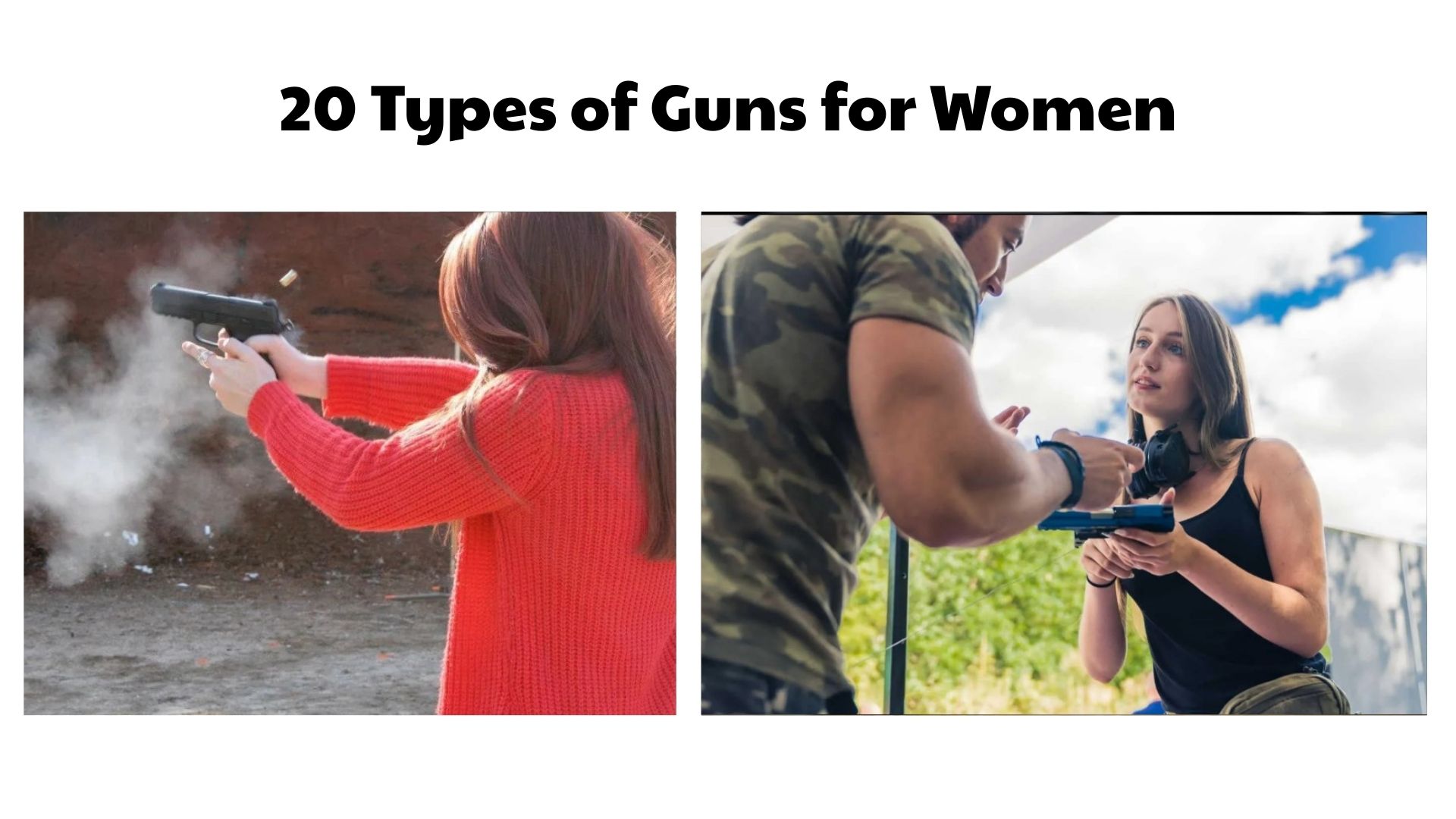
When discussing types of guns for women, the most important factors are not marketing labels but fit, recoil management, ergonomics, and intended use. Firearms are not inherently designed for one gender; however, certain models and configurations may better accommodate smaller hand sizes, lighter upper-body strength, or preferences for reduced recoil. This guide reviews 20 types of guns for women in an educational and safety-focused way, covering handguns, rifles, and shotguns that are often selected for personal defense, sport shooting, or hunting. The goal is to explain design characteristics clearly and responsibly, helping readers understand categories rather than promoting specific products.
20 Types of Guns for Women
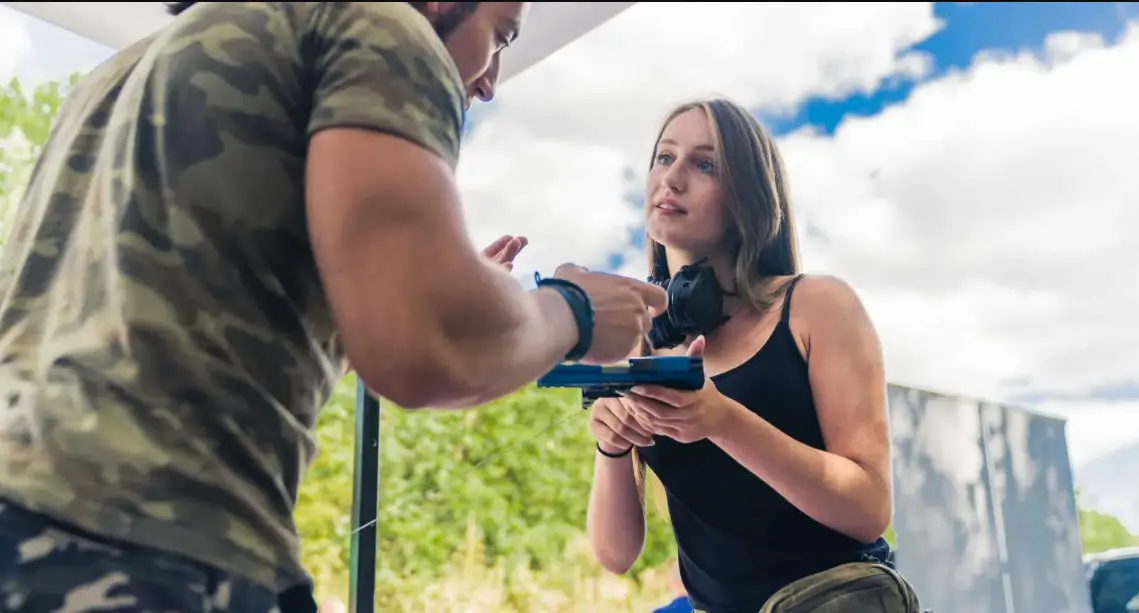
1. Compact 9mm Semi-Automatic Pistol
The compact 9mm semi-automatic pistol is one of the most commonly recommended platforms for women seeking a balance between manageable recoil and defensive capability. Its mid-sized frame typically offers a comfortable grip circumference that can accommodate smaller hands without sacrificing control. Modern compact pistols often feature textured grip panels, replaceable backstraps, and simplified controls, allowing users to adjust the fit to their comfort level. This adaptability is particularly valuable because proper grip alignment directly affects accuracy and recoil management.
Another advantage of the compact 9mm platform is ammunition availability and moderate recoil characteristics compared to larger calibers. The recoil impulse is generally controllable with proper training, making it suitable for regular practice sessions. Many models incorporate striker-fired systems with consistent trigger pulls, reducing the learning curve for new shooters. As part of the broader discussion of guns for women, the compact 9mm stands out as a practical and versatile option for both home defense and range training when paired with responsible instruction.
Ultimately, comfort and confidence are more important than caliber debates. A well-fitted compact pistol can support safe handling habits and encourage consistent training, which matters more than raw specifications.
2. Lightweight .380 ACP Pistol
The lightweight .380 ACP pistol is often selected by shooters who prioritize minimal recoil and easy concealability. These pistols are typically slimmer and lighter than many compact 9mm options, making them easier to carry for extended periods. For individuals sensitive to recoil or new to handgun shooting, the .380 platform can provide a gentler introduction while still maintaining reliable defensive capability within appropriate distances.
Because these pistols are smaller, grip ergonomics become especially important. Many manufacturers design slim-profile frames with textured surfaces to improve control despite the reduced size. While lighter weight can increase felt recoil compared to heavier pistols, modern recoil spring systems and improved grip materials help mitigate this effect. Within the broader category of types of guns for women, the lightweight .380 pistol reflects the emphasis on comfort, concealability, and accessibility.
This platform is best understood as a balance between portability and performance, offering manageable handling when combined with consistent training and safe storage practices.
3. Small-Frame .38 Special Revolver
The small-frame .38 Special revolver is frequently recommended for its mechanical simplicity and reliability. Revolvers operate differently from semi-automatic pistols, using a rotating cylinder rather than a detachable magazine. For some shooters, this straightforward design provides confidence because there are fewer external controls to manage. The .38 Special cartridge offers moderate recoil, particularly when fired from steel-frame models that help absorb some of the energy.
Grip size and trigger reach are important considerations in small-frame revolvers. Many models are designed with shorter trigger reach and ergonomic grips suitable for smaller hands. Double-action triggers may require more finger strength, so training is essential to maintain control and accuracy. As one of the longstanding guns for women recommended in educational discussions, the small-frame revolver demonstrates how simplicity can appeal to those who prefer minimal mechanical complexity.
While capacity is typically lower than semi-automatic pistols, reliability and ease of maintenance make revolvers a consistent choice for certain users seeking a straightforward defensive tool.
4. Single-Stack Slimline 9mm Pistol
The single-stack slimline 9mm pistol is designed with a narrower magazine configuration, resulting in a thinner grip profile compared to double-stack designs. This slim geometry often makes it easier for individuals with smaller hands to achieve proper trigger placement and secure grip alignment. Comfort in grip circumference directly influences recoil control and follow-up shot consistency.
Although single-stack pistols usually hold fewer rounds than wider models, their reduced width enhances concealability and comfort during daily carry. Many modern slimline 9mm pistols incorporate improved texturing, low-profile sights, and accessory rails while maintaining a lightweight frame. Among the various types of guns for women, this category stands out for combining manageable recoil with ergonomic accessibility.
Choosing a slimline pistol often comes down to hand fit and personal preference. When properly selected and paired with structured training, it can offer a comfortable balance of control and concealment.
5. Mid-Size All-Purpose Defensive Pistol
The mid-size all-purpose defensive pistol bridges the gap between compact carry guns and full-size duty pistols. Its slightly larger frame provides enhanced stability, a longer sight radius, and improved recoil absorption, all of which can benefit shooters seeking greater control. For women who find ultra-compact pistols too small or difficult to grip securely, a mid-size handgun may actually offer better comfort and confidence.
These pistols typically feature modern striker-fired systems, interchangeable grip panels, and integrated accessory rails for mounting lights when appropriate. The additional weight compared to subcompact models can reduce muzzle rise, contributing to smoother shooting during training sessions. Within the broader landscape of guns for women, the mid-size defensive pistol highlights the importance of selecting a firearm based on ergonomics and shootability rather than assumptions about size preference.
In many cases, a slightly larger firearm can feel more stable and easier to manage, reinforcing the principle that proper fit and responsible training are the primary factors in safe and effective firearm ownership.
6. Micro-Compact 9mm Pistol
The micro-compact 9mm pistol represents one of the most recent evolutions in modern handgun design, offering a highly concealable frame while still chambered in a widely available and manageable caliber. These pistols are engineered to maximize capacity within a minimal footprint, often using refined magazine geometry and slim grip modules to provide better ergonomics than older subcompact designs. For many women evaluating types of guns for women, the micro-compact 9mm appeals because it combines concealability with familiar recoil characteristics and modern sight systems, making it suitable for everyday carry when paired with proper holster selection and safe handling practices.
Because of their reduced size, micro-compacts require careful attention to grip technique. A shorter grip surface can amplify felt recoil if the shooter does not maintain consistent hand placement. However, improvements in textured grip panels, beavertail extensions, and recoil spring systems have made these pistols significantly more controllable than earlier generations. The key advantage is portability without stepping down to lower-powered calibers. In discussions about guns for women, the micro-compact platform illustrates how technological advancements allow smaller-framed pistols to deliver dependable performance while remaining easy to conceal and comfortable to carry.
Ultimately, this category emphasizes practicality. It is not about minimal size at any cost, but about achieving a balance between concealment, reliability, and shootability through thoughtful engineering and consistent training.
7. Double-Action/Single-Action (DA/SA) Compact Pistol
The double-action/single-action compact pistol offers a distinct trigger system that combines two modes of operation within one firearm. The first trigger pull is typically longer and heavier in double-action mode, while subsequent shots shift to a lighter single-action pull. Some shooters appreciate this system because it provides a deliberate initial trigger press followed by refined control during follow-up shots. For women exploring types of guns for women, the DA/SA platform can offer an added sense of security due to its longer initial trigger stroke.
These pistols often feature external hammers and decocking mechanisms, which allow users to safely lower the hammer without firing. Grip ergonomics vary by model, but many compact DA/SA pistols are designed with interchangeable grip panels to improve fit for smaller hands. While mastering two trigger modes requires practice, the system can become intuitive with structured training. Within the broader category of guns for women, the DA/SA compact pistol represents a traditional yet still relevant design philosophy that prioritizes mechanical reliability and deliberate control.
This platform is particularly well suited for individuals who value tactile feedback and manual control elements, reinforcing the importance of familiarity and repetition in safe firearm ownership.
8. Semi-Automatic .22 LR Training Pistol
The semi-automatic .22 LR pistol is widely recognized as one of the most approachable platforms for new shooters, offering minimal recoil, reduced noise, and affordable ammunition that supports frequent practice. While not typically chosen as a primary defensive firearm, it plays an essential role in skill development. For many women entering the shooting community, beginning with a .22 caliber pistol builds confidence, reinforces safe handling habits, and develops proper grip and trigger discipline without the distraction of heavy recoil.
These pistols often feature ergonomic grips and simple controls, making them accessible to shooters with smaller hands. The lightweight recoil impulse allows extended range sessions without fatigue, which can be particularly beneficial when building foundational skills. Among the various types of guns for women, the .22 LR training pistol underscores the importance of education and repetition. Confidence and competence develop over time, and a low-recoil platform supports that progression.
Although it may not be intended for defensive scenarios, the training pistol remains a cornerstone of responsible firearm learning, highlighting that skill development is just as important as firearm selection.
9. Adjustable-Stock AR-Pattern Carbine
The adjustable-stock AR-pattern carbine is often chosen for its modularity and ergonomic flexibility. Its adjustable length-of-pull allows shooters to tailor the rifle’s fit to their body proportions, which is particularly helpful for individuals with shorter arms or smaller frames. Proper stock adjustment improves sight alignment and recoil management, both of which are critical for safe and effective shooting. For women evaluating guns for women beyond handguns, this platform offers versatility for home defense, sport shooting, and recreational range use.
Modern AR-pattern carbines chambered in moderate calibers are known for relatively manageable recoil, especially when paired with appropriate ammunition and proper stance. The straight-line stock design helps distribute recoil energy in a more linear fashion, reducing muzzle rise compared to some traditional rifle layouts. Within the broader spectrum of types of guns for women, the adjustable-stock carbine demonstrates how customizable design can accommodate diverse body types and shooting preferences.
This platform is particularly appealing for those who value adaptability, as it can be configured with various accessories while maintaining a consistent core structure that supports safe training and responsible storage.
10. Compact Pump-Action Shotgun
The compact pump-action shotgun is frequently recommended for home defense due to its reliability and straightforward mechanical design. Shorter barrel configurations improve maneuverability in confined spaces, while adjustable or youth-length stocks can help accommodate shooters with smaller stature. For women exploring types of guns for women that extend beyond handguns, the compact shotgun offers a powerful yet controllable option when used responsibly and paired with proper training.
Recoil management is a key consideration with shotguns. Selecting appropriate loads and ensuring correct shoulder placement significantly affect comfort and control. Many modern compact pump shotguns include recoil pads and textured fore-ends to enhance grip security. While heavier than most handguns, the stability provided by a two-handed, shouldered platform can make shot placement more consistent when properly trained. Within the broader discussion of guns for women, the compact pump shotgun represents durability and simplicity rather than technical complexity.
This category emphasizes preparation and familiarity. When handled responsibly and stored securely, a compact pump-action shotgun can serve as a dependable component of a comprehensive home safety plan.
11. Mid-Size Striker-Fired 9mm Pistol
The mid-size striker-fired 9mm pistol occupies a practical middle ground between full-size duty pistols and ultra-compact concealed carry models, offering a balanced grip length, moderate barrel size, and improved recoil control without becoming cumbersome for everyday use. For many women evaluating types of guns for women, this category stands out because it provides a comfortable shooting experience while still remaining versatile enough for home defense, range training, and even concealed carry with the right holster system. The slightly larger frame compared to micro-compacts often translates into better hand support, which can reduce felt recoil and improve confidence during extended shooting sessions.
One of the defining characteristics of striker-fired systems is their consistent trigger pull from shot to shot, eliminating the transition between double-action and single-action modes found in other platforms. This consistency simplifies training, especially for newer shooters who benefit from predictable mechanics. The mid-size configuration also typically allows for higher magazine capacity and longer sight radius, both of which contribute to improved accuracy and smoother target transitions. Within the broader landscape of guns for women, this platform demonstrates how thoughtful proportions can support comfort and control without unnecessary bulk.
Ultimately, the mid-size striker-fired 9mm pistol reflects a design philosophy centered on balance. It is not the smallest nor the largest option, but it often delivers one of the most adaptable and confidence-building experiences for responsible firearm owners.
12. Slim Single-Stack 9mm Pistol
The slim single-stack 9mm pistol is designed around a narrow magazine profile, which significantly reduces grip circumference and makes the firearm easier to hold for individuals with smaller hands. This design approach has long been favored by shooters who prioritize concealability and ergonomic simplicity. When discussing types of guns for women, the single-stack 9mm frequently emerges as a practical choice because it maintains the widely supported 9mm caliber while offering a thinner, more streamlined grip frame.
Although single-stack pistols typically hold fewer rounds than double-stack designs, many shooters find the improved grip comfort worth the trade-off. A narrower frame allows for a more natural finger placement on the trigger, which can enhance accuracy and reduce strain during practice sessions. The lighter weight and slim slide also contribute to ease of carry. In the broader context of guns for women, this category highlights the importance of fit and feel over sheer capacity numbers, reinforcing the principle that a comfortable firearm encourages consistent training and safe handling habits.
The slim single-stack platform is ultimately about accessibility. It simplifies the shooting experience while retaining sufficient performance for defensive roles when paired with proper instruction and responsible storage.
13. Compact .380 ACP Pistol
The compact .380 ACP pistol is often selected for its reduced recoil and manageable slide operation, making it approachable for shooters who may find higher-pressure calibers more challenging to control. Its lighter recoil impulse can be particularly helpful for individuals who prioritize comfort during extended range sessions. Among the various types of guns for women, the .380 ACP platform remains a common starting point due to its blend of modest recoil and compact dimensions.
Modern .380 pistols have evolved significantly, offering improved sights, better grip textures, and more durable construction than earlier models. While the caliber is generally considered less powerful than 9mm, many users appreciate its softer shooting characteristics and lighter overall weight. As part of the broader conversation about guns for women, the compact .380 emphasizes the importance of confidence and shootability, recognizing that a firearm that feels manageable will likely be practiced with more consistently.
This platform illustrates that firearm selection is highly individual. For some, the .380 ACP strikes a comfortable balance between recoil management and practical defensive capability, especially when used responsibly and supported by proper training.
14. Lightweight Aluminum-Frame Revolver
The lightweight aluminum-frame revolver combines traditional revolver reliability with modern material engineering to reduce overall weight. By replacing heavier steel components with aluminum alloys in the frame, manufacturers create a firearm that is easier to carry while maintaining structural integrity. For women reviewing types of guns for women, this option can be appealing due to its straightforward operation and reduced bulk compared to full-steel revolvers.
Revolvers operate through a simple cylinder mechanism, eliminating the need for magazine insertion and slide manipulation. This mechanical simplicity can provide reassurance to those who value intuitive controls. However, the lighter frame may result in slightly sharper recoil compared to heavier revolvers chambered in the same caliber. Within the broader range of guns for women, the lightweight aluminum-frame revolver reflects a practical compromise between portability and durability.
Its enduring appeal lies in its predictability. With proper maintenance and responsible handling, this type of revolver offers dependable performance in a compact, carry-friendly format.
15. Youth-Configured Semi-Automatic Shotgun
The youth-configured semi-automatic shotgun is specifically designed with shorter stock dimensions and lighter overall weight, making it more accessible to shooters with smaller frames. While originally marketed toward younger users, these configurations are also well suited for many adult women seeking improved ergonomics. In discussions about types of guns for women, this shotgun category stands out because it directly addresses length-of-pull and balance considerations that significantly impact comfort and control.
Semi-automatic operation helps moderate recoil by using part of the energy generated during firing to cycle the action, which can result in a smoother shooting experience compared to pump-action alternatives. The shorter stock allows for better shoulder placement and quicker target acquisition. Within the broader spectrum of guns for women, the youth-configured semi-automatic shotgun demonstrates how thoughtful sizing can make a traditionally larger firearm more approachable without sacrificing functionality.
This platform reinforces a central principle in firearm selection: proper fit enhances safety, confidence, and consistent performance. When combined with safe storage practices and regular training, it can serve as a capable and comfortable option for home defense or recreational shooting.
16. Pistol-Caliber Carbine (PCC)
The pistol-caliber carbine, often referred to as a PCC, blends the manageable recoil of handgun cartridges with the stability and control of a shoulder-fired platform, creating a firearm category that many shooters find approachable and confidence-inspiring. When exploring types of guns for women, the PCC deserves attention because it addresses two common concerns at once: recoil sensitivity and ease of aiming. By chambering common handgun calibers such as 9mm in a longer-barreled platform with a stock, the PCC allows for improved sight radius, better weight distribution, and enhanced control during firing. The added stability of a shoulder stock significantly reduces muzzle rise, which can make practice sessions more comfortable and productive.
Another advantage of the pistol-caliber carbine is its intuitive handling. Controls often mirror those found on popular handgun platforms, and the manual of arms is generally straightforward. The longer barrel can increase velocity slightly, contributing to smoother ballistic performance within typical defensive or range distances. For women who prefer a firearm that feels less abrupt in recoil than compact handguns, the PCC provides a stable alternative that still uses widely available ammunition. Within the broader discussion of guns for women, this platform illustrates how thoughtful design can make shooting less physically demanding while maintaining practical effectiveness.
The PCC ultimately offers versatility. It works well for range training, recreational shooting, and certain defensive contexts when paired with safe storage and proper instruction. Its balanced ergonomics and moderate recoil characteristics make it a compelling addition to the spectrum of modern firearm options.
17. Full-Size Striker-Fired 9mm Pistol
The full-size striker-fired 9mm pistol represents the benchmark platform for reliability, accuracy, and durability in modern handgun design. Although some may initially assume that smaller firearms are automatically better suited for women, many experienced shooters appreciate the advantages of a full-size frame. When evaluating types of guns for women, it is important to recognize that larger pistols often provide superior recoil management, longer sight radius, and enhanced grip area, all of which can translate into improved accuracy and comfort during extended practice sessions.
The full-size configuration typically accommodates higher-capacity magazines and offers a more substantial frame that distributes recoil more evenly across the hand. This can reduce perceived snap and promote faster follow-up shots. Striker-fired systems also provide consistent trigger pulls, which simplifies training and reinforces muscle memory. In the broader landscape of guns for women, the full-size striker-fired pistol demonstrates that stability and control often outweigh assumptions about size. For home defense roles where concealment is not the primary concern, the added dimensions can be an advantage rather than a drawback.
Ultimately, the full-size striker-fired 9mm pistol is about confidence and consistency. Its predictable handling characteristics and ergonomic flexibility make it a strong candidate for women who prioritize range performance and reliable defensive capability.
18. Compact Hammer-Fired Double-Action/Single-Action Pistol
The compact hammer-fired double-action/single-action pistol introduces a traditional operating system that combines an initial longer trigger pull with lighter subsequent pulls once the slide cycles. This design offers a distinct shooting experience compared to striker-fired models. For women reviewing types of guns for women, the DA/SA configuration may appeal to those who appreciate an added layer of trigger weight on the first shot or who prefer the tactile feedback of an external hammer. The compact format strikes a balance between concealability and grip comfort, making it adaptable for various roles.
One of the defining features of this platform is its versatility in carry conditions. The presence of a hammer and, in many cases, a decocker or manual safety, allows for different carry preferences depending on training and comfort level. The compact size reduces bulk while still offering sufficient grip length for most hand sizes. Within the broader category of guns for women, the hammer-fired compact pistol represents an option that merges classic engineering with modern materials, providing reliable performance without excessive weight.
This category underscores the idea that firearm preference is highly personal. Some shooters find the double-action first pull reassuring, while others value the crisp single-action follow-up shots. With proper instruction and regular practice, the compact DA/SA pistol remains a durable and capable choice.
19. Short-Barrel Pump-Action Shotgun
The short-barrel pump-action shotgun is a compact adaptation of a time-tested design, emphasizing maneuverability within confined spaces while retaining the mechanical simplicity that pump systems are known for. Among the various types of guns for women, this platform may appeal to those who value straightforward operation and broad ammunition flexibility. The shorter barrel reduces overall length, making it easier to handle in tight indoor environments, while the pump mechanism offers dependable cycling when operated correctly.
Recoil in pump-action shotguns can be more pronounced than in semi-automatic models, as there is no gas system to absorb part of the firing energy. However, proper stance and stock fit can mitigate much of that impact. The simplicity of the pump design also makes maintenance relatively direct, which can be reassuring for individuals who prefer uncomplicated mechanical systems. In the broader discussion of guns for women, the short-barrel pump-action shotgun represents a traditional yet adaptable option that emphasizes durability and versatility.
Its enduring presence in defensive contexts highlights the value of reliability. When paired with safe handling practices and consistent training, this platform offers a straightforward approach to home protection and recreational shooting.
20. Micro-Compact 9mm Pistol
The micro-compact 9mm pistol has emerged as one of the most popular modern handgun categories, combining slim dimensions with surprisingly generous magazine capacity for its size. Designed with concealed carry in mind, these pistols typically feature short barrels, narrow grips, and lightweight frames. In the context of types of guns for women, the micro-compact 9mm stands out for its portability and discreet profile, which can be especially appealing for those who prioritize everyday carry convenience.
Despite their small size, many micro-compact pistols incorporate enhanced ergonomics, textured grip surfaces, and improved sight systems to maintain shootability. Recoil can feel sharper compared to larger firearms due to reduced mass, but thoughtful grip technique and regular practice can help manage that characteristic. Within the broader landscape of guns for women, the micro-compact 9mm illustrates how innovation has expanded options for those seeking both concealment and modern defensive performance.
This category ultimately reflects adaptability. It allows responsible firearm owners to select a platform that fits seamlessly into daily routines while still offering reliable functionality when handled safely and supported by consistent training.
Conclusion
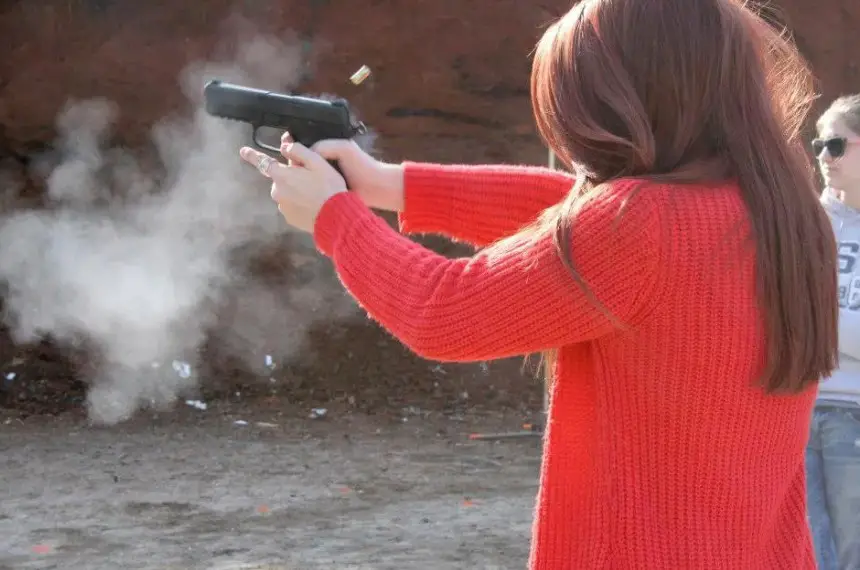
Choosing from the many types of guns for women is not about selecting a firearm based solely on size, trend, or marketing language; it is about identifying a platform that fits the individual’s hands, strength, experience level, and intended purpose. Throughout this guide, we have explored a wide spectrum of options, from compact semi-automatic pistols and lightweight revolvers to pistol-caliber carbines and adaptable rifles, each offering distinct advantages in ergonomics, recoil management, and overall usability. What becomes clear is that comfort, control, and confidence matter far more than assumptions about gender or firearm category.
The modern market for guns for women has evolved significantly, with manufacturers placing greater emphasis on adjustable grips, lighter frames, improved trigger systems, and refined recoil control. These improvements benefit all shooters, not just women, but they are especially valuable for those who prioritize manageable handling and consistent performance. Whether the goal is recreational shooting, skill development at the range, home defense, or responsible concealed carry, there is a firearm type designed to support that objective safely and effectively.
Ultimately, the best choice comes down to proper training, safe storage practices, and hands-on evaluation whenever possible. A well-fitted firearm paired with disciplined practice builds confidence and competence over time. By understanding the strengths of different types of guns for women, shooters can make informed decisions that align with their needs while maintaining a responsible and safety-focused mindset. Mild enthusiasm is welcome—but knowledge and preparation should always lead the way.
1. What are the most common types of guns for women?
The most common types of guns for women include compact semi-automatic pistols, lightweight revolvers, micro-compact handguns, pistol-caliber carbines, and low-recoil rifles. These categories are popular because they emphasize manageable recoil, ergonomic grip design, and ease of operation.
2. Are smaller guns always better for women?
Not necessarily. Smaller guns are easier to conceal, but they often produce sharper recoil. Many women find mid-size or full-size firearms more comfortable due to better weight distribution and improved control.
3. What caliber is generally recommended for beginner shooters?
For beginners, lighter calibers such as .22 LR or 9mm are commonly recommended. They provide manageable recoil while still allowing effective skill development.
4. Is a revolver easier to use than a semi-automatic pistol?
Revolvers are mechanically simple and straightforward to operate, which can make them appealing to new shooters. However, semi-automatic pistols typically offer higher capacity and faster reloads.
5. What makes a gun comfortable for smaller hands?
A slimmer grip, adjustable backstraps, and reduced trigger reach help ensure better comfort and control for shooters with smaller hands.
6. Are guns for women different from guns for men?
Firearms are not gender-specific by design. However, certain models may better accommodate differences in hand size, grip strength, or recoil sensitivity.
7. What is the advantage of a micro-compact pistol?
Micro-compact pistols are lightweight and easy to conceal, making them popular for everyday carry while still offering modern defensive performance.
8. Is recoil harder to manage with lightweight firearms?
Yes, lighter firearms generally produce more noticeable recoil. Heavier frames absorb more energy, resulting in smoother shooting.
9. What type of gun is best for home defense?
Common choices include full-size pistols, compact carbines, and certain shotguns. The best option depends on training, comfort level, and safe storage considerations.
10. Are semi-automatic pistols safe for beginners?
Yes, when paired with proper training and safe handling practices, semi-automatic pistols are widely used by beginners and experienced shooters alike.
11. How important is grip texture?
Grip texture improves stability and reduces slippage, especially during extended range sessions or in high-stress situations.
12. What is a striker-fired pistol?
A striker-fired pistol uses an internal striker system instead of an exposed hammer, typically providing a consistent trigger pull.
13. Why do some women prefer revolvers?
Some shooters appreciate the simplicity, visible cylinder, and straightforward loading process of revolvers.
14. Is a .380 ACP suitable for self-defense?
.380 ACP is often chosen for its reduced recoil in compact platforms, though proper ammunition selection and training are essential.
15. What role does barrel length play?
Longer barrels can improve sight radius and stability, while shorter barrels enhance concealability.
16. Are adjustable stocks beneficial?
Yes, adjustable stocks help tailor the firearm’s fit to the shooter’s body size and stance.
17. What is a pistol-caliber carbine?
A pistol-caliber carbine is a shoulder-fired firearm chambered in handgun calibers, offering low recoil and increased stability.
18. Do heavier guns reduce recoil?
Generally, yes. Increased weight helps absorb firing energy, resulting in smoother shooting.
19. Is training more important than firearm type?
Absolutely. Skill development and safe handling practices are more important than the specific firearm model.
20. What safety features should be considered?
Common safety features include manual safeties, trigger safeties, decockers, and loaded chamber indicators.
21. Are compact pistols accurate?
Yes, though they may require more practice due to shorter sight radius and increased recoil.
22. Can rifles be suitable for women?
Yes, especially lightweight or low-recoil rifles designed for comfort and ease of handling.
23. Is a shotgun practical for beginners?
Shotguns can be effective but may produce substantial recoil, making proper technique essential.
24. What is trigger reach?
Trigger reach refers to the distance from the backstrap to the trigger, affecting comfort and control.
25. How often should practice occur?
Regular, consistent practice improves familiarity and builds confidence over time.
26. Are polymer frames durable?
Modern polymer frames are lightweight, corrosion-resistant, and highly durable.
27. What is magazine capacity?
Magazine capacity refers to the number of rounds a firearm can hold before reloading.
28. Is concealability important?
It depends on personal needs. Concealed carry requires smaller dimensions, while home use may not.
29. Do optics improve performance?
Optics can enhance target acquisition and accuracy when properly mounted and zeroed.
30. Are rimfire guns good for training?
Yes, rimfire firearms like .22 LR are excellent for low-cost, low-recoil practice.
31. What is muzzle rise?
Muzzle rise is the upward movement of the barrel during firing due to recoil forces.
32. Is hand strength a limiting factor?
Proper technique often compensates for limited hand strength, especially with well-designed firearms.
33. What does double-action mean?
Double-action refers to a trigger system that both cocks and releases the hammer in one pull.
34. Is a manual safety necessary?
That depends on personal preference and training philosophy; both systems are widely used.
35. Are lighter calibers less effective?
Lighter calibers produce less recoil, but effectiveness depends on proper use and training.
36. How important is firearm fit?
Proper fit enhances comfort, accuracy, and overall shooting experience.
37. Should beginners start with a full-size gun?
Many instructors recommend starting with larger firearms for improved control.
38. What is sight radius?
Sight radius is the distance between the front and rear sights, influencing aiming precision.
39. Is maintenance complicated?
Most modern firearms are designed for straightforward cleaning and maintenance.
40. Are compact guns harder to shoot accurately?
They can be more challenging due to shorter grip and increased recoil, but practice mitigates this.
41. What is felt recoil?
Felt recoil describes how recoil energy is perceived by the shooter.
42. Do grip extensions help?
Grip extensions can improve control by providing additional support for the hand.
43. Are red dot sights useful?
Many shooters find red dot sights helpful for faster target acquisition.
44. Can women handle larger calibers?
Yes, with proper technique and training, caliber choice depends more on comfort than gender.
45. Is concealment the primary goal for most women?
Not always. Some prioritize home defense or recreational shooting instead.
46. What is slide manipulation?
Slide manipulation refers to pulling and releasing the slide to chamber a round.
47. Do compact carbines offer advantages?
They provide added stability and reduced recoil compared to handguns.
48. Is confidence important?
Confidence built through training enhances safety and performance.
49. Should firearm selection be rushed?
No. Taking time to evaluate comfort and fit is essential.
50. Are all guns equally suitable for beginners?
No. Suitability depends on recoil, ergonomics, and user familiarity.
51. What is the most important factor when choosing guns for women?
The most important factor is personal comfort combined with proper training and responsible handling.
Read more: 20 Types of Long Distance Guns: Complete Guide to Precision Rifles