
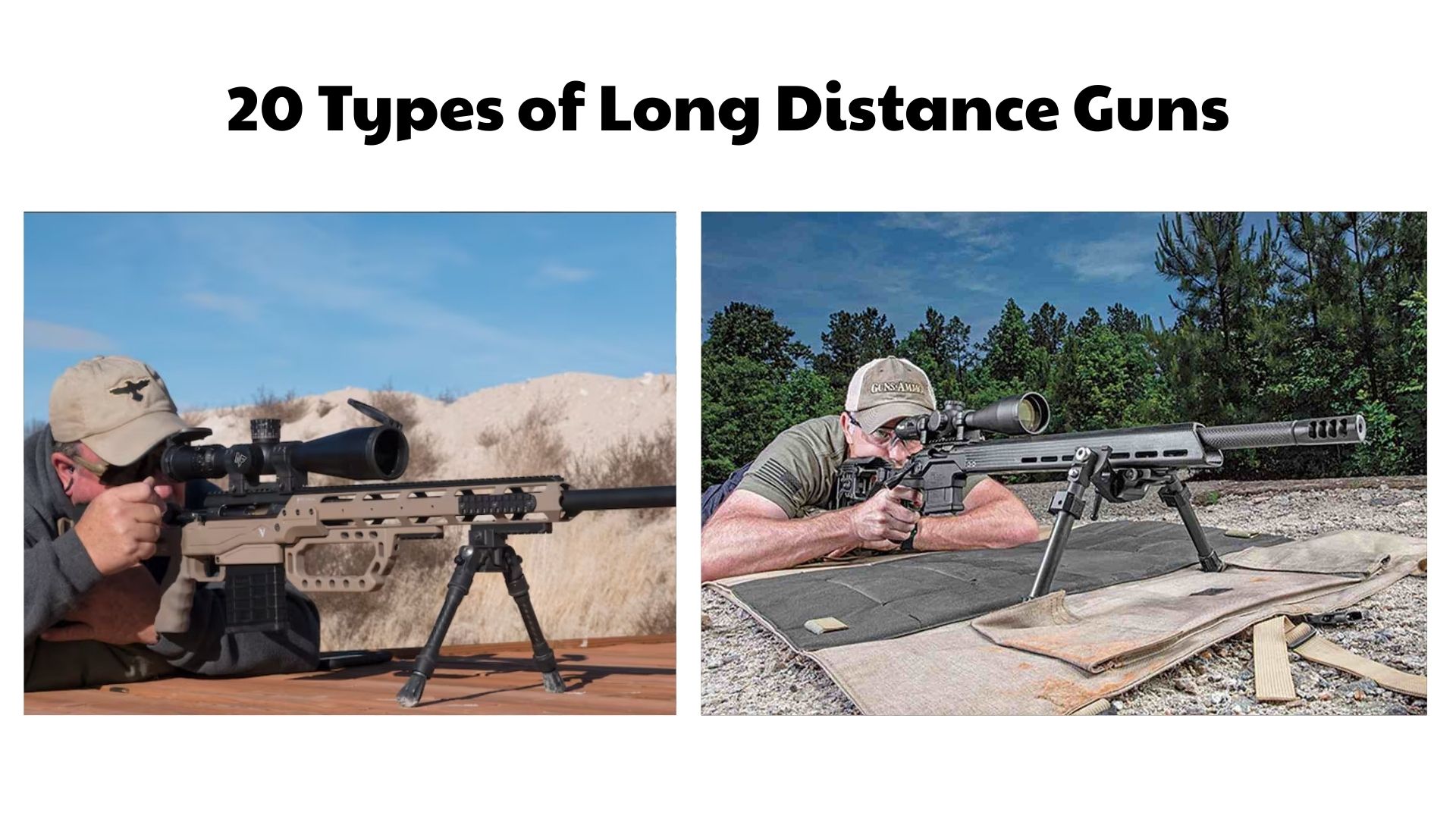
Long distance guns are firearms specifically designed to deliver consistent accuracy at extended ranges. These firearms are commonly used in competitive target shooting, hunting in wide-open terrain, and professional marksmanship roles. What defines them is not simply power, but precision—stable platforms, refined triggers, carefully engineered barrels, and optics compatibility. In this guide, we explore 20 types of long distance guns, explaining how each platform differs in structure, purpose, and design philosophy. This overview is educational and focuses on understanding categories rather than promoting specific tactical applications.
20 Types of Long Distance Guns
1. Bolt-Action Precision Rifle
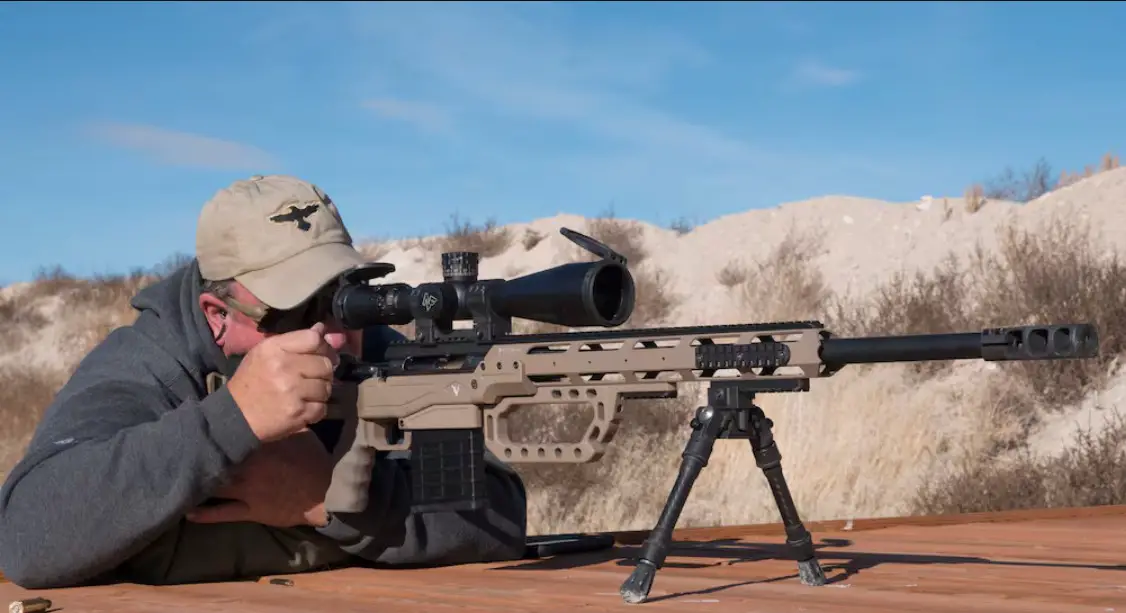
The bolt-action precision rifle is widely regarded as the foundation of modern long-range shooting. Its manually operated bolt system allows the shooter to chamber and extract rounds with mechanical simplicity, which contributes to consistency and reliability. Because there are fewer moving parts involved during firing compared to semi-automatic systems, bolt-action rifles often demonstrate strong inherent accuracy. This makes them popular in long-range competition and controlled hunting environments.
These rifles typically feature free-floating barrels, rigid receivers, and adjustable trigger systems that allow for refined control. The heavy barrel profile common in many precision bolt guns helps reduce vibration and maintain consistent shot placement over extended sessions. While they require manual cycling between shots, this characteristic encourages deliberate shooting habits and careful follow-through, both of which are essential for long-distance marksmanship.
Among the various types of long distance guns, bolt-action precision rifles remain one of the most respected categories because they balance mechanical simplicity with high accuracy potential, making them accessible to serious enthusiasts and professionals alike.
2. Semi-Automatic Long-Range Rifle
Semi-automatic long-range rifles offer a different approach by automatically cycling the next round after each trigger pull. This allows for faster follow-up shots while maintaining respectable accuracy at extended distances. Although historically considered less precise than bolt-action platforms, modern engineering has significantly improved their consistency.
These rifles are commonly used in competitive shooting sports and designated marksman roles. Their gas-operated systems absorb part of the recoil energy, which can help reduce shooter fatigue during extended range sessions. Many models incorporate modular handguards and optic mounting systems that allow customization without altering the rifle’s fundamental structure.
When discussing long distance guns, semi-automatic platforms stand out for blending speed and capability. They demonstrate how advancements in materials and manufacturing have narrowed the accuracy gap between manual and self-loading systems.
3. Heavy Barrel Long-Range Rifle
A heavy barrel long-range rifle emphasizes thermal stability and vibration control. The thicker barrel profile resists heat buildup during extended firing strings, which can help maintain shot consistency. While heavier overall, this added mass often contributes to improved balance and reduced recoil impulse.
These rifles are frequently seen in precision rifle competitions and controlled shooting environments where mobility is secondary to stability. The increased barrel rigidity reduces harmonic movement during firing, supporting predictable performance at extended distances.
Within the spectrum of types of long distance guns, heavy barrel designs highlight how physical structure directly influences consistency. They are not designed for rapid maneuverability but rather for controlled, deliberate shooting scenarios.
4. Magnum-Caliber Long-Range Rifle
Magnum-caliber long-range rifles are chambered for higher-powered cartridges designed to maintain energy and trajectory over extended distances. These rifles are commonly selected for large-game hunting in open landscapes where longer shot opportunities may occur.
Despite their increased recoil compared to standard calibers, magnum rifles are built with reinforced stocks, muzzle devices, and recoil pads to enhance manageability. The defining feature is not simply power but the cartridge’s ability to retain velocity and resist wind drift over greater distances.
Among long distance guns, magnum-caliber platforms reflect the importance of cartridge selection. They are specialized tools built for specific applications rather than general-purpose use.
5. Chassis-Based Precision Rifle
Chassis-based precision rifles utilize a rigid metal frame instead of a traditional wood or polymer stock. This modular design improves structural consistency and allows components such as grips and buttstocks to be adjusted or replaced. The result is a highly adaptable platform suited for precision-focused shooters.
The aluminum or alloy chassis system enhances durability and reduces the impact of environmental conditions on performance. Adjustable cheek rests and length-of-pull systems support proper shooter alignment, which is critical for maintaining consistency at long distances.
When reviewing types of long distance guns, chassis-based rifles represent the modern evolution of precision design. They combine engineering precision with ergonomic flexibility, offering shooters a customizable yet stable shooting platform.
6. Precision Rimfire Long-Range Trainer
The precision rimfire long-range trainer occupies a unique position among the various types of long distance guns because it focuses on skill development rather than raw ballistic power, offering shooters the opportunity to practice wind reading, trigger control, and positional stability at scaled distances without the recoil and expense associated with centerfire rifles. While rimfire cartridges are traditionally associated with short-range plinking or small game hunting, modern precision rimfire platforms are engineered with match-grade barrels, refined trigger systems, and compatibility with high-quality optics, allowing shooters to simulate long-range dynamics at more manageable distances. This training-oriented approach has become increasingly popular in competitive shooting communities, where consistency and fundamentals matter more than sheer velocity.
These rifles are often built with heavy barrels and adjustable stocks, mirroring the ergonomics of larger precision systems so that muscle memory and body mechanics remain consistent when transitioning between platforms. Because rimfire ammunition is typically more affordable and produces significantly less recoil, shooters can engage in extended practice sessions that reinforce technique without excessive fatigue. The educational value of this type of long distance gun lies in its ability to emphasize fundamentals, demonstrating that long-range marksmanship is built on repetition, discipline, and attention to environmental factors rather than power alone.
Within the broader landscape of long distance guns, precision rimfire trainers represent accessibility and refinement. They allow both beginners and experienced marksmen to sharpen their abilities in a controlled, cost-effective manner while maintaining the structural characteristics of full-scale precision rifles.
7. Tactical Bullpup Precision Rifle
The tactical bullpup precision rifle stands apart structurally due to its compact configuration, where the action and magazine are positioned behind the trigger group, effectively shortening overall length without sacrificing barrel length. This distinctive layout allows the rifle to maintain ballistic performance comparable to traditional long-barreled systems while improving maneuverability and transport convenience. Although bullpup designs are less common in precision shooting compared to conventional layouts, certain models are engineered specifically for extended-distance accuracy, combining compact form with stable barrel systems and optic-ready platforms.
From an ergonomic standpoint, bullpup precision rifles require careful design to ensure consistent trigger feel and proper balance, as the rearward weight distribution changes handling dynamics. Modern engineering has addressed many early limitations by refining trigger linkages and improving materials. Among the many types of long distance guns, the bullpup configuration highlights innovation in spatial efficiency, showing how structural rearrangement can influence portability without inherently compromising performance potential.
This category appeals primarily to shooters who value compact storage and transportation while maintaining serious long-range capability. It reflects how firearm design continues to evolve to meet changing practical considerations, even within the traditionally conservative world of precision rifles.
8. Gas-Operated Precision Rifle
The gas-operated precision rifle is a specialized variant of semi-automatic long-range platforms, designed with an emphasis on consistent cycling and recoil management while maintaining extended-distance accuracy. By using a controlled gas system to cycle the action, these rifles can provide smoother operation and reduced felt recoil compared to recoil-driven systems, allowing shooters to maintain sight picture during follow-up shots. Advances in manufacturing tolerances and barrel quality have helped close the historical accuracy gap between bolt-action rifles and self-loading designs.
These rifles are commonly built with free-floating barrels, precision-machined receivers, and adjustable stocks to optimize shooter alignment. The gas system itself is often tunable, allowing shooters to regulate cycling characteristics for different ammunition types. In discussions about types of long distance guns, gas-operated precision rifles demonstrate the intersection of mechanical sophistication and modern materials science, offering a balance between speed and controlled accuracy.
While they may not always match the absolute consistency of top-tier bolt-action systems in controlled environments, gas-operated rifles provide versatility and adaptability that appeal to competitive and recreational marksmen who value both precision and efficiency.
9. Multi-Caliber Modular Long-Range Rifle
The multi-caliber modular long-range rifle is built around adaptability, featuring interchangeable barrels and bolt faces that allow the shooter to switch between different cartridge types within the same receiver system. This design philosophy reduces the need for multiple dedicated rifles and allows shooters to tailor ballistic performance to specific environments or target types. In the realm of long distance guns, modularity represents a forward-thinking approach that emphasizes flexibility and cost efficiency over single-purpose specialization.
These rifles are typically engineered with precision-machined components to ensure that barrel changes maintain alignment and repeatability. Advanced locking systems and standardized mounting interfaces support consistent performance across configurations. The ability to transition from a moderate-recoil cartridge for practice to a higher-energy cartridge for extended distances makes this type of long distance gun appealing to shooters who want one platform capable of evolving with their needs.
By integrating engineering precision with practical adaptability, multi-caliber rifles reflect how modern firearm design prioritizes modular systems that maintain structural integrity while offering expanded functionality.
10. Competition Match Rifle
The competition match rifle is purpose-built for formal long-range shooting disciplines where consistency, repeatability, and fine mechanical tuning are paramount. Unlike hunting-oriented rifles that must balance portability and field durability, match rifles are optimized for controlled environments such as organized shooting competitions. They often feature finely adjustable triggers, precision-machined barrels, and ergonomic stocks designed to support stable shooting positions over extended sessions.
These rifles are typically heavier than standard field rifles, as added mass contributes to recoil mitigation and steady sight alignment. Advanced bedding systems and rigid receiver designs help ensure that mechanical consistency remains stable across thousands of rounds. Among the many types of long distance guns, competition match rifles represent the pinnacle of refinement, focusing on marginal gains in precision that can make a measurable difference in scored events.
While highly specialized, match rifles demonstrate the level of craftsmanship and engineering that long-range shooting can demand. They highlight how precision is not accidental but the product of deliberate design, careful calibration, and disciplined technique.
11. Long-Range Hunting Rifle
The long-range hunting rifle is designed specifically for ethical and controlled hunting scenarios in wide, open landscapes where distances may extend beyond typical woodland ranges, combining accuracy, manageable weight, and field durability into a balanced platform that prioritizes responsible shot placement over sheer volume of fire. Unlike competition rifles that emphasize maximum stability with heavier builds, hunting-oriented long distance guns must remain portable enough to carry across uneven terrain while still delivering reliable performance when conditions demand precision. This balance influences every design decision, from barrel contour and stock material to optic compatibility and recoil mitigation features.
Modern long-range hunting rifles often incorporate synthetic or composite stocks that resist environmental changes such as humidity or temperature variation, ensuring that point-of-impact consistency remains stable throughout seasonal shifts. Free-floating barrels and crisp trigger systems further enhance reliability, while recoil pads and ergonomic grip geometry support comfort during extended field use. Among the various types of long distance guns, the hunting rifle stands out because it merges precision engineering with practical mobility, emphasizing ethical responsibility and controlled application rather than competitive scoring or tactical specialization.
This category demonstrates that long-range capability is not solely about mechanical refinement but also about real-world usability, reinforcing the idea that equipment must align with environment and purpose in order to perform effectively and responsibly.
12. Anti-Material Rifle
The anti-material rifle represents one of the most powerful categories within long distance guns, engineered primarily for engaging hardened or equipment-based targets at extended ranges rather than for conventional sporting use. Characterized by large-caliber chambering and reinforced construction, these rifles are built to manage substantial recoil forces and maintain structural integrity under high-energy conditions. Their heavy frames and advanced muzzle devices are essential components that support stability and durability.
Because of their size and weight, anti-material rifles are typically deployed in highly specialized contexts where precision and power must coexist. They are not general-purpose firearms and are rarely encountered outside professional or highly regulated settings. From an engineering perspective, this type of long distance gun highlights how scaling cartridge energy requires proportional reinforcement of receiver strength, barrel thickness, and recoil management systems.
Within an educational overview of types of long distance guns, the anti-material rifle serves as an example of how firearm design can be tailored toward extremely specific operational roles, demonstrating the outer limits of long-range ballistic capability while remaining structurally focused on precision.
13. Scout-Style Long-Range Rifle
The scout-style long-range rifle is defined by its emphasis on versatility, portability, and practical field awareness, originally conceptualized as a lightweight platform capable of handling varied environments while still offering respectable accuracy at distance. Unlike heavier precision rifles that prioritize benchrest stability, scout rifles often feature shorter overall profiles and forward-mounted optic systems that encourage rapid target acquisition and broad situational awareness. This design philosophy blends mobility with controlled long-range capability.
Scout-style rifles generally incorporate durable stocks, iron sight backups, and adaptable sling systems that support extended carry. While they may not reach the extreme precision levels of dedicated competition rifles, they offer dependable accuracy within practical long-distance ranges. Among the broader classification of long distance guns, the scout rifle stands out for its balanced design, demonstrating that extended reach can coexist with field-friendly ergonomics.
This category appeals to shooters who value adaptability and simplicity, illustrating how thoughtful design can support multiple applications without excessive specialization.
14. Designated Marksman Rifle (DMR)
The Designated Marksman Rifle, commonly abbreviated as DMR, occupies a middle ground between standard service rifles and full-scale sniper systems, offering enhanced accuracy and extended effective range while retaining semi-automatic functionality. Built to bridge this gap, DMR platforms are engineered with improved barrels, refined triggers, and optic integration that supports consistent performance at medium-to-long distances. They emphasize precision without sacrificing operational efficiency.
Compared to heavier bolt-action systems, DMR rifles often provide faster follow-up capability, making them suitable for scenarios that require both accuracy and responsiveness. Structural enhancements such as free-floating handguards and reinforced receivers contribute to repeatable shot placement. Within discussions of types of long distance guns, the DMR highlights how firearm categories evolve to meet specific functional roles that sit between traditional classifications.
Although primarily associated with professional applications, the engineering principles behind DMR systems illustrate the broader trend toward adaptable long-range performance within semi-automatic platforms.
15. Precision Tactical Carbine (Long-Range Variant)
The precision tactical carbine in its long-range variant form is a compact yet carefully tuned rifle designed to extend accuracy beyond typical carbine expectations, combining shorter overall length with upgraded barrel and optic systems that support greater reach. While standard carbines are often associated with moderate-range applications, enhanced variants incorporate match-grade components and improved stabilization features that expand effective distance while preserving manageable handling characteristics.
These carbines frequently utilize modular rail systems for optic and accessory mounting, along with adjustable stocks that promote consistent alignment. The goal is to retain maneuverability while refining precision potential. Among the different types of long distance guns, the precision tactical carbine reflects how modern manufacturing allows compact platforms to achieve performance levels that were once reserved for larger rifles.
This category demonstrates that long-range capability is not strictly defined by size but by engineering quality and shooter discipline, reinforcing the principle that consistency and training are as critical as mechanical configuration.
16. Single-Shot Precision Rifle
The single-shot precision rifle represents one of the most mechanically straightforward yet discipline-oriented categories among the various types of long distance guns, built around a simple action that chambers and fires one round at a time, requiring the shooter to manually reload after each discharge and thereby encouraging deliberate pacing and careful shot execution. While modern firearm markets often emphasize capacity and speed, the single-shot platform reminds marksmen that long-range accuracy is rooted in patience, stability, and repeatable fundamentals rather than rapid follow-up capability. Its minimalist design reduces moving parts, which can enhance mechanical consistency and ease of maintenance.
These rifles are frequently constructed with heavy or match-grade barrels and solid receiver designs to maximize structural rigidity. Because there is no magazine system beneath the action, the receiver can be optimized for alignment and bedding stability, which contributes to predictable shot placement. In competitive and recreational contexts, single-shot rifles serve as training tools that refine technique and reinforce disciplined marksmanship habits. Among long distance guns, this type highlights the value of mechanical simplicity and shooter accountability, emphasizing that each round deserves focused attention.
Although less common in mainstream markets compared to repeating rifles, the single-shot precision platform remains respected for its purity of design and its ability to foster strong shooting fundamentals in controlled environments.
17. Folding-Stock Long-Range Rifle
The folding-stock long-range rifle introduces enhanced transport convenience without fundamentally altering ballistic performance, featuring a hinge mechanism that allows the buttstock to fold alongside the receiver for more compact storage and mobility while preserving full barrel length and accuracy potential. This configuration is particularly valued in scenarios where portability is a practical concern, such as field deployment across varied terrain or secure storage in limited spaces. The folding mechanism is engineered to lock firmly into place when extended, maintaining structural stability during firing.
Modern folding-stock systems are built with durable alloys and reinforced locking interfaces to ensure repeatable alignment between stock and receiver. When properly designed, the folding feature does not compromise shot consistency, as the barrel and action remain fixed components of the rifle’s core structure. Within the broader classification of types of long distance guns, folding-stock models demonstrate how ergonomic adaptability can coexist with precision-focused engineering, reflecting the ongoing evolution of firearm design toward modular convenience.
This category underscores that long-range capability does not require sacrificing portability, provided that mechanical integrity remains uncompromised through careful manufacturing standards.
18. Carbon-Fiber Barrel Long-Range Rifle
The carbon-fiber barrel long-range rifle is distinguished by its lightweight yet rigid barrel construction, which utilizes a steel core wrapped in carbon-fiber material to reduce overall weight while maintaining structural stability and thermal management properties. This innovation allows shooters to carry a precision-capable rifle with less physical strain, particularly beneficial in hunting or extended outdoor scenarios where mobility is essential. The carbon wrapping assists in heat dissipation and can help maintain barrel integrity during repeated firing sequences.
Unlike traditional heavy steel barrels that add significant mass, carbon-fiber designs strike a balance between stiffness and portability. The reduction in front-end weight improves handling without necessarily sacrificing accuracy. Among the many long distance guns available today, carbon-fiber barrel models represent the influence of advanced materials science in firearm development, showing how modern engineering can refine performance through innovative construction methods.
This type appeals to shooters seeking high precision with enhanced carry comfort, illustrating how technological progress continues to expand the design possibilities within the long-range rifle category.
19. Long-Range Lever-Action Rifle
The long-range lever-action rifle blends traditional mechanical heritage with modern enhancements that extend its effective distance beyond historical expectations, incorporating improved barrel quality, stronger receiver designs, and compatibility with contemporary optics. While lever-action rifles are often associated with classic short-to-mid-range use, certain configurations are optimized for greater reach through refined chamberings and upgraded sight systems. This adaptation reflects how legacy platforms can evolve without abandoning their distinctive operating style.
Lever-action systems cycle rounds through a manually operated lever beneath the receiver, offering smooth mechanical rhythm and intuitive handling. Modern variants designed for extended distance may include reinforced actions capable of accommodating higher-performance cartridges and stable mounting solutions for precision optics. Within the broader context of types of long distance guns, the lever-action platform illustrates continuity between historical craftsmanship and contemporary ballistic ambition.
This category demonstrates that long-range shooting is not confined to a single mechanical philosophy but can emerge from diverse action designs when paired with thoughtful engineering and appropriate ammunition selection.
20. Extreme Long-Range (ELR) Precision Rifle
The Extreme Long-Range, or ELR, precision rifle represents the upper boundary of civilian long-distance shooting disciplines, engineered to engage targets at distances that far exceed conventional range categories and requiring meticulous attention to ballistic science, environmental variables, and mechanical precision. ELR rifles are typically chambered in specialized high-performance cartridges and constructed with heavy barrels, reinforced receivers, and advanced muzzle devices to manage substantial recoil forces. The emphasis is not only on power but on maintaining consistency over vast distances where atmospheric conditions play a critical role.
These rifles often feature adjustable chassis systems, precision-machined components, and compatibility with high-magnification optics that support careful observation and alignment. The weight and size of ELR rifles reflect their singular purpose: stability and repeatability at extraordinary range. Among all types of long distance guns, ELR platforms stand as the most specialized, representing the culmination of engineering, ballistic research, and disciplined technique.
While not intended for casual use, extreme long-range rifles illustrate how far precision firearm technology has progressed, emphasizing that success at great distances depends equally on mechanical excellence and the shooter’s understanding of environmental dynamics.
Conclusion
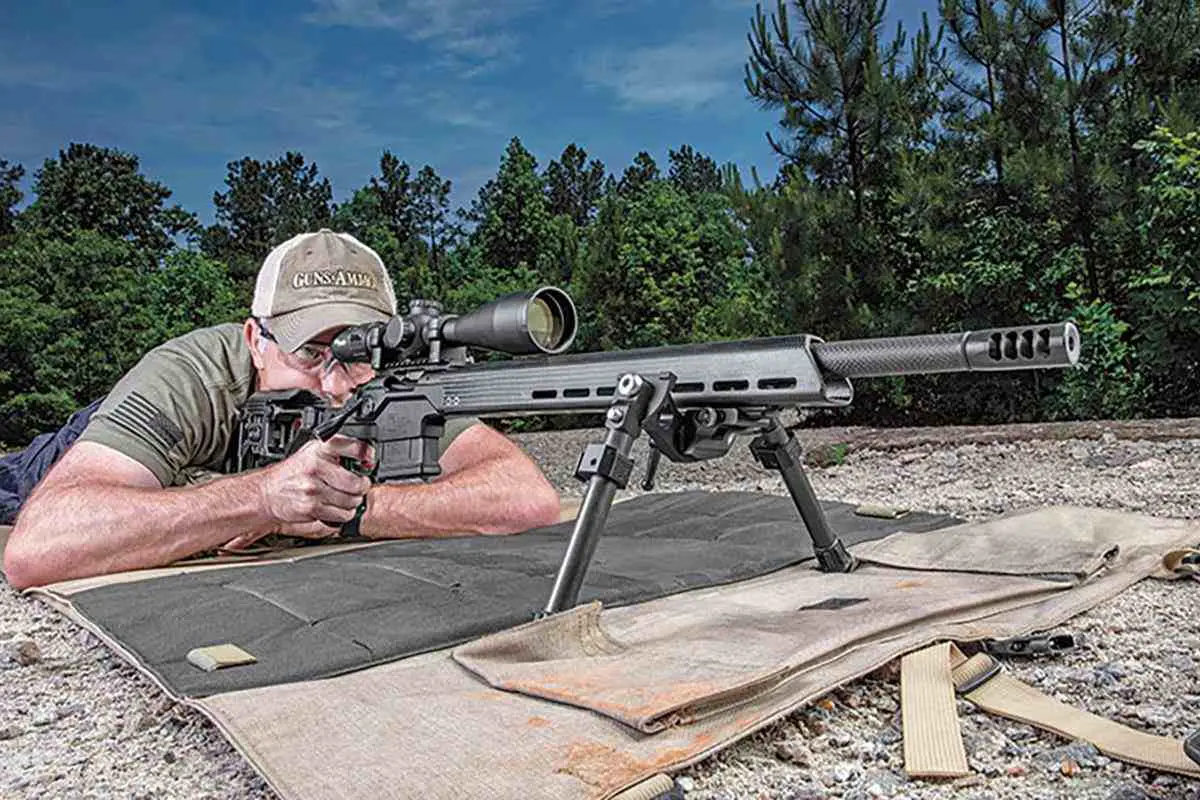
Long distance guns represent a broad and evolving category of precision-focused firearms, each designed with a specific balance of accuracy, stability, ergonomics, and application in mind. From traditional bolt-action precision rifles to advanced extreme long-range platforms, every type serves a distinct purpose shaped by environment, discipline, and user preference. Some models emphasize portability for field hunting, while others prioritize mechanical refinement for competition or specialized professional roles. What unites them is a shared commitment to consistency and controlled performance at extended distances.
Understanding the different types of long distance guns is not simply about comparing power or range; it is about recognizing how design philosophy influences real-world usability. Barrel construction, action type, stock configuration, and modular features all contribute to how a rifle performs in its intended setting. As technology continues to advance, materials become lighter, systems become more adaptable, and precision standards continue to rise. Whether used for sport shooting, skill development, or structured field applications, long distance guns reflect the intersection of engineering, discipline, and responsible marksmanship.
Ultimately, success at extended range depends less on the rifle alone and more on training, environmental awareness, and consistent fundamentals. The equipment provides the platform, but accuracy is achieved through patience, practice, and thoughtful application. By understanding the strengths and characteristics of each type, shooters can better appreciate how specialized design supports long-range precision in a safe and informed manner.
Frequently Asked Questions (FAQ) About Long Distance Guns
1. What are long distance guns?
Long distance guns are firearms designed to maintain accuracy and consistency at extended ranges, typically through precision barrels, stable platforms, and optic compatibility.
2. What makes a rifle suitable for long-range shooting?
A suitable long-range rifle usually features a rigid receiver, quality barrel, consistent trigger system, and the ability to mount precision optics securely.
3. Are bolt-action rifles better for long distances?
Bolt-action rifles are often preferred for their mechanical simplicity and consistent lockup, which can contribute to strong inherent accuracy.
4. Can semi-automatic rifles be used for long-range shooting?
Yes, modern semi-automatic rifles can deliver reliable extended-range accuracy when built with precision-focused components.
5. What is a heavy barrel rifle?
A heavy barrel rifle uses a thicker barrel profile to improve heat resistance and reduce vibration during repeated firing.
6. Why does barrel length matter in long-range rifles?
Barrel length can influence velocity and stability, though overall accuracy depends on multiple design factors working together.
7. What is an ELR rifle?
An Extreme Long-Range (ELR) rifle is engineered for highly specialized shooting at exceptionally extended distances.
8. Are long distance guns only used in the military?
No, many long distance guns are used in civilian sport shooting, hunting, and competitive marksmanship.
9. What is a chassis-based rifle?
A chassis-based rifle uses a rigid metal frame instead of a traditional stock to improve structural consistency and modularity.
10. What is the difference between hunting rifles and competition rifles?
Hunting rifles balance portability and durability, while competition rifles prioritize stability and precision in controlled environments.
11. Do long-range rifles require special optics?
Most long-range rifles are paired with precision optics designed to provide clear magnification and reliable adjustment tracking.
12. What role does ammunition play in long-range shooting?
Ammunition consistency significantly affects accuracy, as variations in bullet weight or velocity can impact trajectory.
13. What is a designated marksman rifle (DMR)?
A DMR bridges the gap between standard service rifles and full sniper systems by enhancing range and precision.
14. Are carbon-fiber barrels reliable?
Carbon-fiber wrapped barrels can reduce weight while maintaining rigidity and heat management properties.
15. What is a single-shot precision rifle?
A single-shot rifle fires one round at a time and emphasizes deliberate, controlled shooting technique.
16. How important is trigger quality?
A crisp and consistent trigger helps reduce shooter-induced movement during firing.
17. What is recoil management?
Recoil management refers to design features that help reduce the impact felt by the shooter and maintain sight alignment.
18. Are folding-stock rifles less accurate?
When properly engineered, folding-stock rifles can maintain consistent alignment and accuracy.
19. What is a scout rifle?
A scout rifle is a versatile platform designed for portability and practical field use with moderate long-range capability.
20. What makes ELR rifles different?
ELR rifles are designed for extreme distances and often feature heavy construction and specialized calibers.
21. Can rimfire rifles be used for long-range training?
Yes, precision rimfire rifles are often used to develop long-range skills at scaled distances.
22. What materials are commonly used in modern rifle stocks?
Modern stocks are often made from synthetic polymers, composites, or aluminum chassis systems.
23. Why is consistency important in long-range shooting?
Consistency ensures that each shot performs predictably under similar conditions.
24. Are long distance guns heavier than standard rifles?
Many long-range rifles are heavier to enhance stability, though lightweight options also exist.
25. What is free-floating barrel design?
A free-floating barrel does not contact the stock, reducing external pressure that could affect accuracy.
26. Is long-range shooting only about distance?
No, it also involves precision, environmental awareness, and disciplined technique.
27. How does wind affect long-range accuracy?
Wind can alter bullet trajectory, requiring careful observation and adjustment.
28. What is modular rifle design?
Modular design allows components like stocks or barrels to be replaced or adjusted.
29. Are magnum calibers necessary for long-range shooting?
Not always; they extend range potential but are not required for all applications.
30. What is barrel harmonics?
Barrel harmonics refer to the vibration pattern of a barrel when a shot is fired.
31. What is a long-range lever-action rifle?
It is a traditional lever-operated rifle adapted for improved distance performance.
32. Can beginners start with long-range rifles?
Beginners can learn long-range fundamentals gradually, often starting with training platforms.
33. How often should long-range rifles be maintained?
Regular inspection and proper cleaning help maintain consistent performance.
34. What is a gas-operated precision rifle?
It is a semi-automatic rifle that uses controlled gas pressure to cycle the action smoothly.
35. Why are heavy rifles more stable?
Additional mass can help reduce recoil movement and improve steadiness.
36. What defines a competition match rifle?
It is engineered specifically for scored target shooting events at extended distances.
37. Are bullpup rifles used for long range?
Some bullpup configurations are adapted for precision applications while maintaining compact size.
38. What is extreme long-range shooting?
It is a specialized discipline focused on engaging targets at exceptionally extended distances.
39. Does barrel material affect accuracy?
Barrel material and construction influence heat control and rigidity, both of which affect consistency.
40. Can folding rifles be durable?
When built with strong locking systems, folding rifles can maintain long-term durability.
41. What role does ergonomics play?
Proper ergonomics help maintain consistent body alignment and shot control.
42. Are all long distance guns large?
No, some compact rifles are designed to extend effective range without excessive size.
43. What is bedding in rifles?
Bedding refers to how the action fits securely within the stock or chassis system.
44. Can long-range rifles be used for sport shooting?
Yes, many long-distance platforms are designed specifically for competitive sport shooting.
45. What is a multi-caliber rifle?
A multi-caliber rifle allows users to switch between compatible cartridge configurations.
46. Why is optics mounting important?
Stable optic mounting ensures consistent sight alignment and repeatable adjustments.
47. Do environmental factors affect long-range performance?
Yes, temperature, humidity, and elevation can influence bullet trajectory.
48. Are long-range rifles expensive?
Costs vary widely depending on materials, engineering, and intended purpose.
49. What skills are needed for long-range shooting?
Key skills include trigger control, breath discipline, and environmental awareness.
50. Is training essential for long-distance shooting?
Yes, consistent practice and safety awareness are essential for responsible and accurate shooting.
51. What is the most important factor in long-range accuracy?
Consistent fundamentals combined with a well-maintained platform are the most important factors.
52. Are long distance guns suitable for beginners?
With proper instruction and supervision, beginners can gradually learn the fundamentals of long-range marksmanship.
Read more: 15 Types of Shotguns for Home Defense: Complete Guide to Choosing the Right Shotgun