
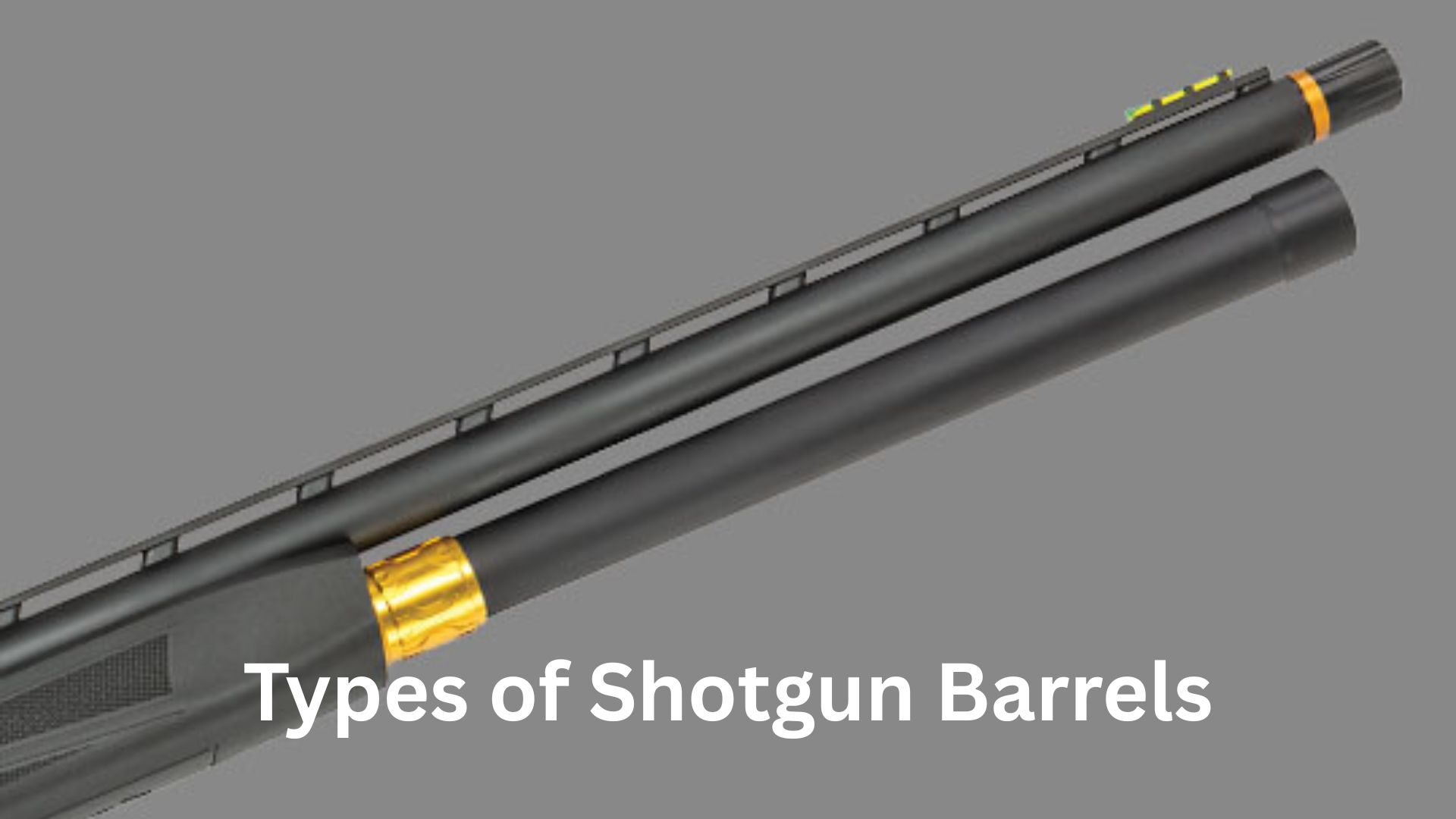
Shotgun barrels play a defining role in how a shotgun performs, often more than new shooters expect. While shotgun barrels may look similar at first glance, differences in internal design, surface features, and intended use can significantly influence accuracy, recoil behavior, and versatility. Choosing the right barrel helps ensure that a shotgun matches its primary purpose, whether that purpose is hunting, sport shooting, or general field use.
This guide explores three common types of shotgun barrels, focusing on how each design functions and where it performs best. Rather than relying on technical jargon, the article explains barrel types in clear, practical terms. Each section highlights real-world performance, handling characteristics, and ideal applications, helping shooters understand why barrel choice matters and how it impacts overall shooting experience.
Types of Shotgun Barrels Explained
1. Smoothbore Barrel
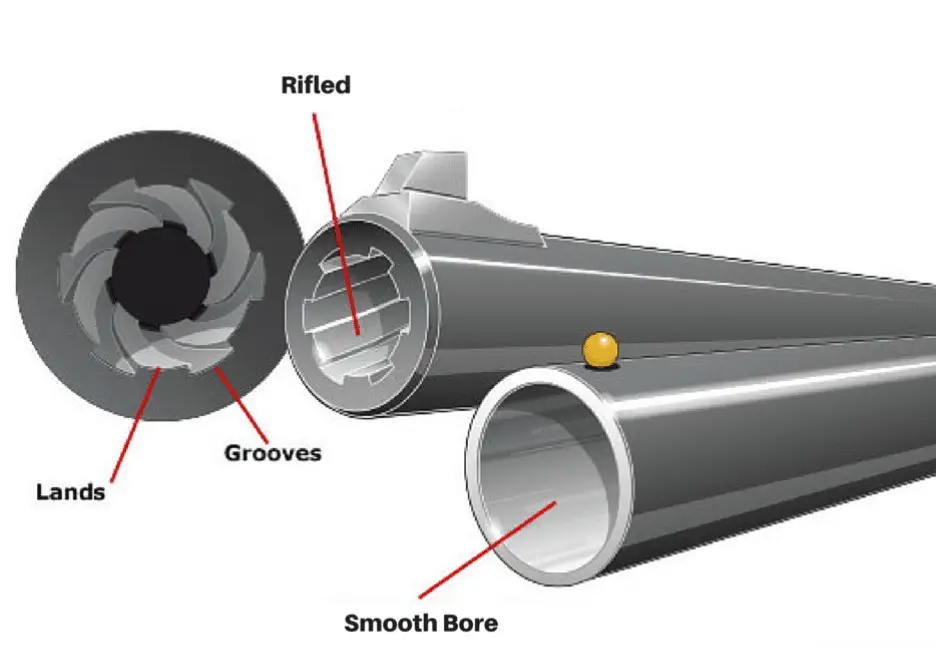
The smoothbore barrel is the most widely used and traditionally recognized shotgun barrel design. As the name suggests, the interior of the barrel is smooth, with no rifling or grooves cut into the steel. This simple internal structure defines how smoothbore shotguns function and explains why they remain dominant across hunting and sport shooting disciplines.
Smoothbore barrels are specifically designed to fire shotshells that contain multiple pellets, commonly referred to as “shot.” When fired, these pellets travel down the smooth interior of the barrel and spread outward once they exit the muzzle. This pellet spread creates a wider pattern, increasing the likelihood of hitting moving targets at close to moderate distances.
One of the most important advantages of smoothbore barrels is versatility. They are compatible with a wide range of shotgun barrels lengths, choke systems, and ammunition types. From birdshot and buckshot to certain types of shotgun slugs, smoothbore barrels handle diverse loads with predictable results.
In hunting applications, smoothbore barrels excel at pursuing fast-moving game. Upland bird hunting, waterfowl hunting, and small game pursuits all benefit from the forgiving shot pattern that smoothbores produce. Rather than requiring pinpoint accuracy, the barrel allows for instinctive shooting and natural swing-through techniques.
Clay target sports further highlight the strengths of smoothbore barrels. Disciplines such as trap, skeet, and sporting clays rely heavily on smooth, consistent shot patterns. The smooth interior helps maintain even pellet distribution, which is essential for breaking fragile clay targets reliably.
Another defining characteristic of smoothbore barrels is their compatibility with choke systems. Chokes are constrictions at the muzzle that control how tightly shot spreads. A smoothbore barrel paired with interchangeable chokes offers remarkable flexibility, allowing shooters to adjust pattern density without changing barrels.
From a handling perspective, smoothbore barrels contribute to balanced swing dynamics. Because the barrel interior is uninterrupted, weight distribution remains even along the length of the barrel. This balance supports smooth target transitions and reduces fatigue during extended shooting sessions.
Smoothbore barrels are also known for manageable recoil behavior. The absence of rifling means there is no additional rotational resistance as the shot charge travels down the barrel. Recoil remains linear and predictable, helping shooters maintain control during follow-up shots.
Although smoothbore barrels are commonly associated with shot loads, they are also capable of firing certain shotgun slugs. Foster-style slugs and other smoothbore-compatible slugs are designed to stabilize without rifling. While accuracy with slugs is generally lower than with rifled barrels, smoothbores remain practical for short-range slug use.
Maintenance is another area where smoothbore barrels shine. Cleaning is straightforward because there are no grooves to trap fouling. Regular cleaning removes residue efficiently, helping preserve barrel longevity and consistent performance.
Durability further enhances the appeal of smoothbore barrels. Their simple construction makes them resilient under heavy use. Many smoothbore barrels remain functional for decades with proper care, making them a reliable long-term investment.
However, smoothbore barrels do have limitations. At longer distances, pellet spread becomes less effective, reducing accuracy. For applications that demand precise projectile placement beyond typical shotgun ranges, alternative barrel designs may offer advantages.
Despite these limitations, the smoothbore barrel remains the foundation of shotgun design. Its adaptability, ease of use, and consistent performance explain why it continues to dominate hunting fields and shooting ranges worldwide.
In practical terms, shooters who value versatility, natural handling, and traditional shotgun performance will find smoothbore barrels difficult to replace. They represent the classic shotgun experience, refined through decades of proven use.
For many shooters, the smoothbore barrel is not just a starting point but a lifelong choice. Its balance of simplicity and effectiveness makes it suitable for beginners and experienced shooters alike, reinforcing its status as one of the most important types of shotgun barrels.
2. Rifled Barrel
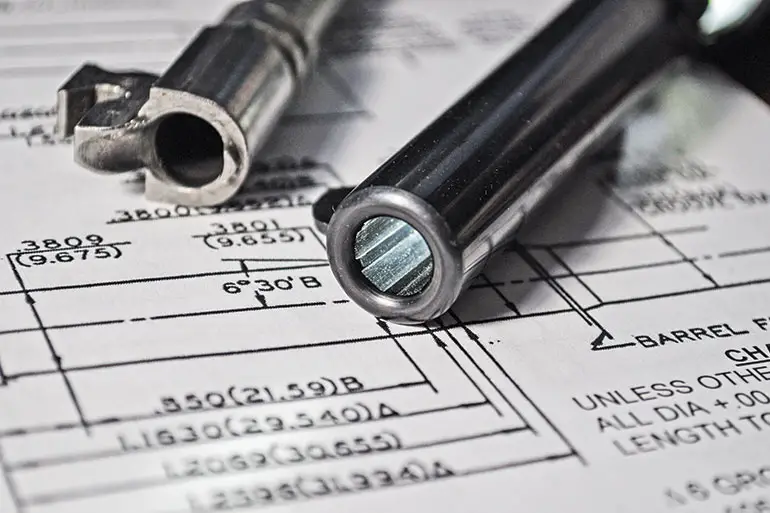
The rifled barrel represents a specialized branch of shotgun barrel design, created to solve a specific problem: improving accuracy when firing single-projectile ammunition. Unlike smoothbore barrels, rifled barrels feature spiral grooves cut into the interior surface. These grooves impart rotational spin to the projectile as it travels down the barrel, stabilizing it in flight.
This internal rifling fundamentally changes how a shotgun behaves. Rather than dispersing multiple pellets, a rifled barrel is optimized for firing shotgun slugs with precision. The result is a shotgun configuration that bridges the gap between traditional shotguns and rifles, particularly at short to medium ranges.
Rifled barrels are most commonly associated with slug shooting. Slugs fired through a rifled barrel experience improved stability, reduced yaw, and more predictable trajectories. This makes them suitable for applications where precise shot placement matters more than pattern spread.
One of the most common uses of rifled shotgun barrels is big-game hunting in regions where rifles are restricted. In these areas, shotguns equipped with rifled barrels allow hunters to ethically harvest deer-sized game at moderate distances while maintaining acceptable accuracy.
Accuracy is the defining advantage of rifled barrels. The spin generated by rifling keeps the slug flying nose-forward, minimizing aerodynamic instability. Shooters often experience significantly tighter groupings compared to smoothbore barrels firing slugs.
Rifled barrels pair best with sabot slugs. These slugs feature a sub-caliber projectile encased in a plastic sabot that engages the rifling. Upon exiting the muzzle, the sabot separates, allowing the projectile to continue toward the target with enhanced velocity and accuracy.
From a handling perspective, rifled barrels often feel heavier than smoothbores. The additional steel required for rifling and thicker barrel walls contributes to increased weight. While this can slightly reduce maneuverability, it also helps absorb recoil and stabilize the firearm during firing.
Recoil behavior in rifled barrels differs from smoothbores. The rotational resistance created by rifling adds a subtle change in recoil impulse. Many shooters describe it as a slower, more rolling recoil rather than a sharp push.
Another notable feature of rifled barrels is their compatibility with optical sights. Many rifled barrels are drilled and tapped or include integrated scope mounts. This allows shooters to mount red dots or low-power optics, further enhancing accuracy potential.
In contrast, rifled barrels are generally not ideal for firing traditional shot loads. The rifling disrupts pellet patterns, causing uneven spread and reduced effectiveness. For this reason, rifled barrels are typically reserved for slug-only use.
Maintenance of rifled barrels requires additional attention compared to smoothbores. The grooves can trap fouling and plastic residue from sabot slugs. Regular cleaning ensures consistent performance and preserves barrel longevity.
Durability remains a strong point for rifled barrels. Constructed from high-grade steel, they are designed to withstand the pressures generated by heavy slug loads. With proper care, a rifled barrel can maintain accuracy over many seasons.
While rifled barrels excel in accuracy, they sacrifice versatility. Shooters who frequently switch between birdshot, buckshot, and slugs may find rifled barrels limiting. Many shotgun owners address this by owning multiple barrels for the same firearm.
In terms of range, rifled barrels extend effective shotgun distance. While still not matching rifle-level performance, they allow ethical and accurate shots beyond typical smoothbore slug distances.
Weather resistance is another advantage. Rifled barrels often feature protective finishes that resist corrosion, making them suitable for harsh hunting environments.
Despite their specialization, rifled barrels play a crucial role in modern shotgun use. They expand the shotgun’s capabilities and allow shooters to adapt to regulatory and environmental constraints.
For shooters who prioritize precision over spread, rifled barrels deliver consistent, repeatable results. They reward careful aiming and disciplined shooting techniques.
Ultimately, the rifled barrel transforms the shotgun into a purpose-driven tool. It trades versatility for accuracy, offering a focused solution for slug-based applications where shot placement matters most.
Understanding when and why to choose a rifled barrel helps shooters avoid mismatched equipment. When paired with the right ammunition and optics, rifled barrels become one of the most effective types of shotgun barrels available.
3. Vent‑Rib Barrel
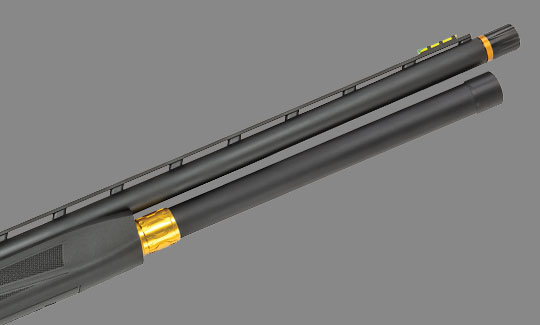
The vent‑rib barrel represents a blend of traditional shotgun design and enhanced aiming functionality. Unlike smoothbore or rifled barrels, the vent‑rib barrel features a raised, ribbed section running along the top of the barrel. This rib is typically perforated or vented to reduce heat mirage, improve sighting, and enhance swing dynamics, making it especially popular among clay target shooters and upland bird hunters.
The key feature of the vent‑rib barrel is the raised rail along the barrel’s top, which acts as a sighting plane. Shooters use this rib to align the bead or sight at the muzzle, creating a natural point of aim. By elevating the sighting plane above the barrel, the vent‑rib reduces parallax and helps maintain accuracy during rapid target acquisition.
Venting along the rib serves another purpose: it dissipates heat generated during repeated firing. When multiple shots are fired in succession, the barrel can heat up, causing mirage effects that distort the shooter’s view. The perforated rib allows heat to escape, minimizing visual distortion and keeping the sighting plane clear.
In sporting applications, vent‑rib barrels are particularly effective for clay target disciplines such as skeet, trap, and sporting clays. The raised rib promotes a smooth swing, allowing shooters to follow moving targets with minimal disruption. Because the eye naturally aligns along the rib, shooters can maintain consistent eye position and cheek weld throughout the swing.
Another benefit of vent‑rib barrels is weight distribution. Many vent‑rib barrels are slightly lighter at the muzzle than traditional solid barrels. This reduces the front-heavy feeling of long barrels and allows faster target transitions. A well-balanced vent‑rib barrel enhances fluidity, making it easier to track fast-moving targets.
The vent‑rib design also influences shot pattern control. Most vent‑rib barrels are paired with fixed or interchangeable chokes, allowing shooters to adjust spread density for different distances and target types. This combination provides both precision and flexibility, accommodating a wide range of shooting scenarios.
For upland hunting, vent‑rib barrels offer distinct advantages. The rib allows quick visual alignment in dense environments, while the weight distribution supports swift swings. Whether flushing quail, pheasant, or grouse, vent‑rib barrels facilitate instinctive shooting without sacrificing accuracy.
Recoil behavior is influenced by both barrel length and rib design. Vent‑rib barrels are commonly available in moderate to long lengths, which helps absorb recoil and maintain muzzle stability. The raised rib does not add significant mass, so follow-up shots remain smooth and predictable.
Materials used for vent‑rib barrels vary. Traditional models are constructed from blued or stainless steel, while modern variants may feature lightweight alloys or carbon-fiber shrouds for reduced weight. Regardless of material, durability is a priority, as repeated firing, recoil, and environmental exposure can challenge barrel integrity.
Sight compatibility is another strength. Many vent‑rib barrels are drilled and tapped for optics or fiber-optic sight inserts. This enables shooters to combine classic bead sighting with modern aiming enhancements for improved precision.
Maintenance of vent‑rib barrels is straightforward but requires attention to the rib itself. Cleaning around the vents ensures no debris interferes with sighting, and routine barrel maintenance prevents fouling that could affect pellet patterns.
One potential limitation is cost. Vent‑rib barrels tend to be more expensive than standard smoothbores due to the additional machining, materials, and design complexity. However, the performance advantages for sport and hunting applications often justify the investment.
Vent‑rib barrels also promote shooter comfort. The rib creates a consistent visual reference that reduces the need to constantly adjust head position. This minimizes neck strain and supports longer shooting sessions without fatigue.
While vent‑rib barrels excel in dynamic target shooting, they are less specialized for long-range slug accuracy. Their primary advantage lies in moving target engagement, where speed, swing control, and instinctive pointing are more important than pinpoint precision.
In terms of aesthetics, vent‑rib barrels often convey a sleek, professional appearance. The raised rib and polished finish provide visual cues that appeal to both practical shooters and enthusiasts who value the look of a finely crafted shotgun.
Versatility is another strong point. Vent‑rib barrels are compatible with multiple choke types, ammunition variations, and shotgun models. This allows a single shotgun to perform effectively in sport, hunting, and recreational settings without changing barrels frequently.
Many professional and competitive shooters prefer vent‑rib barrels for their combination of fluid handling, heat management, and sighting consistency. These barrels reward careful mounting and smooth swings, reinforcing why they remain a top choice in competitive circles.
For hunters, the vent‑rib barrel provides confidence in field conditions. It enhances visual alignment, reduces mirage distortion, and promotes quick follow-up shots. These characteristics are particularly beneficial in fast-paced upland or waterfowl hunting scenarios.
In summary, vent‑rib barrels strike a balance between traditional smoothbore simplicity and ergonomic enhancements. They maintain effective shot patterns, facilitate instinctive shooting, and offer tangible advantages in recoil management, sighting, and swing dynamics.
When selecting a shotgun barrel, understanding the vent‑rib’s role helps shooters match the right barrel to their objectives. For clay sports, upland hunting, or any scenario involving moving targets, the vent‑rib barrel remains one of the most effective and versatile types of shotgun barrels available today.
Conclusion
Choosing the right shotgun barrel is crucial for optimizing performance, comfort, and accuracy. While all barrels share the basic function of guiding the shot, differences in design—smoothbore, rifled, or vent‑rib—significantly affect how the shotgun behaves in real-world scenarios. Understanding these differences helps shooters match a barrel to their specific needs, whether that’s hunting fast-moving game, shooting clay targets, or firing precise slugs at distance.
Smoothbore barrels remain versatile and reliable, ideal for traditional hunting and sport shooting due to their consistent shot patterns and ease of use. Rifled barrels excel at delivering accuracy with slugs, providing controlled flight and stable trajectories for ethical harvesting at longer ranges. Vent‑rib barrels combine ergonomics and enhanced sighting for moving targets, making them a top choice for competitive shooters and upland hunters alike.
Ultimately, the best barrel depends on the shooter’s goals, preferred ammunition, and shooting environment. By understanding the unique benefits of each design, shooters can make informed decisions that enhance performance, reduce fatigue, and improve overall shooting confidence. Selecting the right barrel ensures the shotgun performs at its best, giving the shooter control, precision, and enjoyment across every shooting experience.
Frequently Asked Questions About Shotgun Barrels
1. What is a shotgun barrel?
A shotgun barrel is the long tube through which the shot or slug travels after firing. It guides the projectile, influences recoil, and affects accuracy and shot pattern.
2. Why does barrel type matter?
Barrel type determines how the shotgun performs with different ammunition, impacts accuracy, recoil management, and suitability for specific shooting activities like hunting or clay shooting.
3. What are the main types of shotgun barrels?
The main types are smoothbore barrels, rifled barrels, and vent‑rib barrels. Each has distinct characteristics and is suited to different shooting applications.
4. What is a smoothbore barrel?
A smoothbore barrel has a smooth interior, ideal for firing multiple pellets (shot). It creates a spread pattern suitable for birds and fast-moving targets at short to medium ranges.
5. What is a rifled barrel?
A rifled barrel has spiral grooves cut inside, which spin the projectile for improved stability and accuracy. Rifled barrels are ideal for firing slugs over moderate distances.
6. What is a vent‑rib barrel?
A vent‑rib barrel features a raised rib along the top to aid sighting and dissipate heat. It is popular in clay shooting and upland hunting due to enhanced sight alignment and swing control.
7. Can I shoot shot shells through a rifled barrel?
Yes, but the rifling can disrupt pellet patterns, making them less effective. Rifled barrels are best suited for slug ammunition.
8. Can I shoot slugs through a smoothbore barrel?
Yes, especially Foster-style or sabot-compatible slugs. Accuracy is lower than with a rifled barrel, but it is sufficient for close-range hunting.
9. What is choke and how does it relate to barrel type?
A choke is a constriction at the muzzle that controls shot spread. Smoothbore and vent‑rib barrels often use interchangeable chokes for flexibility in shot pattern density.
10. What is the advantage of a vent‑rib barrel in heat management?
Vent‑ribs have perforations that allow heat to escape from the barrel during rapid firing, reducing mirage effects and helping maintain sighting accuracy.
11. Are rifled barrels heavier than smoothbore barrels?
Typically, yes. Rifled barrels often have thicker walls to accommodate grooves, which adds weight but also helps stabilize the firearm and reduce recoil.
12. Can a vent‑rib barrel improve clay target performance?
Absolutely. The raised rib improves sighting and helps the shooter maintain a smooth swing, enhancing target tracking and follow-through.
13. Are smoothbore barrels easier to clean?
Yes, the smooth interior collects less residue and is simpler to clean compared to rifled barrels, which have grooves that trap fouling.
14. Can I mount optics on a rifled shotgun barrel?
Many rifled barrels are drilled and tapped for mounting optics, allowing for red dots or scopes that improve slug accuracy.
15. Which barrel is best for upland hunting?
Smoothbore or vent‑rib barrels are preferred due to their wide shot patterns, swing dynamics, and quick target acquisition.
16. Which barrel is best for deer hunting with slugs?
A rifled barrel is ideal for slugs because it stabilizes the projectile, improving accuracy and effective range.
17. How does barrel length affect performance?
Longer barrels generally offer better sighting and follow-through for moving targets, while shorter barrels improve maneuverability in tight spaces.
18. Are vent‑rib barrels only for competitive shooting?
No, they are also excellent for upland hunting and recreational shooting where smooth swings and precise sighting are important.
19. Do barrel materials affect performance?
Yes. Steel barrels offer durability, while lighter alloys or carbon fiber reduce weight. Material choice affects recoil, handling, and longevity.
20. How often should shotgun barrels be cleaned?
Barrels should be cleaned after every shooting session, especially rifled barrels, to prevent fouling, corrosion, and performance degradation.
21. Can I use one shotgun barrel for multiple shooting activities?
Yes, but barrel choice depends on ammunition type. Smoothbore is versatile, rifled is slug-specific, and vent‑rib is optimized for moving targets.
22. Are vent‑rib barrels heavier than smoothbores?
They can be slightly heavier at the muzzle due to the rib, but often balanced by reduced barrel mass elsewhere to maintain swing fluidity.
23. Do rifled barrels improve long-range accuracy?
Yes, they stabilize slugs, allowing effective shooting at longer ranges than smoothbore barrels.
24. Can I switch barrels on a single shotgun?
Some shotguns allow interchangeable barrels, enabling users to swap between smoothbore, rifled, or vent‑rib barrels for different shooting purposes.
25. How does a smoothbore barrel affect recoil?
Smoothbore barrels produce linear recoil that is predictable and easier to manage, especially with multiple-shot loads.
26. Are vent‑rib barrels suitable for beginners?
Yes, they help beginners maintain proper sight alignment and improve consistency when tracking moving targets.
27. Can barrel choice affect follow-up shots?
Absolutely. Balanced barrels like vent‑rib or properly weighted smoothbores allow faster follow-up shots due to smoother swing and better control.
28. Does rifling wear out over time?
With normal use and proper maintenance, rifling lasts a long time. Neglect, corrosion, or improper cleaning can reduce effectiveness.
29. Are smoothbore barrels quieter?
No significant difference exists. Sound depends more on ammunition and choke than barrel type.
30. Which barrel is better for tactical use?
Smoothbore barrels with shorter lengths are preferred for maneuverability, but rifled barrels may be chosen for slug accuracy in specific tactical situations.
31. Can barrel type affect shot pattern consistency?
Yes, smoothbore and vent‑rib barrels with chokes provide predictable spread, while rifled barrels concentrate on single-projectile accuracy.
32. Are vent‑rib barrels more expensive?
Typically, yes. The machining of the rib and associated design features adds cost compared to standard smoothbore barrels.
33. How does barrel diameter impact performance?
Diameter, or gauge, affects recoil, pellet count, and effective range. Common gauges include 12, 20, and 28, each suitable for specific applications.
34. Can a rifled barrel fire birdshot?
Technically yes, but the spin can scatter pellets unevenly, reducing effectiveness. Rifled barrels are best reserved for slugs.
35. What is choke compatibility with vent‑rib barrels?
Vent‑rib barrels often accept interchangeable chokes, allowing shooters to adjust shot spread without changing the barrel.
36. How do I choose the right barrel length?
Consider your primary shooting activity. Long barrels aid swing and sighting, short barrels improve mobility in tight or tactical environments.
37. Do barrels affect shotgun balance?
Yes, weight distribution along the barrel affects swing dynamics, follow-up shots, and handling comfort.
38. Are lightweight barrels good for hunting?
Lightweight barrels improve carry comfort but may increase felt recoil. Balance between weight and recoil management is key.
39. Can barrel type impact shooting confidence?
Yes, a barrel that fits the shooter’s style enhances control, accuracy, and confidence in the field or on the range.
40. Are vent‑rib barrels good for long hunting days?
Yes, they reduce mirage, improve sight alignment, and help maintain a consistent swing, reducing fatigue over extended sessions.
41. Can barrel type influence shotgun longevity?
Yes, proper care of each barrel type, especially rifled barrels, preserves performance over years of use.
42. Is barrel type more important than gauge?
Both matter. Gauge affects recoil and pellet count, while barrel type affects accuracy, pattern, and intended use. Optimal performance considers both.
43. Can I use vent‑rib barrels in heavy weather?
Yes, vent‑rib barrels are often made from durable materials and finishes that withstand moisture, heat, and field conditions.
44. What barrel type is best for multiple target shooting?
Smoothbore or vent‑rib barrels are ideal, as they allow quick follow-up shots and predictable pellet spread.
45. Do rifled barrels require special ammunition?
Yes, they perform best with slugs, especially sabot slugs, for maximum accuracy and stability.
46. Can I modify a smoothbore barrel?
You can add chokes, muzzle devices, or optics if compatible, but internal rifling is not possible without creating a rifled barrel.
47. Are vent‑rib barrels heavier than rifled barrels?
They can be similar, though vent‑rib barrels are balanced for swing, while rifled barrels are heavier to absorb slug recoil.
48. Does barrel finish affect performance?
Yes, finishes protect against corrosion and wear. Stainless steel, blued, or polymer coatings improve durability and maintain consistent performance.
49. Can barrel type influence recoil?
Yes, heavier barrels reduce felt recoil, rifled barrels alter recoil dynamics, and vent‑rib barrels distribute weight for smoother handling.
50. How do I choose the best shotgun barrel?
Consider your primary use, preferred ammunition, shooting style, and ergonomics. Smoothbore for versatility, rifled for slug accuracy, vent‑rib for moving targets and sport shooting.
51. Can I shoot both slugs and shot with one barrel?
Some barrels can handle both, but performance may be compromised. Rifled barrels excel with slugs; smoothbore handles both, but accuracy varies.
52. How often should I inspect my shotgun barrel?
Before each shooting session, check for obstructions, wear, and proper choke installation to ensure safe and consistent performance.