
Shotgun cartridges are among the most versatile types of ammunition in the firearms world. Unlike rifle or handgun rounds, shotgun cartridges can be configured in dramatically different ways depending on the intended purpose. From hunting birds to targeting large game or engaging moving targets at the range, the internal structure of a cartridge plays a decisive role in performance.
Understanding the different types of shotgun cartridges helps shooters choose ammunition that matches their firearm, shooting environment, and ethical responsibilities. While all shotgun cartridges share a similar outer appearance, what lies inside the shell determines how the shot behaves once fired.
This guide breaks down the three most widely used types of shotgun cartridges, explaining how each one works, where it performs best, and why it exists. Whether you are a hunter, a clay shooter, or a recreational range user, knowing these distinctions improves accuracy, safety, and overall shooting confidence.
3 Types of Shotgun Cartridges Explained
1. Birdshot Cartridge
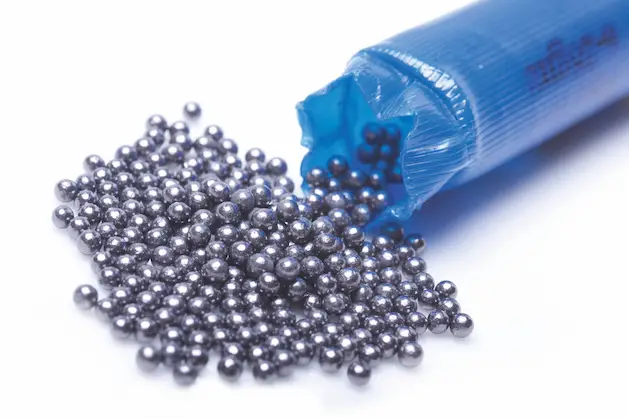
The birdshot cartridge is the most commonly used type of shotgun ammunition worldwide. Its design focuses on delivering a wide, forgiving shot pattern made up of numerous small pellets. This configuration maximizes hit probability against fast-moving or airborne targets, where pinpoint accuracy is less important than coverage.
At its core, a birdshot cartridge contains dozens to hundreds of tiny spherical pellets housed within a plastic wad. When the cartridge is fired, the pellets travel down the barrel as a compact column before spreading outward once they exit the muzzle. This controlled dispersion creates a cloud-like pattern that increases the likelihood of striking a moving target.
Birdshot cartridges are primarily associated with bird hunting, clay shooting, and small pest control. Their effectiveness relies on multiple pellet strikes rather than deep penetration from a single projectile. This makes them suitable for lightweight game and fragile targets.
One of the defining advantages of birdshot is its versatility. By changing pellet size, payload weight, and velocity, manufacturers can tailor birdshot cartridges for a wide range of shooting activities. This adaptability is a key reason birdshot remains the dominant cartridge type in sporting shotguns.
Pellet size is a critical variable in birdshot performance. Smaller pellets create denser patterns but lose energy more quickly. Larger pellets retain energy longer but reduce overall pellet count. Shooters often select pellet size based on the size of the target and the expected shooting distance.
In clay target shooting, birdshot cartridges are designed for consistency and recoil management. Smooth ignition, predictable patterns, and manageable recoil allow shooters to maintain rhythm during repeated shots. This consistency is essential in disciplines such as trap, skeet, and sporting clays.
From a safety perspective, birdshot is generally considered the least penetrating type of shotgun cartridge. Pellets lose energy rapidly after impact, reducing the risk of overpenetration. This characteristic contributes to its popularity at ranges and in controlled hunting environments.
The internal wad system plays an important role in birdshot cartridges. Modern plastic wads protect the pellets from deformation and help regulate how the shot column separates after leaving the barrel. This results in tighter, more uniform patterns compared to older fiber wad designs.
Barrel length and choke selection significantly influence birdshot performance. Longer barrels allow for smoother acceleration of the shot column, while choke constriction controls how quickly the pellets spread. Matching the cartridge to the barrel setup is essential for optimal results.
Recoil characteristics of birdshot cartridges are generally mild compared to other shotgun ammunition types. This makes them accessible to new shooters and comfortable for extended shooting sessions. Reduced recoil loads further enhance shootability without sacrificing effectiveness for close-range targets.
Birdshot cartridges also dominate training environments. Their affordability and lower recoil allow shooters to practice fundamentals such as mounting, tracking, and follow-through. Skill development with birdshot transfers directly to other shotgun applications.
Environmental considerations have influenced birdshot design in recent years. Lead alternatives, such as steel and bismuth shot, are now widely available to comply with hunting regulations in sensitive ecosystems. These alternatives behave differently and require careful selection to maintain performance.
Despite its name, birdshot is not limited strictly to birds. It is commonly used for clay sports, informal target shooting, and controlling small ground pests. Its adaptability ensures continued relevance across shooting disciplines.
Limitations of birdshot become apparent at longer distances or against tougher targets. The small pellet size limits penetration, making it unsuitable for large game or situations requiring deep impact. Understanding these limits prevents misuse and ensures ethical shooting.
In smoothbore barrels, birdshot performs predictably and efficiently. Rifled barrels, however, can disrupt shot patterns and reduce effectiveness. This highlights the importance of matching cartridge type to barrel design.
From a design standpoint, birdshot cartridges emphasize balance. They offer sufficient energy for their intended targets while minimizing unnecessary force. This balance contributes to their widespread adoption and long-standing popularity.
For many shooters, birdshot represents the entry point into shotgun shooting. Its forgiving nature builds confidence and reinforces proper shooting mechanics. As skills progress, shooters often continue using birdshot for both sport and utility.
Ultimately, the birdshot cartridge embodies the shotgun’s role as a versatile, adaptable tool. Its wide application range and user-friendly characteristics make it an essential component of the shotgun ecosystem.
2. Buckshot Cartridge
Buckshot cartridges occupy the middle ground between birdshot and slugs. They are designed to deliver significantly more stopping power than birdshot while still maintaining the multi-projectile advantage that defines shotgun ammunition. Instead of hundreds of tiny pellets, buckshot cartridges contain a smaller number of large-diameter pellets.
Each buckshot pellet is substantially heavier and wider than birdshot pellets. This increased mass allows the pellets to retain energy over longer distances and penetrate deeper into the target. The result is a cartridge optimized for larger game, defensive use, and situations where decisive terminal performance is required.
The internal construction of a buckshot cartridge reflects its purpose. Pellets are stacked in carefully arranged layers within the wad, ensuring consistent release and predictable spread patterns. Modern buckshot designs prioritize uniform pellet distribution to avoid erratic flyers.
Buckshot cartridges are commonly categorized by pellet count and pellet diameter. Fewer pellets mean tighter patterns and greater individual pellet energy, while higher pellet counts increase hit probability at close range. This balance allows shooters to select loads tailored to specific scenarios.
One of the defining characteristics of buckshot is controlled spread. Compared to birdshot, buckshot pellets spread more slowly due to their mass. This results in tighter groupings at typical engagement distances, offering both accuracy and power.
Buckshot has long been associated with hunting medium to large game. In dense brush or wooded environments, where shots are taken at relatively close ranges, buckshot provides reliable performance without requiring precise shot placement.
In defensive contexts, buckshot cartridges are valued for their immediate impact and stopping capability. Multiple large pellets striking simultaneously can disrupt a target quickly, making buckshot a common choice for law enforcement and home defense applications in some regions.
Recoil from buckshot cartridges is noticeably stronger than birdshot. The heavier payload and higher energy output translate into increased rearward force. Shooters must maintain proper stance and grip to manage recoil effectively.
Modern recoil-managed buckshot loads address this issue by reducing felt recoil while preserving terminal performance. These loads allow faster follow-up shots and improved control, particularly for smaller-framed shooters.
Pattern consistency is a critical factor in buckshot effectiveness. Advances in wad technology, including buffering materials and shot cups, help maintain pellet integrity and reduce deformation during firing.
Choke selection plays a significant role in buckshot performance. Cylinder and improved cylinder chokes are commonly preferred, as tighter chokes can distort pellets and produce unpredictable patterns. Matching choke to load ensures consistent results.
Buckshot cartridges perform best in smoothbore barrels. Rifled barrels can cause excessive pellet dispersion, reducing accuracy and effectiveness. This reinforces the importance of pairing ammunition with the correct barrel type.
Environmental conditions also affect buckshot behavior. Wind resistance is greater compared to slugs, but less significant than birdshot due to pellet mass. Understanding these dynamics helps shooters make accurate distance judgments.
Buckshot cartridges are often tested at known distances to evaluate pattern spread. Responsible shooters pattern their shotgun to understand how a specific load behaves from their firearm. This practice improves confidence and safety.
Ethical considerations are especially important when using buckshot for hunting. Shot placement, distance limitations, and local regulations must all be respected to ensure humane outcomes.
From a materials standpoint, buckshot pellets are traditionally made from lead. However, alternatives such as copper-plated or hardened pellets exist to improve penetration and reduce deformation.
The versatility of buckshot cartridges extends beyond hunting. They are frequently used in training environments where shooters need to experience realistic recoil and pattern behavior.
Despite their power, buckshot cartridges are not universal solutions. Their limited effective range and spread characteristics make them unsuitable for long-distance precision shooting.
In comparison to birdshot, buckshot requires more deliberate handling. Shooters must account for pellet spread and penetration potential when selecting targets and shooting locations.
Buckshot cartridges highlight the shotgun’s ability to deliver controlled force across multiple impact points. This unique capability sets them apart from single-projectile ammunition.
When used appropriately, buckshot offers a balance of power, coverage, and reliability. It fills a distinct role within the broader spectrum of shotgun cartridges.
Understanding the strengths and limitations of buckshot cartridges allows shooters to deploy them responsibly and effectively. Proper selection ensures performance aligns with intended use.
In the landscape of shotgun ammunition, buckshot represents a purpose-driven design. It prioritizes stopping power and consistency while maintaining the defining characteristics of shotgun fire.
For shooters seeking a cartridge that delivers authority without sacrificing spread, buckshot remains an enduring and respected choice.
3. Slug Cartridge
Slug cartridges represent the most powerful and precise category of traditional shotgun ammunition. Unlike birdshot and buckshot, which rely on multiple projectiles, a slug cartridge fires a single solid projectile. This design transforms the shotgun from a spread-based firearm into a short- to medium-range precision tool.
The defining feature of a slug cartridge is mass. A shotgun slug is significantly heavier than individual pellets found in other cartridge types. This weight allows it to retain momentum and deliver deep penetration, making slug cartridges suitable for large game hunting and applications requiring decisive impact.
Slug cartridges were developed to extend the effective range of shotguns while maintaining compatibility with smoothbore barrels. Early slug designs focused on stability rather than speed, prioritizing predictable flight over long-distance ballistics.
Modern slug cartridges have evolved into several distinct designs, each intended to optimize performance under specific conditions. Despite these variations, all slug cartridges share the core principle of delivering concentrated energy through a single projectile.
One of the most common slug designs is the rifled slug. Despite its name, a rifled slug is designed for smoothbore barrels. The shallow grooves on its surface do not spin the projectile like true rifling. Instead, they allow the slug to safely pass through choked barrels and stabilize through aerodynamic drag.
Rifled slugs offer reliable accuracy at moderate distances. While they cannot match the precision of rifle ammunition, they provide consistent point-of-impact within typical shotgun hunting ranges.
Another major category is the sabot slug. Sabot slugs are designed specifically for rifled shotgun barrels. The slug itself is smaller in diameter and encased in a plastic sabot that engages the barrel’s rifling. Upon exiting the muzzle, the sabot separates, allowing the slug to continue toward the target with rotational stability.
Sabot slugs significantly improve accuracy and effective range compared to rifled slugs. This makes them popular in regions where hunting regulations restrict the use of rifles but allow rifled-barrel shotguns.
Slug cartridges deliver substantial recoil. The combination of heavy projectile mass and high muzzle energy results in a pronounced recoil impulse. Shooters must maintain proper technique and use appropriate recoil management systems.
Despite recoil, slug cartridges are valued for their predictable terminal performance. When a slug impacts a target, energy transfer is immediate and concentrated, reducing reliance on multiple hit probabilities.
Penetration is a defining characteristic of slug cartridges. Slugs are capable of penetrating thick hide, bone, and dense muscle tissue. This makes them suitable for ethically harvesting large game when shot placement is correct.
Accuracy with slug cartridges depends heavily on barrel type, ammunition selection, and sighting systems. Many slug shooters use iron sights or low-power optics to improve precision.
Unlike birdshot and buckshot, slug cartridges are sensitive to barrel configuration. Firing sabot slugs from smoothbore barrels reduces accuracy, while firing rifled slugs from rifled barrels can cause excessive fouling and reduced performance.
Understanding this compatibility is critical. Matching the slug type to the barrel ensures optimal performance and prevents unnecessary wear.
Slug cartridges are often used in environments where longer sight lines exist, such as open fields or forest edges. Their extended effective range allows shooters to engage targets beyond typical buckshot distances.
From a safety standpoint, slug cartridges demand heightened awareness. The single projectile can travel much farther than shot pellets, increasing the importance of knowing what lies beyond the target.
Training with slug cartridges differs from training with shot loads. Shooters must account for point-of-impact shifts, recoil recovery, and follow-up shot timing.
Slug cartridges also highlight the shotgun’s adaptability. By changing ammunition and barrel configurations, a single shotgun platform can fulfill roles traditionally reserved for rifles.
Advancements in slug design have improved ballistic efficiency. Modern slugs feature improved aerodynamics, controlled expansion, and consistent weight distribution.
Environmental and regulatory considerations influence slug usage. In some regions, slug cartridges remain the only legal option for large game hunting with a shotgun.
Despite their power, slug cartridges are not universal solutions. Their recoil, limited magazine capacity, and slower follow-up shots require deliberate shooting practices.
Slug cartridges reward disciplined marksmanship. Unlike birdshot or buckshot, they rely heavily on precise aiming and trigger control.
When used correctly, slug cartridges deliver confidence-inspiring performance. Their ability to deliver single-point energy makes them unique within the shotgun cartridge family.
In the broader context of shotgun ammunition, slug cartridges represent the pinnacle of power and precision. They complete the spectrum of options available to shotgun users.
Understanding slug cartridges ensures shooters deploy them responsibly, ethically, and effectively. Proper selection transforms the shotgun into a capable, purpose-driven firearm.
Conclusion
Shotgun cartridges play a decisive role in determining how a shotgun performs in real-world use. While the firearm itself remains the same, changing the cartridge can completely alter range, impact, and shooting behavior. Understanding the three main types of shotgun cartridges—birdshot, buckshot, and slugs—allows shooters to select ammunition that matches their specific purpose and environment.
Birdshot cartridges excel in situations where target movement and hit probability matter most. Their wide patterns and manageable recoil make them ideal for hunting birds, clay shooting, and general practice. Buckshot cartridges offer a balance between spread and power, delivering reliable stopping capability at close to medium ranges. They are best suited for larger game and scenarios where multiple impact points increase effectiveness.
Slug cartridges stand apart by delivering single-projectile precision and deep penetration. They extend the shotgun’s effective range and allow it to perform roles traditionally filled by rifles, particularly in regulated hunting areas. Each cartridge type has clear strengths and limitations.
Choosing the right shotgun cartridge improves accuracy, safety, and ethical outcomes. When matched correctly to barrel type and shooting conditions, the right cartridge transforms a shotgun into a focused and highly effective tool.
Frequently Asked Questions About Shotgun Cartridges
1. What are shotgun cartridges?
Shotgun cartridges are self-contained ammunition units designed for shotguns. They include a shell casing, primer, propellant, wad, and either pellets or a single projectile, depending on the cartridge type.
2. How many main types of shotgun cartridges are there?
There are three primary types of shotgun cartridges: birdshot, buckshot, and slug cartridges. Each type serves a different purpose and shooting application.
3. What is birdshot used for?
Birdshot cartridges are commonly used for hunting birds, clay target shooting, and small game. They fire many small pellets that spread quickly after leaving the barrel.
4. Why does birdshot spread so widely?
Birdshot pellets are small and lightweight, causing them to disperse rapidly due to air resistance. This spread increases hit probability on moving targets.
5. Is birdshot suitable for large game?
No, birdshot lacks the penetration and energy required for large game. It is intended for lightweight targets at short ranges.
6. What is buckshot ammunition?
Buckshot cartridges contain fewer but much larger pellets than birdshot. These pellets deliver greater energy and deeper penetration.
7. How many pellets are in a buckshot cartridge?
The pellet count varies by load, but buckshot cartridges typically contain between 8 and 12 pellets, depending on pellet size and shell length.
8. What is buckshot commonly used for?
Buckshot is used for medium to large game hunting and certain defensive applications where strong stopping power is needed.
9. Does buckshot have a longer range than birdshot?
Yes, buckshot pellets retain energy longer and spread more slowly, making them effective at greater distances than birdshot.
10. What is a shotgun slug?
A slug is a single, solid projectile fired from a shotgun cartridge. It delivers concentrated energy and improved accuracy compared to shot loads.
11. Are slug cartridges more accurate than buckshot?
Yes, slugs are generally more accurate because they fire a single projectile rather than multiple pellets that spread.
12. What is the difference between rifled slugs and sabot slugs?
Rifled slugs are designed for smoothbore barrels, while sabot slugs are intended for rifled barrels and offer higher accuracy.
13. Can I shoot slugs through any shotgun?
Not all shotguns are suitable for all slug types. Barrel type and choke configuration must be considered before firing slugs.
14. Which shotgun cartridge has the most recoil?
Slug cartridges generally produce the most recoil due to their heavy projectile and high energy output.
15. Are shotgun cartridges interchangeable between gauges?
No, shotgun cartridges must match the gauge of the shotgun. Using the wrong gauge can be extremely dangerous.
16. What does gauge mean in shotgun cartridges?
Gauge refers to the internal diameter of the shotgun barrel. Common gauges include 12, 20, and .410 bore.
17. How does shell length affect shotgun cartridges?
Shell length determines how much payload and powder the cartridge can hold. Longer shells often produce more recoil.
18. What role does the wad play in a shotgun cartridge?
The wad separates the shot or slug from the propellant gases and helps control pellet dispersion and pressure.
19. Are shotgun cartridges reloadable?
Yes, many shotgun cartridges can be reloaded using proper equipment and components, depending on the shell type.
20. What materials are shotgun pellets made from?
Pellets are commonly made from lead, steel, bismuth, or other non-toxic materials depending on regulations.
21. Why are steel shotgun cartridges used?
Steel shot is used in environments where lead is restricted to protect wildlife and ecosystems.
22. Do different cartridges affect shotgun patterning?
Yes, pellet size, wad design, and velocity all influence how a shotgun patterns on target.
23. Should I pattern my shotgun?
Yes, patterning helps you understand how a specific cartridge performs with your shotgun and choke.
24. Can buckshot be used for target practice?
While possible, buckshot is generally more expensive and produces more recoil than birdshot, making it less ideal for casual practice.
25. Are shotgun cartridges effective at long range?
Shotgun cartridges are primarily designed for short to medium ranges. Slugs offer the longest effective range.
26. What is overpenetration in shotgun cartridges?
Overpenetration occurs when a projectile passes through the target with excess energy, which is more common with slugs.
27. Do shotgun cartridges expire?
Properly stored shotgun cartridges can last many years, but moisture and heat can degrade performance.
28. Can different cartridges affect accuracy?
Yes, ammunition choice significantly impacts accuracy, especially with slugs and buckshot.
29. What cartridge is best for beginners?
Birdshot cartridges are typically recommended for beginners due to lower recoil and forgiving patterns.
30. Are reduced-recoil shotgun cartridges effective?
Yes, reduced-recoil loads maintain effectiveness while improving comfort and control.
31. Can shotgun cartridges damage the barrel?
Using incorrect cartridges or incompatible loads can damage the barrel and firearm.
32. What cartridge is best for hunting?
The best cartridge depends on the game species, distance, and local regulations.
33. Are shotgun cartridges regulated?
Regulations vary by region and may restrict certain cartridge types or materials.
34. Can I mix cartridge types in one shooting session?
Yes, but shooters should clearly identify and separate cartridge types to avoid confusion.
35. What is the most versatile shotgun cartridge?
Birdshot is generally the most versatile due to its wide range of sporting and hunting uses.
36. How does velocity affect shotgun cartridges?
Higher velocity increases energy but can also increase recoil and pellet deformation.
37. Do shotgun cartridges differ by brand?
Yes, different manufacturers use varying components that affect consistency and performance.
38. What cartridge is best for moving targets?
Birdshot cartridges are ideal for moving targets due to their wide shot spread.
39. Are slug cartridges legal everywhere?
Slug legality depends on local hunting laws and firearm regulations.
40. Can buckshot be used in rifled barrels?
Buckshot performs best in smoothbore barrels. Rifled barrels can cause unpredictable patterns.
41. How does temperature affect shotgun cartridges?
Extreme temperatures can influence powder burn rate and performance consistency.
42. Do shotgun cartridges affect recoil management?
Yes, payload weight and velocity directly impact felt recoil.
43. What cartridge is best for ethical hunting?
Ethical hunting depends on matching cartridge type to game size and distance.
44. Can shotgun cartridges be used for training?
Birdshot cartridges are widely used for training due to affordability and reduced recoil.
45. What is the safest shotgun cartridge?
Birdshot is generally considered the safest in controlled environments due to limited penetration.
46. Are shotgun cartridges waterproof?
Some cartridges are sealed for moisture resistance, but prolonged exposure to water should be avoided.
47. Can shotgun cartridges misfire?
Misfires are rare but can occur due to faulty primers or improper storage.
48. How important is cartridge selection?
Cartridge selection directly affects accuracy, safety, and shooting success.
49. Do different cartridges change point of impact?
Yes, switching cartridge types can shift point of impact, especially with slugs.
50. Should I test cartridges before hunting?
Yes, testing ensures reliability and helps you understand how the cartridge performs in your shotgun.
51. Can one shotgun use all three cartridge types?
Many shotguns can fire all three types, but barrel and choke compatibility must always be checked.