
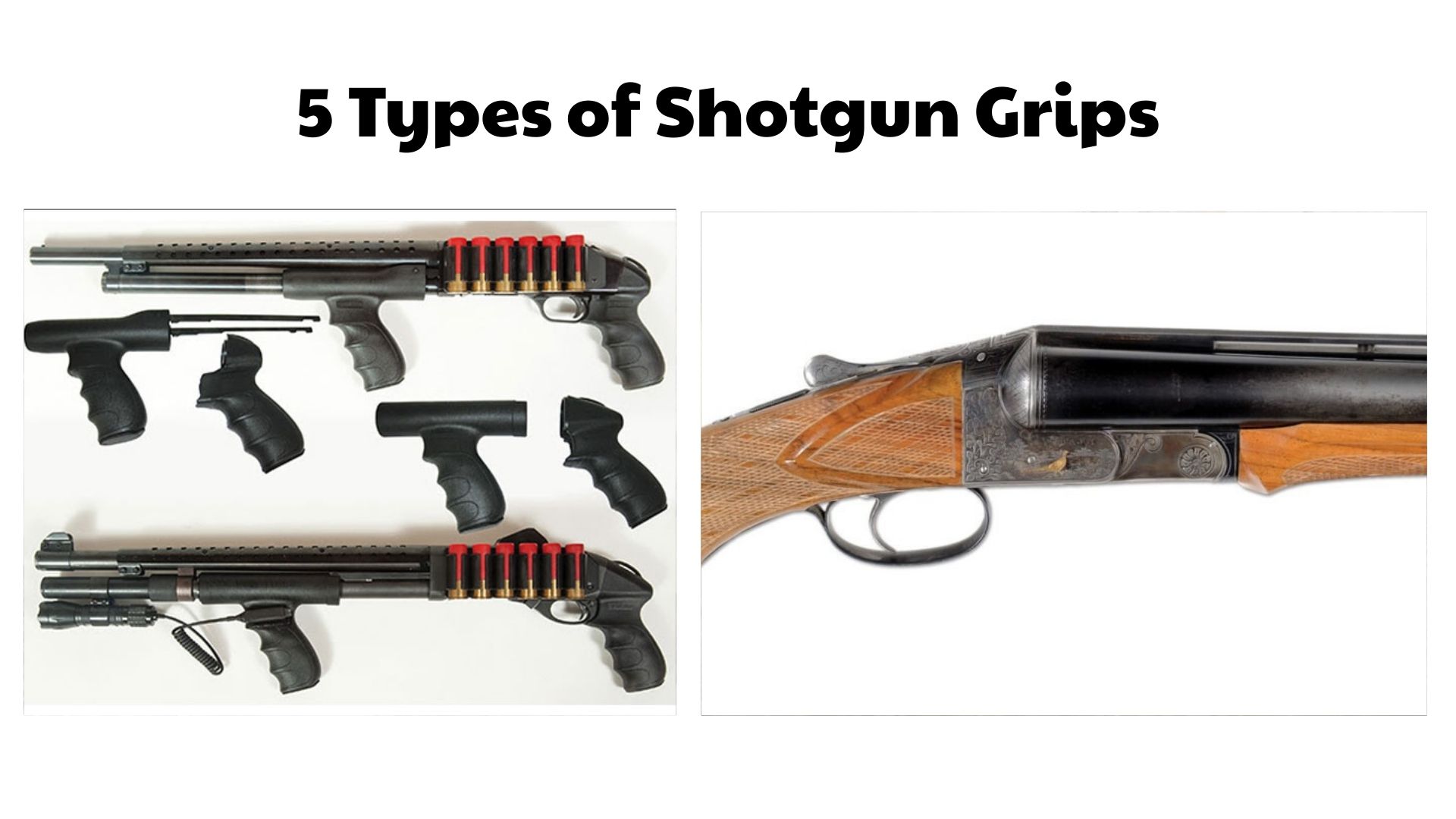
Shotgun grips play a surprisingly important role in how a shotgun feels, handles, and performs in real-world use. While barrels and actions often get most of the attention, the grip is the shooter’s primary contact point with the firearm. It directly influences recoil management, trigger control, shooting posture, and long-term comfort. Different shooting disciplines—such as hunting, clay sports, home defense, or tactical use—naturally favor different grip styles.
This guide breaks down the most common types of shotgun grips in a clear, practical way. Rather than focusing on technical jargon, it explains how each grip works, who it suits best, and what trade-offs come with it. Whether you are choosing your first shotgun or fine-tuning an existing setup, understanding these grip styles can help you make a smarter, more confident decision.
Types of Shotgun Grips: A Practical Breakdown
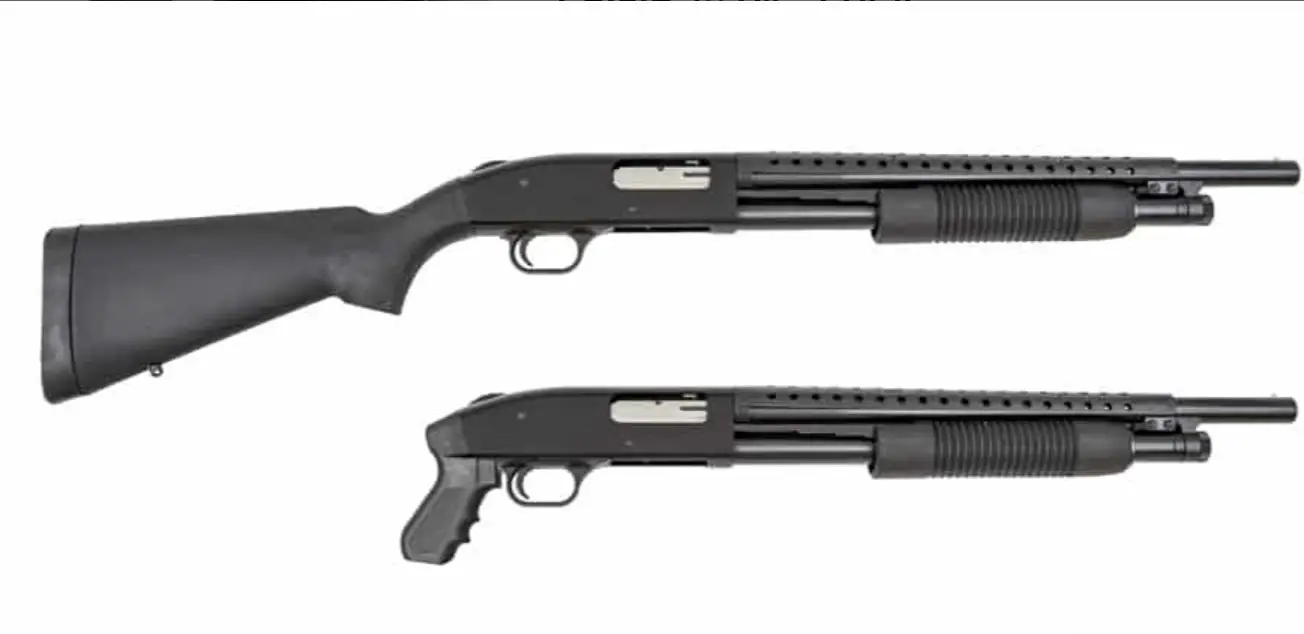
Below are five widely recognized types of shotgun grips. Each section explains the grip’s shape, ergonomics, use cases, and real-world advantages without unnecessary complexity. The goal is simple: help you understand how each grip actually feels and functions when you’re behind the trigger.
1. Straight Grip (English Grip)
The straight grip, often called the English grip, is one of the oldest and most traditional shotgun grip designs. It features a smooth, nearly straight stock line with little to no pronounced curve for the firing hand. Instead of locking the hand into a fixed position, the grip allows the shooter’s hand to slide slightly forward or backward along the stock.
Design and Ergonomics
Straight grips prioritize simplicity and fluid movement. The wrist remains in a relatively neutral position, reducing strain during long shooting sessions. Because the grip does not force a steep hand angle, it allows for natural pointing—an important factor in instinctive shooting sports like upland bird hunting.
This grip style is commonly found on classic side-by-side and over-under shotguns. The absence of finger grooves or palm swells makes it ambidextrous by nature, suitable for both right- and left-handed shooters without modification.
Performance in the Field
In practical use, straight grips excel in scenarios where quick mounting and smooth swing matter more than recoil control. Hunters appreciate the way this grip facilitates fast target acquisition and effortless barrel movement when tracking birds in flight.
However, because the grip does not anchor the hand firmly, recoil control is slightly reduced compared to more contoured grips. This is rarely an issue with lighter hunting loads but can become noticeable with heavier shells.
Best Use Cases
Straight grips are best suited for:
- Upland bird hunting
- Traditional clay shooting
- Classic or lightweight shotguns
They are less ideal for tactical or defensive shotguns, where firm grip retention and recoil mitigation are priorities.
Pros and Cons
Advantages:
- Natural pointing and smooth swing
- Comfortable for long shooting sessions
- Ambidextrous and simple design
Limitations:
- Less recoil control
- Limited leverage for rapid follow-up shots
The straight grip remains a favorite among traditionalists for good reason. It emphasizes feel and flow over brute control, making it ideal for shooters who rely on instinct and experience.
2. Pistol Grip (Full Pistol Grip)
The full pistol grip is one of the most common modern shotgun grip designs. Unlike the straight grip, it features a pronounced curve that positions the hand at a steeper angle, allowing the fingers to wrap fully around the grip. This design closely resembles the grip found on rifles and handguns.
Design and Ergonomics
Pistol grips are designed to maximize control. The curved shape locks the hand into a consistent position, improving trigger reach and stability. Many pistol grips also include palm swells, textured surfaces, or checkering to enhance grip security.
This grip places the wrist in a more flexed position, which can reduce fatigue when firing heavier loads. The consistent hand placement also helps shooters maintain uniform trigger control shot after shot.
Recoil Management and Control
One of the biggest advantages of a pistol grip is recoil management. By anchoring the hand more securely, the grip allows the shooter to pull the shotgun firmly into the shoulder, reducing muzzle rise and perceived recoil.
This makes pistol grips especially popular for high-volume shooting disciplines such as trap and sporting clays, as well as for defensive shotguns where rapid follow-up shots matter.
Best Use Cases
Full pistol grips are commonly used for:
- Trap and sporting clays
- Tactical and defensive shotguns
- Heavy hunting loads
They are also a good choice for newer shooters who benefit from consistent hand placement and enhanced control.
Pros and Cons
Advantages:
- Excellent recoil control
- Consistent trigger reach
- Improved stability for rapid shots
Limitations:
- Less fluid swing than straight grips
- Can feel restrictive for instinctive shooters
The pistol grip represents a shift toward control and precision. While it sacrifices some of the elegance and freedom of movement found in traditional grips, it delivers confidence and consistency in demanding shooting situations.
3. Semi-Pistol Grip
The semi-pistol grip sits comfortably between a straight grip and a full pistol grip, offering a balance of freedom and control. Visually, it has a gentle curve rather than a deep hook, allowing the shooter’s hand to rest naturally without being fully locked into position. This design has become extremely popular on modern hunting and sporting shotguns.
Design and Ergonomics
A semi-pistol grip provides a subtle wrist angle that feels more supportive than a straight grip but less restrictive than a full pistol grip. The shooter gains additional leverage for recoil control while maintaining the ability to adjust hand position slightly during a swing.
This grip style often includes light checkering or textured panels, which improve traction without feeling aggressive. Because of its moderate contour, it accommodates a wide range of hand sizes and shooting styles.
Handling and Shooting Dynamics
In real-world shooting, the semi-pistol grip shines in versatility. It supports smooth gun mounting and natural pointing, yet still provides enough control for heavier loads. Many shooters find this grip ideal for situations where they transition between fast-moving targets and deliberate follow-up shots.
Compared to a straight grip, recoil is easier to manage. Compared to a full pistol grip, the swing feels less constrained. This balance makes the semi-pistol grip one of the most forgiving options available.
Best Use Cases
Semi-pistol grips are well suited for:
- General-purpose hunting shotguns
- Sporting clays and skeet
- Shooters who value versatility
They are often chosen by shooters who participate in multiple disciplines and want one shotgun to do everything reasonably well.
Pros and Cons
Advantages:
- Balanced control and freedom of movement
- Comfortable for long sessions
- Highly versatile across shooting styles
Limitations:
- Not as traditional as straight grips
- Not as locked-in as full pistol grips
For many shooters, the semi-pistol grip represents the “sweet spot.” It may not excel at one extreme, but it performs reliably well in nearly every scenario.
4. Prince of Wales Grip
The Prince of Wales grip is a refined variation of the semi-pistol grip, blending elegance with functional ergonomics. It features a rounded, flowing curve that is slightly fuller than a straight grip but more graceful than a standard semi-pistol design. This grip is commonly associated with high-quality sporting and game shotguns.
Design and Aesthetic Appeal
What sets the Prince of Wales grip apart is its emphasis on comfort and craftsmanship. The grip often includes a subtle palm swell and smooth transitions, creating a grip that feels sculpted rather than molded. It is visually appealing and ergonomically considerate.
Unlike more aggressive grip styles, the Prince of Wales grip encourages relaxed hand positioning. This reduces fatigue and promotes a consistent mount, especially during extended shooting days.
Practical Performance
Functionally, this grip offers better recoil control than a straight grip while preserving fluid gun movement. The hand is supported without being forced into a fixed angle, making it ideal for instinctive shooting disciplines.
Shooters often describe this grip as “natural” or “intuitive.” It does not demand conscious adjustment; instead, it allows the shooter to focus entirely on the target.
Best Use Cases
The Prince of Wales grip is commonly found on:
- High-end hunting shotguns
- Sporting and driven game guns
- Shooters who value comfort and refinement
It is less common on tactical or defensive shotguns, where maximum control and retention are prioritized.
Pros and Cons
Advantages:
- Excellent comfort and ergonomics
- Natural pointing characteristics
- Elegant and balanced design
Limitations:
- Limited availability on budget models
- Less aggressive recoil control than pistol grips
The Prince of Wales grip appeals to shooters who appreciate both form and function. It delivers a refined shooting experience without sacrificing practical performance.
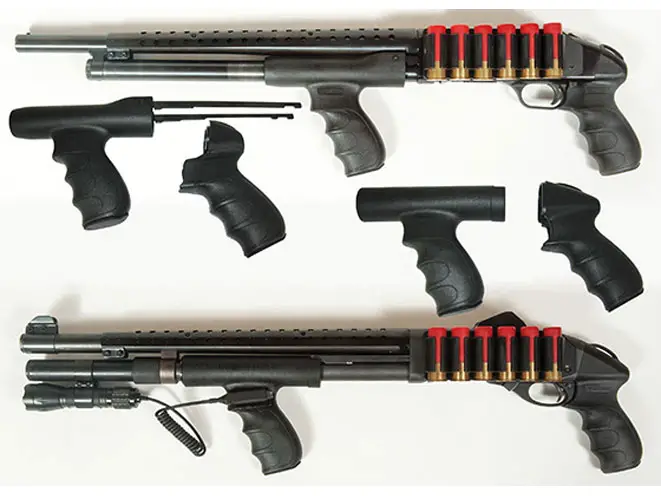
5. Tactical Pistol Grip (Vertical Grip)
The tactical pistol grip, also called the vertical grip, is the most modern and aggressive style among shotgun grips. It features a sharply angled hand placement that firmly locks the shooter’s hand into a controlled position. This grip style is designed for tactical, home defense, and law enforcement shotguns, where rapid follow-up shots and recoil management are critical.
Design and Ergonomics
The tactical pistol grip is engineered to maximize leverage and minimize muzzle rise. It typically has deep finger grooves, pronounced palm swells, and a textured surface to enhance traction under stress or wet conditions. The vertical hand placement reduces the wrist angle, allowing the shooter to absorb recoil more efficiently.
Many tactical shotguns include an integrated trigger guard and grip design that encourages a strong, repeatable mount. This feature is particularly important when firing heavy buckshot or slugs, as it keeps the shotgun stable during rapid engagement.
Performance and Recoil Management
A tactical pistol grip is unmatched for recoil control and stability. By anchoring the hand firmly, it enables faster follow-up shots, improved accuracy in dynamic situations, and better handling in confined spaces. Combined with short barrels and tactical stocks, this grip transforms the shotgun into a highly responsive tool.
The trade-off is reduced fluidity for swing shooting. While ideal for home defense and tactical operations, the grip feels less natural for instinctive upland bird shooting or sporting clays.
Best Use Cases
- Law enforcement and military shotguns
- Home defense setups
- Heavy buckshot and slug engagements
- Situations demanding rapid follow-up shots
Pros and Cons
Advantages:
- Maximum control and recoil management
- Enhanced rapid-fire capability
- Textured design improves grip under adverse conditions
Limitations:
- Less natural swing for sporting or instinctive shots
- Heavier and bulkier compared to traditional grips
For tactical and defensive shooters, the vertical pistol grip is the clear choice. It prioritizes control, precision, and stability, making it ideal for high-pressure or heavy-load scenarios.
Conclusion
Shotgun grips are more than just a stylistic choice—they fundamentally shape how the shotgun handles, recoils, and feels in the hands. From the classic straight grip for smooth swings and traditional hunting to the tactical pistol grip for rapid-fire stability, each style offers unique advantages and trade-offs. Understanding the five main types—Straight/English, Full Pistol, Semi-Pistol, Prince of Wales, and Tactical Pistol—allows shooters to select a grip that matches their shooting discipline, comfort needs, and target engagement style.
Traditional grips emphasize natural pointing and fluid swing, ideal for upland bird hunting or clay sports. Intermediate grips like semi-pistol and Prince of Wales balance comfort, recoil management, and versatility for multi-purpose use. Tactical pistol grips deliver maximum control and rapid follow-up capability for heavy loads or defensive scenarios. Choosing the right grip improves accuracy, reduces fatigue, and enhances overall confidence with the shotgun, ensuring shooters perform effectively and safely in the field or at the range.
Frequently Asked Questions About Shotgun Grips
1. What are shotgun grips?
Shotgun grips are the part of the stock where the shooter holds the firearm. They influence control, recoil management, and shooting comfort.
2. How many types of shotgun grips are there?
The main types are Straight/English, Full Pistol, Semi-Pistol, Prince of Wales, and Tactical Pistol/Vertical grips.
3. What is a Straight or English grip?
A straight grip features a nearly linear stock line with minimal curve, promoting smooth swing and natural pointing for hunting and clay sports.
4. Who should use a straight grip?
Ideal for traditional hunters, clay shooters, or anyone prioritizing fluid swing over recoil control.
5. What is a Full Pistol grip?
A full pistol grip has a pronounced angle, locking the hand into a firm position to maximize control and recoil management.
6. When is a pistol grip most useful?
It is especially effective for tactical use, home defense, and heavy hunting loads where control and follow-up shots are critical.
7. What is a Semi-Pistol grip?
Semi-pistol grips are a compromise between straight and full pistol grips, offering moderate hand angle and balance between swing and control.
8. What makes the Prince of Wales grip unique?
It blends elegance and ergonomics, featuring a subtle palm swell and smooth curve, ideal for comfort and natural pointing.
9. What is a Tactical Pistol/Vertical grip?
This grip is steeply angled, designed for maximum control and recoil management in defensive or tactical situations.
10. Do shotgun grips affect recoil?
Yes, grips like full pistol and tactical designs reduce felt recoil by anchoring the hand and improving leverage.
11. Can a shooter change the grip type?
Many shotguns allow stock or grip replacement, though compatibility with the action and stock length must be considered.
12. Are grips ambidextrous?
Straight and Prince of Wales grips are naturally ambidextrous; pistol and tactical grips often favor the right hand unless designed specifically for left-hand use.
13. Do grips affect accuracy?
Yes. A grip that suits a shooter’s hand improves control, follow-up shots, and overall accuracy.
14. Which grip is best for beginners?
Straight grips or semi-pistol grips are recommended for new shooters due to comfort and forgiving swing.
15. Which grip is best for heavy hunting loads?
Full pistol and tactical grips are preferred because they provide stronger recoil management.
16. Which grip is best for clay shooting?
Straight, semi-pistol, or Prince of Wales grips, as they allow fluid swings and natural pointing.
17. Do tactical grips reduce swing speed?
Yes, vertical pistol grips are less fluid, which may affect instinctive target acquisition but enhance control.
18. What is a palm swell?
A raised area on a grip that fills the shooter’s hand for improved control and comfort.
19. Are grips affected by hand size?
Yes, small or large hands may find certain grips uncomfortable; grip size and contour should match hand dimensions.
20. Can grips be textured?
Yes, checkering, stippling, or rubberized textures improve traction and reduce slippage.
21. Do shotgun grips influence trigger reach?
Yes, pistol and tactical grips position the hand to improve or adjust trigger access.
22. Are shotgun grips interchangeable?
Some are, especially aftermarket stocks, but action type, length of pull, and receiver compatibility must be verified.
23. Can grips reduce fatigue?
Yes, ergonomically designed grips like Prince of Wales and semi-pistol reduce wrist strain over long sessions.
24. What grip is used on side-by-side shotguns?
Straight or English grips are most common due to tradition and fluid swing requirements.
25. Can grips help with follow-up shots?
Yes, pistol and tactical grips anchor the hand, allowing faster and more controlled follow-up shots.
26. Do grips affect mounting the shotgun?
Yes, certain grips like full pistol and tactical may require slight adjustments in gun mount compared to straight grips.
27. What is a vertical grip?
Another term for tactical pistol grip with a steep hand angle designed for maximum control.
28. Do all grips work with all shotguns?
No, some shotguns are designed for specific grips; aftermarket modification may be necessary for others.
29. Can grips influence perceived recoil?
Yes, grips that anchor the hand reduce felt recoil significantly, improving comfort and accuracy.
30. Are wooden grips better than synthetic?
Wood grips offer traditional aesthetics and feel, while synthetic grips offer durability, weather resistance, and sometimes better traction.
31. Can grips be customized?
Yes, grips can be reshaped, added with palm swells, or fitted with rubber coatings to suit shooter preference.
32. Are grips regulated?
Grips are not heavily regulated, but modifications must comply with local firearm laws, especially for tactical setups.
33. What grip is best for instinctive shooting?
Straight or Prince of Wales grips excel for instinctive target acquisition due to fluid pointing.
34. What grip is best for controlled precision?
Full pistol and tactical grips are ideal for deliberate, precise shooting and recoil management.
35. Do grips affect swing path?
Yes, straight and semi-pistol grips allow smoother swings; tactical grips constrain the path slightly but improve stability.
36. What is the most versatile grip?
Semi-pistol grips offer a balance between comfort, recoil control, and fluidity, making them highly versatile.
37. Can grips reduce muzzle rise?
Yes, tactical and full pistol grips help counteract muzzle rise, keeping shots on target.
38. What grip is best for home defense?
Tactical pistol grips are preferred for confined spaces and rapid target transitions.
39. Do grips affect stock length?
Yes, grip design may slightly influence length of pull, affecting fit and shooting posture.
40. Can grips improve comfort for long sessions?
Yes, ergonomic designs like Prince of Wales and semi-pistol reduce fatigue during extended hunting or practice.
41. Are grips important for safety?
Yes, a secure grip reduces accidental slips and improves control, enhancing overall shooting safety.
42. Can grips accommodate gloves?
Some grips, especially larger or textured ones, provide enough space and traction for gloved hands.
43. Do grips affect shotgun balance?
Yes, grip design influences perceived balance and handling characteristics of the shotgun.
44. Are there grips for competitive shooting?
Yes, full pistol and semi-pistol grips are commonly used in sporting clays and trap competitions for better control.
45. Can grips be combined with recoil pads?
Yes, using a grip with a quality recoil pad enhances comfort and reduces felt recoil further.
46. Do grips influence how fast you can aim?
Yes, straight and Prince of Wales grips allow faster instinctive aiming, while tactical grips prioritize stability over speed.
47. Can grips be adjusted for hand size?
Yes, aftermarket grips allow modifications such as sanding, rubber sleeves, or custom stocks to fit hand size.
48. Which grip is preferred for novice hunters?
Straight or semi-pistol grips, due to ease of use, comfort, and forgiving handling characteristics.
49. Do grips affect shooting style?
Absolutely, the grip dictates hand placement, swing fluidity, recoil absorption, and overall shooting posture.
50. Can grips impact long-term joint health?
Yes, ergonomically designed grips reduce wrist, hand, and shoulder strain, especially during long days in the field.
51. Should I try different grips before buying?
Yes, testing grips helps determine which style matches your hand size, shooting discipline, and comfort preferences.