
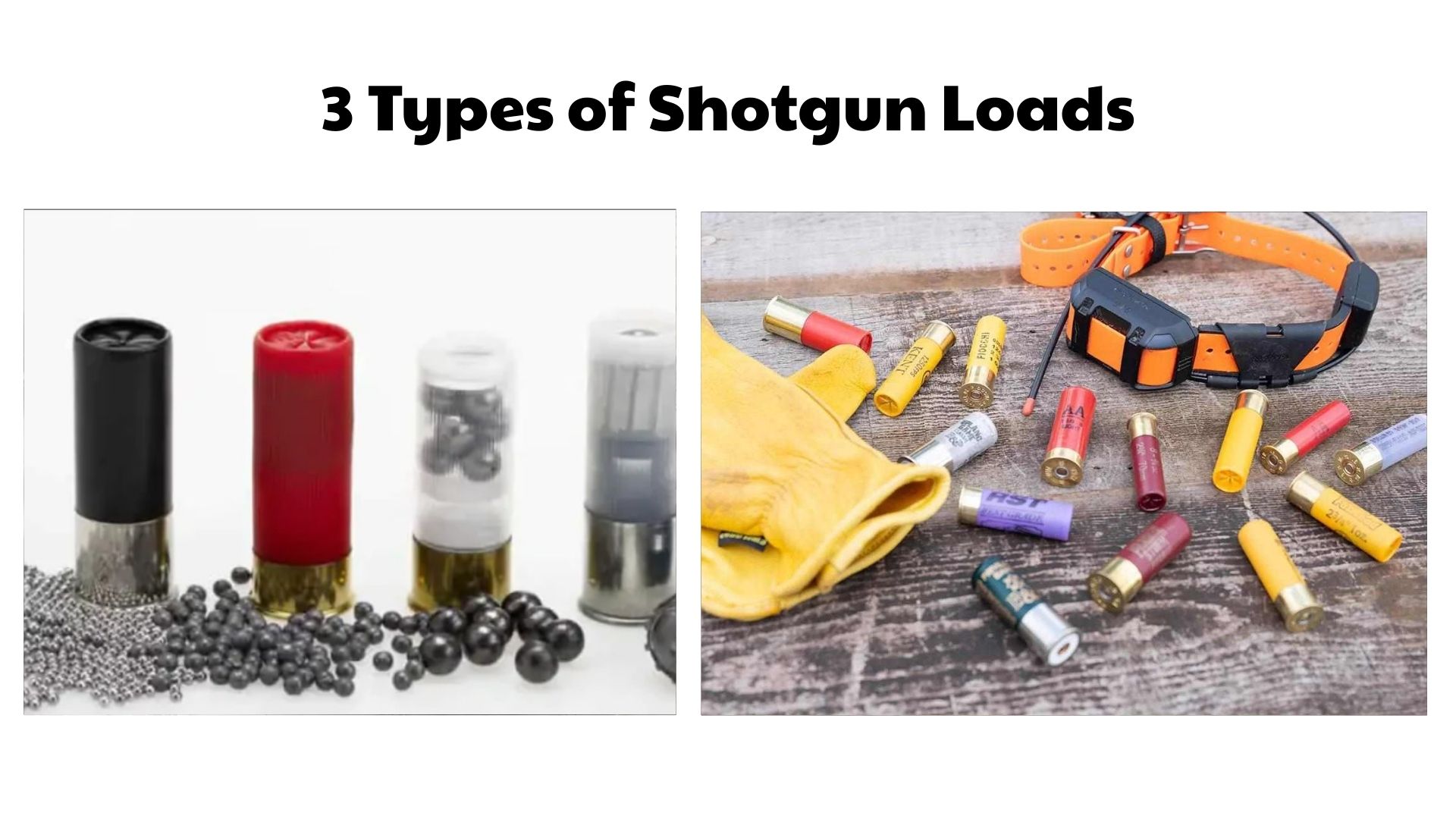
Shotgun loads play a critical role in how a shotgun performs, feels, and ultimately succeeds in its intended purpose. Unlike rifles or handguns that fire a single projectile, shotguns rely on carefully configured loads that determine pellet size, spread pattern, recoil, and effective range. Understanding how different shotgun loads behave helps shooters choose the right ammunition for hunting, sport shooting, or defensive use.
This guide explores the three most common and practical types of shotgun loads used today. Each load type is designed with a specific purpose in mind, balancing power, precision, and control. Whether you are breaking clay targets, pursuing game in the field, or focusing on controlled stopping power, selecting the proper load improves accuracy, confidence, and overall shooting efficiency. Below, we examine each load in detail, explaining how it works, when to use it, and what makes it distinct.
3 Types of Shotgun Loads Explained
1. Target Load
Target loads are the most commonly used shotgun loads worldwide, especially in clay shooting sports such as trap, skeet, and sporting clays. These loads are specifically engineered to deliver consistent patterns, manageable recoil, and predictable performance at short to moderate distances. Rather than focusing on raw power, target loads prioritize shooter comfort, repeatability, and precision.
Design and Composition
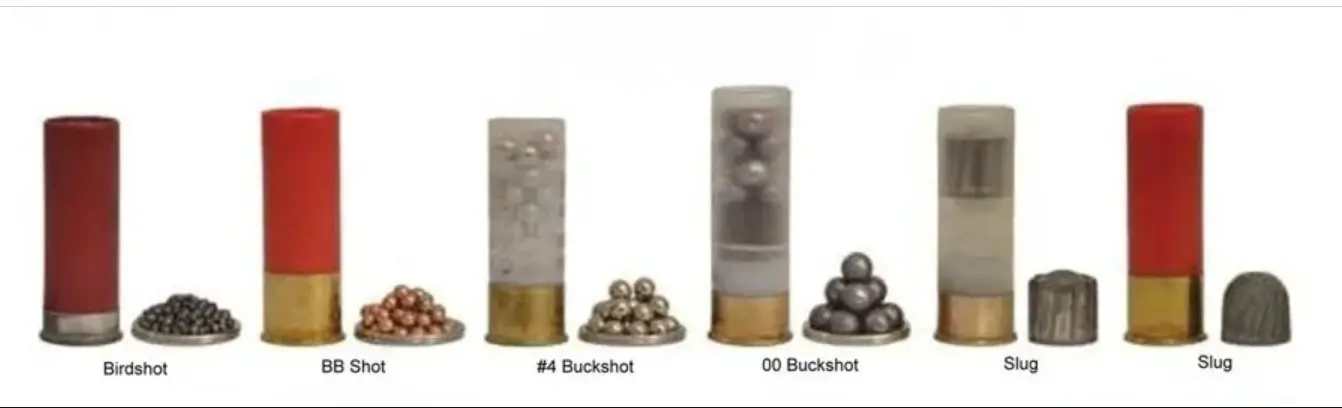
A target load typically contains small lead or steel pellets known as birdshot, commonly ranging from sizes #7½ to #9. These pellets are packed in relatively light payloads, usually between ⅞ oz and 1⅛ oz, depending on gauge and competition rules. The lighter payload reduces recoil while still producing a dense enough pattern to break fragile clay targets.
The powder charge in a target load is carefully calibrated to produce consistent velocities without excessive pressure. This ensures smooth cycling in semi-automatic shotguns and predictable recoil in break-action or pump shotguns. The wad system plays a crucial role by protecting the pellets as they travel down the barrel and controlling how they disperse after leaving the muzzle.
Performance Characteristics
Target loads are optimized for short to medium distances, typically within 20 to 40 yards. At these ranges, the pellet spread is wide enough to forgive minor aiming errors while still delivering enough impact to shatter clay targets. Because clay targets are brittle, penetration is not a concern, allowing manufacturers to focus on pattern uniformity instead.
Recoil is one of the defining features of a target load. Reduced recoil allows shooters to maintain focus over long shooting sessions and quickly transition between targets. This is particularly important in competitive shooting, where fatigue can negatively affect performance.
Best Use Cases
- Trap, skeet, and sporting clays
- Training and practice sessions
- Recreational target shooting
- New shooter introduction
Advantages and Limitations
Advantages:
- Low recoil improves comfort and control
- Consistent patterns enhance accuracy
- Affordable and widely available
Limitations:
- Limited penetration
- Not suitable for hunting larger game
- Short effective range
Target loads are ideal for shooters who value repetition, rhythm, and precision. While they lack stopping power, their efficiency and shootability make them indispensable for sport shooting and skill development.
2. Buckshot Load
Buckshot loads are designed for situations where increased power and penetration are required. Instead of numerous small pellets, buckshot uses fewer but significantly larger pellets, delivering substantial energy on impact. This load bridges the gap between birdshot and slugs, offering controlled spread combined with serious stopping power.
Design and Pellet Configuration
Buckshot pellets are substantially larger than birdshot, commonly ranging from #4 buck to 00 buck. A single buckshot shell may contain anywhere from 8 to 27 pellets, depending on size and gauge. These pellets are stacked within the shell and separated by wads that help manage deformation and pattern consistency.
The larger pellet size allows buckshot to retain energy farther downrange compared to birdshot. This makes it suitable for medium-sized game and defensive applications where penetration and reliability are essential.
Ballistic Behavior
Buckshot patterns spread more slowly than birdshot due to the reduced pellet count. At close to moderate ranges—typically within 25 to 40 yards—buckshot delivers a tight, effective pattern capable of producing decisive results. Beyond this distance, pellet dispersion increases and effectiveness diminishes.
Recoil is noticeably higher than target loads, as buckshot carries more mass and energy. Proper grip, stance, and shotgun fit become increasingly important when using buckshot regularly.
Common Applications
- Medium-sized game hunting
- Home defense
- Law enforcement and tactical use
Advantages and Limitations
Advantages:
- High stopping power
- Effective at close to medium range
- Balanced spread and penetration
Limitations:
- Increased recoil
- Reduced effectiveness at long range
- Requires careful pattern testing
Buckshot loads are a practical choice when decisive impact matters more than pellet count. Their balance of spread and power makes them a trusted option for both defensive and hunting roles.
3. Slug Load
Slug loads represent the most powerful and precise category among shotgun loads. Unlike target loads or buckshot, a slug load fires a single, solid projectile instead of multiple pellets. This design transforms a shotgun from a short-range scattergun into a highly capable tool for delivering concentrated energy at extended distances. Slug loads are widely used for large game hunting, controlled precision shooting, and specialized tactical roles.
Design and Construction
A shotgun slug is a single, large projectile typically made of lead or a lead alloy, though modern variations may incorporate copper or bonded materials. Traditional slugs, often called Foster or Brenneke slugs, are designed to be fired from smoothbore barrels. These slugs feature hollow bases or external ribs that help stabilize the projectile in flight while allowing safe passage through the barrel.
More advanced slug loads use sabot designs. In a sabot slug, a smaller, high-density projectile is encased in a plastic carrier that separates from the slug after exiting the barrel. Sabot slugs are intended for rifled shotgun barrels, providing significantly improved accuracy and extended effective range.
Ballistic Performance
Slug loads deliver immense energy on impact. At close to medium distances, a slug can rival the stopping power of traditional rifle cartridges used for large game. Typical effective ranges vary depending on barrel type and slug design. Smoothbore slugs are generally effective within 50 to 75 yards, while sabot slugs fired from rifled barrels can maintain accuracy out to 150 yards or more.
Because all energy is concentrated into a single projectile, slug loads offer deep penetration and predictable terminal performance. This makes them particularly effective in regions where hunting regulations restrict rifle use, allowing shotguns with slugs as a legal alternative.
Recoil and Shooter Considerations
Slug loads generate the highest recoil of all shotgun loads. The combination of projectile weight and velocity produces significant rearward force, which can fatigue shooters during extended sessions. Proper shotgun fit, recoil pads, and shooting technique are essential for managing this recoil effectively.
Despite the increased recoil, many shooters appreciate the control and predictability of slug loads. The single-projectile nature eliminates pattern variability, placing full responsibility for accuracy on sight alignment and trigger control.
Accuracy and Sight Systems
Slug loads often benefit from improved sighting systems. While basic bead sights can be used at short ranges, rifle-style sights or optical sights such as red dots significantly enhance accuracy. Rifled barrels paired with sabot slugs can achieve rifle-like precision, making them suitable for ethical shots on large game.
Zeroing a shotgun for slug use is critical. Unlike pellet-based loads, slugs require precise point-of-impact alignment to ensure consistent results. Many shooters dedicate specific shotguns or barrels exclusively to slug shooting.
Common Applications
- Large game hunting
- Deer hunting in shotgun-only zones
- Precision shooting with shotguns
- Specialized tactical or law enforcement use
Advantages and Limitations
Advantages:
- Maximum stopping power
- Deep penetration
- Extended effective range
Limitations:
- Heavy recoil
- Requires precise aiming
- Higher cost compared to target loads
Slug loads redefine what a shotgun can accomplish. When precision and power are required, they stand unmatched among shotgun ammunition types.
Conclusion
Shotgun loads are the foundation of shotgun performance, defining how the firearm behaves, feels, and performs in real-world use. Each of the three primary types of shotgun loads—target loads, buckshot loads, and slug loads—serves a distinct purpose and excels within specific conditions. Target loads emphasize comfort, consistency, and repetition, making them ideal for clay sports and training. Buckshot loads balance spread and stopping power, offering reliable performance for hunting and defensive scenarios. Slug loads concentrate all energy into a single projectile, transforming the shotgun into a powerful precision tool capable of ethical large-game harvests and extended-range accuracy.
Understanding these differences allows shooters to select the correct load for their intended application, improving accuracy, safety, and confidence. Rather than relying on one-size-fits-all ammunition, informed shooters tailor their load choice to match distance, target type, and shooting environment. When paired correctly, the right shotgun load enhances both performance and overall shooting experience.
Frequently Asked Questions About Shotgun Loads
1. What are shotgun loads?
Shotgun loads are the types of ammunition designed for shotguns. They determine pellet size, velocity, spread pattern, and energy delivered on impact.
2. How many types of shotgun loads exist?
There are three primary types: target loads, buckshot loads, and slug loads. Each has specific applications for sport, hunting, or defense.
3. What is a target load?
A target load contains small pellets (birdshot) and is used for clay shooting, training, and recreational target practice. It emphasizes low recoil and consistent patterns.
4. What is a buckshot load?
Buckshot loads have fewer, larger pellets than birdshot. They provide higher stopping power and are commonly used for medium-sized game hunting and self-defense.
5. What is a slug load?
Slug loads fire a single solid projectile. They offer maximum power, deep penetration, and are effective for large game hunting or precision shooting at longer ranges.
6. What is the effective range of target loads?
Target loads are typically effective within 20 to 40 yards, making them ideal for clay shooting or close-range practice.
7. What is the effective range of buckshot?
Buckshot is effective at close to medium ranges, usually within 25 to 40 yards. Beyond that, pellet spread can reduce effectiveness.
8. What is the effective range of slug loads?
Slug loads vary depending on barrel type. Smoothbore slugs are effective up to 75 yards, while rifled barrels with sabot slugs can reach 150 yards or more.
9. Do shotgun loads affect recoil?
Yes. Target loads have low recoil, buckshot has moderate recoil, and slugs produce the highest recoil due to their mass and velocity.
10. Can all shotguns fire all loads?
Not always. Barrel type, gauge, and chamber length may limit compatibility. For example, rifled barrels are needed for sabot slugs.
11. Are slug loads legal for hunting?
Yes, in many regions, slugs are legal for large game hunting where rifles are restricted. Always check local regulations.
12. Can target loads be used for hunting?
They are generally unsuitable for medium or large game due to limited penetration. They are primarily for small birds or clay targets.
13. Can buckshot be used for self-defense?
Yes, buckshot is widely recommended for home defense due to its stopping power and effective spread at close range.
14. What gauges are shotgun loads available in?
Shotgun loads are available in various gauges including 12, 20, 16, and .410, with 12 gauge being the most common.
15. Are steel shot and lead shot interchangeable?
No. Steel shot is often required where lead is banned for environmental reasons. Always use compatible loads for your barrel.
16. How does pellet size affect performance?
Smaller pellets (birdshot) spread wider and have less penetration. Larger pellets (buckshot) concentrate energy and penetrate deeper.
17. What is a sabot slug?
A sabot slug uses a smaller high-density projectile inside a plastic carrier. It improves accuracy when fired from rifled barrels.
18. Can slug loads be fired from smoothbore barrels?
Yes, standard Foster or Brenneke slugs are designed for smoothbore barrels, though accuracy is reduced compared to rifled barrels.
19. What is the purpose of the wad in shotgun loads?
The wad separates the powder from the pellets or slug, protects them during barrel travel, and influences pattern spread and recoil.
20. How do I choose the right load?
Consider the application: target shooting favors birdshot, self-defense favors buckshot, and large-game hunting favors slugs.
21. What is birdshot?
Birdshot refers to small pellets used in target loads or for hunting small birds. Sizes typically range from #7½ to #9.
22. What is buckshot size?
Buckshot sizes range from #4 buck to 00 buck, with larger numbers indicating larger pellet diameter and more energy on impact.
23. Can buckshot penetrate walls?
Yes, but penetration varies with pellet size and barrel. Use caution in home defense to avoid over-penetration.
24. How does powder charge affect shotgun loads?
Powder charge determines velocity, recoil, and energy. Target loads use lighter charges; slugs and buckshot use heavier charges for impact.
25. Can I practice self-defense with target loads?
While low-recoil target loads are good for training, they do not provide adequate stopping power for actual defense scenarios.
26. Are there specialty loads?
Yes, there are less-lethal rounds, frangible loads, and high-velocity slugs for specialized tactical purposes.
27. What is frangible shotgun ammo?
Frangible loads disintegrate on impact, reducing the risk of over-penetration. They are mainly used for training or confined spaces.
28. How do loads affect pattern density?
Pattern density depends on pellet size, number, and wad design. Birdshot spreads wide, buckshot spreads moderately, and slugs have no spread.
29. Can I mix different loads in the same shotgun?
Yes, as long as the gauge and chamber match. However, switching load types requires adjusting sights and recoil expectations.
30. Do slugs require special sights?
Optional but recommended. Bead sights can work at short ranges, but rifle-style or optical sights improve accuracy significantly.
31. Are steel slugs available?
Yes, steel or copper slugs exist for areas where lead is prohibited, often with slightly different ballistics.
32. Can I use buckshot for turkey hunting?
Yes, large pellets or #4 to #6 buckshot are commonly used for turkey at close range, providing effective penetration without destroying meat.
33. Are shotgun loads affected by barrel length?
Yes, longer barrels may provide better pattern control for birdshot, while slugs are less sensitive to barrel length.
34. How do I store shotgun ammo?
Keep ammunition in a cool, dry place, away from moisture and extreme temperatures to maintain reliability and performance.
35. Are heavy loads safe for all shooters?
Heavier loads increase recoil, which may be uncomfortable or unsafe for inexperienced shooters. Start with lighter loads and work up gradually.
36. Can I use target loads for hunting?
Only for small game or birds where penetration is sufficient. They are not suitable for medium or large game.
37. What is the difference between lead and steel pellets?
Lead pellets deform more easily and may penetrate better. Steel is harder, environmentally friendly, and often mandated in waterfowl hunting.
38. How do shotgun loads affect cycling in semi-automatics?
Light target loads may fail to cycle some semi-automatic shotguns reliably. Buckshot or heavier loads are generally more reliable.
39. Can I practice with slugs?
Yes, but expect significant recoil. Use proper stance and protective equipment when training with slugs.
40. What is the history of shotgun loads?
Shotgun loads evolved from solid balls to multiple-pellet designs for hunting, and later specialized slugs and buckshot for defense and big game.
41. Are there high-velocity target loads?
Yes, some competition loads use increased powder charges for flatter trajectories while still maintaining low recoil.
42. How does temperature affect shotgun loads?
Extreme temperatures can change powder burn rate, affecting velocity and recoil. Always check performance if shooting in unusual conditions.
43. Can I use old ammo?
Ammo degrades over time. Inspect for corrosion or damage and test carefully before use, especially for slugs or self-defense rounds.
44. Are buckshot and birdshot interchangeable?
No. They serve different purposes, and switching unexpectedly can result in underperformance or safety issues.
45. Can slug loads be used in law enforcement?
Yes, slugs are often used in tactical shotguns for long-range precision or barrier penetration.
46. What determines shotgun load spread?
Pellet size, quantity, barrel type, choke, and wad design all influence how the shot spreads downrange.
47. Do slugs require rifled barrels?
Sabot slugs benefit from rifled barrels for improved accuracy. Foster or Brenneke slugs can be fired from smoothbores.
48. What is the most common shotgun load for beginners?
Target loads are ideal for beginners due to low recoil and forgiving patterns.
49. Can shotgun loads damage barrels?
Using proper gauge and load prevents damage. High-velocity or improper ammo in a mismatched gauge can cause serious injury.
50. How do I test my shotgun patterns?
Use patterning boards at various distances to see pellet spread and density. This ensures proper load selection for hunting or defense.
51. Are specialty loads available for hunting?
Yes, there are tungsten, polymer, and bonded pellet loads designed for maximum performance on specific game.
Read more: 10 Types of Shotguns for Hunting: Complete Guide to Choosing the Right Shotgun