
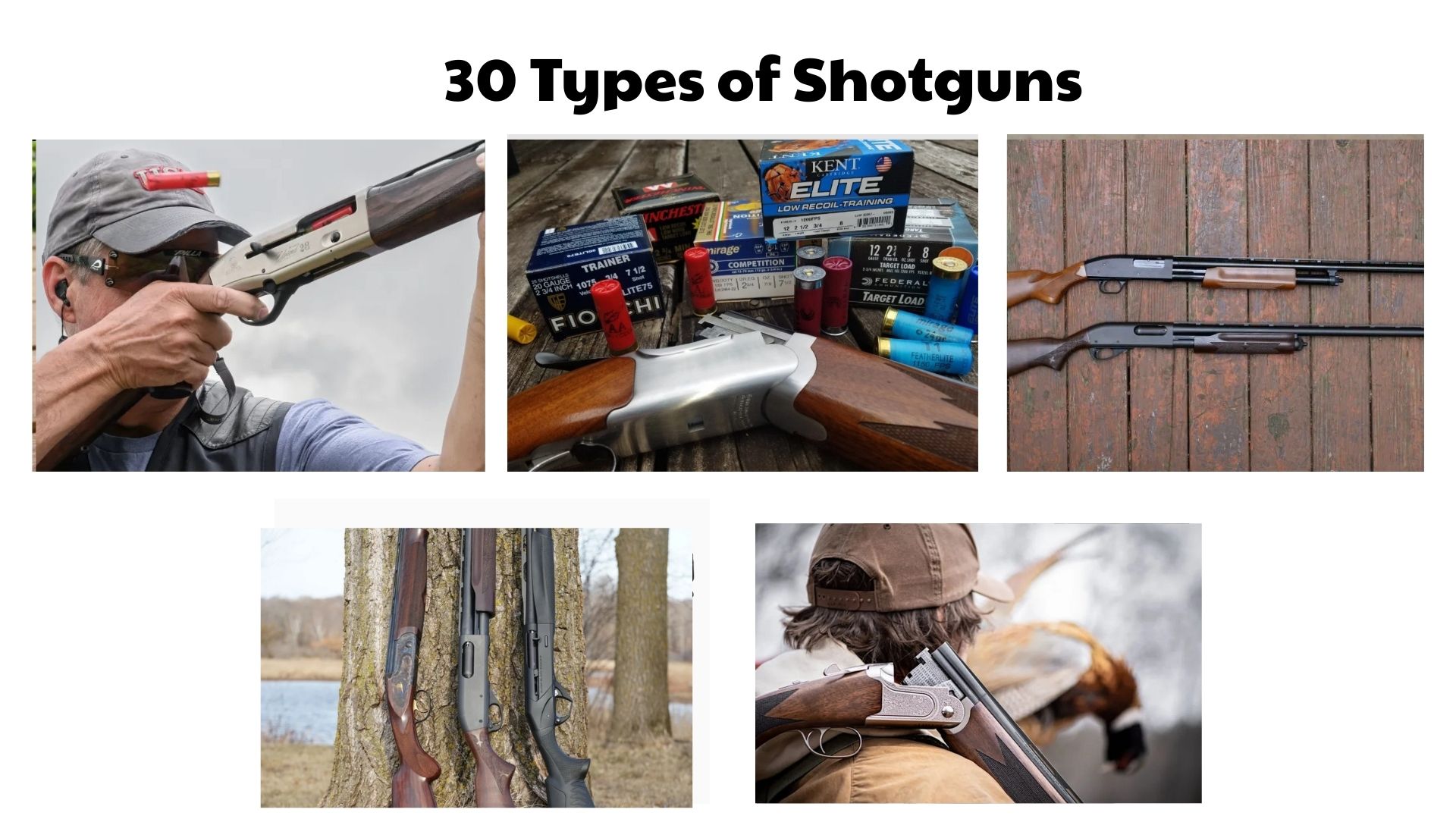
Shotguns come in many forms, each shaped by a specific purpose, environment, and shooting tradition. While they may appear similar at first glance, the differences between shotgun types can greatly influence handling, recoil, and overall shooting experience. This guide explores the most widely recognized types of shotguns in a calm, practical way. Instead of technical overload, the focus stays on how each shotgun behaves in real use—how it feels, what it is commonly used for, and why certain shooters gravitate toward it. Whether used for hunting, sport, or defense, every shotgun type has its own character and rhythm.
30 Types of Shotguns Explained
1. Pump-Action Shotgun
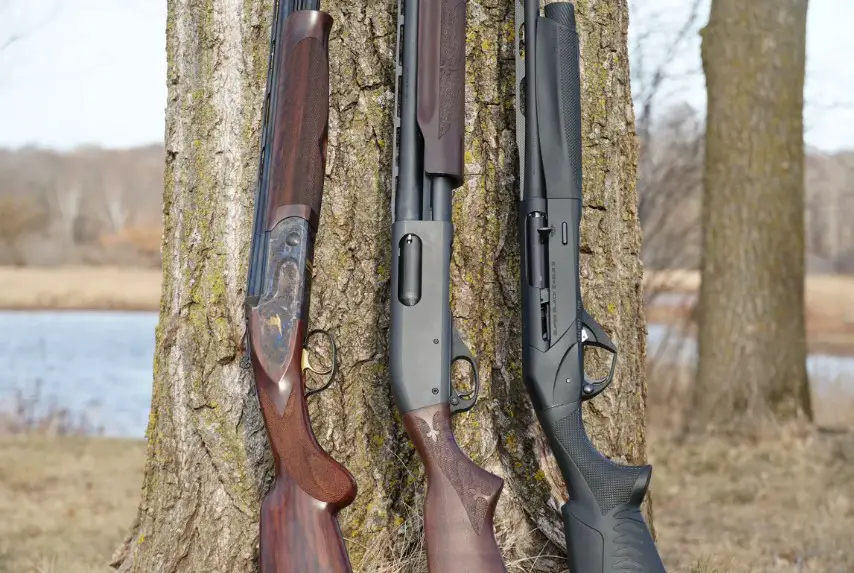
The pump-action shotgun is often the first image that comes to mind when people think about shotguns. Its sliding fore-end and unmistakable cycling motion have become iconic across generations. A quick pull and push chambers the next shell, giving the shooter direct mechanical control over every shot.
One of the pump-action’s defining traits is reliability. Because it relies on human input rather than gas or recoil systems, it functions consistently across a wide range of ammunition. Light target loads, heavy hunting shells, and specialty rounds all cycle smoothly as long as the shooter does their part.
In practical use, pump-action shotguns appear everywhere. Hunters appreciate their toughness in harsh weather. Homeowners value their simplicity and dependability. On the range, they offer a straightforward learning platform. The manual action also slows the pace slightly, which many shooters find grounding rather than limiting.
Handling tends to feel solid and deliberate. The action requires intention, almost like a handshake between shooter and firearm. That interaction builds familiarity over time. Many experienced shooters describe the pump-action as honest—it performs exactly as commanded, nothing more, nothing less.
2. Semi-Automatic Shotgun
The semi-automatic shotgun brings a different personality to the table. After each shot, the action cycles automatically, loading the next shell without manual effort. This creates a smoother shooting rhythm, especially noticeable during rapid follow-up shots.
Recoil management is often gentler in semi-automatic designs. Gas-operated or inertia-driven systems absorb part of the firing energy, reducing the sharpness felt by the shooter. For long shooting sessions, this can make a noticeable difference in comfort.
These shotguns are common in hunting fields, competitive shooting, and recreational use. Their ability to maintain sight picture between shots makes them appealing to shooters who value fluid motion. One might compare the experience to driving an automatic transmission—less effort, more flow.
That said, semi-automatics prefer clean ammunition and regular maintenance. When cared for properly, they reward the shooter with speed and ease. When neglected, they can become temperamental. In the right hands, however, they feel refined and responsive.
3. Break-Action Shotgun
The break-action shotgun is simplicity expressed through design. The barrel hinges open, exposing the chamber for loading and unloading. There is no magazine, no cycling system—just a clean, open mechanism that is easy to understand at a glance.
This design inspires confidence, especially among new shooters. When the action is open, the shotgun is visibly safe. That clarity makes it a popular choice for training, casual shooting, and traditional hunting settings.
In the field, break-action shotguns are admired for their balance and elegance. They tend to be lighter and easier to carry, which matters during long walks. The act of opening the gun between shots also creates a natural pause, encouraging deliberate shooting.
Although limited in capacity, the break-action shotgun teaches discipline. Each shot carries weight, much like placing a single brushstroke on a canvas. For many shooters, that restraint becomes part of the appeal.
4. Single-Shot Shotgun
The single-shot shotgun strips the concept down to its bare essentials. One shell, one shot, complete focus. There are no follow-ups waiting in reserve, which changes the shooter’s mindset immediately.
These shotguns are often lightweight and straightforward, making them approachable for beginners and younger shooters. They also appear in survival kits and rural settings, where simplicity matters more than speed.
Using a single-shot shotgun encourages patience. The shooter must reload after every discharge, which naturally slows the pace. Many seasoned shooters appreciate this rhythm, comparing it to fishing with a single hook rather than a net.
Despite their modest appearance, single-shot shotguns can be remarkably accurate and effective. They remind shooters that skill often outweighs capacity.
5. Double-Barrel Shotgun
The double-barrel shotgun offers two shots before reloading, delivered through two separate barrels. This configuration has stood the test of time, remaining relevant across centuries of hunting and sport.
Double-barrel designs typically come in either side-by-side or over-under formats, each offering distinct sighting and balance characteristics. Regardless of layout, the immediate availability of a second shot adds flexibility without mechanical complexity.
In use, double-barrel shotguns feel balanced and instinctive. Many shooters find they point naturally, almost like extending the arms rather than aiming a tool. The trigger pull options also allow different choke selections between barrels.
There is a quiet confidence in carrying a double-barrel shotgun. It feels traditional yet capable, refined yet practical. For many, it represents the bridge between heritage and modern shooting.
6. Over-Under Shotgun
The over-under shotgun places one barrel directly above the other, creating a clean vertical sight plane that many shooters find intuitive. This configuration is especially popular in sport shooting, where consistency and balance matter more than sheer capacity.
One practical advantage of the over-under design is barrel regulation. Each barrel can be fitted with a different choke, allowing the shooter to adapt quickly to changing distances. The first shot may be tight and precise, while the second opens up slightly—like switching gears without thinking.
In the field, over-under shotguns feel balanced and predictable. They swing smoothly and stop cleanly, which helps prevent overshooting fast-moving targets. Many experienced shooters describe them as calm and obedient, responding exactly as expected.
There is also an aesthetic element. Over-under shotguns often carry a sense of craftsmanship, blending function with visual restraint. They rarely shout for attention, yet they quietly earn respect.
7. Side-by-Side Shotgun
The side-by-side shotgun is instantly recognizable, with its twin barrels aligned horizontally. This layout has deep historical roots and remains closely tied to traditional hunting culture.
Handling a side-by-side feels different from modern designs. The wider sight picture encourages instinctive shooting rather than precise aiming. Many shooters find that targets are met naturally, almost as if the gun points itself.
In practical terms, side-by-side shotguns shine in upland hunting. Their balance favors quick mounting and fast shots at flushing birds. The gun comes alive in close-to-medium ranges, where speed matters more than calculation.
There is a certain charm to this type of shotgun. Carrying one through open fields feels like stepping into a slower rhythm, where each shot is deliberate and unhurried.
8. Lever-Action Shotgun
The lever-action shotgun is a rare but fascinating variation, borrowing its operating style from classic rifles. Cycling the lever chambers the next round, creating a tactile and engaging shooting experience.
This type of shotgun appeals strongly to shooters who enjoy mechanical interaction. Each movement feels purposeful, almost conversational, as if the firearm expects participation rather than automation.
Lever-action shotguns are often used in niche sporting events and historical reenactments. Their manual operation slows the pace, encouraging careful timing rather than rapid fire.
While not as common as pump or semi-automatic designs, lever-action shotguns offer a distinctive blend of nostalgia and function that continues to attract dedicated fans.
9. Bolt-Action Shotgun
Bolt-action shotguns occupy an unusual corner of the shotgun family. Adapted from bolt-action rifle principles, they prioritize simplicity and strength over speed.
In use, bolt-action shotguns feel deliberate and controlled. Each shot requires a conscious action to chamber the next round, reinforcing careful shot placement. This makes them well suited for training and specific hunting applications.
These shotguns are often paired with slug ammunition, where accuracy takes priority over follow-up shots. The rigid lock-up of the bolt contributes to consistent performance.
Though uncommon today, bolt-action shotguns remind shooters that effectiveness does not always depend on rapid cycling or capacity.
10. Tactical Shotgun
The tactical shotgun is configured for defensive and professional use. Features often include shorter barrels, extended magazines, and modular attachment options.
Handling is optimized for confined spaces. Quick maneuverability and straightforward controls allow the shooter to maintain awareness and control under pressure.
Tactical shotguns are frequently based on pump-action or semi-automatic platforms, chosen for their reliability. The emphasis is on function over decoration, with every element serving a purpose.
While often associated with serious scenarios, many civilian shooters appreciate tactical shotguns for their adaptability and solid construction.
11. Automatic Shotgun
Automatic shotguns are capable of continuous fire as long as the trigger remains engaged. These firearms are generally restricted to military or specialized roles.
Their design focuses on sustained output rather than precision shooting. Recoil management systems and heavy construction help maintain control during operation.
For most shooters, automatic shotguns remain theoretical rather than practical. Still, they illustrate the extreme end of shotgun evolution.
Understanding their role helps place other shotgun types into clearer perspective.
12. Youth Shotgun
Youth shotguns are designed with smaller shooters in mind. Reduced length of pull, lighter weight, and manageable recoil define this category.
These shotguns help new shooters develop proper technique without strain. Comfort encourages confidence, and confidence builds consistency.
Youth shotguns are often used in supervised environments, where learning safe handling takes priority over performance.
Many shooters remember their first youth shotgun fondly, as it marks the beginning of a lifelong interest.
13. Coach Gun
The coach gun is a short-barreled double shotgun traditionally associated with close-range defense and historical use.
Its compact size makes it quick to shoulder and easy to maneuver. Two barrels provide immediate follow-up capability without mechanical complexity.
Today, coach guns are popular among enthusiasts of classic firearms and cowboy-style shooting sports.
They carry a rugged personality, simple and direct, with little concern for excess.
14. Trap Shotgun
Trap shotguns are built specifically for trap shooting, where targets rise away from the shooter at consistent angles.
These shotguns often feature longer barrels and higher ribs, encouraging a slightly elevated point of aim. The design supports smooth follow-through.
Weight distribution is carefully managed to reduce fatigue during repeated shots.
Trap shotguns feel specialized and focused, like tools designed for one job and one job only.
15. Skeet Shotgun
Skeet shotguns are optimized for fast, crossing targets that demand quick reactions and fluid movement.
Barrels are usually shorter than those on trap shotguns, promoting speed and responsiveness. Balance favors lively handling rather than steady tracking.
Shooting skeet with the right shotgun feels rhythmic, almost musical, as targets appear from alternating directions.
This type of shotgun rewards timing and instinct, making each successful shot feel earned.
16. Survival Shotgun
The survival shotgun is a class of firearms designed to be practical, versatile, and reliable in challenging situations where every ounce counts. Unlike standard hunting or tactical shotguns, survival shotguns are often lighter, more compact, and adaptable to multiple purposes. A survival shotgun is the tool a shooter brings when the environment is unpredictable, supplies are limited, and dependability matters above all else. They are not just about firepower—they are about readiness, adaptability, and confidence in adverse conditions.
One of the first characteristics of a survival shotgun is its **compact design**. Many models feature folding or telescoping stocks, shortened barrels, and lightweight construction. The goal is clear: make the gun easy to transport in a backpack, vehicle, or even overland on foot. In survival scenarios, the shooter may need to carry the shotgun for miles, through forested terrain, or even over uneven landscapes. Every extra inch or pound can affect stamina and mobility, so manufacturers often prioritize portability without sacrificing the core mechanics of the firearm.
The **versatility of ammunition** is another defining feature. A survival shotgun should handle a wide range of shells, from standard birdshot and buckshot to slugs. The capacity to adapt to different game, defensive needs, or signaling requirements makes the survival shotgun more than just a hunting tool—it becomes a multi-purpose companion. One might use birdshot to hunt small game or even create a protective warning system, while buckshot or slugs provide greater stopping power in defensive scenarios. Many enthusiasts also note that being able to use common, widely available shells is essential; running out of ammo in a survival situation is not an option.
**Ease of maintenance** is equally critical. A survival shotgun is expected to function even with minimal cleaning and under harsh environmental conditions. Many models are simple pump-action designs with few moving parts, while some semi-automatic designs incorporate robust gas or inertia systems. In either case, the gun is intended to tolerate dirt, sand, moisture, and debris without jamming. For a shooter in the field, this reliability provides peace of mind—knowing the gun will work when it is needed most.
**Handling characteristics** are tailored to real-world use rather than comfort at a formal range. Many survival shotguns feature shortened barrels and simplified sights, which make them quicker to shoulder and maneuver in tight spaces. This compactness allows for quick reactions in unexpected scenarios, such as sudden encounters with wildlife or emergency situations around a camp. Balance is often slightly biased toward the rear, so that the shotgun feels controlled during repeated or rapid shots.
Despite being compact, a survival shotgun is usually rugged. Reinforced barrels, durable synthetic stocks, and corrosion-resistant finishes are common. The design choices reflect a philosophy: the gun must withstand rough handling and environmental extremes. Scratches, dings, and weather exposure are expected, but they rarely affect performance. Shooters often describe the survival shotgun as a dependable companion, like a pair of sturdy boots—they won’t look fancy, but they get the job done.
**Adaptability and modularity** are features that elevate a survival shotgun beyond ordinary hunting firearms. Many models allow for accessory attachments, such as flashlights, sling mounts, and optics rails. These attachments can enhance usability without compromising the gun’s fundamental simplicity. In the field, a shooter might add a light for low-visibility situations, or a sling for easier transport. These small adjustments can make the difference between efficiency and frustration when resources are scarce.
The **psychological factor** is worth noting. Carrying a survival shotgun instills confidence. Whether trekking through wilderness trails, preparing for natural disasters, or simply engaging in field exercises, knowing there is a reliable, versatile firearm available can influence decision-making and calm nerves. Shooters report that the familiarity of a well-maintained survival shotgun makes it almost an extension of themselves, creating a natural rhythm with every action, from pumping the slide to aligning the sights.
While the survival shotgun is often associated with outdoor enthusiasts, it also appeals to preppers and strategic planners. The combination of portability, ammo versatility, reliability, and durability creates a package suitable for almost any situation where a firearm is needed for protection, hunting, or signaling. Its purpose is not just defense or sport—it is **problem-solving under constraints**.
In conclusion, the survival shotgun embodies a philosophy of preparedness. It is compact but effective, simple yet versatile, rugged but manageable. For anyone venturing into uncertain environments or who wants a reliable, multi-purpose firearm, the survival shotgun represents a balance between adaptability and practicality. Each design choice—from barrel length to action type—serves the purpose of creating a tool that works consistently, efficiently, and intuitively when it matters most. In many ways, the survival shotgun is less about power and more about **assurance**: the confidence that, no matter the situation, the shooter has a capable, responsive, and dependable tool at their side.
17. Short-Barreled Shotgun
The short-barreled shotgun occupies a special place among the many types of shotguns, largely because it prioritizes maneuverability over everything else. By design, these shotguns feature noticeably shorter barrels than traditional hunting or sporting models. This reduced length changes the entire shooting experience, making the firearm faster to handle, easier to maneuver in tight spaces, and more responsive during sudden encounters. While often misunderstood as purely defensive tools, short-barreled shotguns actually serve a wide range of practical purposes when used responsibly and legally.
One of the most obvious advantages of a short-barreled shotgun is its compact handling. In confined environments—such as dense woodland, narrow hallways, or cluttered outbuildings—a long barrel can feel unwieldy. A shorter barrel, by contrast, allows the shooter to pivot, shoulder, and aim with minimal effort. Many users describe the experience as “point and move,” where the shotgun follows the shooter’s body naturally rather than fighting against it. This quality alone explains why short-barreled designs are often favored for home defense and close-range applications.
The reduced barrel length also has a notable effect on balance and weight distribution. With less steel extending forward, the shotgun’s center of gravity shifts closer to the shooter’s body. This makes prolonged handling less tiring and improves control during rapid movements. For shooters with smaller frames or those who value agility, this balance can feel immediately intuitive. It is not uncommon for first-time users to remark that the shotgun feels “lighter than expected,” even when the actual weight difference is modest.
From a performance standpoint, short-barreled shotguns are optimized for close to medium ranges. While a longer barrel can improve pellet spread consistency and velocity, the difference is often less dramatic at defensive distances. In practical terms, this means that within typical engagement ranges, a short-barreled shotgun remains highly effective. Many shooters find that the slightly wider spread can even be beneficial in fast-paced situations, where speed and situational awareness matter more than pinpoint precision.
Another defining feature is the emphasis on simplicity. Short-barreled shotguns are commonly built on pump-action or break-action platforms. These mechanisms are straightforward, durable, and easy to maintain. In real-world use, fewer moving parts translate into fewer opportunities for malfunction. This reliability is one reason such shotguns have earned a reputation as dependable tools rather than range novelties. They are meant to work consistently, even when conditions are less than ideal.
Despite their compact nature, many short-barreled shotguns offer a surprising degree of customization. Modern designs often include rails for optics, mounts for lights, and adjustable stocks. These features allow shooters to adapt the firearm to specific needs without compromising its core handling advantages. A mounted flashlight, for instance, can be invaluable in low-light environments, while a simple red-dot optic may improve target acquisition speed for some users.
The sound and recoil of a short-barreled shotgun deserve special mention. With less barrel length to dissipate gases, these shotguns can feel louder and produce a sharper recoil impulse. While this does not reduce their effectiveness, it does require practice and familiarity. Experienced shooters often compare it to driving a compact sports car: quick, responsive, and exhilarating, but demanding respect and control. Proper stance and technique make a noticeable difference in comfort and performance.
There is also a psychological dimension to the short-barreled shotgun. Its compact, purposeful appearance often conveys seriousness and readiness. For many owners, this translates into confidence. Knowing that the firearm can be brought into action quickly and handled easily can influence decision-making under stress. That confidence, when paired with responsible training, becomes a valuable asset rather than a liability.
It is important to acknowledge that short-barreled shotguns are subject to specific legal regulations in many regions. Barrel length requirements and registration rules vary widely. Responsible ownership begins with understanding and complying with local laws. When handled within legal boundaries, these shotguns offer a legitimate and practical option for shooters who prioritize maneuverability and responsiveness.
In summary, the short-barreled shotgun is not about excess or spectacle. It is about efficiency, control, and adaptability at close range. Its compact design, balanced handling, and straightforward operation make it a compelling choice for shooters who value agility and reliability. Among the many shotguns available today, the short-barreled variant stands out as a reminder that sometimes less truly is more—especially when every movement counts.
18. Combat Shotgun
The combat shotgun is often surrounded by myth and movie clichés, yet its real-world role is far more grounded and practical. Among the many types of shotguns, this category is shaped by one core idea: dependable performance under pressure. Combat shotguns are built for situations where reliability, speed, and straightforward handling matter more than elegance or tradition. They are tools first, conversation pieces second.
At a glance, a combat shotgun usually looks purposeful. Features such as reinforced stocks, extended magazines, and simple sighting systems are common. These elements are not added for style; they exist because they solve problems. A sturdy stock absorbs recoil during repeated firing. A higher-capacity magazine reduces the need for frequent reloads. Clear sights help the shooter align quickly, even when conditions are far from calm.
Handling characteristics define the combat shotgun experience. These firearms are typically balanced to allow fast target transitions. In practical terms, this means the shotgun moves smoothly from one point to another without feeling sluggish. Many shooters describe this handling as “predictable,” which is high praise in stressful scenarios. When muscle memory takes over, predictability becomes a form of reassurance.
Most combat shotguns rely on pump-action or semi-automatic systems. Pump-action models are valued for their mechanical simplicity and tolerance for varied ammunition. Semi-automatic versions, on the other hand, reduce felt recoil and allow quicker follow-up shots. Each approach has its supporters, and the choice often comes down to personal preference rather than clear superiority. Both systems have proven their worth across decades of real use.
A notable aspect of the combat shotgun is its adaptability. Many platforms accept accessories such as weapon lights, sling mounts, and optics. While it is easy to overdo customization, thoughtful additions can improve usability. A mounted light, for example, helps identify targets in low-light environments, while a sling allows the shooter to retain control when hands are briefly occupied. These additions are practical, not decorative.
Recoil management is another defining topic. Combat shotguns are designed to be fired repeatedly without excessive fatigue. Stock geometry, recoil pads, and gas systems all play a role. With proper technique, recoil becomes manageable rather than punishing. Experienced users often note that training transforms recoil from something to fear into something to anticipate and control.
Beyond mechanics, there is a psychological element to the combat shotgun. Its reputation alone can influence how it is perceived. For the user, this reputation often translates into confidence. That confidence, when paired with discipline and practice, supports clear thinking under stress. It is much like driving a well-maintained truck on a rough road—you trust the machine to do its job, freeing your attention for the path ahead.
Despite its name, a combat shotgun is not limited to battlefield imagery. Many civilians choose this style for defensive roles or professional security work. Its effectiveness lies in versatility rather than aggression. Used responsibly, it serves as a dependable option within the broader family of shotguns.
In summary, the combat shotgun represents functionality distilled to its essentials. It favors reliability, clarity, and control. While it may never win awards for beauty, it earns respect through consistent performance. Among shotguns, it stands as a reminder that practicality often outlasts fashion.
19. Hunting Shotgun
The hunting shotgun is perhaps the most familiar member of the shotgun family. For generations, it has accompanied early mornings, quiet fields, and patient waits. As one of the most widely used types of shotguns, it balances effectiveness with tradition. This balance explains why it remains a staple for hunters across different regions and game types.
What sets a hunting shotgun apart is its adaptability to diverse environments. Whether tracking upland birds, waiting near wetlands, or moving through open fields, this shotgun adjusts through barrel length, choke selection, and ammunition choice. A longer barrel offers smoother swings for passing shots, while interchangeable chokes allow the shooter to fine-tune pellet spread. These features turn one firearm into many tools.
Weight and balance are carefully considered in hunting shotguns. Unlike defensive models, which prioritize compactness, hunting shotguns are designed for extended carry and repeated mounting. A well-balanced shotgun reduces fatigue during long days outdoors. Many hunters speak fondly of a shotgun that “comes up naturally,” aligning with the eye almost without thought.
The action type varies widely. Pump-action models are popular for their durability and affordability. Semi-automatic shotguns appeal to those who appreciate reduced recoil and faster follow-up shots. Break-action designs, including over-under and side-by-side configurations, remain favorites among traditionalists. Each style brings its own rhythm to the hunt, shaping how the shooter interacts with the environment.
Hunting shotguns also reflect regional culture. In some areas, lightweight upland guns dominate, while elsewhere waterfowl shotguns with weather-resistant finishes are common. These differences highlight how a single category adapts to local needs. The shotgun becomes part of the landscape, blending function with familiarity.
Maintenance plays a quiet but important role. Hunting environments expose firearms to moisture, dust, and temperature changes. Well-designed hunting shotguns are built to withstand these conditions. Regular cleaning and care preserve performance, turning a good shotgun into a lifelong companion. Many owners proudly pass down hunting shotguns, complete with stories etched into worn stocks.
Emotionally, the hunting shotgun carries a sense of continuity. It connects modern shooters with past generations. The act of loading shells, breaking open the action, or cycling a pump becomes ritualistic. These small actions frame the experience, reminding the hunter that patience and respect are as important as accuracy.
In essence, the hunting shotgun is about harmony. It aligns shooter, environment, and purpose into a single experience. While technology continues to evolve, the core appeal remains unchanged. This shotgun is not just a tool for harvest; it is a companion for time spent outdoors.
20. Sporting Clays Shotgun
The sporting clays shotgun occupies a refined corner of the shotgun spectrum. Designed for precision and consistency, it supports a discipline often described as “golf with a shotgun.” Among the various types of shotguns, this one emphasizes repeatability and smooth mechanics rather than raw power.
Sporting clays shotguns are typically engineered with longer barrels and carefully tuned balance. These features promote smooth swings and steady follow-through. On a clays course, targets appear at varied angles and speeds. The shotgun must respond fluidly, almost like an extension of the shooter’s arms. This fluidity separates a sporting clays shotgun from more utilitarian designs.
Most sporting clays shotguns use over-under or semi-automatic actions. Over-under models dominate competitive settings due to their reliability and ability to use different chokes in each barrel. This flexibility allows shooters to adapt instantly to changing target presentations. Semi-automatic options appeal to those who value reduced recoil during long sessions.
Fit is a recurring theme in sporting clays. Stock dimensions, comb height, and length of pull are often adjusted to suit the shooter precisely. While this may sound technical, the result is simple: better consistency. When the shotgun fits correctly, the shooter spends less time adjusting and more time focusing on timing and movement.
Recoil management is another priority. Sporting clays involve high shot counts, sometimes hundreds of rounds in a single day. A shotgun that absorbs recoil effectively reduces fatigue and maintains concentration. Gas-operated systems, recoil pads, and balanced weight distribution all contribute to a more comfortable experience.
There is also a social aspect to sporting clays shotguns. Courses are often communal spaces where shooters share advice, encouragement, and the occasional joke. The shotgun becomes part of this shared language. A well-used sporting clays gun often bears subtle marks, each one a reminder of time spent refining skill rather than chasing trophies.
From an educational standpoint, sporting clays shotguns help shooters develop transferable skills. The emphasis on swing, lead, and follow-through improves overall shotgun proficiency. Many hunters and enthusiasts credit time on the clays course with sharpening their real-world shooting abilities.
In conclusion, the sporting clays shotgun represents refinement through repetition. It is built to perform consistently, session after session. While it may appear specialized, its influence extends far beyond the range. For those who appreciate precision and rhythm, this shotgun offers a deeply satisfying experience.
21. Waterfowl Shotgun
The waterfowl shotgun is shaped by mud, wind, cold mornings, and long hours spent waiting near open water. Among the many types of shotguns, this one is purpose-built for wet environments and fast-moving birds. Ducks and geese rarely offer perfect conditions, so the shotgun must perform reliably when everything else feels inconvenient.
One defining trait of a waterfowl shotgun is its resistance to moisture. These shotguns are commonly finished with weather-resistant coatings or synthetic stocks that shrug off rain and humidity. Traditional wood stocks, while beautiful, require more care in marshy settings. Synthetic alternatives trade romance for practicality, a deal many waterfowl hunters gladly accept when knee-deep in water.
Barrel length and choke options are central to waterfowl hunting. Birds often fly at varying distances, sometimes gliding low, other times crossing high overhead. Interchangeable chokes allow hunters to adjust their shot pattern based on conditions. A tighter choke may suit high-flying geese, while a more open choke works well for ducks skimming the water’s surface.
Semi-automatic actions dominate this category. The reduced recoil of gas-operated systems makes repeated shots more comfortable, especially during busy flights when opportunities arrive in quick succession. Pump-action waterfowl shotguns remain popular as well, valued for their simplicity and reliability with different shell loads. Each action style reflects a balance between comfort and mechanical straightforwardness.
Weight is another quiet consideration. Waterfowl hunters often carry gear across long distances, sometimes through uneven terrain. A shotgun that is too heavy becomes a burden, while one that is too light may feel unstable during swinging shots. Well-designed waterfowl shotguns strike a middle ground, offering steadiness without unnecessary fatigue.
There is also a rhythm to waterfowl hunting that shapes how these shotguns are used. Long periods of stillness are followed by sudden bursts of action. The shotgun must transition smoothly from rest to readiness. Many hunters describe this moment as instinctive, where the shotgun rises and the shot follows almost without conscious thought.
Beyond mechanics, the waterfowl shotgun carries a sense of shared tradition. Hunting blinds, whispered conversations, and the distant sound of wings overhead form a familiar scene. The shotgun becomes part of that ritual, a tool that connects people to seasons and places rather than just targets.
In essence, the waterfowl shotgun is built for patience rewarded by opportunity. Its design reflects the realities of wet environments and unpredictable birds. For those drawn to open skies and quiet mornings, this shotgun remains an enduring companion.
22. Upland Game Shotgun
The upland game shotgun feels at home in fields, forests, and rolling hills. This category prioritizes lightness, balance, and responsiveness. Among the various types of shotguns, upland models are designed for walking as much as shooting. Hunters may cover miles before a single bird flushes, so comfort matters.
Weight is often the first thing noticed. Upland game shotguns are typically lighter than their waterfowl counterparts. This reduced weight eases long carries and allows for quick mounting when birds flush unexpectedly. A lighter shotgun feels lively in the hands, encouraging fast reactions rather than deliberate setup.
Barrel lengths on upland shotguns are usually moderate. The goal is a smooth swing without excess length that might snag on brush or branches. Chokes tend to be more open, reflecting the close-range nature of many upland encounters. Birds like quail and grouse rarely wait, and shots happen quickly.
Break-action designs, especially over-under and side-by-side shotguns, are common in upland hunting. These actions are simple, reliable, and easy to carry open while walking. Many hunters appreciate the clear visual confirmation that the shotgun is unloaded. Pump and semi-automatic models also appear, offering versatility for those who prefer them.
The fit of an upland shotgun plays a subtle but important role. Because shots are often instinctive, the shotgun must align naturally with the shooter’s eye. A well-fitted stock allows the shooter to focus on the bird rather than the firearm. This alignment often feels less like aiming and more like pointing.
Upland hunting has a strong connection to dogs, and this shapes shotgun use as well. Shots are taken with an awareness of the dog’s position and movement. The shotgun becomes part of a coordinated effort between hunter and animal. This cooperation adds depth to the experience beyond simple marksmanship.
Emotionally, the upland game shotgun represents movement and surprise. The sudden flush of wings, the quick shot, and the quiet that follows form a distinctive rhythm. The shotgun is present in these moments but never overshadows them.
In summary, the upland game shotgun is about responsiveness and ease. It favors lightness and balance over brute force. For those who enjoy walking hunts and close encounters, this shotgun feels like a natural extension of the hunt itself.
23. Slug Shotgun
The slug shotgun occupies a practical niche where regulations or terrain limit rifle use. Designed to fire solid projectiles rather than shot, it stands apart from other types of shotguns. This design allows for greater accuracy and penetration at moderate distances while retaining the familiar handling of a shotgun.
Slug shotguns often feature rifled barrels or rifled choke tubes. These components stabilize the slug in flight, improving accuracy. Some models use smoothbore barrels paired with specialized slugs. Both approaches aim to extend effective range while maintaining manageable recoil.
Sights are a key difference in slug shotguns. Many are equipped with rifle-style sights or scope mounts. This reflects their intended use, which often involves deliberate aiming rather than instinctive shooting. A clear sight picture supports precise shot placement, especially when targeting medium-sized game.
Recoil is more pronounced with slugs compared to standard shot loads. As a result, slug shotguns often incorporate recoil-reducing features such as padded stocks or gas-operated actions. Proper technique and familiarity make this recoil manageable, turning power into controlled performance.
In hunting contexts, slug shotguns are commonly used for deer in areas with dense populations or safety concerns. The limited range of a slug compared to a rifle round can reduce risk beyond the target. This balance between effectiveness and responsibility explains their continued popularity.
Despite their focused role, slug shotguns remain versatile. Many models allow barrel or choke changes, enabling the same firearm to serve multiple purposes. This adaptability appeals to hunters who prefer fewer tools that do more.
The slug shotgun’s character is deliberate rather than hurried. Shots are planned, distances judged, and angles considered. This approach contrasts with the snap shooting seen in bird hunting, highlighting the breadth of shotgun applications.
Ultimately, the slug shotgun bridges two worlds. It offers rifle-like precision within the familiar platform of a shotgun. For hunters operating under specific constraints, it remains a reliable and practical solution.
24. Compact Shotgun
The compact shotgun is designed with accessibility and ease of handling in mind. Among the many types of shotguns, this category caters to shooters who value reduced size without sacrificing capability. Compact designs are often chosen by smaller-framed shooters, beginners, or those seeking portability.
Shorter stocks and reduced overall length define the compact shotgun. These dimensions improve control and comfort, especially for shooters who struggle with standard-sized firearms. A properly sized shotgun encourages better technique and confidence from the start.
Compact shotguns are frequently used in training environments. Their manageable proportions make them suitable for new shooters learning fundamentals. By reducing physical strain, these shotguns allow learners to focus on safety and accuracy rather than wrestling with the firearm.
Despite their size, compact shotguns are not limited to novices. Many experienced shooters appreciate their agility in confined spaces or during extended carry. The reduced bulk makes them easy to transport and store, adding to their practicality.
Action types vary widely, from pump-action to semi-automatic and break-action designs. This variety ensures that compact shotguns can fill roles ranging from recreation to home defense. The key difference lies in fit rather than function.
Balance is especially important in compact shotguns. Designers work to maintain stability despite shorter dimensions. A well-balanced compact shotgun feels controlled rather than toy-like, reinforcing its legitimacy as a serious tool.
In daily use, compact shotguns often surprise shooters with their versatility. They may look smaller, but their performance aligns closely with full-sized counterparts. This balance of size and capability defines their appeal.
In short, the compact shotgun proves that effectiveness does not require excess size. It offers accessibility, comfort, and adaptability in a streamlined package.
25. Match Grade Shotgun
The match grade shotgun represents precision refined through repetition. Built for competitive environments, it stands at the performance-focused end of the types of shotguns spectrum. These shotguns are tuned for consistency, accuracy, and reliability over countless rounds.
Every component of a match grade shotgun reflects careful engineering. Barrels are crafted for uniformity, triggers are adjusted for clean breaks, and stocks are shaped for repeatable alignment. The result is a firearm that behaves predictably shot after shot.
Balance plays a central role in match performance. Match grade shotguns are often weighted deliberately to promote smooth swings and steady follow-through. This controlled movement supports accuracy during demanding shooting sequences.
Fit customization is common in this category. Adjustable stocks, combs, and recoil systems allow shooters to fine-tune the shotgun to their physique. While this may sound technical, the goal is simple: reduce variables and increase confidence.
Durability is another hallmark. Competitive shooting involves high round counts, and match grade shotguns are built to endure. Components are chosen for longevity, ensuring consistent performance throughout long seasons.
There is also a mindset associated with match grade shotguns. Using one encourages discipline and focus. Each shot becomes part of a larger pattern, where consistency matters more than isolated success.
While primarily designed for competition, match grade shotguns often influence other categories. Innovations developed for matches gradually find their way into sporting and hunting models, shaping the broader shotgun landscape.
In conclusion, the match grade shotgun embodies refinement through practice. It rewards dedication and precision, offering shooters a platform that keeps pace with their skill. For those who enjoy structured challenge and measurable progress, it represents the pinnacle of shotgun performance.
26. Field Shotgun
The field shotgun is often described as the all-rounder of the shotgun family. Among the many types of shotguns, this category stands out for its flexibility rather than specialization. A field shotgun is designed to perform reasonably well in a wide range of scenarios, from casual hunting trips to informal clay shooting. It may not dominate a specific niche, but it rarely feels out of place.
Field shotguns are typically configured with moderate barrel lengths and neutral balance. This combination allows for smooth swings without sacrificing maneuverability. Whether walking through open farmland or standing at the edge of a wooded area, the field shotgun adapts comfortably. Shooters often appreciate that it feels familiar almost immediately, as if it was meant to be picked up and used without fuss.
Action types vary widely in this category. Pump-action field shotguns are common due to their reliability and affordability. Semi-automatic models appeal to those who value reduced recoil and quicker follow-up shots. Break-action designs also appear, particularly among hunters who favor simplicity and visual safety. Each option reflects a slightly different philosophy, yet all serve the same general purpose.
A defining trait of the field shotgun is its tolerance for different ammunition types. Light target loads, standard hunting shells, and heavier loads can often be used interchangeably, depending on the action. This flexibility reduces preparation time and allows shooters to adjust to changing conditions without switching firearms.
From a practical standpoint, field shotguns are easy to maintain. Their designs favor durability over delicate tuning. This makes them suitable for outdoor use where dust, moisture, and temperature shifts are part of the experience. Regular cleaning keeps them running smoothly, but they rarely demand constant attention.
Emotionally, the field shotgun carries a sense of approachability. It is the shotgun many people learn on, borrow, or pass down. Its value lies not in exclusivity but in reliability and familiarity. Much like a well-worn jacket, it may not turn heads, but it is trusted.
In summary, the field shotgun earns its reputation through versatility. It adapts, performs, and endures. For shooters who want one shotgun to do many jobs reasonably well, this category remains a practical and dependable choice.
27. Training Shotgun
The training shotgun is designed with learning in mind. Among the various types of shotguns, this category focuses on safety, comfort, and consistency rather than raw performance. Its role is to build confidence and good habits, setting the foundation for responsible shooting.
One of the most noticeable features of a training shotgun is its manageable recoil. Reduced recoil allows new shooters to focus on technique without flinching or fatigue. This makes early practice sessions more productive and less intimidating. Many instructors emphasize that comfort leads to better learning, and training shotguns reflect this principle.
Size and fit are carefully considered. Stocks are often shorter, and overall weight is kept reasonable. These adjustments help shooters maintain proper posture and control. A shotgun that fits well encourages correct mounting and sight alignment, habits that carry over to other firearms.
Training shotguns frequently use simple actions such as single-shot or pump-action mechanisms. These designs slow the pace of shooting slightly, encouraging deliberate handling and reinforcing safety awareness. Each shot becomes a conscious action rather than a reflex.
Durability is another priority. Training environments can be demanding, with repeated handling by multiple users. These shotguns are built to withstand frequent use without constant adjustment. Their straightforward construction also makes them easy to inspect and maintain.
Instructors often appreciate the predictability of training shotguns. Consistent triggers, reliable cycling, and clear controls reduce distractions. This consistency allows lessons to focus on fundamentals rather than equipment quirks.
Ultimately, the training shotgun is about preparation. It introduces shooters to safe handling, basic mechanics, and disciplined practice. While it may be outgrown over time, its influence remains. Skills learned here shape how shooters approach every shotgun that follows.
28. Bullpup Shotgun
The bullpup shotgun challenges traditional shotgun layouts. Among the more unconventional types of shotguns, it places the action and magazine behind the trigger. This design shortens overall length while maintaining barrel length, resulting in a compact yet capable firearm.
The most immediate benefit of a bullpup shotgun is maneuverability. Its shorter profile makes it easier to handle in tight spaces without sacrificing ballistic performance. For shooters operating in confined environments, this compactness can feel like a genuine advantage rather than a novelty.
Weight distribution differs noticeably from traditional designs. With more mass located toward the rear, bullpup shotguns can feel heavier at the shoulder but lighter at the muzzle. This balance affects swing dynamics and requires some adjustment. Shooters often note that familiarity grows quickly with practice.
Controls on bullpup shotguns may feel unconventional at first. Safety switches, magazine releases, and charging handles are positioned differently. While this can slow initial use, thoughtful design and repetition usually overcome the learning curve.
Bullpup shotguns often appear in tactical or defensive contexts, but they are not limited to these roles. Their compact form also suits range use and recreational shooting for those who enjoy modern designs. Accessories such as optics and lights are commonly supported.
Recoil behavior varies by model. Some bullpup designs manage recoil effectively through internal systems, while others transmit more force to the shoulder. Proper stance and grip play an important role in comfort.
In essence, the bullpup shotgun represents innovation through rearrangement. It offers familiar power in an unfamiliar shape. For shooters open to adapting their habits, it provides a compact and capable alternative to traditional layouts.
29. Chambered Tactical Shotgun
The chambered tactical shotgun emphasizes readiness and versatility. Within the broader family of types of shotguns, this category focuses on compatibility with a range of shell lengths and tactical accessories. Its design supports adaptability rather than specialization.
A defining feature is its ability to handle various chamber sizes. This allows shooters to select ammunition based on purpose, whether for training, defense, or duty use. This flexibility simplifies logistics and broadens application.
Tactical features are common. Rails for optics, adjustable stocks, and enhanced controls support customization. These elements help shooters configure the shotgun to suit individual preferences without altering core function.
Handling characteristics prioritize control. Tactical shotguns are often balanced for stability during rapid target transitions. Stocks and grips are shaped to support firm, consistent handling under stress.
Reliability remains central. Chambered tactical shotguns are expected to function across different loads and conditions. Their construction reflects this expectation, favoring proven mechanisms and durable materials.
While often associated with professional use, these shotguns also appeal to civilian owners who value adaptability. With appropriate configuration, they can serve multiple roles without frequent modification.
In summary, the chambered tactical shotgun blends flexibility with readiness. It adapts to varying needs while maintaining a consistent handling profile, making it a practical option for shooters who value versatility.
30. Extended Magazine Shotgun
The extended magazine shotgun is defined by capacity. Among the many types of shotguns, it prioritizes reduced reload frequency and sustained operation. This design choice shapes both handling and application.
An extended magazine increases the number of shells available before reloading. This feature can be advantageous in scenarios where interruptions are undesirable. Whether for competition, training, or defense, capacity offers a sense of continuity.
Balance is affected by additional shells. Designers often compensate through stock geometry or weight distribution. Shooters may notice a forward-heavy feel when fully loaded, which stabilizes the shotgun during firing but requires adjustment during movement.
Extended magazine shotguns are commonly seen in tactical and competitive contexts. In competitions, fewer reloads can improve efficiency. In training environments, they allow longer drills without interruption.
Maintenance considerations increase slightly due to longer magazine springs and tubes. Regular inspection keeps feeding reliable. With proper care, these systems remain dependable.
From a user perspective, the extended magazine shotgun encourages deliberate shooting. Capacity does not replace discipline; it supports it. Experienced shooters emphasize that awareness and control remain essential.
In conclusion, the extended magazine shotgun offers endurance. It extends operation without changing the fundamental nature of the shotgun. For those who value continuity and preparedness, it provides a practical enhancement rather than excess.
Conclusion
Shotguns are among the most versatile firearms available, with designs tailored to an impressive variety of purposes. From compact models ideal for tight spaces to match grade shotguns built for precision and consistency, each type fulfills a distinct role while sharing common principles of reliability, adaptability, and user-focused design. Over the course of exploring 30 types of shotguns, we have seen how factors like barrel length, action type, ammunition compatibility, balance, and customization options define the effectiveness of each model.
Some shotguns excel in outdoor pursuits, such as hunting waterfowl, upland game, or sporting clays, while others prioritize defensive readiness, tactical functionality, or survival versatility. Each category has evolved to meet specific challenges: the survival shotgun thrives in unpredictable conditions, the slug shotgun bridges the gap between rifle and traditional shotgun, and the extended magazine models provide endurance and operational continuity. Even compact and training shotguns serve critical roles in accessibility and skill development.
The common thread throughout all 30 types is their focus on purpose-driven design. Whether for beginners learning the fundamentals, seasoned hunters navigating fields and marshes, or professionals requiring dependable tactical tools, these shotguns reflect a balance of engineering, ergonomics, and practicality. Their diversity ensures that every shooter can find a model that suits their needs, environment, and experience level.
In conclusion, understanding the wide array of types of shotguns allows enthusiasts to make informed choices, maximize effectiveness, and appreciate the craftsmanship behind each firearm. Shotguns are more than just tools—they are companions in pursuit, practice, and preparedness, each one offering unique advantages that contribute to a well-rounded shooting experience.
Frequently Asked Questions About Shotguns
1. What is a shotgun?
A shotgun is a firearm designed to fire multiple small projectiles called shot or a single large projectile called a slug. Unlike rifles, shotguns are optimized for short to medium-range targets and are versatile for hunting, sport shooting, and defense.
2. What are the main types of shotguns?
The main types include pump-action, semi-automatic, break-action (over-under, side-by-side), and specialized types like tactical, hunting, and survival shotguns. Each type offers different advantages in handling, reliability, and purpose.
3. What is a pump-action shotgun?
Pump-action shotguns use a sliding fore-end to cycle the action and chamber the next round. They are popular for reliability, simplicity, and ability to handle a variety of ammunition types.
4. What is a semi-automatic shotgun?
Semi-automatic shotguns automatically chamber the next round after each shot using gas or inertia systems. They allow faster follow-up shots and generally reduce felt recoil.
5. What is a break-action shotgun?
Break-action shotguns have a hinge that allows the barrel(s) to pivot open for loading and unloading. Over-under and side-by-side shotguns fall under this category and are commonly used for hunting and sporting clays.
6. What is the difference between over-under and side-by-side shotguns?
Over-under shotguns have two barrels stacked vertically, while side-by-side shotguns have barrels arranged horizontally. Over-unders generally provide better sighting alignment, while side-by-side models offer traditional aesthetics and a wider field of view.
7. What gauge are shotguns available in?
Common gauges include 10, 12, 16, 20, 28, and .410 bore. The gauge refers to the number of lead balls of the bore diameter needed to weigh one pound. Lower gauge numbers mean larger diameter barrels.
8. What is the difference between birdshot, buckshot, and slugs?
Birdshot contains many small pellets for hunting birds and small game. Buckshot has larger pellets for medium to large game or defense. Slugs are single large projectiles for precise shots at medium ranges.
9. What is a tactical shotgun?
Tactical shotguns are designed for self-defense, law enforcement, and military use. They feature shorter barrels, extended magazines, accessory rails, and durable construction for high-stress environments.
10. What is a survival shotgun?
Survival shotguns are compact, lightweight, and highly reliable. They often accept multiple ammunition types and are built for use in unpredictable conditions such as wilderness survival or emergency situations.
11. What is a slug shotgun?
A slug shotgun is designed to fire solid projectiles (slugs) rather than shot. This provides greater accuracy and range than traditional shot loads, useful for hunting deer in areas where rifles are restricted.
12. What is a short-barreled shotgun?
Short-barreled shotguns have reduced barrel lengths, making them more maneuverable in tight spaces. They are often used for defense or close-quarters shooting.
13. What is a compact shotgun?
Compact shotguns are smaller, lighter models suitable for beginners, home defense, or shooters with limited reach. They offer easier handling without significantly reducing effectiveness.
14. What is a match grade shotgun?
Match grade shotguns are finely tuned for competitive shooting. They feature precise barrels, adjustable stocks, and optimized balance for consistency and accuracy over repeated shots.
15. What is a waterfowl shotgun?
Waterfowl shotguns are designed for hunting ducks and geese in wetlands. They often feature weather-resistant coatings, longer barrels, and specialized chokes for high-flying targets.
16. What is an upland game shotgun?
Upland game shotguns are lightweight and balanced for walking hunts in fields and forests. They are optimized for quick swings and fast-moving birds such as quail, grouse, and pheasant.
17. What is a training shotgun?
Training shotguns are designed for beginners. They offer low recoil, manageable weight, and simple actions to help shooters learn proper techniques safely.
18. What is a bullpup shotgun?
Bullpup shotguns place the action and magazine behind the trigger. This design shortens overall length without sacrificing barrel length, improving maneuverability in confined spaces.
19. What is a chambered tactical shotgun?
Chambered tactical shotguns are versatile firearms designed to handle multiple shell lengths and support tactical accessories. They are suitable for professional defense and adaptable civilian use.
20. What is an extended magazine shotgun?
Extended magazine shotguns have larger capacity tubes, allowing more rounds before reloading. This feature is useful for competitive shooting, training, and defensive scenarios requiring sustained operation.
21. What is a combat shotgun?
Combat shotguns are designed for reliability and control under stressful situations. They feature rugged construction, tactical accessories, and fast handling for defensive applications.
22. What is a sporting clays shotgun?
Sporting clays shotguns are built for precision and repeatability on clays courses. They typically feature over-under barrels, long swings, and finely tuned balance for consistent accuracy.
23. What are the key features to consider when buying a shotgun?
Important factors include gauge, action type, barrel length, intended use (hunting, sport, defense), stock fit, weight, recoil, and accessory compatibility. Personal preference and legal restrictions also play a role.
24. Can a shotgun be used for self-defense?
Yes, many shotguns are designed for self-defense. Tactical, short-barreled, and pump-action models are popular for home defense due to ease of handling and stopping power at short ranges.
25. What is the difference between a semi-automatic and a pump-action for defense?
Semi-automatic shotguns allow faster follow-up shots with less recoil, while pump-action models are mechanically simple and can handle a wider variety of ammunition reliably.
26. How do I choose the right gauge?
Choose based on purpose. 12-gauge is versatile for hunting and defense. 20-gauge is lighter with less recoil, ideal for beginners or smaller-framed shooters. .410 bore is mainly for small game or training.
27. What is the effective range of a shotgun?
Shotguns are generally effective at short to medium ranges. Birdshot works up to 40-50 yards, buckshot up to 25-35 yards, and slugs can reach 75-100 yards depending on barrel and load.
28. Can I use a shotgun for big game hunting?
Yes, slug shotguns are often used for deer or similar-sized game where rifles are restricted. Buckshot may also be used for medium game at close ranges.
29. How do I maintain a shotgun?
Regular cleaning of the barrel, action, and chamber is essential. Lubricate moving parts, inspect for corrosion, and store in a dry location. Maintenance frequency depends on use and environment.
30. Can I customize my shotgun?
Many modern shotguns support accessories like optics, lights, extended magazines, adjustable stocks, and chokes. Customization should respect legal restrictions and purpose of use.
31. What is a choke?
A choke constricts the shotgun barrel’s end to control pellet spread. Tight chokes produce longer, concentrated patterns, while open chokes spread pellets wider for short-range targets.
32. Can I switch chokes on my shotgun?
Yes, many shotguns use interchangeable choke tubes, allowing shooters to adapt patterns to different targets or ranges.
33. What is the difference between a hunting shotgun and a tactical shotgun?
Hunting shotguns prioritize comfort, balance, and adaptability for outdoor conditions, while tactical shotguns focus on reliability, compact handling, and accessory compatibility for defensive use.
34. How much does a typical shotgun weigh?
Shotguns vary widely. Upland and hunting models often weigh 6-8 pounds, tactical and combat models 7-9 pounds, and compact or training shotguns 5-6 pounds. Weight affects handling and fatigue.
35. What is the best shotgun for beginners?
Training or compact shotguns in 20-gauge or .410 bore are ideal. They offer manageable recoil, simple operation, and easier handling for learning proper techniques.
36. Are semi-automatic shotguns harder to maintain?
They require slightly more attention than pump-action shotguns due to gas or inertia systems. Regular cleaning and inspection ensure reliable operation, especially after extended use.
37. What is the difference between a short-barreled shotgun and a compact shotgun?
Short-barreled shotguns primarily reduce barrel length for maneuverability. Compact shotguns reduce overall size and weight for accessibility, often including shorter stocks for fit.
38. Can I use a shotgun for clay shooting?
Yes, sporting clays shotguns, over-under, or semi-automatic models are commonly used. Barrel length, balance, and choke selection affect accuracy and swing smoothness.
39. What is the difference between single-shot and double-barrel shotguns?
Single-shot shotguns fire one round before needing to reload. Double-barrel shotguns have two barrels, allowing two consecutive shots without reloading. Over-under and side-by-side are common configurations.
40. Are bullpup shotguns legal?
Legality varies by region. Some jurisdictions regulate overall length or design features. Always check local laws before purchasing or modifying a bullpup shotgun.
41. Can I hunt big birds with a 20-gauge shotgun?
Yes, a 20-gauge can handle ducks, geese, or turkey with the appropriate shells, although 12-gauge is more versatile for heavier birds.
42. What is a slug versus a buckshot?
Slugs are single solid projectiles for longer-range precision. Buckshot contains multiple large pellets for close to medium range and stopping power.
43. What is the best shotgun for home defense?
Short-barreled, compact, or tactical pump-action shotguns are popular for home defense. Consider ease of handling, recoil, and capacity for quick response.
44. Can I modify my shotgun for better accuracy?
Yes, installing optics, adjusting stock length, and using match-grade ammunition can improve consistency and accuracy. Always follow safety guidelines.
45. What is the difference between a survival and tactical shotgun?
Survival shotguns prioritize lightweight portability and reliability in uncertain environments. Tactical shotguns prioritize defensive features, accessories, and fast handling in close quarters.
46. How do I choose the right barrel length?
Longer barrels (28-32″) improve accuracy and swing in hunting or sport. Shorter barrels (18-24″) improve maneuverability for defense or confined spaces.
47. What is an extended magazine used for?
Extended magazines increase the number of shells the shotgun can hold, reducing reload frequency for competitions, defense, or extended training sessions.
48. Can I use different shell sizes in the same shotgun?
It depends on the action type. Pump-action and semi-automatic shotguns usually handle multiple lengths, but always check the manufacturer’s recommendations for safety.
49. What is a coach gun?
A coach gun is a traditional short-barreled, double-barrel shotgun. Historically used for stagecoach protection, today it is popular for home defense and collectors.
50. What is the difference between trap and skeet shotguns?
Trap shotguns are optimized for straight, long-range targets, while skeet shotguns are tuned for fast-moving, crossing targets. Barrel length, weight, and balance reflect the intended discipline.
51. Can I use a shotgun for both hunting and sport?
Yes, many shotguns are versatile enough to serve multiple roles. Over-under and semi-automatic models are often used for upland hunting and clay shooting, though specialized shotguns may perform better in specific contexts.