
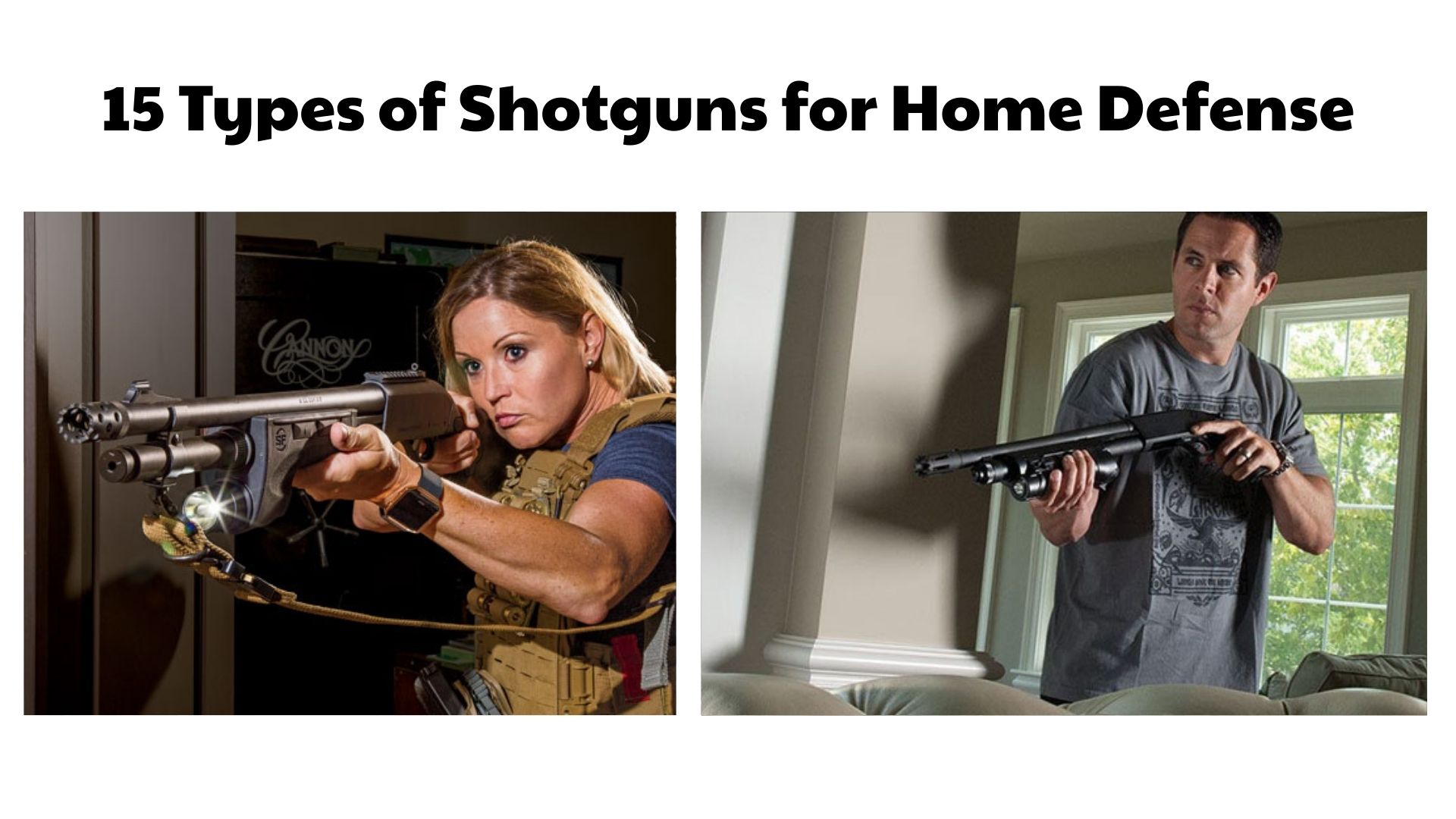
When people research types of shotguns for home defense, they are usually looking for clarity rather than complexity. A defensive shotgun is not simply a hunting tool brought indoors; it is a firearm platform configured with reliability, manageable size, and responsible use in mind. Shotguns have been chosen for decades in defensive roles because they offer strong close-range performance, intuitive aiming characteristics, and mechanical designs that are often straightforward to maintain. This guide explains fifteen common categories of shotguns for home defense, outlining how each platform works, what distinguishes it structurally, and why some homeowners prefer one configuration over another. The focus here is educational and practical, helping readers understand differences in design, ergonomics, and adaptability without unnecessary technical overload.
15 Types of Shotguns for Home Defense
1. Pump-Action Shotgun
The pump-action shotgun remains one of the most recognized and widely used shotguns for home defense due to its mechanical simplicity and long-standing reputation for durability. This platform operates through manual cycling, meaning the user slides the fore-end backward and forward after each shot to eject the spent shell and chamber a fresh round. Because it does not rely on gas systems or recoil-operated components, the pump design tends to tolerate a wide range of ammunition types and power levels, which contributes to its reliability under varied conditions. Many homeowners appreciate the straightforward manual control this system provides, as the shooter is directly responsible for chambering each round, creating a deliberate shooting rhythm that can reinforce safe handling habits.
From a structural standpoint, pump shotguns intended for defensive use typically feature shorter barrels than sporting variants, which reduces overall length and improves maneuverability in enclosed spaces such as hallways or staircases. The weight distribution often leans slightly forward, providing stability while still allowing manageable control. Maintenance is generally uncomplicated, and parts availability is widespread due to decades of manufacturing history. While proper training is still essential for any firearm owner, the pump-action shotgun is frequently described as mechanically forgiving and durable, making it a foundational category among the various types of shotguns for home defense.
2. Semi-Automatic Shotgun
The semi-automatic shotgun differs significantly from pump models in its method of operation, as it uses either gas pressure or recoil energy to cycle the action automatically after each shot. This self-loading capability allows the shooter to fire subsequent rounds without manually operating the fore-end, resulting in smoother follow-up shots and often reduced perceived recoil. Modern semi-automatic shotguns have benefited from decades of refinement, with improved reliability systems and materials that enhance performance consistency when paired with appropriate ammunition. For many homeowners, the appeal lies in the reduced physical effort required to operate the firearm, especially in situations where managing recoil comfortably is a priority.
Defensive-oriented semi-automatic shotguns often incorporate shorter barrels and simplified sighting systems designed for close-range environments. Because the cycling process absorbs some of the energy generated during firing, users may find the shooting experience more controlled compared to manual pump designs. However, semi-automatic platforms can be more sensitive to ammunition selection, which means responsible owners typically test and verify reliability with their chosen loads. Within the broader spectrum of shotguns for home defense, the semi-automatic option represents a balance between mechanical sophistication and practical usability, appealing to those who value ease of operation alongside modern engineering.
3. Tactical Shotgun with Rail System
The tactical shotgun category generally refers to defensive-configured firearms equipped with integrated accessory mounting systems such as Picatinny rails or similar attachment platforms. These rail systems allow the addition of optics, illumination devices, or other accessories that enhance visibility and identification capabilities in low-light environments. Importantly, the presence of a rail does not fundamentally change how the shotgun functions; instead, it expands adaptability and customization potential. In residential settings where lighting conditions may vary significantly, the ability to mount supportive equipment can be a practical consideration.
Structurally, tactical shotguns may be based on either pump-action or semi-automatic systems, meaning the defining characteristic is modularity rather than operating mechanism. Many factory-produced defensive models include reinforced receiver tops, durable coatings, and ergonomic controls designed for ease of access. For homeowners interested in configuring their firearm responsibly to suit specific environmental conditions, rail-equipped models represent a modern branch within the evolving landscape of types of shotguns for home defense. Their popularity reflects a broader trend toward modular firearm platforms that can be tailored without altering the core mechanical reliability.
4. Compact or Short-Barrel Shotgun
Compact shotguns are characterized primarily by reduced barrel length and overall size, which can improve handling in confined spaces commonly found within residential structures. Shorter barrels, often at the legal minimum length depending on jurisdiction, decrease front-end weight and make directional transitions more manageable. Contrary to common misconception, moderate reductions in barrel length do not dramatically diminish effectiveness at close indoor distances; instead, they primarily influence balance and maneuverability. This makes compact shotguns a practical category for individuals who prioritize ease of movement and spatial awareness.
Defensive compact models are frequently paired with simplified sighting systems and ergonomic stocks that enhance control. The goal is not increased power but rather improved handling characteristics suited to indoor environments. When evaluating the many types of shotguns for home defense, compact configurations stand out for their practicality and space-conscious design. As with all firearms, safe storage and adherence to local regulations remain essential, but from a purely structural standpoint, the compact shotgun offers a thoughtfully scaled solution for residential contexts.
5. Bullpup Shotgun
The bullpup shotgun represents a distinct design philosophy in which the action and magazine are positioned behind the trigger assembly rather than in front of it. This arrangement significantly shortens the firearm’s overall length while retaining a full-length barrel, effectively combining compact dimensions with preserved ballistic characteristics. Bullpup configurations often appear more modern in appearance and may incorporate polymer components and integrated rail systems as standard features. For homeowners seeking space efficiency without sacrificing barrel length, the bullpup layout offers an alternative approach compared to traditional designs.
Because the operating components are repositioned closer to the shooter’s shoulder, the balance and feel differ from conventional shotguns. Controls may require familiarization, and ejection port placement varies depending on manufacturer. Nonetheless, the compact footprint can enhance maneuverability in enclosed settings while maintaining structural integrity and capacity. Within the broader discussion of shotguns for home defense, the bullpup category reflects innovation in ergonomic engineering and spatial optimization. It appeals to users who value modern configuration and mechanical creativity while still relying on the established defensive role that shotguns have historically filled.
6. 20-Gauge Defensive Shotgun
The 20-gauge shotgun occupies an important place among the practical types of shotguns for home defense because it offers a balance between manageable recoil and effective close-range performance, making it particularly appealing to individuals who may find 12-gauge platforms physically demanding to control over repeated firing sessions. While 12-gauge models often dominate discussions due to their historical popularity, the 20-gauge variant provides meaningful advantages in terms of reduced recoil impulse, lighter overall firearm weight, and often slimmer stock dimensions that can better fit smaller-framed shooters. This combination of ergonomic accessibility and respectable ballistic capability makes the 20-gauge a realistic and responsible option for households seeking controllability rather than maximum power. Modern ammunition design has also improved the consistency and effectiveness of 20-gauge defensive loads, narrowing the performance gap while preserving the smoother shooting experience that many users prefer.
Structurally, 20-gauge defensive shotguns are available in both pump-action and semi-automatic configurations, meaning homeowners can select their preferred operating system without sacrificing gauge preference. The reduced recoil profile can promote more confident handling during training sessions, which is an often-overlooked factor in responsible firearm ownership. A shotgun that feels manageable encourages regular practice, and regular practice enhances safety awareness and operational familiarity. In the broader landscape of shotguns for home defense, the 20-gauge option demonstrates that effectiveness is not solely defined by size or power but by the shooter’s ability to maintain control, accuracy, and composure under stress.
7. Adjustable Stock Shotgun
An adjustable stock shotgun is defined not by its operating system but by its ergonomic flexibility, offering length-of-pull adjustments or collapsible stock features that allow the firearm to be tailored to the individual user’s body dimensions. Proper stock fit is frequently underestimated when discussing types of shotguns for home defense, yet it plays a critical role in comfort, recoil management, and sight alignment. An ill-fitting stock can lead to awkward shoulder placement and inconsistent cheek weld, whereas an adjustable configuration allows multiple users within a household to configure the shotgun for secure, stable positioning. This adaptability is particularly useful in shared ownership situations where different family members may need to train with the same firearm.
Beyond simple length adjustment, some models incorporate recoil-absorbing materials or modular butt pads that further refine comfort. The practical benefit is not tactical advantage but ergonomic optimization, which can influence responsible handling and confidence during training. Adjustable stock shotguns are commonly built on pump or semi-automatic platforms, meaning they inherit the reliability characteristics of those systems while adding a layer of personalization. Within the broader category of shotguns for home defense, adjustable stock designs emphasize that user fit and comfort are foundational components of safe firearm operation rather than cosmetic upgrades.
8. Extended Magazine Tube Shotgun
The extended magazine tube shotgun focuses on increased ammunition capacity within a traditional tubular magazine design, providing additional rounds without requiring detachable box systems. Among the various types of shotguns for home defense, this configuration appeals to individuals who value reduced reloading frequency while maintaining the familiar balance and handling characteristics of a standard shotgun. The extended tube typically runs parallel beneath the barrel, lengthening the magazine to accommodate extra shells while preserving the overall structural simplicity of the platform. Because this system remains mechanically straightforward, it does not introduce substantial operational complexity.
From a design perspective, extended capacity models may add slight forward weight, which can influence balance but also potentially reduce muzzle rise. Many defensive-oriented shotguns with extended tubes are factory-produced rather than modified aftermarket, ensuring reliable feeding geometry and durability. It is important to note that capacity regulations vary by jurisdiction, so responsible ownership requires awareness of local legal frameworks. In the spectrum of shotguns for home defense, the extended magazine tube version reflects a practical design adjustment centered on continuity of readiness while retaining the conventional manual or semi-automatic cycling mechanism users already understand.
9. Ghost Ring Sight Shotgun
The ghost ring sight shotgun is distinguished primarily by its sighting system rather than its action type, featuring a rear aperture sight paired with a front post for rapid alignment and improved target acquisition. Ghost ring systems are designed to provide a clear sight picture while allowing the eye to naturally center the front post within the rear ring, which can enhance visual focus in low-light or high-stress conditions. Among the many shotguns for home defense, models equipped with ghost ring sights are often favored by users who prefer a more defined aiming reference than a simple bead sight offers, particularly when precise placement is emphasized during training.
This sight configuration does not alter the mechanical cycling of the shotgun, as it can be integrated into pump or semi-automatic designs alike. Instead, it enhances the shooter’s visual interface with the firearm. Many defensive models with ghost ring sights are built with durable metal components and protective finishes, reflecting their orientation toward reliability and clarity rather than decorative styling. In the context of types of shotguns for home defense, the ghost ring variant highlights how sighting systems can meaningfully influence user confidence and consistency without changing the fundamental operating platform.
10. Law Enforcement-Style Defensive Shotgun
The law enforcement-style defensive shotgun represents a configuration inspired by professional duty models, often incorporating durable finishes, reinforced components, and practical features designed for high reliability under demanding conditions. These shotguns are typically based on established pump or semi-automatic systems that have seen widespread institutional use, contributing to their reputation for robustness. Among the various types of shotguns for home defense, this category appeals to individuals who value proven track records and straightforward, purpose-driven design. The defining characteristics may include matte protective coatings, heavy-duty extractors, and simplified controls optimized for consistent function.
While civilian ownership differs fundamentally from professional service roles, the structural emphasis on durability and reliability translates effectively into a residential defensive context. Law enforcement-style models generally avoid excessive ornamentation, instead prioritizing mechanical strength and ease of maintenance. This design philosophy aligns with the broader principle that shotguns for home defense should be dependable, manageable, and responsibly stored. As part of the wider classification of types of shotguns for home defense, the law enforcement-inspired configuration represents a continuation of established engineering standards adapted for civilian markets, focusing on stability, predictability, and long-term durability.
11. Pistol Grip Shotgun
The pistol grip shotgun represents a variation in stock configuration rather than a fundamentally different operating system, yet its ergonomic distinction earns it a clear place among the broader types of shotguns for home defense. Instead of a traditional straight stock with a fixed wrist angle, this design incorporates a more vertical grip similar to what is commonly found on modern rifles, which can provide a firmer hold and a different wrist alignment for some users. The intent behind this configuration is improved control and comfort, especially during extended handling sessions or when maintaining a ready position for training. Because defensive readiness is as much about safe familiarity as it is about mechanical design, the feel of the firearm in the shooter’s hands becomes a meaningful factor. A pistol grip can promote a consistent hand position and may offer better leverage for some individuals, though preferences vary widely based on body mechanics and experience.
It is important to understand that pistol grip shotguns can be found on both pump-action and semi-automatic platforms, meaning their core reliability characteristics depend on the underlying action type. Some models combine a pistol grip with an adjustable or collapsible stock, creating additional ergonomic flexibility. Others feature a standalone grip with a shortened rear section, though such configurations require careful adherence to legal standards depending on jurisdiction. From a design standpoint, the pistol grip shotgun demonstrates how stock geometry influences handling characteristics without altering the essential function of the firearm. Within the context of shotguns for home defense, it appeals to users who prioritize grip comfort and modern ergonomics while maintaining a conventional defensive role.
12. Marine-Coated Shotgun
The marine-coated shotgun is distinguished primarily by its corrosion-resistant finish rather than its action style, making it particularly relevant in environments where humidity, moisture, or coastal air may accelerate metal wear. Although corrosion resistance might initially seem more relevant to maritime applications, it also holds practical value for home storage conditions in areas with high humidity. Among the many types of shotguns for home defense, a marine-coated model emphasizes durability and long-term preservation rather than performance enhancement. The specialized coatings, often nickel-based or similarly protective materials, shield internal and external metal surfaces from rust and environmental degradation.
Functionally, marine-coated shotguns operate identically to their standard pump or semi-automatic counterparts, but their protective finish reduces maintenance concerns related to environmental exposure. For homeowners who store firearms in safes, closets, or other enclosed spaces where airflow may be limited, corrosion resistance can contribute to long-term reliability. The benefit is preventative rather than tactical, reinforcing the principle that responsible firearm ownership includes maintenance planning. In the landscape of shotguns for home defense, marine-coated variants stand out as an investment in longevity and structural resilience, particularly for those living in climates where moisture management is an ongoing consideration.
13. Magazine-Fed Shotgun
The magazine-fed shotgun differs structurally from traditional tube-fed designs by using detachable box magazines to store and feed ammunition. This configuration represents a more modern engineering approach among the evolving types of shotguns for home defense, prioritizing modularity and simplified reloading procedures. Instead of loading shells individually into a tubular magazine beneath the barrel, the shooter inserts a pre-loaded magazine into the receiver, similar to many rifle platforms. This design can streamline the loading process and allow standardized capacity management depending on local regulations.
Magazine-fed shotguns are typically semi-automatic, though specific designs may vary in operating mechanism. The detachable magazine system can influence balance and handling because ammunition weight is centralized differently compared to tube-fed models. Additionally, the presence of removable magazines introduces the need for careful maintenance and inspection to ensure consistent feeding reliability. While this category is less traditional than pump or tube-fed semi-automatics, it reflects the broader modernization of firearm platforms. Within the broader family of shotguns for home defense, magazine-fed variants appeal to users who value modular design and compatibility with contemporary accessory systems while still adhering to responsible ownership principles.
14. Youth or Reduced-Length Shotgun
Youth or reduced-length shotguns are often associated with training and smaller-framed shooters, but they also represent a practical category within the wider types of shotguns for home defense. These models feature shorter stocks and sometimes slightly lighter overall builds, allowing improved fit for individuals who may find full-sized shotguns cumbersome. Proper fit remains a central component of safe and controlled firearm handling, and a reduced-length configuration can promote more natural shoulder placement and improved sight alignment for certain users. The benefit is not diminished effectiveness but enhanced ergonomics tailored to individual proportions.
These shotguns are commonly available in both 12-gauge and 20-gauge options, though the latter is particularly popular in reduced-length formats due to its softer recoil characteristics. In a household where multiple responsible adults may train with the same firearm, ensuring that at least one configuration comfortably fits each user can be an important planning consideration. Youth-configured shotguns highlight that defensive preparation should account for human factors such as reach, strength, and body size. In the broader spectrum of shotguns for home defense, they serve as a reminder that safe operation depends heavily on comfort and control rather than uniform sizing.
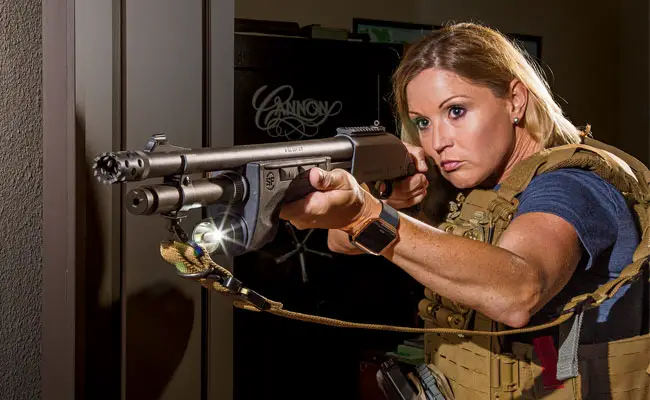
15. Integrated Light-Ready Shotgun
The integrated light-ready shotgun is designed with mounting points or factory-installed compatibility for illumination tools, reflecting the practical reality that many residential environments experience low-light conditions during nighttime hours. Among modern types of shotguns for home defense, this configuration underscores the importance of target identification and environmental awareness. Rather than relying solely on handheld lighting, integrated mounting systems allow secure attachment of illumination devices without improvised modifications. The design prioritizes stability and safe alignment while maintaining the shotgun’s core mechanical integrity.
Like several other categories discussed, light-ready models can be built on pump or semi-automatic platforms, meaning their defining characteristic lies in accessory accommodation rather than operational difference. The addition of secure mounting points ensures that any compatible lighting equipment remains firmly attached during handling and storage. From a structural perspective, this feature reflects a shift toward purpose-built defensive configurations rather than general-purpose sporting adaptations. Within the full list of shotguns for home defense, the integrated light-ready variant emphasizes preparedness through visibility and responsible identification practices, reinforcing that safe defensive planning extends beyond the firearm itself to include environmental awareness and proper equipment integration.
Conclusion: Choosing Among the Types of Shotguns for Home Defense

The fifteen types of shotguns for home defense outlined in this guide demonstrate that no single configuration universally fits every household or user. Differences in operating systems, stock geometry, capacity design, sighting systems, and protective finishes all influence how a shotgun feels, handles, and withstands long-term storage conditions. While pump-action and semi-automatic platforms remain foundational, modern adaptations such as bullpup layouts, magazine-fed systems, adjustable stocks, and accessory-ready designs expand the available options significantly. Responsible ownership requires more than selecting a category; it includes understanding local laws, prioritizing safe storage, committing to consistent training, and ensuring that the chosen configuration aligns with the user’s physical comfort and familiarity.
Ultimately, shotguns for home defense are defined not only by mechanical features but by how safely and responsibly they are integrated into a household’s preparedness plan. By carefully evaluating the various types of shotguns for home defense through the lens of ergonomics, durability, and adaptability, homeowners can make informed decisions grounded in practicality rather than assumption. The strength of the platform lies in its versatility, and that versatility is best utilized when paired with education, discipline, and ongoing attention to safety.
Frequently Asked Questions About Types of Shotguns for Home Defense
1. What are the main types of shotguns for home defense?
The main types of shotguns for home defense include pump-action, semi-automatic, bullpup, magazine-fed, compact models, and various ergonomic configurations such as adjustable stock or pistol grip versions.
2. Is a pump-action shotgun reliable for home defense?
Yes, pump-action shotguns are widely known for mechanical reliability due to their simple manual cycling system.
3. Are semi-automatic shotguns good for beginners?
Semi-automatic shotguns can be easier to operate because they automatically cycle rounds, but proper training and safety education are essential for all users.
4. What gauge is most common for home defense shotguns?
12-gauge is the most common, though 20-gauge is also popular due to its reduced recoil and manageable handling.
5. Is a 20-gauge shotgun effective for home defense?
Yes, modern 20-gauge defensive loads offer practical effectiveness while producing lighter recoil than 12-gauge options.
6. What barrel length is typical for defensive shotguns?
Defensive shotguns often feature shorter barrels, typically around the legal minimum length, to improve maneuverability indoors.
7. Are bullpup shotguns suitable for home use?
Bullpup shotguns offer a compact overall length while retaining full barrel length, which can improve handling in tight spaces.
8. What is the difference between tube-fed and magazine-fed shotguns?
Tube-fed shotguns store shells in a fixed tubular magazine under the barrel, while magazine-fed shotguns use detachable box magazines.
9. Do adjustable stocks matter for home defense?
Yes, adjustable stocks improve firearm fit, which enhances comfort, control, and safe handling.
10. What are ghost ring sights?
Ghost ring sights use a rear aperture and front post to provide faster and clearer sight alignment compared to a simple bead sight.
11. Is recoil an important factor to consider?
Yes, recoil management affects comfort, training consistency, and overall control of the firearm.
12. Are compact shotguns easier to maneuver indoors?
Shorter overall length can make a shotgun easier to move through hallways and confined spaces.
13. Do defensive shotguns require special ammunition?
Shotguns should be used with appropriate, reliable ammunition that complies with local laws and safety standards.
14. What is a marine-coated shotgun?
A marine-coated shotgun has corrosion-resistant finishes that protect metal components from rust and humidity.
15. Are extended magazine tubes legal?
Magazine capacity regulations vary by location, so owners must check local laws before selecting extended capacity models.
16. Is a pistol grip shotgun better than a traditional stock?
It depends on personal preference, as grip angle and ergonomics affect comfort and handling style.
17. What is the safest way to store a home defense shotgun?
Safe storage typically involves a secure gun safe or lock system that prevents unauthorized access.
18. How often should a shotgun be maintained?
Regular inspection and cleaning are recommended to ensure reliability and prevent corrosion.
19. Do semi-automatic shotguns reduce recoil?
Many semi-automatic systems absorb part of the recoil energy, which can make shooting more comfortable.
20. Are youth-model shotguns useful for adults?
Reduced-length models can benefit smaller-framed adults by providing better fit and control.
21. What makes a shotgun “tactical”?
The term often refers to defensive configurations that include accessory rails, durable finishes, or enhanced sight systems.
22. Is training necessary for shotgun ownership?
Yes, proper safety training and familiarity are essential for responsible firearm ownership.
23. Can multiple people in a household share one shotgun?
Yes, but adjustable features may help ensure proper fit for different users.
24. What is length of pull?
Length of pull refers to the distance between the trigger and the end of the stock, affecting fit and comfort.
25. Do shotguns require optics?
Optics are optional; many defensive shotguns use simple bead or ghost ring sights.
26. Are magazine-fed shotguns more modern?
Yes, they reflect more recent design trends compared to traditional tube-fed systems.
27. What factors influence shotgun choice?
Factors include recoil tolerance, physical build, storage space, local laws, and personal training experience.
28. Is corrosion resistance important?
In humid climates, corrosion-resistant finishes can help preserve long-term reliability.
29. Can shotguns be customized?
Many models allow safe customization with manufacturer-approved accessories.
30. What is the difference between 12-gauge and 20-gauge?
12-gauge typically delivers more recoil and power, while 20-gauge offers lighter recoil and easier handling.
31. Are semi-autos more complex than pump shotguns?
Semi-automatic systems have more moving parts, which may require more attention to maintenance.
32. What is the advantage of a compact shotgun?
Compact designs improve maneuverability in confined indoor spaces.
33. Should defensive shotguns have rails?
Rails are optional but allow attachment of compatible accessories if desired.
34. What is a detachable box magazine?
It is a removable ammunition container that feeds shells into magazine-fed shotguns.
35. How heavy are typical defensive shotguns?
Weight varies by design, gauge, and materials, typically ranging between 6 to 8 pounds.
36. Do shorter barrels reduce effectiveness?
At typical indoor distances, moderate barrel reductions primarily affect handling rather than performance.
37. What safety features do shotguns have?
Most shotguns include manual safeties and internal mechanisms designed to prevent accidental discharge.
38. Is a bullpup shotgun harder to learn?
It may require familiarization due to its different balance and control layout.
39. Can recoil pads help?
Yes, recoil pads can increase comfort and reduce felt recoil during practice.
40. Are defensive shotguns loud?
Yes, firearms produce significant noise, so hearing protection is essential during training.
41. What is the benefit of ghost ring sights?
They provide clearer alignment and can improve aiming consistency for some users.
42. Are there legal restrictions on shotgun ownership?
Laws vary by region, so prospective owners must review local regulations carefully.
43. How important is firearm fit?
Proper fit improves comfort, stability, and safe operation.
44. Should I practice regularly?
Yes, consistent training builds familiarity and reinforces safe handling habits.
45. Are all defensive shotguns black or tactical-looking?
No, many models retain traditional finishes while still serving defensive purposes.
46. What materials are commonly used?
Defensive shotguns may feature steel receivers, aluminum components, and polymer stocks.
47. Is safe storage legally required?
Many jurisdictions require secure storage to prevent unauthorized access.
48. Can shotguns be stored loaded?
Storage practices depend on local law and personal safety planning; secure storage is always essential.
49. Do I need professional instruction?
Professional training is strongly recommended to ensure safe and responsible ownership.
50. Are defensive shotguns suitable for rural homes?
Shotgun selection depends on property layout, local regulations, and responsible planning.
51. What is the most important factor in choosing among types of shotguns for home defense?
The most important factor is selecting a configuration that fits the user comfortably, complies with local law, and is paired with proper training and safe storage practices.
Read more: 15 Types of Shotguns in Fortnite: Complete Guide to All Shotguns in Fortnite History