
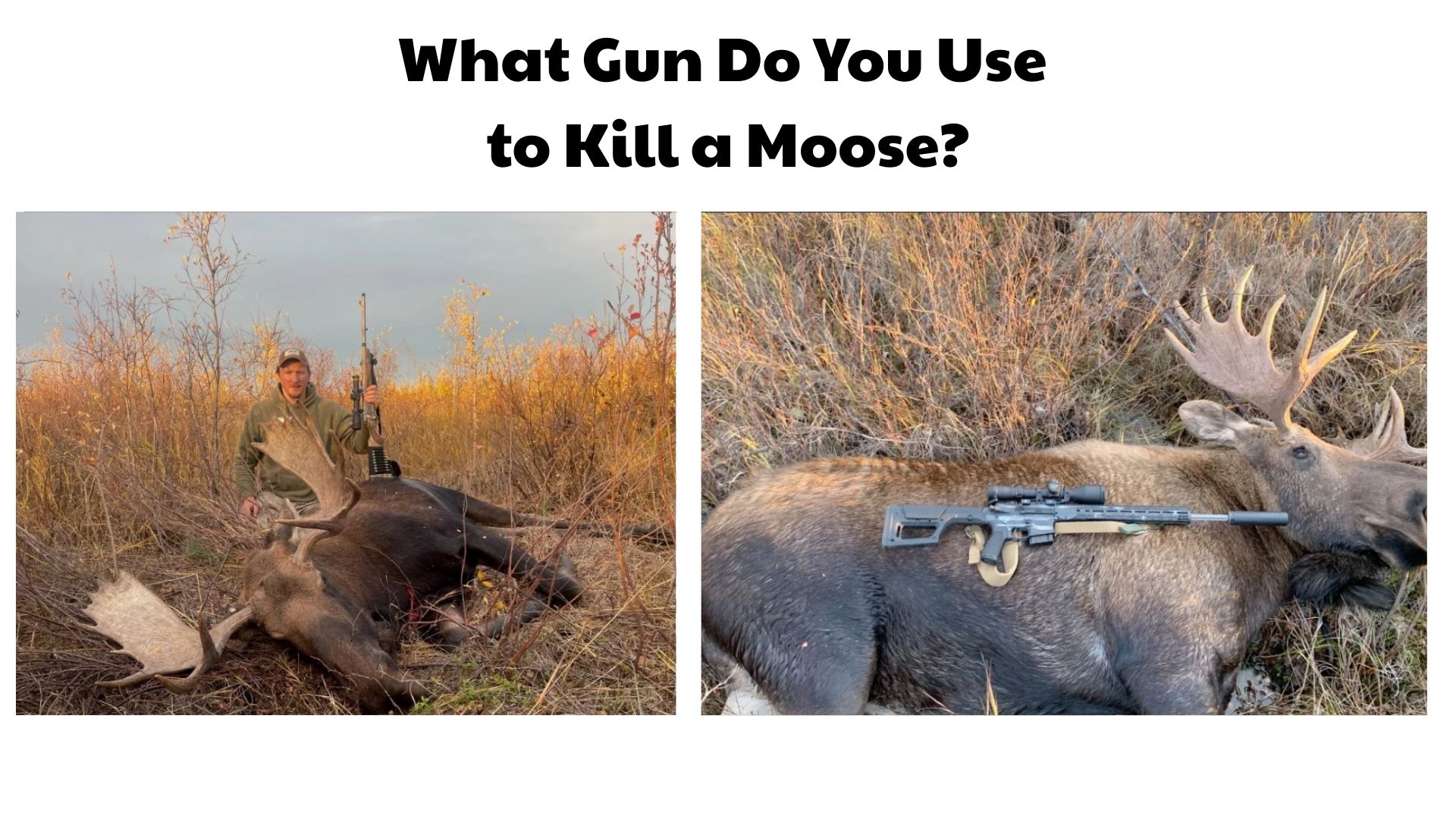
Moose hunting is one of the most challenging and rewarding big-game pursuits in North America. These majestic animals are the largest members of the deer family, and harvesting one requires careful preparation, precision, and a deep understanding of both the terrain and the animal itself. Unlike smaller game, moose present unique challenges, including their size, strength, and often remote habitats, making the choice of rifle and caliber critical for both safety and success.
Selecting the right firearm is not simply a matter of personal preference. The rifle must provide enough stopping power to ensure a clean, ethical kill while remaining manageable for the hunter in the field. Cartridge selection also plays a vital role, affecting everything from recoil and accuracy to penetration and effectiveness at various distances. Choosing poorly can result in missed shots, wounding the animal, or dangerous situations in backcountry environments.
In this comprehensive guide, readers will learn how to evaluate rifles and calibers specifically for moose hunting, understand the practical and ethical considerations of big-game hunting, and gain insight into field strategies, ammunition selection, and training techniques. Whether you are a first-time hunter preparing for your first moose hunt or an experienced marksman looking to refine your equipment choices, this guide will provide the knowledge needed to make informed, responsible decisions for a safe and successful hunt.
Understanding Moose as Big Game
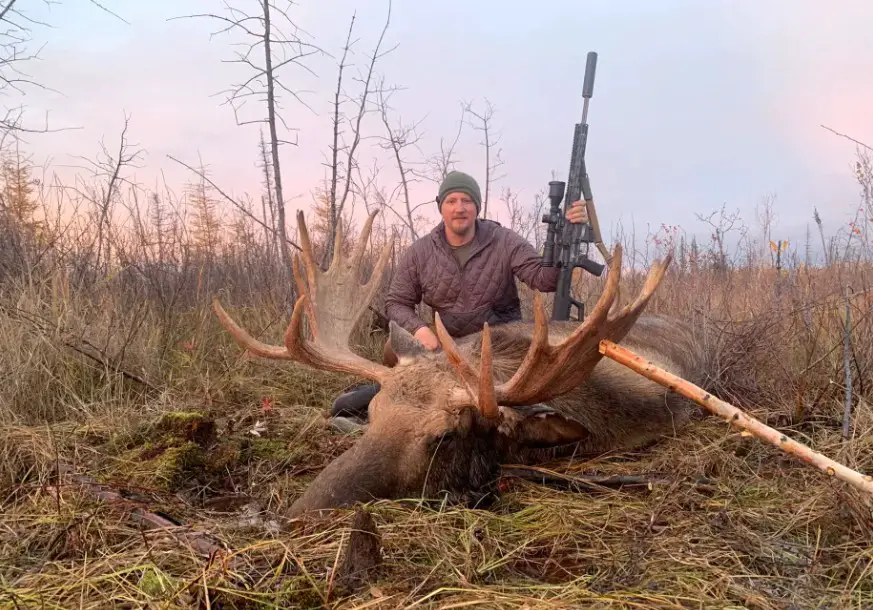
Moose are the largest members of the deer family, with adult bulls often weighing between 800 to 1,500 pounds, and sometimes even more in prime habitats. Their sheer size and muscular build mean that hunters need firearms capable of delivering significant stopping power to ensure a quick and ethical harvest. Unlike smaller deer species, moose have thick hides, dense bone structures, and large vital organs located deep within their bodies, which necessitates careful cartridge and shot selection.
Moose Anatomy and Size Considerations
The moose’s anatomy directly influences hunting strategy and firearm selection. Vital organs such as the heart and lungs are located low and forward within the chest cavity, requiring precise shot placement for an effective kill. Bulls also possess massive skulls and heavy neck muscles, particularly during the rut, which adds additional bone density that bullets must penetrate if the shot is taken high. Hunters need to consider both the energy delivered by the cartridge and the bullet’s ability to maintain trajectory and penetration through dense muscle and bone.
Antlers, while not a primary target, can also affect shot placement if the hunter aims for the head or neck area. Wounding a moose unintentionally can create dangerous situations, as an injured animal may charge. This underscores the importance of selecting a rifle and caliber with sufficient power to reach deep vital areas reliably.
Typical Moose Habitat, Behavior, and Encounter Scenarios
Moose are often found in boreal forests, marshes, river valleys, and areas with dense brush and water access. These habitats can create challenging shooting scenarios, including obstructed lines of sight and uneven terrain. Moose behavior varies seasonally: during the rut, bulls may move aggressively and unpredictably, while cows and calves are often more elusive and can be encountered near water sources or feeding grounds.
Encounters are typically at moderate ranges, but hunters may also face situations where shots are at longer distances across open tundra or marshy flats. Understanding the habitat and movement patterns of moose helps hunters plan rifle selection, optics, and ammunition, ensuring the firearm can be effectively deployed under varied conditions.
Why Moose Require Powerful Rifles and Cartridges
Given the moose’s size, dense musculature, and thick bone, firearms for moose hunting must provide sufficient energy to reach and expand within vital organs. Light calibers, commonly used for smaller game, generally do not offer the penetration or impact energy required for a humane kill. Big-game calibers deliver both the velocity and bullet mass necessary to overcome the moose’s natural defenses, reducing the likelihood of wounding or prolonged suffering.
Powerful rifles and appropriate cartridges also offer a margin of safety for the hunter. A cartridge capable of delivering high energy with controlled recoil ensures that the hunter can take a deliberate, accurate shot under field stress. Choosing a rifle and caliber combination tailored for moose allows hunters to ethically harvest these impressive animals while respecting wildlife regulations and conservation principles.
In summary, understanding the moose’s anatomy, behavior, and habitat is fundamental for selecting a rifle and cartridge capable of delivering a safe, effective, and ethical harvest. The unique challenges posed by moose highlight the need for preparation, knowledge, and firearms that combine stopping power, accuracy, and reliability.
What Makes a Rifle Suitable for Moose Hunting
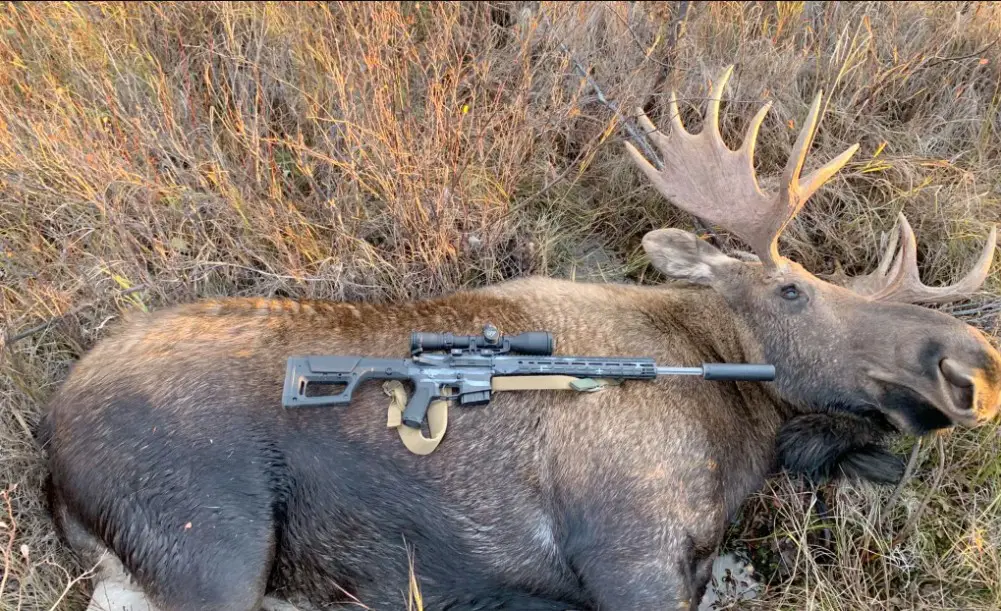
Choosing the right rifle for moose hunting involves more than selecting a powerful caliber. An effective moose hunting rifle must combine reliability, accuracy, stopping power, and manageable recoil to ensure ethical, safe, and successful harvesting of one of North America’s largest big-game animals. Hunters also need to consider the rifle’s weight, balance, and ergonomics, as these factors directly affect handling in challenging backcountry terrain.
Key Attributes of an Effective Moose Hunting Rifle
The primary attributes of a suitable moose hunting rifle include:
- Reliability: The rifle must function flawlessly in extreme conditions, including cold, wet, or muddy environments. A dependable firearm reduces the risk of malfunctions during critical moments in the field.
- Accuracy: High accuracy ensures the hunter can place bullets precisely on vital organs from varying distances. Even the most powerful rifle is ineffective if it cannot consistently hit the intended target.
- Stopping Power: Sufficient bullet energy and proper cartridge selection are crucial for penetrating thick muscle and bone. Stopping power ensures a humane kill and reduces the likelihood of a wounded animal fleeing.
- Manageable Recoil: High-powered cartridges produce significant recoil, which can affect follow-up shots and hunter comfort. Rifles designed to absorb or mitigate recoil allow the shooter to maintain accuracy and reduce fatigue over long days in the field.
Importance of Rifle Weight, Balance, and Handling in Rugged Terrain
Moose hunting often requires traversing uneven, densely vegetated, or marshy terrain. A rifle that is too heavy or poorly balanced can impede movement, tire the hunter, and reduce readiness when a moose suddenly appears. Lightweight rifles with a well-balanced stock allow for quicker aiming and easier carry during long treks. Proper ergonomics, including stock length, grip design, and sling placement, further enhance handling and ensure the firearm can be positioned and shouldered quickly when needed.
In addition to mobility, balance affects shot stability. A well-balanced rifle improves tracking a moving moose, especially during stalks or sudden encounters. Balanced weight distribution helps maintain consistent point-of-impact and reduces the strain on the shooter’s shoulders and arms during extended hunting periods.
How Environmental Conditions Influence Rifle Choice
Environmental factors play a significant role in rifle selection. Cold weather can affect the operation of certain actions, lubricants, and ammunition performance. Wet or muddy conditions require corrosion-resistant materials and coatings, as well as rifles with smooth-feeding actions to prevent jams. Dense forests and brush may favor shorter-barreled rifles for maneuverability, while open tundra or marshes allow for longer barrels that maximize velocity and accuracy at distance.
Altitude and temperature also influence bullet trajectory and performance. Hunters should choose a rifle and cartridge combination capable of maintaining consistent accuracy under varying environmental conditions. Optics and mounting systems that withstand recoil and moisture are essential to complement a reliable rifle platform.
Ultimately, a suitable moose hunting rifle is a carefully balanced combination of power, accuracy, ergonomics, and reliability tailored to the hunter’s environment and physical capability. Selecting a rifle that meets these criteria increases the chances of an ethical, efficient, and safe harvest, while reducing physical strain and enhancing the overall hunting experience.
Moose Hunting Caliber Fundamentals
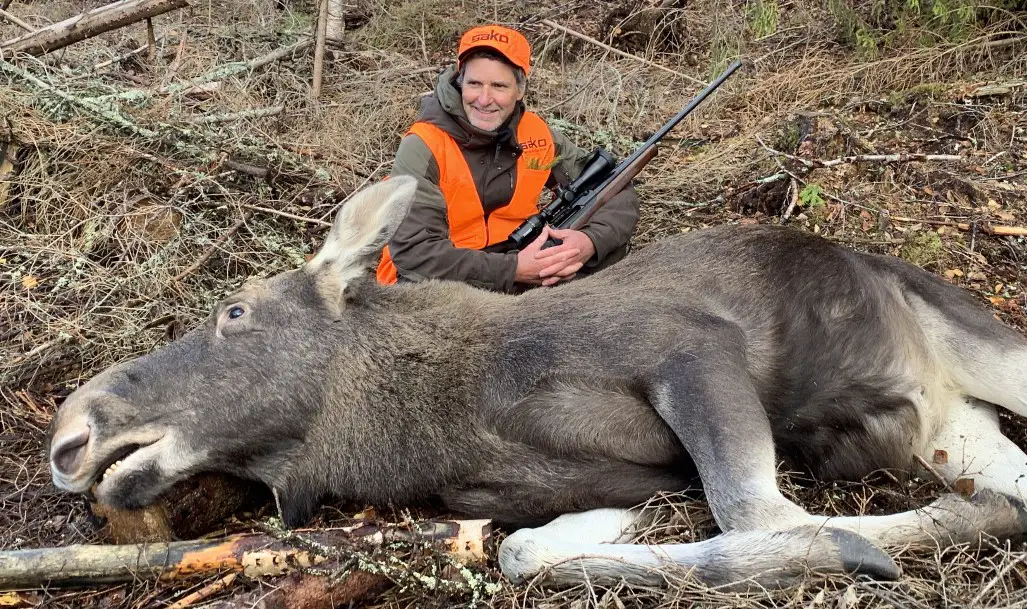
When it comes to moose hunting, caliber and cartridge selection are far more important than the brand of rifle. The right caliber ensures that the bullet delivers sufficient energy and penetration to reach vital organs, providing a clean, ethical harvest. Understanding the fundamentals of big-game ballistics allows hunters to make informed choices about which cartridges will perform reliably in the field, regardless of manufacturer labels.
Why Caliber and Cartridge Choice Matters
Caliber and cartridge choice directly affect the firearm’s stopping power, trajectory, and effectiveness on large game like moose. Even the most accurate rifle cannot compensate for a cartridge that lacks sufficient energy to penetrate thick muscle and bone. Choosing an appropriate caliber ensures that a single well-placed shot can reach the heart, lungs, or other vital organs, minimizing suffering and reducing the risk of a wounded animal escaping.
The importance of caliber extends to practical field considerations. Hunters must account for recoil, follow-up shots, and manageable handling, all of which are influenced by cartridge size and power. A well-chosen caliber balances lethality with control, enabling ethical and efficient hunting under various environmental and physical conditions.
Big-Game Ballistics Basics
Understanding ballistics helps hunters select a cartridge that delivers reliable performance. Key factors include:
- Energy: Measured in foot-pounds, energy indicates how much force the bullet transfers to the target. Higher energy ensures deep penetration into thick muscle and bone, which is essential for moose.
- Penetration: A bullet must maintain structural integrity to reach vital organs. Hard-cast, bonded, or controlled-expansion bullets are commonly used to maximize penetration without excessive deformation.
- Sectional Density (SD): This is the ratio of bullet mass to its diameter. Bullets with higher SD penetrate deeper, which is critical for large-bodied animals. Choosing a cartridge with adequate SD ensures consistent performance at varying ranges.
- Trajectory: Flat-shooting cartridges reduce holdover and make long-distance shots more accurate. Hunters should match cartridge selection with expected engagement distances.
Ethical Considerations in Caliber Selection
Ethical hunting demands that each shot is capable of producing a swift, humane kill. Using a caliber that is too light may result in superficial injuries, causing prolonged suffering and potentially dangerous situations if the moose becomes aggressive. Conversely, selecting an overly powerful caliber without sufficient control can lead to over-penetration, recoil issues, or safety risks to the hunter and companions.
Hunters must consider both the animal’s size and the environment when selecting a cartridge. Ethical considerations also include practicing with the chosen rifle and load to ensure accuracy and shot confidence under realistic field conditions. A hunter well-prepared with the correct caliber and a solid understanding of ballistics can take responsible, precise shots, aligning with both legal and moral obligations in moose hunting.
In summary, mastering moose hunting caliber fundamentals is the foundation for successful, ethical hunting. By prioritizing energy, penetration, sectional density, and trajectory over brand preference, hunters can select a cartridge that reliably reaches vital organs, ensuring humane harvests and increasing overall confidence in the field.
Top Rifle Calibers for Moose Hunting
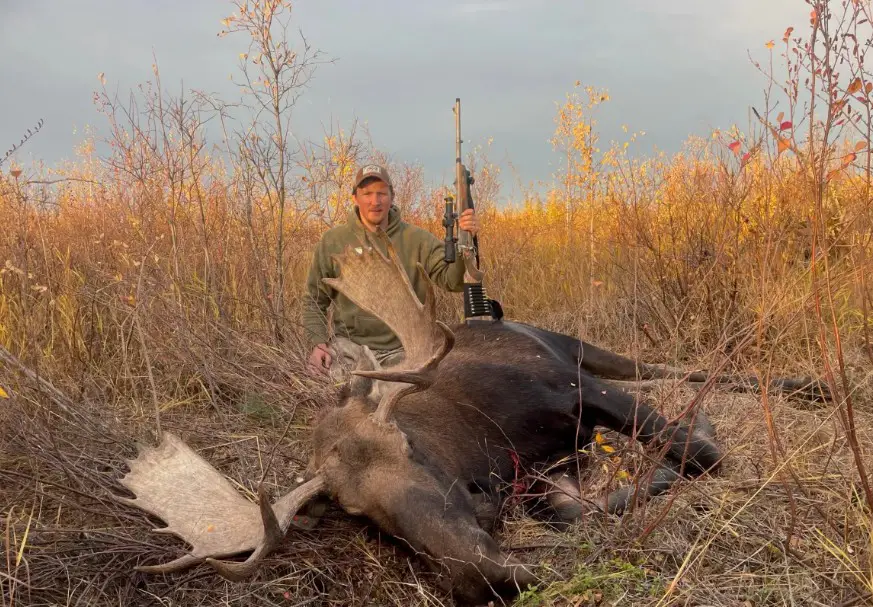
Selecting the right caliber is one of the most critical decisions a moose hunter can make. The ideal cartridge balances stopping power, manageable recoil, availability, and ethical effectiveness to ensure a humane kill. Below is an overview of the most commonly recommended rifle calibers for moose hunting, along with their advantages and considerations.
.30‑06 Springfield
The .30‑06 Springfield is a versatile and widely available cartridge that has proven effective on large game for over a century. It offers a broad selection of bullet weights and types, allowing hunters to match the load to specific hunting conditions. The recoil is moderate compared to magnum cartridges, making it easier to handle for most hunters. Its flat trajectory is suitable for moderate distances, making precise shot placement attainable. However, in extremely large bulls or long-range situations, heavier magnum calibers may provide more assured penetration.
.300 Winchester Magnum
The .300 Winchester Magnum delivers higher velocity and energy than the .30‑06, making it an excellent choice for longer shots and larger-bodied moose. It offers superior penetration and a flatter trajectory, which is valuable when hunting in open terrain. The tradeoff is increased recoil, which can affect follow-up shots and comfort for some shooters. Hunters should practice extensively with this caliber to maintain accuracy under field conditions.
.338 Winchester Magnum
Known for its deep penetration and heavy bullet weights, the .338 Winchester Magnum is favored for large moose and challenging environments. It excels in dense forests and open plains alike, providing the energy needed for a clean, ethical kill. Recoil is substantial, requiring careful control, and ammunition may be less readily available than more common calibers. This caliber is ideal for experienced hunters seeking maximum stopping power in a single shot.
.375 H&H Magnum
The .375 H&H Magnum is a true big-game cartridge originally designed for African safari hunting. It offers extreme penetration, energy, and reliability, making it suitable for the largest moose or long-range shots in rugged terrain. The tradeoff is heavy recoil and typically a heavier rifle, which may limit mobility during long hunts. Hunters who choose this caliber must be confident in their ability to manage recoil and execute precise shots.
Other Notable Calibers
Several other cartridges are also effective for moose hunting depending on hunter preference and regional availability:
- .280 Remington: Offers moderate recoil with sufficient energy for most moose-sized game, making it suitable for hunters seeking a lighter option.
- 7mm Remington Magnum: Provides a flat trajectory and strong performance at longer ranges, ideal for open-country hunting.
- Other regional options: Cartridges like the .300 Weatherby Magnum or .338 Lapua Magnum may also be considered for experienced hunters requiring extended range and power.
Pros and Cons of Each Caliber
Each caliber carries unique advantages and tradeoffs. Standard cartridges like the .30‑06 offer reliability, moderate recoil, and broad ammo availability, making them ideal for a wide range of hunters. Magnum cartridges (.300 Win Mag, .338 Win Mag, .375 H&H) provide superior energy and penetration but require practice to manage recoil effectively. Lighter options such as the .280 Remington or 7mm Rem Mag offer flatter trajectories with less recoil, though they may require precise shot placement at longer ranges. Ultimately, hunters should match the caliber to their experience, expected encounter distance, and the specific size and behavior of moose in their hunting area.
In summary, selecting a rifle caliber for moose hunting requires balancing stopping power, recoil, availability, and personal comfort. By understanding the strengths and limitations of each option, hunters can make informed choices that ensure ethical, effective, and safe harvesting of this iconic North American big game.
Bolt‑Action Rifles: The Standard Choice
Bolt-action rifles have long been the preferred choice for moose and other big-game hunting due to their unmatched reliability, accuracy, and simplicity. These rifles allow hunters to deliver powerful cartridges with precision while maintaining control in challenging field conditions. The design’s mechanical strength and consistent performance under stress make it ideal for ethical, effective harvesting of large, dangerous game.
Why Bolt‑Action Rifles Are Preferred for Big Game
Bolt-action rifles offer several advantages that make them the go-to choice for moose hunting. Their simple mechanical design reduces the risk of malfunctions, even in harsh environments such as wet, muddy, or cold conditions. The solid lock-up of the bolt provides consistent chamber pressure and repeatable accuracy shot after shot, which is essential when targeting the vital organs of a moose at varying distances. Additionally, bolt-action rifles are easier to maintain in the field and tolerate a wide range of powerful cartridges that are often too punishing for semi-automatic platforms.
For hunters who prioritize ethical shots and humane kills, bolt-action rifles deliver the accuracy required to reach deep into vital zones. The ability to carefully cycle each round encourages deliberate, precise shooting, reducing the likelihood of wounding an animal and increasing overall safety for both the hunter and companions.
Popular Action Designs and Reliability in the Field
Several bolt-action designs are popular among moose hunters, each emphasizing smooth operation, strength, and reliability. Classic Mauser-style controlled-feed actions are favored for their ability to maintain consistent cartridge alignment and reduce the risk of jams. Modern push-feed actions, while slightly less robust in extreme conditions, offer smoother cycling and are easier to manufacture, often making them lighter and more affordable without sacrificing essential performance.
Reliability in the field is a critical consideration. Hunters often face rain, snow, or mud, and a rifle that can cycle properly under these conditions is invaluable. The simplicity of the bolt-action design means fewer moving parts are exposed to debris, which ensures the rifle performs when needed most. Many bolt-action rifles are also designed with durable, corrosion-resistant materials to withstand long-term exposure to harsh outdoor conditions.
Modular vs. Traditional Designs
Bolt-action rifles are available in both traditional and modular configurations. Traditional rifles typically feature a fixed stock, integrated scope mounts, and classic styling. They are often lighter and more streamlined, ideal for hunters who value simplicity and reliability. Modular designs, on the other hand, allow for interchangeable components such as barrels, stocks, and triggers, enabling hunters to customize their rifle for specific hunting scenarios or personal preferences.
Modular rifles offer versatility, allowing hunters to adjust weight distribution, trigger pull, and even caliber conversion to match the terrain or moose size encountered. While they may add slight complexity, many modern modular rifles maintain the durability and accuracy of traditional designs, providing the best of both worlds for experienced hunters seeking flexibility in the field.
In conclusion, bolt-action rifles remain the standard choice for moose hunting because they provide unmatched reliability, consistent accuracy, and compatibility with powerful big-game cartridges. Whether a hunter prefers traditional simplicity or modern modular customization, the bolt-action platform offers the performance and confidence needed to ethically and effectively harvest moose in a variety of environmental conditions.
Other Rifle Action Types and Considerations
While bolt-action rifles dominate the moose hunting scene due to their reliability and precision, other action types such as lever-action and semi-automatic rifles can also be suitable under certain circumstances. Understanding the advantages and limitations of these platforms allows hunters to choose the rifle that best fits their terrain, hunting style, and personal preference.
Lever‑Action Rifles
Lever-action rifles are a classic choice known for their smooth cycling, quick follow-up shots, and compact profile. They are often favored in dense forests or brushy areas where maneuverability is essential. Modern lever-action designs can chamber powerful cartridges suitable for moose, providing adequate stopping power at moderate ranges.
The primary advantages of lever-action rifles include rapid shot follow-up, simplicity, and ease of handling in tight spaces. However, they are generally limited in cartridge capacity compared to bolt-action or semi-automatic rifles, and long-range accuracy may be less consistent due to shorter sight radius and action design. For hunters who anticipate close encounters or require a lighter, fast-handling rifle, lever-action models can be a practical alternative.
Semi‑Automatic Rifles
Semi-automatic rifles offer the ability to fire multiple rounds quickly without manually cycling the action. This can be beneficial in situations where a moose might require more than one well-placed shot for ethical harvest, or when hunting in areas with multiple game animals. Semi-automatic platforms often feature reduced felt recoil due to the action absorbing some of the energy, making powerful cartridges more manageable for some shooters.
However, semi-automatic rifles also come with drawbacks. They are mechanically more complex, which increases the potential for malfunctions, particularly in cold, wet, or debris-prone environments. Additionally, these rifles tend to be heavier and noisier than bolt-action models, which can alert game at a distance. Hunters must carefully maintain and practice with these platforms to ensure reliable performance.
Pros and Cons of Non‑Bolt Platforms for Moose Hunting
Non-bolt action rifles offer several potential advantages: faster follow-up shots, reduced recoil perception, and sometimes lighter or more compact configurations. Lever-action rifles excel in maneuverability, while semi-automatic rifles can deliver multiple shots rapidly without manual cycling. These features make them attractive for certain hunting situations.
On the downside, both lever-action and semi-automatic rifles may sacrifice long-range precision, mechanical simplicity, and extreme reliability under harsh field conditions. Lever-actions are limited in range and capacity, whereas semi-automatics require more meticulous maintenance and can be heavier or louder than bolt-action rifles. Hunters must weigh these trade-offs against their expected hunting environment and personal comfort.
Situational Scenarios Where Alternatives May Be Useful
Lever-action rifles are particularly useful in dense forests, thick brush, or rugged terrain where shots are taken at closer distances. Their compact nature allows easier movement through trees and over obstacles while still delivering sufficient energy for a moose at moderate range. Semi-automatic rifles may be advantageous in situations where multiple shots could be needed, such as when hunting alongside others or in areas with high moose densities.
Ultimately, while bolt-action rifles remain the gold standard for moose hunting, lever-action and semi-automatic rifles provide viable alternatives when specific conditions call for maneuverability, rapid follow-up shots, or personal preference. Understanding the strengths and limitations of each platform ensures that hunters can choose the right rifle for the environment, game, and ethical standards of their moose hunt.
Scope Selection and Optics
High-quality optics are a critical component of any moose hunting setup. A good scope allows hunters to identify, range, and accurately place shots on large game from varying distances. Given the moose’s size, habitat, and often unpredictable movement, selecting the right optics ensures ethical, precise, and confident shooting in the field.
Why Quality Optics Matter for Long‑Range Shots
Moose are often encountered at moderate to long distances, particularly in open tundra, marshes, or large clearings. High-quality scopes provide clarity, light transmission, and accurate reticle design to help the hunter place shots on vital areas. In low-light conditions, such as early morning or late evening when moose are most active, optics with good light-gathering capabilities are essential to maintain visibility and contrast.
Precision optics reduce the risk of missed shots or wounding the animal, which is critical for ethical hunting. A clear, reliable scope enhances target identification, helps judge distance, and improves the hunter’s confidence when making critical shot decisions under field stress.
Magnification Ranges Recommended for Moose Terrain
Magnification should match the expected shooting environment. For dense forests and brushy areas, lower magnification (3–9x) allows hunters to quickly acquire moving targets and maintain situational awareness. In open terrain or longer-range engagements, higher magnification (up to 12x or 14x) helps with precise shot placement on vital organs, especially when distances exceed 200 yards.
Variable-power scopes offer versatility, allowing hunters to adjust magnification based on current conditions. This flexibility is particularly valuable when transitioning between open and wooded areas within the same hunt.
Reticle Types, Mounting, and Rugged Features for Backcountry Use
The reticle design should complement long-range accuracy and quick target acquisition. Simple crosshairs are effective, but hunters may prefer mil-dot or BDC (bullet drop compensator) reticles for distance estimation and range adjustment. These reticle types help account for bullet drop and windage without additional tools.
Mounting systems must be durable and stable, maintaining zero even after multiple rounds of heavy-recoiling ammunition. Quick-detach mounts or robust one-piece bases are recommended for field reliability. Optics should also be rugged, shock-resistant, and waterproof to withstand the rigors of backcountry moose hunting. Protective lens coatings enhance clarity and reduce glare, while fog-proof and temperature-tolerant designs ensure performance in cold or wet environments.
Ultimately, investing in quality optics tailored to moose hunting conditions maximizes accuracy, safety, and hunting success. Hunters who combine the right scope, reticle, and mounting with their rifle can ethically and confidently harvest moose across a variety of terrains and distances.
Ammunition Selection for Moose Hunting
Selecting the right ammunition is as important as choosing the rifle for moose hunting. Proper ammunition ensures that the bullet penetrates deeply enough to reach vital organs, expands reliably to transfer energy, and maintains trajectory and accuracy under field conditions. Hunters must understand bullet types, match loads to their hunting environment, and thoroughly test their rifle and ammunition combination before heading into the field.
Bullet Types
There are several bullet types commonly used for moose hunting, each with distinct characteristics and advantages:
- Soft Point: Designed to expand upon impact, soft point bullets create large wound channels, providing rapid energy transfer to vital organs. They are widely used for ethical big-game hunting, offering a balance between expansion and penetration.
- Bonded Bullets: These bullets feature a bonded core and jacket, preventing separation during penetration. Bonded bullets are highly reliable for deep penetration on large-bodied animals like moose and reduce the risk of shallow wounding.
- Solid/Bullet-Non-Expanding: Non-expanding or solid bullets maintain shape for maximum penetration. They are preferred in dense forest or heavy brush where over-expansion could prevent the bullet from reaching vital areas. Solids are less common for moose but useful in specialized scenarios.
- Controlled Expansion: These bullets are engineered to expand predictably under various impact conditions. They balance penetration and expansion, making them ideal for ethical moose hunting across different shot distances and angles.
Matching Load to Terrain and Expected Shot Distances
The hunting environment plays a significant role in ammunition selection. Open plains or marshes may require heavier bullets with higher velocities to maintain flat trajectories for longer shots, while dense forests may favor moderate-weight bullets that provide sufficient penetration at closer ranges without over-penetrating or bouncing off bone. Hunters should consider recoil management, shooting positions, and anticipated shot distances when selecting the optimal load for their specific conditions.
Matching the bullet and cartridge to the terrain ensures that each shot remains effective and ethical. A carefully chosen load minimizes the risk of wounding an animal or missing vital organs due to underpowered ammunition or excessive bullet drop over distance.
Importance of Field Testing Rifle and Ammunition Combinations
Field testing is essential for verifying the performance of a rifle and ammunition combination before actual hunting. Testing allows hunters to understand point of impact, recoil management, grouping consistency, and terminal performance. This ensures confidence in shot placement and reduces the likelihood of mistakes during critical moments in the field.
Hunters should conduct both range testing and real-world practice under conditions similar to expected hunting scenarios. Familiarity with the rifle and load combination helps build muscle memory, enhances accuracy under stress, and ensures that the ammunition will perform reliably when ethical, humane shot placement is required.
In summary, selecting appropriate ammunition for moose hunting involves understanding bullet types, matching loads to terrain and shot distance, and thoroughly testing the rifle-ammunition combination. Proper ammunition selection directly impacts ethical hunting, effective performance, and overall confidence in the field.
Practical Field Tips for Rifle Moose Hunting
Hunting moose with a rifle requires more than just the right firearm and caliber—it demands practical field knowledge, careful planning, and precise shot placement. Understanding anatomy, terrain, and environmental factors ensures ethical kills, reduces risk to the hunter, and improves overall success rates. This section provides practical tips to help hunters maximize efficiency and safety in the field.
Shot Placement and Vital Organs on a Moose
Accurate shot placement is critical in moose hunting due to their large size and thick bone structure. The primary target zone is the chest area where the heart and lungs are located. A well-placed bullet here ensures rapid incapacitation and a humane kill. Shots aimed too high risk hitting the spine or neck bones, which may injure but not immediately stop the animal. Shots too low may strike the legs or stomach, leading to prolonged suffering and tracking challenges.
Hunters should practice identifying the vital zones at varying angles, including quartering-away shots, broadside, and head-on approaches. Familiarity with anatomical landmarks and understanding how bullet trajectory interacts with body depth is essential for ethical hunting. When in doubt, waiting for a clear, broadside shot reduces the risk of wounding the moose.
Stalking, Baiting, and Ambush Strategies with Rifles
Effective moose hunting often involves strategic positioning and movement. Stalking requires careful observation of wind direction, noise discipline, and terrain awareness to approach a moose without alerting it. Camouflage clothing, scent control, and natural cover increase the likelihood of a successful encounter.
Baiting and ambush strategies are legal in some regions and allow hunters to place themselves near food sources, watering holes, or trails frequently used by moose. Setting up a well-concealed position and patiently waiting for the moose to enter an optimal shooting range is a common tactic. Regardless of the approach, maintaining stealth, using binoculars to identify animals at a distance, and preparing for sudden movement are essential for success.
Wind, Elevation, and Lead Considerations
Environmental factors significantly impact shot accuracy. Wind can alter bullet trajectory, particularly at longer distances, and requires hunters to compensate by adjusting their aim or choosing sheltered shooting positions. Elevation changes, such as shooting uphill or downhill, also affect point of impact and may require holdover adjustments based on rifle trajectory and cartridge velocity.
In rare cases where a moose is moving across the field of fire, hunters must account for lead—the distance ahead of the target where the bullet must be aimed to compensate for motion. Estimating lead correctly requires practice and familiarity with bullet speed, distance, and the animal’s pace. Overestimating or underestimating can result in missed or non-lethal shots, emphasizing the importance of patience and deliberate shot selection.
In conclusion, practical field tips for rifle moose hunting combine knowledge of anatomy, tactical positioning, and environmental awareness. Ethical hunters focus on precise shot placement, effective stalking or ambush strategies, and careful consideration of wind, elevation, and moving targets. Integrating these principles with proper rifle and ammunition choice maximizes success, safety, and humane harvesting in the field.
Preparation, Training & Practice
Preparation and training are as important as choosing the right rifle and ammunition for moose hunting. Familiarity with your firearm, practiced shooting techniques, and confidence in various field scenarios are critical to ethical and effective hunting. By investing time in training before the season, hunters improve accuracy, reduce the likelihood of mistakes, and ensure they can handle their rifle safely under stressful conditions.
Importance of Familiarity with Your Rifle Before Season
Knowing your rifle inside and out is essential for successful moose hunting. Hunters should understand the firearm’s weight, balance, trigger pull, sight picture, and recoil characteristics. This familiarity allows quick, instinctive responses when a moose appears unexpectedly, reducing hesitation that could compromise shot placement. Familiarity also includes understanding how the rifle behaves under different environmental conditions, such as cold, wet, or uneven terrain.
Regular practice with your hunting rifle strengthens muscle memory, ensuring that critical skills—like shouldering the rifle, acquiring the target, and steadying the shot—become second nature. A hunter who is intimately familiar with their firearm is better prepared to make precise, ethical shots in the field.
Live‑Fire Practice, Recoil Management, and Rapid Follow‑Up Drills
Live-fire practice is crucial for developing accuracy and managing recoil. Powerful moose-hunting cartridges produce significant recoil that can disrupt follow-up shots if the shooter is unprepared. Practicing with full-power loads helps hunters acclimate to the force, build proper stance and shoulder support, and maintain sight alignment during each shot.
Rapid follow-up drills are especially important for moose hunting, as a single shot may not always produce immediate incapacitation. Practicing controlled, accurate follow-up shots ensures hunters can quickly correct their aim if necessary while remaining calm and composed under pressure. This training reduces the risk of wounding the animal and enhances ethical hunting practices.
Dry‑Fire and Scenario Training
Dry-fire practice—using an unloaded rifle to simulate real shooting situations—is a valuable tool for improving trigger control, sight alignment, and reaction time without the fatigue or cost of live ammunition. Scenario training further enhances preparedness by simulating field conditions, such as uneven footing, shooting from kneeling or seated positions, and tracking moving targets. Incorporating these exercises into training routines helps hunters anticipate real-world challenges and make quick, accurate decisions when encountering a moose.
Scenario-based training also reinforces safety habits, including proper muzzle control, situational awareness, and ethical shot selection. Combining live-fire practice, dry-fire drills, and scenario simulations equips hunters with the skills and confidence needed to effectively and responsibly harvest moose during hunting season.
In summary, preparation, training, and practice are essential for every moose hunter. By becoming intimately familiar with their rifle, mastering recoil management, practicing follow-up shots, and simulating realistic hunting scenarios, hunters improve accuracy, ethical shot placement, and overall confidence in the field. A well-prepared hunter is more likely to succeed in harvesting moose safely, effectively, and responsibly.
Ethical & Conservation Considerations
Moose hunting is not only about skill and equipment; it also carries significant ethical and conservation responsibilities. Hunters must comply with local regulations, respect wildlife populations, and act responsibly on public and private lands. Understanding these principles ensures sustainable hunting practices, protects ecosystems, and maintains the integrity of the sport for future generations.
Legal Regulations and Reporting Requirements
Every region with moose populations enforces specific hunting regulations. These include season dates, bag limits, license requirements, and permitted hunting methods. Hunters must familiarize themselves with these rules to ensure compliance and avoid legal consequences. Proper adherence helps maintain sustainable moose populations and supports wildlife management programs.
In many areas, hunters are required to report harvested moose to wildlife authorities. This reporting provides critical data on population size, health, and demographic trends, informing future hunting quotas and conservation efforts. Responsible hunters understand that accurate reporting is an essential part of ethical hunting and contributes to the long-term viability of moose populations.
Respecting Moose Populations and Sustainable Harvests
Ethical hunters prioritize sustainability by selecting animals responsibly, avoiding overharvesting, and targeting mature individuals to maintain population balance. Proper shot placement ensures a quick, humane kill, minimizing suffering and preserving meat quality. Hunters should also avoid disturbing non-target wildlife and practice leave-no-trace principles to protect habitats.
Sustainable moose hunting involves understanding population dynamics, such as herd size, sex ratios, and natural mortality rates. Hunters who harvest ethically contribute to healthy ecosystems and allow future generations to enjoy moose hunting without jeopardizing wildlife conservation.
Landowner Relations and Wilderness Responsibility
Much of moose hunting occurs on private or multi-use lands. Respecting property boundaries, obtaining permission, and following landowner guidelines are essential for maintaining access and fostering positive relationships. Ethical hunters leave gates closed, avoid unnecessary damage to vegetation, and respect hunting equipment and infrastructure on the land.
Wilderness responsibility extends to minimizing environmental impact. Hunters should pack out all waste, avoid unnecessary disturbance to water sources or sensitive habitats, and practice safety protocols to prevent wildfires or accidents. Responsible behavior strengthens community trust, supports conservation, and ensures moose hunting remains a respected and sustainable outdoor pursuit.
In conclusion, ethical and conservation considerations are integral to moose hunting. By following legal regulations, respecting moose populations, and practicing responsible land stewardship, hunters support sustainable harvests and maintain the integrity of the sport. Ethical hunting is not only about the kill—it reflects a commitment to wildlife management, environmental respect, and long-term conservation.
Conclusion
Selecting the right rifle for moose hunting is a decision that impacts both hunting success and ethical responsibility. Key factors include choosing a caliber with sufficient stopping power, selecting a reliable and accurate rifle platform, and equipping it with quality optics suited for the terrain. Each choice affects the hunter’s ability to place precise, humane shots and ensures confidence in the field.
Power, precision, and preparation are the pillars of successful moose hunting. A well-chosen caliber provides the energy and penetration needed to reach vital organs, while an accurate rifle and proper optics enable precise shot placement. Preparation through training, rifle familiarization, and practice builds the hunter’s skill, allowing for calm, deliberate decisions under pressure and reducing the risk of wounding the animal.
Hunters are encouraged to thoroughly test their rifle and ammunition combinations, practice shooting under realistic conditions, and refine their stalking, shot placement, and environmental assessment skills. Emphasizing ethical hunting, safety, and respect for wildlife ensures that every moose harvest is responsible and sustainable.
In summary, the ideal moose hunting rifle balances power, accuracy, and reliability, complemented by training, preparation, and ethical practices. By investing time and effort into these areas, hunters increase their chances of a successful and responsible moose hunt, fostering a rewarding experience while supporting conservation and sustainable hunting traditions.
Frequently Asked Questions About Moose Hunting Rifles
1. What caliber is best for moose hunting?
The best calibers for moose hunting are powerful big-game cartridges such as .30-06 Springfield, .300 Winchester Magnum, .338 Winchester Magnum, and .375 H&H Magnum. These calibers provide sufficient energy and penetration to ethically harvest large moose.
2. Can I use a .308 for moose?
Yes, the .308 Winchester can be used for moose hunting, especially at moderate ranges and with appropriate bullet selection, such as bonded or controlled-expansion bullets for deeper penetration.
3. Is bolt-action the only viable rifle type for moose?
No, while bolt-action rifles are preferred for reliability and accuracy, lever-action and semi-automatic rifles can also be used depending on terrain, range, and hunter preference.
4. What is the ideal bullet type for moose?
Soft point, bonded, or controlled-expansion bullets are preferred. These bullets expand predictably, maintain penetration, and ensure ethical kills by reaching vital organs efficiently.
5. How important is shot placement?
Shot placement is critical. Targeting the heart and lungs ensures a quick, humane kill. Poor shot placement can result in prolonged suffering and may endanger the hunter if the moose is wounded and aggressive.
6. What range should I expect when moose hunting?
Moose are typically shot at ranges between 100 and 300 yards, depending on terrain and visibility. Open areas may require longer-range shooting, while dense forests often limit shots to closer distances.
7. Should I practice with my rifle before hunting?
Absolutely. Practicing with your hunting rifle and ammunition combination is essential for accuracy, recoil management, and follow-up shots under field conditions.
8. What optics magnification is recommended?
Variable scopes with 3–9x magnification are suitable for forested or close-range conditions. For open terrain, higher magnification such as 10–14x can help with long-range precision.
9. Are semi-automatic rifles suitable for moose?
Semi-automatic rifles can be effective in situations where rapid follow-up shots may be needed. They are heavier and mechanically complex but offer reduced perceived recoil and fast follow-up capabilities.
10. Are lever-action rifles effective?
Yes, lever-action rifles are effective in brushy or wooded terrain where maneuverability is key. They are best suited for moderate-range shots and typically chamber cartridges that provide sufficient stopping power.
11. What is ethical moose hunting?
Ethical hunting involves using the right caliber, precise shot placement, minimizing suffering, following laws, respecting populations, and practicing safe field behavior.
12. How should I select ammunition?
Choose ammunition based on caliber, bullet type, terrain, and expected range. Test your rifle with live-fire practice to ensure consistent accuracy and reliable penetration.
13. How important is rifle weight?
Rifle weight affects balance, recoil management, and mobility. Lighter rifles are easier to carry over long distances, while heavier rifles can absorb recoil better, enhancing follow-up shot control.
14. What role do optics play in ethical hunting?
Quality optics allow for precise shot placement, long-range engagement, and target identification in low-light conditions, all of which are critical for humane harvesting.
15. Is recoil a major concern?
Recoil can affect shot accuracy and follow-up shots. Hunters should practice with full-power loads and select rifles that balance power and manageable recoil.
16. Should I consider modular rifles?
Modular rifles allow customization of barrels, stocks, and triggers to match terrain and personal preference. They provide flexibility without sacrificing bolt-action reliability if designed correctly.
17. What are the advantages of bolt-action rifles?
Bolt-action rifles offer unmatched reliability, accuracy, and mechanical simplicity, making them ideal for ethical, large-game hunting like moose.
18. Can I hunt moose ethically with a lighter caliber?
Yes, lighter calibers like .280 Remington or 7mm Rem Mag can work if shots are placed precisely within effective ranges, but they require careful shot selection.
19. How can I improve my field shooting accuracy?
Practice shooting from various positions, understand the terrain, manage wind and elevation, and conduct scenario training to simulate real hunting conditions.
20. Is dry-fire practice useful?
Yes, dry-fire practice improves trigger control, sight alignment, and shooting confidence without ammunition, complementing live-fire sessions.
21. How do I account for moving targets?
Estimate lead based on target speed and distance. Practice shooting at moving targets during training to improve judgment and shot placement in the field.
22. Should I use a scope with bullet drop compensation?
BDC or mil-dot reticles help estimate bullet drop over distance, making them useful for long-range moose hunting.
23. How often should I clean my rifle?
Regular cleaning after practice and hunting trips ensures reliability, consistent accuracy, and prevents corrosion, particularly with high-powered big-game rifles.
24. Can I rely on iron sights?
Iron sights can work for close-range encounters, but optics greatly improve accuracy, especially at extended ranges common in moose hunting.
25. What is the best terrain for moose hunting rifles?
Rugged backcountry, dense forests, marshlands, and open plains all require consideration of rifle weight, action type, and optics to match specific environmental challenges.
26. How important is practice in adverse conditions?
Practice in snow, rain, and uneven terrain prepares hunters for realistic scenarios, ensuring ethical shot placement and rifle reliability under stress.
27. Should I carry backup firearms?
Backup rifles or handguns are optional but can provide safety redundancy. However, the primary focus should be on mastering the main moose rifle.
28. How does moose size affect rifle selection?
Larger bulls require more powerful cartridges to ensure penetration to vital organs. Smaller bulls or cows may allow for moderate cartridges, but ethical standards still apply.
29. Are handguns ever practical?
Handguns are generally unsuitable for moose due to insufficient stopping power and penetration, except in rare emergency situations at extremely close range.
30. How do I select rifle stock length?
Proper stock length ensures comfortable mounting, consistent cheek weld, and accurate shooting. Adjustments should match hunter’s body size and shooting style.
31. How should I adjust for wind?
Estimate wind speed and direction and compensate by holding off or adjusting scope settings. Practicing in wind helps develop instinctive corrections.
32. Should I practice with heavy ammunition loads?
Yes, using the same ammo as in the field allows the hunter to experience actual recoil and trajectory, improving confidence and accuracy.
33. How much magnification is too much?
Excessive magnification can reduce field of view and tracking speed, which may hinder shooting at moving moose. Variable scopes provide the necessary flexibility.
34. Are weather conditions a major factor?
Yes, snow, rain, and fog can affect visibility, bullet trajectory, and rifle performance. Hunters should adjust optics, shooting positions, and patience accordingly.
35. How can I identify vital organs on a moose?
Study anatomy diagrams and practice shot placement on realistic targets. Recognize the heart-lung area, avoiding the spine or extremities for ethical kills.
36. What is the role of ethics in rifle selection?
Ethical hunting ensures the rifle and caliber can consistently provide a humane kill. Selecting underpowered rifles or bullets may be unsafe and unethical.
37. How important is a proper shooting stance?
Proper stance provides stability, reduces fatigue, and controls recoil, all contributing to consistent, ethical shot placement.
38. Should I scout the hunting area before season?
Yes, scouting reveals moose movement patterns, preferred feeding areas, and potential shooting positions, helping optimize rifle use and shot opportunities.
39. How do I handle follow-up shots?
Practice rapid, controlled follow-ups in training. Ensure recoil management and accuracy remain consistent to ethically dispatch a moose if the first shot is insufficient.
40. Can I hunt moose with a short-barreled rifle?
Short barrels improve maneuverability in forests but may reduce velocity and long-range accuracy. Choose barrel length that balances mobility and ballistic performance.
41. Is ammunition cost a major consideration?
While big-game ammo can be expensive, investing in proper cartridges ensures ethical hunting and reduces the risk of mistakes in the field.
42. Should I practice in low-light conditions?
Yes, moose are often active during dawn and dusk. Practicing in low light improves aiming skills and familiarity with your optics under realistic conditions.
43. How often should I test my rifle-ammunition combination?
Test at least several times before hunting season. Include different ranges and positions to ensure reliability, accuracy, and confidence in all expected field conditions.
44. How important is recoil anticipation?
Anticipating recoil allows better control, reduces flinching, and improves first-shot accuracy, which is critical for ethical moose hunting.
45. Should I consider bullet weight differences?
Yes, heavier bullets offer better penetration for larger moose, while lighter bullets may provide flatter trajectories at moderate distances. Choose based on terrain and anticipated shot range.
46. Are muzzle brakes or recoil pads recommended?
Recoil pads reduce felt recoil and increase comfort during prolonged shooting. Muzzle brakes are less common on hunting rifles but can also mitigate recoil. Both options improve accuracy and follow-up control.
47. How do I maintain rifle accuracy over time?
Regular cleaning, proper storage, and periodic range practice preserve accuracy, reliability, and performance throughout multiple hunting seasons.
48. Can I ethically hunt moose with a younger rifle hunter?
Yes, if the rifle and caliber are manageable and effective, and the hunter is well-trained under supervision. Ethical hunting emphasizes skill, safety, and shot effectiveness.
49. What should I do in case of a misfire or jam?
Follow proper firearm safety procedures, ensure the rifle is pointed in a safe direction, clear the malfunction, and resume hunting only when it is safe. Training for malfunctions is essential.
50. How do I combine optics and ammunition for optimal results?
Use optics that match expected ranges, ensure the ammunition provides adequate penetration and energy, and practice using both together to understand trajectory, drop, and accuracy for ethical shot placement.