
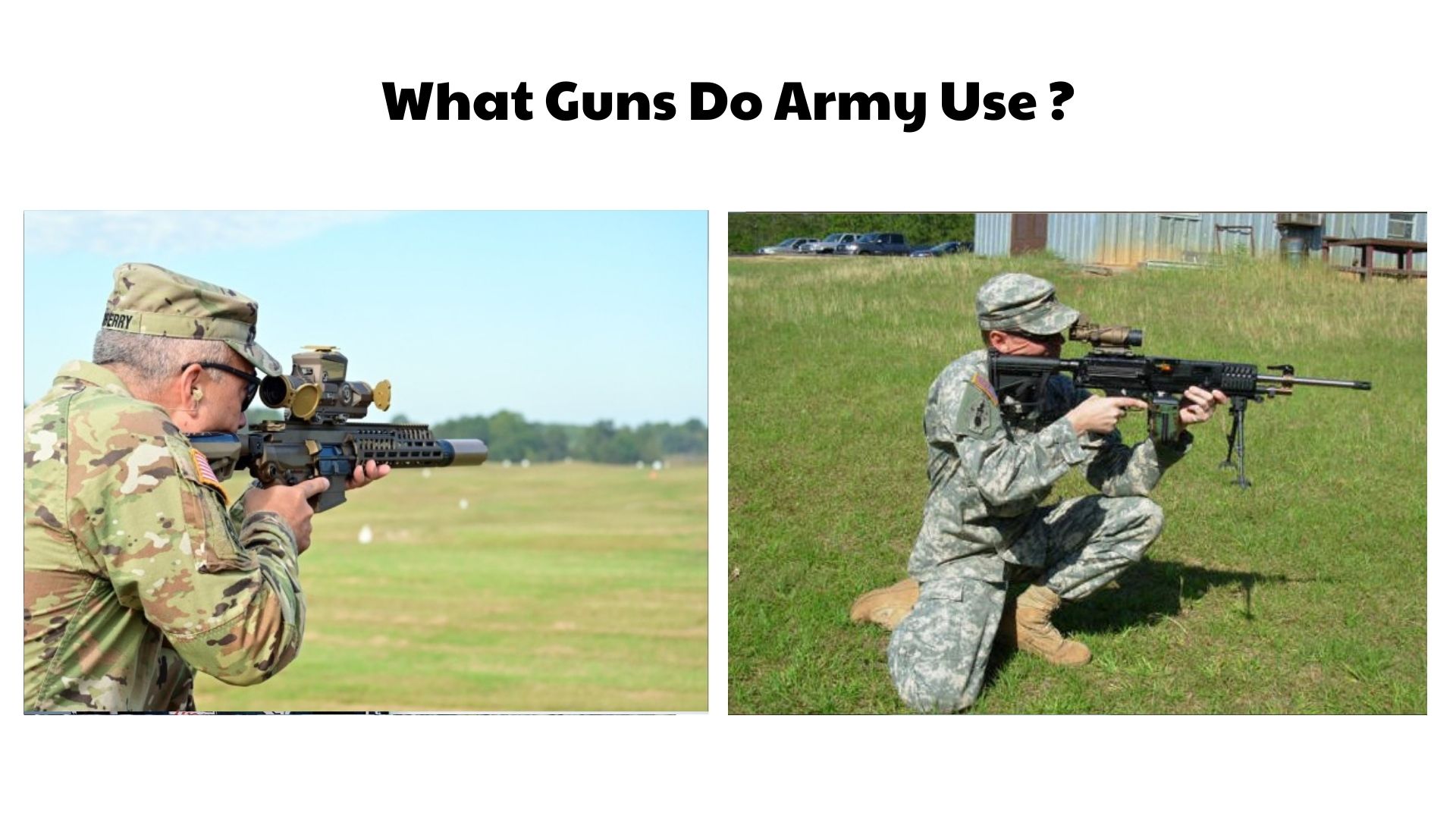
When people ask what guns do army use, they are usually referring to the primary firearms issued to modern soldiers for infantry combat, support roles, and precision operations. The answer is not a single weapon but a system of firearms designed for different battlefield tasks. Modern armies rely on carbines, machine guns, sniper rifles, and heavy weapons, each carefully selected to match specific operational needs. These weapons are engineered for reliability, durability, and adaptability in environments ranging from dense urban terrain to open desert and mountainous regions.
This guide explains several of the most widely recognized firearms used by modern military forces, particularly those associated with the United States Army. Rather than focusing on technical jargon, the goal is to present clear and useful explanations so readers can understand why each weapon exists and how it fits into military structure. You will learn about the role each firearm plays, the design philosophy behind it, and why it remains a trusted tool for soldiers around the world.
Below are five notable firearms that frequently appear when discussing what guns do army use. Each one represents a different category of military weapon, from versatile carbines carried by infantry soldiers to heavy machine guns used for sustained battlefield support.
What Guns Do Army Use ?
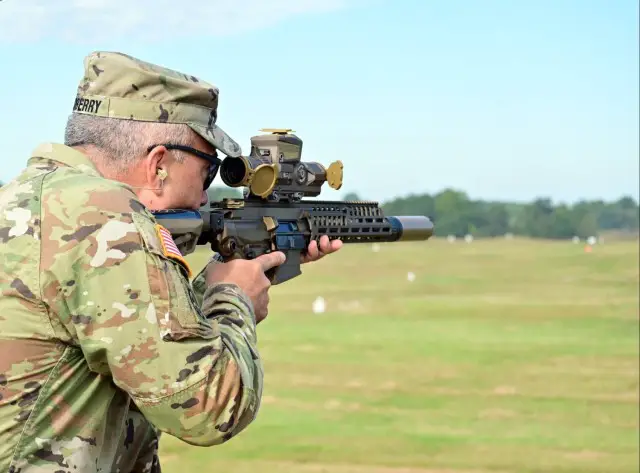
1. M4 Carbine
The M4 Carbine is one of the most recognizable firearms in modern military service and is widely considered the standard rifle carried by many infantry soldiers. When discussing what guns armies rely on for everyday combat situations, the M4 almost always appears at the top of the list. Developed as a more compact and maneuverable version of earlier service rifles, the M4 was designed specifically to meet the needs of modern soldiers operating in fast‑moving environments such as urban combat zones, vehicles, and confined spaces.
One of the defining features of the M4 Carbine is its balance between portability and effectiveness. Compared to longer rifles previously issued to troops, the M4 offers a shorter barrel and adjustable stock, which makes it easier for soldiers to handle while wearing heavy gear or operating inside vehicles. Despite its smaller size, the weapon maintains effective accuracy and range for most combat scenarios. This combination of compact design and dependable performance explains why it has become a central answer to the question of what guns the army use for standard infantry operations.
Another reason the M4 has remained widely adopted is its modular design. The rifle allows soldiers to attach various accessories depending on the mission. Optical sights can improve accuracy and target acquisition, while tactical lights or laser devices help during nighttime operations. Rail systems along the rifle’s upper and side sections allow these accessories to be installed quickly without permanently modifying the firearm. This adaptability means the same rifle platform can be configured for patrol duties, close‑quarters combat, or longer‑range engagements simply by adjusting attachments.
In practical terms, the M4 serves as the backbone of infantry firepower. Soldiers carry it during patrols, defensive operations, and offensive maneuvers. Its manageable recoil allows accurate follow‑up shots, and its relatively lightweight structure reduces fatigue during long missions. Over time, the rifle has received various updates to improve reliability and durability, ensuring it continues to meet the demanding standards of modern military forces. Because of these qualities, the M4 Carbine remains one of the most important firearms when examining what guns do army use in contemporary military operations.
2. M16A4 Rifle
The M16A4 rifle represents a significant chapter in the evolution of modern military firearms. Although newer carbines such as the M4 have become more common in many combat units, the M16 family still holds an important place in military history and remains in service within certain roles. For decades, the rifle defined what guns the army use for standard infantry engagements, and its influence continues to shape modern weapon design.
The M16A4 is known for its longer barrel and improved accuracy at extended ranges compared to shorter carbines. This characteristic makes it particularly effective in environments where soldiers may need to engage targets at greater distances. The rifle’s design emphasizes precision and stability, allowing trained soldiers to maintain consistent performance across a wide variety of combat scenarios. While compact weapons excel in tight spaces, the M16A4 demonstrates how a longer rifle still offers advantages in open terrain and structured defensive positions.
Another key aspect of the M16A4 is its modular upper receiver system, which allows optical sights and other equipment to be mounted easily. Earlier versions of the rifle relied primarily on traditional iron sights, but modern configurations often include advanced optics that help soldiers identify and engage targets more quickly. This integration of improved sighting systems reflects the broader trend in military equipment toward greater situational awareness and precision.
In terms of battlefield role, the M16A4 has often been associated with disciplined marksmanship. Soldiers trained with this rifle typically develop strong shooting fundamentals due to its stable firing characteristics and longer sight radius. These traits contribute to accurate fire during longer engagements and controlled defensive operations. Even as military forces gradually transition to newer rifle platforms, the M16A4 remains an important example of how reliability, accuracy, and modular design come together in answering the question of what guns do army use around the world.
3. M249 Squad Automatic Weapon
While rifles such as the M4 and M16 are designed for individual soldiers, infantry units also rely heavily on support weapons capable of delivering sustained fire. The M249 Squad Automatic Weapon, commonly called the SAW, fills this critical role. When examining what guns the army use to provide suppressive fire during combat, the M249 stands out as one of the most important tools within a small infantry squad.
The purpose of the M249 is to deliver continuous fire that keeps opposing forces pinned down while other soldiers maneuver. Unlike standard rifles, which typically rely on detachable magazines with limited capacity, the M249 can use belt‑fed ammunition that allows much longer firing sequences before reloading. This capability makes it particularly effective during moments when maintaining constant pressure on enemy positions is necessary to support advancing troops.
Despite being a machine gun, the M249 is designed to remain relatively portable so that it can be carried and operated by a single soldier. The weapon includes features such as a bipod for stability and a quick‑change barrel system that helps manage heat during extended firing sessions. These design elements ensure the weapon can continue operating even under demanding battlefield conditions. In a typical infantry formation, the soldier assigned to the M249 acts as a key provider of firepower, helping the squad maintain tactical advantage during engagements.
Over the years, the M249 has undergone various improvements intended to enhance durability, reduce weight, and improve reliability. While newer automatic rifles have begun to supplement its role in some units, the weapon still represents an important piece of equipment in many military formations. Its ability to deliver sustained fire remains vital to small‑unit tactics, making it a consistent answer whenever people ask what guns do army use to support infantry combat operations.
4. M240B Machine Gun
The M240B machine gun occupies a slightly different role from the squad‑level M249. Instead of being carried by a single infantry soldier as a primary weapon, the M240B is typically used as a medium machine gun that provides heavier sustained firepower. Within the structure of military units, this firearm often supports defensive positions, mounted operations on vehicles, or coordinated fire teams requiring greater range and stopping capability.
One of the defining characteristics of the M240B is its exceptional reliability under harsh conditions. Military equipment must perform consistently in environments that include extreme heat, cold, dust, and heavy use. The M240 series has developed a reputation for functioning reliably even when subjected to these demanding circumstances. This reliability is one of the reasons the weapon has remained in service for many years and continues to be included in discussions about what guns the army use for sustained combat support.
The weapon’s design emphasizes stability and durability. It is typically fired from a bipod or tripod mount, which allows the operator to maintain accurate fire over longer distances. In vehicle‑mounted configurations, the M240B becomes even more effective by providing continuous defensive fire for convoys or armored patrols. This adaptability allows the machine gun to serve multiple operational roles, whether supporting infantry units on foot or defending military vehicles moving through contested areas.
Another factor contributing to the M240B’s importance is its range and power compared to lighter automatic weapons. While squad‑level machine guns prioritize portability, the M240B focuses on delivering sustained fire across longer distances with greater impact. In coordinated combat operations, this capability can shape the battlefield by controlling key terrain or suppressing enemy movement. Because of these qualities, the M240B remains a central component in many discussions about what guns do army use for medium‑level machine gun support.
5. M2 Browning .50 Caliber Machine Gun
Few military firearms have achieved the legendary reputation of the M2 Browning .50 caliber machine gun. First introduced in the early twentieth century, this powerful weapon continues to serve in modern military forces more than a century later. Its longevity is a testament to its effectiveness, reliability, and adaptability. When people explore what guns the army use for heavy machine gun roles, the M2 Browning is almost always part of the conversation.
Unlike rifles or lighter machine guns carried by individual soldiers, the M2 is typically mounted on vehicles, defensive positions, or specialized weapon platforms. Its large caliber ammunition provides significant power and range, allowing the weapon to engage distant targets and provide strong defensive fire. This capability makes it especially valuable in situations where forces must control large areas or protect convoys moving through potentially hostile regions.
The design of the M2 emphasizes strength and durability. Its heavy construction allows it to withstand sustained firing without losing reliability, which is critical in combat environments where equipment failure is not an option. The weapon’s long history also means it has been refined through decades of operational experience, resulting in improvements that maintain its relevance even in modern warfare.
Today, the M2 Browning continues to be used on armored vehicles, naval vessels, and defensive installations around the world. Its ability to deliver powerful, accurate fire over long distances ensures it remains a valuable tool for military forces. Even as new technologies emerge, the weapon’s proven performance keeps it firmly established among the most important firearms when discussing what guns do army use in contemporary armed forces.
6. M240L Machine Gun
The M240L machine gun represents a refined evolution of the well‑known M240 family, which has long served as a reliable source of sustained firepower for military units. When exploring what guns the army use to provide medium‑machine‑gun support while maintaining greater mobility, the M240L stands out as a notable development. Engineers designed this version to reduce weight while maintaining the strength and dependability that made earlier models successful.
One of the most significant improvements in the M240L is its lighter construction. By incorporating advanced materials and manufacturing techniques, designers managed to reduce the weapon’s weight without sacrificing structural integrity. For soldiers operating on foot, this difference can be meaningful during long patrols or extended combat operations. Carrying heavy equipment over difficult terrain is a constant challenge in military service, so every reduction in weight helps improve endurance and maneuverability.
Despite being lighter than earlier variants, the M240L maintains the same general operating system that has proven dependable for decades. The weapon is capable of delivering sustained automatic fire that helps suppress enemy movement and support advancing troops. In many infantry formations, a medium machine gun such as the M240L acts as a force multiplier, enabling a small unit to control larger areas of terrain through well‑placed bursts of fire.
Another important aspect of the M240L is its adaptability. The weapon can be deployed on bipods for mobile infantry operations or mounted on tripods and vehicles for more stable firing platforms. This flexibility allows commanders to use the same firearm in multiple tactical roles depending on the mission. Because of its reduced weight, reliability, and sustained fire capability, the M240L remains an important example when discussing what guns do army use for mobile machine‑gun support in modern combat environments.
7. M110 Semi‑Automatic Sniper System (SASS)
Precision shooting is a crucial component of modern military strategy, and the M110 Semi‑Automatic Sniper System plays a central role in fulfilling that requirement. When examining what guns the army use for designated marksman and sniper operations, the M110 frequently appears as a reliable and versatile platform. Unlike traditional bolt‑action sniper rifles, the M110 operates with a semi‑automatic firing system, allowing trained marksmen to deliver accurate follow‑up shots more quickly.
The design philosophy behind the M110 focuses on combining precision with adaptability. Snipers and designated marksmen often operate alongside standard infantry units, providing overwatch and engaging targets at longer ranges than typical rifles can effectively reach. The M110’s configuration allows it to perform this role efficiently while still remaining compatible with modern optical sights and accessories that improve target identification and accuracy.
One of the advantages of a semi‑automatic sniper rifle is its ability to respond quickly to evolving battlefield situations. In dynamic environments where multiple threats may appear within seconds, the shooter can fire successive shots without manually cycling the action between each round. This capability increases the weapon’s practicality during real‑world operations, especially in urban areas or complex terrain where engagements may change rapidly.
Beyond its technical characteristics, the M110 also reflects the broader evolution of military marksmanship. Modern snipers are not simply long‑range shooters; they serve as observers, intelligence gatherers, and precision support for infantry units. The rifle provides them with the accuracy and consistency needed to perform these duties effectively. As a result, the M110 remains a significant answer when people ask what guns do army use for modern precision shooting roles.
8. M2010 Enhanced Sniper Rifle
The M2010 Enhanced Sniper Rifle was developed to extend the reach and effectiveness of military snipers operating in challenging environments. When considering what guns the army use for long‑range precision engagements, the M2010 represents a specialized solution designed to increase accuracy and performance at extended distances. This rifle was introduced as an improvement over earlier sniper systems that had proven reliable but required modernization for contemporary warfare.
One of the defining characteristics of the M2010 is its ability to maintain exceptional accuracy at longer ranges. In large open environments such as mountainous regions or desert landscapes, the ability to engage targets at great distances becomes particularly valuable. The rifle’s design emphasizes stability, precision engineering, and compatibility with advanced optical systems that help snipers identify and track targets far beyond the range of standard infantry rifles.
Another important feature of the M2010 is its modular configuration. Modern sniper rifles must accommodate a variety of equipment, including optics, suppressors, and other accessories that improve mission effectiveness. The M2010’s rail systems and adjustable components allow operators to tailor the rifle to specific operational requirements, ensuring consistent performance in different environments and weather conditions.
In operational terms, the M2010 provides snipers with a tool capable of influencing the battlefield from a distance. By engaging key targets or providing overwatch for advancing units, snipers equipped with rifles like the M2010 contribute significantly to mission success. The rifle’s extended range and reliable accuracy ensure it remains an important firearm when examining what guns do army use for modern long‑range precision roles.
9. M24 Sniper Weapon System
The M24 Sniper Weapon System has long been associated with disciplined military marksmanship and precision shooting. For many years, this rifle served as the primary sniper platform for numerous military units. When discussing what guns the army use for traditional bolt‑action sniper roles, the M24 frequently appears as a foundational example of accuracy and reliability.
The rifle is built around a bolt‑action mechanism, which is often favored for precision shooting due to its mechanical simplicity and consistency. This design allows snipers to maintain excellent accuracy over long distances, as the action remains stable and predictable during each shot. While semi‑automatic sniper rifles offer faster follow‑up shots, bolt‑action systems like the M24 remain respected for their precision and durability.
Another reason the M24 gained widespread recognition is its adaptability. Over time, the rifle has been updated with improved optics, mounting systems, and other enhancements that keep it relevant in modern military operations. Snipers rely heavily on optical equipment to identify and engage distant targets, and the M24 platform accommodates these upgrades effectively.
Beyond its mechanical qualities, the M24 represents the discipline and training associated with military snipers. Operators must develop exceptional patience, observation skills, and marksmanship to use such a rifle effectively. The weapon itself becomes an extension of those skills, allowing highly trained personnel to deliver precise fire when needed. Because of its history and consistent performance, the M24 remains an important reference point when exploring what guns do army use for precision sniper missions.
10. MK 19 Grenade Machine Gun
The MK 19 Grenade Machine Gun occupies a unique position among military weapons because it combines the concept of a machine gun with explosive munitions. When analyzing what guns the army use to deliver powerful area suppression, the MK 19 stands out due to its ability to launch high‑explosive grenades in rapid succession. This capability allows military units to control large sections of terrain and disrupt enemy movement effectively.
Unlike conventional machine guns that fire standard ammunition, the MK 19 uses specialized grenades designed to detonate upon impact. This dramatically increases the weapon’s area effect, making it particularly useful against groups of targets, light vehicles, or fortified positions. Because of its power, the MK 19 is typically mounted on vehicles, defensive structures, or heavy tripods rather than being carried by individual soldiers during patrols.
The weapon’s design emphasizes controlled automatic fire. Operators can launch grenades in measured bursts, allowing them to maintain accuracy while delivering significant explosive impact across a battlefield. This makes the MK 19 an effective support weapon during convoy protection missions, defensive operations, or situations where infantry units require additional firepower to suppress hostile positions.
Over the years, the MK 19 has earned a reputation for reliability and effectiveness. Its ability to combine sustained fire with explosive payloads gives military commanders a versatile tool for battlefield control. Although it is very different from standard rifles carried by infantry soldiers, the MK 19 plays an important role in the broader system of military weaponry. For this reason, it remains a notable example when discussing what guns do army use in modern military operations.
11. M9 Pistol
The M9 pistol served for decades as one of the most recognizable sidearms issued to military personnel. When people explore what guns do army use, the focus often falls on rifles and machine guns, but sidearms like the M9 play an important supporting role on the battlefield. Introduced to military service in the 1980s, the M9 quickly became the standard handgun carried by officers, vehicle crews, military police, and specialized personnel who required a compact defensive firearm rather than a full‑size rifle.
The M9 was designed to provide reliability, manageable recoil, and practical accuracy in a compact package that soldiers could carry comfortably alongside their primary equipment. In many situations, a soldier’s primary weapon may not always be immediately accessible, especially when operating vehicles or working in confined environments. A sidearm ensures that personnel maintain a dependable defensive option when a larger firearm is impractical. Because of this, pistols remain a consistent part of military equipment even though they are not the primary weapons used in combat engagements.
Another reason the M9 gained long‑term acceptance is its simple and consistent operating system. The pistol was built to function reliably under challenging conditions such as dust, heat, and extended use. Soldiers rely on their equipment in environments where maintenance opportunities can be limited, so durability becomes a critical factor. Over the years, the M9 demonstrated that it could continue functioning effectively under demanding field conditions, which helped solidify its reputation as a dependable military sidearm.
Although newer handgun platforms have gradually replaced it in some units, the M9 remains a well‑known part of military history and training. For many soldiers who served over several decades, it represented their standard sidearm throughout deployments and daily operations. The pistol’s long service life highlights how even smaller firearms contribute to the broader system of equipment that answers the question of what guns do army use across different roles and responsibilities.
12. M17 Modular Handgun System
The M17 Modular Handgun System represents a modern evolution in military sidearm design. As armies continue to update their equipment, newer firearms are introduced to improve ergonomics, adaptability, and long‑term reliability. When examining what guns do army use today, the M17 has become one of the most widely recognized examples of the modern military pistol.
One of the defining features of the M17 is its modular architecture. Unlike many older handgun designs, the M17 allows certain components to be adjusted or replaced to better suit different users and operational needs. This flexibility makes it easier for soldiers with varying hand sizes or preferences to handle the weapon comfortably. A comfortable and stable grip contributes to improved accuracy and better control during stressful situations, which is essential for any firearm carried by military personnel.
The pistol was also designed with modern equipment integration in mind. Many military operations take place in low‑light environments where additional accessories such as tactical lights may be useful. The M17 includes mounting options that allow these devices to be attached without interfering with the weapon’s normal operation. This capability reflects the broader trend in military equipment toward increased adaptability and mission‑specific customization.
In practical terms, the M17 serves as the primary sidearm for a wide variety of military personnel. While infantry soldiers typically rely on rifles as their main weapons, many specialists, officers, and support crews carry a pistol instead. The M17 provides them with a reliable and modern defensive firearm that complements their operational duties. Because of its adaptability and updated design, the M17 has become a key example when discussing what guns do army use for modern sidearm roles.
13. M18 Modular Handgun System
The M18 Modular Handgun System is closely related to the M17, sharing much of the same design philosophy while offering a slightly more compact configuration. In discussions about what guns do army use, the M18 often appears alongside the M17 because both belong to the same family of modular pistols adopted to modernize military sidearms. The primary difference lies in the M18’s shorter barrel and slide, which make it easier to carry in situations where space and weight are important considerations.
Compact sidearms like the M18 are particularly useful for personnel who operate vehicles, aircraft, or specialized equipment. In these environments, carrying a large firearm may not be practical, and even a full‑size pistol might feel cumbersome. The M18’s slightly reduced dimensions help address this challenge while still providing the same reliability and operating system found in its larger counterpart. Soldiers benefit from a weapon that remains easy to draw, control, and store without sacrificing effectiveness.
Like the M17, the M18 was designed with modularity and adaptability in mind. Adjustable grip components and accessory mounting options allow the pistol to be configured according to user preferences and mission requirements. This approach reflects a modern understanding that military equipment must support a wide variety of operational roles rather than forcing every soldier to rely on a single fixed configuration.
The introduction of both the M17 and M18 marked a significant shift toward more flexible handgun platforms within military forces. While pistols are rarely the primary weapons used in combat engagements, they remain important defensive tools for many service members. As a result, the M18 contributes to the broader system of firearms that illustrate what guns do army use across different operational contexts.
14. M203 40mm Grenade Launcher
The M203 40mm grenade launcher represents an innovative approach to expanding the capabilities of standard infantry rifles. Rather than functioning as a standalone firearm, the M203 is typically mounted beneath a rifle, giving soldiers the ability to launch explosive or specialized grenades while still carrying their primary weapon. When exploring what guns do army use, this type of attachment demonstrates how modern military equipment often combines multiple functions into a single platform.
The main purpose of the M203 is to provide infantry units with additional firepower against targets that are difficult to reach using standard rifle ammunition. For example, enemies positioned behind cover or within fortified positions can be engaged using grenades that detonate upon impact. This capability allows soldiers to influence the battlefield more effectively without relying solely on heavier support weapons located farther away.
Another advantage of the M203 is its versatility. The launcher can fire different types of grenades designed for various purposes, including high‑explosive rounds, smoke grenades for signaling or concealment, and illumination rounds used during nighttime operations. This range of ammunition types means the same launcher can support multiple mission objectives depending on the situation.
Although newer systems have gradually replaced it in some units, the M203 remains a historically important example of integrated infantry weaponry. Its design demonstrated how adding a grenade launcher to a standard rifle could significantly increase a soldier’s tactical options. For many years, it served as a practical answer to the question of what guns do army use when additional explosive capability is needed at the squad level.
15. M320 40mm Grenade Launcher
The M320 40mm grenade launcher represents the next generation of grenade‑launching systems used by modern infantry forces. Developed as an improvement over earlier launchers, the M320 provides enhanced ergonomics, greater flexibility, and improved usability for soldiers in the field. When examining what guns do army use to deliver explosive support at the squad level, the M320 often appears as the modern successor to older grenade launcher designs.
One of the most noticeable improvements in the M320 is its ability to function both as a rifle‑mounted attachment and as a standalone launcher. This dual‑role capability gives soldiers more flexibility in how they deploy the weapon during operations. In some scenarios, mounting the launcher beneath a rifle allows a soldier to switch quickly between standard ammunition and grenades. In other situations, detaching the launcher allows it to be used independently for more controlled and deliberate firing.
The M320 was also designed with improved handling in mind. Features such as a more accessible trigger system and enhanced sighting options help soldiers operate the launcher with greater confidence and accuracy. These improvements may seem small individually, but together they make the weapon easier to use during the stressful conditions that often accompany military engagements.
In practical battlefield terms, the M320 extends the reach and versatility of infantry units. By allowing soldiers to launch explosive rounds, smoke grenades, or illumination flares, it adds a new layer of tactical options to standard rifle squads. This combination of flexibility and firepower ensures that the M320 continues to play an important role in modern infantry equipment, making it another key example when discussing what guns do army use in contemporary military forces.
16. M141 Bunker Defeat Munition (BDM)
The M141 Bunker Defeat Munition, commonly abbreviated as BDM, is a specialized weapon developed to help infantry soldiers neutralize fortified enemy positions. When discussing what guns do army use, most people think first of rifles or machine guns, yet modern armies also depend on portable weapons designed to defeat bunkers, barricades, and reinforced structures. The M141 was created precisely for this role, giving individual soldiers the ability to engage hardened targets without requiring large artillery systems or heavy vehicle‑mounted weapons.
The concept behind the M141 is straightforward: provide infantry with a compact, disposable launcher capable of delivering a powerful explosive round into defensive structures. During urban combat or operations in fortified terrain, opposing forces often use bunkers, concrete walls, and reinforced buildings as protection from standard rifle fire. In these situations, conventional small arms may not be sufficient to remove the threat quickly. The M141 addresses this challenge by launching a specialized munition that penetrates barriers before detonating, maximizing its effectiveness against protected positions.
Another important feature of the M141 BDM is its portability. Unlike heavier anti‑armor weapons, the launcher is designed to be carried and operated by a single soldier. This allows infantry units to maintain mobility while still possessing the capability to defeat hardened targets. The weapon is typically issued as a pre‑loaded disposable system, meaning the launcher is discarded after firing. This approach simplifies logistics and reduces the need for complex maintenance in the field.
From a tactical perspective, the M141 provides a critical capability during close‑quarters combat operations, particularly in dense urban environments. By enabling soldiers to engage fortified positions directly, it helps reduce the need for heavier support weapons that may not always be available. Because of this specialized but important role, the M141 Bunker Defeat Munition remains a notable example when examining what guns do army use to overcome fortified enemy defenses.
17. AT4 Anti‑Tank Weapon
The AT4 anti‑tank weapon is one of the most widely recognized portable anti‑armor systems used by modern military forces. When examining what guns do army use, the conversation often extends beyond rifles and machine guns to include weapons capable of defeating armored vehicles and fortified targets. The AT4 fulfills this requirement by providing infantry soldiers with a lightweight yet powerful launcher designed to engage armored threats at relatively short ranges.
The AT4 was designed with simplicity and reliability in mind. It is a single‑use launcher preloaded with a rocket‑propelled projectile, allowing soldiers to operate the weapon quickly with minimal preparation. This simplicity is especially valuable during fast‑moving combat situations where complex equipment could slow down a unit’s response. Once the weapon is fired, the launcher is discarded, allowing the operator to return to their primary weapon or carry additional launchers if needed.
Another reason the AT4 remains widely used is its versatility. Although it was originally developed to defeat armored vehicles, the weapon can also be effective against fortifications, defensive structures, and other hardened targets. This makes it a valuable addition to infantry squads operating in environments where threats may vary from light vehicles to fortified positions. The ability to address multiple target types increases the weapon’s practical usefulness in modern military operations.
The AT4’s combination of portability, effectiveness, and straightforward operation has made it a reliable tool for infantry forces around the world. Even as more advanced anti‑armor systems are introduced, the AT4 continues to serve as a practical solution for many battlefield scenarios. Its role in providing portable anti‑armor capability ensures it remains part of the broader answer to the question of what guns do army use in modern combat situations.
18. FGM‑148 Javelin
The FGM‑148 Javelin represents one of the most advanced portable anti‑tank systems used by modern military forces. When people investigate what guns do army use to counter heavily armored vehicles, the Javelin frequently stands out as a sophisticated and highly capable weapon. Unlike simpler launchers, the Javelin incorporates advanced targeting technology that allows operators to engage targets with a high degree of precision.
One of the defining characteristics of the Javelin system is its “fire‑and‑forget” guidance capability. After the operator locks onto a target and launches the missile, the system guides itself to the intended target without requiring further input from the soldier. This allows the operator to relocate or seek cover immediately after firing, which greatly improves survivability during combat situations where enemy forces may respond quickly.
The Javelin is also known for its top‑attack capability, which means the missile can strike armored vehicles from above, where protective armor is typically weaker. This design significantly increases the weapon’s effectiveness against modern tanks and armored platforms. In addition to armored targets, the system can also be used against fortified structures or defensive positions when necessary, providing additional flexibility on the battlefield.
Although the Javelin is more complex than simpler anti‑armor launchers, its advanced capabilities have made it a key asset for infantry units facing heavily armored threats. By combining precision targeting, powerful impact, and improved operator safety, the system demonstrates how modern technology continues to influence military equipment. Because of these qualities, the FGM‑148 Javelin remains a prominent example when exploring what guns do army use to defeat armored threats in contemporary warfare.
19. M136 AT4‑CS
The M136 AT4‑CS is a specialized variant of the standard AT4 anti‑tank launcher, developed to provide additional operational flexibility in confined environments. When examining what guns do army use, it becomes clear that many weapons are adapted for specific scenarios rather than relying on a single universal design. The AT4‑CS version addresses one of the key challenges faced by soldiers operating in urban or enclosed spaces.
Traditional rocket launchers often produce significant backblast when fired, which can be dangerous if the weapon is used inside a building or other confined area. The AT4‑CS, where “CS” stands for confined space, incorporates design changes that reduce the hazards associated with backblast. This allows soldiers to fire the weapon safely from enclosed environments such as rooms, bunkers, or narrow alleyways. In urban combat situations, this capability can be extremely valuable.
Despite these modifications, the AT4‑CS retains much of the effectiveness of the standard AT4 system. It remains capable of engaging armored vehicles, defensive structures, and other hardened targets encountered on the battlefield. By maintaining similar performance while improving safety in confined areas, the weapon provides soldiers with a versatile solution for complex combat environments.
Urban warfare has become increasingly common in modern military operations, and equipment like the AT4‑CS reflects the need for weapons adapted to these environments. By enabling infantry to deploy anti‑armor capabilities even within buildings or narrow streets, the system expands tactical options for small units. As a result, the M136 AT4‑CS remains another important example when considering what guns do army use in diverse operational conditions.
20. M224 60mm Mortar
The M224 60mm mortar provides infantry units with indirect fire support that extends beyond the range of standard small arms. When discussing what guns do army use, mortars are often included because they allow ground units to engage targets that are hidden behind terrain features, buildings, or other obstacles. Unlike rifles and machine guns that require a direct line of sight, mortars launch projectiles along a high arc, enabling them to reach targets that would otherwise remain protected.
The M224 mortar is valued for its balance between mobility and firepower. Larger artillery systems can deliver more powerful strikes, but they require heavy equipment and complex logistical support. The 60mm mortar, by contrast, is designed to be transported and operated by infantry units themselves. This allows soldiers to deploy indirect fire support quickly without relying on external artillery units.
Another advantage of the M224 system is the variety of ammunition types it can fire. Mortar rounds may include high‑explosive shells for engaging enemy personnel, illumination rounds that light up the battlefield during nighttime operations, and smoke rounds used to obscure troop movements or mark targets. This versatility allows the mortar team to support infantry operations in multiple ways depending on the mission.
In practical battlefield terms, the presence of a mortar team greatly increases a unit’s tactical reach. Infantry squads can request indirect fire to disrupt enemy positions, cover advances, or create protective smoke screens. Because of its portability and flexibility, the M224 60mm mortar continues to serve as an important support weapon within many military formations. Its role in providing mobile indirect fire ensures it remains part of the broader discussion about what guns do army use in modern military operations.
21. M252 81mm Mortar
The M252 81mm mortar is an important indirect fire weapon used by many modern infantry units to provide medium‑range battlefield support. When exploring what guns do army use, mortars are often included because they give ground forces the ability to engage targets that cannot be reached with direct‑fire weapons such as rifles or machine guns. The M252 sits between lighter infantry mortars and larger artillery systems, offering a balance of mobility and striking capability that makes it extremely valuable during many types of military operations.
One of the primary advantages of the M252 mortar is its ability to launch explosive rounds over obstacles and terrain features. Unlike direct‑fire weapons that require a clear line of sight, mortars fire projectiles in a high arc, allowing them to reach enemy positions hidden behind hills, buildings, or fortified defenses. This capability allows infantry units to influence areas of the battlefield that would otherwise remain inaccessible. In practical terms, the M252 acts as a force multiplier by giving ground troops an organic method of delivering explosive firepower beyond the range of standard small arms.
The weapon is typically operated by a small mortar team composed of several soldiers who work together to transport, set up, and fire the system. While larger than a 60mm mortar, the M252 is still portable enough to be deployed with infantry formations. Once in position, the mortar can fire a variety of ammunition types designed for different tactical situations. High‑explosive rounds can disrupt enemy formations, while illumination rounds can light up nighttime battlefields, and smoke rounds may be used to conceal friendly troop movements.
Because of its reliability and flexibility, the M252 has become a common part of infantry support units. It allows commanders to respond quickly to changing conditions without relying solely on distant artillery systems. By providing mobile indirect fire support directly to infantry units, the M252 mortar plays a key role in the broader collection of equipment that answers the question of what guns do army use during modern combat operations.
22. M120 120mm Mortar
The M120 120mm mortar represents a heavier and more powerful form of indirect fire support compared with smaller infantry mortars. When examining what guns do army use to deliver powerful explosive fire over longer distances, the M120 often appears as an essential component within larger military units. This mortar is capable of launching heavier rounds with greater range and impact, allowing it to influence wider sections of the battlefield.
Unlike lighter mortars that can be carried entirely by infantry teams, the M120 is usually transported using vehicles due to its larger size and weight. This does not reduce its tactical value; instead, it allows the system to provide stronger and more sustained firepower once deployed. Mortar crews can set up the weapon quickly and begin delivering indirect fire support to assist infantry units engaged in combat. In many operations, the M120 acts as a bridge between portable infantry mortars and larger artillery systems.
Another advantage of the M120 mortar is the variety of ammunition available for it. High‑explosive rounds can be used to disrupt enemy positions, while other specialized rounds may create smoke screens or illuminate large areas of terrain during night operations. This versatility ensures the mortar can support a wide range of tactical objectives, from suppressing enemy forces to providing visibility for advancing troops.
In operational terms, the M120 greatly increases the firepower available to ground forces. Infantry units supported by heavy mortars can engage distant or concealed targets without exposing themselves to direct enemy fire. This capability makes the system a valuable part of many military formations and an important answer when discussing what guns do army use to deliver heavy indirect fire support during modern warfare.
23. M1100 Shotgun
Shotguns may seem unusual when compared with rifles and machine guns, yet they serve several practical roles within military operations. The M1100 shotgun is one example of a firearm that has been used in specialized situations where its unique characteristics offer clear advantages. When considering what guns do army use, shotguns are typically included because of their effectiveness in close‑quarters environments and their versatility in certain support roles.
One of the key strengths of a shotgun like the M1100 is its effectiveness at very short distances. In environments such as building interiors, narrow corridors, or dense urban areas, engagements often occur at extremely close range. In these situations, the spread pattern produced by shotgun ammunition can make it easier to engage targets quickly. This characteristic has made shotguns useful for certain military tasks, particularly in situations where rapid response is more important than long‑distance accuracy.
Another important role for military shotguns involves breaching operations. Specialized shotgun ammunition can be used to disable door locks or hinges, allowing soldiers to enter secured rooms quickly during tactical operations. This capability can be especially valuable during missions that require fast access to buildings or fortified structures. Instead of relying on heavier equipment, a breaching shotgun allows soldiers to open entry points efficiently while maintaining mobility.
Although the M1100 is not carried by every soldier, its presence within military inventories highlights the diversity of firearms used in modern operations. Different environments and mission objectives require different tools, and the shotgun provides capabilities that rifles or machine guns cannot easily replicate. For this reason, weapons like the M1100 are sometimes included when examining what guns do army use in specialized combat and support roles.
24. Remington 870 Shotgun
The Remington 870 shotgun is one of the most widely recognized pump‑action shotguns in both civilian and military contexts. Its strong reputation for durability and reliability has led to its adoption by various law enforcement and military organizations. When discussing what guns do army use for specialized close‑range tasks, the Remington 870 frequently appears due to its practical design and proven performance in demanding environments.
The pump‑action mechanism of the Remington 870 is known for its simplicity and ruggedness. Unlike more complex systems, the manual pump action allows the operator to cycle the weapon reliably even under harsh conditions such as dirt, sand, or extreme weather. Military equipment must function in environments where maintenance opportunities may be limited, so this type of mechanical reliability becomes an important advantage.
In military use, the Remington 870 is often associated with breaching and close‑quarters roles. Specialized breaching rounds allow soldiers to break door locks or hinges quickly, creating entry points during tactical operations. Because the weapon is relatively compact and straightforward to operate, it can be carried by personnel assigned specifically to these tasks. In addition, the shotgun’s effectiveness at short range makes it useful for certain defensive scenarios within confined spaces.
While rifles remain the primary firearms carried by most soldiers, shotguns like the Remington 870 fill specific niches that other weapons cannot easily replace. Their reliability and adaptability make them valuable tools during specialized operations. As a result, the Remington 870 continues to appear in discussions about what guns do army use for close‑range and breaching applications within modern military forces.
25. M500 Shotgun
The M500 shotgun, commonly associated with the Mossberg 500 series, is another example of a durable pump‑action shotgun used for specialized military roles. When exploring what guns do army use, it becomes clear that the military often employs multiple shotgun models depending on availability, mission requirements, and operational preferences. The M500 stands out for its rugged construction and simple mechanical design, which allow it to function reliably in a variety of challenging environments.
Like other pump‑action shotguns, the M500 is valued for its straightforward operation and consistent reliability. Soldiers can manually cycle the weapon to chamber each round, reducing the likelihood of malfunctions that might occur in more complex systems. This simplicity is especially beneficial during stressful conditions where equipment must perform consistently without requiring delicate adjustments.
The shotgun’s compact size and strong close‑range performance make it particularly suitable for operations involving buildings or confined spaces. Military personnel may use it for tasks such as breaching entry points or providing close‑range security during certain missions. Because these tasks require a reliable and easy‑to‑handle firearm, pump‑action shotguns like the M500 remain useful tools within military equipment inventories.
Although the M500 is not intended to replace rifles or machine guns as primary combat weapons, it fills an important niche in specialized operations. By providing capabilities suited for close‑quarters situations and breaching tasks, the shotgun contributes to the diverse collection of equipment used by modern armed forces. For that reason, the M500 is often mentioned when discussing what guns do army use across a wide range of military roles and mission types.
26. M27 Infantry Automatic Rifle
The M27 Infantry Automatic Rifle represents a modern approach to squad‑level automatic firepower. When discussing what guns do army use, it is important to understand that not all automatic weapons are designed the same way. Some machine guns are built for sustained heavy fire, while others focus on mobility and accuracy within small infantry teams. The M27 was developed to provide a lighter automatic weapon that still delivers reliable suppressive fire while maintaining excellent precision.
One of the defining ideas behind the M27 is the concept of combining the accuracy of a rifle with the automatic capability of a machine gun. Traditional squad automatic weapons often prioritize high ammunition capacity and continuous fire. While this approach is effective for suppression, it can sometimes reduce mobility or accuracy during dynamic operations. The M27 was designed to offer a different balance, allowing soldiers to maintain automatic fire capability while still benefiting from a rifle‑like level of control and precision.
Another important characteristic of the M27 is its modular design. Modern infantry weapons frequently include rail systems that allow optics, grips, and other accessories to be attached according to mission needs. These additions can improve target acquisition, stability, and overall handling. By allowing the operator to configure the weapon for different environments or operational objectives, the M27 demonstrates the growing emphasis on adaptability within modern military equipment.
In practical battlefield terms, the M27 serves as a versatile weapon within infantry squads. It provides automatic fire support while remaining light enough for mobile operations. This combination of mobility, accuracy, and adaptability makes the weapon well suited to modern infantry tactics that rely on rapid movement and coordinated small‑unit maneuvers. Because of these qualities, the M27 Infantry Automatic Rifle is often included when examining what guns do army use for modern squad‑level automatic fire.
27. MKEK HK416 (Used by Select Units)
The HK416, produced by the Turkish manufacturer MKEK under license in some contexts, is a modern rifle platform that has gained recognition among certain specialized military units. When exploring what guns do army use, it becomes clear that not every weapon is issued across the entire force. Some firearms are reserved for specialized units that require specific features or performance characteristics for particular mission profiles. The HK416 is a well‑known example of this type of specialized rifle.
The rifle is widely respected for its reliability and durability, especially under demanding operating conditions. One of the design goals behind the HK416 was to improve the operating system used in earlier rifle platforms while maintaining compatibility with many familiar components. This allowed soldiers to benefit from improved reliability without requiring an entirely new training structure or equipment ecosystem.
Another reason the HK416 gained popularity among specialized units is its adaptability. Modern military rifles are often designed with modular rail systems and compatibility with advanced optical sights. These features allow soldiers to tailor the weapon for different types of missions, whether that involves close‑quarters engagements, patrol operations, or precision shooting at moderate distances. The ability to integrate modern optics and accessories helps increase situational awareness and accuracy during complex operations.
Although the HK416 is not necessarily the standard rifle issued to every soldier, its reputation for performance has led to its adoption by several specialized units within military forces around the world. These units often require equipment capable of performing reliably in demanding environments and unconventional missions. As a result, the HK416 is frequently mentioned when discussing what guns do army use within specialized military formations.
28. M2A1 .50 Cal Machine Gun
The M2A1 .50 caliber machine gun represents an updated version of one of the most iconic heavy weapons in military history. When examining what guns do army use, heavy machine guns occupy an important place because they provide powerful long‑range fire support that smaller firearms cannot deliver. The M2A1 continues the legacy of earlier M2 designs while incorporating improvements that enhance safety, reliability, and ease of operation.
One of the defining characteristics of the M2A1 is its powerful .50 caliber ammunition, which allows the weapon to engage targets at significant distances with considerable impact. Heavy machine guns like this are often mounted on vehicles, defensive emplacements, or naval platforms, where they can provide strong protective fire for troops and equipment. Their ability to cover large areas makes them valuable tools during convoy operations, base defense, and coordinated battlefield engagements.
The updated M2A1 version introduced improvements intended to simplify maintenance and reduce the time required to prepare the weapon for operation. For soldiers responsible for operating heavy weapons, small improvements in safety and usability can have meaningful effects during demanding missions. The design retains the rugged durability that made earlier M2 models famous while incorporating refinements that help the weapon remain effective in modern military service.
Because of its long range, high impact, and proven reliability, the M2A1 continues to play a major role in many military forces. Heavy machine guns are often used to defend key positions or support ground operations with sustained firepower. For these reasons, the M2A1 remains an important example when answering the question of what guns do army use for heavy support roles on the battlefield.
29. M134 Minigun
The M134 Minigun is one of the most distinctive automatic weapons used by modern military forces. When discussing what guns do army use, this weapon stands out due to its extremely high rate of fire and unique rotating barrel design. Unlike conventional machine guns that rely on a single barrel, the Minigun uses multiple rotating barrels powered by an external motor. This system allows the weapon to fire thousands of rounds per minute, creating an intense volume of suppressive fire.
Because of its size and power requirements, the M134 is typically mounted on aircraft, vehicles, or specialized weapon platforms rather than being carried by individual soldiers. Helicopters, for example, often use Miniguns to provide close air support or defensive fire during troop transport missions. The weapon’s ability to deliver rapid bursts of fire across a wide area makes it particularly effective for suppressing enemy positions during critical moments of an operation.
Another important characteristic of the M134 Minigun is its reliability during high‑volume firing. The rotating barrel system distributes heat and mechanical stress across multiple components, allowing the weapon to sustain rapid fire without overheating as quickly as traditional single‑barrel machine guns. This engineering approach allows the Minigun to maintain its remarkable firing rate while still operating reliably under demanding conditions.
Although it is not a standard infantry weapon, the M134 Minigun plays an important role in aerial and vehicle‑mounted fire support. Its impressive rate of fire and ability to suppress large areas of terrain make it a powerful tool in coordinated military operations. Because of its unique design and battlefield impact, the Minigun is often included in discussions about what guns do army use for high‑volume suppressive fire in specialized combat situations.
30. MK48 Machine Gun
The MK48 machine gun is a lightweight belt‑fed automatic weapon designed to provide strong firepower while remaining relatively portable for infantry use. When examining what guns do army use, weapons like the MK48 illustrate how military designers attempt to balance mobility with sustained fire capability. The MK48 was developed to give soldiers access to heavier machine‑gun performance without requiring the weight and bulk of traditional medium machine guns.
One of the most notable characteristics of the MK48 is its combination of powerful ammunition and manageable size. By delivering strong automatic fire while remaining lighter than many medium machine guns, the weapon allows specialized units to maintain high levels of firepower during mobile operations. This can be particularly valuable in environments where infantry must move quickly across difficult terrain while still maintaining the ability to suppress enemy forces effectively.
Like many modern military firearms, the MK48 includes features designed to support adaptability and ease of use. Rail systems allow operators to attach optical sights and other accessories that improve target identification and control. The weapon is also designed with maintenance and reliability in mind, ensuring it continues functioning even under demanding operational conditions. These qualities are essential for equipment used in extended field missions where mechanical failure could compromise an operation.
In operational terms, the MK48 often serves as a support weapon for specialized units that require both mobility and strong automatic firepower. Its ability to deliver sustained fire while remaining relatively portable makes it well suited for modern small‑unit tactics. Because of this balance between power and mobility, the MK48 is frequently mentioned when discussing what guns do army use to support infantry units in dynamic and demanding combat environments.
31. M3 Carl Gustaf Recoilless Rifle
The M3 Carl Gustaf recoilless rifle is a versatile infantry support weapon widely used by modern military forces. When examining what guns do army use, systems like the Carl Gustaf illustrate how infantry units are equipped with tools capable of handling a wide variety of battlefield threats. Unlike traditional rifles or machine guns, this weapon is designed to launch powerful projectiles that can defeat armored vehicles, fortified positions, and other hardened targets.
One of the most important advantages of the M3 Carl Gustaf system is its multi‑purpose capability. Rather than relying on a single type of ammunition, the weapon can fire a wide range of specialized rounds tailored for different combat scenarios. Anti‑armor rounds can engage lightly armored vehicles, while high‑explosive rounds are useful for neutralizing enemy positions or defensive structures. Smoke rounds can also be used to conceal troop movements or mark areas of the battlefield. This flexibility makes the Carl Gustaf an adaptable tool for infantry units operating in complex environments.
Another defining characteristic of the M3 Carl Gustaf is its relatively lightweight design compared with other anti‑armor systems. Although it is more substantial than standard small arms, it can still be carried and operated by a small team of soldiers. This mobility allows infantry units to maintain access to powerful fire support without depending entirely on heavy vehicles or distant artillery. For troops operating in mountainous terrain, urban environments, or remote locations, this portability can be extremely valuable.
Because of its versatility, durability, and wide selection of ammunition types, the M3 Carl Gustaf continues to play an important role in modern infantry operations. It provides ground forces with the ability to address multiple types of threats using a single weapon system. For that reason, it is frequently mentioned when discussing what guns do army use to provide flexible and effective firepower in modern combat environments.
32. M2010 ESR – Enhanced Sniper Rifle
The M2010 Enhanced Sniper Rifle, often abbreviated as ESR, was developed to extend the range and precision capabilities of military sniper teams. When exploring what guns do army use, sniper rifles represent a specialized category of firearms designed for long‑distance engagements and highly controlled accuracy. The M2010 ESR reflects the continued effort by military forces to improve long‑range precision systems used by trained marksmen.
The rifle was introduced as an improvement over earlier sniper platforms that had served reliably for many years but required modernization to meet evolving battlefield requirements. One of the key goals behind the M2010 program was to increase the effective range available to sniper teams. In large open environments such as mountainous terrain or desert regions, the ability to engage targets from greater distances provides a significant tactical advantage.
Modern sniper rifles like the M2010 ESR are typically equipped with advanced optical systems that allow operators to identify targets and maintain accuracy across long distances. These optics work in combination with carefully engineered rifle components designed to minimize vibration and maintain stability during firing. The result is a weapon capable of delivering extremely precise shots when used by highly trained personnel.
Snipers equipped with rifles such as the M2010 play a crucial role within military operations. Beyond engaging targets directly, they often provide reconnaissance and observation capabilities that support broader tactical planning. Their ability to monitor distant areas and respond with precision fire when necessary makes them valuable assets on the battlefield. Because of these qualities, the M2010 ESR remains a key example when discussing what guns do army use for modern long‑range precision missions.
33. MARS‑H Rifle
The MARS‑H rifle, also known in some contexts as a modern battle rifle platform designed for enhanced power and range, represents another example of how military small arms continue to evolve. When examining what guns do army use, it becomes clear that different rifles are designed to fulfill slightly different operational roles. While standard carbines prioritize compact size and maneuverability, battle rifles like the MARS‑H are often intended to deliver greater impact and effectiveness at longer distances.
One of the defining features of rifles in this category is their emphasis on precision and adaptability. Modern battle rifles frequently include modular rail systems that allow optics, grips, and other accessories to be attached easily. These components enable soldiers to customize the weapon for different missions, whether that involves patrol duties, designated marksman roles, or defensive operations where greater range is required.
The MARS‑H platform reflects a broader trend within military equipment design: the effort to create firearms that can perform multiple roles within a single system. By combining strong accuracy with the ability to integrate modern optics and accessories, the rifle becomes suitable for both general infantry use and more specialized marksman tasks. This adaptability helps reduce the need for multiple separate weapon systems within certain units.
Although platforms like the MARS‑H may not be universally issued across every military formation, they demonstrate how armies continue to experiment with new technologies and designs. These innovations ensure that infantry weapons remain effective against evolving battlefield challenges. As such, rifles in this category contribute to the broader understanding of what guns do army use when balancing mobility, range, and precision in modern warfare.
34. SIG MCX Spear (Proposed Future Upgrade)
The SIG MCX Spear has attracted significant attention as a potential next‑generation rifle platform for modern military forces. When discussing what guns do army use, it is also useful to consider weapons currently being evaluated or introduced as future upgrades. The MCX Spear represents a modern approach to infantry rifle design, incorporating advanced materials, modular construction, and compatibility with modern optics and accessories.
One of the goals behind the development of the MCX Spear is to provide soldiers with improved performance while maintaining manageable weight and ergonomics. Modern infantry equipment must balance multiple factors, including accuracy, reliability, and ease of use under stressful conditions. By integrating updated engineering techniques and materials, designers aim to create a rifle platform capable of meeting the evolving needs of modern military operations.
Another important aspect of the MCX Spear is its emphasis on adaptability. Like many contemporary military firearms, the platform supports a wide range of attachments, including optical sights, grips, and other accessories that improve battlefield effectiveness. This modular approach allows soldiers to tailor the weapon to specific mission requirements, ensuring it remains effective in different operational environments.
While the rifle represents a newer development compared with long‑established service weapons, its introduction reflects the continuous process of modernization within military forces. As technology evolves and battlefield requirements change, armies evaluate new systems to determine how they might enhance combat effectiveness. For this reason, the SIG MCX Spear is often mentioned in discussions about what guns do army use in both present and future military equipment programs.
35. M240H Machine Gun
The M240H machine gun is a specialized variant of the well‑known M240 family, designed specifically for use in aircraft and aviation support roles. When exploring what guns do army use, it becomes clear that certain weapons are tailored for particular operational platforms rather than general infantry use. The M240H illustrates how military firearms are adapted to function effectively within helicopters and other aerial systems.
One of the defining features of the M240H is its compatibility with aviation mounts and safety systems used on military aircraft. Helicopters operating in combat zones often require defensive weapons capable of delivering sustained fire while remaining reliable under challenging conditions. The M240H provides this capability, allowing crew members to engage threats from the air and protect the aircraft during transport or support missions.
Like other members of the M240 machine gun family, the M240H is valued for its durability and consistent performance. Military equipment used in aviation must operate reliably despite vibration, rapid maneuvering, and extended operational hours. The design of the M240 platform has proven capable of handling these stresses, which is one reason it continues to be used in multiple configurations across different branches of military service.
In operational terms, the M240H contributes to aerial fire support and defensive protection for helicopters conducting missions such as troop transport, reconnaissance, and supply operations. By allowing aircraft crews to deliver controlled suppressive fire when necessary, the weapon enhances both mission effectiveness and survivability. Because of this role, the M240H remains an important example when discussing what guns do army use across air and ground military platforms.
Frequently Asked Questions About What Guns Do Army Use
1. What guns do army use the most?
Modern armies rely on a variety of firearms, but the most commonly issued weapons are infantry rifles such as the M4‑style carbine. These rifles are designed for versatility, allowing soldiers to operate effectively in urban environments, open terrain, and patrol situations. In addition to rifles, armies also use machine guns, sniper rifles, pistols, and grenade launchers depending on the role of the unit and the mission requirements.
2. Why do armies use different types of guns instead of just one?
Different weapons serve different battlefield purposes. Rifles are used for general combat, machine guns provide suppressive fire, sniper rifles allow long‑range precision, and heavier weapons help defeat vehicles or fortified positions. Using multiple types of firearms ensures that soldiers have the right tool available for specific tactical situations.
3. What is the standard rifle used by many modern armies?
Many modern military forces use compact assault rifles or carbines as their standard infantry weapons. These rifles balance accuracy, reliability, and portability, allowing soldiers to carry them comfortably while still maintaining effective range and firepower in a wide variety of combat situations.
4. Do all soldiers carry the same gun in the army?
No. Soldiers are issued weapons based on their role within a unit. Infantry soldiers typically carry rifles, while machine gunners operate heavier automatic weapons. Snipers use specialized long‑range rifles, and vehicle crews or officers may carry pistols as secondary weapons.
5. What guns do army use for long‑range shooting?
For long‑range engagements, armies rely on precision rifles used by trained snipers or designated marksmen. These rifles are designed for accuracy over long distances and often include advanced optics that help identify and engage targets far beyond the range of standard infantry rifles.
6. What guns do army use for heavy fire support?
Machine guns and heavy automatic weapons provide sustained fire support on the battlefield. These weapons can fire continuously for longer periods and are often mounted on vehicles, tripods, or defensive positions to help suppress enemy movement and support advancing troops.
7. Do armies still use pistols?
Yes. Pistols remain part of military equipment, although they are typically secondary weapons. They are often issued to officers, military police, vehicle crews, and certain support personnel who may not carry full‑size rifles during their duties.
8. What guns do army use in vehicles?
Military vehicles often carry mounted machine guns or other automatic weapons. These weapons allow vehicle crews to provide defensive fire during convoy operations and offer additional protection for soldiers traveling through potentially dangerous areas.
9. Are shotguns used in the army?
Shotguns are sometimes used in specialized military roles. They are particularly useful for breaching doors during tactical entry operations or for close‑quarters situations where engagements occur at very short distances.
10. What guns do army use for urban combat?
Urban combat often requires compact and maneuverable firearms. Short rifles, carbines, and specialized weapons designed for close‑quarters engagement are commonly used because they allow soldiers to move through buildings and narrow streets more effectively.
11. Why are machine guns important in the army?
Machine guns provide suppressive fire, which helps control enemy movement during combat. By delivering sustained bursts of ammunition, these weapons allow infantry squads to advance, reposition, or defend key areas of the battlefield.
12. What guns do army use for aircraft defense?
Aircraft often use mounted machine guns or automatic weapons designed specifically for aerial platforms. These weapons allow helicopter crews or aircraft operators to defend against ground threats while supporting troops below.
13. Do armies use grenade launchers?
Yes. Grenade launchers are commonly used by infantry units to deliver explosive rounds beyond the range of rifles. They allow soldiers to engage enemies behind cover or within fortified positions.
14. What guns do army use for anti‑armor purposes?
Portable anti‑armor launchers and missile systems are used to engage armored vehicles. These systems provide infantry soldiers with the capability to defend themselves against tanks or armored transports when heavier weapons are not available.
15. Are sniper rifles used often in the army?
Sniper rifles are used by specially trained personnel rather than by all soldiers. Snipers play an important role in reconnaissance, long‑range engagement, and battlefield observation.
16. What guns do army use during nighttime operations?
Many standard military firearms can be equipped with optical devices designed for low‑light environments. Night‑vision optics and infrared aiming systems help soldiers operate effectively after dark.
17. Why are military guns designed to be modular?
Modular designs allow weapons to be customized with different accessories, such as scopes, lights, and grips. This adaptability helps soldiers tailor their equipment to different missions and environments.
18. What guns do army use for defensive positions?
Defensive positions often rely on heavier machine guns, mounted weapons, and sometimes mortars to provide strong coverage over large areas and prevent enemy forces from advancing.
19. Do soldiers carry backup weapons?
Some soldiers carry backup weapons such as pistols, especially if their primary duties involve operating heavy equipment or vehicles. However, infantry soldiers usually rely mainly on their primary rifle.
20. What guns do army use for patrol missions?
During patrol missions, soldiers typically carry lightweight rifles or carbines that allow them to move quickly while maintaining effective firepower.
21. Are older guns still used in the army?
Some older weapon systems remain in service if they continue to perform reliably. Military equipment is often updated gradually rather than replaced all at once.
22. What guns do army use for training?
Training weapons often mirror the firearms used in active service. Soldiers practice with the same types of rifles, machine guns, and pistols they may use during real operations.
23. Do armies develop new guns frequently?
Military forces regularly evaluate and update their equipment to keep pace with technological advances and evolving combat requirements.
24. What guns do army use for special forces?
Special forces units sometimes use customized or specialized firearms suited to their missions, which may include reconnaissance, counterterrorism, or other specialized operations.
25. Why are military guns built for durability?
Military firearms must function in extreme conditions such as dust, mud, rain, and temperature changes. Durability ensures the weapon works reliably when soldiers depend on it.
26. What guns do army use for convoy protection?
Convoys often rely on mounted machine guns or automatic weapons placed on vehicles to protect soldiers and equipment during transportation missions.
27. Do armies use automatic weapons?
Yes. Automatic weapons are an essential part of military equipment because they provide continuous fire that supports infantry movement and defensive operations.
28. What guns do army use for reconnaissance units?
Reconnaissance units typically carry lightweight rifles or carbines that allow them to move quietly and efficiently while still maintaining defensive capability.
29. Are military guns different from civilian firearms?
Many military firearms share similar designs with civilian models but are configured specifically for military needs, including durability, modular attachments, and compatibility with other equipment.
30. What guns do army use in extreme environments?
Military weapons are tested to function in extreme climates such as deserts, jungles, and arctic conditions to ensure reliability in all environments.
31. Why are optics important on military guns?
Optics improve target identification and accuracy. Modern military rifles frequently use advanced scopes or sights to enhance situational awareness.
32. What guns do army use for suppressive fire?
Machine guns and automatic rifles are commonly used to provide suppressive fire, helping control enemy movement during combat operations.
33. Do armies use portable launchers?
Yes. Portable launchers allow infantry units to engage vehicles, fortified structures, or distant targets without relying solely on artillery or air support.
34. What guns do army use for base defense?
Military bases often rely on mounted machine guns, heavy weapons, and sometimes mortars to provide layered defensive capabilities.
35. How are military guns maintained?
Soldiers are trained to clean and maintain their firearms regularly to ensure reliability and safe operation during missions.
36. What guns do army use for helicopter missions?
Helicopters often carry mounted machine guns that allow crew members to provide defensive fire or close air support during operations.
37. Are military guns upgraded over time?
Yes. Many weapon systems receive upgrades such as improved optics, better materials, or enhanced safety features while maintaining their core design.
38. What guns do army use for long patrols?
For extended patrols, soldiers prefer lightweight and reliable rifles that minimize fatigue while still offering dependable firepower.
39. Do different branches of the military use different guns?
Yes. Different branches may use similar weapons but configure them differently based on operational requirements and mission types.
40. What guns do army use for rapid response units?
Rapid response units typically carry compact rifles or carbines that allow quick movement and fast engagement in dynamic situations.
41. Are mortars considered guns used by the army?
Mortars are indirect fire weapons that launch explosive rounds in a high arc. They are widely used by military forces to support infantry operations.
42. What guns do army use for nighttime defense?
Standard firearms can be equipped with night‑vision devices and illumination tools that help soldiers detect and engage threats in darkness.
43. Do armies use experimental weapons?
Military organizations often test new firearms and technologies to determine whether they may improve combat effectiveness in the future.
44. What guns do army use for coastal defense?
Coastal defense units may use mounted machine guns and heavier weapon systems to protect strategic locations and infrastructure.
45. Are military guns standardized?
Many militaries standardize equipment to simplify training, maintenance, and logistics, though specialized units may use different weapons.
46. What guns do army use in mountainous regions?
Soldiers operating in mountainous terrain often rely on lightweight rifles and portable support weapons that can be carried across difficult terrain.
47. Why do armies use multiple weapon systems?
Different weapons provide different capabilities. Using multiple systems ensures soldiers can respond effectively to diverse combat situations.
48. What guns do army use for defensive patrols?
Defensive patrols usually rely on standard infantry rifles supported by machine guns carried within the unit for additional firepower.
49. Are heavy machine guns still used today?
Yes. Heavy machine guns remain an important part of military arsenals because they offer long‑range firepower and strong defensive capability.
50. What guns do army use in modern warfare?
Modern warfare involves a combination of rifles, machine guns, sniper rifles, launchers, and support weapons. Each system contributes to a coordinated structure of firepower that allows military forces to operate effectively across different environments and mission types.
51. Will future armies use new types of guns?
Yes. As technology advances, military forces continue to develop and evaluate new firearms and weapon systems designed to improve performance, safety, and operational effectiveness.