
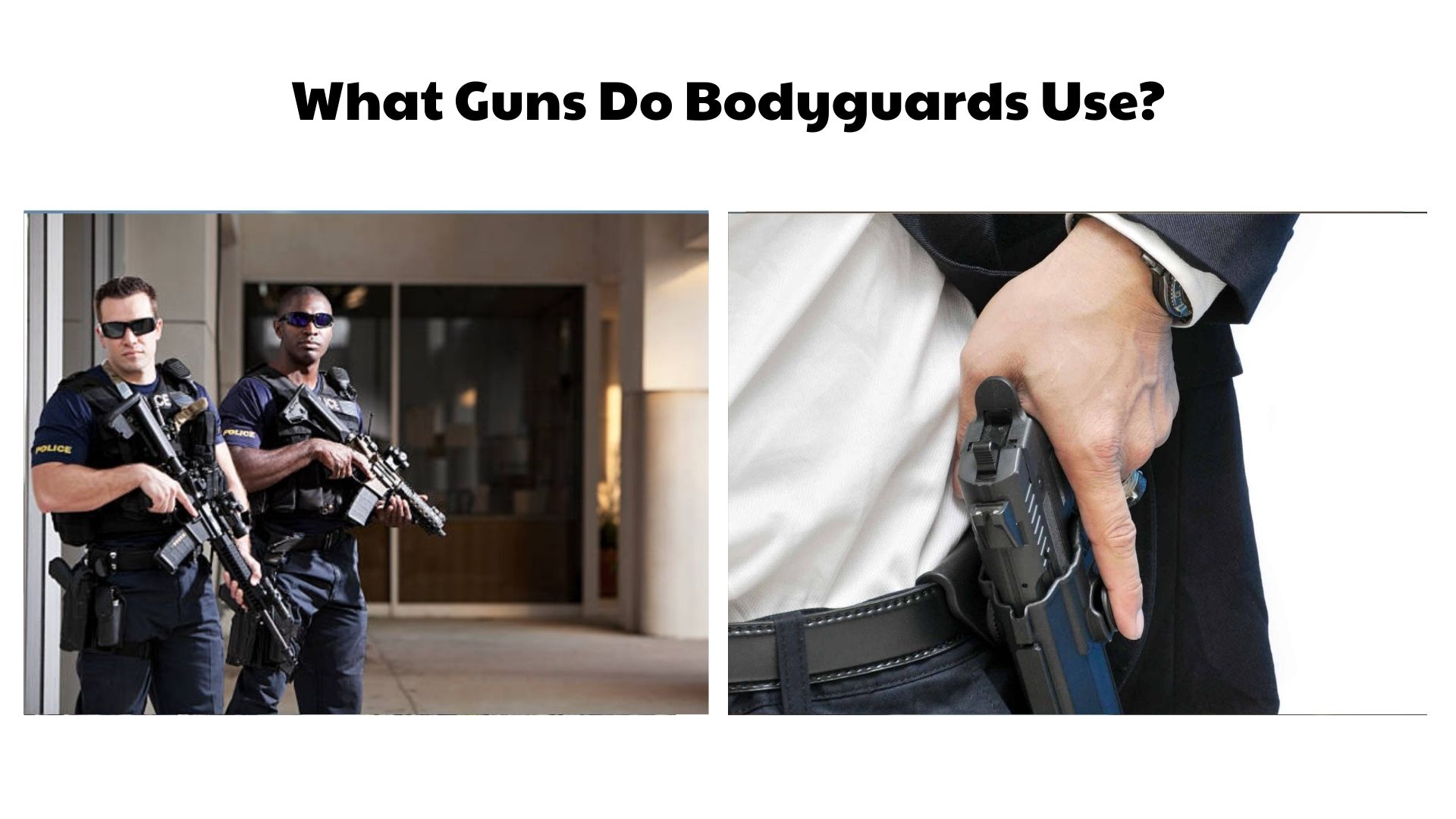
When people think about personal protection, one question appears again and again: what guns do bodyguards use? Professional bodyguards rely on firearms that are reliable, compact, and easy to deploy in high‑pressure situations. Unlike military weapons designed for battlefield dominance, bodyguard firearms are selected for discretion, safety, and consistent performance. Most bodyguards prefer modern semi‑automatic pistols because they are lightweight, easy to conceal, and simple to operate under stress. In this guide, we will explore several firearms commonly associated with executive protection teams. Each section reviews a specific firearm, explaining why it is favored by bodyguards, how it performs in real‑world protective work, and what makes it practical for close‑range defensive situations. The goal is simple: provide clear, educational insight into the tools trusted by professionals responsible for protecting lives.
What Guns Do Bodyguards Use ?
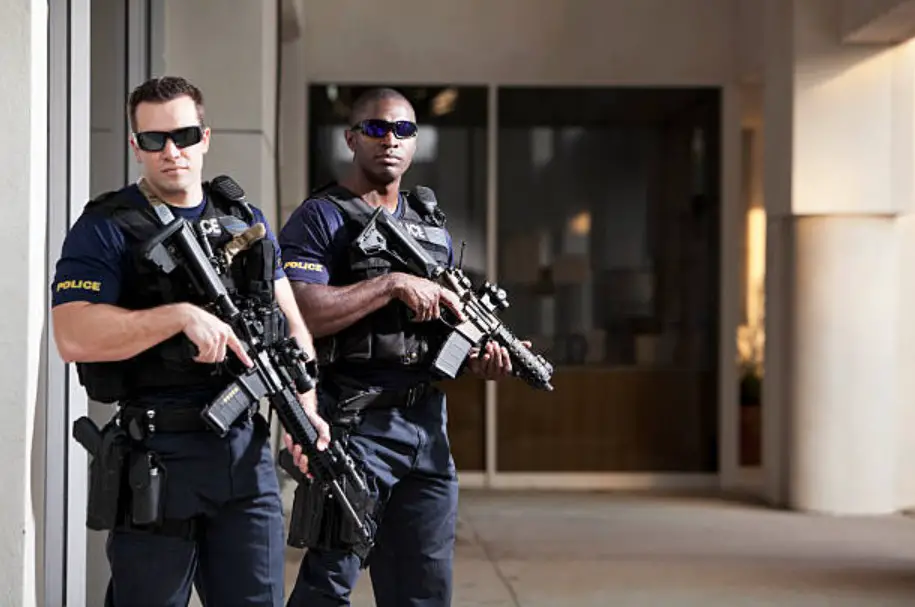
Understanding what guns do bodyguards use begins with recognizing the priorities of executive protection work. A bodyguard’s firearm must be dependable, compact enough for concealed carry, and accurate at short defensive distances. Most professional bodyguards work in crowded environments such as airports, hotels, offices, and public events. Because of this, their weapons must be manageable and safe to carry throughout long shifts. Pistols chambered in common defensive calibers like 9mm are widely favored because they balance power, magazine capacity, and recoil control. The following firearms are frequently discussed in professional security circles and represent some of the most practical options for protective duty.
Common Firearms Used by Professional Bodyguards
1. Glock 19
The Glock 19 is often considered one of the most practical pistols for executive protection professionals, and it frequently appears in discussions about what guns do bodyguards use. Introduced in the late 1980s, the Glock 19 quickly became a favorite among law enforcement agencies, private security teams, and civilian defenders. Its popularity stems from a simple combination of reliability, manageable size, and consistent performance in demanding conditions. Bodyguards typically work long shifts that require constant awareness and readiness, and a firearm like the Glock 19 supports that responsibility without adding unnecessary complexity. The pistol’s compact frame allows it to be concealed under a suit jacket or inside a discreet holster, making it ideal for close protection assignments where visibility must remain low. Despite its relatively small size, the Glock 19 still offers a respectable magazine capacity and a barrel length capable of delivering reliable accuracy at typical defensive distances.
One of the reasons bodyguards gravitate toward the Glock platform is the pistol’s reputation for durability. Executive protection teams cannot afford equipment failures, and the Glock 19 has built a long-standing reputation for functioning reliably even in less‑than‑perfect conditions. Its internal design uses fewer parts compared with many traditional pistols, which simplifies maintenance and reduces the likelihood of mechanical problems. For a bodyguard who may travel frequently and work in different climates, that reliability matters. The pistol is also lightweight thanks to its polymer frame, allowing it to be carried comfortably throughout the day. Over time, many security professionals find that comfort and familiarity with a firearm play a major role in maintaining consistent readiness.
Another advantage of the Glock 19 is its balanced shooting characteristics. The 9mm chambering provides manageable recoil, which allows quick follow‑up shots if a defensive situation ever occurs. In executive protection scenarios, bodyguards must remain aware of their surroundings and avoid unnecessary risk to bystanders. A pistol that is easy to control contributes to safer firearm handling and better accuracy under stress. The Glock’s consistent trigger system also supports predictable performance during training and real‑world defensive use. Many professional training programs emphasize repetition and muscle memory, and the Glock’s straightforward operation fits well within that training philosophy.
Overall, the Glock 19 remains one of the most widely recognized pistols associated with professional protective work. Its combination of reliability, concealability, and ease of use explains why it continues to appear in discussions about what guns do bodyguards use. For many executive protection professionals, it represents a dependable tool that supports their primary mission: keeping clients safe while remaining discreet and prepared in any environment.
2. SIG Sauer P226
The SIG Sauer P226 is another firearm frequently mentioned when discussing what guns do bodyguards use, particularly among professionals who prefer a full‑size service pistol. Originally developed for military trials during the 1980s, the P226 quickly established a reputation for precision engineering and dependable performance. Over time, it became a trusted sidearm for law enforcement agencies and specialized security units around the world. For bodyguards, the appeal of the P226 lies in its smooth shooting characteristics, excellent ergonomics, and strong track record of reliability. While it is slightly larger than many compact pistols, its balanced design allows experienced users to carry it comfortably while maintaining confidence in its accuracy and durability.
One of the defining characteristics of the SIG Sauer P226 is its metal frame construction, which provides a solid and stable shooting platform. The additional weight compared to polymer pistols helps reduce felt recoil, allowing shooters to maintain better control during rapid defensive fire. For bodyguards who train regularly, that stability can translate into improved accuracy and faster target reacquisition. In protective scenarios where seconds matter, consistent control over a firearm becomes an important advantage. The pistol’s ergonomic grip also supports natural hand positioning, making it easier to maintain a secure hold even under stressful circumstances.
Another aspect that appeals to many professional bodyguards is the P226’s reputation for precision manufacturing. SIG Sauer pistols are known for tight tolerances and smooth mechanical operation. The slide action feels deliberate and controlled, and the trigger system offers a predictable break that experienced shooters often appreciate. For bodyguards who spend hours on the training range, these qualities contribute to confidence and familiarity with the firearm. Reliable equipment builds trust, and trust in one’s tools is essential in any protective profession.
While modern compact pistols dominate many executive protection roles, the SIG Sauer P226 continues to hold a respected place among professional sidearms. Its combination of accuracy, durability, and refined handling explains why it still appears in conversations about what guns do bodyguards use. For bodyguards who prioritize precision and a proven service record, the P226 remains a reliable and capable defensive pistol.
3. Smith & Wesson M&P9
The Smith & Wesson M&P9 has steadily become one of the more recognizable modern pistols used by security professionals, making it a frequent answer to the question of what guns do bodyguards use. Introduced in the mid‑2000s, the M&P series was designed specifically for law enforcement and personal defense applications. The name itself—Military & Police—reflects the pistol’s intended audience. Over time, many private security professionals and executive protection teams adopted the M&P9 because it offers a practical balance of reliability, ergonomics, and modern design features. For bodyguards who spend long hours working in unpredictable environments, having a firearm that feels comfortable and dependable becomes a key part of daily readiness.
One of the strengths of the M&P9 lies in its ergonomic design. The pistol was engineered with interchangeable backstraps, allowing users to adjust the grip size to better fit their hands. For bodyguards, this level of customization can make a noticeable difference in comfort and control. A well‑fitted grip improves handling, which in turn supports better accuracy and confidence during training. In close protection work, where defensive encounters are expected to occur at short distances, quick and controlled shooting matters more than extreme range performance. The M&P9’s design focuses on delivering that kind of practical handling.
Another factor contributing to the pistol’s popularity is its lightweight polymer frame combined with a durable internal structure. This design keeps the firearm light enough for all‑day carry while maintaining the strength needed for repeated use. Bodyguards often carry their firearms discreetly under clothing, and lighter pistols reduce fatigue during long shifts. The M&P9 also features a relatively low bore axis, which helps minimize muzzle rise when firing. That design element allows quicker recovery between shots, an advantage during defensive training scenarios where speed and control are emphasized.
Today, the Smith & Wesson M&P9 remains a common sight among law enforcement and security professionals, and its growing reputation continues to reinforce its role in discussions about what guns do bodyguards use. With modern ergonomics, dependable performance, and practical defensive capabilities, the pistol represents a thoughtful evolution of the modern service handgun used by professionals who prioritize safety, readiness, and reliability.
4. Walther PP
The Walther PP occupies a unique place in the history of personal protection firearms and still appears occasionally in discussions about what guns do bodyguards use. Originally introduced in the early twentieth century, the Walther Polizeipistole—commonly shortened to Walther PP—was designed as a compact service pistol for police and security personnel. Over time, its slim profile and straightforward operation made it a popular choice for concealed carry. Although modern pistols have introduced many new materials and technologies, the Walther PP remains an interesting example of a firearm designed specifically for discreet defensive use. For bodyguards working in close proximity to clients, concealability and simplicity have always been valuable characteristics.
The Walther PP’s compact dimensions allow it to be carried easily under everyday clothing, making it suitable for situations where discretion is essential. Bodyguards often operate in environments where drawing attention to their equipment could compromise the professional image of the client they are protecting. A slim pistol like the Walther PP fits naturally into that role. The pistol’s design emphasizes smooth edges and a manageable frame size, allowing it to remain unobtrusive when carried in a holster beneath a jacket or suit. In many ways, the firearm reflects the traditional philosophy of executive protection: remain prepared without becoming the center of attention.
Despite its age, the Walther PP introduced several features that influenced later handgun designs. Its double‑action trigger system allowed the pistol to be carried safely while still remaining ready for quick defensive use. This innovation made it easier for security professionals to balance readiness with responsible firearm handling. Over the decades, many other pistols adopted similar trigger mechanisms, demonstrating the lasting influence of the Walther design. For bodyguards who appreciate historical firearms, the Walther PP represents an early step in the evolution of modern concealed‑carry pistols.
While it is no longer the most common choice among modern security professionals, the Walther PP still holds a place in conversations about what guns do bodyguards use. Its legacy lies in its role as one of the earliest compact defensive pistols built specifically for discreet protection. In that sense, the Walther PP helped shape the direction of many firearms that followed.
5. Heckler & Koch MP5K
While most discussions about what guns do bodyguards use focus on handguns, some specialized protection teams occasionally rely on compact submachine guns for situations that require additional defensive capability. The Heckler & Koch MP5K represents one of the most recognizable examples. Developed in Germany as a shortened variant of the famous MP5 platform, the MP5K was designed to deliver reliable automatic fire in an extremely compact package. Its small size allows it to be carried discreetly by security teams while still providing greater firepower than a traditional handgun. Although not typically carried by individual bodyguards during everyday assignments, the MP5K may be used by support members of a protective detail responsible for higher‑risk environments.
One of the reasons the MP5K gained popularity among security units is its controllable recoil and exceptional reliability. The firearm operates using a roller‑delayed blowback system, a design known for smooth cycling and consistent performance. This mechanism allows the weapon to remain stable during rapid fire, which improves accuracy and control compared to many earlier submachine guns. For protection teams tasked with safeguarding high‑profile individuals, equipment that functions predictably under stress is essential. The MP5 platform has developed a reputation for reliability that spans decades of use by military and law enforcement organizations worldwide.
Another advantage of the MP5K is its compact design. Unlike full‑size rifles, the shortened MP5K can be carried discreetly in specialized bags or concealed under protective clothing until needed. This capability allows security teams to maintain a low profile while still preparing for potential threats. In protective operations involving large crowds or complex venues, having a compact firearm capable of controlled rapid fire can provide additional defensive options. However, such weapons are typically reserved for trained support personnel rather than the primary bodyguard standing directly beside the client.
In the broader discussion of what guns do bodyguards use, the MP5K highlights how different roles within a protection team may require different tools. While pistols remain the standard sidearm for close protection professionals, compact submachine guns like the MP5K demonstrate how specialized equipment can support the overall safety strategy of a professional security detail.
Additional Firearms Associated with Professional Bodyguards
6. SIG Sauer P229
The SIG Sauer P229 is another firearm that frequently appears when discussing what guns do bodyguards use. Designed as a slightly more compact evolution of the larger P226, the P229 was developed to offer similar durability and performance while providing a size that better suits concealed carry. For bodyguards, the balance between reliability and portability is critical. They must remain prepared at all times, but their equipment also needs to remain discreet and comfortable throughout long shifts. The P229 meets these requirements by maintaining the engineering standards of SIG Sauer service pistols while reducing overall dimensions enough to allow easier concealment beneath professional clothing such as jackets or tailored suits.
One of the reasons many protection professionals appreciate the P229 is its solid construction and dependable mechanical operation. The pistol uses a robust alloy frame paired with a precision-machined slide, creating a firearm that feels stable in the hand while still being manageable for daily carry. This slightly heavier frame compared with polymer pistols can actually work to the shooter’s advantage by absorbing recoil more effectively. When bodyguards train for defensive scenarios, they often practice quick follow‑up shots and controlled firing sequences. A firearm that remains stable during recoil helps improve accuracy and consistency during these exercises, reinforcing confidence in the weapon.
Another appealing aspect of the P229 is its versatility in professional security environments. The pistol has been adopted by numerous law enforcement and federal agencies, which has helped establish its reputation for reliability. Bodyguards often prefer equipment that has been widely tested by professional organizations because that track record provides reassurance that the firearm will perform when needed. The P229’s ergonomic grip and smooth trigger operation also contribute to its practical usability. A bodyguard’s training often involves repetitive drills designed to build muscle memory, and a firearm with predictable controls helps reinforce that training.
In the broader conversation about what guns do bodyguards use, the SIG Sauer P229 represents a balanced compromise between full‑size service pistols and ultra‑compact concealed carry handguns. Its manageable size, strong reliability record, and refined handling characteristics make it a dependable option for professionals responsible for close protection duties.
7. Glock 17
The Glock 17 is one of the most recognizable service pistols in the world and naturally appears in many discussions about what guns do bodyguards use. Introduced in the early 1980s, the Glock 17 helped redefine modern handgun design by combining a lightweight polymer frame with a simple and highly reliable internal mechanism. While slightly larger than the compact Glock 19, the Glock 17 offers a longer barrel and full‑size grip, which many shooters find beneficial for accuracy and control. Some bodyguards prefer the Glock 17 because its size provides a stable shooting platform while still remaining manageable for concealed carry under a jacket or professional attire.
Reliability is the defining characteristic of the Glock 17, and this trait is particularly important in executive protection work. Bodyguards operate in environments where equipment failure simply cannot be tolerated. The Glock’s internal design uses relatively few parts and relies on a striker‑fired system that reduces mechanical complexity. This simplicity contributes to the pistol’s reputation for functioning reliably even under challenging conditions such as dust, moisture, or heavy use during training. For a professional bodyguard who may travel frequently or work outdoors at large events, that reliability becomes a significant advantage.
Another reason the Glock 17 remains popular among security professionals is its ease of maintenance. The pistol can be disassembled quickly for cleaning and inspection without requiring specialized tools. Many bodyguards maintain their equipment personally, ensuring their firearm remains in optimal working condition. A design that supports simple maintenance helps keep the firearm dependable over long periods of use. Additionally, the Glock platform has become widely supported by training programs, accessories, and holster manufacturers, making it easy for bodyguards to integrate the pistol into their daily carry setup.
Overall, the Glock 17 continues to hold an important place in the professional security world. Its durability, simplicity, and proven service history explain why it remains a consistent answer when people ask what guns do bodyguards use. For many protection professionals, the Glock 17 represents a dependable tool that balances practicality with performance.
8. Smith & Wesson Bodyguard .380
When discretion and deep concealment become the highest priority, smaller pistols often enter the conversation about what guns do bodyguards use. One example is the Smith & Wesson Bodyguard .380, a compact handgun designed specifically for concealed carry. Unlike larger service pistols, the Bodyguard .380 is extremely lightweight and slim, allowing it to be carried comfortably in situations where a full‑size handgun might be difficult to conceal. For bodyguards working in environments that require minimal visible equipment—such as formal events or crowded public venues—compact firearms like this can serve as practical backup weapons.
The Bodyguard .380 was designed with simplicity and practicality in mind. Its small frame allows it to be carried discreetly in various holster styles, including pocket holsters or inside‑the‑waistband configurations. While it does not offer the same magazine capacity or barrel length as larger pistols, it compensates with portability and convenience. For bodyguards who need a secondary firearm or a backup option, the Bodyguard .380 provides an additional layer of preparedness without adding significant weight or bulk to their gear.
Another advantage of this compact pistol is its ease of use. The firearm features straightforward controls and manageable recoil for its size, allowing trained users to operate it effectively in defensive scenarios. Bodyguards typically train extensively with their primary firearms, but many also practice with backup weapons to ensure familiarity with different platforms. The Bodyguard .380’s design supports this training approach by offering predictable handling and a straightforward manual of operation.
Although compact pistols like the Smith & Wesson Bodyguard .380 are not always the primary firearm for executive protection professionals, they still play a role in the larger discussion about what guns do bodyguards use. Their discreet size and lightweight construction make them useful tools for situations where concealment and convenience are essential.
9. FN P90
In specialized protective environments involving higher security risks, some professional teams consider compact defensive firearms beyond traditional handguns. One such example occasionally mentioned in discussions of what guns do bodyguards use is the FN P90. This firearm was originally developed for military and law enforcement roles requiring a compact weapon capable of controlled rapid fire. While it is not a standard sidearm for individual bodyguards, it may be used by specialized members of a security detail responsible for perimeter defense or rapid response support during high‑risk protective operations.
The FN P90 stands out because of its distinctive design and compact configuration. Its bullpup layout places the action behind the trigger, allowing the weapon to maintain a longer barrel while keeping the overall length relatively short. This design makes it easier to maneuver in confined spaces such as vehicles or crowded environments. Protection teams responsible for safeguarding high‑profile individuals during travel or public appearances sometimes rely on compact weapons that provide greater defensive capability without becoming unwieldy.
Another characteristic that has contributed to the P90’s reputation is its emphasis on controllability. The firearm was designed to allow users to maintain stable handling even during rapid firing sequences. This focus on control aligns with the broader priorities of professional security operations, where precision and safety remain paramount. Bodyguards and their support teams must always consider the presence of bystanders, making disciplined firearm handling essential during any defensive response.
Although the FN P90 is not commonly carried by individual close‑protection officers standing beside their clients, it illustrates how specialized equipment can support a broader security strategy. Within the context of what guns do bodyguards use, the P90 demonstrates how certain protective teams may incorporate compact defensive firearms as part of a layered security approach.
10. Uzi
The Uzi is one of the most historically recognized compact submachine guns and occasionally appears in discussions surrounding what guns do bodyguards use. Developed in Israel during the mid‑twentieth century, the Uzi quickly gained global recognition for its simple design, compact size, and dependable operation. Over the decades, various military and security organizations adopted it because of its reliability and effectiveness in close‑range defensive roles. Although modern security teams often rely more heavily on pistols and newer compact weapons, the Uzi remains an important historical example of a firearm used by protective units tasked with safeguarding important individuals.
One of the defining characteristics of the Uzi is its compact design combined with substantial firepower. Unlike traditional rifles, the Uzi was designed to be carried and deployed quickly in close‑quarters situations. For security teams responsible for protecting high‑profile individuals, the ability to react rapidly in crowded environments was a major advantage. The weapon’s straightforward construction also contributed to its reliability, allowing it to function effectively even in demanding operational conditions.
Another factor that made the Uzi appealing to some security organizations was its ease of training. The firearm’s controls were relatively simple compared with many other automatic weapons, which allowed operators to become proficient with it more quickly. For protection teams where coordination and rapid response are critical, equipment that is easy to learn and operate can be highly valuable. Over time, however, advances in firearm design introduced newer compact weapons that offered improved ergonomics and modern materials.
Today, the Uzi is less commonly seen in contemporary executive protection roles, but it remains a notable part of the historical discussion about what guns do bodyguards use. Its legacy reflects an earlier era of protective security where compact automatic weapons provided a practical solution for close‑range defense in high‑risk environments.
11. Remington Model 700
While most discussions of what guns do bodyguards use focus on handguns or compact submachine guns, rifles like the Remington Model 700 occasionally appear in the broader context of protective operations. This bolt-action rifle is known for its accuracy, reliability, and versatility. Within high-risk security details, specialized members of the protection team may use rifles for overwatch or long-distance defensive support, particularly in scenarios where the client is exposed to potential sniper threats or other distant hazards. While not carried by the bodyguard directly beside a VIP, the presence of such rifles as part of a layered protection strategy illustrates the range of firearms utilized in professional security work.
The Remington Model 700 is prized for its consistent accuracy and ability to engage targets effectively at extended ranges. Its design allows for modifications such as scopes, bipods, or custom stocks, which makes it adaptable to different mission requirements. In the context of a protection detail, the rifle may be deployed from fixed positions or vehicles to provide early intervention in high-threat scenarios. The reliability of the Remington 700 ensures that trained personnel can trust the weapon under pressure, which is a critical factor when the stakes involve human life.
Despite its utility, the rifle is clearly a tool for specialized support rather than primary bodyguard use. The average executive protection professional focuses on pistols or compact SMGs for immediate, close-range defense. Still, awareness of such firearms is valuable for understanding how layered security teams operate. They illustrate the breadth of equipment that may be employed to protect high-value clients in complex situations.
Ultimately, the inclusion of rifles like the Remington Model 700 underscores an important principle of professional protection: the tools used depend on the role and threat environment. While pistols remain the standard for close protection, support personnel may carry rifles to extend the protective perimeter and respond to long-range threats.
12. Smith & Wesson Model 38 Bodyguard
Another firearm often associated with discreet personal protection is the Smith & Wesson Model 38 Bodyguard. This small revolver is designed with concealability in mind, making it a popular option for bodyguards who need a secondary weapon or backup pistol. The Model 38 emphasizes portability without sacrificing essential defensive capabilities, offering users a compact, lightweight option suitable for close-proximity security work.
The revolver format provides simplicity and mechanical reliability, which is important in situations where a bodyguard cannot afford to experience mechanical failures. Unlike semi-automatic pistols, the revolver requires minimal maintenance, and its straightforward operation ensures that even under stress, the operator can deploy it quickly and effectively. Many professionals appreciate the revolver’s consistent trigger pull and predictable behavior, especially for backup use when their primary weapon is unavailable or impractical.
While it lacks the magazine capacity of larger semi-automatics, the Model 38’s small frame allows it to be concealed almost anywhere, including pocket or shoulder holsters. In crowded public settings or formal environments, this level of discretion can be vital. The firearm’s durability and simplicity make it a reliable companion for bodyguards who prioritize portability and operational readiness.
For those examining what guns do bodyguards use, the Model 38 demonstrates how compact revolvers continue to have a place alongside modern semi-automatic pistols. Its practical design, reliability, and concealability make it a credible option in the arsenal of protective professionals.
13. Heckler & Koch USP
The Heckler & Koch USP is another well-regarded service pistol often discussed in executive protection circles. Known for its solid construction, exceptional reliability, and multiple safety options, the USP is popular among bodyguards who require a robust handgun capable of handling various defensive scenarios. Its ergonomic design, balanced recoil, and consistent performance under stress make it suitable for extended training and operational use.
One key advantage of the USP is its versatility. The firearm comes in different calibers, including 9mm, .40 S&W, and .45 ACP, allowing protection professionals to select the model that best matches their operational needs and comfort level. Its polymer frame reduces weight while maintaining durability, and the pistol’s design supports accurate shooting at typical defensive distances. These features have contributed to its longstanding reputation as a trusted tool among law enforcement and private security professionals.
In addition to functional reliability, the USP offers user-friendly controls, adjustable sights, and modular features that make it adaptable to individual operator preferences. For bodyguards, this adaptability can improve handling, enhance comfort during extended carry, and streamline training. The USP’s reputation for durability under harsh conditions also ensures that it performs consistently when deployed in unpredictable environments, which is crucial for executive protection operations.
When considering what guns do bodyguards use, the Heckler & Koch USP represents the high-quality, service-ready end of the spectrum. Its balance of ergonomics, reliability, and performance makes it a valuable choice for professionals who demand both discretion and effectiveness from their primary sidearm.
14. Beretta 92FS
The Beretta 92FS is a classic service pistol recognized worldwide for its accuracy, durability, and full-sized design. Frequently mentioned in discussions about what guns do bodyguards use, it has been adopted by numerous law enforcement and military units, demonstrating its reliability in professional operations. Bodyguards appreciate the 92FS for its ergonomic grip, high magazine capacity, and consistent performance, which are critical features for defensive readiness.
The 92FS offers a 15-round magazine in 9mm, providing bodyguards with ample defensive capability without requiring frequent reloads. Its double/single-action trigger system provides flexibility in operation and allows trained users to engage targets efficiently under pressure. The pistol’s durable construction, including its metal frame and precision engineering, contributes to its long-standing reputation for reliability, ensuring consistent performance even under rigorous conditions.
For protection professionals, the Beretta 92FS offers both performance and confidence. Its full-size design ensures stability during rapid fire, while the ergonomics support controlled handling. The combination of accuracy, reliability, and durability makes it a dependable option for bodyguards operating in varied environments, from crowded events to high-risk locations. In practical terms, the 92FS balances the need for effective defensive power with manageable size and weight, making it suitable for professional use.
Considering what guns do bodyguards use, the Beretta 92FS exemplifies the enduring appeal of well-engineered, service-ready pistols. Its long track record in law enforcement and personal protection roles illustrates why it continues to be a trusted choice among professionals responsible for safeguarding VIPs.
15. CZ 75 SP-01
The CZ 75 SP-01 is a modern full-sized pistol frequently discussed in professional security settings. Recognized for its accuracy, ergonomic design, and robust construction, it has gained popularity among bodyguards and law enforcement personnel alike. Its solid steel frame provides stability during shooting, while the grip design ensures comfortable handling for extended periods of carry and operation. For bodyguards, these qualities support both precision and control during training and defensive scenarios.
Chambered in 9mm, the CZ 75 SP-01 offers a high magazine capacity, reliable cycling, and minimal recoil, making it a practical option for close-protection professionals who need consistent performance in stressful situations. The pistol also supports accessory mounting, such as lights or lasers, which may be utilized by specialized protection teams in certain environments. This adaptability allows the firearm to meet different operational requirements while maintaining reliability and ease of use.
Professional bodyguards value firearms that require minimal maintenance and deliver predictable operation. The CZ 75 SP-01’s reputation for mechanical reliability, smooth trigger, and comfortable ergonomics makes it a suitable choice for executive protection assignments. Its combination of full-size stability with manageable handling characteristics ensures that users can operate the pistol effectively during both training and real-world deployments.
Within the broader discussion of what guns do bodyguards use, the CZ 75 SP-01 represents a modern, versatile option. Its balance of performance, ergonomics, and reliability underscores why full-size pistols continue to play a central role in the professional bodyguard’s toolkit, providing a dependable foundation for the critical work of safeguarding clients in diverse environments.
Conclusion
Understanding what guns do bodyguards use ultimately comes down to understanding the realities of professional executive protection. Bodyguards operate in environments where discretion, reliability, and rapid response are far more important than sheer firepower. For that reason, most professional bodyguards rely primarily on compact or full‑size semi‑automatic pistols such as the Glock series, SIG Sauer pistols, or Smith & Wesson defensive handguns. These firearms offer a balance of concealability, manageable recoil, dependable performance, and sufficient capacity for defensive situations that typically occur at short distances.
At the same time, the broader security team surrounding a high‑profile client may use additional firearms to support the protective mission. Compact submachine guns such as the MP5K or historical platforms like the Uzi can provide additional defensive capability for specialized security personnel. In higher‑risk operations, designated support members may even carry precision rifles to monitor and counter potential threats from a distance. This layered approach allows security teams to prepare for different scenarios while keeping the immediate presence around the client discreet and professional.
Another important point when discussing what guns do bodyguards use is that training and discipline matter far more than the specific firearm model. Professional bodyguards spend significant time practicing safe firearm handling, situational awareness, and coordinated defensive tactics. Their equipment is simply a tool that supports a larger mission: protecting the safety and well‑being of the person under their care. A reliable firearm combined with proper training allows bodyguards to respond effectively while minimizing risk to innocent bystanders.
In the end, the firearms associated with bodyguards reflect the priorities of modern executive protection—reliability, concealment, and controlled defensive capability. Whether it is a widely trusted pistol like the Glock 19, a service weapon such as the SIG Sauer P226, or specialized support equipment carried by a protective team, each firearm plays a role in maintaining security. By choosing dependable weapons and pairing them with professional training, bodyguards are able to perform one of the most demanding responsibilities in the security field: safeguarding lives while remaining calm, discreet, and prepared.
Frequently Asked Questions About What Guns Do Bodyguards Use
1. What guns do bodyguards use most often?
Most professional bodyguards primarily use compact or full‑size semi‑automatic pistols, especially models chambered in 9mm. These firearms offer a balance of reliability, manageable recoil, and adequate magazine capacity, making them well suited for close protection work.
2. Why do bodyguards usually carry pistols instead of rifles?
Pistols are easier to conceal and more practical in crowded environments. Since bodyguards typically stay close to their clients, compact firearms allow them to remain discreet while still being prepared for defensive situations.
3. Are Glock pistols common among bodyguards?
Yes. Glock pistols such as the Glock 17 and Glock 19 are widely used by law enforcement and security professionals due to their reliability, simple design, and ease of maintenance.
4. Do all bodyguards carry guns?
No. Not all bodyguards carry firearms. The ability to carry a weapon depends on local laws, licensing requirements, and the specific duties assigned to the protection professional.
5. What caliber is most common for bodyguard firearms?
The 9mm caliber is one of the most common choices. It offers a practical balance between recoil control, magazine capacity, and effective defensive performance.
6. Are revolvers still used by bodyguards?
Some bodyguards still carry revolvers as backup firearms. Compact revolvers are valued for their simplicity, reliability, and ease of concealment.
7. What makes a good bodyguard firearm?
A good firearm for bodyguards must be reliable, easy to conceal, comfortable to carry, and accurate at short defensive distances. Simplicity and durability are also important factors.
8. Do bodyguards carry more than one gun?
Some professionals carry a primary firearm along with a smaller backup weapon. This provides an additional level of preparedness if the primary firearm becomes inaccessible.
9. Are submachine guns used by bodyguards?
Submachine guns are typically used by specialized support members of a protection team rather than the individual bodyguard standing next to the client.
10. What guns do celebrity bodyguards use?
Celebrity bodyguards often carry the same types of pistols used by professional security personnel, such as Glock, SIG Sauer, or Smith & Wesson handguns.
11. Do government bodyguards use different guns?
Government protection agencies may use specific firearms issued by their organizations, but many of them are similar to those used by law enforcement professionals.
12. Are compact pistols better for bodyguards?
Compact pistols are often preferred because they are easier to conceal and comfortable to carry during long shifts.
13. How do bodyguards train with their firearms?
Bodyguards train regularly in firearm safety, defensive shooting, situational awareness, and coordinated team tactics.
14. Do bodyguards use automatic weapons?
Fully automatic weapons are rarely carried by individual bodyguards. They are typically reserved for specialized security units.
15. Why is reliability important in bodyguard firearms?
A firearm must function consistently under pressure. Reliability ensures the weapon performs correctly if it is ever needed in a defensive situation.
16. Are bodyguard firearms customized?
Some bodyguards customize their firearms with upgraded sights, grips, or lights to improve usability and comfort.
17. Do bodyguards carry guns at all times?
Professional bodyguards may carry firearms during assignments when permitted by law, but policies and regulations vary depending on the location and employer.
18. Are small pistols effective for protection?
Small pistols can be effective for close‑range defense when used by trained professionals, especially in situations where concealment is necessary.
19. What is a backup gun for bodyguards?
A backup gun is a secondary firearm carried as an additional safety measure if the primary weapon cannot be accessed.
20. Do bodyguards use silencers?
Suppressors are rarely used in executive protection work because defensive situations typically require immediate response rather than stealth.
21. What is the role of firearms in executive protection?
Firearms serve as defensive tools. Their primary purpose is to protect the client and neutralize threats if absolutely necessary.
22. Are bodyguard firearms always concealed?
In many cases, bodyguards carry concealed firearms to maintain a discreet and professional appearance.
23. Can bodyguards carry rifles?
Rifles may be used by specialized members of a protection team but are not typically carried by the primary close‑protection officer.
24. Do bodyguards prefer lightweight guns?
Yes. Lightweight firearms reduce fatigue during long work hours and make daily carry more comfortable.
25. Are bodyguard firearms different from police firearms?
Many bodyguards use similar firearms to those carried by law enforcement officers because both roles require reliable defensive tools.
26. Do bodyguards use holsters?
Yes. Holsters are essential for safe firearm carry and quick access when necessary.
27. What type of holster do bodyguards use?
Bodyguards often use concealed holsters such as inside‑the‑waistband, shoulder, or appendix holsters depending on their clothing and assignment.
28. Are bodyguards trained to avoid using firearms?
Yes. Professional bodyguards focus heavily on threat prevention, situational awareness, and de‑escalation before using force.
29. How often do bodyguards practice shooting?
Training frequency varies, but many professionals train regularly to maintain accuracy and safe firearm handling.
30. Do bodyguards use the same gun worldwide?
No. Firearm choices may vary depending on legal restrictions and the availability of certain models in different countries.
31. What guns do bodyguards use for concealed carry?
Compact pistols such as the Glock 19 or similar handguns are commonly used for concealed carry in protection work.
32. Are bodyguard guns loaded?
Professional bodyguards typically carry firearms in a ready condition according to their training and safety protocols.
33. Do bodyguards use safety features on guns?
Yes. Many firearms used by professionals include built‑in safety mechanisms designed to prevent accidental discharge.
34. Can bodyguards carry guns on airplanes?
Special permissions may be required depending on national laws and security regulations.
35. Do bodyguards use gun lights?
Some professionals attach small tactical lights to their firearms to improve visibility in low‑light conditions.
36. Do bodyguards prefer striker‑fired pistols?
Many bodyguards prefer striker‑fired pistols because they are simple to operate and have consistent trigger pulls.
37. What guns do VIP bodyguards use?
VIP bodyguards often rely on reliable service pistols that can be concealed while still offering sufficient defensive capability.
38. Do bodyguards carry spare magazines?
Yes. Carrying extra magazines ensures that additional ammunition is available if needed.
39. Are bodyguard guns expensive?
The price varies, but professional‑grade firearms are usually durable and built to high manufacturing standards.
40. Can private citizens own the same guns bodyguards use?
In many places, civilians can legally own similar firearms if they follow local laws and licensing requirements.
41. Do bodyguards carry guns in public events?
Depending on legal regulations and the nature of the assignment, bodyguards may carry firearms during public appearances.
42. Are bodyguard firearms always modern?
Most professionals use modern handguns, although some older designs remain respected for their reliability.
43. Do bodyguards rely only on guns?
No. Bodyguards use many protective strategies, including planning, surveillance, and physical security techniques.
44. What guns do bodyguards use for close protection?
Compact or full‑size pistols designed for defensive use are the most common firearms for close protection roles.
45. Do bodyguards use gun safes?
When not on duty, responsible professionals store their firearms securely in safes or locked storage.
46. Are bodyguards required to have firearm licenses?
Yes. In most countries, bodyguards must obtain appropriate licenses and training certifications.
47. What training do bodyguards need to carry guns?
Training usually includes firearm safety, defensive shooting, legal knowledge, and tactical decision‑making.
48. Are bodyguards trained to protect bystanders?
Yes. Professional training emphasizes minimizing risk to innocent people during any defensive response.
49. Do bodyguards carry guns internationally?
Carrying firearms internationally requires compliance with the laws and regulations of each country.
50. Are bodyguards allowed to use guns anytime?
No. Firearms are used only in legitimate defensive situations and according to legal guidelines.
51. Why do people ask what guns do bodyguards use?
Many people are curious about the tools used by security professionals responsible for protecting celebrities, executives, and public figures.
52. Is the gun the most important tool for a bodyguard?
No. Awareness, planning, communication, and protective tactics are far more important than any single piece of equipment.