
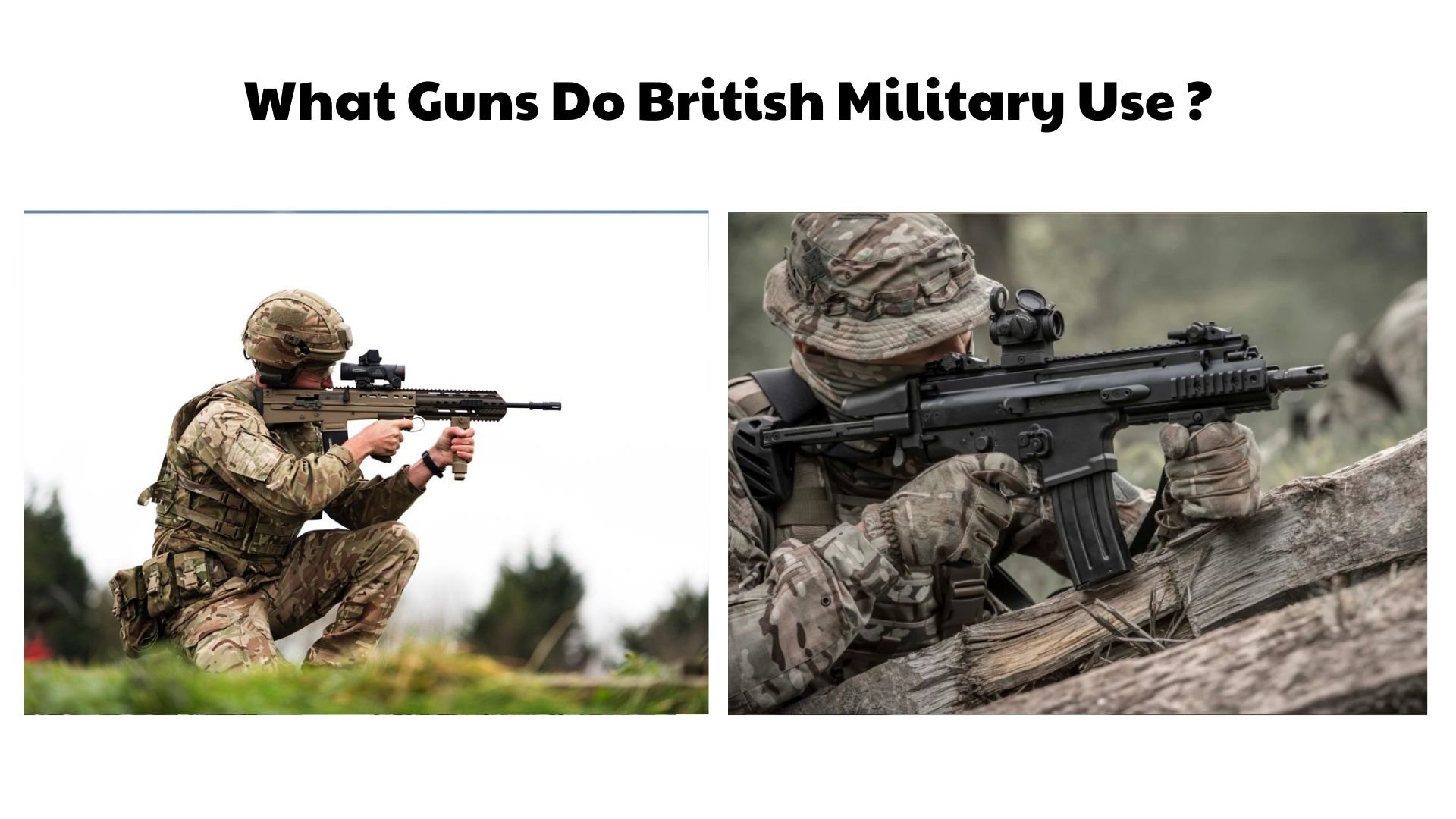
The British Armed Forces maintain a reputation for professionalism, discipline, and carefully selected equipment. One area that often sparks curiosity is the firearms carried by British soldiers in different operational roles. When people search for what guns do British military use, they are usually referring to the rifles and carbines that form the backbone of the British Army’s infantry firepower. These weapons are designed to perform reliably across a wide range of environments—from urban patrols and vehicle operations to open terrain and complex battlefield conditions.
The modern British military relies on a combination of standardized rifles and specialized carbines that balance accuracy, durability, and adaptability. Many of these firearms belong to the well-known SA80 family or are modern carbines adopted for specialized units such as airborne troops and special forces. In this guide, we take a closer look at several key rifles used by British forces today. Each weapon serves a particular purpose, whether it is the primary infantry rifle or a compact firearm designed for mobility and flexibility in demanding situations.
What Guns Do British Military Use ?

1. L85A2 Assault Rifle
The L85A2 assault rifle has long been one of the most recognizable firearms associated with the British Army. When discussing what guns do British military use as their standard infantry weapon, the L85A2 is often among the first rifles mentioned. It belongs to the SA80 family of small arms and was developed to provide British soldiers with a modern rifle capable of performing reliably in a wide variety of operational environments. The rifle’s distinctive bullpup configuration places the magazine and action behind the trigger group, allowing it to maintain a full-length barrel while keeping the overall weapon compact. This layout gives soldiers the benefit of accuracy and velocity without the extended length typically found in traditional assault rifles.
The A2 variant represents a significant improvement over earlier versions of the rifle. Initial models of the SA80 platform faced reliability concerns, particularly under harsh battlefield conditions. However, after a comprehensive upgrade program that involved redesigning internal components and improving manufacturing standards, the L85A2 emerged as a far more dependable weapon. The upgraded system introduced stronger parts, improved extraction mechanisms, and better overall durability. These refinements transformed the rifle into a dependable platform that could withstand the demanding conditions faced by British troops deployed overseas.
In operational terms, the L85A2 is chambered in the widely used 5.56×45mm NATO cartridge. This ammunition is common among NATO allies, allowing British forces to maintain compatibility with coalition partners during joint missions. The rifle typically features optical sights that assist soldiers in quickly acquiring and engaging targets at medium distances. Combined with its stable design and manageable recoil, the weapon allows infantry soldiers to deliver accurate fire while remaining mobile in the field. Over time, the L85A2 proved itself during deployments in regions such as the Middle East and Central Asia, where environmental challenges tested the reliability of military equipment.
Even though newer variants have since been introduced, the L85A2 played a crucial role in shaping modern British infantry weapon systems. It demonstrated how improvements in engineering and manufacturing could transform a controversial platform into a trusted service rifle. Within the broader conversation about what guns do British military use, the L85A2 represents an important chapter in the evolution of British small arms and continues to be recognized as one of the defining rifles of the British Army in the early twenty-first century.
2. L85A3 Assault Rifle
The L85A3 assault rifle represents the most modern evolution of the SA80 rifle platform used by the British Army. When discussing what guns do British military use today, the L85A3 stands as the current standard service rifle for many infantry units. Building on the foundation established by the L85A2, the A3 variant incorporates a range of upgrades designed to improve ergonomics, reduce weight, and integrate seamlessly with modern battlefield technology. The rifle retains the bullpup layout that defines the SA80 family, maintaining a compact design while preserving the ballistic performance associated with a longer barrel.
One of the most noticeable improvements in the L85A3 is the redesigned upper receiver and rail system. Modern soldiers rely heavily on optics, laser aiming devices, and night-vision equipment, and the new rail configuration allows these accessories to be mounted more easily and securely. This adaptability ensures that the rifle remains compatible with evolving targeting technologies used by the British military. The weapon also features a refined external finish intended to improve durability while reducing glare and wear during extended deployments.
From a performance standpoint, the L85A3 continues to use the 5.56×45mm NATO cartridge, ensuring logistical compatibility with allied forces and existing ammunition supplies. The rifle is designed for both semi-automatic and automatic firing modes, giving soldiers flexibility depending on the tactical situation. Combined with advanced optical sights, the weapon allows infantry troops to engage targets with greater confidence and accuracy. These features reflect the British Army’s broader effort to modernize its infantry equipment while maintaining the reliability that soldiers expect from their primary firearm.
The L85A3 demonstrates how military equipment evolves through incremental improvements rather than complete redesigns. By upgrading an existing platform that soldiers already understand, the British Army ensures a smoother transition while maintaining continuity in training and maintenance procedures. Within the larger discussion of what guns do British military use, the L85A3 symbolizes the modernization of British infantry capabilities and the continued importance of the SA80 platform in contemporary military operations.
3. L22A2 Carbine
The L22A2 carbine is a compact variant of the SA80 family designed specifically for situations where a full-length rifle might be impractical. When examining what guns do British military use for specialized roles such as vehicle crews or support personnel, the L22A2 frequently appears in the conversation. Soldiers operating inside armored vehicles, helicopters, or other confined spaces often require a firearm that is easier to handle in tight quarters. The L22A2 addresses this need by shortening the barrel and overall length of the rifle while retaining many of the operating characteristics of the standard SA80 platform.
Despite its smaller size, the L22A2 maintains the bullpup configuration that defines the SA80 family. This layout helps preserve balance and maneuverability even when the weapon is shortened. The carbine still fires the same 5.56×45mm NATO ammunition used by the L85 rifles, which simplifies logistics and ensures compatibility with standard magazines and equipment. Because the weapon shares many components with the larger rifle, soldiers who are trained on the L85 can adapt quickly to the L22A2 without requiring extensive additional instruction.
The primary advantage of the L22A2 lies in its portability. Vehicle crews, armored personnel operators, and certain support units often need a defensive weapon that can be stored conveniently yet deployed quickly if necessary. The compact nature of the L22A2 allows it to be carried comfortably in environments where space is limited. At the same time, the carbine still provides sufficient accuracy and firepower for close- to medium-range engagements, ensuring that personnel remain adequately equipped for defensive situations.
Within the wider context of what guns do British military use, the L22A2 demonstrates how a single weapon platform can be adapted to serve multiple operational roles. By creating a shorter version of the standard rifle, the British Army ensures that personnel working in specialized environments still have access to a familiar and effective firearm. The carbine therefore plays a quiet but important role in the broader ecosystem of British military small arms.
4. L119A1 Carbine
The L119A1 carbine represents a different approach to infantry firearms compared with the SA80 series. While the L85 and L22 rifles follow a bullpup configuration, the L119A1 is based on the AR-15 style platform widely used around the world. When discussing what guns do British military use in elite or specialized units, the L119A1 is often highlighted because it has been favored by certain British special forces and airborne troops. The weapon is essentially a variant of the Canadian C8 carbine, manufactured with features tailored to the operational preferences of British forces.
One of the reasons the L119A1 gained popularity among specialized units is its familiar and highly adaptable design. The AR-style platform allows for extensive customization, including adjustable stocks, modular rail systems, and a wide variety of optical sights and accessories. This flexibility is particularly valuable for units that conduct diverse missions ranging from close-quarters operations to longer-range engagements. Soldiers can configure the carbine to suit specific tasks without needing to change their primary weapon system.
Like the SA80 rifles, the L119A1 is chambered in 5.56×45mm NATO ammunition, ensuring compatibility with standard NATO logistics and ammunition supplies. The carbine’s design emphasizes reliability and ease of maintenance, both of which are critical for units operating in challenging environments. Its relatively lightweight structure and ergonomic layout also make it comfortable to handle during extended missions where mobility and speed are essential.
The presence of the L119A1 within the British military inventory illustrates the flexibility of modern military procurement. While the SA80 family remains the standard rifle for most troops, specialized units sometimes adopt alternative platforms that better match their operational needs. In the broader discussion of what guns do British military use, the L119A1 stands out as a practical and adaptable carbine trusted by some of the United Kingdom’s most highly trained soldiers.
5. L119A2 Carbine
The L119A2 carbine is the modern successor to the earlier L119A1 and represents a further refinement of the AR-style weapon used by British special operations units. When people ask what guns do British military use within elite formations such as special forces, the L119A2 frequently appears as one of the most advanced carbines in service. The updated design introduces improvements in durability, ergonomics, and accessory compatibility, ensuring that the weapon remains suited to the complex missions carried out by these highly trained soldiers.
One of the defining features of the L119A2 is its fully modernized rail system, which allows the mounting of a wide range of optics, aiming devices, and tactical accessories. Special forces operations often require soldiers to operate in low-light environments or rapidly changing tactical situations, making advanced targeting equipment essential. The carbine’s modular structure ensures that it can accommodate these tools without compromising balance or reliability. In addition, improved materials and manufacturing processes contribute to greater resilience during extended use in demanding operational conditions.
Like its predecessor, the L119A2 is chambered for 5.56×45mm NATO ammunition. The weapon is designed to deliver precise, controlled fire while remaining compact and maneuverable in tight spaces. This combination of accuracy and portability makes it particularly suitable for urban operations, reconnaissance missions, and other specialized tasks where adaptability is essential. The rifle’s ergonomics and lightweight structure also help reduce fatigue during long deployments, an important factor for soldiers who may carry their equipment for extended periods.
The L119A2 reflects the British military’s commitment to equipping its elite units with highly capable and modern firearms. While it may not be as widely issued as the standard L85 rifle, the carbine represents an important component of the United Kingdom’s specialized operational capabilities. In the larger conversation about what guns do British military use, the L119A2 illustrates how advanced carbines continue to evolve alongside the missions and technologies that define modern military operations.
6. L120A1 Rifle
The L120A1 rifle is another firearm associated with the British military, particularly in roles where familiarity with widely used rifle platforms can be advantageous. When exploring what guns do British military use, it becomes clear that not every weapon in service follows the same design philosophy. While the SA80 family dominates standard infantry equipment, certain units within the British military have used rifles derived from the well-known AR-15 pattern. The L120A1 is essentially a British designation applied to a variant similar to the M16-style rifle platform, a design that has proven itself across many NATO armed forces for decades.
The rifle operates using the 5.56×45mm NATO cartridge, which is the standard intermediate caliber used by many Western militaries. This cartridge offers a balance between manageable recoil and effective range, allowing soldiers to maintain accurate fire while carrying a reasonable amount of ammunition. In practice, this compatibility also simplifies logistics for coalition operations because allied forces can share ammunition supplies when necessary. The rifle’s design emphasizes straightforward controls and predictable handling characteristics, making it relatively easy for trained soldiers to operate effectively even under stressful conditions.
One of the advantages of the L120A1 platform is its modular structure. AR-style rifles are well known for accepting a wide variety of attachments, including optical sights, tactical lights, foregrips, and laser aiming devices. These accessories allow soldiers to adapt the rifle to different mission profiles, from daylight patrols to nighttime operations that rely heavily on advanced optics and targeting equipment. While the British Army primarily fields the SA80 series as its standard rifle system, having alternative platforms available in certain units demonstrates the flexibility of modern military procurement.
Within the broader discussion of what guns do British military use, the L120A1 highlights an important point: military equipment is often selected based on operational context rather than strict uniformity. While most British soldiers carry rifles from the SA80 family, specialized units sometimes rely on other platforms that suit their mission requirements. The L120A1 therefore represents an example of how established rifle designs continue to play supporting roles within the modern British military structure.
7. L101A1 Carbine
The L101A1 carbine is a compact firearm designed for mobility and versatility, particularly for troops who require a smaller weapon than a full-length rifle. In discussions about what guns do British military use, carbines like the L101A1 are important because they illustrate how different weapons serve different operational needs. The British military includes a wide range of personnel beyond standard infantry soldiers, including vehicle crews, support units, and specialized teams who may operate in tight spaces where a shorter firearm is more practical.
This carbine is based on the AR-style platform and is similar in concept to the compact carbines used by many NATO special operations units. Its shorter barrel and lighter frame allow soldiers to maneuver easily in confined environments such as armored vehicles, helicopters, or urban interiors. Despite its smaller size, the L101A1 still uses the 5.56×45mm NATO cartridge, maintaining compatibility with standard military ammunition supplies. This balance between compactness and effectiveness ensures that personnel carrying the weapon still possess a capable defensive firearm.
Modern carbines like the L101A1 often feature modular rail systems that allow the attachment of optical sights, laser aiming modules, and other accessories. These additions enhance the weapon’s adaptability and ensure that soldiers can tailor the firearm to the requirements of specific missions. In low-light or close-quarters environments, accessories such as tactical lights and red-dot optics significantly improve target acquisition speed and overall situational awareness. For units that must operate quickly and efficiently in unpredictable environments, this level of customization can be extremely valuable.
In the wider picture of what guns do British military use, the L101A1 demonstrates how compact carbines contribute to operational flexibility. Not every soldier requires the reach of a full-length rifle, and weapons like the L101A1 ensure that personnel working in specialized roles remain equipped with a firearm that is both manageable and effective. This adaptability reflects the broader philosophy behind modern British military equipment—selecting the right tool for each unique task on the battlefield.
8. L129A1 Sharpshooter Rifle
The L129A1 Sharpshooter Rifle occupies a unique position within British infantry units, bridging the gap between standard assault rifles and dedicated sniper systems. When discussing what guns do British military use to extend the effective range of infantry squads, the L129A1 frequently appears as a key example. Introduced during operations in Afghanistan, the rifle was selected to provide British soldiers with a semi-automatic precision weapon capable of engaging targets at longer distances than the typical 5.56mm service rifle.
Unlike the standard rifles carried by most infantry soldiers, the L129A1 is chambered in the more powerful 7.62×51mm NATO cartridge. This larger round offers improved range and impact, allowing designated marksmen to engage targets effectively at several hundred meters beyond the reach of standard rifles. The weapon is typically equipped with high-quality optical sights, enabling the shooter to identify and engage targets with greater precision. These capabilities make the rifle particularly useful in environments where enemy forces may operate at longer distances, such as mountainous or open desert terrain.
The rifle’s semi-automatic design allows the designated marksman to fire multiple accurate shots quickly while maintaining a steady firing position. This capability provides infantry units with valuable support during engagements, as the marksman can neutralize distant threats while the rest of the squad focuses on maneuvering or securing positions. Reliability is also a key factor in the rifle’s success. Soldiers operating in harsh climates require firearms that continue functioning under dust, heat, and extended use, and the L129A1 has proven dependable under demanding conditions.
Within the overall discussion of what guns do British military use, the L129A1 illustrates the concept of layered firepower within a modern infantry squad. Standard rifles handle close- to medium-range engagements, while the sharpshooter rifle extends the unit’s reach when precision and distance become critical. By integrating this capability directly into infantry sections, the British Army enhances its tactical flexibility without relying solely on specialized sniper teams.
9. L129A2 Sharpshooter Rifle
The L129A2 Sharpshooter Rifle represents an updated version of the earlier L129A1, reflecting the British Army’s continued effort to refine its infantry precision capabilities. When people ask what guns do British military use for modern designated marksman roles, the L129A2 often enters the conversation as a more recent improvement on an already successful platform. While the basic concept remains the same—a semi-automatic rifle chambered in 7.62 NATO for extended-range accuracy—the A2 version incorporates several refinements designed to enhance performance and ergonomics.
One of the primary goals of the upgrade was to improve the rifle’s overall durability and handling characteristics. Modern battlefield environments place heavy demands on military equipment, and small improvements in materials or design can significantly increase a weapon’s reliability during prolonged use. The L129A2 therefore includes refinements that reduce weight, improve balance, and support the mounting of modern optical and electronic accessories. These changes ensure that the rifle remains compatible with evolving military technology such as advanced optics and laser targeting systems.
From a tactical perspective, the L129A2 continues to provide infantry squads with a highly accurate semi-automatic rifle capable of engaging distant targets quickly. This ability is particularly valuable in complex combat environments where enemy forces may appear briefly at extended ranges. A designated marksman equipped with the L129A2 can respond immediately without the slower cycling of a bolt-action rifle. The weapon therefore maintains the balance between precision and rate of fire that makes sharpshooter rifles so valuable in modern infantry doctrine.
In the broader context of what guns do British military use, the L129A2 highlights how small improvements can extend the life of an effective weapon system. Rather than replacing a successful rifle entirely, the British Army chose to refine and modernize it, ensuring that soldiers continue to benefit from its proven accuracy while adapting it to new technological and tactical requirements.
10. L96A1 Sniper Rifle
The L96A1 sniper rifle is one of the most historically significant precision weapons used by the British Army. When discussing what guns do British military use for dedicated sniper roles, the L96A1 often stands out because it marked a turning point in British military marksmanship equipment. Introduced in the 1980s, the rifle was developed by Accuracy International and quickly gained recognition for its exceptional precision and reliability. Its success eventually influenced sniper rifle designs used by militaries around the world.
Unlike semi-automatic sharpshooter rifles used within infantry squads, the L96A1 is a bolt-action sniper rifle designed for maximum accuracy. The bolt-action mechanism allows the rifle to maintain a rigid structure with minimal moving parts during firing, which contributes to its reputation for precise shot placement. Snipers using the L96A1 typically operate as part of specialized teams trained in reconnaissance, surveillance, and long-range engagement. Their role often involves observing enemy positions and engaging critical targets from concealed positions at significant distances.
The rifle is chambered in 7.62×51mm NATO ammunition and is usually paired with high-quality telescopic sights that allow the sniper to identify targets clearly at long range. Stability and precision are further enhanced by the rifle’s robust stock design and heavy barrel. These features help maintain consistent performance even when environmental factors such as wind, temperature, or terrain make long-distance shooting more challenging. Snipers rely not only on the rifle itself but also on extensive training in ballistics, camouflage, and observation techniques.
Within the broader conversation about what guns do British military use, the L96A1 represents the specialized end of the spectrum. While most soldiers carry rifles designed for general combat roles, sniper rifles like the L96A1 serve a more focused purpose. They allow highly trained marksmen to engage distant targets with precision, gather intelligence through observation, and support infantry units during complex operations. Its long history of reliable service ensures that the L96A1 remains one of the most respected sniper rifles ever adopted by the British military.
11. L115A1 Sniper Rifle
The L115A1 sniper rifle represents one of the key precision weapons adopted by the British Army for long‑range engagements. When people explore what guns do British military use for highly specialized marksmen, the L115A1 frequently appears as part of the discussion because it was designed specifically to extend the effective range of British sniper teams. Developed by Accuracy International, the rifle belongs to a family of precision firearms known for exceptional build quality, reliability, and accuracy in difficult operational environments. In modern military operations, sniper rifles are not simply about hitting distant targets; they are also tools for reconnaissance, surveillance, and strategic overwatch. The L115A1 was introduced to help fulfill those demanding roles within the British military structure.
The rifle is chambered for the powerful .338 Lapua Magnum cartridge, a round developed to provide superior long‑range performance compared with traditional sniper calibers. This ammunition offers impressive velocity, energy retention, and stability over extended distances, allowing trained marksmen to engage targets well beyond the effective range of standard infantry rifles. For British sniper teams operating in open terrain such as mountainous regions or desert environments, the increased reach of the .338 Lapua round can provide a significant tactical advantage. Combined with advanced telescopic optics and ballistic calculations, the L115A1 allows snipers to maintain precision even when engaging targets at distances approaching or exceeding a kilometer.
Another defining feature of the L115A1 is its emphasis on stability and ergonomic control. The rifle is typically equipped with a heavy barrel, a robust adjustable stock, and a bipod to stabilize the weapon during firing. These elements help reduce movement and improve shot consistency, both of which are critical when operating at extreme distances where even small variations can affect accuracy. The bolt‑action mechanism also contributes to precision by minimizing mechanical complexity during the firing cycle. While this design reduces the rate of fire compared with semi‑automatic rifles, it allows the weapon to maintain the consistent alignment necessary for precision shooting.
Within the broader discussion of what guns do British military use, the L115A1 illustrates how specialized equipment supports specific battlefield roles. Standard infantry rifles prioritize mobility and rapid engagement, but sniper rifles like the L115A1 focus on patience, accuracy, and long‑range observation. For British sniper teams operating in demanding environments, the rifle provided a dependable platform that combined precision engineering with the ballistic advantages of the .338 Lapua Magnum cartridge. This combination helped establish the L115 series as one of the most respected long‑range sniper systems used by modern military forces.
12. L115A3 Sniper Rifle
The L115A3 sniper rifle is an upgraded version of the earlier L115A1 and has become one of the most widely recognized long‑range precision rifles used by the British Army. When examining what guns do British military use for extreme‑range marksmanship, the L115A3 frequently stands out due to its reputation for exceptional accuracy and reliability. Built by Accuracy International, the rifle is part of the Arctic Warfare Magnum series, a line of precision firearms engineered to perform consistently even in harsh environmental conditions. For British sniper teams operating in complex terrains around the world, the L115A3 provides a dependable platform capable of delivering precise shots at extraordinary distances.
Like its predecessor, the L115A3 is chambered in .338 Lapua Magnum, a cartridge specifically designed for long‑range military applications. The round combines high velocity with strong aerodynamic stability, enabling it to remain effective over very long distances. This capability allows snipers to engage targets far beyond the reach of standard infantry rifles or even many traditional sniper platforms. The rifle is typically paired with advanced optical sights that provide high magnification and precise adjustment capabilities, allowing the shooter to account for environmental variables such as wind speed, temperature, and bullet drop.
The design of the L115A3 emphasizes precision engineering and adaptability. The rifle includes adjustable components that allow the shooter to customize the fit of the stock and cheek rest, ensuring a stable shooting position during long observation periods. A heavy, free‑floating barrel helps maintain consistent shot placement by minimizing vibration and heat distortion during firing. Many configurations also include sound suppressors and specialized bipods that enhance control and reduce the shooter’s visibility. These features contribute to the rifle’s ability to perform effectively in real‑world operational scenarios where stealth and accuracy are equally important.
Within the context of what guns do British military use, the L115A3 represents the pinnacle of long‑range precision within the British Army’s arsenal. While most soldiers rely on standard rifles designed for versatility, sniper teams equipped with the L115A3 focus on intelligence gathering, overwatch, and carefully controlled engagements at extended distances. The rifle’s reputation has grown through years of operational use, and it continues to symbolize the highly specialized skills and equipment required for modern military sniping.
13. Accuracy International AW50
The Accuracy International AW50 is a powerful anti‑materiel rifle that occupies a unique place within the British military’s collection of firearms. When discussing what guns do British military use for engagements involving equipment, fortified positions, or distant threats, the AW50 is often mentioned because of its large caliber and impressive range. Unlike traditional sniper rifles designed primarily for targeting personnel, anti‑materiel rifles are intended to disable equipment, vehicles, or infrastructure components from a distance. The AW50 was developed to meet these specialized requirements while maintaining the high levels of precision associated with Accuracy International firearms.
The rifle is chambered for the formidable .50 BMG cartridge, one of the most powerful rounds commonly used in military small arms. This ammunition delivers substantial kinetic energy and can maintain effective performance at extremely long distances. The ballistic power of the .50 caliber round allows the AW50 to engage targets such as radar equipment, lightly armored vehicles, and other high‑value assets. Because of the recoil generated by such a powerful cartridge, the rifle is typically equipped with a large muzzle brake that helps reduce recoil and improve shooter control.
Despite its size and power, the AW50 is engineered with precision in mind. The rifle’s heavy construction and stable firing platform help maintain accuracy even when firing powerful ammunition. Sniper teams using the AW50 typically operate from prepared positions where they can stabilize the weapon using bipods or other supports. In many cases, the rifle is used during specialized missions where long‑range firepower and precision targeting are required simultaneously. Although it is not carried by standard infantry units, it serves an important role within specialized military operations.
In the broader examination of what guns do British military use, the AW50 highlights the diversity of firearms employed by modern armed forces. Not every weapon is designed for general combat roles. Some, like the AW50, exist specifically to address unique tactical challenges that standard rifles cannot handle. By incorporating such specialized tools into their arsenal, the British military ensures that its forces can respond effectively to a wide range of operational scenarios.
14. L82A1 Sniper Rifle
The L82A1 sniper rifle represents an interesting chapter in the development of British military small arms. When examining what guns do British military use, the L82A1 sometimes appears as an experimental or transitional platform within the broader SA80 weapon system family. Unlike most sniper rifles developed as entirely separate systems, the L82A1 was based on the same core architecture as the SA80 rifle series. The concept behind this approach was to create a precision‑oriented rifle while maintaining a degree of compatibility with the standard infantry weapon platform used by British soldiers.
The rifle retained the bullpup configuration characteristic of the SA80 family, meaning that the magazine and action were located behind the trigger group. This design allowed the weapon to maintain a relatively compact overall length while still using a full‑length barrel capable of supporting accurate shooting. The L82A1 was chambered in 5.56×45mm NATO ammunition, the same cartridge used by the L85 rifle. This shared caliber simplified ammunition supply and allowed the rifle to integrate easily within existing infantry logistics systems.
In theory, the L82A1 was intended to provide improved accuracy compared with the standard infantry rifle by incorporating enhanced optical sights and adjustments suited for precision shooting. However, the concept of adapting a standard rifle platform into a dedicated sniper weapon proved challenging. True sniper rifles often require heavier barrels, specialized triggers, and other features designed specifically for long‑range precision. As a result, the L82A1 did not become a widely adopted sniper platform within the British Army.
Even though it was not widely deployed, the L82A1 remains noteworthy when discussing what guns do British military use because it reflects an experimental approach to weapon development. Military organizations frequently test different concepts while searching for the most effective equipment solutions. The experience gained from such projects contributes to future designs and helps shape the evolution of military firearms. In this sense, the L82A1 played a role in the broader process of refining British sniper capabilities.
15. L7A2 General Purpose Machine Gun
The L7A2 General Purpose Machine Gun is one of the most important support weapons used by the British Army. When discussing what guns do British military use to provide sustained firepower on the battlefield, the L7A2 is often considered a central component of infantry fire support. Based on the highly respected FN MAG machine gun design, the L7A2 is valued for its reliability, durability, and ability to deliver continuous suppressive fire. Unlike rifles carried by individual soldiers, machine guns are designed to support entire squads or platoons by providing a steady stream of ammunition toward enemy positions.
The L7A2 is chambered in the 7.62×51mm NATO cartridge and typically uses belt‑fed ammunition, allowing the weapon to fire for extended periods without the frequent magazine changes required by smaller firearms. This sustained fire capability is critical during combat operations because it allows machine gun teams to suppress enemy movement and create opportunities for friendly forces to maneuver safely. Infantry units often rely on the machine gun to establish fire superiority during engagements, a concept that plays a fundamental role in modern battlefield tactics.
Versatility is another key strength of the L7A2. The weapon can be fired from a bipod for mobile infantry operations or mounted on a tripod for more stable firing positions. In addition, it can be installed on vehicles or aircraft, where it serves as a defensive or suppressive weapon during patrols and convoy operations. This adaptability ensures that the machine gun remains useful across many different operational scenarios, from ground combat to vehicle‑mounted defense.
Within the broader framework of what guns do British military use, the L7A2 demonstrates the essential role of support weapons in modern military doctrine. While rifles provide individual soldiers with mobility and precision, machine guns like the L7A2 deliver the sustained firepower needed to control the battlefield. Its long history of reliable service has made it one of the most trusted machine guns in the British Army’s arsenal, continuing to support infantry operations around the world.
16. L108A1 Light Machine Gun
The L108A1 Light Machine Gun is one of the support weapons that has played a role in providing sustained firepower for British infantry units. When examining what guns do British military use for squad‑level support, light machine guns like the L108A1 become especially important. Unlike standard infantry rifles, which are designed for mobility and individual engagement, a light machine gun is built to deliver a higher volume of fire over longer periods. This capability allows infantry units within the British military to suppress enemy positions, control areas of the battlefield, and create opportunities for maneuver.
The L108A1 is derived from the well‑known FN Minimi platform, a weapon that has been widely adopted by many NATO forces. It is chambered in the 5.56×45mm NATO cartridge, the same ammunition used by standard British service rifles such as the L85 series. This compatibility simplifies logistics for military units because ammunition can be shared easily among soldiers during combat operations. The weapon typically uses belt‑fed ammunition, enabling the gunner to fire extended bursts without the frequent reloads required by magazine‑fed rifles.
In practical battlefield use, the L108A1 provides suppressive fire that helps infantry squads maintain control during engagements. By directing sustained bursts toward enemy positions, the machine gunner can force opposing forces to take cover, reducing their ability to return accurate fire. This suppression allows other members of the squad to move, reposition, or advance toward objectives. Because of its relatively manageable weight compared with heavier machine guns, the L108A1 can be carried and operated by infantry teams moving across varied terrain.
Within the broader discussion of what guns do British military use, the L108A1 demonstrates how light machine guns enhance the overall firepower of infantry units. While rifles provide precision and flexibility, support weapons like the L108A1 ensure that squads possess the sustained fire capability necessary for modern combat operations. Its combination of mobility, reliability, and compatibility with standard ammunition made it a valuable tool for British soldiers during many deployments.
17. L110A1 Light Machine Gun
The L110A1 Light Machine Gun represents another variant of the FN Minimi family used by the British Army for squad support roles. When considering what guns do British military use to provide automatic fire at the infantry level, the L110A1 stands out as a weapon designed to combine mobility with sustained firepower. Introduced to strengthen the fire support capabilities of British infantry units, the L110A1 allowed squads to deliver controlled bursts of automatic fire while maintaining the ability to maneuver quickly across the battlefield.
Like the L108A1, the L110A1 is chambered in the 5.56×45mm NATO cartridge and typically uses belt‑fed ammunition. This arrangement allows the weapon to sustain longer firing sequences compared with standard rifles. The machine gun is commonly equipped with a bipod that stabilizes the weapon during firing, helping the gunner maintain control and accuracy while delivering suppressive bursts. In some situations, the weapon may also be mounted on tripods or vehicle platforms, further expanding its tactical versatility.
One of the defining advantages of the L110A1 is its role in squad‑level tactics. During engagements, infantry units often rely on automatic weapons to establish fire superiority. By directing sustained bursts toward enemy positions, the machine gunner can limit the opponent’s freedom of movement while friendly soldiers advance or reposition. This dynamic between suppressive fire and maneuver forms the basis of many modern infantry combat techniques, and the L110A1 played an important role in enabling British troops to execute these tactics effectively.
Within the wider context of what guns do British military use, the L110A1 demonstrates the importance of specialized support weapons in modern military doctrine. While it may not be as widely recognized as the standard infantry rifle, the presence of light machine guns within each squad significantly increases a unit’s ability to control engagements and respond to evolving battlefield conditions.
18. L110A2 Light Machine Gun
The L110A2 Light Machine Gun is an improved version of the earlier L110A1, reflecting the British Army’s ongoing efforts to refine its infantry support weapons. When exploring what guns do British military use for squad‑level automatic fire, the L110A2 represents a more advanced configuration within the Minimi family of light machine guns. Designed to provide dependable suppressive fire in demanding operational environments, the weapon emphasizes reliability, ease of handling, and compatibility with modern infantry equipment.
Like its predecessor, the L110A2 is chambered in 5.56×45mm NATO ammunition and typically uses belt‑fed cartridges to maintain sustained firing capability. The weapon’s relatively lightweight construction allows infantry soldiers to carry it alongside other equipment during extended patrols. Despite being lighter than many medium machine guns, the L110A2 still delivers the rapid automatic fire necessary to support squad tactics. This balance between portability and firepower makes it a practical weapon for infantry units that must remain mobile while maintaining strong defensive and offensive capabilities.
Another important feature of the L110A2 is its compatibility with modern accessories and optics. Infantry soldiers increasingly rely on advanced sighting systems to improve accuracy and target identification, particularly during low‑light operations. The machine gun’s design allows the attachment of optical sights and other equipment that enhance the gunner’s effectiveness in complex combat environments. These improvements help ensure that the weapon remains useful as battlefield technology continues to evolve.
In the broader discussion of what guns do British military use, the L110A2 demonstrates how incremental upgrades can significantly improve an existing weapon platform. By refining the design and incorporating modern features, the British Army was able to maintain a capable light machine gun suited to contemporary infantry tactics. Although newer support weapons have since appeared in British service, the L110A2 played a meaningful role in strengthening the automatic fire capability of British infantry units.
19. L86A2 Light Support Weapon
The L86A2 Light Support Weapon is a unique firearm within the SA80 family, developed to provide additional firepower at the squad level. When examining what guns do British military use to supplement standard rifles, the L86A2 stands out because it was designed as a bridge between an assault rifle and a traditional light machine gun. While it shares many components with the L85 rifle, the L86A2 incorporates a longer barrel and a bipod to improve stability and accuracy during sustained firing.
Chambered in the same 5.56×45mm NATO cartridge as the standard service rifle, the L86A2 uses detachable magazines rather than belt‑fed ammunition. This design choice simplifies logistics and allows the weapon to share magazines with other SA80 rifles within the same unit. However, the longer barrel provides improved accuracy and muzzle velocity, giving the weapon greater effective range compared with the standard infantry rifle. These characteristics make it suitable for providing accurate suppressive fire during engagements.
The L86A2 was originally intended to serve as the primary automatic support weapon within British infantry squads. Its design emphasized precision and control rather than the extremely high rates of fire associated with belt‑fed machine guns. Soldiers could deploy the weapon using its bipod to create a stable firing platform while delivering sustained bursts toward enemy positions. In practice, this allowed the L86A2 to function as a reliable support firearm capable of both accurate single shots and controlled automatic fire.
In the broader context of what guns do British military use, the L86A2 demonstrates how weapon systems can evolve from a shared platform. By adapting the SA80 rifle design into a support weapon configuration, the British Army created a firearm that complemented its standard infantry equipment while maintaining familiarity for soldiers already trained on the platform.
20. L111A1 Heavy Machine Gun
The L111A1 Heavy Machine Gun is one of the most powerful firearms used by the British Army, designed to provide substantial firepower against distant targets and fortified positions. When discussing what guns do British military use for heavy support roles, the L111A1 frequently appears because it is based on the famous Browning M2 heavy machine gun. This weapon has been used by military forces around the world for decades due to its reliability, durability, and impressive ballistic performance.
The L111A1 fires the .50 BMG cartridge, a large‑caliber round capable of delivering tremendous energy over long distances. This powerful ammunition allows the weapon to engage a wide range of targets, including lightly armored vehicles, defensive positions, and equipment installations. The machine gun typically uses belt‑fed ammunition and can fire sustained bursts that provide overwhelming suppressive fire during combat operations. Because of its size and weight, the weapon is usually mounted on vehicles, defensive emplacements, or heavy tripods rather than carried by individual soldiers on patrol.
One of the defining strengths of the L111A1 is its versatility in heavy support roles. It can be mounted on armored vehicles to provide defensive fire during patrols, installed on naval vessels, or positioned at fixed defensive points to protect strategic locations. The weapon’s long effective range and high stopping power make it a valuable asset when confronting threats that require greater firepower than standard infantry weapons can provide.
Within the overall examination of what guns do British military use, the L111A1 represents the heavy end of the military firearm spectrum. While rifles and carbines serve individual soldiers in direct combat roles, heavy machine guns like the L111A1 provide the sustained, high‑impact firepower necessary to support larger units and defend critical positions. Its long history of service demonstrates why the Browning‑derived design remains one of the most trusted heavy machine guns in modern military arsenals.
21. L2A3 Sterling Submachine Gun
The L2A3 Sterling Submachine Gun is one of the most recognizable compact firearms historically used by the British military. When exploring what guns do British military use, the Sterling often appears as a classic example of a reliable submachine gun that served British forces for several decades. Introduced during the mid‑twentieth century as a replacement for the earlier Sten gun, the Sterling quickly earned a reputation for improved reliability, better ergonomics, and a more refined design. Although modern assault rifles eventually replaced submachine guns in most frontline roles, the Sterling remains an important part of British military firearms history.
The Sterling is chambered in the 9×19mm Parabellum cartridge, a widely used pistol caliber that allows for controllable automatic fire in close‑quarters situations. Submachine guns firing pistol cartridges are particularly useful in confined environments such as urban areas, buildings, and vehicles. Because the ammunition produces relatively low recoil compared with rifle cartridges, soldiers can maintain accurate bursts during rapid engagements. The Sterling’s side‑mounted magazine and compact folding stock also contribute to its distinctive appearance and practical design.
One of the defining strengths of the L2A3 Sterling was its reliability under difficult conditions. Earlier submachine guns like the Sten had been produced quickly during wartime and sometimes suffered from mechanical limitations. The Sterling addressed many of those issues by incorporating a sturdier receiver, improved magazine design, and better manufacturing standards. Soldiers found the weapon easier to maintain and more dependable during extended operations. These improvements made it suitable for both regular infantry units and specialized roles where a compact automatic firearm was needed.
In the wider conversation about what guns do British military use, the L2A3 Sterling demonstrates how submachine guns once played a central role in close‑range combat. While many modern armies now favor compact carbines chambered in rifle cartridges, the Sterling remains a historically significant weapon that helped shape the evolution of British military small arms during the latter half of the twentieth century.
22. L34A1 Suppressed Sterling
The L34A1 Suppressed Sterling represents a specialized adaptation of the standard Sterling submachine gun designed for covert and low‑noise operations. When discussing what guns do British military use for stealth‑oriented missions, suppressed firearms such as the L34A1 illustrate how weapon systems can be modified to meet very specific operational requirements. The L34A1 was developed primarily for units that needed the ability to engage targets discreetly while minimizing the noise and flash normally produced by gunfire.
Like the standard Sterling, the L34A1 is chambered in 9×19mm Parabellum ammunition. However, the defining feature of this variant is its integrated suppressor, which significantly reduces the sound signature of each shot. Suppressors work by slowing and cooling the expanding gases produced when a cartridge is fired, which in turn lowers the noise level and visible muzzle flash. While suppressed weapons are not completely silent, they are far less noticeable than unsuppressed firearms, making them valuable for reconnaissance missions, close‑quarters engagements, and operations requiring discretion.
The L34A1 also benefits from the inherent advantages of the Sterling platform, including its compact size and controllable automatic fire. Soldiers using the weapon can maneuver easily in confined environments while maintaining the ability to fire short bursts when necessary. The folding stock and relatively lightweight design further contribute to the weapon’s portability, allowing it to be carried comfortably during specialized missions that demand mobility and stealth.
Within the larger discussion of what guns do British military use, the L34A1 highlights the role of specialized equipment in modern military operations. While standard rifles dominate most battlefield situations, suppressed submachine guns provide unique capabilities that can be crucial during covert or reconnaissance tasks. The L34A1 therefore represents an example of how the British military adapts existing weapon platforms to serve highly specific operational purposes.
23. MP5A3 Submachine Gun
The MP5A3 Submachine Gun is one of the most widely recognized compact firearms used by military and law enforcement units around the world, including elements of the British military. When examining what guns do British military use for close‑quarters operations, the MP5A3 frequently appears because of its reputation for precision, reliability, and controllability. Developed by Heckler & Koch in Germany, the MP5 platform became a standard submachine gun for many specialized units due to its high level of engineering and performance in confined environments.
Chambered in 9×19mm Parabellum ammunition, the MP5A3 uses a roller‑delayed blowback operating system that helps reduce recoil and improve firing stability. This mechanism allows shooters to maintain accurate bursts even during rapid fire, which is particularly valuable during close‑range engagements where quick reactions are essential. The A3 variant typically features a retractable stock, enabling the weapon to be shortened for easier transport and extended when greater stability is needed for precise shooting.
One of the reasons the MP5A3 gained popularity among specialized units is its compatibility with modern optical sights and accessories. Operators can equip the weapon with red‑dot optics, tactical lights, and other attachments that enhance target acquisition and situational awareness. These features make the MP5A3 especially useful in environments such as urban areas, buildings, or vehicles where engagements occur at short distances and rapid target identification is crucial.
Within the broader context of what guns do British military use, the MP5A3 represents the transition from older submachine guns to more refined and technologically advanced platforms. While modern carbines increasingly fulfill many of the roles once held by submachine guns, the MP5 family continues to be valued for its accuracy, reliability, and compact design in specialized operational scenarios.
24. MP5SD3 Submachine Gun
The MP5SD3 Submachine Gun is a specialized suppressed version of the MP5 platform designed for missions requiring minimal sound and flash. When exploring what guns do British military use for stealth operations or sensitive engagements, the MP5SD3 often stands out as one of the most effective suppressed submachine guns ever produced. Developed by Heckler & Koch, this variant incorporates an integral suppressor that significantly reduces the noise signature of each shot while maintaining reliable operation.
Unlike many suppressed firearms that rely solely on external attachments, the MP5SD3 was engineered from the beginning to work with an integrated suppression system. The design slows the velocity of standard 9mm ammunition to subsonic speeds, preventing the sharp crack associated with supersonic bullets. This combination of gas suppression and subsonic performance makes the weapon considerably quieter than typical unsuppressed firearms. For units conducting reconnaissance or counter‑terrorism operations, this reduction in noise can be a critical advantage.
The MP5SD3 retains the ergonomic features that make the MP5 platform popular among professional operators. Its compact structure, comfortable grip layout, and reliable operating mechanism allow soldiers to handle the weapon confidently in close‑quarters environments. The retractable stock and compatibility with optical sights further enhance its versatility during missions that demand both stealth and accuracy.
Within the larger discussion of what guns do British military use, the MP5SD3 illustrates how specialized firearms can provide unique capabilities that standard weapons cannot easily replicate. Although it is not intended for general infantry combat, the suppressed MP5 variant remains an important tool for operations that require discretion, precision, and controlled fire in close‑range scenarios.
25. Browning Hi‑Power (L9A1)
The Browning Hi‑Power, designated L9A1 in British military service, is one of the most historically significant pistols ever used by the British Armed Forces. When discussing what guns do British military use, handguns like the L9A1 often receive less attention than rifles or machine guns, yet they play an important supporting role for many military personnel. Developed by the legendary firearms designer John Browning and later refined by Fabrique Nationale, the Hi‑Power became one of the most widely adopted military pistols in the world.
The L9A1 fires the 9×19mm Parabellum cartridge, the same pistol caliber used by many submachine guns and sidearms within NATO forces. One of the pistol’s defining characteristics is its double‑stack magazine, which allows it to carry more rounds than many earlier handguns. This higher capacity made the Hi‑Power particularly appealing to military organizations seeking reliable sidearms for officers, vehicle crews, and other personnel who might require a compact defensive weapon.
In practical military use, the L9A1 served as a secondary weapon rather than a primary combat firearm. Soldiers typically relied on rifles or carbines for most engagements, while the pistol provided a backup option in situations where a larger weapon was unavailable or impractical. Its relatively lightweight design and straightforward operation made it easy to carry as part of a soldier’s standard equipment. The pistol’s reputation for reliability also contributed to its long service life within the British military.
Within the broader examination of what guns do British military use, the Browning Hi‑Power illustrates the enduring importance of sidearms in military service. Although newer pistols have gradually replaced it in modern arsenals, the L9A1 remains an iconic handgun associated with decades of British military operations. Its combination of reliability, manageable recoil, and high magazine capacity ensured that it served as a trusted sidearm for generations of soldiers.
26. SIG Sauer P226 (L105A1)
The SIG Sauer P226, designated L105A1 in British military service, is a well‑known semi‑automatic pistol that has been used by certain units within the British military. When discussing what guns do British military use, sidearms like the P226 are often mentioned as important secondary weapons carried by specialized personnel. While rifles and machine guns dominate most battlefield engagements, pistols provide a compact defensive option for soldiers who may not always carry a full‑size primary weapon. Officers, vehicle crews, and special operations personnel often rely on sidearms such as the L105A1 when mobility and quick access to a firearm are critical.
The SIG Sauer P226 is chambered in the widely used 9×19mm Parabellum cartridge, which has become the standard pistol caliber among NATO countries. This compatibility allows the weapon to share ammunition with other pistols and submachine guns used within allied forces. One of the defining characteristics of the P226 is its strong reputation for reliability and accuracy. The pistol’s solid construction, smooth trigger system, and ergonomic grip allow trained users to maintain good control during rapid firing. These features made it a practical choice for units that required a dependable sidearm capable of performing in demanding operational environments.
Another factor contributing to the popularity of the P226 is its balanced design. The pistol uses a double‑stack magazine, which provides a relatively high ammunition capacity compared with older military sidearms. This increased capacity can be valuable during defensive situations where a soldier must respond quickly to a threat. In addition, the weapon’s design allows it to function consistently even under conditions involving dust, moisture, or heavy use. Military personnel often operate in environments where equipment must withstand harsh treatment, and reliability remains one of the most important qualities for any firearm.
Within the broader discussion of what guns do British military use, the L105A1 demonstrates the role of modern semi‑automatic pistols as dependable secondary weapons. While they rarely replace rifles as the primary tool for combat, pistols like the SIG Sauer P226 provide flexibility and security for personnel who require a compact yet capable firearm. Its combination of accuracy, durability, and ergonomic handling helped establish the P226 as a respected sidearm within military and law enforcement organizations worldwide.
27. SIG Sauer P229 (L117A1)
The SIG Sauer P229, designated L117A1 in British military service, is another semi‑automatic pistol used by specialized units within the United Kingdom’s armed forces. When examining what guns do British military use, the presence of multiple pistol models highlights the diverse requirements of different military roles. While the P226 provides a full‑size sidearm option, the P229 offers a slightly more compact alternative while maintaining many of the same design principles. This balance between portability and performance makes it well suited for personnel who require a reliable handgun but prefer a slightly smaller platform.
Like many modern service pistols, the P229 is chambered in 9×19mm Parabellum ammunition, ensuring compatibility with NATO standards and simplifying logistical support. The pistol features a durable metal frame and a smooth double‑action/single‑action trigger system, allowing the shooter to fire the first shot with a longer trigger pull and subsequent shots with a lighter, shorter pull. This mechanism provides both safety and accuracy, two qualities that are especially valuable when a firearm is carried daily as part of military equipment.
The L117A1 is often associated with specialized roles where compact equipment is beneficial. Soldiers operating in confined environments, such as vehicle crews or close‑protection teams, may prefer a handgun that is easier to carry and deploy quickly. Despite its slightly smaller size compared with the P226, the P229 retains strong durability and dependable performance. The pistol is designed to function consistently even under difficult environmental conditions, which is essential for military personnel who may be deployed in extreme climates or remote locations.
Within the larger context of what guns do British military use, the L117A1 illustrates how the British military selects equipment tailored to specific operational requirements. While rifles remain the primary weapons for most soldiers, reliable pistols like the SIG Sauer P229 ensure that personnel always have access to a compact defensive firearm when circumstances demand it.
28. Glock 17 (L131A1)
The Glock 17, designated L131A1 in British military service, is one of the most widely used modern pistols adopted by the British Armed Forces. When discussing what guns do British military use today, the L131A1 is often mentioned because it gradually replaced older service pistols such as the Browning Hi‑Power. Manufactured by the Austrian company Glock, the pistol gained international popularity due to its simple design, lightweight construction, and remarkable reliability under demanding conditions. These qualities made it an appealing choice for modern military forces seeking a practical and easy‑to‑maintain sidearm.
The Glock 17 is chambered in 9×19mm Parabellum ammunition and features a polymer frame that reduces overall weight compared with traditional metal‑framed pistols. Despite its lightweight construction, the weapon remains extremely durable and capable of handling extensive use. The pistol operates using a striker‑fired mechanism, which simplifies the firing system by reducing the number of internal components. This straightforward design contributes to the weapon’s reliability and ease of maintenance, two factors that are especially valuable for military organizations responsible for maintaining large numbers of firearms.
Another important feature of the L131A1 is its relatively high magazine capacity. Standard magazines typically hold seventeen rounds, providing soldiers with more ammunition than many older service pistols. Combined with the pistol’s manageable recoil and ergonomic grip, this capacity allows users to maintain effective control during rapid firing situations. The weapon is also compatible with various accessories, including tactical lights and modern holster systems used by military and security personnel.
Within the broader discussion of what guns do British military use, the Glock 17 represents the modern approach to military sidearms. Its emphasis on simplicity, durability, and ease of training reflects the practical requirements of contemporary armed forces. By adopting the L131A1 as a standard service pistol, the British military ensured that its personnel carry a dependable and efficient handgun suited to the needs of modern operations.
29. Remington 870 Shotgun
The Remington 870 shotgun is a versatile firearm that has been used by military and law enforcement organizations around the world, including the British military. When examining what guns do British military use for specialized close‑range tasks, shotguns like the Remington 870 play a unique role. Unlike rifles or pistols designed for longer‑range engagements, shotguns are often employed in situations where powerful short‑range effectiveness is required. Their ability to fire a variety of ammunition types makes them particularly adaptable to different operational needs.
The Remington 870 is a pump‑action shotgun, meaning the user manually cycles the action between shots by moving the fore‑end back and forth. This design is valued for its reliability because it allows the weapon to function with many different types of ammunition without relying on complex automatic mechanisms. Military units may use the shotgun for tasks such as breaching doors during building entry operations, providing close‑quarters defense, or firing specialized rounds designed for non‑lethal or tactical purposes.
Another advantage of the Remington 870 is its rugged construction. The shotgun was designed to withstand heavy use and harsh conditions, qualities that are essential for military equipment. Its straightforward operation also makes it relatively easy to maintain, even in environments where cleaning resources may be limited. Soldiers trained to use the weapon can quickly deploy it when specific tactical tasks require the unique capabilities of a shotgun.
Within the wider context of what guns do British military use, the Remington 870 demonstrates that modern armed forces rely on a variety of firearm types beyond rifles and machine guns. Although shotguns are not typically carried by every soldier, they remain valuable tools for specialized missions where close‑range effectiveness and versatility are required.
30. Benelli M4 Super 90 Shotgun
The Benelli M4 Super 90 shotgun is another specialized firearm used by modern military units, including elements of the British military. When discussing what guns do British military use for advanced close‑quarters operations, the Benelli M4 often appears as a more modern alternative to traditional pump‑action shotguns. Developed by the Italian manufacturer Benelli, the weapon was designed specifically with military and tactical users in mind. Its semi‑automatic operation allows the shooter to fire successive shots quickly without manually cycling the action.
The M4 Super 90 uses a gas‑operated system that harnesses the energy from fired cartridges to cycle the action automatically. This mechanism allows the weapon to maintain consistent performance while reducing the physical effort required from the operator. Compared with pump‑action shotguns, the semi‑automatic design enables faster follow‑up shots, which can be advantageous during high‑intensity close‑quarters engagements. The shotgun typically fires 12‑gauge ammunition, a powerful cartridge capable of delivering significant impact at short distances.
Another key feature of the Benelli M4 is its adaptability. The shotgun can be equipped with accessory rails, optical sights, and tactical lights that enhance its effectiveness during low‑visibility operations. Military units often employ shotguns for tasks such as breaching entry points, securing confined spaces, or responding to threats within buildings or narrow corridors. In these situations, the combination of powerful ammunition and rapid firing capability makes the M4 a valuable tool.
Within the broader discussion of what guns do British military use, the Benelli M4 Super 90 represents the modern evolution of tactical shotguns. While rifles and carbines remain the primary weapons for most soldiers, specialized firearms like the M4 provide capabilities that complement standard equipment. Its reliability, speed, and adaptability ensure that it continues to serve as an effective close‑range weapon for military personnel operating in complex environments.
Conclusion
Understanding what guns do British military use provides insight into how modern armed forces equip their soldiers for a wide range of missions. The firearms used by the British military are not limited to a single type of weapon. Instead, they form a carefully balanced system that includes assault rifles, carbines, sharpshooter rifles, sniper rifles, machine guns, submachine guns, pistols, and specialized shotguns. Each category serves a distinct role on the battlefield, ensuring that soldiers have the right tool available for different operational situations. From standard infantry patrols to precision long‑range engagements and close‑quarters operations, these weapons collectively support the tactical flexibility of British forces.
Standard rifles such as the L85 series provide the backbone of infantry firepower, offering reliability and accuracy for everyday combat situations. Carbines like the L119 family emphasize mobility and adaptability, particularly for specialized units or operations in confined spaces. Precision rifles such as the L129A1 and the L115 series extend the effective range of British forces, allowing designated marksmen and sniper teams to engage targets with exceptional accuracy. Meanwhile, machine guns including the L7A2 and L111A1 supply the sustained firepower needed to suppress enemy positions and support maneuvering troops during engagements.
In addition to these primary weapons, sidearms and specialized firearms also play important roles. Pistols like the Glock 17 (L131A1) and SIG Sauer models provide compact defensive options for personnel who may not always carry a full‑size rifle. Submachine guns and suppressed weapons offer advantages in close‑quarters or covert operations, while shotguns such as the Benelli M4 or Remington 870 are used for specific tasks including breaching and confined‑space engagements. Although these weapons may not be issued to every soldier, they remain valuable tools for missions that require unique capabilities.
Overall, the variety of firearms within British service demonstrates the importance of specialization in modern military equipment. Rather than relying on a single weapon type, the British Army and other branches of the armed forces use a layered approach that combines mobility, precision, and firepower. By integrating different weapon systems into infantry squads, specialized teams, and support units, the British military ensures that its personnel remain prepared for diverse operational environments. This balanced arsenal is a key reason why British forces continue to maintain a reputation for professionalism and effectiveness in military operations around the world.
Frequently Asked Questions About What Guns Do British Military Use
1. What guns do British military use as their standard rifle?
The standard rifle used by the British military is the L85 series, most recently the L85A3. It is a bullpup‑style assault rifle chambered in 5.56×45mm NATO and serves as the primary infantry weapon for most British Army soldiers.
2. Why does the British military use the L85 rifle?
The L85 rifle is compact, accurate, and well suited for modern infantry operations. Its bullpup design allows for a full‑length barrel while maintaining a shorter overall weapon size, which improves maneuverability.
3. What caliber weapons do British soldiers typically use?
British military firearms commonly use NATO standard calibers such as 5.56×45mm for rifles, 7.62×51mm for machine guns and sniper rifles, and 9×19mm for pistols and submachine guns.
4. What sidearm does the British military currently use?
The British military widely uses the Glock 17, designated L131A1, as its standard service pistol for many personnel who require a sidearm.
5. Do British soldiers carry pistols regularly?
Most infantry soldiers primarily carry rifles rather than pistols. However, pistols are commonly issued to officers, vehicle crews, military police, and specialized personnel.
6. What sniper rifles are used by the British military?
British forces have used several sniper rifles including the L115A3 sniper rifle and the L96A1. These rifles are known for their long‑range accuracy and are often used by trained sniper teams.
7. What machine guns do British forces use?
The British military uses machine guns such as the L7A2 General Purpose Machine Gun and the L111A1 Heavy Machine Gun to provide sustained suppressive fire in combat situations.
8. What is the role of machine guns in the British Army?
Machine guns provide continuous firepower to support infantry units, suppress enemy forces, and help control the battlefield during engagements.
9. What carbines are used by British special forces?
Carbines such as the L119A1 and L119A2 are commonly associated with specialized British units because they offer a compact design suitable for close‑quarters operations.
10. What is a carbine in military terms?
A carbine is a shorter and lighter version of a rifle designed to improve maneuverability, especially in vehicles, buildings, or urban environments.
11. Do British soldiers use submachine guns?
Yes, submachine guns such as the MP5 have been used by certain British military and special operations units for close‑quarters engagements.
12. Why are submachine guns still used by military units?
Submachine guns are compact and fire pistol ammunition, making them effective for close‑range combat in tight spaces where larger rifles may be less practical.
13. What is a designated marksman rifle in the British military?
A designated marksman rifle, such as the L129A1 Sharpshooter Rifle, provides extended accuracy and range within infantry squads to engage targets beyond standard rifle distances.
14. Do British soldiers use shotguns?
Yes, shotguns like the Benelli M4 and Remington 870 may be used for specialized tasks such as breaching doors or operating in confined environments.
15. Why are shotguns useful in military operations?
Shotguns are effective at short ranges and can use different types of ammunition, making them useful for breaching, security operations, and close‑quarters combat.
16. What is the difference between a rifle and a machine gun?
Rifles are typically individual infantry weapons designed for accurate fire, while machine guns are designed to provide sustained automatic fire to support troops.
17. Do British forces use suppressed weapons?
Yes, certain units use suppressed firearms to reduce sound and flash during operations that require stealth or discretion.
18. What is the purpose of a suppressor?
A suppressor reduces the sound and muzzle flash produced when a gun is fired, which can help minimize detection and improve communication among soldiers.
19. Are British military weapons compatible with NATO ammunition?
Yes, most British military firearms are designed to use standard NATO ammunition to ensure compatibility with allied forces during joint operations.
20. What makes a military rifle different from a civilian rifle?
Military rifles are designed for durability, reliability, and compatibility with military equipment, and they may include features for automatic or burst fire depending on the model.
21. What is the L119A2 carbine used for?
The L119A2 is a compact carbine often used by specialized British units for operations that require mobility and precision in close‑range environments.
22. What is the role of sniper teams in the British military?
Sniper teams provide long‑range surveillance and precision engagement, often supporting larger units by targeting high‑value or distant threats.
23. What is the typical range of a British sniper rifle?
Depending on the rifle and ammunition used, British sniper rifles can effectively engage targets at distances exceeding 1,000 meters.
24. Why are modern military rifles modular?
Modular rifles allow soldiers to attach accessories such as optics, grips, lights, and lasers to improve performance in different operational environments.
25. Do British soldiers train extensively with firearms?
Yes, soldiers undergo regular firearms training to ensure they can operate their weapons safely, accurately, and effectively under various conditions.
26. What optics are commonly used on British rifles?
British military rifles are often equipped with optical sights that improve accuracy and target acquisition compared with traditional iron sights.
27. What is a bullpup rifle?
A bullpup rifle places the magazine and action behind the trigger, allowing for a shorter overall weapon length while keeping a full‑length barrel.
28. Why does the British Army use a bullpup rifle?
The bullpup design allows soldiers to carry a compact rifle that still maintains strong ballistic performance due to its longer barrel.
29. How heavy is the standard British infantry rifle?
The L85A3 assault rifle weighs roughly around 4 kilograms with attachments, depending on configuration and accessories.
30. What machine gun supports British infantry squads?
The L7A2 General Purpose Machine Gun is commonly used to support infantry units by providing sustained automatic fire.
31. What is a heavy machine gun?
A heavy machine gun is a larger weapon designed for powerful sustained fire, often mounted on vehicles or tripods for stability.
32. What weapon replaced the Browning Hi‑Power in British service?
The Glock 17 (L131A1) replaced the Browning Hi‑Power as the standard British military service pistol.
33. Do British soldiers use American weapons?
Yes, the British military sometimes adopts weapons developed in other countries if they meet operational requirements.
34. What is the difference between an assault rifle and a carbine?
An assault rifle typically has a longer barrel and standard configuration, while a carbine is a shorter and lighter version designed for mobility.
35. How often are military firearms upgraded?
Military firearms are periodically upgraded with improved materials, optics, and ergonomics to keep them effective in modern combat environments.
36. What is a sharpshooter rifle?
A sharpshooter rifle is designed to bridge the gap between standard infantry rifles and dedicated sniper rifles by providing greater range and accuracy.
37. Are British military weapons manufactured in the UK?
Some are manufactured domestically, while others are produced by international defense companies that supply equipment to the British Armed Forces.
38. What is the effective range of the L85 rifle?
The effective range of the L85 assault rifle is generally around 500 meters depending on conditions and optics used.
39. Do British soldiers use laser aiming devices?
Yes, laser aiming modules may be attached to rifles to assist with targeting in low‑light conditions.
40. What is the role of weapon accessories?
Accessories such as scopes, grips, lights, and suppressors help improve accuracy, visibility, and overall weapon performance.
41. Do British forces use night vision with their guns?
Yes, night vision and thermal optics can be mounted on rifles to allow soldiers to operate effectively in darkness.
42. What is the main purpose of a military firearm?
Military firearms are designed to provide soldiers with reliable tools for defense, combat, and mission support in a wide range of operational environments.
43. Are British military guns different from police firearms?
Yes, while some weapons may overlap, military firearms are designed specifically for combat environments and military operational requirements.
44. How are military weapons maintained?
Soldiers are trained to clean and maintain their firearms regularly to ensure reliability and safe operation during missions.
45. What is the difference between semi‑automatic and automatic fire?
Semi‑automatic weapons fire one round per trigger pull, while automatic weapons continue firing as long as the trigger is held down.
46. What guns do British military use for training?
Training may involve standard service weapons as well as simulation systems that allow soldiers to practice safely.
47. Why is weapon reliability important in the military?
Reliable firearms ensure that soldiers can depend on their equipment during critical situations where failure could have serious consequences.
48. What factors influence military weapon selection?
Military organizations consider reliability, accuracy, weight, compatibility with allies, and adaptability when selecting firearms.
49. Are British military firearms updated with modern technology?
Yes, modern upgrades often include improved optics, modular rail systems, and enhanced materials to improve durability and performance.
50. Why does the British military use different types of guns?
Different missions require different tools, so the British military uses a variety of firearms to cover roles such as infantry combat, precision shooting, support fire, and specialized operations.
51. Do British special forces use different guns?
Yes, special forces units often have access to a wider range of weapons and may select firearms that best suit their specific mission requirements.
Read more: What Guns Do Cowboys Use | Iconic Firearms of the American West