

Delta Force, officially known as 1st Special Forces Operational Detachment-Delta, is one of the most elite counter-terrorism units in the world. Selecting the right weapons is critical to their operations, whether in hostage rescue, high-stakes raids, or covert missions. In this article, we explore “what guns do delta force use” in their daily operations, focusing on the versatility, reliability, and precision of each firearm. From carbines and submachine guns to sniper rifles, Delta Force chooses firearms that allow their operators to adapt to any situation efficiently. This guide provides an educational, clear, and friendly overview of these weapons while highlighting why each one remains a cornerstone of special operations success.
What Guns Do Delta Force Use ?
1. HK416
The HK416 is a modern assault rifle that has become a staple in Delta Force arsenals. Based on the reliable AR-15/M4 platform, this German-engineered rifle incorporates a short-stroke gas piston system that significantly reduces fouling and enhances reliability under adverse conditions. Operators appreciate the HK416 for its durability, especially in environments where sand, dust, and mud are constant challenges. The rifle comes in multiple barrel lengths, allowing Delta Force to configure it for urban engagements, close-quarters combat, or longer-range precision missions.
One of the defining features of the HK416 is its modular rail system. This allows operators to easily attach optics, foregrips, laser designators, and suppressors according to mission requirements. The rifle is compatible with standard 5.56×45mm NATO ammunition, making logistics simpler when deployed alongside other U.S. forces. Delta Force operators often pair the HK416 with high-quality scopes or red-dot optics to improve rapid target acquisition during dynamic situations, from hostage rescues to counter-terrorism operations.
In addition to reliability, the HK416 delivers exceptional accuracy. Its precision, combined with low recoil, allows operators to engage multiple targets quickly while maintaining control. This makes it ideal for both single-operator scenarios and coordinated team assaults. Delta Force’s emphasis on weapon adaptability and operator confidence has cemented the HK416 as a preferred choice for many missions where success depends on split-second decisions and flawless weapon performance.
2. M4A1 Carbine
The M4A1 Carbine is another iconic rifle in the Delta Force toolkit. Known for its lightweight design and maneuverability, the M4A1 excels in tight urban environments and close-quarters combat. With a collapsible stock and adjustable length, operators can quickly adapt the rifle for doorways, hallways, or vehicular operations. Chambered in 5.56×45mm NATO, the M4A1 provides balanced stopping power and controlled recoil, which is critical during rapid-fire scenarios.
Delta Force favors the M4A1 for its modularity. Rail systems on the upper receiver allow the attachment of tactical accessories such as lasers, flashlights, suppressors, and optical sights. This flexibility transforms the M4A1 from a standard carbine into a mission-specific tool optimized for stealth, precision, or firepower as needed. The weapon’s reliability and familiarity also ensure that operators maintain a high degree of confidence even in challenging conditions like rain, sandstorms, or prolonged engagements.
Despite being a standard carbine, the M4A1 has seen continuous upgrades for Delta Force use. Enhanced triggers, barrel configurations, and recoil systems improve accuracy and operator efficiency. Many operators appreciate the balance between portability and firepower, allowing them to remain agile while engaging targets effectively. Whether in a covert reconnaissance mission or a full-scale assault, the M4A1 remains a highly trusted component of Delta Force operations.
3. Colt Commando
The Colt Commando is a compact, high-velocity carbine designed for close-quarters engagements. Although older than the HK416 or M4A1, it remains in limited use for Delta Force operations due to its compact profile and rapid handling capabilities. The shorter barrel and reduced overall length make it ideal for clearing rooms, navigating tight corridors, and rapid deployment from vehicles. Chambered in 5.56×45mm NATO, it delivers reliable performance without sacrificing stopping power for portability.
Delta Force operators value the Colt Commando for its simplicity and ruggedness. With fewer moving parts than modern piston-driven rifles, maintenance is straightforward, which can be critical in extended field operations. The rifle can easily accommodate attachments such as optics, foregrips, or suppressors, although it is primarily optimized for swift, close-range action. Its compact size also allows operators to pair it with other firearms during dual-weapon strategies, enhancing versatility during high-risk missions.
The Colt Commando’s legacy is built on proven performance in combat scenarios where speed and accuracy are essential. Delta Force often uses it in conjunction with other carbines and sidearms, relying on its quick handling to provide a tactical edge. Despite being overshadowed by newer rifles, its reliability and maneuverability make it a respected part of the unit’s diverse arsenal.
4. M16A4
The M16A4 is a battle-tested rifle that has served U.S. forces for decades and remains relevant for Delta Force in certain mission contexts. Chambered in 5.56×45mm NATO, the M16A4 offers a longer barrel than carbines, which translates into improved accuracy and range. Its fixed stock configuration provides stability during sustained fire, making it suitable for scenarios requiring precise engagement at medium distances.
Delta Force operators appreciate the M16A4 for its versatility and reliability. It incorporates a modular rail system on the upper receiver, allowing operators to attach optics, grips, and other accessories tailored to mission objectives. While not as compact as the M4A1 or Colt Commando, its superior range and precision make it valuable during overwatch missions or operations requiring controlled, accurate fire from a distance.
The M16A4 also benefits from decades of field experience and parts availability, which ensures that Delta Force operators can maintain it under harsh conditions. Its proven track record, combined with modern tactical enhancements, allows this rifle to remain a reliable and effective tool, complementing the more agile carbines in Delta Force’s inventory.
5. CAR-15
The CAR-15, an early compact variant of the M16, continues to find a niche within Delta Force operations due to its small size and flexibility. Designed for rapid maneuvering in confined environments, the CAR-15 is particularly suited for urban warfare, vehicle-based operations, and rapid entry scenarios. Chambered in 5.56×45mm NATO, it balances light recoil with sufficient stopping power for close-range engagements.
Delta Force leverages the CAR-15’s compact dimensions to pair it with tactical accessories such as suppressors, red-dot sights, and foregrips, transforming it into a highly specialized tool for stealth or rapid response. Its reliability and simplicity reduce the likelihood of malfunctions during high-pressure situations, which is critical for operators conducting covert or time-sensitive missions.
The CAR-15 is a testament to Delta Force’s philosophy of mission-specific weapon selection. While newer carbines and rifles may dominate headlines, the CAR-15 remains a versatile option for tasks where speed, concealment, and adaptability are paramount. Its enduring presence in the unit’s inventory reflects its effectiveness and continued relevance in modern special operations.
6. FN SCAR‑H
The FN SCAR‑H is widely recognized as one of the most powerful rifles available to modern special operations units. When discussing what guns do delta force use, the FN SCAR‑H often appears in conversations because of its impressive balance of range, stopping power, and modular design. Chambered in 7.62×51mm NATO, this rifle delivers significantly more impact and penetration than standard 5.56 carbines, making it particularly useful for situations where operators must engage targets behind cover or at extended distances. Delta Force operators appreciate the rifle’s ability to bridge the gap between a traditional assault rifle and a precision marksman platform.
One of the key reasons the FN SCAR‑H remains attractive to elite units is its adaptability. The rifle features a fully modular rail system that allows operators to mount optics, night‑vision devices, laser aiming modules, and suppressors. This flexibility is essential for Delta Force missions, which often involve rapidly changing environments. An operator might move from a dark indoor hallway to an open outdoor space within seconds, and the weapon must remain effective in both situations. The SCAR‑H platform accommodates this need with exceptional reliability and consistent performance.
Another advantage of the FN SCAR‑H lies in its recoil management system. Although it fires a larger caliber round, the rifle’s engineering helps maintain controllability during rapid fire. This allows operators to maintain accuracy while delivering powerful shots that can stop threats quickly. In tactical operations where precision and speed are equally important, that combination is extremely valuable.
Overall, the FN SCAR‑H represents a modern evolution of the battle rifle concept. For Delta Force, it provides a reliable option when missions require extra range and penetration without transitioning to a dedicated sniper rifle. Its rugged construction, modular configuration, and powerful cartridge make it a practical and respected firearm within elite special operations arsenals.
7. SIG Sauer MCX
The SIG Sauer MCX is a highly advanced modular rifle system that has gained popularity among special operations units around the world. When analyzing what guns do delta force use, the MCX stands out because of its versatility and modern engineering. Unlike many traditional rifles, the MCX operates using a short‑stroke gas piston system and features a fully modular architecture. This allows operators to swap barrels, calibers, and accessories depending on mission requirements, making the rifle adaptable to a wide variety of combat scenarios.
Delta Force values weapons that provide both reliability and customization, and the MCX offers both in abundance. The rifle is commonly configured for calibers such as 5.56 NATO or .300 Blackout, giving operators flexibility in ammunition choice. The .300 Blackout configuration is especially appealing for covert operations because it works exceptionally well with suppressors, allowing for quieter engagement of targets. In missions where stealth is essential, this feature can make a significant difference.
Another strength of the SIG Sauer MCX is its compact design. Unlike traditional AR‑platform rifles, the MCX does not rely on a buffer tube system, which means it can utilize folding stocks without affecting reliability. This design makes the rifle easier to transport and maneuver in confined spaces such as vehicles or tight urban environments. For Delta Force operators who frequently operate in unpredictable environments, this compactness adds valuable flexibility.
In practical terms, the MCX combines the familiar ergonomics of the AR‑platform with modern improvements that enhance durability and performance. Its reliability under harsh conditions and its compatibility with a wide range of tactical accessories make it a logical addition to the diverse collection of weapons used by elite units. As technology continues to evolve, rifles like the MCX represent the next generation of adaptable combat firearms.
8. SIG Sauer MCX Rattler
The SIG Sauer MCX Rattler is a specialized compact rifle designed specifically for close‑quarters operations. When people research what guns do delta force use, they often discover that compact platforms like the Rattler play an important role in missions that require maximum maneuverability. Built on the MCX system, the Rattler features an extremely short barrel and a compact profile, allowing operators to move efficiently through tight spaces such as buildings, vehicles, and aircraft interiors.
Despite its small size, the MCX Rattler maintains impressive performance. It is commonly chambered in .300 Blackout, a cartridge known for its excellent compatibility with suppressors and strong ballistic performance at short ranges. For covert operations, this configuration allows Delta Force operators to engage threats with reduced noise and flash, which can be crucial when stealth and surprise are essential elements of the mission.
The weapon’s design emphasizes simplicity and reliability. Its piston‑driven operating system reduces fouling and helps the firearm continue functioning even in dusty or dirty environments. This is important because special operations missions often occur in harsh conditions where equipment reliability cannot be taken for granted. The Rattler’s rugged construction ensures that it performs consistently when operators need it most.
In essence, the MCX Rattler fills a niche role within the broader range of weapons available to Delta Force. While larger rifles provide range and accuracy, compact platforms like the Rattler excel in confined environments. Its ability to combine portability, suppressor compatibility, and solid firepower makes it a valuable option for specialized missions that demand speed and discretion.
9. AK‑47
The AK‑47 is one of the most recognizable rifles in the world, and surprisingly, it has occasionally appeared in the hands of special operations units, including Delta Force. When examining what guns do delta force use, it is important to understand that operators sometimes utilize weapons common in the regions where they operate. The AK‑47, chambered in 7.62×39mm, is widely used across many parts of the world, making it a practical option for certain covert or unconventional missions.
One of the main advantages of the AK‑47 is its legendary reliability. Designed to function in extreme conditions, the rifle can continue operating even when exposed to dirt, mud, and minimal maintenance. This durability is one reason it has remained in widespread use for decades. For Delta Force operators working in remote or austere environments, a weapon that continues functioning under harsh conditions can be extremely valuable.
Another reason special operations units sometimes employ the AK‑47 is for operational flexibility. In certain situations, using locally common weapons can help operators blend into the environment or use readily available ammunition. The rifle’s simple design also makes it easy to maintain in the field, which can be useful during extended deployments where supply lines may be limited.
While the AK‑47 does not offer the same level of modular customization as modern Western rifles, newer variants can accommodate optics and tactical accessories. This allows operators to enhance the rifle’s effectiveness while still benefiting from its rugged reliability. As a result, the AK‑47 remains a relevant tool in specific operational contexts, demonstrating that even older designs can continue to serve modern tactical purposes.
10. AK‑12
The AK‑12 represents the modern evolution of the classic Kalashnikov rifle platform. When discussing what guns do delta force use, the AK‑12 sometimes enters the conversation as an example of how contemporary variants of older weapons have incorporated modern improvements. Although primarily associated with Russian military forces, understanding the AK‑12 provides insight into how the AK design has evolved to meet modern battlefield requirements.
The AK‑12 improves upon the traditional AK‑47 platform with enhanced ergonomics and greater modularity. It features modern rail systems that allow users to mount optics, lasers, and other tactical accessories. This brings the rifle closer to Western platforms in terms of customization. The weapon also incorporates a redesigned stock and improved controls, making it easier to handle during dynamic combat situations.
Another significant improvement is the rifle’s enhanced accuracy. Through refinements in barrel design and internal components, the AK‑12 offers better precision than earlier Kalashnikov models. This makes it more suitable for modern engagements where operators often rely on optics and precise shot placement. The rifle maintains the legendary durability of the AK family while introducing features expected in contemporary military firearms.
From an analytical perspective, the AK‑12 demonstrates how firearm platforms evolve over time. For researchers and enthusiasts exploring what guns do delta force use, examining rifles like the AK‑12 highlights the broader landscape of modern military small arms. While Delta Force primarily relies on Western weapon systems, understanding international platforms helps illustrate the wide range of firearms that exist in today’s global tactical environment.
11. HK MP5
The HK MP5 is one of the most iconic submachine guns ever used by elite special operations units. When discussing what guns do delta force use, the MP5 frequently appears at the top of the list because of its long history in counter‑terrorism missions. Developed by the German company Heckler & Koch, the MP5 became famous for its exceptional reliability, controllability, and precision in close‑quarters combat. Unlike many other submachine guns that rely on simple blowback systems, the MP5 uses a roller‑delayed blowback mechanism that reduces recoil and improves accuracy. This design allows operators to fire controlled bursts while maintaining excellent shot placement, a critical factor during hostage rescue missions.
Delta Force operators historically relied on the MP5 for operations requiring precision in tight indoor spaces. During counter‑terrorism raids, the weapon’s manageable recoil and compact profile made it easier for operators to maneuver through narrow hallways, staircases, and small rooms. Because the MP5 is chambered in 9×19mm, it produces less recoil and muzzle blast than larger rifles, allowing operators to remain on target during rapid fire. This characteristic made the MP5 particularly valuable in environments where operators must react quickly but avoid excessive over‑penetration.
The modular design of the MP5 also contributed to its popularity. Delta Force operators often equip the platform with suppressors, red‑dot optics, and tactical lights to adapt it for specific missions. Suppressed MP5 variants became well known for their quiet operation, making them useful in stealth‑focused operations where minimizing noise is critical. Over time, the MP5 evolved into multiple configurations, including compact and integrally suppressed models, giving operators several options depending on the task at hand.
Although newer weapon systems have gradually replaced some of its roles, the MP5 remains an important part of special operations history. Its balance of accuracy, reliability, and ease of handling helped define modern counter‑terrorism tactics. For decades, it represented the gold standard for close‑quarters firearms, and its legacy continues to influence how modern tactical weapons are designed today.
12. HK MP7
The HK MP7 represents a new generation of compact personal defense weapons designed for modern tactical environments. When examining what guns do delta force use, the MP7 often appears as an example of how firearm technology has evolved to meet the needs of elite units. Developed by Heckler & Koch, the MP7 was designed to provide greater penetration and range than traditional submachine guns while maintaining a lightweight and compact profile. Chambered in the specialized 4.6×30mm cartridge, the weapon delivers high velocity and improved performance against protective gear compared to standard pistol rounds.
Delta Force operators appreciate the MP7 because it combines the maneuverability of a submachine gun with ballistic performance closer to a rifle. The compact frame allows the weapon to be easily carried in tight spaces, including vehicles or confined indoor environments. At the same time, the high‑velocity ammunition gives operators improved capability when engaging targets wearing body armor. This combination of portability and effectiveness makes the MP7 particularly attractive for modern counter‑terrorism missions.
Another advantage of the MP7 is its advanced ergonomics and modular design. The weapon features integrated rails that allow operators to attach optics, lasers, and tactical lights. These accessories help improve situational awareness and targeting accuracy in low‑light or complex environments. The MP7 can also be equipped with suppressors, which reduce noise and muzzle flash during covert operations.
Overall, the HK MP7 demonstrates how modern engineering can transform the concept of a compact firearm. By combining lightweight construction with high‑performance ammunition, the weapon offers a unique balance of speed, accuracy, and effectiveness. For special operations forces that operate in unpredictable environments, tools like the MP7 provide the flexibility required to respond quickly and decisively.
13. FN P90
The FN P90 is a distinctive personal defense weapon known for its futuristic design and innovative engineering. When exploring what guns do delta force use, the P90 is often mentioned because of its unique features and specialized capabilities. Developed by the Belgian company FN Herstal, the weapon was designed to provide compact size, high magazine capacity, and improved penetration against modern body armor. Chambered in the 5.7×28mm cartridge, the P90 fires lightweight, high‑velocity rounds that can travel faster than traditional pistol ammunition.
One of the most recognizable characteristics of the P90 is its top‑mounted magazine, which holds up to 50 rounds. This design allows operators to carry a large amount of ammunition without significantly increasing the weapon’s overall size. The magazine feeds horizontally into the firearm and rotates each round before it enters the chamber, an engineering solution that helps maintain the weapon’s compact profile. For special operations units, this high capacity reduces the need for frequent reloads during fast‑moving engagements.
The P90 also features a fully ambidextrous layout, making it easy to operate from either shoulder. This can be valuable during tactical situations where operators must quickly change positions or fire from unconventional angles. Combined with its compact bullpup configuration, the weapon remains easy to maneuver even in tight indoor environments such as hallways or aircraft interiors.
Although it is less common than some other firearms in special operations inventories, the FN P90 represents an interesting approach to modern weapon design. Its combination of high capacity, compact dimensions, and high‑velocity ammunition offers a different tactical option compared to traditional submachine guns. For elite units that value flexibility, the P90 demonstrates how innovative engineering can expand the range of tools available for specialized missions.
14. KRISS Vector
The KRISS Vector is a modern submachine gun that stands out because of its unconventional recoil system. When discussing what guns do delta force use, the Vector is sometimes highlighted as an example of innovative firearm engineering. Developed by the American company KRISS USA, the weapon uses a unique “Super V” recoil mitigation system that redirects energy downward instead of directly backward. This mechanism significantly reduces muzzle climb and allows the shooter to maintain better control during rapid fire.
Delta Force and other elite units value firearms that allow accurate follow‑up shots, especially in high‑pressure close‑quarters situations. The Vector’s recoil system helps achieve this by keeping the weapon stable during bursts of automatic fire. Chambered commonly in .45 ACP or 9mm, the firearm delivers strong stopping power while remaining manageable in tight environments. This combination makes it suitable for tactical scenarios where quick, controlled fire is required.
Another appealing feature of the KRISS Vector is its modular design. The platform includes accessory rails that allow operators to mount optics, lights, suppressors, and vertical grips. These additions enable the weapon to be tailored to specific mission requirements. The folding stock and compact design further enhance maneuverability, making the firearm practical for vehicle operations or indoor engagements.
While the Vector is not as historically widespread as the MP5, its innovative design highlights the continuing evolution of tactical firearms. Modern engineering solutions like the Super V system demonstrate how manufacturers are working to improve recoil control and shooting efficiency. For special operations units that constantly evaluate new technologies, weapons like the KRISS Vector offer intriguing possibilities.
15. IMI Uzi
The IMI Uzi is one of the most famous submachine guns in military history. Developed in Israel during the mid‑20th century, the weapon quickly gained international recognition for its rugged design and reliability. When researching what guns do delta force use, the Uzi occasionally appears in historical discussions because of its widespread use among military and security forces around the world. Its simple blowback mechanism and sturdy construction allow it to function effectively even under harsh conditions.
The Uzi’s compact design was revolutionary at the time of its introduction. With its magazine located inside the pistol grip, the weapon achieved excellent balance and control. This configuration made it easy to handle during rapid fire and allowed operators to reload quickly by instinctively guiding the magazine into place. For close‑quarters engagements, this simple and intuitive design proved extremely practical.
Delta Force and other special operations units historically evaluated a wide variety of firearms, including the Uzi, to determine which weapons performed best in specific roles. Although more modern submachine guns eventually replaced it in many tactical units, the Uzi’s reliability and straightforward operation helped establish it as a trusted platform during earlier decades of special operations development.
Today, the Uzi remains an important piece of firearm history. Its influence can still be seen in many modern compact weapon designs that emphasize simplicity, reliability, and close‑range effectiveness. For anyone studying the evolution of tactical firearms, the Uzi provides valuable insight into how submachine gun technology developed and how it shaped the tools used by elite units around the world.
16. Remington 700
The Remington 700 is one of the most respected bolt‑action rifles in modern military and law enforcement history. When exploring what guns do delta force use, the Remington 700 frequently appears because it serves as the foundation for many precision sniper systems used by special operations forces. Introduced in the early 1960s, this rifle quickly developed a reputation for outstanding accuracy and reliability. Its simple yet highly effective bolt‑action design allows shooters to achieve consistent shot placement, which is essential for missions requiring precision at long distances.
Delta Force operators rely on rifles like the Remington 700 for scenarios where stealth and accuracy are more important than rapid fire. Snipers operating in overwatch positions often need a platform that can deliver a single precise shot at the right moment. The Remington 700 excels in this role because of its stable design, high‑quality barrel construction, and excellent trigger control. Many military sniper rifles are actually customized versions of the Remington 700 platform, fitted with upgraded stocks, optics, and precision barrels to maximize performance.
Another advantage of the Remington 700 is its adaptability. The platform supports a wide variety of calibers and accessories, allowing operators to tailor the rifle for different environments. High‑powered scopes, bipods, suppressors, and adjustable stocks can be added to enhance precision and shooter comfort. This level of customization allows special operations units to optimize the rifle for desert, urban, or mountainous terrain.
Overall, the Remington 700 remains a cornerstone of modern precision shooting. Its reputation for reliability and accuracy has made it a trusted choice among military snipers for decades. For anyone researching what guns do delta force use, understanding the importance of this rifle helps explain how elite units approach long‑range engagements with precision and confidence.
17. Remington MSR
The Remington MSR, or Modular Sniper Rifle, represents a significant evolution in modern sniper technology. When examining what guns do delta force use, rifles like the MSR demonstrate how precision firearms have become increasingly adaptable. Designed for military applications, the MSR features a modular system that allows operators to change calibers and barrel configurations depending on mission requirements. This flexibility makes it possible to tailor the rifle for a wide range of operational environments.
Delta Force and other elite units value versatility, and the MSR provides exactly that. The rifle can be configured for multiple powerful calibers, including .338 Lapua Magnum, which is well known for its exceptional long‑range performance. This capability allows snipers to engage targets at distances well beyond those achievable with standard rifles. In high‑risk operations where precision and distance are critical, this level of performance can provide a significant tactical advantage.
In addition to its modular design, the Remington MSR incorporates advanced ergonomics that improve shooter comfort and stability. Adjustable stocks, precision triggers, and integrated rail systems allow operators to fine‑tune the rifle to their personal preferences. High‑magnification optics and advanced targeting systems can also be mounted to help identify and engage distant targets with confidence.
The MSR illustrates the modern direction of sniper rifle development. Instead of relying on a single fixed configuration, modular systems allow operators to adapt their equipment to changing mission requirements. For special operations forces that operate in diverse environments around the world, this adaptability makes rifles like the Remington MSR an extremely valuable tool.
18. Barrett M82
The Barrett M82 is one of the most powerful rifles commonly associated with modern military forces. When researching what guns do delta force use, the Barrett M82 often stands out because of its immense size and remarkable firepower. Chambered in .50 BMG (12.7×99mm), the rifle was originally designed as an anti‑materiel weapon, meaning it is capable of disabling equipment, vehicles, and fortified positions rather than focusing solely on personnel targets.
Developed by American firearms designer Ronnie Barrett in the 1980s, the M82 quickly gained recognition for its ability to engage targets at extremely long distances. The rifle’s semi‑automatic design allows operators to fire multiple shots more quickly than traditional bolt‑action sniper rifles. This capability can be particularly valuable in situations where rapid follow‑up shots are necessary.
Delta Force operators may utilize rifles like the Barrett M82 when missions require exceptional range and power. The .50 caliber round can penetrate barriers that would stop smaller ammunition, making the rifle effective against equipment or hardened structures. Despite its size, the weapon includes features such as a large muzzle brake and recoil‑reducing system to help manage the powerful cartridge.
While not intended for every mission, the Barrett M82 represents a specialized tool within the broader spectrum of military firearms. Its ability to deliver accurate shots at extreme distances and its capacity to neutralize equipment make it a unique and powerful addition to the arsenal of modern special operations forces.
19. Barrett M107
The Barrett M107 is a modern evolution of the famous Barrett .50 caliber rifle platform. When exploring what guns do delta force use, the M107 often appears because it builds upon the design principles established by the earlier M82 while incorporating several improvements. Like its predecessor, the M107 fires the powerful .50 BMG cartridge, providing exceptional long‑range capability and tremendous impact.
The rifle is designed primarily for anti‑materiel roles, meaning it can be used to disable vehicles, radar equipment, and other strategic assets from a distance. For special operations forces, this ability can be extremely valuable during missions that require precision strikes against equipment without exposing operators to unnecessary risk. The M107’s semi‑automatic action allows shooters to maintain a steady firing rhythm while observing the target area through high‑powered optics.
Modern versions of the M107 incorporate improved ergonomics and accessory compatibility. Rail systems allow the mounting of advanced optics, night‑vision devices, and range‑finding equipment. These features enhance the rifle’s effectiveness in a wide range of conditions, including low‑light operations or long‑distance surveillance scenarios.
Ultimately, the Barrett M107 demonstrates how specialized rifles can provide unique capabilities that complement standard infantry weapons. For elite units like Delta Force, having access to a diverse range of firearms ensures that operators can choose the most effective tool for any mission.
20. Accuracy International AWM
The Accuracy International AWM, or Arctic Warfare Magnum, is widely regarded as one of the most accurate sniper rifles ever produced. When studying what guns do delta force use, the AWM frequently appears because of its outstanding precision and reliability in extreme environments. Designed by the British company Accuracy International, the rifle was originally developed to perform in harsh climates, including freezing temperatures and rugged terrain.
The AWM is most commonly chambered in powerful long‑range cartridges such as .300 Winchester Magnum or .338 Lapua Magnum. These calibers provide exceptional ballistic performance, allowing skilled marksmen to engage targets at remarkable distances. Combined with high‑quality optics and careful marksmanship, the rifle can deliver precise shots far beyond the range of standard infantry weapons.
Delta Force snipers value rifles like the AWM because they offer consistent performance and excellent build quality. The rifle’s rigid chassis, adjustable stock, and smooth bolt operation contribute to its reputation for precision shooting. In overwatch roles, where a single accurate shot can determine the outcome of a mission, this level of reliability is essential.
The Accuracy International AWM has earned legendary status among professional marksmen and military snipers. Its ability to maintain accuracy under extreme conditions has made it a trusted tool for precision shooting around the world. For readers interested in what guns do delta force use, the AWM represents the pinnacle of modern sniper rifle design.
21. SR‑25
The SR‑25 is one of the most respected precision semi‑automatic rifles in modern military service. When people search for what guns do delta force use, the SR‑25 often appears because it combines the accuracy of a sniper rifle with the faster follow‑up shots of a semi‑automatic platform. Developed by Knight’s Armament Company, the SR‑25 is based on the familiar AR‑style design but chambered in the more powerful 7.62×51mm NATO cartridge. This combination allows the rifle to maintain excellent accuracy at extended distances while still providing the speed required for dynamic combat situations.
Delta Force operators value rifles like the SR‑25 because they provide flexibility in missions where both precision and rapid engagement may be required. In urban environments or overwatch scenarios, a marksman might need to engage multiple targets within a short period of time. A bolt‑action rifle offers incredible accuracy, but the semi‑automatic SR‑25 allows the shooter to maintain visual contact with the target area while quickly delivering additional shots if necessary. This ability makes the rifle extremely useful in complex tactical situations.
The SR‑25 platform also supports a wide range of tactical accessories. High‑magnification scopes, bipods, suppressors, and laser aiming devices can all be mounted using the rifle’s integrated rail system. These accessories allow operators to tailor the rifle for specific missions, whether that means long‑range surveillance or precision fire support for assault teams. The rifle’s ergonomic design and familiar controls further improve operator efficiency during high‑pressure operations.
Overall, the SR‑25 represents an important bridge between traditional sniper rifles and standard infantry weapons. Its combination of accuracy, firepower, and adaptability has made it a trusted choice among special operations forces. For readers exploring what guns do delta force use, the SR‑25 highlights how modern military units rely on versatile firearms that can perform well in a wide range of operational environments.
22. M110 SASS
The M110 Semi‑Automatic Sniper System, often abbreviated as M110 SASS, is another precision rifle frequently associated with modern U.S. military operations. When discussing what guns do delta force use, the M110 appears because it was specifically designed to provide accurate long‑range fire while maintaining the rapid engagement capability of a semi‑automatic rifle. Chambered in 7.62×51mm NATO, the weapon offers a strong balance of range, precision, and manageable recoil.
Developed from the SR‑25 platform, the M110 incorporates several enhancements tailored for military snipers. The rifle features a free‑floating barrel for improved accuracy, a match‑grade trigger for better shot control, and a fully adjustable stock that allows shooters to achieve a comfortable and stable shooting position. These improvements help ensure consistent performance, which is essential when engaging targets at extended distances.
Delta Force operators often rely on rifles like the M110 in overwatch roles. In such scenarios, a designated marksman may be responsible for providing precision fire support to an assault team. The semi‑automatic action allows the shooter to quickly follow up with additional shots if needed while maintaining awareness of the surrounding environment through high‑powered optics. This capability provides an important tactical advantage during complex missions.
The M110 also integrates well with modern battlefield technology. Advanced optics, night‑vision systems, and suppressors can all be attached to the rifle’s rail system. These additions help ensure that the weapon remains effective in a wide variety of operational conditions, including low‑light environments or covert engagements. As a result, the M110 has become an important part of modern precision shooting within U.S. special operations forces.
23. HK417
The HK417 is a powerful battle rifle developed by Heckler & Koch and designed to provide greater range and stopping power than standard 5.56 carbines. When researching what guns do delta force use, the HK417 is often mentioned because it delivers the familiar handling characteristics of an assault rifle while firing the larger 7.62×51mm NATO cartridge. This combination allows operators to engage targets effectively at longer distances without transitioning to a dedicated sniper platform.
Delta Force operators value the HK417 for its versatility. The rifle uses a short‑stroke gas piston system, which improves reliability by reducing carbon buildup in the internal components. This design allows the weapon to function consistently even in dusty or harsh environments. The larger caliber also provides increased energy and penetration compared to smaller rifle cartridges, making it useful in situations where targets may be behind cover.
Like many modern tactical rifles, the HK417 features a modular rail system that supports a wide variety of accessories. Operators can mount precision optics, night‑vision devices, laser aiming modules, and suppressors depending on mission requirements. This adaptability allows the rifle to serve multiple roles, including designated marksman duties or general combat support.
In essence, the HK417 fills an important niche within the spectrum of military firearms. It offers more range and power than lightweight carbines while maintaining the rapid fire capability of a semi‑automatic rifle. For special operations units that often face unpredictable situations, weapons like the HK417 provide valuable flexibility and dependable performance.
24. Dragunov SVD
The Dragunov SVD is a well‑known designated marksman rifle originally developed in the Soviet Union during the Cold War. When exploring what guns do delta force use, the SVD sometimes appears in discussions because special operations units often study or utilize foreign weapons during certain missions. Chambered in the powerful 7.62×54mmR cartridge, the Dragunov was designed to extend the effective range of infantry units by providing accurate semi‑automatic fire at longer distances.
The rifle features a distinctive design that balances precision and rapid engagement capability. Unlike traditional bolt‑action sniper rifles, the SVD uses a gas‑operated semi‑automatic system, allowing the shooter to fire multiple rounds quickly while maintaining sight picture through the optic. This capability can be valuable in dynamic environments where targets may appear briefly or move quickly.
One of the defining features of the Dragunov is its specialized optical sight, typically the PSO‑1 scope. This optic includes range‑finding elements and bullet drop compensation, helping marksmen estimate distances and adjust their aim accordingly. While modern optics have advanced significantly, the PSO‑1 represented a major innovation when the rifle was first introduced.
For special operations forces, understanding foreign weapons like the Dragunov SVD can be important for both tactical awareness and operational flexibility. Whether evaluating enemy equipment or using locally available firearms in certain environments, familiarity with these platforms helps ensure that operators remain prepared for a wide range of situations.
25. VSS Vintorez
The VSS Vintorez is a specialized suppressed sniper rifle developed in Russia for covert military and intelligence operations. When researching what guns do delta force use, the VSS occasionally enters the discussion because it represents a unique approach to stealth‑focused weapon design. Chambered in the subsonic 9×39mm cartridge, the rifle is specifically built to operate quietly while still delivering effective performance at moderate distances.
One of the most distinctive features of the VSS Vintorez is its integrated suppressor. Unlike detachable suppressors found on many Western rifles, the VSS incorporates the suppression system directly into the barrel design. This arrangement significantly reduces the sound and muzzle flash produced when firing, allowing operators to engage targets with minimal detection. In covert operations where stealth is critical, this capability can be extremely valuable.
The rifle also uses a compact design that makes it easier to handle in confined environments. Combined with specialized ammunition, the VSS can deliver effective performance against lightly armored targets while remaining relatively quiet compared to conventional rifles. These characteristics made it particularly useful for reconnaissance and special operations missions conducted by Russian forces.
Although it is not a standard weapon for U.S. special operations units, studying rifles like the VSS Vintorez provides insight into the wide variety of firearms used around the world. For readers interested in what guns do delta force use, understanding these international designs helps illustrate the broader landscape of modern tactical weapon systems.
26. M249 SAW
The M249 Squad Automatic Weapon, commonly known as the M249 SAW, is a lightweight machine gun designed to provide sustained fire for infantry squads. When considering what guns do delta force use, the M249 is often mentioned because it delivers both reliability and versatility in high‑tempo combat scenarios. Chambered in 5.56×45mm NATO, the SAW can fire from magazines or linked ammunition belts, allowing operators to maintain continuous suppressive fire during engagements. This capability is essential for Delta Force operations that involve small-unit tactics where suppressing enemy positions can provide a tactical advantage.
Delta Force operators value the M249 for its balance of portability and firepower. Unlike heavier crew-served machine guns, the SAW can be carried by a single operator without significantly slowing movement. This allows teams to maneuver quickly while still applying consistent suppressive fire to support assaults or cover retreats. The weapon’s lightweight construction, combined with a relatively low recoil, helps maintain accuracy during sustained fire.
The M249 SAW also features modularity for tactical accessories. Optics, bipods, and other attachments can be added to enhance versatility in different combat scenarios. Whether operating in urban environments, forests, or desert terrain, the SAW provides a reliable solution for maintaining fire superiority. Its long-standing service record demonstrates why it remains a staple in the arsenal of U.S. special operations units.
Overall, the M249 exemplifies the importance of automatic fire in special operations. For Delta Force, having access to a lightweight, reliable machine gun allows teams to adapt to rapidly changing battlefield conditions while maintaining a decisive advantage over adversaries.
27. FN Mk48
The FN Mk48 is a modern light machine gun developed to bridge the gap between the M249 SAW and larger crew-served weapons. When examining what guns do delta force use, the Mk48 stands out because it offers enhanced stopping power and modularity while remaining portable for a single operator. Chambered in 7.62×51mm NATO, the Mk48 delivers greater range and penetration than 5.56‑based machine guns, making it especially effective for engagements against fortified positions or long-distance targets.
Delta Force operators appreciate the Mk48 for its combination of firepower and maneuverability. The weapon maintains a relatively compact profile while delivering sustained automatic fire. This allows operators to provide suppressive fire in support of assault teams or defend key positions while remaining agile in dynamic combat environments. Its robust construction ensures reliability even in harsh conditions such as sand, mud, or rain.
The Mk48 features modular components and integrated rail systems for optics, grips, and other tactical attachments. Operators can equip the rifle with scopes, night‑vision devices, and suppressors to adapt it to specific missions. This flexibility makes the weapon highly versatile, capable of performing in urban raids, desert operations, or jungle engagements without sacrificing performance.
Ultimately, the FN Mk48 demonstrates how modern machine guns balance mobility with firepower. For Delta Force, having a reliable 7.62mm automatic weapon enhances the team’s effectiveness by extending engagement range while maintaining the flexibility to operate in diverse combat scenarios.
28. M240 Machine Gun
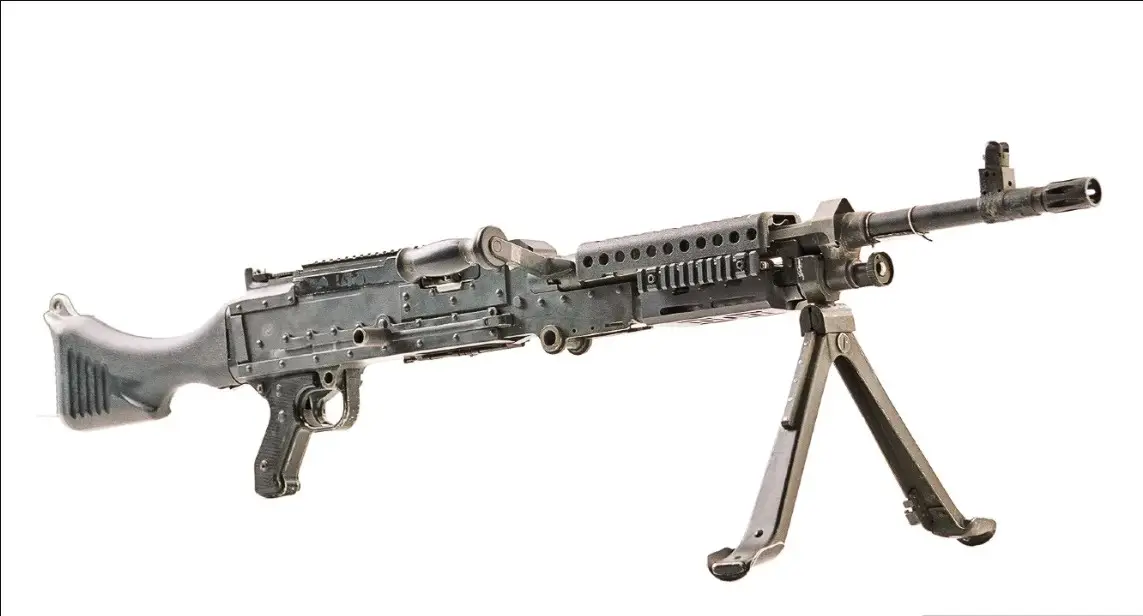
The M240 is a medium machine gun widely used by U.S. forces, including special operations units like Delta Force. When exploring what guns do delta force use, the M240 is often cited because of its proven reliability, sustained fire capability, and adaptability to multiple platforms. Chambered in 7.62×51mm NATO, the M240 delivers formidable suppressive fire while maintaining accuracy over extended ranges. This makes it an ideal choice for providing covering fire, supporting assaults, or securing defensive positions.
Delta Force operators rely on the M240 for its versatility. The weapon can be mounted on tripods, vehicles, or even aircraft, depending on mission requirements. While it is heavier than light machine guns, it compensates with the ability to fire continuously and engage targets at longer distances. The weapon’s gas-operated system ensures consistent operation, even during prolonged engagements or under adverse conditions.
The M240 also accommodates a variety of tactical accessories, including optics, grips, and bipods, to improve accuracy and operator control. These features allow teams to customize the weapon to their operational environment, whether conducting urban raids, desert patrols, or mountainous overwatch. Its long-standing service record demonstrates why the M240 remains a reliable option for elite units.
In summary, the M240 Machine Gun exemplifies the importance of sustained automatic fire in modern combat. For Delta Force, this weapon provides a dependable and effective solution for controlling the battlefield, suppressing threats, and supporting small-unit tactics in high-pressure operations.
29. M60 Machine Gun
The M60 is a classic medium machine gun that has served U.S. forces for decades. When discussing what guns do delta force use, the M60 is sometimes included for historical context, as it has been employed in special operations missions alongside newer automatic weapons. Chambered in 7.62×51mm NATO, the M60 delivers sustained suppressive fire suitable for both offensive and defensive operations. Its robust construction and proven track record make it a reliable tool in diverse combat conditions.
Delta Force operators valued the M60 for its ability to provide high volumes of fire during assaults or to protect key positions. The weapon’s belt-fed system allows for extended periods of fire without frequent reloading, giving teams the ability to dominate engagements or cover tactical maneuvers. Despite its heavier weight compared to newer light machine guns, it remained effective in vehicle-mounted roles or fixed defensive setups.
While the M60 has largely been replaced by more modern machine guns, its influence on small-unit tactics remains significant. Accessories such as optics, bipods, and modern mounts can improve accuracy and handling, allowing the weapon to continue functioning effectively in contemporary missions. Its role in shaping automatic fire doctrine underscores why it remains noteworthy when reviewing Delta Force armaments.
In essence, the M60 represents a bridge between traditional machine gun designs and modern, modular systems. For readers exploring what guns do delta force use, it highlights the historical evolution of automatic firepower in special operations units.
30. M134 Minigun
The M134 Minigun is a high‑rate-of-fire rotary machine gun that is highly specialized for support roles. When considering what guns do delta force use, the M134 stands out because it provides overwhelming suppressive fire from vehicles, helicopters, and fixed positions. Chambered in 7.62×51mm NATO, the Minigun can fire thousands of rounds per minute, making it ideal for area denial, convoy support, or heavy overwatch during high-intensity operations.
Delta Force utilizes the M134 in scenarios where rapid, sustained fire is required to achieve tactical superiority. Its electric rotary design allows multiple barrels to spin, which distributes heat and reduces wear during prolonged firing sessions. This makes the weapon extremely reliable even under continuous engagement. Operators can mount the M134 on helicopters, Humvees, or stationary tripods, enabling versatile application depending on mission requirements.
While not a handheld infantry weapon, the Minigun’s strategic value cannot be overstated. It can suppress enemy positions, cover extraction operations, or provide critical fire support for assault teams. Its capability to deliver controlled bursts of extremely high volume fire can shift the balance of engagements, particularly in scenarios where Delta Force operators face numerically superior opponents or fortified positions.
In summary, the M134 Minigun represents the pinnacle of automatic firepower for modern special operations forces. Understanding its role provides context for the wide range of weapons employed by elite units. For anyone studying what guns do delta force use, the Minigun demonstrates how firepower, precision, and adaptability converge in high-end tactical operations.
31. Benelli M4
The Benelli M4 is one of the most advanced tactical shotguns used by modern military and special operations units. When researching what guns do delta force use, the Benelli M4 is frequently mentioned because of its reliability and effectiveness in close‑quarters combat. Developed in Italy by Benelli, this semi‑automatic shotgun uses an innovative Auto‑Regulating Gas‑Operated (ARGO) system that allows it to function reliably with a wide range of ammunition types. This capability ensures that operators can depend on the weapon in demanding environments where consistency is critical.
Delta Force operators often rely on the Benelli M4 during missions that involve breaching doors or clearing confined spaces. Shotguns are particularly effective in these roles because they can fire specialized breaching rounds designed to destroy locks or hinges quickly. Once an entry point is created, the same weapon can immediately transition to defensive use if necessary. This dual capability makes the Benelli M4 an extremely practical tool during urban operations and hostage rescue scenarios.
The shotgun also features a rugged design and tactical flexibility. Rail systems allow the attachment of optics, lights, and other accessories that enhance performance in low‑light environments. The semi‑automatic action enables faster follow‑up shots compared to pump‑action shotguns, which can be advantageous during fast‑moving engagements. Despite its powerful recoil, the M4’s design helps operators maintain control and accuracy.
Overall, the Benelli M4 is considered one of the most dependable tactical shotguns available today. Its durability, adaptability, and proven performance explain why it remains a trusted firearm among elite units such as Delta Force when specialized close‑range firepower is required.
32. Mossberg 590
The Mossberg 590 is a rugged pump‑action shotgun widely used by military and law enforcement agencies. When examining what guns do delta force use, the Mossberg 590 appears as a practical example of a reliable tactical shotgun. Known for its durable construction and simple mechanical design, the Mossberg 590 can operate effectively even in harsh conditions. Its pump‑action mechanism makes it highly dependable because it is less sensitive to ammunition variations compared to semi‑automatic shotguns.
Delta Force operators may utilize the Mossberg 590 in situations where reliability and simplicity are essential. The weapon is particularly well suited for breaching operations, where specialized rounds are used to destroy door locks and hinges. Because the pump‑action system allows the operator to manually cycle each round, it can reliably handle various types of ammunition, including breaching rounds, buckshot, and less‑lethal options if necessary.
The Mossberg 590 also offers practical ergonomics and tactical adaptability. Many variants include accessory rails or mounting points for lights and optics, allowing the shotgun to be configured for different operational needs. The weapon’s compact design makes it manageable in confined spaces such as narrow hallways or stairwells, which are common environments during urban tactical operations.
While it may appear simple compared to modern rifles, the Mossberg 590 remains a valuable tool in the arsenal of special operations forces. Its dependability and versatility demonstrate that sometimes straightforward designs can deliver exceptional performance when used in the right context.
33. Remington 870
The Remington 870 is another classic pump‑action shotgun that has served military and law enforcement units for decades. When people explore what guns do delta force use, the Remington 870 often appears because of its long history of reliability and effectiveness in close‑range operations. Known for its robust steel receiver and smooth pump mechanism, the shotgun has earned a reputation as one of the most dependable firearms ever produced.
Delta Force operators may employ the Remington 870 during missions that involve building entry or close‑quarters engagements. Shotguns like the 870 are particularly useful for breaching doors and clearing obstacles, allowing assault teams to gain rapid access to secured areas. The ability to fire a variety of ammunition types—from breaching rounds to buckshot—adds flexibility to the weapon’s role.
Another advantage of the Remington 870 is its straightforward design. With relatively few moving parts and a durable construction, the shotgun can withstand harsh environments and heavy use. Tactical versions often include extended magazine tubes, improved sights, and accessory mounts that enhance performance in operational settings.
Although modern tactical rifles dominate many aspects of combat, shotguns like the Remington 870 continue to play an important role in specialized tasks. Their unique capabilities make them valuable tools for operations that require rapid entry, close‑range stopping power, and dependable performance.
34. Glock 19
The Glock 19 is one of the most widely used handguns among military and law enforcement personnel worldwide. When discussing what guns do delta force use, the Glock 19 frequently appears because it offers a combination of reliability, simplicity, and compact size. Chambered in 9×19mm, the pistol provides manageable recoil and sufficient stopping power while remaining lightweight and easy to carry during extended operations.
Delta Force operators often rely on sidearms as backup weapons in situations where their primary firearm may not be accessible. The Glock 19 excels in this role because of its consistent performance and straightforward operation. Its polymer frame reduces overall weight, while the pistol’s internal safety mechanisms eliminate the need for manual external safeties, allowing for quick deployment under pressure.
Another strength of the Glock 19 is its modularity. Operators can customize the pistol with upgraded sights, weapon lights, suppressor‑ready barrels, and other accessories depending on mission requirements. This adaptability ensures that the handgun remains effective in a wide variety of tactical environments, including low‑light situations or covert operations.
In essence, the Glock 19 represents a practical and dependable sidearm for elite operators. Its balance of reliability, ease of use, and compact design explains why it remains a popular choice among special operations units around the world.
35. Beretta M9
The Beretta M9 is another well‑known military handgun that has served the U.S. armed forces for many years. When reviewing what guns do delta force use, the Beretta M9 is often included because it was the standard sidearm of the U.S. military for decades. Chambered in 9×19mm, the pistol provides solid accuracy, dependable performance, and a relatively large magazine capacity for a handgun of its era.
Delta Force operators historically trained with the Beretta M9 alongside other service members. The pistol’s all‑metal construction and smooth double‑action trigger system offer consistent performance and good durability. Its open‑slide design also helps reduce the likelihood of jamming by allowing debris to clear more easily during operation.
The Beretta M9’s ergonomic grip and balanced design contribute to its reputation for accuracy and control. Operators can mount tactical lights or upgraded sights on modern variants to enhance performance in low‑light conditions. Although newer pistols have gradually replaced it in many roles, the M9 remains an important part of modern military firearms history.
For readers researching what guns do delta force use, the Beretta M9 represents the long-standing tradition of dependable military sidearms. Its service record and global recognition illustrate how reliable handgun designs continue to support the missions of elite units around the world.
Conclusion
Delta Force, as one of the most elite special operations units in the world, relies on a diverse arsenal of firearms to execute missions with precision, speed, and adaptability. From assault rifles and submachine guns to sniper rifles, machine guns, shotguns, and pistols, each weapon serves a specific role tailored to the operational environment. Understanding what guns do delta force use provides insight into how special operations teams balance firepower, portability, and accuracy to maintain an edge in complex and high-stakes situations.
The selection of firearms reflects careful consideration of mission requirements. Assault rifles and carbines such as the M4 and FN SCAR provide versatility and maneuverability in urban and close-quarters combat. Sniper and designated marksman rifles, including the Remington 700, Barrett M107, and Accuracy International AWM, enable long-range precision engagements. Machine guns like the M240, FN Mk48, and M134 Minigun offer sustained suppressive fire, while shotguns and pistols such as the Benelli M4 and Glock 19 give operators additional flexibility in confined or emergency scenarios.
Beyond the specifications of each weapon, the key takeaway is that Delta Force emphasizes adaptability, reliability, and efficiency. Operators are trained to use each firearm to its maximum potential, customizing optics, suppressors, and other tactical accessories to match the mission’s unique demands. This combination of expertise, advanced technology, and diverse weaponry ensures that Delta Force can respond effectively to any threat, whether in close quarters, long-range engagements, or covert operations.
In summary, exploring what guns do delta force use highlights not only the incredible variety of firearms in their arsenal but also the strategic approach behind their selection and deployment. For enthusiasts, military analysts, or anyone curious about elite tactical firearms, this comprehensive overview demonstrates how precision, firepower, and adaptability converge to define the capabilities of one of the world’s most formidable special operations units.
Read more: What Guns Do Army Use | Complete Guide to Modern Military Firearms