
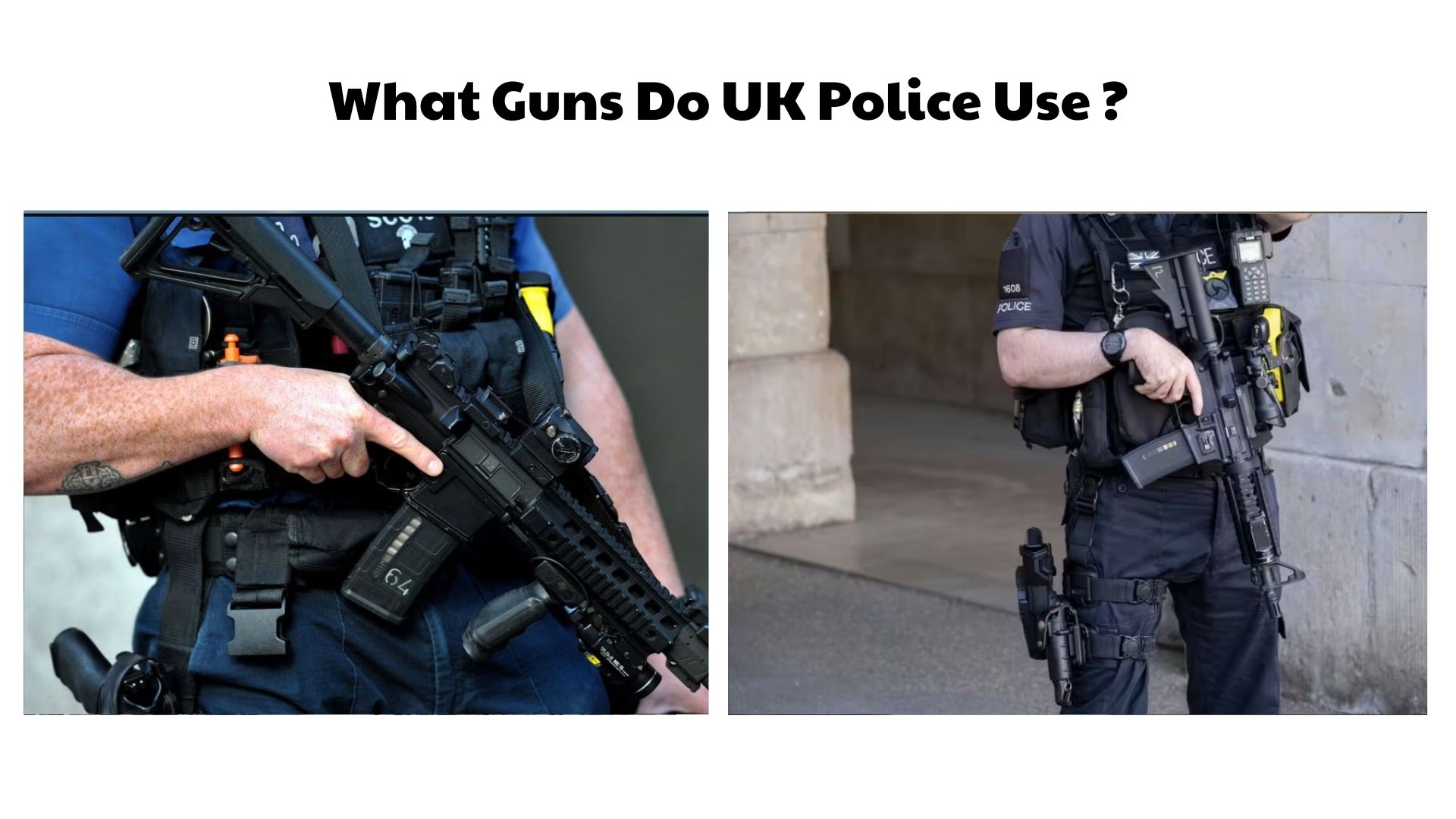
When discussing what guns do UK police use, it is important to understand that the policing model in the United Kingdom differs significantly from that of many other countries. Most British police officers patrol without firearms, relying instead on communication skills, training, and less-lethal tools to manage incidents. However, specially trained officers known as Authorised Firearms Officers (AFOs) are equipped with firearms for situations that require armed response, such as counter-terrorism operations, high-risk arrests, or incidents involving armed suspects.
Because firearms deployment is limited to specialist units, the weapons used by UK police are carefully selected for reliability, precision, and adaptability in urban environments. These firearms range from modern duty pistols to compact submachine guns and patrol rifles designed for tactical situations. Understanding what guns do UK police use helps explain how British law-enforcement agencies balance operational readiness with the country’s tradition of largely unarmed policing.
This guide reviews several well-known firearms associated with British armed police units. Each section explores the characteristics, operational roles, and practical advantages of the weapons used by authorised firearms officers. The goal is not simply to list equipment, but to provide clear and informative insight into how these tools support public safety in the United Kingdom.
What Guns Do UK Police Use – Common Firearms Used by Armed Response Units

1. Glock 17 Armed Police Pistol
The Glock 17 is widely recognized as one of the most common sidearms carried by armed police units across the United Kingdom. Designed as a lightweight, reliable service pistol, the Glock 17 has earned its reputation through decades of consistent performance in law enforcement and military environments worldwide. For UK police, the pistol represents a practical balance of durability, capacity, and ease of operation—qualities that are essential when officers must rely on equipment in unpredictable situations. Although most British police officers do not carry firearms, authorised firearms officers receive extensive training with weapons such as the Glock 17 to ensure safe handling and precise use under strict operational guidelines.
One of the reasons the Glock 17 fits the needs of UK police is its straightforward mechanical design. The pistol uses a striker-fired system, which means the trigger pull remains consistent from one shot to the next. This consistency simplifies training and improves predictability when officers must respond quickly during high-stress incidents. In addition, the polymer frame makes the handgun lighter than many traditional metal-framed pistols, which helps reduce fatigue during extended operations or prolonged duty assignments. The relatively large magazine capacity also allows officers to carry sufficient ammunition without significantly increasing the size or weight of the firearm.
Operationally, the Glock 17 is primarily used as a standard sidearm for armed response officers who may be dispatched to situations involving firearms threats. These scenarios might include armed robberies, terrorist incidents, or other dangerous confrontations where an armed presence is required. The pistol’s accuracy and reliability make it suitable for controlled, defensive use in densely populated urban areas where precision is critical. Officers train extensively in marksmanship and judgmental shooting exercises to ensure they can deploy the firearm responsibly and effectively when necessary.
Beyond its technical features, the Glock 17 also reflects the broader philosophy behind firearm use in British policing. Unlike some countries where sidearms are routine equipment, firearms in the UK are reserved for specific circumstances and handled only by trained specialists. As a result, the Glock 17 serves not only as a practical tool but also as part of a carefully regulated system designed to minimize risk while maintaining the capability to respond to serious threats. For anyone exploring what guns do UK police use, the Glock 17 stands out as a foundational sidearm within the armed response framework.
2. Glock 19 Compact Police Sidearm
The Glock 19 is another pistol frequently associated with British armed policing units, offering many of the same advantages as the larger Glock 17 while providing a more compact form factor. In many law-enforcement organizations, including certain UK police units, the Glock 19 serves as a versatile sidearm that balances portability with performance. Its slightly shorter barrel and grip make it easier to carry discreetly or in situations where space and maneuverability are limited, such as inside vehicles or confined urban environments.
Despite its smaller size, the Glock 19 maintains impressive reliability and accuracy, making it suitable for professional law-enforcement duties. The pistol retains the same striker-fired trigger system found in other Glock models, which helps ensure consistency during training and operational use. For police officers who must develop strong muscle memory and safe firearm habits, this consistent trigger mechanism simplifies the learning process and promotes confident handling. The polymer construction also contributes to durability and resistance to environmental conditions, which can vary significantly across the United Kingdom.
Within armed police units, the Glock 19 may be issued to officers who require a more compact firearm for specialized assignments. For example, officers working in protective security roles or covert operations may benefit from a pistol that is easier to conceal without sacrificing effectiveness. The Glock 19 provides a balance between compact dimensions and sufficient magazine capacity, allowing officers to remain prepared while maintaining mobility. In these contexts, the firearm supports operational flexibility without compromising the safety standards expected within British policing.
Ultimately, the Glock 19 represents the adaptability of modern law-enforcement equipment. While the Glock 17 remains widely recognized as a primary duty pistol, the Glock 19 demonstrates how compact variations can meet the evolving needs of specialised police teams. When examining what guns do UK police use, the Glock 19 highlights the emphasis placed on reliability, practical design, and the ability to function effectively within the unique structure of British law enforcement.
3. Glock 26 Concealed Carry Police Pistol
The Glock 26 is often described as a subcompact member of the Glock pistol family, designed to deliver dependable performance in a smaller and more easily concealed package. In law-enforcement contexts, compact pistols such as the Glock 26 can serve specific roles where discretion and portability are important. Although not as widely issued as larger duty pistols, the Glock 26 has occasionally been associated with specialist police functions where a smaller firearm is advantageous. Its compact size makes it easier to carry as a secondary weapon or in situations where a full-sized handgun might be impractical.
Despite its reduced dimensions, the Glock 26 retains the same operating system used by larger Glock models. This consistency allows officers already trained on Glock pistols to transition easily between different sizes without learning an entirely new platform. The familiar trigger system, simple internal components, and durable construction contribute to the pistol’s reputation for reliability. For police forces that prioritize equipment that functions consistently with minimal maintenance, this reliability is an essential characteristic.
The Glock 26 also demonstrates how firearm design can be adapted to meet specialized operational needs. While larger pistols provide longer sight radii and potentially greater accuracy at distance, smaller firearms emphasize concealability and maneuverability. In scenarios where officers must work in close quarters or operate discreetly among the public, the ability to carry a compact firearm can be a significant advantage. These factors help explain why some police units include subcompact pistols as part of their broader equipment options.
In the broader discussion of what guns do UK police use, the Glock 26 illustrates the diversity of tools available to authorised firearms officers. Each firearm type addresses a particular operational requirement, from standard patrol sidearms to compact backup weapons. By maintaining a selection of different models, police agencies can ensure that officers are properly equipped for a wide range of scenarios while maintaining strict training and safety standards.
4. SIG Sauer P226 Armed Response Pistol
The SIG Sauer P226 is a well-known service pistol with a long history in both military and law-enforcement organizations. For many years, this handgun has been associated with elite tactical units around the world, including specialist police teams. In the United Kingdom, the P226 has been used by certain armed police units due to its reputation for accuracy, durability, and smooth operation. Although newer polymer-framed pistols have become increasingly common, the P226 remains respected as a dependable and precise sidearm.
Unlike striker-fired pistols, the SIG Sauer P226 typically uses a double-action/single-action trigger system. This design means the first trigger pull is longer and heavier, while subsequent shots have a lighter trigger pull once the slide cycles. Some law-enforcement agencies prefer this configuration because it offers an additional layer of control when carrying the pistol with a chambered round. Officers trained with this system learn to manage the differing trigger pulls effectively through repeated practice and structured training exercises.
Another notable characteristic of the P226 is its metal frame and solid construction. This design contributes to a stable shooting platform and can help reduce recoil perception during rapid firing. For officers operating in demanding situations, a stable firearm can improve confidence and control, especially when precision is required. In urban environments where armed police often operate, accuracy is essential because officers must minimize the risk of unintended harm to bystanders.
While the P226 may not be as lightweight as polymer-framed alternatives, its reliability and track record continue to make it a respected option among professional users. The pistol’s presence in UK police arsenals reflects a period when metal-framed service pistols were widely considered the standard for law-enforcement sidearms. Even as equipment evolves, the P226 remains an important part of the conversation surrounding what guns do UK police use, representing both historical influence and proven engineering.
5. SIG Sauer P250 Police Service Handgun
The SIG Sauer P250 represents a different approach to handgun design compared with more traditional service pistols. Built with a modular concept in mind, the P250 allows components such as frames and slides to be configured in various sizes while maintaining a consistent internal mechanism. This flexibility has attracted interest from law-enforcement agencies that value adaptability in their equipment. In the context of British policing, firearms like the P250 illustrate how modern technology can support operational versatility.
One defining feature of the P250 is its double-action-only trigger system. Unlike many other semi-automatic pistols, every trigger pull on the P250 is long and consistent. This design simplifies the manual of arms and eliminates the transition between different trigger pulls found in some other handgun systems. For officers undergoing extensive firearms training, a consistent trigger can help develop predictable shooting habits and reinforce safe handling practices.
The modular architecture of the P250 also allows agencies to adjust the size of the pistol to suit different operational roles or officer preferences. For example, a compact configuration may be used for situations where discretion and maneuverability are important, while a larger configuration could provide increased capacity and improved handling. This adaptability aligns with the broader needs of police units that must operate in a variety of environments, from urban centers to transportation hubs and public events.
Although the P250 is not as universally recognized as some other law-enforcement pistols, it represents the ongoing evolution of police equipment. As technology advances, firearm manufacturers continue to explore new designs that enhance safety, flexibility, and reliability. In discussions about what guns do UK police use, the SIG Sauer P250 demonstrates how modern engineering contributes to the specialized toolkit available to authorised firearms officers tasked with protecting the public.
6. Walther P99 Tactical Police Pistol
The Walther P99 is a modern semi-automatic pistol that has earned recognition among various European law-enforcement organizations, including specialist units within the United Kingdom. Known for its ergonomic design and dependable operation, the Walther P99 represents a generation of pistols developed to meet the practical needs of professional users who require accuracy, safety, and adaptability in demanding environments. In discussions about what guns do UK police use, the Walther P99 often appears as an example of a handgun that balances modern engineering with intuitive handling characteristics.
One of the most distinctive features of the Walther P99 is its ergonomic grip design. The pistol was created with extensive attention to hand positioning and comfort, allowing officers to maintain a natural grip during extended periods of training or operational deployment. Interchangeable backstraps further enhance this adaptability, enabling the firearm to accommodate different hand sizes. For police forces where multiple officers may use the same equipment, this level of customization helps ensure that the pistol remains comfortable and controllable regardless of the individual officer handling it.
Another important characteristic of the Walther P99 is its trigger system. Depending on the configuration, the pistol can operate with a double-action/single-action trigger or a partially pre-cocked striker mechanism. These systems provide a balance between safety and performance, allowing officers to carry the firearm securely while still maintaining quick readiness if the situation requires defensive action. The P99’s consistent accuracy also contributes to its suitability for police work, particularly in urban environments where careful shot placement is essential.
Within the broader framework of British armed policing, pistols like the Walther P99 illustrate the diversity of equipment available to authorised firearms officers. While the Glock series may be widely recognized, other high-quality service pistols continue to play supporting roles in various units or historical periods. The Walther P99 therefore represents both the technical progress of modern handgun design and the careful selection process used by police agencies when determining what guns do UK police use in their specialized operations.
7. Smith & Wesson M&P40 Police Duty Pistol
The Smith & Wesson M&P40 is another service pistol that has gained attention in law-enforcement circles around the world. Designed specifically for military and police applications, the M&P series emphasizes durability, simplicity, and ergonomic comfort. In the context of British policing, firearms such as the M&P40 demonstrate how international manufacturers contribute to the evolving landscape of law-enforcement equipment. While not as universally issued as some European models, the pistol still represents the type of modern handgun that may be considered for specialized police roles.
A defining feature of the M&P40 is its polymer frame combined with a steel slide, a configuration that reduces weight while maintaining structural strength. This design allows officers to carry the firearm comfortably during long shifts or operations without sacrificing reliability. The pistol also includes interchangeable grip inserts, enabling customization for different hand sizes and shooting preferences. Such adaptability is particularly valuable in police forces where equipment must serve a wide range of personnel.
The M&P40’s operating system uses a striker-fired mechanism similar to many contemporary service pistols. This system produces a consistent trigger pull for every shot, simplifying training and helping officers develop predictable shooting habits. For police organizations that emphasize safety and disciplined firearm use, a consistent trigger mechanism can support effective training programs and reduce the likelihood of user error during stressful incidents.
When examining what guns do UK police use, the Smith & Wesson M&P40 highlights how modern handgun design focuses on practicality and user-friendly operation. Even if specific models vary between agencies or over time, the core principles remain the same: reliability, manageable recoil, and straightforward controls. The M&P40 reflects these priorities and demonstrates how contemporary service pistols continue to evolve to meet the needs of professional law-enforcement officers.
8. Heckler & Koch MP5SF Police Carbine
The Heckler & Koch MP5SF is one of the most iconic firearms associated with specialized police and military units around the world. Developed in Germany during the 1960s, the MP5 series quickly gained a reputation for exceptional reliability, smooth recoil, and impressive accuracy for a compact firearm. In the United Kingdom, the MP5SF has been widely used by armed police units for decades, particularly by counter-terrorism teams and specialist firearms officers. Its presence in British policing highlights the need for a compact yet capable weapon during high-risk situations.
The MP5SF operates using a roller-delayed blowback system, which contributes to its remarkably smooth shooting characteristics. Compared with many other submachine guns, this design produces relatively low recoil and allows officers to maintain precise control during rapid firing. In tactical environments where quick and accurate engagement may be required, this level of controllability becomes extremely valuable. The firearm’s compact dimensions also make it easier to maneuver in confined spaces such as buildings, vehicles, or transportation hubs.
Another advantage of the MP5SF is its versatility. The platform can be equipped with a variety of accessories including optical sights, tactical lights, and suppressors, depending on the operational requirements of the unit using it. This adaptability allows armed police teams to tailor the weapon to specific mission profiles, whether that involves counter-terrorism operations, protective security details, or high-risk arrests. Over the years, the MP5 has proven itself as a dependable tool for situations that demand precision and reliability.
In the broader conversation about what guns do UK police use, the MP5SF stands out as one of the most recognizable firearms ever carried by British armed response units. Although newer rifles and carbines have gradually supplemented its role, the MP5 remains a symbol of specialized police capability. Its long service history reflects both its engineering quality and the trust placed in it by professionals responsible for public safety.
9. Heckler & Koch MP5A2 Tactical Carbine
The Heckler & Koch MP5A2 represents another important variant within the MP5 family of firearms. While sharing the same core operating system as other MP5 models, the A2 version features a fixed stock that provides increased stability during firing. This design makes the firearm particularly well suited for situations where officers may need enhanced control and accuracy while still benefiting from the compact size typical of submachine guns. Within British policing, variants like the MP5A2 have been used by specialist firearms units responsible for handling high-risk incidents.
The fixed stock of the MP5A2 contributes to a more stable shooting platform, which can improve accuracy during controlled bursts or single-shot engagements. In tactical operations where precision is critical, this stability allows officers to maintain better target alignment while managing recoil. At the same time, the firearm remains relatively lightweight and maneuverable compared with larger rifles, making it practical for indoor environments or crowded urban settings where space may be limited.
Operational flexibility is another key reason why the MP5A2 has been valued by law-enforcement units. The firearm’s modular design allows it to accommodate various accessories such as optical sights or tactical lighting systems. These additions can enhance visibility and target acquisition during operations that take place in low-light conditions or complex environments. For armed police officers responding to unpredictable situations, having equipment that can adapt to changing circumstances is an essential advantage.
The MP5A2 therefore illustrates how subtle design variations can influence the way a firearm is used in professional settings. While the MP5SF and other variants share the same fundamental mechanism, each configuration offers slightly different handling characteristics suited to particular tasks. In exploring what guns do UK police use, the MP5A2 demonstrates the importance of selecting equipment that aligns with specific operational requirements.
10. Heckler & Koch MP5A3 Retractable Stock Carbine
The Heckler & Koch MP5A3 is another well-known member of the MP5 family, distinguished primarily by its retractable metal stock. This feature allows the firearm to transition quickly between a compact configuration and a more stable firing position. For police officers operating in environments where mobility and adaptability are essential, such flexibility can be extremely valuable. As a result, the MP5A3 has often been associated with tactical units that require equipment capable of performing effectively in confined spaces.
When the stock is retracted, the MP5A3 becomes significantly shorter, making it easier to maneuver inside vehicles, aircraft, or narrow corridors. This compact form can be particularly useful during rapid entry operations or when officers must move through crowded areas while maintaining control of their equipment. When extended, the stock provides improved stability and control, allowing the officer to engage targets with greater precision. This dual capability highlights the practical design philosophy behind the MP5 platform.
Like other MP5 variants, the MP5A3 benefits from the same roller-delayed blowback operating system that contributes to its smooth recoil and reliable performance. These characteristics have helped the firearm remain relevant for decades despite the emergence of newer tactical rifles. For many police units, the MP5A3 represents a balance between compactness and accuracy that few other weapons have consistently matched.
Within the context of what guns do UK police use, the MP5A3 demonstrates how adaptable firearm platforms can support diverse operational roles. Whether deployed during counter-terrorism operations, high-risk arrests, or specialized training exercises, the MP5A3 continues to represent a practical solution for situations that demand both mobility and precision. Its enduring presence in law-enforcement arsenals reflects the reliability and thoughtful engineering that have made the MP5 series a cornerstone of modern tactical policing.
11. Heckler & Koch MP5K Concealable Police Weapon
The Heckler & Koch MP5K represents one of the most compact variants of the legendary MP5 family and has been specifically designed for situations where concealability and maneuverability are essential. Within the broader discussion of what guns do UK police use, the MP5K stands out as a firearm intended for highly specialized operations rather than routine patrol duties. British armed police units, particularly those tasked with counter-terrorism and close-protection roles, have historically valued compact firearms capable of operating effectively in confined environments. The MP5K fits this role by combining the proven reliability of the MP5 platform with a shortened frame that allows discreet transport and rapid deployment.
Unlike full-sized submachine guns, the MP5K is significantly shorter and lighter, making it easier to carry in tight spaces such as vehicles, aircraft cabins, or narrow corridors. The firearm typically features a shortened barrel and a compact grip assembly, allowing officers to maintain control while operating in close-quarters environments. In protective security assignments—such as safeguarding high-profile individuals or responding to potential terrorist threats—officers often require equipment that remains discreet yet effective. The MP5K addresses this requirement by offering the firepower of a submachine gun while maintaining an extremely compact footprint.
Operationally, the MP5K benefits from the same roller-delayed blowback mechanism used in other MP5 models. This engineering design produces smooth recoil characteristics and contributes to the firearm’s renowned reliability. For armed police officers who must react quickly in dynamic situations, a weapon that remains predictable and controllable during rapid firing is invaluable. The MP5K also supports a variety of accessories, including optical sights and tactical lights, allowing officers to adapt the firearm for specific mission requirements such as low-light operations or indoor engagements.
Within the broader structure of British policing, the MP5K demonstrates how specialized equipment supports unique operational challenges. While most police officers in the United Kingdom remain unarmed during routine patrols, authorised firearms officers must be prepared for rare but serious incidents involving armed threats. Compact weapons like the MP5K ensure that these officers have effective tools available without sacrificing mobility or discretion. As a result, the MP5K plays a distinctive role in the overall conversation surrounding what guns do UK police use in specialized tactical contexts.
12. Heckler & Koch MP7 Personal Defense Weapon
The Heckler & Koch MP7 represents a newer generation of compact firearms designed to bridge the gap between submachine guns and assault rifles. Classified as a personal defense weapon (PDW), the MP7 was developed to provide greater penetration and effective range than traditional pistol-caliber submachine guns while remaining lightweight and compact. In the context of British policing, firearms like the MP7 have gained attention among specialist units responsible for counter-terrorism and high-risk response operations. When discussing what guns do UK police use, the MP7 highlights the gradual evolution of tactical equipment used by modern armed response teams.
One of the defining characteristics of the MP7 is its unique ammunition, which differs from the pistol cartridges commonly used in submachine guns. This specialized round is designed to achieve higher velocity, improving effectiveness at longer distances while maintaining manageable recoil. For police units tasked with responding to potentially armed suspects wearing protective equipment, this capability provides a tactical advantage without requiring officers to carry larger rifles. The compact dimensions of the MP7 make it particularly suitable for rapid deployment in urban environments where maneuverability is essential.
In addition to its ballistic performance, the MP7 incorporates a highly modular design. The firearm features folding foregrips, retractable stocks, and integrated accessory rails that allow officers to mount optical sights, flashlights, or suppressors depending on operational needs. These features make the MP7 adaptable to a variety of missions, from close-quarters interventions to protective security assignments. Such flexibility is particularly valuable for armed police teams that must respond to diverse scenarios across major cities, transportation systems, and public venues.
The introduction of weapons like the MP7 demonstrates how law-enforcement equipment continues to evolve alongside emerging security challenges. While classic firearms such as the MP5 remain widely respected, newer platforms offer additional capabilities that align with modern tactical requirements. For those examining what guns do UK police use, the MP7 illustrates how technological innovation can enhance the readiness and effectiveness of specialist police units tasked with safeguarding the public.
13. Heckler & Koch G36C Armed Response Carbine
The Heckler & Koch G36C is a compact assault carbine that has become increasingly associated with armed police units in the United Kingdom. Designed as a shortened variant of the standard G36 rifle, the G36C provides greater range and stopping power than traditional submachine guns while remaining compact enough for urban operations. In the context of what guns do UK police use, the G36C represents a shift toward rifle-caliber firearms capable of addressing modern threats while maintaining maneuverability in crowded environments.
One of the key advantages of the G36C is its balance between power and portability. The rifle fires an intermediate cartridge commonly used in military and law-enforcement rifles, allowing officers to engage targets effectively at greater distances than would typically be possible with a handgun or submachine gun. At the same time, the carbine’s shortened barrel and lightweight polymer construction ensure that it remains practical for use inside vehicles or buildings. This combination of features makes the G36C well suited for armed response vehicles that must be prepared to handle a wide range of scenarios.
The design of the G36C also emphasizes modularity and adaptability. The rifle incorporates mounting points for optical sights, tactical lights, and other accessories that assist officers in identifying and engaging potential threats. In many modern policing environments, especially those involving counter-terrorism operations, the ability to quickly adapt equipment to different conditions is essential. Whether responding to an incident at a transportation hub or securing a public event, armed police teams benefit from firearms that can be configured for specific mission profiles.
Within British law enforcement, the adoption of rifles like the G36C reflects the evolving nature of security challenges faced by police forces. While traditional submachine guns continue to play important roles, rifles provide enhanced range and precision that may be required during serious incidents. As a result, the G36C has become a significant component of the toolkit available to authorised firearms officers, reinforcing its relevance in discussions about what guns do UK police use in modern tactical operations.
14. Heckler & Koch G36K Tactical Police Rifle
The Heckler & Koch G36K is another variant within the G36 family and is slightly larger than the compact G36C. This configuration offers a longer barrel and improved ballistic performance while still remaining more maneuverable than full-length rifles. In the context of British armed policing, the G36K provides an option for situations where increased range and accuracy are required without sacrificing the practicality needed for urban operations. Discussions about what guns do UK police use often include rifles like the G36K because they demonstrate how police equipment has evolved to meet complex security demands.
The extended barrel of the G36K contributes to higher projectile velocity and improved accuracy at medium distances. For police marksmen or officers operating in perimeter security roles, this capability allows them to maintain effective coverage across larger areas. While compact firearms are useful for close-quarters engagements, rifles like the G36K provide a balance between mobility and long-range effectiveness. This versatility makes the weapon suitable for a variety of tactical deployments within armed police units.
Another notable aspect of the G36K is its lightweight construction and modern materials. The rifle uses advanced polymers and reinforced components that help reduce overall weight while maintaining structural strength. For officers carrying equipment during extended operations, reduced weight can significantly improve comfort and endurance. The rifle also features integrated optics or rail systems, enabling the attachment of sights that enhance accuracy and situational awareness during both daylight and low-light conditions.
Within the broader structure of UK policing, rifles like the G36K illustrate the careful balance between preparedness and restraint. Firearms are deployed only by specially trained officers under strict regulations, ensuring that their use remains controlled and accountable. By equipping authorised firearms officers with reliable and versatile rifles, police agencies maintain the ability to respond effectively to serious threats. In this way, the G36K contributes to the evolving landscape of what guns do UK police use in modern security operations.
15. SIG Sauer SIG516 Police Patrol Rifle
The SIG Sauer SIG516 is a modern patrol rifle that has gained recognition among law-enforcement agencies for its durability and modular design. Based on the widely known AR-style platform, the SIG516 incorporates a short-stroke gas piston system that enhances reliability in challenging conditions. In the context of British armed policing, rifles like the SIG516 provide officers with a capable platform for situations where precision and extended range are required. As discussions about what guns do UK police use expand to include newer technologies, the SIG516 represents the influence of contemporary rifle design within law-enforcement equipment.
One of the primary advantages of the SIG516 is its adaptability. The rifle includes modular rail systems that allow officers to mount optical sights, tactical lights, grips, and other accessories tailored to mission requirements. This flexibility is particularly valuable in modern policing environments where officers may need to operate in varied conditions—from crowded city centers to large outdoor events. By customizing the rifle’s configuration, armed response units can ensure that their equipment aligns with the specific challenges of each deployment.
The gas-piston operating system used in the SIG516 also contributes to improved reliability and reduced fouling compared with some traditional rifle mechanisms. For police units that must maintain equipment readiness at all times, a firearm that requires less maintenance while remaining dependable is a significant advantage. The design also helps manage recoil effectively, allowing officers to maintain control and accuracy during rapid follow-up shots when necessary.
As policing strategies evolve to address complex security threats, rifles like the SIG516 demonstrate how modern engineering can enhance operational capability while maintaining strict safety standards. The rifle’s combination of reliability, modularity, and accuracy makes it a practical addition to the arsenal of specialist firearms units. For readers exploring what guns do UK police use, the SIG516 illustrates how contemporary patrol rifles contribute to the preparedness and effectiveness of British armed police teams.
16. SIG Sauer MCX Counter-Terror Carbine
The SIG Sauer MCX represents a modern evolution in tactical rifle design and has become increasingly associated with elite law-enforcement and counter-terror units across the world. When discussing what guns do UK police use, the MCX is often highlighted as a firearm built specifically for flexibility in high-risk operations. Unlike many earlier service rifles, the MCX platform was designed from the ground up to support modular components, suppressed fire capability, and adaptable configurations suited for urban security environments. These characteristics make it particularly relevant for specialized police teams responsible for responding to terrorism-related incidents or heavily armed threats.
One of the defining features of the SIG MCX is its short-stroke gas piston system. This mechanism improves reliability while reducing carbon buildup inside the rifle’s internal components. For police units that require equipment capable of functioning consistently in demanding situations, a cleaner and more durable operating system can significantly enhance operational readiness. Additionally, the MCX is known for its ability to function effectively with suppressors, a capability that may help reduce noise and muzzle flash during tactical operations where communication and situational awareness are critical.
The MCX platform also emphasizes modular design. Officers can adapt the rifle with different barrel lengths, stocks, and accessory configurations depending on mission requirements. This adaptability makes it useful for a range of tasks, including protective security, counter-terror patrols, and high-risk warrant operations. Optical sights, tactical lights, and vertical grips can all be mounted to enhance control and target acquisition in complex environments such as airports, public transport stations, or densely populated city centers.
Within the structure of British policing, the presence of rifles like the SIG MCX demonstrates the increasing emphasis on preparedness for serious security incidents. Although firearms are carried only by specially trained officers, those officers must be equipped with reliable tools capable of addressing modern threats. As a result, the MCX has emerged as an example of how contemporary rifle technology contributes to the evolving toolkit associated with what guns do UK police use in specialized tactical roles.
17. LMT CQB 10.5 Patrol Rifle
The LMT CQB 10.5 patrol rifle is a compact carbine designed to provide law-enforcement officers with the advantages of a rifle-caliber platform while maintaining maneuverability in close-quarters environments. Manufactured by Lewis Machine & Tool (LMT), this rifle is widely respected among professional users for its durability and engineering quality. In discussions about what guns do UK police use, rifles like the LMT CQB illustrate how patrol carbines have become essential components of modern armed response vehicles and specialist police units.
The “10.5” designation refers to the rifle’s barrel length, which is shorter than many traditional service rifles. This shorter barrel makes the firearm easier to maneuver in confined spaces such as stairwells, vehicles, and building interiors. At the same time, the rifle still fires a powerful intermediate cartridge that provides significantly greater range and accuracy than a handgun or submachine gun. For police officers responding to critical incidents, this balance between compact size and effective firepower can be crucial.
Another advantage of the LMT CQB platform is its modular rail system. Officers can attach accessories such as red-dot optics, tactical lights, and foregrips to improve control and target acquisition. These additions allow the rifle to be configured for specific operational needs, whether that involves nighttime deployments, building searches, or security operations during major public events. Such adaptability aligns with the demands placed on modern police forces, where equipment must perform effectively across diverse scenarios.
The LMT CQB rifle therefore represents the practical evolution of police patrol weapons. As security challenges have become more complex, law-enforcement agencies have increasingly adopted compact carbines that offer both mobility and precision. In the context of what guns do UK police use, the LMT CQB 10.5 demonstrates how contemporary patrol rifles support the readiness and effectiveness of specialist firearms officers responsible for protecting the public.
18. Heckler & Koch G3K Police Marksman Rifle
The Heckler & Koch G3K is a compact variant of the classic G3 rifle, a firearm that has been widely used by military and law-enforcement organizations for decades. Although the original G3 was designed as a full-sized battle rifle, the shortened G3K configuration provides improved maneuverability while retaining the powerful performance of its larger counterpart. In the context of what guns do UK police use, the G3K has occasionally been associated with roles requiring greater stopping power or precision than standard patrol rifles.
The rifle operates using a roller-delayed blowback system, a distinctive mechanism that contributes to the firearm’s reliability and smooth recoil characteristics. This design allows the rifle to handle powerful cartridges while maintaining consistent accuracy. For police marksmen or officers assigned to specialized perimeter security roles, the G3K can provide a stable and effective platform capable of engaging targets at extended distances compared with typical patrol carbines.
While modern rifles have introduced lighter materials and advanced accessory systems, the G3 platform remains respected for its rugged construction and dependable performance. Many professional users appreciate its straightforward engineering and proven track record in demanding conditions. In certain tactical contexts, particularly those involving longer engagement distances, rifles like the G3K can provide valuable capabilities that complement more compact firearms carried by patrol officers.
Within the broader framework of British policing, the G3K represents the historical influence of battle-rifle platforms on law-enforcement equipment. Even as newer rifles continue to emerge, the G3 family remains an example of robust engineering that helped shape the development of modern tactical firearms. When examining what guns do UK police use, the G3K serves as a reminder of how earlier designs contributed to the capabilities available to specialist police units today.
19. Accuracy International Arctic Warfare Police Sniper Rifle
The Accuracy International Arctic Warfare (AW) Police sniper rifle is one of the most respected precision firearms used by professional marksmen around the world. Manufactured in the United Kingdom, this rifle has become closely associated with military and law-enforcement sniper teams due to its exceptional accuracy and reliability. In discussions about what guns do UK police use, the Arctic Warfare rifle often appears as a key tool for specialist marksmen tasked with handling situations that demand precise, controlled shooting at extended ranges.
The design of the Arctic Warfare rifle emphasizes precision engineering and stability. Built with a rigid chassis and a carefully manufactured barrel, the rifle is capable of delivering remarkable accuracy under a wide range of environmental conditions. This level of performance is essential for police marksmen who may need to neutralize threats while minimizing risk to bystanders. In highly sensitive operations such as hostage situations or counter-terror responses, accuracy is not simply an advantage—it is an absolute requirement.
Another defining feature of the Arctic Warfare platform is its adaptability to harsh climates and demanding environments. The rifle was originally developed to function reliably in extreme cold, which explains the “Arctic Warfare” designation. Although such conditions are rare in many policing contexts, the engineering behind the rifle ensures dependable performance regardless of weather or operational setting. This reliability is highly valued by specialized police units responsible for critical incident response.
For British law-enforcement agencies, precision rifles like the Arctic Warfare represent the highest level of firearm specialization. These weapons are used only by highly trained marksmen operating under strict command structures and clear rules of engagement. Their role is limited but vital, providing the capability to resolve dangerous situations with the greatest possible accuracy and control. Within the broader conversation about what guns do UK police use, the Arctic Warfare rifle exemplifies the specialized equipment required for precision tactical operations.
20. Accuracy International AW Magnum Tactical Rifle
The Accuracy International AW Magnum is another precision rifle closely related to the Arctic Warfare series but designed to handle more powerful cartridges. This rifle has gained international recognition for its exceptional long-range accuracy and robust construction. In the context of what guns do UK police use, the AW Magnum represents the upper tier of precision firearms available to specialist law-enforcement marksmen. Although rarely deployed, it provides capabilities that may be necessary during the most demanding security incidents.
The AW Magnum is engineered with an emphasis on stability and ballistic performance. Its heavy barrel and precision-machined components allow the rifle to maintain accuracy over extended distances. For police sniper teams, this capability ensures that they can respond effectively in scenarios where precise shot placement is required to resolve a dangerous situation. The rifle’s design also accommodates advanced optical systems, enabling marksmen to identify and engage targets with remarkable clarity and control.
In addition to accuracy, the AW Magnum is known for its rugged durability. The rifle is built to withstand harsh environmental conditions and maintain consistent performance even after prolonged use. For specialized police teams that rely on equipment during critical incidents, reliability is just as important as accuracy. The AW Magnum’s proven design ensures that it remains dependable when officers need it most.
Within the overall structure of British policing, precision rifles like the AW Magnum are used only in the most carefully controlled circumstances. Their presence reflects the need for a comprehensive tactical capability that can address a wide range of threats while maintaining strict oversight and professional discipline. As a result, the AW Magnum stands as one of the most specialized firearms associated with what guns do UK police use, illustrating the depth and sophistication of equipment available to elite law-enforcement marksmen.
21. Benelli M3 Super 90 Tactical Police Shotgun
The Benelli M3 Super 90 Tactical Police Shotgun is a versatile firearm that has earned respect among law-enforcement units worldwide for its reliability and adaptability. When exploring what guns do UK police use, shotguns like the Benelli M3 illustrate an important category of tactical equipment that complements pistols and rifles within armed police teams. Unlike many standard shotguns, the M3 Super 90 features a unique dual-mode system that allows it to operate in both semi-automatic and pump-action configurations. This hybrid capability provides officers with greater flexibility when using different types of ammunition during specialized operations.
One of the key advantages of the Benelli M3 lies in its ability to quickly transition between operating modes. In semi-automatic mode, the shotgun cycles rounds automatically after each shot, enabling faster follow-up shots during tactical engagements. When switched to pump-action mode, the firearm can reliably fire less-lethal ammunition or specialty rounds that may not cycle effectively in a semi-automatic system. For police units tasked with managing a wide variety of operational scenarios, this flexibility can prove extremely valuable.
In practical law-enforcement situations, tactical shotguns often serve roles beyond traditional defensive applications. They may be used for breaching locked doors during high-risk entries, deploying specialized munitions, or providing controlled stopping power in certain tactical environments. The Benelli M3’s rugged construction and dependable cycling system make it suitable for these demanding tasks. Additionally, the shotgun’s ergonomic design and accessory compatibility allow officers to mount lights or other equipment that improve visibility and control during operations.
Within the broader discussion of what guns do UK police use, the Benelli M3 Super 90 highlights how police arsenals include more than just rifles and handguns. Shotguns remain valuable tools because of their adaptability and ability to handle diverse ammunition types. In specialist firearms units, the M3 contributes to a balanced toolkit that allows officers to respond effectively to a wide range of high-risk incidents.
22. Remington 870 Police Pump Shotgun
The Remington 870 Police Pump Shotgun is one of the most widely recognized law-enforcement shotguns in the world. Introduced decades ago, this pump-action shotgun quickly became a trusted tool among police agencies due to its durability, straightforward operation, and proven reliability. In the context of what guns do UK police use, the Remington 870 represents a classic example of a firearm that has served law-enforcement professionals for generations. Its simple mechanical design makes it dependable even in harsh conditions where more complex systems might fail.
The pump-action mechanism of the Remington 870 requires the user to manually cycle the fore-end after each shot. While this approach is slower than semi-automatic systems, it offers unmatched reliability and the ability to fire a wide range of ammunition types. Police units often value this capability because it allows them to use different cartridges depending on the situation, including breaching rounds, standard tactical loads, or less-lethal options. The 870’s robust design ensures that it can perform consistently regardless of the ammunition selected.
Another reason the Remington 870 remains popular among law-enforcement agencies is its simplicity. The shotgun contains relatively few moving parts compared with many modern firearms, which makes maintenance straightforward and reduces the likelihood of mechanical failure. Officers trained to use the 870 quickly develop familiarity with its manual operation, ensuring safe and effective handling during stressful situations.
In British policing contexts, the Remington 870 is typically associated with specialist firearms teams rather than routine patrol duties. Its primary roles may include tactical entry operations or situations where a powerful yet controllable firearm is required. As discussions about what guns do UK police use continue to evolve, the Remington 870 remains an enduring example of a dependable shotgun that has supported law-enforcement operations for decades.
23. Benelli M4 Tactical Breaching Shotgun
The Benelli M4 Tactical Breaching Shotgun represents a more modern generation of semi-automatic shotguns designed specifically for professional tactical use. Known for its advanced gas-operated system and rugged construction, the M4 has gained widespread recognition among military and law-enforcement organizations. In discussions about what guns do UK police use, the Benelli M4 illustrates how modern shotgun technology can enhance operational capability for specialist police units.
One of the defining characteristics of the Benelli M4 is its Auto-Regulating Gas-Operated (ARGO) system. This design automatically adjusts to different pressure levels generated by various ammunition types, allowing the shotgun to cycle reliably without manual adjustments. For police officers operating in unpredictable environments, this reliability ensures that the firearm remains functional regardless of the ammunition selected. The system also reduces recoil and improves control during rapid firing, which can enhance accuracy and officer confidence.
The M4’s design also emphasizes durability and modularity. Built with reinforced materials and designed to withstand demanding conditions, the shotgun can operate effectively in a wide range of climates and operational environments. Accessory rails allow officers to attach tactical lights, optics, or other equipment that may assist during nighttime operations or indoor searches. These features help transform the shotgun into a versatile tool suitable for specialized law-enforcement tasks.
Within British policing, firearms such as the Benelli M4 are typically reserved for highly trained specialist teams. These units may use the shotgun for breaching operations, tactical entries, or situations where a powerful close-range firearm is required. By combining modern engineering with practical functionality, the Benelli M4 demonstrates how shotguns continue to evolve as part of the equipment used in discussions about what guns do UK police use.
24. Taser X26 Police Electroshock Weapon
The Taser X26 Police Electroshock Weapon occupies a unique place within the range of equipment used by British law enforcement. Unlike conventional firearms, the Taser is designed as a less-lethal tool intended to incapacitate a suspect temporarily without causing permanent harm. When exploring what guns do UK police use, it is important to include devices like the Taser because they represent a critical part of the UK policing philosophy, which emphasizes minimal force whenever possible.
The Taser X26 works by delivering a controlled electrical charge through two small probes that attach to the target using thin wires. When activated, the electrical impulse interferes with voluntary muscle control for a brief period, allowing officers to safely restrain a suspect. This capability provides a valuable alternative to lethal force in situations where a suspect may pose a threat but does not require the use of a firearm.
Because most police officers in the United Kingdom do not routinely carry firearms, Tasers have become an increasingly important part of police equipment. Officers undergo specialized training to ensure that the device is used safely and appropriately. This training includes understanding the circumstances in which the Taser should be deployed, as well as procedures for medical assessment following its use.
Within the broader discussion of what guns do UK police use, the Taser X26 highlights the emphasis placed on proportional response in British law enforcement. While armed units maintain the capability to deploy firearms during serious incidents, less-lethal tools like the Taser provide officers with additional options that help resolve confrontations without escalating to deadly force.
25. HK69 40mm Baton Launcher
The HK69 40mm Baton Launcher represents another specialized piece of equipment used by police forces for less-lethal crowd control and tactical operations. Manufactured by Heckler & Koch, the HK69 is designed to fire 40mm projectiles such as baton rounds, smoke canisters, or other non-lethal munitions. In discussions about what guns do UK police use, the HK69 demonstrates how law-enforcement agencies incorporate tools specifically intended to manage public order situations while minimizing the risk of serious injury.
The launcher operates using a single-shot break-action mechanism that is both simple and reliable. Officers load one round at a time, allowing them to select the appropriate munition for each situation. Baton rounds fired from the HK69 are designed to deliver a strong impact that can discourage aggressive behavior without causing the penetrating injuries associated with conventional bullets. This makes the launcher particularly useful during large demonstrations or public disturbances where police must restore order while avoiding excessive force.
In addition to baton rounds, the HK69 can also deploy smoke or signaling munitions. These capabilities provide tactical advantages during certain operations, such as marking areas, obscuring visibility, or guiding coordinated police movements. The launcher’s versatility allows it to serve multiple functions within law-enforcement teams responsible for crowd management and public safety.
Within the structure of British policing, tools like the HK69 reinforce the emphasis on graduated force. Officers are trained to select the least harmful option capable of resolving a situation effectively. By providing an intermediate level of force between verbal commands and lethal weapons, the HK69 helps maintain this balance. As part of the broader examination of what guns do UK police use, the launcher illustrates how modern police forces rely on a wide spectrum of equipment designed to address different operational needs.
Conclusion: Understanding What Guns Do UK Police Use
The question of what guns do UK police use reveals a policing system that is both unique and carefully structured. Unlike many countries where most officers routinely carry firearms, the majority of police officers in the United Kingdom remain unarmed during everyday duties. Firearms are instead issued to specially trained units such as Authorised Firearms Officers (AFOs) and Specialist Firearms Officers (SFOs), who respond to high-risk situations that require armed capability. This approach reflects the long-standing British policing philosophy that emphasizes restraint, proportional force, and public trust.
Within these specialist units, a wide range of equipment exists to handle different operational scenarios. Handguns such as service pistols provide compact defensive tools for close-range encounters. Submachine guns and patrol carbines offer greater accuracy and control when responding to serious armed threats. Tactical shotguns may be used for breaching or close-quarters operations, while precision rifles allow trained marksmen to manage the most sensitive situations with exceptional accuracy. Alongside these firearms, less-lethal tools such as Tasers and baton launchers provide additional options that help officers resolve confrontations while minimizing harm whenever possible.
Another important aspect of the UK police firearms system is the emphasis on training and oversight. Officers authorized to carry firearms undergo extensive preparation, including tactical decision-making, safe weapon handling, and strict rules governing when force may be used. Firearms deployments are also subject to clear command structures and detailed accountability procedures. This ensures that weapons are used only when necessary and in accordance with established law-enforcement guidelines.
Ultimately, the variety of equipment associated with what guns do UK police use demonstrates how modern policing balances preparedness with responsibility. While specialist units must be ready to confront serious threats, the broader goal remains protecting the public while maintaining the trust of the communities they serve. By combining professional training, specialized equipment, and a strong emphasis on proportional force, the UK policing model continues to reflect a distinctive approach to public safety in a complex and evolving security environment.
50+ FAQ: What Guns Do UK Police Use
1. What types of firearms do UK police carry?
Specialist units carry handguns, submachine guns, patrol rifles, tactical shotguns, and precision sniper rifles depending on operational requirements.
2. Do all UK police officers carry guns?
No, the majority of UK police officers are unarmed. Only Authorised Firearms Officers (AFOs) and Specialist Firearms Officers (SFOs) carry weapons.
3. What is an Authorised Firearms Officer?
An AFO is a trained police officer authorized to carry and use firearms during high-risk incidents, including armed responses.
4. What is a Specialist Firearms Officer?
An SFO is a highly trained officer tasked with complex tactical operations, often using advanced firearms like carbines and sniper rifles.
5. What handguns are commonly used by UK police?
Popular handguns include Glock pistols and SIG Sauer models, selected for reliability and ease of use in tactical situations.
6. Do UK police use submachine guns?
Yes, submachine guns such as the Heckler & Koch MP5 series are used in close-quarters operations and counter-terror responses.
7. What patrol rifles are issued to UK police?
Rifles like the SIG MCX, Heckler & Koch G36 variants, and LMT CQB are issued to armed response teams for urban tactical operations.
8. Are UK police allowed to carry shotguns?
Yes, tactical shotguns like the Benelli M3 and Remington 870 are used primarily for breaching, crowd control, and close-range operations.
9. Do UK police use precision rifles?
Yes, specialist units employ rifles such as the Accuracy International Arctic Warfare and AW Magnum for long-range, precision engagements.
10. What less-lethal options do UK police carry?
Tasers, baton launchers, and other non-lethal devices are used to control suspects without resorting to deadly force.
11. What is the role of the Heckler & Koch MP5 in UK policing?
The MP5 is primarily used in close-quarters and counter-terror operations due to its compact size and controllability.
12. Can UK police carry concealed weapons?
Only specially trained armed officers may carry firearms, and even then, concealment depends on operational requirements.
13. Are SIG Sauer rifles common in UK police units?
Yes, models like the SIG MCX and SIG516 provide modularity, reliability, and compatibility with tactical accessories.
14. How are Tasers used by UK police?
Tasers like the X26 incapacitate suspects temporarily and are deployed as a proportional, less-lethal response option.
15. What is the purpose of a baton launcher?
Devices like the HK69 40mm Baton Launcher are used for crowd control or to deter aggressive behavior without lethal force.
16. Do UK police use revolvers?
No, modern police units have generally transitioned to semi-automatic pistols for greater magazine capacity and faster reloads.
17. How are firearms deployed in UK policing?
Firearms are deployed only in controlled circumstances by trained officers and usually in response to high-risk threats.
18. What training do armed UK police officers undergo?
They receive extensive firearms handling, tactical decision-making, and scenario-based training to ensure safe and effective use.
19. Do UK police rifles use suppressors?
Some rifles like the SIG MCX can be equipped with suppressors to reduce noise during sensitive tactical operations.
20. What ammunition types are used by UK police?
Police use a range of ammunition, including standard, specialized, and less-lethal rounds, depending on mission requirements.
21. Can UK police carry weapons on routine patrol?
Generally no, except for certain armed response vehicles staffed by authorised officers.
22. What is the role of the Benelli M4 in UK police units?
The Benelli M4 is primarily used for breaching doors and tactical close-quarters scenarios due to its semi-automatic capability.
23. Are sniper rifles used in urban policing?
Yes, they are deployed selectively for high-risk incidents such as hostage situations where precision is essential.
24. How do police decide which firearm to use?
Firearm selection depends on threat level, operational context, and officer training, ensuring proportionality and safety.
25. Can all UK police use rifles?
No, rifles are reserved for trained specialist units, not standard patrol officers.
26. What is the difference between AFO and SFO rifles?
AFOs carry standard patrol rifles for routine armed incidents, while SFOs may carry specialized rifles for counter-terror operations.
27. Are UK police firearms standardized?
There is standardization within units, but different forces may use slightly different models depending on procurement and mission needs.
28. What is the most common handgun for UK police?
The Glock series is among the most widely issued pistols due to reliability, simplicity, and magazine capacity.
29. Do UK police have access to tactical submachine guns?
Yes, submachine guns like the MP5 series and MP7 are allocated to specialist units for high-risk close-quarter scenarios.
30. How are police shotguns used in urban areas?
They are primarily used for tactical entries, breaching, and close-range threat neutralization in crowded environments.
31. Do UK police carry personal defense weapons?
Yes, compact weapons like the MP7 allow specialist officers to respond effectively in confined spaces.
32. Can UK police use semi-automatic rifles?
Specialist units deploy semi-automatic rifles for situations requiring rapid follow-up shots and intermediate-range engagement.
33. What is the role of the G36C in UK policing?
The G36C provides armed response teams with a compact yet powerful carbine for urban tactical situations.
34. Are police carbines modular?
Yes, rifles like the SIG MCX and LMT CQB allow attachment of optics, lights, and grips to suit operational needs.
35. How are precision rifles deployed by UK police?
They are deployed in situations requiring long-range accuracy, often from a secure position to neutralize critical threats safely.
36. Do UK police use military-grade rifles?
Some rifles are derived from military designs, adapted for law-enforcement use with modifications for police operations.
37. What is the purpose of less-lethal firearms?
Less-lethal tools provide officers with options to control suspects or crowds while minimizing the risk of serious injury.
38. Are there rules for firearm deployment in UK policing?
Yes, strict legal and departmental guidelines dictate when and how firearms may be deployed.
39. How do UK police maintain firearms readiness?
Regular training, routine inspections, and maintenance schedules ensure that firearms are ready for operational use.
40. Can Tasers be used by all officers?
Only trained officers are authorized to carry and deploy Tasers, ensuring safe and lawful usage.
41. Are police rifles used for crowd control?
No, rifles are generally reserved for high-risk armed incidents; crowd control relies on less-lethal weapons like baton launchers.
42. What is the HK69 40mm launcher used for?
It fires baton rounds, smoke, or signaling munitions to manage public order safely and effectively.
43. Do UK police have SWAT-like units?
Yes, specialist firearms units perform similar roles to SWAT teams in other countries, handling high-risk armed incidents.
44. How often are UK police firearms updated?
Firearms and equipment are periodically reviewed to incorporate technological advancements and meet operational needs.
45. Can firearms be used during routine patrols?
Generally no; firearms are reserved for specialist deployments unless a threat is imminent.
46. How do police select ammunition?
Selection depends on the firearm, operational scenario, and whether lethal or less-lethal force is appropriate.
47. Are all UK police firearms semi-automatic?
No, some shotguns and carbines may operate in pump-action or selective-fire modes depending on the model.
48. Are sniper rifles used regularly?
No, they are deployed selectively for situations demanding precision, such as hostage or counter-terror scenarios.
49. Do police receive mental and tactical training?
Yes, armed officers receive extensive training in judgment, tactics, and scenario management in addition to weapon proficiency.
50. How is public safety balanced with firearm use?
Strict protocols, proportional force policies, and oversight ensure firearms are used responsibly to protect both officers and the public.
51. Can firearms be deployed outside urban areas?
Yes, armed units may operate in rural or transport settings when threats necessitate police firearms intervention.
Read more: What Guns Do British Military Use | Complete Guide 2026