
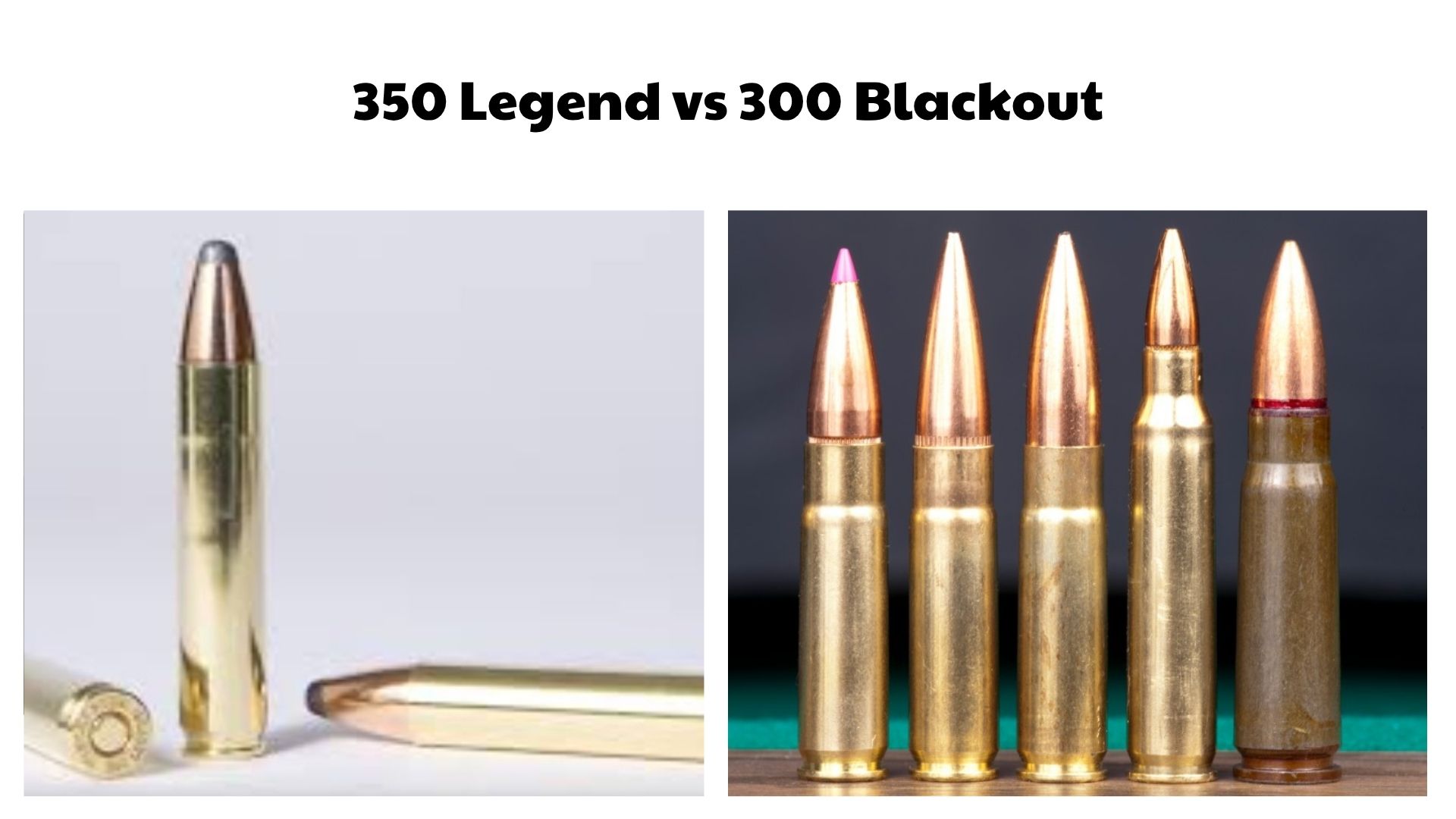

The comparison of 350 Legend vs 300 Blackout has become one of the most discussed topics among AR-15 owners, hunters, and recreational shooters. Both cartridges are modern, efficient, and designed to fit within the AR platform ecosystem, yet they serve very different roles in real-world use. One is built primarily for straight-wall hunting regulations and deer performance, while the other is engineered for tactical flexibility, short-barrel setups, and suppressed shooting.
As AR-15 compatible cartridges continue to evolve, shooters now have more options than ever before. Instead of relying on traditional rifle calibers like .308 Winchester or .223 Remington alone, modern shooters can choose purpose-built cartridges that match specific needs. This is where both the .350 Legend and .300 Blackout stand out. They represent two different design philosophies: one focused on hunting efficiency, and the other focused on versatility and suppression capability.
The reason 350 Legend vs 300 Blackout is such a common comparison is simple. Both fit the AR-15 platform, both are popular in their respective communities, and both offer unique advantages that appeal to different types of shooters. However, they are not direct competitors in the traditional sense. Instead, they are specialized tools designed for different shooting environments and objectives.
The key distinction lies in their purpose. The .350 Legend is a straight-wall hunting cartridge designed to comply with regulations in certain states while delivering reliable performance on deer-sized game. It focuses on flat trajectory, manageable recoil, and practical hunting distances. On the other hand, the .300 Blackout was developed for tactical applications and excels in short-barrel rifles, suppressed setups, and subsonic performance. It prioritizes flexibility over hunting-specific optimization.
This guide is designed for a wide range of readers, including hunters looking for an effective deer cartridge, AR builders exploring platform options, beginners trying to understand recoil and usability, and experienced shooters comparing real-world performance. Each group will find useful insights depending on how they intend to use these cartridges in the field or at the range.
In simple terms, the 350 Legend vs 300 Blackout debate can be summarized as a choice between two different philosophies: straight-wall hunting efficiency versus subsonic and suppressed versatility. One is built to perform cleanly and effectively within hunting regulations, while the other is built to adapt across tactical, defensive, and close-range shooting scenarios. Understanding this difference is the first step to choosing the right cartridge for your needs.
Overview of Each Cartridge
To understand the full picture of 350 Legend vs 300 Blackout, it is important to first break down each cartridge individually. While both are compatible with the AR-15 platform, they were created for completely different purposes. The .350 Legend is a modern straight-wall hunting cartridge focused on simplicity, efficiency, and legal compliance in hunting states. The .300 Blackout, on the other hand, was designed around tactical flexibility, especially in short-barrel rifles and suppressed shooting environments.
These differences in origin explain why each cartridge behaves so differently in real-world use. One prioritizes consistent hunting performance at moderate ranges, while the other emphasizes adaptability across subsonic and supersonic roles. This section provides a clear foundation before comparing their performance in detail.
What Is the .350 Legend?
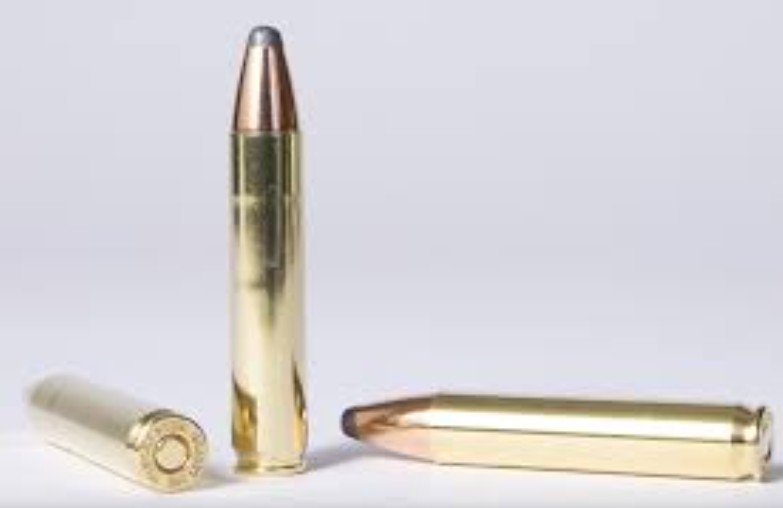
The .350 Legend was introduced by Winchester in 2019 as a purpose-built straight-wall hunting cartridge. It was specifically designed to meet hunting regulations in states that restrict the use of bottleneck rifle cartridges for deer hunting. This regulatory environment created demand for a modern, efficient cartridge that could still deliver reliable performance on medium-sized game.
One of the main strengths of the .350 Legend is its balance between power and controllability. It is optimized for deer hunting and similar medium game, offering sufficient energy for ethical kills within typical hunting distances. At the same time, it remains extremely manageable in terms of recoil, making it accessible for new shooters and youth hunters.
In terms of ballistic profile, the .350 Legend is known for its relatively high velocity compared to other straight-wall cartridges. It maintains a flat enough trajectory for practical field use while still keeping recoil low. This combination makes it one of the most shooter-friendly hunting cartridges in the modern AR-15 ecosystem.
Common bullet weights for the .350 Legend typically range from 145 to 180 grains. These projectiles are designed to expand reliably on impact and provide consistent penetration on deer-sized game. Depending on barrel length and load selection, typical velocities fall between 2,000 and 2,400 feet per second (fps).
Overall, the .350 Legend is best understood as a straightforward hunting cartridge. It is built for simplicity, efficiency, and reliable performance in environments where straight-wall regulations apply, making it a strong choice for hunters who prioritize consistency and ease of use.
What Is the .300 Blackout?
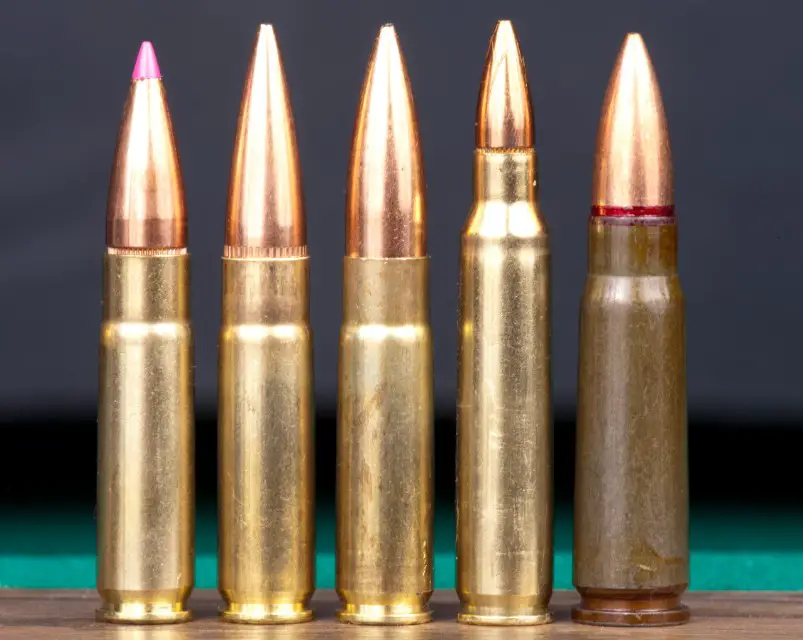
The .300 Blackout was developed for military and tactical applications, specifically optimized for use in AR-15 platforms with short barrels and suppressors. Unlike the .350 Legend, it was not designed for hunting regulations but rather for versatility in both supersonic and subsonic roles. This makes it one of the most flexible cartridges in the AR-15 family.
The cartridge uses a bottleneck case design based on the .223 Remington, which allows it to function efficiently in standard AR-15 rifles with minimal modifications. However, its true strength lies in its ability to perform well with both high-speed supersonic loads and heavy subsonic loads, depending on the shooting application.
One of the standout features of the .300 Blackout is its strong performance in suppressed setups. Subsonic ammunition allows for extremely quiet shooting when paired with a suppressor, making it popular in tactical and close-range applications. At the same time, supersonic loads provide more traditional rifle performance for hunting or defensive use.
Common bullet weights for the .300 Blackout range from 110 to 220 grains, giving shooters a wide selection of load types depending on their intended purpose. This flexibility is one of its defining characteristics and a major reason for its popularity among AR-15 users.
Velocity varies significantly depending on the load. Supersonic rounds can reach approximately 2,000 to 2,200+ fps, while subsonic loads operate closer to 1,000 fps. This wide velocity range allows the cartridge to adapt to different roles, from hunting and defense to suppressed shooting applications.
In summary, the .300 Blackout is a highly adaptable cartridge designed for versatility rather than specialization. It excels in short-range environments, suppressed shooting setups, and tactical applications, making it a very different tool compared to the hunting-focused .350 Legend.
Key Differences Between .350 Legend and .300 Blackout
When analyzing 350 Legend vs 300 Blackout, the differences become clear once we break them down into design, ballistics, recoil, range, and real-world accuracy. While both cartridges are designed for AR-15 platforms and are widely used in modern shooting applications, they follow completely different engineering goals. The .350 Legend is built for hunting efficiency and straight-wall compliance, while the .300 Blackout is designed for versatility, especially in short barrels and suppressed configurations.
Understanding these differences is important because each cartridge performs best in its own environment. What works perfectly for deer hunting in open woods may not be ideal for suppressed close-range shooting, and vice versa. This section highlights how each cartridge behaves in practical use rather than just theoretical specifications.
Cartridge Design
The most fundamental difference between the two cartridges lies in their physical design. The .350 Legend is a straight-wall rifle cartridge, meaning its case has minimal taper and no bottleneck. This design is primarily intended to comply with hunting regulations in certain states that restrict bottleneck cartridges for deer hunting. It also simplifies feeding and allows efficient performance in AR-15 platforms.
In contrast, the .300 Blackout uses a bottleneck design based on the .223 Remington case. This allows it to maintain better powder efficiency and support a wide range of bullet weights. The bottleneck structure also contributes to its versatility, especially in suppressed and short-barrel configurations.
From an engineering perspective, the straight-wall design of the .350 Legend prioritizes simplicity and legal compliance, while the bottleneck design of the .300 Blackout prioritizes adaptability and performance flexibility. This difference influences everything from recoil behavior to ballistic efficiency and real-world usability.
Ballistics Comparison
Ballistics is one of the most important areas in the 350 Legend vs 300 Blackout debate. The .350 Legend typically produces higher velocities in supersonic loads, which results in a flatter trajectory and more predictable bullet path at medium ranges. This makes it especially effective for hunting deer-sized game within typical field distances.
The .300 Blackout, however, is optimized for short-barrel performance and subsonic shooting. While its supersonic loads can be effective for hunting, its real strength appears in close-range applications where suppressed shooting is required. Subsonic loads trade velocity for quiet operation, which significantly changes its ballistic profile.
In terms of energy, both cartridges can overlap depending on load selection. However, the .350 Legend generally maintains more consistent energy at hunting distances, while the .300 Blackout offers more specialized performance depending on whether supersonic or subsonic ammunition is used. This makes the .350 Legend more predictable in hunting scenarios, while the .300 Blackout is more adaptable but less uniform.
Recoil Comparison
Recoil is relatively mild for both cartridges, especially when compared to traditional rifle calibers. The .350 Legend produces low recoil that is easy to manage for most shooters, including beginners and youth hunters. However, it can feel slightly more noticeable than subsonic .300 Blackout loads due to its higher velocity and energy output.
The .300 Blackout generally has softer recoil overall, particularly when using subsonic ammunition. The reduced velocity and lighter pressure cycles make it extremely comfortable to shoot, especially in suppressed configurations. Supersonic loads increase recoil slightly but still remain manageable.
In practical use, both cartridges are considered beginner-friendly, but the .300 Blackout has a slight edge in comfort, especially in suppressed shooting setups. The .350 Legend, while still soft shooting, focuses more on ballistic efficiency than recoil minimization.
Effective Range
Effective range is another key factor in the 350 Legend vs 300 Blackout comparison. The .350 Legend is generally effective out to around 200–250 yards for deer hunting, depending on load and environmental conditions. Beyond this range, energy and trajectory limitations become more noticeable.
The .300 Blackout, on the other hand, is more limited in effective range for supersonic hunting loads, typically performing best within 100–175 yards. Subsonic loads are even more restricted, focusing on very close-range applications where stealth is more important than distance.
This creates a clear trade-off. The .350 Legend is better suited for longer straight-wall hunting distances, while the .300 Blackout is optimized for close-range engagements and suppressed shooting environments. Each cartridge excels within its intended range window.
Trajectory and Accuracy
Trajectory differences between the two cartridges are noticeable in field conditions. The .350 Legend offers a flatter trajectory at mid-range distances due to its higher velocity. This makes it easier for hunters to estimate holdover and maintain accuracy in varied terrain.
The .300 Blackout experiences more pronounced bullet drop beyond 150 yards, especially with subsonic loads. This is a natural result of its lower velocity and heavier bullet options. While this limits long-range precision, it is not a disadvantage in its intended use case of short-range tactical or hunting scenarios.
Ballistic coefficient and bullet design also play a role in how each cartridge performs. The .350 Legend benefits from consistent hunting bullet profiles designed for expansion and penetration, while the .300 Blackout offers a wider variety of bullet types, each optimized for different roles. This includes expanding supersonic bullets and heavy subsonic projectiles for suppressed use.
In summary, the .350 Legend prioritizes predictable trajectory and hunting accuracy at moderate distances, while the .300 Blackout prioritizes flexibility across different shooting configurations, even if that means more variation in ballistic performance.
Ballistics Comparison (Side-by-Side)
When comparing 350 Legend vs 300 Blackout, ballistics is one of the most important factors that separates the two cartridges in real-world use. While both are designed for AR-15 platforms, they behave very differently once fired. The .350 Legend is built for higher velocity and flatter trajectory in hunting scenarios, while the .300 Blackout is optimized for short-barrel efficiency and subsonic versatility. Understanding their ballistic performance side-by-side helps clarify why each cartridge excels in different environments.
Velocity Charts (Supersonic Loads)
Velocity plays a major role in how each cartridge performs downrange. The .350 Legend typically achieves supersonic velocities in the range of approximately 2,000 to 2,400 feet per second (fps), depending on bullet weight and barrel length. This higher velocity contributes to a flatter trajectory and more predictable bullet path, which is especially useful in hunting scenarios where quick target acquisition is important.
The .300 Blackout shows a wider velocity range depending on load selection. Supersonic loads generally fall between 1,900 and 2,200 fps, while subsonic loads operate around 1,000 fps or lower. This dual nature is one of its defining characteristics, allowing it to function in both traditional hunting roles and suppressed shooting environments.
In practical terms, the .350 Legend maintains more consistent velocity for hunting applications, while the .300 Blackout offers flexibility at the cost of uniform ballistic performance.
Energy Comparison (Muzzle and 100–200 Yard Retention)
Energy output is another key difference in the 350 Legend vs 300 Blackout discussion. At the muzzle, both cartridges can appear similar depending on load selection, but their energy retention over distance tells a different story.
The .350 Legend typically produces strong muzzle energy for a straight-wall cartridge and maintains more consistent energy delivery at hunting distances. At 100–200 yards, it still retains sufficient force for ethical deer hunting, which is one of its main advantages in straight-wall hunting states.
The .300 Blackout behaves differently depending on whether it is using supersonic or subsonic ammunition. Supersonic loads can deliver solid muzzle energy, but they tend to lose energy more quickly over distance compared to the .350 Legend. Subsonic loads, while excellent for suppressed shooting, deliver significantly lower energy and are limited to close-range applications.
Overall, the .350 Legend provides more predictable energy retention for hunting, while the .300 Blackout offers specialized energy profiles depending on ammunition type.
Trajectory Drop Differences
Trajectory is where the performance contrast becomes more noticeable. The .350 Legend benefits from higher velocity, which results in a flatter trajectory within typical hunting ranges. This makes it easier for shooters to estimate holdover and maintain accuracy between 100 and 200 yards.
The .300 Blackout experiences more bullet drop, especially beyond 150 yards. This is particularly true for subsonic loads, which have a much lower velocity and heavier bullet weight. Even supersonic loads will show more pronounced drop compared to the .350 Legend.
In field conditions, this means the .350 Legend is more forgiving for mid-range hunting shots, while the .300 Blackout requires more precise range estimation and holdover adjustments.
Wind Drift Performance
Wind drift is another important factor in real-world shooting. The .350 Legend generally performs better in moderate wind conditions due to its higher velocity and more consistent bullet flight path. While it is still affected by wind like any rifle cartridge, it tends to maintain a more stable trajectory in typical hunting environments.
The .300 Blackout, especially in subsonic form, is more susceptible to wind drift. The slower velocity and heavier bullet increase exposure time to crosswinds, which can affect accuracy at longer distances. Supersonic loads improve performance but still do not match the .350 Legend’s stability in open-field conditions.
This makes the .350 Legend more reliable for outdoor hunting in variable weather, while the .300 Blackout is better suited for controlled environments or close-range engagements.
Real-World Hunting Accuracy
In real hunting scenarios, both cartridges are capable of accurate and ethical performance when used within their effective ranges. The .350 Legend offers a more straightforward shooting experience due to its flatter trajectory and consistent energy. This makes it easier for hunters to place accurate shots on deer-sized game without complex adjustments.
The .300 Blackout can also be highly accurate, but its performance depends heavily on ammunition type and distance. Supersonic loads perform well for close-range hunting, while subsonic loads require more precise shot placement due to their slower speed and increased drop.
Ultimately, the .350 Legend provides more predictable hunting accuracy across typical field distances, while the .300 Blackout offers specialized accuracy in short-range and suppressed shooting environments. Both are effective, but their strengths are clearly shaped by different design priorities in the 350 Legend vs 300 Blackout comparison.
Hunting Applications
When comparing 350 Legend vs 300 Blackout, hunting applications are where the differences become the most practical and noticeable. Both cartridges are capable of harvesting game ethically, but they are optimized for different hunting styles, environments, and expectations in the field. The .350 Legend is built primarily as a dedicated straight-wall hunting cartridge, while the .300 Blackout offers a more flexible platform that can be adapted for both hunting and tactical use.
Understanding how each cartridge performs in real hunting situations helps shooters choose the right tool for their environment. Factors like terrain, game size, shooting distance, and recoil tolerance all play a role in determining which cartridge is more suitable.
Best Use Cases for .350 Legend
The .350 Legend is widely recognized as one of the most practical modern deer hunting cartridges, especially in regions with straight-wall hunting regulations. Its design focuses on delivering reliable performance on medium-sized game while maintaining low recoil and simple handling characteristics.
One of its most common applications is whitetail deer hunting. The cartridge provides sufficient energy for ethical kills within typical hunting distances, usually between 100 and 200 yards. Its flat enough trajectory and consistent expansion make it a dependable choice for deer hunters who want predictable performance without excessive recoil.
Another important use case is straight-wall hunting state compliance. Many states restrict bottleneck rifle cartridges for deer hunting, which has driven demand for cartridges like the .350 Legend. It was specifically designed to meet these legal requirements while still delivering modern ballistic performance. This makes it a legal and effective option in areas where traditional rifle cartridges are not allowed.
The .350 Legend also performs very well in dense woods and short-to-medium range hunting environments. In thick cover where visibility is limited and shots are often quick and under 200 yards, its low recoil and fast target recovery provide a real advantage. Hunters can stay on target more easily and make follow-up shots if needed without losing control or accuracy.
Finally, it is an excellent choice for beginners and recoil-sensitive shooters. The cartridge’s mild recoil allows new hunters to build confidence and develop proper shooting habits. It reduces flinching and helps shooters focus on fundamentals like trigger control and target acquisition rather than managing heavy recoil.
In summary, the .350 Legend is a purpose-built hunting cartridge that excels in controlled environments, especially for deer hunting in straight-wall states. It prioritizes consistency, comfort, and simplicity over extreme power.
Best Use Cases for .300 Blackout
The .300 Blackout serves a very different role in the hunting world. While it can certainly be used for harvesting game, its true strength lies in its flexibility and adaptability across different shooting setups, particularly in close-range and suppressed environments.
One of its most popular hunting applications is hog hunting at close range. Wild hogs are tough animals with dense muscle and bone structure, and the .300 Blackout performs well in short-distance encounters where quick, controlled shots are required. Supersonic loads provide sufficient energy for ethical harvests, while subsonic loads can be used for quieter, more controlled hunting situations.
Another key use case is suppressor-based hunting setups. The .300 Blackout is one of the most suppressor-friendly cartridges available for AR-15 platforms. Subsonic ammunition allows for significantly reduced noise levels, which can be useful for minimizing disturbance in the field. This is particularly valuable in controlled hunting environments or situations where stealth is a priority.
The cartridge is also widely used in short-barrel AR-15 platforms. Its powder burn characteristics are optimized for shorter barrels, meaning it performs efficiently even in compact rifle configurations. This makes it a popular choice for hunters who prefer lightweight, maneuverable rifles in dense terrain or brush-heavy environments.
Additionally, the .300 Blackout is effective for subsonic stealth shooting applications. While not limited to hunting, this capability translates into quieter shot delivery in scenarios where noise reduction is important. However, it is important to note that subsonic performance is generally limited to very short-range engagements due to reduced velocity and energy.
Overall, the .300 Blackout is best understood as a hybrid cartridge that blends hunting capability with tactical versatility, especially in close-range environments.
Which Cartridge Is More Versatile?
When evaluating versatility in the 350 Legend vs 300 Blackout comparison, the answer depends entirely on how versatility is defined. Each cartridge is versatile in its own way, but they excel in different categories.
The .350 Legend is more versatile in terms of hunting-specific performance. It is designed to perform consistently across deer hunting scenarios, especially in straight-wall states. Its low recoil, flat trajectory, and reliable terminal performance make it adaptable across a wide range of traditional hunting environments, particularly in wooded or moderate-range terrain.
However, its versatility is mostly limited to hunting applications. It does not extend significantly into tactical or suppressed shooting roles, which narrows its overall functional range outside the hunting field.
The .300 Blackout, on the other hand, is more versatile in a broader sense due to its tactical and hunting crossover capability. It can function effectively in both supersonic hunting roles and subsonic suppressed shooting setups. This dual-purpose design allows it to be used in a wider variety of shooting environments compared to the .350 Legend.
Its flexibility in ammunition types and platform configurations makes it particularly appealing to shooters who want one cartridge for multiple roles, including home defense, range use, and close-range hunting.
In terms of environment-based versatility, the .350 Legend performs best in structured hunting environments with defined regulations and medium-range engagements. The .300 Blackout performs best in dynamic environments where adaptability, suppression, and short-range performance are more important.
In conclusion, the .350 Legend is more specialized and consistent for hunting, while the .300 Blackout is more flexible across different shooting roles. Neither is universally “better,” but each offers strong versatility within its intended design philosophy.
Rifle Compatibility and Platforms
When evaluating 350 Legend vs 300 Blackout, rifle compatibility is one of the most practical factors for AR-15 owners and hunters. Both cartridges were designed with the AR platform in mind, but they achieve compatibility in different ways and require different components to function correctly. Understanding these differences is important for anyone planning to build, upgrade, or convert a rifle system.
At a surface level, both cartridges work well in AR-15 platforms. However, once you go deeper into barrel selection, bolt design, magazine feeding, and conversion requirements, the differences become more noticeable. These factors directly affect cost, convenience, and overall shooting experience.
AR-15 Compatibility for Both Cartridges
Both the .350 Legend and .300 Blackout are designed to function within the AR-15 ecosystem, but they are not interchangeable in a simple drop-in manner. Each cartridge requires a dedicated upper receiver configuration to operate safely and reliably.
The .300 Blackout is one of the most AR-15-friendly cartridges available. It was designed specifically to work with standard AR-15 bolts and magazines with minimal modification. In most cases, shooters only need to swap the barrel while keeping the same bolt carrier group and lower receiver. This makes it a popular choice for users who want an easy caliber change system.
The .350 Legend, on the other hand, also works within AR-15 platforms but requires more specialized components. It uses a different case geometry that is optimized for straight-wall compliance and hunting performance. As a result, it needs a dedicated barrel, and in many cases, specific magazines designed for proper feeding.
In practical terms, both cartridges are AR-compatible, but the .300 Blackout is generally easier to integrate into existing AR-15 setups.
Barrel and Bolt Requirements
Barrel selection is one of the most important differences in the 350 Legend vs 300 Blackout comparison. Each cartridge requires a dedicated barrel due to differences in case dimensions and pressure behavior.
For the .300 Blackout, barrel changes are simple and widely supported. Most AR-15 bolts designed for 5.56 NATO can be reused without modification. This is one of the key reasons the .300 Blackout is popular among AR builders—it allows for a quick caliber change without replacing major components.
The .350 Legend also requires a dedicated barrel, but it is more sensitive to proper chambering and feed geometry. While it still uses the AR-15 bolt face in many configurations, the overall system is more optimized for straight-wall cartridge performance rather than modular conversion. This means builders must be more careful when selecting compatible parts.
In both cases, barrel length can influence performance significantly. Short barrels tend to favor the .300 Blackout, especially in subsonic configurations, while the .350 Legend performs best in mid-length barrels where velocity and trajectory remain consistent.
Magazine Compatibility Differences
Magazine compatibility is another key distinction in the 350 Legend vs 300 Blackout debate. While both cartridges are designed for AR-15 platforms, they do not always share the same magazine systems.
The .300 Blackout is highly compatible with standard AR-15 magazines. In most cases, standard 5.56 magazines can be used without modification, although specialized magazines may improve feeding reliability, especially with subsonic ammunition. This compatibility makes logistics simpler for shooters who already own AR-15 platforms.
The .350 Legend typically requires dedicated magazines or modified feeding geometry. Because it is a straight-wall cartridge with a different case shape, standard 5.56 magazines are not always reliable. Manufacturers often provide specific .350 Legend magazines designed to ensure proper alignment and feeding consistency.
This difference means that .300 Blackout is generally more convenient for users who want to share magazines across multiple rifles, while .350 Legend requires more specialized equipment but offers optimized feeding for its cartridge design.
Ease of Conversion from .223 Platform
One of the biggest advantages of the .300 Blackout is its ease of conversion from a standard .223/5.56 AR-15 platform. In most cases, converting a rifle only requires changing the upper receiver or barrel. The lower receiver, bolt carrier group, and magazines (in many cases) can remain unchanged. This makes it one of the simplest caliber conversions in the AR-15 world.
The .300 Blackout was specifically designed with this modularity in mind, which is why it is widely adopted by shooters who want a multi-caliber AR system. It allows users to switch between supersonic and subsonic loads without changing the core platform.
The .350 Legend is slightly less modular in comparison. While it can still be built on an AR-15 lower receiver, it requires more dedicated components, particularly in the upper assembly and magazine system. This makes conversion from a .223 platform more of a dedicated build rather than a simple swap.
In practical terms, .300 Blackout is more “plug-and-play,” while .350 Legend is more “purpose-built.”
Bolt-Action Rifle Availability
Outside the AR platform, both cartridges are also available in bolt-action rifles, which is important for hunters who prefer traditional hunting platforms.
The .350 Legend has strong support in bolt-action rifles, especially among hunting-focused manufacturers. It is commonly chambered in lightweight, compact bolt-action rifles designed for deer hunting. This aligns with its role as a straight-wall hunting cartridge, making it a natural fit for traditional hunting setups.
The .300 Blackout is also available in bolt-action rifles, but its presence in this category is less dominant. It is more commonly associated with AR-style platforms due to its tactical origins. However, bolt-action .300 Blackout rifles are still useful for suppressed hunting and close-range shooting applications.
In summary, .350 Legend has stronger adoption in traditional hunting rifles, while .300 Blackout dominates in AR-style configurations and suppressed platforms.
Final Practical Takeaway
In the end, rifle compatibility in the 350 Legend vs 300 Blackout comparison comes down to user intent. The .300 Blackout offers greater modularity, easier AR conversion, and stronger magazine compatibility with standard platforms. The .350 Legend requires more dedicated components but delivers a purpose-built hunting system optimized for straight-wall regulations.
For AR builders who value flexibility and quick caliber changes, the .300 Blackout is the more convenient option. For hunters who want a dedicated straight-wall setup optimized for deer hunting, the .350 Legend provides a more specialized and compliant solution.
Ammunition Availability and Cost
When comparing 350 Legend vs 300 Blackout, ammunition availability and cost play a major role in real-world decision-making. A cartridge is only as practical as the ease of finding ammo for it, the price per round, and the variety of loads available for different shooting purposes. While both cartridges are well-supported today, they occupy different positions in the market, especially when it comes to hunting vs tactical demand.
In general, the .350 Legend is strongly positioned in the hunting market, while the .300 Blackout benefits from a broader ecosystem that includes tactical, defensive, and suppressed shooting applications. This difference directly impacts pricing, load variety, and long-term shooting costs.
.350 Legend: Growing Popularity, Strong Hunting Ammo Support
The .350 Legend has grown quickly in popularity since its introduction in 2019, largely due to its adoption in straight-wall hunting states. Ammunition manufacturers responded rapidly, and today it is widely supported by major brands producing hunting-specific loads.
Most .350 Legend ammunition is designed with deer hunting in mind, focusing on controlled expansion, reliable penetration, and consistent terminal performance. Common hunting loads are available from well-known manufacturers, making it easy for hunters to find suitable ammunition for field use.
In terms of availability, the .350 Legend is now considered a mainstream hunting cartridge in regions where straight-wall regulations apply. However, outside those regions, it may still be less common than traditional calibers like .308 Winchester or .30-06 Springfield.
Cost-wise, the .350 Legend is generally positioned as a mid-range priced hunting cartridge. It is not the cheapest centerfire option, but it is significantly more affordable than many magnum hunting rounds. FMJ practice ammo tends to be relatively budget-friendly, while premium hunting loads cost more due to specialized bullet construction.
Overall, the .350 Legend offers a balanced combination of availability and cost efficiency, especially for hunters who regularly practice and hunt within straight-wall states.
.300 Blackout: Widely Available Across Tactical and Hunting Markets
The .300 Blackout has one of the most diverse ammunition ecosystems among AR-15 compatible cartridges. Its popularity in both tactical and hunting communities has led to a wide variety of load types, bullet designs, and performance categories.
Unlike the .350 Legend, the .300 Blackout is not limited to hunting applications. It is widely used in suppressed shooting, home defense setups, and short-barrel rifle configurations. This broader use case has driven strong manufacturing support and consistent availability across different markets.
One of the biggest advantages of the .300 Blackout is its ammo variety. Shooters can choose between supersonic loads for hunting and general use, or subsonic loads designed for suppressed shooting. This flexibility makes it one of the most versatile ammunition types available for AR platforms.
In terms of cost, the .300 Blackout can vary significantly depending on load type. Standard supersonic FMJ ammunition is often moderately priced, but subsonic and specialty loads tend to be more expensive due to heavier bullets and specialized manufacturing requirements. Suppressed-friendly ammunition is particularly costly compared to standard practice rounds.
Overall, while the .300 Blackout offers excellent availability and variety, its wide performance range also leads to more variation in pricing compared to the more hunting-focused .350 Legend.
Cost Comparison Per Round
When directly comparing ammunition cost in the 350 Legend vs 300 Blackout debate, both cartridges fall into a similar general price category, but with important differences based on usage.
The .350 Legend typically offers slightly more consistent pricing, especially for hunting and practice loads. Because its primary market is deer hunting, manufacturers tend to price ammunition in a more stable range focused on volume hunting use.
The .300 Blackout, however, shows greater price variation. While basic FMJ ammunition can be relatively affordable, specialized loads such as subsonic rounds or premium defensive bullets can significantly increase the cost per round. This makes long-term training potentially more expensive depending on the chosen load type.
In practical terms, shooters who prioritize consistent range practice may find the .350 Legend more predictable in cost, while .300 Blackout users may experience fluctuating expenses based on ammunition selection.
FMJ vs Hunting Load Pricing Differences
Another important factor is the difference between FMJ practice ammunition and hunting-grade loads. In both cartridges, FMJ rounds are generally used for training, while expanding or bonded bullets are used for hunting applications.
For the .350 Legend, FMJ ammunition is typically more affordable and widely used for practice, while hunting loads with controlled expansion projectiles are more expensive due to their specialized design for deer-sized game. The price gap between practice and hunting ammunition is noticeable but relatively stable.
For the .300 Blackout, the gap is often wider. FMJ supersonic rounds are commonly used for range shooting, but subsonic and premium hunting or defensive loads can cost significantly more. This is due to heavier bullet weights and the engineering required for reliable performance at lower velocities.
As a result, .300 Blackout shooters often need to plan their training budget more carefully, especially if they regularly use subsonic ammunition or specialty loads.
Ammo Variety (Subsonic, Supersonic, Specialty Loads)
Ammo variety is one of the strongest differentiators in the 350 Legend vs 300 Blackout comparison.
The .350 Legend offers a more focused selection of ammunition types. Most loads are designed for hunting performance, with variations in bullet weight and expansion characteristics. However, it does not have a subsonic or tactical ammunition ecosystem, which limits its versatility outside hunting applications.
The .300 Blackout, in contrast, is known for its extensive variety. Shooters can choose from:
- Supersonic loads for hunting and general shooting
- Subsonic loads for suppressed shooting and stealth applications
- Specialty defensive loads designed for close-range stopping power
- Heavy grain bullets optimized for energy transfer at low velocity
This wide range of ammunition options makes the .300 Blackout highly adaptable but also more complex in terms of selection and cost planning.
In summary, the .350 Legend provides a more straightforward and hunting-focused ammunition ecosystem, while the .300 Blackout offers unmatched variety across multiple shooting disciplines, but with greater variability in price and performance.
Suppression and Tactical Use
In the 350 Legend vs 300 Blackout comparison, suppression and tactical use represent one of the clearest areas where the two cartridges diverge. While both are compatible with AR-15 platforms, they were built with very different priorities. The .300 Blackout was specifically engineered with suppressed shooting in mind, whereas the .350 Legend was designed primarily as a straight-wall hunting cartridge with no focus on tactical suppression.
This difference in design philosophy has a major impact on real-world performance. It influences sound signature, ammunition behavior, rifle setup, and overall usability in tactical or stealth-oriented environments. For shooters interested in suppressors or close-range tactical applications, this section becomes especially important.
.300 Blackout Advantage in Suppressor Setups
The .300 Blackout is widely regarded as one of the best suppressor-friendly cartridges available for the AR-15 platform. Its ability to function efficiently in both supersonic and subsonic configurations makes it uniquely suited for suppressed shooting.
The key advantage lies in its ability to fire heavy subsonic bullets at around 1,000 feet per second or lower. When paired with a suppressor, these subsonic loads significantly reduce the audible report of the firearm, often eliminating the supersonic crack entirely. This creates a much quieter shooting experience compared to most rifle cartridges.
Additionally, the .300 Blackout cycles reliably in AR-15 platforms even with subsonic ammunition when properly configured. This reliability is one of the reasons it has become a standard choice for suppressed carbines, tactical training setups, and close-range shooting systems.
In practical terms, the .300 Blackout offers a rare combination of suppressor efficiency and AR-15 compatibility that few other cartridges can match at the same level of convenience.
Subsonic vs Supersonic Performance Differences
One of the defining features of the .300 Blackout is its dual-performance capability. It can operate in both subsonic and supersonic modes, each serving a different purpose depending on the mission or shooting scenario.
Supersonic loads deliver higher velocity and more traditional rifle performance. These are commonly used for hunting or general-purpose shooting where energy and range are important. However, they produce a standard supersonic crack when fired, which limits their effectiveness in suppressed stealth scenarios.
Subsonic loads, on the other hand, prioritize noise reduction over velocity. These rounds travel below the speed of sound and are ideal for suppressed shooting environments. While they significantly reduce noise, they also reduce effective range and terminal energy, making them suitable mainly for close-range applications.
This dual nature gives the .300 Blackout a level of flexibility that the .350 Legend does not offer, but it also requires shooters to understand and manage two very different ballistic profiles.
.350 Legend Limitations in Suppressed Use
Unlike the .300 Blackout, the .350 Legend was not designed with suppression as a primary goal. While it is technically possible to use a suppressor with the cartridge, its performance in this role is more limited.
The .350 Legend primarily operates in supersonic velocity ranges, typically between 2,000 and 2,400 feet per second. This means it always produces a supersonic crack when fired, which cannot be eliminated by a suppressor. As a result, even with suppression devices, the cartridge remains noticeably louder than subsonic .300 Blackout setups.
Additionally, the .350 Legend does not have a widely adopted subsonic ammunition ecosystem. This limits its ability to function as a true suppressed shooting platform. While suppressors can still reduce muzzle blast and recoil signature, the overall sound reduction is not comparable to purpose-built suppressed cartridges.
In practical terms, the .350 Legend is best understood as a hunting cartridge rather than a tactical or stealth-oriented system. Its design priorities focus on energy delivery and hunting effectiveness rather than noise reduction or suppressed performance.
Real-World Tactical Applications vs Hunting-Only Design
The difference between these cartridges becomes especially clear when examining real-world applications. The .300 Blackout is widely used in tactical, defensive, and training environments due to its versatility. Its ability to perform in short-barrel rifles, combined with suppressor compatibility, makes it a strong choice for close-range engagement scenarios.
In addition to tactical use, it is also popular among civilian shooters who want a compact AR-15 platform capable of both suppressed and unsuppressed operation. This crossover functionality gives it a broader application range beyond hunting alone.
The .350 Legend, however, remains firmly rooted in hunting applications. It is designed to deliver consistent performance on deer-sized game within straight-wall regulated states. Its strengths are optimized for field accuracy, predictable trajectory, and ethical hunting performance rather than tactical flexibility.
While it can certainly be used in defensive scenarios, it lacks the suppressed shooting advantages and subsonic versatility that define the .300 Blackout. As a result, its real-world use is far more specialized.
In summary, the 350 Legend vs 300 Blackout comparison in this category is straightforward: the .300 Blackout dominates in suppression and tactical adaptability, while the .350 Legend remains focused on hunting performance and regulatory compliance.
Pros and Cons
In the ongoing comparison of 350 Legend vs 300 Blackout, the pros and cons of each cartridge highlight how differently they are optimized. Both are modern AR-15 compatible rounds with strong followings, but they serve distinct roles. The .350 Legend is primarily a hunting-focused straight-wall cartridge, while the .300 Blackout is a versatile platform designed for suppressed shooting, short barrels, and tactical flexibility.
Understanding the strengths and limitations of each cartridge helps shooters make a practical decision based on real-world use rather than specifications alone. Below is a clear breakdown of where each cartridge excels and where it falls short.
Pros and Cons of .350 Legend
The .350 Legend is widely appreciated in hunting communities for its simplicity, comfort, and effectiveness on deer-sized game. It was designed to meet straight-wall hunting regulations while still offering modern AR-15 compatibility and solid ballistic performance.
Pros:
One of the biggest advantages of the .350 Legend is its low recoil. It is extremely manageable, even for beginners, youth hunters, or shooters sensitive to heavier recoil. This makes it easier to maintain accuracy and confidence during repeated shots in the field.
Another key strength is its excellent deer hunting performance. The cartridge delivers consistent energy and reliable expansion within typical hunting distances, making it a trusted choice for whitetail deer hunting in straight-wall states.
It also offers a relatively flat trajectory for a straight-wall cartridge. While not comparable to high-velocity bottleneck cartridges, it performs well within its intended range, typically up to 200–250 yards, making shot placement more forgiving in hunting conditions.
Additionally, the .350 Legend has wide support for hunting rifles and ammunition. Since its release, it has been adopted by major manufacturers, making rifles, ammo, and accessories easy to find in regions where straight-wall cartridges are popular.
Cons:
Despite its strengths, the .350 Legend has limited tactical applications. It is not designed for suppressed shooting, short-barrel tactical setups, or subsonic performance, which restricts its versatility outside hunting.
It also offers less versatility than the .300 Blackout. While it performs very well within its niche, it does not adapt to multiple shooting roles such as suppressed use or defensive applications.
Finally, it has a shorter effective range compared to some traditional rifle calibers. Although effective within its design envelope, it cannot compete with high-powered cartridges at extended distances.
Pros and Cons of .300 Blackout
The .300 Blackout is one of the most flexible AR-15 cartridges available today. It was designed to function efficiently in both supersonic and subsonic roles, giving shooters a wide range of performance options depending on their needs.
Pros:
One of its most significant advantages is excellent suppressor performance. Subsonic ammunition paired with a suppressor allows for significantly reduced noise levels, making it ideal for tactical or stealth-oriented shooting environments.
It is also highly versatile (subsonic + supersonic capability). Shooters can switch between quiet subsonic loads and more powerful supersonic loads depending on the situation, making it adaptable across multiple use cases.
Another strength is its strong close-range energy. Supersonic loads deliver effective terminal performance for hunting and defensive applications at short distances, especially within 100–175 yards.
Additionally, the .300 Blackout works very well in short-barrel rifles. It was designed to burn efficiently in compact barrels, making it a popular choice for SBR-style AR-15 builds and maneuverable rifle setups.
Cons:
One of its main limitations is a shorter effective hunting range compared to cartridges like the .350 Legend. Beyond moderate distances, bullet drop and energy loss become more noticeable.
It can also deliver less energy than the .350 Legend at longer distances, particularly when comparing supersonic hunting loads. This makes it less consistent for traditional deer hunting scenarios at extended ranges.
Finally, it requires more specialized ammunition types. With both subsonic and supersonic loads available, shooters must carefully choose the right ammo for their intended use, which adds complexity compared to more straightforward hunting cartridges.
.350 Legend vs .300 Blackout: Which One Should You Choose?
Choosing between 350 Legend vs 300 Blackout ultimately comes down to how you plan to use your rifle in real-world conditions. Both cartridges are highly capable within their own design philosophies, but they are built for different priorities. The .350 Legend is a dedicated straight-wall hunting cartridge focused on simplicity and consistent deer performance, while the .300 Blackout is a highly adaptable round designed for suppressed shooting, short barrels, and tactical versatility.
Instead of looking for a “better” cartridge overall, it is more practical to match each option to your specific shooting goals, hunting environment, and rifle setup. Below is a clear breakdown to help guide your decision.
Choose .350 Legend If:
The .350 Legend is the better choice if your primary focus is hunting, especially in regions where straight-wall cartridges are required or preferred. It is designed to deliver reliable performance on deer-sized game while keeping recoil low and trajectory predictable.
- You are a deer hunter in straight-wall states
The .350 Legend was specifically created to meet hunting regulations in straight-wall states. If you hunt in these regions, it is often one of the most practical and legally compliant AR-15 compatible options available. - You want better range and flatter trajectory
Compared to the .300 Blackout, the .350 Legend generally offers a flatter trajectory and more consistent performance at typical hunting distances. This makes it easier to make ethical shots between 100 and 250 yards without complex holdovers. - You prefer simple, hunting-focused performance
If you want a straightforward cartridge that performs reliably in the field without worrying about subsonic vs supersonic load selection, the .350 Legend provides a simpler and more predictable hunting experience.
In short, the .350 Legend is ideal for hunters who want a dedicated deer rifle cartridge that is easy to shoot, easy to understand, and optimized for field use rather than tactical flexibility.
Choose .300 Blackout If:
The .300 Blackout is the better choice for shooters who value versatility, especially in AR-15 platforms that may be used for multiple purposes beyond hunting. Its ability to switch between supersonic and subsonic performance gives it a unique advantage in tactical and suppressed environments.
- You want suppressor compatibility
The .300 Blackout is widely recognized as one of the best suppressor-friendly cartridges for the AR-15. Subsonic loads paired with a suppressor provide significantly reduced noise, making it ideal for stealth-focused shooting. - You shoot in short-range tactical environments
This cartridge performs very well in close-quarters or short-range scenarios, especially with short-barrel rifles. It was designed to maintain efficiency in compact AR builds where maneuverability is important. - You want subsonic + supersonic flexibility
One of the biggest advantages of the .300 Blackout is its dual-role capability. You can use supersonic loads for hunting or general shooting and switch to subsonic loads for suppressed, low-noise applications without changing platforms.
In summary, the .300 Blackout is best suited for shooters who want a flexible, multi-role cartridge that can transition between tactical use, suppressed shooting, and close-range hunting applications.
Ultimately, the decision in the 350 Legend vs 300 Blackout comparison is not about which cartridge is universally better, but which one aligns more closely with your shooting style. One is purpose-built for hunting simplicity, while the other is engineered for adaptability and performance diversity.
Expert Verdict
In the final analysis of 350 Legend vs 300 Blackout, the decision becomes less about which cartridge is objectively superior and more about how each one is intended to be used. Both are modern, efficient AR-15 compatible rounds, but they are optimized for very different priorities. One focuses on hunting performance and straight-wall compliance, while the other emphasizes versatility, suppression, and short-range adaptability.
From a practical standpoint, experts generally agree that these cartridges should not be viewed as direct competitors in the traditional sense. Instead, they represent two distinct solutions designed for two different shooting philosophies.
The .350 Legend is best described as a hunting efficiency cartridge. It delivers consistent energy, manageable recoil, and reliable performance at typical deer hunting distances. Its design is straightforward, predictable, and optimized for field use, especially in straight-wall states where regulations shape cartridge selection. For hunters who want a simple, effective, and compliant deer rifle setup, it performs its role exceptionally well.
The .300 Blackout, on the other hand, is a versatility-driven cartridge. It stands out in suppressed shooting environments, short-barrel AR-15 builds, and scenarios where adaptability is more important than raw range. Its ability to switch between subsonic and supersonic performance gives it a unique tactical advantage that few other cartridges can match in the same platform.
When viewed side by side, the comparison can be summarized clearly:
- .350 Legend = hunting efficiency and range advantage, especially for deer-sized game in regulated hunting environments.
- .300 Blackout = versatility and suppressed shooting dominance, with strong performance in tactical and close-range applications.
- Clear use-case separation rather than direct superiority, meaning each cartridge excels in its intended role but does not fully replace the other.
In real-world application, the choice depends entirely on the shooter’s priorities. Hunters operating in straight-wall states will naturally benefit more from the .350 Legend’s predictable performance. Meanwhile, shooters looking for a flexible AR-15 platform that supports both suppressed and unsuppressed roles will find the .300 Blackout significantly more adaptable.
Ultimately, the expert consensus is simple: there is no universal winner in the 350 Legend vs 300 Blackout debate. Instead, there are two highly effective tools designed for different environments. The best choice is the one that aligns with your shooting purpose, not the one that looks better on paper.
Conclusion
The comparison of 350 Legend vs 300 Blackout shows two modern cartridges built for clearly different purposes within the AR-15 ecosystem. While they may appear similar at first glance due to shared platform compatibility, their real-world performance, design intent, and ideal use cases separate them in meaningful ways.
From a ballistic perspective, the .350 Legend delivers higher and more consistent velocity, a flatter trajectory at typical hunting distances, and reliable energy transfer for deer-sized game. The .300 Blackout, by contrast, prioritizes flexibility, offering both supersonic and subsonic performance with strong advantages in short-barrel rifles and suppressed shooting setups.
Practically speaking, the decision is not about which cartridge is universally stronger, but about which one better matches your intended application. Each cartridge performs best when used within its designed environment, and both can deliver excellent results when applied correctly.
For shooters focused on hunting, especially in straight-wall regulated states, the .350 Legend stands out as the more straightforward and efficient option. It provides predictable performance, manageable recoil, and solid effectiveness on deer within typical hunting ranges.
For shooters who prioritize tactical flexibility, suppressed shooting, or short-range AR-15 configurations, the .300 Blackout is the more versatile choice. Its ability to switch between subsonic and supersonic loads gives it a unique advantage in a wide range of shooting scenarios.
In the end, the 350 Legend vs 300 Blackout debate comes down to purpose-driven selection rather than superiority. Hunters will often lean toward the .350 Legend for its simplicity and hunting efficiency, while tactical shooters and AR enthusiasts will favor the .300 Blackout for its adaptability and suppressor performance.
Choosing between them is less about finding the best cartridge overall and more about matching the right tool to the right job.
give me 50+ FAQ with long detail answers
Frequently Asked Questions (FAQ) – 350 Legend vs 300 Blackout
1. What is the main difference between .350 Legend and .300 Blackout?
The main difference between the .350 Legend and .300 Blackout lies in their design purpose and performance focus. The .350 Legend is a straight-wall hunting cartridge designed for deer hunting, especially in states with straight-wall regulations. It prioritizes higher velocity, flatter trajectory, and consistent energy delivery at medium ranges. The .300 Blackout, on the other hand, is designed for versatility in AR-15 platforms, especially in short-barrel rifles and suppressed setups. It supports both subsonic and supersonic ammunition, making it far more flexible but less specialized for traditional hunting at distance. In simple terms, the .350 Legend is optimized for hunting efficiency, while the .300 Blackout is optimized for adaptability.
2. Which cartridge is better for deer hunting?
Both cartridges can be used for deer hunting, but the .350 Legend is generally considered the better dedicated deer hunting cartridge. It delivers more consistent energy at typical hunting distances (100–250 yards), has a flatter trajectory, and performs reliably on whitetail deer. The .300 Blackout can also be effective for deer hunting, but it is best suited for closer ranges (under 150–175 yards) and requires careful ammunition selection, usually supersonic loads. For hunters who want a simple and predictable deer cartridge, the .350 Legend is usually the preferred option.
3. Is .300 Blackout good for hunting?
Yes, the .300 Blackout is good for hunting, but it is best used within its limitations. Supersonic .300 Blackout loads are effective for deer and hog hunting at close ranges, typically under 150–175 yards. Its subsonic loads are quieter when suppressed but are generally not ideal for ethical hunting due to lower energy and limited range. The cartridge excels in wooded environments, close encounters, and situations where a suppressor is used. However, for longer-range hunting, the .350 Legend has a clear advantage.
4. Is .350 Legend more powerful than .300 Blackout?
In many hunting scenarios, the .350 Legend delivers more consistent downrange energy than the .300 Blackout, especially at 100–200 yards. It maintains velocity and energy better over distance, which translates into more reliable terminal performance on deer-sized game. The .300 Blackout can produce strong energy at the muzzle, but it loses velocity faster and is more dependent on ammunition type. So while both can be effective, the .350 Legend is generally considered more effective for traditional hunting power at range.
5. Which has less recoil?
Both cartridges have relatively low recoil compared to traditional rifle calibers, but the .300 Blackout typically has slightly softer recoil, especially with subsonic loads. The .350 Legend also has mild recoil and is very comfortable to shoot, making it beginner-friendly. In practical use, both are easy to control, but subsonic .300 Blackout loads feel the softest, while .350 Legend sits slightly higher due to its higher velocity and energy output.
6. Which is better for beginners?
The .350 Legend is often considered better for beginners in a hunting context because it is simple, predictable, and easy to shoot accurately. It does not require choosing between subsonic and supersonic loads and performs consistently in typical hunting ranges. The .300 Blackout is also beginner-friendly in terms of recoil, but its dual-ammo system (subsonic vs supersonic) can add complexity. For new hunters, simplicity often makes the .350 Legend a more straightforward choice.
7. Can you use .300 Blackout in a standard AR-15?
Yes, the .300 Blackout is designed specifically for the AR-15 platform and can be used in a standard AR-15 lower receiver. In most cases, you only need to change the upper receiver or barrel to convert a .223/5.56 AR-15 to .300 Blackout. The bolt and magazines can often remain the same, although specialized magazines may improve reliability. This ease of conversion is one of the reasons the .300 Blackout is so popular among AR builders.
8. Can you use .350 Legend in an AR-15?
Yes, the .350 Legend is also designed for AR-15 platforms, but it requires more specific components compared to the .300 Blackout. It needs a dedicated barrel and often specialized magazines to ensure reliable feeding. While it is AR-compatible, it is less modular than .300 Blackout and is typically built as a dedicated upper system rather than a quick conversion.
9. Which cartridge is better for suppressed shooting?
The .300 Blackout is significantly better for suppressed shooting. It was designed with suppressors in mind and performs extremely well with subsonic ammunition, which eliminates the supersonic crack. This results in a much quieter shooting experience. The .350 Legend, while it can be suppressed, does not support subsonic loads effectively and always produces a supersonic crack, making it less suitable for true stealth applications.
10. What is the effective range of .350 Legend?
The effective hunting range of the .350 Legend is typically around 200 to 250 yards. Within this range, it maintains enough velocity and energy for ethical deer hunting and provides a relatively flat trajectory. Beyond this distance, bullet drop and energy loss become more noticeable, making precise shot placement more difficult.
11. What is the effective range of .300 Blackout?
The .300 Blackout is generally effective for supersonic hunting loads within 100 to 175 yards. Subsonic loads are even more limited, usually intended for close-range use under 100 yards. While it can technically travel farther, its energy and trajectory characteristics make it best suited for short-range applications.
12. Which is more accurate?
Both cartridges can be accurate within their intended ranges. The .350 Legend tends to be more forgiving at medium range due to its flatter trajectory, making it easier to hit targets between 100 and 200 yards. The .300 Blackout is also accurate, but its performance depends heavily on ammunition type and distance, especially with subsonic loads. Accuracy ultimately depends more on shooter skill and load selection than the cartridge alone.
13. Which cartridge is cheaper to shoot?
Cost varies depending on ammunition type, but the .350 Legend often has slightly more stable pricing for hunting and practice loads. The .300 Blackout can be affordable with FMJ supersonic ammo, but subsonic and specialty loads tend to be more expensive. Over time, .350 Legend may offer more predictable shooting costs for hunters who practice regularly.
14. Which is better for hog hunting?
Both cartridges can be used for hog hunting, but the .300 Blackout is often preferred for close-range hog hunting, especially in thick brush or nighttime conditions with a suppressor. The .350 Legend is also effective and may offer better energy at slightly longer distances. The choice depends on hunting environment and shooting distance.
15. Can .300 Blackout be used for home defense?
Yes, the .300 Blackout is sometimes used for home defense, particularly in short-barrel AR-15 platforms. Subsonic ammunition with a suppressor can reduce noise significantly, while supersonic loads provide strong stopping power at close range. However, ammunition penetration and overpenetration concerns must be considered carefully depending on the setup.
16. Can .350 Legend be used for home defense?
Yes, but it is less common for home defense compared to .300 Blackout. The .350 Legend delivers strong energy and effective terminal performance, but it is primarily designed for hunting rather than indoor or tactical environments. Its louder report and lack of subsonic options make it less optimized for defensive use.
17. Which has better trajectory?
The .350 Legend has a better and flatter trajectory compared to the .300 Blackout, especially at medium hunting distances. This makes it easier to estimate holdover and maintain accuracy. The .300 Blackout experiences more bullet drop, particularly with subsonic ammunition.
18. Which is better for AR-15 conversion?
The .300 Blackout is easier for AR-15 conversion because it often only requires changing the barrel or upper receiver while keeping the rest of the rifle intact. The .350 Legend requires more dedicated components, making it less modular in comparison.
19. Which cartridge is more versatile?
The .300 Blackout is more versatile overall because it supports both subsonic and supersonic loads and works well in suppressed and short-barrel setups. The .350 Legend is more specialized for hunting and is less flexible outside that role.
20. Which is better for short barrels?
The .300 Blackout is specifically optimized for short-barrel rifles and performs very efficiently in compact AR-15 setups. The .350 Legend works best in standard barrel lengths and does not gain the same advantage in very short barrels.
21. Is .350 Legend legal for hunting in most states?
The .350 Legend is legal in many U.S. states, especially those that enforce straight-wall cartridge regulations for deer hunting. It was specifically designed to meet these legal requirements, which is why it has become so popular in regions like the Midwest. However, hunting laws vary by state, so shooters should always confirm local regulations before use. In general, it is widely accepted in straight-wall hunting zones and is one of the most accessible modern AR-15 hunting cartridges.
22. Is .300 Blackout legal for deer hunting?
Yes, the .300 Blackout is legal for deer hunting in many states, but it depends on local hunting regulations. Unlike the .350 Legend, it is not designed specifically for straight-wall rule compliance. Instead, it is evaluated like a standard rifle cartridge. In states that allow bottleneck cartridges, it is commonly used for close-range deer and hog hunting, especially with supersonic loads.
23. Which cartridge has better long-range performance?
The .350 Legend has better long-range performance compared to the .300 Blackout. It maintains higher velocity and energy at extended distances and offers a flatter trajectory. The .300 Blackout is optimized for short-range use, and its bullet drop becomes more significant beyond 150 yards, especially with subsonic ammunition. This makes the .350 Legend more suitable for medium-range hunting applications.
24. Which cartridge is better for brush hunting?
Both cartridges can work well in brush-heavy environments, but they excel in slightly different ways. The .350 Legend offers better straight-line performance and slightly more reach in open brush areas. The .300 Blackout is excellent for very close-range encounters in dense woods due to its maneuverability and effectiveness in short-barrel rifles. The choice depends on whether the hunter expects slightly longer or extremely close engagement distances.
25. Can .300 Blackout be used in a suppressed hunting setup?
Yes, the .300 Blackout is one of the best cartridges for suppressed hunting. Subsonic loads paired with a suppressor significantly reduce noise, making it ideal for stealth hunting scenarios. This setup is especially useful for hog hunting or controlled environments. However, hunters must be aware that subsonic rounds have limited range and reduced energy compared to supersonic loads.
26. Does .350 Legend work well with suppressors?
The .350 Legend can be used with suppressors, but it does not offer the same level of noise reduction as the .300 Blackout. Since it operates almost entirely in supersonic velocities, it always produces a ballistic crack. A suppressor will reduce muzzle blast, but not the downrange sound. It is functional with suppressors, but not optimized for suppressed shooting.
27. Which cartridge is more beginner-friendly?
The .350 Legend is generally more beginner-friendly in a hunting context. It has simple ammunition selection, low recoil, and predictable performance without needing to manage subsonic or supersonic variations. The .300 Blackout is also beginner-friendly in terms of recoil, but its dual-purpose ammunition system can add complexity for new shooters.
28. Which is better for AR-15 hunting builds?
The .350 Legend is often preferred for dedicated AR-15 hunting builds because it is optimized for deer hunting performance and straight-wall compliance. The .300 Blackout is also used in AR-15 builds, but it is more common in tactical or suppressed configurations. For a pure hunting AR, the .350 Legend is typically the more specialized choice.
29. Which cartridge has better stopping power?
Stopping power depends on distance and ammunition type. At hunting ranges, the .350 Legend generally provides more consistent energy delivery on medium-sized game. The .300 Blackout can deliver strong stopping power at close range with supersonic loads, but its performance varies more depending on bullet type and velocity.
30. Which cartridge is quieter?
The .300 Blackout is significantly quieter when using subsonic ammunition with a suppressor. It is one of the quietest AR-15-compatible setups available. The .350 Legend, being a supersonic cartridge, will always be louder in comparison, even with a suppressor attached.
31. Which is better for recoil-sensitive shooters?
Both cartridges are suitable for recoil-sensitive shooters, but the .350 Legend is often preferred in hunting scenarios due to its smooth and predictable recoil. The .300 Blackout with subsonic loads offers even softer recoil, making it extremely comfortable for target shooting or training.
32. Which cartridge is more affordable long-term?
The .350 Legend is often slightly more cost-stable for hunting and practice ammunition. The .300 Blackout can be more expensive over time, especially if shooters frequently use subsonic or specialty loads. Long-term costs depend heavily on ammunition type and shooting habits.
33. Can both cartridges be used in AR-15 pistols?
Yes, both the .350 Legend and .300 Blackout can be used in AR-15 pistol configurations. The .300 Blackout is especially popular in AR pistols due to its performance in short barrels. The .350 Legend can also function well, but it is more commonly used in rifle-length setups.
34. Which cartridge has better hunting ethics performance?
Ethical performance depends on proper shot placement and range. The .350 Legend offers more consistent energy at typical deer hunting distances, making it slightly more predictable for ethical harvests. The .300 Blackout is also ethical when used within its effective range, especially with supersonic loads.
35. Which cartridge is better for cold weather hunting?
Both cartridges perform reliably in cold weather conditions. Neither is significantly affected by temperature in a way that impacts typical hunting use. However, ammunition consistency and proper zeroing are always important in extreme environments.
36. Which is more widely available in stores?
The .300 Blackout is generally more widely available due to its popularity in both tactical and civilian markets. The .350 Legend is also widely available, especially in hunting regions, but may be less common in general-purpose retail stores outside those areas.
37. Which cartridge is better for youth hunting programs?
The .350 Legend is often preferred for youth hunting programs because of its low recoil, simple ammunition selection, and reliable deer hunting performance. It helps new hunters focus on fundamentals without being overwhelmed by complex ballistic options.
38. Can .300 Blackout replace .350 Legend?
No, the .300 Blackout cannot fully replace the .350 Legend because they serve different roles. The .300 Blackout is more versatile overall, but it does not match the .350 Legend’s consistency and range for straight-wall deer hunting applications.
39. Can .350 Legend replace .300 Blackout?
No, the .350 Legend cannot replace the .300 Blackout either. While it excels in hunting performance, it lacks subsonic capability, suppressor optimization, and tactical versatility that define the .300 Blackout platform.
40. Which cartridge is better overall?
There is no universal “better” cartridge in the .350 Legend vs .300 Blackout comparison. The .350 Legend is better for hunting-focused users, while the .300 Blackout is better for versatile and tactical applications. The best choice depends entirely on intended use.
41. Which cartridge is more future-proof?
Both cartridges have strong long-term support, but in different markets. The .300 Blackout has broader adoption across tactical, defensive, and sporting communities, which gives it a wide and stable future. The .350 Legend continues to grow in popularity in hunting states with straight-wall regulations. In general, .300 Blackout has more universal long-term versatility, while .350 Legend remains stable within its hunting niche.
42. Which cartridge is easier to reload?
Both cartridges can be reloaded successfully, but the .300 Blackout is more commonly used among reloaders due to its wide bullet selection and flexible load development for subsonic and supersonic use. The .350 Legend is also reloadable but has a more specialized role, focusing mainly on hunting loads. Reloading difficulty is similar, but .300 Blackout offers more experimentation options.
43. Which cartridge is better for training and practice?
The .350 Legend is often preferred for consistent hunting practice due to its predictable ballistics and stable performance. However, the .300 Blackout can be more cost-effective for range training when using FMJ supersonic loads. The best training cartridge depends on whether the shooter is preparing for hunting scenarios or general AR-15 platform use.
44. Can .300 Blackout be used for medium game hunting?
Yes, the .300 Blackout can be used for medium game hunting such as deer and hogs, but it performs best at shorter ranges. Supersonic loads are required for ethical energy delivery. Subsonic loads are generally not recommended for medium game due to lower velocity and reduced terminal performance. It is effective but more range-sensitive than .350 Legend.
45. Can .350 Legend be used for self-defense?
While the .350 Legend can technically be used for self-defense, it is not its primary design purpose. It delivers strong energy and reliable penetration, but it is mainly optimized for hunting applications. The .300 Blackout is more commonly used in defensive setups due to its subsonic/suppressor capabilities and AR-15 tactical optimization.
46. Which cartridge performs better in dense woods?
Both cartridges perform well in dense wooded environments, but in slightly different ways. The .350 Legend provides more consistent mid-range performance and better trajectory control in typical hunting shots. The .300 Blackout excels in very close-range encounters where maneuverability and short-barrel performance are more important.
47. Which cartridge has better penetration?
Penetration depends on bullet design and velocity. The .350 Legend generally offers strong, consistent penetration on deer-sized game due to its hunting-focused bullet construction. The .300 Blackout can also deliver strong penetration with supersonic loads, but subsonic rounds are more limited in this area.
48. Which cartridge is more forgiving for new hunters?
The .350 Legend is more forgiving for new hunters because it has a simple ballistic profile, low recoil, and consistent performance without needing to manage multiple ammunition types. This makes it easier for beginners to focus on fundamentals like aiming and shot placement.
49. Which cartridge is better for AR-15 enthusiasts?
The .300 Blackout is generally better for AR-15 enthusiasts due to its modularity, ease of conversion, and compatibility with a wide range of builds including short-barrel rifles and suppressed setups. It offers more flexibility for customization compared to the .350 Legend.
50. Final takeaway: .350 Legend vs .300 Blackout
The final takeaway in the 350 Legend vs 300 Blackout debate is simple: both cartridges are excellent, but they are designed for different purposes. The .350 Legend is best for straightforward hunting performance, especially in straight-wall states. The .300 Blackout is best for versatility, suppression, and AR-15 tactical applications. Choosing between them should always be based on intended use rather than trying to identify a single overall winner.
Read more: