
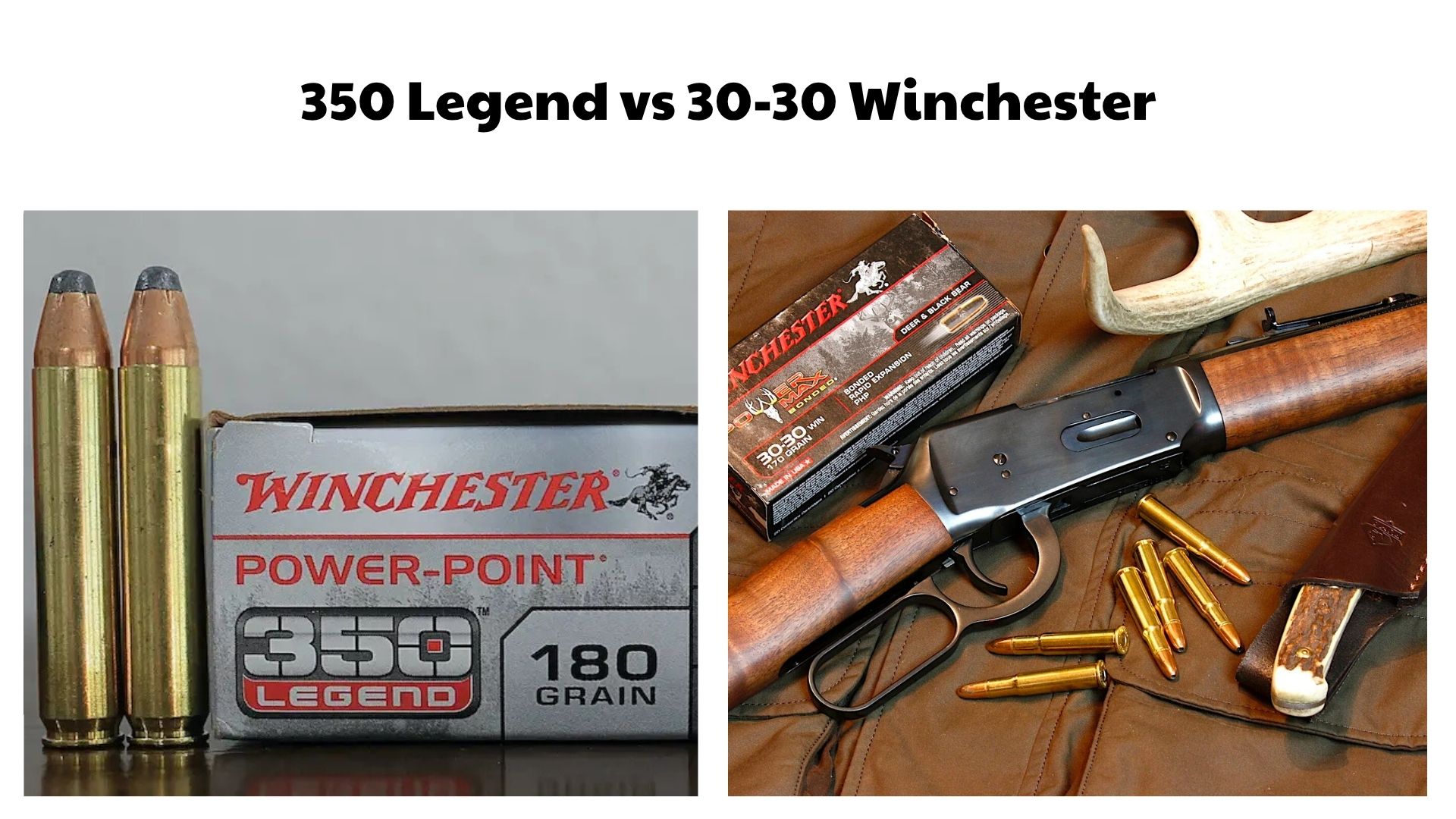

The debate of 350 Legend vs 30-30 Winchester has become one of the most talked-about topics among modern hunters, especially in North America where hunting regulations and firearm preferences continue to evolve. Both cartridges are widely used for deer hunting, but they represent two very different eras of firearm development. The .30-30 Winchester carries over a century of hunting tradition, while the .350 Legend is a modern innovation designed specifically for today’s legal and practical hunting needs. Understanding how these two cartridges compare helps hunters make smarter decisions based on terrain, regulations, recoil preference, and firearm platforms.
At a glance, the .30-30 Winchester is often associated with classic lever-action rifles and dense woodland hunting, where quick follow-up shots and reliable medium-range performance matter most. In contrast, the .350 Legend was introduced as a straight-wall cartridge optimized for modern sporting rifles like the AR-15 platform. This alone makes the comparison interesting, as it reflects a shift from traditional hunting setups to more flexible, modular systems that appeal to both new and experienced shooters.
This comparison is not just about ballistics or power. It is also about how hunting culture itself is changing. Many states in the United States have introduced straight-wall cartridge regulations to improve safety and control in densely populated hunting areas. This regulatory shift has directly influenced the popularity of the .350 Legend, positioning it as a compliant and efficient alternative to older bottleneck cartridges like the .30-30 Winchester. As a result, hunters now find themselves choosing between tradition and modernization when selecting their ideal deer hunting round.
The rise of the 350 Legend has been rapid since its introduction by Winchester in 2019. It was designed to fill a very specific gap: a low-recoil, high-efficiency cartridge that performs well within 200–250 yards while complying with straight-wall hunting laws. On the other hand, the 30-30 Winchester, introduced in 1895, has earned its reputation through more than a century of field use. It has taken countless deer across forests, hills, and brush-heavy environments, proving itself as one of the most reliable hunting cartridges ever made.
Because of these differences, the comparison between 350 Legend vs 30-30 Winchester is especially relevant for hunters who are deciding between a modern lightweight AR-style rifle and a traditional lever-action firearm. Each cartridge offers distinct advantages depending on the hunting style. For example, hunters who frequently shoot in thick brush or wooded areas often appreciate the quick handling and proven performance of the .30-30. Meanwhile, those who prioritize low recoil, ease of shooting, and compliance with straight-wall laws often lean toward the .350 Legend.
Use cases also play a major role in this discussion. Both cartridges are widely used for deer hunting, which remains their primary application. However, their effectiveness can vary depending on range and terrain. In dense brush hunting environments, where shots are typically short and fast, the .30-30 Winchester has historically dominated due to its proven terminal performance and lever-action speed. Meanwhile, the .350 Legend performs exceptionally well in similar conditions but adds the benefit of reduced recoil, making it more comfortable for extended shooting sessions and newer hunters.
Another key factor is the growing number of states that enforce straight-wall cartridge regulations. These rules are designed to limit long-range rifle use in certain hunting zones, improving safety in populated or flat regions. The .350 Legend was essentially built to meet these legal requirements, giving hunters a modern alternative that still delivers ethical and effective deer harvesting capability. The .30-30 Winchester, while still legal in most areas, does not always fit these newer regulatory frameworks as cleanly as the .350 Legend.
In summary, the comparison between 350 Legend vs 30-30 Winchester is more than a technical evaluation—it is a reflection of how hunting continues to evolve. One cartridge represents tradition, heritage, and proven field performance over generations. The other represents innovation, adaptability, and regulatory compliance for modern hunters. Throughout this article, we will break down each aspect in detail, helping you understand not just which cartridge is “better,” but which one is better for your specific hunting style and environment.
History of 30-30 Winchester
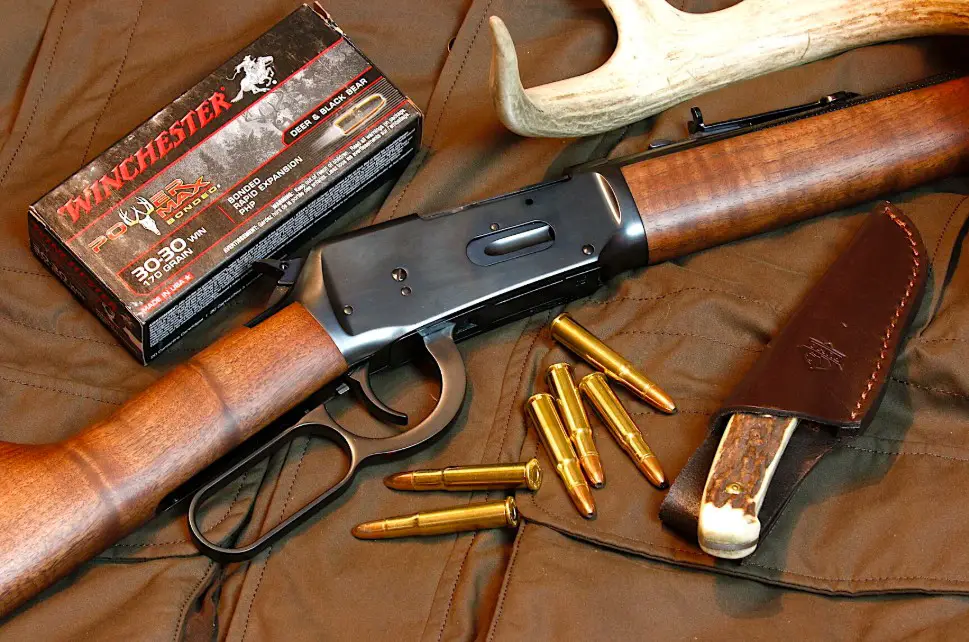
The .30-30 Winchester is one of the most iconic hunting cartridges ever created, and its history plays a huge role in why it is still widely discussed in modern comparisons like 350 Legend vs 30-30 Winchester. Introduced in 1895 by Winchester Repeating Arms Company, the .30-30—originally named the .30 WCF (Winchester Center Fire)—marked a major turning point in firearm development. It was one of the first commercially successful smokeless powder cartridges designed specifically for hunting rifles, and it quickly changed how hunters approached medium-game hunting in North America.
Before the arrival of smokeless powder cartridges like the .30-30 Winchester, most hunters relied on black powder ammunition. These older rounds produced heavy smoke, lower velocities, and inconsistent performance in the field. The introduction of the .30-30 Winchester represented a technological leap forward. It offered cleaner burning powder, higher velocity, flatter trajectory, and more reliable terminal performance on game such as deer. For late 19th-century hunters, this was a game-changer. Suddenly, hunting at longer distances became more practical and effective.
One of the most important reasons for the success of the .30-30 Winchester was its deep association with lever-action rifles. The cartridge was designed to work perfectly with rifles like the Winchester Model 1894, which became one of the most popular hunting rifles in American history. The combination of a lightweight, fast-handling lever-action rifle and a reliable medium-power cartridge created an ideal setup for hunters moving through dense forests and brush-heavy terrain. This pairing quickly became the standard for deer hunting across North America.
Over time, other manufacturers such as Marlin also adopted the .30-30 Winchester, producing lever-action rifles that further expanded its popularity. The Marlin 336, for example, became one of the most widely used hunting rifles chambered in .30-30 Winchester. These rifles were simple, durable, and highly effective in real hunting conditions. Because of this, the cartridge became closely tied to the image of the American deer hunter, especially in rural and wooded regions.
The dominance of the .30-30 Winchester in lever-action platforms is one of the key reasons it has remained relevant for more than a century. Even as newer cartridges have been introduced, the .30-30 continues to be favored for its balance of manageable recoil, adequate power, and reliable performance at typical hunting distances. Most hunters using this cartridge operate within a practical range of 100 to 200 yards, where it performs consistently and ethically on deer-sized game.
Another important aspect of its legacy is its role in shaping hunting culture in North America. For generations, the .30-30 Winchester was often a hunter’s first rifle cartridge. Fathers passed it down to sons, and it became a symbol of tradition and practical fieldcraft. It was not the most powerful or the fastest cartridge, but it was dependable. That reliability earned it a reputation that few other cartridges have been able to match.
Even in modern discussions such as 350 Legend vs 30-30 Winchester, the .30-30’s historical importance cannot be ignored. While newer cartridges like the .350 Legend offer modern advantages such as lower recoil and AR-platform compatibility, the .30-30 still holds a strong position due to its long-standing field performance. Many hunters continue to trust it because it has proven itself in real-world conditions for more than 125 years.
In summary, the .30-30 Winchester is not just a cartridge—it is a piece of hunting history. From its introduction in 1895 to its dominance in lever-action rifles and its lasting reputation as a reliable deer hunting round, it has earned its place as a classic. Its legacy continues to influence cartridge development today, and it remains a benchmark against which modern rounds like the .350 Legend are measured.
History of .350 Legend
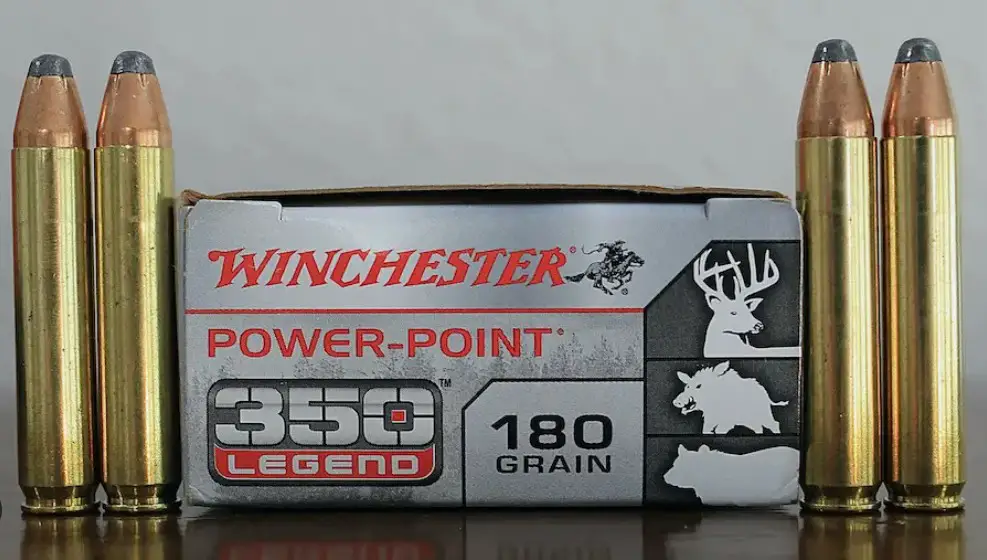
The .350 Legend is one of the newest additions to the modern hunting cartridge lineup, and its development is closely tied to changing hunting regulations and evolving firearm platforms. Introduced by Winchester in 2019, the cartridge was designed with a very specific purpose in mind: to provide a high-performance, low-recoil, straight-wall hunting round that could meet legal requirements in several U.S. states while still offering practical effectiveness on deer-sized game. In the broader comparison of 350 Legend vs 30-30 Winchester, the .350 Legend represents the modern side of the equation—built for compliance, versatility, and ease of use.
The introduction of the .350 Legend was not accidental. It was a direct response to the growing number of states implementing straight-wall cartridge regulations for deer hunting. States such as Ohio, Indiana, and Michigan began restricting or limiting the use of traditional bottleneck rifle cartridges in certain hunting zones. These regulations were designed to improve safety in densely populated or flat regions where long-range rifle fire could pose risks. Hunters still needed an effective deer cartridge, but one that complied with these new legal frameworks. Winchester saw this gap and engineered the .350 Legend to fill it.
Unlike traditional hunting cartridges that evolved over decades of field use, the .350 Legend was purpose-built from the ground up. One of its most important design goals was compatibility with the AR-15 platform. This was a significant innovation because it allowed hunters to use a modern, lightweight, and highly customizable rifle system without needing to switch to a traditional bolt-action or lever-action firearm. By using a modified AR-15 upper receiver and standard magazines (with slight adjustments), hunters gained access to a familiar platform while staying within legal hunting requirements.
This AR-15 compatibility is one of the key reasons the .350 Legend gained popularity so quickly after its release. Many hunters already owned AR-style rifles chambered in .223 Remington/5.56 NATO but needed a legal alternative for deer hunting in straight-wall states. The .350 Legend provided a simple solution: it allowed users to convert their existing rifles with minimal changes, creating an affordable entry point into legal deer hunting without purchasing an entirely new firearm system.
Another major focus in the design of the .350 Legend was recoil reduction. Winchester engineered the cartridge to produce significantly lower recoil compared to traditional medium-power deer cartridges like the .30-30 Winchester or .308 Winchester. This makes it especially appealing to new hunters, youth shooters, and anyone sensitive to recoil. In practical field conditions, this low recoil helps improve shot placement, follow-up accuracy, and overall shooting confidence—especially during longer hunting sessions.
Affordability was also a core design consideration. The .350 Legend uses relatively inexpensive components and is widely produced, which helps keep ammunition costs lower than many traditional hunting cartridges. For hunters who spend multiple days in the field or practice regularly at the range, this cost efficiency makes a meaningful difference. Over time, the availability of factory loads from multiple manufacturers has helped stabilize prices and improve accessibility.
In addition to performance and cost, compliance played a central role in the cartridge’s development. The .350 Legend was specifically engineered to meet straight-wall cartridge legal definitions in states where hunting regulations restrict bottleneck designs. This means it fits neatly into a regulatory niche that continues to expand across the United States. As more states consider or adopt similar rules, the relevance of the .350 Legend continues to grow, strengthening its position in modern hunting discussions.
When comparing 350 Legend vs 30-30 Winchester, it becomes clear that the .350 Legend is not trying to replace traditional cartridges but rather to adapt to new hunting environments. While the .30-30 Winchester carries a long legacy rooted in lever-action hunting history, the .350 Legend represents a modern solution for regulatory compliance, platform flexibility, and shooter comfort. Its rapid adoption since 2019 shows how quickly the hunting industry can evolve when practical needs align with smart cartridge design.
In summary, the .350 Legend is a modern hunting cartridge created to meet very specific demands: straight-wall legality, AR-platform compatibility, low recoil, and affordability. It is not a century-old classic like the .30-30 Winchester, but it has quickly established itself as a practical and widely accepted option for today’s hunters, especially in regulated hunting states. Its history is still being written, but its impact on modern deer hunting is already significant.
Cartridge Design Differences
When comparing 350 Legend vs 30-30 Winchester, one of the most important aspects to understand is how fundamentally different these two cartridges are in their design. While both are intended for deer hunting and similar medium-game applications, their internal structures, bullet dimensions, and pressure characteristics reflect very different engineering goals. The .30-30 Winchester is a traditional bottleneck cartridge developed in the late 19th century, while the .350 Legend is a modern straight-walled cartridge designed specifically for regulatory compliance and AR-platform compatibility. These design choices directly influence how each cartridge performs in the field.
Case Type (Bottleneck vs Straight-Walled)
One of the most noticeable differences in the 350 Legend vs 30-30 Winchester comparison is the case design. The .30-30 Winchester uses a bottleneck case, meaning the cartridge body tapers down toward the neck where the bullet is seated. This design has been widely used in rifle cartridges for over a century because it allows for efficient powder burning and reliable feeding in lever-action rifles. The bottleneck shape helps guide the cartridge smoothly into the chamber and often contributes to better ballistic efficiency compared to straight-wall designs.
In contrast, the .350 Legend uses a straight-walled case. This means the cartridge maintains a nearly uniform diameter from base to mouth, without the tapered neck seen in bottleneck designs. The straight-wall configuration is not just a design preference—it is a regulatory necessity in many hunting states. Several U.S. states require straight-wall cartridges for deer hunting in certain zones to limit long-range capability and improve safety in densely populated or open terrain regions. Because of this, the .350 Legend was intentionally engineered around this constraint while still maintaining strong hunting performance.
From a practical standpoint, the bottleneck design of the .30-30 Winchester generally allows for more efficient powder combustion and slightly better ballistic performance at range. However, the straight-wall design of the .350 Legend offers simplicity, reduced case complexity, and compliance advantages that make it ideal for modern regulated hunting environments.
Bullet Diameter & Weight
Another key difference in the 350 Legend vs 30-30 Winchester comparison is bullet diameter. The .30-30 Winchester uses .308 caliber bullets, which are among the most common rifle bullet diameters in the world. This gives hunters access to a wide variety of bullet types, including soft points, flat noses, and modern expanding designs tailored for medium game hunting. Bullet weights for the .30-30 typically range from 150 to 170 grains, with some variations depending on manufacturer and load purpose.
The .350 Legend, on the other hand, uses .357 caliber bullets, which are slightly larger in diameter. This larger bullet diameter can contribute to a wider wound channel at shorter ranges, which is often desirable in deer hunting scenarios. Typical bullet weights for the .350 Legend range from 145 to 180 grains, with many factory loads optimized around the 150–170 grain range for balanced performance. The larger diameter also helps the cartridge perform well within its intended effective range of approximately 200–250 yards.
While the .308 bullets of the .30-30 Winchester may offer slightly better aerodynamic efficiency in some load configurations, the .357 bullets of the .350 Legend are designed to maximize energy transfer at closer ranges. This makes both cartridges effective, but optimized for slightly different performance priorities.
Case Capacity & Pressure
Case capacity and chamber pressure are two additional factors that significantly influence the performance differences in the 350 Legend vs 30-30 Winchester debate. The .30-30 Winchester, with its bottleneck design, generally offers a more efficient powder burn and slightly higher usable case capacity for its size. This allows it to achieve respectable velocities, often in the range of 2,200 to 2,400 feet per second depending on barrel length and load.
The .350 Legend has a different design philosophy. Although it is a straight-walled cartridge with a more limited internal powder capacity compared to many bottleneck rifle rounds, it operates at relatively high pressure for its class. This helps it achieve competitive velocities—typically around 2,100 to 2,300 feet per second with common hunting loads. While it may not exceed the .30-30 in raw ballistic efficiency, it performs very effectively within its intended range and regulatory framework.
The differences in case capacity and pressure directly influence velocity and energy. The .30-30 Winchester often maintains a slight edge in retained energy at extended ranges due to its ballistic efficiency and established load development history. However, the .350 Legend is optimized for consistent performance within shorter ranges, where its energy transfer and recoil characteristics become more important than long-distance ballistic performance.
In real hunting conditions, these design differences translate into two distinct approaches. The .30-30 Winchester prioritizes traditional efficiency and proven field performance in lever-action systems, while the .350 Legend emphasizes regulatory compliance, recoil control, and modern firearm compatibility. Neither design is inherently superior; instead, each reflects a different set of priorities shaped by its era of development.
Ultimately, understanding these cartridge design differences helps explain why the 350 Legend vs 30-30 Winchester comparison remains relevant. One cartridge evolved from more than a century of field use, while the other was engineered specifically for modern legal and practical hunting demands. These design choices define not only how each cartridge performs, but also how and where it is best used in the field.
Ballistics Comparison
In any discussion of 350 Legend vs 30-30 Winchester, ballistic performance is one of the most important factors hunters evaluate. Ballistics determine how a cartridge behaves in real-world conditions—how fast it travels, how much energy it retains, how flat it shoots, and how far it remains ethically effective for hunting. While both cartridges are designed for deer hunting at short to medium ranges, they achieve their performance in slightly different ways due to their case design, pressure characteristics, and bullet profiles.
Overall, the .30-30 Winchester has a long-established ballistic profile developed over more than a century of field use. The .350 Legend, on the other hand, is a modern cartridge optimized for straight-wall compliance and AR-platform performance. These design philosophies influence every aspect of their ballistic behavior.
Velocity
When comparing velocity in the 350 Legend vs 30-30 Winchester matchup, the .30-30 Winchester generally maintains a slight advantage when using similar bullet weights. Typical .30-30 loads with 150 to 170 grain bullets can achieve velocities in the range of approximately 2,200 to 2,400 feet per second, depending on barrel length and ammunition type. This higher velocity is largely due to its bottleneck case design, which allows for more efficient powder combustion and energy transfer.
The .350 Legend, while still very capable, is designed with a different goal in mind. It typically produces velocities in the range of 2,100 to 2,300 feet per second with common hunting loads. Instead of maximizing raw speed, the cartridge is optimized for consistent, moderate velocity performance that aligns with straight-wall regulations and AR-15 platform compatibility. This design ensures reliable performance without excessive recoil or over-penetration at short ranges.
In practical hunting terms, the velocity difference between the two cartridges is noticeable on paper but less dramatic in the field, especially within typical deer hunting distances under 200 yards.
Energy Output
Energy output is another key factor in the 350 Legend vs 30-30 Winchester comparison. The .30-30 Winchester often delivers slightly higher retained energy, especially at mid-range distances. This is due to its combination of higher velocity and established bullet designs that have been refined for hunting performance over decades. At closer ranges, both cartridges deliver sufficient energy for ethical deer harvesting, but the .30-30 tends to maintain a small advantage as distance increases.
The .350 Legend, however, is highly efficient within its intended range. It is designed to deliver strong terminal performance within approximately 200 to 250 yards, making it well-suited for most deer hunting scenarios in wooded or semi-open environments. Its larger bullet diameter (.357 caliber) also helps compensate for slightly lower energy retention by improving energy transfer on impact.
In real-world hunting conditions, both cartridges are fully capable of cleanly harvesting deer when used within their effective ranges. The difference lies more in energy retention at distance rather than effectiveness at typical hunting ranges.
Trajectory
Trajectory is where differences between the two cartridges become more noticeable in the 350 Legend vs 30-30 Winchester discussion. The .30-30 Winchester generally offers a slightly flatter trajectory at moderate ranges compared to the .350 Legend. This is again a result of its higher velocity and well-developed bullet profiles that have been optimized for decades of field use.
The .350 Legend, while still relatively flat-shooting within 150–200 yards, begins to show more noticeable bullet drop beyond that distance. This is expected for a straight-wall cartridge operating at moderate velocity. Hunters using the .350 Legend often compensate by zeroing their rifles at shorter ranges and focusing on shot placement within its optimal performance window.
In practical terms, both cartridges require some level of range awareness. The .30-30 may offer a slight advantage in trajectory, but neither cartridge is designed for long-range shooting. They are both intended for controlled, ethical hunting distances where shot placement matters more than ballistic perfection.
Effective Range
When evaluating effective range in the 350 Legend vs 30-30 Winchester comparison, both cartridges are remarkably similar in their real-world hunting applications. They are primarily designed for short-to-medium range hunting, making them ideal for deer hunting in forests, brush, and mixed terrain environments.
The practical effective range for both cartridges is generally considered to be around 200 to 250 yards. Within this range, both the .30-30 Winchester and the .350 Legend deliver sufficient energy, accuracy, and terminal performance for ethical deer harvesting. Beyond this distance, bullet drop, wind drift, and energy loss begin to reduce effectiveness, making precise shot placement more challenging.
The .30-30 Winchester may extend slightly beyond this range in the hands of an experienced shooter with proper optics and load selection, but it is still fundamentally a medium-range cartridge. Similarly, the .350 Legend performs best when kept within its designed envelope, where it offers excellent control, low recoil, and consistent terminal results.
In summary, the ballistic comparison between 350 Legend vs 30-30 Winchester shows two cartridges that are closely matched in practical hunting scenarios but optimized differently. The .30-30 leans toward traditional efficiency and slightly stronger long-range ballistics, while the .350 Legend focuses on consistent performance, recoil reduction, and regulatory compliance. Both are highly effective within their intended hunting ranges, and neither is designed for long-distance shooting beyond typical deer hunting environments.
Recoil Comparison
In the ongoing discussion of 350 Legend vs 30-30 Winchester, recoil is one of the most practical factors that directly affects shooter comfort, accuracy, and overall hunting experience. While ballistics and energy are often the focus of technical comparisons, recoil determines how controllable a rifle feels in real hunting situations. This is especially important for new shooters, youth hunters, and anyone who values quick follow-up shots in the field.
The difference between these two cartridges becomes clear as soon as they are fired. The .350 Legend was specifically designed to be a low-recoil hunting cartridge, while the .30-30 Winchester, despite being manageable, produces noticeably more recoil due to its higher pressure and traditional bottleneck design. This difference influences not only comfort but also shooting confidence and accuracy under field conditions.
The .350 Legend typically generates recoil energy in the range of approximately 8 to 9 foot-pounds when fired from a lightweight AR-15 platform. This is considered very mild for a centerfire rifle cartridge designed for deer hunting. Many shooters describe it as similar to a heavy .223 Remington or even less punishing than some shotgun loads. This low recoil is one of the primary reasons the cartridge has gained popularity among beginners and youth hunters.
In contrast, the .30-30 Winchester generally produces recoil energy in the range of approximately 12 to 15 foot-pounds, depending on rifle weight and load selection. While this is still considered moderate and manageable for most adult shooters, it is noticeably sharper than the .350 Legend. In traditional lever-action rifles, which are often lighter and have less recoil absorption, the felt recoil can be even more pronounced.
This difference in recoil is not just a matter of comfort—it directly impacts shooting performance in the field. Lower recoil allows shooters to maintain better target acquisition after each shot. With the .350 Legend, many hunters find it easier to stay on target and make quick follow-up shots if needed. This can be especially useful in dense hunting environments where deer may move quickly and second shots must be taken without delay.
The .30-30 Winchester, while slightly more demanding in terms of recoil control, is still widely regarded as a shooter-friendly cartridge compared to many other traditional deer hunting rounds. Experienced hunters often have no difficulty managing it effectively, especially in heavier lever-action rifles that help absorb some of the recoil impulse. However, for smaller-framed shooters or those new to centerfire rifles, the added recoil can influence shooting confidence over time.
Another important factor is how recoil affects training and practice. Because the .350 Legend produces less recoil and noise, shooters are often more willing to practice frequently with it. This leads to improved accuracy and better familiarity with their rifle system. In contrast, higher recoil cartridges like the .30-30 may discourage extended range sessions for some shooters, especially beginners, due to increased fatigue over time.
In summary, the recoil comparison in 350 Legend vs 30-30 Winchester clearly favors the .350 Legend for comfort and accessibility. Its low recoil design makes it an excellent choice for new hunters, youth shooters, and anyone prioritizing ease of use. The .30-30 Winchester, while slightly more powerful in terms of recoil, remains well within manageable limits for most experienced hunters and continues to be widely used in traditional hunting environments.
Ultimately, recoil does not determine effectiveness in isolation. Both cartridges are fully capable of ethically harvesting deer when used correctly. However, reduced recoil often translates into better shooting consistency, which is why many modern hunters appreciate the .350 Legend’s design philosophy. It prioritizes control and confidence, especially in fast-paced or close-range hunting situations.
Accuracy and Hunting Performance
When evaluating 350 Legend vs 30-30 Winchester, accuracy and overall hunting performance are just as important as raw ballistic numbers or recoil levels. In real hunting scenarios, what matters most is not theoretical performance, but how consistently a cartridge allows a hunter to place ethical, well-placed shots on game. Both the .350 Legend and .30-30 Winchester are widely respected for their effectiveness within typical deer hunting ranges, but they achieve their accuracy and performance in different ways.
The .30-30 Winchester has a long-standing reputation for practical field accuracy, especially in lever-action rifles. These rifles are typically used in dense brush, wooded areas, and short to medium-range hunting environments. The cartridge itself is not designed for extreme precision at long distances, but within its intended range—usually up to 200 yards—it delivers reliable and repeatable accuracy. Over more than a century of use, hunters have refined load choices and shooting techniques that make the .30-30 a dependable performer in real-world conditions.
One of the strengths of the .30-30 Winchester is its performance in brush-heavy environments. While no cartridge is truly “brush-busting,” the combination of moderate velocity and heavier flat-nose bullets gives hunters confidence in tight terrain. Lever-action rifles chambered in .30-30 are also known for their fast handling, which contributes to quick target acquisition and effective shooting in dynamic hunting situations. This makes the cartridge particularly well-suited for traditional deer hunting in forests and thickets.
On the other hand, the .350 Legend brings a different kind of accuracy advantage, especially when paired with modern AR-15 platforms. These rifles often feature improved optics mounting options, more consistent triggers, and greater modularity compared to traditional lever-action systems. As a result, shooters can achieve very consistent groupings within the cartridge’s effective range. The .350 Legend is designed to be inherently forgiving, meaning it performs well even in lightweight rifles and simple hunting setups.
Another key advantage of the .350 Legend is its low recoil, which directly contributes to improved practical accuracy. When recoil is reduced, shooters are less likely to flinch or lose sight picture between shots. This allows for better shot placement, especially in situations where a quick follow-up shot is required. In field conditions, this can make a significant difference in overall hunting success.
The .350 Legend is also highly effective in straight-wall cartridge states where hunters often operate in controlled range environments. Within its intended 200–250 yard range, it delivers consistent accuracy and reliable terminal performance. Many hunters find it particularly easy to zero and maintain accuracy due to its moderate trajectory and predictable behavior.
When comparing overall hunting performance in 350 Legend vs 30-30 Winchester, both cartridges excel in similar environments but appeal to different shooter preferences. The .30-30 Winchester continues to shine in traditional lever-action hunting scenarios, especially where quick handling and proven field performance are valued. Meanwhile, the .350 Legend stands out in modern hunting setups where low recoil, platform versatility, and ease of shooting are top priorities.
In real-world use, neither cartridge can be considered inaccurate within its intended range. Instead, their differences come down to platform compatibility, shooter comfort, and how well they match the hunting environment. The .30-30 rewards experienced hunters who appreciate classic lever-action performance, while the .350 Legend provides a more accessible and modern shooting experience that helps newer hunters build confidence quickly.
In conclusion, both cartridges deliver strong and reliable hunting performance when used appropriately. The .30-30 Winchester excels in traditional brush hunting with proven lever-action accuracy, while the .350 Legend offers modern consistency, low recoil control, and excellent usability in AR-platform rifles. Choosing between them depends less on raw accuracy potential and more on how the shooter intends to use the rifle in real hunting conditions.
Terminal Ballistics (Stopping Power)
When comparing 350 Legend vs 30-30 Winchester, terminal ballistics is where many hunters focus their attention. This aspect of performance is often referred to as “stopping power,” but in practical hunting terms, it really comes down to how a bullet behaves after impact—how it expands, how deeply it penetrates, and how effectively it transfers energy into the target. Both cartridges are designed for deer hunting, and both are fully capable of ethical harvests when used within their effective ranges. However, their terminal behavior shows some important differences worth understanding.
The .30-30 Winchester has a long history of proven field performance, and its terminal ballistics have been refined over more than a century. The .350 Legend, while much newer, was engineered with modern bullet technology in mind, focusing on consistent expansion and compliance with straight-wall hunting regulations. These differences in design philosophy influence how each cartridge performs on game.
Expansion and Penetration Differences
In the 350 Legend vs 30-30 Winchester comparison, bullet expansion and penetration are two of the most important factors affecting real-world hunting performance. The .30-30 Winchester typically uses .308 caliber bullets with flat-nose or soft-point designs that are optimized for controlled expansion and reliable penetration. Because of its slightly higher velocity and long-established bullet designs, the .30-30 often achieves consistent penetration through deer-sized game, even when encountering bone or angled shots.
Many traditional .30-30 loads are engineered to balance expansion and penetration carefully. The result is a bullet that opens reliably but still retains enough mass to reach vital organs. This is one of the reasons the .30-30 has remained a trusted deer cartridge for over 100 years. In many hunting scenarios, especially at moderate ranges, it delivers deep, effective wound channels with predictable performance.
The .350 Legend, on the other hand, uses .357 caliber bullets, which are slightly larger in diameter. This increased diameter tends to create a wider initial wound channel, especially at close to moderate ranges. In practical terms, this can lead to strong energy transfer upon impact, which is highly effective for quick, ethical kills on deer-sized game. However, because the cartridge operates at moderate velocity compared to many bottleneck rifle rounds, its penetration characteristics can vary depending on bullet design and shot placement.
Overall, the .30-30 Winchester is often regarded as having a slight edge in deep penetration consistency, while the .350 Legend tends to emphasize broader energy transfer at closer ranges. Both approaches are effective, but they reflect different engineering priorities: one focused on long-proven balance, and the other on modern straight-wall optimization.
Ethical Deer Hunting Effectiveness of Both
From an ethical hunting standpoint, both cartridges in the 350 Legend vs 30-30 Winchester discussion are fully capable of cleanly and humanely harvesting deer when used correctly. Ethical effectiveness depends less on raw power and more on shot placement, range discipline, and bullet performance within the cartridge’s intended envelope.
The .30-30 Winchester has been used successfully for generations in ethical deer hunting. Its controlled expansion and reliable penetration make it a dependable choice in forested environments and brush-heavy terrain. Hunters who use the .30-30 typically understand its limitations and operate within moderate distances, ensuring consistent and ethical outcomes in the field.
The .350 Legend was specifically designed with modern ethical hunting requirements in mind. Its low recoil allows for improved shot control, which can directly contribute to better accuracy and more precise shot placement. Its bullet design ensures reliable expansion within its effective range, making it highly suitable for deer hunting in straight-wall cartridge zones. For many hunters, especially newer shooters, this combination of control and effectiveness improves overall confidence in the field.
In practice, both cartridges perform ethically and effectively within 200–250 yards. The differences lie in how they achieve that effectiveness rather than whether they are capable of it. The .30-30 relies on traditional bullet construction and proven field history, while the .350 Legend leverages modern design and regulatory optimization.
Wind Drift & Ballistic Coefficient
Another important factor in the 350 Legend vs 30-30 Winchester comparison is how each cartridge handles wind drift and ballistic coefficient. These elements influence how a bullet behaves in flight, particularly at longer distances. While neither cartridge is designed for long-range shooting, understanding their aerodynamic characteristics helps explain their performance in real hunting conditions.
30-30: Slightly Better Ballistic Coefficient Overall
The .30-30 Winchester generally has a slightly better ballistic coefficient compared to the .350 Legend. This is largely due to its bottleneck case design and long history of optimized bullet development. Many .30-30 bullets are shaped to reduce drag more effectively, allowing them to retain velocity a bit better over distance. While the differences are not dramatic, they can become noticeable at the upper end of the cartridge’s effective range.
This slightly improved ballistic efficiency means the .30-30 Winchester tends to experience less wind drift under similar conditions. In practical terms, this can translate into more predictable bullet placement at moderate hunting distances, especially when shooting in open areas where wind conditions are variable.
350 Legend: More Wind Drift at Longer Range
The .350 Legend, while effective and consistent within its intended range, generally experiences more wind drift at longer distances. This is partly due to its straight-wall design and relatively simple bullet profiles, which prioritize compliance and close-range effectiveness over long-range aerodynamic efficiency.
As distance increases beyond 150–200 yards, the .350 Legend’s larger diameter and moderate velocity make it more susceptible to environmental factors such as crosswinds. This does not significantly impact its performance within its optimal range, but it does reinforce the importance of keeping shots within ethical hunting distances.
Real-World Hunting Implications
In real-world hunting conditions, the differences in wind drift and ballistic coefficient between the two cartridges are most relevant in open terrain. In forested or brush-heavy environments—where both cartridges are most commonly used—wind effects are typically minimal due to shorter shooting distances and natural cover.
For the .30-30 Winchester, the slightly better aerodynamic profile provides a small advantage in maintaining trajectory stability in light to moderate wind conditions. For the .350 Legend, hunters are encouraged to stay within its optimal range window and practice good range estimation to ensure ethical shot placement.
Ultimately, in the 350 Legend vs 30-30 Winchester comparison, both cartridges perform best when used within their intended hunting ranges. The .30-30 offers a slight edge in aerodynamic efficiency and wind resistance, while the .350 Legend prioritizes simplicity, compliance, and close-range consistency. For most hunters, especially in typical deer hunting environments, these differences are secondary to shot placement and field discipline.
Rifle Platforms & Compatibility
In the comparison of 350 Legend vs 30-30 Winchester, rifle platform compatibility is one of the most practical factors influencing a hunter’s choice. Even if two cartridges perform similarly in the field, the type of rifle they require—and how that rifle handles—can significantly affect comfort, usability, and overall shooting experience. The .30-30 Winchester and .350 Legend are almost opposites in this category, reflecting the difference between traditional lever-action design and modern modular rifle systems.
The .30-30 Winchester has been inseparable from lever-action rifles since its introduction in the late 19th century. Classic rifles such as the Winchester Model 1894 and Marlin 336 are among the most iconic hunting firearms ever made, and both are commonly chambered in .30-30. These rifles are known for their fast cycling action, compact design, and reliability in dense hunting environments. For many hunters, the lever-action platform is not just a tool—it is part of the hunting tradition itself.
Lever-action rifles chambered in .30-30 are especially well-suited for brush hunting and wooded terrain. Their slim profile makes them easy to carry through thick vegetation, and their fast follow-up capability allows hunters to react quickly in short-range encounters. However, they are typically more limited in terms of optics mounting options and modern customization compared to newer rifle platforms. While side mounts and scout-style optics exist, they are not as flexible as modern rail systems.
In contrast, the .350 Legend is designed primarily for the AR-15 platform, which is one of its biggest advantages in modern hunting applications. This compatibility allows hunters to use a familiar, highly modular rifle system that supports a wide range of accessories, including optics, adjustable stocks, and upgraded triggers. For many shooters, this adaptability makes the .350 Legend far more versatile than traditional hunting rifles.
One of the key benefits of AR-15 compatibility is customization. Hunters can easily configure their rifle to match specific preferences, such as lightweight builds for long walks in the field or optics-heavy setups for precision shooting within 200–250 yards. This flexibility is a major reason why the .350 Legend has quickly gained popularity in states that allow straight-wall cartridges for deer hunting.
Another important difference in the 350 Legend vs 30-30 Winchester comparison is magazine capacity. Lever-action rifles chambered in .30-30 typically use tubular magazines with limited capacity, often around 5 to 7 rounds depending on barrel length and design. While this is sufficient for most hunting scenarios, it does place a natural limit on ammunition capacity.
The AR-15 platform used with .350 Legend offers detachable box magazines, commonly holding 5, 10, or more rounds depending on state regulations and magazine design. This allows for faster reloads and greater flexibility in the field. However, it is important to note that many hunting regulations limit magazine capacity regardless of platform, so practical differences may vary depending on location.
From a handling perspective, lever-action rifles offer a traditional, compact feel that many hunters appreciate, especially in dense terrain where quick shoulder transitions matter. The AR-15 platform, on the other hand, provides a more modern ergonomic experience with adjustable stocks, pistol grips, and improved recoil control systems. These differences make each platform appealing to different types of shooters.
Ammunition Cost & Availability
Another important consideration in the 350 Legend vs 30-30 Winchester debate is ammunition cost and availability. Even the most effective cartridge can become impractical if it is too expensive or difficult to find, especially for hunters who practice regularly or rely on consistent seasonal availability. Fortunately, both cartridges are widely available, but they differ in market maturity and pricing trends.
The .30-30 Winchester has been in production for well over a century, making it one of the most widely available hunting cartridges in North America. Nearly every major ammunition manufacturer produces .30-30 loads, and it is commonly stocked in sporting goods stores, rural retailers, and online ammunition suppliers. Its long-standing popularity ensures consistent supply, especially during hunting seasons.
Because of its established production history, .30-30 ammunition is generally stable in terms of availability, though prices can fluctuate depending on demand and regional supply. Standard hunting loads are typically affordable compared to many premium rifle cartridges, making it a practical choice for hunters who want reliable performance without excessive cost.
The .350 Legend, being a much newer cartridge introduced in 2019, has seen rapid growth in availability. Initially, it was somewhat limited in selection, but it has quickly expanded as demand increased—especially in states with straight-wall cartridge regulations. Today, most major ammunition manufacturers produce .350 Legend hunting loads, including both budget-friendly and premium options.
While the .350 Legend is still newer to the market compared to the .30-30 Winchester, its production has scaled quickly. In many regions, it is now commonly found alongside traditional hunting cartridges, particularly during deer season. However, availability can still vary more than the .30-30 in some rural or less-stocked stores.
In terms of price comparison, both cartridges are generally positioned in the mid-range category for hunting ammunition. The .30-30 Winchester often benefits from economies of scale due to its long production history, which can make it slightly more stable in pricing over time. The .350 Legend, while increasingly competitive, may sometimes be priced slightly higher or fluctuate depending on demand and production cycles.
Reloadability is another important factor. The .30-30 Winchester is a well-established cartridge among handloaders, with a wide range of reloading data, bullet types, and component availability. Its bottleneck design also makes it relatively straightforward to reload for experienced shooters.
The .350 Legend is also reloadable and has growing support among handloaders, but it is still building the same depth of component availability and load variety as more mature cartridges. As the cartridge continues to gain popularity, reloading options are expected to expand further.
Overall, in the 350 Legend vs 30-30 Winchester comparison, the .30-30 holds an advantage in long-term market maturity and consistent availability, while the .350 Legend is rapidly catching up due to strong demand and modern manufacturing support. Both cartridges remain practical choices for hunters, with cost and availability differences becoming less significant as the .350 Legend continues to establish itself in the hunting market.
Legal Hunting Considerations
One of the most important—and often overlooked—factors in the 350 Legend vs 30-30 Winchester comparison is legal compliance. Hunting laws in the United States vary significantly by state, and in many regions, cartridge selection is not just a matter of performance but also regulation. Over the past decade, several states have introduced straight-wall cartridge restrictions for deer hunting in specific zones, directly influencing the popularity of modern cartridges like the .350 Legend.
States such as Michigan, Ohio, and Indiana are well-known examples where straight-wall cartridge regulations have been implemented in certain hunting areas. These rules typically limit hunters to cartridges with straight-case designs and specific minimum and maximum caliber requirements. The goal is to improve safety in densely populated regions, reduce long-range shooting risks, and maintain ethical hunting practices in flatter terrain where bullet travel distances can be significant.
In this regulatory environment, the .350 Legend was specifically designed to meet legal requirements while still providing effective deer hunting performance. Its straight-wall case design allows it to qualify under these state laws, making it one of the most popular choices for hunters in restricted zones. Without these regulations, the cartridge likely would not have been developed in its current form, highlighting how legislation directly shaped its existence.
The .30-30 Winchester, while historically popular and widely legal in most areas, does not always fit within straight-wall cartridge regulations. Because it is a bottleneck cartridge, it is restricted in some specific hunting zones where only straight-wall cartridges are permitted. However, in many states and regions without such restrictions, the .30-30 remains fully legal and continues to be a trusted choice for deer hunters.
That said, the .30-30 Winchester still offers an advantage in areas without straight-wall rules. Hunters who are not bound by these regulations can continue to benefit from its long-standing performance history, wide ammunition availability, and proven effectiveness in traditional hunting environments. The key takeaway is that legality depends heavily on location, and understanding local regulations is essential when choosing between these two cartridges.
Use Case Scenarios
When evaluating 350 Legend vs 30-30 Winchester, it becomes clear that each cartridge excels in different real-world hunting situations. Rather than asking which cartridge is universally better, it is more practical to look at specific use cases where each one performs at its best. These scenarios help hunters match the right cartridge to their environment, experience level, and firearm platform.
Best for Brush Hunting
Advantage: 30-30 Winchester
The .30-30 Winchester has long been considered one of the best cartridges for brush hunting. Its combination of moderate velocity, heavy flat-nose bullets, and lever-action rifle platforms makes it ideal for dense woodland environments. Hunters navigating thick vegetation benefit from the fast handling and compact design of lever-action rifles chambered in .30-30, allowing for quick target acquisition at short distances.
In real-world brush hunting scenarios, shots are often fast and unpredictable. The .30-30 Winchester’s proven terminal performance and reliable expansion make it a trusted choice for these conditions, where engagements typically occur within 50 to 150 yards.
Best for Low Recoil / Beginners
Advantage: 350 Legend
The .350 Legend is clearly the better option for shooters who prioritize low recoil and ease of use. Its mild recoil characteristics make it especially suitable for beginners, youth hunters, and anyone sensitive to heavier recoil cartridges. Reduced recoil improves shooting comfort and helps build confidence, which directly contributes to better accuracy in the field.
For new hunters, this can make a significant difference. The ability to shoot comfortably during practice sessions leads to better muscle memory and more consistent shot placement during actual hunts. In this category, the .350 Legend stands out as one of the most accessible modern deer cartridges available.
Best for AR-Platform Hunters
Advantage: 350 Legend
The .350 Legend is specifically designed for compatibility with the AR-15 platform, making it the clear choice for hunters who prefer modern semi-automatic rifles. This compatibility allows for a highly customizable shooting experience, including optics upgrades, adjustable stocks, and ergonomic enhancements.
The AR-platform advantage also extends to handling and versatility. Hunters can configure their rifles for lightweight carry, precision shooting, or fast target acquisition depending on their needs. This modularity is a major reason the .350 Legend has gained rapid popularity since its introduction.
Best Traditional Lever-Action Experience
Advantage: 30-30 Winchester
For hunters who value tradition and classic firearm design, the .30-30 Winchester remains unmatched. Lever-action rifles chambered in .30-30 are deeply rooted in hunting culture and continue to offer a unique shooting experience that modern platforms cannot replicate.
The combination of smooth cycling, compact design, and historical significance makes the .30-30 Winchester the preferred choice for those who enjoy a traditional hunting experience. It represents not just a cartridge, but a connection to over a century of hunting heritage.
Pros and Cons Summary
To complete the 350 Legend vs 30-30 Winchester comparison, it is helpful to summarize the strengths and limitations of each cartridge. Both are effective hunting rounds, but they serve slightly different purposes and appeal to different types of shooters.
30-30 Winchester Pros
- Proven century-long track record in real-world hunting conditions
- Better long-term ballistic consistency due to established load development
- Excellent brush cartridge, ideal for dense woodland environments
30-30 Winchester Cons
- More recoil compared to modern low-recoil alternatives
- Limited modern platform compatibility (primarily lever-action rifles)
350 Legend Pros
- Very low recoil, ideal for beginners and youth hunters
- AR-15 platform compatibility with high customization potential
- Straight-wall legal in restricted hunting states
350 Legend Cons
- Shorter effective range compared to some traditional cartridges
- Slightly weaker ballistic performance beyond 200 yards
In summary, the 350 Legend vs 30-30 Winchester debate is not about which cartridge is universally superior, but rather which one better fits the hunter’s needs. The .30-30 Winchester excels in tradition, brush hunting, and proven field performance, while the .350 Legend stands out in modern rifle compatibility, low recoil, and regulatory compliance. Both remain highly effective deer hunting cartridges when used within their intended roles.
Conclusion
When it comes to 350 Legend vs 30-30 Winchester, the final takeaway is surprisingly simple: both cartridges are highly effective for deer hunting when used within their intended range and in the right environment. There is no clear “winner” in every category because each cartridge was built with different goals, different eras, and different hunting needs in mind. What matters most is how well each one fits your hunting style, firearm platform, and local regulations.
The .30-30 Winchester represents traditional lever-action performance at its best. It has more than a century of proven field use behind it and remains one of the most trusted deer cartridges in North America. Its strength lies in its reliability, consistent terminal performance, and excellent handling in brush-heavy environments. For hunters who appreciate classic firearms and time-tested effectiveness, the .30-30 continues to deliver exactly what it was designed to do.
On the other hand, the .350 Legend represents modern straight-wall innovation. It was purpose-built to meet today’s hunting regulations while offering low recoil, AR-15 platform compatibility, and accessible performance for newer shooters. Its design reflects a shift toward versatility and compliance without sacrificing ethical hunting capability. For many hunters in straight-wall states or those seeking a softer-shooting rifle, the .350 Legend has quickly become a practical and popular choice.
Ultimately, choosing between 350 Legend vs 30-30 Winchester should not be about which cartridge is superior in theory, but which one is better suited to your real-world needs. If you value tradition, lever-action rifles, and proven performance in dense woodland hunting, the .30-30 Winchester remains an excellent choice. If you prefer modern rifle platforms, reduced recoil, and regulatory-friendly design, the .350 Legend offers a highly effective and accessible alternative.
In the end, both cartridges serve the same purpose: ethical, effective deer hunting within practical ranges. The best choice depends on your hunting environment, experience level, and personal preference—not just ballistic numbers on paper. Understanding these differences ensures that whichever cartridge you choose, you are confident, capable, and prepared in the field.
FAQ: 350 Legend vs 30-30 Winchester
1. What is better, 350 Legend or 30-30 Winchester?
Neither is universally better. The 30-30 Winchester is better for traditional lever-action hunting, while the 350 Legend is better for modern AR-15 platforms and straight-wall regulations.
2. Is 350 Legend powerful enough for deer?
Yes, the 350 Legend is fully capable of ethically harvesting deer within 200–250 yards when proper shot placement is used.
3. Is 30-30 Winchester still good for hunting?
Yes, the 30-30 Winchester remains one of the most effective and trusted deer hunting cartridges in forested and brush environments.
4. Which has more recoil, 350 Legend or 30-30?
The 30-30 Winchester has more recoil, typically around 14 ft-lbs, while the 350 Legend is much lighter at about 8.5 ft-lbs.
5. Is 350 Legend good for beginners?
Yes, it is one of the best beginner-friendly deer cartridges due to its low recoil and easy handling.
6. Is 30-30 good for beginners?
It can be, but it has more recoil than 350 Legend, which may be less comfortable for new shooters.
7. What is the effective range of 350 Legend?
The effective hunting range is typically 200–250 yards for deer-sized game.
8. What is the effective range of 30-30 Winchester?
It is also around 200–250 yards in practical hunting conditions.
9. Which is more accurate, 350 Legend or 30-30?
Both are accurate within their intended range. 350 Legend is often easier to shoot accurately due to lower recoil.
10. Can 350 Legend be used in AR-15 rifles?
Yes, it was specifically designed for AR-15 platform compatibility.
11. Can 30-30 be used in AR-15?
No, it is primarily used in lever-action rifles.
12. Which is better for brush hunting?
The 30-30 Winchester is traditionally preferred for brush hunting due to lever-action speed and proven performance.
13. Which is better for open fields?
The 30-30 has a slight advantage in trajectory, but both are limited to medium-range hunting.
14. Is 350 Legend legal in all states?
It is legal in most states and specifically designed for straight-wall cartridge hunting regulations.
15. Is 30-30 legal everywhere?
It is legal in most states but may be restricted in some straight-wall-only hunting zones.
16. Which cartridge has better penetration?
The 30-30 Winchester generally has slightly better penetration in many hunting loads.
17. Which has better stopping power?
Both are effective, but the 30-30 is often considered slightly stronger in traditional load performance.
18. Which has better expansion?
The 350 Legend often produces wider expansion due to its larger .357 caliber bullets.
19. Is 350 Legend good for long-range shooting?
No, it is optimized for short to medium ranges, not long-distance shooting.
20. Is 30-30 good for long-range shooting?
No, it is also a medium-range cartridge best used within 200–250 yards.
21. Which is cheaper to shoot?
Prices are similar, but 30-30 can sometimes be slightly more stable due to long-term production.
22. Which ammo is easier to find?
30-30 Winchester is widely available almost everywhere in North America.
23. Is 350 Legend popular?
Yes, its popularity is growing quickly, especially in straight-wall states.
24. Is 30-30 still popular today?
Yes, it remains one of the most popular lever-action hunting cartridges.
25. Which has less recoil for youth hunters?
350 Legend is significantly better for youth shooters due to its low recoil.
26. Can 350 Legend be used for self-defense?
While possible, it is primarily designed for hunting, not defensive use.
27. Can 30-30 be used for self-defense?
It is not designed for that purpose but has historically been used in rural defense situations.
28. Which rifle is lighter?
Lever-action 30-30 rifles are often very lightweight and compact.
29. Which rifle is more modern?
350 Legend rifles in AR-15 platforms are more modern and customizable.
30. Which is better for quick follow-up shots?
350 Legend due to lower recoil and AR-15 semi-auto capability.
31. Does 350 Legend drop a lot at distance?
Yes, it has more bullet drop beyond 200 yards compared to some traditional cartridges.
32. Does 30-30 have bullet drop?
Yes, but slightly less noticeable within its effective range.
33. Which is better for deer hunting overall?
Both are excellent; the best choice depends on platform and hunting style.
34. Is 350 Legend good for thick woods?
Yes, it performs well in wooded environments within short to medium range.
35. Is 30-30 good for thick woods?
It is one of the most classic cartridges for dense brush hunting.
36. Which has better ballistics overall?
30-30 generally has slightly better long-term ballistic efficiency.
37. Which is easier to shoot accurately?
350 Legend is often easier due to lower recoil and modern rifle platforms.
38. Can I hunt elk with 350 Legend?
It is generally not recommended for elk due to limited energy compared to larger cartridges.
39. Can I hunt elk with 30-30?
It is also not ideal; both are best suited for deer-sized game.
40. Which is better for range practice?
350 Legend is more comfortable for extended practice sessions.
41. Which cartridge is newer?
350 Legend, introduced in 2019.
42. Which cartridge is older?
30-30 Winchester, introduced in 1895.
43. Does 350 Legend work in bolt-action rifles?
Yes, it is available in bolt-action configurations as well.
44. Does 30-30 work in bolt-action rifles?
It is rare, as it is mainly designed for lever-action rifles.
45. Which has better hunting tradition?
30-30 Winchester has a much longer hunting heritage.
46. Which is more modern in design?
350 Legend is the more modern, purpose-built cartridge.
47. Which is better for straight-wall states?
350 Legend is specifically designed for straight-wall regulations.
48. Can both cartridges take deer ethically?
Yes, both are fully capable of ethical deer hunting within range.
49. Which is more forgiving for new shooters?
350 Legend is more forgiving due to lower recoil and easier handling.
50. What is the main difference between 350 Legend and 30-30?
30-30 is a traditional lever-action bottleneck cartridge, while 350 Legend is a modern straight-wall AR-compatible hunting cartridge.
51. Which should I choose overall?
Choose 30-30 for tradition and lever-action hunting, or 350 Legend for modern platforms, low recoil, and regulatory compliance.
Read more: