
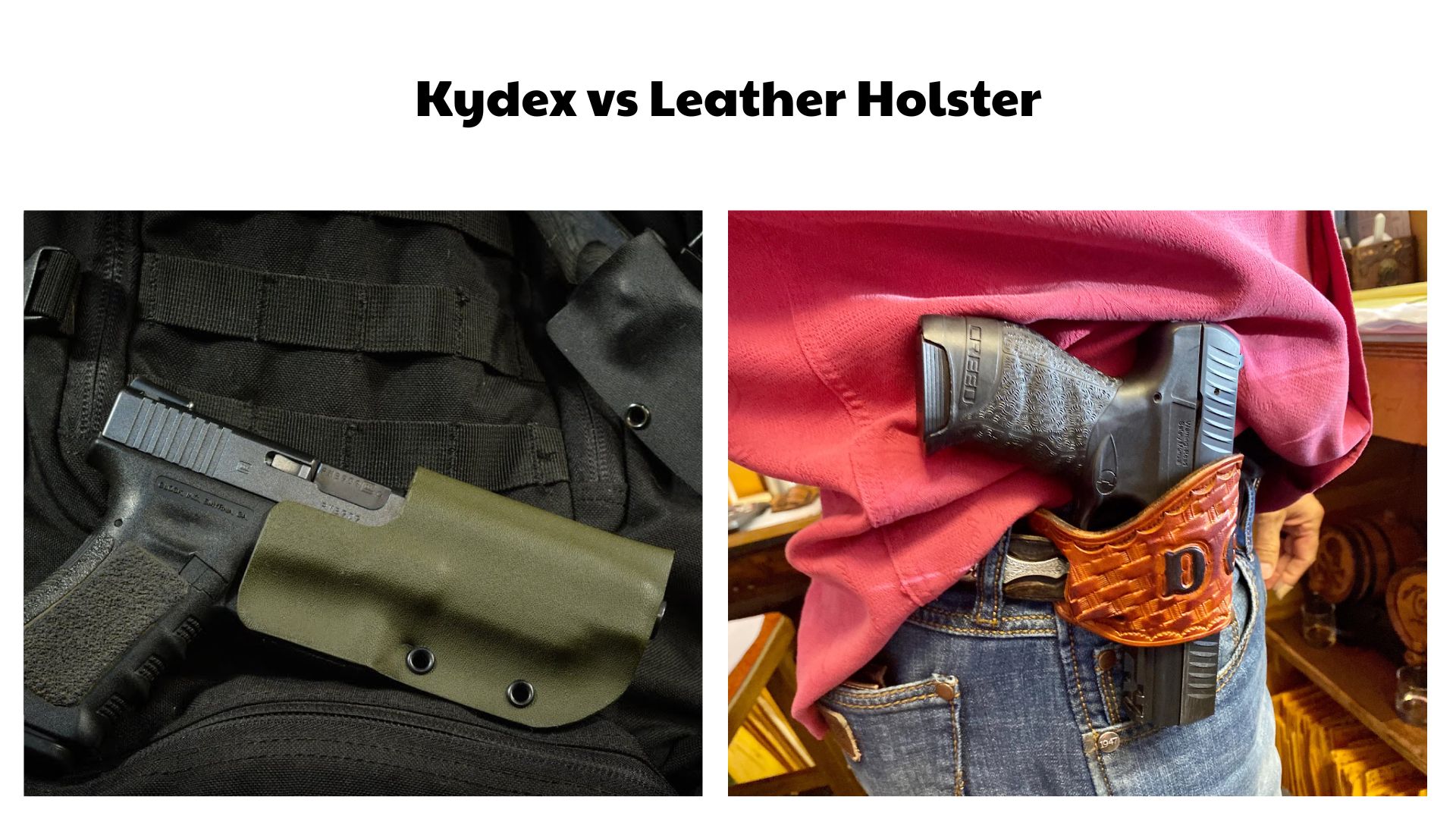

Kydex vs Leather Holster is one of the most common debates in the concealed carry world, and for good reason. The holster is not just an accessory—it is a critical safety and performance component for anyone carrying a firearm daily. The choice between materials like traditional leather and modern Kydex directly affects how securely a firearm is retained, how quickly it can be drawn, and how comfortable it feels during long hours of wear. Understanding these differences helps shooters make informed decisions based on lifestyle, carry method, and personal preference. This guide breaks down the essentials in a clear, practical way so you can understand not only what each material offers, but also why it matters in real-world concealed carry situations.
Overview of Holster Importance in Concealed Carry
A holster plays a much bigger role than simply holding a firearm. In concealed carry, it acts as the foundation of safe handling, consistent access, and responsible weapon retention. Without a properly designed holster, even the best firearm can become unsafe or difficult to manage. The primary job of any holster is to fully cover the trigger guard, preventing accidental discharge while also keeping the gun securely in place during movement.
When comparing Kydex vs Leather Holster systems, this core responsibility remains the same, but the way each material achieves it differs significantly. Kydex holsters use rigid, molded thermoplastic to create a precise fit for a specific firearm model. This results in a consistent “click” retention and predictable draw every time. Leather holsters, on the other hand, rely on friction and natural molding to the firearm over time. This creates a more flexible but less mechanically consistent retention system.
For concealed carriers, holsters also influence how discreetly a firearm can be worn. Inside-the-waistband (IWB) and outside-the-waistband (OWB) setups both depend heavily on holster design. A poorly chosen holster can lead to printing (visible firearm outline), discomfort, or even unsafe handling conditions. That is why material selection is not just about preference—it directly affects daily carry reliability.
Brief History of Leather Holsters vs Modern Kydex
Leather holsters represent the traditional side of firearm carry, with roots stretching back hundreds of years. Early holsters were handcrafted from animal hides, designed to protect firearms from weather and provide basic retention during horseback riding or military use. Over time, leather became the standard material due to its availability, flexibility, and ability to conform to different firearm shapes. Even today, leather holsters are still widely used, especially among those who value classic craftsmanship and comfort.
However, as firearm technology evolved, so did holster materials. The introduction of Kydex in the 1970s marked a major shift in holster design. Kydex is a durable thermoplastic that can be heat-molded into precise shapes. Unlike leather, it does not stretch, absorb moisture, or lose form over time. This allowed manufacturers to create highly specific holsters tailored to exact firearm models, improving retention and consistency.
The rise of modern concealed carry culture—especially defensive and tactical applications—accelerated Kydex adoption. Users began prioritizing speed, safety, and repeatability. In this context, Kydex vs Leather Holster debates became more relevant, as each material began serving slightly different user needs. Leather remained popular for comfort and aesthetics, while Kydex became the go-to for performance-driven carry.
Today, both materials coexist in the market, often even blending into hybrid designs that combine leather backing with a Kydex shell. This evolution shows that holster development is not about replacing old materials entirely, but about refining choices for different carry styles and expectations.
Why Material Choice Impacts Safety, Comfort, and Performance
The material of a holster influences three critical factors: safety, comfort, and performance. These elements are closely connected and often determine whether a holster is suitable for daily concealed carry.
Safety is the most important consideration. A holster must fully protect the trigger guard at all times. Kydex holsters excel in this area because their rigid structure prevents collapse and maintains a consistent protective shell around the firearm. Leather holsters can also be safe, but over time, repeated use may cause softening or deformation, which can reduce structural consistency if not properly maintained.
Comfort is where leather often stands out. Its natural flexibility allows it to conform to the body over time, making it more comfortable for long-duration wear, especially in OWB configurations. Kydex, while more rigid, can create pressure points during extended carry sessions, particularly in IWB setups. However, modern designs have improved comfort through rounded edges and adjustable clips.
Performance refers to draw speed, reholstering ease, and retention reliability. Kydex generally performs better in this category due to its rigid mold and predictable retention “click.” This allows users to draw and reholster the firearm consistently without resistance changes. Leather, while smooth in draw, may vary slightly depending on wear, humidity, and break-in condition.
Ultimately, choosing between Kydex vs Leather Holster is not about declaring a single winner. Instead, it is about matching material properties to your specific needs. A user prioritizing defensive readiness may lean toward Kydex, while someone focused on comfort and traditional aesthetics may prefer leather. Understanding these trade-offs is the foundation of making a smart, safe, and effective holster choice.
What Is a Kydex Holster?
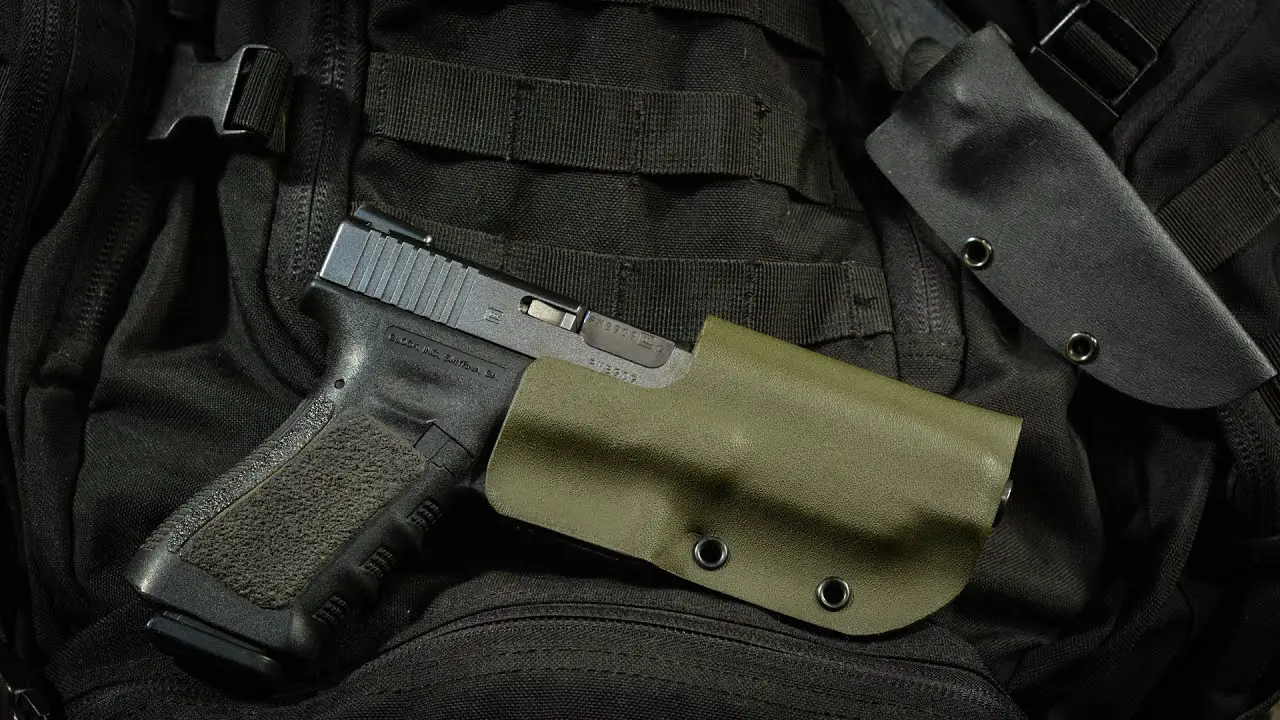
When discussing Kydex vs Leather Holster, Kydex represents the modern side of the equation. A Kydex holster is a firearm carrier made from a thermoplastic material that becomes moldable when heated and rigid when cooled. This allows manufacturers to form a precise, custom-fit shell around a specific firearm model. The result is a holster that is highly consistent, durable, and designed for predictable performance in real-world concealed carry or tactical use.
Kydex holsters have become especially popular in defensive shooting, law enforcement, and everyday concealed carry communities because they prioritize safety, retention, and repeatability. Unlike traditional materials that may change shape over time, Kydex maintains its structure even under stress, moisture, or heat exposure. This reliability is one of the key reasons it has become a dominant choice in modern holster design.
Definition and Material Composition (Thermoplastic)
Kydex is a type of thermoplastic acrylic-polyvinyl chloride (PVC) material. In simple terms, it is a durable plastic sheet that softens when heated and hardens when cooled. This property allows it to be molded with extreme precision around a firearm, creating a rigid shell that matches the exact contours of the weapon.
Once cooled, Kydex becomes extremely strong and resistant to impact, moisture, sweat, and environmental changes. It does not absorb water like leather, and it does not stretch or shrink over time. This makes it especially useful for concealed carry users who need a holster that performs consistently in different weather conditions and daily environments.
Another important feature is its low maintenance requirement. A Kydex holster does not need conditioning or special treatment. It can be wiped clean and used immediately, which is one of the reasons it is widely preferred for tactical and defensive applications.
How Kydex Holsters Are Molded
The manufacturing process of a Kydex holster is both technical and precise. First, a sheet of Kydex is heated until it becomes flexible. Then, the firearm is placed into a mold or press system, and the softened material is formed tightly around it. This ensures that every contour of the gun—slide, trigger guard, and accessory rails—is captured accurately.
Once the molding process is complete, the material is cooled and hardened. Excess material is trimmed away, edges are smoothed, and mounting hardware is installed. The final product is a rigid holster that holds the firearm in a fixed position with minimal movement.
This molding method is what gives Kydex holsters their reputation for “perfect fit.” Because each holster is designed around a specific firearm model (and sometimes even specific accessories like optics or lights), the retention level is extremely consistent. There is no need for a long break-in period, unlike leather holsters.
Rise in Popularity in Tactical and Defensive Carry
The popularity of Kydex holsters has grown significantly over the past two decades, especially in defensive carry communities. As concealed carry laws expanded in many regions, more users began prioritizing fast access, secure retention, and reliable performance under stress. Kydex naturally fit these needs.
Law enforcement and tactical users also contributed to this rise. In high-pressure environments, consistency matters. A holster that always behaves the same way—regardless of weather or wear—offers a clear advantage. Kydex provides that consistency, making it a preferred choice for duty use and training environments.
Additionally, modern concealed carry trends such as appendix inside-the-waistband (AIWB) carry have further boosted Kydex adoption. The rigid structure helps maintain an open mouth for easier reholstering, which is considered an important safety factor in defensive carry practice.
Key Characteristics of Kydex Holsters
Rigid Structure
Kydex holsters are known for their solid, unchanging structure. This rigidity ensures that the holster does not collapse or deform when the firearm is drawn. This feature is especially important for safe reholstering, as it reduces the risk of accidental trigger contact.
Custom Gun Fit
Each Kydex holster is molded for a specific firearm model. This creates a precise fit that minimizes unnecessary movement. The firearm sits securely inside the holster with minimal play, improving both safety and retention consistency. Even small variations in firearm design are accounted for in modern Kydex manufacturing.
Retention “Click” System
One of the most recognizable features of Kydex holsters is the audible “click” when the firearm is inserted. This sound indicates that the weapon is securely locked into place. The retention system is typically adjustable, allowing users to increase or decrease the holding force depending on preference.
This mechanical retention system is one of the key advantages in the Kydex vs Leather Holster comparison, as it provides a clear and repeatable confirmation of secure carry.
What Is a Leather Holster?
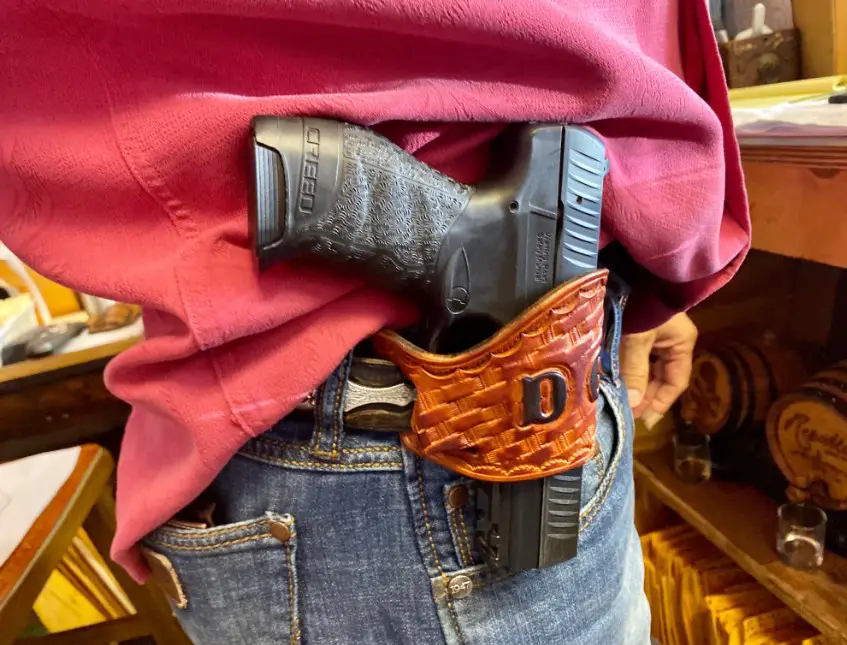
Leather holsters represent the traditional side of firearm carry and remain popular even in the age of modern materials. A leather holster is made from natural animal hides—most commonly cowhide or horsehide—that are cut, shaped, and stitched into a functional firearm carrier. For decades, leather was the standard material for holsters, and it still holds a strong presence in concealed carry culture today.
In the Kydex vs Leather Holster debate, leather is often chosen for its comfort, classic appearance, and ability to naturally conform to both the firearm and the wearer’s body over time. While it may not offer the same rigid consistency as Kydex, it provides a different set of advantages that many users still value.
Traditional Craftsmanship and Materials (Cowhide, Horsehide)
Leather holsters are typically made from cowhide or horsehide, both of which offer durability and flexibility. Cowhide is the most common due to its balance of strength and availability, while horsehide is denser and more resistant to moisture, making it a premium option for concealed carry.
The production of a leather holster involves cutting leather panels, shaping them around a firearm mold, and stitching them together. Skilled craftsmanship plays a major role in the final quality. Unlike synthetic materials, leather varies naturally, meaning no two holsters are exactly identical. This adds a level of uniqueness and traditional appeal.
Over time, leather develops a natural patina, which many users consider visually appealing. This aging process is part of what makes leather holsters attractive to those who appreciate classic firearm accessories.
Wet-Molding Process and Break-In Period
One of the most important aspects of leather holsters is the wet-molding process. During manufacturing, the leather is moistened and shaped tightly around a firearm or mold. As it dries, it retains that shape, creating a custom fit.
However, unlike Kydex, leather continues to change over time. When a new leather holster is first used, it often feels tight. This is known as the break-in period. During this phase, repeated drawing and reholstering gradually soften the leather, allowing it to better conform to the firearm and user preference.
This break-in process is both a benefit and a limitation. On one hand, it allows the holster to become more comfortable over time. On the other hand, it means performance may not be fully consistent in the early stages of use.
Classic Use in Concealed Carry and OWB Holsters
Leather holsters have long been associated with outside-the-waistband (OWB) carry, especially in traditional law enforcement and hunting environments. Their natural flexibility and comfort make them well-suited for belt-mounted carry where concealment is less of a priority.
In concealed carry, leather is often used for inside-the-waistband (IWB) holsters as well, particularly for users who prioritize comfort over rigid retention. The ability of leather to mold to the body makes it especially comfortable for extended wear, even if it sacrifices some speed and structural consistency compared to Kydex.
Despite the rise of modern materials, leather continues to maintain a strong presence because it blends functionality with tradition. Many users still prefer it for its classic look and familiar feel.
Key Characteristics of Leather Holsters
Natural Flexibility
Leather holsters are flexible by nature, allowing them to adapt to both the firearm and the wearer’s body. This flexibility helps distribute pressure more evenly, increasing comfort during long periods of carry.
Body Conforming Over Time
One of the defining traits of leather is its ability to conform to the shape of the user’s body over time. As it breaks in, it becomes more personalized, often resulting in a comfortable and secure fit that improves with use.
Aesthetic Appeal
Leather holsters are often chosen for their classic, timeless appearance. They offer a traditional aesthetic that many firearm owners appreciate. The natural grain, stitching, and aging process give each holster a distinct visual identity that synthetic materials cannot replicate.
Kydex vs Leather Holsters – Key Differences
When comparing Kydex vs Leather Holster options, the real decision comes down to how each material performs in everyday concealed carry situations. Both materials can safely carry a firearm, but they behave very differently in terms of retention, comfort, durability, concealment, and draw performance. Understanding these differences helps users match the holster to their carry style—whether that is defensive concealed carry, range use, or all-day comfort in civilian environments.
Below is a practical breakdown of the key performance categories that matter most in real-world use.
H3: Retention & Safety
Retention is the ability of a holster to securely hold a firearm in place until the user intentionally draws it. In the Kydex vs Leather Holster comparison, this is one of the most important differences.
Kydex holsters use a mechanical retention system. The material is molded precisely around the firearm, creating friction points and structural locking areas—especially around the trigger guard and slide. Many Kydex holsters produce an audible “click” when the firearm is fully seated. This provides immediate feedback that the weapon is secure. The retention level is consistent and can often be adjusted using tension screws, allowing users to fine-tune how tightly the firearm is held.
Leather holsters, on the other hand, rely primarily on friction. The leather grips the firearm based on pressure and natural molding. While this can be effective, it is less predictable over time. As leather ages, it can stretch, soften, or compress depending on usage, humidity, and maintenance. This gradual change can slightly reduce retention strength compared to a new holster.
A key safety concern with leather is the potential for structural collapse in worn or low-quality holsters. If the holster mouth becomes too soft, it may fold inward after the firearm is drawn. This can create a risk during reholstering, especially if the user is not visually guiding the firearm back into the holster. Kydex avoids this issue entirely due to its rigid structure, which maintains an open and consistent mouth.
Overall, Kydex tends to offer more predictable safety performance, while leather requires more attention to condition and wear over time.
H3: Comfort Level
Comfort is one of the most subjective factors in the holster debate, but it plays a major role in daily concealed carry decisions.
Leather holsters are widely recognized for their comfort, especially in inside-the-waistband (IWB) carry. The natural flexibility of leather allows it to conform to the body’s shape over time. This reduces pressure points and helps the holster feel less intrusive during long periods of wear. Many users find that after a break-in period, leather becomes almost unnoticeable during daily activities.
Kydex holsters, by contrast, are rigid. This rigidity is excellent for retention and consistency but can create pressure points depending on body shape, carry position, and holster design. Appendix carry (AIWB), for example, can feel more noticeable with a hard plastic surface against the body. However, modern Kydex holsters often include rounded edges, sweat guards, and adjustable clips to improve comfort significantly.
A popular compromise is the hybrid holster, which combines a leather backing with a Kydex shell. This design attempts to balance comfort and performance: the leather side rests against the body for comfort, while the Kydex shell provides secure retention and fast draw capability. Hybrid designs are especially common in IWB concealed carry setups where comfort is a priority but safety cannot be compromised.
H3: Durability & Longevity
Durability is another major point of comparison in the Kydex vs Leather Holster discussion.
Kydex holsters are highly resistant to environmental factors. They do not absorb moisture, which means sweat, rain, or humidity have minimal impact on performance. They also resist heat and do not easily deform under normal conditions. This makes them ideal for everyday carry in a wide range of climates. Maintenance is simple—usually just wiping down the surface to remove debris.
Leather holsters require more care. Because leather is a natural material, it can react to environmental conditions. Excess moisture can weaken fibers over time, while dryness can cause cracking if the leather is not conditioned properly. Regular maintenance, such as applying leather conditioner and storing the holster correctly, is important for extending its lifespan.
Over time, leather may also soften or lose its original shape. While some users appreciate this “broken-in” feel, it can reduce retention consistency if the holster is heavily worn. Kydex, in contrast, maintains its original molded shape for much longer periods without change.
H3: Concealment Performance
Concealment is a critical factor for anyone carrying a firearm discreetly. Both materials can be used effectively, but they influence concealment in different ways.
For IWB carry, leather holsters often provide a slight comfort advantage due to their ability to flex against the body. However, they may be slightly thicker in some designs, which can increase printing (the visible outline of the firearm through clothing). Over time, leather may also soften unevenly, which can affect how consistently the firearm sits inside the waistband.
Kydex holsters typically offer a slimmer and more rigid profile. This can help maintain a consistent position inside the waistband, improving concealment stability. Because Kydex does not collapse, it also helps the firearm sit at a predictable angle, reducing shifting during movement.
For OWB carry, concealment becomes more dependent on clothing rather than holster material. However, Kydex holsters often have a more compact design, while leather OWB holsters may appear bulkier due to material thickness and stitching. This can slightly impact how easily the firearm is concealed under a jacket or loose shirt.
Holster thickness plays a key role in printing. Thicker holsters naturally create more outward pressure against clothing. Kydex can be designed very thin while still maintaining strength, whereas leather often requires more material thickness for durability. This difference can influence concealment performance depending on body type and wardrobe choices.
H3: Draw Speed & Reholstering
Draw speed and reholstering are performance metrics that matter most in defensive or tactical scenarios.
Kydex holsters generally offer faster and more consistent draw performance. Because the firearm sits in a rigid mold, the draw stroke remains predictable every time. There is no variation caused by material compression or friction changes. This allows users to build muscle memory more effectively, which is important in high-stress situations.
Kydex also excels in reholstering. The rigid structure keeps the holster mouth open, allowing one-handed reholstering without needing to adjust the holster or use the support hand. This is considered a major safety advantage in training and defensive carry environments.
Leather holsters can be slightly slower in both draw and reholstering. Over time, leather may stiffen or soften in uneven ways depending on usage. This can introduce small variations in resistance during the draw stroke. Reholstering may also require more attention, especially if the holster mouth has softened or partially collapsed after repeated use.
While these differences may not matter in casual carry situations, they become more noticeable in training environments where repetition and speed are critical.
In summary, Kydex tends to dominate in consistency and speed, while leather prioritizes comfort and tradition. The right choice depends on whether the user values performance-driven reliability or long-term comfort and classic design.
Kydex Holsters – Pros and Cons
In the ongoing discussion of Kydex vs Leather Holster, Kydex holsters are often seen as the modern, performance-driven option. They are widely used in concealed carry, law enforcement, and tactical training because they prioritize retention, durability, and consistency. However, like any equipment choice, Kydex comes with both advantages and limitations depending on how and where it is used.
Understanding the strengths and weaknesses of Kydex helps users decide whether it fits their daily carry needs, especially when comfort, concealment, and safety all need to be balanced.
Pros:
High Retention and Safety
One of the biggest advantages of Kydex holsters is their mechanical retention system. The firearm is locked into a precisely molded shell, often producing a distinct “click” when fully seated. This ensures the weapon stays securely in place even during movement, running, or physical activity.
Safety is also enhanced by the rigid structure of Kydex. The trigger guard is fully and consistently covered, reducing the risk of accidental discharge. Unlike softer materials, Kydex does not collapse, which means the holster maintains a safe barrier around the trigger at all times.
Weather and Sweat Resistance
Kydex performs extremely well in different environmental conditions. It does not absorb moisture, which means sweat, rain, or humidity have minimal impact on its performance. This makes it especially useful for everyday concealed carry in hot or unpredictable climates.
Unlike leather, Kydex will not soften, warp, or degrade due to exposure to moisture. This stability is a major reason many users prefer it for long-term defensive carry setups.
Consistent Performance
Consistency is one of Kydex’s strongest traits. Because the holster is molded to a specific firearm model, every draw and reholster feels the same. There is no variation caused by material compression or environmental changes.
This predictability helps users build muscle memory more effectively. In defensive situations, having a consistent draw stroke can make a meaningful difference in reaction time and confidence.
Easy Maintenance
Kydex holsters require very little maintenance compared to leather. They do not need conditioning, oiling, or special storage conditions. Cleaning typically involves simple wiping with a cloth to remove dust or residue.
This low-maintenance nature makes Kydex a practical choice for users who want a reliable holster without ongoing upkeep. It is a “set it and forget it” solution for many concealed carriers.
Cons:
Less Comfortable
One of the most common criticisms of Kydex holsters is comfort. Because the material is rigid, it does not naturally conform to the body. During inside-the-waistband (IWB) carry, this can create pressure points depending on body shape and carry position.
While modern designs include features like rounded edges, sweat guards, and adjustable clips, Kydex is still generally less forgiving than leather during long-term wear. Comfort often depends heavily on holster design quality and positioning.
Can Wear Firearm Finish
Another drawback of Kydex is its potential to cause cosmetic wear on the firearm. The rigid plastic can create friction points on the slide and frame over time, especially with repeated drawing and reholstering.
While this wear is typically superficial and does not affect function, it may be a concern for users who want to preserve the appearance of their firearm. Some holsters attempt to reduce this by polishing interior surfaces or adding protective coatings, but minor wear can still occur.
Hard Material Against Body
Kydex is firm and unyielding, which means it always maintains its shape. While this is excellent for retention and safety, it can feel harsh against the body during extended wear.
In certain carry positions—especially appendix inside-the-waistband (AIWB)—the edges of a Kydex holster may press against sensitive areas if not properly adjusted. This is one reason some users prefer hybrid holsters that combine Kydex shells with softer backing materials like leather or foam.
Leather Holsters – Pros and Cons
Leather holsters represent the traditional side of firearm carry and remain popular among users who prioritize comfort, aesthetics, and classic design. In the Kydex vs Leather Holster comparison, leather is often seen as the more comfortable and visually appealing option, though it requires more care and has different performance characteristics.
While leather may not offer the same rigid consistency as Kydex, it provides a unique set of advantages that continue to make it relevant in modern concealed carry environments.
Pros:
Superior Comfort
Comfort is the most widely recognized advantage of leather holsters. The natural flexibility of leather allows it to adapt to the body over time, reducing pressure points and making it more comfortable for all-day carry.
In inside-the-waistband (IWB) carry, leather often feels less intrusive than rigid materials. It moves with the body rather than resisting it, which can make a significant difference during long hours of wear, driving, or sitting.
Classic Aesthetics
Leather holsters are also valued for their timeless appearance. The natural grain, stitching, and finish give them a traditional look that many firearm owners appreciate. Over time, leather develops a patina that adds character and uniqueness to each holster.
This aesthetic appeal is not just visual—it also reflects a sense of craftsmanship and heritage in firearm carry culture. For many users, this traditional feel is an important part of their preference.
Gentler on Firearm Finish
Compared to Kydex, leather is generally softer against the firearm’s surface. This reduces the likelihood of cosmetic wear such as scratches or finish abrasion during repeated use.
For users who prioritize maintaining the visual condition of their firearm, leather can be a more forgiving option. The natural material provides a cushioned interface between the gun and holster.
Conforms to Body Over Time
One of leather’s unique advantages is its ability to mold not only to the firearm but also to the user’s body. As the holster breaks in, it gradually adapts to the shape of the wearer, creating a more personalized fit.
This natural conforming process improves comfort and can make the holster feel almost custom-made after extended use. Many users appreciate this evolving fit as part of the leather experience.
Cons:
Requires Maintenance
Leather is a natural material and requires regular care to maintain its performance. Without proper conditioning, it can dry out, crack, or lose flexibility over time.
Users need to occasionally apply leather conditioner and store the holster properly to extend its lifespan. Exposure to moisture should also be managed carefully, as excessive humidity can affect durability.
Can Lose Shape Over Time
Unlike Kydex, leather does not maintain a fixed structure permanently. Over time, repeated use can cause the holster to stretch or soften in certain areas.
This gradual change can affect retention consistency. While some users enjoy the “broken-in” feel, others may find it less predictable compared to rigid holster systems.
Moisture Sensitivity
Leather is more sensitive to environmental conditions, especially moisture. Sweat, rain, and humidity can affect its structure if not properly managed.
In humid climates or during heavy daily use, leather holsters require more attention to prevent long-term degradation. This makes them less ideal for users seeking low-maintenance gear.
Slower Draw/Reholster
Leather holsters can be slightly slower in both draw and reholstering compared to Kydex. The friction-based retention system may vary depending on wear, temperature, and break-in condition.
Reholstering may also require more care, especially if the holster mouth has softened over time. This can make it less suitable for high-speed training or tactical environments where consistency is critical.
Despite these limitations, leather remains a strong choice for users who prioritize comfort, tradition, and aesthetics over rigid performance metrics. In the end, the decision between Kydex vs Leather Holster comes down to balancing personal priorities and carry style.
Best Use Cases for Each Holster Type
When evaluating Kydex vs Leather Holster options, it quickly becomes clear that there is no universal “best” choice. Instead, each material performs better in specific use cases. The right holster depends heavily on how you carry, how often you carry, and what you prioritize most—whether that is speed, comfort, durability, or appearance.
Understanding the ideal scenarios for each holster type helps narrow down the decision in a practical way. Rather than focusing on abstract comparisons, it is more useful to match holster characteristics to real-world carry needs.
H3: Choose Kydex If You Want:
Tactical or Defensive Carry
Kydex holsters are widely preferred in defensive and tactical environments. Their rigid structure, consistent retention, and fast draw capabilities make them ideal for situations where performance matters most. The ability to draw and reholster smoothly under pressure is a key advantage in defensive carry training.
Because Kydex maintains a fixed shape, it supports repeatable muscle memory. This consistency is especially important for users who train regularly or rely on their firearm for personal protection.
Low Maintenance Setup
One of the major advantages of Kydex is its simplicity. It requires no conditioning, no break-in period, and very little upkeep. Users who prefer a “carry and forget” system often choose Kydex for this reason.
It performs reliably in a wide range of environments without needing special care. This makes it ideal for users with busy lifestyles or those who want dependable gear without ongoing maintenance responsibilities.
Appendix Carry (AIWB)
Appendix inside-the-waistband (AIWB) carry has become increasingly popular, and Kydex is often the preferred material for this method. Its rigid structure helps keep the firearm stable and properly oriented, which is important in a forward carry position.
Modern Kydex designs also include features like sweat guards and adjustable ride height, which improve comfort and concealment in the appendix position. The secure retention system adds an extra layer of safety in a high-contact carry area.
High Retention Reliability
If retention consistency is a top priority, Kydex is the clear choice. The molded fit ensures the firearm stays locked in place until intentionally drawn. The “click” retention system provides immediate feedback, which builds confidence in secure carry.
This level of reliability is especially valuable for active users, law enforcement, or anyone who moves frequently throughout the day.
H3: Choose Leather If You Want:
Comfort-First Carry
Leather holsters excel in comfort, especially during long hours of wear. The material naturally conforms to the body over time, reducing pressure points and improving overall wearability.
For users who prioritize comfort above all else—particularly in inside-the-waistband carry—leather remains a strong and reliable choice. It tends to feel less rigid and more natural against the body during daily activities.
Traditional OWB Style
Outside-the-waistband (OWB) carry has a long tradition with leather holsters. The material’s natural flexibility and classic construction make it well-suited for belt-mounted carry where concealment is less critical.
Leather OWB holsters are often used for range shooting, hunting, or casual open carry situations where comfort and accessibility matter more than ultra-fast tactical performance.
Firearm Finish Protection
Leather is generally softer against the firearm’s surface compared to Kydex. This can help reduce cosmetic wear such as scratches or finish abrasion over time.
For users who want to preserve the visual condition of their firearm, leather provides a more gentle interface. This is especially relevant for collectors or those who value maintaining a pristine finish.
Classic Appearance
Beyond function, leather offers a timeless and traditional aesthetic. Many firearm owners appreciate the craftsmanship, stitching, and natural grain of leather holsters.
This classic look is part of the appeal for users who prefer a more traditional carry style. Over time, leather develops a unique patina, giving each holster a distinct personality.
Expert Verdict – Which Holster Wins?
The debate between Kydex vs Leather Holster does not have a single universal winner. Instead, each material excels in different categories, and the “best” choice depends entirely on user priorities and intended use.
From a modern defensive standpoint, Kydex often takes the lead. From a comfort and traditional standpoint, leather continues to hold strong relevance. Both remain valuable in today’s concealed carry landscape.
Kydex Dominates in Modern Defensive Applications
Kydex is widely considered the top choice for defensive carry, training environments, and tactical use. Its consistent retention, fast draw capability, and rigid structure make it highly reliable under stress.
Users who prioritize safety systems, repeatable performance, and minimal maintenance often lean toward Kydex. It performs especially well in structured training scenarios where repetition and predictability are essential.
Leather Remains Strong in Comfort and Aesthetics
Leather continues to be highly valued for its comfort and traditional appeal. It adapts to the body over time, making it ideal for users who carry for extended periods and prioritize wearability.
Its classic appearance and craftsmanship also make it a preferred choice for those who appreciate traditional firearm accessories. While it may require more care, many users find the trade-off worthwhile for comfort and style.
Hybrid Options Bridge the Gap
Hybrid holsters attempt to combine the strengths of both materials. Typically, they feature a Kydex shell for retention and a leather or padded backing for comfort.
This combination is especially popular in inside-the-waistband carry, where comfort against the body is as important as secure firearm retention. While hybrids add some bulk, they offer a balanced middle ground for users who do not want to fully commit to one material.
Final Recommendation Based on User Intent (Defense vs Comfort vs Style)
Ultimately, the decision comes down to intent:
- If your focus is defensive readiness and performance, Kydex is typically the better match.
- If your priority is comfort and traditional carry experience, leather is often the preferred choice.
- If you want a balanced approach, hybrid holsters can offer a compromise between the two.
There is no absolute winner in the Kydex vs Leather Holster debate. The right choice depends on how you carry, how often you carry, and what you expect from your holster in daily life.
Conclusion
The comparison between Kydex and leather holsters highlights two very different approaches to firearm carry. Kydex represents modern engineering focused on consistency, safety, and performance. Leather represents tradition, comfort, and craftsmanship that has stood the test of time.
Each material has clear strengths and limitations. Kydex excels in retention, durability, and repeatability. Leather excels in comfort, aesthetics, and natural adaptability. Neither option is universally superior in every category.
The most important takeaway is that a holster should match the user’s lifestyle, carry method, and priorities. A concealed carrier in a hot climate with daily defensive needs may benefit more from Kydex. A user focused on comfort and classic OWB carry may prefer leather. Many users even choose both, depending on the situation.
In the end, there is no “perfect” holster for everyone. There is only the holster that best fits your needs, habits, and expectations. Understanding these differences ensures a safer, more comfortable, and more confident carry experience every day.
Frequently Asked Questions (FAQ) – Kydex vs Leather Holster
1. What is the main difference between Kydex and leather holsters?
The main difference lies in material behavior. Kydex is a rigid thermoplastic that is molded precisely to a firearm, offering consistent retention and a fixed shape. Leather is a natural material that relies on friction and gradually molds to both the firearm and the user’s body. Kydex focuses on performance, safety, and repeatability, while leather emphasizes comfort, tradition, and aesthetics. This fundamental difference affects everything from draw speed to long-term maintenance.
2. Is Kydex better than leather for concealed carry?
It depends on priorities. Kydex is generally better for users who prioritize defensive readiness, fast draw, and consistent retention. Leather may be better for those who value comfort during long wear and a more traditional carry experience. Neither is universally better; they simply serve different needs in concealed carry situations.
3. Are leather holsters safe for everyday carry?
Yes, leather holsters can be safe when properly made and maintained. A good leather holster fully covers the trigger guard and provides adequate retention. However, over time, leather can soften or lose shape, which may reduce structural consistency. Regular inspection and maintenance are important to ensure continued safety in daily carry.
4. Do Kydex holsters damage gun finishes?
Kydex holsters can cause minor cosmetic wear on firearm finishes over time due to friction between rigid surfaces. This typically appears as light surface scratches rather than functional damage. While it does not affect performance or safety, users who want to preserve a pristine finish may prefer leather or hybrid holsters.
5. Why do Kydex holsters make a clicking sound?
The clicking sound comes from the firearm snapping into a molded retention point inside the holster. This indicates that the gun is securely seated. It provides auditory feedback that enhances user confidence and ensures consistent retention every time the firearm is holstered.
6. Do leather holsters loosen over time?
Yes, leather holsters can loosen as they age. The material naturally stretches and softens with repeated use, exposure to moisture, and environmental conditions. While this can improve comfort, it may slightly reduce retention consistency compared to a new holster.
7. Which holster is more comfortable for IWB carry?
Leather is generally more comfortable for inside-the-waistband (IWB) carry because it conforms to the body and reduces pressure points. Kydex can feel more rigid against the skin, although modern designs with rounded edges and sweat guards have improved comfort significantly.
8. Is Kydex or leather better for OWB carry?
Both can work well for OWB (outside-the-waistband) carry. Leather is traditionally more common due to its comfort and classic appearance. Kydex offers better retention and faster draw speed. The choice depends on whether comfort or performance is more important to the user.
9. What is a hybrid holster?
A hybrid holster combines two materials, typically a Kydex shell and a leather or padded backing. The Kydex provides secure retention and fast draw capability, while the leather backing improves comfort against the body. Hybrid holsters are especially popular for IWB concealed carry.
10. Are Kydex holsters waterproof?
Kydex is highly water-resistant but not technically “waterproof” in a sealed sense. It does not absorb moisture, so rain or sweat will not affect its structure or performance. This makes it more reliable than leather in wet or humid environments.
11. Do leather holsters require maintenance?
Yes, leather holsters require regular maintenance. Users should condition the leather occasionally to prevent drying and cracking. Proper storage away from excessive heat and moisture is also important to maintain durability and performance over time.
12. Which holster lasts longer, Kydex or leather?
Kydex generally lasts longer because it does not degrade from moisture, sweat, or environmental changes. Leather can last many years as well but requires proper care. Without maintenance, leather may deteriorate faster than Kydex under heavy daily use.
13. Does leather improve comfort over time?
Yes, leather typically becomes more comfortable with use. As it breaks in, it conforms to the firearm and the user’s body shape. This natural molding process reduces stiffness and pressure points, improving long-term comfort.
14. Is Kydex good for beginners?
Yes, Kydex is often recommended for beginners due to its consistent retention and safety features. The predictable fit and audible retention feedback help new users develop safe handling habits early in their training.
15. Can Kydex holsters be adjusted?
Many Kydex holsters include adjustable retention screws and ride height options. This allows users to fine-tune draw resistance and positioning for better comfort and performance.
16. Are leather holsters good for appendix carry?
Leather holsters can be used for appendix carry, but they are less common. Their flexibility can improve comfort, but they may not offer the same rigidity and safety consistency as Kydex in this position.
17. Does Kydex affect draw speed?
Yes, positively. Kydex generally improves draw speed because it offers a smooth, consistent release. The rigid structure ensures the firearm is always positioned the same way, which supports muscle memory and faster response.
18. Why do some people still prefer leather holsters?
Many users prefer leather for its comfort, traditional appearance, and natural feel. It also tends to be gentler on firearm finishes and offers a more classic concealed carry experience.
19. Can leather holsters collapse?
Yes, lower-quality or heavily worn leather holsters can collapse at the opening. This may make reholstering more difficult and potentially less safe if not handled carefully.
20. Is Kydex noisy when drawing?
Kydex can produce a slight noise during draw and reholstering due to friction between rigid surfaces. However, this is usually minimal and often not a concern in everyday carry situations.
21. Which holster is better for hot climates?
Kydex performs better in hot and humid climates because it does not absorb sweat or moisture. Leather can be affected by humidity over time and may require more maintenance in such environments.
22. Do professionals use Kydex or leather?
Many law enforcement and tactical professionals prefer Kydex due to its reliability, retention, and consistency. However, leather is still used in certain roles where comfort or tradition is prioritized.
23. Can I use the same holster for different guns?
No. Most Kydex holsters are molded for specific firearm models. Leather holsters may have slightly more flexibility but are still generally designed for specific gun sizes and shapes.
24. Is leather or Kydex better for concealed carry printing?
Kydex usually offers better consistency in concealment because it maintains a fixed shape. Leather can sometimes change shape over time, which may affect how the firearm sits against the body.
25. Are hybrid holsters worth it?
Hybrid holsters are worth considering for users who want a balance of comfort and retention. They combine the strengths of both materials but may add bulk compared to single-material holsters.
26. Does leather holster stretch over time?
Yes, leather holsters naturally stretch and adapt with use. This happens because leather is an organic material made of fibers that respond to pressure, heat, and moisture. Over time, repeated drawing and reholstering slightly loosen the internal fit. In the context of Kydex vs Leather Holster, this is both an advantage and a limitation. It improves comfort and makes the holster feel more “custom,” but it can also reduce retention consistency compared to a rigid Kydex holster.
27. Can Kydex holsters crack or break?
Kydex is very durable, but it is not indestructible. Under extreme conditions such as very low temperatures, heavy impact, or improper bending, it can crack. However, in normal concealed carry use, Kydex holsters are highly resistant to damage. Most failures are rare and usually related to physical abuse rather than everyday wear.
28. Which is quieter: Kydex or leather holsters?
Leather holsters are generally quieter because the material absorbs friction and movement. Kydex can produce audible clicks during holstering and slight noise during draw. While this is usually minimal, users who prioritize stealth may prefer leather for its quieter operation.
29. Is Kydex suitable for open carry?
Yes, Kydex is widely used for open carry, especially in tactical or law enforcement environments. Its strong retention and rigid structure make it ideal for visible carry where security and quick access are important. Many duty holsters are made from Kydex or similar polymers.
30. How does leather molding process work?
Leather holsters are often wet-molded during production. The leather is softened with moisture, then shaped tightly around a firearm or mold. As it dries, it retains that shape. This creates a custom-like fit that gradually improves with use as the holster breaks in further.
31. Can Kydex holsters be reshaped?
Once Kydex is molded and cooled, it cannot be easily reshaped without reheating it. Even then, reshaping is not practical for most users. This is why Kydex holsters are typically designed for specific firearm models from the beginning.
32. Is leather heavier than Kydex?
In most cases, leather holsters are slightly heavier than Kydex holsters of similar size. The difference is not extreme, but leather’s density can add noticeable weight in all-day concealed carry setups. Kydex is generally preferred when minimizing weight is a priority.
33. Which holster is more modern?
Kydex is considered the more modern holster material. It was developed to meet the needs of tactical, law enforcement, and defensive shooting environments where consistency, durability, and speed are critical. Leather represents the traditional approach to holster design.
34. Which holster is more traditional?
Leather holsters are the traditional standard. They have been used for centuries in various forms of firearm carry, from military use to civilian concealed carry. Their craftsmanship and natural materials reflect a long history in firearm culture.
35. Do holsters affect shooting performance?
Indirectly, yes. While holsters do not affect the firearm’s mechanical accuracy, they influence draw speed, consistency, and readiness. A stable holster improves muscle memory and reduces variation in presentation, which can impact real-world shooting performance.
36. Can I wear a Kydex holster all day?
Yes, many users wear Kydex holsters all day. However, comfort depends on body type, carry position, and holster design. Some users may experience pressure points, especially during long IWB carry sessions, while others find it perfectly manageable.
37. Does leather develop a smell over time?
Yes, leather develops a natural scent as it ages. This is due to the organic oils in the material reacting with environment and use. Some users find this smell pleasant and traditional, while others prefer the neutral odor of Kydex.
38. Is Kydex resistant to heat?
Kydex is heat resistant under normal conditions, such as being worn in hot weather or inside a vehicle. However, extreme heat can soften or deform it. It should not be left exposed to high temperatures like direct fire or intense prolonged heat sources.
39. Can leather holsters get moldy?
Yes, leather can develop mold if exposed to excessive moisture and not properly dried. This is why leather holsters require maintenance and careful storage. Keeping them dry and conditioned helps prevent this issue.
40. Do police officers still use leather holsters?
Some do, but most modern law enforcement agencies have transitioned to Kydex or polymer duty holsters. Leather is still used in certain ceremonial roles or specialized units, but Kydex dominates in operational environments.
41. Is Kydex better for training?
Yes, Kydex is widely preferred for training because of its consistency. Every draw and reholster feels the same, which helps build muscle memory. It also allows safe, repeated practice without changes in retention over time.
42. Can leather holsters be used in rain?
Yes, but with caution. Leather can handle light exposure to moisture, but prolonged exposure to rain can affect its structure. It is important to dry and condition the holster afterward to maintain durability.
43. Which holster type is more affordable?
Both Kydex and leather holsters are available in a wide price range. Entry-level Kydex holsters are often more affordable, while high-quality handcrafted leather holsters can be more expensive. Price depends heavily on brand and craftsmanship.
44. Do Kydex holsters work with accessories like lights or optics?
Yes, but only if they are specifically molded for those accessories. Many modern Kydex holsters are designed to accommodate weapon lights, red dot sights, and other attachments. Leather holsters are less adaptable in this area.
45. Is leather better in cold weather?
Leather tends to perform well in cold conditions because it remains flexible and does not become brittle like some plastics. However, Kydex is also stable in cold weather if not exposed to extreme conditions.
46. Can Kydex scratch furniture or surfaces?
Yes, due to its rigid plastic edges, Kydex can scratch delicate surfaces if handled carelessly. This is usually not a major issue in concealed carry but should be considered when handling the firearm outside the holster.
47. Is leather safer than Kydex?
Both materials are safe when properly designed and used. Kydex offers more consistent trigger protection due to its rigid structure, while leather relies on proper maintenance to ensure it does not collapse or lose shape over time.
48. Which holster lasts longer in daily carry?
Kydex generally lasts longer in daily carry because it is resistant to moisture, sweat, and environmental wear. Leather can also last many years but requires consistent maintenance to reach similar longevity.
49. Do holsters affect concealment comfort?
Yes, significantly. Holster material, thickness, and shape all affect how comfortably a firearm can be concealed. Leather typically offers better body comfort, while Kydex provides a slimmer and more stable profile.
50. What is the best holster overall?
There is no single “best” holster for everyone. The ideal choice depends on personal priorities. Kydex is often best for performance, safety, and consistency. Leather is often best for comfort and tradition. Many users choose based on lifestyle rather than material superiority.
Read more: