

Choosing the right optic for an AR-15 plays a critical role in overall shooting performance, accuracy, and efficiency. Whether for tactical use, hunting, competition, or home defense, the optic you mount on your rifle directly influences how quickly and effectively you can engage targets. A well-matched optic enhances both speed and precision, while the wrong choice can limit the rifle’s full potential.
In recent years, both LPVO (Low Power Variable Optic) scopes and red dot sights have seen significant growth in popularity among shooters. Red dots are widely favored for their simplicity and fast target acquisition at close range, while LPVOs have gained attention for their versatility, offering both close-quarters usability and extended-range capability in a single optic system.
When comparing LPVOs and red dots, several key factors come into play. These include target acquisition speed, effective shooting range, precision at distance, overall cost, and versatility across different shooting scenarios. Each optic type offers distinct advantages depending on how and where the rifle will be used.
However, beyond technical specifications, real-world application is what ultimately determines the best choice. Understanding how an optic performs in practical situations—such as fast-moving targets at close range or identifying threats at longer distances—is far more important than focusing solely on numbers or manufacturer claims. Matching the optic to your actual use case ensures better performance, reliability, and confidence in the field.
What Is a Red Dot Sight?
Definition and Basic Function
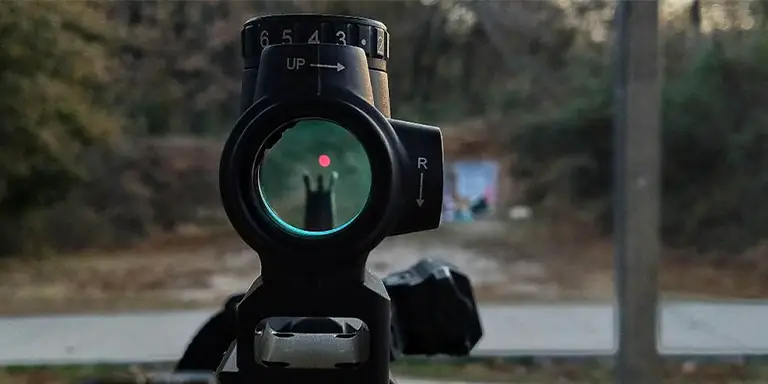
A red dot sight is a non-magnified (1x) optical aiming device that projects an illuminated red (or green) dot onto a lens, allowing the shooter to quickly align the reticle with the target. It is specifically designed for fast target acquisition, especially at close range, where speed is more critical than magnification.
Key Characteristics
Red dot sights are known for their simplicity and efficiency. One of their most important features is both-eyes-open shooting, which allows the shooter to maintain full situational awareness while engaging targets. They also offer unlimited eye relief, meaning the shooter does not need to maintain a fixed distance from the optic to see the reticle clearly.
In addition, red dots are typically lightweight, compact, and easy to operate, with minimal adjustments required. This makes them highly practical for users who prioritize speed, simplicity, and low maintenance.
Ideal Use Cases
Red dot sights excel in close-range and dynamic environments. They are commonly used for close-quarters combat (CQB), where rapid target engagement is essential. They are also widely favored for home defense scenarios due to their ease of use under stress.
Additionally, red dots perform well in tactical and fast-moving situations where quick reaction time and target tracking are more important than long-range precision.
What Is an LPVO (Low Power Variable Optic)?
Definition and Magnification Range
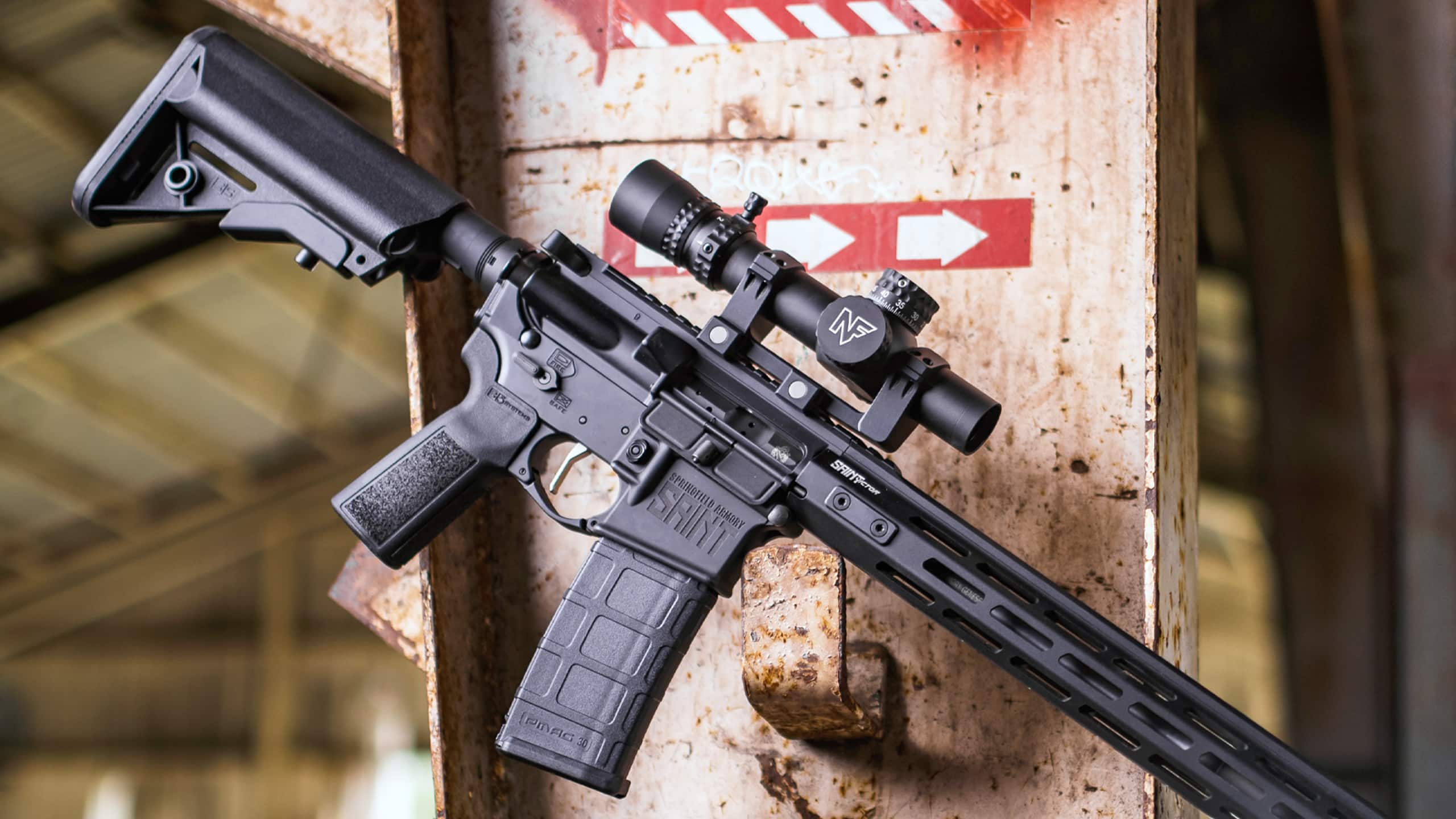
An LPVO (Low Power Variable Optic) is a rifle scope that offers adjustable magnification, typically ranging from 1–4x, 1–6x, or 1–8x depending on the model. At its lowest setting (1x), an LPVO can function similarly to a red dot sight, allowing for close-range shooting. When magnified, it provides enhanced clarity and precision at mid-range distances.
Key Characteristics
LPVOs are designed for versatility across multiple engagement distances. Their adjustable zoom capability allows shooters to transition between close-quarters and longer-range targets without changing optics.
Most LPVOs feature an etched reticle, which remains visible even without illumination and often includes holdover markings for bullet drop compensation. However, compared to red dots, LPVOs have a more complex optical system and typically require more setup and familiarity to use effectively.
Ideal Use Cases
LPVOs are best suited for scenarios that require flexibility across varying distances. They are commonly used in mixed-distance shooting environments, where targets may appear both near and far within the same engagement scenario.
They are also popular in tactical applications where adaptability is important, as well as in hunting and competitive shooting, where precision and target identification at range are critical advantages.
LPVO vs Red Dot – Key Differences
Magnification Capability
The most fundamental difference between a red dot sight and an LPVO is magnification. A red dot operates at a fixed 1x magnification with no zoom capability, making it ideal for close-range shooting where speed is critical. In contrast, an LPVO offers adjustable magnification—typically ranging from low power (1x) up to 4x, 6x, or even 8x—allowing shooters to engage both close and mid-range targets effectively.
Target Acquisition Speed
Red dot sights are generally faster when it comes to acquiring targets at close range. The simple illuminated dot allows shooters to quickly align and fire without adjusting settings. LPVOs, while versatile, are slightly slower in close-quarters scenarios due to the need to manage magnification or eye alignment, especially under time pressure.
Range Performance
Red dots perform best at close to intermediate distances, typically up to around 100–200 yards depending on shooter skill and conditions. LPVOs, however, extend effective engagement range significantly, offering usable performance from close-quarters combat (CQB) distances out to 300 yards or more with improved precision and target clarity.
Weight and Size
Red dot sights are known for their lightweight and compact design, making them ideal for reducing overall rifle weight and maintaining maneuverability. LPVOs are generally heavier and require more robust mounting systems, which can add bulk and affect rifle balance.
Battery Dependence
Most red dot sights rely on battery-powered illumination, meaning they depend on a functional power source for the aiming dot to be visible. In contrast, LPVOs typically feature an etched reticle that remains visible even without illumination, making them more reliable in situations where battery failure could occur.
Precision and Target Identification
LPVOs offer a significant advantage in precision shooting at longer distances, as magnification allows for clearer target identification and more accurate shot placement. Red dot sights, while excellent for speed, may obscure smaller or distant targets due to their lack of magnification.
Advantages of Red Dot Sights
- Extremely fast target acquisition: Ideal for rapid engagement in close-range scenarios.
- Simplified operation: Minimal controls make it easy to learn and use under stress.
- Better situational awareness: Allows both-eyes-open shooting for full environmental awareness.
- Lightweight and durable design: Reduces overall rifle weight and improves handling.
- More affordable option: Generally lower cost compared to LPVO systems.
Disadvantages of Red Dot Sights
- Limited effective range: Red dot sights are primarily designed for close to intermediate distances, which limits their effectiveness for long-range shooting scenarios.
- No magnification for target identification: Without zoom capability, identifying small or distant targets can be more difficult compared to magnified optics.
- Battery dependency: Most red dot systems rely on electronic illumination, meaning battery failure can render the aiming dot unusable.
- Reduced precision at distance: At longer ranges, the lack of magnification can make precise shot placement more challenging.
Advantages of LPVO Scopes
- Versatility across multiple engagement distances: LPVOs allow shooters to switch between close-range and mid-range engagements using adjustable magnification.
- Built-in magnification for target identification: Magnification helps identify targets more clearly at distance, improving decision-making and accuracy.
- Better long-range accuracy: Increased zoom capability provides greater precision when engaging distant targets.
- Reticle-based holdovers and ballistic references: Many LPVOs include etched reticles with markings that assist in bullet drop compensation and wind adjustments.
- Hybrid optic capability: At 1x magnification, an LPVO can function similarly to a red dot, offering close-range usability with long-range flexibility.
Disadvantages of LPVO Scopes
- Heavier than red dots: LPVOs typically add more weight to the rifle, which can affect handling and maneuverability.
- More expensive overall: High-quality LPVO systems and mounting setups are generally more costly than red dot sights.
- Slower target acquisition at close range: Even at 1x, LPVOs can be slightly slower to use in fast-paced, close-quarters situations.
- Requires proper eye relief and training: Effective use depends on correct positioning and familiarity with magnification adjustments.
- Bulkier setup: LPVOs are larger and may feel less balanced on lightweight or compact rifles.
LPVO vs Red Dot – Real-World Use Cases
Home Defense and CQB
In close-quarters and home defense scenarios, red dot sights are often preferred due to their speed and simplicity. They allow for rapid target acquisition under stress with minimal training requirements. LPVOs can still be used effectively at 1x magnification, but they are generally slightly slower in high-pressure, close-range environments.
Hunting Applications
For hunting, LPVOs are typically the better choice because they offer flexibility across varying distances and improved target identification. Being able to zoom in helps with ethical shot placement and identifying game more clearly. Red dots, while fast, are more limited when precision at distance is required.
Competition Shooting
In competitive shooting, both optics have strong roles depending on the course design. LPVOs excel in mixed-distance stages where shooters must transition between close and mid-range targets. Red dots perform exceptionally well in fast-paced stages that prioritize speed and close-range accuracy.
Tactical / Duty Use
For tactical or duty applications, the choice depends heavily on mission requirements. LPVOs are often preferred for their versatility across different engagement distances, while red dots are favored in roles where speed and rapid target acquisition are the primary focus.
Can You Combine LPVO and Red Dot?
Yes, many shooters choose to combine an LPVO with a red dot sight to create a hybrid optic system that maximizes versatility. This setup typically involves either an offset mounted micro red dot or a top-mounted red dot placed above the LPVO.
The main benefit of this hybrid approach is flexibility. The LPVO handles mid- to long-range engagements using magnification, while the red dot provides ultra-fast target acquisition at close range without needing to adjust magnification settings. This can be especially useful in dynamic shooting environments where distances change rapidly.
However, there are important trade-offs. Adding both optics increases overall weight and can affect rifle balance. It also introduces more complexity, requiring additional training to switch between sighting systems efficiently. Cost is another factor, as purchasing and mounting two optics is significantly more expensive than using a single system.
How to Choose Between LPVO and Red Dot
Choose a Red Dot If
- You prioritize speed and simplicity in target acquisition
- You primarily engage targets within 100 yards
- You want a lightweight, minimal rifle setup
Choose an LPVO If
- You need flexibility across both close and mid-range distances
- You hunt or shoot in environments with variable terrain and distances
- You want improved target identification and precision at range
Common Mistakes When Choosing an Optic
- Buying based on trends instead of use case: Many shooters choose optics because they are popular rather than suited to their actual shooting needs.
- Ignoring rifle weight and balance: Heavier optics can negatively affect handling, especially on lightweight rifles.
- Overestimating long-range needs: Some users invest in high-magnification optics despite rarely shooting beyond close range.
- Choosing low-quality optics: Opting for budget or poorly manufactured optics can lead to reduced durability, poor clarity, and unreliable performance.
Expert Insight Summary
From a practical shooting perspective, red dot sights and LPVOs serve two very different strengths rather than competing as direct replacements.
Red dots = speed, simplicity, close-range dominance. They are optimized for rapid target acquisition, intuitive use, and high efficiency in close-quarters environments where reaction time matters most.
LPVOs = versatility, precision, multi-distance capability. With adjustable magnification and advanced reticle options, they provide strong performance across short, mid, and even extended ranges, making them highly adaptable to changing scenarios.
Ultimately, the “best optic” is not universal—it depends entirely on the shooter’s intended use case. Factors such as engagement distance, environment, and mission requirements play a far greater role than specifications alone.
Conclusion
There is no clear universal winner in the LPVO vs red dot comparison. Both optic types are highly effective, but they are designed for different shooting priorities and environments.
Red dots excel in speed-focused, close-range applications, while LPVOs offer broader versatility and enhanced precision across multiple distances. Each system has clear strengths depending on how it is used in the real world.
The best choice ultimately depends on engagement distance, mission type, and individual shooter preference. Rather than following trends or marketing hype, the most effective approach is to match the optic to your actual shooting needs and real-world scenarios.
Frequently Asked Questions (FAQ) – LPVO vs Red Dot
1. What is the main difference between an LPVO and a red dot?
The main difference is magnification capability. A red dot is a non-magnified 1x optic designed for fast target acquisition at close range, while an LPVO (Low Power Variable Optic) offers adjustable magnification, typically from 1x up to 4x, 6x, or 8x. This allows LPVOs to cover both close-range and mid-range shooting, making them more versatile but also more complex than red dots.
2. Which is better for beginners, LPVO or red dot?
For most beginners, a red dot is usually the better starting point. It is simple to use, requires minimal training, and allows shooters to focus on fundamentals like stance, grip, and trigger control. LPVOs are more advanced due to magnification adjustment, eye relief considerations, and reticle interpretation, which can be overwhelming for new shooters.
3. Is a red dot good for long-range shooting?
A red dot can be used at longer distances, but it is not ideal for precision shooting beyond approximately 100–200 yards. Without magnification, it becomes harder to clearly identify targets and place accurate shots at extended ranges. It is primarily designed for close to intermediate distances.
4. Can an LPVO replace a red dot completely?
In many cases, yes. At its 1x setting, an LPVO can function similarly to a red dot, allowing close-range engagement. However, it is typically heavier, more expensive, and slightly slower in fast CQB scenarios. Whether it can fully replace a red dot depends on the shooter’s priorities and use case.
5. Why are red dots faster than LPVOs?
Red dots are faster because they have a simple illuminated aiming point with no magnification adjustments. Shooters can keep both eyes open and acquire targets almost instantly. LPVOs may require magnification adjustment or more precise eye alignment, which can slow down target acquisition in high-speed situations.
6. Are LPVO scopes good for home defense?
LPVOs can be used for home defense, especially at 1x magnification, but they are not always the optimal choice. Red dots are generally preferred due to faster target acquisition, lighter weight, and simpler operation under stress. LPVOs may still be effective for users who train regularly with them.
7. Do LPVOs work without batteries?
Yes. Most LPVOs use an etched reticle that remains visible even without illumination. This means they can still be used if the battery dies, although the illuminated reticle improves visibility in low-light conditions.
8. How far can a red dot accurately shoot?
A red dot can be effective up to 100–200 yards depending on shooter skill, environmental conditions, and rifle setup. However, accuracy and target identification become more challenging at longer distances due to the lack of magnification.
9. What is the effective range of an LPVO?
LPVOs are typically effective from close-quarters distances out to 300–500 yards or more, depending on magnification level, shooter ability, and rifle system. Higher magnification models provide better precision at extended ranges.
10. Are red dots or LPVOs more durable?
Both can be very durable depending on quality and manufacturer. Red dots often have fewer moving parts, making them slightly more rugged in some cases. However, high-quality LPVOs are also designed to withstand harsh environments and heavy use.
11. Which optic is better for AR-15?
There is no single “best” optic for an AR-15. Red dots are better for fast, close-range shooting, while LPVOs are better for versatility across different distances. The best choice depends on how the rifle will be used.
12. Are LPVOs good for hunting?
Yes, LPVOs are excellent for hunting because they allow shooters to adjust magnification based on distance. This is especially useful in environments where game may appear at varying ranges, requiring both identification and precision.
13. Do red dots work in low light?
Yes, red dots are designed for low-light conditions. The illuminated reticle helps shooters quickly acquire targets in dim environments. However, extremely bright settings or battery failure can reduce effectiveness.
14. Why are LPVOs more expensive?
LPVOs are more expensive because they use more complex optical systems, variable magnification mechanisms, and higher-quality glass to maintain clarity across zoom levels. This engineering complexity increases manufacturing costs.
15. Can you use both eyes open with an LPVO?
Yes, especially at 1x magnification. However, as magnification increases, using both eyes open becomes more difficult compared to a red dot.
16. What is better for CQB: LPVO or red dot?
Red dots are generally better for close-quarters battle (CQB) due to their speed and simplicity. LPVOs can still be used at 1x but are slightly slower in high-intensity, close-range situations.
17. Do LPVOs require training?
Yes, LPVOs require more training than red dots. Shooters must learn how to manage magnification, eye relief, reticle use, and transitions between distances.
18. Are red dots easier to learn?
Yes, red dots are much easier for beginners because they require minimal adjustment and have a very simple aiming system.
19. What is the weight difference between LPVO and red dot?
Red dots are significantly lighter and more compact. LPVOs are heavier due to their magnification system and often require robust mounting hardware, which adds additional weight.
20. Can LPVO replace a red dot in competition shooting?
In many competitions, LPVOs are preferred for mixed-distance stages, but red dots may still outperform them in pure speed-based close-range stages. The choice depends on match structure.
21. Which optic is better for tactical use?
Both can be used effectively in tactical applications. LPVOs offer versatility across distances, while red dots provide speed and simplicity. The best option depends on mission requirements.
22. Do red dots lose zero easily?
High-quality red dots are designed to maintain zero under normal use. However, poor-quality optics or improper mounting can lead to zero shift.
23. Can LPVOs be used like a sniper scope?
Not exactly. While LPVOs offer magnification, they are not designed for long-range precision shooting like dedicated high-power scopes. They are more versatile rather than specialized.
24. Are LPVOs good for beginners?
LPVOs can be used by beginners, but they require more learning compared to red dots. Beginners may find them more complex due to magnification and reticle use.
25. What is the biggest advantage of a red dot?
The biggest advantage is speed. Red dots allow extremely fast target acquisition, especially in close-range and high-stress situations.
26. What is the biggest advantage of an LPVO?
The biggest advantage is versatility. LPVOs can adapt to multiple distances, making them suitable for a wide range of shooting scenarios.
27. Do LPVOs need special mounts?
Yes, LPVOs typically require sturdy scope mounts designed to handle their size and weight, ensuring proper eye relief and stability.
28. Can red dots be used for hunting?
Yes, but they are best suited for close-range hunting scenarios. For longer distances or precision shots, LPVOs are usually more effective.
29. Are LPVOs good for AR pistols?
They can be used, but they are often heavier than ideal for AR pistols. Red dots are more commonly preferred for compact platforms.
30. What is 1x on an LPVO?
1x on an LPVO means no magnification, allowing it to function similarly to a red dot sight for close-range shooting.
31. Can LPVOs fog up?
High-quality LPVOs are usually nitrogen-purged and fog-resistant, but extreme temperature changes can still cause temporary fogging in lower-quality optics.
32. Are red dots waterproof?
Many modern red dots are water-resistant or waterproof, but ratings vary by manufacturer and model.
33. Do LPVOs affect rifle balance?
Yes, LPVOs are heavier and can shift rifle balance forward compared to lightweight red dots.
34. Can I mount a red dot on an LPVO?
Yes, many shooters use offset or top-mounted red dots for hybrid setups, combining speed and magnification.
35. What is the best optic for self-defense?
Red dots are generally preferred for self-defense due to their speed, simplicity, and ease of use under stress.
36. Are LPVOs good in low light?
Yes, especially with illuminated reticles and proper glass quality, LPVOs perform well in low-light conditions.
37. Do red dots have magnifiers?
Yes, optional magnifiers can be added behind red dots to extend their effective range while maintaining speed.
38. Are LPVOs good for long-range shooting?
They are good for mid-range and some extended ranges, but not as specialized as high-power precision scopes.
39. What is the lifespan of a red dot battery?
Battery life varies widely but can range from hundreds to tens of thousands of hours depending on model and settings.
40. Can LPVOs be used in competitions?
Yes, LPVOs are widely used in competitive shooting where mixed-distance engagement is required.
41. Which optic is more popular?
Both are popular, but red dots dominate close-range defensive and tactical markets, while LPVOs are increasingly popular in versatile shooting roles.
42. Do professionals use LPVO or red dot?
Both are used by professionals depending on mission needs. Red dots are favored for speed, while LPVOs are used for versatility.
43. What is the biggest weakness of red dots?
The biggest weakness is the lack of magnification, which limits long-range precision and target identification.
44. What is the biggest weakness of LPVOs?
The biggest weakness is added weight and slower performance in close-range, high-speed situations.
45. Can LPVO replace iron sights?
Yes, LPVOs can fully replace iron sights on many rifles, though backup irons are often still recommended.
46. Are red dots affected by sunlight?
Some lower-quality red dots may wash out in bright sunlight, but high-quality models are designed to remain visible.
47. What is the best optic for beginners on AR-15?
Most experts recommend starting with a red dot due to its simplicity, speed, and ease of learning.
48. Can LPVOs be used without magnification?
Yes, at 1x setting they function similarly to red dots, allowing close-range shooting.
49. What optic is best for versatility?
LPVOs are best for versatility because they cover both close and mid-range engagements effectively.
50. What is the final recommendation between LPVO and red dot?
There is no universal best choice. The decision should be based on intended use: red dots for speed and close-range dominance, and LPVOs for flexibility and precision across multiple distances.
Read more: