
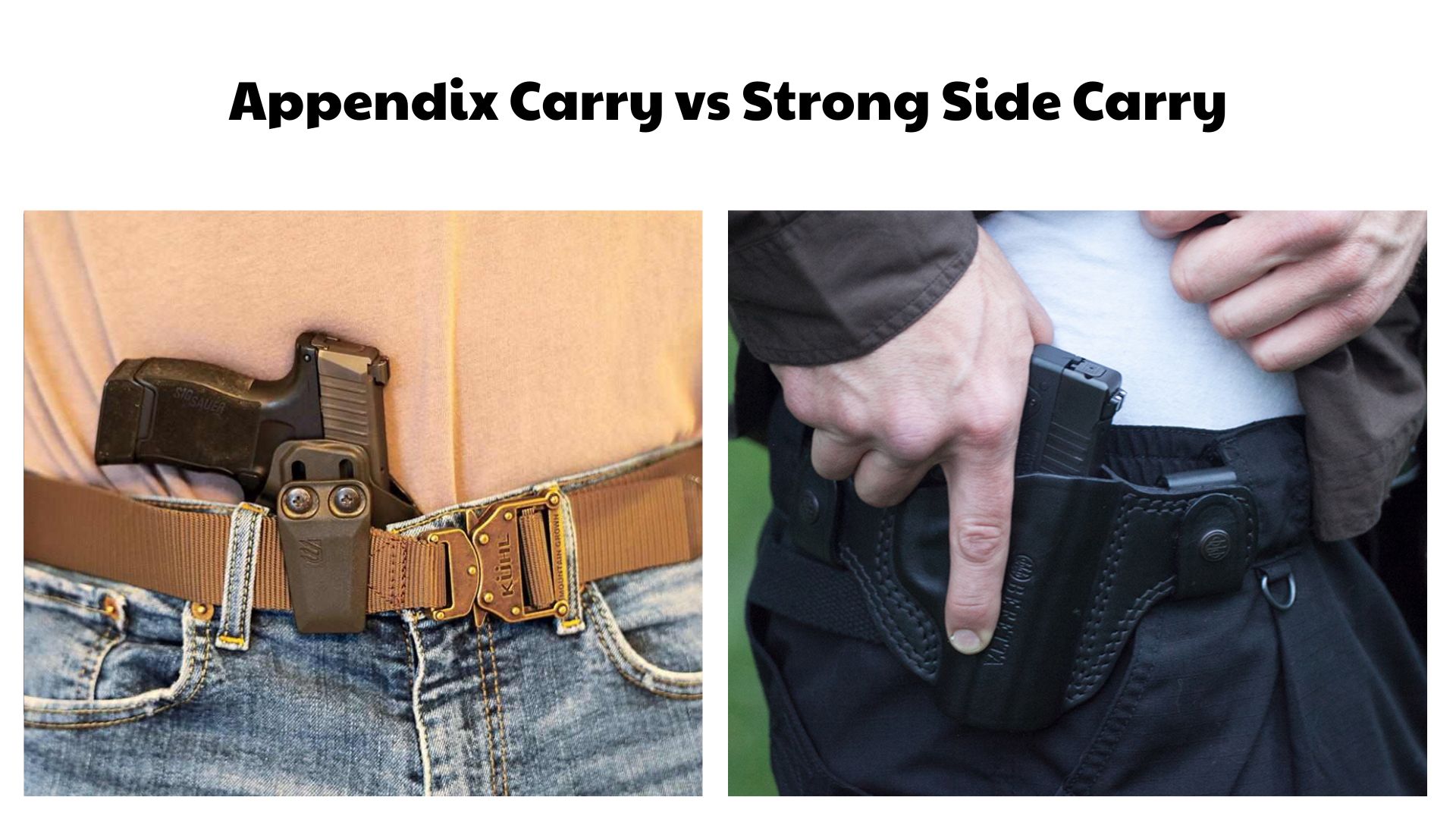

Concealed carry is not just about choosing the right firearm—it is equally about choosing the right carry position. In real-world defensive situations, how and where you position your holster can significantly affect draw speed, concealment quality, comfort, and overall safety. Many new carriers focus heavily on calibers, optics, or firearm brands, but experienced users often emphasize that holster placement can be just as important as the gun itself. A well-chosen carry position improves access under stress, reduces printing under clothing, and helps the user maintain consistent control throughout daily movement.
When discussing concealed carry positioning, two methods dominate modern civilian and defensive training discussions: Appendix Inside the Waistband (AIWB) and Strong Side carry, typically positioned between the 3 to 5 o’clock area on the dominant-hand side. These two methods represent different philosophies of carry. Appendix carry focuses on speed and accessibility, while strong side carry emphasizes comfort and familiarity. Neither is universally “better,” and both have strong arguments depending on body type, lifestyle, and training level.
Appendix Inside the Waistband (AIWB) places the firearm at the front of the body, typically around the 12 to 2 o’clock position. This allows for a very direct draw stroke and excellent concealment under many clothing styles. On the other hand, Strong Side IWB carry positions the firearm along the hip or slightly behind it, usually at 3 to 5 o’clock. This method has been widely used for decades and is often considered more intuitive and comfortable for long-term wear.
The debate between Appendix Carry vs Strong Side Carry usually centers around four key factors: comfort, speed, safety, and concealment. Appendix carry is often praised for its fast access and superior concealment in standing positions, but it can feel less comfortable when sitting or bending. Strong side carry, by contrast, is generally more comfortable for extended wear and movement, but may sacrifice some speed and concealment depending on body shape and clothing choices.
Understanding these differences is essential before selecting a carry method. The goal is not to declare a universal winner but to identify which system best aligns with your daily routine, physical comfort, and defensive expectations. In the sections that follow, we will break down each carry style in detail and compare their real-world performance in practical scenarios.
What Is Appendix Carry (AIWB)?
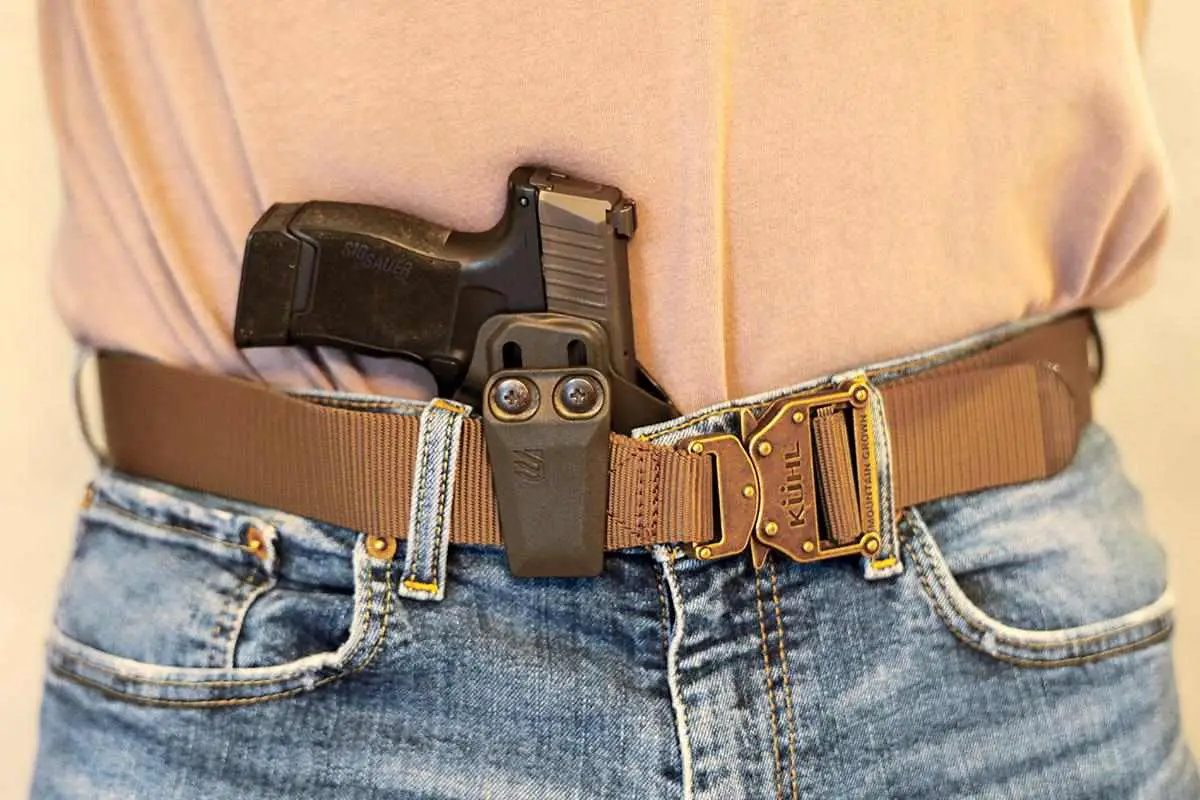
Appendix Carry, commonly referred to as AIWB (Appendix Inside the Waistband), is a concealed carry method where the firearm is positioned inside the waistband at the front of the body. The typical placement is between the 12 o’clock and 2 o’clock position, depending on body type and handedness. For a right-handed shooter, this usually means the holster sits slightly to the right of the belt buckle area. This forward position allows the firearm to remain concealed while still being highly accessible in a defensive scenario.
In daily concealed carry, AIWB works by keeping the firearm close to the body’s centerline. This positioning allows the user to draw the pistol with a more direct, vertical motion rather than reaching around the side of the body. Many carriers appreciate this efficiency, especially in scenarios where every fraction of a second matters. Additionally, because the firearm is located at the front of the body, it tends to remain more accessible in situations where the user is seated in a car or confined space.
Appendix carry has become increasingly popular in recent years due to improvements in holster design, training methods, and overall awareness within the concealed carry community. Modern holsters are now designed with enhanced retention, rigid structures, and built-in safety features such as trigger guards and sweat guards. These advancements have helped address earlier concerns about comfort and safety, making AIWB a more practical option for a wide range of users. In addition, professional instructors and defensive shooting schools have helped normalize appendix carry as a legitimate and effective method when used responsibly and with proper training.
Key Characteristics of Appendix Carry
Front Waistband Positioning
One of the defining features of appendix carry is its front waistband positioning. Unlike traditional hip carry, AIWB places the firearm near the centerline of the body. This positioning allows for easier concealment under a tucked shirt, jacket, or even casual clothing. Because the gun sits closer to the natural forward-facing silhouette, it can be less prone to printing when the user is standing upright. However, clothing selection and holster fit remain critical to maintaining effective concealment throughout the day.
Direct Access Draw Motion
Another key advantage of appendix carry is the direct access draw motion. Since the firearm is positioned at the front of the body, the draw stroke is typically shorter and more linear compared to strong side carry. The user can bring their hand directly to the firearm without excessive arm movement or torso rotation. This can result in faster draw times when properly trained. However, this efficiency depends heavily on consistent practice, as improper technique can reduce speed and safety.
Modern Holster Design Improvements
Modern holster design has played a major role in the rise of appendix carry. Today’s AIWB holsters are built with reinforced materials, adjustable retention systems, and improved ergonomics to increase both safety and comfort. Many designs include features like claw attachments to reduce printing and wedge systems to improve body fit. These innovations help the firearm sit more naturally against the body, reducing discomfort during long periods of wear. As a result, appendix carry has evolved from a niche technique into a widely accepted concealed carry standard for many experienced users.
What Is Strong Side Carry?
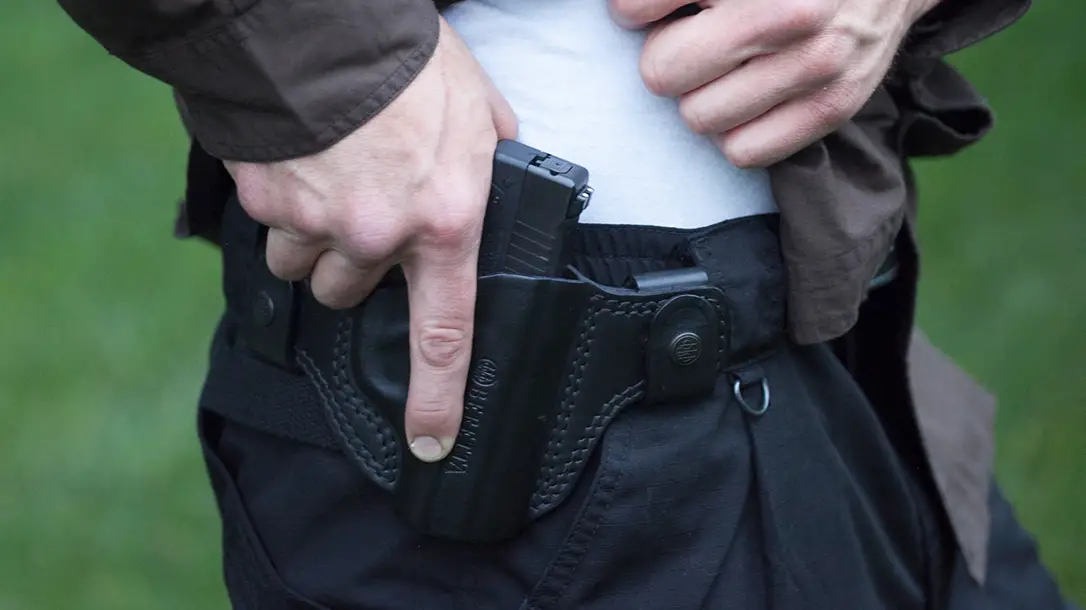
Strong Side Carry is one of the most traditional and widely recognized methods of concealed carry. In this setup, the firearm is positioned inside the waistband along the dominant side of the body, typically between the 3 o’clock and 5 o’clock position. For a right-handed shooter, this means the holster sits along the right hip or slightly behind it. For a left-handed shooter, the position mirrors on the left side. This placement has been a standard in concealed carry for decades and remains a reliable choice for many firearm owners.
As a traditional concealed carry method, strong side carry has long been favored for its simplicity and natural alignment with human movement. It does not require significant adjustments to how a person moves, sits, or stands throughout the day. The draw stroke follows a familiar motion—reaching to the hip, clearing the garment, and bringing the firearm into position. Because of this intuitive design, strong side carry is often one of the first methods taught to new concealed carriers and is widely used in both civilian and professional environments.
Despite the rise of newer carry methods like appendix carry, strong side carry remains widely used in law enforcement and civilian concealed carry. Many police officers continue to use strong side positioning when off duty due to its comfort and familiarity under stress. Civilian carriers also appreciate its balance of concealment and ease of use. While it may not always offer the fastest draw compared to appendix carry, it is considered a proven and dependable method that has stood the test of time in real-world defensive situations.
Key Characteristics of Strong Side Carry
Holster Placement on Dominant Hip
The defining feature of strong side carry is its holster placement on the dominant hip. This positioning allows the firearm to rest naturally along the side of the body, where the arms can easily reach it without excessive movement. Many users find this placement comfortable because it aligns with how the body naturally hangs at rest. Depending on preference, the holster may sit directly at the 3 o’clock position or slightly behind the hip at 4 or 5 o’clock. This flexibility allows carriers to adjust for comfort, concealment, and body shape.
Natural Arm Movement for Draw
Strong side carry benefits from a very natural arm movement during the draw stroke. The dominant hand simply moves down toward the hip, clears the covering garment, and establishes a grip on the firearm. This motion feels intuitive for most users, especially those with prior firearm training. Because the movement is lateral rather than frontal, many carriers find it easier to maintain consistency under stress. However, the draw may require more upper body movement compared to appendix carry, especially when seated or confined.
Long-Standing Standard Carry Position
One of the reasons strong side carry remains popular is its long-standing history as the standard concealed carry position. For decades, it has been the default method taught in many training programs and adopted by military and law enforcement personnel. Its reputation is built on reliability, comfort, and simplicity rather than speed optimization. Even with modern innovations in holster design and alternative carry methods, strong side carry continues to be a trusted option for individuals who prioritize stability and ease of use in everyday concealed carry situations.
Appendix Carry vs Strong Side Carry – Key Comparison Factors
When comparing Appendix Carry vs Strong Side Carry, it is important to understand that both methods are effective but optimized for different priorities. The differences become most noticeable when evaluating real-world performance factors such as draw speed, comfort, concealment, safety, and how each method behaves in seated or dynamic environments. Rather than identifying a single “best” option, this comparison highlights how each carry style performs under specific conditions. The right choice depends heavily on individual training, body type, daily routine, and personal comfort with the firearm’s positioning.
1. Draw Speed and Accessibility
One of the most discussed differences between appendix and strong side carry is draw speed. Appendix carry is generally considered faster because it places the firearm on the front centerline of the body. This allows the shooter to access the gun with a more direct and shorter movement path. The hand travels a minimal distance, and the firearm is presented quickly into the firing position. For many trained users, this can result in faster first-shot times under pressure.
Strong side carry, while still effective, typically involves a slightly longer reach to the hip area. The draw motion is more lateral, requiring the shooter to move the arm across the body or down the side before acquiring the grip. Although this may add a fraction of time, it is often perceived as more natural for users who have trained extensively with this position. Muscle memory plays a major role here, and with consistent practice, strong side draw speed can become highly efficient.
Ultimately, training often matters more than position alone. A well-trained shooter using strong side carry can outperform an untrained appendix carrier, and vice versa. Efficiency in draw speed depends not just on carry method but on repetition, consistency, and situational awareness under stress.
2. Comfort and Everyday Wear
Comfort is one of the strongest deciding factors when choosing between appendix and strong side carry. Strong side carry is widely recognized for its comfort during extended wear. Because the firearm rests along the natural curve of the hip, it allows for easier movement throughout the day. Sitting, bending, and walking are generally more comfortable with this setup, especially for individuals who spend long hours in office chairs or vehicles.
Appendix carry, on the other hand, can present comfort challenges for some users. Since the firearm is positioned at the front of the body, it may press against the abdomen when sitting or bending. This can be adjusted with holster design, belt tension, and ride height, but it often requires some experimentation. However, many experienced carriers report that with proper setup, AIWB becomes comfortable enough for daily wear.
Body type plays a significant role in comfort. Leaner individuals may find appendix carry easier to manage, while others may prefer strong side positioning due to body shape and flexibility. Clothing style and belt quality also heavily influence comfort outcomes for both methods.
3. Concealment and Printing
Concealment is another major factor in the appendix carry vs strong side carry debate. Appendix carry often provides superior concealment, especially under light or fitted clothing. Because the firearm sits at the front of the body, it aligns with the natural forward profile, making it easier to conceal without obvious printing when standing upright. This is one of the reasons AIWB has grown in popularity in modern concealed carry culture.
Strong side carry can also be well concealed, but it is more sensitive to body movement. Twisting, bending, or reaching can cause the grip of the firearm to print against clothing. This is particularly noticeable in tighter garments or when carrying larger firearms. However, with proper holster selection, belt support, and wardrobe adjustments, strong side carry can still remain highly discreet.
Clothing choice becomes critical in both methods. Appendix carry often benefits from looser shirts or structured waistbands, while strong side carry may require layered clothing or jackets to reduce printing during movement.
4. Safety Considerations
Safety is a central topic when evaluating concealed carry positions. Appendix carry has specific safety concerns due to the direction of the muzzle during holstering and reholstering. Since the firearm points toward the body during these actions, strict discipline and proper technique are essential. Quality holsters with rigid trigger guards are critical to minimizing risk, and users must avoid careless reholstering under stress.
Strong side carry generally presents a different safety profile. The muzzle is typically oriented away from sensitive areas of the body, which many users consider more forgiving during holstering. This positioning reduces perceived risk during administrative handling of the firearm.
Regardless of carry method, training and trigger discipline are non-negotiable. Safe handling habits, consistent training, and awareness of muzzle direction are essential for both appendix and strong side carry. No carry position is inherently unsafe when used correctly, but each requires a different level of attention to detail.
5. Seated and Vehicle Access
Seated access is an area where appendix carry often has a practical advantage. Because the firearm is positioned at the front of the body, it remains more accessible when sitting in a chair or driving a vehicle. The user does not need to reach around seat belts or seat backs, which can make access more straightforward in confined spaces.
Strong side carry can become more difficult in seated positions. Seat belts, car seats, and armrests can interfere with the draw stroke, requiring the user to adjust posture or shift slightly before accessing the firearm. While this is manageable with training, it is generally less convenient compared to appendix positioning.
In real-world defensive scenarios, where access speed matters, seated draw capability can be a meaningful advantage. However, this must always be balanced with comfort and safety considerations.
6. Retention and Gun Security
Retention refers to how securely the firearm is held and how easily the carrier can monitor and control access to it. Appendix carry offers strong self-awareness, as the firearm remains in the user’s direct line of sight and physical awareness zone. This can make it easier to detect attempts at disarming or interference.
Strong side carry offers a different type of advantage. Because the firearm sits at the side or rear hip, it may be less visible and less accessible to a potential front-facing threat in close proximity. However, depending on clothing and holster design, it may also be more exposed during certain movements such as bending or reaching.
Each method has unique retention considerations, and neither is universally superior. Proper holster quality and situational awareness are more important than positioning alone when it comes to weapon security.
7. Ease of Learning and Training
Strong side carry is often considered more beginner-friendly. Its draw stroke feels natural to most new shooters, and it aligns with traditional firearm training methods. Because of this familiarity, many instructors introduce strong side carry first before exploring alternative positions.
Appendix carry requires a more deliberate training approach. The draw stroke is different, and safe reholstering techniques must be practiced carefully. However, once mastered, many users find it highly efficient and repeatable under stress. The learning curve is steeper, but the performance benefits can be significant for those willing to invest time in training.
In the end, both carry methods reward consistent practice. The best system is not necessarily the easiest to learn, but the one the user can train with safely and confidently over time.
Pros and Cons Summary Table
After comparing Appendix Carry vs Strong Side Carry across speed, comfort, concealment, safety, and real-world usability, it becomes clear that each method offers a distinct set of strengths and limitations. Instead of one being universally superior, the better approach is to evaluate how each aligns with your daily routine, training level, and physical comfort. The summary below breaks down the key advantages and disadvantages of both carry styles in a clear, practical format for quick reference.
Appendix Carry Advantages
Appendix carry is often favored by experienced carriers who prioritize speed and concealment. Its most notable advantage is the ability to access the firearm quickly due to its front-centered position. This direct alignment with the shooter’s hands reduces draw distance and can improve response time in high-stress situations when properly trained.
Another major benefit is improved concealment. Because the firearm sits along the front of the body, it naturally aligns with the body’s forward profile. This often reduces printing, especially when standing or walking. For many users, this makes appendix carry highly effective for discreet everyday carry in a variety of clothing styles.
Additionally, appendix carry offers better seated access compared to strong side carry. Whether sitting in a car, at a desk, or in a confined space, the firearm remains easier to reach without needing to reposition the body significantly. This can be a critical advantage in certain real-world defensive scenarios where access speed matters.
Appendix Carry Disadvantages
Despite its advantages, appendix carry is not without challenges. One of the most commonly mentioned drawbacks is comfort. Because the firearm is positioned at the front of the body, it can create pressure when sitting, bending, or performing everyday movements. This discomfort varies significantly depending on body type, holster design, and firearm size, but it is an important consideration for long-term wear.
Another disadvantage is the level of training discipline required. Appendix carry demands careful attention to safe reholstering techniques due to the muzzle’s direction toward the body. Users must develop strong habits and consistent awareness to ensure safe handling. Without proper training, this method can introduce unnecessary risk, especially for beginners.
Strong Side Advantages
Strong side carry remains popular largely because of its comfort and simplicity. The firearm rests naturally along the hip or rear waistband area, which allows for more comfortable extended wear. This makes it particularly suitable for users who carry for long hours throughout the day or prioritize minimal physical interference.
It is also considered easier for beginners to learn. The draw motion feels intuitive, as it follows a natural arm movement toward the hip. This familiarity allows new carriers to build confidence more quickly without needing to adjust to a more complex draw angle.
In addition, strong side carry supports natural movement throughout daily activities. Sitting, walking, and bending are generally more comfortable, making it a practical option for individuals with active or unpredictable daily routines.
Strong Side Disadvantages
One of the primary disadvantages of strong side carry is slower draw speed compared to appendix carry. The reach to the hip requires a longer motion path, which can slightly increase response time in critical situations. While training can reduce this gap, the structural difference remains.
Another limitation is increased printing risk. Because the firearm sits on the side of the body, it can become more visible when bending, twisting, or reaching. Clothing choices and holster positioning can help reduce this issue, but it generally requires more attention compared to appendix carry’s natural concealment advantages.
Overall, both carry methods present a balanced trade-off between comfort, speed, and concealment. The ideal choice depends on what the carrier prioritizes most in their daily environment and defensive mindset.
Who Should Choose Appendix Carry?
Appendix Carry (AIWB) is not a one-size-fits-all solution, but it is an excellent choice for specific types of concealed carriers who prioritize performance, accessibility, and modern concealment efficiency. Understanding who benefits most from this carry method helps ensure safer, more effective daily use and reduces the trial-and-error phase many new carriers experience.
One of the primary groups that benefit from appendix carry is users who prioritize speed and concealment. Because the firearm sits along the front centerline of the body, it allows for a shorter and more direct draw stroke. This positioning can be advantageous in defensive scenarios where reaction time matters. At the same time, AIWB often conceals well under everyday clothing, especially when paired with properly designed holsters and a supportive belt system. For individuals who value both quick access and discreet carry, appendix positioning offers a strong balance between the two.
Another group well-suited for appendix carry includes people who sit often during their daily routine. This includes drivers, office workers, rideshare operators, and individuals who spend significant time in confined seating positions. Because the firearm is positioned at the front of the body, it tends to remain more accessible when seated compared to strong side carry, which can be partially obstructed by seat belts, chair backs, or vehicle interiors. This seated accessibility is one of the practical reasons AIWB has gained popularity in modern concealed carry discussions.
Appendix carry also works best for those who are willing to train regularly. This method requires a higher level of discipline, particularly when it comes to safe holstering and consistent draw mechanics. Users must develop strong habits to ensure safe handling, especially given the muzzle direction during reholstering. With proper training, however, appendix carry can become extremely efficient and repeatable under stress. It rewards consistency and practice more than casual or occasional use.
Finally, body type and holster setup play an important role. Users with compatible body structures—often those who can comfortably position the firearm without excessive pressure when sitting or moving—tend to adapt more easily to AIWB. Equally important is selecting a high-quality holster designed specifically for appendix carry, as features like adjustable ride height, claw attachments, and wedge systems can significantly improve comfort and concealment performance. Without the right setup, even experienced carriers may struggle to fully benefit from this method.
Who Should Choose Strong Side Carry?
Strong Side Carry remains a highly practical and widely trusted option, especially for individuals who prioritize simplicity, comfort, and familiarity over maximum speed. It has been used for decades across civilian, law enforcement, and professional environments, and continues to be a reliable choice for many concealed carriers today.
One of the best candidates for strong side carry is beginners in concealed carry. This method is often easier to understand and implement due to its natural alignment with basic firearm training principles. The draw motion feels intuitive—simply reaching toward the dominant hip—which allows new carriers to build confidence without immediately dealing with more complex positioning or safety considerations associated with appendix carry.
Strong side carry is also ideal for users who prioritize comfort over speed. Because the firearm rests along the hip or rear waistband area, it generally interferes less with sitting, bending, and general movement throughout the day. For individuals who carry for extended periods, especially in work environments or during long commutes, this added comfort can make a significant difference in daily wearability and consistency.
Another group well-suited for strong side carry includes people who prefer looser or layered clothing. Strong side positioning often integrates more naturally with jackets, hoodies, or relaxed-fit garments. These clothing styles can help reduce printing and make concealment easier without requiring tight-fitting attire or frequent wardrobe adjustments. For users who value flexibility in clothing choices, strong side carry provides a dependable and adaptable solution.
Lastly, strong side carry is a good option for those who are uncomfortable with appendix carry positioning. Some individuals may find front-waistband placement intrusive or less natural due to body mechanics, comfort levels, or personal preference. Strong side carry offers a more traditional and less intrusive alternative, allowing users to maintain effective concealed carry without adapting to a more demanding positioning system. For many carriers, comfort and confidence ultimately outweigh marginal gains in speed or concealment.
Real-World Usage Considerations
When evaluating Appendix Carry vs Strong Side Carry, theoretical advantages only tell part of the story. In real-world concealed carry, daily habits, environment, and personal routine often determine which method performs best. A carry position that works well on the range may behave very differently during a full workday, while driving, or during physical movement. Understanding these practical considerations helps carriers make a more informed and sustainable choice.
One of the most important factors is daily lifestyle impact. For individuals working in office environments, spending long hours seated can significantly influence comfort and accessibility. Appendix carry often provides easier access while sitting, especially in chairs with limited mobility or when wearing a seatbelt in a vehicle. However, it may require minor adjustments in posture or belt tension to remain comfortable throughout the day. Strong side carry, on the other hand, is typically more forgiving in terms of all-day comfort, especially during standing or walking tasks. It tends to integrate more naturally into routine movement without requiring frequent adjustments.
Driving is another critical consideration. In a vehicle, appendix carry can offer a more direct access path since the firearm is positioned at the front of the body and less obstructed by seatbacks or center consoles. Strong side carry may require additional body movement or shifting in the seat to access the firearm effectively. However, some users prefer strong side positioning because it feels less intrusive against the abdomen during long drives. Ultimately, vehicle ergonomics and seat configuration can strongly influence which method feels more practical.
Active movement throughout the day—such as bending, lifting, or walking—also plays a role. Strong side carry often performs better during dynamic physical activity because the firearm rests naturally along the hip and moves more fluidly with the body. Appendix carry can require more attention during bending or squatting, especially with larger firearms or less flexible holster setups. These differences are not absolute, but they become more noticeable during physically demanding routines.
Clothing choices and seasonal differences are equally important. In warmer months, lighter clothing can make concealment more challenging. Appendix carry often excels in these conditions due to its central positioning, which can reduce printing under a simple T-shirt. In contrast, strong side carry may benefit from layered clothing such as jackets or overshirts, which help break up the outline of the firearm. Seasonal wardrobe changes often influence which carry method feels more practical at different times of the year.
Firearm size compatibility should also be considered. Smaller, compact pistols generally work well with appendix carry because they are easier to conceal at the front of the body. Larger firearms can still be carried appendix, but may require more precise holster setup and clothing adjustments. Strong side carry tends to be more forgiving with a wider range of firearm sizes, especially mid-size and full-size pistols, since the hip area naturally accommodates more bulk.
Holster quality is one of the most critical factors regardless of carry position. A well-designed holster improves retention, safety, and comfort, while a poorly made holster can negatively affect both appendix and strong side carry performance. Features such as rigid trigger guards, adjustable ride height, secure belt clips, and sweat guards contribute significantly to safe and effective concealed carry. In many cases, holster quality matters more than the carry position itself.
Expert Insight – There Is No “One Best Method”
In professional concealed carry training, one principle consistently stands out: there is no single “best” carry method for everyone. Both appendix and strong side carry have proven effectiveness in real-world defensive contexts, but their performance depends heavily on the individual using them.
Body shape is one of the most influential factors. A carry position that feels comfortable and conceals well on one person may be impractical for another. Appendix carry may suit slimmer body types more naturally, while strong side carry may offer better comfort for individuals with different body proportions. However, these are general tendencies rather than strict rules.
Experience level also plays a major role. Beginners often find strong side carry easier to learn due to its intuitive draw motion and traditional training foundation. More experienced carriers may transition to appendix carry as they refine their technique and seek faster access or improved concealment. Over time, many users experiment with both methods as their skills and preferences evolve.
Lifestyle is another key determinant. A person who spends most of their day seated in a vehicle or office may lean toward appendix carry for accessibility, while someone with a more physically active or outdoor-oriented routine may prefer strong side carry for comfort and mobility. The “best” method often aligns more with daily life than with abstract performance metrics.
Training consistency ultimately determines how effective any carry method becomes. A well-trained carrier using strong side carry will often outperform a poorly trained appendix carrier, and vice versa. Regular practice, safe handling habits, and familiarity with the chosen setup are far more important than the carry position itself.
For this reason, many experienced carriers do not limit themselves to a single method. Instead, they adapt based on situation, clothing, environment, or activity level. Some may carry appendix during certain daily routines and switch to strong side carry in others. This flexibility allows them to balance comfort, concealment, and performance based on real-world conditions rather than rigid preference alone.
Ultimately, concealed carry is a personal system, not a universal formula. The most effective approach is the one that fits the user’s body, lifestyle, and training commitment while maintaining consistent safety and accessibility.
Final Verdict
When it comes to Appendix Carry vs Strong Side Carry, there is no universal winner that applies to every concealed carrier. Both methods have been tested extensively in real-world defensive situations, and both continue to be widely used because they solve different problems in different ways. The final decision should not be based on trends or opinions alone, but on how each method fits into your daily life, training habits, and comfort level with carrying a defensive firearm.
Appendix carry is often considered the stronger option for users who prioritize speed and concealment. Its forward positioning allows for a shorter and more direct draw stroke, which can be beneficial in high-stress scenarios where reaction time matters. In addition, AIWB tends to conceal very effectively under everyday clothing when properly set up, making it a preferred choice for those who want a discreet yet highly accessible carry method. However, this performance advantage comes with a trade-off in comfort and requires consistent training to ensure safe and effective use.
Strong side carry, on the other hand, remains the preferred choice for those who value comfort and simplicity. Its placement along the hip allows for natural body movement, making it easier to wear for extended periods without significant discomfort. The draw stroke is intuitive and aligns well with traditional firearm training, which makes it especially suitable for beginners or users who prefer a more straightforward approach to concealed carry. While it may not always match appendix carry in speed or concealment under certain conditions, its reliability and ease of use continue to make it a trusted standard.
In the end, the best concealed carry method is not about choosing one side of the debate, but about finding a personalized balance that fits your unique needs. Many experienced carriers recognize that both appendix and strong side carry have their place, and some even switch between them depending on the situation, clothing, or environment. This flexibility allows for a more adaptable and practical approach to everyday concealed carry.
Ultimately, the right choice is the one that you can carry consistently, train with regularly, and deploy confidently when it matters most. Whether that is appendix carry, strong side carry, or a combination of both, the key is building a system that supports both safety and readiness in real-world conditions.
Frequently Asked Questions (FAQ) – Appendix Carry vs Strong Side Carry
1. What is the main difference between appendix carry and strong side carry?
The main difference lies in firearm positioning. Appendix carry places the firearm at the front of the body (around 12–2 o’clock), while strong side carry positions it on the dominant hip (around 3–5 o’clock). This difference affects draw speed, concealment, comfort, and how the firearm behaves during daily movement. Appendix carry prioritizes faster access and better concealment in many cases, while strong side carry emphasizes comfort and traditional usability.
2. Is appendix carry faster than strong side carry?
In most trained scenarios, appendix carry can be faster because the firearm is positioned closer to the centerline of the body. This reduces the distance the hand must travel to establish a firing grip. However, actual speed depends heavily on training. A well-trained strong side carrier can often match or outperform an untrained appendix carrier, meaning practice is more important than position alone.
3. Is strong side carry safer than appendix carry?
Strong side carry is often perceived as safer because the muzzle is generally pointed away from sensitive areas of the body during holstering. Appendix carry requires more discipline because the muzzle is oriented toward the body when reholstering. However, both methods are safe when proper holsters, trigger discipline, and training procedures are followed consistently.
4. Is appendix carry uncomfortable?
Appendix carry can be uncomfortable for some users, especially when sitting or bending. However, comfort depends on holster design, firearm size, belt setup, and body type. Many modern holsters include features like wedges and claws that improve comfort significantly. With proper adjustment, many users find AIWB comfortable enough for daily carry.
5. Is strong side carry good for beginners?
Yes, strong side carry is widely recommended for beginners because it follows a more natural and intuitive draw motion. It also has a long history in firearm training programs. Beginners often find it easier to learn and safer to practice initially before exploring more advanced positions like appendix carry.
6. Can appendix carry print less than strong side carry?
Yes, appendix carry often produces less printing, especially when standing. The firearm sits along the natural front profile of the body, making it easier to conceal under light clothing. Strong side carry can print more during movement such as bending or twisting, depending on clothing fit and holster position.
7. Which carry position is better for driving?
Appendix carry is generally better for driving because the firearm remains accessible in a seated position. Strong side carry can be harder to access in vehicles due to seat belts and seat positioning. However, comfort varies by individual and vehicle type.
8. Does body type affect carry choice?
Yes, body type plays a major role. Leaner individuals may find appendix carry easier to conceal and more comfortable, while others may prefer strong side carry due to reduced pressure on the abdomen. There is no universal rule, and experimentation is often necessary.
9. What is the best holster for appendix carry?
The best appendix holsters are rigid, have strong trigger protection, and often include features like adjustable ride height, retention screws, and concealment claws. High-quality holsters improve both safety and comfort significantly, making them essential for AIWB carry.
10. What is the best holster for strong side carry?
Strong side holsters typically focus on comfort, stability, and secure retention. They should allow smooth draw motion while maintaining concealment under clothing. Materials like Kydex are commonly used due to durability and consistent retention.
11. Is appendix carry legal everywhere?
Carry laws vary by country, state, and region. Appendix carry itself is generally legal where concealed carry is permitted, but regulations may differ regarding licensing and firearm transport. Always check local laws before carrying a firearm in any position.
12. Does appendix carry work with all firearms?
Appendix carry works best with compact and subcompact firearms, though full-size pistols can also be carried with proper holster setup. Larger firearms may require more adjustment in belt tension and positioning to remain comfortable.
13. Can strong side carry be used with large pistols?
Yes, strong side carry often accommodates larger firearms more easily than appendix carry. The hip position distributes weight more naturally, making it comfortable for full-size pistols over long periods.
14. Which carry method is more comfortable for long hours?
Strong side carry is generally more comfortable for extended wear due to its natural positioning along the hip. Appendix carry may require adjustment for long sitting periods, though modern holster designs can improve comfort significantly.
15. Can I switch between appendix and strong side carry?
Yes, many experienced carriers switch between both methods depending on clothing, environment, or activity. This flexibility allows users to adapt their carry style to different real-world situations.
16. Which carry method is more popular today?
Both methods are widely used, but appendix carry has grown in popularity in recent years due to improved holster designs and faster accessibility. Strong side carry remains a long-standing standard, especially among beginners and law enforcement.
17. Does appendix carry require more training?
Yes, appendix carry generally requires more focused training, especially for safe reholstering techniques. Users must develop strong habits to ensure safety since the muzzle is closer to the body during handling.
18. Is strong side carry outdated?
No, strong side carry is not outdated. It remains a highly effective and widely used method. While newer techniques like appendix carry offer advantages in speed and concealment, strong side carry continues to be a reliable standard.
19. Which carry method is best for concealed carry beginners?
Strong side carry is usually recommended for beginners due to its simplicity and natural draw motion. It allows new carriers to focus on fundamentals before transitioning to more advanced methods if desired.
20. Can appendix carry be used with formal clothing?
Yes, appendix carry can work with formal clothing if properly set up. Many users find it easier to conceal under dress shirts or tailored clothing because of its central positioning.
21. Does strong side carry require special clothing?
Strong side carry often benefits from looser or layered clothing to reduce printing. Jackets, hoodies, and untucked shirts can improve concealment significantly.
22. Which carry method is better for self-defense situations?
Both methods are effective in self-defense situations when paired with proper training. Appendix carry may offer faster access, while strong side carry provides comfort and familiarity under stress.
23. Is appendix carry more dangerous than strong side carry?
Appendix carry is not inherently more dangerous, but it requires stricter discipline during reholstering. With proper training and a quality holster, it is considered safe by many professionals.
24. What is the best position for concealment under a T-shirt?
Appendix carry often performs better under a simple T-shirt because it aligns with the body’s natural front shape, reducing printing in many cases.
25. Does strong side carry print more when sitting?
Yes, strong side carry can print more when sitting or bending, especially if clothing is tight. Adjustments in holster position and clothing can help reduce this issue.
26. Can appendix carry cause discomfort when sitting?
Yes, some users experience discomfort when sitting with appendix carry, especially with poorly adjusted holsters. Proper setup can significantly reduce this issue.
27. Which carry method is better for active movement?
Strong side carry often performs better during active movement because it interferes less with bending and physical activity.
28. Can I use appendix carry at the gym?
Most users do not recommend carrying at the gym due to movement intensity and safety concerns. If carried, strong retention holsters and careful movement awareness are required.
29. Does holster quality matter for both methods?
Yes, holster quality is critical for both appendix and strong side carry. A poor holster can compromise safety, concealment, and comfort regardless of position.
30. Can I carry appendix with a large belly?
It may be more challenging but not impossible. Proper holster adjustment and experimentation are required. Many users with different body types successfully carry appendix.
31. Is appendix carry suitable for all body types?
Appendix carry can work for many body types, but it is not equally comfortable for everyone. Slim and متوسط builds often adapt more easily because there is less abdominal pressure when sitting or moving. However, individuals with larger body types can still use appendix carry effectively with the right holster setup, belt adjustment, and firearm size selection. The key factor is experimentation—small changes in ride height and cant angle can dramatically improve comfort and concealment.
32. Does strong side carry slow down reaction time significantly?
Strong side carry may be slightly slower than appendix carry in pure draw mechanics because the hand must travel further to reach the firearm. However, in real-world defensive scenarios, the difference is often minimal when the user is properly trained. Stress, clothing, and situational awareness usually have a greater impact on reaction time than carry position alone.
33. Can appendix carry be used with a tucked-in shirt?
Yes, appendix carry can work with a tucked-in shirt when using a proper holster setup and concealment strategy. Many users pair AIWB holsters with tuckable clips that allow the shirt to be neatly tucked over the firearm. This makes appendix carry a popular choice for business or formal environments where untucked clothing is not an option.
34. Is strong side carry better for sitting long hours at a desk?
Strong side carry is often more comfortable for long periods of sitting because it avoids direct pressure on the abdomen. Many office workers prefer it for this reason. However, appendix carry can still be used comfortably with proper adjustment, especially if the holster includes a wedge or ride-height customization.
35. Which carry method is better for concealed carry training classes?
Strong side carry is traditionally more common in basic training classes because it is easier to teach and learn. It aligns with standard firearm handling fundamentals and reduces early discomfort for beginners. However, many advanced classes now include appendix carry training due to its growing popularity.
36. Does appendix carry affect mobility when running or exercising?
Yes, appendix carry can feel restrictive during high movement activities like running or bending. The firearm’s front position may shift or press against the body if not properly secured. For this reason, most instructors recommend avoiding strenuous physical activity while carrying or switching to a more stable carry method if necessary.
37. Is strong side carry more stable during physical activity?
Generally, yes. Strong side carry tends to remain more stable during walking, bending, or light physical activity because it sits along the natural curve of the hip. This reduces movement and shifting compared to front-positioned appendix carry.
38. Can appendix carry be concealed under tight clothing?
Yes, appendix carry often performs better under tighter clothing due to its central positioning. However, extremely tight clothing can still cause printing depending on firearm size and holster design. Proper belt tension and concealment accessories like holster claws help improve results.
39. Does strong side carry require less maintenance in training?
Strong side carry is often easier to maintain in terms of training consistency because the draw stroke is more intuitive for beginners. Appendix carry requires more deliberate practice, especially for safe reholstering techniques, making strong side slightly lower maintenance for casual users.
40. Which carry method is better for summer clothing?
Appendix carry often works better in summer because it can conceal effectively under a simple T-shirt. Strong side carry may require looser shirts or layered clothing to avoid printing, which can be more challenging in hot weather.
41. Is appendix carry harder to conceal while bending over?
It can be slightly more noticeable when bending forward, especially if the holster is not adjusted correctly. However, with proper ride height and concealment claw features, many users successfully minimize printing even during movement.
42. Does strong side carry limit access while wearing a backpack?
Yes, backpacks or shoulder straps can interfere with strong side carry access by blocking the dominant hand path or covering the holster area. Appendix carry is generally less affected by backpack straps.
43. Which carry method is better for beginners in law enforcement?
Strong side carry is still widely used in law enforcement training due to its simplicity and long-standing familiarity. However, appendix carry is increasingly adopted for off-duty or plainclothes situations depending on agency policies.
44. Can appendix carry improve concealment with minimal clothing layers?
Yes, appendix carry is often more effective with minimal clothing because it aligns with the body’s natural front silhouette. This makes it easier to conceal without needing jackets or heavy layers.
45. Does strong side carry require more wardrobe adjustments?
In some cases, yes. Strong side carry may require looser shirts or outer layers to reduce printing, especially when carrying larger firearms. Clothing choice plays a significant role in maintaining concealment.
46. Is appendix carry more sensitive to belt quality?
Yes, appendix carry relies heavily on a strong, supportive belt to maintain proper firearm positioning and stability. A weak belt can cause shifting, discomfort, and reduced concealment performance.
47. Can strong side carry be used in professional environments?
Yes, strong side carry is widely used in professional environments, especially where discretion and comfort are priorities. It remains a trusted option for both civilian professionals and security personnel.
48. Which carry method is easier to switch between daily activities?
Strong side carry is generally easier to adapt across different daily activities because it interferes less with body movement. Appendix carry may require more awareness during transitions like sitting, standing, or driving.
49. Does appendix carry require more attention when reholstering?
Yes, appendix carry requires careful and deliberate reholstering technique due to muzzle direction toward the body. This is one of the most important safety considerations and requires consistent training habits.
50. What is the most important factor when choosing between appendix and strong side carry?
The most important factor is personal consistency. The best carry method is the one you can wear comfortably, train with regularly, and deploy confidently under stress. Speed, comfort, concealment, and safety all matter, but long-term consistency is what ultimately determines effectiveness.
51. Can experienced carriers use both appendix and strong side carry?
Yes, many experienced carriers switch between both methods depending on clothing, environment, or activity. This flexibility allows them to adapt to different real-world conditions and balance comfort, concealment, and accessibility as needed.
Read more: