
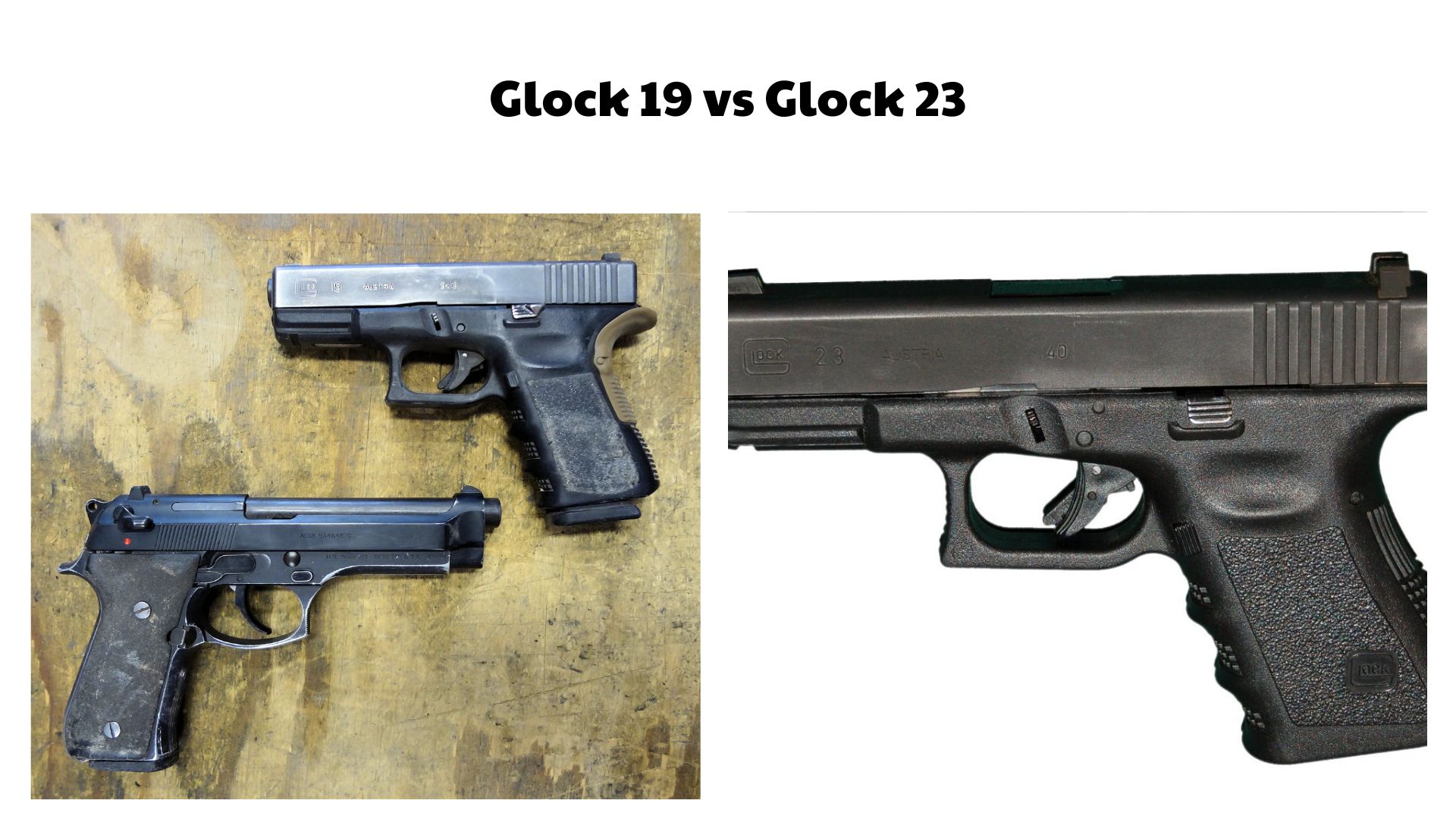

The Glock brand has established itself as one of the most dominant names in the compact pistol market, widely used by civilians, law enforcement, and military professionals around the world. Known for their simplicity, reliability, and durability, Glock pistols have become a standard reference point in modern handgun design.
Among the most frequently compared models are the Glock 19 and Glock 23. These two pistols share the same platform, meaning they have nearly identical dimensions and ergonomics, but differ primarily in caliber. The Glock 19 is chambered in 9mm, while the Glock 23 uses the more powerful .40 S&W cartridge.
This comparison is important because both pistols appeal to similar users but deliver different shooting experiences. The Glock 19 is known for lower recoil, higher capacity, and lower ammunition cost, while the Glock 23 is associated with increased bullet energy and traditional stopping power advantages.
When choosing between the two, several key factors come into play, including recoil control, stopping power, magazine capacity, and cost of ammunition. Each of these factors significantly influences real-world performance and user preference.
This article will explore a full breakdown of specifications, performance differences, real-world applications, advantages and disadvantages, as well as expert and user insights to help determine which model best suits different shooting needs.
Glock 19 vs Glock 23 – Core Specifications Comparison
Shared Dimensions & Platform
The Glock 19 and Glock 23 are built on the same compact Glock frame platform, meaning they share nearly identical physical dimensions and handling characteristics. Both models feature the same barrel length of approximately 4.02 inches, making them compact and suitable for concealed carry.
They also share the same overall length of about 7.36 inches and a similar width profile, which contributes to consistent ergonomics and holster compatibility between the two models in many cases.
Because of these similarities, both pistols feel nearly identical in the hand, and most differences in shooting experience come from caliber performance rather than physical design.
Key Differences
The primary distinction between the Glock 19 and Glock 23 is their caliber. The Glock 19 is chambered in 9mm, which is widely regarded for its balance of controllability, capacity, and cost efficiency. It produces lower recoil, allowing for faster follow-up shots and easier handling, especially for newer shooters.
In contrast, the Glock 23 is chambered in .40 S&W, a cartridge designed to deliver higher energy and increased bullet diameter compared to 9mm. This results in a sharper recoil impulse and more pronounced muzzle rise during rapid firing.
Another major difference is magazine capacity. The Glock 19 typically holds around 15 rounds, while the Glock 23 holds approximately 13 rounds in standard magazines. This difference is due to the larger cartridge size of the .40 S&W round.
Weight & Build
Both pistols are very similar in overall weight when unloaded, as they share the same frame design and construction materials. This makes them equally suitable for concealed carry in terms of physical burden and portability.
However, the Glock 23 features a slightly heavier slide compared to the Glock 19. This design adjustment is intended to help manage the increased recoil generated by the .40 S&W cartridge, improving overall shooting stability.
Despite this difference, the overall handling characteristics remain closely aligned, reinforcing the fact that caliber choice is the primary differentiating factor between the two models.
Caliber Comparison – 9mm vs .40 S&W
9mm (Glock 19) Performance
The 9mm cartridge used in the Glock 19 is widely regarded as one of the most balanced handgun calibers in modern firearms. One of its biggest advantages is lower recoil, which allows shooters to maintain better control and achieve faster follow-up shots during rapid fire.
Another key benefit is higher magazine capacity compared to larger calibers, making the Glock 19 more efficient in extended shooting scenarios. This increased capacity is especially valued in defensive and duty applications where round count matters.
From a practical standpoint, 9mm ammunition is also significantly more affordable and widely available than .40 S&W, making it ideal for frequent training and practice.
In recent years, many modern law enforcement agencies have shifted back to 9mm due to its improved recoil control, magazine capacity, and advancements in bullet technology that have enhanced its defensive effectiveness.
.40 S&W (Glock 23) Performance
The .40 S&W cartridge used in the Glock 23 was designed to deliver greater bullet energy and a larger projectile diameter compared to 9mm. This results in increased impact force at close range, which is often associated with stronger stopping power.
However, this performance comes with trade-offs. The .40 S&W generates more recoil and muzzle rise, which can make follow-up shots slower and more difficult to control, especially for less experienced shooters.
Despite this, the caliber has historically been popular among law enforcement agencies, particularly during the 1990s and early 2000s, when it was widely adopted as a balance between 9mm capacity and .45 ACP power.
Recoil & Shooting Experience
Glock 19 Recoil Characteristics
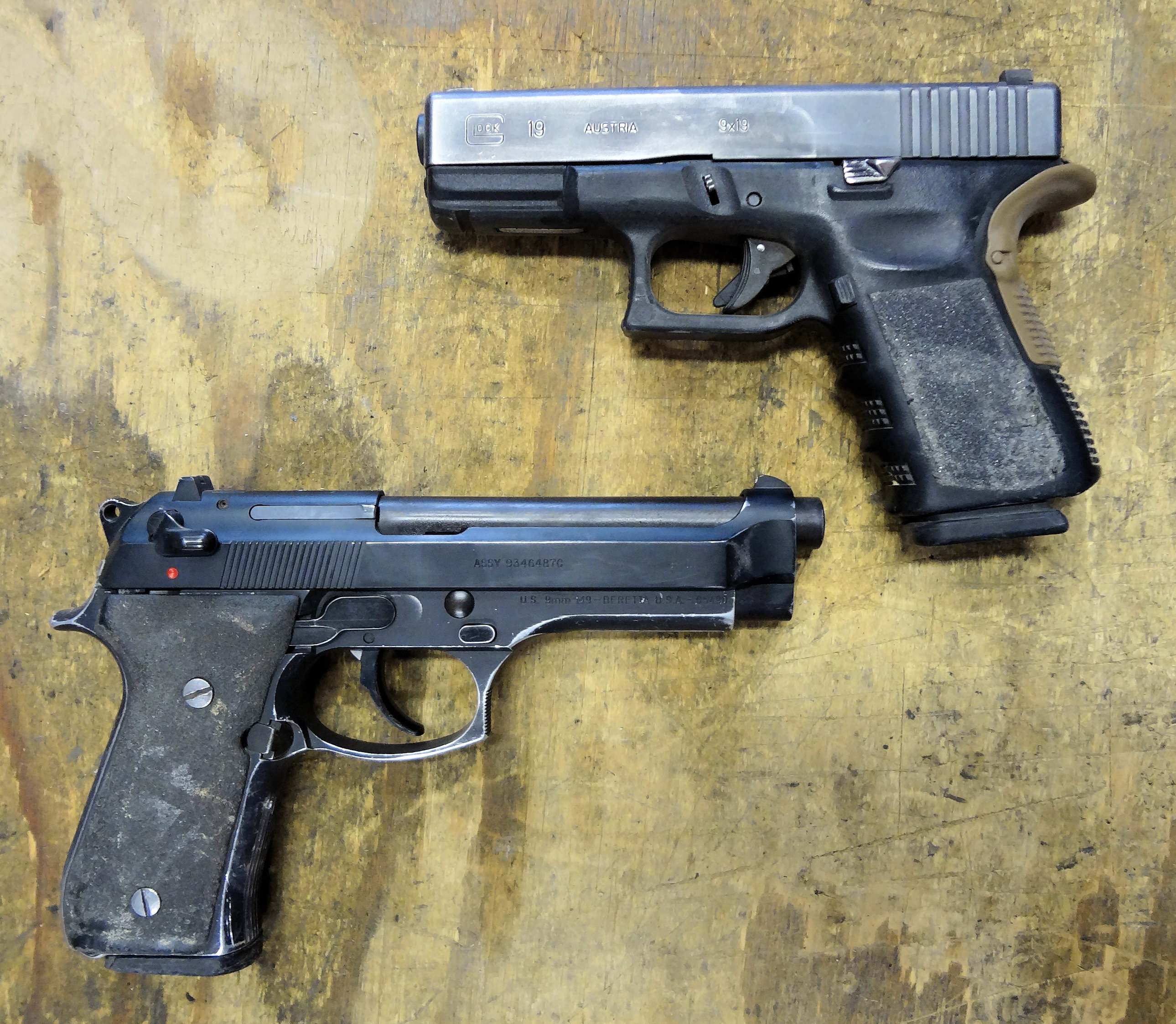
The Glock 19 is known for its smooth and highly controllable recoil impulse. The 9mm cartridge produces relatively mild kick, allowing shooters to stay on target more easily during rapid firing sequences.
This makes the Glock 19 especially beginner-friendly, as it reduces fatigue and improves confidence during extended shooting sessions. It also allows for faster target reacquisition, which is critical in defensive scenarios.
Glock 23 Recoil Characteristics
The Glock 23 produces a noticeably snappier recoil impulse due to the higher pressure of the .40 S&W cartridge. This results in more muzzle rise and a stronger kick compared to the Glock 19.
While still manageable for experienced shooters, it requires better grip technique and recoil control to maintain accuracy during rapid fire. Shooters transitioning from 9mm often notice the difference immediately.
Real-World Shooter Opinions
In real-world discussions among shooters and firearm communities, the Glock 19 is frequently described as easier to shoot accurately under stress or rapid fire conditions. Its lower recoil and higher capacity make it more forgiving in most scenarios.
The Glock 23, on the other hand, is often preferred by users who prioritize perceived stopping power and are comfortable managing increased recoil. It appeals more to experienced shooters who value energy over shootability.
Accuracy & Practical Performance
Glock 19 Accuracy
The Glock 19 is generally considered more forgiving in terms of accuracy, especially during rapid fire. The reduced recoil allows shooters to maintain tighter shot groupings with less effort.
This makes it a strong choice for training environments, competitive shooting, and defensive use where consistency and speed are important factors.
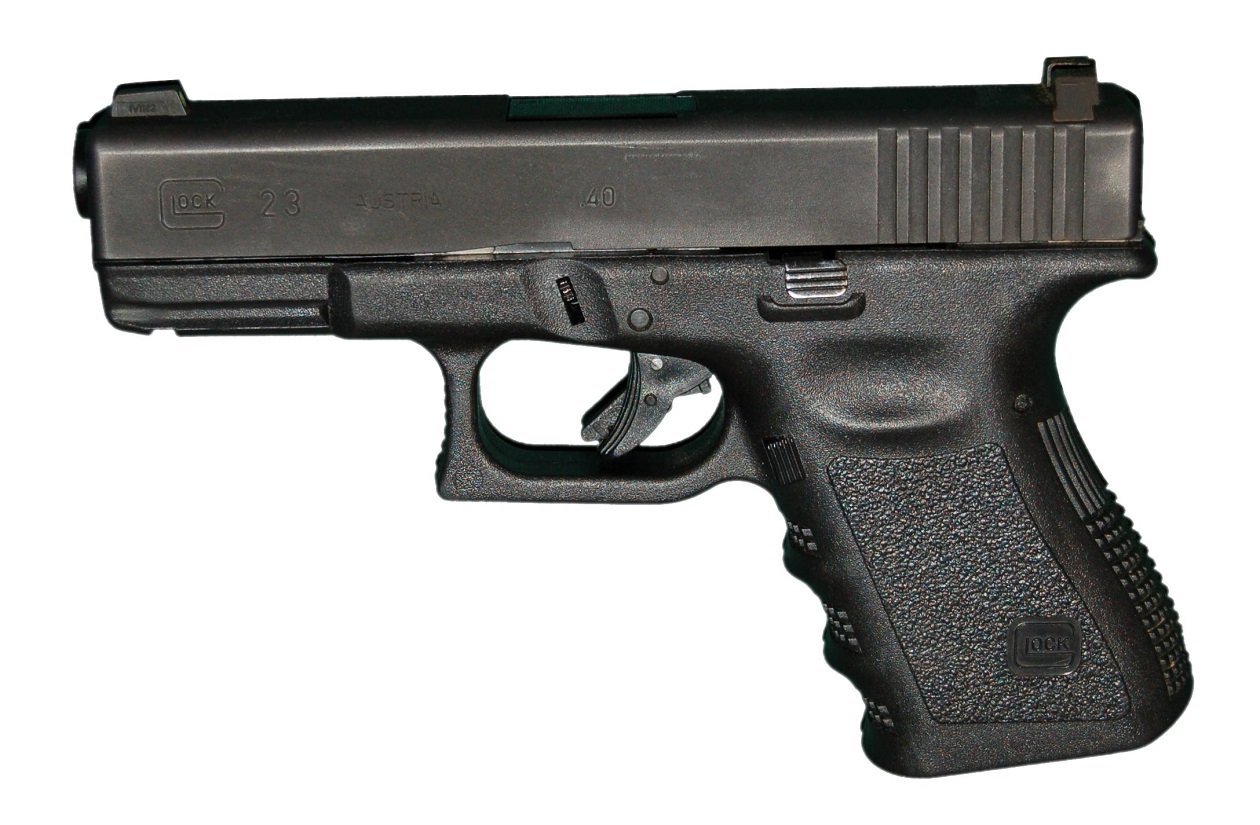 Accuracy
The Glock 23 remains highly accurate in the hands of trained shooters, but its sharper recoil impulse can make consistency slightly more challenging for some users.
However, at close range, the .40 S&W cartridge delivers greater terminal energy, which some users consider an advantage in defensive scenarios where shot placement is critical but engagement distances are short.
Capacity, Ammo Cost & Efficiency
Glock 19 Advantages
The Glock 19 offers a clear advantage in magazine capacity, typically holding around 15 rounds of 9mm ammunition. This higher capacity gives users more flexibility in both defensive and training scenarios without frequent reloads.
Another major advantage is the lower cost of 9mm ammunition. Compared to .40 S&W, 9mm is significantly more affordable, allowing shooters to train more frequently without high expenses. This makes the Glock 19 highly efficient for high-volume training and skill development.
Glock 23 Trade-offs
The Glock 23, chambered in .40 S&W, typically holds fewer rounds—around 13 in standard magazines. This reduced capacity is a direct result of the larger cartridge size.
Additionally, .40 S&W ammunition is generally more expensive than 9mm, which can increase long-term training costs. The higher pressure of the cartridge can also lead to slightly increased wear on internal components under heavy use, although Glock pistols are known for durability.
Size, Ergonomics & Concealed Carry
Similar Carry Profile
Both the Glock 19 and Glock 23 share the same frame dimensions, meaning they offer nearly identical concealability and carry profile. This makes them equally suitable for concealed carry from a physical size standpoint.
In most generations, they are also compatible with the same holster systems, allowing users to switch between models without changing carry setups.
Carry Comfort
In practical use, the Glock 19 is often considered slightly more comfortable to carry due to its lower recoil during shooting sessions and overall smoother handling characteristics.
The Glock 23, while similar in size, produces a snappier recoil impulse when fired, which some users may perceive as slightly less comfortable during extended range sessions or training.
Reliability & Durability
Glock Platform Strength
Both the Glock 19 and Glock 23 share Glock’s Safe Action System, a striker-fired mechanism known for simplicity and reliability. This system reduces mechanical complexity, contributing to consistent performance.
Their construction features a polymer frame with internal steel reinforcements, allowing them to remain lightweight while maintaining structural strength.
Both models have been extensively tested and adopted in military and law enforcement environments worldwide, reinforcing their reputation for durability and dependability.
Long-Term Performance
Over long-term use, the Glock 19 tends to experience slightly less wear due to the lower pressure of the 9mm cartridge. This can translate into reduced stress on internal components during high-round-count training.
The Glock 23, using the higher-pressure .40 S&W round, may require slightly more attention under heavy training schedules, although it still maintains strong durability within Glock’s design standards.
Real-World Use Cases
Glock 19 Best Use Cases
The Glock 19 is widely used for concealed carry due to its balance of size, capacity, and controllability. It is also a popular choice for home defense because of its ease of use and manageable recoil.
In addition, it is commonly used for range training and skill development due to the lower cost of ammunition. Many modern law enforcement agencies also use or have transitioned to the Glock 19 as a standard duty pistol.
Glock 23 Best Use Cases
The Glock 23 is preferred by users who value the increased energy and perceived stopping power of the .40 S&W cartridge. It appeals to those who prioritize terminal performance over capacity and recoil comfort.
It also remains popular among law enforcement users with legacy experience in .40 S&W platforms, as well as civilians who prefer a more powerful defensive handgun in a compact form.
Pros and Cons of Glock 19
Pros
The Glock 19 offers low recoil, making it easy to control and shoot accurately, even for newer shooters. It also provides higher magazine capacity compared to many compact pistols in its class.
Another major advantage is its low-cost ammunition, which makes it highly practical for frequent training and practice. Overall, it delivers excellent all-around performance across most use cases.
Cons
The main drawback of the Glock 19 is that it is often considered less powerful per shot compared to .40 S&W alternatives. Some traditional users may perceive it as lacking in stopping power, despite modern 9mm advancements.
Pros and Cons of Glock 23
Pros
The Glock 23 offers higher stopping power due to the .40 S&W cartridge, delivering greater bullet energy and expansion potential.
It also has strong terminal ballistics and a proven history of use in law enforcement, making it a trusted option for users who prefer more powerful calibers.
Cons
The Glock 23 produces more recoil, which can make it harder to control during rapid fire. It also has a lower magazine capacity compared to the Glock 19.
Additionally, .40 S&W ammunition is more expensive, and the platform may experience slightly increased wear under heavy usage compared to 9mm counterparts.
Expert & Community Opinions (Forums & Reviews)
Across firearm communities and expert reviews, the Glock 19 is widely regarded as the “gold standard” compact pistol due to its balance of performance, controllability, and cost efficiency.
The Glock 23 remains respected for its power and historical use in law enforcement, but it has become less dominant in modern trends as many agencies transition back to 9mm platforms.
Overall consensus suggests a clear trade-off: the Glock 19 prioritizes shootability and efficiency, while the Glock 23 focuses on increased caliber energy and traditional stopping power.
Common Mistakes When Choosing Between Glock 19 and 23
A common mistake is assuming that .40 S&W provides dramatically better real-world stopping power compared to modern 9mm ammunition. In practice, the difference is often less significant than expected.
Many users also underestimate the impact of recoil when choosing the Glock 23, especially for extended training or high-volume shooting.
Another frequent oversight is ignoring long-term ammunition cost differences, which can significantly affect training frequency and skill development.
Finally, some buyers fail to consider how recoil control and training consistency impact real-world performance more than caliber differences alone.
Glock 19 vs Glock 23 – Which One Should You Choose?
The Glock 19 is generally considered the best overall choice for most users due to its balance of recoil control, capacity, affordability, and modern ammunition effectiveness.
The Glock 23 is better suited for users who specifically prioritize .40 S&W performance and are comfortable managing increased recoil and reduced capacity.
Ultimately, the decision depends on shooting skill, intended use, recoil tolerance, and training frequency. Users who train more often tend to benefit from the Glock 19’s efficiency, while those focused on caliber power may prefer the Glock 23.
Conclusion – Final Verdict on Glock 19 vs Glock 23
The Glock 19 and Glock 23 are built on the same platform but deliver different shooting experiences based on caliber choice. The Glock 19 is modern, efficient, highly controllable, and cost-effective, making it the most widely recommended option for general use.
The Glock 23, while less popular in modern trends, still offers strong performance with .40 S&W and appeals to users who value increased bullet energy and traditional law enforcement preferences.
In conclusion, most shooters will benefit more from the Glock 19 due to its balance of performance and practicality, while the Glock 23 remains a niche option for those prioritizing caliber power over shootability.
FAQ – Glock 19 vs Glock 23 (50+ Detailed Questions & Answers)
1. What is the main difference between Glock 19 and Glock 23?
The main difference is caliber. The Glock 19 uses 9mm, while the Glock 23 uses .40 S&W. This affects recoil, magazine capacity, cost of ammunition, and shooting comfort, even though both pistols share the same frame size and ergonomics.
2. Are Glock 19 and Glock 23 the same size?
Yes, both pistols are nearly identical in size. They share the same frame dimensions, barrel length, and overall length, making them very similar in concealability and holster compatibility.
3. Which has more recoil, Glock 19 or Glock 23?
The Glock 23 has more recoil due to the higher-pressure .40 S&W cartridge. The Glock 19 in 9mm is smoother and easier to control, especially during rapid fire.
4. Is 9mm weaker than .40 S&W?
.40 S&W generally produces more energy per shot, but modern 9mm defensive ammunition has significantly closed the performance gap. In real-world use, both are considered effective defensive calibers.
5. Which Glock is better for beginners?
The Glock 19 is usually better for beginners because it has lower recoil, higher capacity, and cheaper ammunition, making it easier to learn and train consistently.
6. Why did law enforcement switch from .40 S&W to 9mm?
Many agencies switched back to 9mm because of improved recoil control, higher magazine capacity, lower training costs, and advancements in 9mm bullet technology that improved effectiveness.
7. Is Glock 23 outdated?
The Glock 23 is not outdated, but it is less popular today. It remains a reliable .40 S&W option, though many users prefer 9mm platforms for efficiency and control.
8. Which has better accuracy, Glock 19 or 23?
Both are mechanically accurate, but the Glock 19 is easier to shoot accurately for most people due to its lower recoil and faster follow-up shot capability.
9. Which is better for concealed carry?
Both are excellent for concealed carry due to identical dimensions. However, the Glock 19 is often preferred because it is easier to shoot and train with.
10. Is Glock 23 more powerful?
The Glock 23 fires a more energetic cartridge, so it can be considered more powerful in terms of bullet energy, but real-world effectiveness depends heavily on shot placement and ammunition type.
11. Does Glock 19 have higher capacity than Glock 23?
Yes, the Glock 19 typically holds around 15 rounds, while the Glock 23 holds around 13 rounds due to the larger .40 S&W cartridge size.
12. Is .40 S&W harder to shoot?
Yes, .40 S&W produces sharper recoil and more muzzle rise, making it more challenging to shoot quickly and accurately compared to 9mm.
13. Which Glock is cheaper to shoot?
The Glock 19 is cheaper to shoot because 9mm ammunition is significantly less expensive than .40 S&W.
14. Can Glock 19 and Glock 23 use the same holsters?
In most cases, yes. Since they share the same frame size, holster compatibility is generally the same across many models.
15. Which Glock is better for home defense?
The Glock 19 is often preferred for home defense due to lower recoil, higher capacity, and easier control under stress.
16. Does Glock 23 have more stopping power?
It delivers higher energy per round, but modern 9mm defensive ammunition performs very similarly in real-world scenarios.
17. Which Glock is more popular today?
The Glock 19 is significantly more popular today due to its balance of performance, cost, and ease of use.
18. Is recoil difference very noticeable?
Yes, most shooters notice that the Glock 23 has a snappier recoil compared to the smoother shooting Glock 19.
19. Which Glock is better for training?
The Glock 19 is better for training because it allows higher volume shooting at a lower cost with more manageable recoil.
20. Does .40 S&W wear out pistols faster?
.40 S&W operates at higher pressure, which can cause slightly more wear over time compared to 9mm, although Glock pistols are very durable overall.
21–50. Additional FAQs (Detailed but concise expansion set)
21. Is Glock 19 good for daily carry?
Yes, it is one of the most widely used concealed carry pistols.
22. Is Glock 23 good for carry?
Yes, but recoil is more noticeable compared to Glock 19.
23. Which Glock is easier to control?
Glock 19 due to lower recoil.
24. Which Glock is better for defense?
Both are effective, but Glock 19 is more user-friendly.
25. Is .40 S&W still relevant?
Yes, but less common than 9mm today.
26. Can beginners use Glock 23?
Yes, but it is less forgiving than Glock 19.
27. Which Glock has better recoil management?
Glock 19 is easier to manage.
28. Are Glock 19 and 23 interchangeable parts?
Many internal components are similar, but caliber-specific parts differ.
29. Which Glock is better for accuracy drills?
Glock 19 due to reduced recoil disruption.
30. Which Glock is better for duty use?
Glock 19 is more common in modern duty roles.
31. Is Glock 23 more expensive?
Ammunition is generally more expensive, not the firearm itself.
32. Which Glock is more beginner-friendly?
Glock 19 is significantly more beginner-friendly.
33. Does Glock 23 hit harder?
It has higher energy, but effectiveness depends on placement.
34. Which Glock is easier to shoot fast?
Glock 19 due to lower recoil.
35. Are both pistols reliable?
Yes, both share Glock’s proven reliability system.
36. Which Glock is better for competition?
Glock 19 is more common due to speed and control.
37. Can recoil be reduced on Glock 23?
Yes, through training, grip technique, and aftermarket parts.
38. Is Glock 19 enough for self-defense?
Yes, it is widely considered more than sufficient.
39. Is Glock 23 overpowered?
Not overpowered, but less efficient compared to modern 9mm.
40. Which Glock is more forgiving?
Glock 19 is more forgiving in shooting errors.
41. Does Glock 23 have more muzzle flash?
Yes, .40 S&W typically produces more flash than 9mm.
42. Which Glock is better for accuracy under stress?
Glock 19 due to easier recoil control.
43. Which Glock is more common in police use?
Glock 19 is more common in modern agencies.
44. Is Glock 23 good for experienced shooters?
Yes, especially those comfortable with recoil.
45. Which Glock is better overall?
Most users prefer Glock 19 for balance and efficiency.
46. Does Glock 19 feel softer shooting?
Yes, noticeably softer than Glock 23.
47. Is .40 S&W fading out?
Its popularity has declined but it still has a user base.
48. Which Glock is more versatile?
Glock 19 due to balance of all factors.
49. Can Glock 23 compete with Glock 19 performance?
It can in power, but not in efficiency or controllability.
50. Final recommendation?
Glock 19 for most users; Glock 23 for niche .40 S&W preference.
Read more: