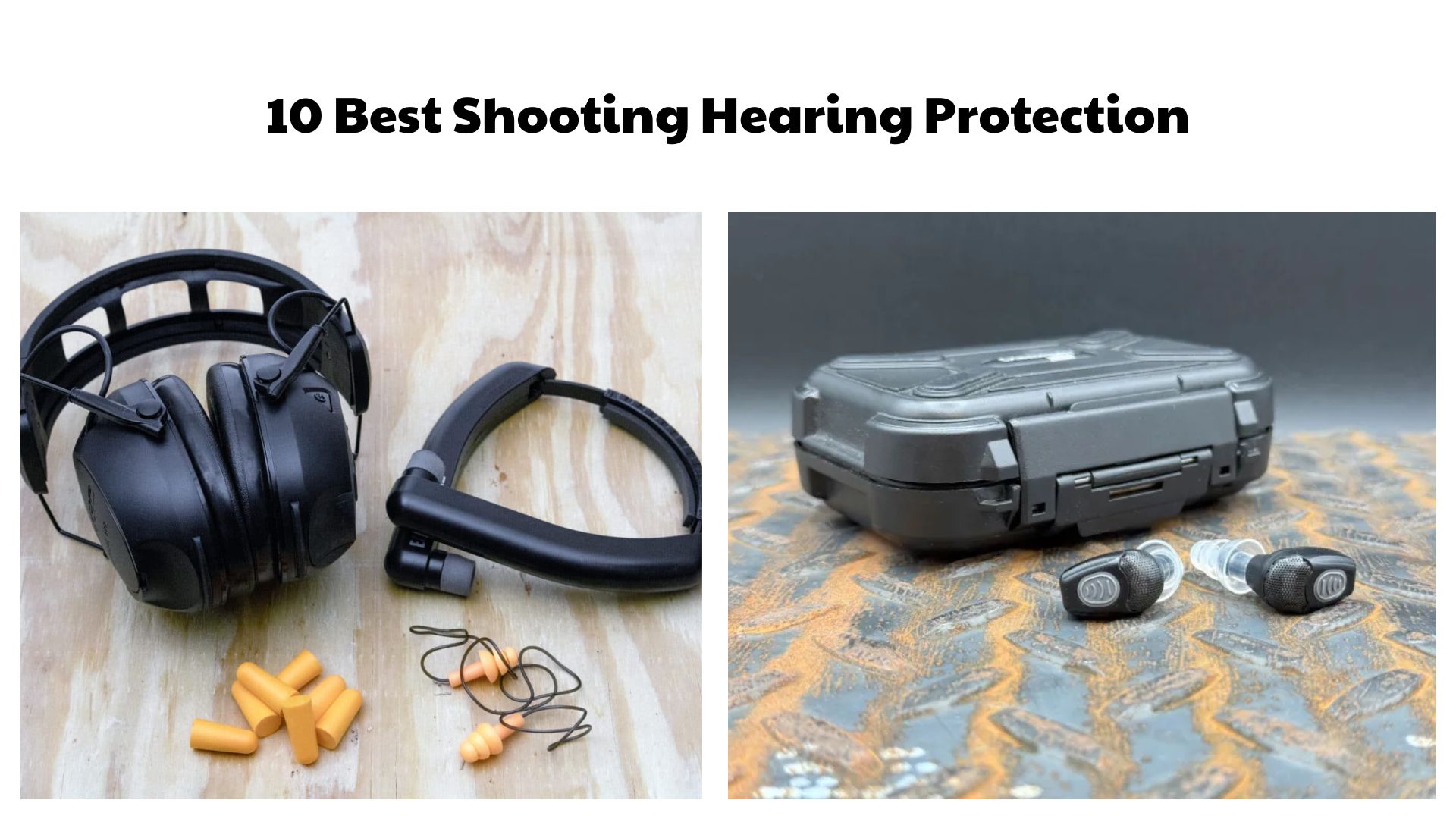

The best shooting hearing protection helps protect your ears from the intense impulse noise created by firearms while keeping range sessions, hunting trips, and training days more comfortable. Whether you shoot handguns at an indoor range, practice with rifles outdoors, hunt with shotguns, or coach new shooters, proper hearing protection is essential safety gear. This guide compares popular electronic shooting earmuffs, passive earmuffs, rechargeable shooting earbuds, and filtered earplugs based on Noise Reduction Rating, comfort, sound amplification, battery life, low-profile fit, durability, portability, brand reputation, and overall value. Hearing protection does not replace safe firearm handling, secure firearm storage, proper training, or compliance with local laws, but it is one of the most important accessories every responsible shooter should own.
Quick Picks:
- Best Overall: Walker’s Razor Slim Electronic Muff on Amazon
- Best Budget Option: Howard Leight Impact Sport Electronic Earmuff on Amazon
- Best for Indoor Ranges: Howard Leight Impact Pro Electronic Earmuff on Amazon
- Best for Hunting: 3M Peltor Sport RangeGuard on Amazon
- Best Premium Pick: 3M Peltor Sport Tactical 500 on Amazon
Comparison Table: Best Shooting Hearing Protection
| Product | Best For | Material / Compatibility | Key Features | Safety / Security Features | Check Price |
|---|---|---|---|---|---|
| Walker’s Razor Slim Electronic Muff | Best Overall | Low-profile electronic earmuff / Range and hunting | Sound-activated compression, slim cups, amplified ambient sound | Helps reduce harmful impulse noise while improving range awareness | Check Price on Amazon |
| Howard Leight Impact Sport | Best Budget Electronic Muff | Folding electronic earmuff / Rifle, shotgun, pistol use | 22 dB NRR, ambient sound amplification, compact folding design | Amplification shuts off around unsafe noise levels | Check Price on Amazon |
| 3M Peltor Sport Tactical 500 | Best Premium Electronic Muff | Electronic Bluetooth earmuff / Indoor and outdoor shooting | 25 dB NRR, Bluetooth, dynamic suppression time, recessed microphones | Adaptive gunshot suppression and clear communication features | Check Price on Amazon |
| 3M Peltor Sport Tactical 100 | Best Mid-Range 3M Pick | Electronic earmuff / Rifle and shotgun compatible | 22 dB NRR, variable suppression time, background-noise filtering | Low-profile cups and recessed microphones | Check Price on Amazon |
| 3M Peltor Sport RangeGuard | Best Lightweight Hunting Pick | Electronic earmuff / Range and field use | 21 dB NRR, voice amplification, low-profile cups | Suppresses gunshot noise while amplifying voices | Check Price on Amazon |
| Howard Leight Impact Pro | Best High-NRR Electronic Muff | Larger electronic earmuff / Indoor and high-noise ranges | 30 dB NRR listing, sound amplification, high-coverage ear cups | Better passive-style coverage with electronic awareness | Check Price on Amazon |
| Walker’s Ultimate Quad Connect | Best Advanced Walker’s Muff | Electronic earmuff / Range, hunting, training | 27 dB NRR listing, quad microphones, Bluetooth-style connectivity | Sound compression with directional awareness features | Check Price on Amazon |
| Walker’s Silencer 2.0 Electronic Earbuds | Best Rechargeable Earbuds | In-ear electronic protection / Hunting and low-profile use | Rechargeable earbuds, charging dock, sound suppression and enhancement | Low-profile hearing protection without bulky ear cups | Check Price on Amazon |
| SureFire EP4 Sonic Defenders Plus | Best Reusable Filtered Earplugs | Triple-flange polymer earplugs / Range and field use | 24 dB NRR with filter caps inserted, low-profile fit | Filtered design allows safer ambient sound options | Check Price on Amazon |
| SureFire EP7 Sonic Defenders Ultra | Best High-NRR Earplugs | Foam-tipped filtered earplugs / Double-up protection | 28 dB NRR listing, foam tips, filter caps, EarLock rings | Strong reusable plug option for layering with earmuffs | Check Price on Amazon |
Electronic earmuffs are usually the most convenient option for range communication because they help reduce loud impulse noise while amplifying safer ambient sounds such as range commands and conversation. Passive earmuffs and reusable earplugs can offer excellent simplicity, fewer battery concerns, and strong value. Indoor ranges, covered firing lines, short-barreled firearms, and high-volume training sessions often benefit from “doubling up” with earplugs under earmuffs. Hunters and shotgun shooters often prefer low-profile muffs or in-ear options that do not interfere with cheek weld, hats, or movement in the field.
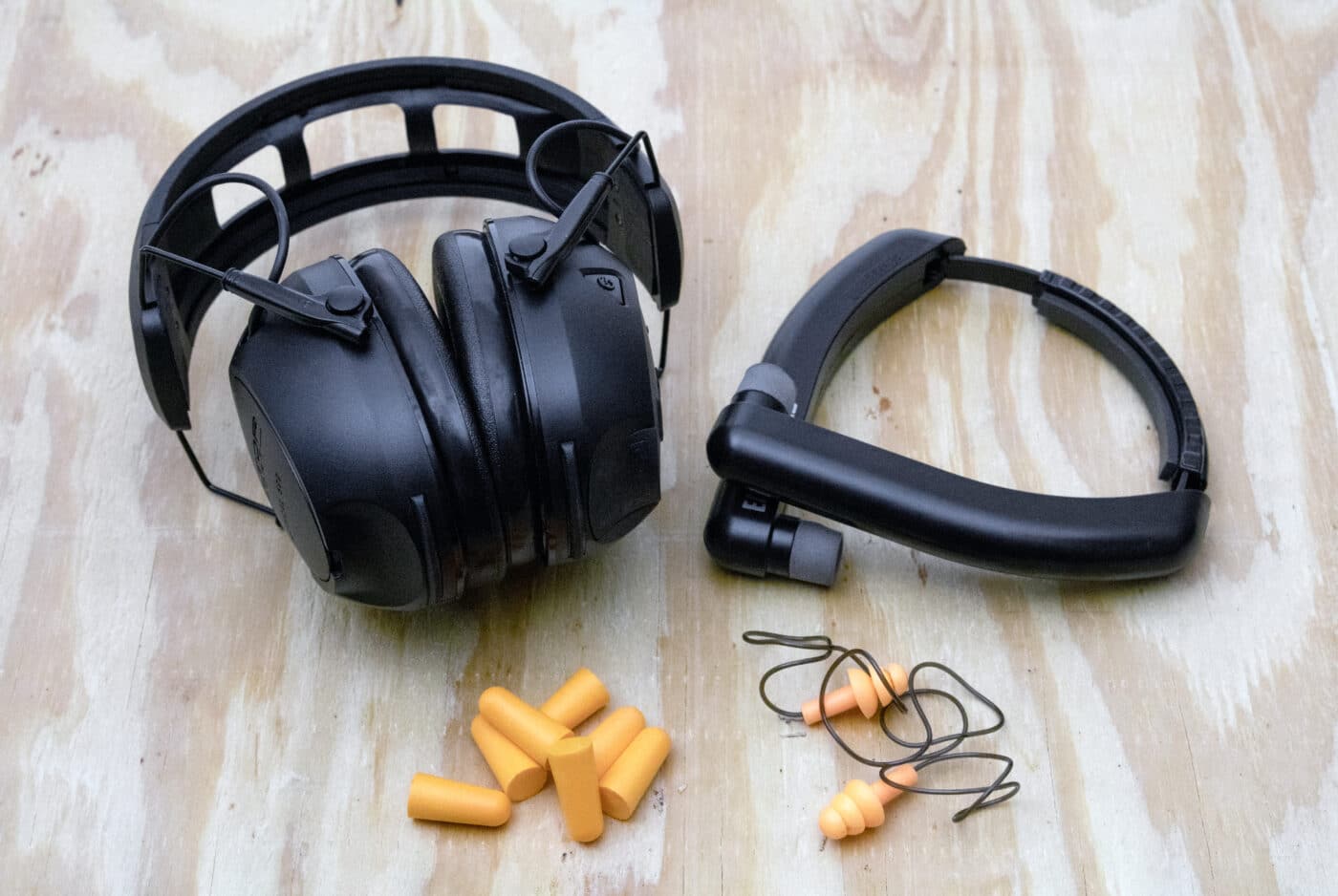
1. Walker’s Razor Slim Electronic Muff on Amazon
The Walker’s Razor Slim Electronic Muff is one of the most popular choices for shooters who want affordable electronic hearing protection with a low-profile fit. It is best for range shooters, hunters, beginners, and firearm owners who want a practical balance of comfort, sound amplification, and noise reduction. The slim ear cups are useful around rifles and shotguns because bulky muffs can interfere with a consistent cheek weld. Electronic sound compression helps reduce sudden loud reports while allowing the user to hear range commands and safer ambient sound. The folding design makes it easy to pack in a range bag, hunting backpack, or gear tote. It stands out because it is widely available, easy to use, and supported by a familiar shooting-accessory brand. For indoor ranges, many users may still prefer to wear foam plugs underneath for extra protection. As with all electronic hearing protection, check batteries before every range session.
Key Features
- Electronic sound amplification
- Sound-activated compression
- Low-profile ear cups
- Adjustable headband
- Folding design for storage
- Useful for range shooting, hunting, and training
- Battery-powered operation
Pros
- Excellent all-around value
- Slim profile works well with rifles and shotguns
- Beginner-friendly controls
- Good for hearing range commands
- Compact enough for range bags
Cons
- Battery-powered features require maintenance
- May not provide enough protection alone for very loud indoor ranges
- Ear cushions may need upgrading for long sessions
- Fit depends on head shape and eyewear temples
Who It’s Best For
This is best for responsible firearm owners, hunters, sport shooters, beginners, and range users who want a dependable electronic earmuff without overspending.
2. Howard Leight Impact Sport Electronic Earmuff on Amazon
The Howard Leight Impact Sport is a classic electronic shooting earmuff that has been popular with range shooters for years. It is best for budget-conscious buyers who want amplified ambient sound, compact storage, and a low-profile design. The listing commonly highlights a 22 dB Noise Reduction Rating, automatic suppression of loud impulse noise, and amplification of low-level sounds to a safer listening level. That makes it useful for hearing instructors, range officers, conversation, and outdoor sounds while still reducing exposure to gunfire noise. The folding design is convenient for range bags and travel cases. It stands out because it offers proven functionality at a very approachable price point. The low-profile cups help with rifle and shotgun use, though very loud indoor ranges may call for plugs underneath. It is a smart first electronic earmuff for new shooters.
Key Features
- 22 dB NRR listing
- Electronic sound amplification
- Automatic shutoff or compression around unsafe noise levels
- Low-profile earcups for firearm stock clearance
- Adjustable headband
- Compact folding design
- Audio input jack on many versions
Pros
- Affordable electronic hearing protection
- Great starter option for range users
- Compact and easy to store
- Good situational awareness outdoors
- Widely recognized model
Cons
- Lower NRR than some larger muffs
- May need double protection indoors
- Basic ear cushions may feel firm over time
- Battery replacement is required
Who It’s Best For
This is best for beginners, casual shooters, outdoor range users, and anyone who wants reliable electronic hearing protection at a budget-friendly level.
3. 3M Peltor Sport Tactical 500 on Amazon
The 3M Peltor Sport Tactical 500 is a premium electronic earmuff for shooters who want advanced sound management and Bluetooth convenience. It is best for serious range users, instructors, hunters, and anyone who values a more refined electronic hearing-protection system. The listing highlights a 25 dB Noise Reduction Rating, dynamic suppression time, Bluetooth connectivity, and adaptive gunshot suppression. These features help the muff handle different shooting environments, including indoor ranges where echoes can make noise more fatiguing. Recessed microphones help reduce wind noise and improve durability compared with exposed microphone designs. It stands out because it blends shooting-specific hearing protection with modern connectivity features. The tradeoff is size and price, since premium electronics cost more than basic muffs. Buyers who spend a lot of time at the range may appreciate the comfort and features over the long term.
Key Features
- 25 dB NRR listing
- Electronic hearing protection
- Bluetooth connectivity
- Dynamic suppression time
- Recessed microphones
- Clear communication features
- Designed for indoor and outdoor shooters
Pros
- Premium sound-management features
- Bluetooth convenience
- Good NRR for electronic muffs
- Trusted 3M Peltor brand
- Useful for frequent range users
Cons
- Higher cost than basic earmuffs
- Bulkier than slim models
- Battery-powered and Bluetooth features need maintenance
- May be more advanced than casual shooters need
Who It’s Best For
This is best for premium buyers, instructors, frequent range shooters, and users who want electronic hearing protection with Bluetooth and advanced suppression features.
4. 3M Peltor Sport Tactical 100 on Amazon
The 3M Peltor Sport Tactical 100 is a mid-range electronic earmuff for shooters who want a trusted brand without moving to the Tactical 500 price level. It is best for indoor and outdoor shooters who need clear communication, low-profile cups, and adjustable sound suppression. The listing highlights a 22 dB NRR, variable suppression time, background-noise filtering, and recessed microphones. This makes it helpful for hearing range commands while reducing the discomfort of loud impulse noise. The low-profile cups are designed with rifle and shotgun use in mind, which is important for hunters and long-gun shooters. It stands out because it offers useful Peltor features in a more accessible package. It is not as feature-heavy as the Tactical 500, but many users do not need Bluetooth. For general range use, it is a reliable, practical option.
Key Features
- 22 dB NRR listing
- Electronic sound suppression
- Variable suppression time
- Background-noise filtering
- Recessed microphones
- Low-profile cups for rifle and shotgun use
- Battery-powered operation
Pros
- Trusted Peltor brand
- Good balance of price and features
- Useful for range communication
- Low-profile design helps long-gun shooters
- Good mid-range choice
Cons
- Lower NRR than larger passive or high-NRR muffs
- No premium Bluetooth features like Tactical 500
- May need plugs underneath indoors
- Battery maintenance required
Who It’s Best For
This is best for range shooters, hunters, and firearm owners who want a dependable Peltor electronic muff without paying for the highest-end model.
5. 3M Peltor Sport RangeGuard on Amazon
The 3M Peltor Sport RangeGuard is a lightweight electronic earmuff designed for range and hunting use. It is best for shooters who want a simple Peltor option with voice amplification and low-profile ear cups. The listing commonly highlights a 21 dB NRR, gunshot-noise suppression, voice amplification, durable recessed microphones, and cups shaped for rifle and shotgun use. That makes it practical for outdoor ranges, hunting practice, and training situations where communication matters. The lighter design is comfortable for many users during longer sessions. It stands out because it is simple, approachable, and easy to pack. It may not be the best standalone choice for very loud indoor ranges, but it works well when matched to its intended use. New shooters may appreciate the straightforward controls and brand reliability.
Key Features
- 21 dB NRR listing
- Electronic voice amplification
- Gunshot-noise suppression
- Recessed microphones
- Low-profile cups with long-gun clearance
- Adjustable headband
- Runs on AAA batteries on many listings
Pros
- Lightweight and comfortable
- Good for hunters and outdoor shooters
- Simple controls
- Trusted Peltor name
- Easy to pack in a range bag
Cons
- Lower NRR than bulkier options
- May need double protection indoors
- Not as feature-rich as premium models
- Battery replacement required
Who It’s Best For
This is best for hunters, casual outdoor range users, and shooters who want lightweight electronic hearing protection with simple controls.
6. Howard Leight Impact Pro Electronic Earmuff on Amazon
The Howard Leight Impact Pro is a high-NRR electronic earmuff for shooters who want more noise reduction than many slim electronic muffs provide. It is best for indoor ranges, covered firing lines, pistol shooters, and users who are especially sensitive to noise. The listing highlights a 30 NRR rating, which makes it attractive for louder environments. The larger ear cups provide more coverage than low-profile muffs, while electronic amplification still helps users hear conversation and range commands. This model stands out because it blends high passive-style coverage with electronic situational awareness. The tradeoff is bulk: larger cups can interfere more with rifle and shotgun cheek weld. For handgun ranges and indoor use, that extra size may be worth it. Many shooters can also pair these with plugs for additional layered protection when needed.
Key Features
- 30 dB NRR listing
- Electronic sound amplification
- High-coverage ear cups
- Designed for high-noise shooting environments
- Adjustable headband
- Useful for indoor and covered ranges
- Battery-powered electronics
Pros
- Higher NRR than many slim electronic muffs
- Good for indoor pistol ranges
- Electronic awareness features
- Helpful for noise-sensitive shooters
- Strong value for high-NRR electronic protection
Cons
- Bulkier than low-profile shooting muffs
- May interfere with rifle or shotgun stock fit
- Warmer during long outdoor sessions
- Battery maintenance required
Who It’s Best For
This is best for indoor range users, pistol shooters, instructors, and anyone who wants a higher-NRR electronic earmuff for louder environments.
7. Walker’s Ultimate Quad Connect Electronic Earmuffs on Amazon
The Walker’s Ultimate Quad Connect is an advanced electronic earmuff for shooters who want better directional awareness and a stronger feature set than basic slim muffs. It is best for frequent range users, hunters, instructors, and buyers who want more advanced sound processing. The listing describes quad microphone-style awareness, a 27 NRR rating, sound compression, and connectivity features depending on the model version. The extra microphones can make environmental sound feel more natural compared with simple two-microphone muffs. This is helpful when hearing range commands, hunting partners, or general outdoor sound cues. It stands out because it offers higher-end Walker’s features in an over-ear design. It is more expensive and more complex than a basic Razor Slim, but it may be worth it for regular use. As always, batteries and controls should be checked before every session.
Key Features
- 27 dB NRR listing
- Quad microphone-style sound awareness
- Electronic sound compression
- Bluetooth or connection features depending on listing
- Comfort headband
- Designed for range and hunting use
- Battery-powered operation
Pros
- Advanced sound awareness compared with basic muffs
- Good NRR for electronic protection
- Useful for instructors and frequent shooters
- Strong Walker’s shooting-accessory reputation
- Good option for users who want more than entry-level gear
Cons
- More expensive than basic electronic muffs
- More features mean more setup and battery management
- Bulk may affect long-gun cheek weld
- Exact features can vary by listing version
Who It’s Best For
This is best for frequent shooters, instructors, hunters, and buyers who want advanced electronic sound management with stronger situational awareness features.
8. Walker’s Silencer 2.0 Rechargeable Electronic Earbuds on Amazon
The Walker’s Silencer 2.0 is a rechargeable electronic earbud system for shooters who want low-profile hearing protection without over-ear cups. It is best for hunters, shotgun shooters, rifle shooters, and users who dislike bulky earmuffs. The in-ear design helps avoid interference with hats, stocks, cheek weld, and some eye-protection setups. The electronic sound suppression and enhancement features are useful when hearing safer ambient sounds matters. The included charging dock improves convenience compared with disposable-battery earbuds. This product stands out because it solves the comfort and interference problems that some users experience with earmuffs. Fit is critical, because in-ear protection only works well when the ear tip seals properly. Shooters who use indoor ranges may still prefer to combine earbuds with muffs or choose higher-NRR over-ear protection.
Key Features
- Rechargeable electronic earbuds
- Charging dock included on listing
- Sound suppression and enhancement
- Low-profile in-ear design
- Useful for hunters and long-gun shooters
- Portable storage case
- Multiple ear tips depending on package
Pros
- Excellent low-profile option
- Does not interfere with most rifle or shotgun stocks
- Rechargeable convenience
- Comfortable for users who dislike earmuffs
- Good for hunting and outdoor movement
Cons
- Fit and seal are critical
- Small electronics can be easier to lose
- May not be ideal as the only protection indoors
- Charging routine required
Who It’s Best For
This is best for hunters, shotgun shooters, rifle shooters, and users who want compact electronic hearing protection without bulky earmuff cups.
9. SureFire EP4 Sonic Defenders Plus Earplugs on Amazon
The SureFire EP4 Sonic Defenders Plus are reusable filtered earplugs for shooters who want compact, non-electronic hearing protection. They are best for hunters, range users, training classes, and people who want a low-profile backup option in every range bag. The listing highlights a 24 dB NRR with filter caps inserted, triple-flange stems, and EarLock retention rings. The filter design allows users to choose between more open ambient hearing and stronger protection depending on the filter-cap position, but users should follow the instructions carefully. These plugs stand out because they are portable, reusable, and easy to combine with earmuffs for double protection. They are especially useful when over-ear muffs interfere with rifles, shotguns, hats, or helmets. Proper sizing is essential because earplugs only protect well when they seal correctly. Keep them clean and replace them when worn.
Key Features
- 24 dB NRR listing with filter caps inserted
- Reusable filtered earplug design
- Soft triple-flange stems
- EarLock retention rings
- Low-profile fit
- Can be used alone or under earmuffs
- Available in multiple sizes
Pros
- Compact and easy to carry
- Good backup protection for range bags
- Useful under earmuffs for double protection
- No batteries required
- Low-profile design works well with long guns
Cons
- Correct sizing and insertion are critical
- Less convenient for conversation than electronic muffs
- Can be misplaced easily
- Requires cleaning and replacement over time
Who It’s Best For
This is best for shooters who want reusable, portable, non-electronic earplugs for hunting, range use, or layering underneath earmuffs.
10. SureFire EP7 Sonic Defenders Ultra Earplugs on Amazon
The SureFire EP7 Sonic Defenders Ultra are foam-tipped filtered earplugs that provide a higher NRR listing than the EP4 style. They are best for shooters who want reusable plugs with a secure fit and more noise reduction potential. The listing highlights a 28 dB NRR, foam tips, filter caps, and the SureFire EarLock retention system. The foam tips can help create a strong seal when inserted correctly, which is essential for real hearing protection. These plugs stand out as a strong option for layering under earmuffs at indoor ranges or during loud training sessions. They are also useful for hunters and outdoor shooters who want low-profile protection. The filter caps provide flexibility, but users should understand the instructions before relying on different modes. As with all earplugs, replace worn tips and keep them clean.
Key Features
- 28 dB NRR listing
- Reusable filtered earplugs
- Foam-tipped design
- EarLock retention rings
- Attached filter caps
- Low-profile fit
- Good for double protection under earmuffs
Pros
- Higher listed NRR than many reusable plugs
- Good for layering with earmuffs
- Low-profile and portable
- No batteries required
- Useful for hunting, range use, and training
Cons
- Must be inserted correctly
- Foam tips wear out over time
- Less convenient than electronic muffs for conversation
- Size selection matters
Who It’s Best For
This is best for shooters who want strong reusable earplug protection, especially for layering under earmuffs during louder range sessions.
Buying Guide: How to Choose the Best Shooting Hearing Protection
Choosing the best shooting hearing protection starts with understanding how loud firearms can be. Gunfire creates short, sharp impulse noise that can damage hearing, especially during repeated exposure at indoor ranges, covered firing lines, or training sessions. The right hearing protection should reduce harmful sound levels while staying comfortable enough that you actually wear it every time you shoot.
The first specification to understand is Noise Reduction Rating, usually written as NRR. Higher NRR generally means more potential noise reduction, but real-world protection depends heavily on fit. A 30 dB NRR earmuff with poor seal may protect less than a lower-rated muff that fits correctly. Eyeglass temples, hats, facial structure, hair, and head shape can all affect seal quality. This is why many shooters test several styles before choosing a favorite.
Electronic earmuffs are popular because they reduce loud impulse noise while amplifying safer ambient sounds. This helps users hear range commands, instructors, hunting partners, and conversation. Electronic muffs are especially helpful for beginners because they make communication easier. However, they require batteries, controls, and basic maintenance. Before a range day, test the power switch, volume, battery compartment, and microphones.
Passive earmuffs are simpler. They do not need batteries and can offer strong NRR at a lower price. They are excellent for backups, guests, indoor ranges, and users who want a simple solution. The downside is that they reduce all sound, including conversation and range commands. For some training situations, that can be less convenient.
Earplugs are compact, affordable, and useful for layering. Foam plugs often provide excellent protection when inserted correctly, but many people do not insert them deeply enough. Reusable filtered plugs, such as SureFire Sonic Defenders, are convenient because they can be used alone or under earmuffs. In-ear electronic earbuds are helpful for hunters and long-gun shooters because they do not interfere with a stock or cheek weld.
Indoor ranges often require extra attention. Reflected sound from walls and ceilings can make gunfire feel louder than it does outdoors. Handguns, short-barreled firearms, rifles, and muzzle brakes can create intense noise. Many experienced shooters double up indoors by wearing earplugs under earmuffs. This is also a good idea for new shooters, youth shooters, instructors, or anyone sensitive to noise.
Comfort matters because uncomfortable gear gets removed. Look for padded headbands, soft ear cushions, adjustable fit, and low clamping pressure that still seals properly. Gel ear pads can improve comfort on many earmuffs, especially when worn with shooting glasses. Low-profile cups are useful for rifle and shotgun shooters because bulky muffs may interfere with cheek weld.
Battery life is important for electronic protection. Most electronic muffs use AAA or AA batteries, while earbuds and premium muffs may be rechargeable. Disposable batteries are easy to replace at the range. Rechargeable systems are convenient but require planning. Keep spare batteries or a charging cable in your range bag when practical.
Weather resistance and durability matter for hunters and outdoor shooters. Rain, sweat, dust, cold weather, and rough transport can affect electronics and cushions. Choose rugged designs from reputable brands if you hunt or train outdoors often. Store hearing protection in a case or bag to protect microphones, ear cups, and controls.
Compatibility with other gear is another key factor. Shooting glasses can break the seal of earmuffs if the temples are thick. Hats can affect headband comfort. Rifle stocks can contact bulky ear cups. If you use a helmet, radio, or communication system, confirm compatibility before buying. For firearm owners, safe handling and communication are part of responsible range behavior, so choose hearing protection that supports those habits.
Legal and safety considerations still apply. Hearing protection does not make unsafe firearm handling acceptable. Follow all federal, state, and local firearm laws. Store firearms securely and away from unauthorized users. Use proper training and safe handling practices. Confirm compatibility before buying any firearm accessory. Follow manufacturer instructions for installation, use, cleaning, battery replacement, and maintenance.
Finally, consider value. The best hearing protection is not always the most expensive. A budget electronic muff may be perfect for occasional outdoor range use. A premium Bluetooth muff may be worth it for frequent shooters. High-NRR earplugs may be the smartest backup item in your range bag. For most shooters, the best setup is one good electronic earmuff plus quality earplugs for indoor or high-noise sessions.
Final Recommendation
For most shooters, the Walker’s Razor Slim Electronic Muff on Amazon is the best overall shooting hearing protection because it offers a strong mix of value, low-profile fit, electronic amplification, and range-friendly comfort. The Howard Leight Impact Sport on Amazon is a smart budget electronic option, while the 3M Peltor Sport Tactical 500 on Amazon is the best premium pick. Indoor range users should consider the Howard Leight Impact Pro on Amazon or double up with plugs and muffs. Hunters and shotgun shooters may prefer the Walker’s Silencer 2.0 earbuds on Amazon or SureFire EP4 earplugs on Amazon for low-profile protection.
FAQ: Best Shooting Hearing Protection
1. What should I look for when buying shooting hearing protection?
Look for a suitable Noise Reduction Rating, comfortable fit, reliable seal, durable construction, and a style that works with your firearm, shooting glasses, and range environment. Electronic muffs are best for communication, while plugs and passive muffs are simple and effective.
2. What does NRR mean?
NRR stands for Noise Reduction Rating. It estimates how much a hearing protector can reduce noise under test conditions. Real-world protection depends on fit, seal, and correct use.
3. What NRR is best for shooting?
Many shooting earmuffs range from about 21 to 30 dB NRR. Higher NRR is useful for indoor ranges and loud firearms, but fit quality is just as important as the number.
4. Are electronic earmuffs good for shooting?
Yes. Electronic earmuffs are popular because they reduce loud impulse noise while allowing safer sounds, conversation, and range commands to be heard more clearly.
5. Are passive earmuffs better than electronic earmuffs?
Passive earmuffs are simpler and need no batteries. Electronic earmuffs are better for communication. The best choice depends on your range habits, budget, and comfort needs.
6. Should I wear earplugs under earmuffs?
Double protection is a smart idea for indoor ranges, covered firing lines, high-volume training, and loud firearms. Earplugs under earmuffs can provide additional protection.
7. What is the best shooting hearing protection overall?
The Walker’s Razor Slim Electronic Muff is the best overall choice for many shooters because it is affordable, slim, easy to use, and practical for range and hunting use.
8. What is the best budget shooting hearing protection?
The Howard Leight Impact Sport is a strong budget electronic option. It offers sound amplification, compact folding storage, and practical protection for many shooters.
9. What is the best premium shooting hearing protection?
The 3M Peltor Sport Tactical 500 is a strong premium pick because it offers higher-end sound management, Bluetooth, recessed microphones, and a 25 dB NRR listing.
10. What is the best hearing protection for indoor ranges?
Indoor ranges often benefit from high-NRR muffs such as Howard Leight Impact Pro, plus foam or reusable plugs underneath. Indoor shooting is usually louder because sound reflects off walls and ceilings.
11. What is the best hearing protection for hunting?
Hunters often prefer low-profile electronic muffs, filtered plugs, or electronic earbuds. These options allow better movement and less interference with rifle or shotgun stocks.
12. Are shooting earbuds better than earmuffs?
Earbuds are lower profile and can be better for long guns, hats, and hunting. Earmuffs are easier to put on correctly and often more convenient for new shooters.
13. Are foam earplugs enough for shooting?
Foam earplugs can be very effective when inserted correctly, but many people insert them poorly. For loud ranges, foam plugs under earmuffs are often better.
14. Can hearing damage from shooting be permanent?
Yes. Noise-induced hearing damage can be permanent, which is why shooters should wear proper hearing protection every time firearms are used.
15. Can I use regular headphones for shooting?
No. Regular music headphones are not rated hearing protection. Use properly rated shooting earmuffs, earplugs, or electronic hearing protection.
16. Can Bluetooth earbuds replace shooting protection?
No. Standard Bluetooth earbuds do not provide certified impulse-noise protection. Use shooting-specific electronic earbuds or proper plugs and muffs.
17. Do electronic earmuffs need batteries?
Yes, most electronic muffs use batteries or rechargeable systems. Always check power before a range session and keep spares if needed.
18. What happens if electronic earmuff batteries die?
The muff may still provide passive protection, but electronic amplification will stop. Check the model’s manual and do not rely on dead electronics for communication.
19. Are low-profile earmuffs better for rifles?
Yes, low-profile cups are usually better for rifles and shotguns because bulky muffs can interfere with cheek weld and stock position.
20. Are bulky muffs better for pistols?
Bulky high-NRR muffs can be excellent for pistol shooting, especially indoors, because they do not usually interfere with a firearm stock.
21. What hearing protection should beginners use?
Beginners should use comfortable electronic earmuffs and consider adding foam earplugs underneath, especially indoors. Clear communication helps new shooters follow range commands safely.
22. Should children use adult earmuffs?
Youth shooters need properly fitting hearing protection sized for them. Poorly fitting adult muffs may not seal well enough to protect young ears.
23. Can shooting glasses affect earmuff protection?
Yes. Thick glasses temples can break the earmuff seal and reduce protection. Thin-temple shooting glasses or gel ear pads can help.
24. What are gel ear pads?
Gel ear pads replace standard foam cushions on some earmuffs. They can improve comfort and help maintain a better seal around shooting glasses.
25. Are high-NRR earmuffs always better?
Not always. Higher NRR helps, but comfort, seal, low-profile fit, and correct use matter. A comfortable muff worn properly is better than a higher-rated muff worn incorrectly.
26. Can I wear hearing protection while hunting?
Yes. Electronic hearing protection can help hunters reduce gunshot noise while still hearing safer ambient sounds. Always follow hunting laws and ethical practices.
27. Do suppressors replace hearing protection?
No. Suppressors can reduce sound, but shooters should still use hearing protection. Legal requirements for suppressors vary and must be followed.
28. Are electronic muffs waterproof?
Some have moisture resistance, but many are not waterproof. Check the product listing and manual before using electronic protection in rain or wet conditions.
29. How should I store shooting earmuffs?
Store them in a dry range bag, case, or cabinet. Protect microphones, ear cups, and battery compartments from dust, moisture, and impact.
30. How often should I replace earmuff cushions?
Replace cushions when they become cracked, flattened, dirty, or unable to seal well. Worn cushions reduce protection and comfort.
31. How do I clean shooting hearing protection?
Wipe earmuffs with a damp cloth and follow the manufacturer’s cleaning instructions. Clean reusable plugs regularly and replace worn ear tips.
32. Can earwax affect earplug performance?
Yes. Earwax and poor insertion can reduce seal quality. Keep plugs clean and follow instructions for safe insertion and removal.
33. Are filtered earplugs good for shooting?
Filtered earplugs can be useful because they offer low-profile protection and may allow safer ambient sound. Fit and correct filter-cap use are essential.
34. What is sound-activated compression?
Sound-activated compression reduces or limits loud impulse sounds while allowing quieter sounds to be heard. It is common in electronic shooting earmuffs.
35. What is ambient sound amplification?
Ambient sound amplification uses microphones and speakers to make safe low-level sounds easier to hear, such as conversation or range instructions.
36. Can electronic muffs amplify dangerous noise?
Quality shooting muffs are designed to limit loud sounds to safer levels, but users should still choose reputable products and follow the manual.
37. Do electronic muffs help with range commands?
Yes. One of their biggest advantages is helping shooters hear instructors, range officers, and other important communication.
38. Are Bluetooth shooting muffs worth it?
Bluetooth can be convenient for training audio or calls in appropriate settings, but hearing protection and safe range communication should remain the priority.
39. Can I listen to music while shooting?
Some Bluetooth muffs allow audio input, but users should not let entertainment interfere with range commands, safety instructions, or awareness.
40. What is the best hearing protection for shotguns?
Low-profile earmuffs or in-ear protection are usually best for shotguns because bulky cups can interfere with the stock and cheek weld.
41. What is the best hearing protection for pistols?
Pistol shooters can use larger high-NRR muffs because there is no shoulder stock. Indoor pistol shooters often benefit from plugs under muffs.
42. What is the best hearing protection for rifles?
Low-profile electronic muffs, filtered plugs, or electronic earbuds are often best for rifles because they reduce interference with the stock.
43. Can hearing protection improve shooting comfort?
Yes. Reducing noise fatigue can make range sessions more comfortable and less stressful, especially for beginners and high-volume shooters.
44. Do I need hearing protection for air rifles?
Some air rifles are quieter than firearms, but eye and ear protection may still be recommended depending on the equipment and range rules.
45. Are expensive earmuffs worth it?
Premium earmuffs may offer better comfort, sound quality, suppression, Bluetooth, and durability. Frequent shooters often benefit more from premium features than occasional users.
46. Are cheap earmuffs safe?
Budget earmuffs can be safe if they have a legitimate NRR and fit properly. Avoid unclear listings and products with poor fit or questionable ratings.
47. Should every range bag have spare earplugs?
Yes. Spare plugs are inexpensive, compact, and useful for guests, backup protection, or doubling up under earmuffs.
48. Can hearing protection be shared?
Earmuffs can be shared if cleaned, but earplugs should generally be personal items. Keep extra disposable plugs for guests.
49. What is the best hearing protection for instructors?
Instructors often prefer electronic muffs with clear sound amplification and comfortable cushions because they need to hear and communicate all day.
50. What is the best hearing protection for competitions?
Competition shooters often choose low-profile electronic muffs or electronic earbuds for communication, comfort, and reduced interference with long guns.
51. How do I know if earmuffs fit correctly?
The cushions should fully seal around the ears without gaps from glasses, hats, hair, or jaw movement. If the seal breaks easily, protection is reduced.
52. Can hats reduce earmuff protection?
Yes. Thick hats, caps, or beanies can interfere with the headband or ear cup seal. Test your setup before shooting.
53. Should I buy hearing protection on Amazon?
Amazon offers many good options, but verify the current product name, NRR, seller, reviews, and return policy. Avoid products that do not clearly state protective specifications.
54. What is the most important feature in shooting hearing protection?
The most important feature is reliable protection that fits properly and is comfortable enough to wear consistently. A high rating means little if the product is not worn correctly.
55. What should I do after buying shooting hearing protection?
Read the manual, test the fit, check batteries if electronic, practice wearing it with shooting glasses, and pack spare plugs or batteries. Replace worn cushions or ear tips as needed.
Read more: