
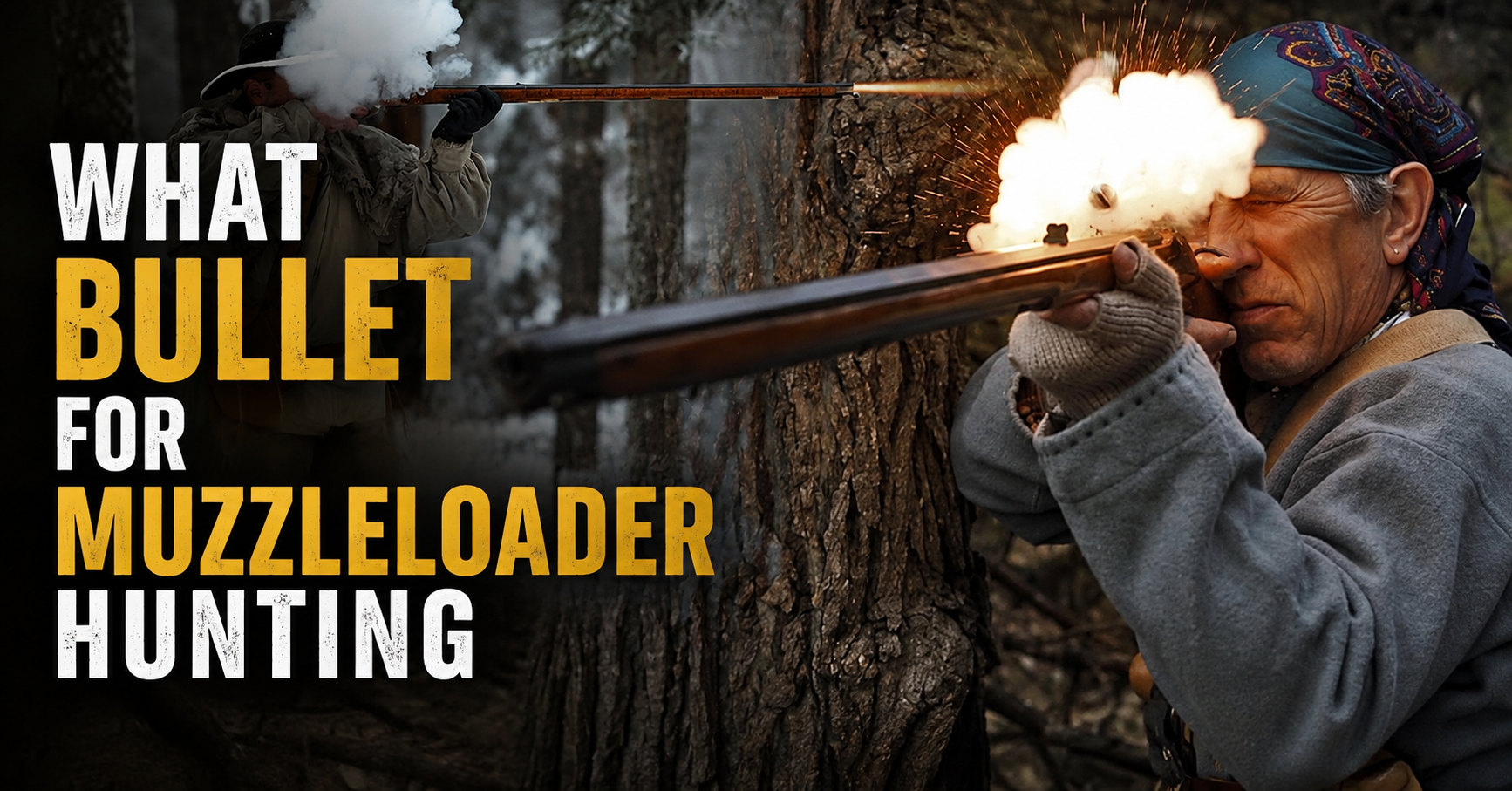

Choosing a muzzleloader projectile involves more than selecting a caliber or the heaviest bullet available. The right choice depends on the game animal, firearm design, barrel twist, expected distance, local regulations, bullet construction, and the load your rifle shoots accurately.
This guide explains the main projectile types, sensible starting points for deer and larger game, compatibility checks, range testing, legal restrictions, and firearm-safety considerations. It is intended for hunters who want a practical answer without assuming that one bullet works in every muzzleloader.
Quick Answer
For deer hunting with a modern .50-caliber inline muzzleloader, a controlled-expansion hunting bullet weighing approximately 250 to 300 grains and carried in a compatible sabot is a common starting point where sabots are legal. A full-bore conical or polymer-base bullet is a better starting category where sabots are prohibited or when the rifle shoots full-bore projectiles more accurately.
For elk, moose, or similarly large game, hunters often favor a heavier controlled-expansion projectile that provides reliable penetration, but local minimum-caliber and bullet-weight rules may determine what is legal. Traditional rifles may perform better with a lubricated conical or patched round ball appropriate for their rifling twist.
Always confirm the projectile in the firearm owner’s manual, verify current hunting regulations, and test accuracy from a clean and fouled bore before taking it hunting.
Important Safety and Legal Notice
Regulations were reviewed on August 3, 2026, but muzzleloader rules can change by state, species, season, wildlife unit, and land designation. Rules may restrict sabots, bullet materials, caliber, projectile weight, ignition systems, powder types, or sights.
For example, the Idaho Department of Fish and Game muzzleloader rules currently allow sabots in muzzleloader-only hunts, following a rule change that took effect in 2025. Other jurisdictions may prohibit them. Consult the current regulation booklet and any emergency orders for the exact location and hunt.
Read the manual for your specific firearm. A projectile that is acceptable in one muzzleloader may be unsafe or unsuitable in another. The CVA Optima and Wolf owner’s manual, for example, discusses projectile compatibility and sabot residue, while other firearm models may carry different restrictions.
Muzzleloader Bullet Comparison
| Projectile | Typical Application | Advantages | Limitations | What to Verify |
|---|---|---|---|---|
| 250–260-grain saboted expanding bullet | Deer-sized game in modern inline rifles | Moderate recoil, useful trajectory, many hunting designs | May lose velocity faster than heavier options; sabot may be prohibited | Manual compatibility, accuracy, legal status, impact-velocity window |
| 275–300-grain saboted controlled-expansion bullet | Deer, hogs, black bear, and some larger-game applications | Balances trajectory, retained momentum, and penetration | May produce more recoil and may load tightly in some bores | Species legality, bore fit, sabot type, manufacturer data |
| Full-bore jacketed conical | Modern rifles and hunts where full-bore projectiles are required | No conventional sabot; useful hunting construction | Bore dimensions and loading resistance vary | Exact diameter, firearm approval, legal definition |
| Polymer-base full-bore bullet | Modern inline hunting | Base helps seal the bore without functioning like a conventional sabot | Its legal classification can vary by jurisdiction | Agency interpretation and manufacturer instructions |
| Heavy lead conical | Traditional rifles, close-range hunting, and larger game | Large frontal diameter and substantial weight | More recoil and a more arcing trajectory | Twist rate, bore fit, lubrication, legal minimums |
| Lead-free monolithic bullet | Areas requiring non-lead projectiles or hunters choosing lead-free ammunition | Lead-free construction and controlled penetration when properly matched | May require a different diameter, sabot, or loading fit | Lead-free certification, firearm compatibility, accuracy |
| Patched round ball | Traditional muzzleloaders and short-range hunting where legal | Traditional design, relatively light recoil, simple construction | Loses velocity quickly and may not suit fast-twist barrels | Patch-and-ball diameter, twist rate, species and caliber rules |
What Bullet for Muzzleloader Hunting Should You Choose?
Begin with the projectile category recommended in your rifle’s manual. Then narrow the choice according to the animal, regulations, expected distance, and demonstrated accuracy.
1. A 250–260-Grain Saboted Bullet for Deer
A 250- or 260-grain controlled-expansion bullet is a reasonable starting category for whitetail and mule deer when fired from a compatible modern inline muzzleloader. These bullets can provide manageable recoil and a useful trajectory, but their performance still depends on construction and impact velocity.
Choose a projectile specifically described by its manufacturer as a hunting bullet. A target bullet is not automatically suitable for hunting simply because it groups well.
2. A 275–300-Grain Saboted Bullet for Versatility
A 275- to 300-grain hunting bullet is a popular middle-ground option for hunters who want additional bullet weight without moving to a very heavy conical. This category may suit deer, feral hogs, black bear, or larger game when legal and when the individual bullet is designed for the application.
Do not assume that the heavier option is automatically better. Compare accuracy, recoil, loading resistance, and the manufacturer’s recommended impact-velocity range.
3. A Full-Bore Conical Where Sabots Are Restricted
A full-bore conical closely matches the rifle’s bore rather than using a plastic sleeve to carry a smaller-diameter bullet. It can be a practical choice in jurisdictions that prohibit sabots or in rifles that group conicals better.
Full-bore bullets must have the correct fit. A projectile that slides down with almost no resistance or one that requires unreasonable force may be unsuitable. Ask the firearm or bullet manufacturer for guidance rather than altering the projectile.
4. A Heavy Conical for Large Game or Traditional Rifles
Heavy lead or lead-alloy conicals can provide substantial momentum and penetration at sensible hunting distances. They may be appropriate for elk or other large game when the bullet, caliber, firearm, and local law are compatible.
The tradeoffs include increased recoil and a more curved trajectory. Hunters must verify actual point of impact at every intended distance instead of relying on centerfire-rifle expectations.
5. A Polymer-Base Bullet for Full-Bore Performance
Some modern bullets use a polymer base that seals the bore but is not described by the manufacturer as a conventional sabot. Hornady, for example, explains that its Bore Driver system uses a polymer base rather than a sabot.
That manufacturer description does not guarantee that every wildlife agency will classify the projectile the same way. Obtain clarification from the agency responsible for the hunt if the regulation uses terms such as “sabot,” “full-bore,” or “all-lead conical.”
6. A Lead-Free Bullet Where Required
Copper and other lead-free muzzleloader projectiles are available for hunters who must or prefer to avoid lead. Monolithic bullets often behave differently from similarly weighted lead-core bullets, so bore fit, sabot selection, seating resistance, and accuracy must be tested again.
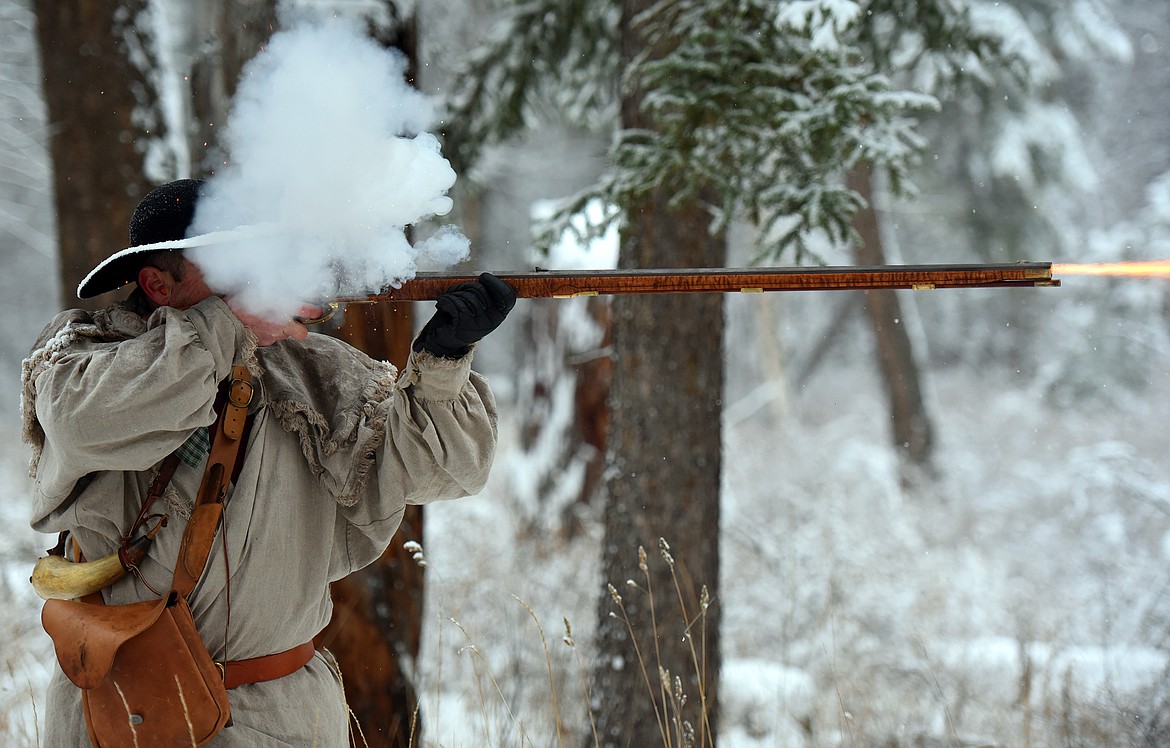
Lead restrictions may apply to a state, refuge, species, or individual parcel. The U.S. Fish and Wildlife Service lead-free resource provides information about participating national wildlife refuges, but hunters must still consult the rules for their specific refuge.
7. A Patched Round Ball for a Traditional Setup
A patched round ball remains appropriate for many traditional muzzleloaders. It usually works best in a barrel with a rifling twist intended for round balls. According to hunter-education guidance on muzzleloader projectiles, conical bullets generally retain velocity and energy better at practical hunting distances, while round balls represent the traditional option.
Use a conservative distance and verify whether the ball diameter and rifle caliber satisfy the legal requirements for the species. Some jurisdictions impose different minimum calibers for round balls and conicals.
Choose the Bullet by Game Animal
Deer
For a modern .50-caliber inline rifle, a 250- to 300-grain controlled-expansion bullet is a useful starting range when legal. The final choice should be the one that groups consistently, remains within its intended impact-velocity window, and can reach the vital area from realistic shot angles.
Feral Hogs
Hogs vary greatly in size. Favor a hunting bullet designed for controlled expansion and adequate penetration rather than a rapidly expanding target-style projectile. Avoid steeply quartering or obstructed shots, and stay within your proven accuracy.
Black Bear
Choose a controlled-expansion bullet that balances expansion with penetration. Because bear regulations, minimum calibers, and bullet-material rules vary, confirm the exact hunt requirements before selecting a projectile.
Elk
Elk generally call for more penetration than deer. A heavier controlled-expansion sabot bullet or full-bore conical may be suitable, depending on the rifle and law. Accuracy and shot selection remain more important than choosing the maximum possible bullet weight.
Moose
Moose regulations may specify minimum caliber and projectile type. Colorado Parks and Wildlife, for example, publishes particular minimum-caliber requirements for conicals and round balls on its official moose hunting page. Treat this only as a Colorado example, not a nationwide standard.
Small Game
A large-caliber hunting conical may cause unnecessary meat damage and may not be legal for small game. Use only a firearm and projectile permitted for the species, season, and location. In some situations, a small-caliber muzzleloader, muzzleloading shotgun, or different lawful hunting method is more appropriate.
Seven Factors That Matter More Than Brand Name
1. Firearm Compatibility
Verify the projectile type, diameter, and weight in the owner’s manual. Do not assume that every projectile labeled “.50 caliber” is interchangeable. A .50-caliber sabot may carry a smaller bullet, while a full-bore .50-caliber conical directly engages the bore.
2. Barrel Twist Rate
Rifling twist affects stabilization. Slow-twist traditional barrels often favor patched round balls, while faster twists commonly stabilize conicals or saboted bullets. This is a tendency rather than a guarantee; target testing decides whether the combination works.
3. Bullet Construction
Look for a hunting design intended to expand or deform predictably at muzzleloader impact velocities. Jacket thickness, hollow-point design, polymer tips, bonding, and monolithic construction can all influence performance.
4. Bullet Weight
Light bullets may produce less recoil and a flatter initial trajectory. Heavier bullets may retain momentum better but usually produce more recoil and drop. Weight alone does not establish penetration or ethical range.
5. Bore Fit and Loading Resistance
The projectile should load according to the firearm and projectile manufacturers’ directions. Excessively loose or tight fit requires investigation. Bore dimensions, fouling, temperature, sabot material, and bullet diameter can change loading resistance.
6. Accuracy from Your Rifle
Two rifles of the same model can prefer different projectiles. Test several manufacturer-approved options and select the one that produces repeatable groups, including the first shot from the bore condition you expect while hunting.
7. Current Hunting Law
Check minimum caliber, bullet weight, projectile material, sabot rules, and weapon-season definitions. Also verify any non-lead rule that applies to the property. Official regulations override general advice found online.
Sabot Versus Full-Bore Conical
| Factor | Saboted Bullet | Full-Bore Conical |
|---|---|---|
| Basic design | Smaller bullet held in a plastic sleeve | Projectile closely matches the bore diameter |
| Common rifle type | Modern inline muzzleloader | Modern or traditional muzzleloader, depending on design |
| Trajectory | Often flatter with lighter streamlined bullets | Often more curved, especially with heavy lead conicals |
| Fouling concern | May leave plastic residue | May create lead or lubricant-related fouling |
| Legal concern | Prohibited in some muzzleloader seasons | May satisfy traditional-projectile rules, but definitions vary |
| Best choice | The legal option your inline shoots accurately | The legal option that fits the bore and stabilizes properly |
How to Test a Muzzleloader Hunting Bullet
- Read the manual: Confirm that the projectile type and weight are approved for the exact firearm.
- Check the regulations: Verify caliber, bullet, sabot, material, sight, ignition, and powder restrictions.
- Select hunting designs: Compare two or three projectiles intended for the target animal and expected impact velocity.
- Use only published combinations: Follow the firearm and propellant manufacturers’ instructions. Never improvise a charge or substitute smokeless powder unless the specific firearm manual expressly authorizes it.
- Record bore condition: Note whether the rifle was clean, fouled, dry, or treated according to the manufacturer’s procedure.
- Test repeatability: Evaluate groups over multiple sessions rather than choosing a bullet from one unusually good group.
- Verify field positions: Practice from the rest, kneeling, sitting, or standing support that may be used during the hunt.
- Confirm actual trajectory: Shoot at every intended distance instead of relying only on a printed ballistic chart.
- Establish an ethical limit: Stop at the distance where you cannot consistently place every shot within the vital-area target under realistic conditions.
Accuracy and Ethical Range
There is no universal ethical range for a muzzleloader. The limit depends on the rifle, sights, projectile, weather, shooter, target size, and field position. A bullet advertised for long-range use does not make a long shot responsible.
Your field limit should be shorter than your best bench-rest performance suggests. Consider wind, low light, cold hands, uneven terrain, animal movement, and the increased difficulty of an immediate follow-up shot.
Take high-percentage shots at positively identified game with a safe backstop. Broadside and modest quartering-away presentations generally provide clearer access to the vital area than steep quartering or obstructed angles.
Muzzleloader Firearm Safety
Follow the four primary firearm-safety rules:
- Treat every firearm as if it is loaded.
- Keep the muzzle pointed in a safe direction.
- Keep your finger outside the trigger guard until ready to shoot.
- Be certain of the target and what is in front of and beyond it.
The Hunter-Ed muzzleloader safety guide also advises hunters never to lean over or blow down the muzzle, to delay priming or capping until ready to fire, and to wear eye and hearing protection.
- Use only the propellant expressly approved in the firearm manual.
- Never use ordinary smokeless powder in a muzzleloader unless its specific manufacturer instructions explicitly permit it.
- Keep powder containers closed and away from sparks, flames, cigarettes, and the muzzle.
- Follow the manual’s procedure for confirming that the projectile is fully seated.
- Remove the ramrod before priming and firing.
- Do not depend on a mechanical safety as a substitute for safe handling.
- Follow the manufacturer’s instructions for a hang fire or misfire.
- Use an approved unloading method; do not attempt an improvised extraction.
Common Bullet-Selection Mistakes
- Buying by caliber alone: Caliber does not reveal bullet construction, bore fit, legal status, or compatibility.
- Copying another hunter’s load: A combination that works in another rifle may be inaccurate or unauthorized in yours.
- Choosing the heaviest bullet automatically: Extra weight may add recoil and drop without improving practical results.
- Ignoring the first shot: The first cold-bore shot matters more while hunting than a later group fired through a warm barrel.
- Assuming sabots are legal: Muzzleloader-season equipment rules differ widely.
- Using a target bullet for hunting: Accuracy alone does not establish suitable terminal performance.
- Trusting an advertised range: Marketing claims cannot establish the shooter’s ethical limit.
- Changing components before the hunt: A new bullet, sabot, or other component requires fresh accuracy and trajectory verification.
- Ignoring non-lead rules: Restrictions can apply to particular refuges or parcels even when statewide rules allow lead.
- Forcing a projectile: Unusual loading resistance should be investigated through the manufacturer, not overcome with improvised tools.
What Not to Do
- Do not fire a projectile that is not approved for the firearm.
- Do not assume one bullet is legal in every muzzleloader season.
- Do not alter a sabot or bullet to make an incompatible projectile fit.
- Do not mix unverified components or exceed manufacturer limits.
- Do not take a shot beyond your demonstrated accuracy.
- Do not shoot through heavy brush or at unidentified movement.
- Do not fire without knowing what is beyond the animal.
- Do not use equipment as a substitute for hunter education and practice.
- Do not trespass while hunting or recovering game.
- Do not abandon a reasonable, safe, and lawful recovery effort after a shot.
Beginner Checklist
- Firearm owner’s manual
- Current hunting regulation booklet
- Species license, permit, and tag
- Manufacturer-approved hunting projectile
- Approved propellant and ignition components
- Correct loading and cleaning accessories
- Marked or otherwise manufacturer-approved method for checking seating depth
- Eye and hearing protection
- Required hunter-orange or fluorescent-pink clothing
- Range-tested sights and confirmed trajectory
- Safe unloading equipment and instructions
- Navigation, communication, first-aid, and game-recovery equipment
Final Answer
For most deer hunters using a modern .50-caliber inline muzzleloader, a 250- to 300-grain controlled-expansion sabot bullet is a practical starting category when the rifle manufacturer approves it and sabots are legal. Choose a compatible full-bore conical or polymer-base projectile where sabots are restricted or when that design produces better accuracy.
For elk and similarly large game, consider a heavier controlled-expansion bullet that provides dependable penetration, but do not select by weight alone. Confirm the projectile’s construction, bore fit, firearm compatibility, legal status, and performance from your rifle.
The best answer to “what bullet for muzzleloader hunting” is the legal hunting projectile that your specific muzzleloader shoots accurately, that is designed for the target animal, and that you can place responsibly within a proven field range.
FAQs
1. What is the best muzzleloader bullet for deer?
A 250- to 300-grain controlled-expansion bullet is a common starting range for a modern .50-caliber inline. The best choice is the legal, manufacturer-approved option that groups consistently in your rifle.
2. Is a 250-grain muzzleloader bullet enough for deer?
A properly constructed 250-grain hunting bullet can be suitable for deer when used within its intended velocity range and placed accurately. Verify firearm compatibility and local regulations.
3. Is a 300-grain bullet better than a 250-grain bullet?
Not automatically. A 300-grain bullet may retain momentum better, while a 250-grain bullet may produce less recoil and a flatter initial trajectory. Accuracy and construction matter more than the 50-grain difference alone.
4. What muzzleloader bullet should I use for elk?
Consider a heavier controlled-expansion sabot bullet or full-bore conical that is legal for elk and approved for the rifle. Confirm any minimum caliber or bullet-weight requirement.
5. Can I hunt moose with a round ball?
Possibly, but only where legal and with a caliber meeting the jurisdiction’s requirements. Some states impose a larger minimum caliber for round balls than for conicals.
6. Are sabots legal during muzzleloader season?
They are legal in some jurisdictions and prohibited or restricted in others. Check the current rules for the state, species, season, wildlife unit, and property.
7. What is a sabot?
A sabot is a plastic sleeve that carries a smaller-diameter bullet through a larger muzzleloader bore. The rifling engages the sabot, which transfers spin to the bullet.
8. Is a polymer base the same as a sabot?
Manufacturers may distinguish a polymer base from a conventional sabot, but wildlife regulations may use their own definitions. Ask the responsible agency when the rule is unclear.
9. What is a full-bore muzzleloader bullet?
A full-bore bullet closely matches the firearm’s bore diameter and directly engages the rifling rather than being carried inside a conventional sabot.
10. Are conical bullets better than round balls?
Conicals generally retain velocity and momentum better, while round balls suit many traditional rifles and close-range applications. Barrel twist, law, and accuracy determine which is appropriate.
11. Can a round ball be used for deer hunting?
Yes, where legal and when the ball diameter, firearm caliber, accuracy, and distance are suitable. Use a conservative range because round balls lose velocity relatively quickly.
12. What bullet should I use in a .45-caliber muzzleloader?
Use only a .45-caliber-compatible projectile type and weight listed or approved by the firearm manufacturer. Do not transfer recommendations from a .50-caliber rifle without verification.
13. What bullet should I use in a .50-caliber muzzleloader?
Modern .50-caliber rifles may use saboted bullets, full-bore conicals, polymer-base projectiles, or round balls, depending on their design. Start with the owner’s manual.
14. Does every .50-caliber bullet fit every .50-caliber muzzleloader?
No. Bore dimensions, rifling, projectile design, and sabot thickness vary. A “.50 caliber” label does not guarantee safe or accurate compatibility.
15. How tight should a muzzleloader bullet fit?
It should load with the resistance described by the firearm and bullet manufacturers. Investigate a projectile that is unusually loose or requires excessive force.
16. Why is my sabot hard to load?
Possible causes include bore fouling, an oversized sabot-bullet combination, cold temperature, plastic characteristics, or a tight bore. Stop and consult the relevant manuals rather than forcing it.
17. Why does my first shot hit away from the group?
A clean or conditioned bore can produce a different point of impact from a fouled bore. Test the exact bore condition you will use while hunting and follow the manufacturer’s storage and cleaning directions.
18. Does barrel twist affect bullet choice?
Yes. Twist rate influences projectile stabilization. Slow twists often favor round balls, while faster twists commonly handle longer conicals or saboted bullets.
19. Can I use a pistol bullet in a muzzleloader sabot?
Only when the sabot, bullet, and firearm manufacturers approve that combination. Similar diameter does not establish safe fit or suitable hunting performance.
20. Can I use a centerfire rifle bullet in a muzzleloader?
Not unless it is part of an expressly approved muzzleloader projectile system. Never improvise based solely on bullet diameter.
21. Are hollow-point bullets good for muzzleloader hunting?
They can be when designed to expand within muzzleloader impact velocities. Confirm the manufacturer’s intended use and test accuracy in your rifle.
22. Are polymer-tip muzzleloader bullets good for deer?
Many are designed for hunting and can provide useful aerodynamics and controlled expansion. Performance still varies by design and impact velocity.
23. Are lead-free muzzleloader bullets effective?
Properly designed lead-free bullets can be effective when matched to the game, rifle, and expected velocity. They may require renewed accuracy and fit testing.
24. Where are lead-free bullets required?
Requirements may apply statewide or only on particular refuges and properties. Check both the state wildlife agency and the land-management agency.
25. Do heavier bullets penetrate better?
They may retain momentum well, but penetration also depends on construction, diameter, velocity, expansion, and the material encountered. Weight alone cannot predict the result.
26. Do lighter muzzleloader bullets shoot flatter?
They often begin with a flatter trajectory, but actual drop depends on velocity and aerodynamic efficiency. Confirm trajectory by shooting at the intended distances.
27. How far can I hunt with a muzzleloader?
Your ethical range ends where you cannot consistently place every shot within the vital-area target under realistic field conditions. It may be much shorter than the bullet’s advertised range.
28. Is 200 yards ethical with a muzzleloader?
Only for a hunter whose rifle, projectile, sights, conditions, and demonstrated field accuracy support it. For many hunters and traditional setups, a shorter distance is more responsible.
29. Should I test several bullets?
Yes. Testing two or three manufacturer-approved hunting designs can reveal major differences in accuracy and loading resistance.
30. How many shots should I fire before choosing a bullet?
Use multiple groups across more than one session. One excellent group is not enough to establish repeatability, especially if bore condition or weather changes.
31. Should I sight in with a clean or fouled bore?
Test both and determine which condition the manufacturer permits for safe hunting and storage. Your final zero should reflect the condition expected for the first field shot.
32. Can I switch bullets without sighting in again?
No. Different weights, shapes, diameters, and sabots can change point of impact. Reconfirm accuracy and trajectory whenever a projectile component changes.
33. Can I use the same bullet for deer and elk?
Sometimes, if its construction, accuracy, and penetration are appropriate for both species and it meets both sets of regulations. Do not assume a deer load is automatically suitable for elk.
34. What bullet causes the least recoil?
A lighter projectile may reduce recoil when other factors remain similar, but the complete manufacturer-approved combination determines felt recoil. Firearm weight and fit also matter.
35. Is the most accurate bullet always the best hunting bullet?
No. It must also have suitable terminal construction, legal status, bore fit, and adequate performance at the expected impact velocity.
36. Can I use a target conical for hunting?
Only if the manufacturer identifies it as suitable for the animal and it meets local regulations. Some target projectiles are not designed for controlled expansion.
37. What should I do if the regulation does not clearly define a sabot?
Contact the wildlife agency and request written clarification before hunting. Keep a copy of the relevant rule or agency response with your hunting documents.
38. Do muzzleloader bullets expire?
Projectiles do not normally have a simple expiration date, but corrosion, deformation, lubricant deterioration, or damaged sabots can make them unsuitable. Store components according to manufacturer instructions.
39. Can temperature change sabot performance?
Temperature can affect plastic stiffness and loading resistance. Confirm the combination in conditions similar to those expected during the hunt.
40. What is the safest first step for a new muzzleloader hunter?
Read the complete firearm manual and take a hands-on hunter-education or muzzleloader course. Practice loading, unloading, handling, and shooting under qualified supervision.
Read more: