
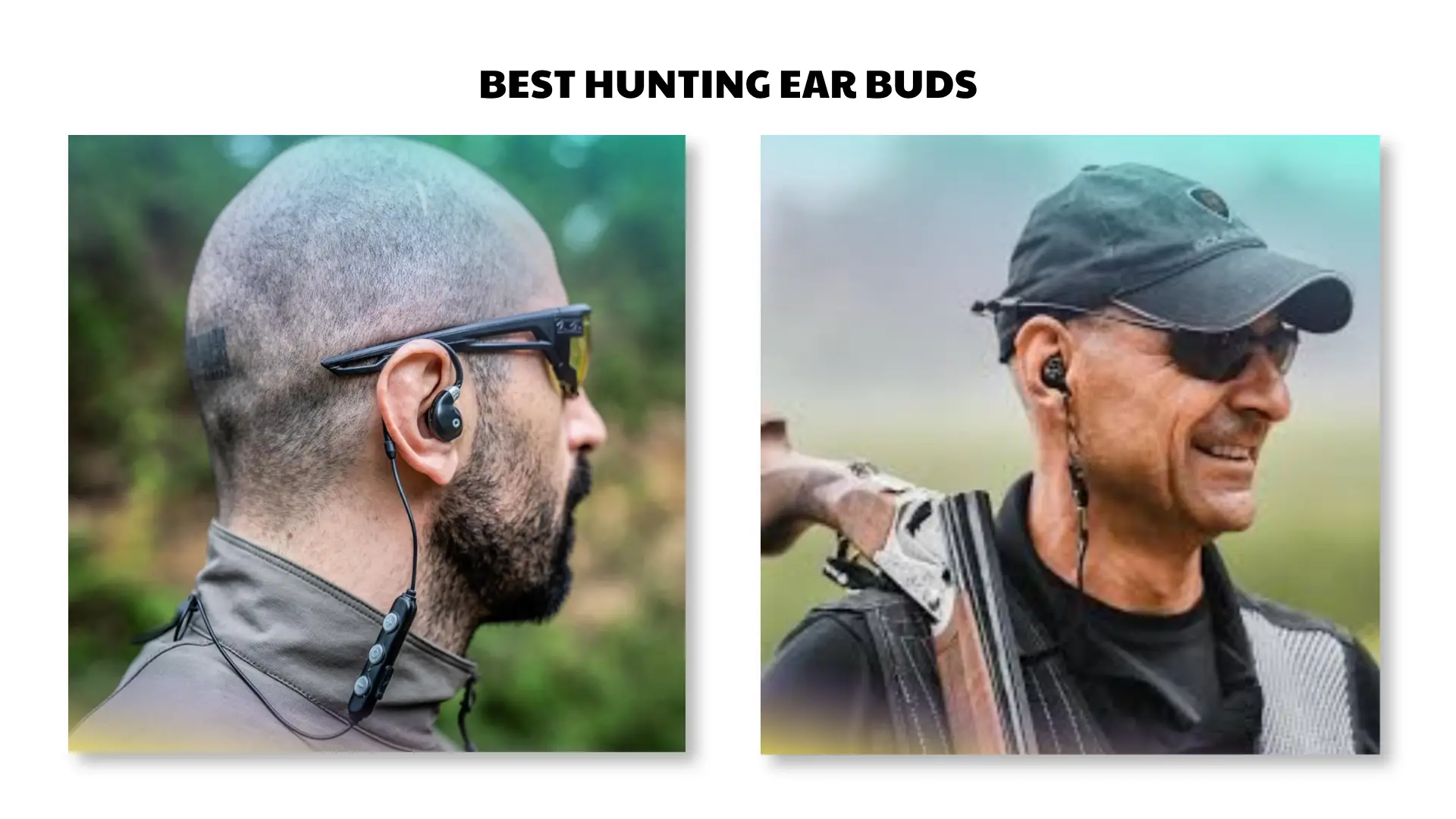

Key Takeaways
- Choose hunting ear buds that are specifically labeled as hearing protection; consumer active noise cancellation is not enough.
- The eartip seal is critical. A poorly fitted high-NRR product can perform worse than a correctly fitted lower-rated protector.
- True-wireless models are compact, while corded and neckband models are harder to lose in brush, snow, or water.
- Use double protection for indoor ranges, covered firing lines, repeated strings of fire, muzzle brakes, and other high-noise situations.
- The best model depends on hunting style, ear shape, weather, battery needs, Bluetooth preference, and the amount of shooting expected.
Safety note: Firearm impulse noise can damage hearing. Use only properly labeled hearing protection, fit it before exposure, and use plugs plus protective earmuffs when conditions are especially loud or uncertain.
Quick Picks:
- Best Overall: ISOtunes Sport ADVANCE BT 2.0 on Amazon
- Best Premium Pick: OTTO NoizeBarrier Micro on Amazon
- Best True-Wireless Option: AXIL XCOR PRO on Amazon
- Best Charging-Case Value: Caldwell E-MAX Shadows Pro on Amazon
- Best Compact Pick: ISOtunes Sport CALIBER BT on Amazon
- Best Behind-the-Neck Design: Walker’s Razor XV 3.0 Bluetooth on Amazon
- Best Bluetooth Neckband Pick: AXIL GS Extreme 2.0 on Amazon
- Best Budget-Oriented Option: GLORYFIRE Bluetooth Shooting Ear Protection Earbuds on Amazon
Best Hunting Ear Buds Comparison Table
| Product | Best For | Format / Fit | Published Protection | Ambient Listening | Bluetooth / Power | Check Price |
|---|---|---|---|---|---|---|
| ISOtunes Sport ADVANCE BT 2.0 | Best Overall | Corded in-ear earbuds with stabilizing cable | Manufacturer-published 26 dB NRR with compatible foam tips | Tactical Sound Control with adjustable environmental listening | Bluetooth 5.4; rechargeable USB-C design | Check Price on Amazon |
| OTTO NoizeBarrier Micro | Best Premium Pick | True-wireless rechargeable electronic earplugs | Protection varies with fitted eartip; use only manufacturer-approved tips | Two listening modes with high-definition environmental sound | No music-focused Bluetooth; rechargeable storage and charging case | Check Price on Amazon |
| AXIL XCOR PRO | Best True-Wireless Option | True-wireless in-ear electronic hearing protection | Manufacturer lists protection that changes with foam or silicone tip choice | Digital hear-through and sound enhancement | Bluetooth audio and calls with rechargeable case | Check Price on Amazon |
| 3M PELTOR EEP-100 Electronic Earplugs | Best Industrial-Grade Option | True-wireless rechargeable electronic earplugs | Published NRR depends on the approved eartip installed | Level-dependent environmental listening with multiple volume settings | No entertainment Bluetooth; rechargeable case | Check Price on Amazon |
| Caldwell E-MAX Shadows Pro | Best Charging-Case Value | True-wireless rechargeable electronic earbuds | Manufacturer-published 25 dB NRR with the correct foam tips | Adjustable ambient gain | Bluetooth for media and calls; rechargeable storage case | Check Price on Amazon |
| ISOtunes Sport CALIBER BT | Best Compact ISOtunes Pick | True-wireless rechargeable electronic earbuds | Manufacturer-published 25 dB NRR with compatible foam tips | Tactical Sound Control | Bluetooth 5.2 with rechargeable charging case | Check Price on Amazon |
| Walker’s Razor XV 3.0 Bluetooth | Best Behind-the-Neck Design | Rechargeable behind-the-neck unit with retractable earbuds | Manufacturer-published attenuation depends on supplied foam tips and correct fit | Four selectable sound profiles with independent controls | Bluetooth 5.0 and rechargeable battery | Check Price on Amazon |
| AXIL GS Extreme 2.0 | Best Bluetooth Neckband Pick | Corded in-ear earbuds with ear hooks and inline controls | Manufacturer lists different attenuation with foam versus silicone tips | Independent hearing enhancement and protection controls | Bluetooth audio and calls with rechargeable inline battery | Check Price on Amazon |
| ISOtunes Sport ADVANCE BT | Best Proven Previous-Generation Pick | Corded in-ear Bluetooth hearing protection | Manufacturer-published NRR with compatible foam tips | Tactical Sound Control | Bluetooth with rechargeable battery | Check Price on Amazon |
| ISOtunes PRO Aware 2.0 | Best for Active All-Day Wear | Corded Bluetooth earplug headphones with ear hooks | Manufacturer-published 26 dB NRR with compatible foam tips | Aware Technology for environmental listening | Bluetooth and rechargeable battery | Check Price on Amazon |
| Howard Leight Impact Sport In-Ear Electronic Earbuds | Best Simple Electronic Neck-Cord Pick | Corded electronic in-ear protector with flexible ear hooks | Use the manufacturer-supplied protection tips and verify the current package rating | Realistic hear-through audio with loud-sound compression | Non-Bluetooth version; rechargeable battery | Check Price on Amazon |
| Walker’s Silencer 2.0 Rechargeable Earbuds | Best Walker’s Rechargeable In-Ear Pick | True-wireless rechargeable electronic earbuds | Published rating varies by exact Silencer 2.0 package; confirm the listing and packaging | Sound-activated compression and digital hearing enhancement | Non-Bluetooth rechargeable model with charging dock | Check Price on Amazon |
| Walker’s Silencer Wireless Electronic Earbuds | Best Basic Walker’s Electronic Plug | Independent in-ear electronic hearing protectors | Manufacturer-labeled protection varies by exact version and fitted tip | Electronic sound enhancement with impulse-noise suppression | No media Bluetooth; replaceable-battery style | Check Price on Amazon |
| Walker’s ATACS Rechargeable Bluetooth Earbuds | Best Camo-Styled Bluetooth Pick | True-wireless rechargeable electronic earbuds | Verify the NRR printed on the current listing and package | Electronic hearing enhancement and loud-sound suppression | Bluetooth with rechargeable case | Check Price on Amazon |
| GLORYFIRE Bluetooth Shooting Ear Protection Earbuds | Best Budget-Oriented Bluetooth Option | True-wireless rechargeable electronic earbuds | Check the current listing and package for the labeled NRR and approved tips | Electronic environmental listening with noise reduction | Bluetooth with rechargeable case | Check Price on Amazon |
No single product leads every category. ISOtunes Sport ADVANCE BT 2.0 offers the most balanced overall combination of labeled protection, ambient listening, Bluetooth, tip selection, and corded security. OTTO NoizeBarrier Micro and 3M PELTOR EEP-100 focus more heavily on professional hearing protection and environmental awareness. AXIL XCOR PRO and ISOtunes CALIBER BT suit buyers who prefer true-wireless convenience. Neckband designs such as Walker’s Razor XV 3.0 and AXIL GS Extreme 2.0 are easier to retain during active movement. Comfort and value ultimately depend on ear fit, because build quality and electronics cannot compensate for a leaking eartip.
How We Selected These Hunting Ear Buds
The products were screened for relevance to hunting, shooting, or professional electronic hearing protection; in-ear or earbud-style fit; published protection information where available; eartip selection; environmental listening; retention; charging or battery management; weather considerations; current product support; and usefulness for common hunting situations. The recommendations do not claim independent laboratory testing. Manufacturer information, current marketplace listings, product manuals, and recurring buyer concerns were used to frame practical comparisons without inventing specifications or field results.
1. ISOtunes Sport ADVANCE BT 2.0 on Amazon
Short Overview
ISOtunes Sport ADVANCE BT 2.0 is best suited to hunters who want a balanced combination of certified hearing protection, natural awareness, Bluetooth, and all-day field practicality. It uses a corded in-ear earbuds with stabilizing cable built around weather-resistant sport construction with multiple foam and silicone tip options. For protection, manufacturer-published 26 dB NRR with compatible foam tips. Its environmental-audio system provides tactical sound control with adjustable environmental listening, helping the wearer remain aware of conversation and ordinary field sounds while the protector is fitted. Bluetooth 5.4; rechargeable USB-C design is the main power and connectivity arrangement, so buyers should confirm charging status or battery condition before every outing. Its corded format is harder to lose than tiny true-wireless buds, while the foam tips are designed to create the seal required for rated attenuation. The updated connectivity, replaceable tip system, wind-noise accessories, and straightforward controls make it a strong all-around choice. The neck cable is secure but may feel less minimalist than fully wireless earbuds. Choose it only after confirming that the supplied or approved tips create a stable, comfortable seal in both ears, and add protective earmuffs when the environment calls for double hearing protection.
Key Features
- Published 26 dB NRR when fitted with the correct compatible foam tips
- Tactical Sound Control for adjustable ambient awareness
- Bluetooth 5.4 with modern low-energy connectivity
- Multiple foam sizes plus a silicone triple-flange option
- USB-C charging and a protective carrying case
Pros
- Strong balance of protection, awareness, connectivity, and field comfort
- Corded design reduces the chance of losing a single earbud
- Multiple tips help more users achieve a proper seal
- Suitable for hunting, outdoor range use, and noisy work
Cons
- A cord can catch on high collars or layered clothing
- Maximum protection depends on correct foam-tip insertion
- Bluetooth features add controls and charging needs
Who It’s Best For
ISOtunes Sport ADVANCE BT 2.0 is a practical match for hunters who want a balanced combination of certified hearing protection, natural awareness, Bluetooth, and all-day field practicality. It is not automatically the right choice for every ear shape or every noise environment. Confirm the exact current model, rating, included tips, warranty, and seller before ordering, then conduct a quiet fit check before depending on it in the field.
2. OTTO NoizeBarrier Micro on Amazon
Short Overview
OTTO NoizeBarrier Micro is best suited to experienced hunters and shooters who prioritize compact size, refined situational awareness, rugged construction, and a premium charging system. It uses a true-wireless rechargeable electronic earplugs built around compact ip-rated earplug system designed for demanding professional environments. For protection, protection varies with fitted eartip; use only manufacturer-approved tips. Its environmental-audio system provides two listening modes with high-definition environmental sound, helping the wearer remain aware of conversation and ordinary field sounds while the protector is fitted. No music-focused Bluetooth; rechargeable storage and charging case is the main power and connectivity arrangement, so buyers should confirm charging status or battery condition before every outing. The small earpieces sit close to the ear and avoid the stock-contact and hat-interference problems associated with bulky earmuffs. Its emphasis is professional electronic hearing protection rather than entertainment features, which suits users who value awareness and simple field operation. It is expensive and does not target buyers who mainly want music streaming or phone calls. Choose it only after confirming that the supplied or approved tips create a stable, comfortable seal in both ears, and add protective earmuffs when the environment calls for double hearing protection.
Key Features
- Compact rechargeable electronic earplugs
- Standard and enhanced-hearing listening modes
- Rugged charging case for storage between uses
- Multiple compatible eartip styles for fit and attenuation
- Designed for environmental awareness in intermittent-noise settings
Pros
- Very low-profile fit for cheek weld, hats, and cold-weather headwear
- Premium build and charging case
- Natural-use focus without unnecessary entertainment controls
- Useful for hunters who need to keep protection in place while listening
Cons
- Premium purchase cost
- No conventional music-streaming feature
- Replacement tips and accessories should be budgeted for
Who It’s Best For
OTTO NoizeBarrier Micro is a practical match for experienced hunters and shooters who prioritize compact size, refined situational awareness, rugged construction, and a premium charging system. It is not automatically the right choice for every ear shape or every noise environment. Confirm the exact current model, rating, included tips, warranty, and seller before ordering, then conduct a quiet fit check before depending on it in the field.
3. AXIL XCOR PRO on Amazon
Short Overview
AXIL XCOR PRO is best suited to mobile hunters who dislike neckbands and want one small set for environmental listening, Bluetooth audio, and impulse-noise protection. It uses a true-wireless in-ear electronic hearing protection built around compact water-, dust-, and wind-resistant earbud design. For protection, manufacturer lists protection that changes with foam or silicone tip choice. Its environmental-audio system provides digital hear-through and sound enhancement, helping the wearer remain aware of conversation and ordinary field sounds while the protector is fitted. Bluetooth audio and calls with rechargeable case is the main power and connectivity arrangement, so buyers should confirm charging status or battery condition before every outing. The independent earbuds avoid cables around a jacket collar and can remain unobtrusive under a hat or hood. It combines true-wireless convenience with electronic hearing enhancement in a format familiar to everyday earbud users. User experiences can vary significantly with ear shape, tip fit, charging contact, and touch-control sensitivity. Choose it only after confirming that the supplied or approved tips create a stable, comfortable seal in both ears, and add protective earmuffs when the environment calls for double hearing protection.
Key Features
- True-wireless design with rechargeable case
- Digital ambient sound enhancement
- Bluetooth audio and hands-free communication
- Foam and silicone tip options
- Compact housing intended for outdoor use
Pros
- No neck cable to snag on clothing
- Low profile around rifle and shotgun stocks
- Can serve as both hearing protection and everyday Bluetooth earbuds
- Case keeps the pair together during transport
Cons
- Fit is highly ear-shape dependent
- Small charging contacts must remain clean
- Touch controls may be easy to activate while adjusting the fit
Who It’s Best For
AXIL XCOR PRO is a practical match for mobile hunters who dislike neckbands and want one small set for environmental listening, Bluetooth audio, and impulse-noise protection. It is not automatically the right choice for every ear shape or every noise environment. Confirm the exact current model, rating, included tips, warranty, and seller before ordering, then conduct a quiet fit check before depending on it in the field.
4. 3M PELTOR EEP-100 Electronic Earplugs on Amazon
Short Overview
3M PELTOR EEP-100 Electronic Earplugs is best suited to hunters, range officers, outdoor workers, and safety-focused users who prefer a professional hearing-protection platform over consumer audio features. It uses a true-wireless rechargeable electronic earplugs built around professional ppe-oriented design compatible with approved 3m eartips. For protection, published NRR depends on the approved eartip installed. Its environmental-audio system provides level-dependent environmental listening with multiple volume settings, helping the wearer remain aware of conversation and ordinary field sounds while the protector is fitted. No entertainment Bluetooth; rechargeable case is the main power and connectivity arrangement, so buyers should confirm charging status or battery condition before every outing. The earbuds are compact and can be used with other head-worn equipment without the cup pressure or seal problems of earmuffs. 3M supports the system with different approved eartips, making fit selection and replacement supplies easier to plan. It is not intended as a music earbud and may feel expensive compared with consumer-focused models. Choose it only after confirming that the supplied or approved tips create a stable, comfortable seal in both ears, and add protective earmuffs when the environment calls for double hearing protection.
Key Features
- Rechargeable electronic earplug pair
- Level-dependent listening for awareness and communication
- Multiple approved eartip choices
- Protective charging and storage case
- Low-profile design compatible with hats and other PPE
Pros
- Professional hearing-protection orientation
- Easy to wear with headwear and eyewear
- Replaceable eartip ecosystem
- Simple field controls without music-related distractions
Cons
- No conventional Bluetooth music streaming
- Rated protection changes with eartip selection and fit
- Higher cost than basic electronic plugs
Who It’s Best For
3M PELTOR EEP-100 Electronic Earplugs is a practical match for hunters, range officers, outdoor workers, and safety-focused users who prefer a professional hearing-protection platform over consumer audio features. It is not automatically the right choice for every ear shape or every noise environment. Confirm the exact current model, rating, included tips, warranty, and seller before ordering, then conduct a quiet fit check before depending on it in the field.

5. Caldwell E-MAX Shadows Pro on Amazon
Short Overview
Caldwell E-MAX Shadows Pro is best suited to deer, turkey, and waterfowl hunters who want compact electronic protection, Bluetooth convenience, and a case that clearly manages charging. It uses a true-wireless rechargeable electronic earbuds built around compact plastic earbuds with foam and silicone tip choices and optional lanyard. For protection, manufacturer-published 25 dB NRR with the correct foam tips. Its environmental-audio system provides adjustable ambient gain, helping the wearer remain aware of conversation and ordinary field sounds while the protector is fitted. Bluetooth for media and calls; rechargeable storage case is the main power and connectivity arrangement, so buyers should confirm charging status or battery condition before every outing. The case provides organized storage, while push-button controls are easier to use with gloves than highly sensitive touch panels. It offers a practical feature set at a more approachable level than premium professional electronic plugs. Battery runtime and long-term case reliability should be checked against current seller information and buyer feedback. Choose it only after confirming that the supplied or approved tips create a stable, comfortable seal in both ears, and add protective earmuffs when the environment calls for double hearing protection.
Key Features
- Published 25 dB NRR with compatible foam tips
- Adjustable ambient listening
- Bluetooth media and call support
- Rechargeable case with battery indicators
- Multiple foam and silicone tip sizes
Pros
- Useful mix of protection, awareness, and Bluetooth
- Push-button controls are field friendly
- Charging indicators help with trip preparation
- Optional lanyard adds security around water or dense brush
Cons
- Silicone tips may not provide the same rated protection as foam
- Compact buds are easy to misplace without the lanyard
- Case performance should be checked before an extended trip
Who It’s Best For
Caldwell E-MAX Shadows Pro is a practical match for deer, turkey, and waterfowl hunters who want compact electronic protection, Bluetooth convenience, and a case that clearly manages charging. It is not automatically the right choice for every ear shape or every noise environment. Confirm the exact current model, rating, included tips, warranty, and seller before ordering, then conduct a quiet fit check before depending on it in the field.
6. ISOtunes Sport CALIBER BT on Amazon
Short Overview
ISOtunes Sport CALIBER BT is best suited to hunters who want a small true-wireless format but still prefer a product built and labeled specifically for hearing protection. It uses a true-wireless rechargeable electronic earbuds built around water- and dust-resistant true-wireless design with short and tall foam tips. For protection, manufacturer-published 25 dB NRR with compatible foam tips. Its environmental-audio system provides tactical sound control, helping the wearer remain aware of conversation and ordinary field sounds while the protector is fitted. Bluetooth 5.2 with rechargeable charging case is the main power and connectivity arrangement, so buyers should confirm charging status or battery condition before every outing. The included tip selection gives users more chances to find the insertion depth and seal that work with their ear canals. Its compact case, rated foam tips, and electronic awareness mode make it practical for a day pack or blind bag. As with all true-wireless hearing protection, keeping the case charged and the contacts clean becomes part of routine maintenance. Choose it only after confirming that the supplied or approved tips create a stable, comfortable seal in both ears, and add protective earmuffs when the environment calls for double hearing protection.
Key Features
- Published 25 dB NRR with compatible foam tips
- Tactical Sound Control for ambient listening
- Bluetooth 5.2 for audio and calls
- Protective charging case
- Several short and tall foam-tip sizes plus silicone tips
Pros
- Compact and easy to pack
- No cord around the neck
- Wide tip selection supports better fit
- Useful for hunting, clays, and outdoor range sessions
Cons
- Small earbuds are easier to drop outdoors
- Charging contacts require cleaning
- A poor seal sharply reduces practical protection
Who It’s Best For
ISOtunes Sport CALIBER BT is a practical match for hunters who want a small true-wireless format but still prefer a product built and labeled specifically for hearing protection. It is not automatically the right choice for every ear shape or every noise environment. Confirm the exact current model, rating, included tips, warranty, and seller before ordering, then conduct a quiet fit check before depending on it in the field.
7. Walker’s Razor XV 3.0 Bluetooth on Amazon
Short Overview
Walker’s Razor XV 3.0 Bluetooth is best suited to hunters who want earbuds that cannot be dropped individually and prefer controls located on a neckband rather than on tiny earpieces. It uses a rechargeable behind-the-neck unit with retractable earbuds built around flexible neckband with retractable in-ear cords and foam tip options. For protection, manufacturer-published attenuation depends on supplied foam tips and correct fit. Its environmental-audio system provides four selectable sound profiles with independent controls, helping the wearer remain aware of conversation and ordinary field sounds while the protector is fitted. Bluetooth 5.0 and rechargeable battery is the main power and connectivity arrangement, so buyers should confirm charging status or battery condition before every outing. Retractable cords keep the plugs available when an animal appears, while the neckband can sit under or over many jackets. The format combines the security of a banded protector with electronic sound enhancement and Bluetooth. The neckband is bulkier than true-wireless options and may interfere with some collars, backpack straps, or prone positions. Choose it only after confirming that the supplied or approved tips create a stable, comfortable seal in both ears, and add protective earmuffs when the environment calls for double hearing protection.
Key Features
- Behind-the-neck rechargeable design
- Retractable digital earbuds
- Four sound profiles for different listening needs
- Bluetooth 5.0 connectivity
- Independent controls and multiple foam tips
Pros
- Difficult to lose a single earbud
- Fast access when plugs are retracted
- Controls are easier to find than tiny earbud buttons
- Works well with brimmed hats and many winter caps
Cons
- Neckband adds bulk
- Retractable cables require careful handling
- May conflict with high collars or pack straps
Who It’s Best For
Walker’s Razor XV 3.0 Bluetooth is a practical match for hunters who want earbuds that cannot be dropped individually and prefer controls located on a neckband rather than on tiny earpieces. It is not automatically the right choice for every ear shape or every noise environment. Confirm the exact current model, rating, included tips, warranty, and seller before ordering, then conduct a quiet fit check before depending on it in the field.
8. AXIL GS Extreme 2.0 on Amazon
Short Overview
AXIL GS Extreme 2.0 is best suited to hunters who want a secure ear-hook fit, separate control over ambient hearing and Bluetooth audio, and a cord that keeps both buds together. It uses a corded in-ear earbuds with ear hooks and inline controls built around sport ear hooks, medical-grade-style earpieces, lanyard controls, and replaceable tips. For protection, manufacturer lists different attenuation with foam versus silicone tips. Its environmental-audio system provides independent hearing enhancement and protection controls, helping the wearer remain aware of conversation and ordinary field sounds while the protector is fitted. Bluetooth audio and calls with rechargeable inline battery is the main power and connectivity arrangement, so buyers should confirm charging status or battery condition before every outing. The ear hooks help the plugs stay positioned during walking, climbing, setting decoys, or moving through brush. Separate control sections let users manage Bluetooth audio and environmental sound without relying entirely on a phone app. The multi-module cable is more noticeable than a basic pair of corded earplugs and can rub against layered clothing. Choose it only after confirming that the supplied or approved tips create a stable, comfortable seal in both ears, and add protective earmuffs when the environment calls for double hearing protection.
Key Features
- Electronic hearing enhancement and impulse-noise compression
- Bluetooth audio and hands-free calls
- Independent ambient and media controls
- Foam and silicone tip options
- Secure ear hooks and rechargeable battery
Pros
- Secure during active hunting
- Harder to lose than true-wireless earbuds
- Separate controls for media and environmental listening
- Can cover hunting, mowing, shop work, and travel
Cons
- More cable and control modules around the neck
- Foam tips are essential for the highest listed attenuation
- Ear-hook comfort varies by ear shape and eyewear
Who It’s Best For
AXIL GS Extreme 2.0 is a practical match for hunters who want a secure ear-hook fit, separate control over ambient hearing and Bluetooth audio, and a cord that keeps both buds together. It is not automatically the right choice for every ear shape or every noise environment. Confirm the exact current model, rating, included tips, warranty, and seller before ordering, then conduct a quiet fit check before depending on it in the field.
9. ISOtunes Sport ADVANCE BT on Amazon
Short Overview
ISOtunes Sport ADVANCE BT is best suited to value-focused hunters who prefer ISOtunes’ corded format and can find the previous generation at a worthwhile current offer. It uses a corded in-ear bluetooth hearing protection built around rugged neck-cord design with foam and silicone tips. For protection, manufacturer-published NRR with compatible foam tips. Its environmental-audio system provides tactical sound control, helping the wearer remain aware of conversation and ordinary field sounds while the protector is fitted. Bluetooth with rechargeable battery is the main power and connectivity arrangement, so buyers should confirm charging status or battery condition before every outing. The familiar neck-cord layout keeps both earpieces connected and provides room for larger, easier-to-use controls. It offers the core combination of rated hearing protection, awareness, and Bluetooth without requiring a true-wireless charging case. The newer 2.0 version improves connectivity and charging convenience, so buyers should compare current listings before choosing. Choose it only after confirming that the supplied or approved tips create a stable, comfortable seal in both ears, and add protective earmuffs when the environment calls for double hearing protection.
Key Features
- Tactical Sound Control
- Bluetooth audio and call support
- Replaceable foam protection tips
- Corded design with clothing clip
- Rechargeable battery and carrying case
Pros
- Established design with many user reviews
- Connected earpieces are easier to manage in the field
- Good option when discounted relative to the updated model
- Simple charging without tiny case contacts
Cons
- Older charging and connectivity platform than the 2.0 model
- Cord may contact clothing
- Availability may vary as newer versions replace it
Who It’s Best For
ISOtunes Sport ADVANCE BT is a practical match for value-focused hunters who prefer ISOtunes’ corded format and can find the previous generation at a worthwhile current offer. It is not automatically the right choice for every ear shape or every noise environment. Confirm the exact current model, rating, included tips, warranty, and seller before ordering, then conduct a quiet fit check before depending on it in the field.
10. ISOtunes PRO Aware 2.0 on Amazon
Short Overview
ISOtunes PRO Aware 2.0 is best suited to hunters, guides, land managers, and outdoor workers who need secure hearing protection during long periods of walking and physical activity. It uses a corded bluetooth earplug headphones with ear hooks built around ear-hook sport design with replaceable foam tips and durable cable. For protection, manufacturer-published 26 dB NRR with compatible foam tips. Its environmental-audio system provides aware technology for environmental listening, helping the wearer remain aware of conversation and ordinary field sounds while the protector is fitted. Bluetooth and rechargeable battery is the main power and connectivity arrangement, so buyers should confirm charging status or battery condition before every outing. The over-ear hooks carry some of the cable weight and help prevent the plugs from being pulled loose by movement. It blends a work-rated earplug-headphone concept with environmental awareness, making it useful beyond hunting season. The ear-hook and cable arrangement is less discreet than true-wireless buds and must be routed around hats and glasses. Choose it only after confirming that the supplied or approved tips create a stable, comfortable seal in both ears, and add protective earmuffs when the environment calls for double hearing protection.
Key Features
- Published 26 dB NRR with compatible foam tips
- Aware environmental-listening technology
- Secure ear-hook fit
- Bluetooth audio and calls
- Rechargeable all-day-oriented design
Pros
- Stable during hiking, scouting, and property work
- Useful across hunting and noisy work tasks
- Foam-tip system supports a reliable seal
- Cord reduces loss risk
Cons
- Ear hooks can compete with eyeglass arms
- Cord routing matters under heavy clothing
- Not as compact in a pocket as true-wireless buds
Who It’s Best For
ISOtunes PRO Aware 2.0 is a practical match for hunters, guides, land managers, and outdoor workers who need secure hearing protection during long periods of walking and physical activity. It is not automatically the right choice for every ear shape or every noise environment. Confirm the exact current model, rating, included tips, warranty, and seller before ordering, then conduct a quiet fit check before depending on it in the field.
11. Howard Leight Impact Sport In-Ear Electronic Earbuds on Amazon
Short Overview
Howard Leight Impact Sport In-Ear Electronic Earbuds is best suited to hunters who want electronic awareness without Bluetooth pairing, app controls, or a true-wireless charging case. It uses a corded electronic in-ear protector with flexible ear hooks built around lightweight neck cord, flexible hooks, foam tips, and simple controls. For protection, use the manufacturer-supplied protection tips and verify the current package rating. Its environmental-audio system provides realistic hear-through audio with loud-sound compression, helping the wearer remain aware of conversation and ordinary field sounds while the protector is fitted. Non-Bluetooth version; rechargeable battery is the main power and connectivity arrangement, so buyers should confirm charging status or battery condition before every outing. The connected design can hang around the neck when not inserted, which is useful during setup, travel, and breaks. It focuses on hearing protection and environmental listening rather than entertainment features. Buyers who want music or phone integration should consider the Bluetooth version or another model. Choose it only after confirming that the supplied or approved tips create a stable, comfortable seal in both ears, and add protective earmuffs when the environment calls for double hearing protection.
Key Features
- Electronic hear-through for normal conversation and field sounds
- Compression of louder sound
- Flexible ear hooks
- Rechargeable design
- Connected neck cord for retention
Pros
- Straightforward operation
- No Bluetooth pairing required
- Connected buds are harder to lose
- Low-profile fit around long-gun stocks
Cons
- No media streaming in this version
- Correct foam-tip fit is essential
- Cord may brush against a jacket collar
Who It’s Best For
Howard Leight Impact Sport In-Ear Electronic Earbuds is a practical match for hunters who want electronic awareness without Bluetooth pairing, app controls, or a true-wireless charging case. It is not automatically the right choice for every ear shape or every noise environment. Confirm the exact current model, rating, included tips, warranty, and seller before ordering, then conduct a quiet fit check before depending on it in the field.
12. Walker’s Silencer 2.0 Rechargeable Earbuds on Amazon
Short Overview
Walker’s Silencer 2.0 Rechargeable Earbuds is best suited to hunters who want Walker’s familiar sound-enhancement approach without using Bluetooth audio in the field. It uses a true-wireless rechargeable electronic earbuds built around compact earbuds with sure-lock fins, foam tips, and usb charging dock. For protection, published rating varies by exact Silencer 2.0 package; confirm the listing and packaging. Its environmental-audio system provides sound-activated compression and digital hearing enhancement, helping the wearer remain aware of conversation and ordinary field sounds while the protector is fitted. Non-Bluetooth rechargeable model with charging dock is the main power and connectivity arrangement, so buyers should confirm charging status or battery condition before every outing. The charging dock keeps the earbuds organized and ready, while fins help stabilize the fit during normal movement. Independent in-ear controls and a low-profile housing make it easier to maintain a consistent cheek weld than with over-ear cups. Wind performance and comfort are highly dependent on fit, mode, and individual sensitivity. Choose it only after confirming that the supplied or approved tips create a stable, comfortable seal in both ears, and add protective earmuffs when the environment calls for double hearing protection.
Key Features
- Rechargeable true-wireless electronic earbuds
- Sound-activated compression
- Digital ambient hearing enhancement
- Charging dock with integrated battery
- Multiple foam tips and stabilizing fins
Pros
- Compact and stock-friendly
- No neck cable
- Charging case simplifies storage
- Useful for hunters already comfortable with Walker’s controls
Cons
- Exact NRR should be verified by model and package
- Tiny buds can be dropped in leaves, snow, or water
- Wind noise may be noticeable at higher enhancement settings
Who It’s Best For
Walker’s Silencer 2.0 Rechargeable Earbuds is a practical match for hunters who want Walker’s familiar sound-enhancement approach without using Bluetooth audio in the field. It is not automatically the right choice for every ear shape or every noise environment. Confirm the exact current model, rating, included tips, warranty, and seller before ordering, then conduct a quiet fit check before depending on it in the field.
13. Walker’s Silencer Wireless Electronic Earbuds on Amazon
Short Overview
Walker’s Silencer Wireless Electronic Earbuds is best suited to occasional hunters who want a basic low-profile electronic alternative to earmuffs and do not need a charging case or music features. It uses a independent in-ear electronic hearing protectors built around small independent earpieces with multiple tip and retention options. For protection, manufacturer-labeled protection varies by exact version and fitted tip. Its environmental-audio system provides electronic sound enhancement with impulse-noise suppression, helping the wearer remain aware of conversation and ordinary field sounds while the protector is fitted. No media Bluetooth; replaceable-battery style is the main power and connectivity arrangement, so buyers should confirm charging status or battery condition before every outing. The earpieces are light and do not place pressure over a cap, glasses, or the side of the face. Its simpler design appeals to users who want minimal features and are comfortable carrying spare batteries. The older platform lacks the charging and connectivity conveniences found in current models. Choose it only after confirming that the supplied or approved tips create a stable, comfortable seal in both ears, and add protective earmuffs when the environment calls for double hearing protection.
Key Features
- Compact independent electronic earpieces
- Ambient sound enhancement
- Impulse-noise suppression
- Multiple tip and retention choices
- Low-profile fit for hunting stocks and headwear
Pros
- Simple and compact
- No charging case to maintain
- Low interference with hats and cheek weld
- Can be practical as a backup electronic set
Cons
- Older design and feature set
- Small batteries and controls require planning
- Availability and exact specifications may differ by seller
Who It’s Best For
Walker’s Silencer Wireless Electronic Earbuds is a practical match for occasional hunters who want a basic low-profile electronic alternative to earmuffs and do not need a charging case or music features. It is not automatically the right choice for every ear shape or every noise environment. Confirm the exact current model, rating, included tips, warranty, and seller before ordering, then conduct a quiet fit check before depending on it in the field.
14. Walker’s ATACS Rechargeable Bluetooth Earbuds on Amazon
Short Overview
Walker’s ATACS Rechargeable Bluetooth Earbuds is best suited to hunters who want electronic protection, Bluetooth convenience, and a hunting-oriented finish in a compact charging-case package. It uses a true-wireless rechargeable electronic earbuds built around compact camouflage-styled earbuds with selectable tips and portable case. For protection, verify the NRR printed on the current listing and package. Its environmental-audio system provides electronic hearing enhancement and loud-sound suppression, helping the wearer remain aware of conversation and ordinary field sounds while the protector is fitted. Bluetooth with rechargeable case is the main power and connectivity arrangement, so buyers should confirm charging status or battery condition before every outing. The true-wireless format avoids neck cords around calls, binocular straps, or layered clothing. It is designed as a hunting and shooting earbud rather than a general consumer audio bud with ordinary active noise cancellation. Camouflage does not prevent loss, so bright case storage or a deliberate handling routine is important. Choose it only after confirming that the supplied or approved tips create a stable, comfortable seal in both ears, and add protective earmuffs when the environment calls for double hearing protection.
Key Features
- Rechargeable true-wireless electronic earbuds
- Bluetooth media connection
- Electronic ambient sound enhancement
- Portable charging case
- Hunting-oriented exterior finish
Pros
- Low-profile and cable-free
- Can handle hearing protection and media duties
- Case organizes charging and storage
- Does not interfere with a rifle or shotgun stock
Cons
- Camo earbuds can be difficult to find when dropped
- Exact rating and included accessories should be confirmed
- Battery and case condition must be checked before remote trips
Who It’s Best For
Walker’s ATACS Rechargeable Bluetooth Earbuds is a practical match for hunters who want electronic protection, Bluetooth convenience, and a hunting-oriented finish in a compact charging-case package. It is not automatically the right choice for every ear shape or every noise environment. Confirm the exact current model, rating, included tips, warranty, and seller before ordering, then conduct a quiet fit check before depending on it in the field.
15. GLORYFIRE Bluetooth Shooting Ear Protection Earbuds on Amazon
Short Overview
GLORYFIRE Bluetooth Shooting Ear Protection Earbuds is best suited to budget-focused buyers who want to try true-wireless electronic shooting earbuds while retaining a strong return-policy and fit-check plan. It uses a true-wireless rechargeable electronic earbuds built around compact consumer-style shooting earbuds with multiple tip sizes. For protection, check the current listing and package for the labeled NRR and approved tips. Its environmental-audio system provides electronic environmental listening with noise reduction, helping the wearer remain aware of conversation and ordinary field sounds while the protector is fitted. Bluetooth with rechargeable case is the main power and connectivity arrangement, so buyers should confirm charging status or battery condition before every outing. The familiar charging-case format is easy to pack and can replace separate entertainment earbuds for some users. It targets buyers seeking Bluetooth and hearing-protection functions without moving directly into premium professional products. Because seller pages and specifications can change, buyers should verify certification, labeling, warranty, and replacement-tip availability before relying on them. Choose it only after confirming that the supplied or approved tips create a stable, comfortable seal in both ears, and add protective earmuffs when the environment calls for double hearing protection.
Key Features
- True-wireless rechargeable design
- Bluetooth media support
- Electronic environmental listening
- Portable charging case
- Multiple eartip sizes
Pros
- Accessible entry point into electronic hunting earbuds
- Compact and easy to carry
- No cord around the neck
- Useful for evaluating whether this form factor suits your ears
Cons
- Verify current NRR and certification before purchase
- Long-term parts and tip support may be less established
- Not the first choice for users who need professional-grade support
Who It’s Best For
GLORYFIRE Bluetooth Shooting Ear Protection Earbuds is a practical match for budget-focused buyers who want to try true-wireless electronic shooting earbuds while retaining a strong return-policy and fit-check plan. It is not automatically the right choice for every ear shape or every noise environment. Confirm the exact current model, rating, included tips, warranty, and seller before ordering, then conduct a quiet fit check before depending on it in the field.
How to Choose the Best Hunting Ear Buds
Start With the Real Use Case
The right ear protection for a quiet deer stand is not always the right choice for an indoor range, a duck blind with several shooters, or an all-day upland hunt. Begin by writing down where the earbuds will be used, how many shots are likely, whether other shooters will be nearby, and whether the location reflects sound. A hunter who fires one carefully prepared outdoor shot has different needs from someone who practices weekly under a covered firing line. The best hunting ear buds should fit the most demanding realistic use, not just the easiest one.
Look for Hearing-Protection Labeling, Not Consumer ANC
Ordinary music earbuds may advertise active noise cancellation, transparency mode, or adaptive sound. Those features can make travel more comfortable, but they do not automatically make the product suitable for firearm noise. Choose earbuds that are specifically sold as hearing protection and clearly state the protection rating, approved eartip, and intended use. Read the exact current product page and manual because ratings can change by model, color, bundle, and tip. If the listing does not make the protective function clear, do not assume it is hidden in the electronics.
Understand NRR and Real-World Fit
Noise Reduction Rating is useful for comparing labeled protectors, but it is measured under controlled conditions. The number does not guarantee that every buyer receives the full reduction. In-ear protection is particularly dependent on the seal. Foam must be rolled, inserted correctly, and held while it expands. Silicone flanges must match the canal and remain stable when the wearer talks, chews, or turns the head. A lower-rated protector worn correctly can be more useful than a higher-rated product that leaks. Buyers with difficult ear canals should consider fit testing or custom protection.
Choose the Right Form Factor
True-wireless earbuds are compact and do not place a cord around the neck, but they are easy to drop and depend on clean charging contacts. Corded models keep both sides together, often provide larger controls, and can hang around the neck during breaks. Ear-hook models are secure during hiking, climbing, and setting decoys, although they may compete with glasses. Behind-the-neck systems are difficult to lose and may include retractable plugs, but the band can touch a high collar or backpack strap. Try to match the form factor to the clothing, headwear, optics harness, and movement pattern used in the field.
Evaluate Ambient Listening Quality
Electronic hunting ear buds should help the user hear ordinary sounds while the protection remains fitted. Natural sound is more useful than maximum amplification. Excessive gain can magnify wind, dry leaves, clothing, breathing, and equipment noise. Look for separate left and right microphones, adjustable levels, and modes that emphasize speech without making the environment harsh. Test direction and distance before hunting. Electronic enhancement can support awareness, but it cannot identify a target or replace visual confirmation. Safe hunting still requires knowing the target, what lies beyond it, and where partners are located.
Think About Wind, Rain, Dust, and Temperature
Outdoor conditions expose small electronics to more than noise. Wind can overwhelm microphones at high gain. Rain and sweat can enter charging contacts or damage a case that is less protected than the earbuds. Fine dust, mud, and earwax can block ports. Cold weather can shorten battery runtime. Compare the manufacturer’s weather-resistance statement for both the earbuds and case, and use any approved wind filters. Carry the case in a dry pocket, let wet equipment air-dry before charging, and keep rechargeable batteries warm during very cold hunts.
Battery and Power Planning
Published runtime is usually measured under specific conditions. Bluetooth streaming, high ambient gain, cold temperatures, battery age, and repeated connection attempts can reduce it. A useful hunting setup should cover travel, setup, legal shooting hours, and the trip back with reserve capacity. Rechargeable cases are convenient, but both buds must make contact. Neckband models avoid tiny case contacts and may offer longer continuous use. Replaceable-battery models are attractive for remote trips because a fresh cell restores operation immediately. Regardless of design, carry passive foam plugs as a no-power backup.
Bluetooth Is Optional
Bluetooth can combine protection with calls, navigation prompts, or audio during property work. It also adds menus, pairing, and battery drain. Hunters who want a focused protection tool may prefer a model without entertainment features. When Bluetooth is used, independent controls for media and environmental sound are helpful. Keep music low and stop it during active hunting, firearm handling, boat operation, climbing, or communication. Local hunting rules may restrict certain connected functions, electronic calls, or communication methods, so check current regulations rather than assuming every feature is legal everywhere.
Comfort, Pressure, and Tip Selection
Long-wear comfort is not the same as a loose fit. The tip should seal without sharp pressure, pain, or gradual movement. Manufacturers may include short foam, tall foam, silicone, and triple-flange options. The earpiece body also matters; a large housing can press against the outer ear even when the canal tip fits. Each ear can require a different size. Test the full system for several hours at home before the season and stop if irritation develops. Replace foam that becomes hard, dirty, torn, or slow to expand.
Controls and Glove Use
Tiny touch panels look clean but can activate while the user is pushing the earbud into place. Physical buttons are often easier with gloves, though they may press the earbud inward. Inline controls on a neck cord are larger but can move under a jacket. Check whether volume, mode, Bluetooth, and power controls can be distinguished by feel. Learn the sequence before entering the field. A hearing protector that requires frequent phone use or complicated button combinations can become distracting when attention should remain on safe movement and communication.
Brand Support, Replacement Parts, and Warranty
Electronic ear protection is a system, not just two earbuds. Replacement foam tips, silicone tips, charging cables, cases, batteries, filters, and cleaning tools affect long-term value. Check whether the manufacturer sells parts directly and whether the warranty covers a failed single bud or charging case. Buy from a traceable seller and save the receipt. Amazon listings can combine variants, so compare the ASIN, model number, photos, and included components with the manufacturer’s site. If the package or labeling does not match, do not use it around hazardous noise.
Plan for Double Protection
Earbuds may be ideal in the field, yet indoor ranges, covered firing lines, muzzle brakes, short barrels, and repeated strings of fire can call for plugs under earmuffs. Double protection adds redundancy if one seal moves. The two ratings are not simply added together. Use properly fitted plugs as the inner layer and quality protective muffs over them. Electronic muffs can restore some communication. The most responsible buying plan often includes both: compact hunting ear buds for field awareness and muffs for high-noise practice.
Value for Money
Value comes from protection that is worn correctly, not the longest feature list. A budget true-wireless model may be reasonable for learning whether the form factor works, provided the labeling, seller, and return policy are credible. Midrange products often improve tip selection, case design, and connectivity. Premium products may offer more natural audio, rugged construction, and better service. Compare the total cost of replacement tips, batteries, cases, and warranty support. Hearing protection is not the place to accept unclear specifications simply to save money.
Responsible and Legal Field Use
Earbuds do not change the basic responsibilities of hunting. Follow federal, state, provincial, and local laws; carry the required licenses; hunt only in legal seasons; respect landowner and public-land rules; and identify the target and what lies beyond it. Electronic amplification should never be used to justify shooting at a sound or movement. Keep the volume moderate, maintain communication with partners, and do not become overconfident in severe weather. Good hearing protection supports responsible hunting; it does not replace judgment, planning, or safe firearm handling.
Common Mistakes to Avoid When Buying Hunting Ear Buds
- Buying consumer ANC earbuds: ordinary noise-canceling music earbuds are not automatically rated hearing protection.
- Ignoring the exact eartip used for the rating: foam and silicone tips may provide different attenuation.
- Choosing by NRR alone: a high number is not useful if the plug does not seal your ear canal.
- Skipping a fit and movement test: talk, chew, turn your head, walk, and mount an unloaded firearm safely to see whether the seal moves.
- Assuming outdoor performance equals indoor-range protection: reflected sound and repeated fire can justify double protection.
- Forgetting wind and moisture: hunting conditions can affect microphones, charging contacts, and comfort.
- Buying true-wireless buds without a retention plan: small camouflage earpieces are easy to lose in leaves, snow, water, or a blind.
- Trusting a changing marketplace listing: verify the ASIN, seller, rating, manual, warranty, and included accessories.
- Not carrying passive backup plugs: batteries, cases, and electronics can fail.
- Using maximum amplification all day: excessive gain can create wind noise and listening fatigue without improving safety.
Expert Tips for Using Hunting Ear Buds
- Fit and wear the earbuds before handling or loading a firearm so protection is already in place.
- Use the manufacturer-approved foam tip when the published protection rating depends on it.
- Start ambient sound at the lowest useful level and increase it only enough for communication and awareness.
- Practice controls, insertion, removal, and battery checks before hunting season.
- Keep both earbuds and the charging case clean, dry, and free of earwax or mud.
- Store true-wireless buds in the case immediately after removal and use a lanyard around water or thick cover when available.
- Carry passive foam plugs and protective earmuffs for backup and double-protection situations.
- Keep rechargeable equipment warm in cold weather and never charge wet contacts.
- Replace foam tips when they become dirty, damaged, hard, or slow to expand.
- Follow current hunting laws, legal seasons, licensing requirements, land rules, and ethical target-identification practices.
Final Recommendation
For most buyers comparing the best hunting ear buds, ISOtunes Sport ADVANCE BT 2.0 is the best overall starting point. It combines a published protection rating with replaceable foam tips, environmental listening, updated Bluetooth, USB-C charging, and a connected design that is less likely to disappear in the field.
Choose OTTO NoizeBarrier Micro when premium compact protection and refined awareness matter more than music features. Choose AXIL XCOR PRO or ISOtunes Sport CALIBER BT for a true-wireless format. The Walker’s Razor XV 3.0 Bluetooth is a strong retention-focused choice, while GLORYFIRE Bluetooth Shooting Ear Protection Earbuds is the budget-oriented option that requires especially careful verification of the current listing, rating, and warranty.
Check current Amazon availability, seller information, return terms, and included accessories before buying. Select the model that fits both ears, stays sealed during movement, works with your hat and firearm stock, survives your weather, and can be maintained over time. For high-noise practice, add protective earmuffs. Always follow current laws, legal seasons, licensing requirements, range rules, and ethical hunting practices. Share this guide with hunting partners or family members who are comparing reliable hearing protection.
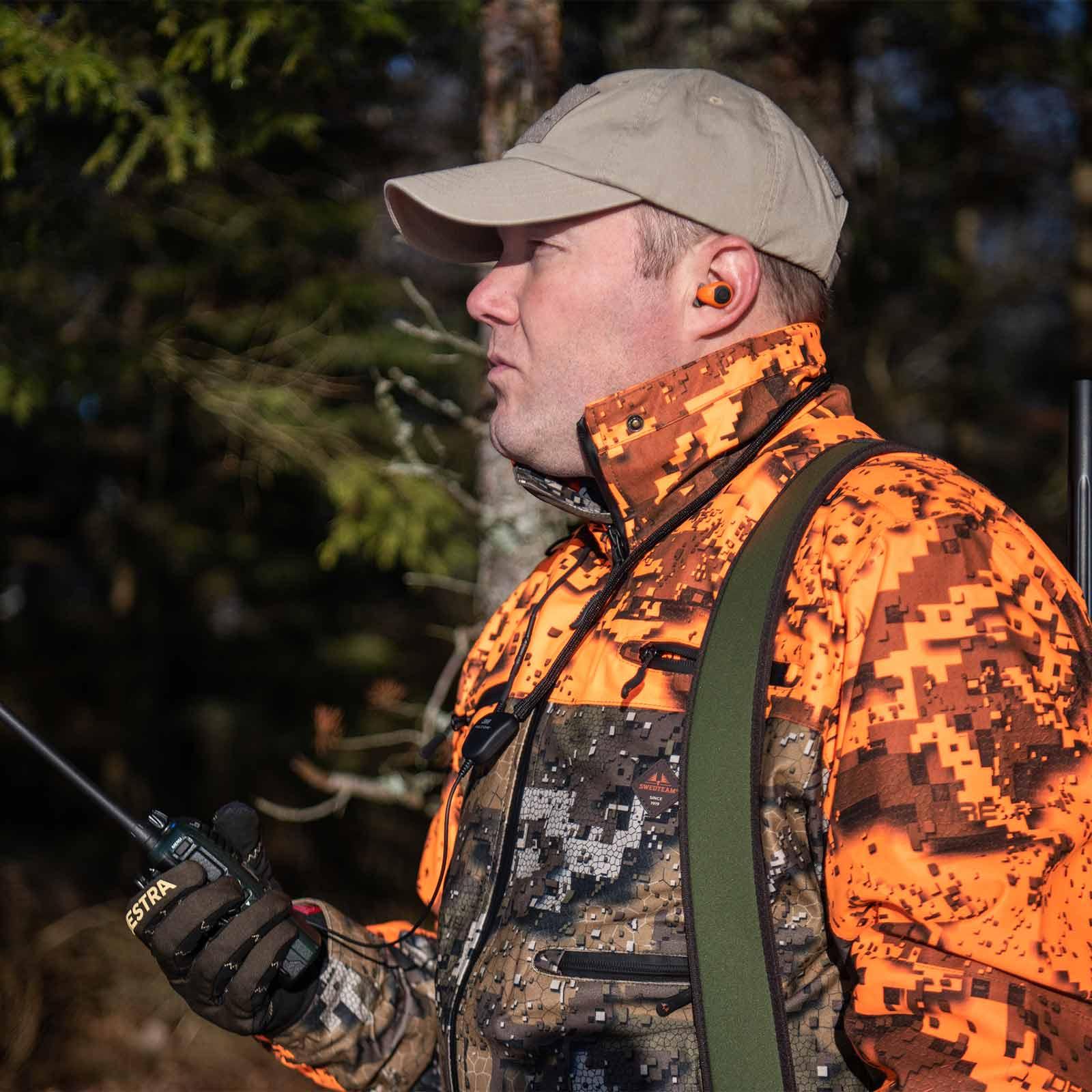
Frequently Asked Questions About Hunting Ear Buds
1. What are hunting ear buds?
Hunting ear buds are in-ear hearing protectors designed for environments where the user needs both protection from sudden impulse noise and awareness of normal sounds. Electronic models use microphones and internal processing to pass through or amplify quiet sounds while reducing the level of loud events. Passive models simply block sound. A proper hunting model should be sold and labeled as hearing protection, not merely as a consumer audio earbud. The most important practical factors are the rated protection, the quality of the ear-canal seal, comfort, weather resistance, battery management, and whether the controls can be used while wearing gloves.
2. How are hunting ear buds different from ordinary wireless earbuds?
Ordinary wireless earbuds are designed mainly for music, calls, and general active noise cancellation. They are not automatically hearing protection. Hunting ear buds should use protective eartips and carry a published hearing-protection rating or other clear manufacturer labeling for hazardous-noise use. Electronic hunting models also manage ambient sound differently: they preserve conversation and environmental awareness while limiting loud impulse noise. Consumer earbuds may reduce steady background noise for comfort, but that does not mean they are suitable for firearm noise. Always check the packaging, manual, and exact model rather than assuming that a similar appearance means equal protection.
3. Can active noise-canceling earbuds replace rated shooting hearing protection?
No. Active noise cancellation in consumer audio products is mainly designed for steady, low-frequency sounds such as engines or ventilation noise. It should not be treated as firearm hearing protection unless the exact product is labeled and tested as a hearing protector. Gunfire is a very brief, high-level impulse, and the ear also needs a reliable physical seal. Choose a product with a clearly stated protection rating and approved eartips. For very loud firearms, indoor ranges, repeated strings of fire, or uncertain fit, use double protection with properly inserted plugs under protective earmuffs.
4. What does NRR mean on hunting ear buds?
NRR stands for Noise Reduction Rating. It is a laboratory-derived number used in the United States to describe the attenuation of a hearing protector under specified test conditions. It is useful for comparing products, but it is not a promise that every user receives the full labeled reduction in the field. Ear canal shape, insertion depth, tip material, movement, dirt, and incorrect sizing can lower real-world performance. Compare NRR only among properly labeled products, confirm which supplied tip achieves the rating, and treat fit as equally important as the number printed on the package.
5. Why is fit so important with in-ear hearing protection?
An in-ear protector works only when the tip seals the ear canal. A small leak can let substantial sound bypass the plug, even when the electronics are operating normally. The best hunting ear buds therefore include several tip sizes or compatible replacement options. During fitting, each side may require a different size. The plug should feel secure and evenly sealed without sharp pressure or pain. If one ear sounds noticeably more open, if the bud loosens when you talk, or if the protection changes when you move your jaw, refit it before entering a noisy environment.
6. Are foam tips better than silicone tips for hunting?
Foam tips usually provide the highest published attenuation because they expand to fill more of the ear canal. They are often the better choice for firearm use when the product rating is based on foam. Silicone tips are faster to clean and insert, and some users find them more comfortable for repeated removal. However, a silicone tip may carry a lower rating or no rating for a particular model. Check the manual rather than assuming every included tip provides the same protection. Many hunters use foam for shooting days and silicone only for lower-noise tasks where the manufacturer permits it.
7. Should I choose electronic or passive hunting ear buds?
Electronic ear buds are useful when you need to keep protection in place while hearing conversation, range commands, game movement, dogs, partners, or approaching equipment. Passive plugs are simpler, less expensive, and do not depend on batteries, but they reduce useful sounds along with hazardous noise. A practical approach is to use electronic protection for active hunting and keep passive foam plugs as a backup. Buyers should not choose electronics merely for extra features; the protective seal and labeled attenuation remain the foundation. If electronics fail, the passive protection of the correctly fitted tip should still matter.
8. Are ear buds better than earmuffs for hunting?
Ear buds are lighter, work well with brimmed hats and winter caps, and do not interfere as much with a rifle or shotgun stock. They can also be more comfortable in warm weather. Earmuffs are easier to fit correctly and easier for another person to verify, but glasses, hair, hats, and stock contact can disturb the cup seal. Neither style is automatically superior. Ear buds are often preferred for mobile hunting and cheek-weld clearance, while muffs are convenient for range use. In high-noise conditions, combining plugs and muffs can provide a more conservative protection strategy.
9. What type of ear buds works best for deer hunting?
For deer hunting, prioritize long-wear comfort, low wind noise, natural environmental sound, and controls that do not require constant adjustment. A corded or neckband model is harder to lose while climbing into a stand, using a saddle, or moving through brush. True-wireless models are less intrusive but demand careful handling. Battery life should cover travel, setup, legal hunting hours, and the return trip. Hunters who sit for long periods may prefer a low ambient setting that preserves awareness without over-amplifying every leaf. Always verify the seal before loading or entering the field.
10. What type of ear buds works best for turkey hunting?
Turkey hunting places a premium on quiet movement, directional awareness, and comfort during long periods of sitting. Choose electronic ear buds with natural-sounding hear-through audio and wind management, because excessive amplification can make clothing movement and brush noise distracting. A secure cable, lanyard, or ear-hook system can reduce the risk of dropping a bud while calling or repositioning. Keep volume moderate; more amplification is not always better. Practice identifying direction and distance with the exact settings you plan to use, and never let enhanced hearing encourage unsafe movement or an unclear target decision.
11. What should waterfowl hunters look for?
Waterfowl hunters should focus on moisture resistance, secure retention, glove-friendly controls, and easy cleaning. A charging case or single loose bud can disappear quickly in a blind, boat, marsh, or flooded timber, so an optional lanyard or neckband can be valuable. Wind noise also matters because open water can make high gain uncomfortable. Choose foam tips that remain sealed when you turn your head and mount the shotgun. After the hunt, wipe down the electronics, let the tips and case dry separately, and inspect for mud, moisture, and corrosion before charging.
12. Are hunting ear buds useful for upland hunting?
Yes, especially because upland hunters walk long distances, mount a shotgun repeatedly, and often wear a brimmed hat or eye protection. Low-profile ear buds avoid cup contact with the stock and reduce heat buildup. The main challenges are retention, sweat, brush, and hearing the direction of birds, dogs, and partners. Ear-hook or neck-cord designs can be more secure than tiny independent buds. Test the product while walking, turning, and mounting an unloaded firearm in a safe setting. A bud that slowly loosens during movement will not provide dependable protection when a shot occurs.
13. Do electronic ear buds work in cold weather?
Most rechargeable models can operate in normal cold-weather hunting conditions, but batteries commonly provide less runtime when they are cold. Keep the charging case or spare batteries in an inside pocket during travel and avoid leaving the system overnight in an unheated vehicle. Condensation can also form when cold electronics are brought into a warm room, so allow the device to dry before charging. Thick hats and hoods may press on controls or cables. Confirm that the eartips remain flexible, the seal stays consistent, and you still have enough runtime for the full outing.
14. Can hunting ear buds be used in rain?
Only within the exact water-resistance limits stated by the manufacturer. Sweat resistance or an IP rating does not automatically mean the charging case can be exposed to rain or submerged. During wet hunts, keep the case in a sealed pocket or dry bag and use a retention method so a loose bud does not fall into water. Afterward, remove the tips if the manual permits, wipe the housings, and air-dry everything fully before charging. Never place wet contacts into a powered case, and replace tips that remain swollen, damaged, or contaminated.
15. How can I reduce wind noise in electronic ear buds?
Start by lowering the ambient-listening level; maximum gain often exaggerates wind. Use any manufacturer-supplied microphone covers or adhesive wind filters, and position hats or hoods so they do not direct airflow across the microphones. A secure ear seal also prevents movement that can sound like wind or rumble. Some products process wind better than others, so field conditions should influence the purchase. Test the device outdoors before hunting season. If wind overwhelms speech, footsteps, or safety communication, switch to a lower mode or use passive protection rather than increasing volume.
16. Are in-ear protectors enough for an indoor range?
Indoor ranges create reflected impulse noise, and multiple shooters may fire close together. In that environment, a conservative choice is properly fitted plugs under protective earmuffs, especially for rifles, braked firearms, short barrels, or long practice sessions. Electronic ear buds can serve as the inner layer if they seal correctly, while electronic muffs can restore communication. Follow the range’s rules and the hearing protector manufacturers’ instructions. Do not assume that a comfortable in-ear product is sufficient simply because it handles a few outdoor shots without obvious discomfort.
17. When should I use double hearing protection?
Double protection is appropriate when noise is extremely high, when you are indoors or under a roof, around repeated firearm fire, near muzzle brakes, or whenever the single protector’s fit is uncertain. It means wearing correctly fitted earplugs and protective earmuffs at the same time. The ratings are not simply added together, so do not calculate protection by totaling both NRR numbers. The practical benefit is added attenuation and redundancy if one seal is disturbed. Make sure electronic layers do not create feedback, and keep communication volume at the lowest useful setting.
18. Are hunting ear buds suitable for centerfire rifles?
They can be part of a responsible protection system, but the answer depends on the exact firearm, muzzle device, environment, distance from other shooters, product rating, and fit. Centerfire rifles can produce very high impulse noise, and muzzle brakes or covered firing positions increase the concern. Outdoors during a limited hunting shot, a properly rated and well-fitted electronic plug may be practical. For sight-in sessions, training, or indoor use, add earmuffs. Never judge safety only by whether a shot feels painful; hearing damage can occur without an immediate dramatic sensation.
19. What should shotgun hunters consider?
Shotgun hunters need a stable seal during repeated head movement and a design that does not interfere with the stock. Waterfowl and clay shooting may involve many shots and nearby partners, which raises total exposure. Foam tips, secure retention, and a verified fit are more important than music features. In blinds, pits, and covered stations, reflected sound can justify double protection. Practice mounting an unloaded shotgun while wearing the earbuds, eye protection, hat, and clothing you actually use. If the bud shifts or the cable snags, choose a different tip or form factor.
20. Does using a suppressor eliminate the need for ear protection?
No. A suppressor can reduce muzzle noise, but the remaining sound may still be hazardous, and some firearms also produce significant action noise or a supersonic bullet crack. The result varies with firearm, ammunition, barrel length, suppressor, surroundings, and nearby shooters. Treat a suppressor as one part of noise management rather than a replacement for hearing protection. Wear properly rated protection whenever feasible and follow local laws regarding suppressor ownership and use. Hunters should also avoid becoming overconfident simply because a firearm sounds quieter than an unsuppressed one.
21. Is Bluetooth useful in hunting ear buds?
Bluetooth can be useful for phone calls, navigation prompts, communication, podcasts during travel, or audio while doing property work. It is not essential to hearing protection, and it can increase battery use and control complexity. During active hunting, keep audio low enough to preserve awareness and follow local rules about electronic devices and fair-chase practices. Some products allow independent adjustment of Bluetooth and ambient audio, which is helpful. Buyers who do not need media functions may prefer simpler professional electronic plugs with fewer pairing and battery-management concerns.
22. How much battery life do I need?
Choose enough runtime for the full day plus a reserve. Consider travel from the vehicle, setup before legal shooting time, long periods of waiting, cold-weather battery loss, Bluetooth use, and the return trip. Manufacturer runtimes are normally measured under specific conditions and can vary by mode, volume, temperature, battery age, and connection status. Recharge the system the night before, verify that both earbuds actually charge, and carry passive foam plugs as a backup. For multi-day hunts, bring a power bank, spare cable, or replaceable batteries as appropriate.
23. What is the advantage of a charging case?
A charging case protects the earbuds, keeps the pair together, and can recharge them away from a wall outlet. It is especially convenient for true-wireless designs. However, the case adds another battery and another set of contacts that must remain clean and dry. Before a trip, confirm the case itself is charged and that both buds show a charging indication. Store the case in a dry, easily found pocket. Do not assume an earbud is charging merely because it has been placed inside; mud, earwax, or a misaligned contact can prevent charging.
24. Are replaceable-battery ear buds still a good choice?
Yes, for hunters who spend multiple days away from electricity or prefer carrying inexpensive spare cells. Replaceable-battery products can be put back into service immediately without waiting for a charge. Their disadvantages include tiny battery doors, ongoing battery purchases, and the need to remove batteries for long storage. Rechargeable systems are more convenient for regular use but require planning and eventually lose capacity. Choose based on your trip style, dexterity, access to power, and willingness to maintain either batteries or charging contacts.
25. How do I avoid losing true-wireless hunting ear buds?
Use the case every time the earbuds leave your ears, not a loose pocket. Choose a model with an optional lanyard or retention cord when hunting over water, snow, thick leaves, or brush. Insert and remove them while standing over a pack, vehicle seat, or other controlled surface whenever possible. Bright tape on the case can help, but do not cover vents, microphones, labels, or charging points. Build a routine: count both earbuds before leaving the truck, before moving locations, and before heading home.
26. What are the advantages of a neckband or corded model?
A neckband or connecting cable keeps both earpieces together and allows the user to remove a plug temporarily without putting it in a pocket. Larger inline controls can be easier to operate with gloves. These designs are excellent for active hunting, guides, property work, and users who worry about losing tiny true-wireless buds. The tradeoffs are cable noise, contact with high collars, and potential snagging. Route the cord under or over clothing according to the manual, test it with your pack and binocular harness, and keep it clear of firearm controls.
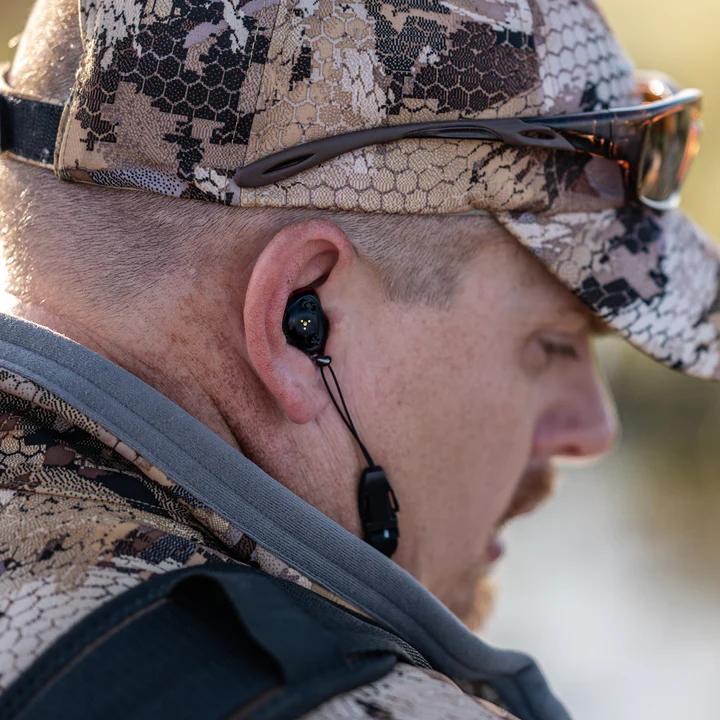
27. How can I make ear buds comfortable for an all-day hunt?
Comfort begins with the correct tip size and insertion depth. A larger tip is not automatically safer if it creates pain, and a smaller tip is not acceptable if it leaks. Try each approved tip at home for gradually longer periods before the season. Keep tips clean, replace hardened foam, and avoid over-amplifying ambient sound, which can create listening fatigue. Ear hooks, glasses, hats, and jaw movement also affect comfort. Persistent pain, pressure, or irritation means the fit is wrong; stop using the product and consult the manufacturer or a hearing professional.
28. What should buyers with small ear canals do?
Look for products that include extra-small foam tips, short and tall tip profiles, or compatibility with manufacturer-approved third-party tips. True-wireless housings may also be too large even when the canal tip fits, so check return policies carefully. Do not force a tip deeper to compensate for the wrong size. A hearing-protection fit test or guidance from an audiologist can be worthwhile for difficult ears. Custom-molded protection may provide a better long-term solution when universal products repeatedly hurt, loosen, or fail to seal.
29. What should buyers with large ear canals do?
Choose a system with large foam tips or larger approved triple-flange options. If the largest included tip does not expand enough to create an even seal, do not rely on the product. Some manufacturers sell accessory tip packs in additional sizes, but only use tips approved for that model because the protection rating may depend on the complete earbud-and-tip combination. Check for movement when talking, chewing, and turning your head. A professional fit test can confirm whether the protector is delivering useful attenuation.
30. Do ear hooks interfere with glasses?
They can. Ear hooks, eyeglass arms, and hat bands may compete for the same space and create pressure over a long day. Try the complete combination before the season. A thin, flexible hook can improve retention, while a thick rigid hook may become uncomfortable. Unlike earmuffs, glasses generally do not break an earbud’s canal seal, but pressure can cause the bud to shift. Adjust the hook only as the manufacturer permits, and consider a neck-cord or true-wireless model if your eyewear and ear shape do not work with hooks.
31. Can I wear hunting ear buds under a beanie, hood, or cap?
Usually, and this is one of their main advantages over earmuffs. Still, headwear can press touch controls, move the earbud, trap cable noise, or cover microphones in a way that changes ambient sound. Put on the earbuds first, verify the seal, then add the hat or hood and recheck both sides. Avoid fabric rubbing directly across microphone ports. In cold weather, make sure the hat does not pull a neck cable tight. Practice all controls with the same gloves and layers you plan to wear.
32. How do I check whether the ear buds are sealed?
With the electronics off, properly sealed plugs should make outside sound noticeably quieter and your own voice may sound more internal. Compare left and right; they should feel and sound similar. Gently move the outer ear or jaw and check whether the seal changes. Some manufacturers provide fit-check instructions or compatible fit-testing systems. Do not perform a seal test by exposing yourself to gunfire. If normal room sound remains open, one side feels loose, or the bud backs out after a few minutes, refit or change tip size.
33. How should foam eartips be inserted?
Follow the exact manufacturer’s instructions. A common method is to roll the foam into a narrow, crease-free cylinder, reach over the head with the opposite hand to gently straighten the ear canal, insert the tip, and hold it while the foam expands. Do not merely push an uncompressed foam tip against the ear opening. Clean hands matter because contaminated tips can irritate the canal. The earbud should remain stable without pain. Replace foam that no longer expands correctly, becomes dirty, tears, or no longer stays attached.
34. Can electronic ear buds amplify quiet sounds?
Many hunting models can pass through or amplify quiet environmental sounds, but the amount and quality vary. High gain can make birds, footsteps, clothing, wind, and your own movement seem unusually loud. This may help some users, but it can also be distracting and does not create supernatural hearing. Start at a low setting and increase only enough for communication and awareness. Learn how the product represents distance and direction before hunting. Never use enhancement to justify taking a shot at an unidentified sound or movement.
35. How important is directional hearing?
Directional hearing helps locate partners, dogs, vehicles, game movement, and range commands. The best electronic ear buds preserve differences between the left and right microphones instead of making everything sound centered. However, digital processing, microphone placement, wind, hoods, and high gain can change how direction is perceived. Test the system in a safe outdoor setting with a partner speaking or making ordinary sounds from different positions. Treat electronic audio as an aid, not a substitute for visual confirmation, communication, and safe target identification.
36. What is the difference between compression and clipping?
Both are methods used to manage loud sound. Clipping or shutoff systems reduce or interrupt amplification when a loud event occurs, which can make the audio briefly sound cut off. Compression systems reduce the gain more progressively and may preserve a more continuous sense of the environment. Marketing terms vary, so buyers should read the manual rather than relying on one word. The passive seal remains important in either design. A smooth-sounding circuit does not compensate for a poorly fitted tip or an inadequate protection rating.
37. Is it safe to listen to music while hunting?
Music can reduce situational awareness and may conflict with local rules, group procedures, or fair-chase expectations. During travel, setup, property work, or a stationary break, low-level audio may be convenient, but active hunting requires full attention to people, animals, weather, vehicles, and firearm safety. Keep media volume low and use independent ambient controls when available. Never let a call or song distract you while handling a firearm, climbing, crossing obstacles, operating a boat, or communicating with partners.
38. Can I take phone calls through hunting ear buds?
Bluetooth models may support calls, but microphone quality in wind varies and calls can distract from field safety. Take calls only when the firearm is secured and the situation allows your attention to shift. Inform partners before disengaging from the hunt, and avoid sharing sensitive location information where regulations or landowner agreements apply. In remote areas, Bluetooth range and phone service are separate issues. Call capability should be treated as a convenience, not a reason to choose a lower-rated or poorly fitting hearing protector.
39. How should electronic hunting ear buds be cleaned?
Turn the device off and follow the manual. Remove replaceable tips if permitted, wipe the housings with a soft dry or slightly damp cloth, and use the supplied brush for sound openings. Do not push debris deeper into a nozzle and do not use solvents, compressed air, or immersion unless specifically approved. Foam tips are often replaced rather than washed. Silicone tips may be washable after removal, but they must be fully dry before reinstallation. Keep charging contacts free of earwax, oil, mud, and moisture.
40. How often should eartips be replaced?
Replace tips when they tear, harden, lose expansion, discolor, become difficult to clean, slip off the nozzle, or no longer create a stable seal. Frequency depends on sweat, earwax, dust, use time, and storage conditions. A hunter who wears the same foam tips weekly will replace them more often than an occasional user. Keep spare approved tips in the case or pack. Do not stretch a damaged tip to extend its life; degraded material can reduce comfort, retention, hygiene, and practical attenuation.
41. Can earwax affect performance?
Yes. Earwax can block sound ports, interfere with microphones or receivers, contaminate foam, and prevent charging contacts from seating correctly. It can also make tips slip. Inspect the product after each use and clean only according to the manual. Never insert tools deeply into the ear canal or the earbud nozzle. People with recurring blockage, pain, discharge, or hearing changes should stop using the device and seek advice from a qualified healthcare professional. Routine product maintenance should not be confused with treating the ear itself.
42. How should I dry ear buds after a wet hunt?
Power them off, remove them from the charging case, and wipe away surface moisture. Remove eartips only if the manufacturer permits and let all parts air-dry in a ventilated indoor location. Do not use a hair dryer, heater, oven, direct flame, or intense sunlight. Do not charge wet earbuds or a wet case. If the product was submerged beyond its rating, contact the manufacturer before relying on it. Once dry, inspect microphones, ports, seals, and contacts, then perform a normal function and fit check.
43. How should hunting ear buds be stored?
Store clean, dry earbuds in their protective case away from extreme heat, direct sun, moisture, loose ammunition debris, solvents, and cleaning chemicals. Rechargeable models should be maintained according to the battery instructions rather than left fully depleted for months. Remove disposable batteries for long storage if the manual recommends it. Keep spare tips and the correct cable with the product. Before hunting season, charge or install fresh batteries, inspect every component, and test both the protective fit and electronic functions.
44. Does cold weather reduce rechargeable battery runtime?
It often does. Lithium batteries typically deliver less usable runtime when cold, and older batteries are affected more. Keep the case in an inside pocket, begin with a full charge, and avoid leaving it on a vehicle dashboard or in an unheated blind overnight. When moving from cold to warm conditions, allow condensation to evaporate before charging. A power bank can help on multi-day trips, but passive backup plugs remain essential. Never heat a battery directly or use a damaged, swollen, or wet charging case.
45. What should I look for in a warranty?
Check the warranty length, whether batteries are covered, who pays return shipping, how the company handles a failed single earbud, and whether replacement tips or cases are sold separately. Save the receipt and record the serial number if present. A strong warranty is valuable for electronic products exposed to sweat, moisture, dust, and repeated charging. However, warranty coverage does not replace pre-hunt inspection. Test the system early enough that a problem can be resolved before the season or a planned trip.
46. How can I choose a reliable Amazon seller?
Open the exact product page and review the seller, shipping source, return terms, model number, included accessories, and current product images. Prefer the manufacturer store, Amazon as seller, or an authorized retailer when available. Compare the title and model number with the manufacturer’s website. Be cautious of listings that combine unrelated variants or omit the hearing-protection rating. When the package arrives, inspect seals, labeling, manual, accessories, and serial information before use. If anything looks inconsistent, contact the manufacturer and do not rely on the product.
47. Are counterfeit hearing protectors a concern?
They can be, and the risk matters because poor performance may not be obvious until after exposure. Counterfeit or misrepresented products may copy the appearance of a known model without matching materials, electronics, or tested attenuation. Buy from traceable sellers, compare packaging with the manufacturer, and verify model numbers and warranty eligibility. A very low price is not proof of a fake, but it is a reason to inspect carefully. Return any item with missing labels, unusual construction, mismatched manuals, or unsupported performance claims.
48. Why is the return policy important?
In-ear products are unusually fit dependent. A model that works well for one hunter may cause pressure, loosen during walking, or fail to seal another person’s ears. A clear return policy allows you to evaluate comfort, controls, charging, and compatibility with your hat, glasses, firearm stock, and clothing. Keep packaging intact until the fit is confirmed. Do not expose a questionable product to hazardous noise just to test it. Use quiet fit checks and manufacturer guidance, then return it if a stable, comfortable seal cannot be achieved.
49. How much should I spend on hunting ear buds?
Spend enough to obtain clearly labeled protection, a workable fit system, dependable controls, and support from a seller or manufacturer you trust. Budget models can be useful, but verify the exact rating, warranty, and replacement-tip availability. Midrange models often add Bluetooth, better cases, and more fit options. Premium professional plugs may emphasize natural sound, ruggedness, and long-term accessory support. The best value is not the lowest purchase price; it is the product you will wear correctly every time and can maintain for multiple seasons.
50. Are premium electronic ear plugs worth it?
They can be for frequent hunters, instructors, competitors, guides, or users who strongly value low-profile comfort and natural environmental audio. Premium products may offer better housings, charging systems, microphone processing, accessory support, and service. They still require a correct seal and do not make hazardous noise harmless. An occasional hunter may get better value from a simpler rated model plus quality earmuffs for the range. Compare total ownership cost, including tips, batteries, cases, and service, rather than focusing only on the initial purchase.
51. Which hunting ear buds are easiest for beginners?
Beginners should prioritize simple controls, obvious left-right markings, several tip sizes, a clear manual, and a case that shows charging status. A connected neck-cord model can be easier to manage than two tiny independent buds. Avoid choosing the model with the most features if it makes fitting and operation confusing. Practice insertion, mode changes, charging, and safe firearm handling separately. Keep passive foam plugs and earmuffs available while learning. The beginner-friendly choice is the one that can be fitted correctly and checked consistently.
52. Do hunting regulations affect ear-bud use?
Regulations vary by country, state, province, land manager, and type of hunt. Hearing protection is generally a safety item, but Bluetooth communication, recorded calls, electronic game-calling functions, or other connected features may be restricted in some situations. Use the earbuds only for lawful hearing protection and permitted communication. Check current hunting regulations, legal seasons, licensing requirements, public-land rules, and fair-chase standards before the trip. Electronic hearing enhancement never changes the obligation to identify the target, know what lies beyond it, and hunt ethically.
53. Can electronic ear buds prevent tinnitus or hearing loss?
No product can guarantee that outcome. Properly rated and fitted hearing protection reduces noise exposure, but risk depends on sound level, duration, impulse characteristics, fit, and whether protection is worn continuously. Existing tinnitus, pain, sudden hearing change, or one-sided symptoms require professional medical evaluation rather than product advice. Hunters should use protection for every shot, avoid unnecessary exposure, and add earmuffs when conditions are especially loud. Prevention is the goal, but marketing claims should never be treated as a medical guarantee.
54. Are hunting ear buds suitable for children or youth shooters?
Only products specifically sized and approved for the individual should be considered, with close adult supervision and guidance from the manufacturer or a hearing professional. Children’s ear canals can be smaller, and a poor fit can make an adult product ineffective or painful. At ranges, double protection is often the more conservative choice. Adults must also enforce eye protection, muzzle discipline, safe handling, and range commands. Do not raise electronic volume to compensate for poor communication; move to a quieter area and refit the protection.
55. How do I choose the best hunting ear buds for my needs?
Start with the hunting style and noise environment, then narrow by labeled protection, fit options, retention, weather resistance, battery system, and controls. Stand hunters may prioritize all-day comfort and low wind noise. Waterfowl hunters need retention and moisture management. Upland hunters benefit from secure low-profile designs. Range-heavy users should plan for double protection. Decide whether Bluetooth is useful or unnecessary, verify replacement-tip availability, and buy from a seller with a practical return policy. The final choice should be the model you can seal, operate, maintain, and wear consistently.
Read more: 15 Best Hunting E-Bike Options for Quiet All-Terrain Access