
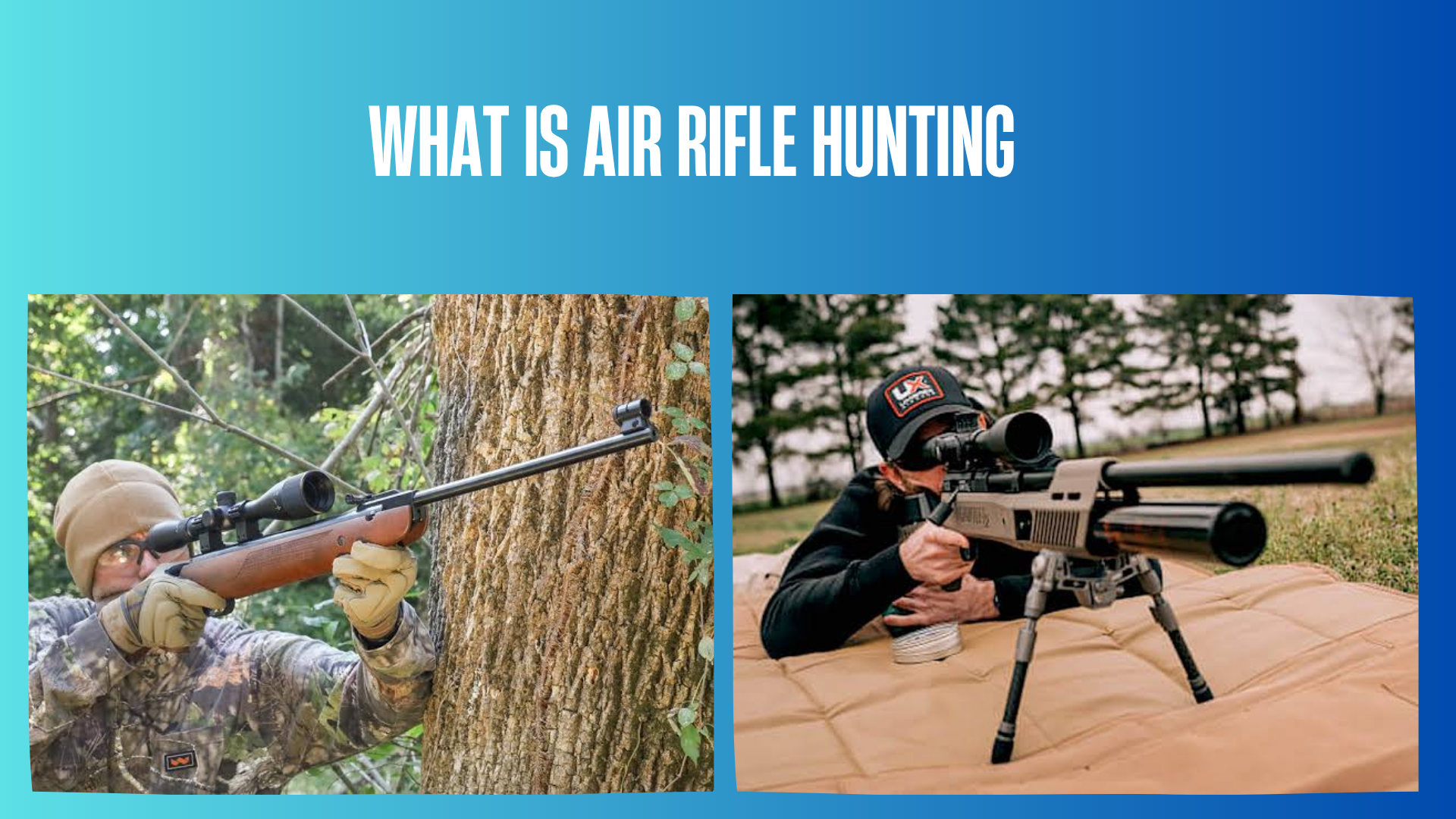

Air rifle hunting means legally hunting game or other lawful quarry with a rifle that propels a projectile using compressed air or another non-burning gas system rather than the expanding gases created by burning gunpowder. Depending on the airgun, that pressure may come from a spring-driven piston, gas piston, pre-charged pneumatic reservoir, pump system, or CO2 source.
The important word is legally. Air rifles are not treated the same way in every jurisdiction, and an airgun that is lawful for one species may be prohibited for another. Some states limit air rifles to small game or furbearers, while others permit qualifying high-powered pneumatic rifles for certain big-game seasons. Hunters must therefore check the current regulations for the exact species, season, location, and equipment they intend to use.
Air rifle hunting is also not simply target shooting carried into the woods. Ethical hunting requires sufficient equipment performance, demonstrated accuracy, positive identification of the animal, a safe background, responsible range limits, and a realistic understanding of what the specific air rifle can and cannot do.
Quick Answer
If you are asking what is air rifle hunting, it is the use of an air-powered rifle to lawfully hunt wildlife where regulations permit it. Unlike a conventional firearm, an air rifle launches its projectile with compressed air or gas rather than an explosive propellant. Air rifles range from relatively modest spring-powered models to much more powerful pre-charged pneumatic, or PCP, rifles. Whether a particular airgun can legally be used for hunting depends on local law, the species, season, projectile requirements, and sometimes minimum performance standards. Before hunting, check the current wildlife regulations and practice until you can use the specific rifle accurately and safely.
How Does an Air Rifle Work?
Every air rifle needs a source of stored or rapidly compressed gas to push a projectile through the barrel. The mechanical method differs by airgun type.
| Air Rifle Type | How It Creates Pressure | General Characteristics | Important Hunting Consideration |
|---|---|---|---|
| Spring-piston | A cocked spring drives a piston that rapidly compresses air. | Self-contained and mechanically simple. | The firing cycle has characteristic movement that requires consistent shooting technique. |
| Gas-piston | A sealed gas strut drives the piston instead of a metal coil spring. | Similar operating concept to a spring rifle. | Still requires consistent technique and an understanding of the rifle’s actual performance. |
| Multi-pump pneumatic | The shooter pumps air into an internal chamber before firing. | Self-contained with adjustable pressure on some designs. | Legal suitability for hunting depends on jurisdiction and species. |
| CO2 | A replaceable or refillable CO2 source releases gas through a valve. | Convenient and commonly used for recreational shooting. | Performance can be affected by environmental conditions, and many models are not intended for hunting. |
| Pre-charged pneumatic (PCP) | A high-pressure onboard reservoir releases a metered amount of compressed air. | Available in a wide range of power levels and projectile sizes. | Some jurisdictions specifically require qualifying PCP designs for certain game animals. |
The British Association for Shooting and Conservation similarly distinguishes spring-powered rifles from PCP rifles, noting that spring guns are self-contained while PCP rifles use an onboard reservoir of compressed air.
What Is a PCP Air Rifle?
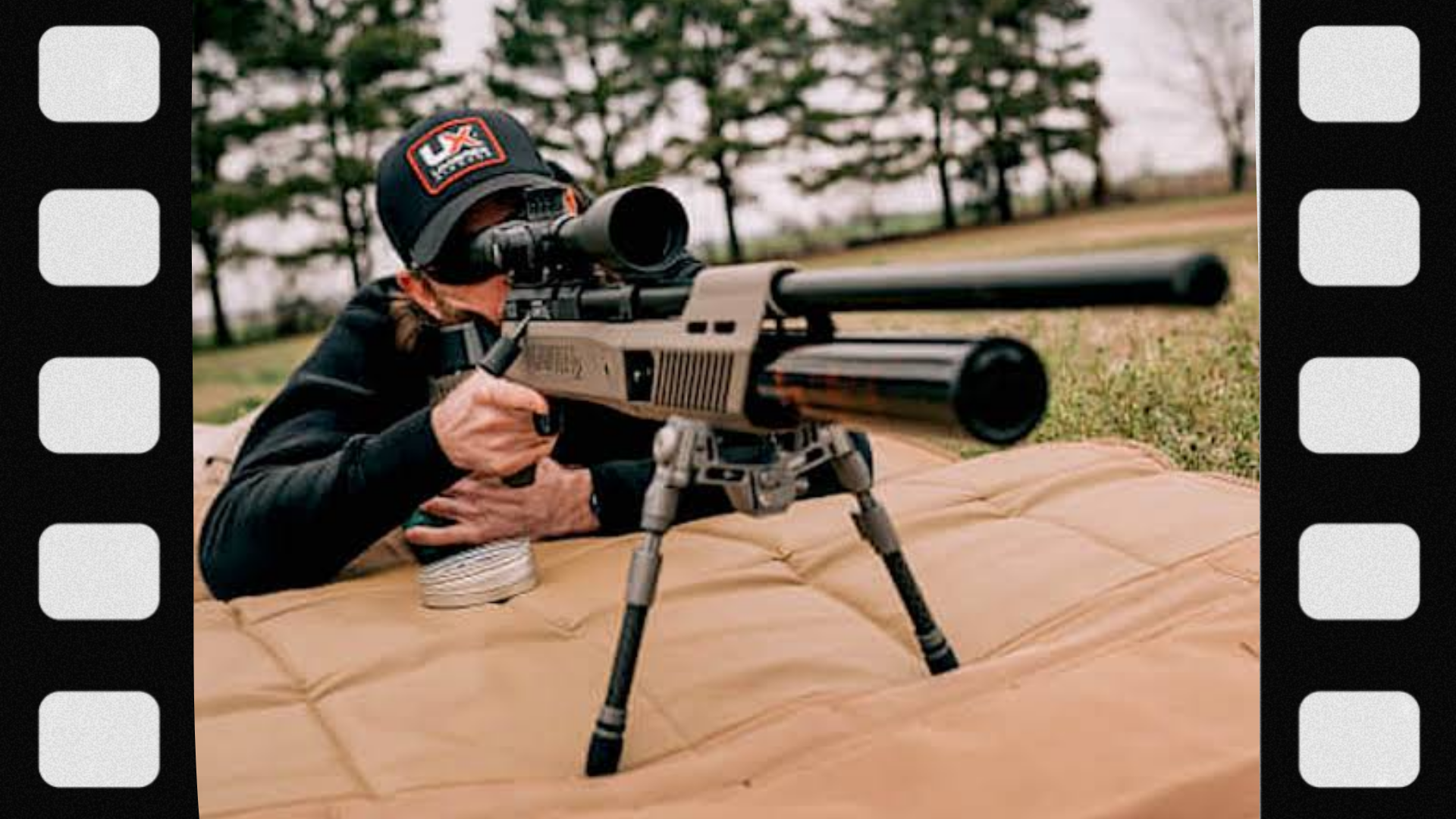
PCP stands for pre-charged pneumatic. A PCP rifle stores compressed air in an onboard reservoir. When the rifle is fired, a controlled quantity of that air is released to propel the projectile.
PCPs matter in modern air rifle hunting because the category includes models capable of substantially more performance than traditional recreational airguns. Some wildlife agencies therefore write specific rules for PCP rifles rather than treating every airgun as equivalent.
Texas, for example, defines a pre-charged pneumatic as an air gun whose propellant is supplied or introduced from a source physically separate from the air gun. Its current hunting regulations use separate standards for PCP equipment when certain game animals are hunted.
That does not mean every PCP is automatically a hunting rifle or legal for every animal. PCP models vary substantially, and the applicable wildlife regulation and manufacturer specifications must both be checked.
What Is the Difference Between an Air Rifle and a Conventional Firearm?
The major mechanical difference is the source of propulsion. A conventional cartridge firearm uses the rapidly expanding gases produced by an explosive propellant. A conventional air rifle uses compressed air or gas.
Under the federal Gun Control Act regulatory definition, a firearm includes a weapon designed to expel a projectile by the action of an explosive. Conventional compressed-air rifles therefore do not fit that particular federal propulsion definition in the same way cartridge firearms do.
However, that distinction should never be treated as a universal legal exemption. State, local, park, and wildlife codes can use different definitions. New York’s hunting regulations, for example, define qualifying air guns as firearms for purposes of its hunting rules.
In practical safety terms, hunters should handle an air rifle with the same seriousness they would apply to any projectile-launching weapon capable of causing severe or fatal injury.
Is Air Rifle Hunting Legal?
It can be, but there is no single nationwide answer covering every species and every airgun.
Legal air rifle hunting can depend on:
- The state, province, or country.
- The wildlife management unit or county.
- The species being hunted.
- The season.
- Whether the animal is classified as game, nongame, or a furbearer.
- The type of airgun.
- Projectile diameter or construction.
- Minimum equipment-performance requirements.
- Whether the rifle uses an externally charged pneumatic system.
- Public-land or property-specific rules.
- Hunter education requirements.
- Licenses, permits, tags, and harvest-reporting requirements.
Legal examples below were checked on September 28, 2026 and are provided only to show how much rules can differ. They are not a substitute for the current regulation booklet where you hunt.
Texas
Texas’ current 2026–2027 rules define an air gun as a device firing a bullet using unignited compressed gas. The state allows air guns for several wildlife categories, but applies different requirements according to species. For specified large game and turkey, current rules require qualifying pre-charged pneumatic equipment and minimum projectile/performance standards; squirrels and several upland game birds have a different standard.
Kentucky
Kentucky currently lists certain externally charged air guns as legal equipment during deer hunting when they meet the state’s specified caliber and projectile requirements. This demonstrates that some jurisdictions authorize air rifles for big game but define exactly what type qualifies.
Pennsylvania
Pennsylvania’s 2025–2026 hunting regulations allow air- or gas-operated rifles for certain small-game and furbearer hunting, while the same general regulations do not authorize them as deer, bear, or elk rifles.
New York
New York’s current hunting regulations provide a specific regulatory definition for an air gun and then apply species-specific hunting rules. The definition itself illustrates why hunters should not rely on a generic internet description when determining whether their own equipment is lawful.
Why Air Rifle Hunting Rules Vary So Much
Wildlife agencies have to account for animal size, humane-harvest concerns, projectile characteristics, equipment capability, season structure, enforcement, and historical hunting methods.
That is why a statement such as “air rifles are legal for hunting” is incomplete. A jurisdiction may permit one type of air rifle for rabbits, another more demanding equipment category for deer, and no airgun at all for a different species.
The legal classification of the equipment can also differ from hunting eligibility. An air rifle may not fall within one federal firearm definition yet still be tightly regulated by state wildlife law or local weapons ordinances.
What Animals Can Be Hunted With Air Rifles?
That question must be answered by the wildlife regulations where the hunt takes place.
In jurisdictions permitting air rifle hunting, lawful uses can include some combination of:
- Small game such as squirrels or rabbits.
- Certain upland game birds.
- Furbearers or predators where specifically authorized.
- Nongame or pest species subject to local rules.
- In some states, specified big-game animals with qualifying high-powered PCP equipment.
Do not choose an air rifle solely because someone else used a similar caliber on the same species elsewhere. Equipment legality and ethical suitability depend on the actual rifle, projectile, local rule, distance, shooting proficiency, and the specific animal.
Does Air Rifle Caliber Determine What You Can Hunt?
Caliber is only one factor.
Two air rifles firing projectiles of the same diameter may have very different performance. Wildlife agencies may therefore regulate not just projectile diameter but also projectile weight, velocity, energy, powerplant type, or projectile construction.
Texas is a good current example: its air-gun regulations use a combination of projectile and performance criteria for certain game rather than relying on caliber alone. Kentucky also combines caliber with additional equipment and projectile requirements for deer.
A hunter should therefore check both the wildlife rule and the specifications for the exact rifle and projectile being used.
Air Rifle Hunting Safety
Air rifles deserve disciplined weapon handling. They can injure or kill, and the absence of gunpowder does not make careless handling acceptable.
Apply the four core firearm-safety principles to an air rifle:
- Treat every air rifle as if it is loaded.
- Keep the muzzle pointed in a safe direction.
- Keep your finger outside the trigger guard until you are ready to fire.
- Be certain of your target and what is beyond it.
These are the same core safety principles required by the editorial brief for firearm-related hunting content.
Use a Safe Backstop
Never assume a pellet or airgun slug will simply stop after passing the intended target. Know what lies behind and around the animal, and do not take a shot toward roads, buildings, livestock, people, or an unsafe background.
Know Whether the Rifle Is Loaded
Follow the manufacturer’s loading, unloading, and storage procedures. Never rely only on a mechanical safety device.
Protect Eyes and Hearing as Appropriate
Eye protection is a sensible practice when sighting in, practicing, filling pneumatic equipment, or performing maintenance. Depending on the airgun and shooting environment, hearing protection may also be appropriate.
Handle PCP Reservoirs Correctly
A PCP rifle contains high-pressure air. Use only manufacturer-approved charging equipment and procedures, respect the manufacturer’s pressure limits, and do not continue using a reservoir or fitting that appears damaged.
Do not improvise pressure components or attempt repairs that the manufacturer assigns to a qualified technician.
Ethical Air Rifle Hunting Is About More Than Legality
A rifle can meet a legal minimum and still be a poor choice in a particular field situation. Texas Parks and Wildlife explicitly warns that airgun hunters must understand the limitations of their equipment and notes that model performance, projectile characteristics, distance, reservoir pressure, and shooter proficiency all affect effectiveness.
Ethical air rifle hunting means:
- Using equipment that is lawful and suitable for the intended species.
- Practicing with the exact rifle and projectile combination before hunting.
- Knowing how accurately you can shoot from realistic field positions.
- Passing on shots outside your demonstrated ability.
- Positively identifying the animal before deciding to shoot.
- Knowing what is beyond the animal.
- Avoiding marginal opportunities.
- Making every reasonable legal effort to recover harvested or wounded game.
- Following tagging, reporting, and meat-care requirements.
Minimum legal specifications should be treated as regulatory thresholds, not as a substitute for hunter judgment.
How Far Can You Hunt With an Air Rifle?
There is no universal ethical hunting distance for an air rifle.
Practical range changes with the rifle, projectile, powerplant, accuracy, wind, target species, shooter skill, and legal requirements. An airgun’s projectile also loses velocity and energy as it travels.
The responsible limit is therefore not the farthest distance shown in an advertisement or online video. It is the distance at which you have repeatedly demonstrated the accuracy required for the legal quarry with your actual equipment under comparable conditions.
If you cannot confidently reproduce that accuracy from a realistic field position, move closer or do not take the shot.
What Is Different About Shooting a Spring-Piston Air Rifle?
Spring-piston rifles have moving internal components during the firing cycle. That movement can make them more sensitive to inconsistent grip, support, and follow-through than many PCP rifles.
This is one reason a hunter should practice with the exact rifle rather than assuming marksmanship automatically transfers from another platform.
A spring rifle is self-contained, which can be convenient in the field because it does not depend on a separate high-pressure fill source. PCP rifles, in contrast, generally have a smoother firing cycle but require management of their air supply.
What Equipment Does a Beginner Air Rifle Hunter Need?
You do not need the most expensive equipment to hunt responsibly. Choose gear based on the species, terrain, weather, local regulations, fit, safety, reliability, maintenance requirements, and your actual experience.
| Item | Purpose | Essential or Situational? | What to Check |
|---|---|---|---|
| Legal air rifle | Hunting equipment | Essential | Species legality, manufacturer specifications, safe condition |
| Compatible projectiles | Accurate operation | Essential | Manufacturer compatibility and wildlife regulations |
| Sights or optic | Aiming | Essential in some form | Secure mounting and verified zero |
| Eye protection | Shooting and equipment safety | Strongly recommended | Proper fit and clear vision |
| PCP fill equipment | Charging a PCP reservoir | Required for PCP ownership | Manufacturer compatibility and pressure rating |
| Hunting license and permits | Legal compliance | Required where applicable | Species, season, location, tags, exemptions |
| Rangefinder | Distance awareness | Useful | Ability to use it without delaying safe decisions |
| Binoculars | Observation and identification | Useful | Never use a rifle scope as a substitute for binoculars when identifying unknown objects |
| First-aid and communication gear | Field safety | Important | Trip length, remoteness, weather, signal availability |
Beginner Checklist Before an Air Rifle Hunt
- Read the current hunting regulations for the species and location.
- Confirm that an air rifle is a lawful method of take.
- Confirm any caliber, projectile, powerplant, energy, or equipment requirement.
- Check the season, license, permit, tag, and reporting rules.
- Read the rifle manufacturer’s manual.
- Verify that the rifle is functioning correctly.
- Use only compatible projectiles and manufacturer-approved equipment.
- Practice until you can produce repeatable groups from realistic field positions.
- Determine a conservative personal distance limit based on demonstrated accuracy.
- Plan for a safe backstop and positive animal identification.
- Know property boundaries and obtain required permission.
- Carry the documentation required by the jurisdiction.
- Have a recovery and meat-care plan before hunting.
Common Air Rifle Hunting Mistakes
Assuming Every Air Rifle Is a Hunting Rifle
Many airguns are designed primarily for recreation or target practice. A rifle being capable of launching a pellet does not mean it is legally or ethically suitable for a particular animal.
Looking Only at Velocity
A single advertised velocity number does not describe the entire performance of an air rifle. Projectile choice, accuracy, actual operating conditions, powerplant, and local regulations also matter.
Assuming Caliber Alone Determines Suitability
Wildlife regulations may consider several equipment characteristics. Two air rifles of the same nominal caliber can perform very differently.
Copying Another State’s Equipment Rules
Texas, Kentucky, Pennsylvania, and New York currently treat airguns differently. A legal method in one jurisdiction can be restricted or defined differently in another.
Using a Rifle at Distances Never Practiced
Field conditions are not the time to discover how accurately your airgun performs at a new distance.
Ignoring PCP Pressure Changes
PCP performance can change as reservoir pressure changes, particularly with some designs. Hunters need to understand the operating characteristics described by the manufacturer and verify consistency through practice.
Treating an Air Rifle Like a Toy
Air rifles can cause severe injury. Safe muzzle direction, trigger discipline, target identification, and a safe background remain essential at all times.
What Air Rifle Hunters Should Not Do
- Do not hunt a species with an air rifle until you have verified that method is currently legal.
- Do not shoot at unidentified movement.
- Do not take a shot without knowing what lies beyond the animal.
- Do not assume a mechanical safety makes careless handling acceptable.
- Do not use equipment outside the manufacturer’s instructions.
- Do not exceed a PCP reservoir’s approved fill pressure.
- Do not improvise damaged high-pressure fittings or reservoirs.
- Do not take shots beyond your demonstrated accuracy.
- Do not trespass to hunt or recover game.
- Do not assume a legal minimum automatically makes a shot ethical.
- Do not rely on internet forum advice when current official wildlife rules are available.
Air Rifle Hunting vs. Traditional Rifle Hunting
| Factor | Air Rifle Hunting | Cartridge Rifle Hunting |
|---|---|---|
| Propulsion | Compressed air or gas | Expanding gas from an explosive propellant |
| Legal classification | Varies substantially by jurisdiction | Generally falls within firearm statutes, with additional hunting rules |
| Typical legal uses | Can range from small game to specified big game depending on jurisdiction and equipment | Commonly authorized for many game categories during appropriate seasons |
| Equipment variation | Very wide range from recreational airguns to high-powered PCPs | Wide variation in cartridge and firearm type |
| Power source management | Depends on spring, pump, CO2, or compressed-air reservoir | Contained within the cartridge |
| Hunter responsibility | Know equipment limits, regulations, target, and background | Know equipment limits, regulations, target, and background |
FAQs
1. What is air rifle hunting?
Air rifle hunting is the lawful pursuit of game or other legal quarry using a rifle that propels a projectile with compressed air or gas rather than burning gunpowder.
2. Is an air rifle a firearm?
That depends on the legal context. The federal Gun Control Act definition of a firearm centers on projectile propulsion by an explosive, while some state hunting laws use broader definitions that include qualifying airguns. Always check the law that applies to the specific activity and location.
3. Is air rifle hunting legal in the United States?
Air rifle hunting is lawful for certain species and equipment in many jurisdictions, but the rules are not uniform. Species, season, powerplant, projectile, and performance requirements can vary.
4. Can you hunt deer with an air rifle?
Some states currently authorize certain high-powered pneumatic air rifles for deer while others do not. Texas and Kentucky are examples of jurisdictions with specific qualifying equipment standards. Verify the current deer regulations where you hunt.
5. Can you hunt squirrels with an air rifle?
Some states allow air rifles for squirrel hunting subject to their own equipment and season rules. Texas and Pennsylvania, for example, currently include airgun provisions for small game.
6. Can you hunt rabbits with an air rifle?
It may be legal in some jurisdictions, but you must check the current small-game regulations where you hunt. Do not assume squirrel and rabbit rules are identical.
7. Can air rifles be used for turkey hunting?
Only where the jurisdiction specifically permits them. Texas currently allows qualifying airguns for turkey under certain conditions, with a geographic exception in its East Zone. Other states may prohibit air rifles for turkey entirely.
8. What is a PCP hunting rifle?
A PCP, or pre-charged pneumatic, rifle stores high-pressure compressed air in an onboard reservoir and releases a controlled quantity of air when fired.
9. Why are PCP rifles common in modern airgun hunting?
The PCP platform can support a broad range of airgun performance levels with a relatively smooth firing cycle. Some states specifically require qualifying PCP equipment for particular game species.
10. Can a spring-piston air rifle be used for hunting?
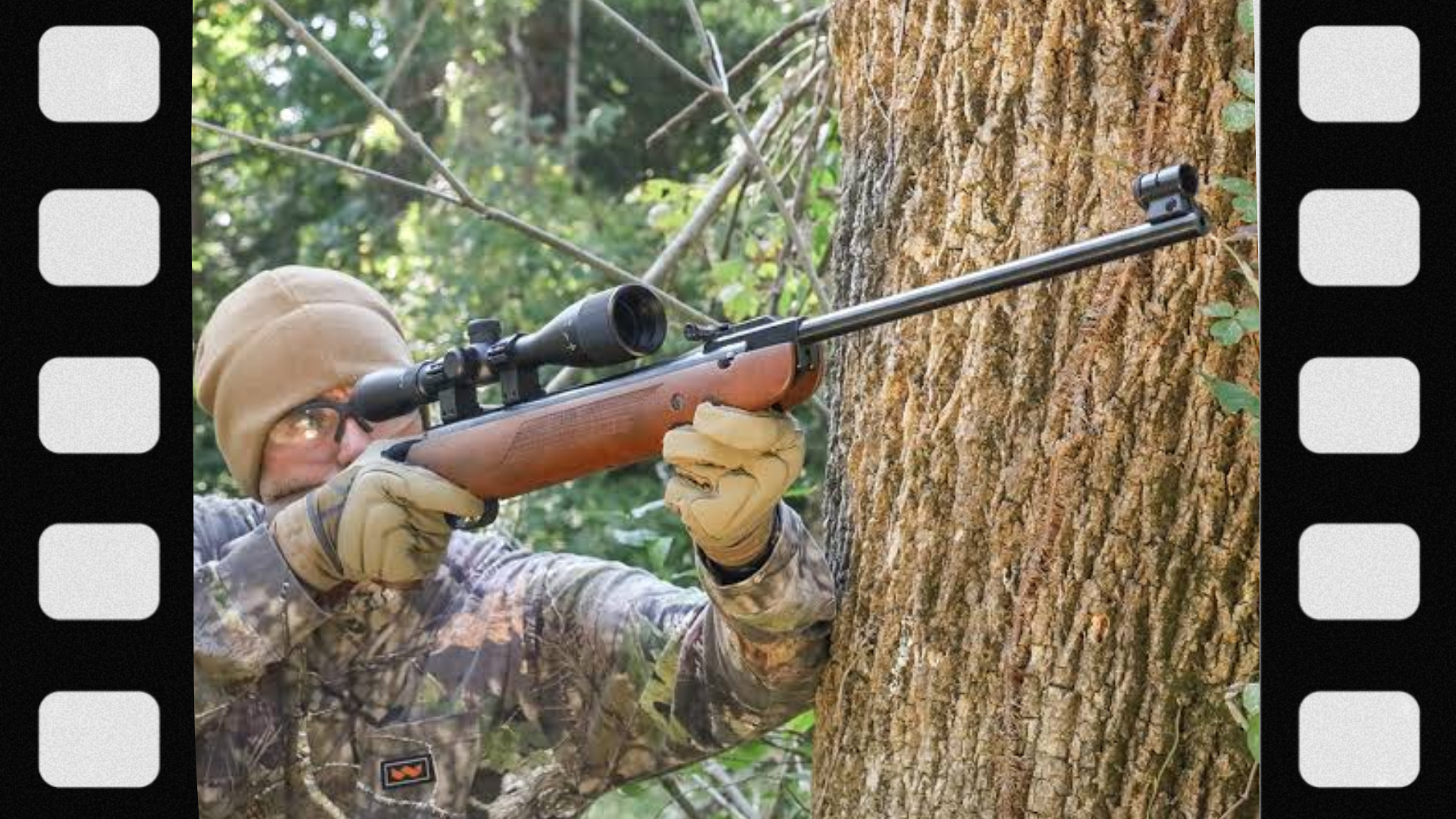
Potentially, where local law permits it and the specific rifle is suitable for the lawful quarry. Spring-powered rifles vary greatly, so do not assume every spring airgun is a hunting tool.
11. Are CO2 rifles good for hunting?
Some may be lawful for limited uses, but suitability varies considerably by model, conditions, species, and jurisdiction. Follow the manufacturer’s intended use and current wildlife rules rather than making a decision from the powerplant name alone.
12. What is the best caliber for air rifle hunting?
There is no universal best caliber. The answer depends on the species, local law, the performance of the specific rifle, projectile characteristics, expected distance, and your demonstrated accuracy.
13. Is .177 legal for hunting?
It can be legal for certain species in certain jurisdictions. Texas, for example, currently establishes a .177-or-larger rule for specified small-game birds and squirrels along with another performance requirement. That does not make the same standard universal.
14. Is .22 enough for air rifle hunting?
Caliber alone cannot answer that question. Legal and ethical suitability depends on the animal, rifle performance, projectile, range, accuracy, and local regulations.
15. Can an air rifle be used for big game?
Some jurisdictions authorize qualifying high-powered PCP air rifles for specific big-game species. Other jurisdictions limit airguns to smaller quarry. Check the exact big-game rule before planning the hunt.
16. How far can an air rifle be used for hunting?
There is no universal ethical distance. Your limit should be within the range where you have demonstrated repeatable accuracy with your exact rifle and projectile while also satisfying the law and the requirements of the species.
17. Are air rifles quieter than conventional rifles?
Many are, but sound levels vary substantially by design and power level. Do not assume an air rifle is silent, and remember that legal issues can apply to sound-moderating devices.
18. Do you need a hunting license to hunt with an air rifle?
Using an air rifle does not normally eliminate hunting-license requirements. If a license, permit, tag, hunter-education certificate, or harvest report is required for the species, the same obligation can still apply.
19. Do air rifle hunters need hunter education?
Requirements vary. Some states apply hunter-education rules according to age or hunting activity rather than simply the propulsion system being used. Check your state wildlife agency.
20. Can you hunt on public land with an air rifle?
Only when both the wildlife regulations and the rules for that specific property allow it. Property rules can be more restrictive than general state hunting law.
21. Can you hunt on private land with an air rifle?
Private land does not automatically remove wildlife laws, local discharge rules, season restrictions, licensing requirements, or the need for landowner permission.
22. Are air rifles safe?
They can be used safely when handled correctly, but they are capable of severe or fatal injury. Treat every air rifle as loaded, maintain safe muzzle direction, keep your finger away from the trigger until ready, and know the target and background.
23. Do you need a backstop when shooting an air rifle?
Yes. You need a safe background capable of stopping the projectile used by the specific air rifle. Never assume vegetation or an unknown distant area is an adequate backstop.
24. Can an air rifle pellet ricochet?
Yes. Projectiles can deflect from hard surfaces, water, rocks, metal, or other materials. Shot direction and background therefore matter even with lower-powered airguns.
25. What should beginners practice before hunting?
Practice safe handling, loading and unloading according to the manual, consistent shooting positions, range estimation, and repeatable accuracy with the exact rifle and projectile intended for the hunt.
26. Should I sight in an air rifle before hunting?
Yes. Verify the sight system and confirm accuracy with the rifle and projectile combination before entering the field.
27. Does an air rifle lose power as the projectile travels?
Yes. Like other projectiles, airgun pellets or slugs lose velocity and energy in flight. How quickly this occurs depends on the projectile and initial conditions.
28. Does a PCP air rifle become weaker as the tank empties?
Performance across a fill varies by rifle design. Hunters should understand the manufacturer’s operating range and verify how their particular rifle behaves rather than assuming every shot from a reservoir is identical.
29. Is a higher velocity always better for hunting?
No. Velocity alone does not establish accuracy, legality, projectile suitability, or humane performance. Use the complete manufacturer data and current wildlife regulations.
30. Are pellets and airgun slugs the same thing?
No. They are different projectile designs, and not every rifle is designed to use every type. Follow the rifle manufacturer’s compatibility guidance and any applicable hunting regulation.
31. Is an air rifle the same as a BB gun?
Not necessarily. “Airgun” is a broad category, while BB guns and pellet rifles can differ in projectile type, barrel design, power, and intended purpose. Legal definitions also vary.
32. Is an air rifle the same as an airsoft gun?
No. Airsoft equipment generally launches lightweight plastic projectiles for recreational games and training activities. Hunting air rifles use different projectile systems and should not be confused with airsoft equipment.
33. Can you hunt with an air pistol?
Some jurisdictions may permit certain air handguns for specific wildlife, while others prohibit them. Check the exact means-and-methods rule rather than assuming an air-pistol rule matches the air-rifle rule.
34. Do air rifle hunting laws change?
Yes. Wildlife commissions can change legal methods, equipment requirements, seasons, and species rules. Check the current year’s official regulation booklet before hunting.
35. What official source should I check before air rifle hunting?
Start with the state or provincial fish and wildlife agency responsible for the location where you plan to hunt. Confirm the current species regulations, legal methods of take, licensing requirements, season dates, and property-specific restrictions.
36. Is an air rifle a good first hunting tool?
That depends on the species, local law, access to suitable practice facilities, and the beginner’s training. Regardless of equipment, new hunters benefit from hunter education and supervised field instruction.
37. Is air rifle hunting ethical?
It can be when it is legal and the hunter uses suitable equipment within demonstrated accuracy limits, avoids marginal shots, positively identifies the animal, and makes responsible recovery efforts.
38. Does a legal air rifle automatically make every shot ethical?
No. Legal equipment standards establish regulatory limits, not guaranteed outcomes. Distance, accuracy, angle, animal movement, background, and the hunter’s proficiency still matter.
39. Do I need special equipment to fill a PCP rifle?
PCP rifles require a compatible source of high-pressure air. Use only charging equipment, fittings, and procedures approved for the specific rifle by its manufacturer.
40. Can I overfill a PCP air rifle?
Do not exceed the manufacturer’s specified pressure. High-pressure air systems should never be overfilled or modified outside approved procedures.
Final Answer
What is air rifle hunting? It is the lawful hunting of wildlife with a rifle that propels a projectile using compressed air or gas rather than gunpowder. The category includes several powerplant types, but modern hunting applications can range from traditional spring rifles used where lawful for small game to higher-powered PCP systems that some states authorize for specified larger animals.
The critical point is that there is no universal “air rifle hunting” rule. Current regulations differ substantially by jurisdiction and can specify the species, season, airgun type, projectile, and minimum equipment performance. Texas, Kentucky, Pennsylvania, and New York all illustrate different regulatory approaches.
For a beginner, the responsible path is to complete hunter education, verify the current wildlife regulations, read the rifle manual, practice with the exact equipment, establish a conservative accuracy limit, and apply strict weapon-safety principles in the field. Legal equipment is only the starting point; ethical hunting also depends on sound judgment, positive identification, a safe background, and a commitment to responsible game recovery.
Read more: