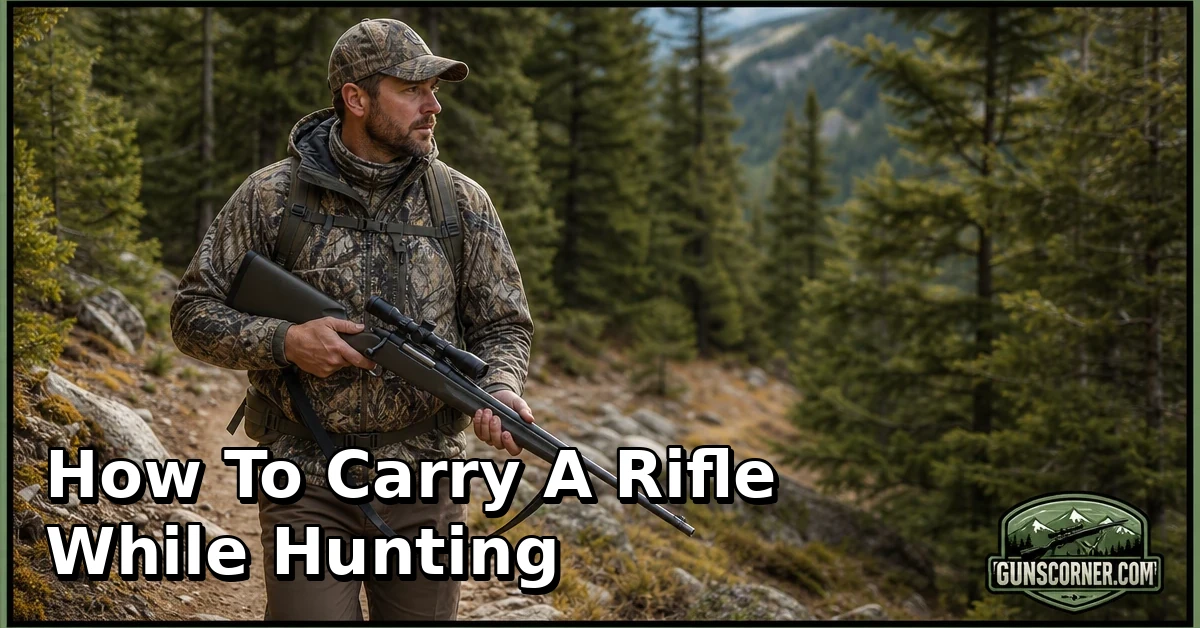

Learning how to carry a rifle while hunting is a basic field skill that affects safety, comfort, access, and control. The best carry method depends on the terrain, hunting partners, vegetation, pack, weather, and local regulations. This guide explains practical options for carrying a hunting rifle while keeping the muzzle controlled and avoiding unsafe handling.
Carry a rifle using a controlled two-hand position, properly adjusted sling, or secure pack carrier chosen for the terrain. Keep the muzzle pointed in a safe direction, your trigger finger outside the trigger guard, and the action open or firearm unloaded whenever immediate readiness is unnecessary or regulations require it. Before hunting, confirm local rules for loaded firearms, vehicles, roads, public land, hunting hours, and visibility clothing. Practice your carry method with an unloaded rifle before entering the field.
Important Legal and Safety Notice Before You Hunt
Firearm and hunting regulations vary by country, state, province, land type, species, and season. Check your official wildlife agency and land manager before hunting for current requirements covering licenses, tags, firearm transport, chamber status, legal hunting hours, roads, vehicles, public land, private permission, reporting, and hunter-orange rules.
- Carry the required hunting license, permits, and tags.
- Know the legal season, hunting hours, weapon rules, and bag limits.
- Confirm whether a firearm may be loaded or chambered in specific locations.
- Use required visibility clothing.
- Keep the muzzle away from people, dogs, roads, buildings, livestock, and uncertain movement.
- Keep your finger outside the trigger guard until you have identified a legal target and are ready to fire.
- Unload and open the action before crossing obstacles, entering vehicles, or handling gear unless local instructions specifically state otherwise.
- Complete hunter education and practice with an experienced, responsible mentor when possible.
Start With the Non-Negotiable Rifle-Safety Rules
Treat every firearm as loaded and keep the muzzle pointed in a safe direction
Handle the rifle as though it is loaded, even when you believe it is empty. A safe direction is one where an unintended discharge would not injure a person or cause unacceptable damage. The safest direction changes with terrain, companions, buildings, roads, and the position of the rifle.
Keep the trigger finger outside the trigger guard until ready to fire
Rest your trigger finger along the receiver or stock while carrying, walking, climbing, and changing position. Do not place it inside the trigger guard until the target, backstop, legality, and shot opportunity have all been confirmed.
Keep the action open and firearm unloaded when the hunting situation does not require immediate readiness
An open action makes the firearm’s condition easier to verify and reduces risk during travel and transitions. Follow your firearm manufacturer’s instructions and local regulations, especially around vehicles, camps, roads, buildings, and obstacles.
Why “muzzle up” and “muzzle down” are context-dependent rather than universal rules
Neither muzzle-up nor muzzle-down is always safest. A muzzle-up position may prevent the barrel from contacting the ground, but it can be unsafe if it covers a companion on uneven terrain. A muzzle-down position may be practical in some situations, but it can expose the bore to mud, snow, or debris. Choose the direction that keeps the muzzle away from people and controlled by your hands and body position.
How to prevent the muzzle from covering companions, dogs, roads, buildings, or other people
Before turning, stopping, sitting, or changing hands, check where the muzzle points. Maintain extra awareness when hunting with a partner, guide, or dog. Never swing the rifle across another person, even if the action is open.
Choose a Carry Method for the Terrain and Hunting Situation
Two-hand carry for thick cover, steep ground, obstacles, and areas requiring maximum control
A two-hand carry gives you direct control over the rifle and is often useful in dense brush, steep terrain, or areas with branches and obstacles. Keep one hand supporting the stock or grip area and the other controlling the fore-end, while maintaining a safe muzzle direction.
Shoulder sling carry for longer walks when the rifle can remain controlled and safely oriented
A sling can reduce arm fatigue during long walks. It must be adjusted so the rifle does not swing into people, vegetation, rocks, or your legs. Keep a hand on the rifle when entering thick cover, crossing uneven ground, or changing direction.
Chest or across-body carry for keeping the rifle accessible without letting it swing
An across-body carry may keep the rifle close to your torso and accessible. It is suitable only when the sling holds the rifle securely and the muzzle remains pointed away from people. Test the position with your full pack before relying on it in the field.
Pack scabbard or integrated rifle carrier for hands-free travel
A pack carrier can be useful when climbing, using trekking poles, carrying equipment, or moving through difficult terrain. Evaluate whether it is a true supported carrier, a scabbard, a compression strap, a cradle, or merely an attachment point. Product names do not by themselves verify security or protection.
When a carry method is unsuitable
Do not rely on a sling or pack carrier when climbing a fence, scrambling over rocks, entering a vehicle, boarding a boat, climbing into a blind or tree stand, or moving close to other hunters. Unload and open the action, then control the rifle directly as required by the situation and local rules.
How to Use a Rifle Sling Safely
Adjust sling length before entering the field
Set the sling at home while wearing the clothing and pack you expect to use. It should hold the rifle close enough to prevent swinging without restricting safe movement or access to the firearm’s controls.
Check that swivels, attachment points, buckles, and stitching are secure
Inspect the sling and its attachment points before every hunt. Look for loose hardware, damaged stitching, worn webbing, and parts that could separate under weight. A sling is a carrying aid, not a substitute for holding the rifle when conditions become difficult.
Keep the rifle from swinging into people, rocks, branches, or optics-damaging surfaces
Control the rifle with your hand when walking through brush or around companions. Avoid allowing the scope or other components to strike hard surfaces. Do not assume a sling will prevent impact merely because it feels tight.
Control the rifle with a hand when moving through brush or changing direction
Hold the fore-end or stock whenever the rifle could swing. This is especially important when turning quickly, stepping over logs, or moving on a side slope.
Remove or reposition the sling when it catches on vegetation
Stop and clear the snag rather than pulling forcefully. If a sling repeatedly catches, change its position or use a different legal carry method for that terrain.
Carrying a Rifle With a Hunting Pack
Compare a boot, scabbard, compression strap, cradle, and accessory attachment
A dedicated boot or scabbard generally supports more of the rifle than a simple strap or hook. A compression strap may hold the rifle against the pack but may not fully support it. Read the manufacturer’s instructions and inspect how the system retains the rifle.
Verify that the carrier supports the rifle
The rifle should not merely rest against the pack or depend on friction. Check whether the carrier prevents the rifle from sliding, falling, or rotating when you bend, sit, crawl, or remove the pack.
Protect the muzzle from mud, snow, rain, and obstructions without creating a blockage hazard
Keep the bore clear of obstructions. Do not use a cover or plug unless it is specifically appropriate for the firearm and does not create an unsafe blockage. Inspect the bore and action after exposure to mud, snow, rain, or debris.
Balance rifle and pack weight
Uneven weight can shift your balance on slopes and increase fatigue. Adjust the rifle carrier and pack straps so the setup remains stable while walking, kneeling, and sitting.
Confirm that the rifle cannot fall out
Test the carrier with the pack fully loaded. Bend forward, sit down, walk on a slope, and simulate removing the pack. If the rifle loosens or shifts, improve the retention system or choose another carry method.
Carry Positions by Environment
Open country and relatively clear trails
A sling or secure pack carrier may work well where there are few obstacles. Keep the rifle controlled and maintain awareness of other hunters, roads, trails, and buildings.
Dense brush and timber
Use a two-hand carry more often in thick cover. Branches can catch a sling, shift the muzzle, or damage the optic. Slow down and keep the rifle close to your body.
Steep slopes, loose rock, and scrambling terrain
Prioritize balance and control over speed. If both hands are needed for climbing, unload and open the action, then secure the rifle in a safe manner before negotiating the section.
Wet, snowy, dusty, or muddy conditions
Protect the firearm from unnecessary exposure, but inspect the bore, action, and controls before use. Moisture and debris can affect safe operation. Follow the manufacturer’s care instructions.
Hunting with a guide, partner, or dog
Discuss carry expectations before moving. Establish where people and dogs will travel, how you will pass one another, and when firearms will be unloaded. Keep the muzzle away from every member of the group at all times.
When to Unload, Open the Action, or Put the Rifle Down
Crossing fences, ditches, streams, and other obstacles
Unload and open the action before crossing. Place the rifle where it cannot fall or point toward another person, then retrieve it only after the obstacle has been crossed safely.
Climbing into or out of a vehicle, blind, tree stand, or boat
Follow local rules and manufacturer guidance, but generally unload and open the action before entering or exiting confined spaces. A rifle should not be carried into a tree stand or vehicle in a way that risks snagging or pointing at someone.
Passing a firearm to another person
Unload it, open the action, and make its condition clear before handing it over. The receiving person should visually verify the firearm before accepting it.
Taking a break or handling gear
Make the rifle safe before adjusting clothing, eating, using navigation equipment, or removing a pack. Do not lean a loaded rifle where it can fall.
Entering camp, a residence, or a transport vehicle
Follow applicable transport and storage rules. Keep the firearm unloaded and secured as required, separate from unauthorized access, and protected from damage.
Carrying Is Not the Same as Being Ready to Shoot
Use a safe carry position during travel
Traveling with a rifle requires control, not immediate firing readiness. Keep the trigger finger indexed and the muzzle directed safely while walking.
Transition to a shooting position only after identifying the target and backstop
When legal game is identified, stop moving and establish a stable position. Confirm the target, what lies beyond it, and that the shot is within your practiced ability before placing your finger on the trigger.
Why a stable shooting position does not justify unsafe movement
A prone, seated, kneeling, or standing shooting position is separate from carrying. Do not walk with the rifle positioned as though you are aiming, and do not treat quick access as more important than muzzle control.
Practice transitions with an unloaded firearm
Practice moving from a sling or pack carrier to a stable shooting position using an unloaded rifle in a controlled setting. Verify the firearm is unloaded and follow safe direction rules throughout the exercise.
Fit and Equipment Checks Before the Hunt
Confirm rifle, scope, sling, pack, and clothing do not interfere
Wear the same layers and pack you plan to use. Check that straps do not block the action, catch the bolt, interfere with the safety, or prevent you from controlling the rifle.
Check balance, access, and snag points with the pack fully loaded
Walk, turn, kneel, sit, and step over obstacles. Note any movement that causes the rifle, optic, sling, or pack to catch or shift.
Test the setup while negotiating obstacles
Practice safe transitions around logs, ditches, gates, and slopes. Use an unloaded rifle and do not practice where an accidental discharge could endanger anyone.
Inspect the bore and action after exposure to debris
Before firing, inspect the bore and action if the rifle has contacted snow, mud, dust, water, or vegetation. Use the manufacturer’s instructions or a qualified gunsmith if you are unsure how to inspect or clean it safely.
Legal and Ethical Checks Before Carrying in the Field
Verify local rules for loaded firearms, chamber status, vehicles, roads, and public land
These rules vary considerably. Check the current regulations for your exact hunting area rather than relying on advice from another state, province, country, or online discussion.
Check separate regulations for firearm transport, hunting hours, and visibility requirements
Transport rules may differ from hunting rules. Hunter-orange requirements may also vary by season, weapon, species, and land type.
Follow landowner, outfitter, range, and guide instructions
Private landowners, guides, outfitters, and land managers may impose additional safety procedures. Follow lawful instructions and confirm boundaries before entering.
Do not treat advice from another jurisdiction as local legal guidance
General safety principles can transfer, but loaded-firearm, road, vehicle, and access laws may not. Confirm current rules with the appropriate official agency.
A Simple Decision Guide
Use a two-hand carry when control is the priority
Choose it for thick vegetation, steep ground, obstacles, group hunting, or any situation where a sling allows too much movement.
Use a sling when the rifle remains stable, accessible, and pointed safely
A sling is useful for longer walks in open terrain when it does not swing, snag, or cover another person.
Use a pack carrier when hands-free movement is needed
Choose a carrier only after confirming that it supports and retains the rifle during realistic movement. It should not interfere with safe unloading or emergency access.
Unload and open the action whenever control becomes uncertain
If you cannot keep the rifle pointed safely or need both hands for an obstacle, stop and make the firearm safe before continuing.
Common Mistakes to Avoid
- Assuming muzzle-up or muzzle-down is always correct.
- Using a sling without adjusting it for your clothing and pack.
- Letting the rifle swing into a partner, dog, branch, or rock.
- Crossing a fence or ditch with the firearm loaded.
- Failing to inspect the bore after contact with mud or snow.
- Relying on an untested pack carrier.
- Ignoring local vehicle, road, public-land, or hunter-orange rules.
- Moving with a finger inside the trigger guard.
- Practicing transitions with ammunition present.
- Taking a shot before confirming the target and backstop.
Troubleshooting Common Problems
| Problem | Possible Cause | What to Do |
|---|---|---|
| The rifle swings while using a sling | Sling is too long or lacks hand control | Shorten or reposition the sling and control the rifle with a hand in rough terrain. |
| The pack carrier shifts on slopes | Uneven load or inadequate retention | Rebalance the pack, tighten the retention system, and test it unloaded before hunting. |
| The muzzle keeps pointing toward a companion | Carry position does not suit the group or terrain | Change position, use a two-hand carry, or unload before moving closer. |
| The sling catches on branches | Loose strap or unsuitable carry method | Stop, clear the snag, and use a more controlled carry method in dense cover. |
| The bore contacts mud or snow | Muzzle is pointed downward without protection or control | Make the firearm safe and inspect the bore before firing. |
| You are unsure whether the firearm may be loaded | Unclear local regulation or group procedure | Stop, unload and open the action if safe to do so, then confirm the rule with an official source or qualified guide. |
Ethical Hunting and Conservation
Safe rifle carrying protects people, wildlife, and the future of hunting. Follow seasons, tags, bag limits, land-access rules, and reporting requirements. Pass on any shot where the target, background, range, or your shooting ability is uncertain.
Respect landowners, other hunters, hikers, dogs, livestock, and wildlife. Avoid unnecessary disturbance, pack out waste, and use harvested game responsibly. Hunting licenses and lawful participation support wildlife management and conservation programs, but requirements vary by jurisdiction.
When to Get More Training or Professional Guidance
Seek instruction before hunting if you have never handled a rifle, have not completed hunter education, are unsure about local regulations, or lack confidence in safe shooting and firearm transport.
Official hunter education courses, certified firearms instructors, state or provincial wildlife agencies, conservation organizations, and experienced ethical mentors can help you practice safely. A qualified guide can also explain local terrain, access, group procedures, and recovery planning.
After the Hunt: Follow-Up, Gear Care, and Learning
- Unload, inspect, clean, and store the rifle according to the manufacturer’s instructions.
- Dry the sling, pack, and clothing before storage.
- Check swivels, buckles, stitching, and carrier hardware for damage.
- Complete required tagging and harvest reporting.
- Record weather, terrain, carry method, and problems encountered.
- Review whether the rifle remained secure and whether your chosen method suited the terrain.
- Follow legal and hygienic requirements for transporting and caring for harvested game.
Recommended Hunting Gear and Tools to Consider
You do not need expensive equipment to carry a rifle responsibly. Choose equipment based on local regulations, terrain, weather, rifle weight, pack load, and your skill level.
- A properly fitted rifle sling
- A pack with a verified rifle boot, scabbard, or secure carrier if hands-free travel is needed
- Weather-appropriate clothing and required visibility gear
- Quality boots suited to the terrain
- Navigation tools such as a map, compass, or GPS
- First aid supplies, water, food, and emergency communication
- Rifle protection and cleaning supplies appropriate for local conditions
Frequently Asked Questions
Should a hunting rifle be carried muzzle up or muzzle down?
Neither direction is universally safest. Choose the position that keeps the muzzle away from people and prevents contact with the ground, branches, or other hazards. Terrain, companions, and local rules determine the safest option.
Is it safe to carry a loaded rifle on a sling?
It may be lawful in some situations and prohibited in others. Even where permitted, a sling must keep the rifle controlled and pointed safely. Verify local law and unload the rifle whenever immediate readiness is unnecessary or control becomes uncertain.
Can I carry a rifle in a backpack scabbard?
Yes, if the carrier is designed for the rifle, securely retains it, and is used in accordance with the manufacturer’s instructions and local regulations. Test it with a full pack before hunting.
What should I do with the rifle when crossing a fence?
Unload and open the action before crossing. Secure or place the rifle safely so it cannot fall or point toward another person, then retrieve it after crossing.
How should I carry a rifle when hunting with a dog or partner?
Use a carry position that keeps the muzzle away from the other person and dog. Discuss movement and unloading procedures before starting, and use a two-hand carry in thick cover or crowded conditions.
What rifle-carrying rules apply in my state or hunting area?
Rules may cover chamber status, vehicles, roads, public land, hunting hours, transport, and visibility clothing. Check your official wildlife agency, land manager, or current hunting regulations for the exact area.
When should I practice rifle-carry transitions?
Practice before the season with an unloaded rifle in a controlled setting. Include sling adjustments, pack-carrier use, kneeling, sitting, obstacle transitions, and safe unloading procedures.
Final Thoughts
Knowing how to carry a rifle while hunting means choosing control over convenience. Use a two-hand carry in difficult terrain, a properly adjusted sling for suitable travel, or a secure pack carrier when hands-free movement is necessary. Keep the muzzle safe, your finger outside the trigger guard, and the action open or firearm unloaded whenever conditions or regulations require it. Confirm current local rules, practice before the hunt, and make every decision with safety, ethics, and respect for people and wildlife in mind.