
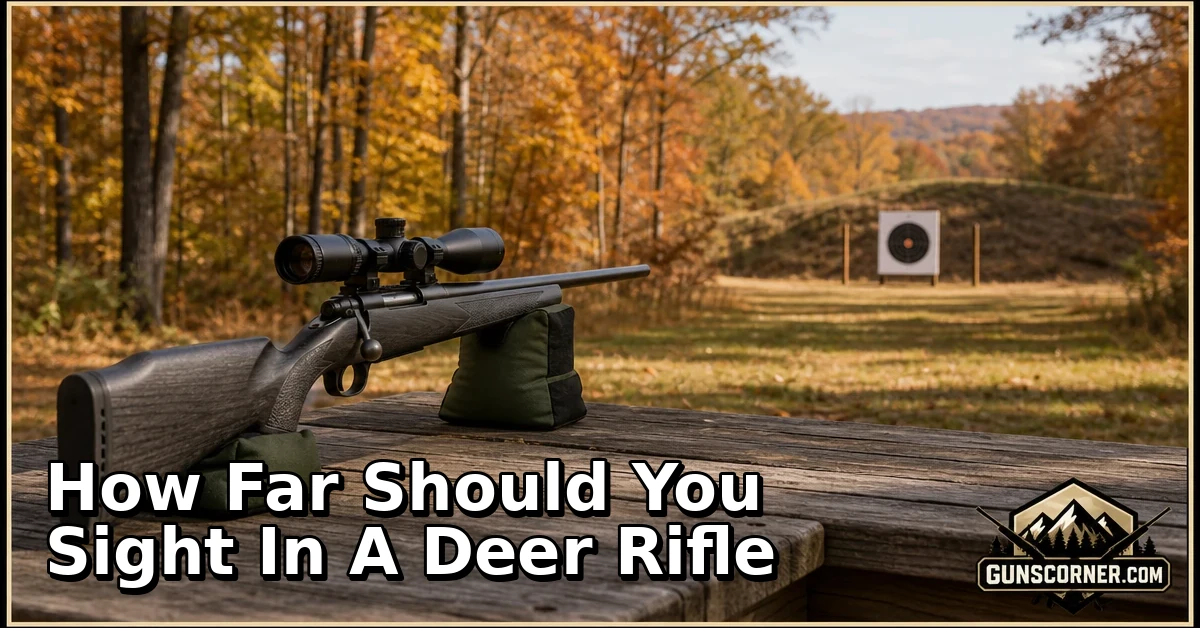

Sighting in a deer rifle means adjusting the rifle and optic so the bullet hits where you aim at a known distance. For many deer hunters, 100 yards is a practical starting point because it is widely available at shooting ranges and provides a useful baseline for confirming accuracy. However, the best distance depends on your rifle, ammunition, optic, hunting terrain, and the shots you can confidently make.
Most deer rifles should be sighted in and confirmed at 100 yards, then checked at 50 yards and, when safely possible, at the distances you may encounter in the field. A 25-yard target can help you establish an initial zero, but it should not replace confirmation at a longer distance. Always follow safe range practices, use your exact hunting ammunition, and take only ethical shots within your proven ability.
Important Legal and Safety Notice Before You Hunt
Before sighting in or hunting, check your official wildlife agency and shooting-range rules. Regulations may address rifle types, ammunition, hunting seasons, legal hours, hunter education, land access, and required visibility clothing.
- Use a legal rifle and ammunition for your hunting area.
- Confirm your license, deer tag, season dates, bag limits, and harvest-reporting requirements.
- Use an approved shooting range or another location where rifle discharge is legal.
- Keep the muzzle pointed in a safe direction and treat every firearm as loaded.
- Keep your finger outside the trigger guard until you are ready to fire.
- Identify the target and what lies beyond it before every shot.
- Never shoot toward roads, homes, livestock, people, vehicles, trails, or unclear movement.
- Wear hearing and eye protection while sighting in.
- Transport and store the rifle according to manufacturer instructions and local law.
What Distance Is Best for Sight-In?

100 yards: The practical standard
A 100-yard zero is a useful baseline for many deer rifles. It is long enough to reveal meaningful point-of-impact errors while remaining manageable at most public or commercial ranges. It also gives you a reference for understanding how your bullet behaves at shorter and longer distances.
25 yards: A starting point, not the final check
Beginning at 25 yards can save ammunition and make initial adjustments easier. Once the shots are safely on paper, move back to 100 yards and confirm the rifle. Do not assume that a 25-yard group automatically represents a correct 100-yard zero.
50 yards: Useful for short-range hunting
A 50-yard check can be useful in thick woods or areas where most ethical shots are relatively close. Even then, confirm the rifle at the longest practical distance you may encounter, and learn the actual point of impact rather than relying on a generic trajectory.
Beyond 100 yards: Confirm your realistic hunting range
If your hunting area includes open terrain, verify the rifle at longer distances only when you have a safe, approved range and sufficient practice. This is not an invitation to shoot farther at deer. Your ethical range must account for accuracy, wind, bullet performance, field position, visibility, and your ability to make a clean shot.
Understanding Zero and Point of Impact
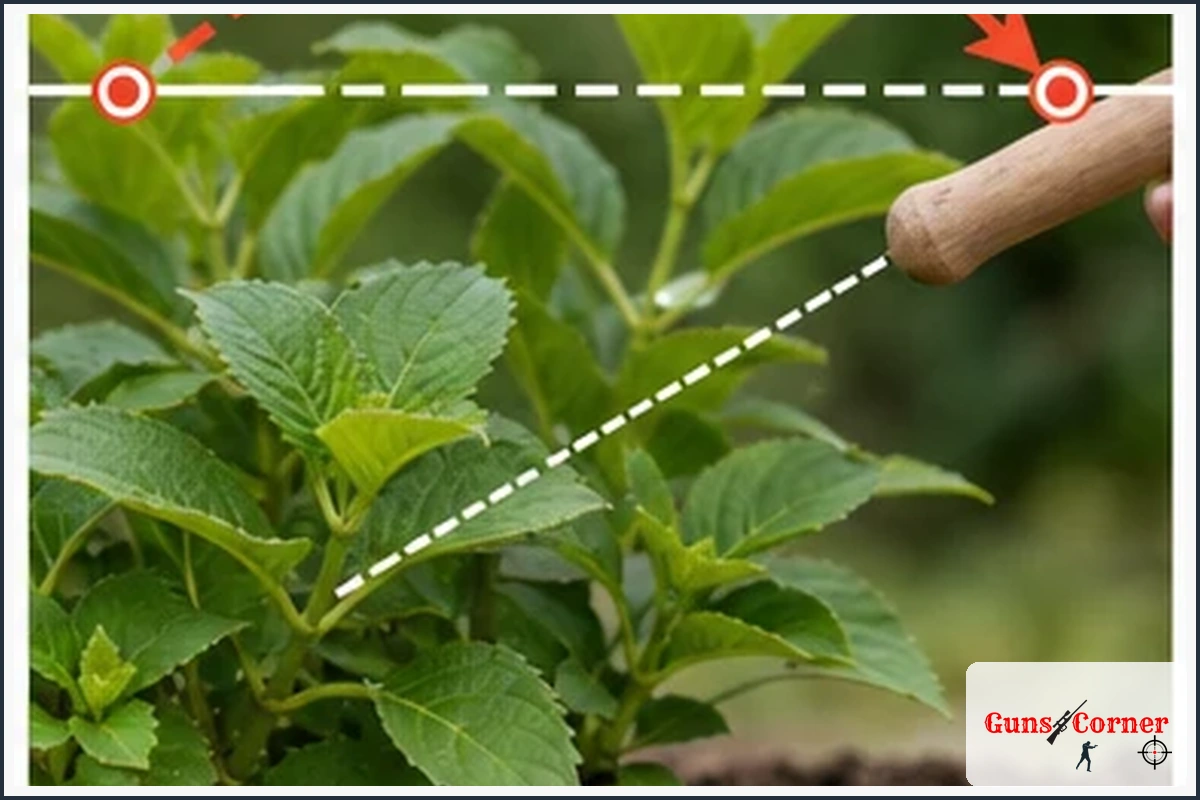
A rifle’s zero is the distance at which the bullet’s path intersects the line of sight. Because the bore sits below the optic, the bullet usually rises toward the line of sight after leaving the barrel and later drops below it. The exact path varies with cartridge, bullet weight, muzzle velocity, barrel length, optic height, environmental conditions, and rifle characteristics.
Two rifles chambered for the same cartridge can produce different results. That is why published trajectory tables, another hunter’s sight-in settings, or a scope’s generic markings should never replace shooting your own rifle with your hunting ammunition.
How Far Should You Sight In a Deer Rifle: Step-by-Step
Step 1: Check the rifle and scope
Make sure the rifle is unloaded before inspecting it. Check that the scope, bases, rings, sling, and any accessories are secure according to the manufacturer’s instructions. Look for obvious damage, loose hardware, or anything that could affect safe operation.
Step 2: Read the regulations and range rules
Confirm that your rifle, ammunition, and shooting location are legal. Review range commands, target restrictions, permitted distances, and transportation requirements before arriving.
Step 3: Use your actual hunting ammunition
Different bullets can produce different points of impact. Sight in with the ammunition you intend to hunt with, provided it is legal and suitable for your rifle. If you change ammunition later, confirm the zero again.
Step 4: Begin at a short distance if needed
At an approved range, start at 25 or 50 yards if you are unsure whether the rifle is on paper. Use a stable rest and a clear target with a visible aiming point. Make sure the target and backstop are appropriate for rifle fire.
Step 5: Fire a careful group
Fire a small group using consistent form rather than adjusting after every shot. Let the barrel cool as recommended by the rifle manufacturer or range staff. Focus on a steady position, consistent cheek placement, controlled breathing, and a smooth trigger press.
Step 6: Adjust the scope systematically
Follow the scope manufacturer’s adjustment directions. Move the point of impact in the direction indicated by the adjustment markings, and make small changes. Record each adjustment so you know what changed.
Step 7: Confirm at 100 yards
Move to 100 yards and fire another careful group. Adjust only as necessary, then shoot a confirmation group. The goal is not a single lucky impact but a repeatable group centered at your chosen point of aim.
Step 8: Test practical hunting positions
After confirming from a bench or supported rest, practice from safe field positions such as sitting, kneeling, or using a pack as a rest. Your field accuracy may differ from your bench accuracy. Do not use an unsupported position in the field if you have not practiced it.
Step 9: Confirm the rifle before the season
Recheck the rifle after travel, hard use, a fall, scope adjustments, or ammunition changes. A final confirmation shortly before the season can identify problems before you enter the field.
Step 10: Establish your personal ethical range
Your maximum range is the farthest distance at which you can consistently place shots in the vital area from a realistic hunting position under suitable conditions. If wind, poor visibility, awkward terrain, or excitement reduces your control, shorten the distance or pass on the shot.
What Zero Should You Use?
There is no single universal zero for every deer rifle. Many hunters choose a 100-yard zero because it is simple to verify and easy to document. Others select a different zero after studying their rifle’s verified trajectory and local hunting conditions.
Use the zero that you can confirm with your rifle and ammunition. Do not copy a “one-size-fits-all” holdover rule. Record the actual point of impact at several distances if your range allows it, and keep those notes with your hunting equipment.
Preparing for Deer Hunting After Sight-In
Scout the hunting area
Learn the property boundaries, legal access routes, terrain, game trails, food sources, water, bedding cover, and likely travel corridors. On public land, use current maps and verify boundaries. On private land, obtain permission before entering and respect gates, livestock, buildings, and landowner instructions.
Plan for field conditions
Consider the terrain, expected weather, visibility, wind direction, and likely shooting positions. A rifle sighted in at a range does not eliminate the need to make a safe field decision.
Practice with hunting gear
Wear the clothing, gloves, pack, and eye protection you expect to use. Practice mounting the rifle safely and finding the scope’s sight picture without sweeping other people or objects.
Carry essential safety equipment
- Map, compass, GPS, or a charged navigation device
- First aid supplies and emergency communication
- Water and weather-appropriate clothing
- Required blaze orange or other visibility gear
- Binoculars for identifying animals before handling the rifle
- Flashlight or headlamp for legal and safe travel
- Basic field and meat-care supplies appropriate to the hunt
Best Conditions for Confirming Rifle Accuracy
Calm, dry conditions with good visibility make sight-in easier. Wind can move bullets, especially at longer distances, and rain or poor light can make aiming difficult. Record unusual conditions if you must sight in during them, and consider confirming the rifle again in conditions closer to your planned hunt.
For hunting, learn how your rifle behaves from the positions and distances you can safely expect. Do not let a perfect benchrest group create false confidence about shooting through brush, across steep terrain, or in strong wind.
Helpful Tips for Better Results
- Use a clear, high-contrast target with a precise aiming point.
- Check that the rifle is unloaded before making adjustments.
- Use the same optic settings you plan to use while hunting.
- Allow the barrel to cool when appropriate.
- Keep notes about ammunition, distance, weather, and group results.
- Confirm the rifle after transport or a hard impact.
- Practice from supported field positions, not only from a bench.
- Use binoculars to identify deer before raising the rifle.
- Keep shots within the distance you have repeatedly practiced.
- Pass on any shot where the target, background, or animal legality is uncertain.
Common Mistakes to Avoid
- Assuming a 25-yard zero is automatically correct at 100 yards.
- Using a different ammunition load after sighting in.
- Adjusting the scope after every individual shot.
- Ignoring loose scope mounts or damaged equipment.
- Relying on another rifle’s trajectory or a generic holdover chart.
- Testing only from a bench and never practicing field positions.
- Taking long shots beyond your demonstrated ability.
- Ignoring wind, poor visibility, or an unsafe background.
- Failing to confirm the rifle after travel or a fall.
- Hunting without current tags, permission, or knowledge of local rules.
Troubleshooting Common Problems
| Problem | Possible Cause | What to Do |
|---|---|---|
| Shots are not on the target | Unknown starting zero, loose equipment, or aiming error | Move closer if permitted, inspect the rifle safely, and use a stable position. |
| Groups are widely scattered | Inconsistent shooting technique, poor rest, ammunition differences, or shooter fatigue | Slow down, improve support, check equipment, and seek help from a qualified instructor. |
| The group shifts as the barrel heats | Barrel heating or inconsistent cooling time | Follow the rifle manufacturer’s guidance and allow appropriate cooling between groups. |
| The rifle was zeroed but misses after travel | Scope movement, impact, changed ammunition, or damaged equipment | Inspect the rifle and confirm the zero again before hunting. |
| Point of impact changes in wind | Wind affecting the bullet, especially at longer distances | Wait for safer, calmer conditions or shorten the distance; do not guess at a difficult shot. |
| You are unsure about the proper zero | Conflicting advice or lack of verified trajectory data | Use a qualified range instructor, hunter education resource, or experienced mentor. |
| You cannot make a stable field position | Uneven terrain, fatigue, or inadequate support | Do not shoot until you can safely control the rifle, or pass on the opportunity. |
Ethical Hunting and Conservation
A properly sighted rifle supports ethical hunting, but it does not guarantee a successful hunt. Responsible hunters identify the animal clearly, confirm that it is legal to harvest, evaluate the background, and take only shots within their practiced ability.
Respect wildlife, landowners, other hunters, and public-land users. Follow seasons and harvest limits, avoid waste, report harvests when required, and support conservation through lawful participation. Leave hunting areas clean and avoid disturbing wildlife unnecessarily.
When to Get More Training or Professional Guidance
Seek help before hunting if you have limited firearm experience, are uncertain about local regulations, cannot produce consistent groups, or do not understand safe field positions. A hunter education course, certified firearms instructor, range safety officer, or experienced ethical mentor can help you build confidence safely.
Professional guidance is also valuable when you need help understanding trajectory records, diagnosing equipment problems, navigating unfamiliar terrain, or planning responsible game recovery and meat care.
After the Hunt: Follow-Up, Gear Care, and Learning
Unload and store the rifle safely according to the manufacturer’s instructions and applicable laws. Clean and inspect equipment as appropriate, check scope mounts, and record what you learned about weather, terrain, shooting position, and animal behavior.
If you harvest a deer, follow all tagging, reporting, transport, cooling, and meat-handling rules in your area. Plan recovery and meat care before the hunt so you can handle the harvest responsibly and avoid unnecessary waste.
Recommended Hunting Gear and Tools to Consider
You do not need expensive equipment to sight in a deer rifle responsibly. Choose gear based on local regulations, terrain, weather, hunting method, skill level, and budget.
- Legal deer rifle and hunting ammunition
- Reliable scope and secure mounting system
- Hearing and eye protection
- Stable shooting rest or approved range support
- Targets with clear aiming points
- Binoculars for animal identification
- Map, compass, GPS, or navigation app
- First aid kit and emergency communication
- Required visibility clothing
- Gloves, game bags, cooler, and meat-care supplies when appropriate
Final Thoughts
For many hunters, 100 yards is the most practical distance to sight in a deer rifle, while 25 or 50 yards can help establish an initial zero. The important step is confirming the rifle with your actual hunting ammunition and learning how accurately you can shoot from realistic field positions.
Before hunting, verify current regulations, scout legal access, practice firearm safety, and choose only a safe and ethical shot. Responsible preparation improves your confidence while respecting wildlife and supporting conservation.
Frequently Asked Questions
How far should you sight in a deer rifle?
Many hunters sight in at 100 yards because it provides a practical reference point. Confirm the rifle at additional distances when safely possible and relevant to your hunting terrain.
Is 25 yards far enough to sight in a deer rifle?
Twenty-five yards is useful for getting a rifle on paper, but it should generally be followed by confirmation at a longer distance such as 100 yards.
Is 50 yards a good deer rifle zero?
It can be useful for short-range hunting, but the best zero depends on your rifle, ammunition, terrain, and verified trajectory. Confirm actual impacts rather than relying on assumptions.
Why do many hunters use a 100-yard zero?
One hundred yards is commonly available at ranges and gives a useful baseline for checking accuracy and understanding bullet impact at other distances.
Should I sight in with the ammunition I will hunt with?
Yes. Different ammunition can produce different points of impact, so confirm the rifle with the exact load you plan to use.
How many shots should I fire when sighting in?
Fire enough carefully placed shots to identify a repeatable group and confirm the adjustment. Avoid judging accuracy from one shot.
Should I let the barrel cool between groups?
Follow the rifle manufacturer’s guidance. Allowing appropriate cooling can help maintain consistent results and avoid unnecessary heat buildup.
What size group is good enough for deer hunting?
The answer depends on the rifle, ammunition, distance, and field conditions. Your group should be consistent enough to keep shots safely within the ethical vital area at your intended range.
Does a 25-yard zero equal a 100-yard zero?
Not necessarily. Bullet trajectory varies with the rifle, optic height, ammunition, and other factors, so verify the point of impact at 100 yards.
Should I sight in high at 100 yards?
Do not use a generic “high at 100” rule unless it is based on your verified rifle and ammunition trajectory. A straightforward 100-yard zero is easier for many beginners to understand.
Can I use a trajectory chart instead of shooting at distance?
A trajectory chart can help with planning, but it should not replace confirming your own rifle and ammunition on paper.
How far can I ethically shoot a deer?
Your ethical range is the farthest distance at which you can consistently make a safe, accurate shot from a realistic field position under suitable conditions.
Does a benchrest group prove I can make a field shot?
No. Field positions, wind, terrain, fatigue, clothing, and excitement can reduce accuracy. Practice from supported positions you may actually use.
Should I confirm my rifle after traveling?
Yes. Confirm the zero after transporting the rifle, after a hard impact, after changing ammunition, or whenever you suspect the scope or rifle has moved.
Can weather change point of impact?
Wind, temperature, rain, and visibility can affect shooting and decision-making. Confirm your equipment in safe conditions and avoid shots when conditions exceed your ability.
What should I do if my groups are inconsistent?
Improve your support and shooting routine, inspect the rifle and scope, check ammunition consistency, and ask a qualified instructor or range professional for help.
Should I adjust the scope after every shot?
No. Fire a careful group first unless safety or a clear mechanical problem requires stopping. Group information is more useful than a single impact.
What is the safest way to adjust a rifle scope?
Unload the rifle before making adjustments, keep the muzzle in a safe direction, and follow the scope manufacturer’s instructions.
Do I need a shooting rest?
A stable rest helps reduce shooter error during sight-in. Afterward, practice from safe field positions to understand your practical accuracy.
Should I use a bore-sighting device?
A bore-sighting device may help with initial alignment, but it does not replace live-fire confirmation at the range.
Can I sight in a deer rifle on public land?
Only if rifle discharge and target shooting are specifically legal there. Check land rules, local restrictions, backstops, and range requirements first.
Can I sight in on private property?
Only with landowner permission and where local rules allow it. You must have a safe backstop and ensure no roads, homes, livestock, or people are endangered.
What should I bring to the range?
Bring the rifle, hunting ammunition, eye and hearing protection, targets, adjustment tools if permitted, a stable rest, water, and any required range documents.
Should I practice with my hunting clothing?
Yes. Clothing, gloves, a pack, and other equipment can affect rifle handling and your ability to achieve a stable position.
How do I choose a deer hunting rifle zero?
Choose a zero you can verify and understand with your rifle and ammunition. Consider terrain, typical distances, and your ability to confirm impacts safely.
What if my rifle shoots accurately but not at the expected point?
Record the actual point of impact and adjust the scope systematically. Generic expectations do not replace your rifle’s measured results.
Does a different scope change the zero?
Changing the scope, mounting system, or optic height can change the point of impact. Confirm the rifle again after any optic change.
Does changing bullet weight change the zero?
It can. Different bullet designs and loads may produce different points of impact, so recheck the rifle whenever ammunition changes.
What should I do if the scope will not hold zero?
Stop relying on it for hunting. Inspect the mounting system and rifle, and have a qualified gunsmith or range professional evaluate the problem.
How important is wind when sighting in?
Wind can move bullets, particularly at longer distances. Use calm conditions when possible and avoid guessing at wind effects on an ethical hunting shot.
Should I use a deer target with a vital-zone outline?
A clear target is useful for measuring groups and practicing shot placement. Treat any outline as a training aid, not permission to take marginal shots.
What should I do if I cannot see the target clearly?
Stop shooting until the target and backstop are clearly visible. Poor visibility is a reason to wait or end the range session.
How does sight-in relate to deer scouting?
Scouting helps you understand terrain, legal access, travel routes, and likely distances. That information helps you practice and prepare without guaranteeing where a deer will appear.
Should I consider wind direction while hunting deer?
Yes. Wind affects scent, animal awareness, and bullet performance. Plan entry routes and setups carefully, while keeping all shots within your demonstrated ability.
What should I do after harvesting a deer?
Follow local tagging, reporting, transport, cooling, and meat-handling rules. Plan recovery before the hunt and use the harvest responsibly.
Do I need hunter education before using a deer rifle?
Many jurisdictions require it, and it is strongly recommended for beginners even where it is not mandatory. Verify requirements with your official wildlife agency.
When should I ask for professional help?
Ask for help if you are unfamiliar with firearms, cannot produce consistent groups, do not understand local laws, or are uncertain about safe field shooting.
Can proper sight-in guarantee a successful deer hunt?
No. Sight-in improves preparation, but success depends on weather, animal behavior, scouting, hunting pressure, skill, patience, and ethical decisions.
Read more: