
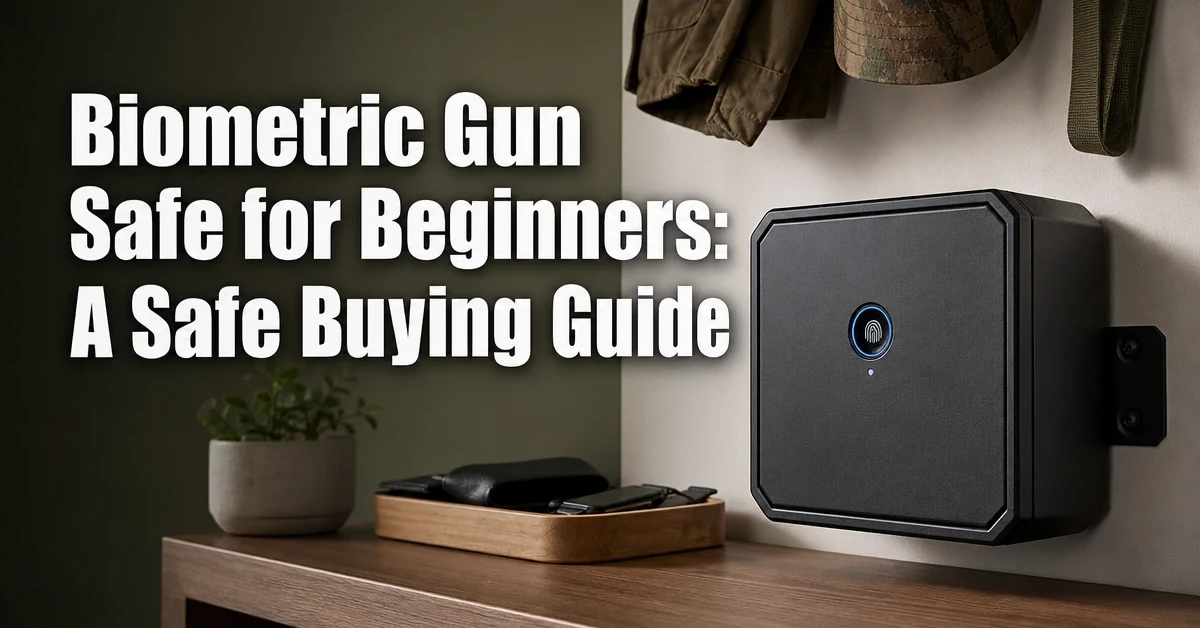
A biometric gun safe for beginners can provide convenient fingerprint access while helping prevent unauthorized firearm access. The best choice is not simply the fastest-opening model; it should fit your firearm, resist tampering, provide dependable backup entry, and be installed and maintained responsibly.
What Is a Biometric Gun Safe?
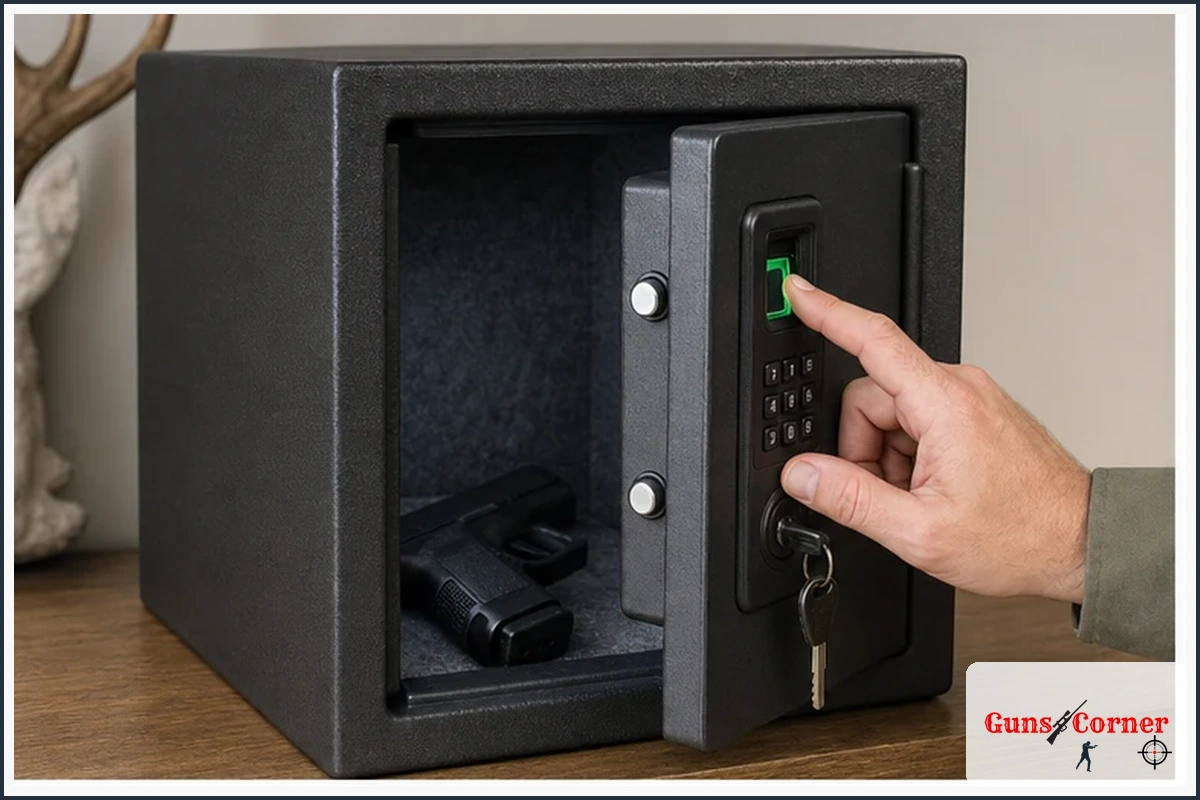
A biometric gun safe uses a fingerprint scanner to identify an enrolled user before unlocking. Many models also include a keypad, mechanical key, or another backup method. These safes are commonly designed for one or more handguns, although larger biometric cabinets may hold long guns.
Biometric access improves convenience, but it is not a substitute for safe firearm handling, secure storage, or training. A mechanical lock, electronic keypad, or fingerprint reader can fail, so beginners should understand every access method before storing a firearm inside.
Is a Biometric Gun Safe a Good Choice for Beginners?
It can be, especially for someone who wants quick access without memorizing a combination. However, fingerprint performance depends on proper enrollment, battery condition, clean sensors, and the user’s finger position. A beginner should choose a safe that is simple to operate and regularly practice opening it without handling the firearm carelessly.
For homes with children, guests, or other unauthorized users, the safe should remain locked whenever the firearm is not under the immediate control of an authorized adult. Check applicable local storage requirements before purchasing.
Key Features Beginners Should Compare
| Feature | Why It Matters | What to Check |
|---|---|---|
| Fingerprint reader | Provides fast, keyless access | Enrollment process, sensor placement, and backup access |
| Backup method | Allows entry if the scanner or battery fails | Mechanical key or keypad, stored securely and tested periodically |
| Interior dimensions | Determines whether the firearm fits safely | Firearm length, width, sights, optic, magazine, and holster |
| Mounting hardware | Helps prevent the safe from being carried away | Compatible floor or wall surface and manufacturer instructions |
| Power system | Controls electronic reliability | Battery type, low-battery warning, and emergency power procedure |
| Construction | Influences resistance to prying and impact | Door fit, hinges, locking mechanism, and documented specifications |
Fingerprint Access Is Convenient, Not Foolproof
Enroll more than one finger according to the manufacturer’s instructions. A thumb and index finger from the hand normally used to open the safe may provide useful alternatives if one position is awkward.
Test the reader after enrollment using the same hand positions you would realistically use. Wet, dirty, injured, or unusually dry fingers may not scan consistently. Keep the sensor clean using only the method recommended in the manual.
Do not rely on an advertised opening time as a guarantee. Real-world access depends on your finger placement, lighting, battery condition, clothing, and the safe’s opening design.
Backup Entry and Battery Planning
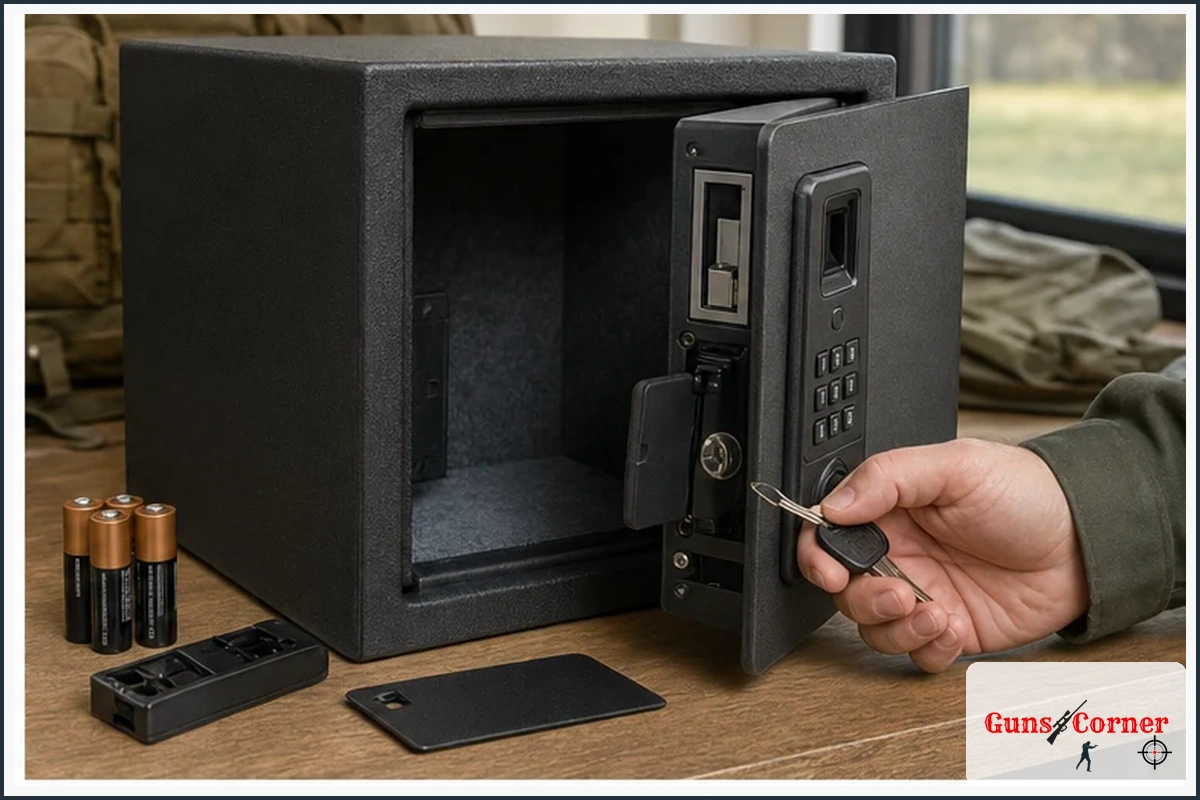
Every beginner should learn the safe’s backup procedure before storing a firearm. Confirm how to replace the batteries, what happens during low power, and whether the model supports external emergency power.
Keep backup keys controlled and inaccessible to unauthorized people. Do not leave a key beside the safe or in an obvious nearby hiding place. If the safe uses a keypad, protect the code and avoid writing it on the safe.
Replace batteries on a regular schedule based on the manufacturer’s guidance and test the safe afterward. Never perform improvised electrical modifications or attempt to defeat the lock.
Choosing the Right Size and Location
Confirm the firearm fits
Measure the firearm and compare those measurements with the safe’s usable interior, not merely its external dimensions. Account for an optic, extended magazine, mounted light, or holster. A safe that technically closes may still force the firearm against the door or lock mechanism.
Choose a secure mounting location
A bedside safe may be convenient, while a larger safe may offer more storage and stronger mounting options. Follow the manufacturer’s instructions and use suitable hardware for the surface. A small portable safe can offer limited protection if it is easy to remove and carry away.
Keep the safe away from excessive moisture, heat, and locations where children can manipulate it. Do not place it where opening the door creates an unsafe muzzle direction or where the firearm could fall during retrieval.
Safe Setup for a First-Time Owner
- Read the safe and firearm manuals completely.
- Install fresh batteries or charge the unit as directed.
- Set up the backup entry method before enrolling fingerprints.
- Enroll fingerprints carefully and test several normal positions.
- Verify that the firearm fits without pressure on the trigger or controls.
- Mount the safe if the manufacturer provides a suitable mounting method.
- Practice opening the empty safe while following the four firearm-safety rules.
- Load or store the firearm only according to your training, local law, and the firearm manual.
- Recheck access after battery replacement, cleaning, relocation, or firmware changes.
Firearm Safety Still Comes First
A biometric lock does not make a firearm safe by itself. Always treat every firearm as loaded, keep the muzzle pointed in a safe direction, keep your finger outside the trigger guard until ready to shoot, and be certain of the target and what is beyond it.
Keep ammunition stored according to local law and your household safety plan. Use eye and hearing protection during shooting practice, and obtain supervised instruction from a qualified firearms educator if you are unfamiliar with loading, unloading, or verifying chamber status.
Common Beginner Mistakes
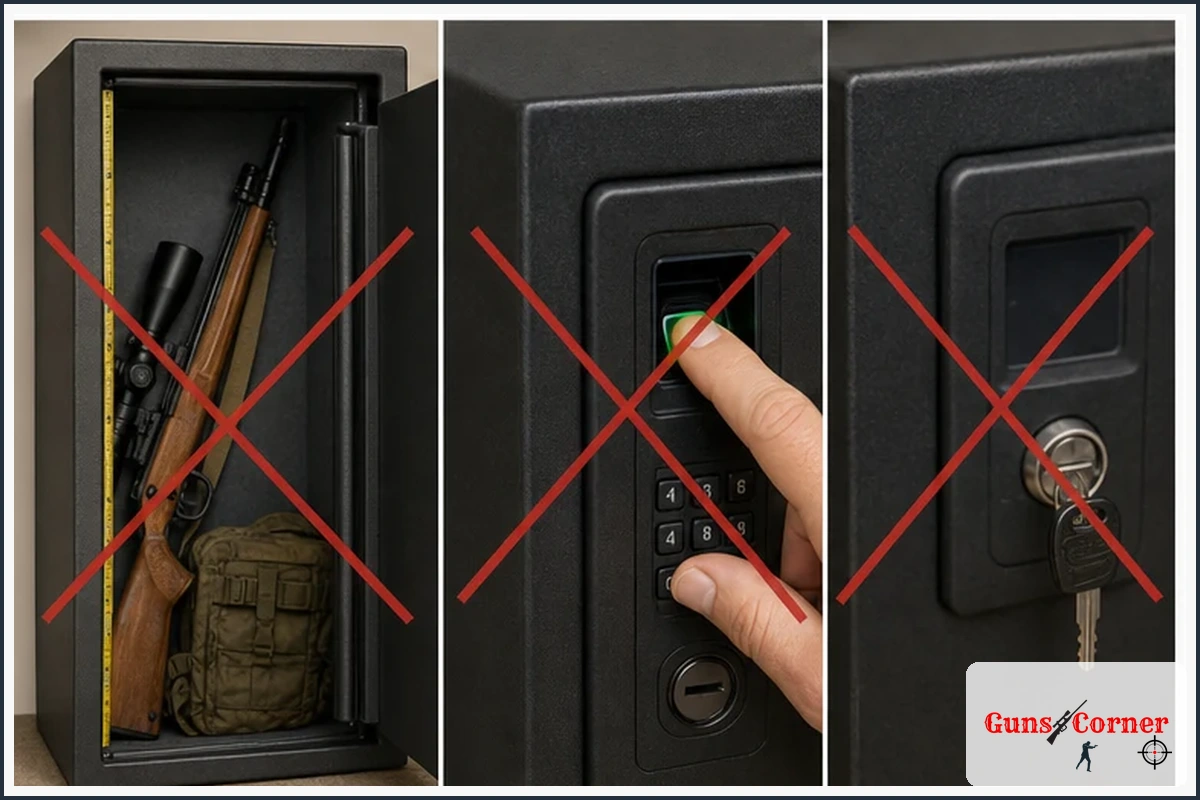
- Buying a safe without measuring the firearm and accessories.
- Assuming fingerprint access will work without enrollment practice.
- Ignoring the backup key or keypad until the battery is dead.
- Leaving the safe unsecured because it is small or inexpensive.
- Storing the backup key where children or visitors can find it.
- Failing to clean the fingerprint sensor as directed.
- Relying on a mechanical safety instead of safe handling.
- Keeping a loaded firearm in a location that does not meet applicable storage requirements.
- Practicing access with ammunition present before basic handling skills are established.
What Not to Do
- Do not defeat, modify, or bypass the safe’s locking mechanism.
- Do not climb, carry, or manipulate a firearm while distracted.
- Do not store a firearm where unauthorized people can access the key, code, or biometric enrollment.
- Do not assume a fingerprint safe is theft-proof.
- Do not use the safe as a substitute for hunter education or firearms training.
- Do not rely on online general guidance instead of current local storage laws and manufacturer instructions.
Maintenance Checklist
- Inspect the door, hinges, lock, and mounting points.
- Check battery status and replace batteries before they become unreliable.
- Clean the fingerprint reader using approved instructions.
- Test every authorized fingerprint periodically.
- Confirm that the backup key or keypad works.
- Review access permissions when household circumstances change.
- Remove the firearm and inspect it separately according to its manual.
Legal and Household Safety Considerations
Firearm-storage requirements vary by country, state, and local jurisdiction. Some laws may address child access, negligent storage, transportation, or specific locking standards. Verify current requirements with the relevant government authority before buying or storing a firearm.
Consider everyone who may enter the home, including children, guests, contractors, and visitors. If a household member is not authorized or trained to access the firearm, the safe must prevent that access.
FAQs
1. Are biometric gun safes reliable?
They can be reliable when properly installed, powered, maintained, and tested, but fingerprint readers are not infallible. Choose a model with a dependable backup method and follow the manufacturer’s maintenance instructions.
2. Should a beginner choose fingerprint, keypad, or key access?
That depends on dexterity, memory, household circumstances, and local requirements. Fingerprint access is convenient, while a keypad avoids dependence on a fingerprint scan. A mechanical key can serve as a backup but must be securely controlled.
3. Can a biometric gun safe hold any handgun?
No. Interior dimensions vary. Check the safe’s usable space against the handgun, sights, optic, magazine, light, and holster before purchase.
4. Does a biometric gun safe replace a full-size gun safe?
Not necessarily. A compact safe may provide access control for one handgun, while a larger safe may offer greater capacity, stronger construction, and more storage. The appropriate choice depends on the firearms stored, household risks, and legal requirements.
5. Where should a beginner place a biometric gun safe?
Place it where authorized access is practical but unauthorized access is difficult. Follow mounting instructions, avoid moisture and heat, and make sure retrieving the firearm does not create an unsafe muzzle direction.
6. What should I do if the fingerprint reader stops working?
Keep the firearm pointed safely, do not force the lock, and follow the manufacturer’s documented backup-entry procedure. Check the battery and sensor only as instructed. Contact the manufacturer or a qualified professional if the safe remains inoperable.
7. Are biometric gun safes legal everywhere?
Storage laws and required locking standards differ by location. Check current official laws before purchase, transport, or storage. Official regulations override general online guidance.
Final Answer: Biometric Gun Safe for Beginners
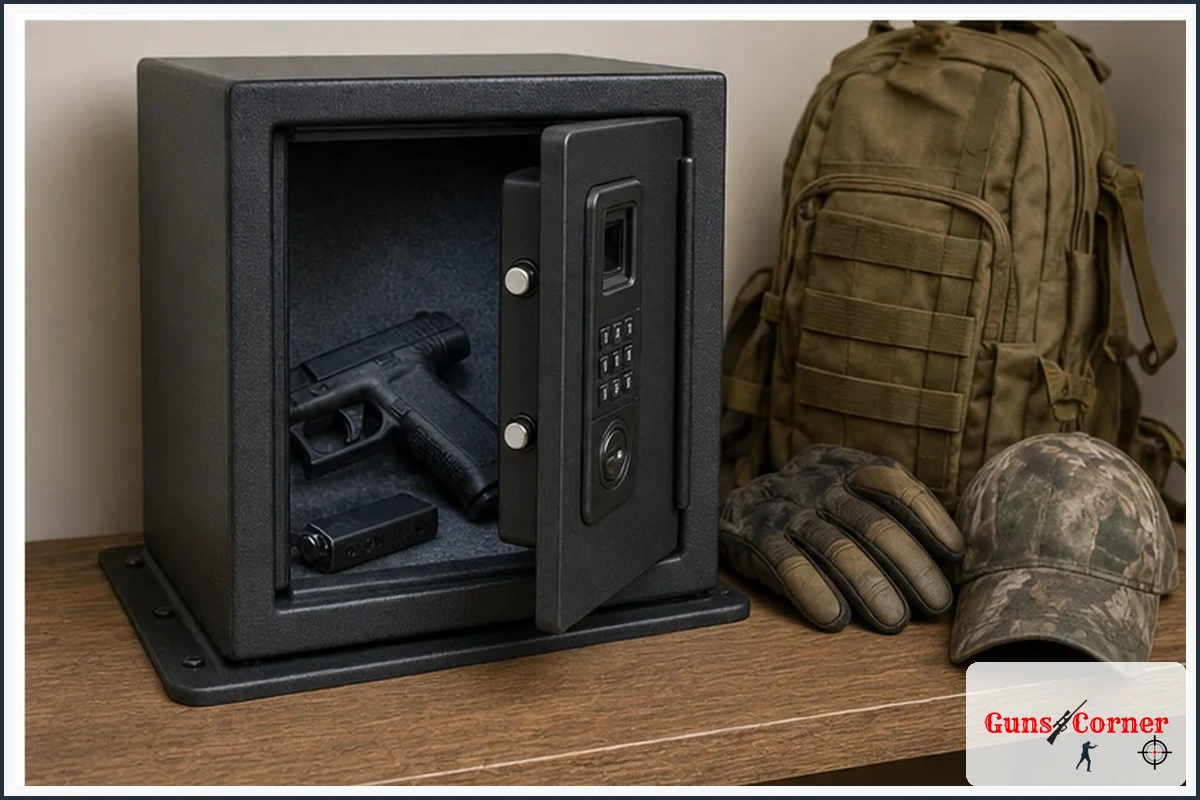
A biometric gun safe for beginners should be simple, appropriately sized, securely mounted when possible, powered reliably, and equipped with a tested backup entry method. Fingerprint access is useful, but it does not replace firearm training, the four safety rules, responsible storage, or compliance with current local law.
Before storing a firearm, read both manuals, practice with an unloaded firearm under safe conditions, verify the lock, and review your household access plan. Choose secure storage that matches your actual firearm, environment, and safety responsibilities.
Related posts:

15 Best Closet Gun Safes for Secure Rifle and Handgun Storage

How to Secure a Gun Safe Without Bolting It to the Floor Safely

How to Secure a Gun Safe in an Apartment: Renter-Friendly Guide

5 Best Hidden Gun Safes for Discreet and Responsible Firearm Storage

10 Best Gun Safe for Humid Environments: Top Firearm Storage Picks
