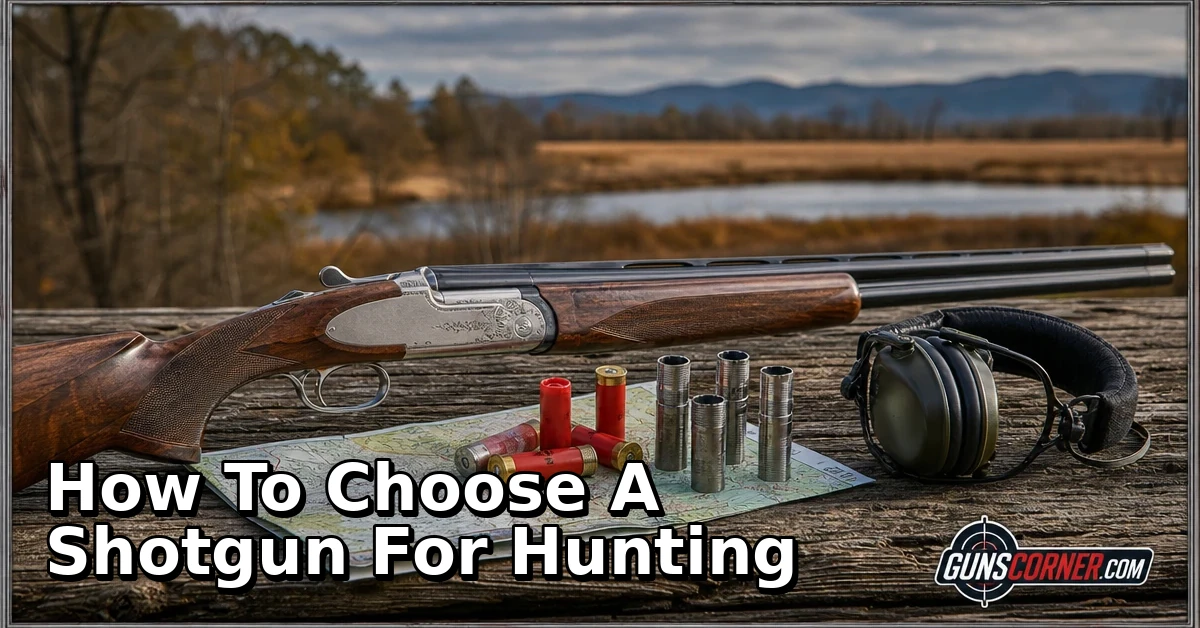

Choosing a hunting shotgun starts with the game, habitat, legal requirements, and your own fit—not with a product ranking. This guide explains how to compare action types, gauges, chamber lengths, barrels, chokes, recoil, ammunition, and safety features for upland birds, waterfowl, turkey, and deer hunting.
To choose a shotgun for hunting, first identify the species, terrain, typical shooting distance, and local regulations. Then select an action, gauge, barrel, choke system, and stock that fit your body, hunting method, and recoil tolerance. Pattern the exact shotgun, choke, and ammunition combination before hunting, and take only safe, legal shots within your tested ability.
Important Legal and Safety Notice Before You Hunt
Firearm and hunting rules vary by country, state, province, species, season, and land type. Check your official wildlife agency before buying or using a shotgun. Confirm the following:
- Hunting license, permits, tags, and hunter-education requirements
- Legal seasons, hunting hours, bag limits, and harvest reporting
- Legal shotgun gauges, ammunition, shot types, slugs, chokes, and magazine capacity
- Special migratory-bird requirements, stamps, possession limits, and approved shot
- Public-land boundaries or written private-land permission
- Required blaze orange or other visibility clothing
- Safe firearm transport, storage, and handling rules
Always identify the target and what lies beyond it. Never shoot toward roads, homes, livestock, people, vehicles, trails, or unclear movement. Follow the manufacturer’s instructions and consider completing a hunter-education course before hunting.
Start with the hunt, not the shotgun
Identify the game, habitat, shooting distance, and expected carry
A shotgun for walking upland birds has different priorities from one used in a stationary waterfowl blind or for turkey hunting. Consider whether you will hike long distances, hunt wet conditions, shoot from a blind, or carry the firearm through thick cover.
- Upland birds: prioritize comfortable carry, quick mounting, balance, fit, and suitable patterning.
- Waterfowl: prioritize legal non-toxic-shot compatibility, corrosion resistance, reliability, and maintenance.
- Turkey: prioritize fit, a suitable choke and load, a clear aiming system, and tested pattern performance.
- Deer: prioritize a configuration legally approved for deer, compatible slugs where required, and a confirmed point of impact.
Decide whether one general-purpose shotgun or a specialized setup makes sense
One adaptable shotgun may be practical for a beginner who hunts several species. A specialized shotgun may be preferable if you regularly hunt one quarry in demanding conditions. Adaptability is useful only when the gun, ammunition, choke, and configuration remain legal and are tested together.
Separate shotgun selection from ammunition and choke selection
A shotgun is only part of the system. Pattern performance depends on the barrel, choke, ammunition, distance, and quarry. Do not assume that a particular gauge, choke, or shell will perform identically in every firearm.
Confirm the legal requirements before buying
Check season, license, hunter-education, and firearm regulations for your state or province
Requirements can differ between upland birds, waterfowl, turkey, and deer. Some jurisdictions also restrict firearm types, barrel configurations, ammunition, or magazine capacity. Use your current wildlife agency regulations as the controlling source.
Verify rules for migratory birds, including approved shot, possession limits, and required stamps
Waterfowl hunting commonly involves additional federal or national rules as well as state or provincial regulations. Verify approved shot requirements, licenses, stamps, shooting hours, possession limits, and retrieval obligations before hunting.
Check slug, buckshot, magazine-capacity, barrel, and hunting-zone restrictions where applicable
Deer regulations may vary by hunting zone and season. Confirm whether your area permits slugs, buckshot, specific barrel types, or particular shotgun configurations. Never rely on a retailer’s description as a substitute for current law.
Use the current wildlife agency regulations—not a retailer’s description—as the controlling source
Retail listings can be incomplete or outdated. Check the official wildlife agency, firearm manufacturer, and ammunition manufacturer before purchase and use.
Choose a shotgun action for the way you hunt
Break-action: simple handling, two-shot capacity, and field maintenance considerations
Break-action shotguns open at the hinge and are often straightforward to inspect, load, and unload. Single-shot models are simple and light, while over-under and side-by-side designs provide two barrels. Their limited capacity requires deliberate shot selection and practice.
Pump-action: robust operation, manual cycling, and practice requirements
Pump-action shotguns require the shooter to cycle the fore-end after firing. They can be versatile, but smooth operation depends on practice. Practice loading, unloading, cycling, and safe carry with an instructor before hunting.
Semiautomatic: softer perceived recoil potential, cycling dependence, and cleaning needs
Semiautomatic shotguns cycle the action using energy from the fired shell. Some shooters find them more comfortable, but cycling depends on ammunition, maintenance, and the individual firearm. Follow the owner’s manual for cleaning and operation.
Over-under and side-by-side: handling, balance, cost, and suitability for different hunts
These break-action designs can offer a natural two-shot setup and may handle well for upland hunting. Their suitability depends on fit, weight, balance, durability, and budget rather than appearance alone.
How action choice changes the gun’s weight, balance, capacity, and controls
Compare how the unloaded shotgun feels when mounted and carried. Pay attention to the location and operation of the safety, loading port, action release, and controls. Choose a design you can operate safely without awkward movement.
Choose gauge and chamber length without relying on slogans
12 gauge, 20 gauge, 28 gauge, and .410: compare payload, recoil, gun weight, and patterning—not “power” alone
Gauge affects bore size and commonly available payload options, but it does not determine the entire hunting experience. Recoil also depends on gun weight, ammunition load, stock fit, shooting technique, and individual tolerance. A lighter shotgun may be easier to carry but can transmit more recoil with the same load.
A 12 gauge can offer broad ammunition availability and payload flexibility. A 20 gauge may appeal to hunters seeking a lighter or more manageable setup. Smaller gauges can be appropriate for specific applications, but their effectiveness depends on legal ammunition, patterning, range, and the quarry.
Match chamber length to ammunition you can legally and safely use
Read the barrel markings and owner’s manual. Use only ammunition that matches the shotgun’s chamber specifications. Chamber length is not the same as shell length, and incorrect ammunition can create a dangerous condition.
Understand that gauge alone does not determine recoil or effectiveness
Fit, load selection, firearm weight, and practice all influence control and performance. Select a shotgun that you can mount, carry, operate, and shoot confidently without excessive discomfort.
Never fire ammunition that does not match the barrel’s markings and the manufacturer’s instructions
If markings are unclear, stop and consult the manufacturer or a qualified gunsmith. Do not guess based on appearance or informal advice.
Fit and recoil are performance and safety decisions
Check length of pull, comb height, drop, cast, grip, and eye alignment with a qualified fitter
Shotgun fit affects how naturally your eye aligns with the rib and how consistently the gun mounts. A qualified fitter can evaluate length of pull, stock dimensions, cast, comb position, and eye alignment.
Shoulder the unloaded gun repeatedly to evaluate mount, balance, and controls
With the firearm verified unloaded, practice mounting it from a safe position. Your cheek should contact the stock consistently, your eye should align naturally, and the controls should be accessible without disturbing your grip.
Account for clothing, gloves, physical stature, and left- or right-handed use
Cold-weather clothing can change how the stock fits. Gloves can affect control operation. Make sure the shotgun is suitable for your dominant eye and shoulder, or obtain qualified instruction if they differ.
Compare recoil-management options: gun weight, stock fit, pad, load choice, and training
Recoil can often be managed through proper fit, appropriate loads, a suitable recoil pad, correct mounting technique, and gradual practice. Do not choose ammunition solely to minimize recoil if it is not legal or appropriate for the quarry.
Why an uncomfortable shotgun can produce flinching, poor control, and unsafe handling
Discomfort may cause anticipation, inconsistent mounting, and reluctance to practice. A shotgun that fits well and can be handled confidently is usually a better choice than one selected only for capacity, appearance, or marketing claims.
Match barrel, choke, and sighting system to the quarry
Barrel length: balance, maneuverability, and portability in the intended habitat
Shorter barrels may be easier to maneuver in dense cover, while longer barrels may suit some open-country or blind setups. The best choice depends on handling, balance, legal requirements, and personal fit.
Chokes: what interchangeable tubes do and do not guarantee
Choke controls how tightly shot tends to pattern, but it does not guarantee a particular pattern in every gun. Use only compatible choke tubes and follow the manufacturer’s restrictions, especially with steel or other non-toxic shot.
Bird hunting: pattern the exact load and choke combination before hunting
Pattern the same ammunition and choke you intend to use. Check how evenly the shot distributes at realistic distances and confirm that the combination is suitable for the quarry and legal in your area.
Turkey: verify a dense, ethical pattern at the intended range
Turkey hunting requires disciplined range limits. Test the exact setup, use a stable rest where appropriate, and establish a maximum range based on observed performance and your skill—not a universal distance.
Deer: distinguish smoothbore birdshot use from slug-capable configurations and local laws
Birdshot is not automatically a deer-hunting solution. Where shotgun deer hunting is legal, confirm the approved slug or other ammunition, barrel configuration, sights, and hunting-zone rules. Test the point of impact before the season.
Waterfowl: confirm non-toxic-shot compatibility and corrosion protection
Verify that the shotgun and choke system are approved by the manufacturer for the non-toxic ammunition required in your hunting area. Wet environments also require careful cleaning, drying, and corrosion prevention.
Evaluate a specific shotgun before purchase
Verify manufacturer specifications: gauge, chamber, barrel, weight, choke system, capacity, and compatibility
Read the current manufacturer specification sheet and owner’s manual. Confirm every feature that matters to your intended hunt, including chamber marking, choke compatibility, barrel configuration, weight, and approved ammunition.
Inspect fit, safety operation, action lockup, bore, crown, choke threads, and stock condition
For a new or used shotgun, inspect the stock, controls, bore, muzzle, action, and choke threads. Do not fire a firearm with damage, obstruction, loose components, or uncertain condition.
For used guns, obtain a qualified gunsmith’s inspection before firing
A gunsmith can identify problems that are not obvious during a store inspection. This is particularly important for older firearms, guns with altered parts, or firearms with unclear maintenance history.
Compare total cost: shotgun, compatible chokes, sling, case, cleaning equipment, ammunition, training, and safe storage
The purchase price is only one part of responsible ownership. Budget for secure storage, transportation, training, eye and ear protection, maintenance supplies, legal ammunition, and practice.
Use a suitability matrix rather than declaring one universally “best” shotgun
| Priority | Questions to ask |
|---|---|
| Quarry | Is the shotgun and ammunition suitable and legal for the species? |
| Fit | Can I mount it naturally and maintain consistent eye alignment? |
| Recoil | Can I practice comfortably and control the firearm? |
| Environment | Will it tolerate wet, muddy, cold, or thick-cover conditions? |
| Maintenance | Can I inspect, clean, and service it correctly? |
| Training | Can I receive instruction and practice with this action and setup? |
Test and pattern before the first hunt
Take a hunter-education or firearms-safety course and receive supervised instruction
Hunter education commonly covers firearm safety, ethics, conservation, wildlife identification, first aid, and specialty hunting safety. The North Carolina Wildlife Resources Commission describes these topics in its hunter-education program, while requirements vary by jurisdiction.
Utah’s Division of Wildlife Resources also recommends learning basic equipment, shell selection, practice, care, and local hunting requirements. Read its beginner shotgun guidance at Utah’s shotgun hunting guide.
Practice mounting, loading, unloading, cycling, and safe carry with the unloaded firearm first
Follow the owner’s manual and instructor guidance. Practice safe muzzle direction, action operation, and carrying positions before introducing ammunition.
Pattern each hunting load at realistic distances and record the results
Use a safe, lawful range and a suitable target. Record the shotgun, choke, ammunition, distance, and weather conditions. Patterning is not a substitute for judgment, but it shows how your specific setup performs.
Confirm point of impact, pellet distribution, choke, and reliable cycling
For shot hunting, evaluate distribution and consistency. For slug hunting, confirm point of impact and sight alignment. Test reliable cycling for semiautomatic or pump-action firearms under supervised range conditions.
Set an ethical maximum range based on tested performance and personal skill
Your maximum range should be conservative and based on reliable practice, clear target identification, safe background, legal requirements, and the animal’s position. Passing on an uncertain shot is responsible hunting.
Safe transport, storage, and field handling
Keep the muzzle in a safe direction and the action open until ready to shoot
Keep your finger outside the trigger guard until you are ready to fire at a clearly identified legal target. Treat every firearm as loaded until you personally verify otherwise.
Unload before crossing obstacles, entering vehicles, changing locations, or handing over the gun
Open the action and verify the chamber and magazine are empty. Follow local transport laws and use a case when required.
Use a locked storage method that complies with local law and prevents unauthorized access
Store the shotgun unloaded and secured from children, visitors, and unauthorized users. Store ammunition according to local requirements and manufacturer guidance.
Keep ammunition dry and separate as required by local rules and manufacturer guidance
Moisture can damage ammunition and firearm components. Inspect ammunition before use and discard anything damaged or questionable according to safe local disposal guidance.
Stop using the shotgun if it is damaged, obstructed, or behaving abnormally
Do not attempt to clear a suspected obstruction by firing another shell. Keep the firearm pointed safely and seek qualified assistance.
Decision guide: which setup fits common hunting situations?
Upland birds: prioritize carry comfort, swing, fit, and patterning
Choose a shotgun that remains comfortable during long walks and mounts naturally. Practice safe movement with the muzzle controlled, especially when hunting with companions or dogs.
Waterfowl: prioritize legal ammunition compatibility, corrosion resistance, reliability, and field maintenance
Confirm non-toxic-shot and choke compatibility before purchase. Plan for wet conditions, safe blind handling, unloaded transport, and cleaning after the hunt.
Turkey: prioritize fit, choke/load pattern, aiming system, and a tested maximum range
A stable, comfortable setup helps you maintain control while sitting or kneeling. Pattern the exact combination and avoid shots through obstructed backgrounds or beyond your tested ability.
Deer: prioritize a legal slug configuration, sighting system, and confirmed point of impact
Check local deer regulations carefully. Use the sighting system recommended for the configuration and confirm point of impact before hunting.
Beginner or multi-species hunter: prioritize fit, training access, serviceability, and adaptable but legal configurations
A practical first shotgun is one that fits, can be safely operated, can be maintained, and has legal ammunition available for the hunts you actually plan to pursue.
Common mistakes to avoid
- Choosing a shotgun based only on gauge, price, or appearance
- Ignoring stock fit and recoil tolerance
- Assuming one choke or shell works equally well in every shotgun
- Failing to read the barrel markings and owner’s manual
- Buying a used firearm without a qualified inspection
- Skipping pattern testing before hunting
- Ignoring non-toxic-shot or slug regulations
- Practicing only with an unloaded firearm but never learning live-fire control safely
- Carrying a loaded shotgun across obstacles or into a vehicle
- Taking shots beyond your tested range or without a safe background
Troubleshooting Common Problems
| Problem | Possible Cause | What to Do |
|---|---|---|
| The shotgun feels uncomfortable | Poor stock fit, unsuitable weight, or excessive recoil | Consult a qualified fitter and compare approved loads, fit adjustments, and training. |
| The pattern is uneven | Load, choke, distance, or barrel combination | Test another legally compatible combination and consult the manufacturer or instructor. |
| The point of impact is inconsistent | Inconsistent mount, poor fit, sights, or firearm issue | Practice under supervision and have the shotgun inspected if the problem continues. |
| The semiautomatic fails to cycle | Maintenance, ammunition, technique, or firearm compatibility | Stop and follow the owner’s manual; seek a qualified gunsmith if uncertain. |
| You are unsure whether ammunition is legal | Changing rules or unclear local requirements | Contact the official wildlife agency and verify manufacturer compatibility before use. |
| You are nervous about shooting | Insufficient instruction, recoil concern, or unfamiliar controls | Take a hunter-education course and practice with a certified instructor or experienced mentor. |
Ethical Hunting and Conservation
Responsible hunting supports conservation when hunters follow regulations, respect wildlife, and avoid waste. Historical overharvest demonstrates why seasons, limits, and wildlife laws matter. Virginia’s Department of Wildlife Resources explains how hunter education developed alongside conservation responsibilities and modern wildlife management.
- Follow seasons, bag limits, weapon rules, and reporting requirements.
- Pass on unsafe, uncertain, or poorly positioned shots.
- Respect landowners, other hunters, wildlife, and non-hunting outdoor users.
- Recover and use legally harvested game responsibly.
- Leave hunting areas clean and avoid disturbing sensitive habitat.
- Support conservation through lawful licensing and responsible participation.
When to Get More Training or Professional Guidance
Seek qualified help if you have never handled a firearm, are unsure about local laws, cannot confidently identify your target, or do not understand safe shooting angles and backgrounds.
Useful resources include official hunter-education programs, certified firearms instructors, qualified gunsmiths, conservation organizations, and experienced ethical mentors. North Carolina’s hunter-education information is available at its official course page.
After the Hunt: Follow-Up, Gear Care, and Learning
- Unload the shotgun before cleaning, transporting, or storing it.
- Follow the owner’s manual for cleaning and corrosion prevention.
- Inspect chokes, threads, bore, stock, and controls before the next hunt.
- Record the load, choke, distance, weather, and patterning results.
- Complete harvest reporting and tagging requirements promptly.
- Cool and transport legally harvested game according to local guidance.
- Review what worked and seek instruction for any weakness.
Recommended Hunting Gear and Tools to Consider
You do not need expensive equipment to hunt responsibly. Choose gear based on local regulations, hunting method, terrain, weather, skill level, and budget.
- Legal shotgun and compatible ammunition
- Eye and hearing protection for practice
- Secure firearm case and compliant storage system
- Weather-appropriate clothing and required visibility gear
- Waterproof boots suitable for the terrain
- Choke wrench and manufacturer-approved choke tubes
- Map, compass, GPS, or communication device
- First-aid kit, water, and emergency supplies
- Cleaning equipment and corrosion-prevention supplies
Final Thoughts
Learning how to choose a shotgun for hunting means matching the firearm to the quarry, habitat, legal requirements, fit, recoil tolerance, ammunition, choke, and training plan. Verify current regulations, inspect the shotgun carefully, pattern the exact setup, and establish conservative personal limits before entering the field. A well-fitting, properly maintained, legally configured shotgun is more valuable than a firearm chosen from a generic “best” list.
FAQ: questions to answer before choosing
Is a 12 gauge or 20 gauge better for a new hunter?
Neither is universally better. Compare fit, recoil, firearm weight, ammunition availability, intended quarry, and local rules. Choose the gauge you can safely control and practice with effectively.
Can one shotgun be used for upland birds, waterfowl, turkey, and deer?
Sometimes, but every configuration must be legal and tested for the specific hunt. Chokes, ammunition, sights, barrel setup, and pattern or point-of-impact performance may need to change.
Should I choose a pump, semiautomatic, or break-action shotgun?
Choose the action you can safely operate, maintain, and practice with. Compare capacity, controls, weight, balance, cycling requirements, and how well the action fits your planned hunting conditions.
How do I know whether a shotgun fits me?
With the firearm unloaded, mount it repeatedly and check consistent cheek contact, natural eye alignment, comfortable length of pull, and accessible controls. A qualified shotgun fitter can provide a more precise assessment.
Do I need interchangeable chokes?
Interchangeable chokes can provide flexibility, but they are not automatically necessary. Use only compatible tubes and pattern every intended load and choke combination before hunting.
How do I choose a shotgun for a smaller or recoil-sensitive hunter?
Prioritize correct fit, manageable weight, suitable legal loads, a quality recoil pad, and supervised practice. Avoid selecting a firearm solely because it is lightweight, since lower weight can increase felt recoil.
How far should I pattern a hunting shotgun?
Pattern at distances that reflect your intended hunt and local conditions. Test more than one realistic distance if necessary, and use the results to set a conservative ethical maximum range.
What should I check when buying a used shotgun?
Check markings, chamber, bore, action lockup, safety, choke threads, stock, and signs of damage. Have a qualified gunsmith inspect it before firing.
What training and permits are required before hunting?
Requirements vary by jurisdiction and species. Check your official wildlife agency for licenses, hunter education, permits, stamps, tags, seasons, ammunition rules, and reporting obligations.
Related posts:
15 Best Pellet Gun for Squirrel Hunting: Top Air Rifles for Accuracy & Power
How to Cape a Deer: A Safe Guide for a Shoulder Mount
15 Best Hunting Boots for Alaska: Waterproof, Insulated and Rugged Field Picks
What Is 3-Gun Shooting? Rules, Gear & Safety Guide
What Gear Do You Need for Alligator Hunting? Checklist