
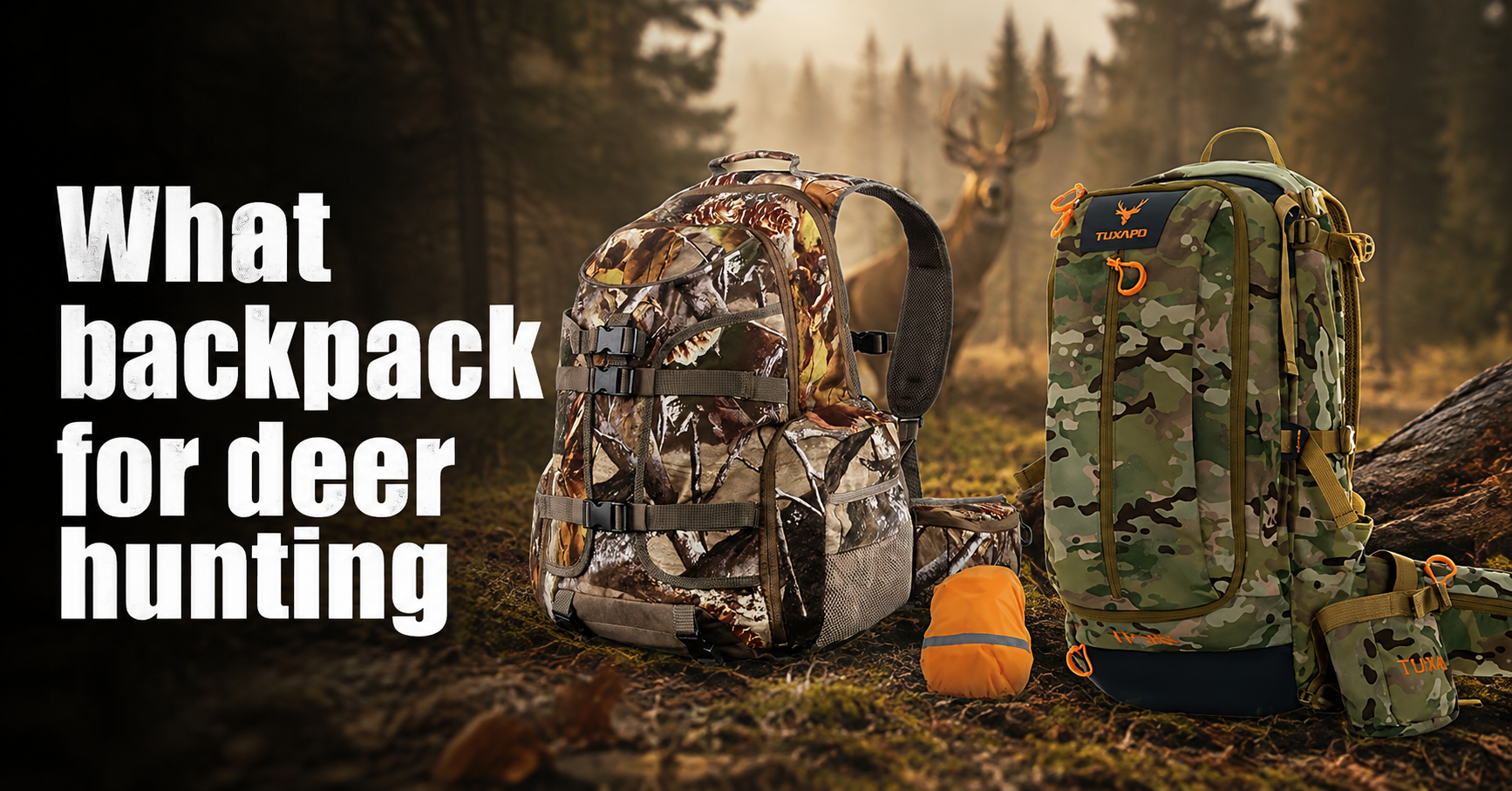
What backpack for deer hunting should you choose? For most all-day whitetail hunts near a vehicle, a quiet 20- to 35-liter daypack with a supportive hipbelt is a practical starting point. Hunters traveling farther from roads or expecting to carry quartered meat should consider a framed 30- to 45-liter hunting pack with a load shelf or dedicated meat-hauling system.
The correct pack depends on how you hunt. A tree-stand hunter carrying an extra layer, food, water and a safety harness needs a different design from a Western mule-deer hunter carrying emergency shelter, game bags and enough suspension to transport meat. Trip length, terrain, weather, body fit and local game-retrieval rules matter more than camouflage pattern or the number of pockets.
This guide explains pack capacity, frame types, meat-hauling features, fit, organization and essential safety gear. Capacity ranges are starting points rather than rigid rules because cold-weather clothing, water availability and individual equipment can change the required volume substantially.
Quick Answer
For a typical deer-hunting day trip, choose a 20- to 35-liter pack that fits your torso, transfers weight to your hips and carries water, food, navigation, first aid, lighting, weather protection and game-recovery equipment. Choose a slim, quiet pack for tree stands and mobile whitetail hunting. Choose a framed 30- to 45-liter pack with a meat shelf when hunting far enough from access that you may need to carry quartered deer meat. For overnight hunts, approximately 40 to 60 liters is a more useful starting range, with larger packs required for longer trips, winter equipment or bulky shelters.
Backpack Recommendations by Deer-Hunting Style
| Hunting Style | Practical Starting Capacity | Recommended Pack Type | Most Important Features | Main Limitation to Avoid |
|---|---|---|---|---|
| Short hunt near a vehicle | 15–25 liters | Compact daypack | Quiet fabric, simple organization, hydration storage | Too small for changing weather or recovery gear |
| All-day tree-stand or ground-blind hunt | 20–35 liters | Quiet daypack with hipbelt | Flat profile, haul loop, easy top access, compression straps | Bulky frames that interfere with the stand or seat |
| Mobile whitetail or saddle hunting | 20–35 liters | Narrow-profile technical daypack | Secure fit, external attachment points, minimal loose straps | Wide packs that catch vegetation or interfere with climbing gear |
| Remote day hunt with possible meat pack-out | 30–45 liters | Framed hunting pack with load shelf | Supportive hipbelt, frame, compression, washable meat area | Frameless daypacks not designed for dense loads |
| One- to three-night deer hunt | 40–60 liters | Internal-frame or hunting expedition pack | Camp capacity, load support, weather protection, compression | Buying a pack that barely fits gear before a successful harvest |
| Longer backcountry or late-season hunt | 60–80+ liters | Heavy-load hunting or backpacking pack | Adjustable suspension, durable frame, meat-hauling capability | Excess weight, poor fit and unnecessary compartments |
General backpack guidance places many daypacks below approximately 40 liters, while 30- to 50-liter packs commonly serve one- to three-night trips and 50- to 80-liter packs serve longer outings. Deer hunters may need extra room for cold-weather layers, game bags and recovery equipment, so hunting volume cannot be selected by trip duration alone.
What Backpack for Deer Hunting Is Right for You?
Choose a compact daypack for short, accessible hunts
A 15- to 25-liter pack can work when the stand, blind or still-hunting area is close to a vehicle and the weather is stable. It should hold water, food, a small first-aid kit, headlamp, navigation, required documents, emergency insulation and basic recovery supplies.
The risk of choosing a very small pack is that safety equipment is often the first thing removed to make room. A short planned hunt can become an unplanned night out after an injury, tracking job, weather change or navigation problem. The National Park Service advises carrying essentials such as extra water, food, weather protection, lighting, first aid and emergency shelter even when the original trip plan is brief.
Choose a 20- to 35-liter daypack for most whitetail hunts
This range generally provides enough space for an all-day hunt without creating the bulk of an expedition pack. It can carry layers, rain protection, food, water, binoculars, a rangefinder, navigation, first aid, game bags and a compact field-dressing kit.
For stand hunting, look for a pack that rests flat against the tree or can be hung securely from an approved accessory point. A large rigid frame may be unnecessary when the deer can be retrieved by a legal vehicle, cart or short drag. Verify the rules first because some public lands restrict motorized retrieval, wheeled devices or travel away from designated roads.
Choose a narrow pack for mobile and saddle hunting
Mobile hunters benefit from a close-fitting pack that does not shift when crawling under branches, crossing ditches or climbing. Compression straps should secure unused volume, and loose webbing should be managed so it cannot catch steps, sticks or saddle equipment.
The pack should not interfere with a full-body fall-arrest system, tether, lineman’s belt or platform attachment. A backpack is cargo equipment, not fall protection. Follow the stand, saddle and harness manufacturers’ instructions for equipment compatibility.
Choose a framed meat-hauling pack for remote hunts
If a successful hunt may require carrying boned or quartered deer meat over meaningful distance, prioritize a frame, supportive hipbelt and load shelf over elaborate pocket organization. A meat shelf holds the dense load between the frame and pack bag, keeping it close to the body while allowing clean gear to remain separated.
Alaska Department of Fish and Game field-care materials list a pack frame or sled among the basic tools for transporting big-game meat. The agency also emphasizes planning meat recovery before the hunt rather than deciding how to remove the animal after harvest.
Choose a 40- to 60-liter pack for short overnight hunts
One- to three-night hunts require room for shelter, sleep equipment, food, stove or cooking items, water treatment, additional clothing and emergency supplies. The ideal capacity depends heavily on season: a mild-weather minimalist kit may fit in a smaller pack, while late-season sleeping insulation can fill a much larger bag.
Do not select an overnight pack based only on how neatly your camp gear fits at home. Leave enough usable compression and load capacity for game bags or plan a separate legal meat-retrieval system.
Daypack or Meat-Hauling Pack?
| Feature | Standard Daypack | Framed Meat-Hauling Pack |
|---|---|---|
| Best use | Stand hunting, blinds, scouting and accessible day hunts | Remote public land, mountain terrain and pack-out hunting |
| Typical volume | Approximately 15–35 liters | Approximately 30–80+ liters |
| Frame | Frameless, foam sheet or light internal support | Substantial internal or external frame |
| Hipbelt | Light or removable on smaller models | Padded and structured for transferring dense loads |
| Meat shelf | Usually absent | Often integrated between bag and frame |
| Empty-pack weight | Usually lower | Usually higher because of the frame and suspension |
| Best advantage | Quiet, compact and comfortable with ordinary day gear | Better control of heavy, irregular loads |
| Main disadvantage | Poor support when overloaded | More expensive, heavier and bulkier for short stand access |
A small daypack is sufficient when the recovery distance is short and legal transport is available. A load-hauling frame becomes more valuable as distance, elevation and expected meat weight increase. Hunting-pack guides consistently separate compact daypacks from frame systems designed for meat transport.
The Most Important Backpack Features
Correct torso and hipbelt fit
A pack that fits correctly is more useful than a larger or more expensive pack that does not match your torso. Measure torso length and hip circumference using the manufacturer’s instructions. The hipbelt should wrap the upper hip bones rather than sit like a pants belt, because the hips should support much of the load.
The shoulder straps should follow the shoulders without a large gap, and the pack should remain stable when you bend or step over obstacles. Adjustable torso systems can help hunters whose body proportions fall between standard sizes.
A real load-support system
For ordinary day gear, a padded back panel and light frame sheet may be sufficient. For meat hauling, look for a rigid or semi-rigid frame, load lifters, structured hipbelt and compression straps capable of keeping the load close to the back.
Load lifters are the straps connecting the upper shoulder harness to the pack frame. When correctly adjusted, they pull the upper pack closer and help stabilize taller or heavier loads. A sternum strap helps keep the shoulder straps positioned but should not be overtightened to compensate for poor pack fit.
Quiet fabric and hardware
For close-range whitetail hunting, brush the fabric with a sleeve and operate every zipper and buckle before buying. Some coated fabrics and rain covers become noticeably louder in cold weather.
Quiet material is useful, but it should not come at the cost of poor durability or water management. A soft exterior can absorb moisture, while a stiffer weatherproof shell may make more noise. The correct balance depends on whether you hunt from a dry stand, move through wet brush or travel in open mountain terrain.
Compression straps
Compression straps pull unused volume inward and prevent equipment from shifting. They also allow a larger pack to function as a smaller daypack, provided the frame and bag compress cleanly.
Too many loose straps can catch vegetation or climbing equipment. Roll, secure or trim strap ends only in accordance with the manufacturer’s guidance and after confirming that the extra length is not needed for winter clothing or large loads.
Useful access rather than excessive pockets
Top-loading packs are simple and weather resistant but may require unpacking to reach items at the bottom. Panel, clamshell or vertical-zip access makes layers and recovery equipment easier to retrieve.
Organize around frequency of use:
- Keep navigation, headlamp and first aid immediately accessible.
- Keep rain protection near the top or in an outside pocket.
- Keep game bags and field-dressing gloves together.
- Keep food separate from used game-processing equipment.
- Avoid carrying small, hard objects loose where they can rattle.
Hydration compatibility
A reservoir allows hands-free drinking, but hoses can leak or freeze in cold weather. Bottles are easier to inspect and refill but require accessible pockets. Water is heavy, so pack capacity and suspension should account for the quantity required between reliable refill points.
Weather protection
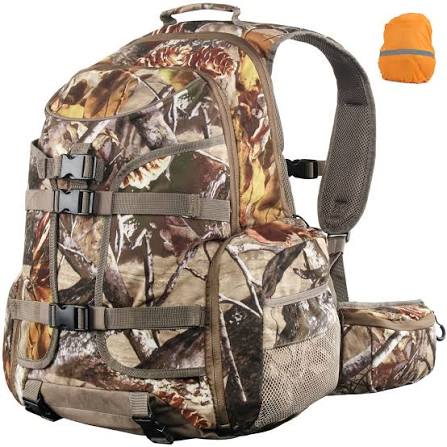
Most hunting backpacks are not completely waterproof. A rain cover can protect the exterior, while waterproof liners or dry bags protect critical contents if water enters around zippers, seams or the back panel. REI and National Park Service gear guidance both recommend protecting essential clothing and sleep equipment inside the pack rather than relying only on an external cover.
Meat shelf and washable load area
A meat shelf should compress the load securely against the frame. Look for a material that can be cleaned after contact with blood and tissue, plus enough strap length for awkward bags of meat.
Meat should be placed in appropriate breathable game bags and cooled promptly according to local wildlife-agency guidance. Follow all tagging, evidence-of-sex, salvage, transport and chronic-wasting-disease rules for the jurisdiction where you hunt. Regulations can determine which parts may be moved and where carcass material may be taken.
Weapon or bow attachment
An attachment system can free both hands during a long walk, but it must hold the unloaded firearm or bow securely without allowing the muzzle, limbs or broadheads to strike vegetation or other people. The attachment should not block quick access to first aid, navigation or rain gear.
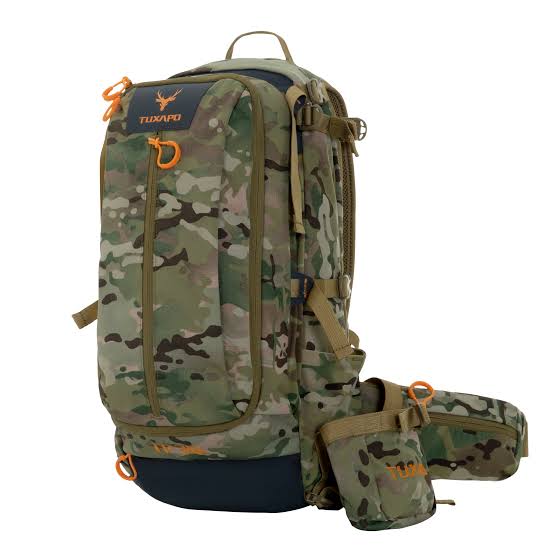
Do not treat a backpack weapon carrier as permission to handle equipment carelessly. Follow all firearm or archery safety rules and the carrier manufacturer’s instructions.
How a Deer-Hunting Backpack Should Fit
- Measure your torso. Follow the pack maker’s method rather than selecting a size from your height alone.
- Position the hipbelt. Center the padding over the upper hip bones.
- Tighten the hipbelt first. It should feel secure without restricting breathing or movement.
- Snug the shoulder straps. Remove gaps without pulling most of the weight onto the shoulders.
- Adjust the load lifters. Bring the upper pack toward the body without lifting the shoulder straps away.
- Set the sternum strap. Stabilize the harness without compressing the chest.
- Walk with realistic weight. Include water and dense equipment rather than testing the pack empty.
- Climb, crouch and sit. Confirm that the pack does not strike the head, restrict the hips or interfere with hunting clothing.
REI recommends selecting packs by torso length and hip size, then checking shoulder-strap placement and hipbelt position. National Park Service guidance also recommends practicing with a packed backpack before the trip to make sure the load can be carried safely.
What to Carry in a Deer-Hunting Backpack
Essential legal and identification items
- Current hunting license and required permits or tags
- Personal identification
- Landowner permission or access documentation when required
- Current regulation information for the species, unit and season
- Required hunter-orange or visibility equipment
Navigation and communication
- Printed map or offline map
- Compass and the knowledge to use it
- Charged phone protected from weather
- GPS or satellite communicator when appropriate
- Backup battery or spare batteries
- Whistle or another signaling device
Emergency and medical equipment
- First-aid kit matched to training and trip length
- Emergency shelter, bivy or space blanket
- Fire-starting supplies where lawful and appropriate
- Headlamp plus backup light
- Extra insulating layer
- Rain or wind protection
- Required medication
Food and hydration
- Enough water for the route and weather
- Water treatment when relying on natural sources
- High-energy food
- Additional emergency food for remote hunts
Game-recovery equipment
- Sharp, appropriate hunting knife in a secure sheath
- Protective disposable gloves
- Breathable game bags
- Tagging supplies required by local law
- Compact sharpener or replaceable blades if used safely
- Flagging or marking material only where legal and removed afterward
- Paracord or utility cord
- Small repair and cleaning supplies
Useful hunting equipment
- Binoculars
- Rangefinder
- Seat cushion
- Calls or scent products only where legal
- Compact shooting support if needed
- Tick repellent and tick-removal tool
- Lens cloth
Hunter-education and public-land guidance consistently includes navigation, first aid, lighting, food, water, weather protection and signaling equipment among minimum hunting or day-pack essentials.
How to Pack the Backpack
Place dense items close to your back
Water, food and other heavy items should sit near the middle of the pack and close to the back rather than hanging in an outside pocket. This reduces leverage and helps the load move with the body.
Keep frequently used items accessible
Do not bury the headlamp, rain shell, map, gloves or first aid beneath camp equipment. Items needed only after harvest can sit deeper in the bag, but game bags and field-dressing gloves should still be easy to locate in fading light.
Prevent noise and movement
Tighten compression straps and pad hard objects that may click together. Place keys, ammunition containers and metal tools in secure pockets rather than allowing them to move loosely.
Separate clean gear from processing gear
Store unused game bags and gloves in a clean pouch. After field dressing, isolate contaminated tools and clothing from food, water fittings and first-aid supplies. Wash hands and equipment thoroughly after processing game.
Rebalance after loading meat
Meat is much denser than ordinary hunting gear. Place it on the load shelf or within the manufacturer’s designated hauling area, center it and compress it firmly. Move lighter clothing outward or into the pack bag.
Planning for Deer Recovery
Choosing a backpack before considering game recovery is a common mistake. Before the hunt, determine:
- How far the hunting area is from legal vehicle access
- Whether wheeled carts, bicycles, motorized vehicles or pack animals are permitted
- Whether the deer may be transported whole, quartered or boned
- What evidence-of-sex or tagging rules apply
- Whether carcass movement is restricted by chronic-wasting-disease regulations
- How quickly meat can be cooled
- Whether assistance is available
- How many safe trips may be required
Rules on public land can restrict off-road vehicle travel or mechanized retrieval, and state hunting laws continue to apply on federal land. Check both the wildlife agency and the agency managing the property before the hunt.
Do not overload yourself in an attempt to finish in one trip. Several controlled trips are safer than one unstable load that causes a fall, exhaustion or injury. Plan the recovery around daylight, terrain, temperature, physical ability and the need to preserve meat.
Safety and Legal Considerations
Tree-stand safety
Never climb with a loaded firearm. Use a full-body fall-arrest system and an appropriate haul line to raise or lower unloaded equipment after you are secured. State hunter-education guidance consistently emphasizes unloading the firearm before climbing and using a haul line rather than carrying equipment during ascent or descent.
A backpack should not interfere with the harness tether, lifeline, lineman’s belt or climbing steps. Remove or reposition it in a stable location when the pack prevents safe climbing.
Firearm safety
- Treat every firearm as if it is loaded.
- Keep the muzzle pointed in a safe direction.
- Keep your finger outside the trigger guard until ready to shoot.
- Be certain of the target and what is beyond it.
Carry systems and pack attachments never replace safe handling. A firearm should be unloaded and secured appropriately during transport, subject to the manufacturer’s instructions and current law.
Trip planning
Leave a trip plan with a responsible person. Include the hunting area, vehicle location, route, companions, equipment description, expected return time and what to do if you fail to check in. A trip plan can help authorities respond when someone is overdue or injured.
Ticks and biological exposure
Hunting in brushy and wooded habitat can increase tick exposure. CDC guidance recommends appropriate repellent, treated clothing where suitable, post-hunt tick checks and covering open wounds while handling wildlife.
Common Backpack Buying Mistakes
| Mistake | Why It Causes Problems | Better Choice |
|---|---|---|
| Choosing by camouflage pattern first | The pack may fit poorly or lack necessary load support | Select capacity, fit and suspension before appearance |
| Buying the smallest possible pack | Emergency gear and extra clothing are often omitted | Pack all required equipment before choosing volume |
| Using a frameless daypack for meat hauling | Dense loads can sag, shift and overload the shoulders | Use a frame and supportive hipbelt for planned pack-outs |
| Buying a large expedition pack for every stand hunt | Unnecessary weight and bulk complicate climbing and storage | Use a compact daypack when recovery access is easy |
| Testing the pack empty | Pressure points may appear only under realistic weight | Walk with water and a representative load before the season |
| Ignoring torso length | The hipbelt and shoulder straps cannot share the load correctly | Measure the torso and hip circumference |
| Carrying too many small accessories | Pack weight grows without improving safety or hunt function | Review every item after each trip |
| Assuming the pack is waterproof | Clothing, batteries and emergency gear may become wet | Use internal waterproof protection and a rain cover where appropriate |
| Failing to plan meat transport | A successful harvest creates a heavy recovery problem | Confirm access rules and recovery equipment before hunting |
| Letting loose straps hang | Webbing can snag brush, steps and stand equipment | Secure unused strap length without disabling adjustments |
Troubleshooting Backpack Problems
The pack hurts your shoulders
Check whether the hipbelt is positioned over the hip bones and tightened before the shoulder straps. The torso size may be too long or short, or the load may be hanging too far from the back.
The hipbelt slides down
The belt may be too large, positioned too low or insufficiently structured for the load. Confirm the hip measurement and tighten the stabilizer straps evenly.
The pack sways while walking
Compress the contents, place dense items closer to the back and tighten the load lifters and sternum strap modestly. A half-empty large pack often needs more compression than a correctly sized daypack.
The back of your head hits the pack
The frame or top compartment may be too tall for your torso or head position. This is especially problematic when looking upward from steep terrain or beneath a hood.
The pack is noisy
Check zipper pulls, buckles, loose equipment and coated fabric. Wrap or secure hard items and test the material outside in cold conditions.
The hydration hose freezes
Use an insulated hose, blow water back into the reservoir after drinking or carry a bottle inside the pack. Do not rely on one frozen-prone water system in severe cold.
The rain cover catches branches
Use an internal pack liner as the primary protection in dense cover and deploy the cover only when necessary. Confirm that the cover attaches securely.
The meat shelf sags
Recenter the load, tighten the lower compression straps and follow the manufacturer’s loading instructions. Stop and adjust immediately when the load begins shifting.
Cleaning and Maintaining a Hunting Backpack
- Empty every compartment after the hunt.
- Brush away dry dirt before wet cleaning.
- Follow the manufacturer’s cleaning instructions.
- Do not machine wash a framed pack unless specifically permitted.
- Clean blood and tissue from meat shelves promptly.
- Avoid chlorine bleach unless the manufacturer allows it.
- Rinse soap residue thoroughly.
- Dry the pack completely away from excessive heat.
- Inspect stitching, buckles, zipper tracks and frame connections.
- Check hydration reservoirs and hoses for leaks or contamination.
- Store the pack in a dry location away from rodents.
Damaged frame components, load-bearing stitching or hipbelt hardware should be repaired by the manufacturer or a qualified gear professional. Do not trust an improvised repair with a heavy meat load unless the manufacturer confirms it is appropriate.
What Not to Do
- Do not remove navigation, first aid or emergency clothing merely to save a small amount of weight.
- Do not carry more weight than you can control safely.
- Do not use a school backpack for a remote meat-hauling hunt.
- Do not climb an elevated stand while carrying a loaded firearm or bulky pack.
- Do not allow a pack-mounted firearm or bow to point toward another person.
- Do not place exposed broadheads where they can cut the pack or wearer.
- Do not mix used game-processing tools with food and drinking equipment.
- Do not leave meat sealed in a warm pack longer than necessary.
- Do not assume vehicle or cart retrieval is legal on every public property.
- Do not trespass while recovering deer or equipment.
- Do not continue a pack-out when exhaustion, darkness or weather makes travel unsafe.
Final Answer
What backpack for deer hunting should you buy? A quiet 20- to 35-liter daypack is the best starting point for most all-day stand, blind and mobile whitetail hunts. Choose a 30- to 45-liter framed pack with a supportive hipbelt and meat shelf when hunting far enough from access that quartered meat may need to be carried.
For one- to three-night hunts, begin around 40 to 60 liters and adjust for season, shelter and food. Fit is more important than brand: measure your torso and hips, test the pack with realistic weight and confirm that it works with your clothing, stand harness, boots and recovery plan.
Carry navigation, communication, lighting, first aid, water, weather protection and game-recovery supplies on every meaningful trip. Verify current hunting, public-land, tagging, carcass-transport and equipment regulations with the appropriate wildlife and land-management agencies before hunting.
FAQs
1. What size backpack is best for deer hunting?
For most all-day hunts, 20 to 35 liters is a practical starting range. Remote hunts requiring meat transport generally benefit from a framed 30- to 45-liter pack.
2. Is a 20-liter backpack big enough for deer hunting?
It can be sufficient for short hunts near a vehicle in stable weather. Pack all safety, weather and recovery equipment first to confirm that 20 liters is truly enough.
3. Is a 30-liter backpack enough for an all-day deer hunt?
For many hunters, yes. A well-organized 30-liter pack can hold water, food, layers, rain gear, navigation, first aid and basic game-recovery supplies.
4. Is a 40-liter pack too large for a day hunt?
Not necessarily. A compressible 40-liter pack is useful for winter clothing, long public-land days or meat-hauling capability, but it may feel bulky in a small tree stand.
5. What size pack is needed for an overnight deer hunt?
Approximately 40 to 60 liters is a reasonable starting point for one to three nights. Cold-weather sleep systems and bulky shelters may require more.
6. Do I need a meat shelf for deer hunting?
You need one only when you expect to carry quartered or boned meat. Hunters with legal vehicle access or a very short recovery route may not need a dedicated shelf.
7. Can a normal hiking backpack be used for deer hunting?
Yes, particularly for day hunts and camp transport. It may lack quiet fabric, weapon attachments, a washable meat area or a load shelf.
8. Can a school backpack be used for deer hunting?
It may carry a few items on a short accessible hunt, but it usually lacks weather protection, load support and a proper hipbelt. It is not appropriate for planned meat hauling.
9. Is a framed backpack necessary?
A frame is not essential for light day gear. It becomes increasingly important when carrying overnight equipment or dense game meat.
10. Is an internal or external frame better?
Internal frames fit close to the body and work well in brush. External or exposed hunting frames can simplify irregular meat loads. Fit and suspension design matter more than the label alone.
11. What is a backpack meat shelf?
It is a load area between the pack bag and frame. It allows game meat or another dense load to be compressed close to the hunter’s back.
12. Should a deer-hunting pack be camouflage?
Camouflage can be useful when the pack remains exposed, but fit, noise, capacity and load support are more important. Required visibility clothing may override camouflage concerns.
13. Does a backpack need to be waterproof?
Complete waterproofing is uncommon. Use a rain cover and protect essential contents with a pack liner or dry bags.
14. What fabric is quietest for deer hunting?
Brushed and soft-faced fabrics are often quieter than stiff coated materials. Test the exact fabric and zippers in cold outdoor conditions.
15. How heavy should an empty hunting backpack be?
There is no universal target. A light daypack can weigh much less than a framed meat hauler, but reducing frame weight is not useful when the pack cannot control the intended load.
16. Should a deer-hunting backpack have a hipbelt?
Yes for all-day use or meaningful weight. A structured hipbelt transfers load from the shoulders to the hips and improves stability.
17. Are load lifters important?
They are helpful on framed and taller packs because they draw the upper load toward the body. They have limited value when the frame is too short or the torso fit is wrong.
18. How should a hunting backpack fit?
The hipbelt should center over the upper hip bones, the shoulder straps should follow the shoulders and the pack should remain stable without painful pressure points.
19. Should I size the backpack by my height?
No. Use torso length and hip circumference. Two people of the same height may require different pack sizes.
20. Can I attach a rifle to my backpack?
Only with a carrier designed for the specific purpose and used according to its instructions. Maintain safe muzzle direction and comply with transport laws.
21. Can I attach a bow to a hunting backpack?
Many hunting packs include bow-carry straps. Secure the bow so it cannot catch vegetation, damage cables or expose broadheads.
22. Should ammunition be stored in the backpack?
Follow firearm manufacturer instructions and current transport laws. Keep ammunition organized, protected and separate from loose objects that could damage it.
23. How much water should I carry?
The amount depends on temperature, effort, distance, water availability and the reliability of treatment options. Carry enough to avoid depending on an uncertain source.
24. Is a hydration bladder better than bottles?
A bladder allows frequent drinking without stopping. Bottles are easier to inspect and are less vulnerable to hose freezing or leakage.
25. What should always be in a deer-hunting backpack?
Carry legal documents, navigation, communication, water, food, first aid, headlamp, weather protection, emergency shelter and appropriate game-recovery equipment.
26. Do I need game bags for whitetail deer?
Carry them whenever there is a realistic chance the deer will need to be quartered, boned or transported in sections. Verify local transport and evidence requirements first.
27. Can meat be carried inside the main backpack compartment?
Only when the pack is designed and protected for that use. A separate meat shelf or removable washable liner provides better separation from clean gear.
28. How do I keep blood out of my backpack?
Use breathable game bags on the meat and a washable load shelf or protective barrier around the pack structure. Do not seal warm meat in non-breathable plastic for extended periods.
29. How should weight be distributed?
Place dense items close to the middle of the back and secure them against movement. Keep lighter, compressible items farther from the frame.
30. How do I reduce pack noise?
Secure loose zipper pulls, tighten compression straps, prevent hard items from contacting each other and test the fabric in cold weather.
31. Can a large pack compress into a daypack?
Many can, provided the compression system controls the bag cleanly. A large frame may still be unnecessary around a compact tree stand.
32. Is a backpack necessary for tree-stand hunting?
No, but it keeps essential gear organized and easier to haul. A compact pack is usually more practical than carrying several loose bags.
33. Can I climb a tree stand wearing my backpack?
Only when the pack does not interfere with three-point contact, the fall-arrest system or the manufacturer’s climbing procedure. Hauling the pack separately is often safer.
34. How do I clean a backpack after hauling meat?
Follow the manufacturer’s directions, remove the frame or bag only when designed to separate, wash contaminated areas promptly and dry every component fully.
35. When should a hunting backpack be replaced?
Replace or professionally repair it when load-bearing stitching, buckles, frame connections, shoulder straps or the hipbelt can no longer support the intended load safely.
Read more: