
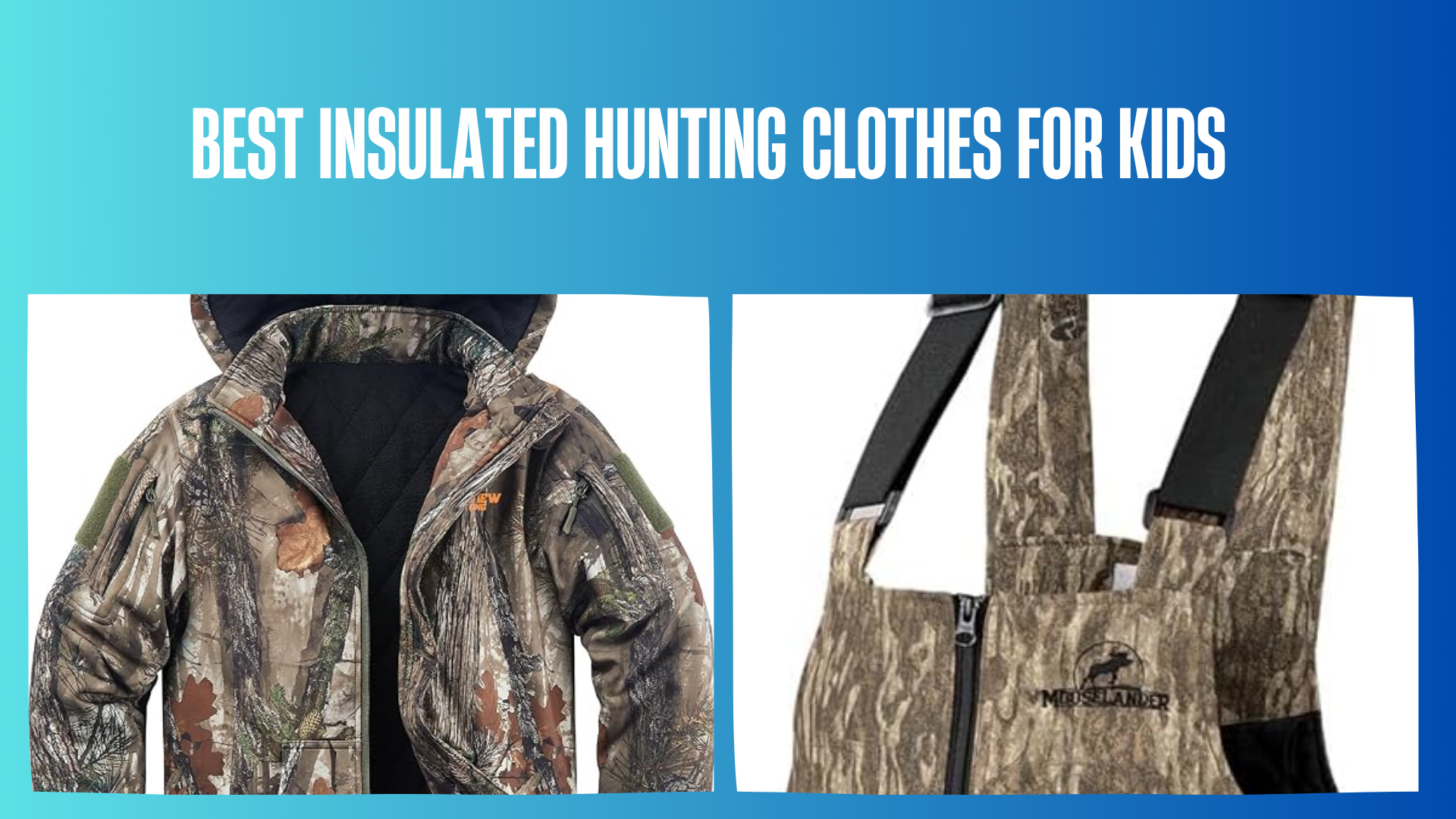

Cold youth hunts create a tricky clothing problem: the walk to a blind can make a child sweaty, while an hour of sitting still can make that same child cold. The best insulated hunting clothes for kids therefore need more than bulk. Good options leave room for layers, allow normal movement, manage wind or moisture appropriately, and fit well enough that oversized sleeves, straps, or hems do not become a nuisance.
For most families, an insulated bib paired with a separate jacket is the most adaptable setup because upper-body layers can be changed as activity and temperature change. One-piece coveralls provide simpler continuous coverage, while waterproof insulated outerwear becomes more useful in rain, sleet, wet snow, and damp late-season conditions.
Cold-weather clothing cannot make every forecast suitable for a child. The National Weather Service recommends several loose-fitting warm layers, a weather-resistant outer layer, and removing layers before sweating leads to later chilling.
Affiliate disclosure: Gunscorner.com may earn a commission from qualifying Amazon purchases made through eligible sponsored links, at no additional cost to you.
Quick Picks
- Best Overall: NEW VIEW Youth Insulated Hunting Bib – Quiet Camo — adjustable suspenders, long leg zippers, fleece-lined warmth, and a relaxed fit make it easy to build a practical cold-weather layering system.
- Best for Cold Rain and Snow: Blocker Outdoors Youth Drencher Insulated Waterproof Coverall — combines youth-specific insulation with verified waterproof, windproof construction.
- Best Full-Body Alternative: Mooselander Kids Insulated Coverall with Hood — continuous insulation, hood coverage, and boot-friendly leg access in a one-piece design.
- Best Separate Jacket: NEW VIEW Fleece-Lined Camo Hunting Jacket for Kids and Youth — useful when you want independent control of upper-body warmth.
- Best Waterfowl-Specific Option: TIDEWE Chest Waders for Toddler & Children — neoprene waterproof coverage for closely supervised marsh, shoreline, and waterfowl use.
- Best Midlayer: UIIHUNT Youth Camo Hunting Hoodie — performance fleece adds warmth without the bulk of a winter coverall.
Product Comparison
| Product | Type | Best For | Weather Focus | Layering Flexibility | Fit Consideration |
|---|---|---|---|---|---|
| Mooselander Youth Insulated Bib Overall | Insulated bib | General cold-weather hunts | Dry to moderately cold conditions | High | Leave room for base and midlayers |
| HOT SHOT Youth Camo Hunting Bib / Twill Coverall | Insulated overall | Stationary cold-weather use | Cold, relatively dry conditions | Medium | Generous fit may help with layering |
| NEW VIEW Youth Insulated Hunting Bib | Insulated bib | Flexible layering | Fall and winter | High | Adjustable suspenders |
| Mooselander Kids Insulated Coverall B0F48Q5GFM | Hooded coverall | Simple full-body warmth | Cold, drier outings | Low | Check torso length and boot clearance |
| Mooselander Youth Insulated Bib B0FKZ7G836 | Insulated bib | Stationary hunts | Cold weather | High | Check current Amazon variation |
| Mooselander Kids Insulated Coverall B0GFLMSBC8 | Hooded coverall | Continuous insulation | Cold weather | Low | Leg zippers aid boot access |
| Blocker Outdoors Youth Drencher | Waterproof insulated coverall | Rain, sleet, wet snow | Cold and wet | Medium | Size for layers without excess bulk |
| NEW VIEW Youth Bib B0GTZ7YF5C | Insulated bib | Layered cold-weather setup | Fall and winter | High | Adjustable youth fit |
| HOT SHOT Youth Insulated Camo Bib B08DSH7CFM | Insulated bib | Cold stand or blind sits | Cold, dry conditions | High | Adjustable shoulder straps |
| NEW VIEW Youth Hunting Jacket B0D7CWVWGW | Fleece-lined jacket | Separate upper-body insulation | Cool to cold, light moisture | High | Allow room for thicker layers |
| TIDEWE Youth Neoprene Waders | Insulated chest wader | Waterfowl and wet environments | Cold and wet | Low | Check boot, inseam, torso, and strap fit |
| HOT SHOT Youth Insulated Camo Bib B0977L51WM | Insulated bib | Traditional youth hunting setup | Cold weather | High | Adjustable straps and leg zippers |
| HOT SHOT Youth Insulated Twill Hunting Jacket | Insulated jacket | Cold upper-body coverage | Cold, relatively dry weather | High | Pair with suitable bibs or pants |
| Mooselander Kids Insulated Coverall B0F48Q4FZN | Hooded coverall | One-piece warmth | Cold weather | Low | Verify exact size and variation |
| Mooselander Youth Insulated Bib B0CQNTBQSG | Insulated bib | Cold family hunts | Cold weather | High | Youth sizes with room for layering |
| UIIHUNT Youth Camo Hunting Hoodie | Performance-fleece hoodie | Midlayer or active hunting | Cool and cold, dry weather | Very high | Easy to combine with an outer shell |
| NEW VIEW Youth Hunting Jacket B0D7CXC6ZK | Fleece-lined jacket | Cold woodland hunts | Cool to cold, light moisture | High | Use garment measurements when possible |
1. Mooselander Youth Insulated Bib Overall
Mooselander’s youth insulated bib is a straightforward choice for children who need substantial lower-body and torso warmth while retaining the freedom to choose a separate jacket. The manufacturer’s current youth bib uses a cotton/polyester blend, zipper closure, and sizes intended for children and teens.

The bib format is particularly useful when activity changes during a trip. A child can walk in wearing lighter upper layers, then add a warmer coat before a long sit without replacing the entire outfit.
Pros
- Higher torso coverage than ordinary hunting pants.
- Separate upper layer makes temperature management easier.
- Youth-focused sizing is available.
- Suitable for building a multi-layer cold-weather system.
Cons
- Insulation does not automatically make the garment waterproof.
- Cotton-blend outerwear needs prompt drying after damp use.
- The correct size must allow layers without creating excess loose fabric.
2. HOT SHOT Youth Camo Hunting Bib, Insulated Camouflage Twill Coverall
This HOT SHOT garment takes a more traditional insulated-twill approach. Current information for this supplied ASIN identifies a cotton twill shell, polyester fill, quilted lining, a two-way front zipper, and long side leg zippers designed to make the garment easier to put on and remove.

The relatively substantial construction suits a child who will spend significant time sitting in a blind or other stationary location. The trade-off is less flexibility during long hikes, where a full insulated garment can quickly become too warm.
Pros
- Insulated construction intended for cold-weather outdoor use.
- Long leg zippers simplify dressing around boots.
- Quiet cotton-twill construction is oriented toward hunting.
- Fuller coverage limits gaps between separate layers.
Cons
- Cotton outer material should not remain wet in cold conditions.
- Less adaptable than separate bib-and-jacket systems.
- Can be unnecessarily warm during strenuous movement.
3. Best Overall: NEW VIEW Youth Insulated Hunting Bib – Quiet Camo
The NEW VIEW youth bib stands out for fit flexibility. The manufacturer currently describes a fleece-lined insulated design with a relaxed layering-friendly cut, adjustable suspenders, long leg zippers, reinforced stress areas, multiple pockets, and a two-way front closure.

That combination addresses several common problems with children’s cold-weather clothing. Suspenders allow some torso adjustment as the child grows, while long leg openings reduce the struggle of pulling insulated clothing over boots.
This is the strongest general-purpose option in the supplied list because it allows families to change the upper-body layer independently rather than locking the child into a single one-piece insulation level.
Pros
- Adjustable suspenders improve fit flexibility.
- Fleece-lined insulated construction targets colder conditions.
- Long leg zippers help with boots.
- Relaxed fit accommodates practical layering.
- Separate-jacket format simplifies temperature adjustment.
Cons
- A separate upper-body layer is required.
- The bib is not a universal replacement for dedicated rainwear.
- Growing room should not be so excessive that hems or straps interfere with movement.
4. Mooselander Kids Insulated Coverall with Hood – Amazon Variation B0F48Q5GFM
This supplied Mooselander variation uses the one-piece insulated-coverall format. Compared with bibs, a coverall eliminates the waist gap between upper and lower garments, which can help during long stationary periods.

The format is appealing for younger hunters because one primary outer garment can simplify dressing. The main trade-off is temperature control: when the child becomes warm, the lower insulation cannot be removed independently.
Pros
- Continuous torso and leg coverage.
- Integrated hood adds another layer of weather protection.
- Fewer gaps than separate pants and jacket combinations.
Cons
- Less convenient for rapidly changing activity levels.
- One-piece clothing can make restroom breaks slower.
- Check the exact Amazon variation for current sizing and color details.
5. Mooselander Youth Insulated Bib Overall – Realtree Amazon Variation
This supplied ASIN is another Mooselander youth insulated-bib variation. The current manufacturer line uses a 60% cotton and 40% polyester construction, zipper closure, and youth sizing spanning several child and teen sizes.

Its main advantage is versatility. Parents can combine the bib with a lightweight fleece on an active morning or a substantially warmer jacket for a colder stationary hunt.
Pros
- Flexible bib-and-jacket layering approach.
- High waist and torso coverage.
- Youth-specific size range.
Cons
- No integrated upper-body insulation.
- Do not assume the exact variation is waterproof.
- Camouflage color does not replace legally required visibility clothing.
6. Best One-Piece Alternative: Mooselander Kids Insulated Coverall with Hood
Current product information for this supplied coverall identifies a hooded, full-length cotton-twill design with zipper closure and machine-wash care. The current listing also describes lower-leg access that makes putting the garment on over boots easier.

This coverall makes sense for shorter walks followed by long periods of sitting. Continuous insulation helps avoid the exposed waistband that can occur when a jacket rides up over ordinary pants.
Pros
- Continuous full-body coverage.
- Hooded design adds head and neck protection.
- One-piece construction simplifies the clothing system.
- Boot-friendly lower-leg access improves convenience.
Cons
- Less adaptable than separate bibs and jackets.
- Cotton-twill outerwear requires careful moisture management.
- May become too warm during sustained hiking.
7. Best for Wet Cold: Blocker Outdoors Youth Drencher Insulated Waterproof Coverall
The Youth Drencher is the strongest wet-weather garment in the supplied list. Blocker Outdoors describes it as a youth-cut insulated coverall using waterproof, breathable fabric, taped seams, and its Rain Blocker membrane for protection from rain, sleet, and snow. The design also includes side leg zippers and multiple pockets.

That makes it particularly attractive for late-season weather where moisture is as important as temperature. Keeping insulating layers dry is often more useful than simply adding more thickness.
Pros
- Manufacturer-verified waterproof construction.
- Windproof and breathable membrane system.
- Insulated for colder late-season conditions.
- Youth-specific cut and sizing.
- Leg zippers make field dressing easier.
Cons
- Potentially excessive for mild or highly active hunts.
- A full coverall offers less modularity than separate pieces.
- Proper layering is still necessary for changing conditions.
8. NEW VIEW Youth Insulated Hunting Bib – Alternate Amazon Variation
This supplied ASIN belongs to NEW VIEW’s youth insulated-bib family. The current product line combines fleece-lined warmth, adjustable shoulder straps, long boot-access zippers, reinforced areas, and a relaxed fit designed to accommodate layers.
Choose between the supplied NEW VIEW ASINs based on current available size and camouflage variation rather than assuming every child will fit the same listing identically.
Pros
- Adjustable youth fit.
- Useful for layered fall and winter hunting.
- Long leg openings simplify use with boots.
Cons
- Requires a separate jacket.
- Exact color and availability can vary by Amazon ASIN.
- Too much insulation can still cause sweating on long walks.
9. HOT SHOT Youth Insulated Camo Bib – Adjustable Height and Leg Zippers
This supplied HOT SHOT bib variation matches the manufacturer’s current Youth Insulated Camo Bib family. HOT SHOT lists adjustable attached shoulder straps, five pockets, YKK leg zippers extending to around the knee, a front zipper, a cotton-twill shell, polyester insulation, and quilted polyester lining.

It is a practical old-school bib design for cold dry-weather sits. The adjustable straps are useful for children who need some fit flexibility across a season.
Pros
- Adjustable shoulder straps.
- Insulated cotton-twill construction.
- Multiple pockets.
- Leg zippers simplify dressing over boots.
Cons
- Cotton outer fabric is not ideal when saturated.
- Not a substitute for verified waterproof outerwear.
- Bulky insulation may be unnecessary during active early-season hunting.
10. Best Separate Jacket: NEW VIEW Fleece-Lined Camo Hunting Jacket for Kids and Youth
NEW VIEW describes its current youth jacket as a warm, fleece-lined hunting outer layer with quiet fabric, water-resistant protection, and several storage pockets. The brand advises comparing garment measurements with a jacket that already fits the child and considering extra space when thicker layers will be worn underneath.

A separate jacket can be more convenient than a coverall when a child repeatedly moves between walking, sitting, a heated vehicle, and outdoor conditions.
Pros
- Warm fleece-lined design.
- Water-resistant protection for light moisture.
- Separate layer is easy to add or remove.
- Youth-specific size guidance.
Cons
- Water-resistant does not mean waterproof.
- Requires suitable lower-body insulation.
- Heavy layering underneath can change fit and mobility.
11. Best for Waterfowl: TIDEWE Chest Waders for Toddler & Children, Neoprene Waterproof Insulated Hunting & Fishing Youth Waders
TIDEWE’s children’s waders are a specialist option rather than ordinary cold-weather clothing. Current product information describes waterproof neoprene construction, adjustable shoulder straps and waist adjustment, integrated bootfoot coverage, and a youth-focused fit for fishing and hunting around wet environments.

These make sense in marshes, shallow shoreline environments, and other supervised waterfowl situations. They are much less versatile on dry woodland hunts because neoprene can be bulky and warm while walking.
Waders are not flotation equipment. Under U.S. federal rules, children under 13 generally must wear an appropriate Coast Guard-approved life jacket on a recreational vessel while underway unless an exception applies; state requirements can differ.
Pros
- Waterproof neoprene construction.
- Purpose-built for wet environments.
- Adjustable straps help manage fit.
- Integrated boots simplify wet-weather dressing.
Cons
- Too specialized for most dry-land hunts.
- Can become hot during extended walking.
- Does not replace a properly fitted life jacket around boats.
- Boot and torso sizing must both be correct.
12. HOT SHOT Youth Insulated Camo Bib – Realtree Amazon Variation
This supplied ASIN is another HOT SHOT Youth Insulated Camo Bib variation. The manufacturer’s current bib line uses adjustable shoulder straps, a cotton-twill shell, polyester fill, quilted lining, multiple pockets, and boot-friendly leg zippers.

The design is particularly easy to understand for a first youth hunting setup: use the bib for lower-body and torso insulation, then choose the upper layers according to the forecast.
Pros
- Traditional adjustable bib design.
- Good layering flexibility.
- Leg zippers improve convenience around boots.
Cons
- Needs a separate insulated jacket in colder conditions.
- Cotton twill should be kept as dry as practical.
- Check the current Amazon camouflage variation before ordering.
13. HOT SHOT Youth Insulated Twill Camo Hunting Jacket
HOT SHOT’s current youth insulated jacket uses a cotton-twill shell with polyester fill and quilted lining. It also includes an attached hood, hand-warmer pockets, an elastic waist, and a full front zipper.

Compared with a coverall, this jacket makes temperature management easier because the child can remove the upper insulating layer without changing the bib or pants underneath.
Pros
- Insulated upper-body coverage.
- Attached hood adds head and neck protection.
- Hand-warmer pockets are useful during long sits.
- Pairs naturally with HOT SHOT or other youth bibs.
Cons
- Separate lower-body insulation is necessary.
- Cotton-twill outer fabric requires moisture awareness.
- Not verified as a dedicated waterproof shell.
14. Mooselander Kids Insulated Coverall with Hood – Alternate Amazon Variation
This is another supplied Mooselander hooded-coverall ASIN. It offers the same basic advantage of one-piece outerwear: there is no jacket-to-pants gap, and the child does not need to coordinate separate insulated pieces.
Because similar coverall ASINs may represent different sizes, patterns, or variations, verify the current Amazon listing before ordering rather than assuming this ASIN is identical in every detail to another supplied coverall.
Pros
- Simple one-piece cold-weather setup.
- Continuous insulation around the waist and torso.
- Useful for stationary hunts in colder weather.
Cons
- Less flexible for changing temperatures.
- Slower to remove than a separate jacket.
- Exact variation details should be confirmed on Amazon.
15. Mooselander Youth Insulated Bib Overall – New Bottomland
Mooselander currently lists its youth insulated bib in several camouflage choices, including New Bottomland. The manufacturer’s youth-bib line is intended for children and teens and combines a cotton/polyester fabric with insulated coverage and zipper closure.

This supplied variation makes sense for families that prefer a particular camouflage pattern but still want the versatility of a separate bib-and-jacket system.
Pros
- Youth-specific insulated design.
- Flexible pairing with different upper layers.
- Higher torso coverage than regular pants.
Cons
- Camouflage never substitutes for required blaze-orange clothing.
- A separate jacket is still needed in cold conditions.
- Weather protection depends on the full layering system.
16. Best Midlayer: UIIHUNT Youth Camo Hunting Hoodies – Performance Fleece Pullover
The UIIHUNT hoodie fills a different role from the insulated bibs and coveralls. Current product information identifies a polyester performance-fleece construction with a smooth outer face and brushed interior intended to add warmth without the bulk of a full winter suit.

That makes it useful for active walks, cool-weather outings, or as a middle insulating layer underneath a jacket. It should not be treated as a waterproof winter shell.
Pros
- Less bulky than insulated outerwear.
- Useful as a removable midlayer.
- Polyester fleece is practical for active outdoor use.
- Easy to use outside hunting season as ordinary outdoor clothing.
Cons
- Not sufficient alone for many stationary winter hunts.
- Not a waterproof shell.
- Does not provide insulated lower-body protection.
17. NEW VIEW Fleece-Lined Camo Hunting Jacket for Kids and Youth – Alternate Amazon Variation
This supplied Amazon variation belongs to NEW VIEW’s youth hunting-jacket family. The current manufacturer version uses quiet camouflage fabric, warm lining, water-resistant protection for light moisture, and youth-specific garment measurements.

This is a useful option for families who value modular layering and already have appropriate hunting pants or bibs. Confirm the exact color, size, and variation on Amazon before ordering.
Pros
- Warm fleece-lined construction.
- Separate-jacket design is easy to regulate.
- Water-resistant protection helps with light dampness.
Cons
- Not fully waterproof.
- Needs separate lower-body insulation.
- Exact Amazon variation may differ in color or sizing availability.
How to Build a Safer Cold-Weather Layering System for Kids
Start With a Moisture-Managing Base Layer
The first layer should help move perspiration away from the skin. The goal is not simply to pile on as much clothing as possible; keeping a child dry is important because wet skin and clothing increase heat loss.
Add Removable Insulation
A fleece or similar midlayer lets you reduce warmth during the walk in and add insulation again before the child sits still. The National Weather Service specifically recommends multiple loose-fitting layers and removing layers to avoid sweating and subsequent chill.
Choose Bibs or a Coverall Based on Activity
Bibs are generally easier to regulate because the jacket remains independent. Coveralls minimize cold gaps and simplify dressing but provide fewer options if the child becomes too warm.
Add Weather Protection When Needed
Do not assume that every camo garment is waterproof. When rain, sleet, snow, or wet vegetation are likely, use a product with a verified weather-protection claim or add an appropriate shell.
Do Not Forget Hands, Feet, Head, and Neck
The CDC recommends warm, dry clothing that covers vulnerable areas and specifically emphasizes water-resistant outerwear and boots, head protection, gloves or mittens, and multiple loose-fitting layers.
Fit Matters More Than Buying Extra Growth Room
It is tempting to buy youth hunting clothes several sizes too large so they last longer. Some growth room is practical, but excessive length can create dragging hems, covered hands, slipping shoulder straps, and difficult movement.
NEW VIEW recommends comparing garment measurements with clothing that already fits and considering additional room when a child is between sizes or will wear thick layers underneath.
Before a trip, have the child walk, sit, crouch, climb a few safe steps, and use the restroom while wearing the complete clothing system. Problems are much easier to fix at home than after reaching a hunting location.
Cold-Weather and Youth Hunting Safety
Insulated clothing does not replace adult supervision, hunter education, trip planning, navigation, communication, first aid, and a realistic decision about when weather is unsuitable. Check current local seasons, licenses, youth-hunting requirements, land-access rules, and equipment regulations before the trip.
If firearms are present, keep the discussion and practice centered on established safety principles: treat every firearm as if it is loaded, keep the muzzle pointed in a safe direction, keep the finger off the trigger until ready to shoot, and positively identify the target and what is beyond it. Youth hunters should receive qualified instruction and close adult supervision appropriate to local law.
Hunter Orange Comes Before Camouflage
Hunter-orange requirements vary considerably by state, season, species, hunting method, and overlapping firearm seasons. A current 2026 state-by-state hunter-education review repeatedly advises confirming the exact requirements with the relevant state wildlife agency before hunting.
If fluorescent orange or another visibility garment is legally required, make sure insulated camouflage does not cover the required visible area.
Watch for Cold Stress
The CDC lists persistent shivering, exhaustion, confusion, fumbling hands, memory problems, slurred speech, and drowsiness among signs of hypothermia in adults, while cold-weather illness can present differently in children. Frostbite warning signs include numbness and pale, grayish-yellow, firm, or waxy skin. Significant hypothermia or frostbite requires medical attention.
If a child becomes unusually clumsy, confused, very sleepy, numb, or difficult to communicate with, end the outing, move to shelter, remove wet clothing, and seek appropriate medical care rather than attempting to continue the hunt.
Common Mistakes and Better Alternatives
| Mistake | Why It Matters | Better Approach |
|---|---|---|
| Buying several sizes too large | Dragging fabric and loose straps can interfere with movement | Use the current size chart and allow only reasonable layering room |
| Wearing maximum insulation during the walk in | Sweating can leave clothing damp before the stationary part of the hunt | Carry or open an insulating layer, then add it before sitting |
| Assuming insulated means waterproof | Insulation can perform poorly when saturated | Verify the exact weather-protection claim |
| Ignoring orange requirements | Camouflage may not meet visibility laws | Check the current wildlife-agency regulation for the exact hunt |
| Using wet clothing the next morning | Moisture reduces comfort and can increase cold stress | Dry garments completely before reuse |
| Making waders do the job of a PFD | Waders are clothing, not approved flotation | Use a properly fitted Coast Guard-approved life jacket when required |
Cleaning, Drying, and Storage
Follow the care label for each garment. Cotton twill, fleece, waterproof membranes, neoprene, elastic suspenders, and seam tape do not all tolerate the same washing or drying methods.
After wet trips, empty pockets and dry garments fully before storage. Inspect zippers, suspenders, cuffs, seams, hood drawcords, boot attachments, and areas that rub against stands, brush, or boots.
For waterproof coveralls and waders, use only repair methods compatible with the manufacturer’s material. A random glue, seam sealer, or high-temperature drying cycle can damage waterproof construction.
Frequently Asked Questions
1. What type of insulated hunting clothes are best for kids?
For general use, an insulated bib and separate jacket provide the most flexible layering. A coverall is simpler for stationary cold-weather hunts, while verified waterproof outerwear is more appropriate for sustained wet conditions.
2. Are hunting bibs warmer than ordinary pants?
Bibs cover more of the torso and reduce the gap between the lower and upper layers. Actual warmth still depends on insulation, wind, moisture, activity, and the other layers being worn.
3. Are coveralls better than bibs for young hunters?
Coveralls provide simple continuous coverage, but bibs are easier to regulate as temperature changes. Neither format is universally better.
4. How should youth hunting clothes fit?
They should allow comfortable walking, sitting, bending, and layering without dragging hems, covered hands, or loose straps that interfere with movement.
5. Should I buy one size larger for winter layers?
Not automatically. Compare the manufacturer’s measurements with clothing that already fits and add only enough room for the layers the child will actually wear.
6. How many layers should a child wear while hunting?
There is no universal number. Use enough loose-fitting layers for the conditions and reduce insulation during strenuous walking before the child becomes sweaty.
7. What is the best base layer for a youth hunt?
A comfortable moisture-managing layer is usually preferable to a fabric that remains wet against the skin. Match the material and thickness to temperature and activity level.
8. Is cotton suitable for cold-weather hunting?
Cotton outer hunting garments can work in dry conditions, but wet cotton is a poor choice for prolonged cold exposure. Moisture management becomes particularly important when rain, snow, or heavy sweating is possible.
9. Does insulated hunting clothing have to be waterproof?
No. Many insulated products are designed mainly for warmth. If sustained rain or wet snow is expected, choose verified weather protection or add an appropriate shell.
10. What is the difference between water-resistant and waterproof hunting clothes?
Water-resistant clothing can manage limited moisture, while a verified waterproof garment is designed to prevent greater water penetration. Use the manufacturer’s exact claim rather than treating the terms as interchangeable.
11. Are youth hunting coveralls good for a deer blind?
They can work well because continuous insulation limits drafts around the waist. Make sure the child can still move comfortably and can remove layers if the blind becomes warmer.
12. Are insulated bibs good for long walks?
They can be, but heavy insulation may become too warm during strenuous activity. Open vents or reduce other layers when appropriate, then add warmth again before stopping.
13. What should a child wear for a cold tree-stand sit?
Use a dry base layer, adjustable insulation, suitable outerwear, warm boots and socks, gloves or mittens, and head protection. A full-body harness and correct tree-stand safety procedures remain essential.
14. Do children need hunter orange over camo clothing?
Requirements depend on the jurisdiction and hunt. Many states require specified fluorescent-orange coverage during certain firearm seasons, so check the current state wildlife-agency rules before leaving.
15. Is camouflage orange always legal?
No. Some jurisdictions permit it while others require solid fluorescent material or a specified visible area. Confirm the exact current rule.
16. Can a youth hunting hoodie replace an insulated jacket?
In mild weather it may be enough, but a fleece hoodie is generally better as a midlayer in colder, windy, or wet conditions.
17. Are youth hunting jackets useful if my child already has a winter coat?
A normal winter coat may be perfectly adequate if it fits the conditions and meets any required visibility rules. Hunting-specific clothing is optional unless a particular feature is needed.
18. Can kids overheat in insulated hunting clothing?
Yes. Heavy outerwear during an active walk can produce sweat, which can make the child colder later when activity stops.
19. How do I know if my child is getting too cold?
Persistent shivering, unusual clumsiness, confusion, marked drowsiness, slurred speech, or numbness are reasons to stop the outing and warm the child. Seek medical care for significant cold-related symptoms.
20. What are early signs of frostbite?
Redness or pain may occur early, followed by numbness or skin that appears pale, grayish-yellow, unusually firm, or waxy. Move out of the cold and seek medical guidance when frostbite is suspected.
21. Should kids wear thicker socks to stay warmer?
Only if their boots still fit properly. Overly thick socks inside tight boots can reduce comfort and circulation rather than improving warmth.
22. Are neoprene waders good for cold youth hunting?
They are useful in wet waterfowl or shoreline environments but are specialized clothing. They can be unnecessarily hot and bulky for ordinary dry-land hunting.
23. Do children’s waders replace a life jacket?
No. Waders are not a flotation device. Applicable boating rules still require a properly fitted approved life jacket, and U.S. federal rules generally require children under 13 to wear one on a recreational vessel underway unless an exception applies.
24. How should youth waders fit?
Check both the boot size and body dimensions. Straps should adjust securely, the crotch should not hang excessively low, and the child must be able to walk without struggling against oversized boots.
25. Are one-piece coveralls hard for kids to use?
They can make bathroom breaks and rapid layer changes more complicated. Have the child practice putting the complete outfit on and taking it off before the trip.
26. Should I wash hunting clothes after every trip?
Not necessarily. Follow the care label and wash when needed. Always dry wet clothing fully and remove mud or contamination that could damage fabric or hardware.
27. Can insulated hunting clothing go in a dryer?
Only when the exact care label permits it. High heat can damage some elastic components, waterproof membranes, seam treatments, and synthetic insulation.
28. What should I do if waterproof hunting clothing starts leaking?
Inspect the garment for visible damage and consult the manufacturer’s care or repair guidance. Avoid unverified adhesives or heat treatments that could worsen the damage.
29. How do I stop bib straps from slipping?
Adjust the suspenders evenly and verify that the bib is the correct torso size. If straps no longer hold adjustment, contact the manufacturer rather than improvising a repair that creates loose hardware.
30. What should families check before a cold-weather youth hunt?
Check the forecast, expected precipitation, clothing fit, legal visibility requirements, boots and gloves, route, communication method, emergency supplies, warm shelter options, and whether the conditions are appropriate for the child’s experience.
Conclusion
The best insulated hunting clothes for kids balance warmth with adjustability, dryness, fit, and mobility. Bibs provide the most flexible general-purpose system, coveralls simplify full-body insulation, and waterproof designs deserve priority when rain, sleet, wet snow, or marsh conditions are expected.
From the valid supplied products, NEW VIEW Youth Insulated Hunting Bib – Quiet Camo is the strongest overall option for families who want adjustable cold-weather coverage without giving up the ability to change the child’s jacket or midlayer independently. Its main limitation is that it still requires separate upper-body and wet-weather planning.
For colder, wetter outings, Blocker Outdoors Youth Drencher Insulated Waterproof Coverall is the stronger weather-focused alternative because the manufacturer verifies waterproof, windproof, breathable construction. Its trade-off is reduced layering flexibility compared with a bib-and-jacket system.
A lowest-priced recommendation is not named because comparable current Amazon pricing across every supplied size and variation could not be verified consistently. Confirm current size, camouflage variation, specifications, availability, and price on the exact Amazon listing before ordering.
Whichever clothing system you choose, keep youth-hunting supervision, legal visibility, weather judgment, hydration, communication, and cold-stress awareness ahead of camouflage or extra insulation.
Read more: