
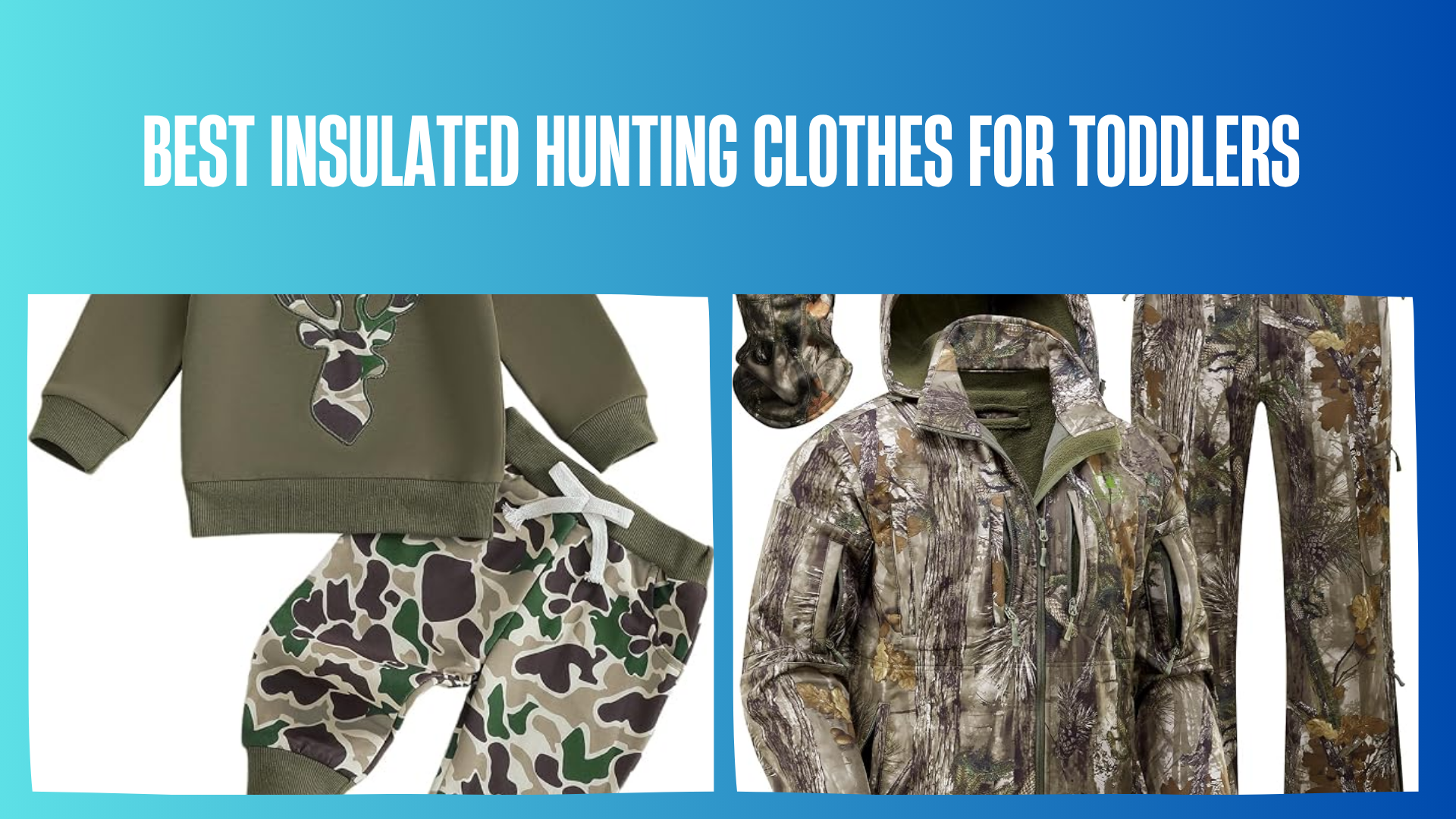

Taking a toddler outdoors on a cold hunting-season morning creates a different clothing challenge from dressing an older child. Toddlers move slowly, spend more time being carried or sitting, and may not clearly explain that their hands, feet, or clothing are getting cold. The best insulated hunting clothes for toddlers therefore need to support warmth, easy movement, sensible layering, and quick adult access for adjustments.
The supplied options cover several roles rather than one identical type of garment. Some are true insulated bibs, waterproof waders, or cold-weather coveralls, while others work better as base layers, midlayers, casual camo layers, or accessories. For a practical toddler setup, think in terms of a complete clothing system instead of expecting one garment to handle every temperature and weather condition.
For toddlers accompanying adults outdoors, close supervision, weather awareness, dry clothing, legal visibility requirements, and quick access to warm shelter matter more than camouflage. Clothing should fit securely without long hems, loose straps, or excessive bulk that interferes with walking.
Quick Picks
- Best Overall Toddler Bib: Arctix Infant/Toddler Chest Overalls Realtree — a practical insulated bib-style option for building a cold-weather toddler layering system.
- Best for Wet Outdoor Conditions: TIDEWE Chest Waders for Toddler & Children — insulated neoprene-style coverage for closely supervised wet, muddy, fishing, and waterfowl environments.
- Best Waterproof Outer Layer: Tuffo Toddler Muddy Buddy Coveralls — useful over insulating layers when rain, mud, and wet vegetation are the bigger concern.
- Best Thermal Layer: Realtree Performance Thermal Underwear Long Johns — a base-layer option for adding warmth underneath outer hunting clothes.
- Best High-Visibility Accessory: Orange Hunting Toddler Beanie — adds head warmth and bright visibility, though it should not be assumed to satisfy local hunter-orange laws by itself.
- Best Heavy Cold-Weather Coverall: Blocker Outdoors Drencher Insulated Waterproof Coveralls — a more substantial insulated outerwear option when its available sizing works for the child.
Best Insulated Hunting Clothes for Toddlers Comparison
| Product | Clothing Type | Best Role | Cold-Weather Use | Wet-Weather Role | Layering Note |
|---|---|---|---|---|---|
| Infant Toddler Cotton Jacket | Jacket | Casual outer or midlayer | Light to moderate | Limited | Pair with suitable base layers |
| Arctix Infant/Toddler Chest Overalls Realtree | Insulated bib | General cold outdoor use | Strong | Weather dependent | Add jacket separately |
| TIDEWE Waders B0C8NDF9Z4 | Neoprene chest waders | Wet and muddy environments | Strong | Strong | Use suitable layers underneath |
| Mieeyali Hunting Sweatshirt B0FXXBP93G | Sweatshirt | Midlayer | Moderate | Low | Needs weather shell in cold rain |
| Mieeyali Hunting Sweatshirt B0FXXKSKSG | Sweatshirt | Casual camo layer | Moderate | Low | Useful below an outer coat |
| Tuffo Toddler Muddy Coveralls | Protective coverall | Rain and mud shell | Depends on layers | Strong | Layer insulation underneath |
| Mooselander Youth Insulated Bib Overall | Insulated bib | Cold-weather lower-body protection | Strong | Moderate | Pair with separate jacket |
| YOKJZJD Corduroy Suspender Overalls | Overalls | Casual warm layer | Light to moderate | Low | Use beneath weather protection |
| TIDEWE Waders B0C8NDW2H3 | Neoprene chest waders | Waterfowl and wet ground | Strong | Strong | Check boot and torso fit |
| Sasaerucure Hunting Crewneck Pullover | Sweatshirt | Midlayer | Moderate | Low | Add outer shell when needed |
| DSOKUHIB Reindeer Sweatshirt | Sweatshirt | Casual insulating layer | Light to moderate | Low | Best as one part of a system |
| VISGOGO Toddler Hunting Sweatshirt | Hunting-themed outfit | Cool-weather layering | Moderate | Low | Use warmer outerwear in winter |
| TIDEWE Waders B0C8NCT9LC | Neoprene chest waders | Wet terrain | Strong | Strong | Avoid overly loose boot fit |
| Orange Hunting Toddler Beanie | Beanie | Head warmth and visibility | Accessory | Low | Combine with complete outfit |
| Realtree Performance Thermal Underwear | Thermal base layer | Cold-weather base layer | Strong as layering piece | Low | Wear under bibs or coveralls |
| TIDEWE Waders B0C8NF848M | Neoprene chest waders | Cold wet environments | Strong | Strong | Fit is especially important |
| Wild Cedar Hunting Insulated Outfit | Insulated hunting apparel | Cold outer layer | Strong | Check listing | Check child sizing carefully |
| Blocker Outdoors Drencher Coveralls | Insulated coverall | Cold and wet weather | Strong | Strong | One-piece system |
| RSRZRCJ Camouflage Suspender Overalls | Overalls | Casual camo layer | Light to moderate | Low | Add outer insulation |
| Mieeyali Hunting Sweatshirt B0FWCHCBPX | Sweatshirt | Midlayer | Moderate | Low | Pair with bib and shell |
1. Infant Toddler Cotton Jacket
This infant and toddler cotton jacket works best as a comfortable everyday layer rather than the only protection for a long cold-weather outing. Its simple jacket format makes it easy for an adult to add or remove as conditions change.

For hunting-season use, combine it with a suitable base layer and more weather-resistant outer protection when the forecast includes wind, rain, or wet snow.
Pros
- Simple toddler-friendly jacket format.
- Easy to layer over everyday clothing.
- Can be removed quickly when a toddler becomes warm.
Cons
- Should not be treated as a complete cold-weather system.
- Cotton clothing needs careful moisture management.
- Separate leg protection is still required.
2. Best Overall Toddler Bib: Arctix Infant/Toddler Chest Overalls Realtree
The Arctix chest overall is one of the strongest general-purpose options in this list because an insulated bib works naturally in a toddler layering system. It protects the legs and much of the torso while allowing a parent to choose the upper layer separately.
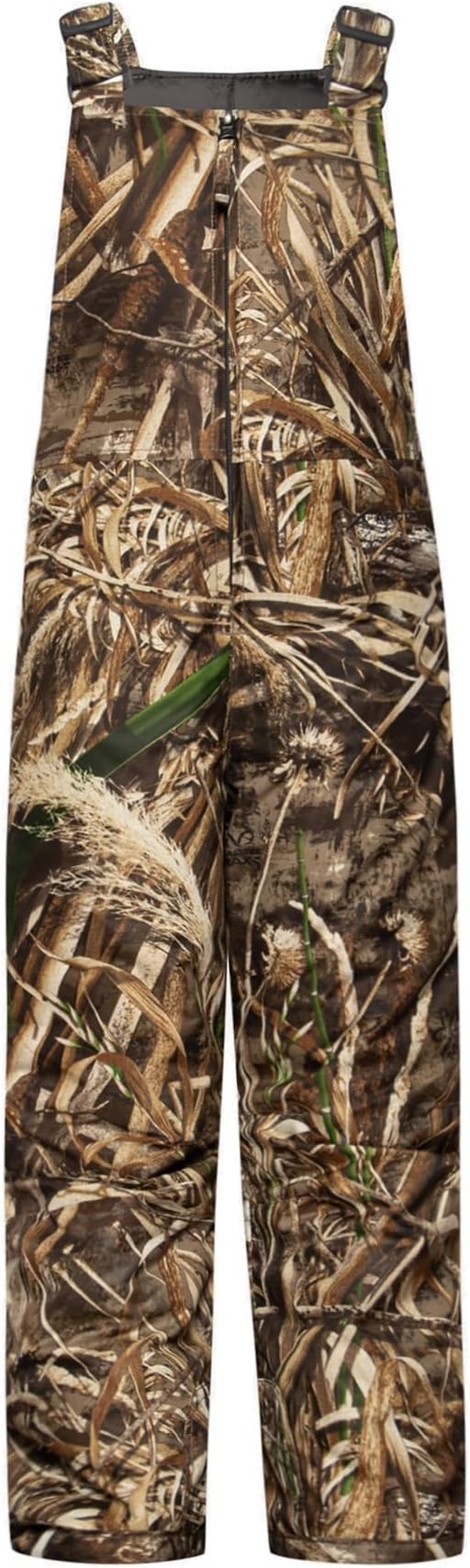
That flexibility is useful when a toddler alternates between walking, being carried, sitting, and returning to a warm vehicle or building.
Pros
- Bib design reduces exposed gaps around the waist.
- Works with different jackets as temperatures change.
- Useful for snow, cold outdoor play, and hunting-season outings.
- More flexible than a one-piece winter suit.
Cons
- Requires a separate jacket.
- Correct inseam and torso fit are important for toddlers.
- Oversizing too much can make walking awkward.
3. Best Wet-Environment Pick: TIDEWE Chest Waders for Toddler & Children, Neoprene Waterproof Insulated Hunting & Fishing Youth Waders
This TIDEWE wader variation is a specialized option for wet ground, shallow-water environments, muddy access, fishing, and supervised waterfowl outings. Neoprene-style chest waders provide far more moisture protection than ordinary insulated pants.

They are not the best default garment for dry woodland walks. The integrated boots and full chest coverage can become bulky, so fit should be checked carefully before an outing.
Pros
- Full chest-to-boot wet-weather coverage.
- Insulating neoprene-style construction suits cold wet environments.
- Useful for fishing and waterfowl-related family outings.
- Reduces the number of separate waterproof pieces.
Cons
- Too specialized for most dry-land use.
- Can become warm during active walking.
- Oversized boots can create a tripping problem for small children.
- Waders do not replace a properly fitted PFD around boats or deeper water.
4. Mieeyali Toddler Hunting Clothes Sweatshirt B0FXXBP93G
This Mieeyali sweatshirt is better considered a cool-weather or midlayer garment than a complete insulated hunting suit. A sweatshirt can be useful under bibs, rainwear, or a winter coat when the goal is to add removable warmth.

Pros
- Easy to add beneath outerwear.
- Useful for cool-weather family outings.
- Less bulky than a heavy insulated coverall.
Cons
- Not a complete winter outer layer.
- Does not provide lower-body insulation.
- Needs additional wind and rain protection when conditions deteriorate.
5. Mieeyali Toddler Hunting Clothes Sweatshirt B0FXXKSKSG
This second supplied Mieeyali ASIN offers another hunting-themed toddler sweatshirt option. It is most useful as one layer inside a broader cold-weather clothing system.

Pros
- Simple pullover-style warmth.
- Can work under a larger outer jacket.
- Useful beyond hunting-related outings.
Cons
- Limited weather protection by itself.
- Not comparable to an insulated bib or winter coverall for warmth.
- Requires additional protection for legs, hands, and head.
6. Best Rain-and-Mud Shell: Tuffo Toddler Muddy Buddy Coveralls Camouflage
The Tuffo coverall serves a different purpose from heavily insulated outerwear. It is most useful as a protective outer shell over warm layers when mud, wet grass, rain, or slushy conditions are the main problem.
For a toddler, the ability to protect clothing from wet ground can be valuable during short outdoor trips. Insulation should come from appropriate layers underneath.

Pros
- Full-body outer coverage.
- Useful around rain, mud, and wet vegetation.
- Can be worn over warmer clothing.
- One-piece design limits exposed gaps.
Cons
- Should not be relied on as the primary insulating layer.
- Can trap heat if too many layers are placed underneath.
- One-piece construction can make diaper or bathroom changes slower.
7. Mooselander Youth Insulated Bib Overall
The Mooselander insulated bib is a more substantial hunting-specific cold-weather option. Its bib format provides leg and torso coverage while allowing the upper-body layer to remain independent.

For a toddler-focused purchase, pay particular attention to the available size chart. A technically warm garment that is substantially oversized can be difficult for a very small child to walk in safely.
Pros
- Insulated bib format suits cold stationary conditions.
- Separate jacket selection improves layering flexibility.
- High torso coverage reduces drafts around the waist.
Cons
- Available sizing must be checked carefully for a toddler.
- Heavy insulation can cause overheating during active walking.
- Does not remove the need for weather-appropriate upper layers.
8. YOKJZJD Newborn & Toddler Corduroy Suspender Overalls
Corduroy overalls can add warmth and coverage for casual fall outings, but they are best viewed as a clothing layer rather than technical hunting outerwear.

They can work beneath a warm jacket or weather shell when the conditions are mild and the toddler will not be exposed to prolonged cold or precipitation.
Pros
- Good torso and leg coverage.
- Useful as everyday cool-weather clothing.
- Easy to combine with a sweatshirt or jacket.
Cons
- Limited weather protection.
- Not a substitute for insulated winter bibs in severe cold.
- Wet corduroy should be changed promptly in cold conditions.
9. TIDEWE Chest Waders for Toddler & Children B0C8NDW2H3
This second TIDEWE ASIN provides another supplied variation of the brand’s children’s neoprene chest-wader concept. It fits the same specialized role: keeping a child insulated from cold, wet ground and shallow-water conditions during closely supervised outdoor activities.

Pros
- Chest-height weather coverage.
- Useful where ordinary hunting pants would quickly become wet.
- Integrated boot design simplifies dressing.
Cons
- Not ideal for normal dry-land hunting walks.
- Proper boot sizing is especially important for toddlers.
- Can restrict movement if the torso or inseam is too large.
10. Sasaerucure Toddler Hunting Crewneck Pullover
This crewneck pullover works best as a simple midlayer for cool days. Compared with a hooded garment, the crewneck profile can also fit more easily beneath some insulated jackets.

Pros
- Simple layering piece.
- Can fit under a heavier outer coat.
- Suitable for everyday use as well as outdoor outings.
Cons
- No built-in head protection.
- Not enough by itself for harsh winter conditions.
- Requires separate weather protection in rain or snow.
11. DSOKUHIB Toddler Reindeer Embroidery Sweatshirt
The DSOKUHIB sweatshirt is another supporting layer rather than a heavy insulated hunting shell. It can contribute warmth during mild or cool conditions and can be covered with more protective outerwear.

Pros
- Comfortable sweatshirt-style layer.
- Useful beneath bib-and-jacket systems.
- Easy to remove indoors or in a heated vehicle.
Cons
- Limited protection from wind and precipitation.
- Not intended to replace a winter coat.
- No dedicated lower-body insulation.
12. VISGOGO Toddler Hunting Sweatshirt Camouflage Outfit
The VISGOGO hunting-themed toddler outfit provides coordinated casual layers for cool-weather use. It is more useful for short outdoor family trips than as the primary protection for an extended winter sit.
Pros
- Coordinated upper and lower toddler clothing.
- Easy everyday wear.
- Can serve as a midlayer beneath outer hunting gear.
Cons
- Additional insulation is needed in genuinely cold conditions.
- Limited wet-weather protection.
- Camouflage does not replace required visibility clothing.
13. TIDEWE Children Neoprene Waterproof Insulated Waders B0C8NCT9LC
This TIDEWE variation is another option for adults specifically seeking toddler or children’s chest waders rather than normal hunting bibs. Full-length neoprene-style coverage is particularly useful around marsh edges, muddy banks, and wet grass.
Pros
- High wet-weather coverage.
- Integrated bootfoot design.
- Useful for supervised fishing and waterfowl environments.
Cons
- Specialized rather than all-purpose clothing.
- Extra material can bunch if the size is too large.
- Not flotation equipment.
14. Best Visibility Accessory: Orange Hunting Toddler Beanie
A warm beanie is one of the simplest ways to add head and ear coverage to a toddler’s cold-weather outfit. The bright orange hunting style can also increase visibility.

Do not assume that a small orange hat alone satisfies hunting-season visibility regulations. Requirements can specify particular colors, garment areas, or minimum amounts of visible material.
Pros
- Adds warmth around the head and ears.
- Bright color improves visibility.
- Easy to add or remove as temperature changes.
Cons
- Only an accessory, not an insulating clothing system.
- May not satisfy local hunter-orange requirements by itself.
- Fit should be secure without covering the eyes.
15. Best Base Layer: Realtree Performance Thermal Underwear Long Johns
A thermal underwear set addresses one of the most important parts of toddler cold-weather dressing: insulation close to the body without relying entirely on a huge outer garment.

Thermals work beneath bibs, coveralls, or winter pants and a jacket. Check the current size range carefully because base layers should fit close enough to work under other garments without restricting movement.
Pros
- Useful beneath multiple types of outerwear.
- Adds warmth without the bulk of another jacket.
- Upper and lower coverage supports a complete layering system.
Cons
- Not outerwear.
- No meaningful rain or wind protection by itself.
- Current available sizing should be checked before ordering for a toddler.
16. TIDEWE Children Neoprene Waterproof Insulated Waders B0C8NF848M
This fourth supplied TIDEWE wader ASIN provides another variation for cold, wet outdoor environments. When comparing these TIDEWE listings, concentrate on the current size, boot fit, camouflage option, and variation shown on the exact Amazon page.
Pros
- Suitable for wet and muddy terrain.
- Chest coverage helps keep underlying layers dry.
- Useful for specialized waterfowl-related outings.
Cons
- Less versatile than ordinary bibs on dry ground.
- Boot sizing can determine whether a toddler walks comfortably.
- Requires close adult supervision around water.
17. Wild Cedar Hunting Insulated Weather-Resistant Apparel
The Wild Cedar option is aimed more directly at cold-weather hunting than the casual sweatshirts in the list. It is worth considering when the available size and variation suit the child who will wear it.
Because insulated hunting apparel can be considerably bulkier than toddler everyday clothing, verify that the child can walk, sit, bend, and use their hands normally while fully dressed.

Pros
- Cold-weather hunting focus.
- More substantial than a casual sweatshirt layer.
- Can reduce the need for several bulky midlayers.
Cons
- Current sizing must be checked carefully for toddler use.
- Heavy insulation may be excessive during active movement.
- Do not assume weather resistance means complete waterproofing.
18. Best Heavy Weather Option: Blocker Outdoors Drencher Insulated Waterproof Coveralls
The Drencher coverall offers the most complete cold-and-wet-weather concept among the supplied full-body garments. An insulated waterproof coverall is useful when precipitation and cold occur together and separate lightweight layers are not enough.

The one-piece design reduces gaps around the waist but makes temperature adjustment less flexible. Check the current sizing carefully before considering it for a very young child.
Pros
- Combines insulation with wet-weather outer protection.
- One-piece construction reduces exposed gaps.
- Good concept for cold rain, sleet, or wet snow.
- Useful for long stationary outdoor periods when sizing is appropriate.
Cons
- Available youth sizing may not suit every toddler.
- Can be too warm for strenuous walking.
- One-piece outerwear is slower to remove for bathroom breaks.
19. RSRZRCJ Suspender Jumpsuit Overalls Camouflage
The RSRZRCJ camouflage overalls provide another casual full-length layer for toddler outdoor clothing. They are better suited to mild or cool weather, or as clothing beneath more substantial outerwear, than to severe cold by themselves.

Pros
- Full-leg coverage.
- Suspender-style construction helps keep the waist covered.
- Easy to combine with a sweatshirt or jacket.
Cons
- Not a substitute for technical insulated bibs in severe cold.
- Limited wet-weather protection.
- Loose straps and hems should be adjusted carefully.
20. Mieeyali Toddler Hunting Clothes Sweatshirt B0FWCHCBPX
This Mieeyali variation completes the supplied list with another toddler hunting-themed sweatshirt. It makes the most sense as an everyday or middle insulating layer rather than as the sole winter garment.

Pros
- Easy to layer.
- Suitable for mild outdoor weather.
- Can be worn outside hunting-season activities.
Cons
- No dedicated lower-body insulation.
- Requires an outer layer during wind, rain, or deeper cold.
- Not directly comparable with insulated waders or winter coveralls.
How to Choose Insulated Hunting Clothes for Toddlers
1. Build the Outfit in Layers
A toddler’s cold-weather outfit works better when warmth can be adjusted. Start with a comfortable base layer, add a removable middle layer, then choose insulated or weather-protective outerwear based on the forecast.
This approach is more flexible than putting a toddler into the thickest garment available before leaving home.
2. Prioritize Fit Over Future Growth
Buying several sizes too large may save money later, but it can create problems now. Long pant legs, loose boots, dangling suspenders, and sleeves covering the hands can make walking more difficult.
A little layering room is useful. Excessive bulk is not.
3. Separate Warmth From Waterproofing
Insulated and waterproof describe different functions. A sweatshirt may add warmth without blocking rain, while a lightweight rain coverall may block water without providing enough insulation for a cold stationary outing.
Use both functions when the conditions demand them.
4. Match Clothing to Activity Level
A toddler walking continuously on a short trail may need less insulation than a child sitting quietly with an adult for an extended period. Carry a removable layer when possible rather than forcing the child to stay in the same insulation all day.
5. Keep Visibility in Mind
Camouflage is not a substitute for legally required hunter orange or other visibility clothing. Rules vary by location, hunting method, season, and species.
Check current regulations before the outing and keep required visibility garments on the outside where specified.
A Practical Toddler Cold-Weather Layering System
| Layer | Purpose | Example From This List |
|---|---|---|
| Base layer | Add close-to-body warmth | Realtree Performance Thermal Underwear |
| Midlayer | Removable insulation | Mieeyali or Sasaerucure sweatshirt |
| Insulated lower layer | Warm legs and torso | Arctix or Mooselander bib |
| Weather shell | Rain and mud protection | Tuffo Muddy Buddy Coverall |
| Wet-environment system | Protect from shallow water and saturated ground | TIDEWE neoprene waders |
| Head layer | Warmth and added visibility | Orange Hunting Toddler Beanie |
Safety Considerations for Toddlers Outdoors During Hunting Season
A toddler accompanying an adult outdoors requires continuous supervision. Clothing and camouflage never replace planning, communication, appropriate shelter, weather checks, first aid, or responsible hunting practices.
If firearms are present, adults should follow established firearm-safety rules at all times, including keeping firearms under responsible control and preventing unauthorized child access. Toddlers should never be expected to handle or manage hunting equipment intended for trained older users.
Keep outings short enough for the child’s age and comfort. Have a clear way to return to a warm vehicle, building, or shelter if clothing becomes wet or the child begins showing signs of cold stress.
Waders and Water Safety
Chest waders are specialized clothing. They are not personal flotation devices and do not make water safe for a toddler.
When a child is near boats, docks, rivers, marshes, ponds, or deeper water, follow applicable life-jacket requirements and use a properly fitted child PFD when required. Maintain direct adult supervision even in shallow water.
Before leaving home, let the toddler walk in the complete wader setup. Boots that are too long or heavy can alter a small child’s gait substantially.
Common Toddler Cold-Weather Clothing Mistakes
- Buying too large for future growth. Leave reasonable room for layers, but avoid excessively long sleeves, legs, and loose straps.
- Using one huge coat instead of adjustable layers. A removable midlayer makes temperature management easier.
- Letting a toddler stay in wet clothing. Replace damp layers and move to shelter promptly.
- Assuming camouflage is legally sufficient. Check current visibility requirements for the hunt and location.
- Ignoring footwear fit. Oversized integrated wader boots can be especially difficult for toddlers.
- Using insulated clothing during every part of an active walk. Reduce excess warmth before sweating becomes significant.
- Forgetting bathroom or diaper access. Practice removing bibs, coveralls, and waders before the trip.
- Assuming waterproof means warm. Rain shells often require insulating layers underneath.
Care and Storage
Follow the care instructions supplied with each garment. Sweatshirts, cotton outerwear, thermal underwear, coated rain suits, insulated bibs, and neoprene waders may require different washing and drying methods.
After a wet outing, remove mud and debris, empty pockets, and allow garments to dry completely. Inspect suspenders, seams, zippers, cuffs, boot attachments, and waterproof areas before storing them.
Do not store damp waders or insulated clothing compressed in a vehicle or gear bin for extended periods.
Frequently Asked Questions
1. What are the best insulated hunting clothes for toddlers?
A layered system usually works best. An insulated bib such as the Arctix option can cover the legs and torso while allowing parents to adjust the jacket or midlayer separately.
2. Are bibs better than coveralls for toddlers?
Bibs make temperature adjustments easier because the jacket remains separate. Coveralls reduce gaps and simplify full-body coverage but are less flexible when the child becomes warm.
3. Can a toddler wear hunting clothes?
Yes, age-appropriate outdoor clothing can be used while a toddler accompanies a responsible adult, provided sizing, weather, supervision, visibility, and local rules are addressed.
4. How should toddler hunting bibs fit?
They should leave enough room for appropriate layers while allowing the child to walk, sit, bend, and climb normal safe obstacles without tripping over the legs.
5. Should I buy toddler hunting clothes a size bigger?
Some extra layering room can help, but automatically going a full size larger is not always appropriate. Use the current size chart and consider the layers that will actually be worn.
6. What should a toddler wear underneath insulated bibs?
A comfortable base layer and, when needed, a thin insulating midlayer can work well. Avoid so many layers that movement becomes restricted.
7. Are thermal long johns useful for toddlers outdoors?
Yes. A suitable thermal layer can add warmth without the bulk of another outer garment and can be combined with bibs, winter pants, or coveralls.
8. Can sweatshirts be used as hunting insulation?
They can work as midlayers in mild or moderately cold conditions, but they should not automatically be treated as waterproof or heavy winter outerwear.
9. Are toddler hunting waders warm?
Neoprene-style insulated waders can provide useful warmth in wet environments, but comfort depends on weather, activity, underlying layers, and correct sizing.
10. Are waders safe for toddlers?
They require close adult supervision. They are specialized clothing rather than flotation equipment, and toddlers should never be left unsupervised near water.
11. Does a toddler need a life jacket while wearing waders?
Waders do not replace a life jacket. Follow applicable boating and water-safety requirements and use a properly fitted child PFD when required.
12. Are waterproof coveralls insulated?
Not necessarily. Some waterproof coveralls mainly act as rain and mud shells, so insulation may need to come from clothing underneath.
13. Are insulated coveralls waterproof?
Not automatically. Check the exact manufacturer’s description because insulation and waterproofing are separate features.
14. How can I keep a toddler from overheating while walking?
Start with adjustable layers and remove or open an insulating layer before the child becomes very sweaty. Add warmth again once activity slows.
15. How do I know when a toddler is too cold?
Do not wait for a toddler to provide a detailed explanation. Watch for persistent shivering, unusual quietness, clumsiness, discomfort, very cold skin, or behavior that seems abnormal, and move to a warm shelter when concerned.
16. What should I do if my toddler’s hunting clothes get wet?
Move the child to shelter, remove wet garments, and replace them with dry clothing. Do not depend on wet insulation to continue providing normal warmth.
17. Are cotton clothes good for cold hunting weather?
Cotton can be comfortable in dry mild conditions but becomes a poor choice when it remains wet against the body. Build the full outfit around expected moisture and temperature.
18. Is a camo sweatshirt enough for winter hunting?
Usually not. It is better treated as a middle layer beneath appropriate insulated and weather-protective outerwear.
19. Should toddlers wear blaze orange?
Visibility requirements vary by jurisdiction and hunt. Check current regulations and follow any applicable fluorescent-orange requirements for people accompanying hunters.
20. Is an orange beanie enough to meet hunting regulations?
Do not assume so. Some rules specify a minimum amount, location, or type of fluorescent material, so confirm the exact current requirement.
21. What is better for wet weather: bibs or waders?
Waders provide more specialized water protection, while ordinary bibs are more comfortable and versatile for dry land. Choose according to the environment rather than warmth alone.
22. Can toddlers walk comfortably in chest waders?
They can when sizing is appropriate, but oversized bootfoot waders may feel heavy or awkward. Have the child practice walking in them before an outing.
23. What shoes should toddlers wear with insulated bibs?
Use weather-appropriate boots that fit comfortably with the intended socks. Avoid squeezing very thick socks into boots that become overly tight.
24. How do I keep a toddler’s hands warm?
Use suitable gloves or mittens and carry a dry spare pair. Wet handwear should be changed promptly in cold conditions.
25. Should toddlers wear a hat in cold weather?
A suitable hat can help protect the head and ears in cold conditions. Make sure it fits securely without slipping over the child’s eyes.
26. Are one-piece coveralls convenient for toddlers?
They simplify full-body outerwear but can make diaper changes or bathroom breaks more time-consuming. Practice removal before the trip.
27. How long should a toddler stay outside in cold hunting weather?
There is no universal time limit because temperature, wind, moisture, clothing, activity, and the individual child all matter. Plan conservative trips with easy access to shelter.
28. How should I wash insulated toddler hunting clothes?
Follow the garment’s care label. Insulation, waterproof coatings, neoprene, elastic, and ordinary cotton clothing can all require different care.
29. How should toddler waders be stored?
Clean off mud, allow them to dry thoroughly, and store them without sharp objects or excessive heat that could damage the material.
30. What should I check before taking a toddler outdoors during hunting season?
Check weather, clothing fit, dry spare layers, visibility requirements, boots, gloves, food and water, communication, first aid, access to shelter, and whether the outing is appropriate for the child’s age and comfort.
Conclusion
The best insulated hunting clothes for toddlers are usually not a single garment but a flexible combination of base layers, insulation, and weather protection. Fit deserves special attention because a toddler cannot move safely or comfortably in excessively oversized bibs, boots, or coveralls.
For a general cold-weather setup, Arctix Infant/Toddler Chest Overalls Realtree is the strongest overall choice from the supplied list because the bib format provides substantial coverage while letting parents change upper-body layers independently. Its main trade-off is that a separate jacket and other accessories are still necessary.
For wet and muddy environments, TIDEWE Chest Waders for Toddler & Children provide more specialized protection, although their bulk and integrated boots make careful sizing especially important.
For a simpler supporting layer, Realtree Performance Thermal Underwear Long Johns can be used beneath other outerwear when the available size is appropriate.
A lowest-priced recommendation is not named because current comparable Amazon pricing can vary by size and variation. Check the current product page for fit, availability, specifications, and price before ordering.
Read more:
- Best Insulated Hunting Clothes for Big and Tall Men: 13 Picks for 2026
- How Long to Wait After Shooting a Deer: A Safe Tracking Guide