
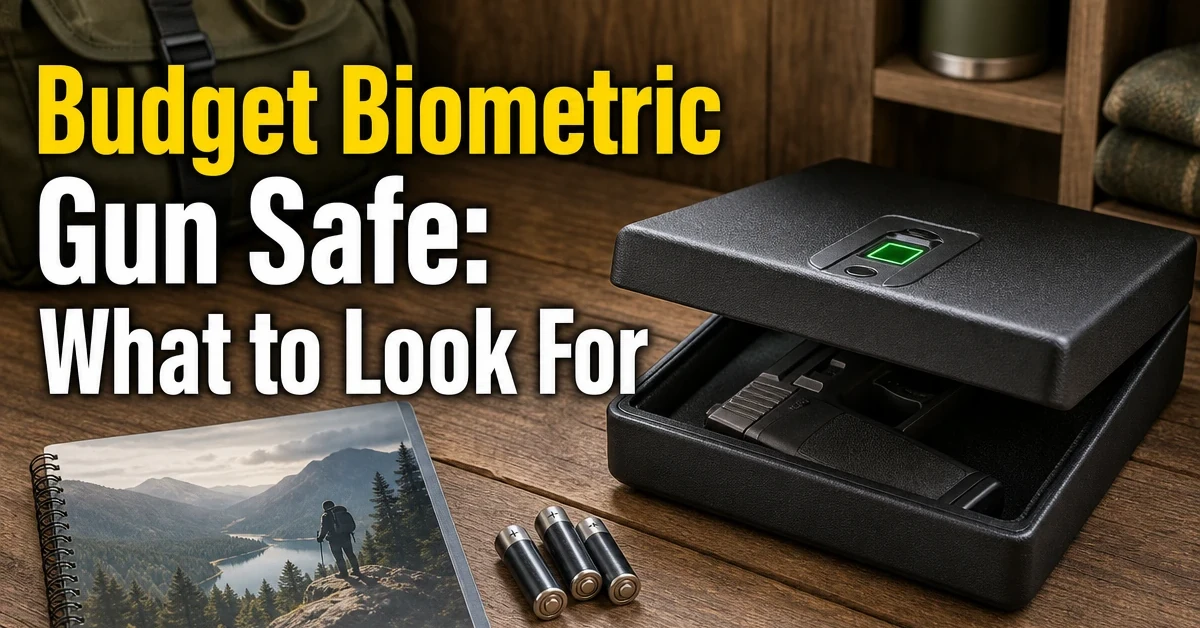
A budget biometric gun safe can provide convenient access control for a handgun without the cost of a large security safe. The best choice should combine a dependable fingerprint reader with a strong lock, backup entry method, secure mounting, and responsible storage practices. Before buying, verify the manufacturer’s specifications, local storage laws, and whether the safe fits your firearm.
What Is a Budget Biometric Gun Safe?
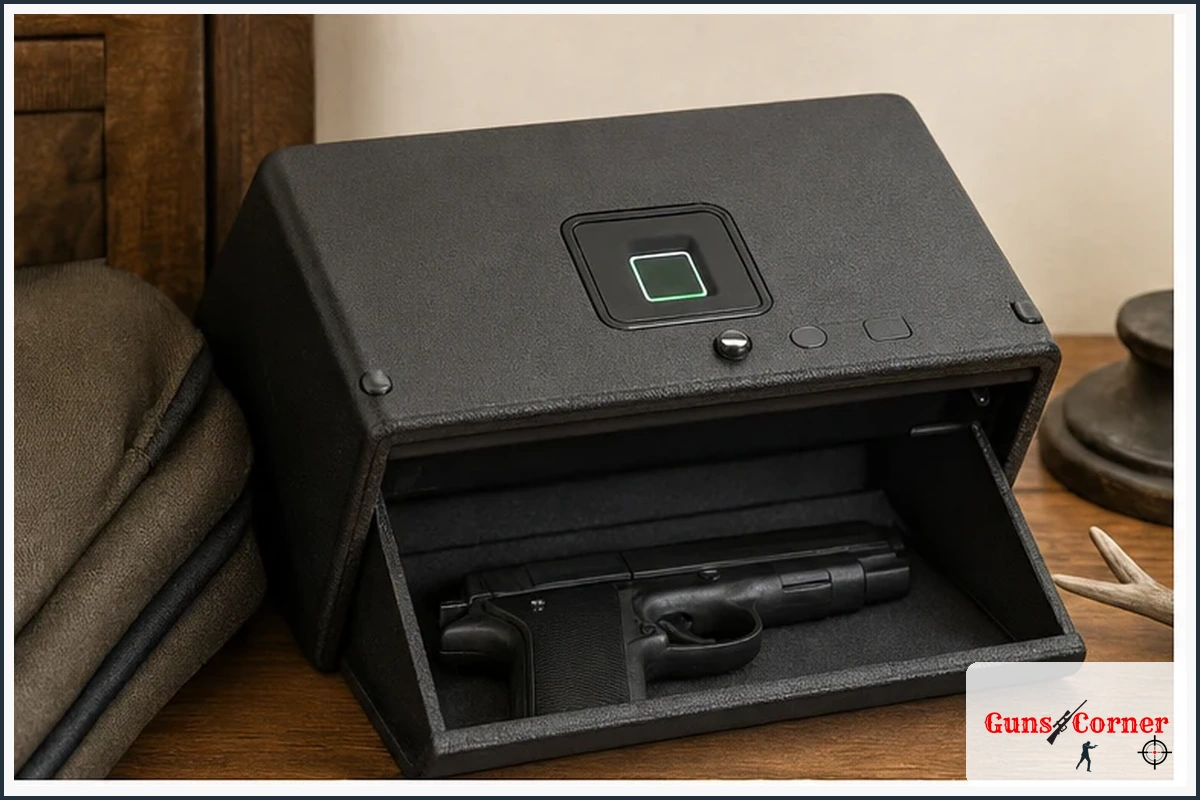
A biometric gun safe is a locked firearm container that uses fingerprint recognition as one method of entry. Budget models are generally compact handgun safes intended for a nightstand, vehicle use where lawful, closet, desk, or other controlled location.
“Budget” describes the price category, not a guarantee of poor quality or adequate security. Lower-cost models may differ substantially in steel thickness, hinge protection, lock design, fingerprint performance, battery life, mounting options, and resistance to forced entry.
Important Safety and Legal Considerations
A biometric lock is only one part of safe firearm storage. Keep the firearm unloaded when appropriate for your storage plan, follow the firearm manufacturer’s instructions, and prevent access by unauthorized users, especially children. A mechanical lock can fail, batteries can die, and fingerprints may not always be recognized.
Choose a model with a reliable backup keypad or key system, but secure those backup credentials and keys separately. Never leave an override key in or beside the safe.
Storage requirements vary by state and locality. Check current official laws before purchasing, particularly if children or prohibited persons may be present in the household. Firearm storage laws and transport rules may also differ when the safe is used in a vehicle.
Key Features to Compare Before Buying
| Feature | Why It Matters | What to Check |
|---|---|---|
| Biometric reader | Provides fast access without remembering a code | Enrollment process, user capacity, and manufacturer instructions |
| Backup entry | Provides access if the scanner or battery fails | Keypad, override key, or both |
| Construction | Influences resistance to unauthorized access | Steel body, hinge protection, latch design, and pry resistance |
| Mounting | Reduces the chance that the entire safe will be carried away | Supplied hardware, mounting surface, and manufacturer limits |
| Interior dimensions | Determines whether your unloaded firearm and accessories fit | Actual internal dimensions, not just exterior size |
| Power system | Affects reliability and maintenance | Battery type, low-battery warning, and emergency power procedure |
| Interior protection | Helps prevent cosmetic damage to the firearm | Padding, finish quality, and clearance around sights or optics |
Biometric Access Versus Keypad or Keyed Entry
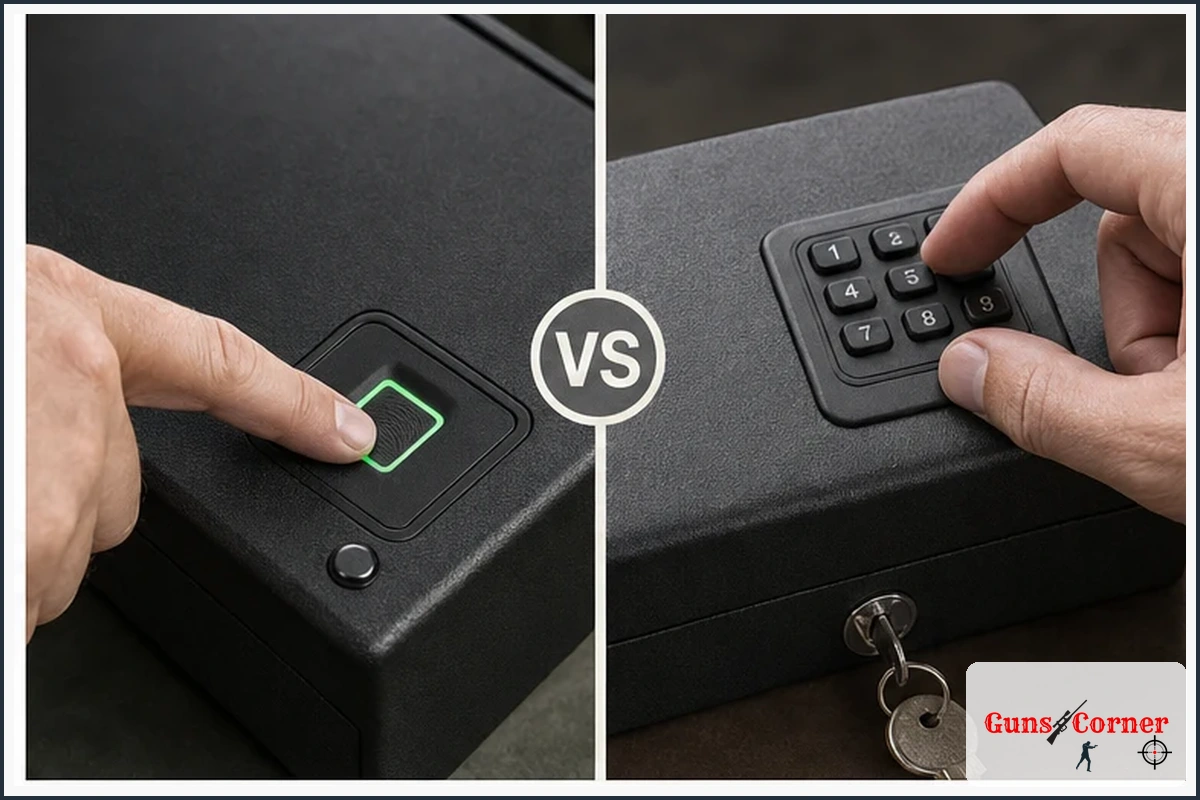
Biometric access is convenient because the user does not need to enter a combination under stress or search for a key. However, fingerprint readers can be affected by moisture, dirt, cold hands, damaged skin, or poor enrollment.
A keypad does not depend on fingerprint condition, but the code must be memorized and protected. A keyed lock is simple, yet the key must remain inaccessible to unauthorized users.
For many buyers, a safe with biometric access plus a keypad or mechanical override offers more practical redundancy than a biometric-only design. Redundant access should improve reliability without weakening your storage discipline.
How to Set Up a Budget Biometric Gun Safe
- Read the current manual. Follow the exact battery, fingerprint enrollment, reset, and mounting procedures for your model.
- Install fresh batteries. Use the type specified by the manufacturer and replace them on a regular schedule.
- Enroll more than one finger. Register clean, dry fingers from the authorized user according to the manual.
- Test recognition repeatedly. Test from normal angles and with the safe positioned as it will be used.
- Program the backup entry method. Store the code or override key securely and separately.
- Mount the safe correctly. Use an appropriate solid surface and only the manufacturer-approved hardware or method.
- Confirm firearm fit. Check that the unloaded firearm does not interfere with the lid, latch, padding, or lock.
- Practice safe access. Handle the firearm only after positive identification and while following the four basic firearm safety rules.
Fingerprint Scanner Troubleshooting
| Problem | Possible Cause | Safer Next Step |
|---|---|---|
| Reader does not recognize a finger | Dirty sensor, wet skin, cold hands, or poor enrollment | Clean the sensor, dry the finger, and re-enroll according to the manual |
| No response from the safe | Dead or incorrectly installed batteries | Use the specified replacement batteries and the approved backup entry method |
| Safe will not open after unlocking | Pressure on the lid, misalignment, or a blocked latch | Do not force it; inspect the manual and contact the manufacturer |
| Repeated false rejections | Inconsistent finger placement or damaged fingerprint surface | Enroll additional authorized fingers and maintain a secure backup method |
Do not defeat, drill, pry, or modify the lock. If the safe fails while the firearm is secured inside, contact the manufacturer or a qualified locksmith and follow lawful procedures.
Where Should You Place the Safe?
Place the safe where unauthorized people cannot easily see, reach, remove, or manipulate it. A fixed mounting location is generally more secure than leaving a small safe loose in a drawer or vehicle.
Avoid damp areas that may promote corrosion. In a vehicle, follow local law and the vehicle manufacturer’s guidance, and remember that a portable handgun safe is not a guarantee against theft.
Common Buying Mistakes
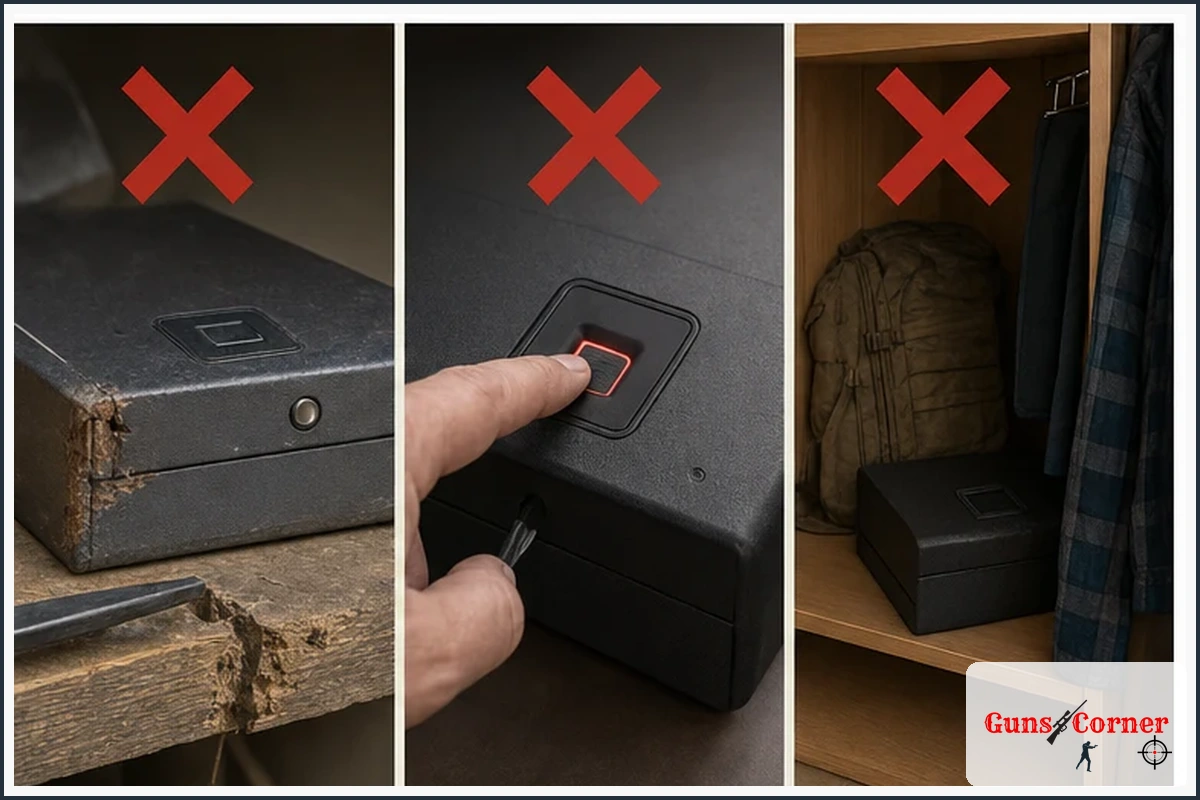
- Choosing by price alone without checking construction and mounting options.
- Assuming every fingerprint reader performs equally well.
- Buying a safe that does not fit the firearm, optic, magazine, or required accessories.
- Ignoring the backup key or keypad until the battery is dead.
- Leaving the safe unsecured and portable when permanent mounting is possible.
- Assuming biometric access replaces training and safe firearm handling.
- Using a vehicle safe as a substitute for responsible home storage.
- Failing to check current state and local storage requirements.
What Not to Do
- Do not rely on the biometric lock as the only access method.
- Do not store override keys where children or unauthorized users can find them.
- Do not climb, travel, or handle the firearm with it loaded unless lawful and appropriate for the situation.
- Do not point the muzzle at anything you are unwilling to destroy.
- Do not place your finger inside the trigger guard until you have identified the target and decided to fire.
- Do not store a firearm in a location exposed to excessive moisture or extreme conditions.
- Do not assume a safe is theft-proof, fireproof, or legally compliant without checking its specifications and local rules.
Is a Budget Biometric Gun Safe Worth It?
It can be worthwhile when the buyer needs compact access control and selects a model with solid construction, dependable backup entry, suitable mounting, and a properly tested fingerprint system. It is less suitable when the household requires high theft resistance, substantial fire protection, or storage for several firearms.
For greater security, consider a larger security-rated safe or a professionally installed storage solution. The right choice depends on the firearm, household risks, location, local law, and the level of protection required.
FAQs
1. Are budget biometric gun safes reliable?
Reliability varies by model and maintenance. Fingerprint readers may reject a print because of moisture, dirt, cold, or inconsistent enrollment, so use a backup entry method and test the safe regularly.
2. What is the best lock type for a low-cost gun safe?
There is no universal best choice. Biometric access is convenient, keypad access is independent of fingerprint condition, and keyed entry is simple. A well-designed combination of access methods may provide the most practical redundancy.
3. Can a biometric gun safe store any handgun?
No. Check the internal dimensions and clearance around the slide, sights, optic, magazine, and other accessories. Store the firearm only as directed by the firearm and safe manufacturers.
4. Should a biometric gun safe be bolted down?
Permanent mounting can reduce the risk of the entire safe being removed. Use only an appropriate mounting surface and follow the safe manufacturer’s instructions. Do not drill or modify the safe unless the manufacturer specifically permits it.
5. Do biometric gun safes need batteries?
Most electronic biometric safes require batteries. Check the low-battery warning, replace batteries proactively, and understand the approved emergency-access procedure before storing a firearm.
6. Is a portable biometric safe enough for vehicle storage?
It may provide an additional layer of security, but vehicle storage remains vulnerable to theft and is regulated differently in some jurisdictions. Check current law and secure the safe as the manufacturer recommends.
7. What should I do if the fingerprint reader stops working?
Use the approved backup entry method, check the battery and sensor, and follow the manual. Do not force or defeat the lock. Contact the manufacturer or a qualified locksmith if the problem continues.
Final Answer
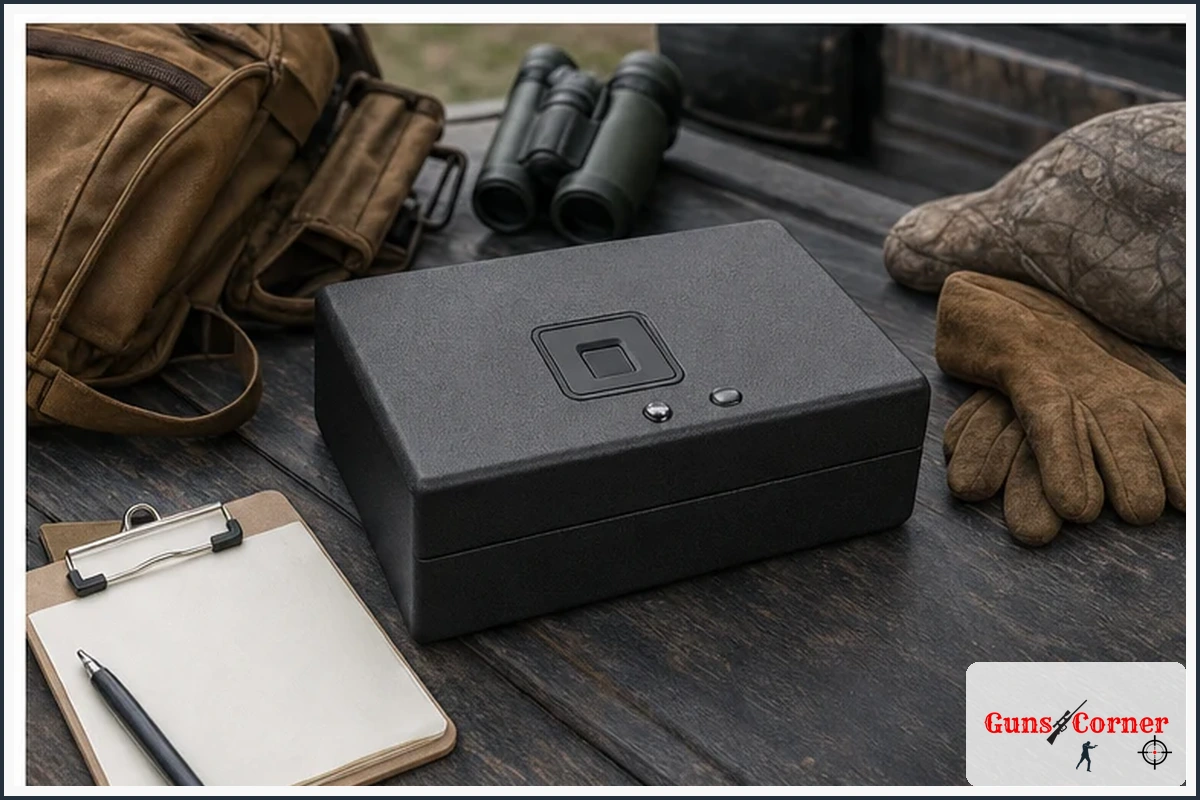
A budget biometric gun safe is a compact firearm-storage option that can offer convenient fingerprint access at a lower price. Look beyond the scanner: compare construction, latch protection, backup entry, battery management, internal fit, mounting, and local storage requirements. Test the safe regularly, keep backup access secure, and always follow the four basic firearm safety rules.
Related posts:

15 Best Closet Gun Safes for Secure Rifle and Handgun Storage

30 Best Long Gun Safe – Expert Review, Security Ratings & Buying Guide 2026

20 Best Handgun Safe – Top Quick Access, Biometric & Secure Pistol Safes

What Fire Rating Should a Gun Safe Have?

15 Best Fireproof Gun Safe for Ultimate Fire Protection