
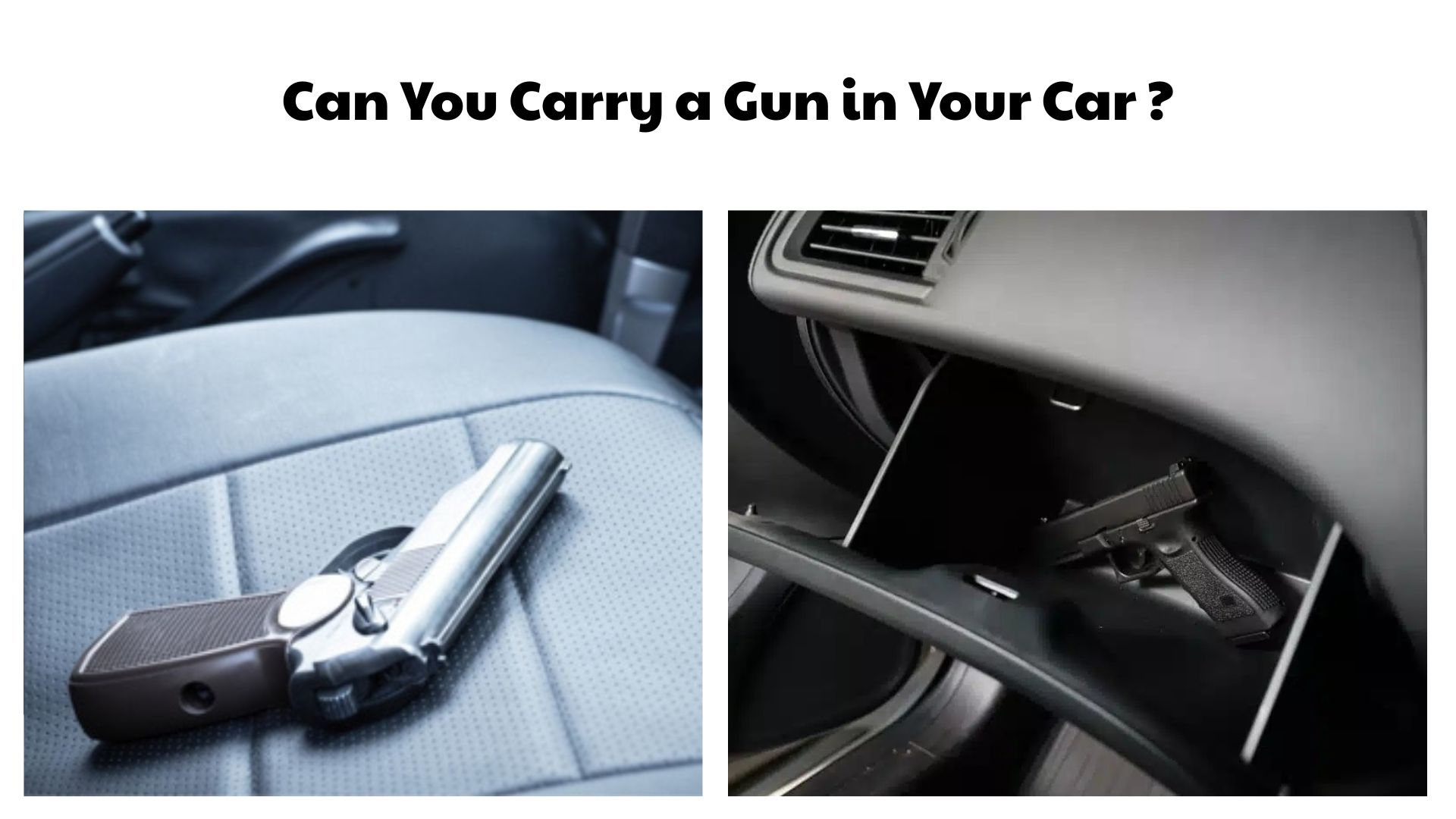

Understanding Can You Carry a Gun in Your Car is not just a matter of convenience—it is a critical legal and safety responsibility for any firearm owner. In the United States, carrying a firearm inside a vehicle sits at the intersection of state law, federal guidelines, and personal responsibility. What may be perfectly legal in one state can quickly become a serious criminal offense in another, even if the intent is purely self-defense or lawful transport.
This guide begins with the essentials: why vehicle firearm laws matter, how they differ across jurisdictions, and what risks arise when these laws are misunderstood or ignored. It also highlights the importance of combining legal compliance with safe storage practices inside a car, truck, or SUV. Whether someone is a daily concealed carrier or a recreational gun owner traveling to the range or hunting grounds, understanding these rules is essential for avoiding legal trouble and ensuring responsible firearm handling.
As we go deeper into the topic, we will break down how laws vary significantly from state to state, how permits affect what you can and cannot do inside your vehicle, and why safe storage is just as important as legality. The goal is to provide a clear, practical roadmap so gun owners can make informed decisions every time they get behind the wheel with a firearm.
Simply put, knowing the law before you drive is not optional—it is part of responsible ownership. A small misunderstanding can lead to serious consequences, including fines, confiscation of firearms, or even felony charges depending on the jurisdiction. That is why both legality and safe storage practices must always work together, not separately.
Is It Legal to Carry a Gun in Your Car?
The question of Can You Carry a Gun in Your Car does not have a single universal answer in the United States. Instead, it depends heavily on where you are, whether you have a permit, how the firearm is stored, and sometimes even the specific route you are driving. While the idea may seem straightforward, the legal reality is more layered and varies widely across jurisdictions.
In general, carrying a firearm in a vehicle is legal in many parts of the country, but it is governed by strict rules that differ from state to state. These rules can dictate whether the firearm must be loaded or unloaded, whether it must be concealed, and where inside the vehicle it can be stored. Understanding these distinctions is essential for anyone who plans to transport a firearm by car.
General Rule in the United States
At the federal level, there is no single comprehensive law that regulates the carrying of firearms inside a vehicle for intrastate travel. Instead, firearm transportation and possession laws are largely left to individual states. This means that the legality of carrying a gun in your car is primarily determined by state legislation rather than federal law, except in specific situations such as crossing state lines or entering restricted federal areas.
Because of this decentralized system, firearm owners must be aware that the rules can change dramatically simply by crossing a state border. A practice that is lawful in one state—such as keeping a loaded handgun in a center console—may be strictly prohibited in another, where the firearm must be unloaded and locked in a separate container or trunk.
Most states fall into one of several general categories: permitless carry states, concealed carry permit states, and more restrictive jurisdictions with additional storage requirements. In permitless carry states, individuals may often carry a loaded firearm in their vehicle without a permit, provided they are legally allowed to possess a firearm. However, even in these states, restrictions may still apply regarding visibility, storage location, or intent of use.
In contrast, states that require a concealed carry permit typically allow firearm possession inside a vehicle only if the individual holds a valid permit. Without one, the firearm may need to be unloaded and stored in a specific location such as the trunk or a locked container. These rules are designed to balance personal protection rights with public safety concerns.
It is also important to note that legal carry inside a vehicle does not override other restrictions. Firearms are still prohibited in certain areas regardless of state law, including schools, government buildings, and some private properties that explicitly forbid weapons. Even stopping in these areas during travel can create legal complications if a firearm is present in the vehicle.
Overall, the general rule in the United States is simple in principle but complex in practice: there is no single national standard. Instead, gun owners must rely on state-specific regulations, which makes awareness and preparation essential before transporting any firearm in a vehicle.
Permitless Carry vs Permit Required States
When discussing Can You Carry a Gun in Your Car, one of the most important legal distinctions involves whether a state follows permitless carry laws or requires a concealed carry permit. This difference directly affects how a firearm can be transported inside a vehicle, whether it can be loaded, and where it must be stored. Understanding this classification is essential because it often determines what is legally acceptable the moment you start the engine.
In recent years, a growing number of states have adopted what is commonly known as “constitutional carry” or permitless carry. In approximately 29 states, individuals who are legally allowed to possess a firearm may carry it inside a vehicle without obtaining a concealed carry permit. In these jurisdictions, a handgun can often be kept loaded and accessible within the car, provided it is not being carried in prohibited locations or used in a threatening manner.
However, even in permitless carry states, the rules are not always identical. Some states allow a loaded firearm to be carried openly inside a vehicle, while others require it to remain concealed from plain view. In certain cases, specific storage locations—such as the glove compartment or center console—may be considered legal carry areas, while in other states they may be treated as concealed carry requiring additional legal justification.
On the other hand, states that require a concealed carry permit impose stricter conditions. In these jurisdictions, carrying a firearm inside a vehicle without a valid permit can be considered unlawful possession. This often means the firearm must be unloaded and stored in a secured container, such as a locked case or trunk, unless the driver holds the appropriate permit.
The key takeaway is that permit requirements significantly influence how a firearm is handled in a vehicle. While permitless carry states provide more flexibility, they still operate under specific boundaries, and permit-required states demand stricter compliance. For gun owners, this means the legal status of carrying in a car can change not only by state but sometimes even by local interpretation of the law.
Federal Restrictions You Must Know
Although firearm laws are primarily governed at the state level, there are important federal regulations that apply when considering Can You Carry a Gun in Your Car, especially when traveling across state lines or entering federally controlled areas. These federal rules are designed to create minimum standards that all gun owners must follow regardless of where they are traveling within the United States.
One of the most important federal protections is the Firearm Owners Protection Act (FOPA), which includes what is commonly known as the “safe passage” provision. This rule allows individuals to transport firearms across state lines, provided the firearm is unloaded and stored in a locked container that is not readily accessible. Ammunition must also be stored separately or secured in a way that prevents immediate use. However, this protection only applies when the traveler is moving through states without unnecessary stops in restrictive jurisdictions.
It is important to understand that the safe passage rule is not a blanket permission to carry a firearm anywhere during travel. If a driver stops in a state with strict firearm laws and is found with a weapon that does not comply with that state’s requirements, legal protection under federal law may not apply. This makes route planning an important part of lawful firearm transportation.
In addition to interstate travel rules, federal law also restricts firearms in specific locations regardless of state permissions. These include schools and school zones, federal buildings such as courthouses, post offices, and certain government facilities. Airports and secured areas of transportation hubs are also heavily regulated. Even if a person is legally allowed to carry a firearm in their vehicle, entering or parking in these restricted areas with a firearm inside the car can lead to serious legal consequences.
For this reason, understanding federal restrictions is just as important as knowing state laws. Many legal issues involving firearms in vehicles occur not because of possession itself, but because of unintentional entry into federally prohibited zones or misunderstanding how interstate transport protections work.
Concealed Carry Laws Inside a Vehicle
Concealed carry laws play a central role in determining how firearms can be transported and accessed inside a vehicle. When evaluating Can You Carry a Gun in Your Car, the concept of concealment becomes especially important because most states regulate not just possession, but also visibility and accessibility within the car interior. A firearm hidden in a glove box may be treated very differently from one stored openly on a seat or dashboard.
Carrying With a Concealed Carry Permit
In many states, having a valid concealed carry permit significantly expands what is legally allowed inside a vehicle. Permit holders are often permitted to carry a loaded handgun while driving, either on their person, in a holster, or within certain designated areas of the vehicle such as a center console or glove compartment. These permissions vary widely, but the general principle is that the permit authorizes concealed possession within the vehicle.
In practical terms, this means a firearm can often remain ready for defensive use while still complying with state law. Some jurisdictions allow the gun to be carried on the driver’s body, while others specify that it must be stored in a compartment within reach. In more flexible states, a concealed handgun may even be legally placed in an open area such as a door panel or vehicle organizer, as long as it is not visible to the public.
Despite this flexibility, permit holders are still expected to follow safe handling practices. A loaded firearm inside a vehicle should always be secured to prevent accidental discharge or unauthorized access. Many experts recommend using holsters or retention systems even when not legally required, as this adds an extra layer of safety during sudden stops or vehicle movement.
Ultimately, a concealed carry permit provides legal authorization, but it does not eliminate responsibility. Understanding the exact limitations of each state remains essential because even minor violations—such as improper placement or visibility—can lead to legal consequences.
Carrying Without a Permit
Carrying a firearm in a vehicle without a concealed carry permit is more restricted and heavily regulated in many states. In these situations, Can You Carry a Gun in Your Car becomes a question of strict compliance rather than convenience. Without a permit, the law often shifts focus toward safe transport rather than active carry.
In most permit-required jurisdictions, firearms carried without a permit must be unloaded and stored in a secure location. This typically means placing the firearm in a locked case, the trunk, or another compartment that is not immediately accessible from the driver’s seat. The goal of these rules is to prevent ready access to a firearm while driving, reducing potential risks during traffic stops or vehicle searches.
Some states also require that ammunition be stored separately from the firearm, although this is not universal. Even when not legally required, separating ammunition is often considered best practice for compliance and safety. It also helps demonstrate lawful intent if the vehicle is ever inspected by law enforcement.
Without a permit, the key legal principle is clear: the firearm must be transported rather than carried for immediate use. This distinction is critical because failure to comply can result in serious charges, including unlawful possession of a loaded firearm in a vehicle. In stricter jurisdictions, even minor deviations from storage rules can escalate legal consequences quickly.
For gun owners who frequently travel by car, understanding these limitations is essential. While permitless carry states offer more flexibility, states requiring permits enforce stricter transport standards. In both cases, responsible storage and full awareness of local law remain the foundation of legal firearm transportation.
Where Can You Store a Gun in Your Car?
When it comes to understanding Can You Carry a Gun in Your Car, one of the most practical and legally important questions is where the firearm can actually be stored inside the vehicle. Storage location is not just about convenience—it often determines whether you are complying with state law or unknowingly violating it. Different jurisdictions treat storage spaces like trunks, glove compartments, and center consoles very differently, which makes this a critical part of responsible firearm transport.
In general, firearm storage inside a vehicle is regulated based on two main factors: accessibility and concealment. Law enforcement and state laws tend to focus on whether the firearm is readily accessible to the driver and whether it is visible or hidden. The more secure and less accessible the firearm is, the more likely it is to be considered lawful transport rather than unlawful carry.
Trunk Storage (Safest Legal Option)
The trunk is widely considered the safest and most legally accepted place to store a firearm in a vehicle. In many states, it is the preferred method for transporting a gun, especially when the driver does not hold a concealed carry permit. The main reason for this preference is simple: the trunk is separated from the passenger compartment, making the firearm inaccessible while driving.
From a legal standpoint, trunk storage often satisfies the requirement that a firearm be both unloaded and secured during transport. This reduces the risk of accidental use and demonstrates clear intent to transport rather than carry the weapon for immediate defensive use. In states with strict firearm regulations, placing a gun in the trunk is often the most straightforward way to remain compliant.
Another advantage of trunk storage is clarity during law enforcement interactions. If a vehicle is stopped and the firearm is disclosed or discovered, being stored in the trunk typically aligns with lawful transport expectations, reducing potential misunderstandings. However, it is still important to remember that laws vary, and even trunk storage must comply with state-specific rules regarding loading and locking.
Locked Gun Cases
Locked gun cases provide another widely accepted method for storing firearms in a vehicle. These are typically hard-sided containers designed to secure the firearm and prevent unauthorized access. In many states, using a locked case is not just recommended—it is legally required when transporting a firearm without a concealed carry permit.
A properly locked case helps ensure that the firearm is not readily accessible from inside the vehicle. This is especially important in jurisdictions where glove compartments, center consoles, or other interior storage areas are not considered secure enough for legal transport. In these states, even if the firearm is unloaded, failure to use a locked container may still result in legal violations.
It is important to note that not all storage locations inside a vehicle are treated equally. In some jurisdictions, storing a firearm in a glove box or center console—even if locked—may still be considered concealed carry rather than transport, which could require a permit. This is why many gun owners prefer external locked cases that are clearly separate from the passenger area.
In practice, locked cases provide both legal protection and physical security. They help prevent theft, accidental discharge, and unauthorized access, making them a strong choice for anyone transporting a firearm in a vehicle, especially across multiple states with varying laws.
Vehicle Interior Storage (Permitted in Some States)
In certain states, storing a firearm inside the vehicle’s interior is allowed, but the rules surrounding this option are highly variable. This includes locations such as the glove compartment, center console, door panel storage, or specialized holsters mounted inside the vehicle. However, whether these locations are legal often depends on whether the driver has a valid concealed carry permit.
For permit holders, interior storage is more commonly permitted. A handgun may be legally stored in a holster on the driver’s body, in a center console, or even in a secured glove box, depending on state law. These options provide quick access while still maintaining legal concealment. However, the exact definition of “concealed” can vary, and some states impose strict limitations on what qualifies as lawful interior storage.
For individuals without a permit, interior storage is often heavily restricted or prohibited. In many cases, placing a firearm inside the cabin—regardless of whether it is visible—may be treated as illegal carry unless it is properly unloaded and secured in a separate locked container. This is why understanding local law is essential before relying on any interior storage method.
Ultimately, while interior storage offers convenience, it also carries the highest legal complexity. What is allowed in one state may be a violation in another, making it one of the most misunderstood aspects of vehicle firearm transport.
Loaded vs Unloaded Firearm in a Vehicle
One of the most important distinctions in firearm transportation laws is whether the gun is loaded or unloaded. When evaluating Can You Carry a Gun in Your Car, this factor often determines whether your actions are considered legal carry, regulated transport, or unlawful possession. States treat loaded firearms inside vehicles much more strictly due to the immediate potential for use.
When Loaded Firearms Are Allowed
Loaded firearms are permitted in a vehicle in many states, particularly those with constitutional carry or permitless carry laws. In these jurisdictions, individuals who are legally allowed to possess a firearm may often keep it loaded while driving without needing a permit. This applies primarily to handguns and is usually subject to general safety rules such as concealment or non-threatening behavior.
Additionally, individuals who hold a valid concealed carry permit in permit-required states are often allowed to keep a loaded firearm inside their vehicle. In these cases, the firearm may be carried on the person, stored in a holster, or placed in an approved compartment such as a center console, depending on state law. The key factor is that the permit grants legal authorization for loaded carry within the vehicle.
However, even when loaded carry is allowed, restrictions still apply. Some states require the firearm to remain concealed, while others regulate where it can be placed inside the vehicle. Legal permission does not remove the responsibility of ensuring the firearm is secured and not accessible to unauthorized individuals, especially passengers or minors.
When Firearms Must Be Unloaded
In many situations, firearms must be unloaded when transported in a vehicle. This requirement is especially common in permitless carry restrictions, strict firearm regulation states, and interstate transport scenarios. The purpose of this rule is to reduce the risk of immediate use and ensure the firearm is clearly being transported rather than carried for defensive readiness.
Unloaded firearm requirements are also central to federal interstate transport laws. When crossing state lines, firearms are generally expected to be unloaded and stored in a locked container that is not easily accessible from the driver’s seat. This rule applies even if both the origin and destination states allow more relaxed carry laws.
Some states also impose strict rules requiring firearms to be unloaded when inside a vehicle unless the driver holds a valid permit. In these jurisdictions, even having a loaded firearm in the glove box or center console can result in serious legal penalties. Understanding these differences is essential for avoiding unintentional violations.
How to Safely Store a Gun in Your Car
Safe storage is just as important as legal compliance when considering Can You Carry a Gun in Your Car. Even when firearm possession is fully legal, improper storage can lead to accidents, theft, or legal complications. Responsible gun owners prioritize both security and accessibility in a way that aligns with the law and minimizes risk.
Best Safety Practices
The foundation of safe firearm storage in a vehicle is keeping the gun secured and out of sight. Visibility increases the risk of theft and may also create legal issues in jurisdictions where concealed storage is required. Using locked containers, vehicle safes, or trunk storage significantly reduces these risks.
Another important practice is ensuring the firearm is stable and secured during travel. A loose firearm inside a vehicle can shift during sudden stops or turns, increasing the risk of damage or accidental discharge. Many experienced gun owners use retention holsters or dedicated vehicle safes designed specifically for transport safety.
It is also strongly recommended to avoid leaving firearms unattended in a vehicle for extended periods. Cars are common targets for theft, and a firearm left inside—even if locked—can still be stolen if the vehicle is broken into. When possible, firearms should be taken with the owner or stored in a secure location outside the vehicle.
Ammo Storage Guidelines
Ammunition storage rules vary depending on the state, but safe practice often goes beyond minimum legal requirements. Some states require ammunition to be stored separately from the firearm during transport, especially when the firearm is being carried without a permit or across state lines.
Even when not legally required, separating ammunition from the firearm is considered a best practice for both safety and compliance. This reduces the chance of accidental discharge and provides an additional layer of security during transport. It also demonstrates responsible handling if the vehicle is ever inspected by law enforcement.
Many gun owners choose to store ammunition in a separate locked container or compartment within the vehicle. This approach helps ensure that even if one part of the storage system is accessed, the firearm cannot be immediately used. While this may add a small inconvenience, it significantly increases overall safety and legal protection.
In summary, proper storage practices are not just about following the law—they are about reducing risk in everyday situations. A well-secured firearm inside a vehicle reflects responsible ownership and helps ensure that transportation remains both legal and safe under all conditions.
Carrying a Gun in Your Car Across State Lines
When discussing Can You Carry a Gun in Your Car, one of the most legally sensitive scenarios involves crossing state lines. Unlike traveling within a single state, interstate transport introduces federal rules, varying state laws, and potential legal conflicts that can easily turn a lawful trip into a serious violation if not handled correctly. Because each state has its own firearm regulations, moving from one jurisdiction to another requires extra caution, planning, and awareness.
Even experienced gun owners sometimes underestimate how quickly firearm laws can change once a vehicle crosses a border. What is perfectly legal in the departure state may be restricted or even prohibited in the destination state. This is why federal protections exist—but they come with strict conditions that must be followed exactly.
Federal Safe Passage Law (FOPA)
The primary federal law governing interstate firearm transport is the Firearm Owners Protection Act (FOPA), which includes what is commonly referred to as the “safe passage” provision. This law is designed to protect lawful gun owners who are traveling from one place where they can legally possess a firearm to another.
Under FOPA, firearms must be transported in a very specific way. The firearm must be unloaded, and it must be stored in a locked container that is not readily accessible from the passenger compartment of the vehicle. This typically means using the trunk or a separate locked case. The intent of the law is clear: the firearm must be transported, not carried for immediate use.
Ammunition must also be stored separately or in a way that does not allow immediate access to the firearm. This requirement reinforces the concept of safe transport and reduces the possibility of immediate use during travel. Even if a state along the route allows more relaxed rules, FOPA compliance remains essential for federal protection.
However, it is important to understand the limitations of FOPA. The protection applies only during continuous travel between lawful destinations. Extended stops, overnight stays, or deviations in restrictive states may remove federal protection. This means that planning your route carefully is just as important as following the storage rules themselves.
Important Travel Precautions
Traveling with a firearm across state lines requires more than just understanding federal law. Each state along the route may have its own restrictions, and these laws can vary significantly. Before traveling, gun owners should research the firearm laws of every state they will enter, even if only passing through briefly.
One of the most important precautions is understanding how each state defines possession, transport, and concealment. Some states require firearms to remain completely unloaded and locked at all times, while others allow loaded carry under certain conditions. These differences can create legal risks if not properly understood before the trip begins.
Another key precaution is minimizing unnecessary stops in restrictive states. While rest stops, fuel breaks, and lodging are part of long-distance travel, each stop increases the chance of encountering local law enforcement under different legal conditions. In some cases, stopping in a restrictive jurisdiction can place a traveler outside the protection of federal safe passage laws.
For this reason, route planning becomes an essential part of legal firearm transport. Many responsible gun owners map their journeys carefully, choosing routes that minimize exposure to strict jurisdictions or ensure full compliance with each state’s requirements. Preparation is not just recommended—it is a critical part of lawful interstate travel with a firearm.
Common Mistakes to Avoid
When evaluating Can You Carry a Gun in Your Car, many legal issues arise not from intentional violations but from simple misunderstandings. Firearm laws are complex, and small mistakes can quickly escalate into serious legal consequences. Understanding the most common errors can help gun owners avoid unnecessary risk and stay compliant.
One of the most frequent mistakes is leaving a loaded firearm in an unlocked glove compartment. While this may seem convenient or even secure, many states do not consider a glove box to be a lawful storage location for a loaded weapon. In some jurisdictions, this can be treated as illegal concealed carry, even if the firearm is not visible.
Another common error is assuming that firearm laws are the same across all states. This misunderstanding often leads to unintentional violations when traveling. A setup that is legal in one state—such as carrying a loaded handgun in a center console—may be illegal just a few miles away across the state line. This false assumption is one of the leading causes of firearm-related legal issues during travel.
Misunderstanding reciprocity rules is also a frequent problem. Many gun owners believe that a concealed carry permit from one state automatically applies everywhere, but reciprocity agreements vary widely. Some states recognize permits from others, while some do not recognize any out-of-state permits at all. Relying on incorrect assumptions about reciprocity can lead to serious violations.
Finally, transporting a firearm without checking local restrictions is a major mistake. Even within a single state, certain cities or counties may have additional rules beyond state law. Failing to check these local regulations can result in unexpected legal issues, especially during traffic stops or vehicle inspections.
Avoiding these mistakes requires awareness, preparation, and a willingness to verify information before every trip. Firearm laws are not static, and responsible ownership means staying informed at all times.
Penalties for Illegal Vehicle Carry
Violating firearm transportation laws inside a vehicle can lead to serious legal consequences. When considering Can You Carry a Gun in Your Car, it is important to understand that penalties vary depending on the state, the specific violation, and whether aggravating factors are present. Even unintentional mistakes can carry significant consequences under firearm law.
One of the most common outcomes of illegal vehicle carry is a misdemeanor charge, which may include fines, temporary firearm confiscation, and possible probation. However, in more serious cases—such as carrying a loaded firearm in a restricted jurisdiction or without proper authorization—the charge may escalate to a felony.
Felony firearm charges carry far more severe penalties. These can include extended prison sentences, permanent loss of firearm ownership rights, and long-term criminal records that affect employment and other areas of life. The severity of the penalty often depends on intent, prior criminal history, and the specific circumstances of the violation.
Another immediate consequence of illegal vehicle carry is firearm confiscation. Law enforcement may seize the weapon during a traffic stop or investigation, and in some cases, recovering the firearm can be a lengthy or impossible process depending on the outcome of legal proceedings.
Perhaps one of the most long-lasting impacts is the effect on firearm ownership rights. A felony conviction can permanently restrict an individual’s ability to legally own or possess firearms in the future. This consequence alone highlights why strict compliance with vehicle carry laws is essential.
Finally, legal violations can result in a permanent criminal record. Even misdemeanor firearm offenses may appear in background checks, potentially affecting employment, licensing, and other legal rights. This makes understanding and following vehicle firearm laws not just a matter of compliance, but of long-term personal consequence.
Tips for Staying Legal and Safe
Staying compliant while understanding Can You Carry a Gun in Your Car requires more than just knowing the law—it requires consistent habits that prioritize both legality and safety. Responsible firearm owners adopt practical routines that reduce risk and ensure they remain within legal boundaries at all times.
The most important habit is verifying local and state laws before every trip. Firearm regulations can change, and assumptions can lead to legal trouble. Taking a few minutes to check current laws before driving helps prevent unintentional violations and ensures full compliance across jurisdictions.
Another strong recommendation is obtaining a concealed carry permit, even in states where it is not strictly required. A permit often provides broader legal protection, simplifies transportation rules, and reduces ambiguity when traveling between different jurisdictions. It can also offer peace of mind during law enforcement interactions.
Using a secure, locked storage system is another essential safety measure. Whether using a vehicle safe, locked case, or trunk storage, proper containment reduces the risk of theft, accidental access, and legal misunderstandings. A secure system demonstrates responsible ownership and aligns with best practices in firearm transportation.
Finally, training on safe firearm handling in vehicles is highly recommended. Understanding how to safely load, unload, and secure a firearm in confined spaces helps prevent accidents and improves confidence during transport. Many firearm safety issues occur not from legal violations, but from improper handling inside the vehicle environment.
In the end, staying legal and safe comes down to preparation, awareness, and responsibility. When these habits are consistently applied, transporting a firearm in a vehicle becomes a controlled and lawful process rather than a legal risk.
Conclusion
Understanding Can You Carry a Gun in Your Car ultimately comes down to three core principles: legality, awareness, and responsibility. While many states in the U.S. do allow some form of firearm transport inside a vehicle, the rules are far from uniform. What is legal in one jurisdiction may be restricted or completely prohibited in another, which makes knowledge of both state and federal regulations essential for every firearm owner.
Across the United States, the legal framework governing vehicle firearm carry is primarily state-driven, meaning there is no single universal rule. Some states allow permitless carry with relatively flexible vehicle storage options, while others require strict concealed carry permits and enforce detailed transport rules such as unloaded firearms and locked containers. This variation makes it critical for gun owners to understand not only their home state laws but also the laws of any state they may travel through.
Another key takeaway is that firearm legality does not exist in isolation from safety practices. Even when carrying or transporting a gun in a vehicle is legal, improper storage or handling can still create serious risks. Safe transport methods—such as using locked cases, storing firearms out of reach, and keeping ammunition properly secured—are not just best practices, but often essential components of legal compliance.
Ultimately, responsible firearm transport is about balance. It requires respecting the law, adapting to different jurisdictions, and maintaining consistent safety standards at all times. Gun ownership carries both rights and responsibilities, and those responsibilities become even more important when a firearm is inside a vehicle.
By staying informed, planning ahead, and prioritizing safety over convenience, firearm owners can ensure they remain compliant while reducing risks during travel. In the end, the safest approach is always the most informed one.
Frequently Asked Questions (FAQ) About Carrying a Gun in Your Car
1. Can You Carry a Gun in Your Car legally?
Yes, in many U.S. states you can legally carry a gun in your car, but the rules depend entirely on state law. Some states allow permitless carry, meaning you can keep a firearm in your vehicle if you are legally allowed to possess it. Other states require a concealed carry permit. Because of these differences, legality is not universal and must always be checked based on your location and travel route.
2. Do I need a permit to keep a gun in my car?
It depends on the state. In permitless carry states, you may not need a permit to keep a firearm in your vehicle. However, in permit-required states, a valid concealed carry permit is usually necessary. Without a permit, the firearm may need to be unloaded and stored in a locked container or trunk.
3. Can I keep a loaded gun in my glove box?
In many states, keeping a loaded gun in a glove box is either restricted or illegal unless you have a valid concealed carry permit. Even then, some states do not consider a glove box a lawful concealed carry location. It is important to check local laws before using this storage method.
4. Is it legal to carry a gun in your car across state lines?
Yes, but strict federal rules apply under FOPA (Firearm Owners Protection Act). The firearm must be unloaded, locked in a container, and not readily accessible. Ammunition should also be stored separately or securely. However, each state you travel through may have additional restrictions.
5. What is the safest place to store a gun in a car?
The safest and most widely accepted location is the trunk of the vehicle. If a trunk is not available, a locked hard-sided gun case placed out of reach is recommended. These methods reduce accessibility and help ensure compliance with most state laws.
6. Can I carry a concealed gun in my car without a permit?
In permitless carry states, yes, you may be able to. However, in many states, carrying a concealed firearm in a vehicle without a permit is illegal. The rules vary widely, so checking your state’s specific laws is essential.
7. Do gun laws change when I am inside my vehicle?
Yes, many states treat vehicles differently from public carry situations. Some allow loaded firearms in cars, while others require them to be unloaded and secured. A vehicle is often treated as a “controlled environment,” which means special rules apply.
8. Can police search my car if I have a gun inside?
Police generally need probable cause or consent to search your vehicle. However, firearm presence may create legal obligations to disclose or secure the weapon depending on state law. Always comply with lawful requests during a traffic stop.
9. What happens if I carry a gun illegally in my car?
Penalties can range from fines and misdemeanor charges to felony offenses. In some cases, your firearm may be confiscated, and you could lose your right to own guns in the future. The severity depends on the state and the violation.
10. Can I transport a gun in my car without ammo?
Yes, and in many states this is actually required when transporting without a permit. An unloaded firearm is generally considered safer and more compliant with strict transport laws, especially during interstate travel.
11. Is it legal to have a gun in a rental car?
Yes, but you must still follow state and federal firearm laws. Rental agreements may also have restrictions, so it’s important to check both legal rules and company policies before transporting a firearm in a rental vehicle.
12. Can I carry a rifle in my car?
Yes, but rifles are often subject to different rules than handguns. Many states require them to be unloaded and stored in a case. Open or loaded rifle carry inside a vehicle is typically more restricted than handgun carry.
13. Do I need to tell police I have a gun in the car?
Disclosure laws vary by state. Some states require you to inform law enforcement immediately if you are carrying a firearm, while others do not. Even when not required, clear communication can prevent misunderstandings.
14. Can I carry a gun in my car in all 50 states?
No. Each state has its own firearm laws. Some states are very permissive, while others are highly restrictive. Always research laws for each state you enter or pass through.
15. What is the difference between transport and carry in a vehicle?
“Carry” usually refers to having a firearm accessible for immediate use, often requiring a permit. “Transport” typically means moving an unloaded firearm in a secure, locked container without immediate access.
16. Can I leave my gun in the car overnight?
It is generally not recommended due to theft risk. Some states allow it legally if properly secured, but safety experts advise against leaving firearms unattended in vehicles for long periods.
17. Are center consoles legal for gun storage?
In some states, yes—especially for permit holders. In others, center consoles are considered improper concealed carry locations unless the firearm is properly secured and legal requirements are met.
18. What happens if my gun is stolen from my car?
You may be required to report the theft to law enforcement. In some states, failure to secure a firearm properly can lead to legal consequences. You may also be held responsible for improper storage depending on local laws.
19. Can I carry a gun in my car while traveling for work?
Yes, but you must comply with all state laws in every jurisdiction you enter. Business travel does not exempt you from firearm regulations.
20. Are SUVs and trucks treated differently for gun storage?
Sometimes. Vehicles without trunks may require alternative storage methods such as locked cases. Laws typically focus on accessibility rather than vehicle type.
21. Can I carry a gun in my car during a traffic stop?
Yes, if it is legally possessed. However, you must follow state disclosure rules and keep calm. Do not reach for the firearm during the stop.
22. What is the safest way to travel with ammunition?
Ammunition should be stored separately from the firearm in a secure container. While not always legally required, it is widely considered the safest practice.
23. Can I carry a gun in my car in school zones?
Generally no. Federal and state laws restrict firearms in or near school zones, even inside vehicles. These areas carry strict penalties for violations.
24. Do I need a case to transport a gun in my car?
In many states, yes. A locked hard-sided case is often required, especially when transporting without a concealed carry permit.
25. Can I carry a gun in my car while camping or hunting?
Yes, but laws still apply depending on location. Wildlife areas and state parks may have additional firearm regulations.
26. Can I store a gun under the seat in my car?
In many states, storing a firearm under the seat is considered unsafe and may be treated as improper or illegal concealment. The main issue is accessibility—law enforcement often views under-seat storage as “readily accessible,” which can conflict with transport laws that require firearms to be secured and not immediately reachable. Even where it is technically legal, it is generally discouraged because it increases both legal risk and safety concerns.
27. Are vehicle gun safes legal?
Yes, vehicle gun safes are legal in most states and are widely recommended. These safes are designed to securely lock firearms inside the car and prevent unauthorized access. In fact, in some jurisdictions, using a locked safe is required when transporting a firearm without a permit. They are one of the most reliable ways to ensure both compliance and theft prevention.
28. Can passengers carry guns inside a car?
This depends heavily on state law. In some states, passengers may legally carry firearms if they meet possession requirements or have a valid permit. In other states, only the driver may be legally responsible for firearm transport rules. Regardless, all firearms in a vehicle must comply with storage and concealment laws applicable to that jurisdiction.
29. Can I carry a gun in a rideshare (Uber or Lyft)?
Most rideshare companies prohibit firearms in their vehicles, even if state law allows it. This means that even if carrying is legal under state law, company policy may override it during the ride. Drivers and passengers must follow both legal requirements and platform rules, which often prioritize safety policies over state firearm laws.
30. Is open carry allowed inside a car?
Open carry laws inside vehicles vary significantly. Some states allow firearms to be visible inside a car, while others classify visible firearms as illegal carry without a permit. Even in open carry states, placing a gun in plain sight may create legal complications depending on local interpretation and context.
31. Can I carry a gun in my car in national parks?
Firearm rules in national parks are governed by both federal and state laws. In many cases, if firearm possession is legal in the state where the park is located, it may also be allowed in the park. However, firearms must still comply with storage rules, and certain federal facilities inside parks remain restricted.
32. Do I need to unload my gun when transporting it in a car?
In many states, yes. Especially in permitless or restrictive states, firearms must be unloaded during transport unless the driver has a valid concealed carry permit. Unloaded transport is one of the most common legal requirements aimed at reducing immediate accessibility.
33. Can I carry a gun in my car during an emergency?
Even in emergencies, firearm laws still apply. There is no automatic legal exemption for self-defense situations while driving. However, lawful self-defense claims may be evaluated differently depending on the circumstances after the fact. The key point is that legal possession rules remain in effect at all times.
34. Are electric vehicles treated differently for gun storage?
Legally, no. Firearm laws do not distinguish between gasoline, hybrid, or electric vehicles. However, EVs often lack traditional trunks, which may affect how firearms must be stored—usually requiring locked containers inside the cabin.
35. Can I carry a gun in my car on private property like parking lots?
Generally, yes, if state law allows firearm possession in vehicles. However, private property owners (such as malls or businesses) may prohibit firearms on their premises, including parking areas. This creates a legal gray zone where state law and private policy may conflict.
36. Can I store a gun in a door compartment?
In many jurisdictions, door compartments are considered accessible storage areas, which may classify the firearm as concealed carry. This can require a permit or be prohibited depending on the state. Because of accessibility concerns, this is not a recommended storage location.
37. Do I need training to carry a gun in my car?
Training is not always legally required, but it is strongly recommended. Understanding safe handling, storage procedures, and legal requirements significantly reduces risk. Many firearm incidents in vehicles occur due to improper handling rather than legal violations.
38. Can police remove my gun during a traffic stop?
Yes. In many cases, law enforcement may temporarily secure a firearm during a traffic stop for officer safety. This does not necessarily mean you are in violation of the law. The firearm is typically returned once the stop is completed.
39. Can I carry multiple guns in my car?
Yes, in most states you can transport multiple firearms if they are legally owned and properly stored. However, each firearm must comply with applicable transport laws, including being unloaded or secured if required.
40. Is it legal to carry a gun in taxis or rideshare vehicles?
This depends on state law and company policy. Even if legal under state law, many rideshare and taxi companies prohibit firearms in their vehicles. Always check both legal rules and service policies before carrying.
41. Can I carry a gun in my car while intoxicated?
No. Carrying or possessing a firearm while under the influence of alcohol or drugs is illegal in most jurisdictions. This is considered extremely dangerous and is treated as a serious offense in many states.
42. Are there federal rules for carrying a gun in a car?
Yes, but they are limited. Federal law mainly applies to interstate transport under FOPA and restricted areas such as federal buildings. Most day-to-day vehicle carry laws are determined by individual states.
43. Can I store a gun in a locked backpack in my car?
Sometimes. A locked backpack may qualify as a “secured container” in some states, but not in others. Hard-sided locked cases are generally safer legally because they are more clearly recognized as secure storage.
44. Can I carry a gun in my car during severe weather or emergencies?
Yes, but legal requirements do not change during emergencies. Even in urgent situations, firearm laws still apply. Proper storage and compliance remain necessary regardless of conditions.
45. Do concealed carry laws apply inside parked vehicles?
Yes. In most states, vehicles are treated as part of concealed carry regulations. This means the same rules that apply to carrying in public may also apply when you are inside a parked car.
46. Can minors have access to firearms in a car?
Generally, no. Allowing minors access to firearms in a vehicle is heavily restricted or illegal in most states. Safe storage laws often specifically require firearms to be inaccessible to unauthorized individuals, including minors.
47. Do I need insurance for carrying a gun in my car?
Firearm insurance is not legally required, but it is available in some states and may provide liability protection. However, insurance does not replace legal compliance with firearm transport laws.
48. Can I carry a gun in my car at my workplace parking lot?
This depends on state law and employer policy. Some states protect employees’ rights to keep firearms in locked vehicles on employer property, while others allow employers to restrict it.
49. What happens if I forget to lock my gun case in the car?
This can result in legal penalties depending on the state. An unlocked firearm may be treated as improper storage or illegal carry. It can also increase liability if the firearm is stolen or accessed.
50. What is the most important rule for carrying a gun in a car?
The most important rule is to always comply with state and federal laws while ensuring the firearm is securely stored. Legal compliance and safe storage must work together. One without the other increases both legal and safety risks significantly.
Read more: