
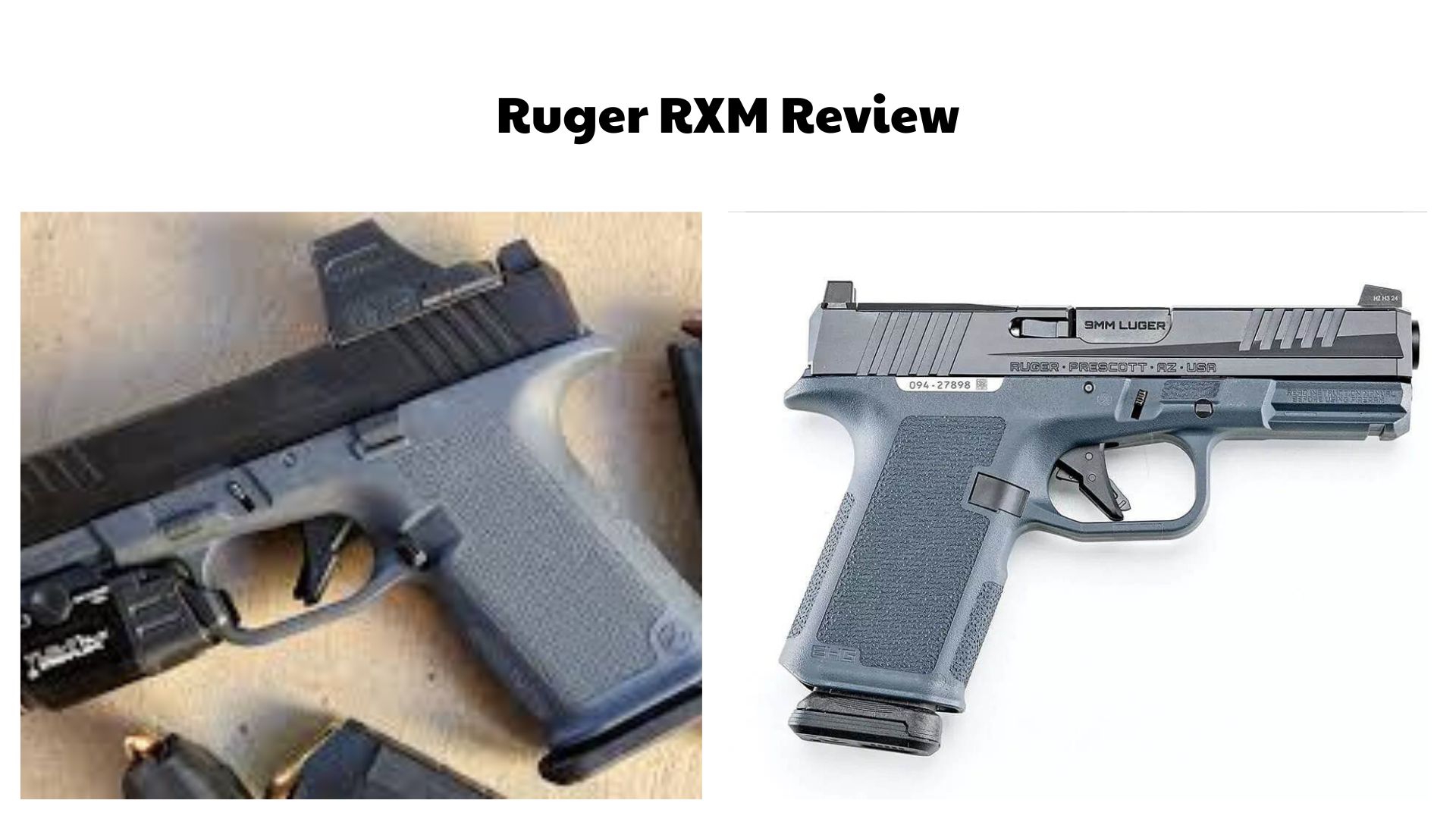

The Ruger RXM is a striker-fired 9mm pistol built through a collaboration between Ruger and Magpul. It combines a removable serialized fire control insert, a Magpul Enhanced Handgun Grip, optics-ready slide, Gen 3 Glock-style parts compatibility, and a familiar compact-pistol format. In this Ruger RXM Review, we will look at the pistol’s design, specifications, ergonomics, shooting feel, reliability, accuracy, magazine system, optics setup, maintenance, accessories, legal considerations, and real-world value. The RXM is not just another polymer-frame 9mm. Its biggest appeal is that it gives shooters a modular platform with strong aftermarket potential, practical defensive features, and a price that keeps it competitive in the crowded compact handgun market. Ruger lists the RXM as a 9mm Luger pistol with a removable stainless-steel Fire Control Insert inside an interchangeable Magpul Enhanced Handgun Grip.
Overview of the Ruger RXM
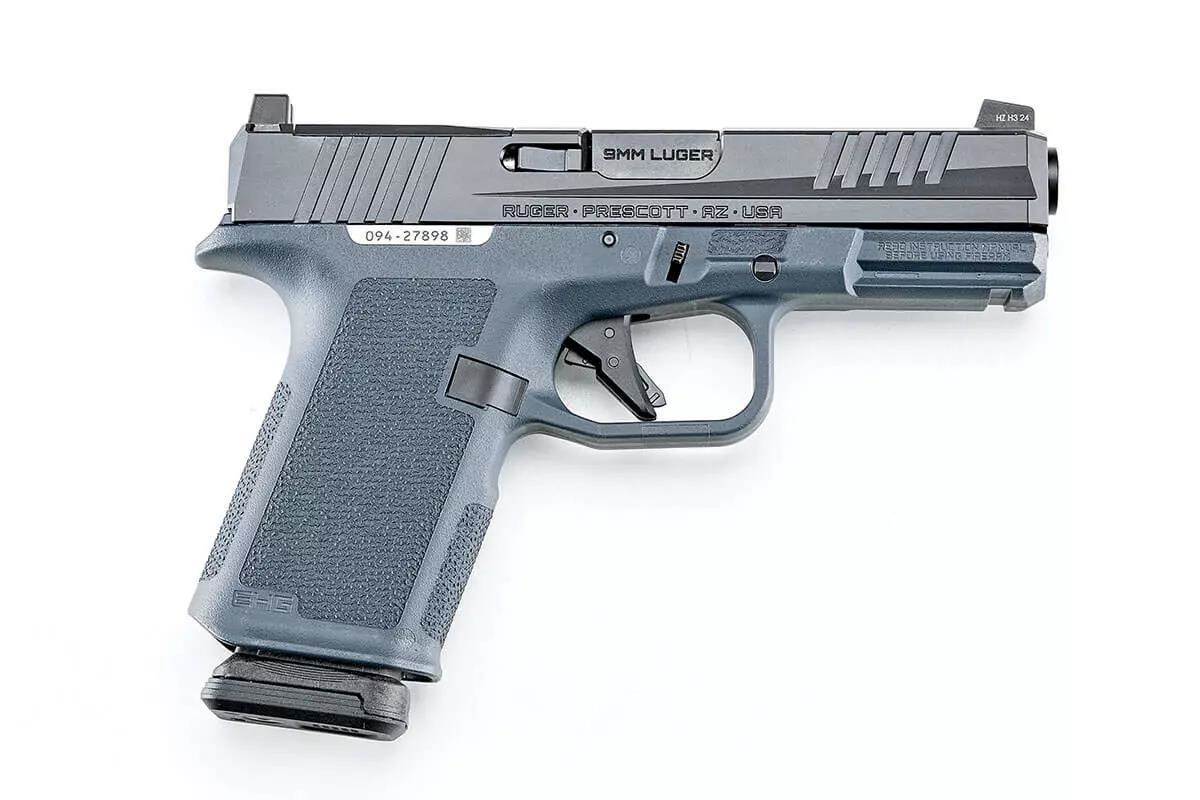
The Ruger RXM is a compact, striker-fired, semi-automatic 9mm pistol designed for concealed carry, home defense, range practice, and general-purpose handgun use. The “RXM” name reflects the partnership between Ruger and Magpul. Ruger brings its manufacturing experience and firearm design history, while Magpul contributes the grip module, magazine expertise, and accessory-minded design language.
The RXM’s most important feature is its removable serialized Fire Control Insert, often shortened to FCI. Instead of making the polymer grip frame the serialized firearm, Ruger uses a stainless-steel internal chassis as the legal firearm component. This allows the grip module to be replaced more easily, similar in concept to other modular handguns. The factory RXM ships with a Magpul Enhanced Handgun Grip, giving the pistol a modern texture, flared magazine well, and practical control layout.
Reviewers have generally described the RXM as more than a basic Glock Gen 3 clone. Shooting Illustrated praised the combination of the optics system, chassis setup, Ruger manufacturing, and Magpul frame design, while Guns.com described it as reliable, familiar, accurate, intuitive, and easy to master after extended range use.
Key Specifications
| Feature | Ruger RXM Specification |
|---|---|
| Caliber | 9mm Luger |
| Action | Striker-fired, recoil-operated semi-automatic |
| Capacity | 15+1 or 17+1 depending on model |
| Barrel Length | 4 inches on standard compact models; some models list 4.5 inches |
| Weight | Approximately 23.6 oz on listed Ruger model 19436 |
| Grip Frame | Magpul Enhanced Handgun Grip |
| Fire Control Insert | Removable serialized stainless-steel FCI |
| Optics Compatibility | Models include RMR, DPP, RMSc, and some Aimpoint A-CUT options |
| MSRP | Commonly listed around $539 to $599 depending on model |
Ruger’s current RXM model page lists several variants, including 15+1 and 17+1 versions, different grip colors, 4-inch and 4.5-inch barrel options, and optic-pattern differences. This matters because buyers should confirm the exact model number before purchasing.
Design and Build Quality
The RXM looks familiar at first glance, especially to shooters who know Glock-pattern pistols. It uses a squared slide, polymer grip module, flat-faced trigger, accessory rail, and striker-fired operating system. The difference is in the execution. Ruger and Magpul did not simply copy a basic design and call it finished. They added modularity, better factory ergonomics, useful sights, and optics support.
The slide is made from steel alloy with a durable finish, and the pistol is built around a removable stainless-steel fire control insert. The polymer grip module is made by Magpul and has a cleaner, more sculpted feel than many basic factory polymer frames. Guns & Ammo listed the RXM with a steel alloy slide, Magpul polymer grip, 4-inch barrel, 15+1 capacity, and tested trigger pull of 4 pounds, 12 ounces.
The build quality feels purpose-driven. The RXM does not try to be flashy. It focuses on practical details: a useful grip angle, accessible controls, good factory sights, and parts compatibility. The pistol is American-made and benefits from two brands with strong reputations in the firearms market. Handguns Magazine called the RXM a well-designed pistol and highlighted the Ruger-Magpul collaboration as a strong start in the compact 9mm category.
Ergonomics and Handling
Ergonomics are one of the RXM’s strongest points. The Magpul Enhanced Handgun Grip gives the pistol a more controlled feel than many older compact polymer pistols. The grip texture is secure without being harsh. It works well for range sessions, concealed carry, and defensive handling.
The grip shape encourages a high hold. The beavertail area helps the hand settle naturally behind the slide. The front strap and side panels provide enough traction for fast follow-up shots. The low-profile flared magazine well also helps reloads without making the pistol feel oversized.
The RXM is easy to point. Many shooters who are familiar with Glock-pattern handguns will adapt quickly, but the RXM grip may feel more refined. RangeHot described the pistol as having ergonomics that help with natural point of aim, while also noting that it includes practical defensive features without becoming overcomplicated.
Capacity and Magazine System
The Ruger RXM is available in different capacity configurations. Ruger lists 15+1 and 17+1 variants depending on model. That gives the RXM competitive capacity for a compact or crossover-style 9mm pistol.
The pistol uses Magpul GL9 magazines. That is an important advantage because Magpul magazines are widely available and affordable compared with some proprietary handgun magazines. The use of a Glock-pattern magazine system also gives the RXM strong practical value for shooters who already own compatible magazines.
The magazine release is designed for easy access. The grip has a scalloped area around the release, and the magazine well is lightly flared. This combination makes reloads smoother without adding bulky competition-style parts.
Barrel, Sights, and Controls
The standard RXM compact model uses a 4-inch barrel, while Ruger also lists models with 4.5-inch barrels. A 4-inch barrel is a practical choice for a compact 9mm. It offers a good balance between sight radius, velocity, recoil control, and concealability.
The factory sights are better than basic polymer sights found on some competing pistols. Ruger lists RXM models with co-witness-height steel sights and tritium front sight options depending on configuration. This is helpful for shooters who plan to mount a red dot optic.
The controls are simple and familiar. The pistol has a flat-faced trigger with integrated trigger safety, a raised slide stop, and an extended magazine release. Guns.com noted that the flat trigger had smooth take-up, a defined wall, and a tactile reset in its early hands-on coverage.
Optics-Ready Slide
The RXM’s optics-ready setup is one of its major selling points. Ruger lists models with compatibility for RMR, DPP, and RMSc optic patterns, while some distributor-exclusive models use the Aimpoint A-CUT pattern.
This matters because red dot sights are now common on defensive and range pistols. A good optics-ready system saves buyers from sending the slide to a gunsmith or buying an aftermarket slide. The RXM gives users a factory path to add a dot while keeping co-witness-height sights available as a backup.
Trigger Quality
The RXM trigger is generally described as clean, usable, and better than many stock striker-fired triggers. It is not a custom competition trigger, but it is well suited for defensive practice, range use, and everyday carry.
The flat face helps the trigger feel consistent. The take-up is smooth, the break is predictable, and the reset is tactile. Guns & Ammo reported a tested trigger pull of 4 pounds, 12 ounces, while Guns.com measured an average trigger pull around the mid-5-pound range during its early handling. Differences in measurement tools and samples are normal, but both reports suggest a practical factory trigger.
Recoil and Shooting Experience
The RXM shoots like a well-sorted compact 9mm. Recoil is manageable, muzzle rise is modest, and the grip texture helps the shooter maintain control. The pistol is light enough for carry but still heavy enough to avoid feeling snappy.
The grip module deserves credit here. A good grip does not eliminate recoil, but it changes how recoil feels. The RXM’s grip shape helps the pistol track consistently during strings of fire. That makes it easier to return the sights or red dot to target.
For new shooters, the RXM should feel approachable after basic training. For experienced shooters, it feels familiar and efficient. Guns.com described the RXM as intuitive and easy to master after range testing, which lines up with the pistol’s purpose as a practical everyday 9mm.
Accuracy and Reliability
Accuracy from the RXM is strong for a compact 9mm pistol. The barrel length, trigger quality, grip shape, and sight system all support practical accuracy. This is not a bullseye pistol, but it is accurate enough for defensive drills, range practice, and practical competition-style shooting.
Reliability reports from major reviews have been positive. Guns.com published a review after a 2,500-round test and summarized the pistol as reliable, familiar, accurate, intuitive, and easy to master. Shooting Illustrated also praised the RXM’s overall design and argued that it offers advantages beyond a basic Gen 3 Glock clone.
As with any defensive handgun, buyers should test their own pistol with their chosen ammunition. A pistol can have a strong reputation and still need personal verification. This is especially important for defensive hollow points, carry magazines, and any aftermarket parts.
Modularity and Gen 3 Compatibility
The RXM’s modularity is the feature that separates it from most Glock-style pistols. The serialized fire control insert can be removed from the grip module, allowing future grip changes and customization. Ruger states that most major components are designed for Gen 3 compatibility with off-the-shelf parts, holsters, and accessories.
This makes the RXM appealing to shooters who like the Glock ecosystem but want a more modern factory setup. It also helps with holster selection, magazine availability, trigger options, sights, and other common upgrades.
That said, compatibility should never be assumed blindly. “Gen 3 compatible” does not always mean every aftermarket part will fit perfectly. Buyers should confirm fitment with part makers and test the pistol after any upgrade.
Pros and Cons
Pros
- Strong collaboration between Ruger and Magpul
- Modular serialized stainless-steel fire control insert
- Comfortable Magpul Enhanced Handgun Grip
- Good factory sights on many models
- Optics-ready slide with useful footprint options
- Compatible with many Gen 3-style parts and holsters
- Uses widely available Magpul GL9 magazines
- Manageable recoil and familiar handling
- Good value compared with many optics-ready compact 9mm pistols
Cons
- Some buyers may prefer a fully original design rather than a Glock-pattern platform
- Aftermarket compatibility still requires verification
- Model differences can be confusing, especially optic footprint and capacity options
- Not available in every restricted state configuration
- Long-term high-round-count durability is still being proven compared with older platforms
Best Use Cases
The Ruger RXM is best suited for shooters who want one pistol to cover several roles. It can serve as a concealed carry handgun, home defense pistol, range training pistol, or entry-level optics-ready defensive platform.
Concealed Carry
The compact size, 9mm chambering, practical capacity, and familiar controls make the RXM a solid carry option. It is not the smallest pistol available, but it offers a better shooting experience than many micro-compacts.
Home Defense
The accessory rail, optics-ready slide, good capacity, and manageable recoil make the RXM useful for home defense. Owners should pair it with proper training, safe storage, and legally appropriate defensive ammunition.
Range Practice
The RXM is comfortable enough for longer range sessions. Affordable magazines and 9mm ammunition availability make it practical for regular practice.
Beginner-Friendly Defensive Training
New handgun owners may appreciate the RXM’s simple controls, comfortable grip, and predictable trigger. However, beginners should still take professional safety and handling instruction before using any handgun for defense.
Comparison With Similar Pistols
The RXM competes with compact and crossover 9mm pistols such as the Glock 19, PSA Dagger, Smith & Wesson M&P9 Compact, SIG Sauer P320 Compact, Springfield Echelon Compact, and CZ P-10 C. Its biggest advantage is combining Glock-pattern familiarity with a removable fire control insert and Magpul grip module.
| Pistol | Main Strength | How It Compares to RXM |
|---|---|---|
| Glock 19 | Proven reliability and huge aftermarket | The RXM offers more factory modularity and better grip features for many shooters. |
| PSA Dagger | Low price and Glock-style compatibility | The RXM feels more refined and has Ruger/Magpul brand backing. |
| S&W M&P9 Compact | Excellent ergonomics and proven design | The RXM has stronger Glock-pattern parts compatibility. |
| SIG P320 Compact | True modular fire control unit ecosystem | The RXM offers a Glock-pattern alternative with a familiar striker-fired feel. |
| CZ P-10 C | Great trigger and ergonomics | The RXM wins on modularity and broader Glock-pattern accessory support. |
Ruger RXM vs Glock 19
The Glock 19 is the obvious comparison. It is one of the most proven compact 9mm pistols ever made. The Ruger RXM borrows from the Glock Gen 3 ecosystem but adds features Glock users often upgrade later.
The RXM has a better factory grip module for many hands, a removable serialized FCI, strong optics support, and useful factory controls. The Glock 19 still wins on long-term track record, law enforcement adoption, and unmatched aftermarket support.
For buyers who want the most proven option, the Glock 19 remains hard to beat. For buyers who want a more modern take on the same general concept, the RXM is more interesting out of the box.
Maintenance and Cleaning
The Ruger RXM should be maintained like other striker-fired 9mm pistols. Owners should follow Ruger’s official manual, keep the pistol unloaded before cleaning, remove the magazine, check the chamber visually and physically, and use proper cleaning supplies.
Basic maintenance includes cleaning the barrel, wiping carbon from the slide and frame areas, lightly lubricating recommended contact points, inspecting magazines, and checking sights or optics mounting screws. Avoid over-lubrication. Too much oil can attract dirt and unburned powder.
Because the RXM uses a removable fire control insert, owners should also pay attention to debris around the chassis area. However, disassembly beyond normal field stripping should follow the manufacturer’s instructions. Do not modify safety-related parts unless you are qualified and understand the consequences.
Accessories and Upgrade Options
The RXM’s accessory potential is excellent. The universal accessory rail can accept many compact weapon lights. The optics-ready slide supports red dot setups depending on model. The Gen 3-style ecosystem opens the door to sights, holsters, magazines, triggers, and other parts.
Recommended Accessory Categories
- Holster: Choose a quality holster made for the exact RXM model and intended carry method.
- Red Dot Sight: Match the optic to the pistol’s footprint and mounting system.
- Weapon Light: Useful for home defense, but training is essential.
- Spare Magazines: Magpul GL9 magazines are practical and widely available.
- Range Bag and Cleaning Kit: Basic support gear makes ownership easier.
- Grip Modules: Future Magpul grip options may expand the RXM’s modular appeal.
Legal Considerations
Firearm laws vary by country, state, county, and city. Before buying, carrying, transporting, or modifying the Ruger RXM, owners should check all applicable laws in their area. Ruger’s model listings also show that some configurations may not be available in states such as California or Massachusetts.
There has also been public legal and political attention around Glock-pattern pistols and illegal machine-gun conversion devices. Connecticut’s attorney general warned Ruger in 2025 about concerns related to illegal conversion devices and the RXM’s compatibility claims. That does not mean lawful owners cannot buy or use the RXM where legal, but it does underline the importance of avoiding illegal modifications and understanding local rules.
Who Should Buy the Ruger RXM?
The Ruger RXM is a strong choice for shooters who want a compact 9mm with modern factory features. It is especially appealing if you like Glock-style simplicity but want better ergonomics, modularity, and Magpul design influence.
It also makes sense for buyers who want an optics-ready pistol without immediately budgeting for slide work, sight upgrades, or grip modifications. The RXM is practical, familiar, and customizable without feeling complicated.
Who Should Avoid the Ruger RXM?
The RXM may not be ideal for shooters who want the smallest possible concealed carry pistol. It is compact, but not a micro-compact. It may also not satisfy buyers who prefer hammer-fired pistols, manual safeties, metal frames, or platforms with decades of proven institutional use.
Buyers in restricted states should also verify legality and availability before getting attached to a specific model. Capacity limits, roster rules, and carry laws can affect whether the RXM is practical or legal in your location.
Final Verdict
The Ruger RXM is one of the more interesting compact 9mm pistols because it blends familiar Glock-pattern function with real modularity and Magpul ergonomics. It is not revolutionary in every detail, but the complete package is smart. The grip feels good, the trigger is practical, the optics-ready slide is useful, and the FCI system gives the pistol room to grow.
For this Ruger RXM Review, the main takeaway is simple: the RXM is a well-priced, modern, modular 9mm pistol that deserves serious attention from concealed carry users, home defense buyers, and range shooters who want a flexible platform. The Glock 19 still has the deeper track record, but the RXM offers a more feature-rich factory package for many modern shooters.
Ruger RXM FAQs
1. What is the Ruger RXM?
The Ruger RXM is a striker-fired 9mm semi-automatic pistol made through a collaboration between Ruger and Magpul. It uses a removable serialized stainless-steel Fire Control Insert inside a Magpul Enhanced Handgun Grip. The pistol is designed to offer familiar Glock-pattern handling with added modularity, improved ergonomics, optics support, and strong aftermarket potential.
2. What does RXM stand for?
Ruger has not made the name into a long technical phrase in the same way some model names are explained, but the RXM branding clearly reflects Ruger and Magpul working together. The pistol combines Ruger manufacturing with Magpul’s grip and magazine design experience.
3. Is the Ruger RXM a Glock clone?
The RXM is best described as a Glock Gen 3-compatible modular pistol rather than a simple clone. It shares many familiar design ideas and parts compatibility with the Gen 3 ecosystem, but it adds a removable fire control insert, Magpul grip module, factory optics support, and several upgraded features that make it different from a basic copy.
4. What caliber is the Ruger RXM?
The Ruger RXM is chambered in 9mm Luger. This is one of the most common defensive and range calibers in the world. It offers manageable recoil, wide ammunition availability, strong defensive load options, and lower training cost compared with many larger handgun calibers.
5. What is the magazine capacity of the Ruger RXM?
Capacity depends on the specific model. Ruger lists RXM versions with 15+1 and 17+1 capacity. Some areas may require reduced-capacity magazines because of local law. Always confirm the exact model and magazine capacity before purchasing.
6. Is the Ruger RXM good for concealed carry?
Yes, the RXM can be a good concealed carry pistol for shooters who are comfortable carrying a compact 9mm. It is not as small as a micro-compact, but it offers better shootability, grip control, and capacity than many smaller pistols. A quality holster and proper training are essential.
7. Is the Ruger RXM good for home defense?
The RXM is a practical home defense option because it offers 9mm capacity, manageable recoil, simple controls, an accessory rail, and optics-ready capability. Owners should use safe storage, learn local laws, and train with the pistol before relying on it for defense.
8. Is the Ruger RXM reliable?
Major reviews have reported positive reliability. Guns.com published a 2,500-round review and described the pistol as reliable, accurate, familiar, and easy to master. Still, every owner should test their own pistol with their chosen magazines and defensive ammunition before trusting it for carry or home defense.
9. How accurate is the Ruger RXM?
The RXM is accurate enough for defensive drills, range training, and practical shooting. Its usable trigger, comfortable grip, and solid sight system help shooters maintain control. Accuracy will still depend heavily on ammunition quality, shooter skill, grip, sight picture, and trigger control.
10. Does the Ruger RXM have a removable fire control unit?
Yes. Ruger calls it a removable serialized stainless-steel Fire Control Insert, or FCI. This insert is the serialized firearm component and sits inside the Magpul Enhanced Handgun Grip. This design allows future grip module changes and gives the RXM much of its modular appeal.
11. What makes the RXM different from a Glock 19?
The RXM offers a removable fire control insert, Magpul grip module, factory optics-ready features, and upgraded ergonomics. The Glock 19 has a longer track record and a larger aftermarket. The RXM is attractive for buyers who want a more modern factory package with familiar Glock-style function.
12. Does the Ruger RXM accept Glock magazines?
The RXM is designed around Glock-pattern magazine compatibility and ships with Magpul GL9 magazines. Compatibility can vary with specific magazine generations and extensions, so owners should test every magazine they plan to use seriously.
13. Does the Ruger RXM accept Glock Gen 3 parts?
Ruger states that most major components are designed for Gen 3 compatibility with off-the-shelf parts, holsters, and accessories. However, “most” does not mean “all.” Always verify fitment with the part maker and test the pistol safely after installing any part.
14. Is the Ruger RXM optics ready?
Yes. Ruger offers RXM models with optics-ready slides. Some models list RMR, DPP, and RMSc compatibility, while select models list Aimpoint A-CUT compatibility. Buyers should check the exact model number to make sure it matches their preferred optic.
15. What red dot fits the Ruger RXM?
The answer depends on the RXM model. Ruger lists models with RMR, DPP, RMSc, and Aimpoint A-CUT optic pattern options. Before buying a red dot, confirm the footprint of your pistol and whether plates, screws, or adapters are required.
16. Does the Ruger RXM have night sights?
Some RXM models include tritium front sights and co-witness-height sight setups. Ruger’s current model list shows sight differences between variants. Buyers should verify the exact sight package on the model they plan to purchase.
17. How does the Ruger RXM trigger feel?
The RXM trigger is generally described as smooth, predictable, and practical. It uses a flat face with an integrated trigger safety. Reviewers have measured trigger pull in the approximate 4.75- to mid-5-pound range depending on sample and method, which is reasonable for a defensive striker-fired pistol.
18. Is the Ruger RXM safe?
The RXM includes common striker-fired safety features such as a trigger safety and internal striker-blocking system. Like any firearm, safe use depends on proper handling, secure storage, training, and following all basic firearm safety rules. Mechanical safeties do not replace responsible handling.
19. Does the Ruger RXM have a manual safety?
The standard RXM uses internal safeties and a trigger safety rather than a traditional external thumb safety. Shooters who strongly prefer a manual safety may want to compare other pistol options before choosing the RXM.
20. Is the Ruger RXM good for beginners?
The RXM can work well for beginners who are committed to training. It has manageable recoil, simple controls, good capacity, and a comfortable grip. However, beginners should receive professional instruction and practice safe handling before using any handgun for defense.
21. Is the Ruger RXM too large for daily carry?
That depends on body type, clothing, holster choice, and carry position. The RXM is compact enough for many people to carry, but it is larger than many micro-compact pistols. The tradeoff is that it is usually easier to shoot well than very small carry guns.
22. What holsters fit the Ruger RXM?
Because the RXM is designed with Gen 3-style compatibility, some Glock-pattern holsters may work, but buyers should not assume perfect fit. The best choice is a holster specifically listed for the Ruger RXM, especially if using a weapon light or optic.
23. Can the Ruger RXM use a weapon light?
Yes. The RXM has an accessory rail that can accept compatible lights and lasers. A weapon light can be useful for home defense, but it requires training. Owners should understand target identification, light discipline, and safe storage.
24. What is the best use for the Ruger RXM?
The RXM is best used as a general-purpose 9mm pistol. It can handle concealed carry, home defense, range practice, training classes, and casual competition. Its modularity and accessory support make it more flexible than many basic compact pistols.
25. Is the Ruger RXM better than the Glock 19?
It depends on what you value. The RXM offers more modern factory features and modularity. The Glock 19 has a longer history and a massive aftermarket. If you want proven simplicity, Glock is hard to beat. If you want a feature-rich Glock-pattern alternative, the RXM is very compelling.
26. Is the Ruger RXM better than the PSA Dagger?
The PSA Dagger is often attractive because of price. The RXM generally feels more refined and offers the Ruger-Magpul collaboration, removable fire control insert, and strong factory feature set. Budget-focused buyers may prefer the Dagger, while buyers wanting a more polished pistol may prefer the RXM.
27. How does the Ruger RXM compare to the SIG P320?
Both pistols use a modular serialized internal fire control system, but they belong to different ecosystems. The P320 has a mature modular platform with many grip modules and slide options. The RXM appeals to shooters who prefer Glock-pattern parts, magazines, and handling.
28. How does the Ruger RXM compare to the Smith & Wesson M&P9 Compact?
The M&P9 Compact has excellent ergonomics and a proven track record. The RXM offers stronger Glock-pattern accessory compatibility and modular grip potential. The better choice depends on which grip feels better in your hand and which ecosystem you prefer.
29. Is the Ruger RXM good for competition?
The RXM can be used for local matches and practical shooting practice. Its optics-ready slide, good grip, and aftermarket potential make it suitable for entry-level competition. Serious competitors may eventually want trigger upgrades, dedicated magazines, and competition-specific holsters.
30. Can I dry fire the Ruger RXM?
Most modern centerfire striker-fired pistols can tolerate normal dry fire, but owners should follow Ruger’s manual. Snap caps can be useful for practice and may reduce wear during high-volume dry fire routines. Always confirm the firearm is unloaded before dry practice.
31. How often should I clean the Ruger RXM?
For normal range use, cleaning after each session or every few hundred rounds is a reasonable habit. Defensive pistols should be inspected regularly even if they are not fired often. Dust, lint, sweat, and old lubricant can build up on a carry gun.
32. Is the Ruger RXM easy to disassemble?
The RXM field-strips like many striker-fired pistols and should be straightforward for owners familiar with this style of handgun. Always follow the official manual, unload the pistol completely, and avoid unnecessary disassembly beyond routine cleaning unless properly trained.
33. Can I change the Ruger RXM grip module?
The RXM’s removable fire control insert is designed to support grip module changes. The factory grip is a Magpul Enhanced Handgun Grip. Future grip options may make the platform even more flexible, but buyers should confirm current availability before purchasing parts.
34. What colors does the Ruger RXM come in?
Ruger lists RXM models with grip frame colors such as Stealth Gray, Black, and OD Green depending on model. Availability may vary by distributor, production run, and local dealer inventory.
35. Is the Ruger RXM legal in California?
Ruger’s listed model 19436 page says it is not available in California. Firearm laws and rosters change, so California buyers should check the current roster and local legal requirements before attempting to purchase any RXM model.
36. Is the Ruger RXM legal in Massachusetts?
Ruger’s listed model 19436 page says it is not available in Massachusetts. Buyers should verify current Massachusetts rules, approved rosters, magazine restrictions, and dealer availability before making a purchase decision.
37. Are there legal concerns with modifying the Ruger RXM?
Yes. Any firearm modification should comply with federal, state, and local law. Illegal conversion devices, unsafe trigger modifications, and prohibited configurations can create serious criminal and safety consequences. Stay with lawful accessories and consult qualified professionals when unsure.
38. Does the Ruger RXM have controversy around conversion devices?
There has been public legal attention around the RXM and concerns about illegal machine-gun conversion devices. This does not change the basic fact that lawful ownership depends on local laws and responsible use. Owners should never install illegal devices or make unlawful modifications.
39. What ammunition works best in the Ruger RXM?
For range practice, quality 115-grain or 124-grain full metal jacket 9mm ammunition is a common choice. For defense, many shooters use reputable jacketed hollow point ammunition. The best load is one that functions reliably and shoots accurately in your individual pistol.
40. Should I use 115-grain or 124-grain ammo in the RXM?
Both can work well. 115-grain ammo is common and affordable for practice. 124-grain ammo often feels slightly smoother in some pistols and is popular for defensive training. Test both and choose based on reliability, accuracy, recoil feel, and point of impact.
41. Does the Ruger RXM have much recoil?
Recoil is moderate and manageable. Since the RXM is a compact 9mm, it has more movement than a full-size steel pistol but less harshness than many tiny micro-compacts. The Magpul grip helps the shooter control recoil during faster strings.
42. Is the Ruger RXM comfortable for large hands?
Many shooters with medium to large hands should find the RXM comfortable because the grip is fuller than many micro-compact designs. The Magpul grip shape, beavertail area, and texture help create a secure hold. As always, handling the pistol before buying is best.
43. Is the Ruger RXM comfortable for small hands?
The RXM may work for some small-handed shooters, but trigger reach and grip width should be tested in person. Smaller-handed users may prefer thinner pistols or future grip module options if available. Comfort and control matter more than specifications alone.
44. Can I carry the Ruger RXM appendix style?
Yes, many compact pistols can be carried appendix style with the right holster, belt, and training. The RXM’s size may work well for some users and feel too large for others. A rigid holster that fully covers the trigger guard is essential.
45. What is the MSRP of the Ruger RXM?
Ruger’s current RXM listings show models around $539 to $599 depending on configuration. Street prices may vary by dealer, demand, availability, taxes, transfer fees, and included features.
46. Is the Ruger RXM worth the money?
For many buyers, yes. The RXM offers modularity, optics support, Magpul grip design, Glock-pattern compatibility, good sights, and practical reliability at a competitive price. It gives buyers several upgrades that many people would otherwise add later.
47. What are the main downsides of the Ruger RXM?
The main downsides are model confusion, still-developing long-term track record, and the need to verify aftermarket compatibility. Some buyers may also prefer a smaller pistol for carry or a platform with decades of institutional use.
48. Should I buy the Ruger RXM or wait?
If the RXM fits your needs and is legal in your area, it is already a strong option. Waiting may bring more grip modules, more holsters, and more long-term reviews. Buying now makes sense if you want a modern compact 9mm with good factory features.
49. Can the Ruger RXM replace my Glock 19?
It can, but that depends on your trust in the platform. The RXM offers features some Glock 19 owners upgrade toward, but the Glock 19 has a longer proven history. If you already own a Glock 19, the RXM may be more of an alternative than a necessary replacement.
50. Is the Ruger RXM good for women shooters?
The RXM can be a good option for any shooter who can handle its size, trigger reach, and recoil. Fit matters more than gender. A shooter with smaller hands should test the grip and controls before buying, while anyone using it for defense should seek training.
51. Is the Ruger RXM good for left-handed shooters?
Left-handed shooters should test the controls before buying. The pistol’s simple layout may still work well, but users who require fully ambidextrous controls may prefer another model or check whether compatible parts are available.
52. What should I check before buying a Ruger RXM?
Check the exact model number, magazine capacity, optic footprint, sight configuration, local legality, holster availability, and included magazines. Because Ruger offers multiple RXM variants, small differences can matter.
53. What upgrades should I buy first for the Ruger RXM?
The best first upgrades are usually spare magazines, a quality holster, a good belt, and practice ammunition. After that, consider a red dot, weapon light, or sight changes based on your intended use. Avoid unnecessary internal modifications until you have trained with the pistol.
54. Is the Ruger RXM suitable for everyday carry and range use?
Yes. That is one of the RXM’s best roles. It is compact enough for many people to carry but large enough to enjoy at the range. This balance makes it more versatile than tiny carry pistols and easier to justify as a one-gun solution.
55. What is the final verdict on the Ruger RXM?
The Ruger RXM is a smart, modern, and practical 9mm pistol. It combines Ruger’s manufacturing strength with Magpul’s ergonomic design and the broad appeal of Glock-pattern compatibility. It is not the only good compact 9mm, but it is one of the most interesting choices for buyers who want modularity, optics support, and strong value in one package.
Read more: