
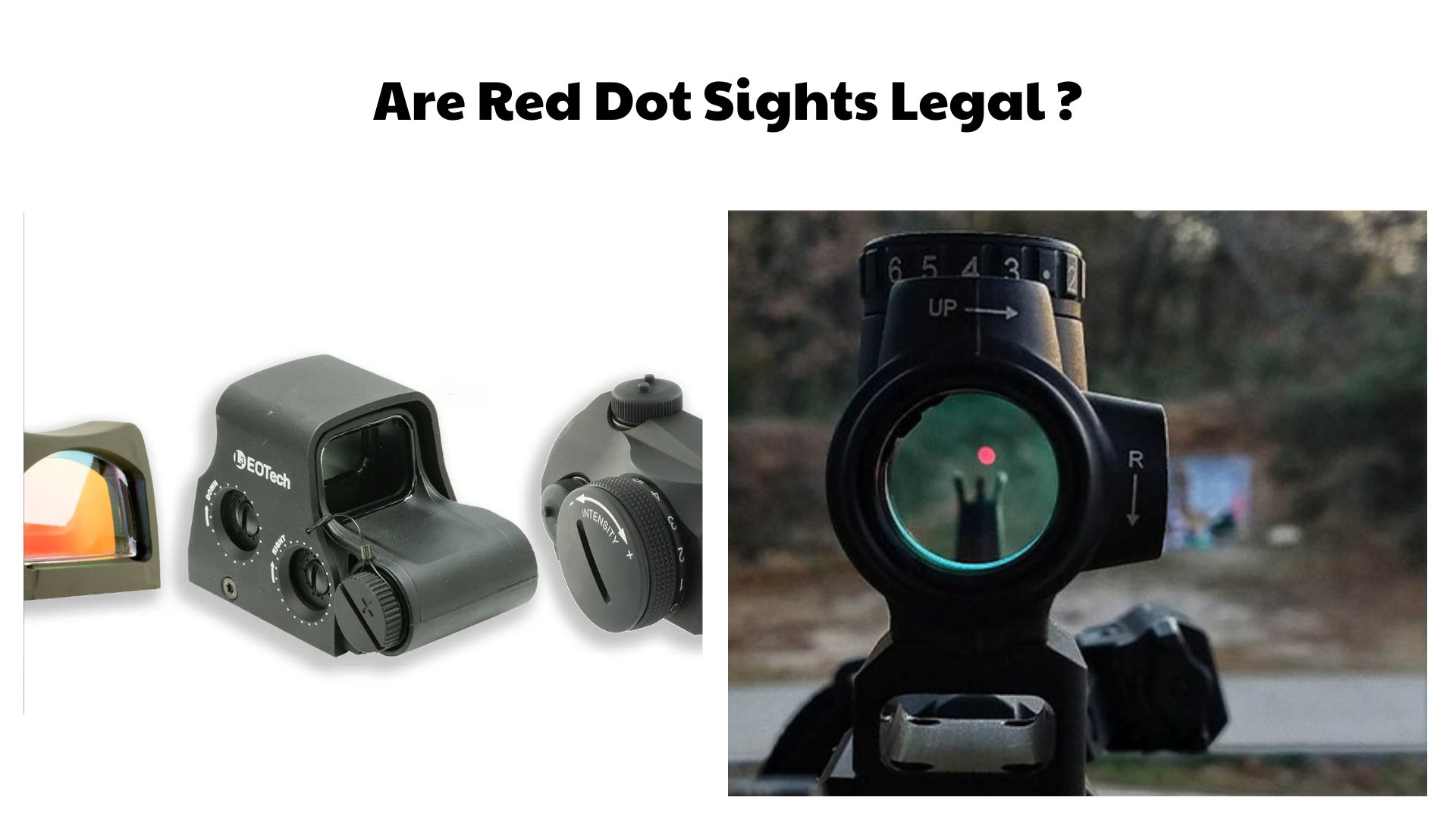

Red dot sights have become one of the most popular upgrades in modern firearms, especially for handguns, rifles, and tactical setups. At their core, they are simple optical devices that project an illuminated red or green dot onto a lens, allowing shooters to quickly align their aim without relying on traditional iron sights. This makes target acquisition faster, more intuitive, and often more accurate in dynamic situations.
Despite being widely used, questions about their legality continue to circulate. Many firearm owners ask, Are Red Dot Sights Legal? because the optics are often grouped with “tactical” accessories, which can create confusion. In reality, red dot sights are not firearms, nor are they classified as restricted weapons under federal law. However, misunderstandings arise due to differences in state firearm regulations, hunting rules, and even international export controls.
In the United States, federal law treats red dot sights as standard firearm accessories, similar to scopes or weapon lights. But state laws can influence how they are used, especially when combined with concealed carry rules or hunting regulations. Outside the U.S., additional export and import restrictions may apply depending on the country and classification of the optic.
This guide will break down everything you need to know, from how red dot sights work to where legal limitations may apply. We will also look at practical use cases such as concealed carry, hunting applications, and international shipping rules. Understanding these differences is essential for responsible ownership and legal compliance, especially as optics become more common on everyday firearms.
Simply put, knowing the law is just as important as knowing how the optic works. A red dot sight itself is simple, but the rules surrounding its use can vary more than most people expect.
What Are Red Dot Sights?
Definition and Function
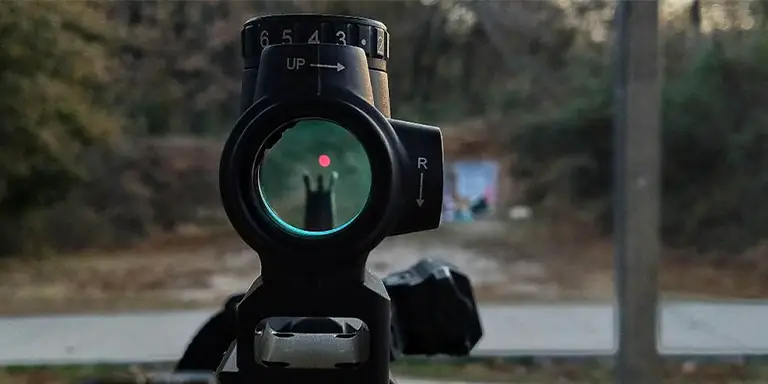
A red dot sight is a non-magnified optical aiming device designed to help shooters acquire targets faster and with greater consistency. Instead of relying on traditional iron sights, which require aligning a front post with a rear notch, a red dot sight projects an illuminated aiming point—usually a red or green dot—onto a lens. The shooter simply places the dot on the target, and the firearm is aligned.
At the technical level, most red dot sights use a small LED emitter inside the housing. This LED projects light toward a specially coated lens, which reflects the dot back toward the shooter’s eye. The dot appears to “float” in space while remaining fixed relative to the firearm’s barrel. This creates a simple but highly effective aiming system.
Because red dot sights are non-magnified, they are best suited for close to mid-range shooting. They do not zoom in on targets like traditional scopes. Instead, their advantage lies in speed and situational awareness. The shooter can keep both eyes open, maintain a wider field of view, and engage targets faster—especially in dynamic environments.
This simplicity is one reason red dot sights have become extremely popular in defensive shooting, law enforcement training, and recreational shooting. They reduce the learning curve for new shooters while improving performance for experienced users. However, despite being widely adopted, questions still arise around Are Red Dot Sights Legal? due to their association with tactical firearms.
Types of Red Dot Sights
Red dot sights come in several designs, each with unique advantages depending on the firearm and intended use.
Tube-style red dots are the most traditional form. They resemble small rifle scopes with a cylindrical housing. This enclosed design protects the internal emitter and lens from dust, rain, and impact. Tube-style optics are commonly used on rifles and carbines where durability is a priority.
Open reflex sights are more compact and lightweight. Instead of a full tube, they use an exposed lens and a smaller housing. This design is extremely popular for pistols and concealed carry handguns because it adds minimal bulk. The trade-off is slightly reduced protection from environmental elements.
Holographic-style optics are sometimes grouped with red dots, but they use different technology. Instead of a simple LED reflection, they project a holographic reticle using laser-based systems. These optics tend to be more expensive and are often used in professional or tactical environments. While functionally similar for aiming, they are technically distinct from standard red dot sights.
Each type serves the same general purpose—fast target acquisition—but offers different trade-offs in size, durability, and cost. Understanding these differences helps explain why red dot sights are used so widely across various firearm platforms.
Common Uses of Red Dot Sights
Red dot sights are used across multiple shooting disciplines, making them one of the most versatile firearm accessories available today.
In self-defense applications, red dots provide faster aiming under stress. In high-pressure situations, aligning traditional sights can be difficult. A red dot simplifies the process by placing a clear visual reference directly on the target.
In competitive shooting, speed is critical. Shooters use red dots to transition between targets quickly and maintain accuracy during rapid fire sequences. Many modern shooting sports now allow or even encourage optics due to their performance advantages.
In hunting, red dots are often used for fast-moving game or low-light conditions. They are especially useful in environments where quick shots are necessary and traditional scopes may be too slow to acquire targets.
Law enforcement and military personnel also rely heavily on red dot optics. They improve accuracy in close-quarters engagements and allow officers to maintain better situational awareness. However, civilian use has expanded significantly, which is why legal questions like Are Red Dot Sights Legal? are increasingly common.
Are Red Dot Sights Legal in the United States?
Federal Law Overview
At the federal level, red dot sights are fully legal in the United States. They are not classified as firearms, ammunition, or restricted weapon components under major federal laws such as the National Firearms Act (NFA) or the Gun Control Act (GCA). Instead, they are considered standard firearm accessories.
This classification means that purchasing a red dot sight does not require a background check, special permit, or federal registration. They can be freely sold, shipped, and owned across all states, subject only to general commerce regulations. Whether purchased online or in a retail store, red dot optics are treated the same way as scopes, slings, or weapon-mounted lights.
The reason for this legal status is straightforward: red dot sights do not alter the mechanical function of a firearm. They do not increase fire rate, magazine capacity, or projectile power. Their purpose is purely to assist aiming, which places them in the category of non-regulated accessories.
Why Red Dot Sights Are Generally Legal
Red dot sights are generally legal because they do not change the core operation of a firearm. They do not convert a semi-automatic weapon into an automatic one, nor do they modify ballistic performance. Instead, they improve the shooter’s ability to aim more efficiently.
Legally, this distinction is important. Firearm regulations in the United States typically focus on features that affect lethality or firing capability. Examples include suppressors, short-barreled rifles, or fully automatic conversions. Red dot sights do not fall into any of these categories.
Instead, they are treated as optical aids—similar to binoculars or telescopic scopes. This is why they are widely available and commonly used by civilians, law enforcement, and military personnel without restriction.
However, despite their clear legal status, confusion still exists. This is often due to misinformation, retail shipping restrictions, or assumptions that all “tactical” accessories are regulated. In reality, when asking Are Red Dot Sights Legal?, the answer in the United States is consistently yes at the federal level, with only limited state-specific or situational considerations affecting use rather than ownership.
State-Level Laws and Restrictions
When answering Are Red Dot Sights Legal?, state-level laws are where most of the confusion begins. While federal law clearly treats red dot sights as legal accessories, individual states can still influence how they are used in practice. These laws rarely target the optic itself, but instead regulate firearm configurations, hunting methods, or carry conditions where optics may be attached.
In most cases, red dot sights remain fully legal across all U.S. states. However, the legal landscape becomes more nuanced when optics are combined with specific firearm categories or used in regulated activities like hunting or concealed carry. Understanding these differences helps firearm owners avoid unnecessary legal misunderstandings.
California Example
California is often mentioned in firearm law discussions due to its stricter regulations, but red dot sights are generally legal in the state. There is no specific law that bans or restricts the possession or use of red dot optics on firearms. They are widely available for purchase and commonly used by civilian shooters.
Importantly, red dot sights are not listed as a prohibited firearm feature under California law. This means they do not fall into categories such as restricted accessories or banned modifications. Gun owners are free to install them on compliant firearms without violating state law.
However, indirect restrictions may still apply depending on how the firearm itself is classified. California’s “assault weapon” definitions focus on features such as magazine capacity, pistol grips, and overall firearm configuration. A red dot sight does not trigger these classifications on its own, but it may be used on firearms that are otherwise subject to regulation.
In practical terms, this means the optic is legal, but the firearm platform must still comply with state requirements. For most standard handguns and hunting rifles, red dot use remains fully lawful and widely accepted.
Other State Variations
Across the majority of U.S. states, red dot sights are completely unrestricted. There are no specific laws banning their ownership or use. This makes them one of the most universally accepted firearm accessories in the country.
Some states may introduce indirect regulations, particularly when optics are combined with additional technologies. For example, laser-integrated sights or night vision attachments may be subject to separate rules in certain jurisdictions. These regulations typically do not apply to standard red dot sights, but confusion often arises when the terms are used interchangeably.
Hunting regulations also vary by state wildlife agencies. Some states allow red dot sights for all game types, while others restrict electronic optics during specific hunting seasons or for certain species. These rules are not about legality of ownership, but about fair chase principles and hunting ethics.
Overall, state-level variation is less about banning red dots and more about how and when they can be used in specific contexts. This is why the question Are Red Dot Sights Legal? often has a simple answer at ownership level, but a more detailed answer at usage level.
Why Confusion Exists
Much of the confusion surrounding red dot legality comes from non-legislative sources rather than actual laws. One major factor is retailer shipping restrictions. Some online vendors limit shipments of optics to certain states due to internal compliance policies or caution around firearm-related products. These restrictions are company decisions, not legal prohibitions.
Another common source of misunderstanding is the misinterpretation of firearm feature laws. Because red dot sights are often sold alongside tactical accessories, some users incorrectly assume they are regulated in the same way as suppressors or restricted firearm components. In reality, they are not classified in that category.
There is also frequent overlap in discussions involving night vision devices, laser sights, and illuminated optics. These technologies are governed by different rules in some states and can easily be confused with standard red dot sights. This leads to the false assumption that all electronic aiming devices are restricted.
In reality, red dot sights remain one of the least restricted firearm accessories in the United States. Most legal issues arise not from the optic itself, but from misunderstanding how it interacts with other firearm laws.
Are Red Dot Sights Legal for Concealed Carry?
General Concealed Carry Rules
In most states, red dot sights are fully legal for concealed carry use. There are no federal restrictions preventing the installation or use of optics on concealed carry handguns. As long as the firearm itself is legally carried under state law, adding a red dot sight does not change its legal status.
However, concealed carry laws still apply. This means the individual must comply with permit requirements where applicable, including licensing, background checks, and location restrictions such as schools, government buildings, or private property rules.
From a legal standpoint, the optic is considered an accessory, not a modification that affects carry eligibility. This makes red dot-equipped handguns just as legal as traditional iron sight firearms in jurisdictions where concealed carry is permitted.
Practical Considerations
While legality is generally straightforward, practical use of red dots on concealed carry firearms introduces additional considerations. One major advantage is improved target acquisition under stress. In defensive situations, a red dot allows faster alignment compared to iron sights, especially in low-light environments or high-pressure scenarios.
However, installing a red dot sight on a handgun may require modifications such as milling the slide or using an optic-ready platform. These modifications are legal in most jurisdictions but should be performed carefully to maintain firearm reliability and safety.
Another consideration is concealment. Adding an optic may slightly increase the profile of the firearm, which can affect holster selection and printing (visibility through clothing). While this does not affect legality, it does influence practical everyday carry comfort.
Importantly, there is no federal prohibition on carrying a concealed firearm equipped with a red dot sight. The optic does not change the firearm’s legal classification. Instead, it functions as an enhancement tool that improves aiming performance without altering legal status.
In summary, red dot sights are widely accepted in concealed carry applications. Their legality is consistent across federal law, and most restrictions are practical rather than legal in nature.
Are Red Dot Sights Legal for Hunting?
When people ask Are Red Dot Sights Legal?, hunting is one of the most common use cases where confusion appears. While red dot sights are generally legal in the United States, hunting regulations are not controlled at the federal level. Instead, each state sets its own wildlife rules, which means legality can vary depending on where, what, and how you are hunting.
In most cases, red dot sights are fully allowed for hunting because they are considered non-magnified aiming devices that improve accuracy without providing unfair ballistic advantage. However, certain restrictions may apply depending on game type, hunting season, and whether illuminated optics are allowed in specific environments.
State Wildlife Regulations
Across many U.S. states, red dot sights are permitted for both rifle and handgun hunting. Wildlife agencies generally classify them as acceptable sighting systems, especially for modern hunting setups where quick target acquisition is important.
However, restrictions can still exist in specific scenarios. Some states limit the use of electronic or illuminated optics during certain hunting seasons, particularly for game species such as deer or turkey. These rules are typically designed to maintain fair chase principles and ensure ethical hunting practices.
Night hunting regulations are another important factor. In some jurisdictions, illuminated devices may be restricted or require special permits. While red dot sights are not night vision devices, their illuminated reticles can still fall under broader electronic optics rules depending on the state.
Because of these variations, hunters are always encouraged to check local Fish & Game regulations before using a red dot sight in the field. Even within the same state, rules can change based on wildlife management zones or hunting methods.
Key Legal Considerations
One of the most important distinctions in hunting law is understanding that a red dot sight is not the same as a laser sight. This is where many legal misunderstandings occur. A red dot sight projects a reticle onto a lens for the shooter to see, while a laser sight projects a visible beam onto the target itself.
Laser sights are more heavily regulated in some jurisdictions because they can be used in ways that may conflict with hunting ethics or safety guidelines. As a result, certain states restrict or prohibit laser projection devices for hunting purposes, especially during nighttime or low-visibility conditions.
Red dot sights, however, do not project anything onto the target. They remain a passive aiming system, which is why they are more widely accepted in hunting regulations. This distinction is critical when evaluating Are Red Dot Sights Legal? in a hunting context.
Another key consideration is that regulations can change based on species. For example, a state may allow red dots for varmint hunting but restrict them for big game during specific seasons. These rules are usually tied to conservation goals and fair chase standards rather than concerns about the optic itself.
Ultimately, hunters should treat red dot legality as a layered issue: the optic itself is generally legal, but its use depends on wildlife laws, seasonal restrictions, and ethical hunting guidelines established by each state.
International Laws on Red Dot Sights
Export Restrictions
Outside the United States, the question Are Red Dot Sights Legal? becomes more complex due to export and import regulations. While ownership is generally allowed in many countries, the international movement of red dot optics is often controlled under trade and defense-related laws.
Some red dot sights may require export permits depending on their classification. In certain cases, they fall under “dual-use” regulations, meaning they have both civilian and potential military applications. This classification can trigger additional paperwork, licensing, or government approval before the product can be shipped internationally.
Export controls are primarily designed to regulate sensitive technologies rather than restrict civilian ownership. However, they can still affect buyers, retailers, and manufacturers involved in international trade. This is why some online stores limit shipping of optics to specific countries.
Common Global Differences
International laws on red dot sights vary significantly by region, but most countries treat them as firearm accessories rather than standalone weapons.
In Europe, red dot sights are generally legal to own and use, but import regulations may apply depending on the country. Customs rules can vary, and some nations require documentation for firearm-related accessories, even if they are not restricted items.
In Canada, red dot sights are also permitted for civilian use. However, import and export classification rules may apply depending on the optic’s specifications and the purpose of shipment. Once inside the country, they are typically treated as standard firearm accessories.
In more restrictive countries, red dot sights may be classified under broader “tactical equipment” or controlled technology categories. In these jurisdictions, ownership may require permits, or in some cases, be limited to law enforcement or military use only.
Despite these differences, the global trend remains consistent: red dot sights are widely accepted for civilian use, but regulated primarily at the import/export and firearm classification level rather than outright bans on ownership.
Understanding these international variations is important for anyone involved in travel, shipping, or global firearm accessory sales. While the optics themselves are simple devices, their legal classification can change depending on borders and regulatory frameworks.
Legal Controversies and Misconceptions
Even though the answer to Are Red Dot Sights Legal? is generally straightforward in most jurisdictions, confusion still surrounds the topic. This confusion rarely comes from actual firearm laws. Instead, it often comes from online marketplaces, informal discussions, and misunderstandings between different types of firearm accessories. As a result, many firearm owners encounter mixed information that makes red dot legality seem more complicated than it really is.
Online Retail Confusion
One of the biggest sources of misunderstanding comes from online retailers. Some vendors choose to restrict or block shipments of red dot sights to certain states or regions. This often leads buyers to assume that the product is illegal in those areas, which is not necessarily true.
In most cases, these restrictions are not based on law but on internal compliance policies. Retailers may adopt conservative shipping rules to avoid legal risk, simplify logistics, or comply with broader firearm-related policies. This means a red dot sight may be unavailable for purchase in a specific location, even though it is completely legal to own and use there.
This creates a gap between perceived legality and actual law. A user might see a shipping restriction and assume the item is prohibited, when in reality it is simply a business decision by the retailer. Understanding this distinction is important when researching Are Red Dot Sights Legal? because availability does not always reflect legality.
Misunderstood Legal Claims
Another common issue is the misclassification of red dot sights as restricted firearm modifications. Some online discussions incorrectly group red dot optics with items like suppressors, automatic conversion devices, or other regulated firearm components. This leads to confusion about their legal status.
In reality, red dot sights are not firearm modifications in a legal sense. They do not alter the firing mechanism, caliber, or operating system of a firearm. Instead, they are external aiming aids, similar to scopes or iron sights. This distinction is critical in determining legality under both federal and state law.
Confusion also arises when red dots are mixed up with laser sights and night vision devices. These technologies are sometimes discussed together under the umbrella of “tactical optics,” even though they are regulated very differently. This overlap contributes to the misconception that all electronic aiming devices are restricted.
As a result, many legal concerns surrounding red dots are not based on actual laws but on inaccurate comparisons with unrelated technologies. When properly separated, red dot sights remain one of the most straightforward and least restricted firearm accessories available today.
Red Dot Sights vs Laser Sights (Important Difference)
A major source of confusion in firearm discussions is the difference between red dot sights and laser sights. While both are aiming aids, they function in completely different ways and are treated differently under various laws and regulations.
- Red dot sights: These are optical devices that project an illuminated dot inside a lens. The shooter sees the dot through the optic, but nothing is projected onto the target. The system is passive and does not emit a visible beam into the environment.
- Laser sights: These devices project a visible laser beam directly onto the target. The shooter can see exactly where the firearm is aimed by observing the dot on the target surface itself.
- Regulatory differences: Laser devices are more likely to face restrictions in certain hunting environments and public safety regulations, especially where visible beams may affect wildlife or create safety concerns. Red dot sights, on the other hand, are generally not subject to these same limitations.
The key distinction is projection versus reflection. A red dot sight reflects an internal reticle for the shooter’s view, while a laser sight actively projects a beam into the environment. This difference explains why laser sights are sometimes regulated more strictly in hunting or nighttime use, while red dot sights remain broadly legal and unrestricted.
Understanding this distinction is essential when evaluating Are Red Dot Sights Legal? because many legal misunderstandings come from incorrectly grouping these two technologies together. In most legal frameworks, they are treated as separate categories with different rules and levels of restriction.
Best Practices for Legal Use of Red Dot Sights
Even though the question Are Red Dot Sights Legal? has a generally simple answer in most regions, responsible use still requires attention to legal details and practical safety habits. Red dot sights are widely accepted firearm accessories, but their lawful use depends on how they are combined with firearms, where they are used, and whether local or international rules apply.
Following best practices ensures that firearm owners stay compliant while also getting the most benefit from their optics. These guidelines are not about limiting use, but about preventing misunderstandings, avoiding legal issues, and promoting safe handling in all environments.
- Ensure firearm is legally owned and compliant: Before installing a red dot sight, it is important to confirm that the firearm itself is legal in your jurisdiction. The optic does not change firearm classification, but illegal firearm configurations can still create legal issues regardless of accessories.
- Check state-specific hunting regulations: Hunting laws vary significantly between states and sometimes between game species. While red dot sights are generally allowed, certain seasons or wildlife rules may restrict illuminated optics or electronic aiming devices. Always verify current Fish & Wildlife regulations before hunting.
- Follow concealed carry permit requirements: If using a red dot sight on a concealed carry handgun, ensure compliance with local carry laws. The optic is legal, but the firearm must still be carried according to state-specific concealed carry rules, including permits, restricted locations, and transport requirements.
- Verify international export rules before shipping optics: When buying or selling red dot sights across borders, export and import regulations may apply. Some countries classify optics under dual-use or controlled goods, requiring permits or documentation before shipment.
By following these basic practices, firearm owners can confidently use red dot sights without legal uncertainty. Most issues arise not from the optic itself, but from overlooking related firearm or transportation laws. A little preparation goes a long way in ensuring both compliance and safe operation.
Conclusion
In summary, red dot sights are generally legal in the United States and in many other countries. They are treated as firearm accessories rather than regulated weapons, which makes them widely accessible for civilian, hunting, and professional use. However, legality can still vary depending on how and where they are used.
Most legal differences appear at the state or use-case level. Concealed carry laws, hunting regulations, and firearm configuration rules can all influence how red dot sights are applied in practice. While the optic itself is rarely restricted, its usage context can determine compliance.
Much of the confusion surrounding Are Red Dot Sights Legal? comes from shipping restrictions, retailer policies, and misunderstandings between different types of optics such as laser sights or night vision devices. These factors often create the impression of legal complexity where none actually exists in federal law.
Ultimately, responsible ownership comes down to awareness. Understanding firearm laws, checking state regulations, and following safe handling practices ensures that red dot sights can be used effectively and legally. When used correctly, they remain one of the most practical and accessible upgrades for modern firearms.
Frequently Asked Questions (FAQ) About Red Dot Sight Legality
1. Are red dot sights legal in the United States?
Yes, red dot sights are legal in all 50 U.S. states. At the federal level, they are not classified as firearms or controlled weapon components. Instead, they are treated as standard firearm accessories, similar to scopes or iron sights. This means you can purchase, own, and install them without a federal license or background check. However, while the optic itself is legal, firearm laws still apply depending on how and where it is used.
2. Do I need a permit to own a red dot sight?
No permit is required to own a red dot sight in the United States. They are not regulated under the National Firearms Act (NFA) or Gun Control Act (GCA). You can buy them freely from retailers or online stores. The only legal considerations arise when they are attached to a firearm, which may be subject to state-level carry, hunting, or transport laws.
3. Can I install a red dot sight on any firearm?
In most cases, yes. Red dot sights can be mounted on handguns, rifles, and shotguns, provided the firearm is compatible or properly modified. However, legality depends on whether the firearm itself is compliant with state laws. The optic does not change legality, but the firearm configuration still must follow local regulations.
4. Are red dot sights considered firearm modifications?
No, red dot sights are not considered firearm modifications in a legal sense. They do not alter the internal mechanics of a firearm, such as firing rate, caliber, or operation. Instead, they are external aiming aids. This is a key reason they remain legal across most jurisdictions.
5. Are red dot sights legal for concealed carry?
Yes, in most states red dot sights are legal for concealed carry handguns. Many modern carry pistols are even designed to be optic-ready. However, the firearm must still comply with concealed carry laws, including permits where required. The optic itself does not affect legality.
6. Do red dot sights require registration?
No, red dot sights do not require registration. They are not serialized regulated items under federal law. You can purchase and use them without reporting to any government agency.
7. Are red dot sights legal in California?
Yes, red dot sights are legal in California. There is no specific law banning them. However, firearm configuration laws in California may affect the weapon they are mounted on. The optic itself remains fully legal for civilian use.
8. Are red dot sights legal for hunting?
In most states, yes. Red dot sights are commonly used for hunting because they improve target acquisition speed. However, some states restrict illuminated or electronic optics for certain game species or hunting seasons. Always check local wildlife regulations before use.
9. Can red dot sights be used at night for hunting?
It depends on state law. Some states allow electronic optics at night, while others restrict them to maintain fair chase hunting practices. Importantly, red dot sights are not night vision devices, but their illuminated reticle may still fall under electronic device regulations.
10. Are red dot sights the same as laser sights?
No, they are different devices. A red dot sight reflects an internal dot inside a lens for the shooter to see. A laser sight projects a visible beam onto the target. Laser sights are more heavily regulated in some states, especially for hunting, while red dot sights are generally unrestricted.
11. Are holographic sights legal?
Yes, holographic sights are legal in the United States. They are treated similarly to red dot sights as firearm accessories. Like red dots, they are not classified as restricted weapons or firearm components.
12. Can police restrict red dot sights?
Police cannot generally restrict ownership of red dot sights, but they may inspect firearm compliance during stops or investigations. If the firearm itself is illegal or improperly configured, legal issues may arise, but not from the optic alone.
13. Are red dot sights legal on AR-15 rifles?
Yes, red dot sights are widely used on AR-15 style rifles and are completely legal in most states. The legality depends on the rifle configuration under state assault weapon laws, not the optic itself.
14. Can I travel with a red dot sight?
Yes, you can travel with a red dot sight without restriction. However, if it is mounted on a firearm, you must follow firearm transport laws, especially when crossing state lines. The optic itself is not regulated during travel.
15. Are red dot sights legal in all countries?
No, legality varies by country. Many countries allow ownership but regulate import or export. Some countries classify them as tactical or controlled equipment. Always check local laws before traveling internationally with firearm optics.
16. Do red dot sights improve accuracy legally?
Yes, they improve aiming speed and consistency, but they do not change firearm legality. Improving performance is not considered a legal modification under U.S. law.
17. Are red dot sights legal for civilians?
Yes, civilians can legally own and use red dot sights in the United States. There are no federal restrictions limiting civilian ownership.
18. Can I buy red dot sights online?
Yes, red dot sights are widely available online. They can be shipped to most locations without restriction, although some retailers may apply their own shipping policies.
19. Why do some websites restrict shipping red dots?
This is usually due to internal company policies, not law. Some retailers choose to limit firearm-related accessories in certain states to reduce legal risk or simplify compliance.
20. Are red dot sights regulated like firearms?
No, they are not regulated like firearms. They are classified as accessories and are not subject to background checks or firearm transfer laws.
21. Can I use red dot sights in competitions?
Yes, red dot sights are widely used in shooting competitions. Many competitive shooting disciplines even encourage or require optics for certain divisions.
22. Are red dot sights legal on handguns?
Yes, they are fully legal on handguns. Many modern pistols are designed with optic-ready slides specifically for red dot installation.
23. Do red dot sights require maintenance?
Yes, but only minimal. Users should maintain battery life, clean lenses, and ensure proper mounting. Maintenance does not affect legality.
24. Are red dot sights legal in schools or federal buildings?
No firearms are allowed in restricted federal or school zones, regardless of attachments. The optic does not change legal restrictions on firearms in prohibited areas.
25. Can I use a red dot sight without training?
Yes, but training is strongly recommended. While legal to use, proper handling improves safety and accuracy significantly.
26. Are red dot sights considered tactical equipment?
Yes, they are often labeled as tactical equipment, but this is a marketing term, not a legal classification.
27. Can red dot sights fail or break legally?
Yes, like any electronic device, they can fail mechanically or electronically. This has no legal impact.
28. Are red dot sights legal for law enforcement use?
Yes, they are widely used by law enforcement agencies across the United States.
29. Do red dot sights require special ammunition?
No, they work with any standard ammunition. They only assist aiming, not ballistic performance.
30. Are red dot sights legal for beginners?
Yes, they are beginner-friendly and widely recommended for new shooters due to ease of use.
31. Can I transfer a red dot sight to another firearm?
Yes, they are removable accessories and can be mounted on different compatible firearms.
32. Are red dot sights regulated by ATF?
No, they are not regulated by the Bureau of Alcohol, Tobacco, Firearms and Explosives.
33. Are red dot sights affected by gun bans?
They are not directly affected, but firearm bans may limit the platform they are attached to.
34. Can red dot sights be used for self-defense?
Yes, they are commonly used for defensive firearms to improve reaction speed and accuracy.
35. Do red dot sights increase legal liability?
No, they do not increase legal liability on their own. Legal issues depend on firearm use, not the optic.
36. Are red dot sights considered military-only equipment?
No, they are widely available to civilians and not restricted to military use.
37. Can red dot sights be mounted without gunsmithing?
Yes, many models are optic-ready or use simple mounting plates.
38. Are red dot sights legal in all 50 states for hunting?
Mostly yes, but hunting regulations vary by state and species.
39. Can red dot sights be used in self-defense court cases?
Yes, but legality depends on firearm use, not the optic itself.
40. Are red dot sights expensive?
Prices vary widely, but legality is not affected by cost or brand.
41. Are red dot sights legal on shotguns?
Yes, they are commonly used on shotguns for hunting and tactical applications.
42. Can I clean a red dot sight with alcohol?
Yes, mild cleaning solutions are safe and do not affect legality.
43. Are red dot sights legal in emergency situations?
Yes, but firearm laws still apply during emergencies.
44. Can red dot sights be shared between users?
Yes, they are not registered and can be used by different lawful owners.
45. Are red dot sights considered weapons?
No, they are not weapons. They are aiming devices.
46. Are red dot sights legal for home defense?
Yes, many firearm owners use them for home defense applications.
47. Can red dot sights be used in all lighting conditions?
Yes, they are designed for day and low-light use depending on brightness settings.
48. Are red dot sights waterproof?
Many are water-resistant, but this is a product feature, not a legal issue.
49. Do red dot sights require batteries?
Yes, most modern red dots are battery-powered, but this does not affect legality.
50. What is the main takeaway about red dot legality?
The main takeaway is that red dot sights are legal in most jurisdictions and treated as firearm accessories. Legal concerns usually arise from firearm laws, not the optic itself.
51. Are red dot sights worth it legally and practically?
Yes, they are widely considered both legal and practical upgrades for modern firearms, offering improved speed and accuracy without legal complications in most regions.
Read more: