
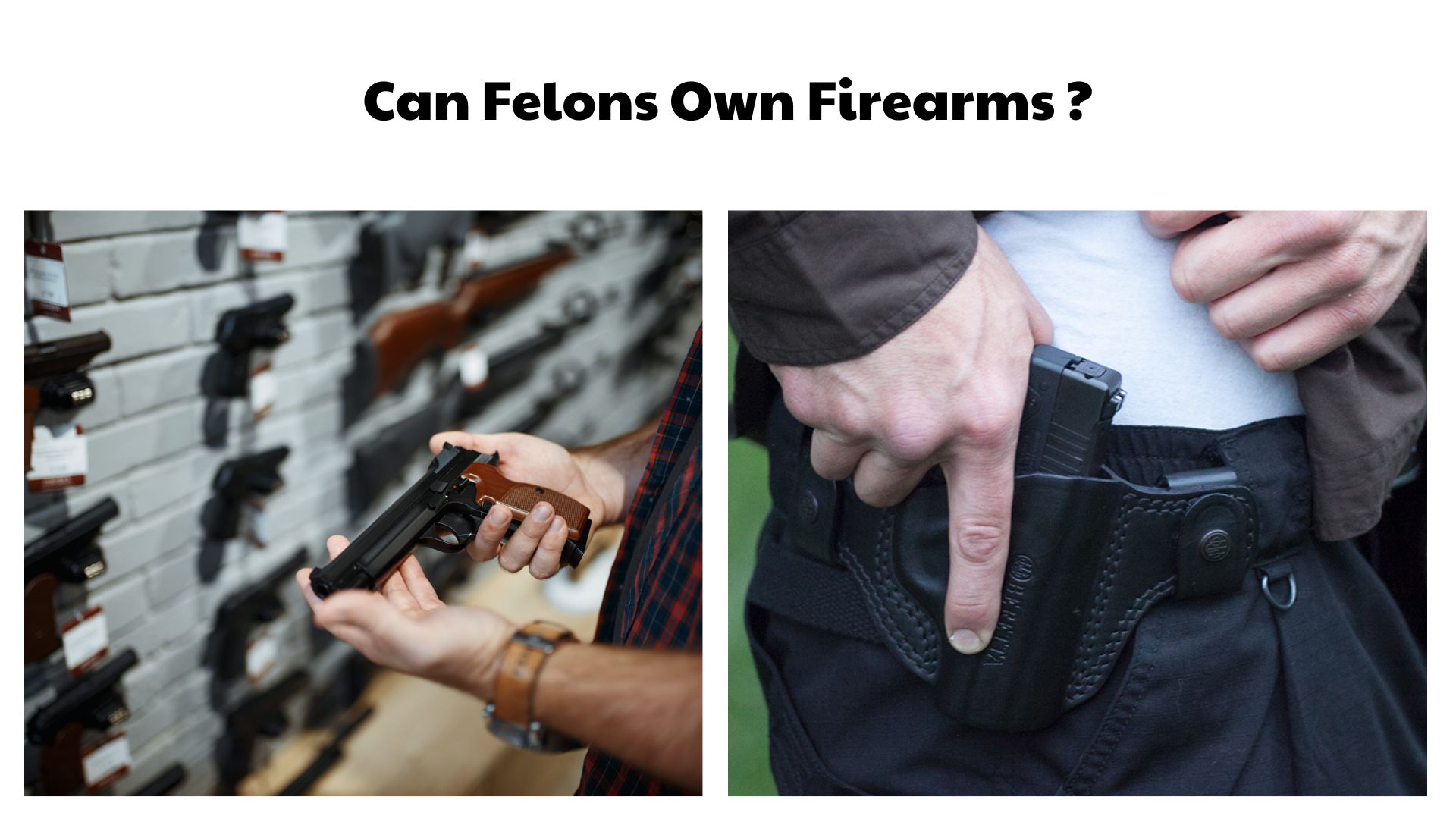

Firearm ownership laws for individuals with felony convictions in the United States are among the most strictly regulated areas of gun legislation. In most cases, a felony conviction results in the loss of the legal right to possess or purchase firearms, often under both federal and state law. However, the reality is more nuanced than a simple lifetime ban in every situation.
- Overview of firearm rights restrictions for individuals with felony convictions in the United States
- Why felon gun ownership laws are highly regulated under federal and state law
- Key concept: most felons are prohibited from owning firearms, but exceptions and restoration pathways may exist under specific legal conditions
- What this guide covers: federal rules, state variations, rights restoration processes, exceptions, and potential legal alternatives
Understanding how these laws work is important not only for legal compliance but also for recognizing the differences between federal prohibitions and state-level restoration options. This guide breaks down how firearm restrictions apply to felons, where limited exceptions may exist, and what legal pathways are available for those seeking to restore their rights.
Federal Law on Felon Gun Ownership

In the United States, firearm restrictions for individuals with felony convictions are primarily governed by federal law. These regulations establish a nationwide baseline that applies regardless of individual state policies. As a result, most felons are legally barred from possessing firearms unless their rights have been formally restored through specific legal processes.
The Federal Firearm Ban
- Under U.S. federal law, most individuals convicted of a felony are prohibited from possessing firearms
- This restriction applies nationwide under 18 U.S.C. § 922(g)(1)
- Applies regardless of state laws unless firearm rights are formally restored through legal channels such as pardon or expungement
This federal prohibition is one of the most important legal foundations in U.S. gun law. It means that even if a state has more flexible rules, federal law still overrides those allowances in most situations. Possessing a firearm as a prohibited person can lead to serious federal criminal charges.
Why the Federal Ban Exists
- Intended to prevent firearms from being accessed by individuals considered higher risk due to criminal history
- Focused on improving public safety and reducing the likelihood of repeat firearm-related offenses
- Applies broadly to many felony convictions, including some non-violent offenses depending on sentencing classification
The underlying policy goal of the federal ban is preventive safety. Lawmakers designed the restriction to reduce the risk of firearm misuse by individuals with serious criminal records. While it is widely applied, it has also been the subject of ongoing legal and constitutional debate.
Legal Interpretation and Ongoing Court Debate
- Courts continue to evaluate how the Second Amendment applies to firearm restrictions for felons
- Some recent legal cases have questioned whether lifetime bans are always constitutional under modern interpretations of gun rights
- Despite ongoing debates, federal restrictions remain in effect and are actively enforced in most jurisdictions
Although legal challenges continue to appear in courts, the current legal framework still enforces strict limitations on firearm possession for felons. Until laws are changed or successfully challenged at the highest levels, federal restrictions remain the controlling standard.
Can Felons Own Guns in Any U.S. States?
While firearm laws vary between states, the general rule across the United States is that individuals with felony convictions are prohibited from owning or possessing firearms. State laws may differ in wording and enforcement details, but they are largely influenced and constrained by federal firearm restrictions.
General Rule Across States
- In most states, felons are prohibited from owning or possessing firearms under both state and federal law
- Approximately 39 states enforce strict felony firearm bans that align closely with federal regulations
- State laws often mirror federal restrictions but may include additional penalties or enforcement mechanisms
Even in states where certain legal pathways exist for restoring firearm rights, the baseline rule remains the same: a felony conviction typically results in loss of firearm rights. This creates a consistent nationwide standard that limits legal possession unless formal restoration is granted.
States With Limited Exceptions
- Some states allow firearm rights restoration after a waiting period or formal legal petition process
- Eligibility often depends on the nature of the felony, particularly whether it was violent or non-violent
- Restoration may require court approval, a governor’s pardon, or successful expungement of the criminal record
In certain jurisdictions, non-violent offenders may have a legal pathway to restore their firearm rights. However, this process is typically complex and requires strong evidence of rehabilitation, compliance with the law, and completion of all sentencing requirements. Even when state-level restoration is granted, federal restrictions may still apply in some cases.
Key Legal Reality
- No U.S. state allows unrestricted firearm ownership for individuals with felony convictions without formal legal restoration
- Any potential allowance is conditional and requires official approval through legal channels
- Federal law remains the overriding authority in most firearm possession cases
The most important legal reality is that firearm rights for felons are not automatically restored in any state. Every case requires formal legal action, and even then, approval is not guaranteed. This makes firearm ownership for felons a highly regulated and carefully controlled legal area.
Types of Felons and Firearm Restrictions
Violent Felons
- Typically permanently prohibited from firearm ownership under federal law
- Includes serious offenses such as assault, armed robbery, and homicide
- Very limited or nearly nonexistent pathways for restoring firearm rights in most jurisdictions
Violent felony convictions are treated with the strictest level of firearm restriction due to public safety concerns. In most cases, individuals with violent criminal histories remain permanently barred from firearm possession under federal law, regardless of state-level variations.
Non-Violent Felons
- May have potential eligibility for firearm rights restoration depending on state law and legal process
- Includes offenses such as certain fraud, theft, or property-related crimes
- Still subject to federal firearm restrictions unless formally restored through approved legal procedures
Non-violent felons may have more legal options available, but eligibility is not automatic. Courts typically evaluate factors such as rehabilitation, time since conviction, and overall criminal history before considering restoration requests.
Domestic Violence Convictions
- Often result in lifetime firearm prohibition under federal law
- Even some misdemeanor domestic violence convictions can trigger firearm restrictions
- Considered one of the most restrictive categories for firearm eligibility
Domestic violence-related convictions are treated especially strictly under federal law due to the increased risk factors associated with such offenses. In many cases, these restrictions are permanent and very difficult to reverse, even through state-level processes.
Can a Felon Ever Restore Gun Rights?
Although felony convictions generally result in the loss of firearm rights, restoration may be possible in certain cases. The process is highly regulated, varies by jurisdiction, and is never automatic. Individuals seeking to regain firearm rights must typically go through formal legal procedures that demonstrate rehabilitation and legal eligibility.
Rights Restoration Process
- Felons may petition for firearm rights restoration through courts, state agencies, or designated government programs
- The process often involves background reviews, mandatory waiting periods, and formal legal hearings
- Approval is not guaranteed and is evaluated on a case-by-case basis depending on criminal history and rehabilitation evidence
The restoration process is designed to carefully assess whether an individual no longer poses a public safety risk. Courts or reviewing authorities typically examine the severity of the original offense, the time elapsed since conviction, and the individual’s behavior since completing their sentence.
Common Restoration Methods
- Presidential or gubernatorial pardons that may restore civil rights, including firearm eligibility in some cases
- Expungement or sealing of criminal records, depending on state laws and eligibility criteria
- Federal relief programs or ATF-related processes that evaluate restoration requests under strict guidelines
Each method has different legal requirements and outcomes. For example, a pardon may restore certain rights at the state level, while expungement may limit public access to criminal records but not automatically restore federal firearm rights.
Federal Relief Programs
- Some federal initiatives allow certain non-violent offenders to apply for firearm rights restoration
- Applications are reviewed based on rehabilitation history, conduct since conviction, and public safety considerations
- Eligibility often includes mandatory waiting periods, commonly ranging from 5 to 10 years depending on the offense
Federal relief programs are highly selective and are not available for all felony types. Even when eligible, applicants must provide strong evidence of rehabilitation and demonstrate that restoring firearm rights would not pose a risk to public safety. As a result, approval rates remain relatively limited.
What States Allow Felons to Own Guns (After Restoration)?
In the United States, there is no state that automatically allows felons to own firearms without restrictions. However, some states provide legal pathways for restoring firearm rights after a felony conviction. These processes are typically conditional and require formal approval through courts or government authorities.
States With Conditional Restoration
- Some states allow felons to regain firearm rights through formal legal petitions or restoration applications
- Approval is often granted only after demonstrating rehabilitation, law-abiding behavior, and completion of sentencing requirements
- Eligibility criteria and procedures vary significantly depending on the state and the type of felony
In these states, restoration is not automatic. Individuals must usually go through a structured legal process that may include court hearings, background checks, and supporting documentation. Even then, approval is discretionary and not guaranteed.
States With Strict Permanent Bans
- Many states enforce lifetime firearm prohibitions for certain felony convictions
- Violent offenses, such as assault or homicide, are rarely eligible for restoration under state law
- These state-level restrictions often align closely with federal firearm laws
In stricter jurisdictions, firearm rights may remain permanently revoked for certain categories of felonies. Even when minor exceptions exist, they are typically limited and subject to rigorous review processes.
Important Legal Conflict
- Even if a state restores firearm rights, federal law may still prohibit firearm possession
- Federal firearm restrictions take precedence over state-level restoration in most legal situations
- This creates a legal conflict where state approval does not always equal lawful possession under federal law
This overlap between state and federal law is one of the most important aspects of felon firearm rights. A person may appear eligible under state law but still be prohibited from possessing firearms under federal statutes. Because of this, both legal systems must be considered together when evaluating firearm eligibility.
Self-Defense Weapons Felons May Legally Own
Although most individuals with felony convictions are prohibited from owning firearms, some non-firearm self-defense options may be legally available. However, legality depends heavily on both state and local laws, and restrictions can still apply in certain cases.
Non-Firearm Alternatives
- Many felons are restricted from firearms but may legally own certain non-firearm defensive tools depending on jurisdiction
- Common examples may include pepper spray, personal alarms, or stun devices where permitted by state law
- Legal restrictions vary significantly by location, and some states impose limitations even on non-lethal defensive tools
These alternatives are often used for personal protection, but they are not universally legal. Some states regulate purchase age, possession limits, or outright prohibit certain devices for individuals with specific criminal backgrounds.
Legal Caution Required
- Even non-lethal weapons may be restricted for certain offenders depending on the nature of the conviction
- State and local laws must always be carefully reviewed before possessing any defensive tool
- Violations of these restrictions can lead to additional criminal charges, including new felony offenses in some cases
Because laws differ widely, it is critical for individuals to verify legality before carrying or purchasing any self-defense tool. What is legal in one jurisdiction may be prohibited in another.
Common Misconceptions About Felon Gun Rights
- “Felons can legally own guns in some states without restriction” – false, federal law still applies in all states
- “After prison, firearm rights are automatically restored” – incorrect, formal legal restoration is required in most cases
- “Non-violent felons are always allowed to own firearms” – not true, eligibility depends on both state and federal law
- “Expunged records always restore gun rights” – not always, as firearm eligibility depends on jurisdiction-specific rules
These misconceptions often lead to serious legal consequences. Firearm laws for felons are complex, and assumptions based on incomplete information can result in accidental violations of federal or state law.
Risks of Illegal Firearm Possession
Possessing a firearm as a prohibited person, including most individuals with felony convictions, carries extremely serious legal consequences under U.S. federal law. These penalties are designed to enforce strict compliance with firearm regulations and protect public safety.
- Severe federal criminal penalties including substantial prison sentences and fines
- Additional charges if the firearm is used during the commission of another crime
- Long-term impact on civil rights, including voting, employment opportunities, and future eligibility for rights restoration
- Enhanced sentencing for repeat offenders or cases involving aggravated circumstances
Even simple possession of a firearm by a prohibited person can result in felony-level federal charges. If the firearm is involved in any criminal activity, penalties can increase significantly, often leading to mandatory minimum sentences in some cases.
Conclusion
Firearm laws for individuals with felony convictions in the United States are highly restrictive and strictly enforced under federal authority. While there are some limited pathways for restoring rights, they require formal legal processes and are not guaranteed.
- Most felons in the United States are legally prohibited from owning firearms under federal law
- State laws may vary, but they do not override federal firearm restrictions in most cases
- Some non-violent offenders may regain firearm rights through formal legal restoration processes such as pardons or court petitions
- Understanding both federal and state laws is essential for maintaining legal compliance and ensuring public safety
Because firearm regulations are complex and vary by jurisdiction, individuals must carefully follow all legal procedures before attempting to restore or exercise any firearm rights.
Frequently Asked Questions (FAQ) About Felons and Gun Ownership
1. Can a felon legally own a gun in the United States?
In most cases, no. Under federal law (18 U.S.C. § 922(g)(1)), individuals convicted of a felony are prohibited from possessing firearms or ammunition. This applies nationwide regardless of state laws. Even if a state has more lenient rules, federal law still overrides and makes possession illegal unless firearm rights are formally restored through legal processes such as a pardon or expungement.
2. Do any states allow felons to own guns?
No state allows unrestricted firearm ownership for felons. Some states do allow conditional restoration of rights through courts or pardons, but this is not automatic. Even when state law restores rights, federal law may still prohibit possession unless federal relief is also granted.
3. What happens if a felon is caught with a gun?
A felon found in possession of a firearm can face serious federal felony charges. Penalties may include years in federal prison, fines, probation, and loss of additional civil rights. The severity increases if the firearm is used in another crime or if the person has prior convictions.
4. Is gun ownership for felons ever permanent?
In many cases, yes. Especially for violent felonies or domestic violence convictions, firearm bans can be permanent under federal law. However, some non-violent offenders may have the possibility of restoration through legal procedures, depending on jurisdiction and eligibility.
5. Can non-violent felons own guns?
Not automatically. Non-violent felons are still subject to federal firearm restrictions. However, some may be eligible to apply for rights restoration through state courts, pardons, or specific relief programs. Approval depends on the offense type, rehabilitation, and legal criteria.
6. What is the federal law that bans felons from owning guns?
The primary law is 18 U.S.C. § 922(g)(1), which prohibits any person convicted of a crime punishable by imprisonment exceeding one year (a felony) from possessing firearms or ammunition. This law applies across all states.
7. Does probation or parole affect gun rights?
Yes. Individuals on probation or parole are almost always prohibited from possessing firearms as a condition of supervision. Violating this rule can result in additional criminal penalties and revocation of probation or parole status.
8. Can a felon buy a gun for self-defense?
No. Even for self-defense purposes, federal law prohibits felons from purchasing or possessing firearms unless their rights have been legally restored. Self-defense claims do not override firearm restrictions.
9. Can a felon live in a house with guns?
It depends. If firearms are accessible to the felon, it may be considered illegal possession. However, if firearms are owned by another household member and properly secured, some situations may be legal. Laws vary by jurisdiction and circumstances.
10. What is firearm rights restoration?
Firearm rights restoration is a legal process that allows certain individuals with felony convictions to regain their right to possess firearms. This may involve court petitions, pardons, or administrative relief depending on state and federal laws.
11. How can a felon restore gun rights?
Common methods include gubernatorial pardons, expungement of records, or court-approved restoration petitions. Each method has strict eligibility requirements and is not guaranteed. Federal approval may also be required in some cases.
12. Does expungement restore gun rights?
Not always. Expungement may clear a criminal record for certain purposes, but firearm rights restoration depends on state and federal laws. In many cases, additional legal action is required to restore gun rights.
13. Can a pardon restore gun rights?
Yes, a full pardon from a governor or the president may restore firearm rights in some cases. However, the effect of a pardon depends on jurisdiction and whether federal restrictions still apply.
14. How long does it take to restore gun rights?
The process varies widely. It may take several years depending on waiting periods, legal requirements, and court schedules. Some cases may take 5–10 years or longer before eligibility is considered.
15. Are domestic violence offenders allowed to own guns?
Generally no. Federal law imposes strict firearm bans on individuals convicted of domestic violence offenses, including certain misdemeanors. These restrictions are often lifetime prohibitions.
16. Can felons own ammunition?
No. Federal law prohibits felons from possessing both firearms and ammunition. Even without a gun, possession of ammunition alone can result in criminal charges.
17. Can a felon hunt with a bow or crossbow?
In many states, yes. Archery equipment such as bows and crossbows is often not classified as firearms, so felons may legally use them. However, state laws should always be checked for specific restrictions.
18. Are felons allowed to own knives?
In most jurisdictions, knives are not classified as firearms, so felons may legally own them. However, certain knife types (like switchblades or ballistic knives) may be restricted depending on state law.
19. Can felons get hunting licenses?
It depends on the state. Some states allow felons to obtain hunting licenses but restrict firearm use. Others may impose additional restrictions depending on the severity of the felony.
20. Do state laws override federal gun bans?
No. Federal law takes priority over state law in firearm regulation. Even if a state restores gun rights, federal restrictions may still make possession illegal.
21. Can a felon own a gun after 10 years?
Not automatically. Time alone does not restore firearm rights. A formal legal process is required, and eligibility depends on the type of felony and jurisdiction.
22. Are gun rights automatically restored after prison?
No. Completing a prison sentence does not restore firearm rights. Additional legal steps such as expungement or pardons are required in most cases.
23. Can a felon buy antique firearms?
In some cases, antique firearms may be treated differently under federal law. However, possession can still be restricted depending on how the weapon is classified and state laws.
24. Can felons go to gun ranges?
Generally no. Even temporary possession or handling of firearms at a range may be considered illegal possession under federal law for felons.
25. What is considered “possession” of a firearm?
Possession includes physical control or access to a firearm. Even indirect access (such as having control over a firearm in a shared space) can be considered illegal possession.
26. Can a felon inherit a gun?
A felon may inherit firearms, but they cannot legally possess them unless rights are restored. The firearm must be transferred to a lawful owner or surrendered according to law.
27. Can felons live in homes with firearms?
It depends on access. If firearms are secured and inaccessible to the felon, it may be legal. However, shared access can create legal risk under federal law.
28. Are background checks required for felons?
Felons are automatically flagged in the background check system (NICS) as prohibited persons, which prevents legal firearm purchases through licensed dealers.
29. Can felons own air guns or pellet guns?
Laws vary by state. Some air guns are not classified as firearms federally, but certain jurisdictions may still restrict them for felons.
30. What is a prohibited person in gun law?
A prohibited person includes individuals who cannot legally possess firearms, such as felons, certain domestic violence offenders, and individuals under restraining orders.
31. Can gun rights be restored federally?
Federal restoration is very limited and typically requires congressional or administrative relief. Most restoration occurs at the state level but may not override federal restrictions.
32. Do all felonies lead to gun bans?
Most do, but the classification of felony and sentencing can affect eligibility. Some minor or non-violent offenses may allow restoration opportunities.
33. Can felons own guns in other countries?
Gun laws vary internationally. Some countries may allow limited ownership, but most have strict background checks and similar restrictions for criminal records.
34. What is the penalty for lying on a firearm form?
Providing false information on ATF Form 4473 is a federal crime that can result in imprisonment, fines, and permanent loss of firearm rights.
35. Can a felon live with a gun owner spouse?
Yes, but strict precautions must be taken to ensure the felon does not have access to the firearm, as this could be considered illegal possession.
36. Are gun laws different for juveniles with felony records?
Yes. Juvenile records may be treated differently depending on sealing or expungement laws, but federal restrictions may still apply in certain cases.
37. Can probation officers search for guns?
Yes. Individuals on probation or parole are subject to search conditions, including checks for illegal firearm possession.
38. Can felons use firearms for work?
Generally no. Firearm use in employment (such as security jobs) is prohibited unless firearm rights are restored.
39. Do gun rights ever expire automatically?
No. Firearm restrictions remain in place indefinitely unless formally restored through legal processes.
40. Can felons get hunting exceptions?
Some states allow hunting with non-firearm tools or restored rights, but federal restrictions still apply to firearms.
41. What happens if a felon accidentally touches a gun?
Even accidental possession can result in legal consequences depending on circumstances and jurisdiction.
42. Can felons own gun parts?
Possession of certain firearm components may also be restricted if they can be used to assemble a functional weapon.
43. Are there exceptions for old felony convictions?
Some jurisdictions consider time since conviction, but federal law does not automatically remove restrictions based on age of conviction.
44. Can a felon be around guns at work?
Only in very limited, regulated situations and typically requires legal authorization. Otherwise, it may violate federal law.
45. What is the most common way felons regain gun rights?
The most common methods are pardons or state-level court petitions. These require legal review and are not guaranteed.
46. Can felons appeal firearm bans in court?
Yes, but success depends on jurisdiction, evidence of rehabilitation, and legal arguments presented.
47. Are federal gun laws changing for felons?
Laws occasionally face legal challenges, but major federal restrictions remain in place as of now.
48. Can felons own firearms for collection purposes?
No. Even collection or display purposes do not allow possession unless rights are restored.
49. What agencies enforce felon gun laws?
The Bureau of Alcohol, Tobacco, Firearms and Explosives (ATF) and federal law enforcement agencies enforce these laws.
50. What is the safest legal advice for felons regarding guns?
The safest legal approach is to avoid all firearm possession unless official legal restoration has been granted and verified under both state and federal law.
Read more: