

In recent years, there has been a growing demand for effective personal protection firearms in modern households. Increasing concerns about personal safety, home security, and emergency preparedness have led more individuals to consider owning a firearm for defensive purposes. However, choosing the right firearm is not simply about purchasing a weapon—it is about making a responsible, informed decision that directly impacts safety and long-term usability.
Selecting the right defensive firearm is a critical safety decision because it must perform reliably under stress while remaining manageable for the user. In a real-world defensive situation, there is little room for error. A firearm that is too complex, uncomfortable, or unreliable can create hesitation or failure when it matters most. This is why careful selection, combined with proper training, is essential for responsible ownership.
Most defensive firearm users fall into a few common categories, including home defense, concealed carry, and general personal protection. Each of these use cases requires different considerations. Home defense firearms often prioritize stability, capacity, and ease of control, while concealed carry firearms must be compact, lightweight, and comfortable for daily use. Personal protection setups may overlap these categories depending on individual needs and environments.
One of the biggest mistakes new buyers make is focusing too heavily on brand popularity or marketing claims. In reality, reliability, simplicity, and consistent training are far more important than brand names or advanced features. A simple, dependable firearm that the user understands thoroughly will always outperform a more complex option that is rarely practiced with.
This guide will evaluate the most important factors when choosing a personal protection firearm, including caliber selection, ergonomics, magazine capacity, recoil management, and overall dependability. Understanding how these elements work together will help you select a firearm that is not only effective but also practical and safe to use in real-world situations.
What Makes a Good Personal Protection Firearm?
Reliability Under Stress
Reliability is the single most important characteristic of any personal protection firearm. In high-pressure situations, the firearm must function flawlessly without hesitation or malfunction. Defensive scenarios are unpredictable and often occur under extreme stress, meaning there is no opportunity to troubleshoot mechanical issues in the moment.
Mechanical simplicity plays a major role in reliability. Firearms with fewer complex controls and straightforward operating systems tend to be easier to use and less prone to user error. While advanced features can be beneficial in certain contexts, they should never come at the cost of reliability or ease of operation.
Real-world testing and durability standards are also key considerations. Firearms designed for defensive use should be capable of withstanding regular training, environmental exposure, and long-term use without degradation in performance. Proven platforms with a track record of reliability are generally preferred over newer, untested designs.
Ease of Use for Beginners and Experts
A good defensive firearm must be easy to operate for both beginners and experienced users. In a stressful situation, fine motor skills can deteriorate, making simple controls and intuitive operation essential. Firearms that require minimal manipulation are more effective under pressure.
Consistent trigger systems are particularly important. Firearms that provide the same trigger pull for every shot allow users to develop muscle memory and improve accuracy more quickly. Inconsistent trigger behavior can slow down learning and reduce confidence during use.
For new gun owners, a low learning curve is critical. Firearms that are easy to understand and operate encourage regular practice and safer handling habits. This is why many experts recommend simple, user-friendly platforms for first-time buyers.
Stopping Power vs Control
One of the most debated aspects of defensive firearms is the balance between stopping power and control. While it is important for a firearm to be effective, it must also be controllable enough for the user to place accurate shots consistently. Excessive recoil can reduce accuracy and slow down follow-up shots, especially for beginners.
Shot placement is far more important than raw power. A well-placed shot with a manageable caliber is significantly more effective than a poorly placed shot from a larger, harder-to-control firearm. This is why many defensive shooters prioritize calibers that offer a balance of performance and controllability.
Modern defensive ammunition also plays a significant role in effectiveness. Advances in bullet design have improved performance across many calibers, allowing shooters to achieve reliable results without needing excessively large or powerful cartridges. This further reinforces the importance of choosing a firearm that you can control confidently rather than focusing solely on caliber size.
Best Types of Firearms for Personal Protection
Choosing the right type of firearm is one of the most important steps in building an effective personal protection setup. Each category—handguns, revolvers, shotguns, and rifles or pistol-caliber carbines (PCCs)—offers distinct advantages and trade-offs. The best option ultimately depends on your intended use, experience level, and environment.
Handguns – The Most Popular Choice
Handguns are the most widely used firearms for personal protection due to their compact size, portability, and ease of storage. They are especially well-suited for both home defense and concealed carry, making them the most versatile option for everyday defensive needs.
Modern defensive handguns are typically high-capacity semi-automatic pistols, which allow users to carry more rounds while maintaining a relatively compact form factor. These firearms are designed for quick deployment, efficient reloads, and consistent performance under stress.
The most common caliber for defensive handguns is 9mm, which has become the industry standard due to its balance of manageable recoil, affordability, and proven effectiveness. This allows users to train more frequently while maintaining control during rapid firing.
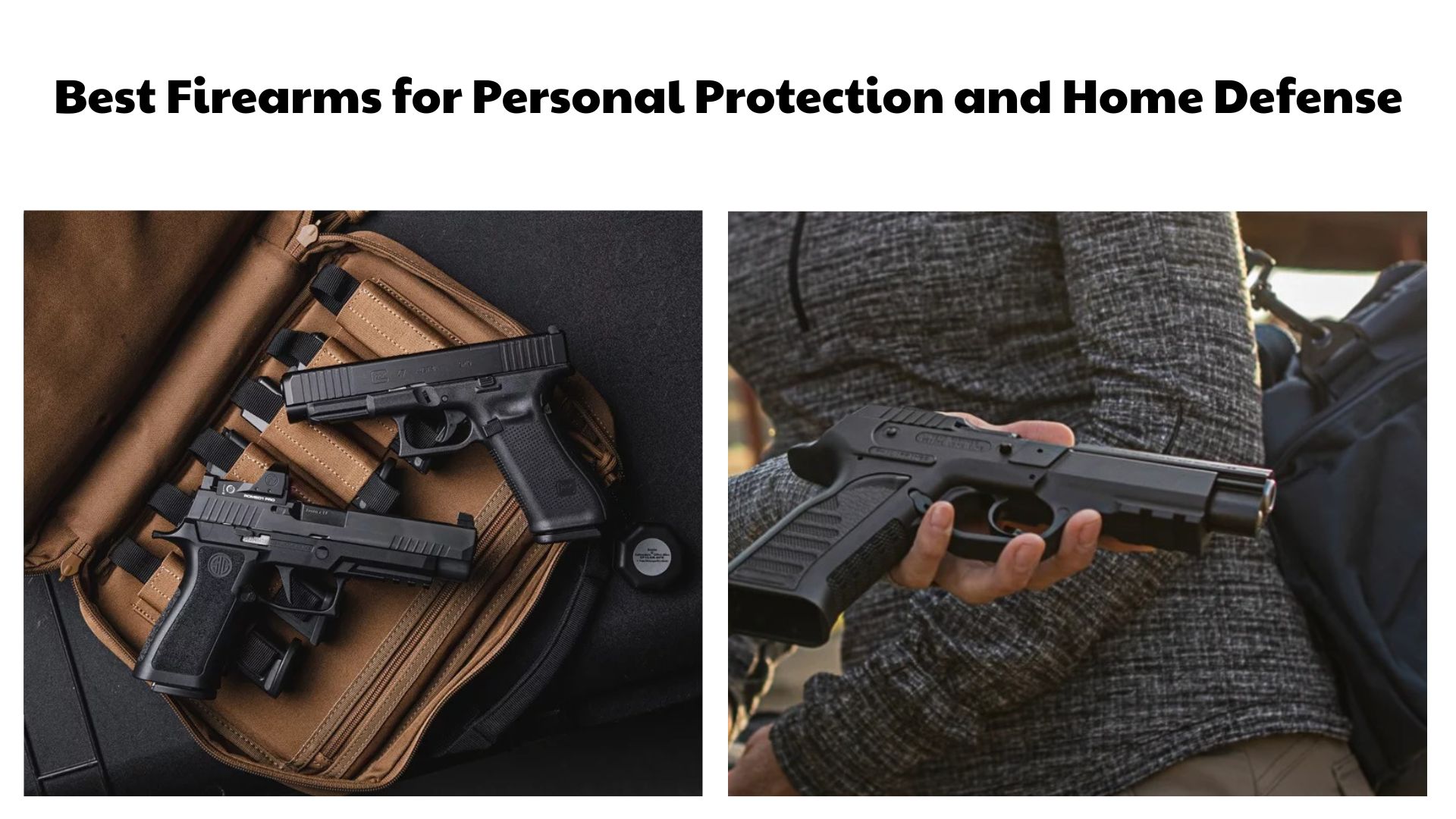
Popular examples of defensive handguns include the Glock 19, SIG Sauer P320, and Smith & Wesson M&P series. These platforms are widely recognized for their reliability, ease of use, and strong track record in both civilian and professional applications.
Overall, handguns are ideal for users who need a flexible, easy-to-store firearm that can be used in multiple defensive scenarios.
Revolvers – Simplicity and Reliability
Revolvers are known for their mechanical simplicity and dependable operation. Unlike semi-automatic pistols, revolvers do not rely on magazines or complex feeding systems, which reduces the likelihood of malfunctions and makes them easier to operate for some users.
This simplicity makes revolvers a strong option for beginners or individuals who prefer low-maintenance firearms. With fewer controls and a straightforward design, revolvers can be easier to understand and operate, especially for those new to firearms.
Common calibers for defensive revolvers include .38 Special and .357 Magnum. These calibers offer reliable performance, with .38 Special often being favored for its lower recoil and ease of control.
However, revolvers do have limitations. They typically have lower ammunition capacity compared to semi-automatic pistols and are slower to reload. This can be a disadvantage in prolonged defensive situations where multiple shots may be required.
Despite these trade-offs, revolvers remain a solid choice for users who prioritize simplicity, reliability, and ease of use over capacity and speed.
Shotguns – Close-Range Power
Shotguns are widely recognized for their effectiveness in close-range defensive situations. Their ability to deliver significant stopping power at short distances makes them a popular choice for home defense.
There are two primary types of defensive shotguns: pump-action and semi-automatic. Pump-action shotguns are known for their reliability and simplicity, while semi-automatic models offer faster follow-up shots with less manual operation.
Shotguns can use different types of ammunition depending on the situation. Buckshot is commonly used for home defense due to its spread and stopping power, while slugs provide a single, powerful projectile for increased penetration and range.
However, shotguns also come with trade-offs. They tend to have stronger recoil, which can be challenging for inexperienced users. Their larger size can also make them harder to maneuver in tight indoor spaces such as hallways or small rooms.
For users who can manage recoil and handling, shotguns offer a powerful and effective home defense option.
Rifles & PCCs – Precision and Control
Rifles and pistol-caliber carbines (PCCs) provide excellent accuracy, control, and capacity, making them increasingly popular for personal protection in certain environments. Among these, the AR-15 platform stands out as one of the most commonly used defensive rifles due to its modularity and ease of customization.
Rifles generally offer low recoil and high accuracy, allowing users to place shots more precisely at close to medium distances. This makes them easier to control than many handguns, particularly for users who are less experienced or who prefer a more stable shooting platform.
PCCs are a variation that uses handgun calibers, such as 9mm, in a rifle-style platform. They offer reduced recoil and simpler handling while maintaining compatibility with common handgun ammunition. This makes them an attractive option for users seeking a balance between rifle control and handgun practicality.
Despite their advantages, rifles and PCCs require careful consideration. Their larger size can limit maneuverability indoors, and there may be concerns about over-penetration depending on the ammunition used. Additionally, legal restrictions in some regions may affect ownership or configuration options.
Overall, rifles and PCCs are excellent choices for users who prioritize accuracy, control, and capacity, particularly in home defense scenarios where space and legal considerations allow.
Most Recommended Calibers for Self-Defense
Caliber selection plays a major role in how effective and manageable a defensive firearm will be. While many calibers are capable of providing adequate performance, the best choice is one that balances recoil, control, cost, and real-world effectiveness. Modern ammunition technology has made several calibers highly viable for self-defense, but a few stand out as the most commonly recommended options.
9mm – The Standard Defensive Caliber
The 9mm cartridge is widely regarded as the gold standard for self-defense. It offers an excellent balance between recoil, cost, and performance, making it suitable for both beginners and experienced shooters. Its relatively low recoil allows for faster follow-up shots and better control, which is critical in high-stress situations.
Another major advantage of 9mm is its widespread use among law enforcement and civilian shooters. This popularity ensures consistent availability of ammunition and a wide range of firearm options designed around the caliber. Additionally, modern defensive 9mm ammunition has proven to be highly effective, providing reliable performance without excessive recoil.
For most users, 9mm represents the best overall choice for a primary defensive firearm due to its versatility and ease of use.
.45 ACP – Heavy Stopping Power
The .45 ACP is known for its larger bullet size and strong energy transfer, which many shooters associate with increased stopping power. It has a long history of use in both military and civilian applications and remains a popular choice among those who prefer larger calibers.
However, this increased power comes with trade-offs. Firearms chambered in .45 ACP typically produce more recoil, which can make them harder to control, especially for beginners. Additionally, magazine capacity is usually lower compared to 9mm pistols due to the larger cartridge size.
For experienced shooters who can manage the recoil and prefer a heavier round, .45 ACP can be an effective defensive option. However, it is not always the most practical choice for new gun owners.
.22 LR – Training and Backup Option
The .22 LR cartridge is one of the most beginner-friendly calibers available. It produces extremely low recoil, making it easy to control and ideal for learning fundamental shooting skills. Its affordability also allows for frequent practice, which is essential for building proficiency.
While .22 LR can be used for self-defense in certain situations, it is generally not recommended as a primary defensive caliber due to its limited stopping power. Instead, it is best suited for training, skill development, or as a backup option when recoil sensitivity is a concern.
For new shooters, starting with .22 LR and transitioning to a more capable caliber like 9mm is a common and effective approach.
Key Factors When Choosing a Defensive Firearm
Beyond caliber, several critical factors determine how well a firearm will perform in a defensive role. These include ergonomics, capacity, size, and compatibility with accessories. Understanding how these elements affect real-world performance will help you make a more informed decision.
Ergonomics and Fit
Ergonomics and fit are often more important than brand or specifications. A firearm must feel comfortable in your hand and allow you to maintain a secure grip during firing. Poor fit can lead to reduced control, slower target acquisition, and decreased accuracy.
Hand size, grip angle, and trigger reach all play a role in determining whether a firearm fits properly. A well-fitted firearm will naturally align with your line of sight, improving your ability to aim quickly and accurately without excessive adjustment.
Testing different firearms before purchasing is highly recommended to ensure the best possible fit and handling characteristics.
Capacity and Reload Speed
Magazine capacity is an important consideration in defensive scenarios. Higher-capacity firearms allow users to engage multiple threats or respond to extended situations without needing to reload frequently. This is one of the reasons why semi-automatic pistols are so popular for personal protection.
However, higher capacity often comes with increased size and weight. This creates a trade-off between firepower and portability. Reload speed is another factor, as firearms with detachable magazines can typically be reloaded faster than those with fixed or limited-capacity systems.
Choosing the right balance depends on your specific use case, whether it is home defense or concealed carry.
Size and Concealability
The size of a firearm directly affects how it can be used and carried. Full-size firearms offer better control, higher capacity, and improved accuracy, making them ideal for home defense. However, they are more difficult to conceal and carry comfortably on a daily basis.
Compact and subcompact firearms are designed for concealed carry, offering reduced size and weight for easier portability. The trade-off is often increased recoil and reduced capacity, which can affect performance for some users.
Selecting the right size depends on whether the firearm will primarily be used at home or carried on a daily basis.
Accessory Compatibility
Modern defensive firearms often support a range of accessories that can enhance performance and usability. Weapon-mounted lights, for example, are essential for identifying targets in low-light conditions, which is a common scenario in home defense situations.
Red dot optics are also becoming increasingly popular, offering faster target acquisition and improved accuracy, especially for shooters with less experience. However, they require additional training to use effectively.
Other important accessories include holsters for concealed carry and secure storage solutions such as safes or lockboxes. Quick-access storage systems are particularly important for home defense, allowing rapid access while maintaining safety and compliance with legal requirements.
When choosing a firearm, it is important to consider whether it supports the accessories you may need for your specific defensive setup.
Top Features of Modern Self-Defense Firearms
Modern self-defense firearms have evolved significantly over the past decade, incorporating new technologies and design improvements that enhance usability, performance, and safety. Understanding these features can help you choose a firearm that aligns with your needs while maximizing effectiveness in real-world situations.
One of the most notable advancements is the inclusion of optic-ready slides. These allow users to mount red dot optics directly onto the firearm, significantly improving target acquisition speed and accuracy. For many shooters—especially beginners—red dots reduce the need for perfect sight alignment and make it easier to focus on the target.
Accessory rails are another key feature found on many modern firearms. These rails allow for the attachment of weapon-mounted lights or lasers, which are particularly valuable in low-light conditions. In defensive scenarios, the ability to positively identify a target before engaging is critical for both safety and legal reasons.
Improved trigger systems have also become a standard feature in many modern designs. Consistent and predictable trigger pulls help shooters maintain better control and accuracy, especially during rapid or repeated firing. This consistency is essential for building muscle memory and improving performance under stress.
Polymer frames are widely used in modern firearms due to their lightweight and durable nature. Compared to traditional metal frames, polymer reduces overall weight while maintaining strength and resistance to environmental factors such as moisture and corrosion. This makes firearms easier to handle and more comfortable for extended use or daily carry.
Enhanced safety mechanisms have also been integrated into many firearms to prevent accidental discharge while maintaining readiness. These can include trigger safeties, drop safeties, and internal firing pin blocks. While no mechanical safety replaces proper handling, these features add an additional layer of protection for responsible owners.
Common Mistakes When Choosing a Self-Defense Gun
Many first-time buyers make critical mistakes when selecting a self-defense firearm. These errors can lead to poor performance, discomfort, or even unsafe handling in high-stress situations. Avoiding these common pitfalls is essential for making a smart and responsible decision.
One of the most common mistakes is choosing a firearm based on brand hype or popularity rather than actual needs. Marketing and trends often influence buyers, but the best firearm is one that fits your specific purpose, comfort level, and skill set.
Another frequent error is selecting a caliber that is too powerful for the user. While larger calibers may seem more effective, excessive recoil can make the firearm difficult to control, reducing accuracy and slowing down follow-up shots. For most users, a balanced caliber is far more practical.
Ignoring recoil management and training requirements is another major issue. A firearm that is not regularly practiced with will not perform effectively in a defensive situation. Training and familiarity are just as important as the firearm itself.
Overlooking ergonomics and fit can also lead to poor performance. A firearm that does not feel natural in your hand can negatively impact accuracy, control, and confidence. Proper fit should always be a priority when making a selection.
Finally, many buyers underestimate the total cost of ownership. Beyond the firearm itself, expenses such as ammunition, training, accessories, and storage can add up quickly. Planning for these costs ensures a more sustainable and responsible approach to firearm ownership.
Home Defense vs Concealed Carry Considerations
Choosing between a home defense firearm and a concealed carry firearm requires understanding the different demands of each role. While there is some overlap, these use cases often prioritize different features and characteristics.
Home defense firearms typically prioritize control, capacity, and ease of use. Larger firearms, such as full-size handguns, shotguns, or rifles, are often preferred because they are easier to handle and offer greater stability. Since concealment is not a concern, size and weight are less restrictive factors.
In contrast, concealed carry firearms must be compact, lightweight, and comfortable enough for daily wear. This often means choosing smaller handguns that can be easily hidden under clothing. However, this reduced size can come with trade-offs, including increased recoil and lower capacity.
Another key difference is accessibility. Home defense setups often involve secure storage solutions that allow quick access while preventing unauthorized use. Concealed carry requires proper holsters and adherence to legal regulations regarding where and how firearms can be carried.
Ultimately, selecting the right firearm depends on your primary use case. In some situations, individuals may choose to own separate firearms for home defense and concealed carry to optimize performance in each role. Scenario-based selection ensures that your firearm is suited to the environment and purpose for which it is intended.
Expert Insight Summary
When it comes to personal protection, expert consensus consistently highlights a few key principles that outweigh trends, marketing, or brand preference. Understanding these insights can help both new and experienced firearm owners make smarter, more practical decisions.
- Handguns remain the most practical and widely used option for personal defense. Their compact size, versatility, and ease of storage make them suitable for both home defense and concealed carry applications.
- The 9mm caliber continues to dominate the defensive market due to its ideal balance of stopping power, manageable recoil, affordability, and widespread availability. It allows for consistent training and effective real-world performance.
- Reliability and consistent training are far more important than technical specifications or advanced features. A firearm that functions flawlessly and is regularly practiced with will always outperform a more complex or unfamiliar system.
- Simplicity is often more valuable than complexity in defensive scenarios. Firearms with intuitive controls and straightforward operation reduce the likelihood of user error under stress and improve overall effectiveness.
- Ultimately, the best firearm is the one you can use confidently and consistently. Comfort, familiarity, and skill development are the true foundations of effective personal protection.
Conclusion
There is no single “best” firearm that fits every individual or situation. Personal protection is highly dependent on factors such as intended use, environment, physical comfort, and experience level. What works well for one person may not be ideal for another.
The most effective approach is to choose a firearm that aligns with your specific needs—whether that is home defense, concealed carry, or general personal protection. Prioritizing comfort and usability ensures that the firearm can be handled safely and effectively in real-world scenarios.
Proper training is essential for responsible firearm ownership. Understanding safe handling, practicing regularly, and building confidence with your chosen firearm are critical steps in becoming a competent and prepared user.
In the end, focus on reliability, ergonomics, and practical application rather than trends or assumptions. A dependable firearm that fits your hand, matches your purpose, and is supported by consistent training will always provide the best results.
Final recommendation: choose a firearm you can control comfortably, maintain reliably, and trust under stress. Confidence and competence are the true advantages in any defensive situation.
Frequently Asked Questions (FAQ) – Personal Protection Firearms
1. What is the best firearm for personal protection?
There is no universal “best” firearm for personal protection. The ideal choice depends on your intended use, experience level, and comfort. For most people, a 9mm semi-automatic handgun is the most practical option due to its balance of recoil, capacity, and effectiveness. However, some may prefer shotguns for home defense or compact pistols for concealed carry. The key is choosing a firearm you can control, operate safely, and train with consistently.
2. Why is 9mm the most recommended caliber?
The 9mm caliber is widely recommended because it offers a strong balance between stopping power, recoil control, and affordability. It allows for faster follow-up shots compared to larger calibers and is easier for beginners to handle. Additionally, 9mm ammunition is widely available and cost-effective, encouraging regular practice, which is essential for effective self-defense.
3. Is a handgun better than a shotgun for home defense?
Both have advantages. Handguns are compact, easy to store, and maneuverable in tight spaces. Shotguns offer greater stopping power at close range but are larger and produce more recoil. The better option depends on your ability to handle the firearm, your home layout, and your level of training.
4. Are revolvers a good choice for beginners?
Revolvers can be a good option due to their simplicity and reliability. They are easy to operate and have fewer moving parts. However, they have lower capacity and can be harder to reload. Beginners should handle both revolvers and semi-automatic pistols to determine which feels more comfortable.
5. What is the most important factor in choosing a self-defense firearm?
The most important factor is reliability. A firearm must function flawlessly under stress. After that, ergonomics, ease of use, and your ability to control recoil are critical considerations.
6. How important is training for self-defense?
Training is essential. Owning a firearm without proper training can lead to unsafe handling and poor performance in emergencies. Regular practice builds muscle memory, improves accuracy, and increases confidence.
7. What is stopping power?
Stopping power refers to a firearm’s ability to incapacitate a threat. However, it is often misunderstood. Shot placement and accuracy are far more important than caliber size when it comes to effectiveness.
8. Should I choose a larger caliber for better protection?
Not necessarily. Larger calibers often produce more recoil, which can reduce accuracy. A smaller caliber that you can control well is usually more effective in real-world situations.
9. What is recoil and why does it matter?
Recoil is the backward force generated when a firearm is fired. It affects your ability to maintain control and fire follow-up shots. Lower recoil generally improves accuracy and speed.
10. What size handgun is best for beginners?
Compact or full-size handguns are often better for beginners because they offer better grip, reduced recoil, and improved accuracy compared to very small handguns.
11. Is concealed carry suitable for beginners?
Yes, but it requires additional training and responsibility. Beginners should first become comfortable with firearm handling and safety before carrying daily.
12. What is the difference between home defense and concealed carry firearms?
Home defense firearms are typically larger and easier to control, while concealed carry firearms are smaller and designed for portability. Each serves a different purpose.
13. Do I need a license to own a firearm?
This depends on your location. Laws vary widely by country and region, so it is important to check local regulations before purchasing a firearm.
14. What is the safest way to store a firearm?
Firearms should be stored unloaded in a locked safe or container, away from unauthorized access. Quick-access safes are often used for home defense setups.
15. Should I keep my firearm loaded for home defense?
This depends on your storage method and local laws. If kept loaded, it should always be secured in a safe that prevents unauthorized access.
16. What accessories are important for self-defense firearms?
Common accessories include weapon-mounted lights, holsters, and secure storage systems. These improve usability and safety in real-world scenarios.
17. Are red dot sights useful for beginners?
Yes, red dot sights can improve target acquisition and accuracy. However, they require training to use effectively.
18. What is the best firearm for small hands?
Firearms with smaller grips and adjustable backstraps are ideal. Fit is more important than brand or caliber.
19. Can I rely on a firearm without training?
No. Without training, even the best firearm is ineffective. Skill and familiarity are essential for safe and effective use.
20. How often should I practice?
Regular practice is recommended, ideally monthly or more often. Consistency is key to maintaining skill and confidence.
21. Is a .22 LR suitable for self-defense?
While it can be used in emergencies, it is generally not recommended as a primary defensive caliber due to limited stopping power.
22. What is over-penetration?
Over-penetration occurs when a bullet passes through a target and continues traveling, potentially causing unintended damage. This is an important consideration in home defense.
23. Are rifles good for home defense?
Yes, rifles can be effective due to their accuracy and control, but their size and potential over-penetration must be considered.
24. What is a PCC?
A pistol-caliber carbine (PCC) is a rifle-style firearm that uses handgun ammunition. It offers low recoil and improved control.
25. What is the biggest mistake beginners make?
Choosing a firearm based on hype rather than fit and purpose is one of the most common mistakes.
26. How do I know if a firearm fits me?
A proper fit allows you to grip the firearm comfortably, reach controls easily, and aim naturally without adjustment.
27. Should I buy a used firearm?
Used firearms can be a good value, but beginners should prioritize reliability and may benefit from buying new.
28. What is magazine capacity?
Magazine capacity refers to the number of rounds a firearm can hold. Higher capacity allows more shots before reloading.
29. Is higher capacity always better?
Not always. Higher capacity often means a larger firearm, which may be harder to carry or conceal.
30. What is trigger discipline?
Trigger discipline means keeping your finger off the trigger until you are ready to shoot. It is a fundamental safety rule.
31. Can stress affect shooting ability?
Yes. Stress can reduce fine motor skills and decision-making ability, which is why training is critical.
32. What is situational awareness?
Situational awareness means being aware of your surroundings and potential threats. It is a key component of personal safety.
33. Should I carry extra ammunition?
Many people choose to carry a spare magazine for reliability and preparedness, but this depends on personal preference.
34. What is the best way to learn firearm safety?
Professional training courses combined with regular practice are the most effective way to learn firearm safety.
35. Are expensive firearms more reliable?
Not necessarily. Many mid-range firearms are extremely reliable. Reputation and testing matter more than price.
36. What is a defensive mindset?
A defensive mindset involves awareness, avoidance of conflict, and readiness to act responsibly if necessary.
37. Can I use the same firearm for home defense and carry?
Yes, but compromises may be required. Many people eventually choose separate firearms for each role.
38. What is a holster and why is it important?
A holster secures the firearm and protects the trigger, making it essential for safe concealed carry.
39. What is the best way to improve accuracy?
Practice, proper grip, sight alignment, and trigger control are the key elements of improving accuracy.
40. How do I maintain my firearm?
Regular cleaning and lubrication ensure reliability and extend the lifespan of your firearm.
41. What is the role of mindset in self-defense?
Mindset is critical. Avoidance, awareness, and responsible decision-making are just as important as equipment.
42. Should beginners use manual safeties?
This depends on preference. Some prefer the added safety, while others prefer simpler systems without external safeties.
43. What is the best advice for new gun owners?
Focus on safety, training, and choosing a firearm that fits your needs and skill level.
44. Is it safe to keep a firearm at home?
Yes, if stored properly and handled responsibly. Safe storage is essential to prevent accidents.
45. What is the most important safety rule?
Always treat every firearm as if it is loaded. This mindset prevents many accidents.
46. Can I learn everything online?
Online resources help, but hands-on training is essential for real-world skills.
47. What is a defensive scenario?
A defensive scenario is a situation where a firearm may be used to protect yourself or others from harm.
48. Should I modify my firearm?
Beginners should avoid heavy modifications and focus on mastering the basics first.
49. What is the best training approach?
Start with fundamentals, practice regularly, and seek professional instruction.
50. What is the final takeaway for personal protection?
The most important factors are safety, training, and choosing a firearm you can use confidently and effectively under stress.
Read more: