
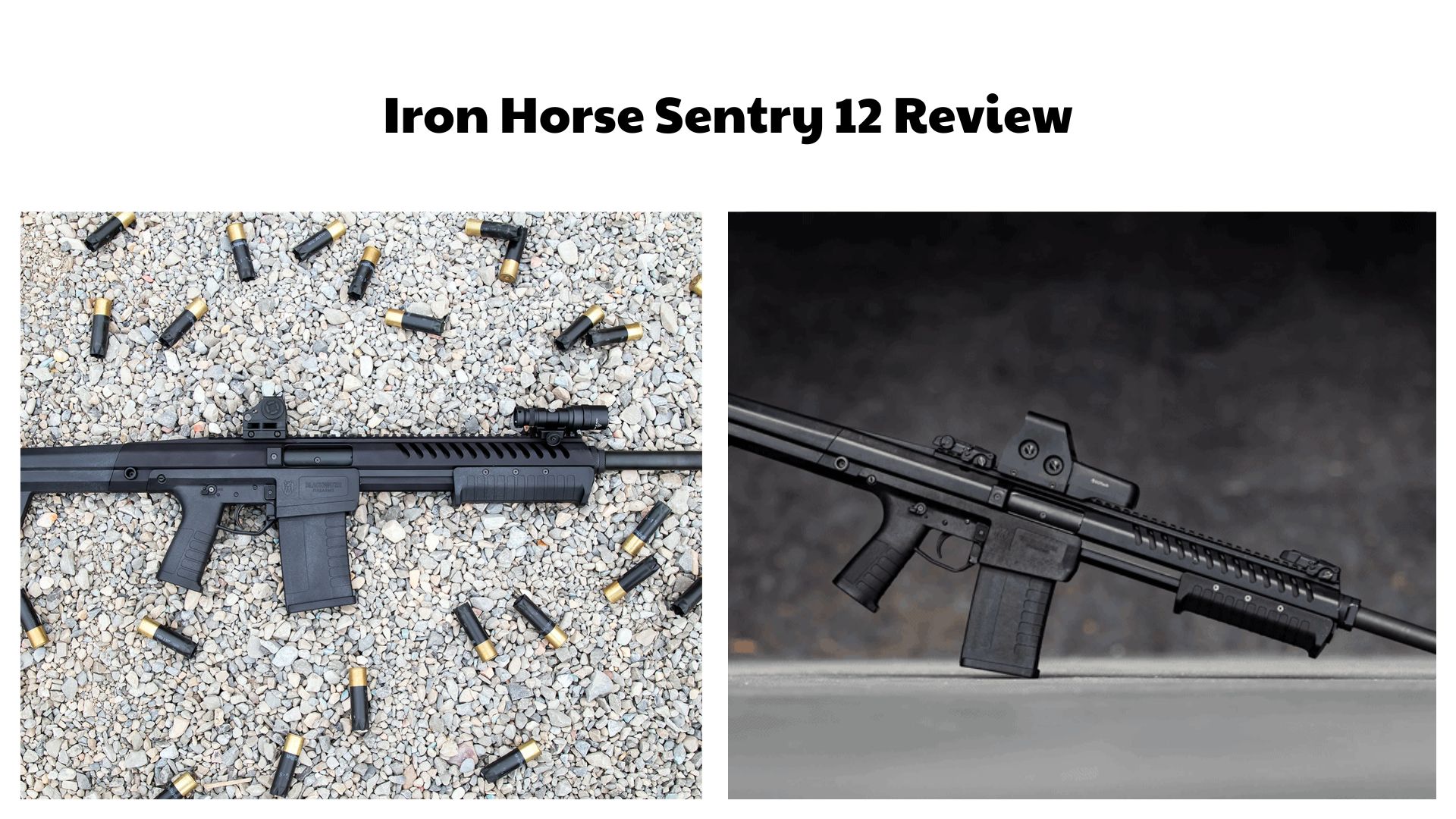

The Iron Horse Sentry 12 is a magazine-fed 12-gauge pump-action shotgun built for shooters who want a modern alternative to the traditional tube-fed pump. It combines AR-style controls, ambidextrous operation, a detachable box magazine, a monolithic aluminum upper, and a lightweight polymer lower into a compact defensive-style platform. This review explains what makes the Sentry 12 different, how it handles, where it performs well, and where buyers should be cautious. It also covers specifications, recoil, reliability, maintenance, accessories, comparisons, buyer fit, and frequently asked questions.
Overview of the Iron Horse Sentry 12

The Iron Horse Sentry 12 is not a conventional pump shotgun with a box magazine attached as an afterthought. It was designed from the ground up as a magazine-fed pump-action 12 gauge. That matters because many magazine-fed shotguns feel like older tube-fed designs forced into a new layout. The Sentry 12 feels more deliberate.
Its biggest idea is simple. It tries to make a shotgun feel more familiar to people who already understand AR-style controls. The safety, magazine release, overall control layout, pistol grip, top rail, and straight-line profile all lean in that direction. This gives the Sentry 12 a shorter learning curve for rifle shooters who may not love traditional shotguns.
The shotgun has been reviewed by several firearms publications under both Iron Horse and earlier Blackwater branding. Across those reviews, common praise centers on smooth cycling, easy field stripping, clean ergonomics, ambidextrous controls, and reliable magazine feeding. Common criticisms include price, limited magazine capacity compared with tube-fed competition setups, and sharper recoil than heavier shotguns.
The Sentry 12 is best understood as a practical, modern pump shotgun. It is not a semi-auto. It is not a bullpup. It is not a budget pump. It is a lightweight, magazine-fed 12 gauge with an AR-like manual of arms and a modular design.
Key Specifications
Published specifications vary slightly by source and model listing, so buyers should confirm the exact configuration before purchase. The most commonly reported Sentry 12 specifications are listed below.
| Model | Iron Horse Firearms Sentry 12 |
|---|---|
| Action | Pump action |
| Gauge | 12 gauge |
| Chamber | Accepts 2¾-inch and 3-inch shells |
| Capacity | Commonly listed as 5+1 with five-round detachable magazines |
| Magazine Type | Detachable box magazine |
| Barrel Length | Commonly listed as 18.5 inches |
| Overall Length | Commonly listed as 36 inches |
| Weight | Commonly listed around 6.1 to 6.5 pounds unloaded |
| Upper Receiver | Monolithic aluminum upper |
| Lower/Stock | Polymer lower and fixed polymer stock |
| Sights | No fixed sights on many listed models; top Picatinny rail for optics or sights |
| Controls | Ambidextrous AR-style controls |
| MSRP | Older reviews and listings commonly cite about $899 |
The Sentry 12’s specifications place it in a different category from most defensive pump shotguns. A Mossberg 590 or Remington 870 usually uses a tubular magazine under the barrel. The Sentry 12 uses detachable box magazines. That changes how it loads, unloads, stores ammunition, and changes shell types.
Design and Build Quality
The Sentry 12 uses a monolithic aluminum upper receiver. This is one of its most important design features. The upper acts as the main structural chassis, while the lower and stock components are polymer. This keeps the shotgun light while preserving a rigid core.
Several reviews describe the Sentry 12 as more refined than expected. That is important because magazine-fed shotguns have a mixed reputation. Some are bulky, awkward, or unreliable. The Sentry 12 avoids much of that by using a cleaner layout and a purpose-built magazine system.
The shotgun has a modern, squared-off appearance. It looks closer to a defensive carbine than a classic pump shotgun. The full-length top rail supports optics or iron sights. The pistol grip and straight-line stock give it a familiar feel for AR-pattern rifle users.
The design is also modular. Published reviews mention simple disassembly and the ability to separate the shotgun into major components with minimal effort. This supports easier cleaning and future configuration changes, although any firearm change should be done safely, legally, and with compatible parts.
Ergonomics and Handling
Ergonomics are one of the Sentry 12’s strongest features. Most reviewers praise the control layout. The shotgun uses an AR-style safety, a familiar magazine release location, and ambidextrous controls. This makes it easier for right- and left-handed shooters to operate.
The length of pull is short compared with many traditional shotguns. That helps the Sentry 12 feel quick and compact. A shorter stock can also help shooters square up behind the gun, especially when using a defensive stance. Larger shooters may find it slightly short, but the compact feel is part of the design.
The balance is different from a tube-fed shotgun. A traditional pump stores shells under the barrel. As the tube fills, the shotgun becomes more front-heavy. The Sentry 12 keeps ammunition in a detachable magazine closer to the receiver area. That gives it a more centered feel.
The pump action receives frequent praise for smoothness. Several reviewers describe it as slick, fast, and unusually refined for a pump shotgun. The main ergonomic complaint is that the pump surface may feel too smooth for some shooters. A slippery forend is not ideal during rapid cycling or wet conditions, so buyers should evaluate the grip texture before relying on the gun for serious use.
Capacity and Loading System
The Sentry 12 uses detachable box magazines. Most standard listings include two five-round magazines. This gives the shotgun a common loaded capacity of 5+1, depending on local law, magazine type, and shell length.
The detachable magazine is the feature that most clearly separates the Sentry 12 from traditional pump shotguns. Instead of loading shells one at a time into a tube, the shooter loads the magazine separately and inserts it into the shotgun. This can make administrative loading and unloading simpler for some users.
Magazine-fed shotguns also make it easier to separate different shell types by magazine. For example, a user could store practice loads, buckshot, slugs, or specialty lawful loads in separate marked magazines. This should be done carefully and responsibly, because ammunition selection carries serious safety and legal consequences.
The downside is bulk. Twelve-gauge box magazines are large. They are not as slim as rifle magazines, and they can be awkward to carry. A five-round shotgun magazine is physically much larger than a five-round rifle magazine. Higher-capacity shotgun magazines can become heavy and cumbersome.
Another limitation is availability. Tube-fed shotguns do not require proprietary detachable magazines. The Sentry 12 does. Buyers should consider magazine cost, availability, and long-term support before choosing any magazine-fed shotgun.
Barrel, Sights, and Controls
The Sentry 12 is commonly listed with an 18.5-inch smoothbore barrel. That length is common for defensive-style shotguns in the U.S. market. It offers a compact profile while remaining within standard shotgun barrel length norms for a factory firearm.
Many Sentry 12 models are listed without fixed sights. Instead, the shotgun uses a top Picatinny rail. This allows the owner to mount iron sights, a red dot, or another appropriate optic. A simple red dot is a common match for this type of shotgun because it supports fast sight acquisition and slug use at reasonable distances.
The controls are built around familiarity. The safety is AR-style and ambidextrous. The magazine release is positioned where many AR users expect it. The slide release is located near the trigger guard area. This makes the Sentry 12 easier to learn for shooters who already understand modern rifle controls.
Left-handed shooters benefit from the ambidextrous layout. Traditional shotguns are often workable for left-handed users, but not always ideal. The Sentry 12 does a better job than many designs by keeping key controls accessible from either side.
Recoil and Shooting Experience
The Sentry 12 is a lightweight 12-gauge pump shotgun. That means recoil is noticeable. A 12-gauge shell produces real recoil, and a lighter gun gives the shooter less mass to absorb it.
Most reviews describe recoil as manageable with standard 2¾-inch loads. Full-power buckshot and 3-inch shells are more demanding. This is not unique to the Sentry 12. It is true of most lightweight pump shotguns. The difference is that the Sentry 12’s straight-line layout may reduce muzzle rise while still sending more recoil directly into the shoulder.
The shooting experience is more carbine-like than traditional shotgun-like. The pistol grip, centered balance, detachable magazine, and top rail all make the gun feel less like a bird gun and more like a modern defensive platform. That will appeal to some shooters and feel strange to others.
The smooth pump action helps the shooting experience. A rough or sticky pump can ruin a magazine-fed shotgun quickly. The Sentry 12’s action is one of the features reviewers consistently praise. It cycles quickly when operated properly and does not feel like a cheap conversion.
Accuracy and Patterning
Shotgun accuracy depends on ammunition, pattern, choke, distance, sights, and shooter skill. The Sentry 12 is commonly described as having a smoothbore barrel and no fixed sights on many models. That means the owner’s optic or sight choice matters.
With buckshot, patterning is the key issue. Patterning means testing how a specific load spreads from a specific shotgun at realistic distances. A load that patterns tightly in one shotgun may spread differently in another. Premium defensive buckshot often patterns more consistently than budget bulk loads.
With slugs, a red dot or quality iron sight setup can help. The Sentry 12’s top rail is useful here. A shotgun without sights is limited. A shotgun with a reliable optic can be more precise with slugs at practical shotgun distances.
No responsible review should claim universal accuracy without controlled testing. The fair conclusion is that the Sentry 12 appears capable of normal 12-gauge performance when paired with appropriate sights and ammunition.
Reliability
Reliability is one of the most important questions for any magazine-fed shotgun. Box magazines and shotshells are not always easy partners. Shotshells are wide, rimmed, and relatively soft compared with metallic rifle cartridges. A poor magazine design can cause major problems.
Published reviews of the Sentry 12 are generally positive on reliability. Reviewers report smooth cycling, strong feeding, and good performance with a variety of 2¾-inch and 3-inch loads. Still, buyers should treat those reviews as helpful evidence, not a guarantee for every gun and every magazine.
The Sentry 12 remains a pump shotgun. The shooter must cycle the action fully. Any pump shotgun can malfunction if it is not operated correctly, poorly maintained, or fed damaged ammunition. The detachable magazine also adds a component that must be kept clean and inspected.
A responsible owner should test the shotgun with the exact magazines and ammunition they plan to use. This is especially important if the shotgun is intended for home defense or duty-adjacent use.
Pros and Cons
Pros
- Purpose-built magazine-fed pump-action design.
- AR-style controls feel familiar to modern rifle shooters.
- Ambidextrous controls support right- and left-handed users.
- Smooth pump action is widely praised in reviews.
- Detachable magazines simplify loading and unloading for some users.
- Top Picatinny rail supports optics or iron sights.
- Lightweight construction makes it easy to handle and carry.
- Simple takedown supports straightforward cleaning.
- Modern design avoids the awkward feel of many converted magazine-fed shotguns.
Cons
- More expensive than many traditional pump shotguns.
- Five-round magazines offer less onboard capacity than many extended tube-fed defensive shotguns.
- Shotgun box magazines are bulky to carry.
- Magazine availability and cost matter more than with tube-fed pumps.
- Light weight increases felt recoil with heavy loads.
- Smooth pump texture may feel slippery to some shooters.
- Less aftermarket support than Mossberg 500/590 or Remington 870 platforms.
- Not ideal for clay sports or traditional hunting roles.
Best Use Cases
Home Defense
The Sentry 12 is clearly aimed at defensive-style use. It is compact for a full-length shotgun, easy to load with detachable magazines, and familiar to AR users. Its ambidextrous controls and optic rail are also useful. Responsible owners should still focus on secure storage, safe handling, pattern testing, and local law compliance.
Range Training
The Sentry 12 is interesting and enjoyable at the range. Its smooth action and modern layout make it different from traditional pumps. Recoil may limit long sessions, especially with buckshot, slugs, or 3-inch shells. Lighter target loads are usually more pleasant for practice.
Outdoor Utility
The shotgun’s light weight may appeal to outdoor users who want a compact 12-gauge platform. However, detachable 12-gauge magazines are bulky, and the gun is not optimized as a field hunting shotgun. It can serve utility roles, but buyers should compare it with more traditional hunting shotguns before deciding.
Training for AR Users
The Sentry 12 makes sense for shooters who already train with AR-style rifles and want a shotgun that feels less foreign. The controls, grip angle, rail, and magazine-fed layout all reduce the transition gap.
Comparison With Similar Shotguns
Iron Horse Sentry 12 vs Mossberg 590
The Mossberg 590 is more traditional, widely proven, and usually less expensive. It has broad aftermarket support and a strong defensive reputation. The Sentry 12 is more modern, magazine-fed, and AR-like. Choose the Mossberg for simplicity, value, and parts availability. Choose the Sentry 12 for detachable magazines and modern controls.
Iron Horse Sentry 12 vs Remington 870
The Remington 870 is a classic pump shotgun with decades of history. It uses a tube magazine and traditional controls. The Sentry 12 offers easier magazine-based loading and a more modern feel. The 870 remains the safer choice for buyers who want a conventional shotgun. The Sentry 12 is better for buyers who specifically want a box-magazine pump.
Iron Horse Sentry 12 vs KelTec KSG
The KelTec KSG is a bullpup pump shotgun with dual magazine tubes. It is much shorter overall and offers higher onboard capacity. The Sentry 12 is not a bullpup and uses detachable box magazines. The KSG favors compactness and capacity. The Sentry 12 favors AR-style familiarity and magazine-fed loading.
Iron Horse Sentry 12 vs KelTec KS7
The KelTec KS7 is lighter, shorter, and simpler in some ways because it uses a single tube magazine in a bullpup layout. The Sentry 12 is longer but uses detachable magazines and AR-style controls. The KS7 is better for maximum compactness. The Sentry 12 is better for users who want detachable magazines and a rifle-like manual of arms.
Iron Horse Sentry 12 vs Mossberg 590M
The Mossberg 590M is a magazine-fed version of a proven traditional pump shotgun. It benefits from Mossberg’s established platform, but it can feel bulky with large magazines. The Sentry 12 was designed around detachable magazines from the beginning. Buyers should compare magazine cost, handling, reliability reports, and parts support.
Iron Horse Sentry 12 vs Semi-Auto Shotguns
A semi-auto shotgun may offer softer recoil and faster follow-up shots. The Sentry 12 offers pump-action simplicity and broad load flexibility. Semi-autos can be more ammunition-sensitive, while pump guns rely more on user operation. The better choice depends on budget, training, recoil tolerance, and intended use.
Maintenance and Cleaning
The Sentry 12 is known for easy takedown. Reviews describe a simple disassembly system that separates the shotgun into major components quickly. This is a real advantage because shotguns get dirty, especially when using inexpensive target loads.
Maintenance should stay basic and manual-driven. Owners should follow the manufacturer’s manual, keep the bore clean, inspect the chamber, wipe fouling from the bolt and action areas, and keep magazines free of debris. Magazines are part of the reliability system, so they should not be ignored.
Lubrication should follow manufacturer guidance. Too little lubrication can cause rough cycling. Too much can attract fouling and debris. A light, appropriate application in the right places is usually better than overdoing it.
Any repair, internal modification, or safety-related work should be handled by a qualified professional or the manufacturer. This is especially important with defensive firearms. Reliability matters more than experimenting.
Accessories and Upgrade Options
The Sentry 12’s top rail makes optics the most obvious accessory category. A durable red dot is a practical choice. It can help with fast aiming, slug placement, and consistent sight picture. Buyers should choose an optic rated for shotgun recoil.
Backup iron sights are another reasonable option. Since many Sentry 12 models do not include fixed sights, the owner may want a simple sighting system even if a red dot is installed.
A sling can improve carry and storage management. The right sling should not interfere with the pump, magazine changes, or safe handling. Keep the setup simple and secure.
Additional magazines are useful, but buyers should verify compatibility and legality. Shotgun magazine capacity laws vary by location. Some jurisdictions restrict detachable shotgun magazines or magazine capacity. Always check current local law before purchasing magazines.
Comfort accessories may also help. A recoil pad or stock fit solution can make the shotgun easier to shoot. Avoid unsafe or legally questionable modifications. The best upgrades improve visibility, fit, control, or storage without compromising safety.
Who Should Buy the Iron Horse Sentry 12?
The Sentry 12 is a good fit for shooters who want a modern pump shotgun with detachable magazines. It especially suits people who already like AR-style controls and want a shotgun that feels less traditional.
It also makes sense for left-handed shooters who value ambidextrous controls. Many shotguns can be used left-handed, but not all feel equally friendly. The Sentry 12 does a better job than most in that area.
Buyers who want a unique range gun with practical defensive potential will also appreciate it. It is different without being purely novelty-driven. The design has real functional advantages.
Who Should Avoid the Iron Horse Sentry 12?
Budget-focused buyers may want to avoid it. Traditional pump shotguns can cost far less and still perform very well. A Mossberg Maverick 88, Mossberg 500, Mossberg 590, or used Remington 870 may offer better value for basic shotgun needs.
Recoil-sensitive shooters should also be careful. The Sentry 12 is light, and 12-gauge recoil is real. Those who want softer shooting may prefer a heavier shotgun or a quality semi-auto.
Hunters, clay shooters, and traditional shotgun users may not love the layout. The Sentry 12 is not built around smooth wing shooting or classic shotgun balance. It is a modern defensive-style pump first.
Final Verdict
The Iron Horse Sentry 12 is one of the more interesting magazine-fed pump shotguns because it feels purpose-built. Its AR-style controls, ambidextrous layout, detachable magazines, smooth action, and easy takedown make it stand out in a category that often struggles with awkward designs.
It is not perfect. It is more expensive than many traditional pump shotguns. Its magazines are bulky. Its five-round standard capacity is practical but not huge. Its light weight also means recoil can be sharp with heavy 12-gauge loads.
Still, the Sentry 12 makes sense for the right buyer. It is best for shooters who want a modern, magazine-fed shotgun with familiar rifle-like controls. It is less ideal for buyers who want the cheapest, softest-shooting, or most traditional pump shotgun. As a modern defensive-style 12 gauge, it earns serious consideration.
Frequently Asked Questions About the Iron Horse Sentry 12
1. What is the Iron Horse Sentry 12?
The Iron Horse Sentry 12 is a 12-gauge pump-action shotgun that uses detachable box magazines instead of a traditional tubular magazine. It has AR-style controls, a monolithic aluminum upper receiver, a polymer lower, and a top Picatinny rail. It was designed to give shotgun users a more modern and familiar manual of arms.
2. Is the Iron Horse Sentry 12 semi-automatic?
No. The Sentry 12 is a pump-action shotgun. The shooter must manually cycle the forend after each shot. This makes it mechanically simpler than a semi-auto shotgun and can allow it to run a wide range of shell types when operated correctly.
3. What gauge is the Sentry 12?
The Sentry 12 is a 12-gauge shotgun. It is commonly listed as accepting both 2¾-inch and 3-inch shells. Owners should always confirm ammunition compatibility with the markings on their specific firearm and the manufacturer’s manual.
4. What is the capacity of the Sentry 12?
The Sentry 12 is commonly listed with a 5+1 capacity when using five-round detachable magazines. Some sources mention larger magazine options, but availability and legality can vary. Buyers should confirm magazine capacity rules in their jurisdiction before purchasing additional magazines.
5. Does the Sentry 12 come with magazines?
Most listings and reviews describe the Sentry 12 as shipping with two five-round magazines. Package contents can vary by seller, date, and configuration, so buyers should confirm what is included before ordering.
6. Is the Sentry 12 reliable?
Published reviews generally report good reliability with a range of ammunition. However, reliability depends on the individual shotgun, magazines, ammunition, maintenance, and user technique. A responsible owner should test the shotgun with the exact magazines and ammunition they plan to use.
7. Is the Sentry 12 good for home defense?
The Sentry 12 can be a practical home-defense shotgun for trained and responsible owners. It offers detachable magazines, ambidextrous controls, and a modern control layout. However, safe storage, pattern testing, legal awareness, and regular practice are essential.
8. Is the Sentry 12 good for beginners?
It can work for a motivated beginner, but it may not be the simplest first shotgun. A traditional pump shotgun is usually cheaper and more widely supported. The Sentry 12 is easier for people who already understand AR-style controls, but new shotgun users still need training.
9. Is the Sentry 12 left-hand friendly?
Yes. One of the Sentry 12’s strengths is its ambidextrous control layout. The safety and magazine controls are designed to be accessible from either side, making it more comfortable for left-handed shooters than many traditional firearms.
10. Does the Sentry 12 use AR-15 magazines?
No. The Sentry 12 uses proprietary 12-gauge shotgun magazines. Although its controls feel AR-like, the magazines are designed for shotshells and are much larger than rifle magazines.
11. Are Sentry 12 magazines expensive?
Magazine prices vary by seller and availability. Since the Sentry 12 uses proprietary shotgun magazines, buyers should expect magazines to cost more than common rifle magazines. It is smart to check magazine availability before buying the shotgun.
12. Can the Sentry 12 shoot 3-inch shells?
The Sentry 12 is commonly listed as compatible with 3-inch 12-gauge shells. Recoil with 3-inch loads will usually be stronger than with standard 2¾-inch loads, especially because the shotgun is relatively light.
13. Can the Sentry 12 shoot birdshot?
As a pump-action 12 gauge, the Sentry 12 is generally expected to run standard birdshot loads when they are the correct shell length and in good condition. Owners should test their specific ammunition and magazines because shotgun loads vary widely.
14. Can the Sentry 12 shoot buckshot?
Yes, the Sentry 12 is commonly used with buckshot. Patterning is important. Different buckshot loads can spread differently, so owners should test their chosen load at realistic distances in a safe range environment.
15. Can the Sentry 12 shoot slugs?
The Sentry 12 can use appropriate 12-gauge slug loads if they match the firearm’s chambering and barrel configuration. A quality optic or iron sights can help with slug accuracy. Owners should follow ammunition and firearm manufacturer guidance.
16. Does the Sentry 12 have a choke?
Many reviews and listings describe the Sentry 12 as having a smoothbore barrel without a choke system. Buyers should confirm the exact barrel configuration before purchase, especially if they plan to use the shotgun for hunting or specialized loads.
17. Does the Sentry 12 come with sights?
Many Sentry 12 listings describe it as having no fixed sights and instead providing a Picatinny top rail. This lets the owner add iron sights, a red dot, or another suitable sighting system.
18. Can I mount a red dot on the Sentry 12?
Yes. The Sentry 12’s top Picatinny rail is well suited for a red dot sight. A rugged red dot rated for shotgun recoil is a practical choice. After mounting, the optic should be confirmed at the range.
19. Can I mount a light on the Sentry 12?
A light may be mounted if the shotgun has the proper rail space or compatible accessory setup. Any light should be installed so it does not interfere with the pump action, magazine insertion, or safe operation.
20. Is the Sentry 12 legal?
Legality depends on location. The commonly listed 18.5-inch barrel and 36-inch overall length are standard shotgun dimensions in many U.S. contexts, but state and local laws may restrict magazine-fed shotguns, magazine capacity, or specific features. Buyers should verify current laws before purchase.
21. Is the Sentry 12 an NFA firearm?
The standard 18.5-inch-barreled Sentry 12 is generally listed as a conventional shotgun configuration, not an NFA short-barreled shotgun. However, legal status can change if a firearm is modified. Owners should not alter barrel length, stock configuration, or overall length without qualified legal guidance.
22. How much does the Sentry 12 weigh?
Published sources commonly list the Sentry 12 around 6.1 to 6.5 pounds unloaded. That is light for a 12-gauge shotgun. The low weight helps handling but also increases felt recoil compared with heavier shotguns.
23. How long is the Sentry 12?
The Sentry 12 is commonly listed at about 36 inches overall with an 18.5-inch barrel. That makes it similar in length to many defensive pump shotguns, though its handling feels different because of the magazine-fed layout and centered balance.
24. Is the Sentry 12 a bullpup?
No. The Sentry 12 is not a bullpup shotgun. Its action and magazine are not located behind the trigger in the way a bullpup design would be. It is a more conventional-length shotgun with a modern magazine-fed layout.
25. How does the Sentry 12 compare to the KelTec KSG?
The KelTec KSG is a compact bullpup with dual magazine tubes. The Sentry 12 is a non-bullpup shotgun with detachable box magazines. The KSG offers more compact overall length and higher onboard capacity. The Sentry 12 offers AR-style controls and faster magazine-based loading for some users.
26. How does the Sentry 12 compare to the KelTec KS7?
The KS7 is a compact single-tube bullpup shotgun. It is shorter overall and simpler in magazine design. The Sentry 12 is longer but uses detachable magazines and familiar AR-style controls. The better choice depends on whether the buyer values compactness or magazine-fed operation more.
27. How does the Sentry 12 compare to the Mossberg 590?
The Mossberg 590 is more traditional, more widely supported, and often less expensive. The Sentry 12 is more modern, magazine-fed, and ambidextrous. The Mossberg is the safer general-purpose choice. The Sentry 12 is the more specialized modern option.
28. How does the Sentry 12 compare to the Remington 870?
The Remington 870 is a classic pump-action shotgun with a tube magazine and huge aftermarket support. The Sentry 12 offers detachable magazines and AR-style ergonomics. Buyers who want tradition may prefer the 870. Buyers who want a modern control layout may prefer the Sentry 12.
29. How does the Sentry 12 compare to the Mossberg 590M?
Both are magazine-fed pump shotguns. The Mossberg 590M is based on an established tube-fed platform adapted for magazines. The Sentry 12 was designed around detachable magazines from the start. The Mossberg may offer stronger brand familiarity, while the Sentry 12 may feel more purpose-built.
30. Is the Sentry 12 better than a semi-auto shotgun?
It depends on the user. A semi-auto may have softer recoil and faster follow-up shots. The Sentry 12 offers pump-action simplicity and broad ammunition flexibility. Buyers should compare reliability, recoil, cost, maintenance, and intended use.
31. Does the Sentry 12 recoil hard?
Recoil is noticeable because the shotgun is light and chambered in 12 gauge. Standard 2¾-inch loads are generally manageable for experienced shooters. Heavy buckshot, slugs, and 3-inch shells will feel sharper.
32. Is the Sentry 12 comfortable to shoot?
Comfort depends on load choice, shooter size, stance, recoil tolerance, and stock fit. The shotgun is easy to shoulder and control, but its light weight means recoil can become tiring during long range sessions.
33. Is the pump action smooth?
Yes, the smooth pump action is one of the most praised features in published reviews. Reviewers often describe it as slick and fast. Some also note that the forend can feel a little too smooth, which may reduce grip for certain shooters.
34. Can the Sentry 12 be short-stroked?
Some reviewers have reported that the design is difficult to short-stroke, but no mechanical system should be treated as foolproof. The shooter should still cycle the pump fully and consistently. Proper technique remains important.
35. Is the Sentry 12 good for hunting?
It can be used for some lawful hunting roles if configured and loaded appropriately, but it is not primarily designed as a hunting shotgun. Its magazine-fed layout, lack of traditional bead sights, and defensive-style handling may not be ideal for wingshooting or field use.
36. Is the Sentry 12 good for clay shooting?
The Sentry 12 is not optimized for trap, skeet, or sporting clays. Clay sports usually favor longer barrels, traditional stock geometry, and smoother swing dynamics. The Sentry 12 can be used recreationally, but it is not a dedicated clay gun.
37. Is the Sentry 12 good for tactical training?
The Sentry 12 can be useful for lawful defensive shotgun training because of its modern controls and detachable magazine system. Training should focus on safety, responsible use, patterning, loading, unloading, and operation under qualified instruction.
38. Is the Sentry 12 good for law enforcement?
The Sentry 12 was marketed with defensive and professional-use ideas in mind, including magazine-based load management. Whether it is suitable for law enforcement depends on agency policy, testing, support, training, and ammunition requirements.
39. Is the Sentry 12 good for smaller shooters?
The short length of pull and light weight may help smaller shooters handle the gun. Recoil may still be a challenge. Smaller shooters should test the shotgun with appropriate loads before relying on it.
40. Is the Sentry 12 good for larger shooters?
Larger shooters may appreciate the controls and balance but may find the stock slightly short. This is subjective. A hands-on fit check is the best way to decide.
41. Is the Sentry 12 easy to clean?
Yes, easy takedown is one of the Sentry 12’s strengths. Reviews describe a simple disassembly process that makes cleaning straightforward. Owners should still follow the manual and avoid unnecessary disassembly beyond recommended maintenance.
42. How often should the Sentry 12 be cleaned?
It should be cleaned after range sessions, before long-term storage, and whenever fouling or debris may affect function. Shotguns can accumulate residue quickly, especially with inexpensive ammunition. Magazines should also be inspected and kept clean.
43. Are Sentry 12 magazines reliable?
Published reviews generally report good magazine function. Still, magazines are wear items. They should be inspected for damage, kept clean, and tested with the shotgun. A damaged shotgun magazine can cause feeding problems.
44. Can I store the Sentry 12 with a loaded magazine?
Storage practices should follow local law, safe storage requirements, and household safety needs. Firearms should be secured from unauthorized users. If magazines are stored loaded, they should be inspected periodically and kept in a safe, legal manner.
45. Can I carry spare magazines for the Sentry 12 easily?
Spare magazines can be carried, but 12-gauge box magazines are bulky. They take up more space than rifle or pistol magazines. Buyers should consider magazine storage, pouch compatibility, and practical weight before building a loadout.
46. Is the Sentry 12 expensive?
Compared with many traditional pump shotguns, yes. Older reviews and listings often cite an MSRP around $899. That is significantly more than many basic Mossberg, Maverick, or Remington pump shotguns. The buyer is paying for the magazine-fed design, modularity, and modern controls.
47. Is the Sentry 12 worth the money?
It is worth considering if detachable magazines, ambidextrous controls, AR-style handling, and modern design are important to you. It may not be worth it if you simply need a basic defensive or field shotgun. Traditional pumps offer excellent value at lower prices.
48. Is the Sentry 12 still being made?
Availability can vary, and buyers should verify current production or dealer inventory before making plans. Search results show retailer listings and reviews, but I did not find a clearly accessible current official manufacturer product page during research.
49. What accessories should I consider first?
The most practical accessories are a durable optic or iron sights, additional legal magazines, a sling, and possibly a recoil pad. Keep the setup simple. Accessories should improve safe handling, visibility, comfort, or storage without making the shotgun harder to use.
50. Should I add a red dot or iron sights?
A red dot is a strong choice for many users because it supports quick aiming and slug use. Iron sights are simpler and do not require batteries. Some owners may choose both, using irons as a backup to an optic.
51. Can I modify the Sentry 12?
Basic accessory changes may be reasonable if they use compatible parts and do not affect safety or legal status. Internal modifications, barrel changes, stock changes, or any alteration that changes the firearm’s legal classification should be avoided unless handled by qualified professionals and verified as lawful.
52. What should I inspect before buying a used Sentry 12?
Check the bore, chamber, receiver, pump action, magazine fit, magazine feed lips, controls, stock, rail, and overall condition. Confirm that the shotgun includes working magazines. If you are unsure, have a qualified gunsmith inspect it before purchase.
53. Is the Sentry 12 better for AR shooters?
Yes, that is one of its main advantages. The control layout feels familiar to people who already use AR-style rifles. This can reduce the learning curve compared with traditional shotgun controls.
54. What is the biggest weakness of the Sentry 12?
The biggest weakness is value compared with traditional pumps. It costs more, uses proprietary magazines, and has less aftermarket support. Recoil and magazine bulk are also important considerations.
55. What is the final verdict on the Iron Horse Sentry 12?
The Iron Horse Sentry 12 is a smart, modern magazine-fed pump shotgun with strong ergonomics and a smooth action. It is best for shooters who want AR-style controls and detachable magazines in a 12-gauge platform. It is not the cheapest or softest-shooting option, but it is one of the more thoughtful magazine-fed pump designs available.
Read more: