
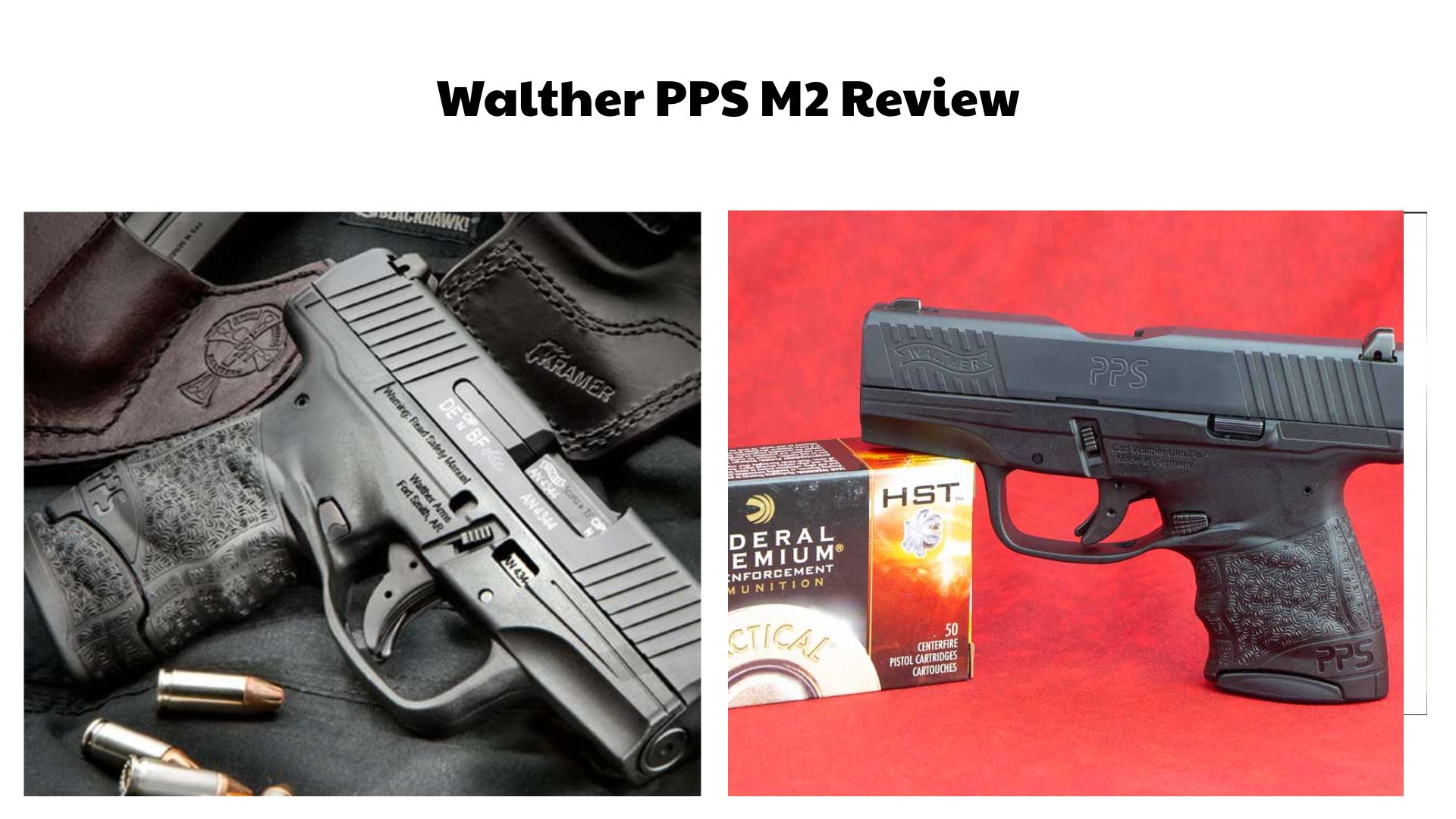

The Walther PPS M2 remains a notable option in the concealed carry world, especially for shooters who value slimness, simplicity, and reliable performance. Classified as a single-stack 9mm pistol, it was designed under the concept of “Police Pistol Slim,” meaning it was built to serve both law enforcement backup roles and civilian everyday carry needs. Even as newer micro-compact pistols dominate the market, the PPS M2 continues to hold relevance due to its ultra-thin profile and consistent shooting characteristics.
In a market now filled with high-capacity micro pistols, the PPS M2 takes a different approach. Instead of focusing on maximum round count, it prioritizes concealability and shootability in a lightweight and narrow frame. This makes it a direct competitor to pistols like the Glock 43 and Smith & Wesson Shield series, which also target concealed carry users who prefer slim, easy-to-carry firearms.
One of the strongest appeals of the PPS M2 is its trigger quality. Walther is well known for producing some of the better striker-fired triggers in the industry, and this model continues that tradition. Combined with its slim design and dependable function, it offers a balanced shooting experience for daily defensive carry.
The key question many shooters ask today is simple: in an era dominated by double-stack micro-compacts with higher capacity, is the Walther PPS M2 still a good concealed carry choice? The answer depends on priorities, but for users who value slimness, comfort, and simplicity, the PPS M2 remains a serious contender.
2. Walther PPS M2 Background & Development History
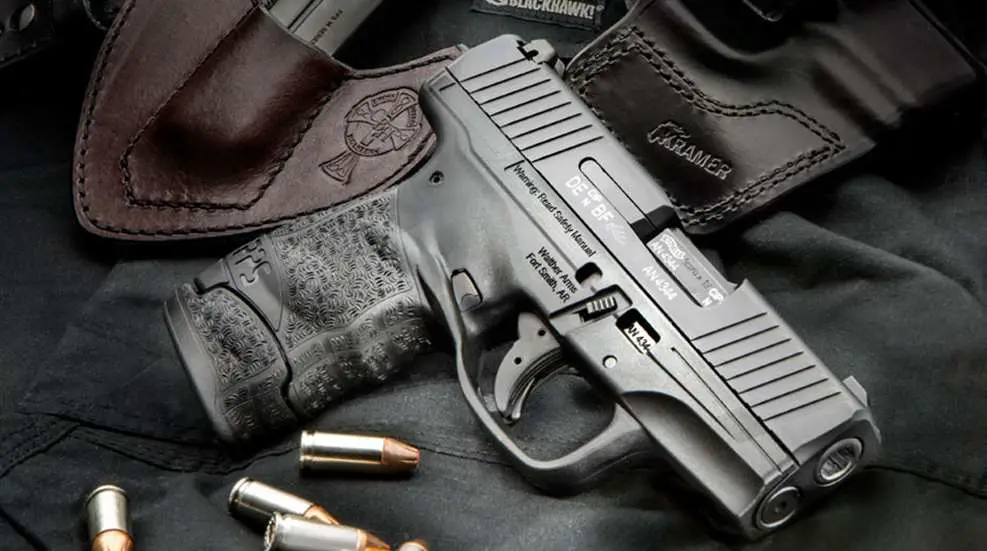
The Walther PPS M2 was introduced as an evolution of the original PPS M1 platform. The original model gained attention for its slim single-stack design and concealed carry practicality, but it also featured a more European-style control system that included a paddle magazine release. While functional, this design was less familiar to many American shooters.
To address this, Walther developed the PPS M2 with a focus on improving ergonomics and user experience. One of the most significant changes was the shift from the paddle magazine release to a more traditional push-button release, aligning it more closely with mainstream concealed carry pistols. This change alone made the platform more accessible to a broader audience.
The PPS M2 was also designed during a period when demand for slim 9mm pistols was increasing rapidly. Law enforcement agencies and civilian carriers were looking for compact backup weapons that could be comfortably concealed without sacrificing reliability. Walther positioned the PPS M2 directly within this growing niche.
Its development also reflects a transitional moment in handgun design. Before the rise of micro double-stack pistols like the SIG P365, designers focused heavily on single-stack slimline platforms. The PPS M2 represents one of the refined endpoints of that design philosophy—prioritizing thinness and concealment over capacity expansion.
Today, the PPS M2 sits in an interesting position. It is no longer the newest innovation in concealed carry, but it remains a well-engineered example of a slim defensive pistol that helped shape the modern CCW market.
3. Key Specifications & Technical Overview
The Walther PPS M2 is chambered in 9mm Luger, the most widely used defensive handgun cartridge in the world. It uses a striker-fired, semi-automatic operating system, which provides a consistent trigger pull and straightforward manual of arms. This system is designed for reliability and ease of use under defensive conditions.
The barrel length measures approximately 3.1 to 3.2 inches, depending on configuration. This short barrel supports deep concealment while still maintaining effective ballistic performance for defensive distances. The overall length is roughly 6.3 inches, placing it firmly in the compact concealed carry category.
One of the defining features of the PPS M2 is its ultra-slim profile. At approximately 1 inch wide, it remains one of the thinnest defensive 9mm pistols available. This width plays a major role in its concealability, especially for inside-the-waistband (IWB) and appendix carry setups.
Weight varies depending on magazine configuration, typically ranging from 19 to 21 ounces unloaded. This relatively light weight makes it comfortable for all-day carry without excessive fatigue, especially when paired with a quality holster system.
Magazine capacity is one of the trade-offs of the PPS M2 platform. It offers 6+1, 7+1, and 8+1 magazine options. While lower than modern double-stack micro pistols, these capacities are consistent with its single-stack slimline design philosophy.
The frame is constructed from high-strength polymer, paired with a stainless steel slide for durability. The slide features a corrosion-resistant finish, often compared to Walther’s Nitron-style coating, designed to withstand daily carry wear and environmental exposure.
Sight configurations vary by model, including standard 3-dot sights or upgraded night sights for low-light defensive use. This allows users to select a configuration based on training needs and carry environment.
Overall, the PPS M2 is engineered specifically for deep concealment and daily defensive carry efficiency, balancing slimness, reliability, and practical shootability in a compact package.
4. Design & Build Quality
The Walther PPS M2 is built around a clear and focused design philosophy: maximum concealability without sacrificing mechanical integrity. At its core, it uses a slim single-stack polymer frame that is specifically engineered to minimize printing under clothing. This makes it particularly effective for inside-the-waistband (IWB) and appendix carry, where every millimeter of thickness matters.
Walther’s reputation for precision engineering is clearly reflected in the PPS M2. Manufactured under strict German quality standards, the pistol maintains a high level of fit and finish that is often associated with more premium duty pistols. The slide-to-frame fit is tight without being overly restrictive, contributing to both reliability and long-term durability.
Compared to the earlier PPS M1, the M2 version shows noticeable improvements in ergonomics. The grip has been subtly reshaped with more rounded contours, reducing sharp transitions that could cause discomfort during extended carry. This refinement also improves overall handling comfort, especially when drawing from concealment or firing in rapid succession.
The stainless steel slide is another key strength in the PPS M2 design. It provides excellent resistance to wear, corrosion, and daily holster friction. For concealed carry users who carry their firearm daily, this level of durability is essential. The slide’s finish further enhances corrosion resistance, making it suitable for a wide range of environmental conditions, including humidity and sweat exposure.
One of the most noticeable design choices is the removal of unnecessary external features. Unlike larger pistols with accessory rails or extended controls, the PPS M2 intentionally avoids bulk. The absence of a rail system keeps the profile smooth and reduces potential snag points during a draw from concealment. This aligns directly with its intended role as a defensive carry pistol.
The slide serrations have also been refined. They are deep enough to provide secure purchase during manipulation, yet not overly aggressive to the point of discomfort. This balance is important for users who may need to rack the slide under stress or in adverse conditions. The serrations contribute to reliable operation without adding unnecessary visual or physical bulk.
Overall, the design of the Walther PPS M2 emphasizes simplicity, durability, and concealed carry optimization. It does not attempt to be a modular, accessory-heavy platform. Instead, it focuses on doing one job exceptionally well: providing a reliable, slim, and easy-to-carry defensive handgun that performs consistently when needed most.
5. Ergonomics & Handling Experience
The ergonomics of the Walther PPS M2 are a key part of its appeal, especially for concealed carry users who prioritize comfort and control. While the pistol maintains a very slim profile, Walther has worked to ensure that it still provides a usable and secure grip for a wide range of hand sizes.
The grip is intentionally narrow, which significantly improves concealability. However, this slimness does come with a tradeoff in surface area. Shooters with larger hands may find that their grip feels more compact than ideal, particularly during extended range sessions. Despite this, the design remains functional and stable under defensive shooting conditions.
To address varying hand sizes, the PPS M2 includes interchangeable backstraps. This feature allows users to adjust the grip circumference slightly, improving fit and comfort. While not as extensive as modular systems found in newer pistols, it provides enough flexibility for most users to achieve a natural grip angle.
Finger grooves and textured grip panels further enhance control. The texturing is designed to provide a secure hold under recoil without being overly abrasive. This is especially important for a concealed carry pistol that may be drawn quickly under stress. The grip surface helps maintain control even in less-than-ideal conditions such as sweat or rain.
One of the strongest ergonomic features of the PPS M2 is its natural point-of-aim geometry. The grip angle is designed to align naturally with most shooters’ wrist position, reducing the amount of adjustment needed when presenting the firearm. This contributes to faster target acquisition and more intuitive shooting behavior.
Magazine extensions also play an important role in improving ergonomics. While the flush-fit magazines enhance concealability, extended baseplates provide additional support for the pinky finger. This significantly improves control for shooters with larger hands or those who prefer a more stable grip during rapid fire.
Control placement is another area where the PPS M2 performs well. The magazine release and slide stop are positioned for intuitive operation, allowing users to manipulate the firearm efficiently under stress. These controls are designed to be accessible without requiring excessive hand repositioning, which is critical in defensive scenarios.
Ultimately, the ergonomic design of the PPS M2 reflects a balance between concealability and shootability. It is not a full-size service pistol, and it does not pretend to be. Instead, it delivers a compact, efficient handling experience tailored specifically for concealed carry use, where ease of concealment often takes priority over maximum comfort.
6. Trigger System & Shooting Characteristics
The trigger system of the Walther PPS M2 is one of its most praised features, especially within the concealed carry segment. It uses a striker-fired mechanism that delivers a consistent and predictable trigger pull with every shot. This consistency is essential for defensive shooting, where repeatable performance under stress is critical.
Trigger weight typically falls within the 5 to 6-pound range, depending on the individual unit and break-in period. This weight strikes a balance between safety and usability, ensuring that the trigger is not too light for defensive carry while still being manageable for accurate shooting.
One of the defining characteristics of the PPS M2 trigger is its clean break. Unlike some polymer pistols that feature spongy or vague break points, the PPS M2 provides a more defined wall before firing. This allows shooters to prepare for the shot more effectively, improving overall accuracy.
The reset is short and both audible and tactile. This short reset is particularly beneficial during rapid-fire sequences, as it allows the shooter to quickly re-engage the trigger without excessive travel. For defensive scenarios, this translates into faster follow-up shots and improved shot-to-shot consistency.
Compared to many competitors in the same category, the PPS M2 trigger is often considered more refined. While it is not designed to compete with match-grade triggers, it stands out in the concealed carry class for its smoothness and predictability. This makes it easier for shooters to develop consistent trigger control habits.
The shooting characteristics of the PPS M2 are clearly oriented toward defensive use rather than competition. The trigger is not ultra-light or overly sensitive, which reduces the likelihood of unintended discharge under stress. Instead, it provides a balanced feel that supports controlled, deliberate shooting.
In real-world defensive drills, this trigger system performs reliably and predictably. It allows shooters to focus on fundamentals such as sight alignment and grip pressure rather than compensating for inconsistent trigger behavior. This contributes to overall confidence in high-stress situations.
In summary, the Walther PPS M2 trigger system is one of its strongest assets. It delivers a smooth, consistent, and predictable shooting experience that enhances both accuracy and control. Combined with its slim design and ergonomic handling, it reinforces the PPS M2’s reputation as a highly capable concealed carry pistol built for practical defensive use.
7. Recoil & Shootability
The Walther PPS M2 delivers a recoil profile that is typical of slim 9mm concealed carry pistols, meaning it is noticeable but still very manageable for most shooters. Due to its lightweight frame and narrow grip design, the recoil impulse is slightly snappier than what you would experience in a full-size duty handgun. This is a natural tradeoff in any ultra-slim defensive pistol platform.
However, compared to many ultra-light polymer micro pistols, the PPS M2 performs noticeably better in recoil control. The additional steel slide weight and well-balanced internal design help moderate the rearward impulse. Instead of feeling overly sharp or harsh, the recoil is more controlled and predictable, especially during controlled pairs or defensive shooting drills.
Grip geometry plays a significant role in managing muzzle flip. The PPS M2 is designed with a natural grip angle that helps align the shooter’s wrist behind the bore axis. This reduces upward rotation during firing and allows the shooter to recover the sights more quickly between shots. While it is not as soft-shooting as larger compact pistols, it remains stable for its size category.
The use of heavier magazines and extended baseplates also improves shootability. When the extended magazines are used, shooters gain additional grip surface, which increases leverage and control over the pistol during recoil. This is especially beneficial for shooters with larger hands or those engaging in longer practice sessions at the range.
One of the strengths of the PPS M2 is its ability to remain comfortable during extended shooting sessions. While smaller pistols often become fatiguing after several magazines, the PPS M2 maintains a reasonable balance between compact size and shootability. Shooters can practice fundamentals, defensive drills, and transition exercises without excessive discomfort.
When compared to older single-stack 9mm pistols, the PPS M2 represents a clear improvement in recoil management. Earlier designs often suffered from sharper recoil impulses and less refined ergonomics. Walther’s updated frame design and improved grip texture help mitigate these issues, resulting in a more controlled shooting experience overall.
In summary, the PPS M2 is not a soft-shooting full-size pistol, but it performs very well within its category. It offers a balanced recoil system that prioritizes control over comfort, making it suitable for realistic defensive use and regular training without overwhelming the shooter.
8. Accuracy & Range Performance
The Walther PPS M2 delivers strong accuracy for a pistol in its size class, especially when used within typical concealed carry engagement distances. Most defensive encounters occur within 5 to 15 yards, and the PPS M2 is highly effective within this range. Its design is optimized specifically for this type of real-world use.
One of the key contributors to its accuracy is the combination of barrel consistency and trigger quality. The fixed barrel design helps maintain repeatable alignment between shots, reducing mechanical variability. When paired with the clean and predictable trigger system, this allows shooters to achieve consistent shot placement under controlled conditions.
At typical defensive distances, the PPS M2 is capable of producing tight and reliable groupings. While it is not designed for precision target shooting, it excels in practical accuracy. Shooters can expect solid center-mass hits with proper technique and grip fundamentals, even under moderate stress conditions.
The pistol also performs adequately at extended distances up to approximately 25 yards when handled by trained shooters. At this range, sight alignment and trigger control become more critical, but the PPS M2 remains capable of delivering usable defensive accuracy. This makes it versatile enough for both close-quarters defense and intermediate-range practice.
It is important to understand that the PPS M2 is not a competition-grade firearm. Its design priorities are centered on concealment, reliability, and defensive efficiency rather than precision shooting. As such, it does not feature the long sight radius or heavy frame found in target pistols. Instead, it focuses on fast, practical engagement capability.
Within its intended role, the PPS M2 performs very well. Its balance of barrel length, trigger consistency, and ergonomic design allows shooters to develop strong defensive accuracy skills without requiring a full-size platform. For concealed carry users, this level of performance is more than sufficient for real-world applications.
Overall, the PPS M2 is best described as a combat-accurate pistol. It is built for reliable hits on target under realistic conditions rather than precision group shooting. This makes it a strong choice for users who prioritize defensive readiness over range competition performance.
9. Concealed Carry Performance
The Walther PPS M2 is widely regarded as an excellent concealed carry pistol, primarily due to its ultra-slim 1-inch width. This narrow profile allows it to sit close to the body, significantly reducing printing under clothing. For everyday concealed carriers, this is one of the most important factors in selecting a defensive firearm.
Inside-the-waistband (IWB) and appendix carry are where the PPS M2 truly excels. Its slim design makes it comfortable to carry against the body for extended periods without creating excessive bulk or discomfort. Appendix inside-the-waistband (AIWB) carry is particularly effective due to the pistol’s smooth edges and lightweight construction.
The lightweight design also contributes to all-day carry comfort. Weighing under 21 ounces unloaded, the PPS M2 does not cause significant fatigue during daily movement. This makes it a practical option for individuals who carry their firearm for long hours in a variety of environments, including work and travel.
One of its strongest advantages is its ability to remain discreet under light clothing. Even with fitted shirts or minimal outer layers, the PPS M2 tends to print very little when properly holstered. This makes it especially useful in warm climates or summer clothing setups where concealment can be more challenging.
Despite its compact size, the PPS M2 is also suitable for winter carry setups. Heavier clothing layers further enhance concealment, allowing users to carry more comfortably without adjusting wardrobe choices significantly. This versatility makes it a year-round concealed carry option.
While not primarily designed as a pocket pistol, the PPS M2 can be carried in a pocket holster in certain configurations. This is generally limited to larger pockets or looser clothing, but it remains possible for deep concealment scenarios where traditional holster carry is not ideal.
In practice, the PPS M2 is often used as either a primary everyday carry firearm or a backup weapon. Its combination of slim profile, reliability, and manageable recoil makes it suitable for both roles depending on user preference and carry style.
Overall, the concealed carry performance of the PPS M2 is one of its strongest attributes. It prioritizes discretion, comfort, and practical accessibility, making it a highly effective choice for individuals who carry a firearm daily and require dependable concealment without sacrificing defensive capability.
10. Reliability & Ammo Performance
The Walther PPS M2 has built a strong reputation for reliability in the concealed carry community, particularly among users who prioritize slim, no-nonsense defensive pistols. When properly maintained and paired with quality ammunition, it is generally considered a dependable platform for everyday carry use.
In most cases, the PPS M2 performs well with standard full metal jacket (FMJ) training ammunition as well as modern defensive hollow-point loads. Its striker-fired system and well-engineered internal components are designed to cycle consistently under a variety of conditions, which is essential for a defensive handgun.
Like many semi-automatic pistols, the PPS M2 may require a short break-in period. During the first few hundred rounds, some users may experience minor inconsistencies as internal parts settle and smooth out. After this initial phase, the pistol typically becomes more consistent in cycling and overall operation.
There have been occasional reports of ammo sensitivity depending on individual units. This is not uncommon in compact pistols with tight tolerances. Certain ammunition types may perform differently, which is why testing various loads is an important part of setting up a defensive carry firearm.
Reliability tends to improve noticeably after initial use. Once the firearm has been properly broken in and matched with suitable ammunition, it generally cycles reliably and consistently. Proper lubrication and routine maintenance further enhance long-term performance.
Because of its role as a defensive handgun, it is strongly recommended that users test their chosen carry ammunition extensively before relying on it for self-defense. This ensures compatibility and helps confirm consistent feeding, firing, and ejection behavior.
Overall, the PPS M2 is widely regarded as a dependable self-defense pistol. While it may not be entirely immune to the typical quirks of compact semi-automatics, its track record and engineering quality place it firmly within the reliable concealed carry category.
11. Variants & Model Options
The Walther PPS platform has evolved through multiple versions, offering users different options based on ergonomics, controls, and personal preference. The two primary generations are the PPS M1 and PPS M2, each reflecting a different design philosophy.
The PPS M1 is the original version of the platform. It is known for its paddle-style magazine release located at the trigger guard, a design commonly associated with European handguns. While functional and ambidextrous, this system is less familiar to many American shooters who prefer a traditional button release.
The PPS M2 was introduced as an updated version of the platform, bringing several key improvements. The most significant change is the adoption of a conventional push-button magazine release, making the pistol more intuitive for a broader range of users. This change alone greatly improved its accessibility in the concealed carry market.
In addition to control differences, the PPS M2 also features refinements in ergonomics and grip design. The updated frame offers a more comfortable feel, improved contouring, and better overall handling characteristics compared to the original M1 model.
Sight configurations vary depending on model and production year. Standard models typically include basic 3-dot sights, while higher-end versions may come equipped with night sights for low-light defensive use. Some users also upgrade to aftermarket sight systems depending on personal preference.
Magazine capacity options remain a defining feature of the PPS lineup. The platform supports multiple magazine lengths, typically including 6-round, 7-round, and 8-round configurations. This allows users to balance concealability with additional grip surface and capacity as needed.
It is also worth noting that in some markets, certain PPS variants have been discontinued. However, they remain widely available on the secondary market and continue to be used by concealed carriers who appreciate their slim profile and simplicity.
Overall, the PPS M2 and its variants are designed with a focus on carry customization. Rather than offering extensive modular features, the platform emphasizes practical configuration options through magazine selection and basic ergonomic differences.
12. Walther PPS M2 vs Competitors
When compared to modern concealed carry pistols, the Walther PPS M2 occupies a distinct position as a slim, single-stack defensive handgun. Each of its primary competitors brings different strengths, and the PPS M2 stands out in specific areas rather than dominating across all categories.
Against the Glock 43, the PPS M2 offers a more refined ergonomic feel and a trigger that many shooters consider smoother and more consistent. However, the Glock system is known for its simplicity, widespread parts availability, and massive aftermarket support, which gives it an advantage in customization and ecosystem depth.
When compared to the Smith & Wesson Shield series, both pistols share a similar slim profile and concealability focus. The Shield, particularly in its newer variants, often offers higher capacity and more modern feature sets. The PPS M2, however, is frequently praised for its trigger quality and overall German engineering refinement.
The SIG P365 represents a major shift in the concealed carry market with its micro double-stack design. It offers significantly higher capacity in a similarly compact footprint, along with strong modularity and optics-ready configurations. In comparison, the PPS M2 prioritizes slimness and simplicity over maximum capacity.
One of the key advantages of the PPS M2 is its ultra-slim profile combined with a high-quality trigger system. It delivers a shooting experience that feels more refined than many polymer competitors in its class. The German engineering approach emphasizes precision, consistency, and mechanical smoothness.
However, its primary disadvantage in the modern market is capacity. As concealed carry trends have shifted toward high-capacity micro double-stack pistols, the PPS M2’s single-stack design places it at a numerical disadvantage in terms of round count.
In terms of market positioning, the PPS M2 represents a more traditional “classic slim carry pistol” approach, while newer competitors focus on capacity-driven innovation. It appeals most to shooters who value concealability, trigger feel, and simplicity over maximum ammunition capacity.
Ultimately, the PPS M2 remains a respected option, but its role today is more specialized. It is best viewed as a refined slim carry tool in a market that increasingly favors higher-capacity micro-compact designs.
13. Advantages of the Walther PPS M2
The Walther PPS M2 offers several clear advantages that have helped it maintain relevance in the concealed carry market, even as newer micro-compact pistols have introduced higher capacities and more advanced features. Its strengths are rooted in simplicity, slimness, and consistent performance rather than complexity or modularity.
One of the most notable advantages is its extremely slim profile. At roughly one inch wide, the PPS M2 is significantly thinner than most modern double-stack micro pistols. This makes it exceptionally easy to conceal under light clothing and comfortable to carry for extended periods. For users who prioritize discretion, this slimness is a major benefit.
Another key strength is its high-quality trigger system. Walther is well known for producing some of the better striker-fired triggers in the concealed carry category, and the PPS M2 continues that tradition. The trigger is smooth, predictable, and offers a clean break that helps improve practical shooting accuracy, especially under stress.
Reliability is also a strong point of the PPS M2. It has earned a solid reputation for dependable operation when properly maintained and paired with quality ammunition. Many users report consistent performance across a wide variety of conditions, which is essential for a defensive firearm.
In terms of carry comfort, the lightweight polymer frame makes the PPS M2 easy to wear all day without causing fatigue. This is especially important for concealed carriers who spend long hours on their feet or in environments where comfort directly impacts consistent carry habits.
The platform is also known for its simplicity. With fewer complex features and a straightforward design, the PPS M2 is easy to operate, maintain, and train with. This makes it appealing to users who prefer a no-frills defensive handgun with a traditional manual of arms.
Accuracy is another advantage within its class. While it is not a competition pistol, it delivers solid defensive accuracy at typical engagement distances. The combination of barrel consistency and trigger quality contributes to predictable shot placement in real-world scenarios.
Finally, the PPS M2 offers multiple magazine options, allowing users to tailor the pistol for different situations. Shorter magazines improve concealment, while extended magazines provide additional capacity and a more secure grip. This flexibility enhances its practicality as an everyday carry firearm.
14. Disadvantages & Limitations
Despite its strengths, the Walther PPS M2 also has limitations that reflect its older design philosophy compared to modern micro-compact pistols. These drawbacks are important to understand when evaluating it as a concealed carry option in today’s market.
The most significant limitation is its lower magazine capacity. As a single-stack pistol, it typically offers 6 to 8 rounds depending on magazine configuration. In contrast, modern micro double-stack pistols often provide 10 to 15 rounds or more in a similarly sized package.
Another drawback is the lack of factory optics readiness. Unlike newer concealed carry pistols that come pre-cut for red dot sights, the PPS M2 does not include an optics-ready slide. This limits its compatibility with modern red dot aiming systems without aftermarket modifications.
The slim grip, while excellent for concealment, can feel small for shooters with larger hands. This may affect comfort and control during extended shooting sessions. Extended magazines can partially mitigate this issue, but the base design remains compact by nature.
In terms of ecosystem and aftermarket support, the PPS M2 is less developed compared to newer platforms. There are fewer accessories, limited modular upgrades, and less widespread customization options available. This can be a disadvantage for users who prefer highly adaptable firearm systems.
Additionally, accessory rail options are limited or absent on many PPS M2 configurations. This restricts the ability to mount lights or other tactical accessories, which some modern concealed carriers consider essential for defensive use.
Although it is very compact, the PPS M2 is not truly optimized for pocket carry in most real-world scenarios. Its slim width helps with concealment, but its length and height make it more suitable for holster-based carry rather than true pocket deployment.
Finally, the PPS M2 is gradually being overshadowed within Walther’s own product lineup by newer designs such as the PDP and other micro-compact offerings. While still effective, it is no longer the company’s primary focus in the evolving concealed carry market.
15. Ideal Users for the Walther PPS M2
The Walther PPS M2 is best suited for a specific type of concealed carry user who values simplicity, slimness, and reliability over maximum capacity or modern feature sets. It remains a strong choice for those who understand its design philosophy and intended role.
It is ideal for concealed carriers who prioritize a slim profile above all else. Users who frequently carry in environments where printing must be minimized will benefit greatly from the PPS M2’s ultra-thin design.
It also works well for individuals transitioning from larger compact pistols to subcompact carry guns. The PPS M2 provides a manageable balance between shootability and concealability without overwhelming the shooter with excessive recoil or complexity.
Shooters who prefer single-stack pistols will find the PPS M2 particularly appealing. Its narrow grip, lightweight design, and traditional feel align well with users who appreciate classic concealed carry handgun characteristics.
Minimalist everyday carry users are another strong match for this platform. The PPS M2 avoids unnecessary complexity and focuses on core defensive functionality, making it suitable for those who prefer simple, reliable tools for personal defense.
It is also commonly used as a backup gun or deep concealment firearm. Its slim profile and lightweight construction make it easy to carry discreetly as a secondary defensive option.
Fans of Walther pistols and German engineering will appreciate the PPS M2’s trigger quality, mechanical refinement, and overall build consistency. It maintains the brand’s reputation for precision and attention to detail.
Ultimately, the PPS M2 is best for users who prioritize concealability and comfort over high magazine capacity or modern modular features. It remains a practical, dependable choice for disciplined concealed carry users who value simplicity and efficiency in their everyday defensive setup.
16. Final Verdict: Is the Walther PPS M2 Still Worth It?
The Walther PPS M2 remains a highly capable concealed carry pistol, even in a market that has shifted heavily toward higher-capacity micro-compact designs. While it is no longer the newest or most feature-rich option available, it continues to offer a well-balanced combination of concealability, accuracy, and reliability that keeps it relevant for everyday carry users.
One of the strongest aspects of the PPS M2 is its balance. It does not try to compete directly with modern double-stack micro pistols in terms of capacity or modularity. Instead, it focuses on doing a few key things very well: staying slim, carrying comfortably, and delivering consistent defensive performance. For many users, that balance is more important than maximum round count.
In terms of concealability, the PPS M2 still performs exceptionally well. Its ultra-slim profile makes it one of the easiest pistols to conceal under a wide range of clothing styles. For individuals who prioritize discretion and minimal printing, this remains one of its most compelling advantages.
However, it is important to acknowledge that the PPS M2 is outclassed in capacity by newer micro-compact pistols. Platforms like the SIG P365 family and similar designs offer significantly higher round counts in comparable sizes. For users who prioritize ammunition capacity above all else, the PPS M2 may feel limited by modern standards.
Despite this, the PPS M2 continues to be a strong choice for slim carry enthusiasts. Its single-stack design, lightweight construction, and refined trigger system create a shooting experience that many still prefer over more complex or bulkier alternatives. It maintains a level of simplicity that appeals to experienced concealed carriers.
The pistol is also well-suited for users who value straightforward operation. With fewer moving parts in terms of features and no emphasis on modular expansion, the PPS M2 offers a clean, uncomplicated defensive platform. This makes it particularly attractive for those who want a dependable tool without unnecessary complexity.
Ultimately, the Walther PPS M2 can be described as a refined classic in the concealed carry world. While it may not dominate modern specifications charts, it continues to hold its place through proven reliability, excellent concealability, and strong shooting characteristics. For the right user, it remains not just viable, but genuinely effective as a concealed carry solution.
Final takeaway: the PPS M2 is not the future of micro-compact pistols, but it is still a respected and practical choice today—especially for those who prioritize simplicity, slimness, and dependable everyday carry performance.
50+ Frequently Asked Questions About the Walther PPS M2
1. Is the Walther PPS M2 still a good concealed carry pistol today?
Yes, the Walther PPS M2 is still a very capable concealed carry pistol. While newer micro-compact pistols offer higher capacity and more modern features, the PPS M2 remains relevant due to its slim profile, strong reliability, and excellent trigger. It is especially well-suited for users who prioritize concealability and simplicity over maximum round count. For everyday carry, it continues to perform effectively within typical defensive distances.
2. What makes the PPS M2 different from modern micro-compact pistols?
The main difference is its single-stack magazine design, which makes it slimmer than most modern double-stack micro pistols. While newer designs like the SIG P365 or Glock 43X prioritize capacity, the PPS M2 focuses on thinness and ease of concealment. It is also more traditional in its design philosophy, emphasizing simplicity rather than modular features or optics integration.
3. Is the PPS M2 reliable for self-defense?
Yes, the PPS M2 is widely regarded as reliable when properly maintained. It performs well with quality ammunition and has a strong reputation in both civilian and law enforcement backup roles. Like many compact pistols, it may require a short break-in period, but after that, it generally cycles consistently and reliably.
4. How many rounds does the PPS M2 hold?
The PPS M2 typically comes with multiple magazine options. Standard capacities include 6+1, 7+1, and 8+1 rounds depending on magazine length. While this is lower than modern double-stack pistols, the design prioritizes slim concealability over maximum capacity.
5. Is the PPS M2 easy to conceal?
Yes, it is one of the easiest pistols to conceal in its class. At about one inch wide, it sits very close to the body and minimizes printing under clothing. This makes it ideal for inside-the-waistband (IWB) and appendix carry, even under light clothing.
6. Can the PPS M2 be carried in a pocket?
Technically, it can fit in some larger pockets with a proper holster, but it is not primarily designed as a pocket pistol. Most users find it more practical for holster-based concealed carry such as IWB or appendix carry due to its height and slide length.
7. How does the trigger feel on the PPS M2?
The PPS M2 has a striker-fired trigger that is smooth, consistent, and predictable. It typically breaks in the 5–6 pound range and features a short, audible reset. Many users consider it one of the better triggers in the single-stack concealed carry category.
8. Is the PPS M2 good for beginners?
It can be suitable for beginners, but it is slightly more specialized than newer pistols. Its slim grip may feel small for some users, but its simple operation and predictable trigger make it manageable. Beginners who prioritize concealability may find it a good entry-level carry pistol with proper training.
9. How does recoil feel on the PPS M2?
Recoil is moderate and typical for a slim 9mm pistol. It is snappier than larger handguns but more controllable than ultra-light micro pistols. The narrow frame and lightweight design contribute to noticeable recoil, but it remains manageable with proper technique.
10. Is the PPS M2 accurate?
Yes, it is accurate within its intended role. The PPS M2 performs very well at defensive distances of 5 to 15 yards. It can be effective beyond that range with practice, but it is not designed for precision or competition shooting.
11. Does the PPS M2 have a safety?
Some versions of the PPS M2 include a manual thumb safety, while others do not. This allows users to choose based on preference. The safety is designed to be low-profile and unobtrusive when carried.
12. What type of ammunition works best in the PPS M2?
The PPS M2 performs best with quality 9mm FMJ for training and reputable hollow-point ammunition for defensive use. It is recommended to test multiple defensive loads to ensure reliable feeding and cycling before carrying.
13. Does the PPS M2 require a break-in period?
Yes, like many semi-automatic pistols, it may require a short break-in period of a few hundred rounds. During this time, minor inconsistencies may occur, but reliability typically improves significantly after initial use.
14. Is the PPS M2 good for concealed carry in hot weather?
Yes, its slim profile makes it ideal for summer carry. It can be easily concealed under light clothing such as t-shirts, making it a strong option for warm climates where bulkier pistols are harder to hide.
15. How does the PPS M2 compare to Glock 43?
The Glock 43 is known for simplicity and a massive aftermarket ecosystem, while the PPS M2 offers a slimmer profile and a more refined trigger feel. The Glock is more modular, but the PPS M2 is often considered more comfortable to shoot in stock form.
16. How does the PPS M2 compare to SIG P365?
The SIG P365 offers significantly higher capacity in a similar size, making it more modern in terms of design philosophy. However, the PPS M2 is slimmer and appeals to users who prefer a single-stack feel and simpler design.
17. Is the PPS M2 good for appendix carry?
Yes, it is well-suited for appendix inside-the-waistband carry due to its slim width and smooth edges. Many users find it comfortable for all-day appendix carry with a proper holster.
18. Does the PPS M2 have a rail for accessories?
No, most PPS M2 models do not include an accessory rail. This design choice helps maintain its slim profile but limits the ability to mount lights or lasers.
19. Is the PPS M2 still in production?
While it may not be the primary focus of Walther’s current lineup, the PPS M2 is still available in many markets and remains widely used. Some configurations may be discontinued depending on region.
20. Is the PPS M2 good for small hands?
Yes, it generally fits small hands well due to its slim grip. However, larger-handed shooters may find it too narrow without extended magazines.
21. Is the PPS M2 good for large hands?
It can be used by larger-handed shooters, but comfort may be limited. Extended magazines help improve grip, but the platform is fundamentally designed for concealability rather than full-hand comfort.
22. How durable is the PPS M2?
It is very durable, featuring a polymer frame and steel slide with corrosion-resistant coating. With proper care, it can withstand long-term daily carry and high round counts.
23. What is the main purpose of the PPS M2?
The PPS M2 is designed primarily for concealed carry and personal defense. Its slim profile and reliability make it ideal for everyday defensive use rather than competition or duty applications.
24. Is the PPS M2 good for home defense?
Yes, it can be used for home defense, but it is more commonly chosen for concealed carry. Its limited capacity may be a consideration compared to larger handguns.
25. Does the PPS M2 have aftermarket support?
It has moderate aftermarket support, mainly for holsters and sights. However, it does not have as extensive an ecosystem as Glock or SIG platforms.
26. Is the PPS M2 good for beginners in concealed carry?
It can be a good option for beginners who prioritize concealability, but training is important due to its slim grip and recoil characteristics.
27. How does the PPS M2 perform in rapid fire?
It performs well in controlled rapid fire, but its slim frame makes recoil more noticeable. Proper grip technique significantly improves performance.
28. What holsters work best for PPS M2?
Inside-the-waistband (IWB) and appendix holsters are the most popular choices. Many manufacturers offer dedicated holsters due to its popularity in concealed carry.
29. Is the PPS M2 a good backup gun?
Yes, its slim profile and lightweight design make it an excellent backup firearm for concealed carriers or law enforcement personnel.
30. Why do some people still choose the PPS M2 over newer pistols?
Many users prefer its slim profile, simple design, and refined trigger feel. It offers a traditional concealed carry experience that some shooters still value over high-capacity modern designs.
31. Is the PPS M2 safe to carry every day?
Yes, the Walther PPS M2 is safe for everyday concealed carry when used with proper training and a quality holster. Like all modern striker-fired pistols, it includes internal safety mechanisms designed to prevent accidental discharge. The key factor is not the firearm itself, but safe handling practices. A rigid holster that fully covers the trigger guard is essential for safe daily carry.
32. Can the PPS M2 handle +P ammunition?
The PPS M2 is generally rated to handle standard defensive 9mm loads, and many users successfully use +P ammunition. However, +P rounds generate higher pressure and recoil, so it is important to confirm manufacturer guidance and test reliability before carrying them for self-defense. Regular use of +P should be balanced with standard pressure training ammunition to reduce wear.
33. How often should I clean the PPS M2?
For regular concealed carry use, cleaning after every range session is recommended. If carried daily but not fired, periodic inspection and light maintenance are sufficient. Proper lubrication of key contact points ensures smooth cycling and long-term reliability. The PPS M2 is not overly maintenance-heavy, but consistent care improves performance and longevity.
34. Is the PPS M2 good for new gun owners?
It can be suitable for new gun owners, especially those focused on concealed carry. Its operation is straightforward, and its trigger is predictable. However, its slim grip and snappier recoil may require some adjustment compared to larger pistols. With proper instruction and practice, it can serve as a capable first carry gun.
35. How does the PPS M2 perform in low-light conditions?
Performance in low light depends on the sight configuration. Models equipped with night sights offer good visibility in dim environments. Without night sights, target acquisition may be more challenging. Since it is not optics-ready, users rely on iron sights, making sight upgrades an important consideration for defensive use.
36. Is the PPS M2 good for appendix carry (AIWB)?
Yes, the PPS M2 is widely used for appendix carry due to its slim profile and smooth edges. It sits comfortably against the body and minimizes printing. Proper holster selection is important for comfort and safety, especially in appendix carry positions.
37. Does the PPS M2 have a manual safety?
Some variants of the PPS M2 include a manual thumb safety, while others do not. This allows users to choose based on personal preference. Many concealed carriers prefer the version without a manual safety for faster draw and simpler operation, but both options are reliable.
38. How does the PPS M2 compare in recoil to Glock 43?
The PPS M2 generally offers slightly better recoil control than the Glock 43 due to its grip geometry and balanced frame design. While both are snappy due to their size, many shooters find the PPS M2 smoother and easier to manage during rapid fire.
39. Is the PPS M2 suitable for home defense?
Yes, it can be used for home defense, but it is primarily designed for concealed carry. Its lower capacity compared to full-size pistols may be a limitation in defensive home scenarios. However, it remains effective when used within its intended defensive role.
40. What type of holster is best for PPS M2?
Inside-the-waistband (IWB) holsters are the most common choice, especially for concealed carry. Appendix inside-the-waistband (AIWB) holsters are also popular due to the pistol’s slim profile. A rigid holster that fully protects the trigger guard is essential for safety.
41. Does the PPS M2 have good aftermarket support?
It has moderate aftermarket support. While not as extensive as Glock or SIG platforms, users can still find holsters, sights, and some upgrade components. The slim design limits customization options compared to more modular pistols.
42. Is the PPS M2 considered outdated?
It is not outdated in performance, but it is based on an older design philosophy. Modern pistols tend to focus on higher capacity and optics integration, while the PPS M2 focuses on slimness and simplicity. It remains effective but is more traditional in concept.
43. How durable is the PPS M2 for long-term carry?
The PPS M2 is very durable when properly maintained. Its polymer frame and steel slide construction are designed for long-term concealed carry use. Many users report high round counts with minimal issues, making it a reliable long-term defensive firearm.
44. Can the PPS M2 be used for concealed carry training classes?
Yes, it can be used in training environments. However, its lower magazine capacity may require more frequent reloads compared to higher-capacity pistols. It still performs well for defensive skill development and live-fire drills.
45. Is the PPS M2 good for small-framed shooters?
Yes, its slim grip and lightweight design make it suitable for smaller hands and frames. It is often preferred by shooters who find double-stack pistols too wide or uncomfortable to grip securely.
46. Does the PPS M2 rust or corrode easily?
No, the PPS M2 uses corrosion-resistant finishes on its slide and quality polymer materials for the frame. With normal care and cleaning, it holds up well even in humid environments or daily concealed carry conditions.
47. Is the PPS M2 loud when fired?
Like all 9mm pistols, it produces a standard level of muzzle report. Due to its shorter barrel, the sound and muzzle flash may feel slightly more pronounced compared to full-size pistols, but it remains within typical expectations for concealed carry firearms.
48. Is the PPS M2 good for deep concealment?
Yes, it is one of the better options for deep concealment in the single-stack category. Its slim width allows it to sit close to the body and remain hidden under light clothing when properly holstered.
49. What is the biggest weakness of the PPS M2?
Its biggest weakness is lower magazine capacity compared to modern micro double-stack pistols. While it excels in concealability and trigger quality, it cannot match newer designs that offer significantly more rounds in similar-sized frames.
50. Is the PPS M2 still worth buying today?
Yes, for the right user. If concealability, slim design, and trigger quality are priorities, the PPS M2 remains a strong option. However, if maximum capacity and modern features like optics readiness are more important, newer micro-compact pistols may be better suited.
Read more: