
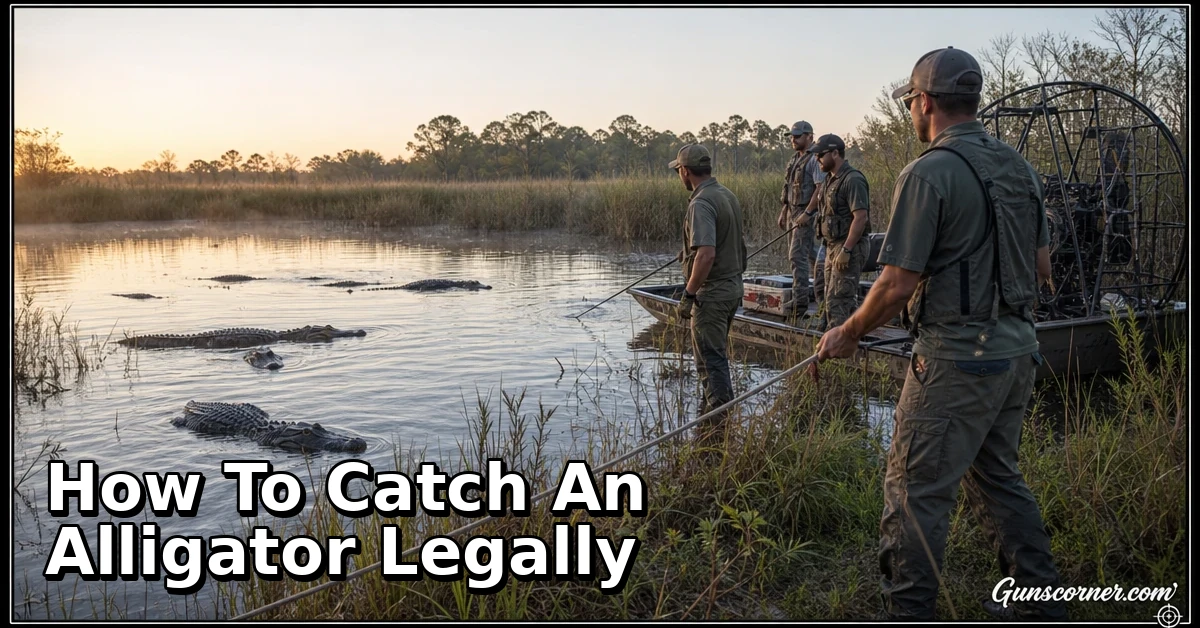
Catching an alligator is not ordinary fishing or general hunting. It is a tightly regulated, high-risk activity that may be allowed only during specific seasons, through limited permits, or under an authorized nuisance-control or research program. This guide explains how to verify the law, prepare responsibly, avoid unauthorized capture, and know when to contact wildlife professionals.
To learn how to catch an alligator legally, first identify your exact state, management unit, land or water access, and the current wildlife-agency rules. Confirm the required license, permit, tag, season, legal hours, approved equipment, reporting process, and access permissions before entering the field. Never attempt capture based on a generic gear list or an old article. Because alligators can seriously injure people, beginners should use an authorized program, qualified mentor, or licensed professional rather than attempting an independent capture.
Important Legal and Safety Notice Before You Hunt
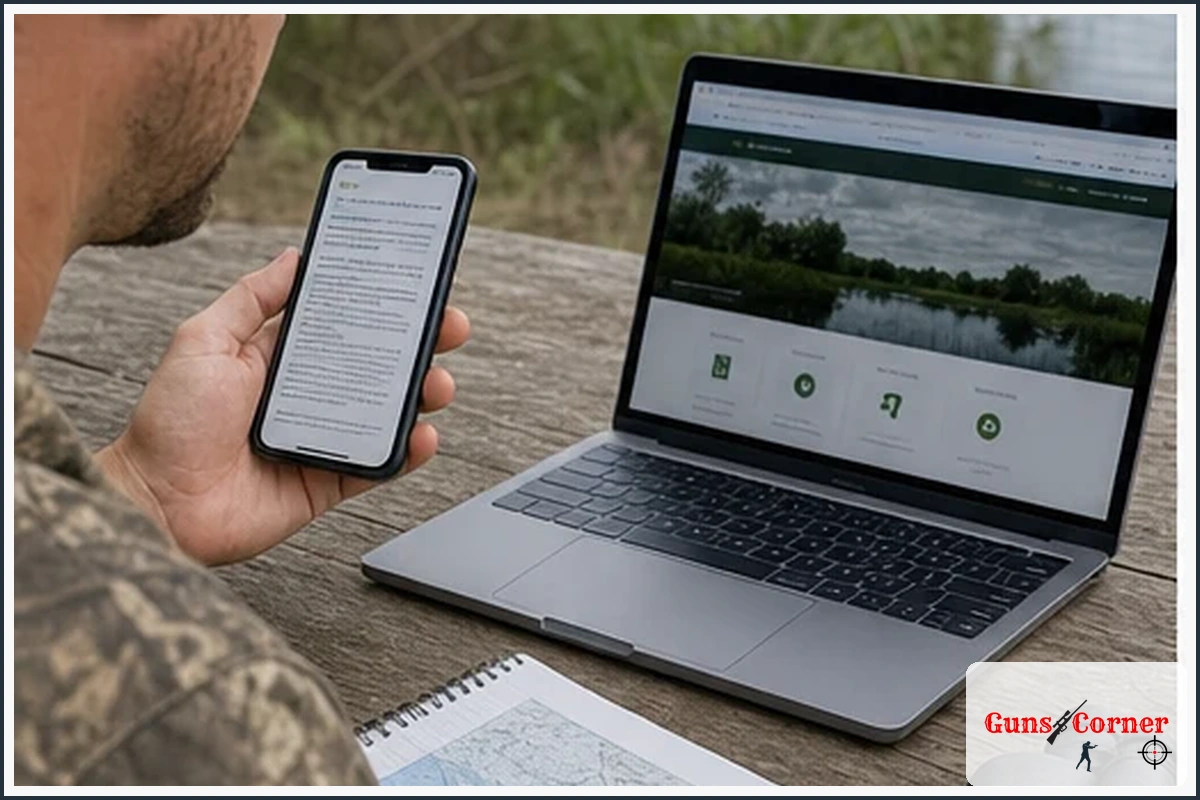
Alligator regulations vary by jurisdiction and can change by season, management area, land type, water body, permit category, and capture purpose. Before acting, check the current official wildlife-agency regulations for:
- Hunting licenses, permits, tags, and authorizations
- Season dates, legal hours, quotas, and size restrictions
- Approved weapons, capture equipment, bait, boats, lights, and methods
- Public-land, private-land, boating, refuge, park, or tribal-land rules
- Landowner permission and access boundaries
- Hunter-education, supervision, residency, and age requirements
- Tag validation, reporting, check-in, inspection, transport, and possession rules
Never approach, feed, corner, handle, or attempt to restrain an alligator casually. Keep people and pets away, maintain distance, and contact wildlife officers or emergency services if there is an immediate threat.
First determine whether alligator capture is legal where you are
Why there is no single nationwide rule
Alligator management is controlled primarily through jurisdiction-specific wildlife regulations. One state may offer a limited recreational season, while another may regulate alligator capture through permits, quotas, nuisance programs, or specialized contractors. A method that is lawful in one location may be prohibited elsewhere.
Identify the state, management unit, and land or water access rules
Write down the exact location before researching the rules. Identify the state or province, county or management unit, lake, river, marsh, refuge, park, and ownership status. Public access does not automatically mean alligator capture is allowed.
Use the current wildlife-agency regulations—not old articles, forum posts, or general hunting advice
Look for the current official hunting regulations, alligator permit page, nuisance-alligator program, or agency guidance. Confirm that the document applies to the current year and exact location. General hunting advice cannot replace controlling regulations.
Stop if you cannot verify an open season, permit, authorization, or legal method
If you cannot confirm an open opportunity and an authorized method, do not attempt capture. Contact the wildlife agency for clarification. Uncertainty is a reason to stop, not a reason to experiment.
What “legally catch an alligator” can mean
Harvesting an alligator during a regulated hunt
A regulated hunt may involve an application, draw, quota, harvest permit, tag, approved equipment, designated waters, and reporting requirements. Read every condition attached to the permit.
Removing a nuisance or threatening alligator through an authorized program
Nuisance removal is usually a separate process from recreational hunting. A wildlife agency may respond directly or refer the report to a licensed contractor. A private citizen should not assume that a threatening animal can be captured independently.
Capturing an alligator for research, relocation, or commercial purposes
Scientific, educational, commercial, and relocation activities may require separate authorizations. A recreational license generally does not authorize these activities.
Why ordinary fishing, trapping, or trespass rules may not authorize alligator capture
An alligator may be protected under specific wildlife rules even when fishing or trapping is otherwise allowed. Fishing access also does not grant permission to use lines, hooks, bait, firearms, boats, or other equipment for alligator capture.
Permits, tags, licenses, and permissions to verify before going afield
Hunting license, alligator permit, and harvest tag requirements
Determine whether you need a general hunting license, a species-specific permit, a harvest tag, a special authorization, or more than one credential. Keep required documents accessible while in the field.
Whether permits are draw-based, quota-based, limited-entry, or over-the-counter
Some opportunities may be issued through a drawing, quota, limited-entry system, or direct purchase. Do not assume that a general license guarantees an opportunity to harvest an alligator.
Required landowner permission, public-access permits, and boating permissions
Obtain landowner permission before entering private property. On public waters, verify launch, parking, boating, nighttime, refuge, and access rules. Carry proof of permission when appropriate.
License-holder age, hunter-education, residency, and supervision rules
Check whether the jurisdiction imposes age, residency, hunter-education, supervision, or experienced-partner requirements. Beginners should complete an approved hunter-education course and seek an experienced, ethical mentor.
Tag validation, carcass reporting, check-in, and inspection deadlines
Understand when a tag must be attached or validated and whether the harvest must be reported online, by phone, at a check station, or through an inspection process. Record deadlines before the hunt begins.
Additional rules for public waters, wildlife refuges, parks, and tribal lands
Special land-management areas may have additional restrictions or complete prohibitions. Verify the rules for the specific property rather than relying on general state regulations.
Read the method rules before choosing equipment
Which capture methods the jurisdiction expressly permits
Use only methods explicitly authorized by the controlling regulation or agency guidance. Do not infer legality from equipment sold in stores or shown in videos.
Possible distinctions among baited lines, handheld equipment, firearms, archery equipment, and dispatch tools
Regulations may treat baited lines, handheld tools, firearms, archery equipment, and dispatch equipment differently. The permitted method may depend on the permit type, location, season, and animal status.
Restrictions on bait, hooks, line placement, unattended gear, lights, boats, and night activity
Rules may address bait, hooks, lines, unattended equipment, lights, boats, navigation, and nighttime activity. Never assume that a normal fishing practice is lawful for alligator capture.
Why equipment legality can change by season, zone, water body, or permit type
A method allowed in one management unit may be prohibited in another. Read the exact regulation attached to your permit and location.
Do not rely on a gear list until the agency regulation confirms each item
Prepare a written equipment list, then compare every item with the current agency rules. Leave questionable equipment at home until its legality is confirmed.
How a lawful hunt or capture should be planned
Complete the permit and access checklist before scouting
Confirm your license, permit, tag, identification, land permission, access route, and authorized method before scouting. Save digital and printed copies of important documents where permitted.
Confirm season dates, legal hours, weather limits, and emergency contacts
Check the opening and closing dates, legal hours, weather restrictions, boating requirements, and emergency contact information. Weather can create serious risks around water, darkness, current, and slippery banks.
Plan a retrieval route, boat position, lighting, communication, and transport
Before entering the area, establish how people will move safely, how communication will work, where a boat may operate legally, and how any lawful harvest will be transported. Do not improvise around deep water or unstable banks.
Bring only equipment allowed by the applicable regulation
Carry required safety equipment, navigation tools, communication devices, first aid supplies, water, and weather protection. Add capture equipment only after confirming that each item is authorized.
Arrange an experienced partner or licensed professional for a first attempt
A first attempt should not be a solo experiment. Use an experienced, law-abiding partner or a licensed professional familiar with the jurisdiction and its procedures.
Alligator safety: treat capture as a high-risk activity
Never approach, feed, corner, or handle an alligator casually
Observe from a safe distance and keep children, pets, and bystanders away. Feeding alligators can create dangerous associations with people and may violate local law.
Maintain a safe separation from the animal and keep bystanders away
Do not allow anyone to stand near the animal, block its route, or gather around a boat or bank. A large alligator can move quickly over short distances.
Boat, bank, darkness, current, and vegetation hazards
Water access adds risks from unstable banks, poor visibility, current, submerged obstacles, tangled vegetation, and falls overboard. Wear appropriate flotation equipment when boating and use reliable lighting where lawful.
Never work alone or put a person between the alligator and open water
Maintain a clear escape route and avoid positioning anyone between the animal and water. Do not attempt a capture without a communication plan and a capable partner.
What to do if the animal rolls, lunges, becomes entangled, or reaches the boat
Do not grab the animal, pull on an unstable line, or place hands near its jaws or tail. Move people away if possible, follow the agency-approved procedure, and abandon the attempt when control is uncertain.
When to abandon the attempt and contact wildlife officers or emergency services
Stop if a person is injured, the animal reaches an unsafe position, equipment fails, visibility deteriorates, or the animal is not clearly legal to harvest. Call emergency services for immediate danger and the wildlife agency for wildlife-law questions.
Capture, restraint, dispatch, and recovery: follow the authority’s exact procedure
Why this article should not substitute generic restraint or dispatch instructions
Alligator capture and restraint involve serious injury risks and jurisdiction-specific rules. Generic online instructions may be incomplete, unsafe, or unlawful.
Use only methods taught, licensed, or explicitly authorized in the relevant jurisdiction
Follow the permit conditions, official training, manufacturer instructions, and directions from qualified authorities. Do not invent a restraint or dispatch method in the field.
Humane-treatment expectations and avoiding unnecessary injury
Responsible hunters must avoid unnecessary suffering and must be prepared to stop when a safe, lawful, and humane outcome cannot be achieved. If you lack the training or equipment, use a licensed professional.
Safe handling of lines, jaws, tail, and the animal’s movement
Do not place hands near the jaws, tail, or entangling equipment. Keep people clear of tensioned lines and moving equipment. Exact handling procedures must come from the relevant wildlife authority or qualified professional.
What to do when the animal is undersized, protected, tagged, or not legally harvestable
Do not continue an unauthorized harvest. Follow the applicable release, notification, or agency-contact procedure. Never keep an animal simply because it was difficult to capture or because it was caught accidentally.
After capture: tagging, reporting, transport, and possession
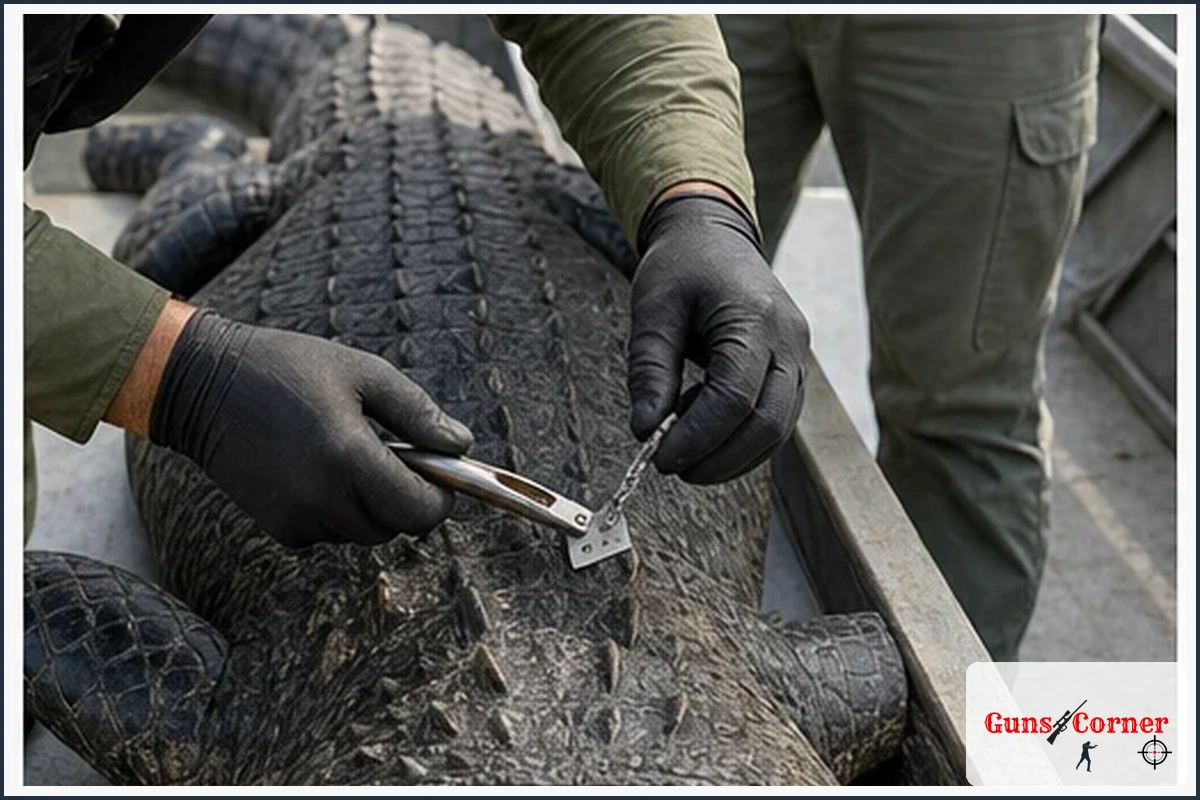
Attach and validate the required tag before moving the animal, if required
Follow the exact timing and placement rules for tags. Do not move or transport a harvest until required tagging steps are complete.
Meet agency deadlines for reporting, check stations, photographs, or measurements
Record the reporting deadline and required information before the hunt. Some programs may require photographs, measurements, check-in, inspection, or other documentation.
Preserve required evidence of legal harvest
Keep permits, tags, receipts, permissions, photographs, measurements, and reporting confirmations as required. Do not alter or discard identifying evidence before checking the rules.
Transport and storage rules for whole animals, hides, meat, and other parts
Confirm how an animal, hide, meat, skull, or other part must be transported, stored, marked, or documented. Keep the harvest secure and follow sanitation and cooling requirements.
Do not sell, transfer, or ship parts without checking separate wildlife and commercial rules
Sale, transfer, taxidermy, shipping, and commercial possession may require additional permits or documentation. A harvest tag alone may not authorize commercial activity.
Nuisance alligators and emergency encounters are handled differently
How to report an alligator threatening people, pets, or livestock
Move people and pets away, avoid approaching the animal, and contact local emergency services or the official wildlife agency. Use the agency’s nuisance-alligator reporting process when there is no immediate emergency.
Why private citizens should not attempt an unauthorized removal
Unauthorized removal can injure people, worsen the situation, violate wildlife law, or move the animal into another unsafe location. Reporting allows trained personnel to determine the appropriate response.
Questions to ask a responder or licensed nuisance-alligator contractor
- Are you authorized by the relevant wildlife agency?
- What documentation or permit covers the removal?
- Who is responsible for reporting and disposition?
- What should people and pets do while waiting?
What information to provide: location, behavior, size estimate, photographs from a safe distance, and immediate hazards
Provide the exact location, recent behavior, approximate size, nearby people or pets, access conditions, and immediate hazards. Take photographs only from a safe distance and never approach for a better image.
A printable legality checklist
Jurisdiction and current regulation verified
- Exact state, management unit, water body, and property identified
- Current official regulation located and dated
- Season, legal hours, quota, and size rules confirmed
Permit, license, tag, access permission, and method authorization confirmed
- Required license and permit obtained
- Tag and reporting process understood
- Private-land or public-access permission confirmed
- Every capture method and equipment item verified as legal
Safety plan, partner, communications, boat plan, and emergency plan ready
- Experienced partner or licensed professional arranged
- Navigation, flotation, first aid, lighting, and communication planned
- Weather and water hazards reviewed
- Abort conditions agreed upon before starting
Reporting, tagging, transport, and possession requirements documented
- Tagging and reporting deadlines recorded
- Inspection or check-in requirements confirmed
- Transport, storage, transfer, and sale rules reviewed
Common mistakes to avoid
- Assuming fishing rules authorize alligator capture
- Relying on an old video, forum post, or outdated regulation
- Entering private land or restricted water without permission
- Using equipment before confirming it is legal
- Attempting a nuisance removal without authorization
- Working alone or without a communication plan
- Approaching an alligator for photographs or a closer look
- Ignoring darkness, current, unstable banks, or boat hazards
- Moving an animal before completing required tagging steps
- Failing to report, inspect, transport, or document the harvest correctly
Troubleshooting Common Problems
| Problem | Possible Cause | What to Do |
|---|---|---|
| You cannot confirm the rules | The regulation is outdated, unclear, or for another management unit | Stop and contact the current official wildlife agency. |
| The animal is near people or pets | Possible nuisance or emergency situation | Move people away and report it; do not attempt capture yourself. |
| Equipment becomes tangled or unstable | Water, vegetation, tension, or poor setup | Keep people clear, abandon the attempt if needed, and seek qualified assistance. |
| Weather or visibility worsens | Storms, darkness, fog, current, or poor lighting | End the attempt and return safely using your communication and navigation plan. |
| You are unsure whether an animal is legal to harvest | Unclear size, tag, protected status, or permit condition | Do not harvest; contact the wildlife agency for direction. |
Ethical Hunting and Conservation
Responsible alligator hunting supports conservation only when it follows wildlife law, humane-treatment standards, and sound safety practices. Respect seasonal limits, quotas, access rules, landowners, other recreationists, and the animal itself.
- Pass on any uncertain, unsafe, or unauthorized opportunity.
- Avoid waste and follow legal meat, hide, and by-product requirements.
- Keep waterways and access areas clean.
- Do not feed or habituate wild alligators.
- Report violations and dangerous encounters to the appropriate authority.
- Support conservation through lawful licensing and responsible participation.
When to Get More Training or Professional Guidance
Seek additional training or professional help if you have never handled an alligator, are unfamiliar with the local rules, lack a capable partner, are not confident around boats or water, or do not understand tagging and reporting procedures.
Useful sources of help include official hunter-education courses, state wildlife agencies, qualified instructors, licensed nuisance-alligator contractors, experienced ethical mentors, and local conservation organizations.
Recommended Hunting Gear and Tools to Consider
You do not always need expensive equipment, but you do need equipment appropriate for the law, water conditions, weather, communication needs, and your training. Confirm legality before carrying capture equipment.
- Current license, permit, tag, identification, and access documentation
- Personal flotation equipment for lawful boat activity
- Reliable communication device and backup power
- Map, compass, GPS, or approved navigation app
- First aid kit, water, food, and weather protection
- Required lighting and visibility equipment
- Gloves and sanitation supplies where appropriate
- Only the capture, tagging, transport, and recovery equipment expressly authorized by regulation
After the Hunt: Follow-Up, Gear Care, and Learning
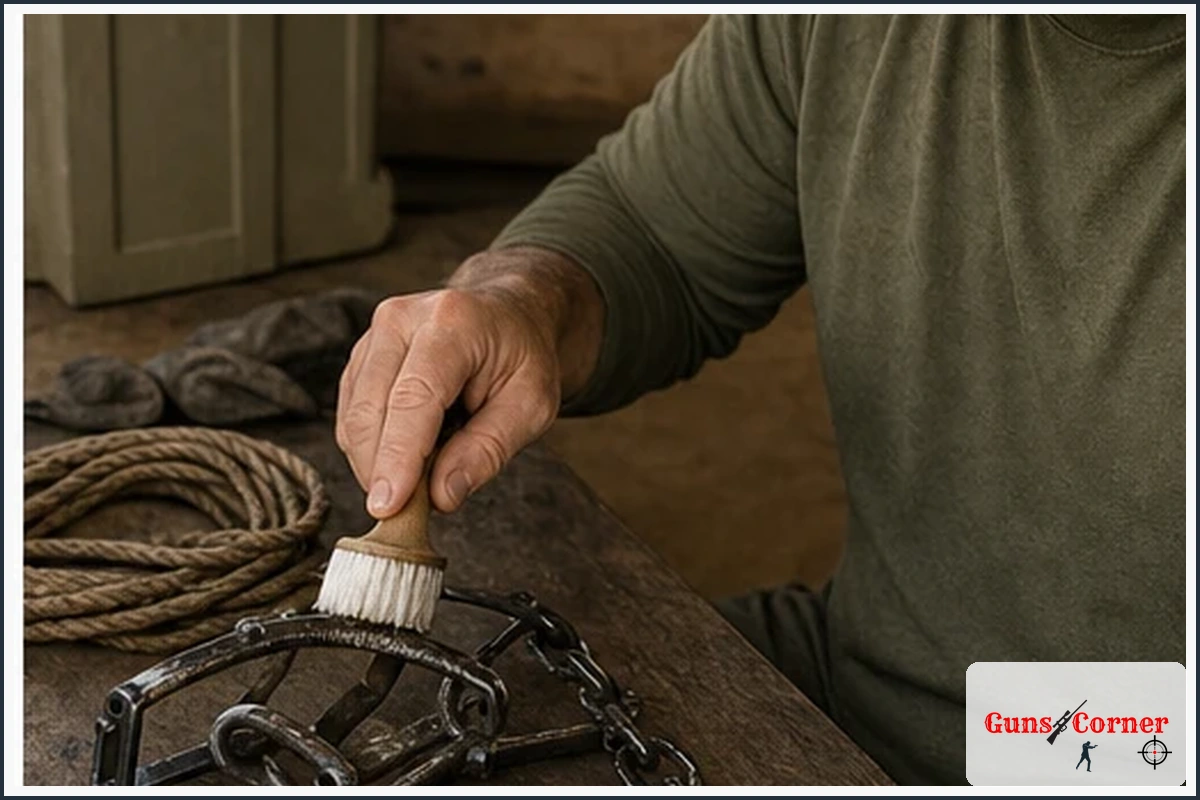
Complete all required reporting, inspection, tagging, transport, and possession steps. Clean and store equipment safely, document what worked and what did not, and record weather, access conditions, and safety concerns for future planning.
If you were unable to verify a legal or safe opportunity, treat that as a successful decision. Learning when not to proceed is an essential hunting skill.
Frequently asked questions
Can I catch an alligator with a fishing rod?
Not unless the current wildlife regulation expressly authorizes that method under the applicable permit and location. Ordinary fishing authorization does not automatically permit alligator capture.
Can I catch an alligator on private property without a permit?
Usually, private ownership does not eliminate wildlife-law requirements. You may still need a license, permit, tag, authorized method, and reporting process. Verify the current rules with the wildlife agency.
Can I keep an alligator I catch accidentally?
Do not assume you may keep it. Secure your own safety, avoid unnecessary handling, and contact the wildlife agency for instructions. Accidental capture and possession rules vary.
What should I do if an alligator is threatening a person or pet?
Move people and pets away, avoid approaching the animal, and call emergency services if there is immediate danger. Otherwise, report it through the official wildlife-agency nuisance program.
Are alligator hunting rules different at night or from a boat?
They may be. Legal hours, lighting, boating, navigation, and capture rules can vary by location and permit type. Confirm each requirement before going out.
How can I verify that a permit or method is current?
Use the current official wildlife-agency regulation or permit document for the exact jurisdiction and year. If the wording is unclear, contact the agency directly and keep a record of the guidance you receive.
Final Thoughts
Learning how to catch an alligator legally starts with jurisdiction, not equipment. Verify the current permit, season, access, method, tagging, reporting, and transport rules before scouting or entering the field. Because alligator capture is dangerous and highly regulated, beginners should rely on official training, experienced partners, or licensed professionals. When legality or safety is uncertain, do not proceed.