
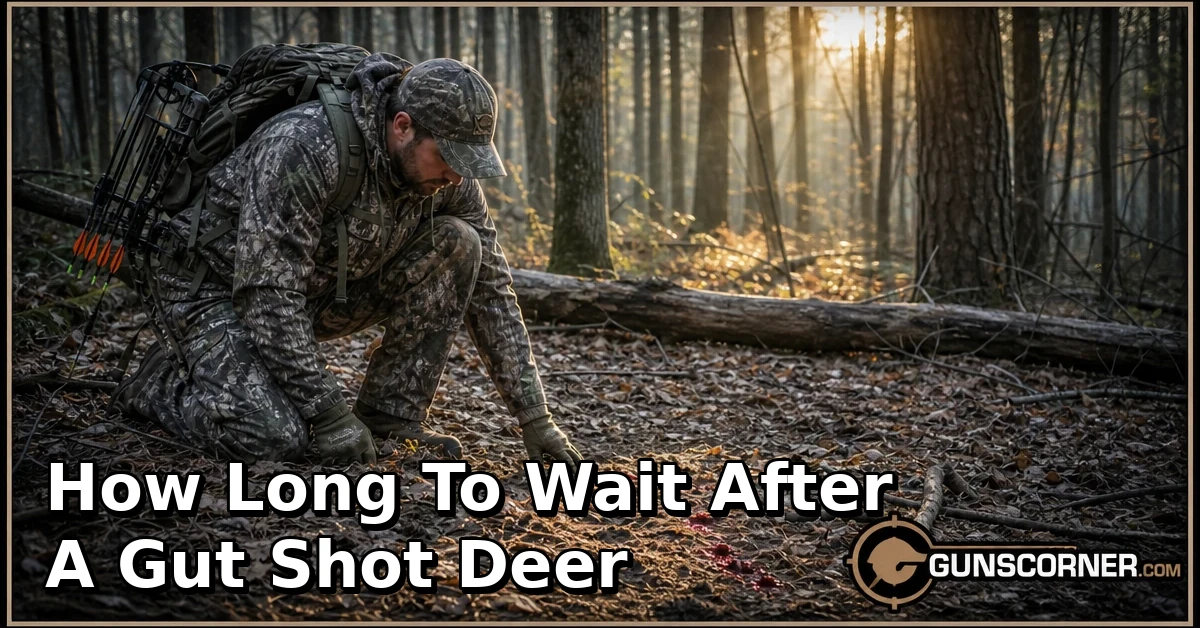

A suspected gut shot is one of the most difficult deer-recovery situations. The best decision is usually patience: avoid pushing the deer, study the sign, and wait long enough for it to bed down. This guide explains how long to wait after a gut shot deer, how to evaluate the evidence, and how to continue the recovery legally, safely, and ethically.
If you believe you made a gut shot, wait at least 6 to 8 hours before tracking when conditions are safe, and consider waiting 8 to 12 hours when the weather, predators, or property boundaries do not create added risk. Do not immediately walk into the deer’s last known location, because pressure may cause it to leave its first bed and travel much farther. Mark the shooting location, observe the deer’s reaction, identify the blood or hair sign, and follow local laws for recovery and reporting.
Important Legal and Safety Notice Before You Track
Hunting and game-recovery rules vary by state, province, season, weapon type, and land category. Before hunting, verify current requirements with your official wildlife agency, including license and tag rules, legal hunting hours, weapon restrictions, land access, tagging, harvest reporting, transport, and tracking permissions.
- Carry your license, tag, identification, and required safety equipment.
- Confirm that you have permission to enter every property involved in the recovery.
- Wear required hunter-orange or other visibility clothing where applicable.
- Unload firearms when crossing fences, entering vehicles, or approaching other people.
- Keep a bow pointed safely and broadheads covered during transport and tracking.
- Do not track toward roads, homes, livestock, people, or unclear movement with a loaded weapon.
- Tell someone your route and expected return time.
- Use a map, flashlight, water, first-aid kit, charged phone, and weather-appropriate clothing.
Why Waiting Matters After a Gut Shot
A gut-hit deer may not die quickly. If disturbed, it can leave its first bed and travel a considerable distance, making the trail harder to follow. Waiting gives the deer time to settle and reduces the chance that you will turn a recoverable deer into a prolonged search.
A gut shot may produce a hunched posture, a slow or uneven walk, a short run followed by stopping, or a deer that repeatedly looks back toward the hunter. These clues are useful, but no single behavior proves shot placement.
How Long to Wait After a Gut Shot Deer
| Situation | General waiting approach | Important consideration |
|---|---|---|
| Strong evidence of a gut hit | Wait at least 6 to 8 hours | Waiting 8 to 12 hours may be wiser if conditions permit. |
| Uncertain hit with little sign | Wait several hours before investigating carefully | Do not assume a clean miss without checking responsibly. |
| Cold weather | A longer wait may be possible | Check for predators, freezing conditions, and changing weather. |
| Hot weather | Balance recovery time against meat spoilage | Seek experienced local guidance and follow legal requirements. |
| Heavy rain, snow, or rising water | Track as soon as safely and ethically possible | Preserve sign without rushing into the deer’s likely bedding area. |
These are general field guidelines, not universal rules. Terrain, temperature, predators, property access, animal behavior, and the quality of the evidence all matter.
Step-by-Step Guide to Recovering a Gut-Shot Deer
Step 1: Watch the Deer Carefully After the Shot
Keep your eyes on the deer as long as possible without moving. Note the direction it traveled, whether it was walking or running, whether it hunched up, and where it disappeared. Avoid rushing after it.
Step 2: Mark Your Shooting Location
Use a visible landmark, GPS waypoint, or a small piece of biodegradable marking material where you took the shot. Also mark the last place you clearly saw the deer. These points help you reconstruct the trail accurately.
Step 3: Reconstruct the Shot
Before stepping forward, review your position, angle, deer posture, and aiming point. If you are uncertain about the hit, treat the deer as wounded until the evidence shows otherwise.
Step 4: Wait in a Quiet, Safe Location
Move away from the immediate trail if you can do so without crossing the deer’s path. Remain quiet and avoid unnecessary calls, lights, or movement. If you cannot safely remain in place, leave carefully and return after the planned waiting period.
Step 5: Inspect the First Sign Slowly
Begin at the shooting location and move toward the last known position. Look for hair, disturbed leaves, tracks, tissue, or small amounts of fluid. Avoid walking directly on the trail, because footprints can destroy useful sign.
Step 6: Identify the Direction of Travel
Use bent grass, displaced leaves, tracks, broken vegetation, and occasional sign to determine direction. Mark each confirmed point so you do not lose the line when sign becomes sparse.
Step 7: Approach Possible Beds Carefully
Gut-shot deer commonly seek cover and may bed more than once. If you find a likely bed, do not immediately charge ahead. Examine the area from a distance and look for signs that the deer left under pressure or moved naturally.
Step 8: Continue Only When the Trail Is Clear
If the evidence becomes uncertain, stop and reassess. Grid-searching randomly can destroy sign and increase confusion. A tracking mentor, experienced hunter, trained dog where legal, or local wildlife professional may help.
Step 9: Use Safe Shot Discipline During Recovery
If the deer is found alive, act only when the animal is clearly identified, the shot is legal, the background is safe, and the opportunity is within your practiced ability. Never shoot toward roads, homes, livestock, people, vehicles, or uncertain movement.
Step 10: Tag, Report, and Handle the Deer Legally
After recovery, follow your jurisdiction’s tagging, reporting, transport, and carcass-handling requirements. Wear gloves, keep tools clean, cool the meat promptly when conditions require it, and use as much of the harvest as responsibly possible.
How to Read the Evidence
Deer Behavior
A deer that hunches, walks slowly, stops often, or appears nauseated may have suffered a gut hit. A deer that runs hard does not automatically indicate a heart or lung hit; adrenaline can produce many different reactions.
Hair and Sign
Hair color, length, and texture can provide clues, but hair alone is not conclusive. Small amounts of sign may occur with several shot placements, so interpret hair together with the deer’s behavior, terrain, and the direction of travel.
Blood
Blood appearance can offer useful information, but it should never be treated as a perfect diagnosis. A sparse trail, dark blood, or mixed sign may require additional time and careful tracking rather than an immediate conclusion.
When Waiting Longer Is Usually Better
- The deer showed a hunched or sick-looking posture.
- You found little sign near the shooting location.
- The deer walked or trotted instead of sprinting away.
- The deer disappeared into thick cover or rugged terrain.
- You suspect a liver or abdominal hit rather than a clean heart-and-lung hit.
- You can safely wait without losing the deer to weather, predators, or access problems.
When to Seek Help or Track Sooner
Waiting is not always the only consideration. Contact an experienced mentor or local wildlife professional if the deer crosses property lines, approaches a road, enters water, or the trail becomes impossible to interpret.
Hot weather, heavy rain, flooding, predators, and limited legal access can change the decision. In these cases, document the trail, preserve sign, and seek qualified local guidance rather than making a rushed or unsafe choice.
Scouting and Preparation That Improve Recovery
Recovery begins before the shot. Scouting helps you understand cover, drainage, fences, property boundaries, trails, and likely bedding areas. A map, compass, GPS, and offline land-ownership information can prevent confusion after dark.
- Practice identifying landmarks before the season.
- Learn how to mark waypoints on your phone or GPS.
- Carry a small flashlight and a backup light source.
- Pack gloves, water, first aid, and communication equipment.
- Know the legal access routes and obtain private-land permission in advance.
- Plan how you will cool, transport, and report the harvest.
Common Mistakes to Avoid
- Walking directly to the last place the deer was seen.
- Tracking immediately because there is little visible blood.
- Assuming a deer is missed without checking responsibly.
- Walking on the trail and destroying tracks or faint sign.
- Bringing several people who spread out and contaminate the area.
- Using bright lights or making loud noises near likely bedding cover.
- Crossing private property without permission.
- Continuing in unsafe weather or unfamiliar terrain.
- Carrying a loaded firearm carelessly during recovery.
- Taking an uncertain follow-up shot.
- Failing to plan for tagging, reporting, and meat care.
Troubleshooting Common Recovery Problems
| Problem | Possible cause | What to do |
|---|---|---|
| No sign at the shooting location | The shot may have missed, sign is subtle, or the deer moved before leaving evidence. | Recheck the angle and last known location without rushing or trampling the area. |
| The trail suddenly disappears | The deer changed direction, entered thick cover, or sign was disturbed. | Return to the last confirmed point and search a small, methodical area. |
| The deer crosses a property boundary | The animal followed terrain or cover beyond your access. | Stop and obtain permission before entering; contact the landowner if needed. |
| Rain or snow is approaching | Weather may erase tracks and blood. | Balance preservation of sign with the need to avoid pushing the deer; seek experienced guidance. |
| You are unsure whether the deer is alive | Visibility is poor or the animal is in dense cover. | Do not approach recklessly. Identify the deer clearly and use safe shot discipline. |
| You feel overwhelmed or unsafe | Darkness, terrain, injury, or weather has changed the situation. | Stop, contact your hunting partner, and leave safely if necessary. |
Ethical Hunting and Conservation
Ethical hunting means accepting responsibility for every shot. Practice within your effective range, pass on uncertain opportunities, and make a genuine effort to recover wounded game. Respect seasons, bag limits, landowners, other hunters, and wildlife.
Responsible hunting also supports conservation through license fees, habitat programs, wildlife research, and regulated harvest. Leave the area clean, avoid unnecessary disturbance, and use the harvest respectfully.
When to Get More Training or Professional Guidance
Ask for help if you have never tracked a wounded deer, are unsure about local regulations, lack confidence with your firearm or bow, or do not understand property boundaries. Hunter education courses, certified instructors, experienced ethical mentors, conservation organizations, and official wildlife agencies can provide valuable instruction.
After the Hunt: Gear Care and Learning
- Clean and dry footwear, clothing, optics, and navigation equipment.
- Inspect firearm or bow equipment according to the manufacturer’s instructions.
- Record weather, wind, deer behavior, shot location, and recovery lessons.
- Complete required tagging and harvest reporting.
- Cool and transport meat according to local food-safety guidance.
- Review what you would change before the next hunt.
Recommended Recovery Gear and Tools to Consider
You do not need expensive equipment to recover a deer responsibly. Choose tools suited to your legal hunting method, terrain, weather, skill level, and budget.
- Map, compass, GPS, or offline mapping application
- Headlamp and backup flashlight
- Phone, power bank, and emergency communication method
- First-aid kit, water, and weather-appropriate clothing
- Disposable gloves and clean game-care supplies
- Biodegradable trail markers where permitted
- Hunter-orange or other required visibility clothing
Final Thoughts
When deciding how long to wait after a gut shot deer, patience is usually the safest and most ethical choice. Wait several hours, often 6 to 8 or longer when conditions allow, then track methodically from the shooting location. Follow local laws, respect property boundaries, use safe firearm or bow practices, and seek help when the trail or situation becomes uncertain.
Frequently Asked Questions
How long should I wait after a gut shot deer?
Wait at least 6 to 8 hours when conditions safely allow. Waiting 8 to 12 hours can improve recovery chances if the deer is not threatened by weather, predators, or access problems.
Why should I wait after a gut shot?
A wounded deer may bed down nearby. Following too soon can push it from that bed and make recovery more difficult.
Is six hours enough for a gut shot deer?
Six hours may be enough in some situations, but longer can be better when the deer showed strong signs of an abdominal hit and conditions permit.
Should I wait overnight after a gut shot?
Sometimes waiting overnight is appropriate, especially in cool conditions and when you can safely preserve the trail. Consider weather, predators, terrain, legal hours, and meat care.
What does a gut-shot deer usually do?
It may hunch up, walk or trot slowly, stop often, and seek thick cover. Behavior varies, so do not rely on posture alone.
Should I track a gut-shot deer immediately if there is no blood?
No. A lack of immediate blood does not prove a miss. Mark the location, wait appropriately, and investigate carefully without trampling the trail.
How far can a gut-shot deer travel?
Distance varies widely. A deer may bed nearby or travel much farther if pressured, so waiting and careful tracking are important.
What should I do immediately after the shot?
Watch the deer, note its direction, mark your position and the last sighting, and avoid rushing into the trail.
Should I follow a hunched-up deer?
A hunched posture can suggest an abdominal hit. Treat it as a reason to wait rather than as permission to follow immediately.
Can a gut-shot deer survive?
Some wounded deer may survive, which is why hunters should make every reasonable, legal effort to recover them and seek experienced help when needed.
Does rain change how long I should wait?
Rain can erase tracks and sign, but rushing can still push the deer farther. Balance trail preservation with patience and seek local guidance.
Does cold weather change the waiting time?
Cold weather may allow a longer wait and can slow meat spoilage, but predators, freezing conditions, and access issues still matter.
What if the weather is hot?
Hot weather increases meat-care concerns. Contact an experienced local hunter or wildlife professional and follow food-safety and transport requirements.
How can I tell whether I hit the deer?
Review the shot, deer reaction, hair, tracks, disturbed vegetation, and any blood or other sign. No single clue is conclusive.
Should I use a tracking dog?
Use a trained tracking dog only where legal and with the handler’s permission and experience. Verify local rules before using one.
Can I track across private land?
No. Obtain landowner permission before entering private property, even when a wounded deer crosses the boundary.
What if the deer crosses a road?
Do not track into traffic or shoot toward a road. Contact appropriate authorities or landowners and prioritize public safety.
Should I bring several people to help track?
Too many people can destroy sign and create noise. Use a small, organized group with clear roles.
Should I use a flashlight while tracking?
Use a flashlight when needed for safety, especially after dark, but avoid careless movement and comply with local rules regarding lights during hunting activities.
Can I shoot again immediately if the deer is still visible?
Only if the target is clearly identified, the shot is legal, the background is safe, and the opportunity is within your practiced ability.
What firearm safety rules apply during recovery?
Keep the muzzle pointed safely, keep your finger off the trigger until ready, identify the target and what is beyond it, and unload when crossing obstacles or approaching people.
What bowhunting safety rules apply?
Keep broadheads covered during transport, maintain control of the bow, identify the target and background, and take only shots within your practiced effective range.
What if I lose the blood trail?
Return to the last confirmed sign and search carefully in a small pattern. Avoid wandering randomly or walking over likely sign.
How do I preserve a blood trail?
Mark confirmed sign, stay beside the trail rather than on it, limit the number of trackers, and avoid unnecessary disturbance.
What if I find a bed?
Stop and evaluate it quietly. A bed may indicate the deer settled, so avoid charging ahead and pushing it again.
What if I find the deer alive?
Stay calm, identify the animal clearly, and act only when a safe and legal opportunity exists. Never approach blindly through dense cover.
What should I do after recovering the deer?
Follow local tagging, reporting, transport, and meat-care rules. Wear gloves, keep equipment clean, and cool the meat promptly when needed.
Do I need to report a recovered deer?
Many jurisdictions require harvest reporting, but requirements differ. Check your official wildlife agency before hunting and complete all required reports.
What gear should I carry for recovery?
Carry navigation tools, lights, water, first aid, communication equipment, gloves, required visibility clothing, and legal game-care supplies.
Should I scout before deer season?
Yes. Learning trails, cover, terrain, property boundaries, and likely bedding areas improves both hunting decisions and recovery planning.
Does wind direction matter during recovery?
Wind can affect whether a deer detects you. Move quietly and consider wind direction when approaching likely bedding cover.
Can predators affect a delayed recovery?
Yes. Predators and scavengers may disturb sign or the carcass. This is one factor to weigh against the risk of pushing the deer.
What is the biggest beginner mistake after a gut shot?
The most common mistake is rushing into the trail. Patience, careful observation, and organized tracking usually provide a better chance of recovery.
When should I ask for professional help?
Ask for help when the trail crosses property boundaries, approaches danger, becomes confusing, or involves terrain and weather beyond your experience.
Can I guarantee recovery by waiting?
No. Waiting improves the odds in many gut-shot situations, but recovery depends on shot placement, animal behavior, terrain, weather, pressure, and tracking skill.
Read more: