
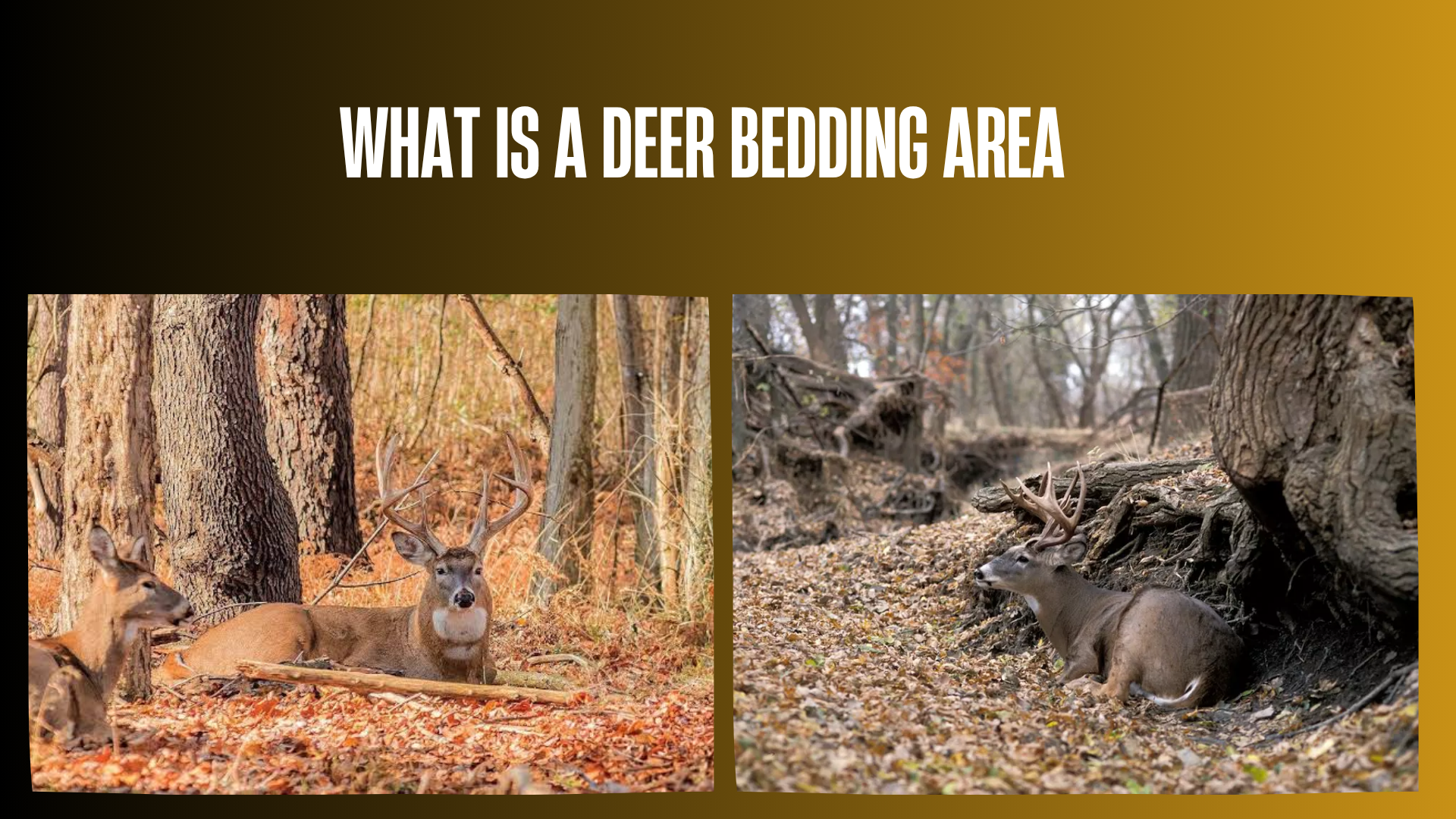

Quick Answer
A deer bedding area is a secure location where deer spend part of the day or night lying down, resting, and chewing cud while remaining alert. It usually provides some combination of cover, visibility, favorable wind or air movement, comfortable ground, thermal relief, and access to food or escape routes. Look for multiple oval depressions, flattened vegetation, deer hair, tracks, droppings, nearby trails, and repeated use—but interpret all signs together. No bed location guarantees that a deer will return, and hunting or trail-camera rules must be checked with the current wildlife and land-management authorities.
| Feature | Meaning | Typical clue |
|---|---|---|
| Deer bed | The individual spot where a deer lay | One oval depression or flattened patch |
| Bedding area | A larger zone containing one or more used beds | Several beds, connecting trails, cover, tracks, and droppings |
| Travel corridor | A route between cover, food, water, or other habitat | Continuous trail with directional movement |
| Staging area | A place where deer may pause before entering exposed feeding habitat | Tracks, browsing, rubs, or short waits near a cover edge |
| Feeding area | A place used primarily to obtain food | Browsed plants, feeding sign, crop or mast concentration |
a
Important Safety, Legal, and Ethical Notice
Hunting seasons, access, trail-camera use, baiting, public-land rules, weapon restrictions, hunter-orange requirements, and permission requirements vary by jurisdiction and property. Check the current regulations from the wildlife agency and the applicable land manager before scouting or hunting. Obtain written landowner permission where required, respect closed areas and property boundaries, and do not trespass to reach or leave a bedding area.
When carrying a firearm, treat it as loaded, keep the muzzle in a safe direction, keep your finger outside the trigger guard until ready to shoot, and be certain of the target and what lies beyond it. Never shoot at sound, brush movement, antlers, or an unidentified shape. Use eye and hearing protection as appropriate, unload before climbing or crossing an obstacle, and follow the firearm manufacturer’s instructions. Ethical hunting also means avoiding marginal shots, making every reasonable legal recovery effort, and reducing unnecessary disturbance to wildlife.
What a Deer Bedding Area Actually Does
Deer do more than sleep in a bed. As ruminants, they may feed, move into cover, lie down, and chew partially digested food. While bedded, they alternate between rest and alertness. A site that lets a deer detect danger through scent, sight, or sound can be valuable even when it does not look comfortable to a person.
Bedding also helps deer manage energy and temperature. Shade and air movement can matter in warm weather. Sun exposure, protection from wind, and dense thermal cover can matter in cold weather. Dry ground can be attractive after rain, while snow depth and crusting can reshape winter use. The best local explanation depends on species, region, topography, vegetation, season, and current conditions.
A bedding area is therefore a functional habitat zone, not a specific plant type or terrain feature. Native grass may provide bedding cover on a prairie property, young forest growth may serve the same function in timber country, and small elevated islands can do so in wetlands. A place becomes meaningful because deer use it, not because a map label or hunter’s theory says they should.
How to Recognize a Deer Bed
Oval or Kidney-Shaped Depressions
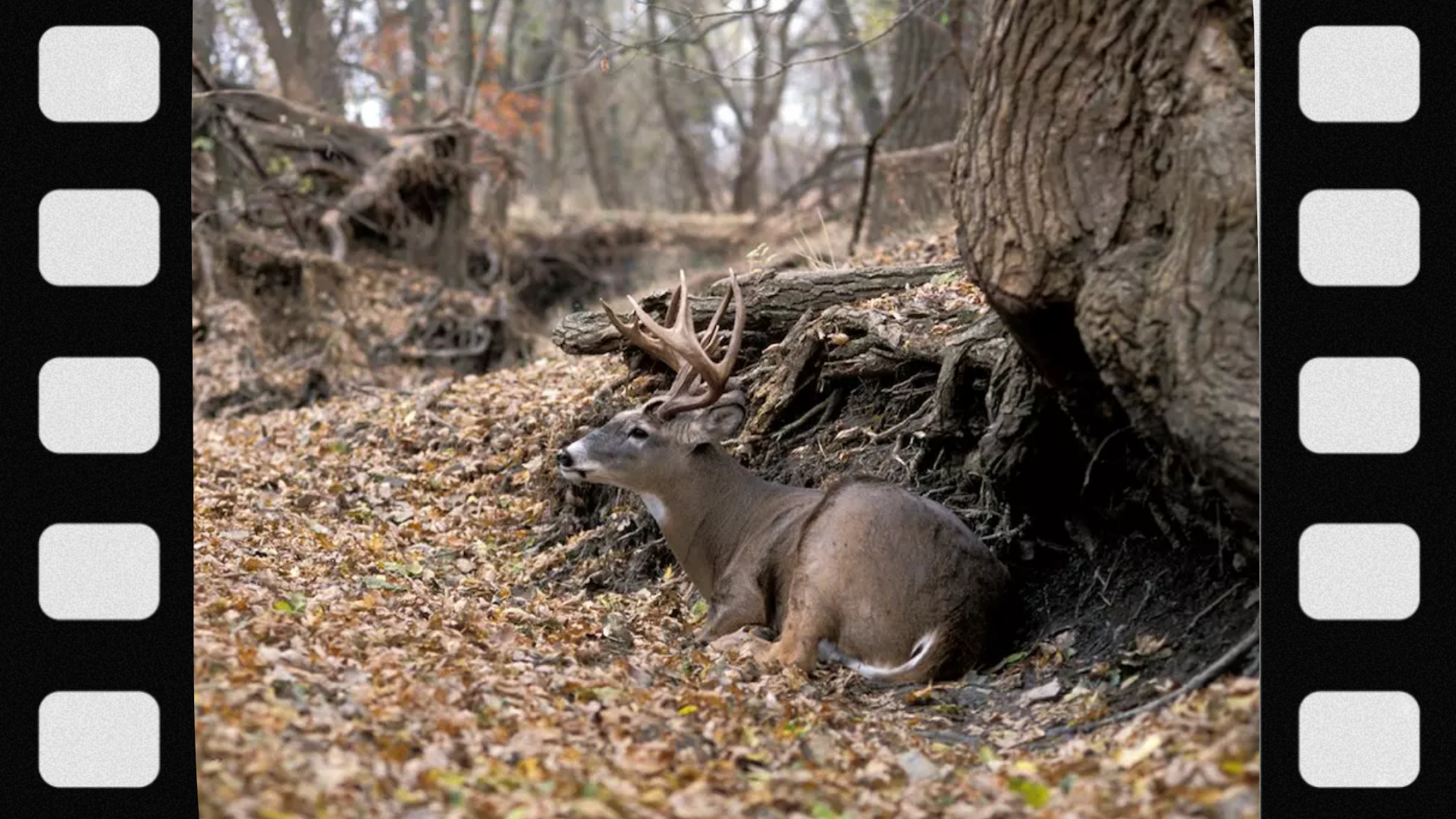
The clearest clue is an oval area where leaves, grass, snow, or other ground cover has been compressed. In soft soil, the body may leave a shallow outline. On dry forest litter or rocky ground, the shape may be faint. Beds also vary with the size and posture of the animal, so dimensions alone cannot reliably identify sex or age.
Flattened or Matted Vegetation
Grass and low plants may be pressed in one direction or form a smooth patch surrounded by upright growth. A recently used bed may look crisp, while an older one may have stems beginning to spring back. Wind, snow, livestock, pets, and other wildlife can make similar impressions, so look for supporting deer sign.
Hair, Tracks, and Droppings
A few hollow deer hairs in the depression can strengthen identification. Tracks at the edge may show how the animal entered or left. Droppings nearby suggest deer activity, but none of these clues alone proves repeated bedding. Track size and bed size overlap among animals and change with substrate.
Clusters of Beds
Several beds close together can indicate use by a doe family group, a seasonal group, or different deer at different times. A single isolated bed may belong to one deer or may simply be the only bed still visible. Avoid assigning a particular buck or doe without stronger evidence.
Entry and Exit Trails
Frequently used bedding areas often connect to faint or well-defined trails leading toward feeding habitat, water, other cover, or terrain funnels. Trails that divide near the cover edge can reveal more than the bed itself. Fresh tracks, disturbed leaves, recent droppings, and seasonal vegetation help assess current use.
Seven Habitat Features Deer Commonly Use for Bedding
| Habitat feature | Why deer may use it | What can change the pattern |
|---|---|---|
| Dense shrubs or young growth | Visual screening, browse, and multiple escape routes | Leaf drop, succession, forestry work, and human traffic |
| Tall native grass | Horizontal cover and flexible bedding locations | Mowing, fire, snow, wind, and seasonal plant height |
| Benches, points, and ridge features | Level ground, air currents, visibility, and escape terrain | Wind, thermals, vegetation, access, and pressure |
| Wetland islands or cattail edges | Separation from common human routes and secure cover | Water level, ice, flooding, and safe access |
| Blowdowns and logging regrowth | Screening, browse, and obstructed approaches | Canopy closure, logging activity, and vegetation recovery |
| Conifer or other thermal cover | Reduced wind and snow interception in some winter conditions | Temperature, snow depth, cover density, and food availability |
| Small overlooked cover near people | Predictable human routines can leave undisturbed pockets | Dogs, recreation, construction, and changing activity |
These are places to investigate, not a checklist that predicts deer with certainty. Open-country mule deer may bed where they can see long distances, while whitetails in fragmented forests may favor dense edge cover. In either case, security depends partly on what deer have learned about local danger.
Security Cover, Wind, Sight, and Sound
Hunters often describe a bed as a place where a deer uses the wind behind it and watches the area in front. That pattern can occur, especially where terrain channels air consistently, but it should not be treated as a universal rule. Wind swirls, thermals reverse, vegetation blocks sight, and deer reposition. A bed may work because several senses overlap rather than because it follows one compass direction.
Security cover is also relative. A patch does not have to be impenetrable; it needs to reduce surprise or give a workable escape route. A deer may choose the downwind edge of cover, a rise that improves visibility, a log that protects one side, or a small pocket avoided by people. Observe the entire approach and escape landscape rather than focusing on the depression alone.
Doe Bedding Areas and Buck Bedding Areas
Doe family groups often create multiple beds relatively close together, especially in secure habitat near dependable food. An adult buck may sometimes bed alone or use a small number of isolated beds. During late summer, bucks can associate in groups; during the rut, their movement and bedding may change dramatically. After the rut or during severe winter conditions, energy
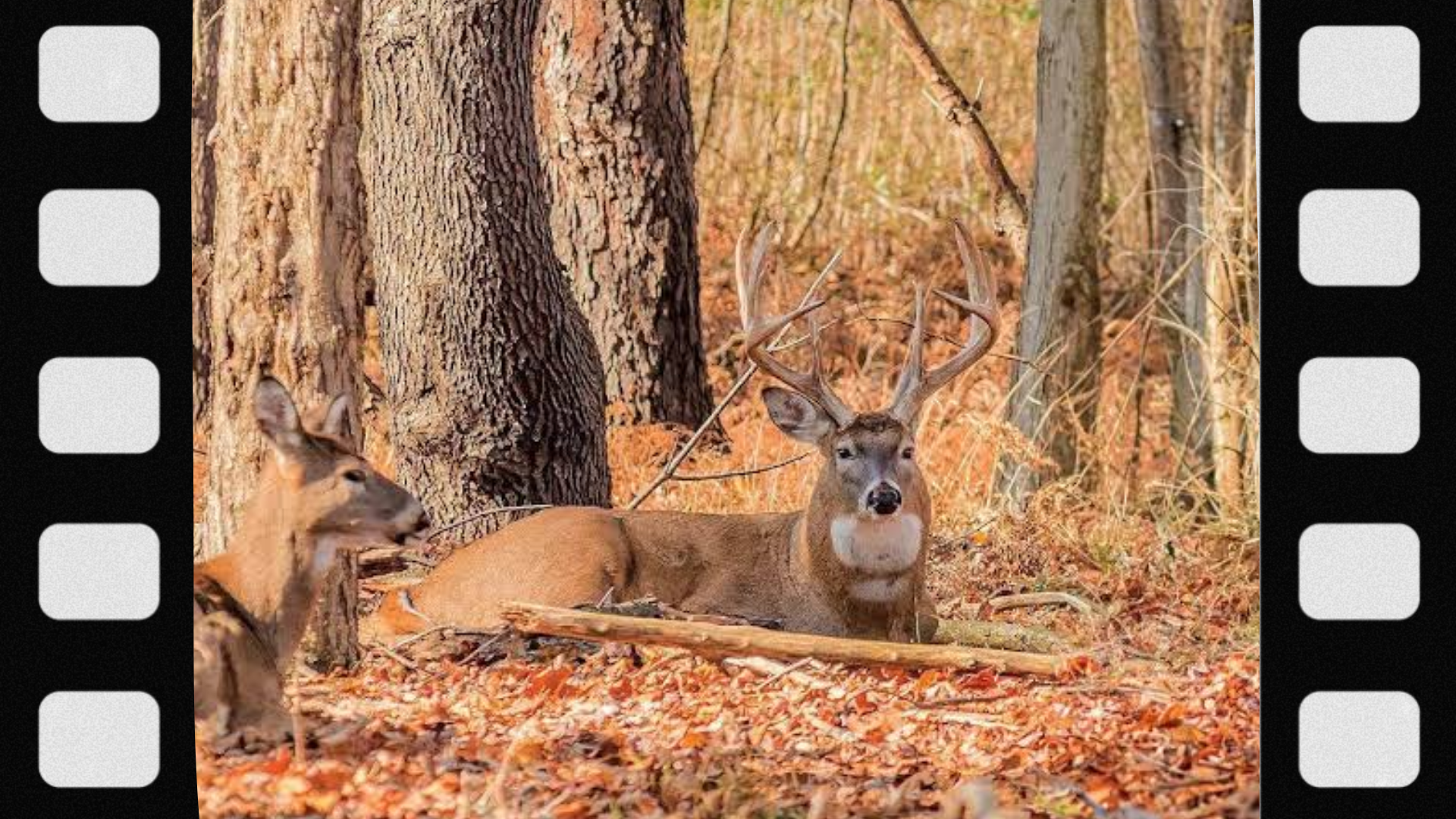 conservation and food can override patterns seen earlier.
These are tendencies, not a field test. A large single bed is not proof of a mature buck, and several beds do not prove that only does use the area. Bed size, track shape, rubs, trail-camera records where legal, direct observation, and timing can build a better interpretation, but certainty is uncommon.
How Bedding Areas Change Through the Year
Spring and Early Summer
New vegetation increases food and screening cover. Does near the fawning period may use secluded areas differently from larger social groups. Avoid disturbing fawns or handling a fawn found alone; a doe may be nearby. Follow the wildlife agency’s guidance if an animal appears injured or in danger.
Late Summer and Early Fall
Standing crops, foliage, tall grass, and predictable food can support bedding patterns that disappear after harvest or leaf fall. Bucks may use summer ranges that shift as breeding activity and hunting pressure increase.
Rut
Breeding activity can reduce the predictability of a buck’s previous bed-to-feed routine. Bucks may cover more ground, investigate doe groups, or rest in unfamiliar places. Doe bedding can still influence movement, but no bedding-area strategy guarantees an encounter.
Late Season and Winter
Food scarcity, cold, snow, wind, and energy demands become more influential. Deer may concentrate in sheltered habitat or use sun-exposed slopes when conditions favor them. In some northern regions, wintering areas can be biologically important and legally protected; minimize disturbance and follow local guidance.
How to Find Potential Bedding Areas on a Map
Start with aerial imagery and a topographic map, but label locations as “potential” until field sign confirms them. Look for places where cover, terrain, low disturbance, and connections to food come together:
- thick young forest beside mature open timber;
- brushy points, knobs, benches, and ridge ends;
- small dry islands or edges within wetlands;
- overgrown fields, native grass, and shrub pockets;
- recent cuts, storm damage, or regrowth with horizontal cover;
- leeward terrain or sun-exposed slopes under suitable weather;
- cover linked to feeding areas by protected travel routes; and
- pockets away from roads, parking areas, trails, and routine human access.
Maps cannot show current vegetation height, livestock use, loose rocks, deep water, posted boundaries, recent logging, or hunter pressure. Ground-truthing is essential, and safe access can matter more than a promising shape on a screen.
A Low-Impact Scouting Process
- Confirm access first. Review current regulations, property boundaries, closures, and permission before entering.
- Choose a lower-impact time. Where legal and appropriate, post-season or well-before-season scouting often reveals beds with less risk of disrupting an imminent hunt. Avoid severe winter conditions and sensitive fawning situations.
- Study the outside edge. Identify trails entering and leaving the suspected cover before walking through it.
- Search for a cluster of clues. Beds, tracks, droppings, hair, browse, rubs, and connecting trails create a stronger case than one depression.
- Assess freshness carefully. Recently flattened vegetation, sharp tracks, fresh droppings, and current browse may suggest recent use, but weather affects every clue.
- Mark observations, not conclusions. Record date, wind, weather, vegetation, sign, and access. Note uncertainty.
- Leave without overworking the site. Repeated intrusion can change deer use and erase the pattern you hoped to study.
Use offline maps, a compass, appropriate clothing, water, a light, and a communication plan. Tell someone where you are going and when to expect you back. Wetlands, cliffs, dead trees, deep snow, heat, and darkness can turn simple scouting into an emergency; turn around when conditions exceed your preparation.
How Hunters Use Bedding Information
The most useful information is often not the exact bed but the relationship between cover, exit trails, food, wind, thermals, and legal access. Hunters may observe travel corridors outside a bedding area and choose a setup that avoids crossing the most likely deer routes. The goal is a safe, ethical opportunity, not forcing a close approach into cover where the target and background cannot be identified.
Keep shots within demonstrated ability and select only situations with positive identification and a safe backstop. Dense bedding cover can hide other deer, people, livestock, roads, or buildings. If visibility is insufficient, do not shoot.
Trail cameras, where legal, can help distinguish occasional travel from repeated use. Place them on exterior trails rather than repeatedly entering core cover, secure them only where permitted, and follow public-land and privacy rules. Camera absence does not prove deer absence; detection depends on placement, settings, vegetation, batteries, and how deer move through the area.
Common Mistakes When Reading Deer Beds
| Mistake | Why it fails | Better approach |
|---|---|---|
| Calling every depression a deer bed | Weather, livestock, and other animals create similar marks | Require tracks, hair, droppings, trails, or repeated patterns |
| Sexing a deer from bed size alone | Size overlaps and substrate changes the outline | Combine several independent clues and retain uncertainty |
| Assuming a bed is active year-round | Cover, food, wind, weather, and pressure change | Date observations and revisit from a low-impact distance |
| Walking through core cover repeatedly | Disturbance can change use and contaminate observations | Scout edges, limit visits, and plan access |
| Following a single wind rule | Thermals and terrain create variable air currents | Observe local wind at the bed, trail, and setup |
| Ignoring safe access and boundaries | A promising location never overrides law or safety | Confirm routes, permission, backstops, and exit time first |
| Expecting a guaranteed hunt | Individual behavior and conditions remain variable | Treat bedding evidence as one part of a changing habitat pattern |
What Not to Do Around a Bedding Area
- Do not trespass, cross a closed boundary, or enter a refuge or sanctuary where access is prohibited.
- Do not assume a bed belongs to a legal target without positive identification.
- Do not shoot into thick cover at sound or movement.
- Do not crowd, chase, feed, or deliberately stress deer for a photograph or observation.
- Do not handle apparently unattended fawns without direction from a wildlife professional.
- Do not place cameras, stands, bait, minerals, or habitat modifications without checking current rules and landowner permission.
- Do not cut trees, clear shooting lanes, or alter public land without authorization.
- Do not climb with a loaded firearm or use an elevated stand without a properly fitted full-body fall-arrest system.
- Do not let a map pin override unsafe wind, weather, water, ice, darkness, or terrain.
- Do not describe a common bedding tendency as something deer always do.
Managing Bedding Habitat Responsibly
Landowners interested in improving deer habitat should begin with a property-scale plan rather than one isolated “buck bed.” A wildlife biologist or qualified forester can help balance early successional cover, native plants, forest health, food, water, access, erosion, invasive-species control, and habitat for other wildlife.
Tree cutting, prescribed fire, herbicide use, wetland work, and other habitat practices involve safety, legal, ecological, and insurance considerations. Obtain required permits and professional help. Avoid indiscriminate hinge cutting or creating unstable overhead hazards. The most visually dense cover is not automatically the best habitat if it reduces native diversity or eliminates useful understory.
Once secure cover exists, limiting unnecessary traffic can be as important as vegetation work. Place observation or camera activity on travel routes outside core cover when legal. Habitat management should serve a broader conservation goal, not merely concentrate deer for a guaranteed shot.
Beginner Field Checklist
- Current hunting and land-use regulations checked
- Property boundaries and permission confirmed
- Offline map and backup navigation method
- Weather, sunset time, water conditions, and hazards reviewed
- Trip plan shared with a reliable person
- Water, first aid, light, communication, and appropriate layers
- Beds evaluated with several supporting signs
- Observations dated and labeled by confidence level
- Entry and exit routes chosen to reduce disturbance
- Safe target identification and backstop requirements maintained
FAQs
1. What does a deer bed look like?
It usually looks like an oval or slightly kidney-shaped depression in leaves, grass, snow, or soil. Flattened vegetation, hair, tracks, droppings, and nearby trails help confirm that deer made it.
2. How big is a deer bedding area?
There is no fixed size. It may be one small pocket with a few beds or many acres of secure cover containing shifting bed sites. Species, group size, vegetation, terrain, and disturbance all matter.
3. Is a deer bed the same as a bedding area?
No. A bed is the precise body-sized spot where a deer lay. A bedding area is the surrounding habitat zone that may contain multiple beds, trails, and escape cover.
4. Do deer sleep in bedding areas?
They rest and may sleep in short periods, but they also remain alert and chew cud. A bed is better understood as a secure resting site than as a place for uninterrupted sleep.
5. Do deer use the same bed every day?
Some beds are reused, but not necessarily daily. Wind, weather, food, pressure, predators, breeding activity, and individual behavior can move deer among several beds.
6. What time do deer leave bedding areas?
There is no universal time. Deer often transition between rest and feeding near lower-light periods, but they can rise, browse, relocate, or remain bedded at any hour depending on conditions and disturbance.
7. Where do deer bed during the day?
They commonly choose secure cover or terrain that helps them detect danger and manage temperature. The exact habitat ranges from brush and young timber to grasslands, wetlands, ridges, and small overlooked cover.
8. Where do deer bed at night?
Deer may bed near feeding areas, within open habitat, or in other locations that differ from daytime security cover. Night patterns depend heavily on food, disturbance, season, and landscape.
9. Do deer bed close to food?
They can, especially where secure cover and food are adjacent. Heavily pressured deer may bed farther away or use protected routes. Food sources also change seasonally.
10. Do deer need water near a bedding area?
Water is part of deer habitat, but a bed does not need to sit beside visible water. Deer obtain moisture from food and can travel to water; regional heat and dryness affect its importance.
11. Do bucks and does bed together?
Sometimes. Social grouping changes by season, age, reproductive phase, and local conditions. Doe family groups commonly bed near one another, while adult bucks may bed alone at certain times.
12. Can bed size identify a mature buck?
Not reliably. Large deer may leave larger impressions, but bed shape varies with posture and ground conditions, and body sizes overlap. Tracks, hair, rubs, observations, and other evidence are needed.
13. Why are there several deer beds together?
They may indicate a family or seasonal group, multiple deer using the site at different times, or one deer repositioning. Date and supporting sign are needed before deciding which explanation fits.
14. Do deer bed with the wind at their back?
That pattern can help combine scent coverage with forward visibility, but it is not universal. Terrain, thermals, cover, weather, and escape options can lead to other orientations.
15. Do deer bed on ridges or in valleys?
They can use both. Ridges, points, and benches may provide visibility or favorable air currents, while valleys and bottoms can offer dense cover, food, or shelter. Current local sign decides.
16. Where do deer bed in rain?
Deer may use cover that reduces wind or heavy precipitation, but light rain does not necessarily force a major change. Temperature, wind, terrain, and storm intensity influence the choice.
17. Where do deer bed in snow?
They may favor thermal cover, reduced wind, manageable snow depth, sun exposure, and access to food. Severe winter areas deserve minimal disturbance because unnecessary movement consumes energy.
18. How can I tell whether a deer bed is fresh?
Fresh beds may have crisp outlines, newly flattened vegetation, warm or melted snow, sharp tracks, recent droppings, or displaced leaves. Weather can quickly alter those clues, so avoid claiming certainty.
19. Should I walk into a bedding area?
Only when access is legal, conditions are safe, and the information justifies the disturbance. Off-season inspection can be useful, but repeated intrusion near a hunt may change deer behavior.
20. Should a trail camera go inside a bedding area?
Often, an exterior entry or exit trail provides useful information with less disturbance. Camera placement rules vary on public and private land, so verify regulations and permission first.
21. How far should a stand be from a bedding area?
There is no universal distance. Cover, wind, thermals, access, weapon, visibility, property boundaries, and demonstrated shooting ability determine whether any setup is safe and ethical.
22. Does finding a bedding area guarantee deer movement?
No. Beds show past use. Current movement still depends on season, weather, food, breeding activity, disturbance, predators, and individual behavior.
23. Can deer have more than one bedding area?
Yes. Deer often maintain several options across a home range and may select among them according to conditions. Some are seasonal or used only under a particular wind or disturbance pattern.
24. Can I create a deer bedding area on my property?
Habitat management can improve secure cover, but it should follow a property plan from a wildlife biologist or qualified forester. Check permits and use professionals for tree work, fire, chemicals, or wetland changes.
25. What official rules should I check before scouting deer bedding areas?
Check access dates, licenses, weapon rules, trail-camera restrictions, baiting or feeding rules, motor-vehicle limits, habitat alteration, public-land regulations, and landowner-permission requirements with the responsible agencies.
Final Answer
A deer bedding area is a secure part of the landscape where deer regularly lie down to rest, ruminate, conserve energy, and remain alert. It may contain one bed or many, and it can shift as vegetation, food, temperature, wind, breeding behavior, predators, and hunting pressure change. The best evidence is a combination of oval depressions, flattened cover, hair, tracks, droppings, connecting trails, and repeated observations—not one clue or a map theory alone.
For a beginner, the responsible approach is to confirm access, study potential cover on maps, scout for multiple signs, record uncertainty, and limit disturbance. Treat bedding information as one piece of deer behavior, never a guarantee. Follow current wildlife and land-management rules, respect property and wildlife, maintain strict firearm safety, and pass any shot that lacks positive identification or a safe background.
Read more: