
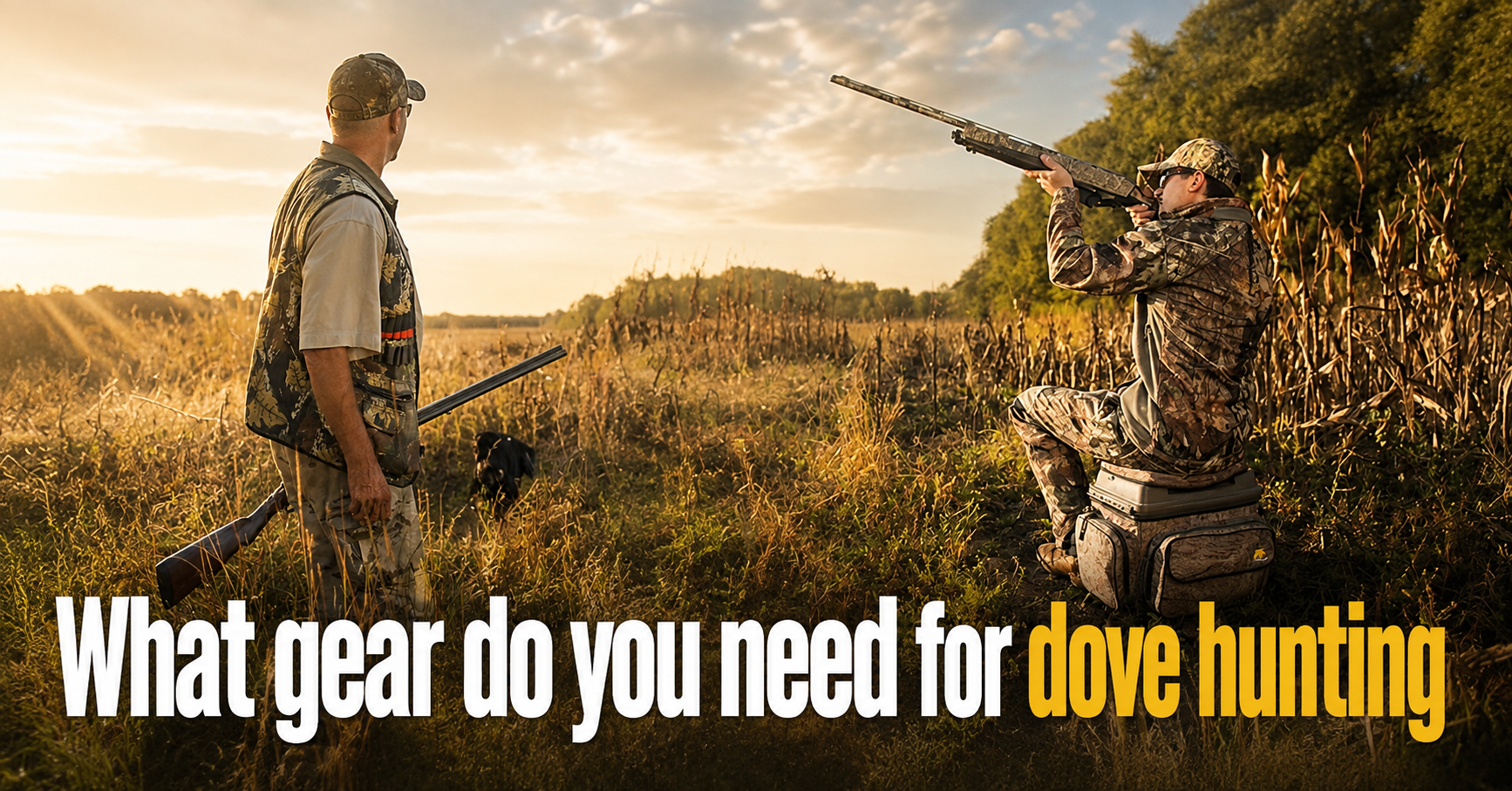

What gear do you need for dove hunting? The basic setup is relatively simple, but choosing the right items matters for safety, legal compliance, comfort, and responsible game recovery. A beginner generally needs the required licenses and permits, a legal and properly fitted shotgun, compatible legal shotshells, eye and hearing protection, weather-appropriate clothing, sturdy footwear, water, a small first-aid kit, a way to carry shells and harvested birds, and the current regulations for the exact place being hunted.
This guide separates genuine necessities from useful extras. Requirements vary by country, state, hunting zone, species, land manager, and season, so the official regulations for your destination always override general online advice.
Quick Answer
For dove hunting, bring your hunting license and any required migratory-bird validation or land permit, a legal shotgun in safe working condition, compatible ammunition that meets local shot-material rules, eye and hearing protection, suitable clothing and boots, water, first aid, navigation and communication tools, and a game bag or cooler setup. A seat, decoys, binoculars, insect protection, sun protection, and a retriever can make the hunt easier but are not always essential. Before leaving, verify season dates, shooting hours, bag and possession limits, legal species, firearm capacity, ammunition restrictions, hunter-orange rules, and property-specific regulations.
Dove Hunting Gear Checklist at a Glance
| Item | Purpose | Priority | What to verify |
|---|---|---|---|
| License, validations and permits | Legal authorization and proof of compliance | Required where applicable | State, federal and land-specific requirements |
| Current regulations and species guide | Confirms legal species, dates, hours and limits | Essential | Latest official version and emergency changes |
| Legal shotgun | Primary hunting implement | Essential | Condition, fit, capacity, transport and land rules |
| Compatible legal shotshells | Ethical, lawful harvest | Essential | Gauge, chamber length, shot material and local restrictions |
| Eye and hearing protection | Protects against noise, debris and ejected hulls | Essential safety gear | Secure fit and ability to hear important communication |
| Clothing and boots | Weather, terrain and visibility management | Essential | Forecast, vegetation, hunter-orange requirements and hazards |
| Water, first aid and communication | Basic field safety | Essential | Heat, trip duration and cell coverage |
| Game bag and cooler system | Recovery, transport and meat care | Essential after a harvest | Tagging, retention and food-safety rules |
| Seat, shade and decoys | Comfort and field setup | Optional but useful | Land rules and safe placement |
Important Safety and Legal Notice
Doves are migratory game birds in the United States, and dove hunting can be governed by both federal frameworks and state regulations. Individual wildlife areas, national wildlife refuges, public hunting units, and private properties may add their own access, ammunition, check-in, parking, or method-of-take requirements.
Do not assume that lead shot is lawful simply because you are hunting doves rather than waterfowl. Some states and many specific public areas require approved non-toxic shot for dove hunting or for all shotgun hunting on that property. Check the official state wildlife agency regulations and the land manager’s current rules immediately before the hunt.
Every hunter handling a firearm should consistently follow four fundamental rules:
- Treat every firearm as if it is loaded.
- Keep the muzzle pointed in a safe direction.
- Keep your finger outside the trigger guard until ready to shoot.
- Be certain of the target and what is beyond it.
A mechanical safety is not a substitute for safe handling. Complete hunter education, read the firearm manufacturer’s manual, and practice with qualified supervision before hunting.
Essential Legal Documents
Hunting license and migratory-bird requirements
Carry a valid hunting license and any required migratory game bird endorsement, validation, certification, harvest information registration, or species-specific permit. Requirements depend on age, residency, location, and jurisdiction. A federal Duck Stamp is associated with waterfowl hunting and should not automatically be assumed to be the dove requirement; verify exactly what your wildlife agency requires.
Public-land permit or private-land permission
Public hunting areas may require reservations, drawings, daily permits, check-in procedures, parking permits, or an additional access license. On private land, obtain clear landowner permission and confirm property boundaries. A mapping app can help, but it does not replace posted signs, official maps, or lawful permission.
Current regulations
Save or carry the current official regulation booklet and any property-specific brochure. Confirm:
- Open season dates and legal shooting hours
- Legal dove species and identification details
- Daily bag and possession limits
- Shotgun capacity and permitted methods
- Allowed shot material and ammunition
- Hunter-orange or other visibility rules
- Baiting restrictions and what constitutes a baited area
- Retrieval, tagging, transport and field-possession requirements
- Public-land boundaries, closed zones and distance restrictions
The Shotgun
Dove hunters commonly use shotguns because the target is a fast-moving bird in flight. The firearm must be legal for the jurisdiction, compatible with the ammunition, in safe working order, and fitted well enough that the shooter can control it consistently.
Gauge alone does not determine whether a setup is appropriate. Consider firearm fit, recoil tolerance, experience, ammunition availability, total weight, reliability, and the shooter’s ability to place a suitable pattern at realistic distances. A beginner should learn with a qualified instructor rather than selecting equipment solely from online recommendations.
Check the shotgun before the hunt
- Read the exact manufacturer manual.
- Confirm the firearm is unloaded before inspection or transport.
- Verify the correct gauge and chamber length marked on the firearm.
- Check that any choke tube is compatible, correctly installed and suitable for the selected shot material.
- Confirm that the firearm meets current capacity restrictions.
- Inspect for damage, obstruction, corrosion or loose parts.
- Pattern and practice with the intended legal load before opening day.
If the firearm has a malfunction, visible damage, a bore obstruction, or an uncertain service history, keep it unloaded and have it examined by a qualified gunsmith.
Shotshells and Choke Selection
Bring factory ammunition of the exact gauge and chamber length approved for the shotgun. The load must also comply with local shot-size and shot-material rules. Never mix loose shells of different gauges in the same pocket or bag; a smaller shell can create a dangerous obstruction in a larger-gauge firearm.
There is no universal “best” load or choke for every dove hunt. Flight distance, shooter skill, pattern performance, local law, the exact firearm and choke, and the use of lead-free shot all affect the choice. Pattern the combination on paper at the distances you can shoot responsibly. The goal is a useful, even pattern and confident shot placement—not taking longer shots because the equipment seems more powerful.
Use only choke tubes and shot types approved by the firearm and choke manufacturers. Some harder non-toxic shot materials have specific compatibility requirements.
Eye and Hearing Protection
Eye protection helps guard against dust, vegetation, broken target fragments during practice, and debris or hulls from nearby firearms. Choose impact-rated glasses that fit securely and preserve a clear view in the expected light.
Hearing protection is essential around gunfire. Electronic hearing protection can reduce damaging impulse noise while helping hunters hear speech and safety calls, but any model must fit correctly to work as intended. Carry a spare set of foam plugs in a sealed bag.
Clothing for Dove Hunting
Lightweight layers
Early dove seasons are often hot, but mornings can begin cool. Wear breathable layers that manage perspiration and protect the skin from sun and vegetation. Avoid loose cords or garments that interfere with the firearm mount, trigger guard, vision, or movement.
Camouflage and neutral colors
Clothing that blends with the local background can help reduce conspicuous movement. Full camouflage is useful in some settings but is not always necessary. Remaining still, using available shade, and positioning safely often matter more than purchasing an elaborate pattern.
Hunter orange
Visibility rules vary. Hunter orange may be required on some dates or properties, particularly when seasons overlap, while other places may not require it for dove hunting. Wear whatever the law requires. Even when not mandatory, consider visible clothing during travel, retrieval, or crowded public-land conditions if it improves safety without conflicting with local instructions.
Hat, sun protection and insect protection
A brimmed hat, sunscreen, and sunglasses can help during exposed hunts. Use insect repellent according to its label, and consider tick protection where appropriate. Reapply products only as directed and keep chemicals from contaminating food, eyes, firearm surfaces, and dog equipment.
Footwear and Leg Protection
Choose boots or shoes for the actual terrain: dry fields, mud, rocky ground, crop residue, cactus, thorns, or wet edges. Stable traction and a secure fit matter more than appearance. Break footwear in before the hunt.
In areas with thorny plants, biting insects, or venomous snakes, long pants, gaiters, or appropriate protective equipment may be useful. Protective gear reduces risk but does not make careless steps safe. Watch where you place hands and feet, use a light in low visibility, and do not attempt to handle wildlife you cannot identify safely.
Water, Heat Protection and First Aid
Water is essential, especially during warm early-season hunts. Carry enough for the trip, travel delays, and any dog accompanying you. Add electrolyte products only if they suit your health needs and are used as directed; water planning should not depend on finding a source in the field.
A compact first-aid kit should match the group, terrain and distance from help. Common contents include wound dressings, medical tape, blister care, gloves, basic cleaning supplies, personal medication, and emergency contact information. Training is as important as the kit. Know the symptoms of heat illness and stop hunting if anyone becomes confused, faint, severely weak, or otherwise seriously unwell.
Navigation, Communication and Emergency Planning
Carry a charged phone in a weather-resistant case and download offline maps before leaving service. A power bank, compass, printed map, or satellite communicator may be appropriate in remote areas. Tell a responsible person where you will hunt, who is with you, where the vehicle will be parked, and when you expect to return.
Mark boundaries and safety zones before the hunt. Do not rely on an app alone to decide whether a shot is safe or whether access is lawful.
Carrying Shells and Empty Hulls
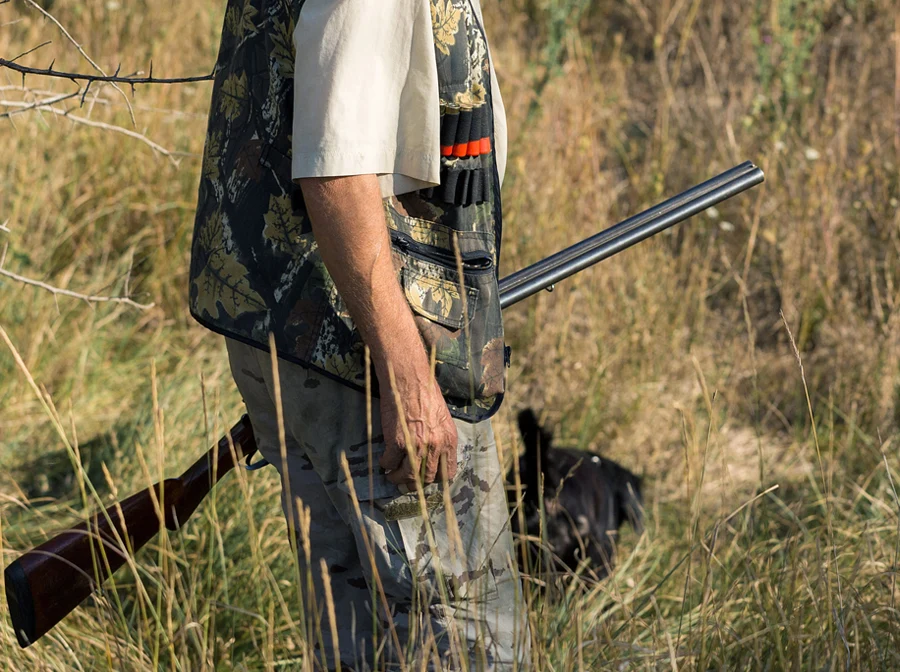
A shell pouch, vest, belt bag, or organized backpack keeps compatible ammunition separate and protected from moisture. Carry only what you can manage comfortably and legally.
Bring a dedicated pouch for empty hulls and other litter. Picking up spent shells protects habitat, respects the landowner, and may be required by the property. Keep unfired ammunition separate from harvested birds and food.
Game Bag, Cooler and Field-Care Supplies
Bring a breathable game bag or vest designed to carry recovered birds without losing them. Depending on the regulations, harvested birds may need to remain identifiable or retain certain features during transport. Review rules before field dressing or combining birds from different hunters.
Use a clean cooler and a safe cooling plan suited to the weather and travel time. Keep birds away from dirty equipment, fuel, chemicals, and standing water. Wash hands and tools, avoid cross-contamination, and follow current wildlife-agency and food-safety guidance. Do not consume a bird that appeared diseased, was found dead, or was handled in a way that makes its safety uncertain.
A Seat, Shade and Field Bag
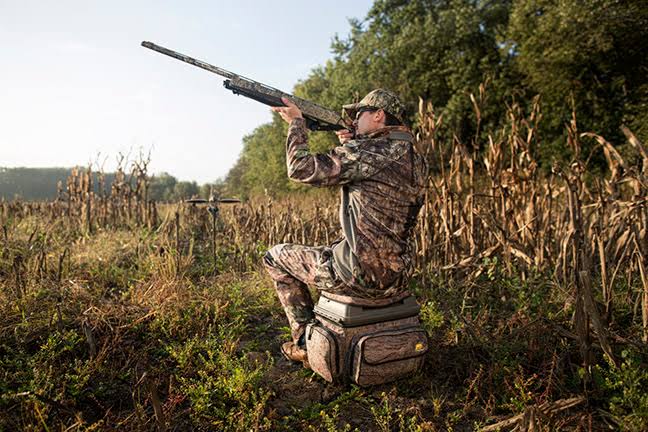
A low stool, stable chair, or bucket seat can make waiting more comfortable. Position it on firm ground where it will not obstruct the shooting lane, hide another hunter, or place the muzzle near people. Never use an unstable seat that makes safe firearm control difficult.
A small shade canopy may help in some private-field settings, but large structures can obstruct views, catch wind, or violate property rules. Ask the land manager before bringing one.
Are Dove Decoys Necessary?
No. Decoys are optional. Static clip-on or ground decoys can create a visible landing or feeding cue, while motion decoys add movement. Their legality and placement rules can vary, particularly for electronic or motorized equipment.
Place decoys only where they can be retrieved without crossing unsafe shooting lanes or trespassing. A decoy is a field aid, not a reason to take an uncertain shot. Positive species identification and a safe background remain mandatory.
Do You Need Binoculars?
Compact binoculars can help observe flight lines, distant birds and surrounding activity before the shooting begins. They are useful for scouting and identification, but they should never be used to justify shooting at a bird that remains uncertain. Do not point a firearm as a substitute for binoculars.
Hunting With a Retriever
A trained retriever can help locate downed birds, especially in tall cover, but a dog is not required for every dove hunt. Without a dog, select sites and shot opportunities where recovery is realistic. Every reasonable legal effort should be made to recover harvested or wounded birds.
For a dog, pack water, a collapsible bowl, lead, identification, first-aid supplies, protective footwear or vest when appropriate, and any veterinarian-recommended parasite prevention. Condition the dog before the season, provide shade and rest, and stop immediately at signs of heat illness, injury, or exhaustion. Keep dogs away from unsafe shooting lanes.
What You Can Leave at Home
Dove hunting does not require a heavy pack or the most expensive equipment. Many beginners can skip elaborate blinds, large decoy spreads, multiple choke options in the field, oversized coolers, excessive ammunition, and specialized clothing until experience shows a genuine need.
You do not need the most expensive equipment to hunt responsibly. Choose gear based on the species, terrain, weather, local regulations, fit, safety, reliability, maintenance requirements, and your actual experience.
How to Pack a Lightweight Dove-Hunting Bag
- Place licenses, permits and printed emergency information in a waterproof pouch.
- Pack eye protection, hearing protection and a spare set of earplugs where they are immediately accessible.
- Carry only compatible, legal ammunition, organized separately from food and harvested birds.
- Add water, sun protection, insect protection and a compact first-aid kit.
- Include a phone, offline map and backup navigation appropriate to the area.
- Bring a game bag, empty-hull pouch and cooling supplies.
- Add optional items—seat, decoys or binoculars—only if they fit the hunt plan.
Pre-Hunt Safety Check
- Confirm current season, legal hours, species, limits and property rules.
- Confirm licenses, permits and hunter-education requirements.
- Inspect the shotgun while unloaded and verify ammunition compatibility.
- Pattern the hunting setup and practice safe target identification.
- Agree on shooting positions, zones of fire and cease-fire communication.
- Identify roads, homes, livestock, parking areas, other hunters and unsafe backgrounds.
- Check weather, fire restrictions, heat risk and road conditions.
- Share the trip plan and carry emergency communication.
- Plan how every downed bird will be located, handled and cooled.
Common Beginner Mistakes
- Buying equipment before reading regulations: Legal requirements should shape ammunition, firearm capacity, clothing and access decisions.
- Skipping pattern practice: A familiar-looking shotgun and load may not produce the expected pattern.
- Bringing the wrong ammunition: Verify gauge, chamber length, shot material and property restrictions.
- Underestimating heat: Pack water, shade and a realistic turnaround plan.
- Failing to define safe shooting lanes: Every hunter should know where others are positioned and where shooting is prohibited.
- Shooting at unidentified birds: Learn legal species and wait for positive identification.
- Choosing a site with poor recovery access: Avoid shots that are likely to drop birds into property you cannot enter or cover you cannot search safely.
- Carrying too much: Excess gear creates fatigue and clutter without replacing preparation.
- Leaving hulls behind: Pack out empty shells and all other litter.
What Not to Do
- Do not shoot at movement, sound or a silhouette you cannot positively identify.
- Do not fire toward people, roads, vehicles, buildings, livestock, low-flying aircraft or an unsafe background.
- Do not swing the muzzle through another hunter’s position while following a bird.
- Do not rely on the mechanical safety to compensate for poor muzzle or trigger-finger control.
- Do not use ammunition that is incompatible, damaged, wet, corroded or illegal for the site.
- Do not enter private property to retrieve a bird without permission.
- Do not hunt over a baited area or use electronic equipment without confirming legality.
- Do not continue when heat, lightning, fire, poor visibility or another condition becomes unsafe.
- Do not leave wounded game without making a reasonable, safe and legal recovery effort.
Final Answer
What gear do you need for dove hunting? Start with required licenses and permits, current regulations, a legal and properly fitted shotgun, compatible legal ammunition, eye and hearing protection, weather-ready clothing and footwear, water, first aid, navigation, communication, a shell carrier, a game bag, and a safe cooling plan. A seat, decoys, binoculars, camouflage and a trained retriever are useful options rather than universal necessities. Practice before hunting, define safe shooting lanes, identify every bird positively, recover game responsibly, and verify state, federal and property-specific rules immediately before the trip.
FAQs
1. What is the minimum gear needed for dove hunting?
At minimum, bring all required legal documents, a lawful and safe hunting implement with compatible legal ammunition, eye and hearing protection, suitable clothing and boots, water, first aid, communication, and equipment for carrying and cooling recovered birds.
2. Do I need a hunting license for dove hunting?
Usually, but exact requirements depend on jurisdiction, age, residency and land status. A migratory-bird endorsement, registration or additional permit may also be required. Check the official wildlife agency.
3. Do I need a federal Duck Stamp to hunt doves?
Do not assume so. The federal Duck Stamp is associated with waterfowl requirements, while dove hunters may have different federal or state validations. Verify the exact requirements for your location.
4. What kind of shotgun do I need for dove hunting?
Use a shotgun that is legal, reliable, properly fitted, compatible with legal ammunition and manageable for your experience and recoil tolerance. No action type or gauge is universally best.
5. Is a 12-gauge required for dove hunting?
No. Other legal shotgun gauges may be suitable. Choose based on firearm fit, recoil, pattern performance, ammunition availability, shooter competence and local rules.
6. Can a beginner use a 20-gauge for doves?
A properly fitted 20-gauge can be suitable where legal, but gauge alone does not determine comfort or effectiveness. Practice with qualified instruction and pattern the exact firearm and load.
7. What shot size should I use for dove hunting?
Several small-shot loads are commonly marketed for doves, but the legal and practical choice varies with distance, shot material, firearm, choke and jurisdiction. Follow official regulations and manufacturer guidance, then pattern the load.
8. Do I need non-toxic shot for dove hunting?
It depends on the state and property. Some refuges and public areas require approved non-toxic shot for doves or all shotgun hunting. Confirm both the state rule and the site-specific rule before packing ammunition.
9. How many shells can my shotgun hold while dove hunting?
Capacity restrictions may apply to migratory-bird hunting and can be affected by local rules. Consult the current official regulations and make sure any required plug or capacity limitation is correctly installed and compliant.
10. What choke should I use for dove hunting?
There is no universal answer. Expected distance, pattern density, shot material and shooter skill all matter. Use a manufacturer-approved choke and test the combination on a pattern board.
11. Do I need to pattern my shotgun?
Yes. Patterning shows where the shotgun prints and whether the chosen load and choke produce useful coverage at realistic distances. It also supports more responsible shot decisions.
12. Is hearing protection necessary for dove hunting?
Yes. Repeated gunfire can damage hearing. Wear correctly fitted hearing protection and carry a spare set.
13. Should I wear shooting glasses?
Yes. Impact-rated eye protection helps protect against dust, plant debris and ejected hulls while preserving a clear view.
14. Do I need camouflage for dove hunting?
Not always. Neutral or background-matching clothing and controlled movement may be sufficient. Choose clothing for safety, weather and local visibility rules first.
15. Do I need hunter orange for dove hunting?
Requirements vary by jurisdiction, date and property. Check whether overlapping seasons trigger an orange requirement and follow the land manager’s instructions.
16. What should I wear for an early-season dove hunt?
Choose breathable layers, sun protection, a brimmed hat, long pants where vegetation warrants them, and footwear suited to the terrain. Bring an extra layer if the morning starts cool.
17. What boots are best for dove hunting?
The best footwear matches the site: dry-field shoes, supportive boots, waterproof options or snake-resistant protection may each make sense in different places. Prioritize fit, traction and known hazards.
18. How much water should I bring?
Bring enough for the weather, duration, exertion, delays and any dog. Because needs vary with health and heat, plan conservatively and do not depend on an unverified field source.
19. Do I need a first-aid kit?
Yes. Carry a compact kit appropriate to the group and terrain, plus personal medication and emergency information. Learn how to use its contents.
20. Is a hunting stool necessary?
No, but a stable stool or chair can reduce fatigue during long waits. It must not interfere with firearm handling, visibility or safe shooting lanes.
21. Do dove decoys work?
Decoys can provide a visual cue in some locations, but they do not guarantee birds or safe shots. Confirm that static and motorized decoys are legal where you hunt.
22. How many dove decoys do I need?
There is no mandatory number. A small, simple spread may be enough to experiment with. Placement, flight activity, legal restrictions and safe retrieval matter more than buying a large collection.
23. Do I need a blind for dove hunting?
Usually not. Natural shade, safe positioning and minimal movement may be sufficient. If using a blind, confirm property rules and maintain a clear view of other hunters and safe firing directions.
24. Should I bring binoculars?
They are optional but useful for scouting and observing distant birds. Binoculars do not replace the need for positive target identification before a shot.
25. Do I need a dog for dove hunting?
No. A trained retriever can improve recovery in difficult cover, but careful site and shot selection can make recovery possible without one. Do not take shots where legal retrieval is unlikely.
26. What gear does a dove-hunting dog need?
Bring water, a collapsible bowl, lead, identification, first aid and terrain-appropriate protection. Conditioning, shade, rest and veterinary guidance are more important than accessories.
27. What should I use to carry harvested doves?
Use a clean game bag, vest or container that prevents loss and supports cooling. Follow species-identification, possession, tagging and transport rules.
28. Should I bring a cooler?
Yes, when weather or travel time makes prompt cooling necessary. Keep birds clean and separated from chemicals, fuel and dirty equipment, and follow current food-safety guidance.
29. How many shells should I bring?
Bring a reasonable amount based on trip duration, practice, legal restrictions and what you can carry safely. More ammunition is not a substitute for disciplined shot selection.
30. What should I do with empty shotgun shells?
Collect and pack out every hull. A separate pouch keeps them away from unfired ammunition and harvested birds.
31. Do I need a GPS or hunting app?
Digital maps are useful for planning and boundaries, especially when downloaded offline. Carry an appropriate backup and remember that an app does not grant access or replace official maps.
32. What should I keep in my vehicle?
Consider extra water, clean cooling supplies, dry clothing, a larger first-aid kit, charging equipment, vehicle-recovery basics and printed directions. Store and transport firearms and ammunition according to current law.
33. Can I hunt doves on any harvested field?
No. You need legal access, and baiting rules can make apparently attractive fields unlawful to hunt. Consult official migratory-bird guidance and the wildlife agency before hunting.
34. How do I identify legal dove species?
Study an official field guide for the jurisdiction, including shape, flight, markings and similar protected species. Do not shoot until identification is positive.
35. What is the most important dove-hunting safety item?
No single object replaces safe behavior. Eye and hearing protection matter, but muzzle control, trigger discipline, target identification, safe zones of fire and knowing what lies beyond the bird are fundamental.
36. Is expensive gear necessary for a successful dove hunt?
No. Legal access, preparation, safe firearm handling, practice, appropriate basic gear and responsible recovery matter more than premium accessories.
Read more: